Review

The Application of Remote Sensing to Improve Irrigation Accounting Systems: A Review

Department of Soil, Plant and Food Science, University of Bari “Aldo Moro”, Via Amendola 165/A, 70126 Bari, Italy
*
Author to whom correspondence should be addressed.
Water 2025, 17(23), 3430; https://doi.org/10.3390/w17233430
Submission received: 23 October 2025 / Revised: 26 November 2025 / Accepted: 1 December 2025 / Published: 2 December 2025
(This article belongs to the Section Water Resources Management, Policy and Governance)

Abstract

Water resources are increasingly scarce, with groundwater overexploitation causing major declines in quantity and quality. Effective water accounting is essential for sustainable management, which requires measuring irrigation water use despite limited metering. Traditional modeling approaches suffer from errors when there are narrow spatial coverages. Digital agriculture and remote sensing offer alternatives by enabling large-scale, cost-effective, and near-real-time monitoring. However, issues of accuracy, methodological consistency, and integration with governance frameworks still restrict operational use. This review followed the PRISMA protocol, screening 1485 documents and selecting 79 studies on remote sensing for irrigation water accounting. A structured labeling process classified papers into Technological Readiness, Management Impact, Implementation Barriers, Policy Integration, and Innovation/Gaps. Findings show a strong focus on management benefits and technological innovation, while institutional and policy aspects remain limited. Although many studies addressed multiple themes, governance integration and real-world barriers were often overlooked. Research is concentrated in digitally advanced regions, with limited attention to water-scarce areas in the Global South. The review concludes that although remote sensing improves efficiency and data availability, adoption is challenged by institutional, regulatory, and methodological gaps. Interdisciplinary work, stronger validation, and stakeholder engagement are essential for transitioning these tools into operational components of integrated water management.

1. Introduction

Water resources are becoming increasingly scarce, and the effects of groundwater overexploitation are more evident than ever. Continuous overuse leads to a progressive decline in both the quality and quantity of water stored in aquifers, which poses a serious challenge for regions dependent on this resource.
Effective water accounting is essential for sustainable water resource management, particularly in areas that face increasing water scarcity. California’s legislative mandate for state agencies to integrate existing water and other environmental data into a modern decision-driven water data system enabling accurate, timely, transparent accounting of water supply (Open and Transparent Water Data Act, AB 1755). Under the Water Directive (2000/60/EC), Member States of the European Union are mandated to account for the volumes of water used also for irrigation. In 2011, the Chinese Government issued the Strictest Water Resources Management System, formulated to fully account for groundwater withdrawals [1]. Enforcement of water accounting is worldwide seen as a prerequisite as well as being at the fundament of sustainable water management [2].
Traditional water accounting systems depend largely on estimating models (e.g., Döll and Siebert [3] carried out the first worldwide attempt). However, they provide only a proxy of water requirement for irrigation on a somewhat aggregate scale [4]. On the other hand, direct and individual in situ measurements tend to suffer from limited spatial coverage [5,6]. Both systems can also ensembled to enhance data collection [7].
The difficulties faced by managers and regulators in keeping accurate and thorough records of the locations of abstraction wells or diversions is a major factor underlying the low levels of accounting for water abstractions in agriculture [2]. To streamline the problem, installing and enforcing in situ metering for groundwater wells or surface channels faces resistance from farmers (controlled) that, without strong enforcement by water agencies (controllers), tend to often tamper with or bypass compliance regulation [5,8,9]. On the other hand, monitoring poses financial borders for point-by-point metering [10] as well as requires strong coordination for abstraction permitting and water use quantification (i.e., checking for illicit access to the water resource or excessive volume withdrawal [11], especially in the case of state-centered agencies [12].
In recent years, digital agriculture technologies have emerged as a promising solution to these challenges by improving water management efficiency and reducing operational costs [13,14]. Although many of these technologies are supported by sound theoretical foundations, their application in political and managerial contexts remains limited [15,16]. Accuracy is essential in an information-driven economy, and these innovations help provide reliable data [17,18].
Although the adoption of remote sensing technologies in water accounting is starting [19,20], significant gaps remain regarding their effectiveness, accuracy, and practical implementation [21,22]. Remote sensing offers a capable alternative by enabling large-scale, real-time water assessments, yet uncertainties related to measurement precision [23], methodological consistency (e.g., including mixed approaches that combine remote sensing and on-site appraisals) [18], and mostly integration with existing water governance frameworks persist [24].
In this review, these gaps are addressed by evaluating the reliability of remote sensing for key water accounting parameters and identifying the primary challenges associated with its implementation at a basin scale. Specifically, this study seeks to answer the following question: How effective and accurate are remote sensing technologies for improving irrigation water accounting parameters, and what are the main challenges in their implementation phase?

2. Materials and Methods

This review is conducted following the PRISMA 2020 protocol [25]. To perform the review according to PRISMA, original journal articles, book chapters, and conference papers that explored the application of remote sensing intended to irrigation accounting have been included.
The data source used is Scopus (Elsevier, Amsterdam, Netherland). After various attempts of query constructs, the following keywords and boolean operators were used: “irrigation” AND “remote sensing” AND [“water policy” OR “account*” OR “water metering” OR “water governance” OR “water management”]. We opted for a research query that returned a wider sample. The Scopus database was accessed between 12 March and 14 March 2025, to gather all relevant studies.
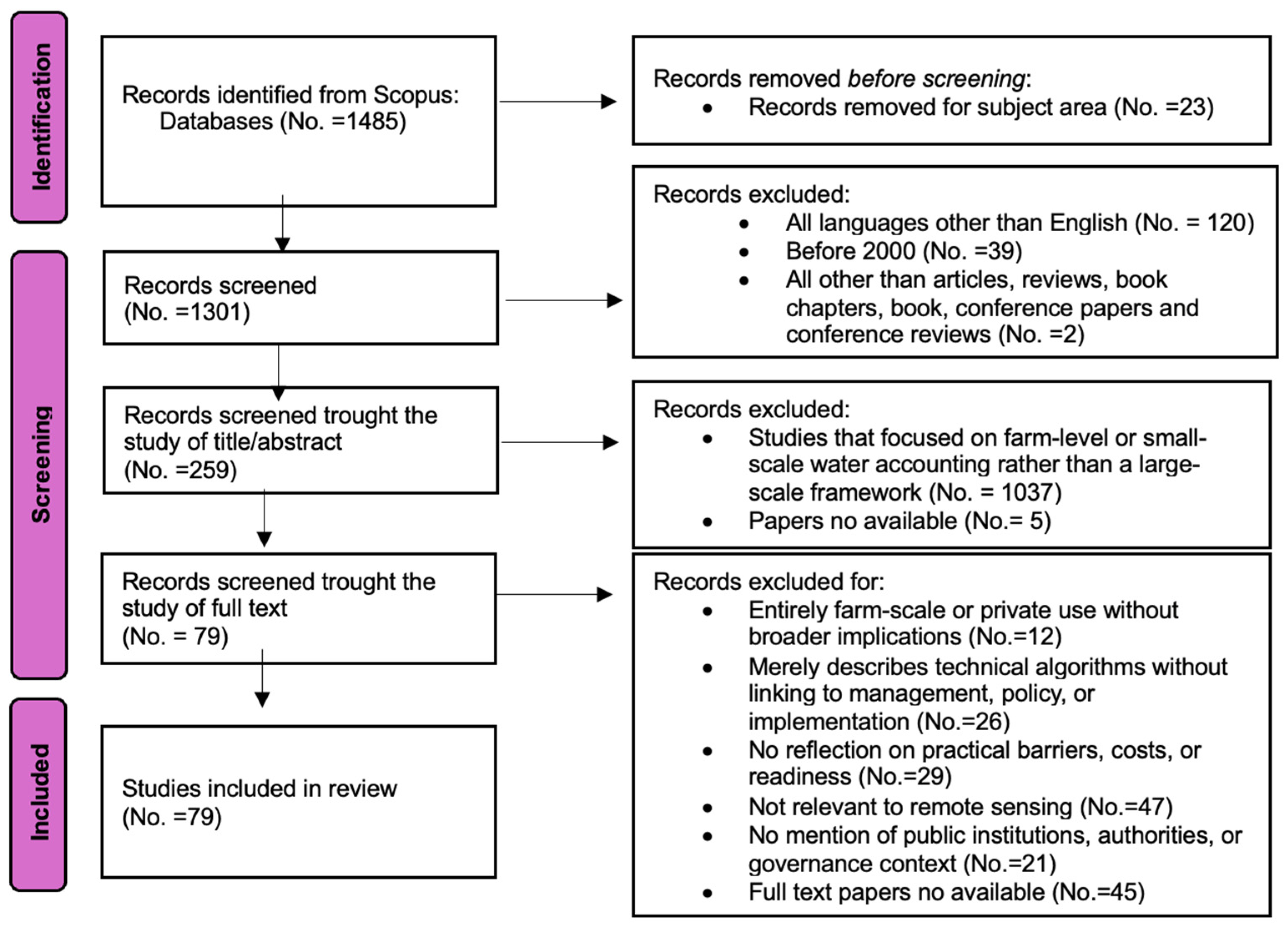
The initial search in Scopus returned 1485 documents. Subject area filters were applied, resulting in the exclusion of 23 papers that did not fall within the relevant research fields, leaving 1462 documents for screening. The excluded subject areas included Physics and Astronomy, Mathematics, Energy, Biochemistry, Genetics and Molecular Biology, Material Science, Medicine, Chemical Engineering, Chemistry, Veterinary, Psychology, Immunology and Microbiology fields. These subject areas were removed as they primarily focused on technological aspects that did not directly align with the specific focus of remote sensing applications in water accounting and governance. The exclusion ensured that the selected studies maintained a strong relevance to policy-driven water management and practical implementations of remote sensing in water governance. Figure 1 shows all subject areas included.
The next step involved filtering studies based on the predefined eligibility criteria. Inclusion criteria were articles published after 2000, written in English and falling within the specific document type (peer-reviewed article, review, book chapter, or conference paper). This process led to the exclusion of 161 papers.
Following the initial filtering, a screening process based on the title and abstract was performed to ensure that only studies explicitly addressing remote sensing applications for irrigation water accounting were considered. This initial screening phase resulted in the exclusion of 1037 articles, in addition to 5 articles that were not available for abstract consultation.
A total of 259 articles were selected for full-text screening based on their relevance to remote sensing applications in water accounting. During this phase, studies were assessed according to specific exclusion criteria to ensure alignment with the research objectives. The following reasons led to the exclusion of additional articles: focused exclusively on farm-scale or private use without broader implications (No. = 12); described technical algorithms without any connection to water management, policy, or implementation (No. = 26); lacked reflection on practical barriers, costs, or readiness for application (No. = 29); were not relevant to remote sensing (No. = 47); did not reference public institutions, authorities, or a governance framework (No. = 21); and full-text access was not accessible (No. = 45). Following this refinement, only studies meeting the inclusion criteria and online available were retained for the final synthesis (No. = 79) (Figure 2).
As the final step of our literature review methodology, a structured labeling process to categorize the core focus areas of each reviewed paper was implemented. This step aimed to distill key thematic dimensions and facilitate a more targeted synthesis of the literature. We developed five labels which are Technology Readiness (TR), Management Impact (MI), Implementation Barriers (IB), Policy Integration (PI) and Innovation/Gaps (IG) and each reflecting a distinct analytical lens. These dimensions were informed by recurring themes observed during the preliminary full-test reading, as well as by key challenges and opportunities in the domain of remote sensing applications for water management.
To ensure consistency, we created a unique protocol classification template containing guiding questions aligned with each label. For instance, to assess Technology Readiness, we examined whether the solution was scalable or deployment-ready, while Management Impact focused on cost savings or operational improvements. Implementation Barriers captured institutional, technical, or financial challenges; Policy Integration assessed alignment with governance or legal frameworks; and Innovation/Gaps identified novel approaches or future research directions.
We proceed with the classification by a double coding system by which two distinct researchers were working parallelly on, recording the information in an alphanumerical code for reference. The entire coding process was performed using a structured Excel worksheet. Labels were assigned regardless of prominence in order to capture the multidimensionality of each work. Afterword, an inter-rater agreement checking procedure was implemented. Therefore, following individual labeling, we reconciled any discrepancies through team discussion and finalized a label set for each paper (see Appendix A). This double-checking procedure ensures methodological transparency, reducing individual bias, and increasing reliability of thematic classification.
A generative AI tool (GPT 5) was used to assist in drafting a preliminary version of the text. All content was reviewed and verified by the authors.

3. Results

3.1. Overview

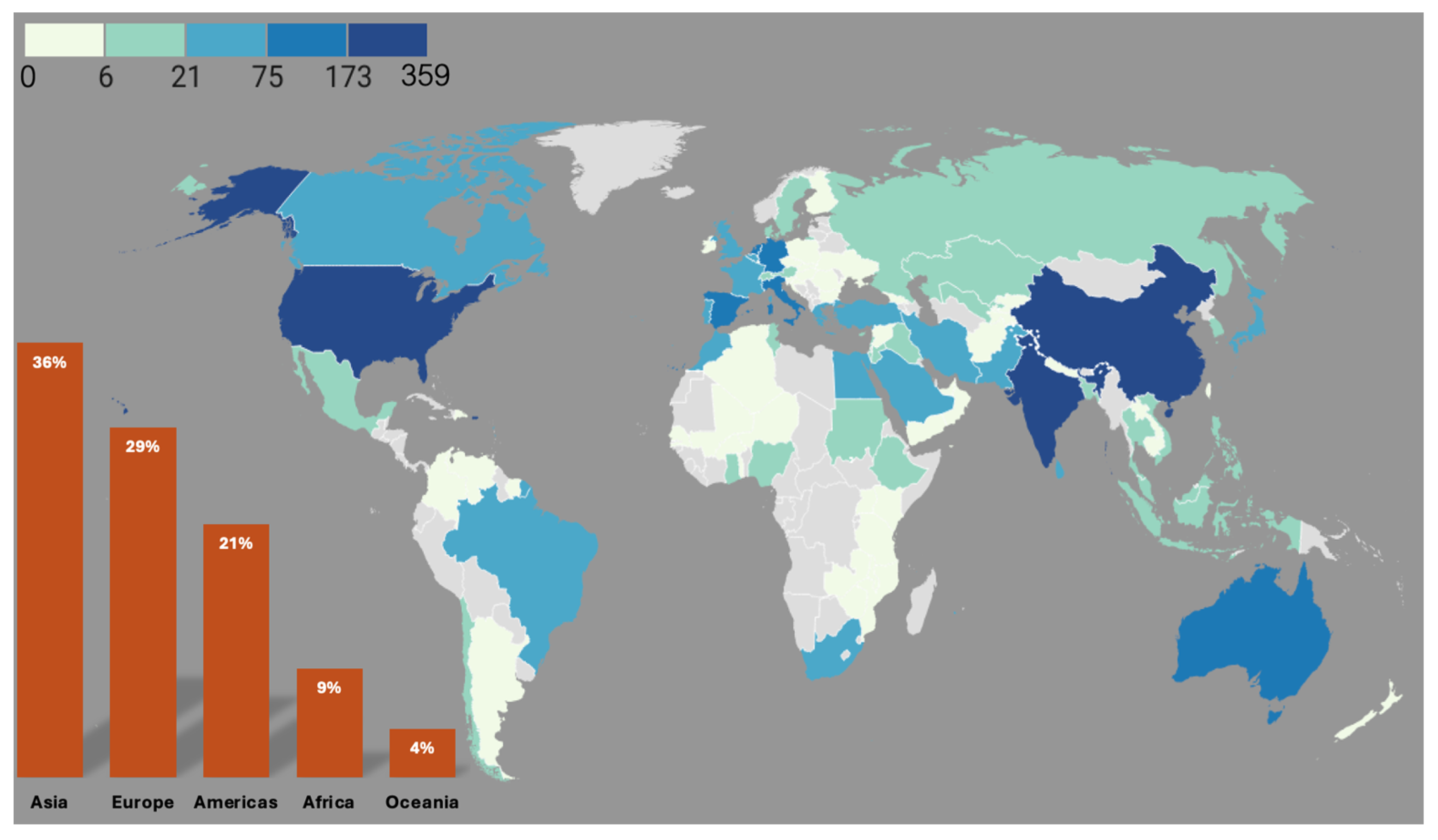
Figure 3 shows where the 1485 articles on remote sensing were published around the world. Most contributions come from Asia, making up 36% of the total, with China and India leading in scientific output. Europe follows with 29%, with Spain, Italy, and Germany contributing noticeably, though less than Asia. The Americas provide 21% of the articles, mainly from the United States. Africa and Oceania contribute less, at 9% and 4%.
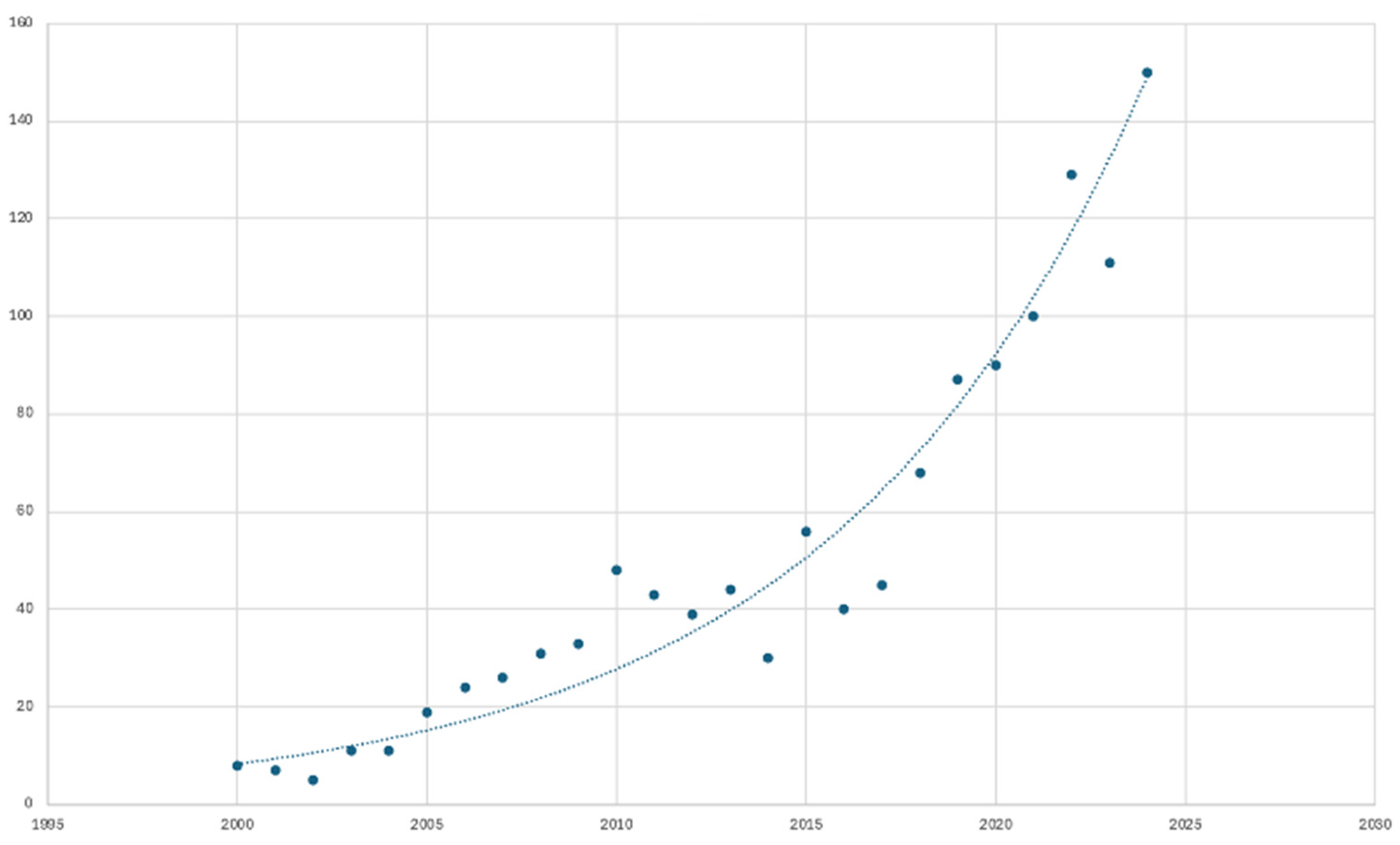
As in Figure 4, the time series highlights an overall increasing trend between 2000 and 2024, characterized by interannual variations but with a significant acceleration phase starting from 2017, which leads to the maximum value observed in 2024, confirming the growing scientific interest in the topic of remote sensing. The trend in the data fits an exponential curve (R2 = 0.9404), confirming that a growing scientific interest in the field booms very recently.
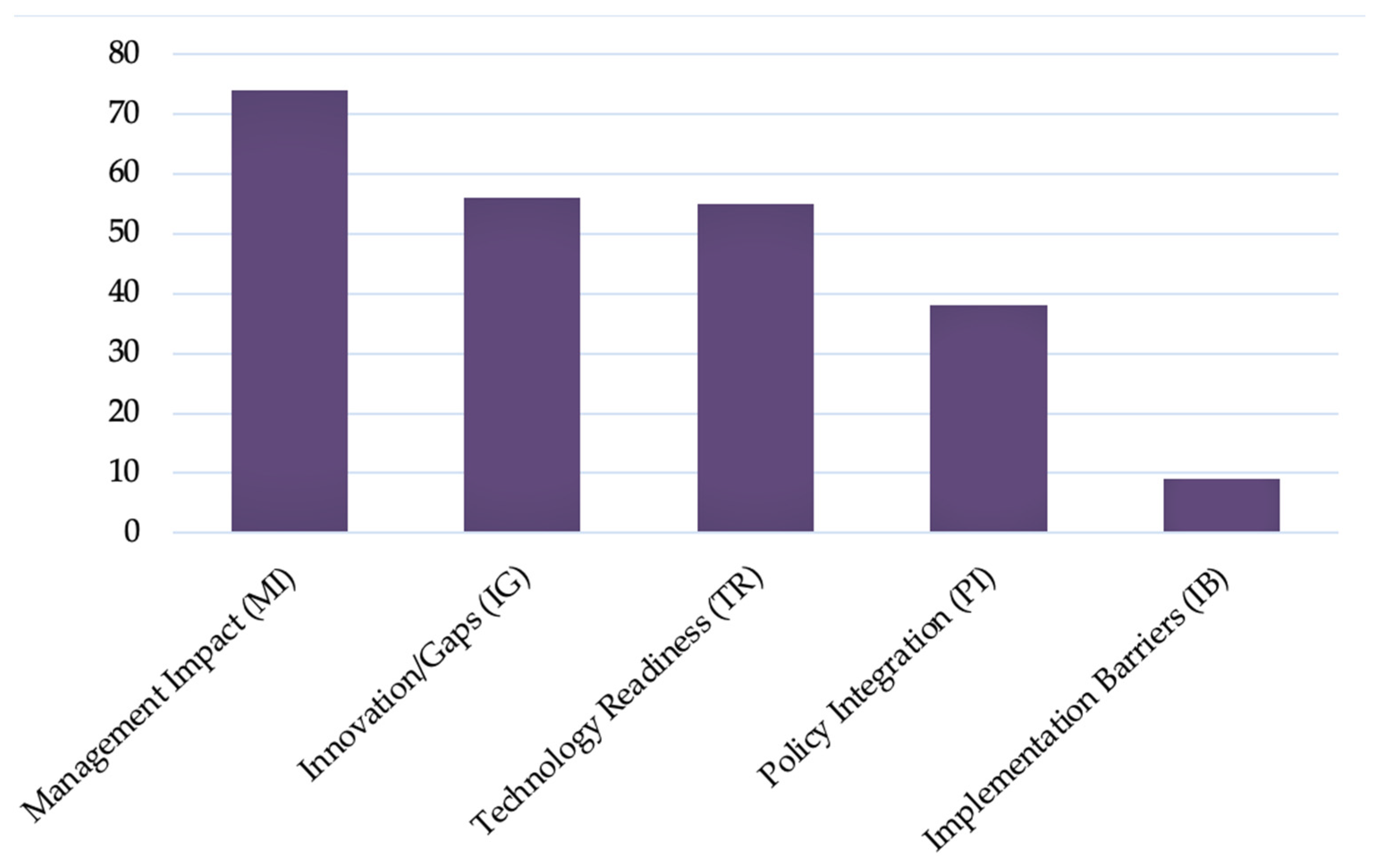
Out of the total set of classified papers (79), 93.67% were labeled with Management Impact (MI) (74 papers), followed by Innovation/Gaps (IG) with 56 papers (70.89%), Technology Readiness (TR) with 55 papers (69.62%), Policy Integration (PI) with 38 papers (48.1%), and Implementation Barriers (IB) with only 9 papers (11.39%) (Figure 5). These counts reflect the relative emphasis placed on different themes within the literature and the varying degrees of attention paid to technical, managerial, and institutional aspects of remote sensing applications in water management. The abundant presence of MI, IG, and TR indicates a research trend focused on practical benefits, novelty, and maturity of technologies, while the underrepresentation of PI and IB points to significant gaps in discussions around governance integration and real-world adoption barriers.
In terms of thematic coverage, most papers were assigned multiple labels to reflect their multidimensional content. Specifically, 46 papers (58.23%) had three labels, 13 papers (16.45%) had two, 16 papers (20.25%) were associated with four labels, and only 4 papers (5.06%) had a single label. When grouped, 63 papers (79.75%) received three or fewer labels, while 16 papers (20.25%) received more than three, indicating that a majority of studies concentrate on a narrower thematic range. This distribution also helps differentiate more focused studies from broader or more integrative ones.
Despite this promise, critical weaknesses persist. Only 11.39% of studies substantially address implementation barriers (IB), indicating limited attention to real-world constraints such as institutional inertia, technical capacity limitations, and financial hurdles. Similarly, policy integration (PI) was among the least represented categories, suggesting a disconnect between technological development and its adoption within governance frameworks. These gaps limit the transition of remote sensing from experimental tools to standardized components of regulatory systems.
The analysis also reveals a notable clustering of thematic content, with most papers addressing two or three dimensions, suggesting a lack of comprehensive, interdisciplinary approaches. For instance, while many studies evaluate the accuracy or innovation of remote sensing tools, fewer consider how these tools align with legal mandates or are received by institutional actors. This gap may partially explain the limited uptake of remote sensing in practice, despite growing technical feasibility.
Moreover, geographical distribution shows a concentration of studies in regions with established digital infrastructure, with fewer contributions from water-scarce areas in the Global South, where the need for improved water management is often most urgent. This disparity necessitates more study that tackles sociopolitical and financial implementation challenges in developing countries in addition to advancing technological progress.

3.2. Results: The Five Classification Labels

3.2.1. Management Impact

The analysis of the scientific contributions classified under the label Management Impact (MI) (n = 74) highlights and discusses the growing capacity of remote sensing to deliver concrete benefits for the operational management of water resources. In this context, “management impact” refers to the extent to which Earth Observation (EO) data and models inform, influence, or transform decisions taken by water managers, basin authorities, irrigation districts, and regulatory agencies. This includes improvements in irrigation scheduling, reductions in monitoring costs, enhancements in resource-use efficiency, and the provision of timely and spatially explicit information to guide corrective action, detect anomalies, or plan interventions.
When precise data is produced by remote sensing and actively utilized to assist planning, enforcement, or negotiating processes, it becomes more significant than just producing data [26]. According to the studies we share in this section, EO-based techniques are being increasingly utilized to close the gap between technical evaluation and the application of policies, particularly in situations where traditional monitoring infrastructure is few or dispersed.
Remote sensing techniques, sometimes associated with GIS tools, can provide a direct impact on the management of irrigation water use and groundwater extraction dynamics [27,28,29], also in a sanctioning context [30].
Several studies demonstrate how EO-derived indicators such as actual evapotranspiration (ETa), vegetation indices (NDVI), and land use classifications have been operationalized to support water allocation decisions and irrigation service [31,32]. In Sudan’s Gezira Irrigation Scheme, for example, satellite-derived NDVI and ETa values were used to compute indices of crop water consumption and efficiency, which in turn allowed water managers to identify 77 canals experiencing excessive losses or malfunctioning distribution [32]. These observations were specifically intended to improve water distribution at the subdistrict level and guide regular maintenance.
In Italy, the Arno River Basin Authority adopted a distributed hydrological model (MOBIDIC-WRM) to simulate daily water balances across the entire basin at 200 m resolution. The model was used to create maps of seasonal water stress by combining official abstraction data with EO-derived inputs including land cover and precipitation. This helped to support the 2008 Water Balance Plan. These tools allowed basin managers to identify critical subareas, assess the compatibility of water uses with ecological flow requirements, and prioritize restrictions during drought periods [33].
Management impacts are also documented in the context of pricing and cost recovery. In Brazil’s DIJA irrigation district, Folhes et al. [34] revealed how satellite-based estimates of ETa obtained via the METRIC model could be used to verify water use across 40 fields and assess compliance with volumetric pricing rules. The study showed that the differences between remotely sensed and metered volumes were consistently within a 5.5% margin, making the approach technically strong and financially viable for the scaling-up across 62 other districts.
In China’s Liuyuankou district, Khan et al. [35] combined remote sensing with groundwater models (MODFLOW) to quantify non-beneficial evaporation and to simulate management scenarios, such as canal lining or optimized pumping locations. The results showed a 45.3% reduction in total losses and a significant improvement in water productivity, from 0.39 to 0.66 kg/m3. Similarly, in the Yucheng region, Lu et al. [36] used EO data to assess the long-term impacts of Yellow River allocation policies. The study discovered a steady drop in groundwater levels and a continuous increase in groundwater extraction, totaling six million cubic meters annually, despite the implementation of regulatory frameworks.
In South Africa, Kapangaziwiri et al. [37] used multi-temporal Landsat imagery and SAPWAT modeling to assess irrigation status across more than 14,000 farms. The analysis identified over 6000 unregistered users, supporting the legal verification process required for issuing official water use entitlements under national law. Similarly, in Greece, Loukas et al. [38] describe a decision support system that integrates SEBAL-derived ETa, CROPWAT-based demand estimates, and infrastructure modeling tools to simulate various irrigation scenarios. These simulations were used by regional water agencies to assess the impact of alternative policies and infrastructure upgrades in the Pinios and Lake Karla basins.
The Water Accounting+ (WA+) framework, applied in data-scarce regions, shows how remote sensing can bridge data gaps and enhance coordination between agencies [39]. The creation of a common information base, shared by all stakeholders, allowed us to improve planning and operational decisions. In this context, the application of water accounting (WA) at different scale levels provides significant management and decision support [39]. Besides just mapping resources, remote sensing can also be used to make complex decisions [40] and can even be applied at the watershed level [41,42,43].
Although the MI studies demonstrate clear operational benefits, they also reveal a dependence on innovations and modeling approaches discussed in IG. In many cases, strong management outcomes occur only when high-quality, standardized, and locally calibrated inputs are available, showing the need for improved methodological consistency. The findings also correspond with TR, as management influences are typically most pronounced in contexts where technological maturation is already advanced. At the same time, the cases highlight gaps in policy uptake, anticipating many of the PI challenges that follow. Overall, MI evidence indicates that successful management outcomes rely on the synergistic performance of innovation, preparedness, and governance integration.

3.2.2. Innovation/Gaps

The analysis of the scientific contributions classified under the label Innovation/Gaps (IG) (n = 56) reveals the application of remote sensing to support integrated water resources management, with particular emphasis on the potential of such tools to strengthen water accounting systems at the small and regional and national scales. Belongs to this label, scientific contributions that propose innovative methods and highlight existing gaps in applying remote sensing to water resources management are examined. The key innovation is integrating satellite observations (e.g., NDVI, ETa, LST, albedo) with agro-hydrological models and simulation tools (e.g., SWAT, SALUS, CROPWAT, TSEB, SEBAL) to generate spatially explicit, temporally continuous, and comparable estimates of hydrological parameters [19,44,45,46,47]. These advancements aim to create standardized, replicable frameworks to inform the design, monitoring, and implementation of water policies, while also revealing technical, institutional, and organizational gaps that hinder their widespread adoption.
Several studies focuses on advancing modeling approaches, such as the adaptation of the SEN-ET framework to map crop-specific ETa with improved spatial resolution in Mediterranean vineyards and orchards [48], or the application of the SWAT-FARS model in Iran’s Tashk-Bakhtegan basin, which, when integrated with the WA+ framework, revealed a 23% decline in manageable water and a 53% increase in incremental irrigation over a decade, prompting a recommendation to phase out rice cultivation in favor of more water-efficient crops [49]. In the Sheridan-6 LEMA in Kansas (USA), the use of SALUS and annual land use maps derived from remote sensing allowed for robust simulation of irrigation restrictions, which resulted in a 25% decrease in groundwater abstraction and $2.85 million in energy savings over five years [50].
In Lebanon’s Litani Basin, Hazimeh and Jaafar [51] compared multiple remote sensing-based models (WaPOR V2, GYMEE, HSEB) to calculate the economic productivity of irrigation water, incorporating field-scale irrigation volumes and profit margins. Their results highlighted the importance of calibrating models to local agroecological conditions and revealed how different assumptions on stress factors (e.g., vapor pressure deficit, temperature sensitivity) substantially affect biomass and yield estimations. Similarly, in Cyprus, Papadavid et al. [52] combined ASTER and Landsat ETM+ imagery with ground-based microclimate sensors to estimate crop-specific ETp using a satellite-adapted FAO Penman-Monteith method.
In South America, De Oliveira et al. [53] highlighted how the absence of locally derived crop coefficients forces technicians to import data from regions like California or Oregon, leading to poor irrigation scheduling in crops such as olives and blueberries. This knowledge gap reduces the precision of irrigation planning and undermines the broader potential of remote sensing to support real-time water allocation in the region.
Moreover, technological progress has often outpaced the institutional capacity needed to implement these tools effectively. Important gaps persist in institutional readiness, such as insufficient technical expertise [54], absence of standardized workflows, and limited regulatory mechanisms for incorporating remote sensing outputs into official monitoring, permitting, and policy evaluation processes [21]. Addressing these gaps require targeted capacity building, improved interoperability between remote sensing platforms and national water databases, and formal recognition of satellite-derived information within legal and administrative frameworks.
The IG findings help explain why management impacts vary across contexts: innovations emerge quickly, but standardization and validation lag behind, constraining their reliability for operational use. These gaps directly influence TR, as technological maturity depends on consistent workflows, calibrated datasets, and replicable metrics. They also foreshadow PI challenges, since tools that lack harmonization are harder to embed into regulatory processes. Similarly, multiple innovation gaps are associated with the IB theme, in which insufficient expertise and fragmented data systems prevent practical implementation. Therefore, the IG section emphasizes that technological advancement must be complemented by institutional and governance alignment to realize tangible results.

3.2.3. Tech Readiness

The 55 studies examined under the theme of technology readiness provide evidence of substantial advancements in the maturity and operational viability of remote sensing applications for irrigation water management. Technological readiness refers to the maturity and operational viability of remote sensing (RS) and related tools for irrigation water accounting and management. In this context, it points the extent to which RS-based methods have evolved from experimental or research-stage applications to robust, scalable, and field-deployable solutions that can reliably support decision-making in real-world water governance.
Over the past 20 years, there has been a significant advancement in remote sensing technology for water management. Improvements in satellite resolution, frequency of observations, and the development of sophisticated models such as SEBAL, METRIC, and WaPOR have increased the precision and utility of RS-derived indicators like evapotranspiration (ET), crop water use, and groundwater abstraction [55,56,57,58,59]. These developments, combined with GIS-based analytics, have enabled monitoring of water use at scales ranging from individual plots to entire river basins, as demonstrated in studies like those in Jordan, Tamil Nadu, Uzbekistan and Iran [19,60,61,62].
Technological readiness reflects the scientific validity of these tools, as well as their accuracy and reliability when validated against ground-truth data, their scalability and adaptability across diverse agro-climatic conditions and administrative levels, and their affordability and accessibility to institutions with limited resources. Importantly, it also considers the operational simplicity of deploying such tools: whether the workflows, pre-processing requirements, and interpretation of results are manageable for practitioners beyond the research community [63,64,65].
Despite high levels of technical capability in many cases, readiness is often constrained by barriers such as intensive data-processing requirements, lack of automation, and dependence on high-quality ground data for calibration. Assessing the technological readiness of RS tools is therefore essential to ensure that investments in monitoring translate into operational improvements in water use efficiency, sustainability, and compliance [66,67,68].
Several studies show both the promise and the complexities of deploying remote sensing technologies for irrigation water management. In Jordan, a comprehensive RS-based framework using Landsat 8 and Sentinel-2 data with SEBAL modeling was integrated into the national Water Master Plan. Significant differences between reported and actual groundwater use were found in the study, indicating institutional blind spots and casting doubt on official narratives. It also showed the technical accuracy of RS tools [19].
In Tamil Nadu, India, researchers produced detailed groundwater potential maps by integrating multi-temporal RS and GIS layers. Although the output was validated against borewell data and classified potential zones, the small fraction of “very good” areas identified (just 0.2 km2) raised critical questions about the feasibility of groundwater exploitation in such contexts and pointed the need to balance technical optimism with hydrological realities [60].
In Multan, Pakistan, the RS and GIS-based evaluation of irrigation demand and supply over a decade revealed a notable water supply deficit despite declining demand due to urbanization. This finding highlighted both the technical ability to detect dynamic land and water changes and the governance gaps that fail to match supply to evolving patterns of demand [69].
In Iran, the WA+ framework successfully combined RS and hydrological modeling to generate detailed water and productivity accounts for the Lake Urmia Basin. Beyond its operational readiness, the study shows how RS-supported accounting can inform politically sensitive trade-offs between environmental recovery and agricultural livelihoods, illustrating that technical tools also carry social and economic implications that must be navigated carefully [61].
Using SEBAL and NDVI time-series, the study assessed community-based irrigation schemes in Ethiopia, revealing inequities in water distribution and a missed opportunity to translate remote sensing insights into community-level interventions. The complexity of the workflow and the lack of local capacity shows that the potential to redesign processes and build institutional support for actionable outcomes [70].
In Spain, the HidroMap platform provided a sophisticated integration of RS, GIS, and legal records, identifying thousands of unauthorized irrigation cases in the Duero Basin. Importantly, its deployment also exposed the operational and political tensions between enforcing regulations and supporting farmers, suggesting that even a technically mature system must be used within a supportive governance framework to achieve its potential [20].
The PLEIADeS project, which applied RS tools across several agro-climatic regions, offered a particularly instructive example. The comparison between fast, empirical NDVI-based models and more computationally intensive physically based models shows that readiness involves balancing scientific strength, computational demands, and user needs rather than focusing solely on accuracy [71].
These examples suggest that the growing reliability and scalability of remote sensing technologies do not eliminate the deeper scientific, institutional, and ethical challenges underlying their deployment. Rather than simply proving that the tools work, these the literature point out the critical importance of contextualizing technical outputs within socio-political realities, capacity constraints, and long-term sustainability goals.
Technical maturity continues to improve according to the TR findings, but there are also conflicts with the institutional and management capabilities found in MI and IB. Because adoption depends on the workflows, competencies, and governance structures outlined in PI, high readiness does not always equate to effective utilization. Furthermore, a number of IG concerns regarding a lack of uniformity and calibration are reinforced by the mismatch between sophisticated tools and inconsistent innovation uptake. The examples demonstrate that whereas technological maturity is a prerequisite for operationalization, it is not sufficient. In the end, TR emphasizes the necessity of improving the alignment between institutional preparedness and technical capability.

3.2.4. Policy Integration

From the analysis of studies (n = 38) addressing policy integration, a range of opportunities and challenges emerge in embedding remote sensing technologies into water governance frameworks. Policy Integration (PI) refers to the systematic incorporation of remote sensing-derived data and tools into legal, institutional, and administrative processes that regulate water resources, enabling evidence-based decision-making, improved compliance, and more sustainable water management [49,72]. Such integration enables evidence-based decision-making, improves transparency and compliance, and supports the transition toward more sustainable and equitable water management practices [73,74].
The potential of remote sensing technologies to enhance water governance is increasingly recognized. The timely, spatially explicit, and objective insights provided by remote sensing help to overcome the challenges associated with traditional field-based monitoring, such as high costs, labor demands, and susceptibility to inaccuracies [75,76]. When incorporated into policy frameworks, these technologies can inform the design of water allocation schemes [77], compliance verification [37,78], tariff structures [34,79], and long-term planning [35,49] supporting the integration of sustainability and equity considerations into operational decision-making.
Despite this promise, achieving effective policy integration is still challenging. Institutional inertia, fragmented governance structures, weak enforcement capacity, and lack of stakeholder engagement often limit the uptake of remote sensing evidence in policy formulation and implementation [53,80,81]. Furthermore, the technical complexity of remote sensing outputs can hinder their accessibility and usability for policymakers and local authorities [82,83]. In some cases, institutionalized political and economic interests resist reforms that would impose stricter regulation or redistribute water rights based on more accurate usage data [81,84].
Effective water policy must leverage remote sensing to confront the growing challenges of scarcity, climate change, and competing demands [85,86]. This enables a transition from reactive to proactive water management by strengthening accountability and promoting adaptive, data-driven strategies that reflect the principles of integrated water resource management (IWRM) and sustainability [16,87].
Several studies illustrate promising pathways for integrating remote sensing technologies into water governance frameworks, though the extent of success varies by context and institutional capacity.
One noteworthy example comes from the Sheridan-6 Local Enhanced Management Area (SD-6 LEMA) in Kansas, USA, where remotely sensed evapotranspiration (ET) data were integrated into a policy-driven groundwater reduction program. Findings from the study show that data-supported enforcement of a 20% reduction in pumping led to significant water savings with minimal yield losses, demonstrating the potential of data-driven regulation to balance productivity and conservation [88].
In Bangladesh’s Barind region, an increasing block tariff (IBT) pricing model was proposed as a strategy to address unsustainable groundwater use. Grounded in common-pool resource theory and informed by remote sensing data, the policy design incorporated social equity, economic efficiency, and environmental sustainability. The study highlighted the importance of participatory approaches and institutional strengthening to ensure effective implementation [79].
The Murray–Darling Basin (MDB) in Australia serves as another significant example. In response to water theft and weak enforcement, policy reforms mandated the use of remote sensing and telemetry to monitor compliance. Notably, New South Wales established a dedicated compliance authority (NRAR), which successfully conducted satellite-based investigations and prosecutions, provides evidence that institutional investment in technology and governance helps close enforcement gaps [30].
In Spain’s La Mancha Oriental aquifer, remote sensing-based monitoring was institutionalized within legal and administrative structures, supporting conflict resolution and water rights allocation. The SPIDER-ERMOT WebGIS tool enhanced transparency and participatory governance, and the Spanish Supreme Court even recognized the legal validity of remotely sensed evidence [89].
Finally, the Minqin Oasis in China provides an example of policy transformation guided by remote sensing. After decades of overexploitation driven by agricultural expansion policies, new conservation-oriented policies used RS data to set water quotas, reduce irrigated areas, and monitor ecological recovery. This transition led to measurable improvements in groundwater levels and vegetation cover and shows how data can underpin adaptive policy shifts [90].
These examples collectively illustrate the diversity of approaches to policy integration, including pricing mechanisms, compliance monitoring, ecological restoration, and licensing reform, all underpinned by remote sensing data.
The PI analysis demonstrates that governance constraints cause policy acceptance to be uneven even when innovations are strong (IG) and instruments acquire high maturity (TR). Because regulations do not yet institutionalize the use of remote sensing outputs, many of the managerial benefits emphasized in MI do not scale. Because formal integration is frequently challenged by political opposition, divided mandates, and inadequate institutional capacity, PI also directly interacts with IB. These analogies stress the need for governance change in order to close the gap between technical potential and practical use.

3.2.5. Implementation Barriers

From the analysis of studies (n = 9) dealing with implementation barriers, a set of systemic and recurring obstacles that disrupt the effective application of remote sensing technologies and sustainable water resource management tools in diverse contexts. Implementation Barriers (IB) include structural, institutional, technical, and socio-political constraints that limit the concrete adoption of innovative technologies, especially in the transition from pilot projects to full-scale operational use. These obstacles include strict institutional frameworks, inadequate financial resources, insufficient infrastructure, and broad opposition to organizational transformation. In some public administrations, technical and financial limitations impair the integration of innovative tools into water planning.
The utility of satellite data is significantly reduced by limited observational quality and a lack of technical capacity among end users, who struggle to translate data into actionable outcomes [91]. The lack of expertise in geospatial technologies, coupled with difficulties in addressing illegal practices such as unauthorized water withdrawals, represents another major governance challenge. The success of innovation also relies heavily on continuous staff training and knowledge transfer, particularly in contexts where decision-making is still based on inconsistent or outdated information systems [92,93]. Reforms involving participatory irrigation encounter criticism from stakeholders and institutional weaknesses and limited resources. Smallholders often lack the technical skills to manage local infrastructure, and inequalities in water distribution along canals further reduce policy effectiveness [73]. In contexts where productivity-focused policies dominate, irrational land and water use leads to accelerated environmental degradation, compounded by technical limits in soil water storage capacity and poorly aligned agricultural strategies. In many regions, competition over water resources is systemic and structural, creating persistent barriers to achieving sustainable and equitable water management [90].
Several case studies provide additional examples of these processes. In Lebanon’s Litani Basin, despite the availability of satellite-derived productivity indices, the mismatch between institutional mandates and technical capacity prevented the effective adoption of remote sensing-based recommendations for irrigation management. The reliance on external models without localized calibration mistrust and undermined coordination among stakeholders [94]. In South America, as highlighted by De Oliveira et al. [53], the widespread use of crop coefficients derived from non-local conditions (e.g., California, Oregon) indicates a deeper lack of investment in site-specific data generation, impeding real-time water planning. Similarly, Papadavid et al. [52] found that in Cyprus, remote sensing-based estimations of evapotranspiration remained confined to research circles, due to the absence of institutional mechanisms and trained personnel capable of integrating such outputs into formal water distribution protocols.
In Jordan, as Liptrot & Hussein [81] showed, policy efforts to regulate groundwater abstraction using remote sensing data encountered significant resistance from politically influential agricultural stakeholders. Even in the Disi aquifer, where the state succeeded in reallocating water by shutting down large farms, policing was made possible only due to the absence of local labor or political influence. In contrast, similar interventions in the Azraq Basin failed due to unorganized governance and lack of accurate usage data across institutions. Institutional resistance and the broader political economy of water frequently hinder the effectiveness of technical innovations, leading to different results in how water rules are applied and respected in different places.
Specifically, recurring challenges include the lack of localized agro-hydrological data [53], the limited technical capacity of public-sector operators in utilizing and interpreting remote sensing products [95], and the weak integration between modeling tools and multi-level decision-making processes [54]. These deficiencies obstruct the consolidation of routine and institutionalized use of remote sensing in irrigation planning, permit management, and control of pressure on water bodies. Furthermore, several contributions question long-standing methodological assumptions, showing the inadequacy of conventional metrics (e.g., field-level water use efficiency) in accurately representing net impacts on basin-scale water balances [49].
Outdated, centralized governance models constrain the adoption of adaptive practices. Concurrently, poor familiarity with digital tools, fragmented data systems, and limited data access undermine responsive decision-making and transparency [93]. These limitations are intensified by the persistence of non-integrated workflows and the lack of platforms for interoperable data exchange between agencies and governance levels. Other systems suffer from dated infrastructure, poor maintenance, and high-water losses, severely compromising irrigation performance. These issues are intensified by unsustainable agricultural planning and a lack of updated policies [32]. Advanced hydrological modeling is strongly constrained by data scarcity, often forcing simplified assumptions that reduce simulation accuracy. Such technical barriers prevent the effective integration of predictive tools into water management [33]. Groundwater withdrawal monitoring is constrained by logistical, financial, and regulatory obstacles, particularly when installing meters in private wells. In the case of Jordan, remote sensing estimates helped identify unregistered irrigated areas but required legal amendments before such evidence could be officially recognized [92]. Consequently, the operational application of satellite data is dependent upon both technical soundness and legal frameworks that acknowledge their evidentiary worth [96]. Finally, insufficient coordination among responsible agencies, the lack of standardized indicators, and the absence of harmonized morphological data are major constraints to effective river restoration planning.
To address these barriers, several studies suggest the need for systemic reforms that include institutional capacity-building, localized model calibration, increased data interoperability, and legal recognition of geospatial evidence. Remote sensing is unlikely to have a significant transformative impact on water governance at scale without such structural changes, and it is likely to remain limited to pilot projects and academic applications.
Many of the beneficial results seen in MI, IG, TR, and PI do not always show up in reality, as the IB findings show. Full operational adoption of novel or technically advanced instruments is made difficult by institutional inertia, a lack of knowledge, and poor coordination. The obstacles also account for the policy gaps seen in PI, wherein regulatory regimes find it difficult to integrate findings from remote sensing. Comparisons with IG and TR demonstrate that investments in capacity, data infrastructure, and governance reform must keep pace with technological advancements.

4. Discussion

This review of 79 studies provides a systematic synthesis of thematic trends, knowledge gaps, and challenges in applying remote sensing (RS) for accounting of irrigation water. The findings highlight significant advancements in technological, methodological, and managerial domains, yet also reveal persistent deficiencies in governance integration, implementation, and equity considerations.
A notable trend in the literature is the strong emphasis on practical benefits, with most studies focusing on management impact (MI), innovation/gaps (IG), and technology readiness (TR). This represents a research field driven by technological development and operational efficiency, as evidenced by numerous studies showcasing the accuracy of RS tools, their capacity to inform irrigation scheduling, and their potential for enhancing water productivity. These efforts have made a significant contribution to the development of standardized monitoring frameworks, the advancement of hydrological models, and the demonstration of operational applications at both local and transboundary scales.
Research too often focuses on Technology Readiness (TR) and Management Impact (MI) because their benefits in remote sensing (RS) are clear and easy to measure. These factors are well-suited for case studies that help move research forward and attract funding. For example, higher satellite resolution, improved modeling, and advanced data analysis tools enable assessing water-use efficiency, planning irrigation, and boosting crop water productivity. These results are especially useful for policymakers and practitioners who want to improve water management. TR and MI also support current policy sounds that encourage the use of data-driven technologies for environmental monitoring and resource management [97].
However, the underrepresentation of studies addressing policy integration (PI) and especially implementation barriers (IB), suggest an inconsistency between technological advances and the institutional framework required to mainstream these tools into water management [98]. Only about 11% of studies substantially engaged with barriers to implementation, and fewer than half examined policy integration, revealing the need for more interdisciplinary research that bridges technical feasibility with legal, organizational, and socio-political realities.
This gap may partly explain why many promising RS applications remain confined to pilot projects or academic exercises, with limited impact on regulatory or operational practice. On the other hand, Policy Integration (PI) and Implementation Barriers (IB) are discussed less often because using remote sensing tools in water governance requires major changes in institutions. Policy integration means fitting new technologies into existing laws while changes can be seen as politically sensitive [24].
The literature also shows a clear clustering of thematic focus, with most studies addressing two or three theme categories, and only a minority engaging comprehensively across all thematic label areas. This indicates that the field still lacks integrative approaches that combine technical innovation with attention to governance, institutional capacity, and socio-economic contexts. Geographical imbalances in research are evident, with wealthier nations equipped with more resources conducting a higher volume of studies. While significant research has been carried out in water-scarce areas, especially in the Global South, the disparity in funding and infrastructure means that these regions often face challenges in conducting and showcasing research at the same scale as more developed countries.
On the technological front, substantial progress has been made in increasing the resolution, reliability, and operational relevance of RS-based tools. Case studies from Jordan, Spain, and China [19,89,99] showcase mature, field-tested systems capable of informing national-level water planning and enforcement. However, the research makes clear that excellent technical performance is not always accompanied by useful results. Effective deployment is still largely determined by operational simplicity, cost of implementation, and institutional capability, especially in environments with limited resources.
Several recurring barriers to implementation emerge from the reviewed studies, including limited technical capacity of administration end users, inadequate financial resources, and poor data compatibility between agencies. Building and maintaining a sustainable data system requires investment in addressing limitations in data availability, accessibility, interoperability, and resolution [100]. Legal frameworks that fail to recognize RS-derived evidence, as well as resistance from politically influential water users, further constrain adoption. Even technically mature systems, as shown in case studies from Jordan, Pakistan, and Spain [19,20], often encounter administrative and social obstacles that limit their transformative potential.
Many studies demonstrate how RS can enhance water accounting by integrating satellite data with hydrological and agro-economic models to generate spatially explicit, temporally continuous assessments of water use and productivity [18]. Others question long-held assumptions about water efficiency metrics, promoting more comprehensive indicators coherent with sustainability and distributive justice. This points to a changing perspective where geospatial technologies are seen as structural elements of governance infrastructures rather than just analytical tools. Data-system governance involving both producers and users of data is seen as essential to achieving workable standards, convenient data availability, and long-term buy-in by stakeholders [100]. A framework that does not address institutional concerns increases the risk of data system failure from lack of coordination, underinvestment, or lack of trust [98].
One of the biggest obstacles to water management is the lack of trustworthy data on irrigation withdrawals, especially for groundwater extraction. Stronger water accounting that may support successful sustainability-oriented policies may be the result of increased dedication to data validation and the combined use of satellite technology and In Situ systems [21]. This is also linked to a lack of site-specific data on farm management practices [101]. Yet, unless the farmer’s behavioral components are integrated into data sources, impacts of adaptation to climate change will not be adequately assessed [102]. Integration and interoperability of existing data sources with satellite data have been demonstrated in real case such as La Mancha Oriental Aquifer in Spain [98]. Such twining requires coordination among multiple agencies to integrate existing data that is currently fragmented, heterogeneous data from different sources such as satellite imagery, ground-based sensors and weather stations [22] as well as in situ measurements.
Open data are important for sustainable and inclusive environmental management while citizen-science methods pave a way forward to connect data producers with data users [103]. On the other hand, open data availability and farm-related data (i.e., data on wells, or data on groundwater withdrawals) can raise legal concern about appropriability [24], ethical issues for ownership, as well as cybersecurity threats [22].
To use remote sensing data in current water management, a framework is needed that addresses both technical and institutional needs. Good data governance depends on cooperation between those who produce data, like remote sensing agencies, and those who use it, such as government bodies, water managers, and farmers. Building these systems requires ongoing investment in establishing data standards, training people, and ensuring that different systems work together, along with strong policy support to help use RS data in decision-making. Without these frameworks, problems such as scattered data, mixed standards, and reduced trust in the data can occur, limiting how much RS tools can help with water governance.

5. Conclusions

This review shows that while remote sensing (RS) has made strong progress in irrigation water accounting, challenges remain. RS technologies now help monitor, manage, and plan water use more effectively, offering better coverage, faster results, and greater efficiency. Recent studies highlight new tools and methods that are being used more often in decision-making, showing that RS is becoming a key part of water management systems.
Out of the 79 studies reviewed, most (93.67%) looked at management impacts, and 70.89% explored innovation and research gaps. Fewer studies (48.1%) discussed policy integration, and only 11.39% examined barriers to putting these ideas into practice. This shows that the field mainly focuses on technology and management, with less attention to how RS fits into governance and institutions.
Most studies are based in wealthier regions like Europe, China, and the United States, while water-scarce areas in the Global South are underrepresented. This is concerning because these regions often face the toughest water management problems. Also, gaps between technical skills and institutional readiness, along with weak legal support and limited stakeholder involvement, still hold back the wider use of RS innovations.
To obtain the most out of RS in irrigation, future research should focus on approaches that combine technical progress with stronger institutions, better legal frameworks, and more involvement from farmers. It is also important to include ethical and fair concerns, so that RS solutions support sustainable and fair results, especially in areas with fewer resources.
In summary, the main challenge is closing the gap between technical possibilities and real-world solutions. Most studies focus on management’s impacts, but few address barriers to implementation. Future efforts should fit RS techniques into strong institutions and legal systems, encourage inclusion, and ensure new ideas match governance needs. This can be performed by building shared data systems, improving coordination between agencies, and using standard validation methods. These steps would make RS more useful in water management and help turn the paper’s findings into practical policy advice.

Author Contributions

Conceptualization, G.G.; methodology, H.B. and M.C.; validation, H.B., M.C. and G.G.; formal analysis, H.B. and M.C.; investigation, H.B. and M.C.; resources, G.G.; data curation, H.B. and M.C.; writing—original draft preparation, H.B. and M.C.; writing—review and editing, H.B., M.C. and G.G.; visualization, H.B. and M.C.; supervision, G.G.; project administration, G.G.; funding acquisition, G.G. All authors have read and agreed to the published version of the manuscript.

Funding

This research was funded by Ministero delle Imprese e del Made in Italy, WADIT project, grant number n. F/310272/01-05/X56. Massimo Cassiano, benefits within PNRR a scholarship for a PhD in Public Administration (Notice: Rectoral Decree 4642; CUP H91I23000810007).

Data Availability Statement

The original contributions presented in this study are included in the article. Further inquiries can be directed to the corresponding author.

Acknowledgments

We are very grateful for the insights and helpful suggestions shared by reviewers. We recognize that a generative AI tool (Chat GPT 5) was used to assist in drafting a preliminary version of the text. All content was reviewed and verified by the authors.

Conflicts of Interest

The authors declare no conflicts of interest. The funders had no role in the design of the study; in the collection, analyses, or interpretation of data; in the writing of the manuscript; or in the decision to publish the results.

Abbreviations

The following abbreviations are used in this manuscript:
CROPWATCrop Water
EOEarth Observation
ETEvapotranspiration
EtaActual Evapotranspiration
EUEuropean Union
GISGeographic Information System
IBImplementation Barriers
IGInnovation/Gaps
LSTLand Surface Temperature
MIManagement Impact
MOBIDICMOdello di Bilancio Idrologico DIstribuito e Continuo
NDVINormalized Difference Vegetation Index
PIPolicy Integration
PRISMAPreferred Reporting Items for Systematic Reviews and Meta-Analyses
RSRemote sensing
SEBALSurface Energy Balance Algorithm for Land
SWATSoil and Water Assessment Tool
TRTechnological Readiness
WAWater Accounting
WA+Water Accounting Plus
WaPORWater Productivity through Open access of Remotely

Appendix A

ReferenceTitleYearLabel Code
[15]Satellite remote sensing and GIS technologies to aid sustainable management of Indian irrigation systems2000IG-MI-TR
[77]Determining a better water management using a geographical technique—A case study in Egypt2001MI-PI-TR
[56]Inverse modeling to quantify irrigation system characteristics and operational management2002IG-MI-TR
[55]SEBAL model with remotely sensed data to improve water-resources management under actual field conditions2005IG-MI-PI-TR
[68]Irrigation management from space: Towards user-friendly products2005IG-MI-PI-TR
[99]Remote sensing application for estimation of irrigation water consumption in Liuyuankou irrigation system in China2005IG-MI-TR
[87] Operational tools for irrigation water management based on Earth Observation: The DEMETER project2006IG-MI-PI-TR
[57] Application of remote sensing techniques for water resources planning and management2006IG-MI-TR
[31]Evapotranspiration from a remote sensing model for water management in an irrigation system in Venezuela2006IG-MI-TR
[74]Using state-of-the-art techniques to develop water management scenarios in a lake catchment2007IG-MI-PI-TR
[35]Enhancing water productivity at the irrigation system level: A geospatial hydrology application in the Yellow River Basin2008MI-PI-TR
[33]A distributed package for sustainable water management: A case study in the Arno basin2009IB-MI-PI-TR
[53]Irrigation water management in Latin America2009IG-MI-PI
[83]Earth observation products for operational irrigation management: The PLEIADeS project2009MI-PI-TR
[34]Remote sensing for irrigation water management in the semi-arid Northeast of Brazil2009IB-MI-PI-TR
[60]Water resources management for Virudhunagar district using remote sensing and GIS2010MI-TR
[47]Current status and perspectives for the estimation of crop water requirements from earth observation2010MI-PI-TR
[71]Earth Observation products for operational irrigation management in the context of the PLEIADeS project2010MI-PI-TR
[16]Remote Sensing and Economic Indicators for Supporting Water Resources Management Decisions2010IG-MI-PI-TR
[75]Operational monitoring of daily crop water requirements at the regional scale with time series of satellite data2010MI-PI-TR
[17]Calibration of a distributed irrigation water management model using remotely sensed evapotranspiration rates and groundwater heads2011IG-MI-TR
[62]Development of a satellite-based multi-scale land use classification system for land and water management in Uzbekistan and Kazakhstan2011IG-MI-TR
[86]Smart management and irrigation demand monitoring in Cyprus, using remote sensing and water resources simulation and optimization2011IG-MI-PI-TR
[82]Water balance of irrigated areas: a remote sensing approach2011IG-MI-PI-TR
[93]Improving water governance in Central Asia through application of data management tools2012IB-MI-PI
[72]Satellite irrigation management support with the terrestrial observation and prediction system: A framework for integration of satellite and surface observations to support improvements in agricultural water resource management2012IG-MI-PI-TR
[95]Remote sensing applications for planning irrigation management. The use of SEBAL methodology for estimating crop evapotranspiration in Cyprus2012IG-MI-TR
[67]Remote sensing applications in water resources2013IG-MI-TR
[66]Evapotranspiration estimates from remote sensing for irrigation water management2013IG-MI-PI
[52]Monitoring and determination of irrigation demand in Cyprus2013IG-MI-PI
[13]An innovative remote sensing based reference evapotranspiration method to support irrigation water management under semi-arid conditions2014IG-MI-TR
[59]Development of irrigation water management model for reducing drought severity using remotely sensed soil moisture footprints2014IG-MI-TR
[58]Remote sensing and district database programs for irrigation monitoring and evaluation at a regional scale2015IG-MI-TR
[44]Water balance indicators from MODIS images and agrometeorological data in Minas Gerais state, Brazil2015IG-MI-TR
[84]Temporal change in land use by irrigation source in Tamil Nadu and management implications2015IG-MI-TR
[38]Development of a district information system for water management planning and strategic decision making2015MI-PI-TR
[85]Hydro-economic analysis of groundwater pumping for irrigated agriculture in California’s Central Valley, USA [Analyse hydro-économique des pompages d’eaux souterraines pour l’agriculture irriguée dans la vallée Centrale en Californie, Etats Unis d’Amérique]2015MI-PI-TR
[46]Estimation of crop water requirements using remote sensing for operational water resources management2015IG-MI-TR
[40]Satellite-based irrigation advisory services: A common tool for different experiences from Europe to Australia2015IG-MI-TR
[90]Policies, Land Use, and Water Resource Management in an Arid Oasis Ecosystem2015IB-MI-PI
[92]Geospatial techniques for improved water management in Jordan2016IB-IG-MI
[42]Assessing irrigated agriculture’s surface water and groundwater consumption by combining satellite remote sensing and hydrologic modelling2016IG-MI-TR
[41]Sustainable Agricultural Water Management in Pinios River Basin Using Remote Sensing and Hydrologic Modeling2016IG-MI-TR
[31]Implications of non-sustainable agricultural water policies for the water-food nexus in large-scale irrigation systems: A remote sensing approach2017IB-MI-PI-TR
[96]Remote sensing for crop water management: From ET modelling to services for the end users2017IG-MI-TR
[89]Remote sensing-based water accounting to support governance for groundwater management for irrigation in la Mancha oriental aquifer, Spain2017IB-MI-PI-TR
[43]Remote sensing-based soil water balance for irrigation water accounting at the Spanish Iberian Peninsula2018IG-MI-PI-TR
[37]Validation and verification of lawful water use in South Africa: An overview of the process in the KwaZulu-Natal Province2018MI-PI-TR
[20]HidroMap: A new tool for irrigation monitoring and management using free satellite imagery2018IG-MI-TR
[76]Application of a remote sensing-based soil water balance for the accounting of groundwater abstractions in large irrigation areas2019MI
[49]Basin-wide water accounting based on modified SWAT model and WA+ framework for better policy making2020IG-MI-PI
[21]Satellite-Based Monitoring of Irrigation Water Use: Assessing Measurement Errors and Their Implications for Agricultural Water Management Policy2020IG-MI
[26]Evaluation of remote sensing-based irrigation water accounting at river basin district management scale2020IG-MI-PI-TR
[65]Remote sensing–based soil water balance for irrigation water accounting at plot and water user association management scale2020IG-MI-TR
[81]Between regulation and targeted expropriation: Rural-to-urban groundwater reallocation in Jordan2020IG-MI-PI
[78]A Methodological Approach for Irrigation Detection in the Frame of Common Agricultural Policy Checks by Monitoring2020IG-MI-PI-TR
[80]Towards a sustainable and adaptive groundwater management: Lessons from the Benalup Aquifer (Southern Spain)2020IG-MI-PI
[30]Remote sensing’s role in improving transboundary water regulation and compliance: The Murray-Darling Basin, Australia2021MI-PI
[50]Combining Remote Sensing and Crop Models to Assess the Sustainability of Stakeholder-Driven Groundwater Management in the US High Plains Aquifer2021IG-MI
[54]Enhanced Water Management for Muang Fai Irrigation Systems through Remote Sensing and SWOT Analysis2021IG-MI
[73]Mapping Impact of Farmer’s Organisation on the Equity of Water and Land Productivity: Evidence from Pakistan2022IB-MI-PI
[63]Estimating the economic value and economic return of irrigation water as a sustainable water resource management mechanism2022IG-MI-TR
[61]Water and productivity accounting using WA+ framework for sustainable water resources management: Case study of northwestern Iran2022IG-MI-TR
[45]Viewpoint: Irrigation water management in a space age2022IG-MI
[27]An interval multi-objective fuzzy-interval credibility-constrained nonlinear programming model for balancing agricultural and ecological water management2022IG-MI-TR
[64]Tracking spatiotemporal dynamics of irrigated croplands in China from 2000 to 2019 through the synergy of remote sensing, statistics, and historical irrigation datasets2022IG-MI-TR
[19]Remote Sensing for Agricultural Water Management in Jordan2023IG-TR
[70]Evaluating Performance of Community-based Irrigation Schemes Using Remote-sensing Technologies to Enhance Sustainable Irrigation Water Management2023IG-MI-TR
[39]Methodologies for Water Accounting at the Collective Irrigation System Scale Aiming at Optimizing Water Productivity2023IG-MI-TR
[69]Quantifying irrigation water demand and supply gap using remote sensing and GIS in Multan, Pakistan2023MI-TR
[36]Effects of Yellow River Water Management Policies on Annual Irrigation Water Usage from Canals and Groundwater in Yucheng City, China2023IG-MI-PI-TR
[91]Water Accounting Plus: limitations and opportunities for supporting integrated water resources management in the Middle East and North Africa2024IB
[48]Analysis and forecast of crop water demand in irrigation districts across the eastern part of the Ebro river basin (Catalonia, Spain): estimation of evapotranspiration through copernicus-based inputs2024IG-MI
[51]Impact of ET and biomass model choices on economic irrigation water productivity in water-scarce basins2024IG
[28]Toward field-scale groundwater pumping and improved groundwater management using remote sensing and climate data2024MI
[94]Socioeconomic impact of agricultural water reallocation policies in the Upper Litani Basin (Lebanon): a remote sensing and microeconomic ensemble forecasting approach2024IG-PI
[79]Geospatially Informed Water Pricing for Sustainability: A Mixed Methods Approach to the Increasing Block Tariff Model for Groundwater Management in Arid Regions of Northwest Bangladesh2024MI-PI
[29]Comprehensive model for sustainable water resource management in Southern Algeria: integrating remote sensing and WEAP model2024IG-MI-TR
[88]Estimating irrigation water use from remotely sensed evapotranspiration data: Accuracy and uncertainties at field, water right, and regional scales2024IG-PI

References

  1. Wang, X.; Shao, J.; Van Steenbergen, F.; Zhang, Q. Implementing the Prepaid Smart Meter System for Irrigated Groundwater Production in Northern China: Status and Problems. Water 2017, 9, 379. [Google Scholar] [CrossRef]
  2. Molle, F.; Closas, A. Groundwater Metering: Revisiting a Ubiquitous ‘Best Practice’. Hydrogeol. J. 2021, 29, 1857–1870. [Google Scholar] [CrossRef]
  3. Döll, P.; Siebert, S. Global Modeling of Irrigation Water Requirements. Water Resour. Res. 2002, 38, 8–10. [Google Scholar] [CrossRef]
  4. Mialyk, O.; Booij, M.J.; Schyns, J.F.; Berger, M. Evolution of Global Water Footprints of Crop Production in 1990–2019. Environ. Res. Lett. 2024, 19, 114015. [Google Scholar] [CrossRef]
  5. Kroepsch, A.C. Monitored but Not Metered: How Groundwater Pumping Has Evaded Accounting (and Accountability) in the Western United States. Water Altern. 2024, 17, 348–368. [Google Scholar]
  6. Hanemann, M.; Young, M. Water Rights Reform and Water Marketing: Australia vs the US West. Oxf. Rev. Econ. Policy 2020, 36, 108–131. [Google Scholar] [CrossRef]
  7. Rochford, L.M.; Ordens, C.M.; Bulovic, N.; McIntyre, N. Voluntary Metering of Rural Groundwater Extractions: Understanding and Resolving the Challenges. Hydrogeol. J. 2022, 30, 2251–2266. [Google Scholar] [CrossRef]
  8. Viaggi, D.; Raggi, M.; Bartolini, F.; Gallerani, V. Designing contracts for irrigation water under asymmetric information: Are simple pricing mechanisms enough? Agric. Water Manag. 2010, 97, 1326–1332. [Google Scholar] [CrossRef]
  9. De Stefano, L.; Lopez-Gunn, E. Unauthorized Groundwater Use: Institutional, Social and Ethical Considerations. Water Policy 2012, 14, 147–160. [Google Scholar] [CrossRef]
  10. Ursitti, A.; Giannoccaro, G.; Prosperi, M.; De Meo, E.; De Gennaro, B.C. The Magnitude and Cost of Groundwater Metering and Control in Agriculture. Water 2018, 10, 344. [Google Scholar] [CrossRef]
  11. Foster, T.; Pérez-Blanco, C.D.; Schmidt, G. Monitoring Agricultural Water Use: Challenges and Solutions for Sustainable Water Management. In Improving Water Management in Agriculture; Knox, J., Ed.; Burleigh Dodds Publishing: Cambridge, UK, 2024. [Google Scholar] [CrossRef]
  12. Molle, F.; Closas, A. Why Is State-Centered Groundwater Governance Largely Ineffective? A Review. WIREs Water 2020, 7, e1395. [Google Scholar] [CrossRef]
  13. Cruz-Blanco, M.; Lorite, I.J.; Santos, C. An Innovative Remote Sensing Based Reference Evapotranspiration Method to Support Irrigation Water Management under Semi-Arid Conditions. Agric. Water Manag. 2014, 131, 135–145. [Google Scholar] [CrossRef]
  14. Papadopoulos, G.; Arduini, S.; Uyar, H.; Psiroukis, V.; Kasimati, A.; Fountas, S. Economic and Environmental Benefits of Digital Agricultural Technologies in Crop Production: A Review. Smart Agric. Technol. 2024, 8, 100441. [Google Scholar] [CrossRef]
  15. Chintapalli, S.M.; Raju, P.V.; Abdul Hakeem, K.; Jonna, S. Satellite Remote Sensing and GIS Technologies to Aid Sustainable Management of Indian Irrigation Systems. Int. Arch. Photogramm. Remote Sens. 2000, 33, 264–271. [Google Scholar]
  16. Hellegers, P.J.G.J.; Soppe, R.; Perry, C.J.; Bastiaanssen, W.G.M. Remote Sensing and Economic Indicators for Supporting Water Resources Management Decisions. Water Resour. Manag. 2010, 24, 2419–2436. [Google Scholar] [CrossRef]
  17. Jhorar, R.K.; Smit, A.A.M.F.R.; Bastiaanssen, W.G.M.; Roest, C.W.J. Calibration of a Distributed Irrigation Water Management Model Using Remotely Sensed Evapotranspiration Rates and Groundwater Heads. Irrig. Drain. 2011, 60, 57–69. [Google Scholar] [CrossRef]
  18. Sánchez-Daniel, Á.; Garrido-Rubio, J.; Molina-Medina, A.J.; Gil-García, L.; Sapino, F.; González-Piqueras, J.; Pérez-Blanco, C.D. Sensitivity of Water Reallocation Performance Assessments to Water Use Data. Water Resour. Econ. 2024, 48, 100252. [Google Scholar] [CrossRef]
  19. Al-Bakri, J.T.; D’Urso, G.; Calera, A.; Abdalhaq, E.; Altarawneh, M.; Margane, A. Remote Sensing for Agricultural Water Management in Jordan. Remote Sens. 2022, 15, 235. [Google Scholar] [CrossRef]
  20. Piedelobo, L.; Ortega-Terol, D.; Del Pozo, S.; Hernández-López, D.; Ballesteros, R.; Moreno, M.A.; Molina, J.-L.; González-Aguilera, D. HidroMap: A New Tool for Irrigation Monitoring and Management Using Free Satellite Imagery. ISPRS Int. J. Geo-Inf. 2018, 7, 220. [Google Scholar] [CrossRef]
  21. Foster, T.; Mieno, T.; Brozović, N. Satellite-Based Monitoring of Irrigation Water Use: Assessing Measurement Errors and Their Implications for Agricultural Water Management Policy. Water Resour. Res. 2020, 56, e2020WR028378. [Google Scholar] [CrossRef]
  22. Parra-López, C.; Ben Abdallah, S.; Garcia-Garcia, G.; Hassoun, A.; Trollman, H.; Jagtap, S.; Gupta, S.; Aït-Kaddour, A.; Makmuang, S.; Carmona-Torres, C. Digital Technologies for Water Use and Management in Agriculture: Recent Applications and Future Outlook. Agric. Water Manag. 2025, 309, 109347. [Google Scholar] [CrossRef]
  23. Gonzalez-Dugo, V.; Zarco-Tejada, P.J. Assessing the Impact of Measurement Errors in the Calculation of CWSI for Characterizing the Water Status of Several Crop Species. Irrig. Sci. 2024, 42, 431–443. [Google Scholar] [CrossRef]
  24. López-Gunn, E.; Rica, M.; Zugasti, I.; Hernaez, O.; Pulido-Velazquez, M.; Sanchis-Ibor, C. Use of the Delphi Method to Assess the Potential Role of Enhanced Information Systems in Mediterranean Groundwater Management and Governance. Water Policy 2024, 26, 1183–1206. [Google Scholar] [CrossRef]
  25. Page, M.J.; McKenzie, J.E.; Bossuyt, P.M.; Boutron, I.; Hoffmann, T.C.; Mulrow, C.D.; Moher, D. The PRISMA 2020 Statement: An Updated Guideline for Reporting Systematic Reviews. BMJ 2021, 372, n71. [Google Scholar] [CrossRef] [PubMed]
  26. Garrido-Rubio, J.; Calera, A.; Arellano, I.; Belmonte, M.; Fraile, L.; Ortega, T.; Bravo, R.; González-Piqueras, J. Evaluation of Remote Sensing-Based Irrigation Water Accounting at River Basin District Management Scale. Remote Sens. 2020, 12, 3187. [Google Scholar] [CrossRef]
  27. Pan, Q.; Zhang, C.; Guo, S.; Sun, H.; Du, J.; Guo, P. An Interval Multi-Objective Fuzzy-Interval Credibility-Constrained Nonlinear Programming Model for Balancing Agricultural and Ecological Water Management. J. Contam. Hydrol. 2022, 245, 103958. [Google Scholar] [CrossRef]
  28. Ott, T.J.; Majumdar, S.; Huntington, J.L.; Pearson, C.; Bromley, M.; Minor, B.A.; ReVelle, P.; Morton, C.G.; Sueki, S.; Beamer, J.P.; et al. Toward Field-Scale Groundwater Pumping and Improved Groundwater Management Using Remote Sensing and Climate Data. Agric. Water Manag. 2024, 302, 109000. [Google Scholar] [CrossRef]
  29. Zegait, R.; Bouznad, I.E.; Remini, B.; Bengusmia, D.; Ajia, F.; Guastaldi, E.; Lopane, N.; Petrone, D. Comprehensive Model for Sustainable Water Resource Management in Southern Algeria: Integrating Remote Sensing and WEAP Model. Model. Earth Syst. Environ. 2024, 10, 1027–1042. [Google Scholar] [CrossRef]
  30. Bretreger, D.; Yeo, I.-Y.; Kuczera, G.; Hancock, G. Remote Sensing’s Role in Improving Transboundary Water Regulation and Compliance: The Murray-Darling Basin, Australia. J. Hydrol. X 2021, 13, 100112. [Google Scholar] [CrossRef]
  31. Trezza, R. Evapotranspiration from a Remote Sensing Model for Water Management in an Irrigation System in Venezuela. Interciencia 2006, 31, 417–423. [Google Scholar]
  32. Al Zayed, I.S.; Elagib, N.A. Implications of Non-Sustainable Agricultural Water Policies for the Water-Food Nexus in Large-Scale Irrigation Systems: A Remote Sensing Approach. Adv. Water Resour. 2017, 110, 408–422. [Google Scholar] [CrossRef]
  33. Castelli, F.; Menduni, G.; Mazzanti, B. A Distributed Package for Sustainable Water Management: A Case Study in the Arno Basin. In Proceedings of the Role of Hydrology in Water Resources Management Symposium, Capri, Italy, 13–16 October 2008; IAHS Press: Wallingford, UK, 2009; pp. 52–61. [Google Scholar]
  34. Folhes, M.T.; Rennó, C.D.; Soares, J.V. Remote Sensing for Irrigation Water Management in the Semi-Arid Northeast of Brazil. Agric. Water Manag. 2009, 96, 1398–1408. [Google Scholar] [CrossRef]
  35. Khan, S.; Hafeez, M.M.; Rana, T.; Mushtaq, S. Enhancing Water Productivity at the Irrigation System Level: A Geospatial Hydrology Application in the Yellow River Basin. J. Arid. Environ. 2008, 72, 1046–1063. [Google Scholar] [CrossRef]
  36. Lu, Q.; Jing, K.; Li, X.; Song, X.; Zhao, C.; Du, S. Effects of Yellow River Water Management Policies on Annual Irrigation Water Usage from Canals and Groundwater in Yucheng City, China. Sustainability 2023, 15, 2885. [Google Scholar] [CrossRef]
  37. Kapangaziwiri, E.; Mwenge Kahinda, J.; Dzikiti, S.; Ramoelo, A.; Cho, M.; Mathieu, R.; Naidoo, M.; Seetal, A.; Pienaar, H. Validation and Verification of Lawful Water Use in South Africa: An Overview of the Process in the KwaZulu-Natal Province. Phys. Chem. Earth Parts A/B/C 2018, 105, 274–282. [Google Scholar] [CrossRef]
  38. Loukas, A.; Tzabiras, J.; Spiliotopoulos, M.; Kokkinos, K.; Fafoutis, C.; Mylopoulos, N. Development of a district information system for water management planning and strategic decision making. In Proceedings of the SPIE, the International Society for Optical Engineering, Paphos, Cyprus, 19 June 2015; Volume 9535, p. 95351L. [Google Scholar] [CrossRef]
  39. Ferreira, A.; Rolim, J.; Paredes, P.; Cameira, M.D.R. Methodologies for Water Accounting at the Collective Irrigation System Scale Aiming at Optimizing Water Productivity. Agronomy 2023, 13, 1938. [Google Scholar] [CrossRef]
  40. Vuolo, F.; D’Urso, G.; De Michele, C.; Bianchi, B.; Cutting, M. Satellite-Based Irrigation Advisory Services: A Common Tool for Different Experiences from Europe to Australia. Agric. Water Manag. 2015, 147, 82–95. [Google Scholar] [CrossRef]
  41. Psomas, A.; Dagalaki, V.; Panagopoulos, Y.; Konsta, D.; Mimikou, M. Sustainable Agricultural Water Management in Pinios River Basin Using Remote Sensing and Hydrologic Modeling. Procedia Eng. 2016, 162, 277–283. [Google Scholar] [CrossRef]
  42. Peña-Arancibia, J.L.; Mainuddin, M.; Kirby, J.M.; Chiew, F.H.S.; McVicar, T.R.; Vaze, J. Assessing Irrigated Agriculture’s Surface Water and Groundwater Consumption by Combining Satellite Remote Sensing and Hydrologic Modelling. Sci. Total Environ. 2016, 542, 372–382. [Google Scholar] [CrossRef] [PubMed]
  43. Garrido-Rubio, J.; Calera Belmonte, A.; Fraile Enguita, L.; Arellano Alcázar, I.; Belmonte Mancebo, M.; Campos Rodríguez, I.; Bravo Rubio, R. Remote Sensing-Based Soil Water Balance for Irrigation Water Accounting at the Spanish Iberian Peninsula. Proc. IAHS 2018, 380, 29–35. [Google Scholar] [CrossRef]
  44. De Teixeira, A.H.; Leivas, J.F.; Andrade, R.G.; Victoria, D.D.C.; Bolfe, E.L.; Da Silva, G.B.S. Water balance indicators from MODIS images and agrometeorological data in Minas Gerais state, Brazil. In Proceedings of the SPIE, the International Society for Optical Engineering, Toulouse, France, 14 October 2015; Volume 9637, p. 96370O. [Google Scholar] [CrossRef]
  45. Hafeez, M.; Awan, U.K. Viewpoint: Irrigation Water Management in a Space Age. Irrig. Drain. 2022, 71, 39–50. [Google Scholar] [CrossRef]
  46. Vasiliades, L.; Spiliotopoulos, M.; Tzabiras, J.; Loukas, A.; Mylopoulos, N. Estimation of crop water requirements using remote sensing for operational water resources management. In Proceedings of the SPIE, the International Society for Optical Engineering, Paphos, Cyprus, 19 June 2015; Volume 9535, p. 95351B. [Google Scholar] [CrossRef]
  47. D’Urso, G. Current Status and Perspectives for the Estimation of Crop Water Requirements from Earth Observation. Ital. J. Agron. 2010, 5, 107–120. [Google Scholar] [CrossRef]
  48. Bellvert, J.; Pamies-Sans, M.; Quintana-Seguí, P.; Casadesús, J. Analysis and Forecast of Crop Water Demand in Irrigation Districts across the Eastern Part of the Ebro River Basin (Catalonia, Spain): Estimation of Evapotranspiration through Copernicus-Based Inputs. Irrig. Sci. 2025, 43, 637–654. [Google Scholar] [CrossRef]
  49. Delavar, M.; Morid, S.; Morid, R.; Farokhnia, A.; Babaeian, F.; Srinivasan, R.; Karimi, P. Basin-Wide Water Accounting Based on Modified SWAT Model and WA+ Framework for Better Policy Making. J. Hydrol. 2020, 585, 124762. [Google Scholar] [CrossRef]
  50. Deines, J.M.; Kendall, A.D.; Butler, J.J.; Basso, B.; Hyndman, D.W. Combining remote sensing and crop models to assess the sustainability of Stakeholder-Driven groundwater management in the US High Plains Aquifer. Water Resour. Res. 2021, 57, e2020WR027756. [Google Scholar] [CrossRef]
  51. Hazimeh, R.; Jaafar, H. Impact of ET and Biomass Model Choices on Economic Irrigation Water Productivity in Water-Scarce Basins. Agric. Water Manag. 2024, 292, 108651. [Google Scholar] [CrossRef]
  52. Papadavid, G.; Michailidis, A. Monitoring and Determination of Irrigation Demand in Cyprus. Glob. NEST J. 2013, 15, 93–101. [Google Scholar] [CrossRef]
  53. De Oliveira, A.S.; Trezza, R.; Holzapfel, E.; Lorite, I.; Paz, V.P.S. Irrigation Water Management in Latin America. Chilean J. Agric. Res. 2009, 69, 7–16. [Google Scholar] [CrossRef]
  54. Supriyasilp, T.; Pongput, K.; Boonyanupong, S.; Suwanlertcharoen, T. Enhanced Water Management for Muang Fai Irrigation Systems through Remote Sensing and SWOT Analysis. Water Resour. Manag. 2021, 35, 263–277. [Google Scholar] [CrossRef]
  55. Bastiaanssen, W.G.M.; Noordman, E.J.M.; Pelgrum, H.; Davids, G.; Thoreson, B.P.; Allen, R.G. SEBAL Model with Remotely Sensed Data to Improve Water-Resources Management under Actual Field Conditions. J. Irrig. Drain Eng. 2005, 131, 85–93. [Google Scholar] [CrossRef]
  56. Ines, A.V.M.; Droogers, P. Inverse Modeling to Quantify Irrigation System Characteristics and Operational Management. Irrig. Drain. Syst. 2002, 16, 233–252. [Google Scholar] [CrossRef]
  57. Shakoor, A.; Shehzad, A.; Asghar, M. Application of Remote Sensing Techniques for Water Resources Planning and Management. In Proceedings of the 2006 International Conference on Advances in Space Technologies, ICAST, Islamabad, Pakistan, 2–3 September 2006; pp. 142–146. [Google Scholar] [CrossRef]
  58. Chalghaf, I.; Elhaddad, A.; García, L.A.; Lecina, S. Remote Sensing and District Database Programs for Irrigation Monitoring and Evaluation at a Regional Scale. J. Irrig. Drain Eng. 2015, 141, 4015016. [Google Scholar] [CrossRef]
  59. Shin, Y.; Jung, Y. Development of Irrigation Water Management Model for Reducing Drought Severity Using Remotely Sensed Soil Moisture Footprints. J. Irrig. Drain Eng. 2014, 140, 4014021. [Google Scholar] [CrossRef]
  60. Anuradha, C.T.; Prabhavathy, S. Water Resources Management for Virudhunagar District Using Remote Sensing and GIS. Int. J. Earth Sci. Eng. 2010, 3, 55–61. [Google Scholar]
  61. Ghorbanpour, A.K.; Afshar, A.; Hessels, T.; Duan, Z. Water and Productivity Accounting Using WA+ Framework for Sustainable Water Resources Management: Case Study of Northwestern Iran. Phys. Chem. Earth Parts A/B/C 2022, 128, 103245. [Google Scholar] [CrossRef]
  62. Löw, F.; Michel, U.; Dech, S.; Conrad, C. Development of a satellite-based multi-scale land use classification system for land and water management in Uzbekistan and Kazakhstan. In Proceedings of the SPIE, the International Society for Optical Engineering, Prague, Czech Republic, 26 October 2011; Volume 8181, p. 81811K. [Google Scholar] [CrossRef]
  63. Bashe, T.; Alamirew, T.; Dejen, Z.A. Estimating the Economic Value and Economic Return of Irrigation Water as a Sustainable Water Resource Management Mechanism. Sustain. Water Resour. Manag. 2022, 8, 175. [Google Scholar] [CrossRef]
  64. Zhang, C.; Dong, J.; Zuo, L.; Ge, Q. Tracking Spatiotemporal Dynamics of Irrigated Croplands in China from 2000 to 2019 through the Synergy of Remote Sensing, Statistics, and Historical Irrigation Datasets. Agric. Water Manag. 2022, 263, 107458. [Google Scholar] [CrossRef]
  65. Garrido-Rubio, J.; González-Piqueras, J.; Campos, I.; Osann, A.; González-Gómez, L.; Calera, A. Remote Sensing–Based Soil Water Balance for Irrigation Water Accounting at Plot and Water User Association Management Scale. Agric. Water Manag. 2020, 238, 106236. [Google Scholar] [CrossRef]
  66. Martin, T.C.; Allen, R.G.; Brazil, L.E.; Burkhalter, J.P.; Polly, J.S. Evapotranspiration Estimates from Remote Sensing for Irrigation Water Management. In Satellite-Based Applications on Climate Change; Springer: Berlin/Heidelberg, Germany, 2013; pp. 195–216. [Google Scholar] [CrossRef]
  67. Kumar, D.N.; Reshmidevi, T. Remote sensing applications in water resources. J. Indian Inst. Sci. 2013, 93, 163–188. [Google Scholar]
  68. Belmonte, A.C.; Jochum, A.M.; GarcÍa, A.C.; Rodríguez, A.M.; Fuster, P.L. Irrigation Management from Space: Towards User-Friendly Products. Irrig. Drain. Syst. 2005, 19, 337–353. [Google Scholar] [CrossRef]
  69. Haseeb, M.; Farid, H.U.; Khan, Z.M.; Anjum, M.N.; Ahmad, A.; Mubeen, M. Quantifying Irrigation Water Demand and Supply Gap Using Remote Sensing and GIS in Multan, Pakistan. Environ. Monit. Assess. 2023, 195, 990. [Google Scholar] [CrossRef] [PubMed]
  70. Bashe, T.; Alamirew, T.; Dejen, Z.A. Evaluating Performance of Community-Based Irrigation Schemes Using Remote-Sensing Technologies to Enhance Sustainable Irrigation Water Management. Water Conserv. Sci. Eng. 2023, 8, 45. [Google Scholar] [CrossRef]
  71. D’Urso, G.; Richter, K.; Calera, A.; Osann, M.A.; Escadafal, R.; Garatuza-Pajan, J.; Hanich, L.; Perdigão, A.; Tapia, J.B.; Vuolo, F. Earth Observation Products for Operational Irrigation Management in the Context of the PLEIADeS Project. Agric. Water Manag. 2010, 98, 271–282. [Google Scholar] [CrossRef]
  72. Melton, F.S.; Johnson, L.F.; Lund, C.P.; Pierce, L.L.; Michaelis, A.R.; Hiatt, S.H.; Guzman, A.; Adhikari, D.D.; Purdy, A.J.; Rosevelt, C.; et al. Satellite Irrigation Management Support with the Terrestrial Observation and Prediction System: A Framework for Integration of Satellite and Surface Observations to Support Improvements in Agricultural Water Resource Management. IEEE J. Sel. Top. Appl. Earth Obs. Remote Sens. 2012, 5, 1709–1721. [Google Scholar] [CrossRef]
  73. Arfan, M. Mapping Impact of Farmer’s Organisation on the Equity of Water and Land Productivity: Evidence from Pakistan. Pak. Dev. Rev. 2022, 61, 275–294. [Google Scholar] [CrossRef]
  74. Dimitriou, E.; Zacharias, I. Using State-of-the-Art Techniques to Develop Water Management Scenarios in a Lake Catchment. Hydrol. Res. 2007, 38, 79–97. [Google Scholar] [CrossRef]
  75. Rossi, S.; Rampini, A.; Bocchi, S.; Boschetti, M. Operational Monitoring of Daily Crop Water Requirements at the Regional Scale with Time Series of Satellite Data. J. Irrig. Drain. Eng. 2010, 136, 225–231. [Google Scholar] [CrossRef]
  76. Garrido-Rubio, J.; Sanz, D.; González-Piqueras, J.; Calera, A. Application of a Remote Sensing-Based Soil Water Balance for the Accounting of Groundwater Abstractions in Large Irrigation Areas. Irrig. Sci. 2019, 37, 709–724. [Google Scholar] [CrossRef]
  77. Khairy, W.M.; Abdel-Dayem, M.S.; Coleman, T.L. Determining Better Water Management Using a Geographical Technique: A Case Study in Egypt. In Proceedings of the IGARSS 2001, Scanning the Present and Resolving the Future, IEEE International Geoscience and Remote Sensing Symposium, Sydney, Ausralia, 9–13 July 2001; Volume 1, pp. 453–455. [Google Scholar]
  78. Paredes-Gómez, V.; Gutiérrez, A.; Del Blanco, V.; Nafría, D.A. A Methodological Approach for Irrigation Detection in the Frame of Common Agricultural Policy Checks by Monitoring. Agronomy 2020, 10, 867. [Google Scholar] [CrossRef]
  79. Shuvo, R.M.; Chowdhury, R.R.; Chakroborty, S.; Das, A.; Kafy, A.A.; Altuwaijri, H.A.; Rahman, M.T. Geospatially Informed Water Pricing for Sustainability: A Mixed Methods Approach to the Increasing Block Tariff Model for Groundwater Management in Arid Regions of Northwest Bangladesh. Water 2024, 16, 3298. [Google Scholar] [CrossRef]
  80. Vélez-Nicolás, M.; García-López, S.; Ruiz-Ortiz, V.; Sánchez-Bellón, Á. Towards a Sustainable and Adaptive Groundwater Management: Lessons from the Benalup Aquifer (Southern Spain). Sustainability 2020, 12, 5215. [Google Scholar] [CrossRef]
  81. Liptrot, T.; Hussein, H. Between Regulation and Targeted Expropriation: Rural-to-Urban Groundwater Reallocation in Jordan. Water Altern. 2020, 13, 467–485. [Google Scholar]
  82. Taghvaeian, S.; Neale, C.M.U. Water Balance of Irrigated Areas: A Remote Sensing Approach. Hydrol. Process. 2011, 25, 4132–4141. [Google Scholar] [CrossRef]
  83. D’Urso, G.; Vuolo, F.; Richter, K.; Belmonte, A.C.; Osann, M.A. Earth observation products for operational irrigation management: The PLEIADeS project. In Proceedings of the SPIE, the International Society for Optical Engineering, Berlin, Germany, 18 September 2009; Volume 7472, p. 74720D. [Google Scholar] [CrossRef]
  84. Gumma, M.K.; Kajisa, K.; Mohammed, I.A.; Whitbread, A.M.; Nelson, A.; Rala, A.; Palanisami, K. Temporal Change in Land Use by Irrigation Source in Tamil Nadu and Management Implications. Environ. Monit. Assess. 2015, 187, 4155. [Google Scholar] [CrossRef] [PubMed][Green Version]
  85. Medellín-Azuara, J.; MacEwan, D.; Howitt, R.E.; Koruakos, G.; Dogrul, E.C.; Brush, C.F.; Kadir, T.N.; Harter, T.; Melton, F.; Lund, J.R. Hydro-Economic Analysis of Groundwater Pumping for Irrigated Agriculture in California’s Central Valley, USA. Hydrogeol. J. 2015, 23, 1205–1216. [Google Scholar] [CrossRef]
  86. Papadavid, G.; Hadjimitsis, D.; Fedra, K.; Michaelides, S. Smart Management and Irrigation Demand Monitoring in Cyprus, Using Remote Sensing and Water Resources Simulation and Optimization. Adv. Geosci. 2011, 30, 31–37. [Google Scholar] [CrossRef][Green Version]
  87. Calera, A.; Jochum, M.A.O. Operational tools for irrigation water management based on Earth observation: The DEMETER project. In Proceedings of the SPIE, the International Society for Optical Engineering, Stockholm, Sweden, 17 October 2006; Volume 6359, p. 63590U. [Google Scholar] [CrossRef]
  88. Zipper, S.; Kastens, J.; Foster, T.; Wilson, B.B.; Melton, F.; Grinstead, A.; Deines, J.M.; Butler, J.J.; Marston, L.T. Estimating Irrigation Water Use from Remotely Sensed Evapotranspiration Data: Accuracy and Uncertainties at Field, Water Right, and Regional Scales. Agric. Water Manag. 2024, 303, 109036. [Google Scholar] [CrossRef]
  89. Calera, A.; Garrido-Rubio, J.; Belmonte, M.; Arellano, I.; Fraile, L.; Campos, I.; Osann, A. Remote sensing-based water accounting to support governance for groundwater management for irrigation in la Mancha oriental aquifer, Spain. WIT Trans. Ecol. Environ. 2017, 220, 119–126. [Google Scholar] [CrossRef]
  90. Xue, X.; Liao, J.; Hsing, Y.; Huang, C.; Liu, F. Policies, Land Use, and Water Resource Management in an Arid Oasis Ecosystem. Environ. Manag. 2015, 55, 1036–1051. [Google Scholar] [CrossRef]
  91. Amdar, N.; Mul, M.; Al-Bakri, J.; Uhlenbrook, S.; Rutten, M.; Jewitt, G. Water Accounting Plus: Limitations and Opportunities for Supporting Integrated Water Resources Management in the Middle East and North Africa. Water Int. 2024, 49, 880–907. [Google Scholar] [CrossRef]
  92. Al-Bakri, J.; Shawash, S.; Ghanim, A.; Abdelkhaleq, R. Geospatial Techniques for Improved Water Management in Jordan. Water 2016, 8, 132. [Google Scholar] [CrossRef]
  93. Abdullaev, I.; Rakhmatullaev, S.; Platonov, A.; Sorokin, D. Improving Water Governance in Central Asia through Application of Data Management Tools. Int. J. Environ. Stud. 2012, 69, 151–168. [Google Scholar] [CrossRef]
  94. Sapino, F.; Hazimeh, R.; Pérez-Blanco, C.D.; Jaafar, H.H. Socioeconomic Impact of Agricultural Water Reallocation Policies in the Upper Litani Basin (Lebanon): A Remote Sensing and Microeconomic Ensemble Forecasting Approach. Agric. Water Manag. 2024, 296, 108805. [Google Scholar] [CrossRef]
  95. Papadavid, G.; Perdikou, S.; Hadjimitsis, M.; Hadjimitsis, D. Remote Sensing Applications for Planning Irrigation Management. The Use of SEBAL Methodology for Estimating Crop Evapotranspiration in Cyprus. Sci. J. Riga Tech. Univ. Environ. Clim. Technol. 2012, 9, 17–21. [Google Scholar] [CrossRef]
  96. Calera, A.; Campos, I.; Osann, A.; D’Urso, G.; Menenti, M. Remote Sensing for Crop Water Management: From ET Modelling to Services for End Users. Sensors 2017, 17, 1104. [Google Scholar] [CrossRef]
  97. Molle, F. Water and the Politics of Quantification: A Programmatic Review. Water Altern. 2024, 17, 325–347. [Google Scholar]
  98. Hoogesteger, J.; Sanchis-Ibor, C.; Laan, M.; ter Horst, R.; Calera, A.; González-Piqueras, J. The Co-Evolution of Collective Groundwater Management: Understanding the Interdependencies between User-Based Organizations, Remote Sensing and State Agency Support in the La Mancha Oriental Aquifer, Spain. Environ. Res. Lett. 2025, 20, 104065. [Google Scholar] [CrossRef]
  99. Hafeez, M.; Khan, S. Remote Sensing Application for Estimation of Irrigation Water Consumption in Liuyuankou Irrigation System in China. In Proceedings of the International Congress on Modelling and Simulation (MODSIM05), Advances and Applications for Management and Decision Making, Modelling & Simulation Soc Aust & NZ, Melbourne, Australia, 12–15 December 2020; pp. 1375–1381. [Google Scholar]
  100. Cantor, A.; Kiparsky, M.; Hubbard, S.S.; Kennedy, R.; Pecharroman, L.C.; Guivetchi, K.; Darling, G.; McCready, C.; Bales, R. Making a Water Data System Responsive to Information Needs of Decision Makers. Front. Clim. 2021, 3, 761444. [Google Scholar] [CrossRef]
  101. Portoghese, I.; Matarrese, R.; Mirra, L.; Giannoccaro, G. Assimilating Farmers’ Behaviour in the Development of an ET-Based Irrigation Water-Accounting Model. Water Resour. Manag. 2025, 39, 7749–7774. [Google Scholar] [CrossRef]
  102. Obembe, O.S.; Hendricks, N.P.; Jagadish, S.K. Changes in groundwater irrigation withdrawals due to climate change in Kansas. Environ. Res. Lett. 2023, 18, 94041. [Google Scholar] [CrossRef]
  103. Sanchis-Ibor, C.; Bouzidi, Z.; Varanda, M.P.; López-Pérez, E.; Rinaudo, J.-D.; Nieto-Romero, M.; García-Mollá, M.; Faysse, N.; Rubio-Martín, A.; Kchikech, Z.; et al. Can Enhanced Information Systems and Citizen Science Improve Groundwater Governance? Lessons from Morocco, Portugal and Spain. Water 2024, 16, 2800. [Google Scholar] [CrossRef]
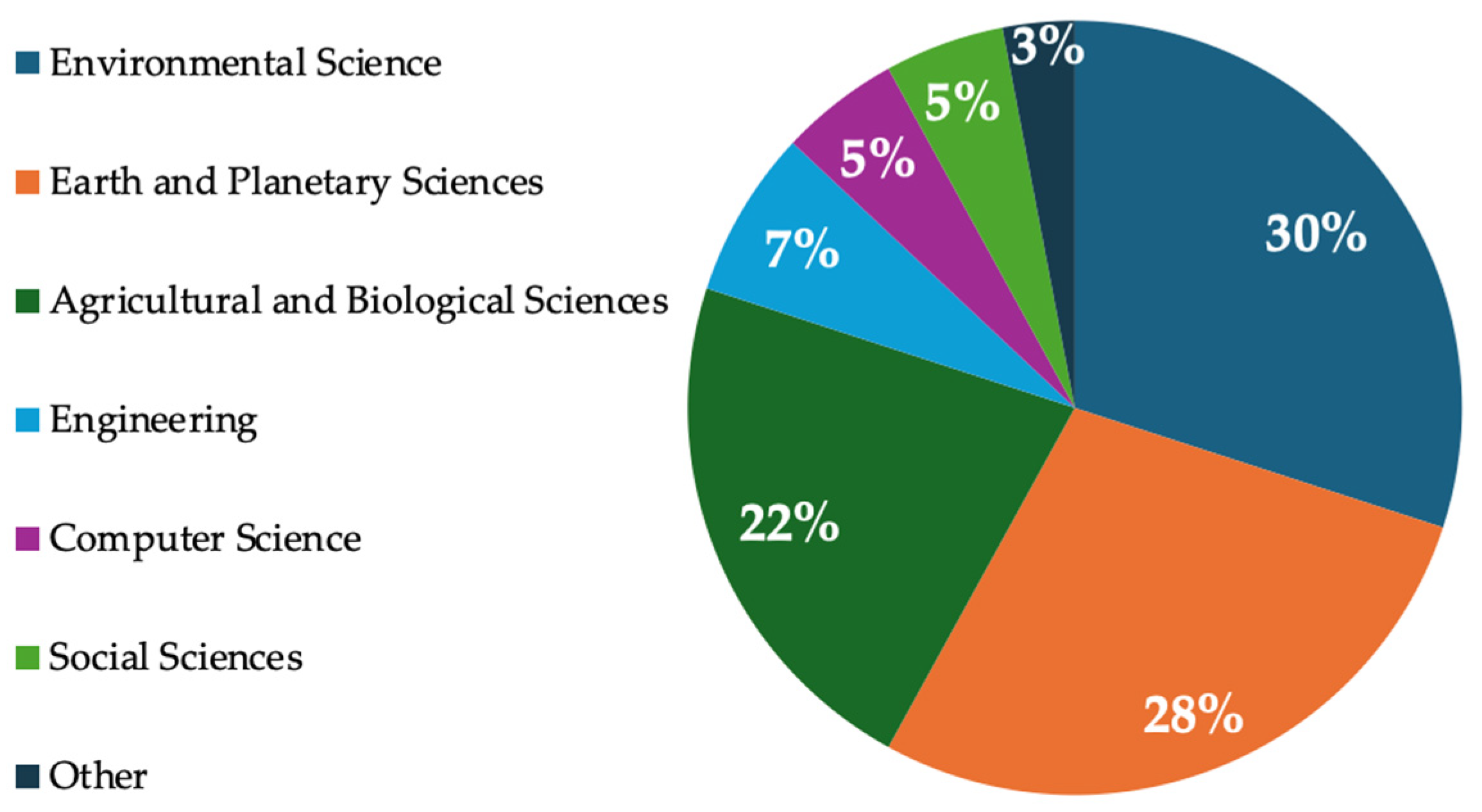
Figure 1. Percentage of documents by included subject area.
Water 17 03430 g001
Figure 2. PRISMA flow diagram.
Water 17 03430 g002
Figure 3. Geographical distribution of studies (shaped on total number of papers 1485).
Water 17 03430 g003
Figure 4. Growth of publications on remote sensing (2000–2024) (shaped on total number of papers-1485). Dots show yearly number of papers, dotted line reports trend.
Water 17 03430 g004
Figure 5. Distribution of the analyzed papers across the five classification labels (sample No. = 9): Management Impact (MI), Innovation/Gaps (IG), Technology Readiness (TR), Policy Integration (PI), and Implementation Barriers (IB).
Water 17 03430 g005
Disclaimer/Publisher’s Note: The statements, opinions and data contained in all publications are solely those of the individual author(s) and contributor(s) and not of MDPI and/or the editor(s). MDPI and/or the editor(s) disclaim responsibility for any injury to people or property resulting from any ideas, methods, instructions or products referred to in the content.