Article

Pipe Burst Detection and Localization in Water Distribution Networks Using Faster Region-Based Convolutional Neural Network


1
Department of Civil Engineering, College of Engineering, Kyung Hee University, 1732, Deogyeong-daero, Giheung-gu, Yongin-si 17104, Gyeonggi-do, Republic of Korea
2
School of Civil, Environmental and Architectural Engineering, Korea University, 145, Anam-ro, Seongbuk-gu, Seoul 02841, Republic of Korea
3
Department of Civil and Environmental Engineering, Hannam University, 70, Hannam-ro, Daedeok-gu, Daejeon 34430, Republic of Korea
*
Author to whom correspondence should be addressed.
Water 2025, 17(23), 3380; https://doi.org/10.3390/w17233380
Submission received: 29 October 2025 / Revised: 20 November 2025 / Accepted: 25 November 2025 / Published: 26 November 2025

Abstract

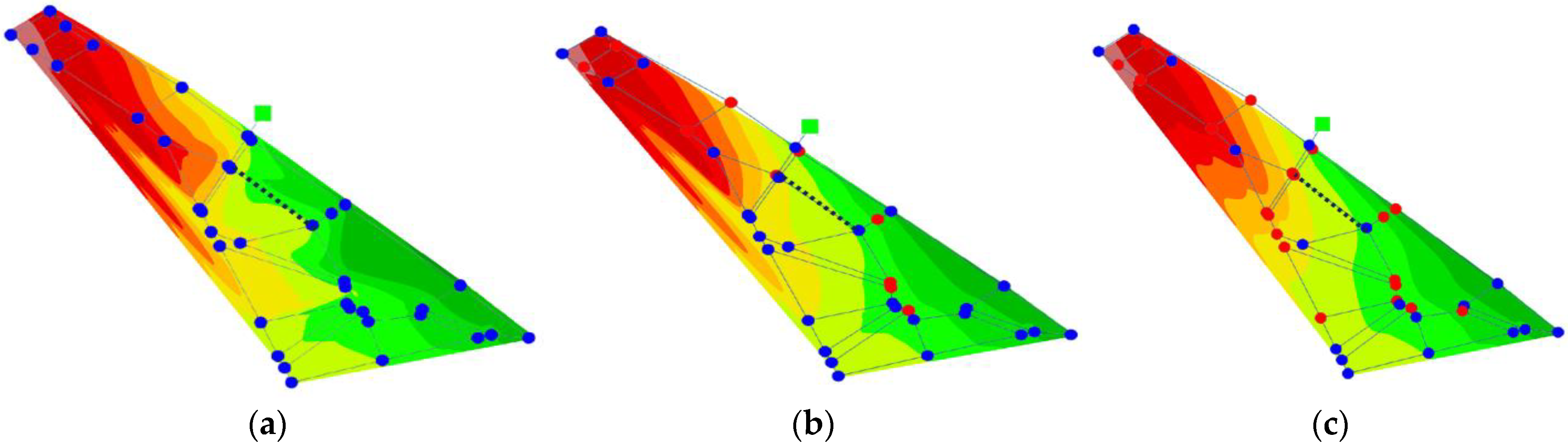
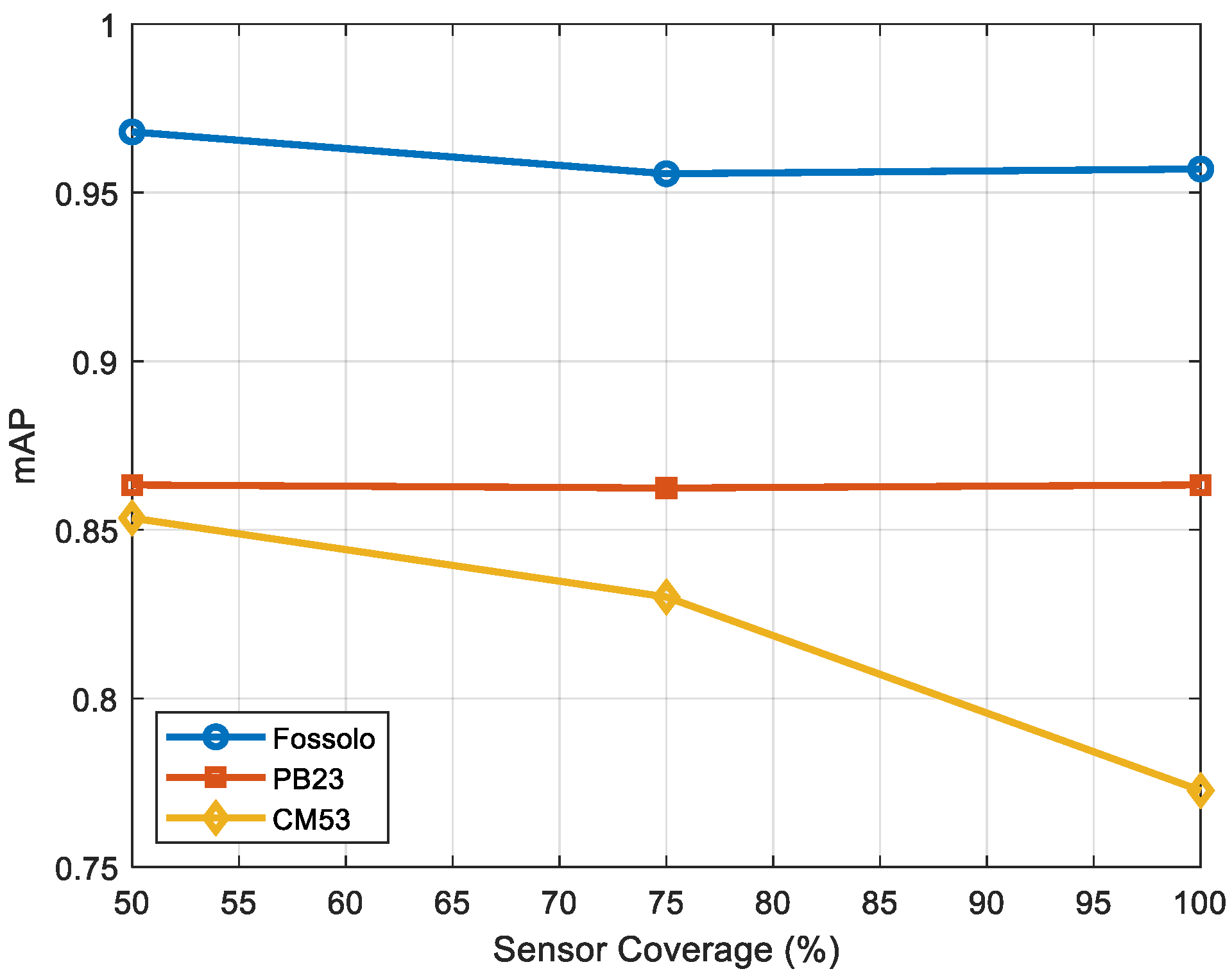
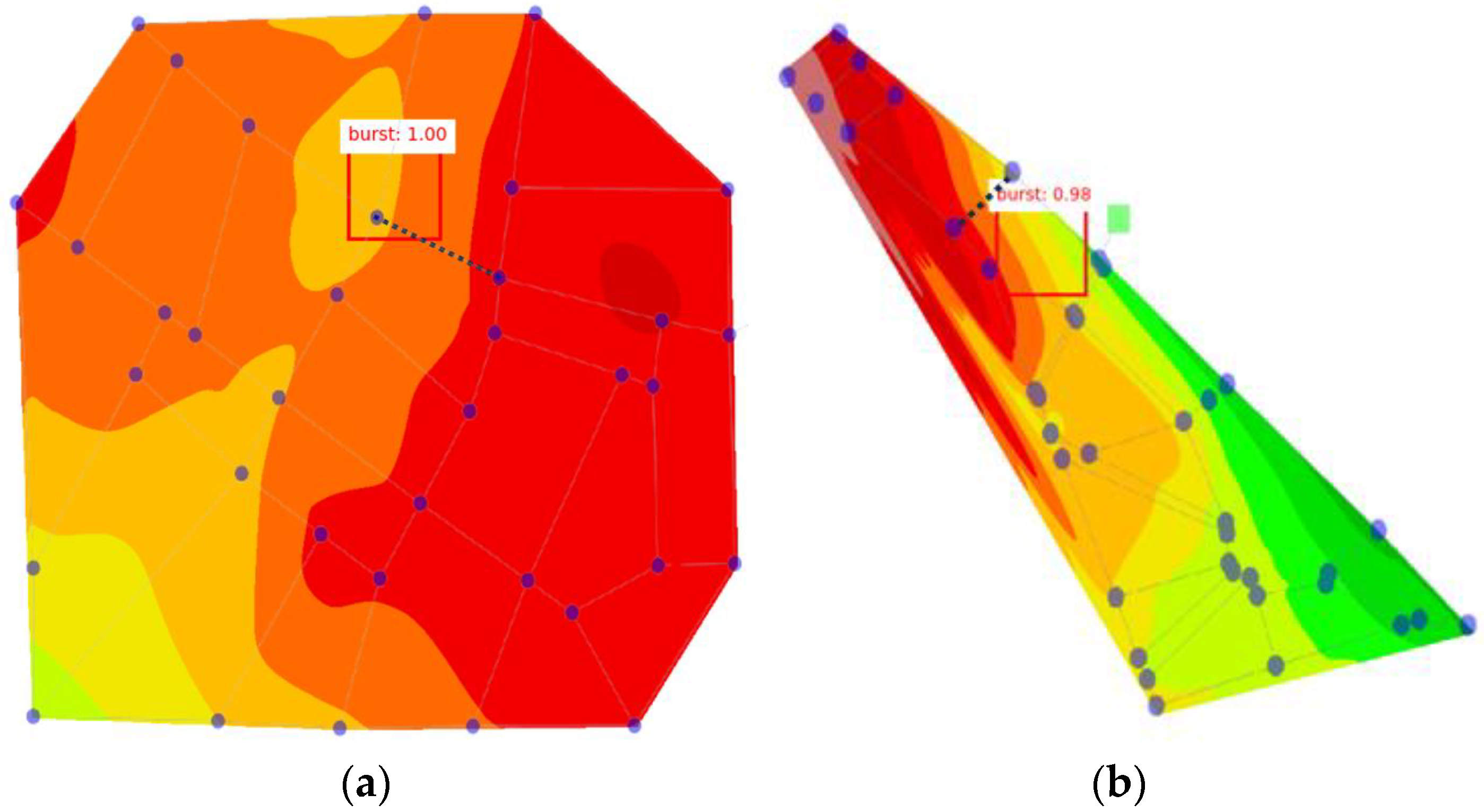
Pipe leakage and bursts are the primary contributors to water losses in water distribution networks (WDNs). However, the use of object detection techniques for identifying such failures is underexplored. This study proposes a novel deep-learning-based framework for pipe burst detection and localization (PBD&L) within WDNs. The framework employs spatial encoding of pressure fields obtained from hydraulic simulations of normal and burst scenarios. These encoded images serve as inputs to a faster region-based convolutional neural network (Faster R-CNN) object detection model, specifically designed for infrastructure monitoring. The framework was tested on three WDNs—Fossolo, PB23, and CM53—under varying sensor coverages (100%, 75%, and 50%). The results indicate that the model consistently achieves high detection accuracy across different network configurations, even with limited sensor availability. For Fossolo and PB23, the model demonstrated stable performance; however, for the CM53 network, accuracy decreased at full sensor coverage, possibly owing to overfitting or signal redundancy. Overall, the proposed method presents a robust solution for PBD&L in WDNs, showcasing significant practical applicability. Its ability to maintain high performance under partial observability and diverse network conditions demonstrates its potential for integration into real-time smart water management systems, enabling automated monitoring, rapid response, and improved operational efficiency.
Keywords: pipe burst detection and localization (PBD&L); faster region-based convolutional neural network (Faster R-CNN); image encoding; water distribution networks pipe burst detection and localization (PBD&L); faster region-based convolutional neural network (Faster R-CNN); image encoding; water distribution networks