Article

P-k-C* Modeling of Treatment Efficiency in Vertical-Flow Constructed Wetlands with Various Substrates


by
Paweł Malinowski
1 and
Wojciech Dąbrowski
2,*
1
Department of Biostatistics and Medical Informatics, Medical University of Bialystok (MUB), 37 Szpitalna St., 15-295 Bialystok, Poland
2
Faculty of Civil Engineering and Environmental Sciences, Bialystok University of Technology (BUT), Wiejska St. 45E, 15-351 Bialystok, Poland
*
Author to whom correspondence should be addressed.
Water 2025, 17(21), 3158; https://doi.org/10.3390/w17213158
Submission received: 6 October 2025 / Revised: 29 October 2025 / Accepted: 31 October 2025 / Published: 4 November 2025
(This article belongs to the Section Wastewater Treatment and Reuse)

Abstract

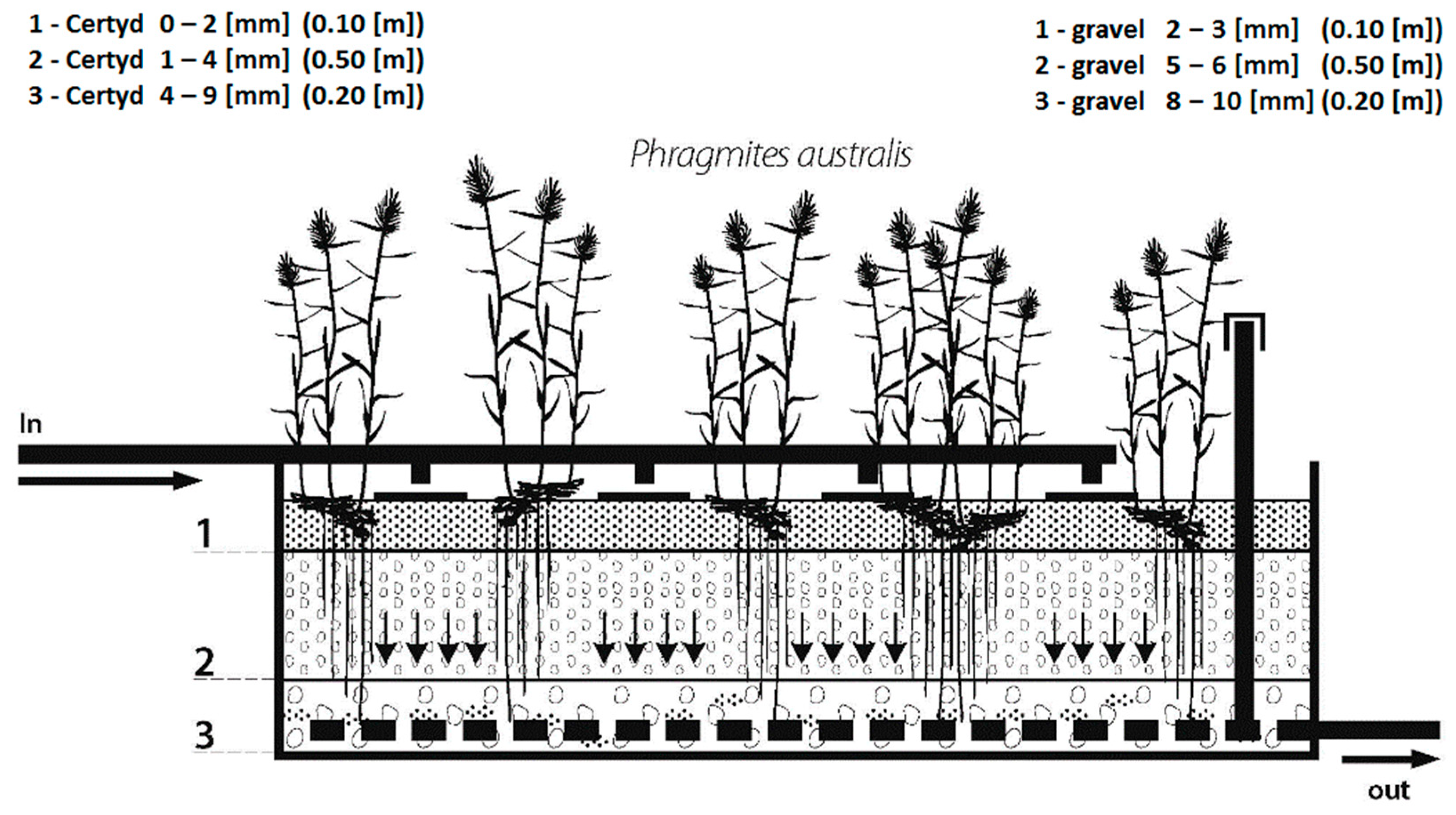
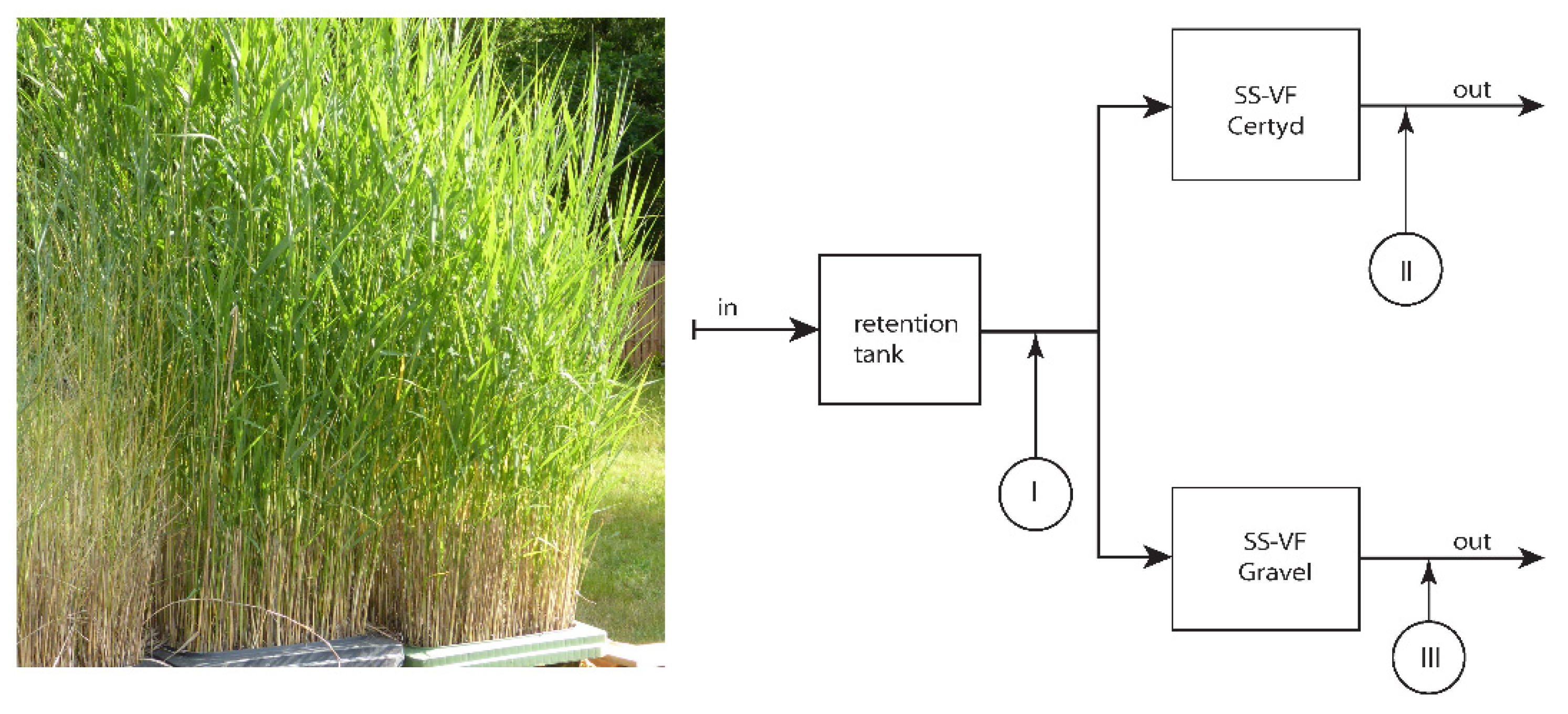
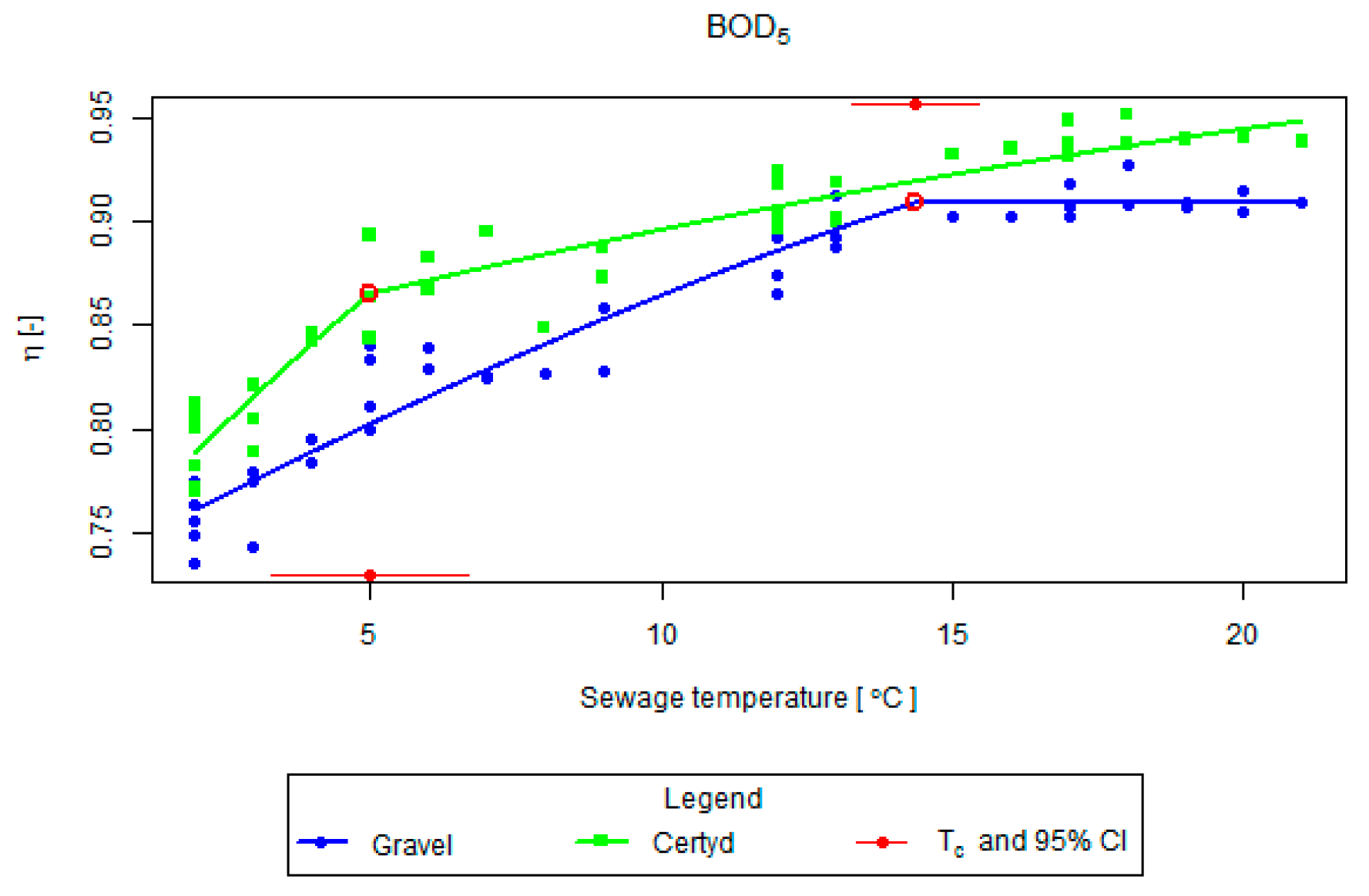
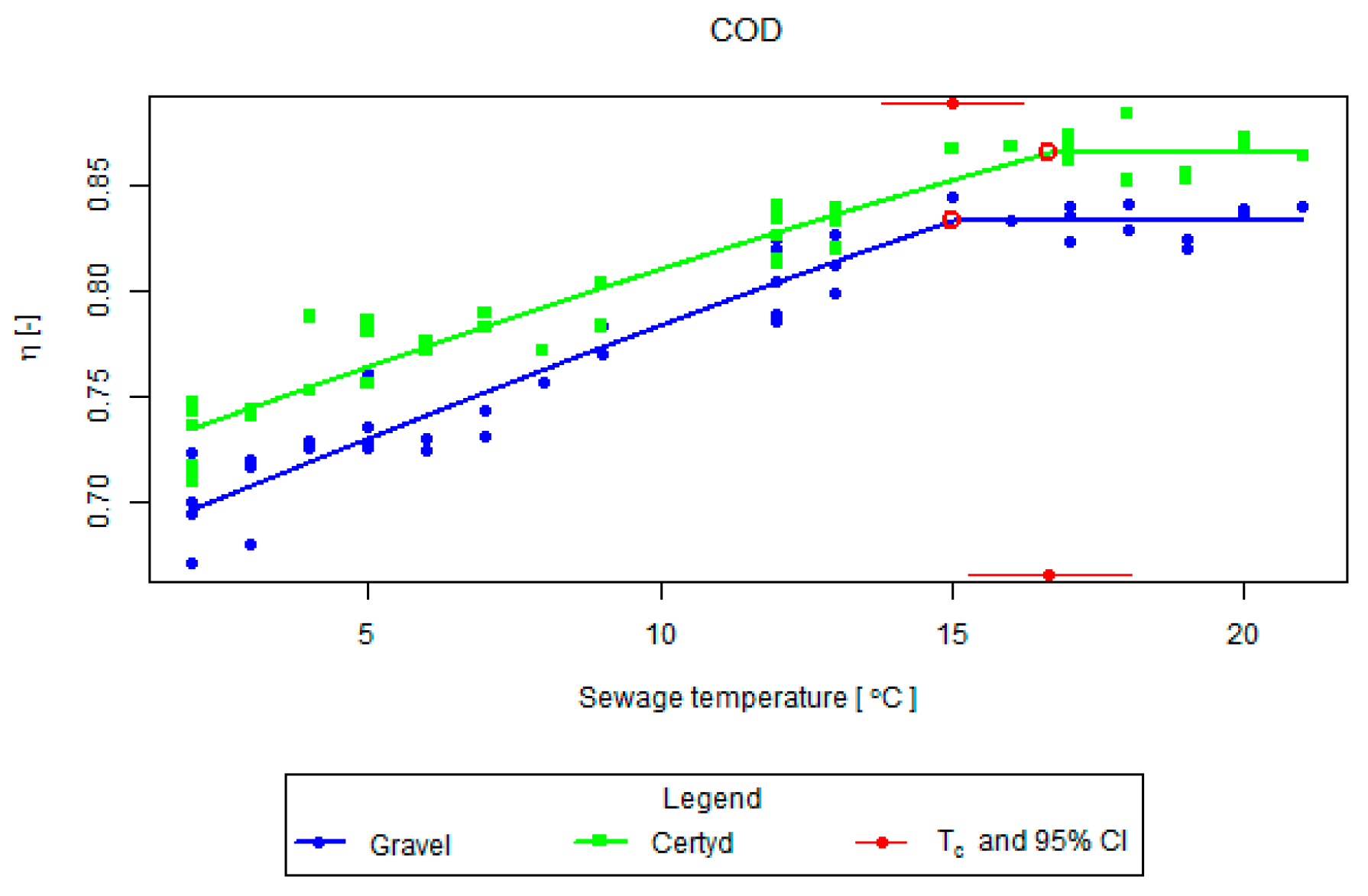
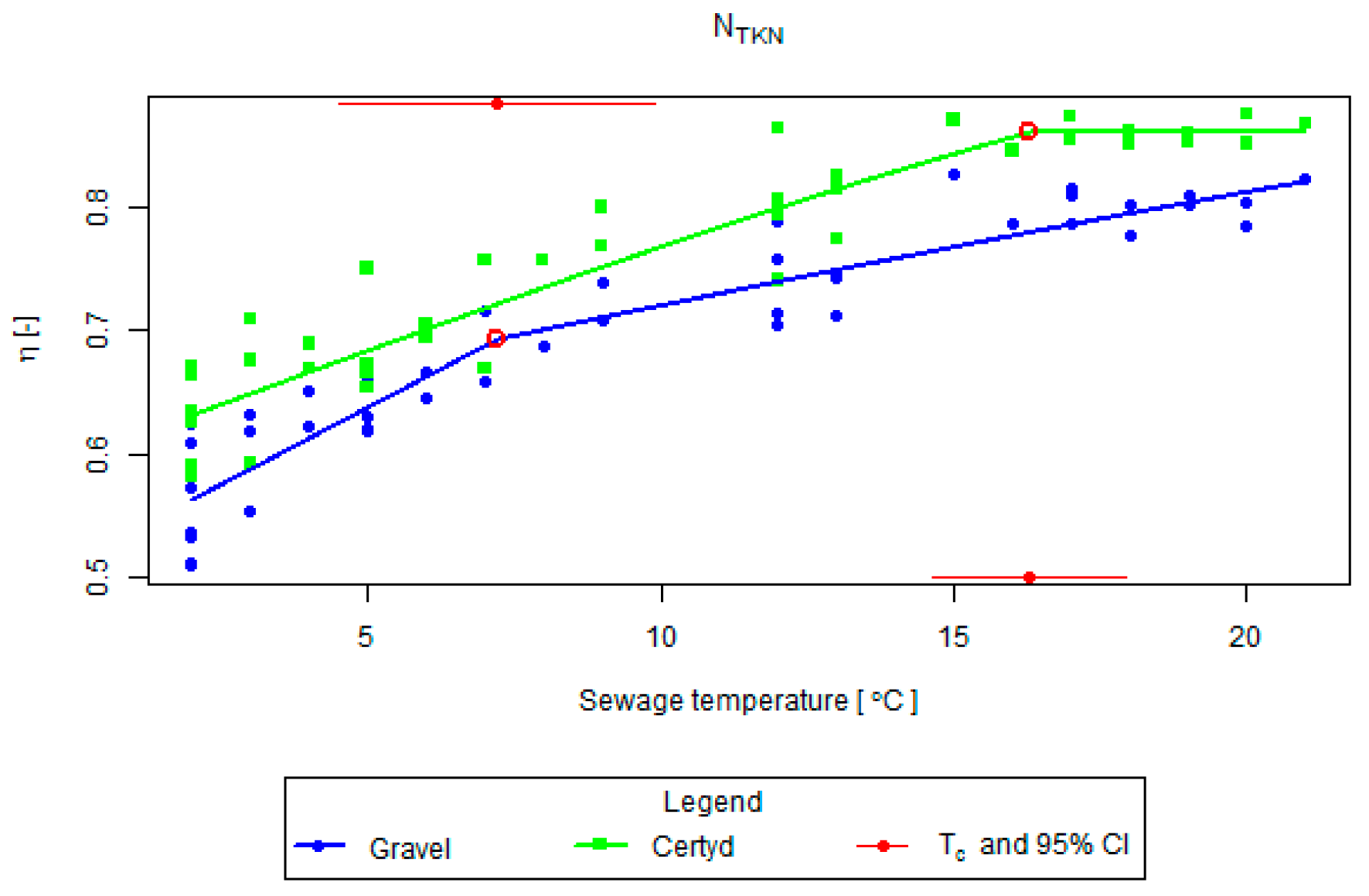
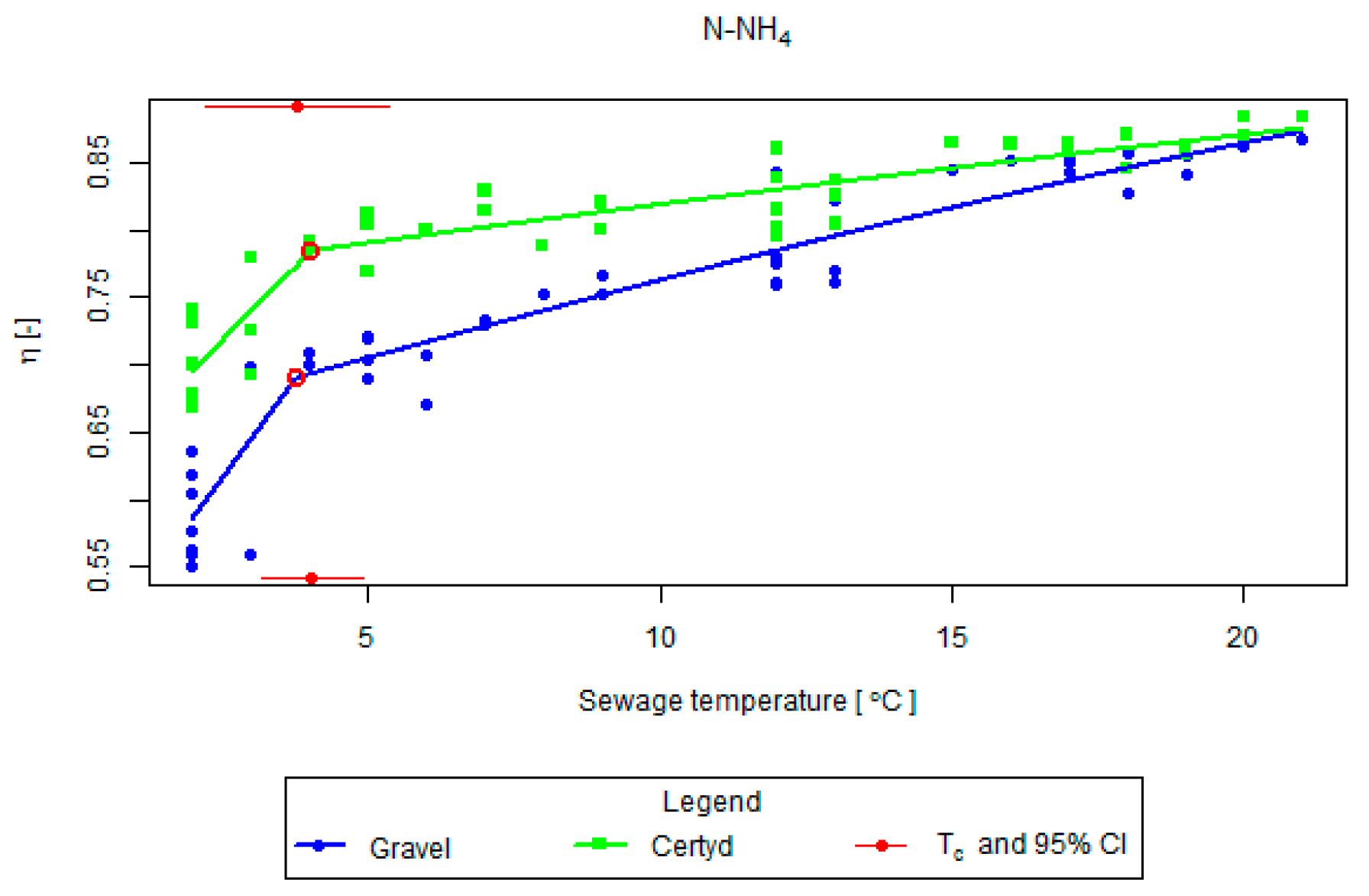
Constructed wetland beds are in widespread use for treating wastewater. Their use is well known, and current research is focused on the use of new substrates and different bed configurations, or on assisting the oxygenation process. The authors conducted an extended experiment using VF CWs with two types of filling: gravel, and a waste material called Certyd. Certyd is produced in the sintering process of coal ash, and is a type of waste from combined heat and power (CHP) plant operation. Both beds worked in parallel in order to compare their effectiveness, taking into account seasonality. The obtained database was used for statistical modeling using the P-k-C* model with correction for a trend change at a specific temperature. The obtained models were characterized by good fits to measured quantities. The study demonstrates that Certyd is a viable alternative to gravel. At all temperatures, a bed filled with Certyd has better treatment efficiency. When the temperature at which the trend changes is high, then no additional temperature dependence is recorded when this temperature is exceeded; otherwise, there is a steeper dependency below this temperature, especially in the case of the gravel-filled bed. This result suggests application of Certyd for beds located in colder climates.
Keywords: P-k-C* model; constructed wetland; filling substrate P-k-C* model; constructed wetland; filling substrate