Article

Coastal Bathing Water Quality in Portugal and Poland: Students’ Perspectives of Its Importance

by
Aldona Dobrzycka-Krahel
1,* and
Maria Leonor Fidalgo
2
1
Business Faculty, WSB Merito University in Gdańsk, Al. Grunwaldzka 238 A, 80-266 Gdańsk, Poland
2
Department of Biology, University of Porto, Rua do Campo Alegre, s/n, 4169-007 Porto, Portugal
*
Author to whom correspondence should be addressed.
Water 2025, 17(2), 174; https://doi.org/10.3390/w17020174
Submission received: 22 November 2024 / Revised: 31 December 2024 / Accepted: 7 January 2025 / Published: 10 January 2025
(This article belongs to the Special Issue Aquatic Ecosystem: Problems and Benefits—2nd Edition)

Abstract

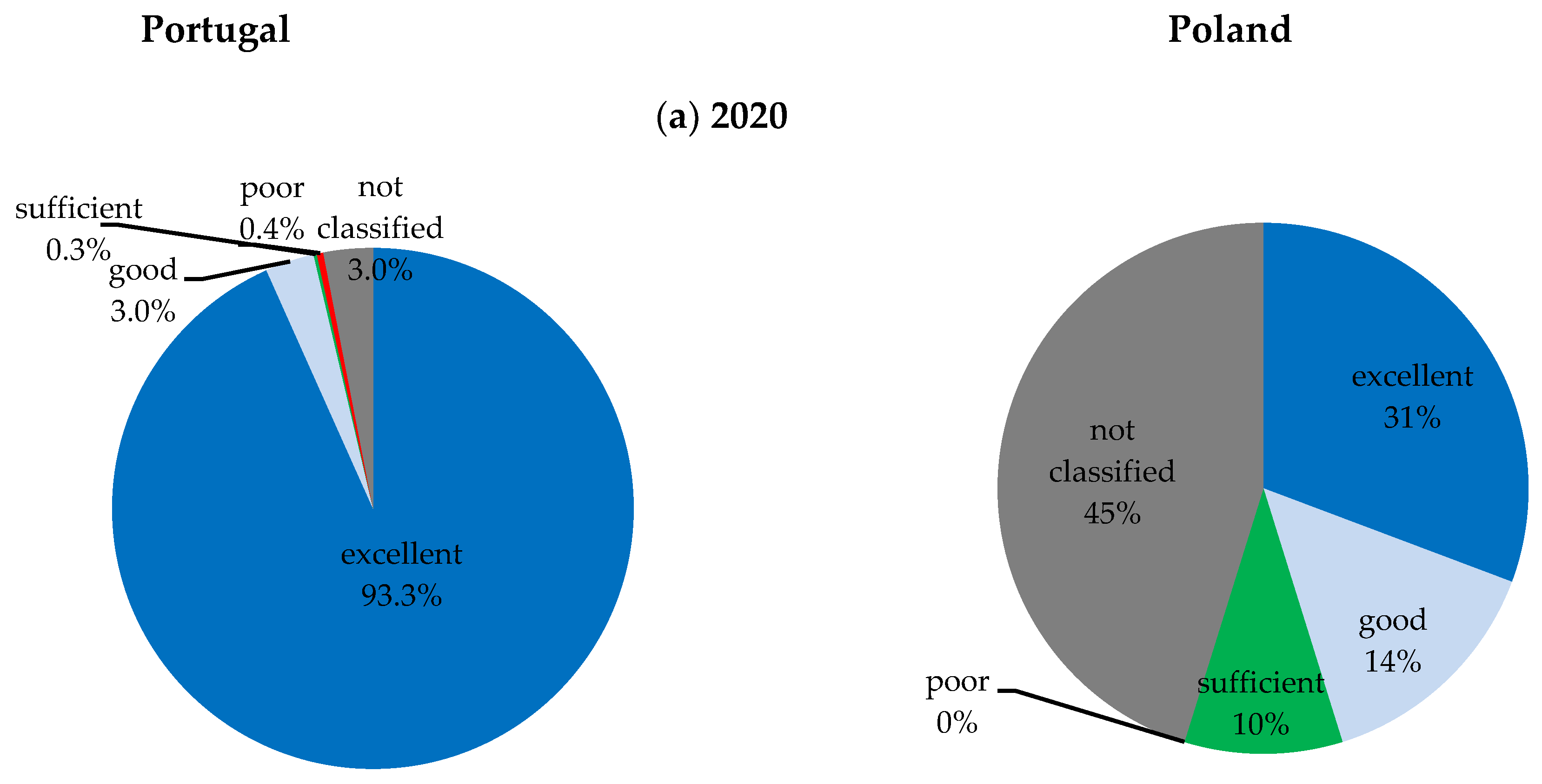
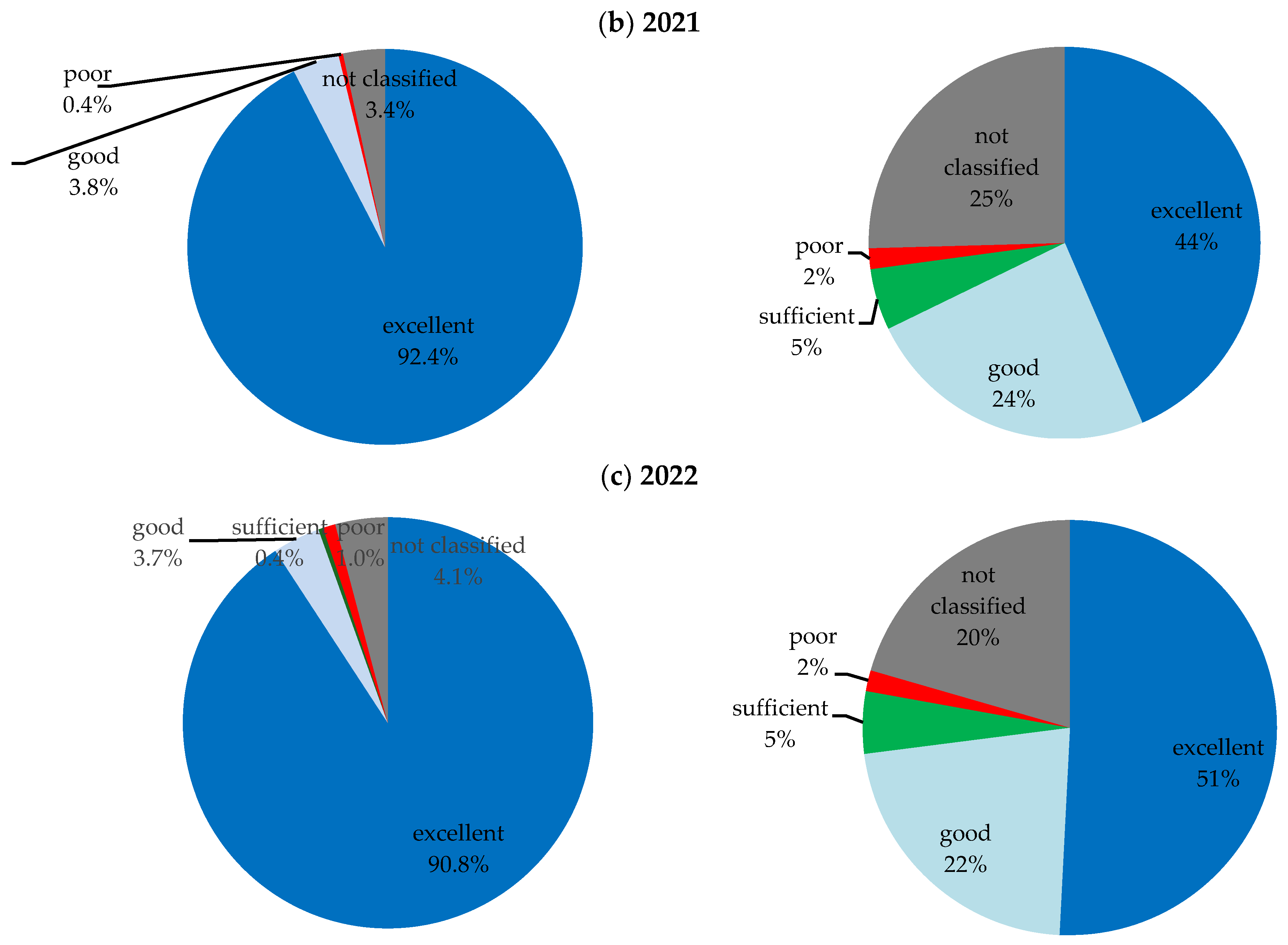
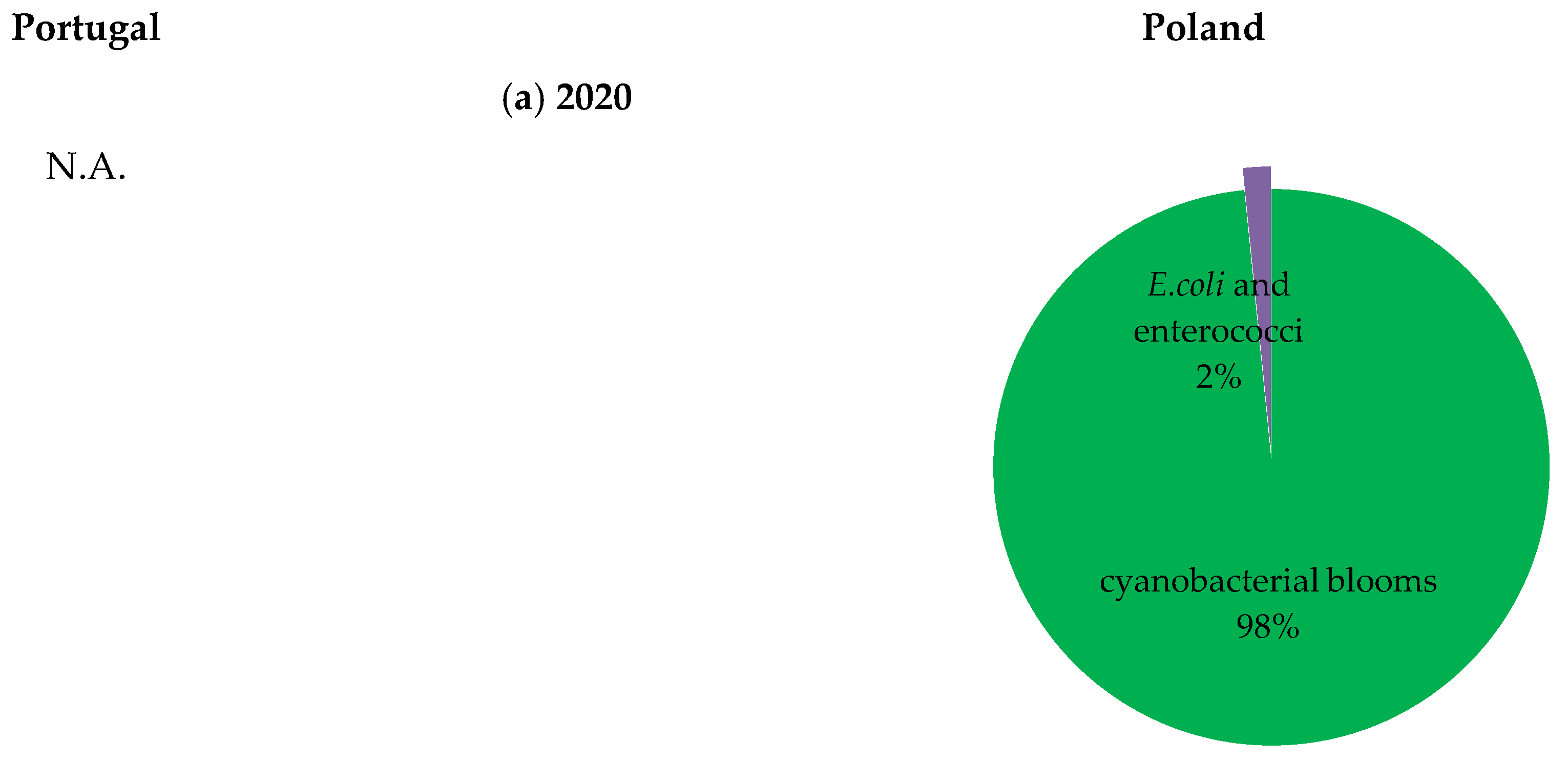
Coastal bathing waters are leading tourist destinations, mainly during holiday periods. Therefore, the quality of bathing waters is of key importance to tourists. In 2006, the European Union (EU) adopted the Bathing Water Directive (BWD). EU Member States are required to analyze the status of their bathing waters, the quality of which is determined by the presence or absence of microbial contaminants (Escherichia coli and enterococci). This study presents the quality of coastal bathing waters in Portugal and Poland during the 3-year period from 2020 to 2022. The difference in the bathing water quality of the two countries—excellent in Portugal versus worse in Poland—is caused by their contrasting management and sampling practices and differing geographical and environmental conditions (in Portugal, warm, open sea, and in Poland, a temperate, semi-enclosed sea that is almost surrounded by land and is exposed to urban wastewater discharge). Additionally, the results of a questionnaire showed that ecological awareness and responses are well developed in Portuguese and Polish students regardless of the different status of their bathing waters. To the best of the authors’ knowledge, this study is among the first to analyze the relationships between water pollution and students’ ecological awareness and opinions on tourism. The results provide valuable information that policymakers, tourist entities, and educational institutions can use to develop more efficient management strategies for the coastal bathing waters in both countries.
Keywords: bacterial pollution; cyanobacterial blooms; bathing waters; potential tourism; management implications bacterial pollution; cyanobacterial blooms; bathing waters; potential tourism; management implications