Review

Understanding South Africa’s Flood Vulnerabilities and Resilience Pathways: A Comprehensive Overview


1
Centre for Water Resources Research, School of Agriculture and Science, University of KwaZulu-Natal, Private Bag X01, Scottsville, Pietermaritzburg 3209, South Africa
2
Environmental and Geographical Science, University of Cape Town, Private Bag X3, Rondebosch, Cape Town 7701, South Africa
*
Author to whom correspondence should be addressed.
Water 2025, 17(17), 2608; https://doi.org/10.3390/w17172608
Submission received: 31 July 2025 / Revised: 22 August 2025 / Accepted: 29 August 2025 / Published: 3 September 2025

Abstract

This review examines South Africa’s escalating flood vulnerability through a synthesis of over 80 peer-reviewed articles, historical records, policy reports, and case studies. Using a PRISMA-guided analysis, the study identifies key climatic drivers, including extreme rainfall from tropical–temperate interactions, cut-off lows, and La Niña conditions that interact with structural weaknesses such as inadequate drainage, poorly maintained stormwater systems, and rapid urban expansion. Apartheid-era spatial planning has further entrenched risk by locating marginalised communities in floodplains. Governance failures like weak disaster risk reduction (DRR) policies, fragmented institutional coordination, and insufficient early warning systems intensify flood vulnerabilities. Catastrophic events in KwaZulu-Natal (KZN) and the Western Cape (WC) illustrate the consequences exemplified by the April 2022 KZN floods alone, which caused over 450 deaths, displaced more than 40,000 people, and generated damages exceeding ZAR 17 billion. Nationally, more than 1500 flood-related fatalities have been documented in the past two decades. Emerging resilience pathways include ecosystem-based adaptation, green infrastructure, participatory governance, integration of Indigenous knowledge, improved hydrological forecasting, and stricter land-use enforcement. These approaches can simultaneously reduce physical risks and address entrenched socio-economic inequalities. However, significant gaps remain in spatial flood modelling, gender-sensitive responses, urban–rural disparities, and policy implementation. The review concludes that South Africa urgently requires integrated, multi-scalar strategies that combine scientific innovation, policy reform, and community-based action. Embedding these insights into disaster management policy and planning is essential to curb escalating losses and build long-term resilience in the face of climate change.

1. Introduction

1.1. Background

Apart from loss of life, natural disasters significantly worsen persistent poverty in low and middle-income nations, making disaster risk reduction essential for poverty alleviation [1]. Global records show that from 1990 to 2022, 168 countries experienced 4713 flood events. These disasters affected more than 3.2 billion people, led to 218,353 fatalities, and caused economic losses surpassing $1.3 trillion [1].
Although populations have grown and flood risks have risen due to various factors like rapid, unregulated urbanisation and climate change, the average death toll per disaster has dropped over time for middle and upper-middle-income nations. In contrast, low-income countries have experienced an increase in the number of fatalities [2]. A study by Hamidifar and Nones [3] revealed that India, China, and Pakistan experience both the highest flood frequency and fatalities, which indicates heightened vulnerability. While countries like Indonesia, Brazil, and Vietnam face frequent floods, their death tolls are comparatively lower. Conversely, nations such as Bangladesh, Japan, and Iran suffer disproportionately high casualties despite fewer flood events, underscoring disparities in resilience. Also, Africa experiences the third-highest % of total floods as well as total death toll among continents.
It is important to note that arid and semi-arid countries in the Middle East and North Africa (MENA) and neighbouring Türkiye also experience significant and often urban flash-flooding [4]. Recent studies in MENA have attributed the increased frequency and severity to rainfall-driven flash floods and drainage limitations in Erbil, Iraq [5], location along outlets of major wadis for Tabuk city, Saudi Arabia [6], rapid land use and land cover changes that elevate flood risk along the UAE’s eastern coast [7] and the strong influence of urbanization on flood depths and hazard extents, coupled with extreme rainfall in Türkiye [8,9]. Together with global assessments of rising urban exposure to flooding [10], these studies reinforce the need to couple structural and non-structural measures with equitable risk governance tailored to the fast urbanizing MENA region [4,7].
Africa is among the most flood-affected continents, experiencing the third-highest proportion of global flood events and related fatalities, Hamidifar and Nones [3]. In 2024 alone, more than 1460 people lost their lives and over 8.5 million were affected across 20 countries in West and Central Africa, reflecting the combined influence of climate variability, unplanned urbanization, and inadequate infrastructure [11]. In East Africa, Mureithi [12] noted that the likelihood of catastrophic rainfall events, such as the 2024 floods, has more than doubled due to anthropogenic climate change, and rapid urban expansion has intensified their impacts on vulnerable communities. In Southern Africa, South Africa as a country faces significant exposure and vulnerability to flood hazards, with the Eastern Cape, KwaZulu-Natal, North-West, and Limpopo provinces being particularly at risk due to their predominantly rural characteristics, as indicated by Munyai et al. [13]. Climate change has intensified rainfall patterns, which have led to an increase in flood frequency and severity [14,15,16,17,18]. The study by Grab and Nash [18] employed a range of historical sources, including missionary accounts, newspapers, diaries, and official records from the SAWS CAELUM database, to investigate flood events from 1836 to 2022, defining significant floods based on their documented consequences, such as loss of life, infrastructural damage, or geohazards like landslides. The research analyzed flood frequency, spatial extent, and rainfall data, comparing pre-industrial (1850–1899) and modern (1900–2022) periods to identify changes over time. Identified 53 significant floods in KZN from 1850–1899 (1.1/year) and 210 from 1900–2022 (1.7/year), with a notable increase post-1980 (2.5/year. The 2022 event set a new 24-h rainfall record for Durban (351 mm), though historical data revealed higher totals in Pinetown (397 mm in 1905) and St. Lucia (548 mm in 1984). The significant increase in flood frequency across South Africa was further uncovered in a study by Dube, et al. [16] which found that flood frequency increased significantly in Western Cape province between 1900 and 2018, with 334 major events recorded (mean of 2.9 annually) and the highest incidence (20 floods) occurred in 2008.

1.2. Aims and Objectives

This study aims to critically examine the increasing frequency and severity of flood events in South Africa, analyzing their historical trends, drivers, impacts, and governance challenges. It also recommends integrated and sustainable strategies to build national flood resilience.
The key objectives hinge around delving into the literature to:
  • Investigate the meteorological, infrastructural, and socio-political drivers contributing to flood risks.
  • Assess the impacts of flooding on infrastructure, livelihoods, and mental health in both urban and rural settings.
  • Evaluate current governance frameworks, early warning systems, and disaster risk reduction strategies.
  • Identify research gaps in flood studies in South Africa.

2. Materials and Methods

Information Sources

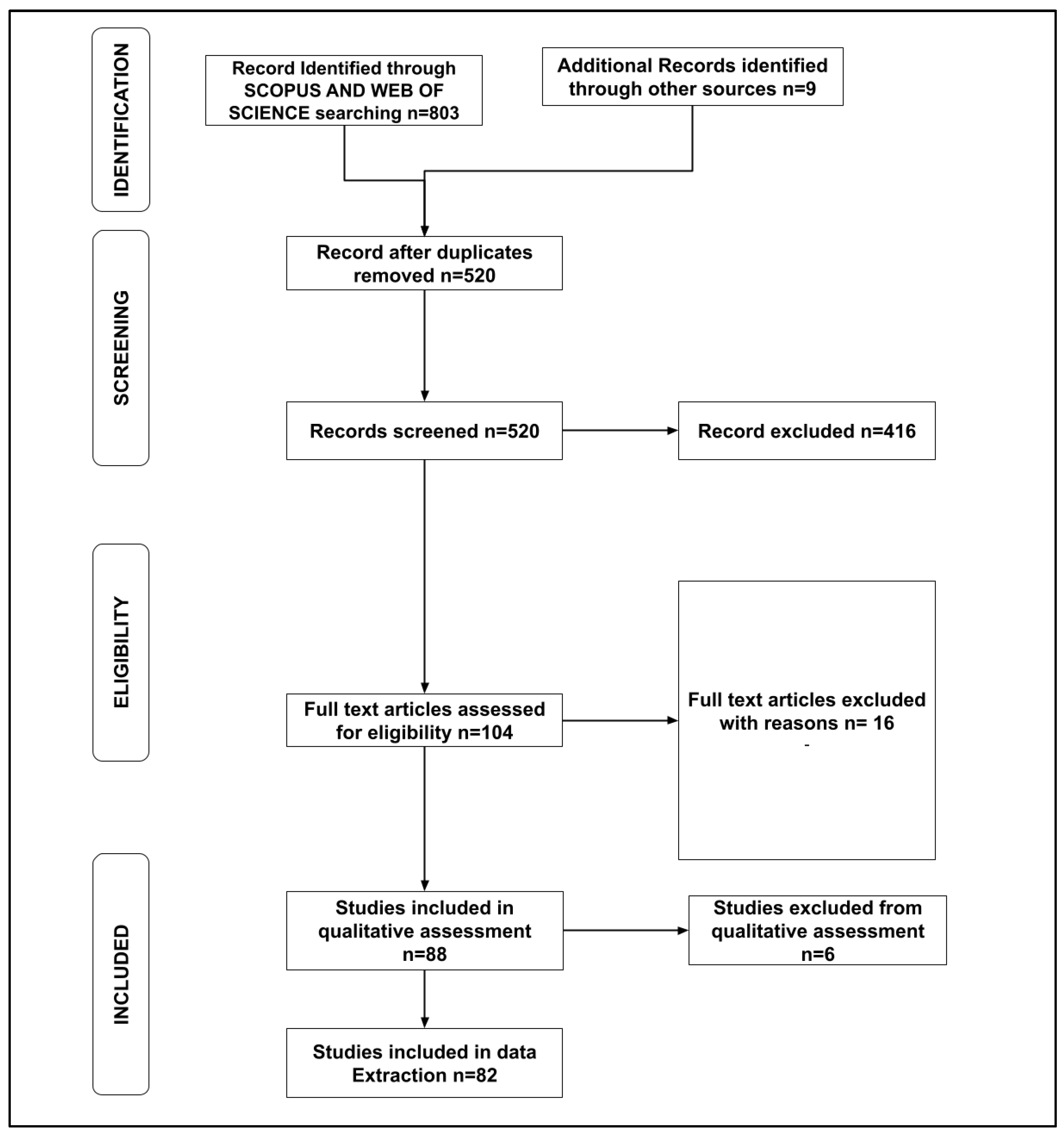
This review was conducted in line with the Preferred Reporting Items for Systematic Reviews and Meta-Analysis (PRISMA) framework as elaborated by Mark Vrabel [19] and applied by Byaruhanga et al. [20]. This framework guided database selection, query structuring, document screening, and synthesis of results. Database searches were limited to Scopus and Web of Science, which were chosen for their extensive coverage and rigorous peer-review standards. The search spanned publications from 1995 to June 2025. The Boolean string “South Africa” AND “Flood” OR “Floods” was adopted after several trial runs as it yielded the most relevant records. The search retrieved eight hundred and twelve (812) publications that included journal articles, conference papers, and peer-reviewed book chapters in English. The publications had a disciplinary focus on Environmental Science, Earth and Planetary Sciences, Engineering, Hydrology, Social Sciences, Decision Science, and Multidisciplinary fields. In the screening phase, duplicates were removed, leaving five hundred and twenty (520) publications. The relevance of the publications was assessed through title and abstract evaluation by two independent reviewers, leaving 104 records. Further eligibility assessment was conducted, and sixteen (16) inaccessible documents were excluded, leaving 88 publications for full-text review. An additional six (6) papers lacking relevant data were removed, resulting in eighty-two (82) studies for final analysis. The PRISMA process is demonstrated in Figure 1.
In addition to peer-reviewed publications, the review incorporated grey literature such as reports and policy documents to provide practical insights often absent in academic research.

3. Results and Discussion

3.1. Bibliographic Analysis

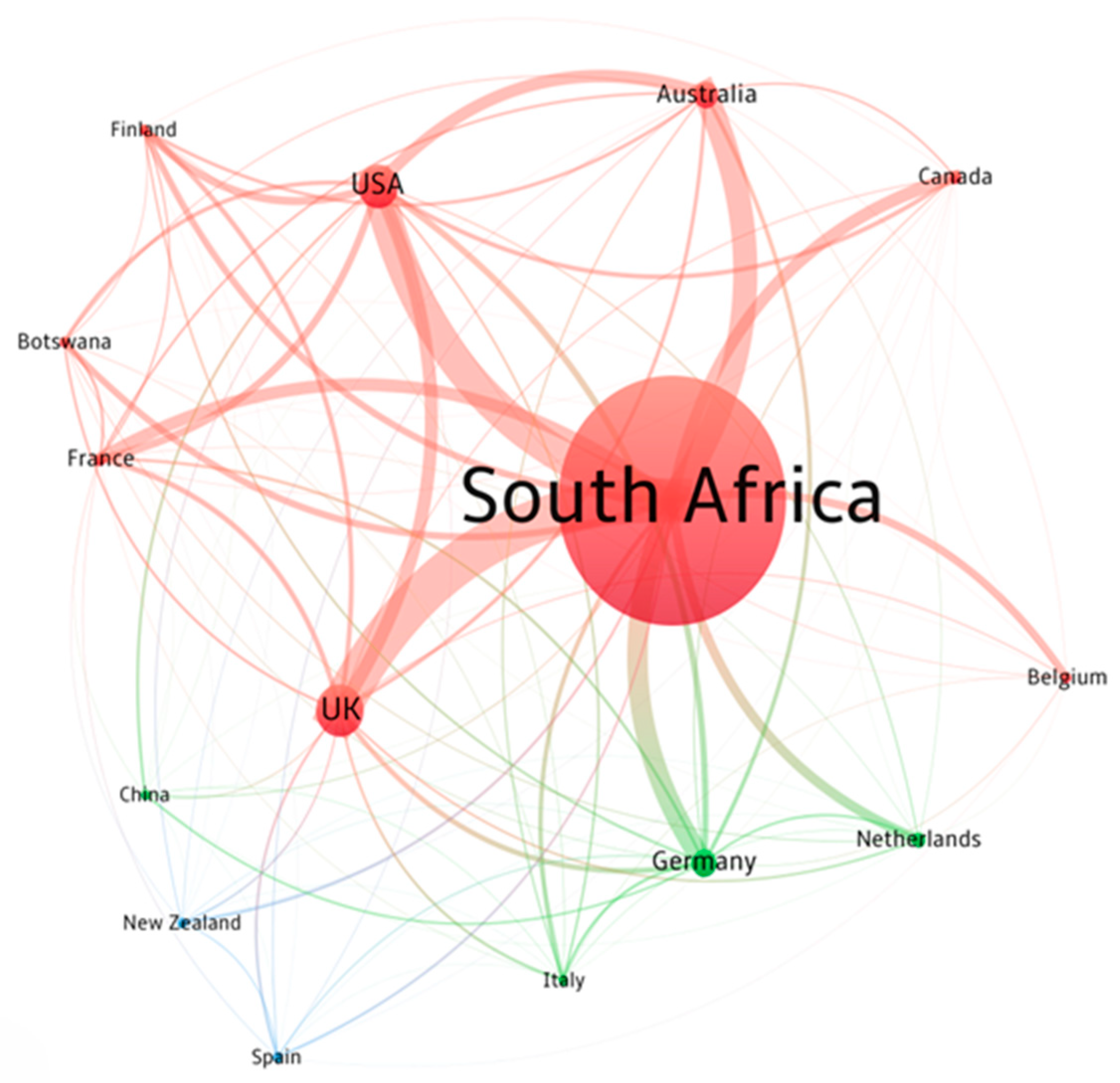
Africa Using VOSviewer version 1.6.20, a bibliometric analysis of the final eighty-two (82) documents was carried out to examine bibliographic coupling by country. A network map in Figure 2 was generated showing the relationships among countries based on shared references in their publications. In the resulting network, South Africa appeared as the largest node, indicating that it contributed the highest number of publications in the analysis dataset. The country is highly linked to the USA, UK, and Austria, which suggests that South African research shares many references with publications from these countries. This reflects strong thematic similarity and international research connectivity. The size of the nodes represents the total number of publications from each country, while the links between nodes indicate the strength of bibliographic coupling (the number of shared references). Shorter distances between nodes signify stronger bibliographic coupling, and countries positioned closely in the network share more common references. The colour spectrum (Blue–Green–Red) in the clustering network represents the relative coupling strength within clusters, with Red indicating the highest coupling and Blue the lowest. This network highlights the global research collaboration and thematic alignment of South African publications in relation to major international contributors.
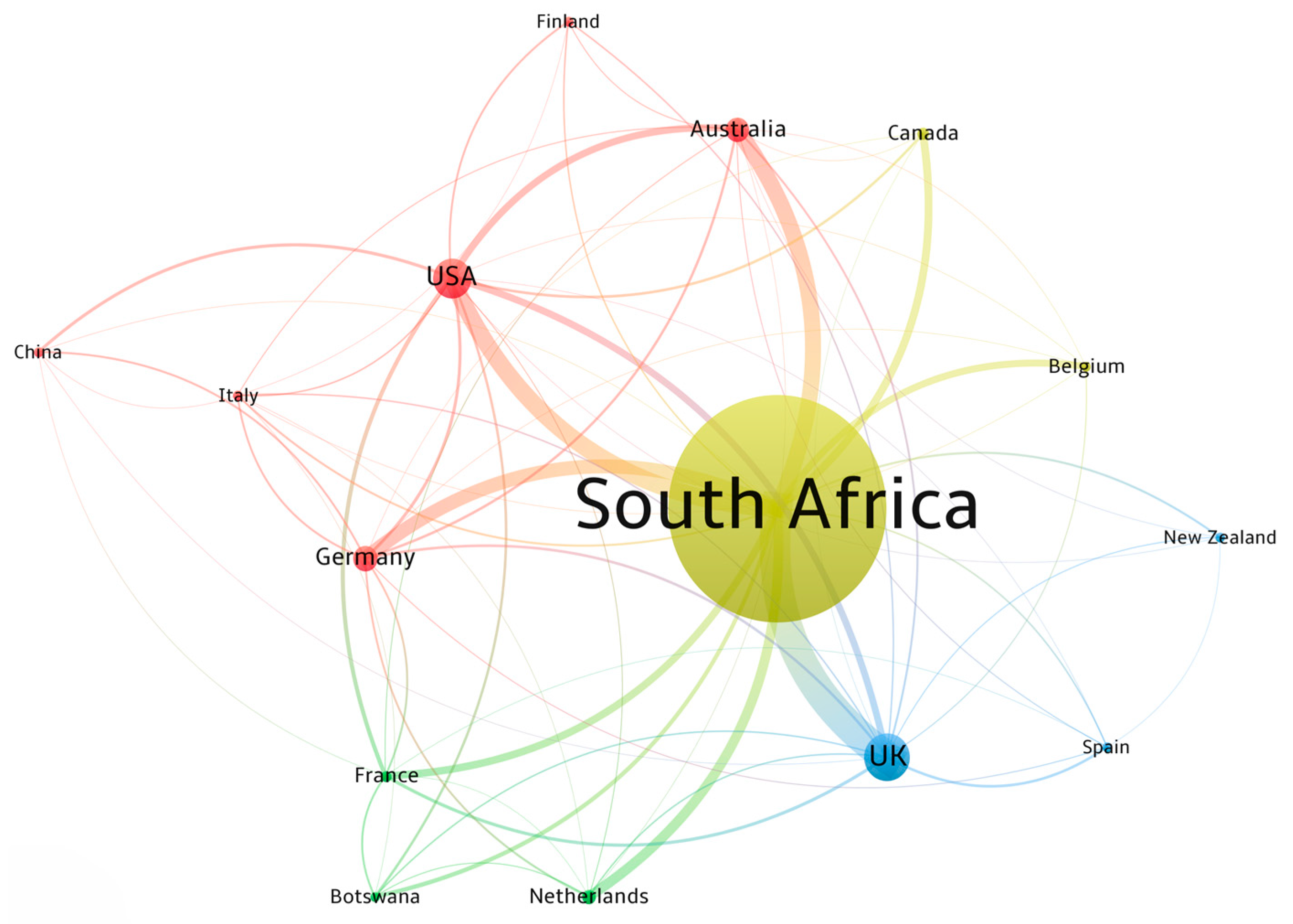
Additionally, a bibliometric analysis of the final publications was carried out to examine co-authorship by country. A network map in Figure 3 was generated to visualize the collaborative relationships among countries based on the co-occurrence of authors from different nations on the same publications. In the resulting network, South Africa emerged as the largest node, indicating that South African authors contributed the highest number of publications within the analysis dataset. The country displayed its strongest collaborative links with major global research hubs that include the United Kingdom, Germany, the United States, and Australia. The thickness of the links signifies a high volume of joint publications, reflecting robust and active international research partnerships. Notably, the network also highlights meaningful intra-African collaboration in flood disasters, with a special mention of Botswana appearing as a connected node. This signifies a valuable research partnership within the African continent. The size of each node represents the total number of publications in this study originating from that country. The links between nodes indicate the strength of co-authorship as determined by the number of collaborative publications. Shorter distances between two nodes signify stronger collaborative ties. The colour spectrum (Blue–Green–Red) in the clustering network represents the relative collaborative strength within clusters, with Red indicating the highest level of co-author activity and Blue the lowest. This co-authorship network highlights South African authors’ central role in the analysed dataset and indicates both global and regional research ecosystems.

3.2. Drivers of Flooding in South Africa

Various studies have examined South Africa’s flood phenomenon from historical, meteorological, psychological, and infrastructure perspectives and have highlighted a complex interplay of natural and human-induced factors contributing to the current flood crisis [18,21,22,23,24,25]. Several factors have been identified in the literature as the main contributing drivers of flooding across South Africa.

3.2.1. Meteorological Factors

Extreme Rainfall and Weather Systems
The study by Mason et al. [26] showed that between 1931–1960 and 1961–1990, South Africa experienced significant increases in the intensity of extreme rainfall events across approximately 70% of the country. McBride et al. [27] further indicated that between 1921 and 2020, South Africa experienced notable changes in extreme daily rainfall characteristics, with an overall increase in the probability and intensity of significant and extreme rainfall events. The above studies highlight a trend toward more intense and extreme precipitation, which poses risks of flooding, infrastructure damage, and agricultural impacts.
Extreme rainfall in South Africa is driven by complex interactions between Mesoscale Convective Systems (MCSs), Tropical-Temperate Troughs (TTTs), and coastal low-pressure systems, which are amplified by regional moisture dynamics and orographic effects. Thoithi et al. [28] highlighted that the heavy rainfall that caused the Durban 2022 floods was driven by the interaction between a Mesoscale Convective System (MCS), which formed over the warm Agulhas Current and a coastal meso-low that later intensified into Subtropical Depression Issa. This interaction determined the timing and location of extreme rainfall. Additionally, strong low-level jets transported moisture from the Indian Ocean, enhancing convergence and uplift along the coast. Anomalously warm sea surface temperatures (SSTs) and high latent heat fluxes, which are common during La Niña conditions, further intensified rainfall. Mashao et al. [29] also identified that over the east coast of South Africa, Cut-Off Lows (COLs) and Subtropical Cyclone Issa are key contributors to intense rainfall that is concentrated along the coast due to their interaction with the Agulhas Current.
Role of ENSO and Climate Variability
Blamey and Reason [30] emphasized that while El Niño-Southern Oscillation (ENSO) plays a significant role in rainfall variability, its impacts are not strictly linear. For example, La Niña typically brings wetter conditions to southeastern Africa, but exceptions exist, like the dry 2017/2018 La Niña. Conversely, El Niño is usually associated with drought, but 1987/1988 saw extreme wetness. Neutral ENSO phases like 1981/1982 can also produce extreme rainfall, suggesting that other factors such as local weather systems and SST anomalies are equally important. This is critically evident in South Africa, where the most extreme short-duration flood events are often driven by mesoscale convective systems rather than large-scale climate modes alone. For instance, the record-breaking cloudburst at Hoedspruit in April 2000, which set a new global 5-min rainfall record of 66.2 mm, was not primarily forced by an extreme ENSO phase but by an intense upper air trough system [31]. Additionally, the heavy rain in north-eastern South Africa in April 2022, localized by a cloudburst with up to 300 mm of rain recorded uphill, was caused by a tropical-temperate trough (TTT) and a cloud band enhanced by a low-level jet (LLJ) and orographic lifting [30]. These cases indicate that while ENSO sets a probabilistic background state for seasonal rainfall, the occurrence of catastrophic flooding is frequently contingent on the development of these high-impact sub-synoptic weather systems, which can occur across various ENSO phases.

3.2.2. Infrastructure Failures and Urbanization Challenges

Inadequate Drainage Systems
From an infrastructure perspective, urban flooding in South Africa is significantly exacerbated by inadequate drainage systems that are often poorly designed and insufficiently maintained [32]. These systems, many of which were built to outdated capacity standards, are unable to cope with increasing intensity and frequency of extreme rainfall events, which is a trend linked to climate change. This results in frequent overflows that cause widespread inundation of roads and properties, which causes public health hazards from contaminated water [33]. Raphela and Matsididi [34] exemplified this in the Bronville and Hani-park townships, where the absence of efficient drainage infrastructure intensified the impact of flooding, leading to severe socio-economic consequences for residents. Similarly, Grab and Nash [18] noted that in KwaZulu-Natal (KZN), the combination of rapid urbanization and deficient drainage networks significantly amplified flood risks that were particularly evident during the devastating April 2022 floods.
Impact of Impervious Surfaces and Urban Sprawl
Another key contributing factor to urban flooding is the expansion of impervious surfaces due to rapid urbanization [29,35,36,37]. In South Africa, urban population growth has accelerated from 63% in 2011 to 69% in 2024, with cities such as Johannesburg, Cape Town, and Durban absorbing much of this expansion [38]. As natural land cover is progressively replaced with impermeable structures such as roads, rooftops, and paved surfaces, rainfall infiltration declines while surface runoff volumes and peak flows rise, overwhelming drainage networks. In the Western Cape, Dube, et al. [16] documented a statistically significant increase in flood frequency and severity over the last century that was driven by climate variability but compounded by urban expansion into wetlands, floodplains, and drainage corridors. Informal settlements were particularly the most exposed, as indicated by the fact that in Cape Town, many have developed along waterways and ecologically sensitive low-lying zones, hence amplifying both the frequency and severity of flood impacts [16,39]. Similar dynamics have been observed in the Eastern Cape, where Dalu, Shackleton and Dalu [21] found that households located on degraded slopes or near streams experienced disproportionately higher flood damage, underscoring the role of compromised land cover and settlement patterns in shaping vulnerability. Across South Africa, case studies further highlight that stormwater systems, often designed to outdated capacity standards, are unable to cope with the increased runoff associated with urban densification and extreme rainfall [40,41]. Together, this body of research confirms that rapid and frequently unplanned urbanisation, coupled with the loss of natural buffers such as wetlands and vegetated open space, is locking in heightened flood risk for growing urban populations.
Legacy of Apartheid Spatial Planning
The legacy of apartheid-era spatial planning has also played a critical role in exposing vulnerable populations to flood risks [17]. Marginalized communities were historically relegated to high-risk zones that often lacked adequate infrastructure. Informal settlements in such areas are particularly susceptible to flood damage due to the absence of proper drainage and land-use regulations. In eThekwini, informal settlements near rivers endure continued severe flooding aggravated by inadequate infrastructure and ineffective land-use policies [42]. The broader national context reflects similar challenges where poorly serviced informal settlements remain significantly affected [17]. Climate change further compounds the problem by increasing the frequency and severity of extreme weather events, which causes much of South Africa’s infrastructure to be unprepared.
Poor Maintenance of Waterways
The 2022 KZN floods, for example, overwhelmed ageing and outdated infrastructure, resulting in catastrophic consequences [28]. Ngcamu [43] noted that the Disaster Management Cycle (DMC), which is a key framework for responding to such crises, has proven ineffective in mitigating the impacts of climate-induced flooding. However, systemic shortcomings like inadequate planning and governance failures have undermined its effectiveness. Finally, poor maintenance of waterways significantly contributes to urban flood risks. Rivers and drainage channels that get clogged with debris and sediment lose their capacity to convey water efficiently, which leads to localized flooding [44,45]. Ntanganedzeni and Nobert [46] noted that in Limpopo, blocked water channels are a major cause of such flooding. In the Thulamela Municipality, the lack of routine river maintenance has resulted in recurring flood incidents, which highlights the critical importance of proactive waterway management [47].

3.2.3. Governance and Institutional Failures

Weak Disaster Risk Reduction (DRR) Policies
From a governance and institutional perspective, weak Disaster Risk Reduction (DRR) policies have played a significant part in worsening the impacts of flood events in South Africa [48,49]. The national policy framework, notably the Disaster Management Act (DMA) of 2002, is lauded for its progressive and proactive intent but suffers from chronically poor implementation caused by a critical lack of technical and financial capacity at the municipal level, and insufficient political will to prioritize risk reduction over visible disaster response [43,50]. This results in a dominant culture of reactive disaster response rather than proactive risk reduction, which leaves communities persistently vulnerable. This implementation gap is starkly evident in land-use planning and enforcement. Municipalities often lack the capacity or political capital to resist development pressures, leading to the approval of housing and infrastructure in known high flood risk zones such as floodplains and wetlands [39]. The DRR funding compounds the problem where both domestically and broader SADC region sourced funding is overwhelmingly skewed towards post-disaster emergency response and reconstruction rather than pre-disaster prevention and mitigation [51,52]. This creates a perverse incentive structure where more funding becomes available after a disaster has occurred, disincentivizing investment in preventative measures like stormwater system upgrades, early warning systems, and ecosystem-based adaptation that could avert a crisis [53].
Fragmented Coordination and Response
Moreover, during the response, chaos ensues from fragmented coordination and dysfunctional response architecture of various stakeholders like the Municipalities, NGOs, and national agencies that often work in silos, leading to delayed responses [43]. Compounding this operational chaos is the pervasive issue of tokenistic community engagement. This is exemplified by Cape Town’s flood management, which has been criticized for its token inclusivity, where communities are consulted, but their input is often ignored [17]. In the flood context, token inclusivity can be defined as the superficial inclusion of individuals from flood-affected groups with the primary goal of giving the appearance of inclusivity without providing genuine opportunities for these individuals to contribute meaningfully to flood impact mitigation strategies. Therefore, the failure to move beyond fragmented coordination and tokenistic consultation is not merely a bureaucratic problem but a fundamental failure of governance that directly undermines resilience, erodes social capital, and ultimately costs lives and livelihoods during flood disasters.
Unregulated Urban Expansion and Corruption
Poor urban planning and land use due to unregulated urban expansion have led to the rapid expansion of informal settlements. These informal settlements are mostly built in floodplains due to the lack of affordable housing in cities like Durban and Cape Town [42]. Grab and Nash [18] identified unplanned urbanization and blocked drainage systems as factors that worsened the Durban 2022 floods. Corruption and mismanagement have also fuelled regulation failures where funds meant for drainage upgrades or housing are misallocated, leaving communities at risk [43].
Inadequate Early Warning Systems
The inadequacy of flood early warning systems constitutes a critical factor exacerbating flood impacts and vulnerability in South Africa [54]. This systemic failure is particularly acute in the context of the country’s deep-seated socio-economic inequalities, where the most marginalised communities, often residing in densely populated townships and informal settlements, bear the brunt of the consequences [55]. A significant flaw in the current EWS architecture is its over-reliance on fragmented and informal communication channels such as social media to disseminate critical alerts [34]. While these platforms can enhance reach, they are an unreliable foundation for a national warning system, as they are susceptible to misinformation, delays, and exclude those without smartphones, data, or digital literacy [56,57,58]. This digital divide means official warnings frequently fail to penetrate the very communities most at risk, which leaves them reliant on informal networks that may provide information too late for effective evacuation [59]. The tragic human cost of these systemic failures was starkly illustrated during the catastrophic April 2022 floods in Durban, KwaZulu-Natal. While meteorological forecasts were issued, the translation of these forecasts into actionable, timely, and comprehensible warnings for the public was severely deficient and contributed to over 450 deaths [18]. This event indicated that a technically accurate forecast is meaningless if it does not prompt proactive and informed action on the ground.

3.3. Impacts of Flooding in South Africa

The impacts of floods in South Africa are multifaceted and touch on socio-economic, infrastructural and psychological dimensions, so the analysis requires a multicentric lens [13,16,34,42,47,60,61,62].

3.3.1. Loss of Life and Historical Fatality Trends

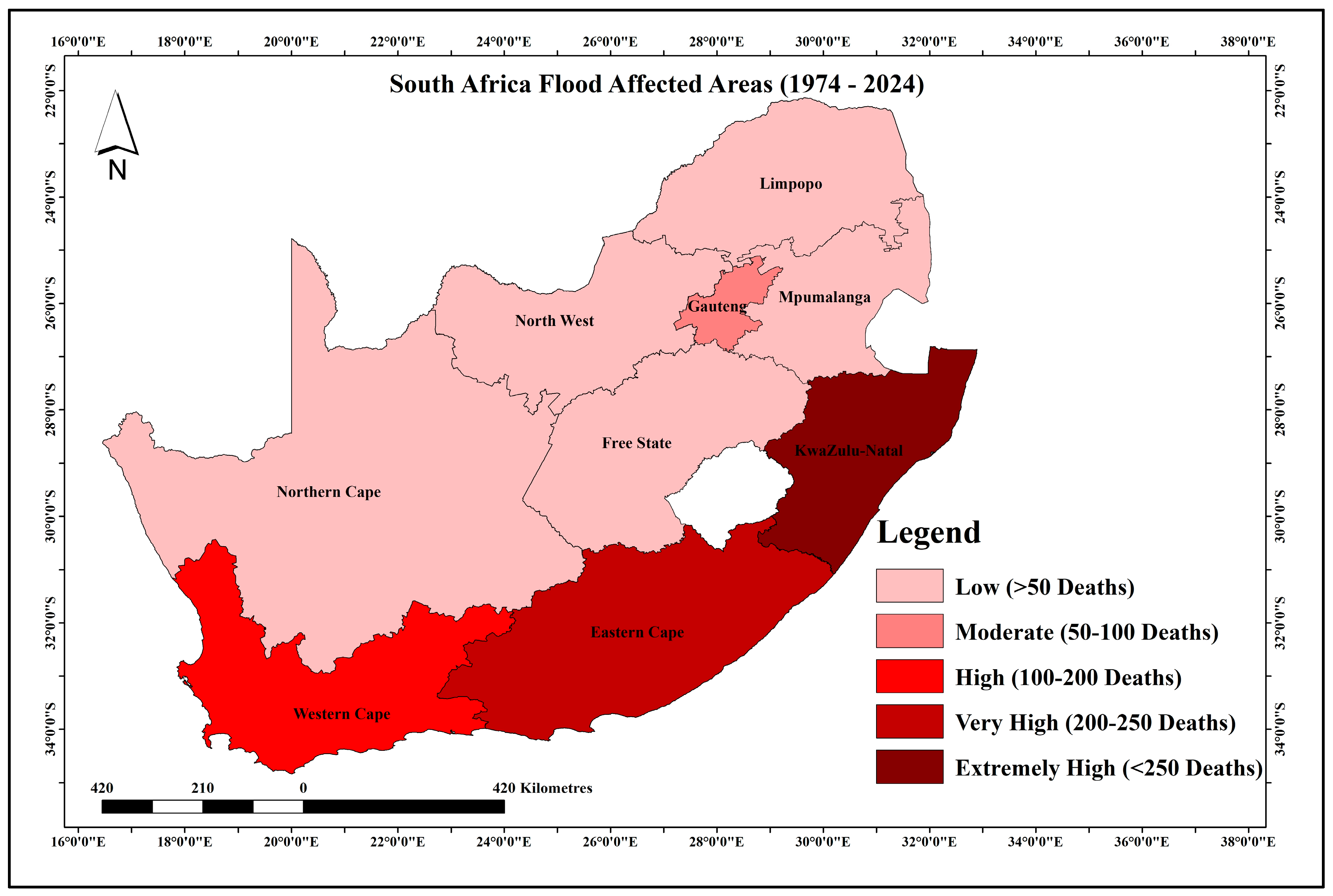
As per the literature collected by Busayo et al. [63], floods have caused over 1500 recorded fatalities in KwaZulu-Natal and Western Cape. Grab and Nash [18] primarily focused on KwaZulu-Natal (KZN), a province where significant and often catastrophic loss of life has occurred due to flooding, as shown in Figure 4. The provinces were categorised according to the total number of deaths in that province over 50 years.
To put it into context, Figure 4 is based on the categorised number of deaths shown in Table 1 below.
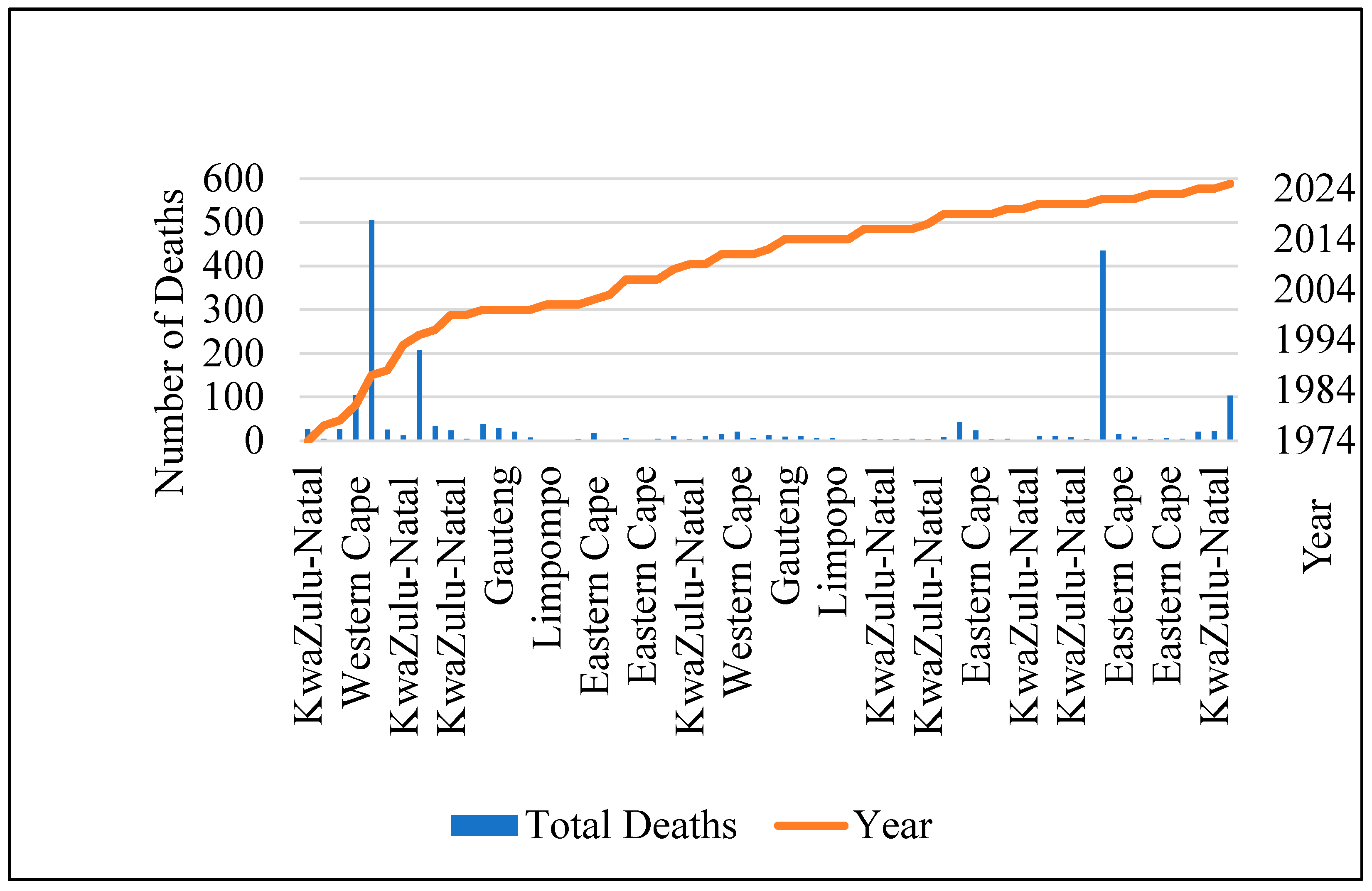
The April 2022 floods in the greater Durban region and large areas of the KwaZulu-Natal (KZN) coastal zone stood out as likely the most catastrophic natural disaster recorded in KZN in terms of lives lost, with a record number of 459 people losing their lives and 88 people reported missing as of May 2022 [18]. The chronological study of floods in KZN by using hardcopies and online historical records from 1836 to 2022 highlighted the catastrophic flood occurrences that included floods of June 1905 that caused between 200 and 300 deaths, the October 1917 floods with over 100 deaths, Tropical Cyclone Domoina in 1984 that led to over 200 estimated deaths in northern KZN, the devastating September 1987 floods that resulted in 388 deaths across the KZN Province and a flood on 18 April 2019 associated with the loss of approximately 67 lives. Most recently, the February and March 2025 floods in Durban led to the loss of 6 lives [64]. The study by Dube, et al. [16] focused on flood events in Western Cape Province that have caused significant fatalities of over 129 deaths recorded between 1900 and 2018. According to the study, the deadliest single event occurred in 1981 in Laingsburg, where 104 people drowned after a catastrophic flood wiped out much of the town. Other notable incidents included four (4) deaths in Montagu (2018), 5 in Caledon (2018), and 3 in Touws River (1906). Dube, et al. [16] noted that informal settlements and coastal urban areas like Cape Town are disproportionately affected by floods due to poor infrastructure and settlement in high-risk zones. A context of total deaths in provinces has been presented in Figure 5 in the context of chronology.

3.3.2. Socio-Economic and Infrastructural Impacts

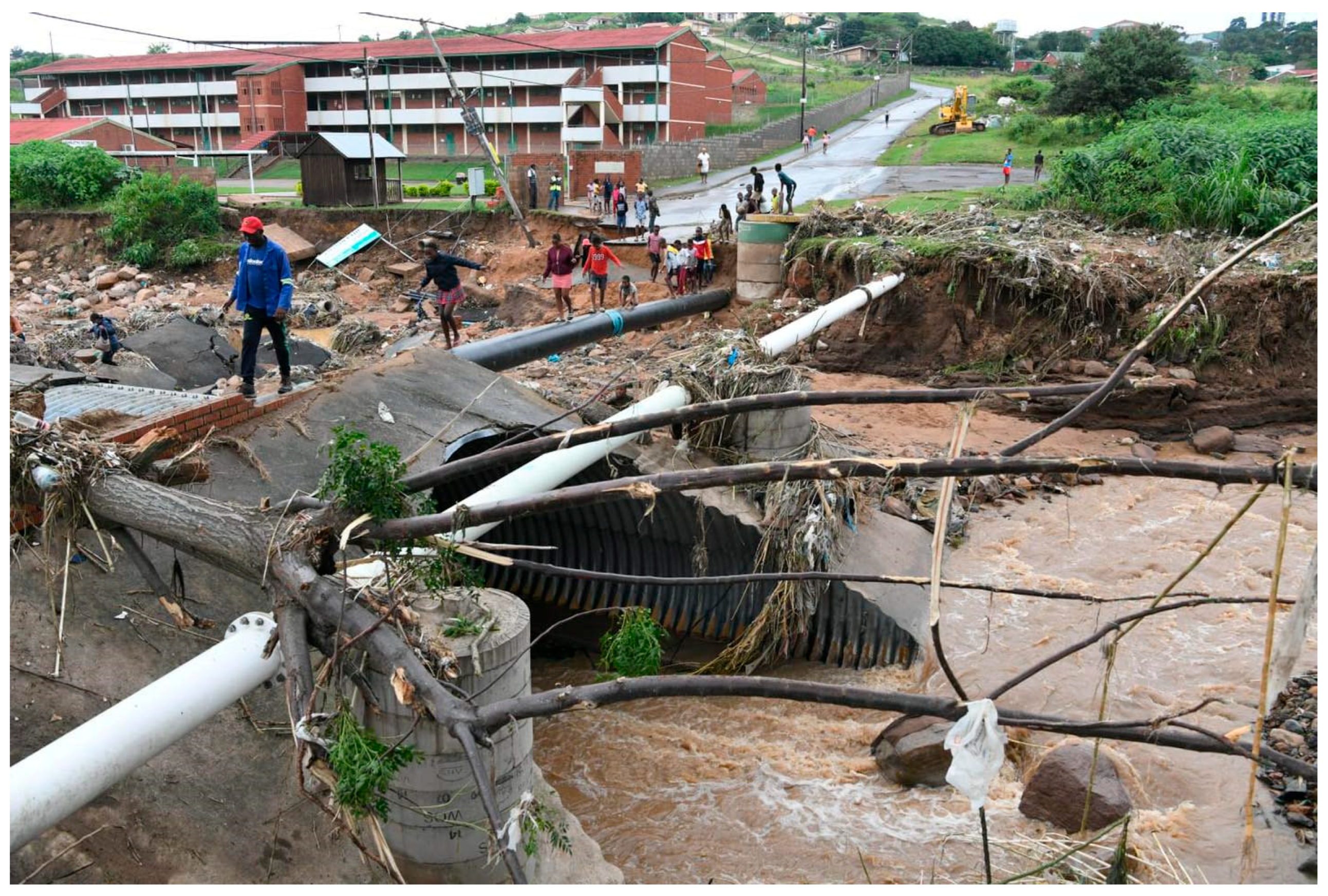
From a socio-economic perspective, floods disrupt livelihoods through damaged infrastructure. Roads, bridges, powerlines, water supply, and sewage systems are destroyed during flooding [16]. Figure 6 shows a bridge swept away by floods during the Durban 2022 floods [65].
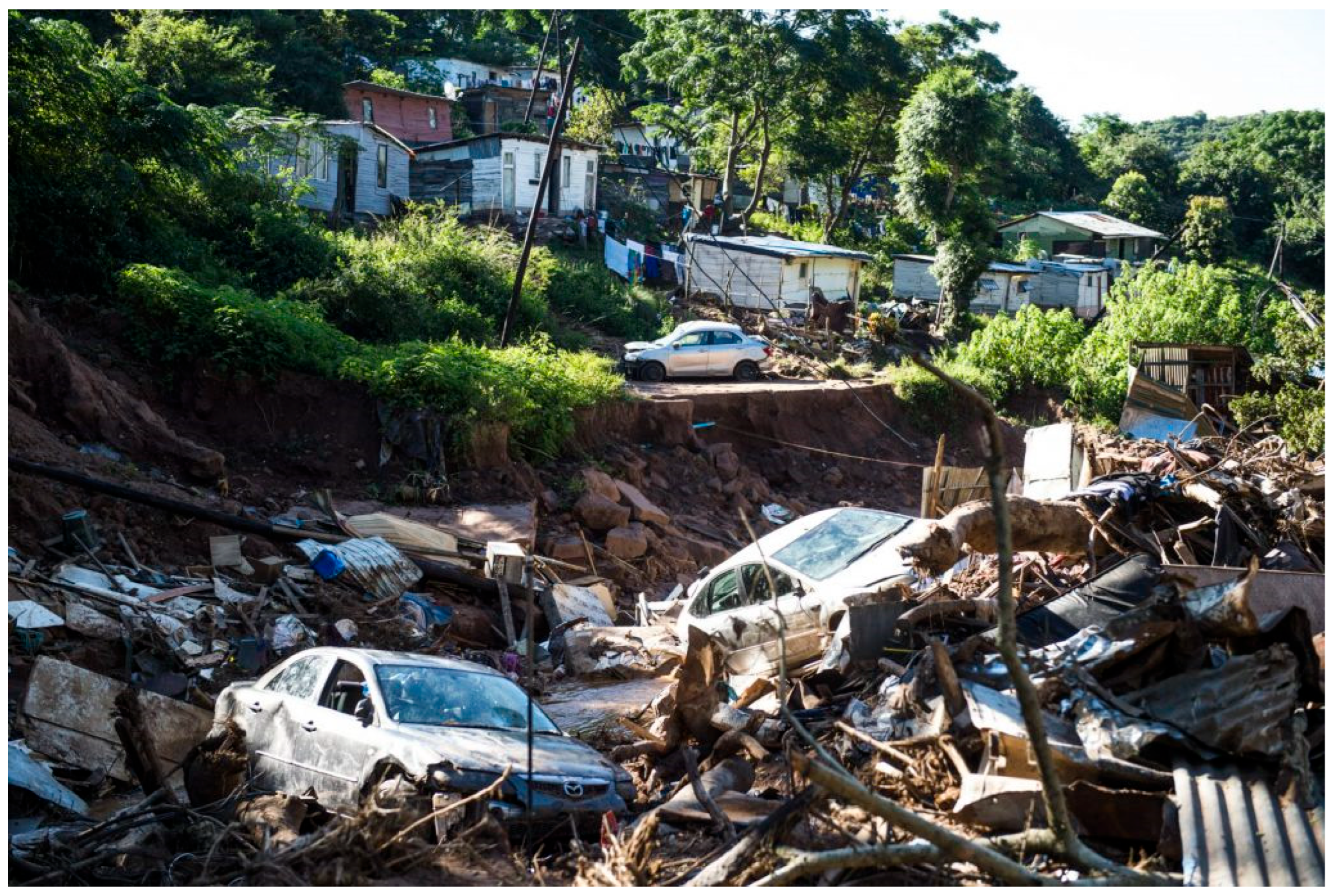
The floods have hit rural and informal settlements in the past due to their location in floodplains and low-lying areas. The floods cause immense damage to the makeshift houses, which in turn causes displacement and homelessness, as frequently reported [66]. It was reported that over 40,000 people were displaced in KwaZulu-Natal’s 2022 floods, highlighting the systemic displacement issue in informal settlements during floods [67]. Figure 7 shows the damage in an informal settlement in Durban in 2022 [68].
Also, the rural areas and informal settlements depend on subsistence farming and informal trade, which are highly disrupted during flooding [69]. Subsequently, the agriculture sector suffers crop losses and livestock fatalities, exacerbating food insecurity in rural areas [70]. Additionally, flood events financially burden reconstruction, which strains government resources. It was estimated that the Durban 2022 floods led to approximately $2 billion in direct infrastructure and economic damage [18].

3.3.3. Psychological and Long-Term Trauma

From a psychological perspective, floods exert a severe toll on the mental health of the victims. Bouchard, Pretorius, Kramers-Olen, Padmanabhanunni and Stiegler [17] highlighted the psychotraumatology of flood victims in South Africa. It was reported that the over 435 deaths and widespread displacement led to long-term psychological trauma among survivors, including children. The study underscored the need for integrating mental health interventions into disaster response frameworks since many affected individuals did not receive adequate psychological support after the flood disaster.

3.4. Building Flood Resilience in South Africa

3.4.1. Infrastructure Development and Land Use Planning

Enhancing flood resilience in South Africa necessitates proactive infrastructure development and robust land-use planning that directly addresses vulnerabilities exposed during past flood events. The Ad Hoc Joint Committee on Flood Disaster Relief and Recovery [71] and Ngcamu [43] emphasize the enforcement of stringent land-use regulations to prevent unauthorized development in flood-prone areas. Given the historical displacement of marginalized communities to low-lying floodplains under apartheid, targeted resettlement policies and the provision of safe, serviced housing are critical to reducing exposure. Beyond regulatory measures, integrating green infrastructure and vegetated buffers offers sustainable approaches to attenuate surface runoff, restore ecological functions, and complement conventional drainage systems Dalu, Shackleton and Dalu [21]; Mashao, Mothapo, Munyai, Letsoalo, Mbokodo, Muofhe, Matsane and Chikoore [29]. Strategic infrastructure investment should prioritize resilient stormwater networks, reinforced transport corridors, and proactive maintenance of waterways, particularly in informal settlements where systemic neglect heightens flood risks Grab and Nash [18], Raphela and Matsididi [34]. Furthermore, aligning land use planning with climate change projections ensures that both new developments and retrofitted infrastructure can withstand increasing rainfall intensity and variability [72]. Together, these measures highlight the need for an integrated, multi-level approach that combines regulation, engineered solutions, and nature-based interventions to sustainably reduce flood risk while safeguarding vulnerable populations in South Africa.

3.4.2. Strengthening Governance and Policy Integration

Proper governance and policy integration play a key role in flood resilience. There is a critical need to strengthen institutional coordination and governance structures to implement integrated flood management strategies. Drivdal [73] emphasized the importance of coherent and consistent policy frameworks that bridge sectoral divides. The policy frameworks should incorporate water management, urban planning, and disaster risk reduction. Zembe et al. [74] recommended integrating approaches to align policies at national and municipal levels and incorporating adaptive management principles that allow for flexibility in the face of emerging risks. Embedding continuous learning processes into flood policy formulation is necessary to ensure that responses evolve based on past experiences and scientific advancements [75].

3.4.3. Community Engagement and Capacity Building

Various authors have recommended community engagement and capacity building for flood resilience in South Africa. Genuine community participation is essential for effective flood risk management in vulnerable communities like informal settlements. Sinthumule and Mudau [76] advocated for participatory approaches that involve local stakeholders in planning, decision-making, and implementation. The participatory approach enables the synthesis of lived experiences with collected technical data, which leads to contextually relevant solutions [77]. Local capacity should be built through flood response training and awareness programs tailored to the needs of various vulnerable populations. As per the study by Anwana and Owojori [78], it is paramount to strengthen resilience in rural and informal settlements where infrastructure and services are often inadequate. Community-driven solutions that respect local contexts are more likely to be sustainable and effective over the long term. Mugari et al. [79] demonstrated how participatory co-design approaches enhance flood resilience by integrating diverse stakeholder knowledge, like local communities, policymakers, and scientists, in the Vhembe district. The author highlighted the value of combining lived experiences with technical expertise to identify flood risk drivers and codevelop contextually appropriate solutions. Mugari, Nethengwe and Gumbo [79] revealed that participatory co-design approaches enable social learning and empower marginalized groups while improving the legitimacy and sustainability of flood adaptation strategies at the same time. However, challenges such as power imbalances, logistical constraints, and the need for long-term collaboration show the complexities of participatory processes.

3.4.4. Addressing Social, Psychological, and Cultural Dimensions

Bouchard, Pretorius, Kramers-Olen, Padmanabhanunni and Stiegler [17] explored flood risk management’s Social, psychological, and cultural dimensions. They concluded that flood risk management must also account for disasters’ social and psychological impacts. There is a growing recognition of the need for mental health support services, particularly in communities that experience recurrent flooding [80]. Training in psychotraumatology and the integration of psychosocial care into disaster response plans are key recommendations by Barnwell [81], Jewkes et al. [82], and Bouchard, Pretorius, Kramers-Olen, Padmanabhanunni and Stiegler [17]. Moreover, gender-sensitive and inclusive approaches are necessary to address the differentiated impacts of flooding on various demographic groups [82]. Van Straten and Ncube [83] acknowledged that spiritual and cultural dimensions can also enhance the relevance and acceptance of disaster interventions in diverse communities.

3.4.5. Enhancing Flood Forecasting and Early Warning Systems

Flood forecasting and effective flood early warning systems have been advocated for as essential tools to minimize loss of lives and the economic toll that comes with flood events [20,34,54,84,85]. Ngcamu and Abrahams [54] emphasized the need to expand and enhance these systems to ensure the timely and accurate dissemination of information. Muzerengi [86] recommended incorporating indigenous and local knowledge into the forecasting frameworks to improve models and increase community trust and responsiveness. Byaruhanga, Kibirige, Gokool and Mkhonta [20] reviewed various flood forecasting techniques and highlighted the challenges faced by ungauged regions. The limitation of unavailable recorded river flow data for model verification cuts across most African countries, and professionals in the field must find a way to optimize and validate these forecasting and warning systems to provide advanced warning and support adaptive decision-making across sectors. A robust data collection infrastructure and continuous monitoring should support these improvements.

3.4.6. Advancing Research, Innovation, and Ecosystem-Based Approaches

Finally, continued research, innovation, and ecosystem-based approaches have been advanced as essential for understanding flood risks and informing evidence-based flood disaster interventions in South Africa [63]. The development of high-resolution flood risk maps and the use of advanced hydrological and hydraulic models, such as Hydrologic Engineering Centre (HEC) suite, Personal Computer Storm Water Management Model (PCSWMM), Soil and Water Assessment Tool (SWAT) and Super-Fast Inundation of CoastS (SFNCS) for coastal areas are recommended to assess vulnerabilities better and design targeted responses, [20,87,88]. Future research should prioritize localized Pedotransfer functions for hydrological modelling [89], impervious surface mapping [90], informal settlement dynamics [91], and the impacts of urban expansion [92]. Additionally, ecosystem-based adaptation (EbA) strategies, such as wetland restoration and biodiversity conservation, should be mainstreamed into flood risk management as they offer co-benefits for climate adaptation and ecological health [63,93].

3.5. Gaps and Future Research Needs

3.5.1. Integration of Knowledge and Technology

Current flood research in South Africa often overlooks the potential of combining Indigenous Knowledge (IK) with modern tools like hydrodynamic models, GIS, machine learning, and remote sensing. Membele, Naidu and Mutanga [25] critically reviewed the integration of IK and GIS in mapping flood vulnerability in informal settlements, highlighting the fragmented approaches and lack of community participation. Additionally, Johnson et al. [94] demonstrated that there is a pressing need for better climate modelling, particularly in coastal and urban areas, to address non-stationary flood risks where CO2 and other climate drivers influence extreme rainfall patterns. Future studies should focus on a more holistic approach that includes validating integrated flood risk maps with community input, improving early warning systems using Internet of Things (IoT) and AI technologies in addition to assessing the effectiveness of ecosystem-based adaptation (EbA) strategies like wetland restoration to bridge gaps in adaptive flood risk management in South Africa [25,63,94,95].

3.5.2. Social and Governance Challenges

Marginalized groups, especially Black women in informal settlements, face disproportionate flood risks due to systemic inequalities, yet their adaptive strategies remain understudied [42,62,82]. Additionally, mental health impacts and spiritual distress post-flooding are rarely addressed in disaster response frameworks [83]. Governance gaps, such as weak policy implementation and fragmented coordination between local and national agencies, further hinder resilience [22,96,97]. Future research should prioritize gender-sensitive adaptation, psychosocial support systems, and policy reforms that enhance multi-sector collaboration, community-led governance, and financial mechanisms like microinsurance.

3.5.3. Urbanization and Long-Term Resilience

Rapid urbanization and informal settlement expansion exacerbate flood vulnerabilities, yet land use planning often neglects hydrological risks [98,99,100]. Studies lack longitudinal data on recovery trajectories and comparative analyses of regional flood responses (e.g., KwaZulu-Natal vs. Western Cape). Moving forward, research should evaluate the long-term effectiveness of grassroots interventions such as green infrastructure, quantify the economic costs of poor urban drainage, and develop standardized post-disaster assessment tools. Bridging the gap between Indigenous coping mechanisms (e.g., raised housing in Limpopo) and modern engineering solutions will be key to building equitable, climate-resilient communities. By addressing these gaps, future research can support policies that reduce flood risks while tackling socio-economic disparities and climate change impacts.

4. Conclusions and Recommendations

The comprehensive review of flood hazards in South Africa reveals a complex interplay of climatic, infrastructural, and socio-economic factors contributing to the nation’s vulnerability. Historical analysis demonstrates a significant increase in flood frequency and intensity, particularly in coastal regions such as KwaZulu-Natal, where urbanization and inadequate drainage systems exacerbate flood risks. The devastating impacts of recent flood events, including the 2022 Durban floods that resulted in 459 fatalities and approximately $2 billion in damages, underscore the urgent need for systemic interventions. These findings highlight how climate change and legacy spatial planning policies and governance challenges have created a perfect storm of flood vulnerability that demands immediate and coordinated action.
Addressing South Africa’s flood risk requires a phased and multi-level strategy. In the short term, priority should be given to upgrading drainage infrastructure in flood-prone urban areas and informal settlements led by municipalities and the Department of Water and Sanitation (DWS). While high in cost, such interventions are technically feasible if concentrated on critical hotspots. Equally urgent is the strengthening of flood early warning systems by the South African Weather Service (SAWS) and the National Disaster Management Centre (NDMC). Integrating hydrological-hydraulic modelling, community-based communication channels and indigenous knowledge can ensure timely and inclusive alerts at a moderate cost and high feasibility. Stricter enforcement of land-use zoning to restrict settlement in floodplains is also vital, although this relatively low-cost measure faces moderate feasibility challenges due to development pressures.
In the medium term, investment in nature-based solutions such as wetland restoration, riparian buffers, and green infrastructure should be prioritized to enhance water absorption and flood regulation. The Department of Forestry, Fisheries and the Environment (DFFE), together with municipalities and NGOs, can implement these at moderate cost with high feasibility by drawing on existing pilots in Cape Town and Durban. Governance reforms to improve intergovernmental coordination, increase funding allocations, and strengthen accountability mechanisms remain equally important, though moderate in feasibility, as they depend on sustained political will. Parallel to these efforts, expanding community engagement in flood planning and providing psychosocial support through municipal and NGO-led programs offer cost-effective and high-feasibility pathways for building socially inclusive resilience.
In the long term, sustained investment in research and innovation is necessary to refine localized flood risk assessments, improve data in underserved areas, and test ecosystem-based adaptation strategies. Universities, the Council for Scientific and Industrial Research (CSIR), and the Water Research Commission (WRC) should lead this work. While moderately costly, sustained research is highly feasible and aligns with national priorities. Finally, embedding South Africa within regional knowledge-sharing platforms through the Southern African Development Community (SADC) and other African regional bodies would promote cross-border collaboration and dissemination of best practices at relatively low cost and high feasibility. All these measures must be supported by a national monitoring and evaluation framework under the NDMC to ensure accountability, adaptive learning, and continuous improvement.

5. Research Limitations

This study has notable limitations like historical data gaps and uneven spatial coverage, which may bias trend analyses, in addition to an urban-centric focus that overlooks rural flood dynamics. Also, the causal links between climate change and flooding remain associative due to confounding factors like land use changes, and this requires deeper investigation. Much as governance is criticised, there is a lack of detail in the literature on policy implementation barriers, and resilience strategies lack cost–benefit assessments or long-term efficacy evidence. Future research should employ mixed methods, higher-resolution modelling, and comparative governance analysis to strengthen findings. Addressing these gaps would enhance policy-relevant flood resilience frameworks.

Author Contributions

Conceptualisation, N.B. and D.K.; analysis, N.B. and D.K.; validation, N.B., D.K. and G.M.; formal analysis, N.B. and D.K.; investigation, N.B. and D.K.; writing—original draft preparation, N.B.; writing—review and editing, D.K. and G.M.; visualisation, N.B. and D.K.; supervision, D.K.; project administration, D.K.; funding acquisition, D.K. All authors have read and agreed to the published version of the manuscript.

Funding

This research was funded by the Water Research Commission (WRC) of South Africa, grant number C2023-2024-01256.

Data Availability Statement

The raw data supporting the conclusions of this article will be made available by the authors on request.

Acknowledgments

The authors would like to acknowledge the support of the Water Research Commission (WRC) of South Africa (Project Number: C2023-2024-01256) and the Centre for Water Resources Research (CWRR) at the University of KwaZulu-Natal, South Africa.

Conflicts of Interest

The authors declare no conflicts of interest.

References

  1. Liu, Q.; Du, M.; Wang, Y.; Deng, J.; Yan, W.; Qin, C.; Liu, M.; Liu, J. Global, regional and national trends and impacts of natural floods, 1990–2022. Bull. World Health Organ. 2024, 102, 410–420. [Google Scholar] [CrossRef]
  2. Jonkman, S.; Curran, A.; Bouwer, L.M. Floods have become less deadly: An analysis of global flood fatalities 1975–2022. Nat. Hazards 2024, 120, 6327–6342. [Google Scholar] [CrossRef]
  3. Hamidifar, H.; Nones, M. Global to regional overview of floods fatality: The 1951–2020 period. Nat. Hazards Earth Syst. Sci. Discuss. 2021, 2021, 1–22. [Google Scholar]
  4. Loudyi, D.; Kantoush, S.A. Flood risk management in the Middle East and North Africa (MENA) region. Urban Water J. 2020, 17, 379–380. [Google Scholar] [CrossRef]
  5. Mustafa, A.M.; Muhammed, H.; Szydłowski, M. Extreme rainfalls as a cause of urban flash floods; a case study of the Erbil-Kurdistan region of Iraq. Acta Sci. Pol. Form. Circumiectus 2019, 18, 113–132. [Google Scholar] [CrossRef]
  6. Abdelkarim, A.; Gaber, A.F.; Youssef, A.M.; Pradhan, B. Flood hazard assessment of the urban area of Tabuk City, Kingdom of Saudi Arabia by integrating spatial-based hydrologic and hydrodynamic modeling. Sensors 2019, 19, 1024. [Google Scholar] [CrossRef] [PubMed]
  7. Hussein, K.; Alkaabi, K.; Ghebreyesus, D.; Liaqat, M.U.; Sharif, H.O. Land use/land cover change along the Eastern Coast of the UAE and its impact on flooding risk. Geomat. Nat. Hazards Risk 2020, 11, 112–130. [Google Scholar] [CrossRef]
  8. Nigussie, T.A.; Altunkaynak, A. Modeling the effect of urbanization on flood risk in Ayamama Watershed, Istanbul, Turkey, using the MIKE 21 FM model. Nat. Hazards 2019, 99, 1031–1047. [Google Scholar] [CrossRef]
  9. Ceribasi, G.; Ceyhunlu, A.I. Generation of 1D and 2D flood maps of Sakarya river passing through Geyve district of Sakarya city in Turkey. Nat. Hazards 2021, 105, 631–642. [Google Scholar] [CrossRef]
  10. Cao, W.; Zhou, Y.; Güneralp, B.; Li, X.; Zhao, K.; Zhang, H. Increasing global urban exposure to flooding: An analysis of long-term annual dynamics. Sci. Total Environ. 2022, 817, 153012. [Google Scholar] [CrossRef]
  11. Ramadane, M.; Prentice, A. Monsoon havoc exposes West and Central Africa’s rising flood risks. Routers, 15 October 2024. [Google Scholar]
  12. Mureithi, C. Climate change and rapid urbanization worsened the impact of East African rains, scientists say. AP, 24 May 2024. [Google Scholar]
  13. Munyai, R.B.; Chikoore, H.; Musyoki, A.; Chakwizira, J.; Muofhe, T.P.; Xulu, N.G.; Manyanya, T.C. Vulnerability and adaptation to flood hazards in rural settlements of Limpopo province, South Africa. Water 2021, 13, 3490. [Google Scholar] [CrossRef]
  14. Botai, C.M.; Botai, J.O.; Zwane, N.N.; Hayombe, P.; Wamiti, E.K.; Makgoale, T.; Murambadoro, M.D.; Adeola, A.M.; Ncongwane, K.P.; de Wit, J.P.; et al. Hydroclimatic extremes in the Limpopo River Basin, South Africa, under changing climate. Water 2020, 12, 3299. [Google Scholar] [CrossRef]
  15. Ngcamu, B. Climate change and disaster preparedness issues in Eastern Cape and Kwazulu-Natal, South Africa. Town Reg. Plan. 2022, 81, 53–66. [Google Scholar] [CrossRef]
  16. Dube, K.; Nhamo, G.; Chikodzi, D. Flooding trends and their impacts on coastal communities of Western Cape Province, South Africa. GeoJournal 2022, 87, 453–468. [Google Scholar] [CrossRef]
  17. Bouchard, J.-P.; Pretorius, T.B.; Kramers-Olen, A.L.; Padmanabhanunni, A.; Stiegler, N. Global warming and psychotraumatology of natural disasters: The case of the deadly rains and floods of April 2022 in South Africa. Ann. Médico-Psychol. Rev. Psychiatr. 2023, 181, 234–239. [Google Scholar] [CrossRef]
  18. Grab, S.W.; Nash, D.J. A new flood chronology for KwaZulu-Natal (1836–2022): The April 2022 Durban floods in historical context. S. Afr. Geogr. J. 2024, 106, 476–497. [Google Scholar] [CrossRef]
  19. Vrabel, M. Preferred reporting items for systematic reviews and meta-analyses. Oncol. Nurs. Forum 2015, 42, 552–554. [Google Scholar] [CrossRef]
  20. Byaruhanga, N.; Kibirige, D.; Gokool, S.; Mkhonta, G. Evolution of Flood Prediction and Forecasting Models for Flood Early Warning Systems: A Scoping Review. Water 2024, 16, 1763. [Google Scholar] [CrossRef]
  21. Dalu, M.T.; Shackleton, C.M.; Dalu, T. Influence of land cover, proximity to streams and household topographical location on flooding impact in informal settlements in the Eastern Cape, South Africa. Int. J. Disaster Risk Reduct. 2018, 28, 481–490. [Google Scholar] [CrossRef]
  22. Williams, D.S.; Máñez Costa, M.; Celliers, L.; Sutherland, C. Informal settlements and flooding: Identifying strengths and weaknesses in local governance for water management. Water 2018, 10, 871. [Google Scholar] [CrossRef]
  23. Chikoore, H.; Bopape, M.-J.M.; Ndarana, T.; Muofhe, T.P.; Gijben, M.; Munyai, R.B.; Manyanya, T.C.; Maisha, R. Synoptic structure of a sub-daily extreme precipitation and flood event in Thohoyandou, north-eastern South Africa. Weather Clim. Extrem. 2021, 33, 100327. [Google Scholar] [CrossRef]
  24. Tramblay, Y.; Villarini, G.; El Khalki, E.M.; Gründemann, G.; Hughes, D. Evaluation of the drivers responsible for flooding in Africa. Water Resour. Res. 2021, 57, e2021WR029595. [Google Scholar] [CrossRef]
  25. Membele, G.M.; Naidu, M.; Mutanga, O. Integrating indigenous knowledge and geographical information system in mapping flood vulnerability in informal settlements in a South African context: A critical review. S. Afr. Geogr. J. 2022, 104, 446–466. [Google Scholar] [CrossRef]
  26. Mason, S.J.; Waylen, P.R.; Mimmack, G.M.; Rajaratnam, B.; Harrison, J.M. Changes in extreme rainfall events in South Africa. Clim. Chang. 1999, 41, 249–257. [Google Scholar] [CrossRef]
  27. McBride, C.M.; Kruger, A.C.; Dyson, L. Changes in extreme daily rainfall characteristics in South Africa: 1921–2020. Weather Clim. Extrem. 2022, 38, 100517. [Google Scholar] [CrossRef]
  28. Thoithi, W.; Blamey, R.C.; Reason, C.J. April 2022 Floods over East Coast South Africa: Interactions between a mesoscale convective system and a coastal meso-low. Atmosphere 2022, 14, 78. [Google Scholar] [CrossRef]
  29. Mashao, F.M.; Mothapo, M.C.; Munyai, R.B.; Letsoalo, J.M.; Mbokodo, I.L.; Muofhe, T.P.; Matsane, W.; Chikoore, H. Extreme rainfall and flood risk prediction over the East Coast of South Africa. Water 2023, 15, 50. [Google Scholar] [CrossRef]
  30. Blamey, R.C.; Reason, C.J. Diversity and ranking of ENSO impacts along the eastern seaboard of subtropical southern Africa. Atmosphere 2023, 14, 1042. [Google Scholar] [CrossRef]
  31. Vermeulen, J.H.; Hedding, D.W.; Letsatsi, N. Forecasting extreme hourly rainfall in South Africa for disaster risk reduction: Thresholds and return periods. Water SA 2024, 50, 330–344. [Google Scholar] [CrossRef]
  32. Kunene, H.P.; Ntombela, N.G.; Madikizela, A. The need for effective storm water management to build flood resilient communities: A case of Port St Johns, South Africa. In The Increasing Risk of Floods and Tornadoes in Southern Africa; Springer: Cham, Switzerland, 2021; pp. 141–155. [Google Scholar]
  33. Tandlich, R.; Ncube, M.; Zuma, B.M. A case study on the health risks related to flood disasters in South Africa. J. Disaster Res. 2016, 11, 732–741. [Google Scholar] [CrossRef]
  34. Raphela, T.D.; Matsididi, M. The causes and impacts of flood risks in South Africa. Front. Water 2025, 6, 1524533. [Google Scholar] [CrossRef]
  35. Feng, B.; Zhang, Y.; Bourke, R. Urbanization impacts on flood risks based on urban growth data and coupled flood models. Nat. Hazards 2021, 106, 613–627. [Google Scholar] [CrossRef]
  36. Gao, B.; Xu, Y.; Sun, Y.; Wang, Q.; Wang, Y.; Li, Z. The impacts of impervious surface expansion and the operation of polders on flooding under rapid urbanization processes. Theor. Appl. Climatol. 2023, 151, 1215–1225. [Google Scholar] [CrossRef]
  37. Rentschler, J.; Avner, P.; Marconcini, M.; Su, R.; Strano, E.; Vousdoukas, M.; Hallegatte, S. Global evidence of rapid urban growth in flood zones since 1985. Nature 2023, 622, 87–92. [Google Scholar] [CrossRef] [PubMed]
  38. World Bank. Urban Population (% of Total Population)—South Africa; World Bank: Washington, DC, USA, 2024. [Google Scholar]
  39. Ziervogel, G.; Waddell, J.; Smit, W.; Taylor, A. Flooding in Cape Town’s informal settlements: Barriers to collaborative urban risk governance. S. Afr. Geogr. J.=Suid-Afr. Geogr. Tydskr. 2016, 98, 1–20. [Google Scholar] [CrossRef]
  40. Armitage, N. Water Sensitive Urban Design (WSUD) for South Africa: Framework and Guidelines; Water Research Commission: Pretoria, South Africa, 2014. [Google Scholar]
  41. Taylor, A. Managing stormwater and flood risk in a changing climate: Charting urban adaptation pathways in Cape Town. In Mainstreaming Climate Change in Urban Development: Lessons from Cape Town; UCT Press: Rondebosch, South Africa, 2019; pp. 224–241. [Google Scholar]
  42. Udo, F.; Naidu, M. Examining the interplay between economic development and local women vulnerability to flood impacts in selected local areas in Durban, South Africa. J. Asian Afr. Stud. 2023, 58, 779–793. [Google Scholar] [CrossRef]
  43. Ngcamu, B.S. Application of the disaster management cycle and climate change: Studying flood disasters in South Africa. Soc. Sci. Humanit. Open 2023, 8, 100657. [Google Scholar] [CrossRef]
  44. Trikha, I. Urban Flooding Caused by Solid Waste. Master’s Thesis, University of Innsbruck, Innsbruck, Austria, 2022. [Google Scholar]
  45. Qian, Q.; Eslamian, S. Impact of urbanization on flooding. In Flood Handbook; CRC Press: Boca Raton, FL, USA, 2022; pp. 97–112. [Google Scholar]
  46. Ntanganedzeni, B.; Nobert, J. Flood risk assessment in Luvuvhu river, Limpopo province, South Africa. Phys. Chem. Earth Parts A/B/C 2021, 124, 102959. [Google Scholar] [CrossRef]
  47. Musyoki, A.; Murungweni, F.M.; Thifhulufhelwi, R. The impact of and responses to flooding in Thulamela Municipality, Limpopo Province, South Africa. Jàmbá J. Disaster Risk Stud. 2016, 8, a166. [Google Scholar] [CrossRef] [PubMed]
  48. Culwick, C. Disasters and disaster risk management in South Africa. In The Geography of South Africa: Contemporary Changes and new Directions; Springer: Cham, Switzerland, 2019; pp. 295–304. [Google Scholar]
  49. Mbandlwa, Z. Weaknesses of the Disaster and Risk Management Systems in South Africa. Available online: https://www.researchgate.net/publication/386075824_Weaknesses_of_the_Disaster_and_Risk_Management_Systems_in_South_Africa (accessed on 14 May 2025).
  50. Van Niekerk, D. A critical analysis of the South African disaster management act and policy framework. Disasters 2014, 38, 858–877. [Google Scholar] [CrossRef]
  51. Coetzee, C.; Khoza, S.; Nemakonde, L.D.; Shoroma, L.B.; Wentink, G.W.; Nyirenda, M.; Chikuse, S.; Kamanga, T.; Maripe, K.; Rankopo, M.J.; et al. Financing disaster risk reduction: Exploring the opportunities, challenges, and threats within the Southern African Development Community Region. Int. J. Disaster Risk Sci. 2023, 14, 398–412. [Google Scholar] [CrossRef]
  52. Lefutso, D. Transformative policy and legislative strategies for flood disaster management in post-apartheid South Africa. J. Disaster Sci. Manag. 2025, 1, 15. [Google Scholar] [CrossRef]
  53. Carmin, J.; Tierney, K.; Chu, E.; Hunter, L.M.; Roberts, J.T.; Shi, L. Adaptation to climate change. In Climate Change and Society: Sociological Perspectives; Oxford Academic: Oxford, UK, 2015; pp. 164–198. [Google Scholar]
  54. Ngcamu, B.S.; Abrahams, G. The Preparedness Plans and Early Warning Systems During Flood Disasters in South Africa. In The Palgrave Handbook of Language and Crisis Communication in Sub-Saharan Africa; Palgrave Macmillan: Cham, Switzerland, 2024; pp. 259–272. [Google Scholar]
  55. Govender, I.H.; Reddy, M.; Pillay, R.P. A review of residual flood risks in South African-vulnerable coastal communities: Opportunities to influence policy. In Climate Policies; IntechOpen: London, UK, 2025; p. 143. [Google Scholar]
  56. Hilberts, S.; Govers, M.; Petelos, E.; Evers, S. The Impact of Misinformation on Social Media in the Context of Natural Disasters: Narrative Review. JMIR Infodemiology 2025, 5, e70413. [Google Scholar] [CrossRef] [PubMed]
  57. Daume, S. Online misinformation during extreme weather emergencies: Short-term information hazard or long-term influence on climate change perceptions? Environ. Res. Commun. 2024, 6, 022001. [Google Scholar] [CrossRef]
  58. Nepelski, M.; Banasiak, A.M.; Kramarczuk, J.; Kamińska, M. Socio-Political Impact of Disinformation During the 2024 Floods in Poland. Zesz. Nauk. SGSP/Szkoła Główna Służby Pożarniczej 2025, 2, 45–57. [Google Scholar] [CrossRef]
  59. Fathollahzadeh, A.; Babaie, J.; Salmani, I.; Morowatisharifabad, M.A.; Khajehaminian, M.-R. Challenges of disaster risk communication from the perspectives of experts and affected people: A conventional content analysis. Int. J. Disaster Risk Reduct. 2024, 108, 104553. [Google Scholar] [CrossRef]
  60. Southon, M.P.; van der Merwe, C.D. Flooded with risks or opportunities: Exploring flooding impacts on tourist accommodation. Afr. J. Hosp. Tour. Leis. 2018, 7, 1–16. [Google Scholar]
  61. Dube, K.; Nhamo, G.; Chikodzi, D.; Chapungu, L. Mapping and evaluating the impact of flood hazards on tourism in South African national parks. J. Outdoor Recreat. Tour. 2023, 43, 100661. [Google Scholar] [CrossRef]
  62. Udo, F.; Naidu, M. Exploring Black African women’s experiences of vulnerability and adaptation to flood impacts in the eThekwini metropolitan municipality, KwaZulu-Natal, South Africa. Int. J. Disaster Risk Reduct. 2023, 93, 103798. [Google Scholar] [CrossRef]
  63. Busayo, E.T.; Kalumba, A.M.; Afuye, G.A.; Olusola, A.O.; Ololade, O.O.; Orimoloye, I.R. Rediscovering South Africa: Flood disaster risk management through ecosystem-based adaptation. Environ. Sustain. Indic. 2022, 14, 100175. [Google Scholar] [CrossRef]
  64. Hlangu, L. Aftermath of Floods Costs eThekwini R1.4bn and Counting. Available online: https://www.businesslive.co.za/bd/national/2025-03-20-aftermath-of-floods-costs-ethekwini-r14bn-and-counting/ (accessed on 12 May 2025).
  65. Davies, R. South Africa—Death Toll in KwaZulu-Natal Floods Over 300. Available online: https://floodlist.com/africa/south-africa-kwazulu-natal-floods-april-2022 (accessed on 14 May 2025).
  66. Munzhedzi, L.; Nethengwe, N.; Mugari, M. An Evaluation of Flood Control Mechanisms to Withstand and Adapt to Flooding in Vhembe District, Limpopo Province. Master’s Thesis, University of Venda, Thohoyandou, South Africa, 2024. [Google Scholar]
  67. SA-Government. National State of Disaster-In-Numbers. Available online: https://www.gov.za/news/national-state-disaster-numbers-%E2%80%93-18-april-2022-18-apr-2022 (accessed on 7 May 2025).
  68. Bega, S. There Were Clear Warnings Before Deadly KZN Floods. Available online: https://mg.co.za/the-green-guardian/2022-10-04-there-were-clear-warnings-before-deadly-kzn-floods/ (accessed on 12 May 2025).
  69. Salami, R.O.; Giggins, H.; Von Meding, J.K. Urban settlements’ vulnerability to flood risks in African cities: A conceptual framework. Jàmbá J. Disaster Risk Stud. 2017, 9, 1–9. [Google Scholar] [CrossRef][Green Version]
  70. Nhamo, L.; Matchaya, G.; Mabhaudhi, T.; Nhlengethwa, S.; Nhemachena, C.; Mpandeli, S. Cereal production trends under climate change: Impacts and adaptation strategies in southern Africa. Agriculture 2019, 9, 30. [Google Scholar] [CrossRef]
  71. PMG, P.M.G. Report of the Ad Hoc Joint Committee on Flood Disaster Relief and Recovery. 17 November 2022. Available online: https://static.pmg.org.za/221117adhocfloodsreport.pdf (accessed on 10 May 2025).
  72. Sefolo, O.; Daniyan, I.; Ramdass, K.; Akinbowale, O.E.; Zerihun, M.F.; Mashigo, P. Impact of Climate Change and the Mitigation Strategies in South Africa: A Survey of Literature. In Proceedings of the 2024 International Conference on Science, Engineering and Business for Driving Sustainable Development Goals (SEB4SDG), Omu-Aran, Nigeria, 2–4 April 2024; pp. 1–14. [Google Scholar]
  73. Drivdal, L. Flooding in Cape Town’s informal settlements: Conditions for community leaders to work towards adaptation. South Afr. Geogr. J.=Suid-Afr. Geogr. Tydskr. 2016, 98, 21–36. [Google Scholar] [CrossRef]
  74. Zembe, A.; Nemakonde, L.D.; Chipangura, P. A policy coherence framework for food security, climate change adaptation and disaster risk reduction in South Africa. Int. J. Disaster Risk Reduct. 2023, 95, 103877. [Google Scholar] [CrossRef]
  75. Jordhus-Lier, D.; Saaghus, A.; Scott, D.; Ziervogel, G. Adaptation to flooding, pathway to housing or ‘wasteful expenditure’? Governance configurations and local policy subversion in a flood-prone informal settlement in Cape Town. Geoforum 2019, 98, 55–65. [Google Scholar] [CrossRef]
  76. Sinthumule, N.I.; Mudau, N.V. Participatory approach to flood disaster management in Thohoyandou. Jàmbá J. Disaster Risk Stud. 2019, 11, 1–7. [Google Scholar] [CrossRef] [PubMed]
  77. Wolff, E. The promise of a “people-centred” approach to floods: Types of participation in the global literature of citizen science and community-based flood risk reduction in the context of the Sendai Framework. Prog. Disaster Sci. 2021, 10, 100171. [Google Scholar] [CrossRef]
  78. Anwana, E.O.; Owojori, O.M. Analysis of flooding vulnerability in informal settlements literature: Mapping and research agenda. Soc. Sci. 2023, 12, 40. [Google Scholar] [CrossRef]
  79. Mugari, E.; Nethengwe, N.S.; Gumbo, A.D. A co-design approach for stakeholder engagement and knowledge integration in flood risk management in Vhembe district, South Africa. Front. Clim. 2025, 7, 1517837. [Google Scholar] [CrossRef]
  80. Nöthling, J.; Gibbs, A.; Washington, L.; Gigaba, S.; Willan, S.; Abrahams, N.; Jewkes, R. Change in emotional distress, anxiety, depression and PTSD from pre-to post-flood exposure in women residing in low-income settings in South Africa. Arch. Women’s Ment. Health 2024, 27, 201–218. [Google Scholar] [CrossRef]
  81. Barnwell, G. The Psychological and Mental Health Consequences of Climate Change in South Africa. 2021. Available online: https://cer.org.za/reports/the-psychological-and-mental-health-consequences-of-climate-change-in-south-africa (accessed on 10 May 2025).
  82. Jewkes, R.; Gibbs, A.; Mkhwanazi, S.; Zembe, A.; Khoza, Z.; Mnandi, N.; Washington, L.; Khaula, S.; Gigaba, S.; Nöthling, J.; et al. Impact of South Africa’s April 2022 floods on women and men’s lives and gender relations in low-income communities: A qualitative study. SSM-Ment. Health 2023, 4, 100255. [Google Scholar] [CrossRef]
  83. Van Straten, A.; Ncube, A. Assessing the spiritual and mental health of the KwaZulu-Natal flood disaster survivors. Jàmbá J. Disaster Risk Stud. 2023, 15, 1–5. [Google Scholar] [CrossRef] [PubMed]
  84. Kiptum, A.; Mwangi, E.; Otieno, G.; Njogu, A.; Kilavi, M.; Mwai, Z.; MacLeod, D.; Neal, J.; Hawker, L.; O’shea, T.; et al. Advancing operational flood forecasting, early warning and risk management with new emerging science: Gaps, opportunities and barriers in Kenya. J. Flood Risk Manag. 2025, 18, e12884. [Google Scholar] [CrossRef]
  85. Ringo, J.; Sabai, S.; Mahenge, A. Performance of early warning systems in mitigating flood effects. A review. J. Afr. Earth Sci. 2024, 210, 105134. [Google Scholar] [CrossRef]
  86. Muzerengi, T. Disaster Risk Reduction and Drought: Indigenous Early Warning Systems in Chipinge District, Zimbabwe. Master’s Thesis, Stellenbosch University, Stellenbosch, South Africa, 2024. [Google Scholar]
  87. Yusuf, R.A.; Pratama, M.B.; Karjadi, E.A.; Takagi, H. Coastal flood modelling of Jakarta using the SFINCS, a reduced-physics solver with high computational efficiency. IOP Conf. Ser. Earth Environ. Sci. 2025, 1464, 012018. [Google Scholar] [CrossRef]
  88. Peker, İ.B.; Gülbaz, S.; Demir, V.; Orhan, O.; Beden, N. Integration of HEC-RAS and HEC-HMS with GIS in Flood Modeling and Flood Hazard Mapping. Sustainability 2024, 16, 1226. [Google Scholar] [CrossRef]
  89. Bayabil, H.K.; Dile, Y.T.; Tebebu, T.Y.; Engda, T.A.; Steenhuis, T.S. Evaluating infiltration models and pedotransfer functions: Implications for hydrologic modeling. Geoderma 2019, 338, 159–169. [Google Scholar] [CrossRef]
  90. Shao, Z.; Cheng, T.; Fu, H.; Li, D.; Huang, X. Emerging issues in mapping urban impervious surfaces using high-resolution remote sensing images. Remote Sens. 2023, 15, 2562. [Google Scholar] [CrossRef]
  91. Fox, A.; Ziervogel, G.; Scheba, S. Strengthening community-based adaptation for urban transformation: Managing flood risk in informal settlements in Cape Town. Local Environ. 2023, 28, 837–851. [Google Scholar] [CrossRef]
  92. Idowu, D.; Zhou, W. Global megacities and frequent floods: Correlation between urban expansion patterns and urban flood hazards. Sustainability 2023, 15, 2514. [Google Scholar] [CrossRef]
  93. Nashipay, M.L.; Mabwoga, S.; Konana, C. An Assessment of the Ecosystem-Based Adaptation Approach for Flood Risk Management in the Upper Suswa-Magadi Catchment. Afr. J. Clim. Change Resour. Sustain. 2022, 1, 26–36. [Google Scholar] [CrossRef]
  94. Johnson, K.; Smithers, J.; Schulze, R.; Kjeldsen, T. Non-stationary frequency analysis of extreme rainfall events on the east coast of KwaZulu-Natal, South Africa. Hydrol. Sci. J. 2025, 70, 849–859. [Google Scholar] [CrossRef]
  95. Membele, G.M.; Naidu, M.; Mutanga, O. Examining flood vulnerability mapping approaches in developing countries: A scoping review. Int. J. Disaster Risk Reduct. 2022, 69, 102766. [Google Scholar] [CrossRef]
  96. Sutherland, C. Urban reform coalitions for transformative sustainability: Reflections and lessons from Durban, South Africa. Environ. Urban. 2025, 37, 116–135. [Google Scholar] [CrossRef]
  97. Okunola, O.H. Adaptive Pathways to Flood Resilient Infrastructure in African Coastal Cities: Lessons and Experiences from Nigeria and South Africa. In Designing Healthy Cities: Integrating Climate-Resilient Urbanism for Sustainable Living; Springer: Singapore, 2025; pp. 113–131. [Google Scholar]
  98. Dlamini, S.; Nhleko, B.; Ubisi, N. Understanding Socioeconomic Risk and Vulnerability to Climate Change–Induced Disasters: The Case of Informal Settlements in KwaZulu-Natal, South Africa. J. Asian Afr. Stud. 2024. [Google Scholar] [CrossRef]
  99. Bhanye, J. A review study on community-based flood adaptation in informal settlements in the Global South. Discov. Sustain. 2025, 6, 595. [Google Scholar] [CrossRef]
  100. Chirisa, H.; Van Der Walt, A.; Matamanda, A.R. Informal Settlements Under the Impact of Climate Change and the Community Health Factor in Mangaung Metropolitan Municipality, South Africa. In Sustainable Development Goals and Urban Health: Strides, Challenges and Way Forward for Poor Neighborhoods; Springer: Cham, Switzerland, 2024; pp. 117–130. [Google Scholar]
Figure 1. Selection process of the information sources through the PRISMA framework.
Water 17 02608 g001
Figure 2. Analysis of the bibliographic coupling of the top 15 countries with the most publication contributions for this study (VOSviewer software version 1.6.20).
Water 17 02608 g002
Figure 3. Analysis of the co-authorship network by country.
Water 17 02608 g003
Figure 4. Map of South Africa showing the Provinces and severity of flood disasters from 1959 to 2019 based on the Emergency Events Database (Adapted from [63]).
Water 17 02608 g004
Figure 5. Number of flood deaths in different years across South African provinces (1974–2024) (Adapted from [63]).
Water 17 02608 g005
Figure 6. A bridge swept away by floods during the Durban 2022 floods ([65]).
Water 17 02608 g006
Figure 7. Damage in an informal settlement in Durban in 2022 ([68]).
Water 17 02608 g007
Table 1. Total Number of Flood Deaths (1974–2024) (Adapted from [63]).
ProvinceTotal DeathsCategoryRankingClass
KwaZulu-Natal1405<2501Extremely High
Eastern Cape201200–2502Very High
Western Cape171100–2003High
Gauteng 9150–1004Moderate
Free State28>505Low
Mpumalanga37>505Low
Limpopo 16>505Low
Northern Cape3>505Low
North-West8>505Low
Disclaimer/Publisher’s Note: The statements, opinions and data contained in all publications are solely those of the individual author(s) and contributor(s) and not of MDPI and/or the editor(s). MDPI and/or the editor(s) disclaim responsibility for any injury to people or property resulting from any ideas, methods, instructions or products referred to in the content.