1. Introduction
Recent climate change has caused increasingly uneven spatial distribution of precipitation, leading to localized droughts. Although the nationwide annual precipitation remains close to the long-term average, drought damage has frequently occurred in many areas, particularly in regions cultivating upland crops. Areas such as western Chungcheongnam-do and southern Gyeonggi-do have been repeatedly affected, with the 2016 extreme drought in Anseong, Gyeonggi Province—estimated to have a 200-year return period—serving as a notable example. In the past, drought impacts were primarily driven by insufficient rainfall. However, recent improvements in irrigation infrastructure, supported by agricultural development projects, have enhanced the overall drought resilience of many regions [
1]. Nevertheless, spring droughts remain a significant challenge, as they occur before the onset of concentrated summer rainfall, and current measures fall short in securing water resources and balancing regional supply and demand. Therefore, there is an urgent need for more efficient water utilization strategies and improved water supply measures for reservoirs with low watershed ratios.
Reservoir inflows consist of upstream, lateral, and tributary components [
2]. However, in regions with insufficient meteorological data, estimating inflows remains challenging. Various methods have been employed to estimate reservoir inflows, utilizing both physical-based and data-driven approaches [
3,
4,
5]. Earlier studies predominantly relied on physical-based models, whereas recent research has increasingly focused on data-driven models for inflow prediction [
6]. For example, one study compared three approaches for reservoir inflow prediction [
7]: the TANK model, a data-driven AI model combining satellite data with recurrent neural networks, the Parsimonious Eco-Hydrologic Model (PEHM), and decision tree-based algorithms. These studies demonstrate that reservoir inflow prediction has been explored using diverse methodologies [
8,
9,
10]. Although many methods have been applied to secure reservoir inflows across numerous sites, limitations in prediction accuracy and lack of sufficient data continue to constrain research efforts [
11,
12]. In practice, due to physical limitations, alternative hardware-based solutions such as the development of underground wells and installation of subsurface dams in riverbeds have been implemented to store groundwater and enhance drought resilience. Concurrently, efforts have been made to resolve regional imbalances in water supply and demand. One such approach involves redistributing surplus storage from reservoirs with sufficient capacity to regions with low watershed ratios and limited water supply capabilities [
13]. Nevertheless, reservoirs with inherently low watershed ratios lack the capacity to reliably supply water, making them structurally vulnerable under drought conditions [
14].
The design of reservoir water supply systems is typically based on projected downstream water demand prior to construction, with the required storage capacity determined accordingly [
15]. Studies have assessed the impacts of climate change scenarios on both reservoir inflows and downstream demand [
16]. In Korea, efforts have been made to more accurately evaluate water supply capacity by applying a 95% reliability criterion to multipurpose dams and river basins, particularly in the Nakdong River watershed [
17]. More recently, numerous studies have examined the performance of agricultural water supply systems under various climate change scenarios. In response to increasing water demand, several studies have evaluated reservoir water supply capacity and proposed improved operational strategies. For instance, some research has demonstrated that adjusting downstream release volumes and target operating water levels can significantly improve agricultural water supply [
18]. Other studies have focused on estimating the supply capacity of agricultural reservoirs, for example, employing the DIROM (Daily Irrigation Reservoir Operation Model) to estimate supply by adjusting release coefficients [
19]. More recent work has utilized ICT-based systems and automated measurement data to estimate and analyze water supply from agricultural reservoirs [
20], reporting unexpected results that diverged from the typical inverse relationship between water demand and rainfall.
Most prior studies have focused on estimating agricultural water supply through evaluating supply capacity and modeling-based inflow prediction. However, with advances in technology, there is an increasing need for research that directly addresses water shortages through hardware-based operational strategies, rather than relying solely on supply estimation. This study therefore examines the potential to enhance water supply capacity by reallocating surplus storage from reservoirs with high watershed ratios and sufficient supply to those with low watershed ratios and limited capacity. In addition, construction costs were approximately estimated based on the connection method and distance for each reservoir, and both the economic feasibility and practical applicability were evaluated. Reservoir inflows were estimated using the Hydrological Operation Model for Water Resources Systems (HOMWRS). The analysis targeted reservoirs managed by the Korea Rural Community Corporation (KRC), selected for their data accessibility. Hydrological analysis was conducted on reservoirs identified as potential suppliers or recipients based on criteria such as watershed ratio and geographical proximity.
2. Study Area and Materials
2.1. Study Area
Of the 17,313 reservoirs distributed across the Republic of Korea, this study focused on 229 reservoirs located in the Chungcheongnam-do region, which are managed by the Korea Rural Community Corporation (KRC. Naju, republic of korea). Reservoir basin ratio is the basin area divided by the benefit area. From these, a subset of reservoirs suitable for hydrological interconnection was identified as the study targets. The selection criteria included a watershed ratio of 2 or less indicating insufficient natural inflow and a storage capacity of at least 300,000 m
3 to ensure a minimum operational scale. The nationwide distribution of irrigation-related facilities is summarized in
Table 1. In the Chungcheongnam-do region alone, the 229 reservoirs collectively irrigate approximately 52,695 hectares.
From the 229 reservoirs in the Chungcheongnam-do region, 22 were selected for analysis according to criteria indicating suitability for hydrological interconnection—specifically, a storage capacity of at least 300,000 m
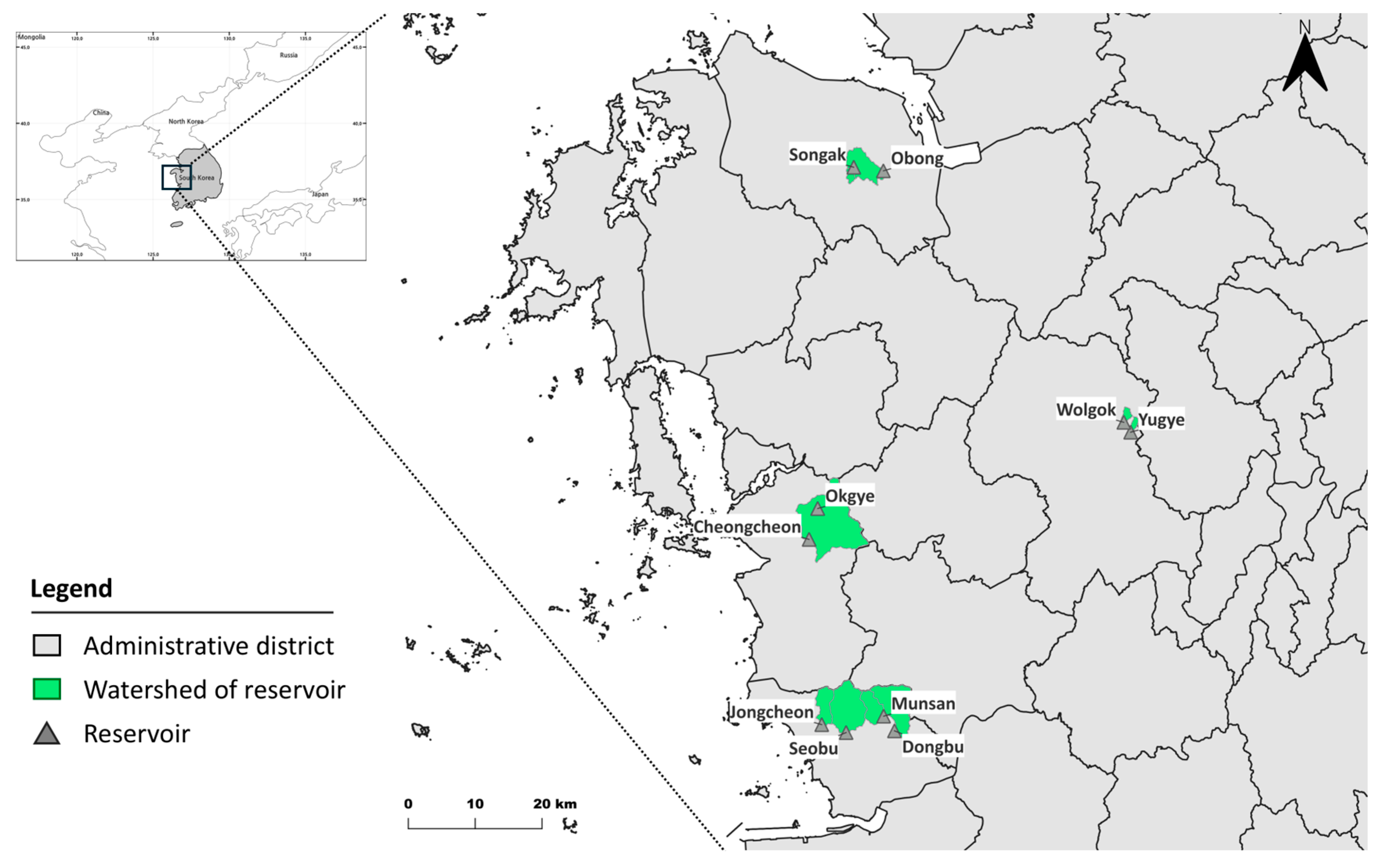
3 and a watershed ratio of 2 or less. Among these, five reservoirs that could feasibly receive water from reservoirs with higher watershed ratios were chosen for detailed investigation. The characteristics and locations of these five reservoirs are presented in
Table 2, while their spatial distribution—distinguishing between supplying (high watershed ratio) and receiving (low watershed ratio) reservoirs—is illustrated in
Figure 1.
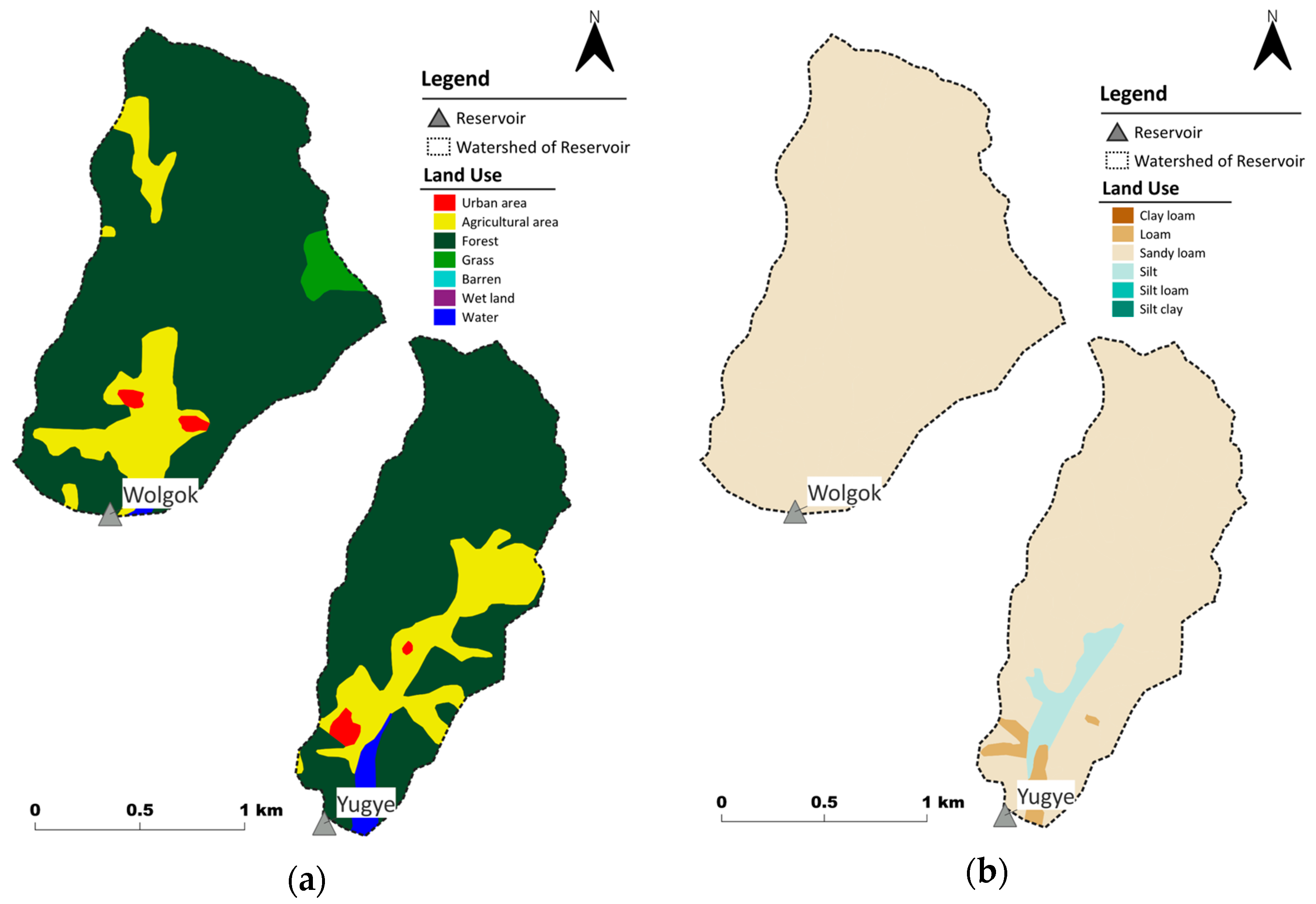
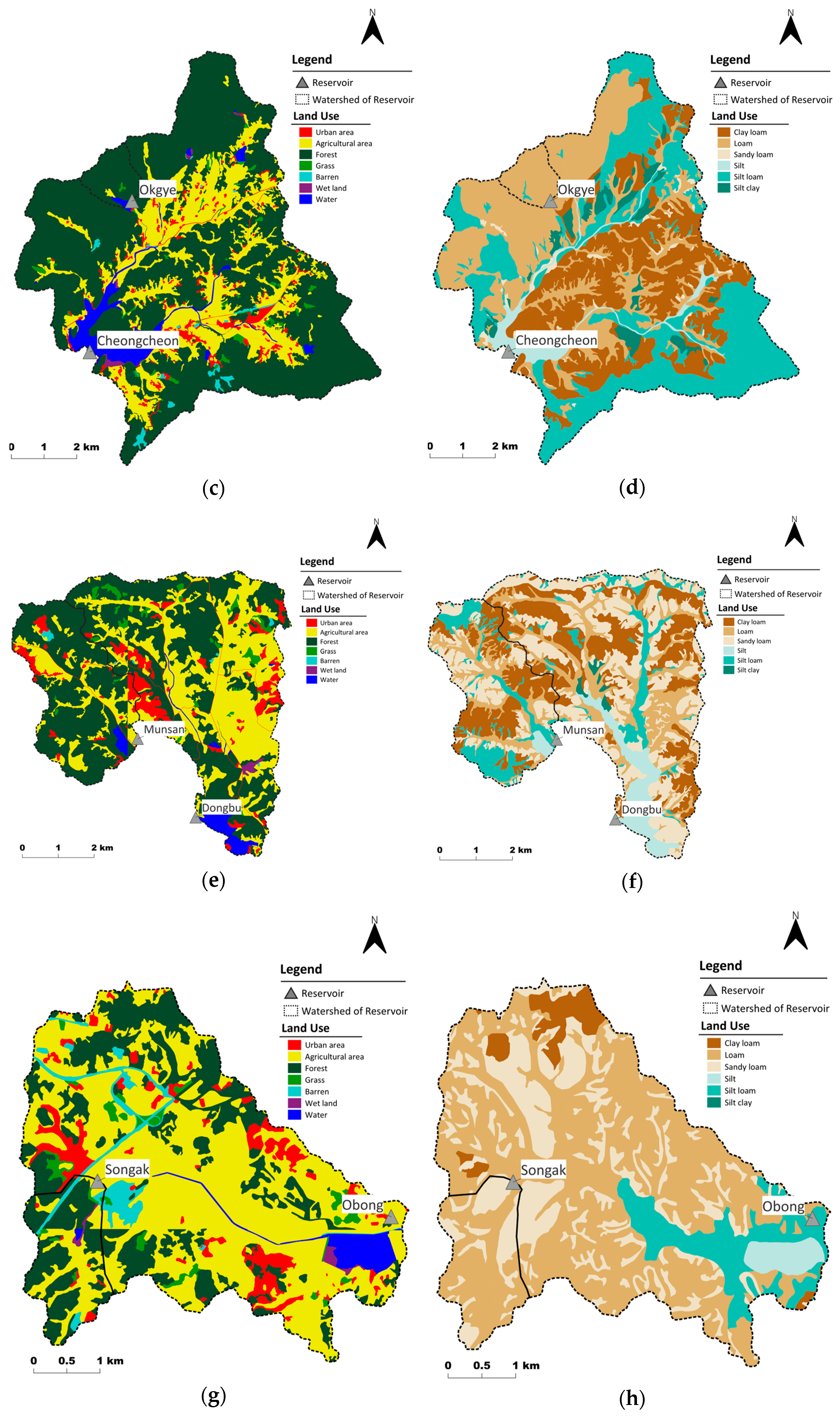
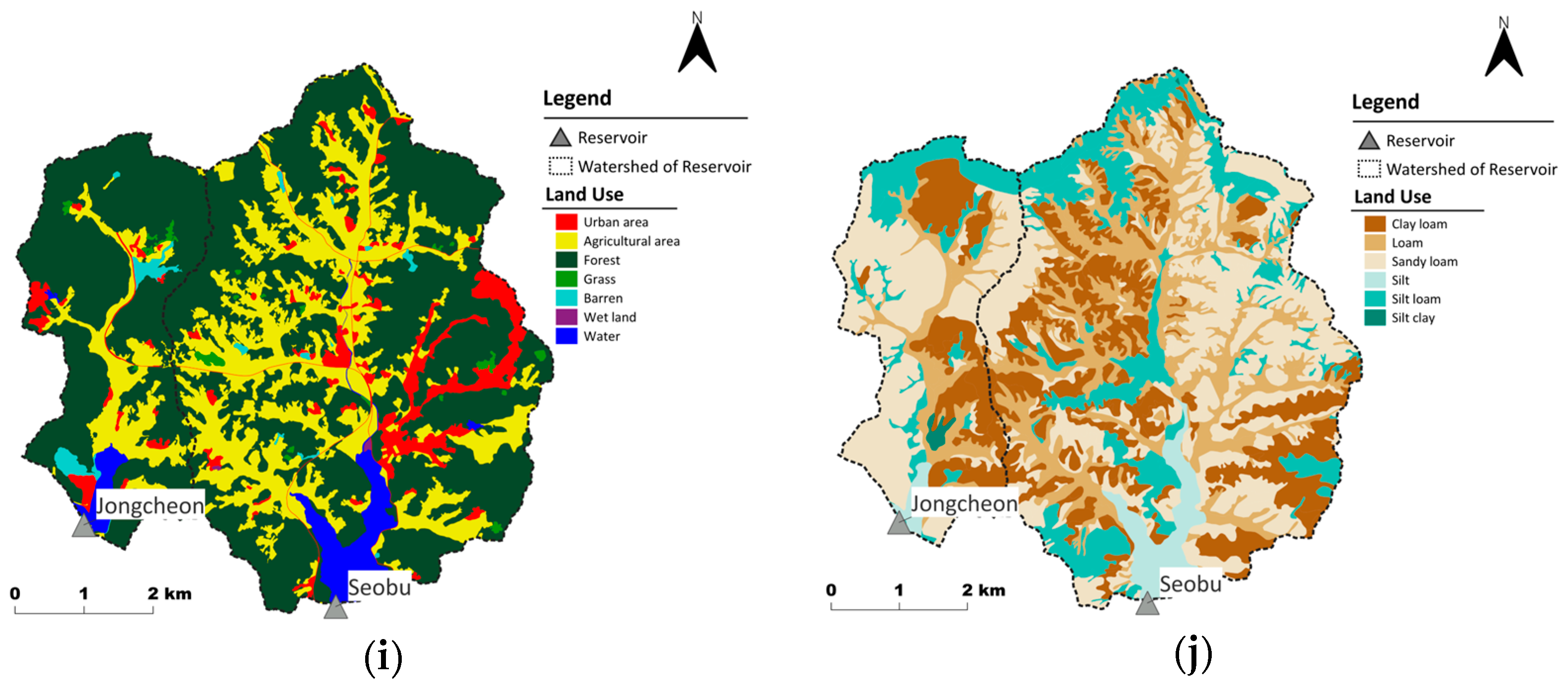
Figure 2 presents the land cover and land use maps of the study site.
2.2. Hydrological and Meteorological Data the Materials
The reservoirs used in this study have relatively small catchment areas and therefore lack dedicated hydrological and meteorological monitoring stations. Due to the difficulty in obtaining long-term observational data, weather and hydrological records from nearby observation stations were used. To select representative stations for each reservoir, stations located within the Thiessen polygon of the reservoir and exhibiting similar topographical characteristics were identified and adopted for use (
Table 3).
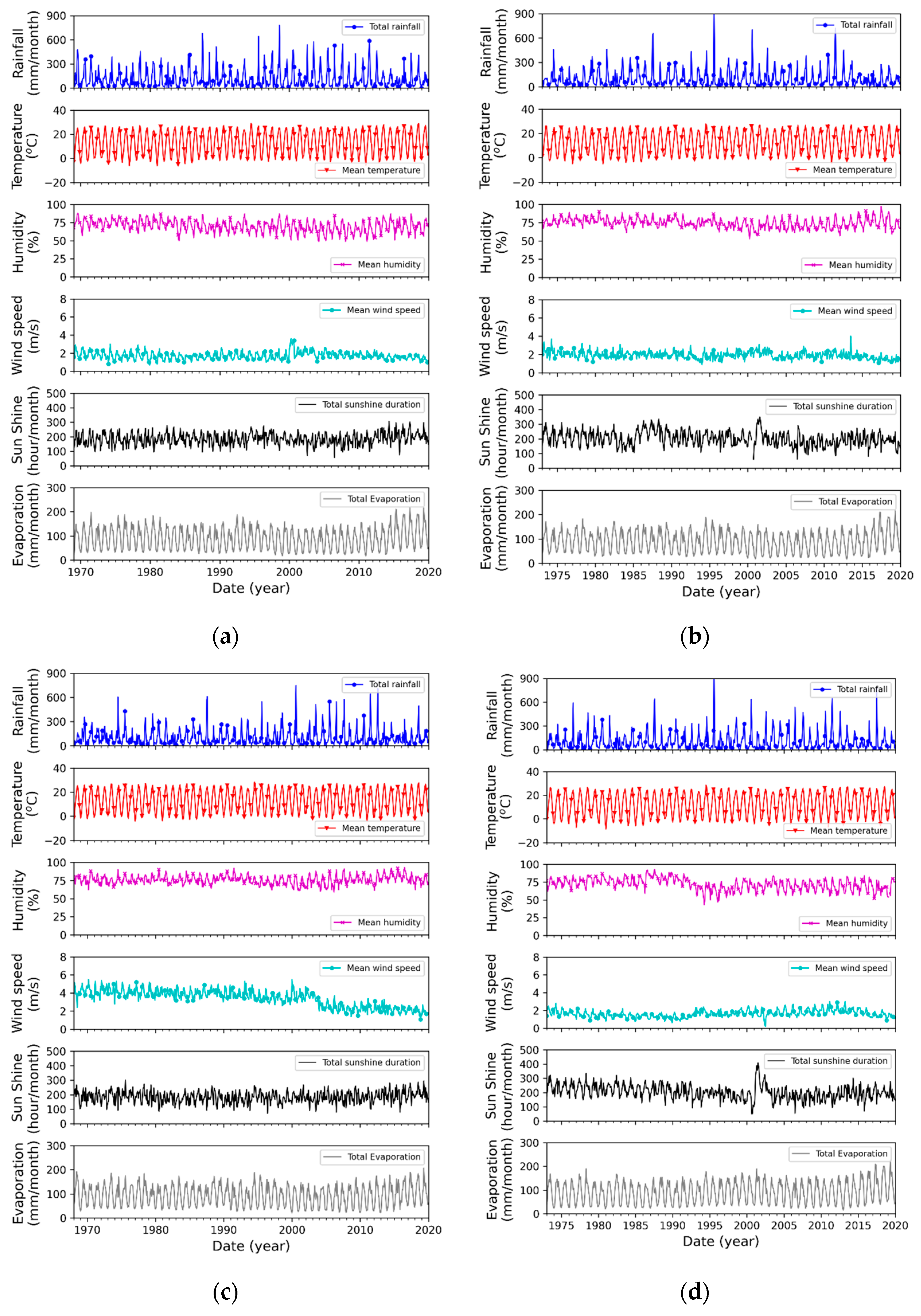
The meteorological data used in this study were obtained from the Daejeon, Boryeong, Gunsan, and Cheonan weather stations, with records spanning up to 50 years (from 1968 to 2017). Daily data were collected for variables relevant to water balance analysis, including temperature, precipitation, number of rainy days, evaporation, and wind speed (
Figure 3).
3. Research Method
3.1. Surplus Water Analysis Method
In this study, surplus water is defined as the overflow discharged from a reservoir when the water level exceeds its full supply level. Such overflow, released into nearby rivers without being used for agricultural purposes, is considered ineffective. To estimate the surplus volume, a water balance analysis was performed, focusing on two key variables: reservoir inflow and agricultural water demand. For this purpose, the Hydrological Operation Model for Water Resources Systems (HOMWRS), a reservoir water balance model developed for ungauged catchments, was applied. In this study, HOMWRS, a water facility simulation system developed by the Korea Rural Community Corporation, was utilized for the analysis of agricultural water balance [
21].
Input data included existing reservoir information (e.g., location, irrigated area, watershed area), data from representative weather stations, cropping types and schedules, and crop coefficients. The surplus water volume estimated by the model was then reallocated by linking reservoirs with high watershed ratios to those with low watershed ratios, enabling an assessment of potential improvements in water supply capacity at the target reservoirs.
3.2. Reservoir Water Supply Capacity Method
Daily and decadal (10-day interval) inflows to the reservoirs were estimated using the inflow estimation module of the HOMWRS model. The DIROM model was applied for daily inflow estimation, enabling application to ungauged catchments, while decadal inflows were calculated using the Kajiyama method [
22]. The DIROM model, a modified version of Sugawara’s TANK model tailored to the hydrological characteristics of irrigation reservoir watersheds in Korea [
23], was employed to simulate the daily inflow of each target reservoir. For irrigation water demand estimation, daily paddy field requirements were calculated using the Penman equation [
24], and decadal requirements were determined using the Blaney–Criddle method [
25]. Daily upland crop water demand was estimated using the Penman–Monteith method [
26]. Water balance analysis was conducted by applying inflows derived from the DIROM model and demands calculated using the modified Penman method. For decadal water balance calculations, inflows from the Kajiyama method and demands from the Blaney–Criddle method were used.
Evapotranspiration was estimated using the Penman method, and effective rainfall was calculated based on a ponding depth threshold of 60 mm. Although rice cultivation is generally divided into three growth stages—nursery, transplanting, and main field growing—regional variations in the timing of these stages exist. Therefore, cropping schedules were classified by region (southern and central zones) and these variations were incorporated into the irrigation demand estimation. Apart from cropping schedules, key parameters for estimating irrigation water requirements included infiltration rate, channel loss, and water depth. The input values used for each interconnected reservoir are summarized in
Table 4.
For the purpose of water supply, the distances between reservoirs were investigated as follows: Yugye–Wolgok, 1.7 km; Okgye–Cheongcheon, 2.8 km; Dongbu–Munsan, 2.5 km; Songak–Obong, 3.5 km; and Seobu–Jongcheon, 3.5 km. All reservoir pairs were located within a 4 km range. Among them, the Dongbu and Munsan Reservoirs could be interconnected via open channels, whereas the remaining pairs would require linkage through irrigation systems.
3.3. WaterBalance Method
For the water balance analysis of the target reservoirs, the following equation was applied to estimate daily changes in storage volume, using model-estimated inflow and water demand data:
where
Stn: daily change in storage volume;
Stn−1: storage volume on the previous day;
It: inflow;
Ut: groundwater inflow;
Pt: precipitation on the reservoir surface;
Rt: release (irrigation, environmental flow, or industrial use);
Ot: overflow (surplus water discharge);
Et: evaporation from the reservoir surface;
Gt: percolation loss through the reservoir bed;
Dt: seepage loss through the reservoir embankment.
Among these, the most critical factors in the reservoir water balance analysis are inflow, irrigation demand, and release volume. Releases may include water for irrigation, environmental flow maintenance, or industrial use. On the other hand, groundwater inflow, percolation losses, and seepage through the embankment were found to have negligible impacts on the overall water balance.
Based on the results of the water balance analysis, this study evaluated water supply capacity using an annual reliability index—one of the standard indicators for assessing supply performance. The following equation was used to calculate water supply reliability:
where
R: water supply reliability (%);
Ts: number of years with water shortages;
Tt: total number of years in the analysis period.
4. Results
4.1. Inflow
Inflow volumes to the reservoir catchments were analyzed by considering land cover and watershed conditions. The land cover status was analyzed based on the proportion of rice paddies, dry fields, and forests, using a land cover map. For the Wolgok Reservoir, the average annual inflow over the 47-year analysis period was 1988.9 × 10
3 m
3, with a minimum of 648 × 10
3 m
3 recorded in 2015 and a maximum of 2359.1 × 10
3 m
3 in 1998. The difference between the minimum and maximum annual inflows for both Yukye and Wolgok reservoirs exceeded 2000 × 10
3 m
3, indicating substantial interannual variability, see
Table 5.
For the Okgye Reservoir, the average annual inflow over the 45-year period was 1596.6 × 10
3 m
3, with a minimum of 794.8 × 10
3 m
3 in 1973 and a maximum of 2820.8 × 10
3 m
3 in 1987. In contrast, the Cheongcheon Reservoir recorded a significantly higher average annual inflow of 57,393.2 × 10
3 m
3, approximately 36 times greater than that of Okgye. Due to its large catchment and inflow volume, Cheongcheon also showed a wide variation between minimum and maximum annual inflows. The runoff ratio for Cheongcheon was estimated to be approximately 60%, see
Table 6.
For Dongbu and Munsan Reservoirs, the average annual inflow over the 50-year period was 21,410.2 × 10
3 m
3. The minimum inflow occurred in 1988 at 11,245.2 × 10
3 m
3, while the maximum was observed in 1987 at 34,978.7 × 10
3 m
3. On average, Dongbu Reservoir received approximately three times more inflow than Munsan Reservoir. The estimated runoff ratio for Dongbu was 62.5%, which was relatively higher than that of the Wolgok Reservoir, see
Table 7.
For Songak and Obong Reservoirs, the average annual inflow over the 45-year analysis period was 1632.2 × 10
3 m
3. The minimum inflow was recorded in 1988 at 807.4 × 10
3 m
3, while the maximum occurred in 2011 at 2777.9 × 10
3 m
3. On average, Obong Reservoir received approximately nine times more inflow than Songak Reservoir. In addition, the inflow to Obong Reservoir showed a significantly wider range between minimum and maximum annual values, see
Table 8.
For Seobu and Jongcheon Reservoirs, the average annual inflow over the 47-year analysis period was 23,189.7 × 10
3 m
3. The minimum inflow was recorded in 1988 at 12,189.4 × 10
3 m
3, while the maximum occurred in 2011 at 34,634.5 × 10
3 m
3. Jongcheon Reservoir, which is hydraulically connected to Seobu, also recorded its minimum inflow in 1988. However, its maximum inflow occurred in 2000, differing from Seobu Reservoir, see
Table 9.
A comparison of watershed inflows across the five target reservoirs revealed that inflow volumes varied according to watershed size and regional differences in rainfall. Moreover, the variability of inflows differed among the reservoirs, with notable disparities between maximum and minimum annual inflows.
4.2. Water Requirement
Irrigation water requirements for the study sites were estimated by accounting for evapotranspiration, percolation, and effective rainfall. The average values for each reservoir are summarized in
Table 10.
At Yugye Reservoir, the average consumptive use over the 47-year period was 1736 mm. Of this, 671.1 mm was supplied by effective rainfall, resulting in a gross irrigation requirement of 818.3 mm. A comparison of annual irrigation volumes showed a 2.7-fold difference between a wet year (2003: 424 × 103 m3) and a dry year (2015: 1152.9 × 103 m3). During wet years, rainfall can be directly utilized for crop water needs, reducing the reliance on irrigation. In contrast, limited rainfall during dry years leads to a substantial increase in irrigation demand.
At Wolgok Reservoir, the average consumptive use was 1777 mm, with 674.6 mm provided by effective rainfall and a gross irrigation requirement of 847.6 mm.
Similar patterns were observed across the remaining eight reservoirs: gross irrigation requirements varied significantly between wet and dry years, reflecting the strong influence of interannual rainfall variability on reservoir-supplied irrigation demand.
4.3. Water Balance and Supply Capacity
At Yugye Reservoir, a daily water balance analysis over a 47-year period revealed that the reservoir water level dropped to the dead low water level in four years (1994, 1995, 2015, and 2016), resulting in a water supply reliability of 91.5%. The maximum annual water shortage was recorded in 1995, reaching 373 × 103 m3.
Table 11 summarizes the water supply reliability for all ten analyzed reservoirs. Notably, Songak and Obong Reservoirs, which were constructed before the establishment of modern design standards, exhibited very low reliability values.
Table 12 presents the results of the annual average water balance analysis for the five target reservoirs after interconnection.
Hydrological analysis showed that interconnecting the reservoirs improved overall water supply reliability, although the level of improvement differed by site. At Yugye Reservoir, reliability increased from 91.5% to 100%, with no water shortages occurring after the reservoirs were connected. Dongbu and Songak Reservoirs also showed improvements of approximately 10% and 7%, respectively. Given Dongbu’s large service area (2477 ha), the interconnection was deemed particularly effective.
At Okgye Reservoir, the reliability increased by only 2.2%. This limited improvement is attributed to its insufficient storage capacity, which prevented it from capturing the surplus discharge from Cheongcheon Reservoir. Similarly, although Seobu Reservoir has a relatively large effective storage volume (7989 × 103 m3), the impact of interconnection was minimal due to the small volume of surplus inflow from Jongcheon Reservoir.
5. Conclusions
This study evaluated the interconnection of ten reservoirs in Chungcheongnam-do, selected based on watershed ratio and geographic proximity, to assess the potential of surplus water redistribution for improving water supply capacity. By comparing water supply reliability and shortage volumes before and after interconnection, the effectiveness of this strategy was quantitatively assessed.
At Yugye Reservoir in Gongju, daily water balance simulations over 47 years (1971–2017) revealed that water levels fell to the dead low water level in four years (1994, 1995, 2015, and 2016), resulting in a water supply reliability of 91.5%. When surplus water from Wolgok Reservoir was supplied, reliability increased to 100%. Although Wolgok has only one-fourth the effective storage of Yugye, its watershed area is 1.3 times larger, enabling the redirection of an average surplus discharge of 2338.4 × 103 m3. This effectively compensated for Yugye’s low watershed ratio. Following interconnection, the minimum annual water level rose to 66.62 EL.m, which is 1.62 m above the dead storage threshold (65.0 EL.m), clearly indicating enhanced supply capacity. The average annual maximum water shortage prior to the interconnection was 15.5 × 10³ m3, whereas no shortage was observed following the interconnection. Considering the distance between reservoirs and the estimated costs of comparable projects in 2024, the total project cost is expected to be approximately 260 million KRW. This reservoir is considered suitable for integrated operation with other reservoirs, as it can alleviate water shortages at a relatively low cost.
In Boryeong, Okgye Reservoir’s reliability improved by 2.2% when supplied with surplus water from Cheongcheon Reservoir, and the average annual maximum water shortage was reduced from 60.3 × 10³ m3 to 37.9 × 10³ m3. The upstream location of Okgye Reservoir relative to Cheongcheon Reservoir enables the reuse of agricultural water, as it can flow back into Cheongcheon Reservoir following interconnection. In terms of project cost, it is estimated to be approximately twice that of the Yugye Reservoir.
Dongbu Reservoir in Seocheon showed a 10% reliability gain when connected to Munsan Reservoir, located just 2.5 km away, demonstrating the benefit of short-range interconnection. The average annual maximum water shortage decreased by more than 2× 10⁶ m3, from 6827.2 × 103 m3 to 4278.2 × 103 m3, while the project cost is estimated to be approximately four times higher than that of the Yugye Reservoir. Likewise, Songak Reservoir in Cheonan exhibited a reliability increase of approximately 7%. In contrast, Seobu Reservoir showed no improvement in reliability despite receiving surplus water; however, the minimum annual water level increased by 0.14 m, reaching 14.33 EL.m.
6. Discussion
Overall, this study confirms that supplying surplus water from reservoirs with higher watershed ratios can enhance the reliability of those with lower ratios. Among the five analyzed reservoirs, four exhibited an average increase of approximately 7% in water supply reliability, although performance varied depending on geomorphological and structural characteristics. The interconnection of all five reservoirs resulted in a significant reduction in the maximum annual water shortage, and the potential for addressing shortages through water reuse in the Okgye and Songak Reservoirs was confirmed. In this study, a preliminary cost review based on the connection distance indicated that stable water resources could be secured at a relatively low cost. Future research should extend beyond Chungcheongnam-do, incorporating broader topographic variability and investigating seasonal and situational reservoir operation strategies on a national scale. Furthermore, further research is warranted on how to utilize the surplus storage capacity of reservoirs by interconnecting those distributed throughout the country, as well as on the operational strategies for such reservoir networks under varying temporal and situational conditions.
Author Contributions
Conceptualization, Y.P. and H.L.; methodology, Y.P.; software, J.L.; validation, Y.J. and I.S.; formal analysis, H.S.; writing—original draft, H.L.; writing—review and editing, H.L. and G.L.; supervision, Y.P.; project administration, Y.P. All authors have read and agreed to the published version of the manuscript.
Funding
This research was supported by the Ministry of Agriculture, Food, and Rural Affairs (MAFRA), Republic of Korea (Project No. RS-2025-02263147), and supported by the Korea Environmental Industry and Technology Institute (KEITI), funded by the Ministry of Environment (MOE), Republic of Korea (Project No. 2022003610002).
Data Availability Statement
The data presented in this study are available upon request from the corresponding author.
Acknowledgments
The authors would like to thank the Korea Meteorological Administration and the Korea Rural Community Corporation for providing rainfall and reservoir data used in this study.
Conflicts of Interest
Authors Yongcheol Park, Heesung Lim, Youngkyu Jin, Hyeongjin Shin, and Jaenam Lee are currently affiliated with the Korea Rural Community Corporation. The remaining authors declare that the research was conducted in the absence of any commercial or financial relationships that could be construed as a potential conflict of interest.
References
- Chae, K.S.; Kin, H.S.; Lim, Y.A.; Kim, B.Y. A Study on the Measurement of Agricultural Damage Due to Drought; Policy Research Report; Korea Rural Economic Institute: Naju, Republic of Korea, 2016; pp. 1–78. [Google Scholar]
- Zhou, W.; Yang, Z.; Liu, P.; Bai, F.; Zheng, C. Estimation of Reservoir Inflow with Significant Lateral Inflow by Using the Adjoint Equation Method. J. Hydrol. 2019, 574, 360–372. [Google Scholar] [CrossRef]
- Kumar, S.; Tiwari, M.K.; Chatterjee, C.; Mishra, A. Reservoir Inflow Forecasting Using Ensemble Models Based on Neural Network, Wavelet Analysis and Bootstrap Method. Water Resour. Manag. 2015, 29, 4863–4883. [Google Scholar] [CrossRef]
- Wang, Y.; Guo, S.; Chen, H.; Zhou, Y. Comparative Study of Monthly Inflow Prediction Methods for the Three Gorges Reservoir. Stoch. Environ. Res. Risk Assess. 2014, 28, 555–570. [Google Scholar] [CrossRef]
- Cheng, C.T.; Feng, Z.K.; Niu, W.J.; Liao, S.L. Heuristic Methods for Reservoir Monthly Inflow Forecasting: A Case Study of Xinfengjiang Reservoir in Pearl, China. Water 2015, 7, 4477–4495. [Google Scholar] [CrossRef]
- Deng, C.; Liu, P.; Guo, S.; Wang, H.; Wang, D. Estimation of Nonfluctuating Reservoir Inflow from Water Level Observations Using Methods Based on Flow Continuity. J. Hydrol. 2015, 529, 1198–1210. [Google Scholar] [CrossRef]
- Jeon, C.H.; Won, J.E.; Kim, S.D. Analysis of the Stable Water Supply Capacity of the Hoedong Reservoir in Busan. J. Korean Soc. Wetl. 2025, 27, 32–42. [Google Scholar]
- Jain, S.K.; Das, A.; Srivastava, D.K. Application of ANN for Reservoir Inflow Prediction and Operation. J. Water Resour. Plan. Manag. 1999, 125, 263–271. [Google Scholar] [CrossRef]
- Zhang, X.; Wang, H.; Peng, A.; Wang, W.; Li, B.; Huang, X. Quantifying the Uncertainties in Data-Driven Models for Reservoir Inflow Prediction. Water Resour. Manag. 2020, 34, 1479–1493. [Google Scholar] [CrossRef]
- Babaei, M.; Moeini, R.; Ehsanzadeh, E. Artificial Neural Network and Support Vector Machine Models for Inflow Prediction of Dam Reservoir (Case Study: Zayndehroud Dam Reservoir). Water Resour. Manag. 2019, 33, 2203–2218. [Google Scholar] [CrossRef]
- Herbert, Z.C.; Asghar, Z.; Oroza, C.A. Long-Term Reservoir Inflow Forecast: Enhanced Water Supply and Inflow Volume Accuracy Using Deep Learning. J. Hydrol. 2021, 601, 126676. [Google Scholar] [CrossRef]
- Apaydin, H.; Feizi, H.; Sattari, M.T.; Colak, M.S.; Shamshirband, S.; Chau, K.W. Comparative Analysis of Recurrent Neural Network Architectures for Reservoir Inflow Forecasting. Water 2020, 12, 1500. [Google Scholar] [CrossRef]
- Park, Y.C. Evaluation of Water Supply Capacity of Reservoirs with Low Watershed-to-Irrigated Area Ratio Using Surplus Water Volume. Master’s Thesis, Chungnam National University, Daejeon, Republic of Korea, 2019. [Google Scholar]
- Cho, G.H.; Ahmad, M.J.; Choi, K.S. Water Supply Reliability of Agricultural Reservoirs under Varying Climate and Rice Farming Practices. Water 2021, 13, 2988. [Google Scholar] [CrossRef]
- Park, J.M.; Park, K.B. Analysis of Water Supply Capacity of Parallel Reservoirs According to Changes in Water Supply. J. Korean Soc. Environ. Sci. 2023, 32, 675–684. [Google Scholar]
- Ashofteh, P.S.; Haddad, O.B.; Marino, M.A. Climate Change Impact on Reservoir Performance Indexes in Agricultural Water Supply. J. Irrig. Drain. Eng. 2013, 139, 85–97. [Google Scholar] [CrossRef]
- Cha, S.H.; Jee, H.K.; Lee, S.T. The Analysis of Water Supply Capacity Using Reliability Criteria—for the Nakdong River Basin. J. Environ. Sci. Int. 2002, 11, 1227–1233. [Google Scholar]
- Kang, M.K.; Park, S.W. Evaluation of Additional Water Supply Capacity Using an Optimal Reservoir Operation Model. J. Korean Water Resour. Assoc. 2005, 38, 937–946. [Google Scholar] [CrossRef]
- Im, S.J.; Park, S.W.; Kim, H.J. Methodology for Estimating Agricultural Water Supply in the Han River Basin. J. Korean Water Resour. Assoc. 2000, 33, 765–774. [Google Scholar]
- Bang, J.H.; Choi, J.Y.; Yoon, P.R.; Oh, C.J.; Maeng, S.J.; Bae, S.J.; Jang, M.W.; Jang, T.I.; Park, M.S. Assessing Irrigation Water Supply from Agricultural Reservoir Using Automatic Water Level Data of Irrigation Canal. J. Korean Soc. Agric. Eng. 2021, 63, 27–35. [Google Scholar]
- Lee, T.H. Introduction to the Hydraulic Facility Simulation System (HOMWRS)—A Water Balance Analysis Program for Agricultural Reservoirs. Water Future 2011, 44, 88–91. [Google Scholar]
- Kajiyama, A. Flood Forecasting for Han, Nakdong, and Daedong Rivers in Korea. Jpn. Soc. Civ. Eng. 1928, 14. (In Japanese) [Google Scholar]
- Hong, S.P.; Yoon, J.Y. Parameter Setting for Optimal Design Using Genetic Algorithms. J. Korean Soc. Civ. Eng. 2001, 21, 65–71. [Google Scholar]
- Thom, A.S.; Oliver, H.R. On Penman’s Equation for Estimating Regional Evaporation. Q. J. R. Meteorol. Soc. 1977, 103, 345–357. [Google Scholar] [CrossRef]
- Blaney, H.F.; Criddle, W.D. Determining Water Requirements in Irrigated Areas from Climatological and Irrigation Data; U.S. Soil Conservation Service: Washington, DC, USA, 1950; Volume 96.
- Howell, T.A.; Evett, S.R. The Penman-Monteith Method; USDA-Agricultural Research Service, Conservation & Production Research Laboratory: Washington, DC, USA, 2004; Report 14.
Figure 1.
Site of connecting reservoirs in Chungnam.
Figure 1.
Site of connecting reservoirs in Chungnam.
Figure 2.
Land cover and land use map of the site: (a,b) Wolgok, Yugye; (c,d) Okgye, Cheongcheon; (e,f) Munsan, Dongbu; (g,h) Songak, Obong; (i,j) Jongcheon, Seobu.
Figure 2.
Land cover and land use map of the site: (a,b) Wolgok, Yugye; (c,d) Okgye, Cheongcheon; (e,f) Munsan, Dongbu; (g,h) Songak, Obong; (i,j) Jongcheon, Seobu.
Figure 3.
Monthly meteorological data: (a) Daejeon station; (b) Boryeong station; (c) Gunsan station; (d) Cheonan station.
Figure 3.
Monthly meteorological data: (a) Daejeon station; (b) Boryeong station; (c) Gunsan station; (d) Cheonan station.
Table 1.
Current status of irrigation infrastructure.
Table 1.
Current status of irrigation infrastructure.
| Item | Total | KRC Management | Local Government Management |
|---|
| Number | Irrigation Area (ha) | Number | Irrigation Area (ha) | Number | Irrigation Area (ha) |
|---|
| Total | 72,786 | 727,905 | 13,911 | 498,785 | 58,875 | 229,091 |
Reservoir
(Chungnam) | 17,313
(953) | 440,281 | 3403
(229) | 337,561
(52,695) | 13,910
(724) | 102,720 |
Pumping
Station | 8233 | 181,947 | 4473 | 153,606 | 3760 | 28,341 |
| Sea dike, etc. | 47,240 | 105,677 | 6035 | 7618 | 41,205 | 98,030 |
Table 2.
Characteristics of reservoirs below W:Basin Area/I:Irrigation Area ratio 2.0 in Chungnam.
Table 2.
Characteristics of reservoirs below W:Basin Area/I:Irrigation Area ratio 2.0 in Chungnam.
| Number | Item | Location
(Coordinate: WGS84) | Basin Area (ha) | Irrigation
Area (ha) | Watershed Magnification Ratio | Storage (103 m3) |
|---|
| Total | 5 | | 6537 | 4475 | 1.70 | 20,838 |
| 1 | Yugye | 36.525967, 127.163951 | 190 | 95 | 2.00 | 748 |
| 2 | Okgye | 36.423203, 126.637995 | 220 | 115 | 1.91 | 904 |
| 3 | Dongbu | 36.126876, 126.775670 | 2834 | 2477 | 1.14 | 10,734 |
| 4 | Songak | 36.879810, 126.695988 | 254 | 161 | 1.58 | 463 |
| 5 | Seobu | 36.126431, 126.690561 | 3039 | 1627 | 1.87 | 7989 |
Table 3.
Meteorological station name and location.
Table 3.
Meteorological station name and location.
| Item | Observatory | Location
(Coordinate: WGS84) | Data Period | Observation Year |
|---|
| Yugye | Daejeon | 36.37199, 127.3721 | 1971~2017 | 47 Year |
| Wolgok |
| Okgye | Boryeong | 36.32724, 126.55744 | 1973~2017 | 45 Year |
| Cheongcheon |
| Dongbu | Gunsan | 36.0053, 126.76135 | 1968~2017 | 50 Year |
| Munsan |
| Songak | Cheonan | 36.76217, 127.29282 | 1973~2017 | 45 Year |
| Obong |
| Seobu | Gunsan | 36.0053, 126.76135 | 1968~2017 | 50 Year |
| Jongcheon |
Table 4.
Parameters for estimating irrigation water requirements.
Table 4.
Parameters for estimating irrigation water requirements.
| Item | Irrigation Area
(ha) | Infiltration
(mm/day) | Channel Loss
(%) | Water Depth
(mm) |
|---|
| Yugye | 95 | 5.7 | 10.0 | 80~20 |
| Wolgok | 36 | 5.7 | 10.0 | 80~20 |
| Okgye | 115 | 3.9 | 10.0 | 80~20 |
| Cheongcheon | 2638 | 5.0 | 10.0 | 80~20 |
| Dongbu | 2477 | 6.0 | 10.0 | 80~20 |
| Munsan | 261 | 6.0 | 10.0 | 80~20 |
| Songak | 161 | 4.0 | 10.0 | 80~20 |
| Obong | 367 | 4.1 | 10.0 | 80~20 |
| Seobu | 1627 | 5.6 | 10.0 | 80~20 |
| Jongcheon | 385 | 4.4 | 10.0 | 80~20 |
Table 5.
Inflows to Yukye and Wolgok reservoirs.
Table 5.
Inflows to Yukye and Wolgok reservoirs.
Year
(47 Year) | Rainfall
(mm) | Yukye Reservoir Inflow | Wolgok Reservoir Inflow |
|---|
| (mm) | (103 m3) | (mm) | (103 m3) |
|---|
| Average | 1339.6 | 710.1 | 1349.2 | 786.1 | 1988.9 |
 |  |
Table 6.
Inflows to Okgye and Cheongcheon reservoirs.
Table 6.
Inflows to Okgye and Cheongcheon reservoirs.
Year
(45 Year) | Rainfall
(mm) | Okgye Reservoir Inflow | Cheongcheon Reservoir Inflow |
|---|
| (mm) | (103 m3) | (mm) | (103 m3) |
|---|
| Average | 1205.2 | 725.7 | 1596.6 | 818.7 | 57,393.2 |
 |  |
Table 7.
Inflows to Dongbu and Munsan reservoirs.
Table 7.
Inflows to Dongbu and Munsan reservoirs.
Year
(50 Year) | Rainfall (mm) | Dongbu Reservoir Inflow | Munsan Reservoir Inflow |
|---|
| (mm) | (103 m3) | (mm) | (103 m3) |
|---|
| Average | 1209.1 | 755.5 | 21,410.2 | 686.7 | 6592.5 |
 |  |
Table 8.
Inflows to Songak and Obong reservoirs.
Table 8.
Inflows to Songak and Obong reservoirs.
Year
(45 Year) | Rainfall
(mm) | Songak Reservoir Inflow | Obong Reservoir Inflow |
|---|
| (mm) | (103 m3) | (mm) | (103 m3) |
|---|
| Average | 1223.3 | 642.6 | 1632.2 | 729.3 | 14,732.7 |
 |  |
Table 9.
Inflows to Seobu and Jongcheon reservoirs.
Table 9.
Inflows to Seobu and Jongcheon reservoirs.
Year
(47 Year) | Rainfall
(mm) | Seobu Reservoir Inflow | Jongcheon Reservoir Inflow |
|---|
| (mm) | (103 m3) | (mm) | (103 m3) |
|---|
| Average | 1209.1 | 763.1 | 23,189.7 | 735.3 | 8823.7 |
 |  |
Table 10.
Irrigation water requirements by reservoir. (PET Potential Evapotranspiration, AET: Actual Evapotranspiration, NIR: Net Irrigation Requirement, GIR: Gross Irrigation Requirement).
Table 10.
Irrigation water requirements by reservoir. (PET Potential Evapotranspiration, AET: Actual Evapotranspiration, NIR: Net Irrigation Requirement, GIR: Gross Irrigation Requirement).
| Reservoir Name | PET
(mm) | AET
(mm) | Water Consumpiton
(mm) | Rainfall
(mm) | Effective Rainfall
(mm) | NIR (mm) | GIR (mm) | GIR (103 m3) |
|---|
| Yugye | 665 | 709.2 | 1736.0 | 977.3 | 671.1 | 736.4 | 818.3 | 777.4 |
| Wolgok | 665 | 709.2 | 1777.5 | 977.3 | 674.6 | 762.8 | 847.6 | 305.1 |
| Okgye | 649.6 | 705.6 | 1777.3 | 867 | 607.3 | 835.4 | 928.2 | 1067.4 |
| Cheongcheon | 649.6 | 705.6 | 1777.3 | 867 | 607.3 | 835.4 | 928.2 | 24,485.6 |
| Dongbu | 676.1 | 732.5 | 1580.1 | 850.8 | 585 | 712.8 | 791.9 | 19,616.6 |
| Munsan | 676.1 | 732.5 | 1538.6 | 850.8 | 580.3 | 685.9 | 762.1 | 1989.2 |
| Songak | 666 | 724.6 | 1497.3 | 875 | 582.5 | 652.4 | 724.9 | 1167.1 |
| Obong | 666 | 724.6 | 1786.1 | 875 | 615.6 | 839.8 | 933.1 | 3424.5 |
| Seobu | 676.1 | 732.5 | 1746.2 | 850.8 | 602.3 | 820.7 | 911.9 | 14,836.2 |
| Jongcheon | 676.1 | 732.5 | 1580.1 | 850.8 | 585 | 712.8 | 791.9 | 3049 |
Table 11.
Water supply reliabilities by reservoir. (FWL: Full Water Level).
Table 11.
Water supply reliabilities by reservoir. (FWL: Full Water Level).
| Reservoir Name | FWL (EL.m) | Reservoir Water Shortage (103 m3) | No. of Occurrence Year with Water Shortage | Water Supply Reliability (%) |
|---|
| Yugye | 81.4 | 747.74 | 4 | 91.5 |
| Wolgok | 73.5 | 175.24 | 0 | 100 |
| Okgye | 104.2 | 828.7 | 8 | 82.2 |
| Cheongcheon | 40.2 | 20,753.1 | 2 | 95.6 |
| Dongbu | 15.5 | 10,733.8 | 20 | 60.0 |
| Munsan | 11.4 | 973.2 | 11 | 78.0 |
| Songak | 32.9 | 463.0 | 32 | 28.9 |
| Obong | 10.1 | 875.0 | 27 | 40.0 |
| Seobu | 21.16 | 7989.0 | 14 | 72.0 |
| Jongcheon | 42.9 | 3353.1 | 0 | 100 |
Table 12.
Result of water balance of each reservoir by connecting. (Min WL: Minimum Water Level).
Table 12.
Result of water balance of each reservoir by connecting. (Min WL: Minimum Water Level).
| Connect Reservoir | Item | Inflow (103 m3) | Outflow (103 m3) | Water Balance | Max.
Required Storage | Water Shortage | Min.
WL (EL.m) | Min. Storage | Overflow (103 m3) |
|---|
| Yugye | Mean | 3115.8 | 777.4 | 2338.4 | 329.2 | 0 | 76.66 | 418.6 | 2338.4 |
| Max. | 5697.7 | 1195.2 | 4993.3 | 731.6 | 0 | 79.80 | 615.2 | 4993.3 |
| Min. | 1215.3 | 424 | 62.4 | 132.5 | 0 | 66.62 | 16.2 | 382.4 |
| Okgye | Mean | 36,169.1 | 1067.4 | 35,101.7 | 567.9 | 37.9 | 97.11 | 275.8 | 35,130.8 |
| Max. | 89,629.5 | 1438.1 | 88,909.6 | 1215.5 | 417.3 | 102.2 | 596.2 | 88,909.6 |
| Min. | 3967.9 | 717.5 | 3002.9 | 202 | 0 | 91.00 | 0 | 2512.1 |
| Dongbu | Mean | 27,557 | 19,616.6 | 7940.4 | 13,584.6 | 4278 | 9.68 | 2063.6 | 10,226.6 |
| Max. | 47,168.2 | 27,908.3 | 33,533.3 | 30,314.6 | 19,537.1 | 13.34 | 6332.8 | 32,354.2 |
| Min. | 12,787.8 | 11,500.2 | −15,121 | 4444.8 | 0 | 7.00 | 0 | 0 |
| Songak | Mean | 13,564.5 | 1167.1 | 12,397.4 | 556.8 | 126 | 27.32 | 35 | 12,526 |
| Max. | 25,407.7 | 1613 | 24,817.7 | 1281 | 815.2 | 30.94 | 273.1 | 24,818 |
| Min. | 3900.6 | 453.9 | 2287.6 | 192.7 | 0 | 26.58 | 0 | 3102.8 |
| Seobu | Mean | 29,901.8 | 14,836.2 | 15,065.6 | 7602 | 1685.2 | 14.33 | 1714 | 16,385 |
| Max. | 52,026.3 | 20,483.4 | 41,481.2 | 16,715.2 | 9366.9 | 18.93 | 4576 | 41,481 |
| Min. | 13,514.4 | 9312.1 | −6968.9 | 2772.7 | 0 | 10.00 | 0 | 2627.1 |
| Disclaimer/Publisher’s Note: The statements, opinions and data contained in all publications are solely those of the individual author(s) and contributor(s) and not of MDPI and/or the editor(s). MDPI and/or the editor(s) disclaim responsibility for any injury to people or property resulting from any ideas, methods, instructions or products referred to in the content. |
© 2025 by the authors. Licensee MDPI, Basel, Switzerland. This article is an open access article distributed under the terms and conditions of the Creative Commons Attribution (CC BY) license (https://creativecommons.org/licenses/by/4.0/).



 ,
,