Article

Mussels as Bioindicators for the Rapid Detection of Heavy Metal Fluctuations in Marine Coastal Waters: A Case Study of Seasonal Bioaccumulation Monitoring and Assessment of Perna viridis from the Gulf of Tonkin Coastline, Hai Phong, Vietnam


1
Environment and Sustainable Development Research Group, Dong Nai Technology University, Bien Hoa City 76000, Vietnam
2
Faculty of Technology, Dong Nai Technology University, Bien Hoa City 76000, Vietnam
3
VNU School of Interdisciplinary Sciences and Arts, Vietnam National University, Hanoi 100000, Vietnam
4
Faculty of Biology, University of Science, Vietnam National University, Hanoi 100000, Vietnam
5
Northern National Broodstock for Mariculture, Research Institute for Aquaculture Number 1, Cat Hai, Hai Phong 180000, Vietnam
6
Hanoi University of Mining and Geology, Hanoi 100000, Vietnam
7
Institute for Nuclear Science and Technology, Vinatom, Hanoi 100000, Vietnam
8
Department of Power Supply and Renewable Energy Sources, National Research University TIIAME, Tashkent 100000, Uzbekistan
9
Bioenergy and Environment Science & Technology Laboratory, College of Engineering, China Agricultural University, Haidian District, Beijing 100107, China
10
College of Mechanical and Electrical Engineering, Shihezi University, Beisi Road, Shihezi 832000, China
11
Unit of Research in Radiation Biology & Environmental Radioactivity (URRBER), P.G. & Research Department of Zoology, The New College (Autonomous), Affiliated to University of Madras, Chennai 600014, Tamil Nādu, India
12
Department of Radiochemistry and Radioecology, University of Pannonia, 8200 Veszprem, Hungary
*
Author to whom correspondence should be addressed.
Water 2025, 17(17), 2552; https://doi.org/10.3390/w17172552
Submission received: 7 July 2025 / Revised: 4 August 2025 / Accepted: 15 August 2025 / Published: 28 August 2025
(This article belongs to the Special Issue Water Pollutants and Human Health: Challenges and Perspectives)

Abstract

This study aims to evaluate the feasibility of using the mussel as a bioindicator for the rapid detection of heavy metal (such as Cd, Pb, Hg, Ni, Cr, Cu, As, and Zn) fluctuations in aquatic environments and the sensitivity of the bioaccumulation of heavy metals in muscle tissues over time. The seasonal bioaccumulation patterns of heavy metals within Asian green mussels (Perna viridis), from Vietnamese coastal waters of Hai Phong were investigated using inductively coupled plasma mass spectrometry (ICP-MS). Additionally, the health risks from the consumption of P. viridis by local people were assessed. Mussels of varying sizes were sampled on a monthly basis between March (dry season) and July 2024 (wet season). The results revealed that the hepatopancreas had substantially higher concentrations of metals at all times relative to their corresponding muscle tissues, confirming its appropriateness as a bioindicator organ. The concentrations of heavy metals in mussels were recorded as significantly lower than the guideline levels, except for arsenic (As). Zinc (Zn) showed the highest concentrations, while mercury (Hg) had the lowest concentrations. There were strong seasonal and monthly differences, with peak levels of Pb, Cr, and As during the dry season, and high levels of Cs and Cu during the rainy season. It was found that the condition index, physiological factors, and shell size all had major impacts on the absorption of specific heavy metals. It was indicated that Pb, Cr, As, Cs, and Cu bioaccumulation are both biologically and environmentally responsive and can be used as proxies for environmental contamination, while the accumulation of these metals correlated with biological traits (shell length, weight, and CI), which is useful in modeling efforts. Health risk assessments using target hazard quotients (THQs) and the total hazard index (THI) identified Pb in the hepatopancreas as a primary contributor to the non-carcinogenic risk (THQ > 1), particularly during the dry season. The findings revealed the suitability of P. viridis, particularly hepatopancreatic tissue, as a short-term biomonitoring tool for detecting spikes and rapid fluctuations of certain heavy metals and assessing related human health risks in coastal aquatic systems.

1. Introduction

Heavy metal contamination in aquatic environments has emerged as a major global issue due to the dangerous and persistent nature of these pollutants, which can remain in ecosystems for thousands of years [1,2]. The toxicity, long-lasting presence, bioaccumulation in organisms, and magnification through the food chain make heavy metal pollution particularly harmful to ecosystems and human health [3]. Over the past decades, human activities have significantly increased pollution levels in the marine environment [4,5]. It is estimated that more than 80% of marine pollutants originate from land-based sources, including substantial amounts of solid and liquid wastes from agricultural, industrial, and urban development. These pollutants are transported by rivers, surface flow, underground water, or wind before being deposited in coastal areas [6,7,8,9,10]. Among coastal pollutants, trace heavy metals are of particular concern due to their accumulation capacity in marine organisms and their harmfulness to human health and marine ecosystems [8,11,12,13,14]. Numerous studies have been conducted to estimate the human health risks associated with consuming seafood contaminated with heavy metals [13,15,16,17,18].
Heavy metals such as Cd, Pb, Hg, Ni, Cr, Cu, As, and Zn are of particular concern in the marine environment due to their stability, persistence, and non-biodegradable nature [16,19,20]. Non-essential metals like As, Cd, Cr, Hg, and Pb are poisonous even in minute concentrations, while essential metals like Cu, Fe, Mn, and Zn are vital for biological processes, especially human physiology [21]. Moreover, aquatic sediments act as depositional sinks and secondary sources of heavy metals. Because contaminants attach themselves to sediment particles and integrate into the sediment matrix, aquatic systems may become permanently contaminated [22]. Through dietary intake, these pollutants can accumulate in the human body, causing numerous adverse health effects, including impaired kidney function, a reduced reproductive capacity, liver damage, neurological disorders, carcinogenic effects, and even death [19,23,24,25]. To mitigate these undesirable health effects, it is essential to assess the risks associated with the consumption of seafood contaminated with heavy metals.
Hai Phong, a coastal city is home to Hai Phong Port, one of Vietnam’s most critical hubs for international and domestic trade. Recently, the area has garnered increasing attention for marine environmental issues associated with human activities [26]. Industrial activities such as coal mining, metallurgy, food processing, and shipbuilding, alongside agricultural and residential wastes, have caused alarming consequences for the marine environment [27,28,29]. It is estimated that substantial quantities of heavy metals are discharged into this area annually, including approximately 382 tons of Zn, 53 tons of Cu, 27.9 tons of As, 20 tons of Pb, 3 tons of Hg, and 2 tons of Cd, due to human activities [30]. Notably, this area is impacted not only by city activities but also by other provinces in the northern Vietnam [27]. However, studies of pollutants, particularly heavy metals, in this area remain limited [27,31]. Consequently, investigating, assessing, and monitoring heavy metal pollution in the marine environment has become a critical task. The main source of metal contamination is the bioaccumulation of trace metals in seafood, such as mussels, which could put seafood consumers at risk [32]. Enhancing efforts to investigate, assess, and monitor heavy metal changes to implement effective mitigation actions is necessary. Marine species serve as important biological indicators for evaluating the impact of heavy metals on marine ecosystems [11,33,34,35]. Through the process of biomagnification along food chains and webs, the presence of these pollutants not only threatens the health of marine life but also poses a serious hazard to non-target groups, including humans [32]. Due to the ability to accumulate pollutants, exhibit sensitive biological responses, have a wide distribution, remain sedentary, easy sampling, and tolerate chemical pollution, mussels are widely recognized as bioindicators of heavy metal pollution [6,8,17,35,36,37,38]. Numerous studies have been conducted on the use of mussels as bioindicators across different regions of the world [6,8,17,37,39,40]. According to those results, differences in metal concentrations, food availability, climate, and the biological traits of individual species in different locations have substantial impacts on metal bioaccumulation. To provide accurate scientific data, it is crucial to assess the extent to which bioindicators work in each area. In addition, most mussel monitoring programs rely on annual sampling; however, heavy metal concentrations in bivalve mollusks can vary throughout the year due to environmental fluctuations and biological responses to pollutants [37,40,41,42,43].
The inclusion of sentinel species in monitoring programs frequently makes it more difficult to evaluate field data due to factors including temporal and spatial variability. It is crucial to investigate mussels’ sensitivity to metals over time, taking into account seasonal variations and changes within a single season, in order to assess their suitability for heavy metal monitoring programs in a particular area. Notably, the distribution of heavy metals varies among different mussel organs, reflecting the distinct functions of these organs within the mussel body [8,44]. Understanding these distribution patterns provides valuable insights into the accumulation characteristics of mussels, forming a basis for environmental monitoring applications. Therefore, the objectives of this study are (1) to investigate the distribution characteristics of heavy metals in two organs of the Asian green mussel (Perna viridis); (2) to monitor the seasonal/monthly fluctuations of certain heavy metal concentrations; and (3) to assess the potential health risks to local people through the target hazard quotients (THQs) and hazard index (HI). The results will provide a database for assessing heavy metal pollution in the area. Additionally, insights into heavy metal concentrations in mussels will support coastal environmental pollution monitoring programs in Hai Phong.

2. Materials and Methods

2.1. Sampling

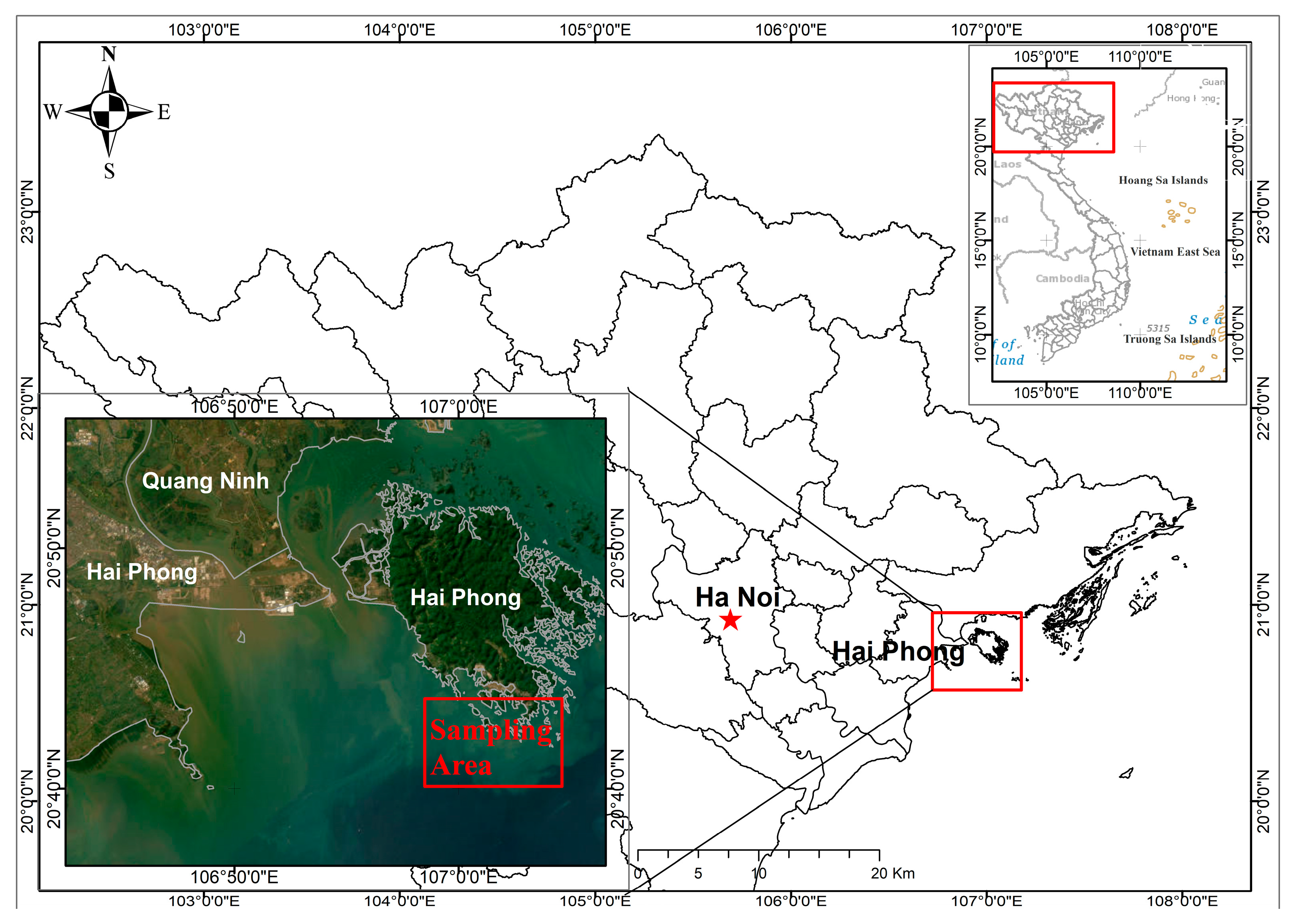
The Hai Phong coastal area is located in the northeastern part of the Gulf of Tonkin, Vietnam (Figure 1). This region features a dense river network, with an average river density of 0.6–0.8 km per km2. Hai Phong Port in the study area is one of the most critical ports for both international and domestic trade. Rapid industrialization and urbanization in the area have significantly impacted the marine coastal environment [26,27]. Due to its geographical location and specific climatic conditions, the studied area has become a hub for aquaculture, supplying various seafood species, including Asian green mussels (Perna viridis). In terms of climate, the study area is located in a subtropical region characterized by two distinct seasons: a rainy season (from May to September) with temperatures ranging from 15 to 23 °C, and a dry season (from October to April next year) with temperatures between 25 and 29 °C [29]. The rainy season receives substantial precipitation, with an annual rainfall of approximately 1800 mm. In contrast, the dry season is marked by low rainfall, often resulting in drought conditions and significantly reduced river water levels.
Mussels of varying sizes and weights (ten individuals) were collected monthly from March (dry season) to July (rainy season) in 2024. Due to the wild nature of our samples and sampling conditions, only ten individuals with significantly different body sizes were collected. This study could serve as a baseline and preliminary investigation of representative individuals for further studies. After collection, the mussels were frozen and promptly transported to the laboratory, where they were separated into muscle tissues and hepatopancreas glands. Morphometric parameters, including body weight and shell size, were measured and recorded for each mussel. The condition index (CI), which reflects the physiological condition and nutritional status of the mussel, was calculated by dividing the wet weight of the soft tissue (in grams) by the wet weight of the shell (in grams), and then multiplying the result by 100.
The samples were washed with deionized water to remove surface contaminants and then frozen at −20 °C until further analysis.

2.2. Analytical Methods

Following the internal laboratory digestion procedures (adapted from open-vessel aqua regia digestion with H2O2 cleanup), approximately 0.5 g of each sample (wet weight) was digested with concentrated HNO3 and HCl (1:3 ratio; total of 12 mL) using a hot plate method. The solution was heated at 95–120 °C to near dryness. Then, about 3 mL of 30% H2O2 was added dropwise while reheating to ensure complete digestion and oxidize residual organic matter. The digested samples were separately transferred to the labeled flasks and diluted to 25 mL with ultrapure water. The concentrations of Cd, Pb, Hg, Ni, Cr, Cu, As, and Zn were determined using inductively coupled plasma mass spectrometry (ICP-MS) (Agilent 7900, Agilent Technologies, Tokyo, Japan). The instrument was calibrated with standard solutions of each metal at known concentrations. Quality assurance and quality control were maintained by processing blanks and reference standard materials DORM 3 (National Research Council, Ottawa, ON, Canada), achieving ~95% accuracy. The recovery rates were greater than 85% for all elements. The limits of detection (LOD) for Cs, Cd, Hg, Ni, Pb, Cr, Cu, As, and Zn were determined under optimal analytical conditions and found to be 0.001, 0.003, 0.013, 0.008, 0.001, 0.001, 0.003, 0.012, and 0.038 ppb, respectively.

2.3. Estimates of Target Hazard Quotients (THQ) and Hazard Index (HI)

The target hazard quotient (THQ) is used to assess the potential risk of adverse health effects caused by exposure to a single metal. THQ is calculated using Formula (1) [35,45,46]:
T H Q = C × C R × E F × E D A E T × A B W × O R G × 10 3
where, C, CR, EF, and ED are the concentrations of heavy metals (mg/kg ww), consumption rate (28.6 g/person/day [13]), exposure frequency (365 days/year), and exposure duration (the average life expectancy of Vietnamese people, 70 years [47]), respectively. AET is the average exposure time for non-carcinogens (365 days/year × ED), ABW is the average body weight (60 kg for adults), and ORD is the oral reference dose. The ORDs for Cd, Hg, Ni, Cr, Cu, and Zn are 1, 3, 20, 940, and 300 μg/kg/day, respectively [48], and for As, it is 0.3 μg/kg/day [49]. The value 10−3 is a unit conversion factor. This index may overestimate the significance of the hepatopancreas, as while muscle is often eaten separately for large bivalves, like oysters or scallops, cooking methods for small bivalves (cooking them whole in a stew or soup) will probably result in consuming the muscle and hepatopancreas together.
Since the ORG for Pb has not been established, the THQ for Pb is calculated using Formula (2) [35,50]:
T H Q P b = C M R L
where C and MRL are the concentration of the heavy metal (mg/kg ww) and the maximum regulation limits (1.50 mg/kg ww for bivalve mollusks), respectively.
The total hazard index (HI) was used to assess the cumulative risk of multiple metals found in mussels. The HI is calculated using Formula (3) [35,50]:
H I = i = 1 n T H Q I
where THQ represents the target hazard quotient of each metal for two organs (muscle tissue and hepatopancreas gland), and n is the total number of heavy metals analyzed in this study (n = 10).

2.4. Statistical Analysis

Statistical analyses were conducted to examine the relationships between the biological characteristics of mussels and heavy metal accumulation, as well as to explore seasonal trends in metal distribution across different tissues (Supplementary Table S3). In addition, one-way ANOVA was performed to assess seasonal (Supplementary Table S4) and monthly (Supplementary Table S5) variations in heavy metal concentrations, after using Levene’s test for homogeneity of variances. Furthermore, the post hoc test (Tukey’s HSD test) was conducted to identify specific pairwise differences between groups. All data, with the exception of the muscle Hg values, passed the Shapiro–Wilk test of normality. Pearson’s correlation analysis and ANOVA were conducted using SPSS 2020 (Statistical Package for the Social Sciences). All statistical analyses were conducted at a 95% confidence level, with p-values less than 0.05 considered statistically significant. To investigate seasonal variability in metal accumulation, principal component analysis (PCA) was applied separately to the metal concentrations in the muscle and hepatopancreas tissues. Prior to PCA, all continuous variables were standardized by z-score transformation—each variable was centered to a mean of 0 and scaled to a standard deviation of 1. This multivariate approach enabled the identification of key metals contributing to the temporal variation and allowed for the grouping of sampling months based on similar accumulation profiles. Monthly variations and distribution patterns of individual metal concentrations in both tissues were analyzed using OriginPro 2023.

3. Results and Discussion

3.1. Characteristics of the Selected Heavy Metal Distributions in Two Organs of Asian Green Mussel

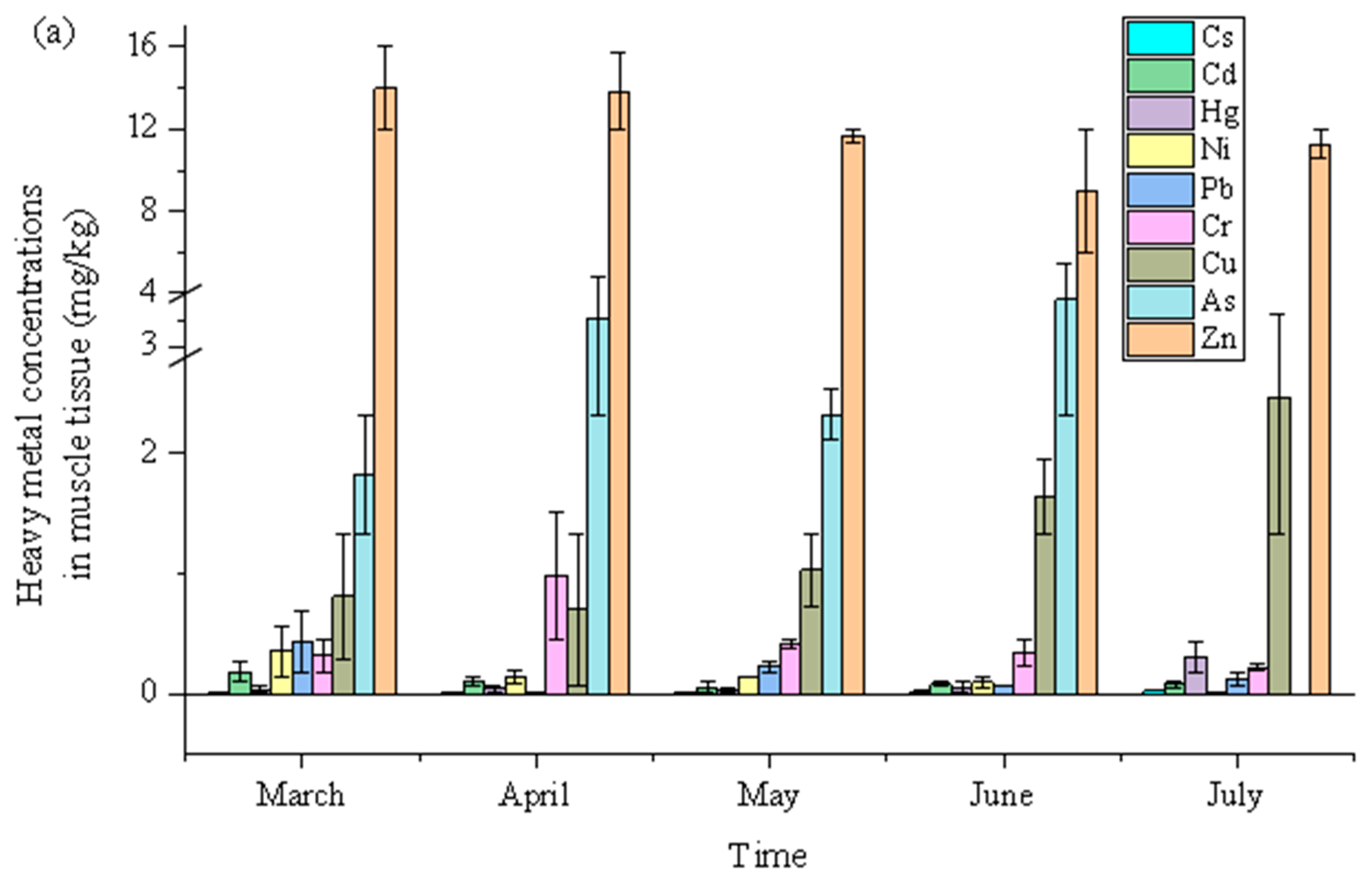
Table 1 shows the levels of heavy metals in the organs of the mussel. According to the data, Zn has the highest concentrations in the majority of months, while Hg has the lowest concentrations (Figure 2). The greater bioavailability of Zn in bivalves may be the reason for its predominance [17,51], and the intensive waterway and port activities in the Hai Phong coastal area contribute to increased Zn levels in the environment. To minimize the health risks associated with exposure to metals in various foods, countries and international organizations have established guideline levels for seafood. The guideline levels for Cd, Hg, Ni, Pb, Cr, Cu, As, and Zn are 1–2, 0.05–1, 80, 1–6, 13, 30, 1–3.5, and 100 mg/kg, respectively (Table 1). The selected heavy metal concentrations in mussels were recorded as significantly lower than the guideline levels, except for As. Urban development, particularly coal mining activities, has been identified as a major source of arsenic contamination in this area [31], while the Red River Delta is also known for its high natural arsenic mobilization in groundwater (up to 3050 µg/L) [52]. It should be noted that marine organisms can accumulate large amounts of As compounds; however, most of the As in bivalves exists in organic forms such as arsenobetaine, arsenoribosides, and arsenocholine, which are less toxic [11,29,53,54,55]. Previous studies have reported that the inorganic fraction of arsenic accounts for only about 13–22% of the total arsenic in oysters and mussels [56,57,58]. This means that, even at the upper bound of 22%, the level of inorganic As in the hepatopancreas during June (when the highest total As concentration was observed) remains within recommended safety limits.
Table 2 summarizes the concentrations of heavy metals in the soft tissues of some bivalve species reported from different locations in the world. When compared to the present findings, it is apparent that the levels of heavy metals in both muscle and hepatopancreatic tissues of P. viridis are lower than those reported in several other regions. For instance, the lead (Pb) concentrations observed here were substantially lower than those recorded in Mytilus galloprovincialis from Morocco (34.2 mg/kg), as well as in samples from Korea (18.9 mg/kg) and Malaysia (38 mg/kg). Similarly, cadmium (Cd) concentrations in the present study were recorded as lower than the values reported in Morocco (up to 25.3 mg/kg) and Korea (9.98 mg/kg). These discrepancies may be attributed to differences in local anthropogenic pressures, particularly industrial discharge, urban runoff, and mining activities, which are more intense in regions such as Morocco and Hong Kong. Species-specific bioaccumulation capacities may also account for observed differences in metal concentrations. For example, M. galloprovincialis is known to accumulate certain metals more efficiently than P. viridis, as evidenced by the elevated copper (Cu) concentration of 142.2 mg/kg reported in Moroccan specimens compared to a maximum of 2.378 mg/kg observed in this study. Furthermore, the arsenic (As) concentration is shown to be lower than the exceptionally high concentrations reported in Spain (up to 292 mg/kg) and United Kingdom (14 mg/kg). The variability in heavy metal concentrations across species and geographic regions likely reflects a combination of biological factors (e.g., species physiology, age, body size, sex, and reproductive status) and environmental conditions (e.g., pH, salinity, and site-specific pollution sources). Taken together, these results suggest that the study area is subject to comparatively lower levels of anthropogenic contamination than many industrialized and urbanized coastal regions globally.
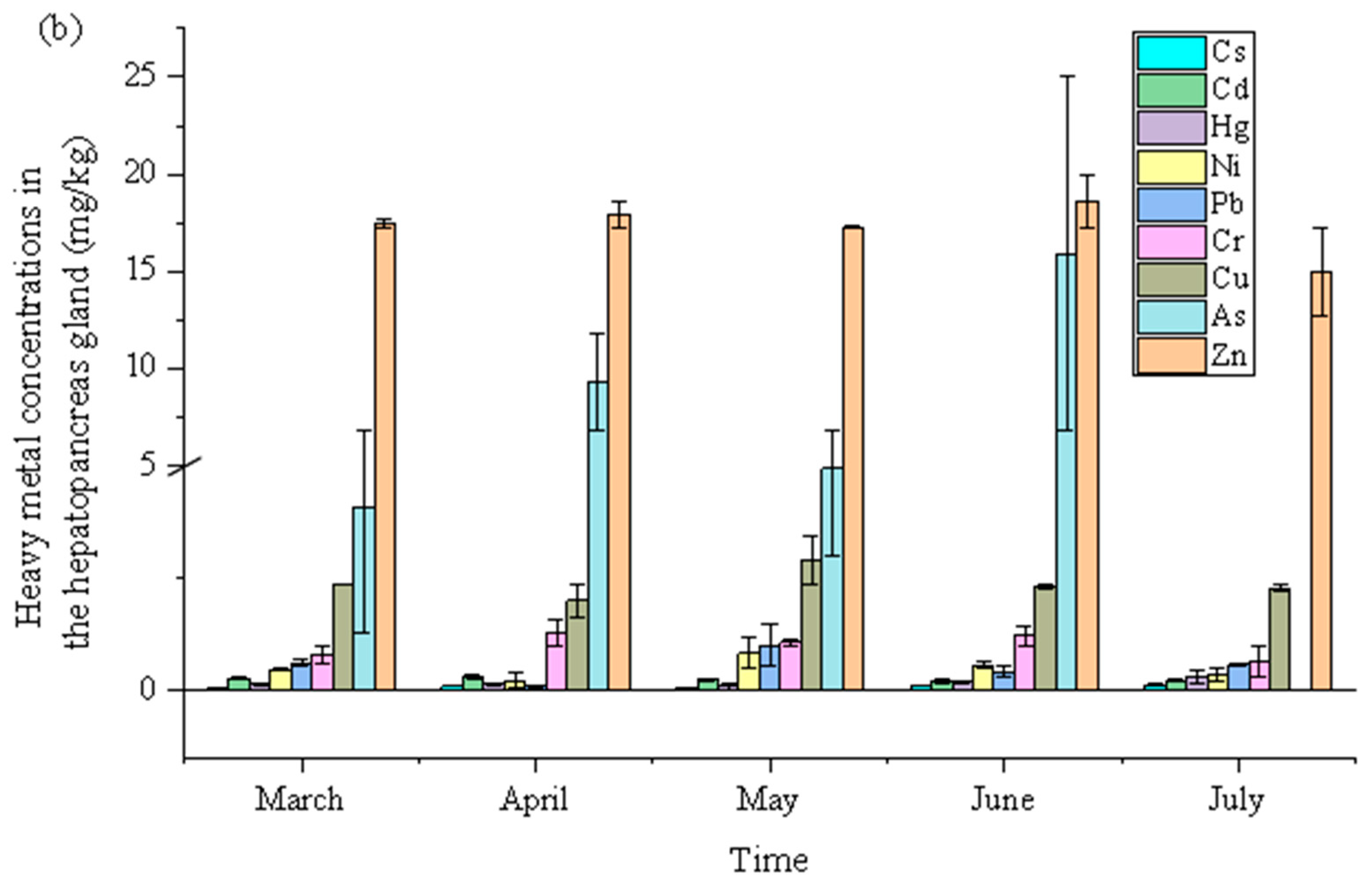
The differences in the relationship between pollutants and binding sites and rates of pollutant accumulation and excretion from tissues lead to differences in concentrations between mussel organs [13]. The concentrations of the chosen heavy metals in the hepatopancreas gland is higher in this study than in the mussels’ muscle tissue (statistically significant at the 0.05 level). Because the mussels’ filter-feeding behavior is linked to food digestion, the hepatopancreas gland generally contains higher concentrations of heavy metals [5,12,77,78]. This study highlights the importance of food digestion for heavy metal accumulation in mussels. Figure 2 shows the distribution of heavy metal concentrations in muscle samples in terms of the month.
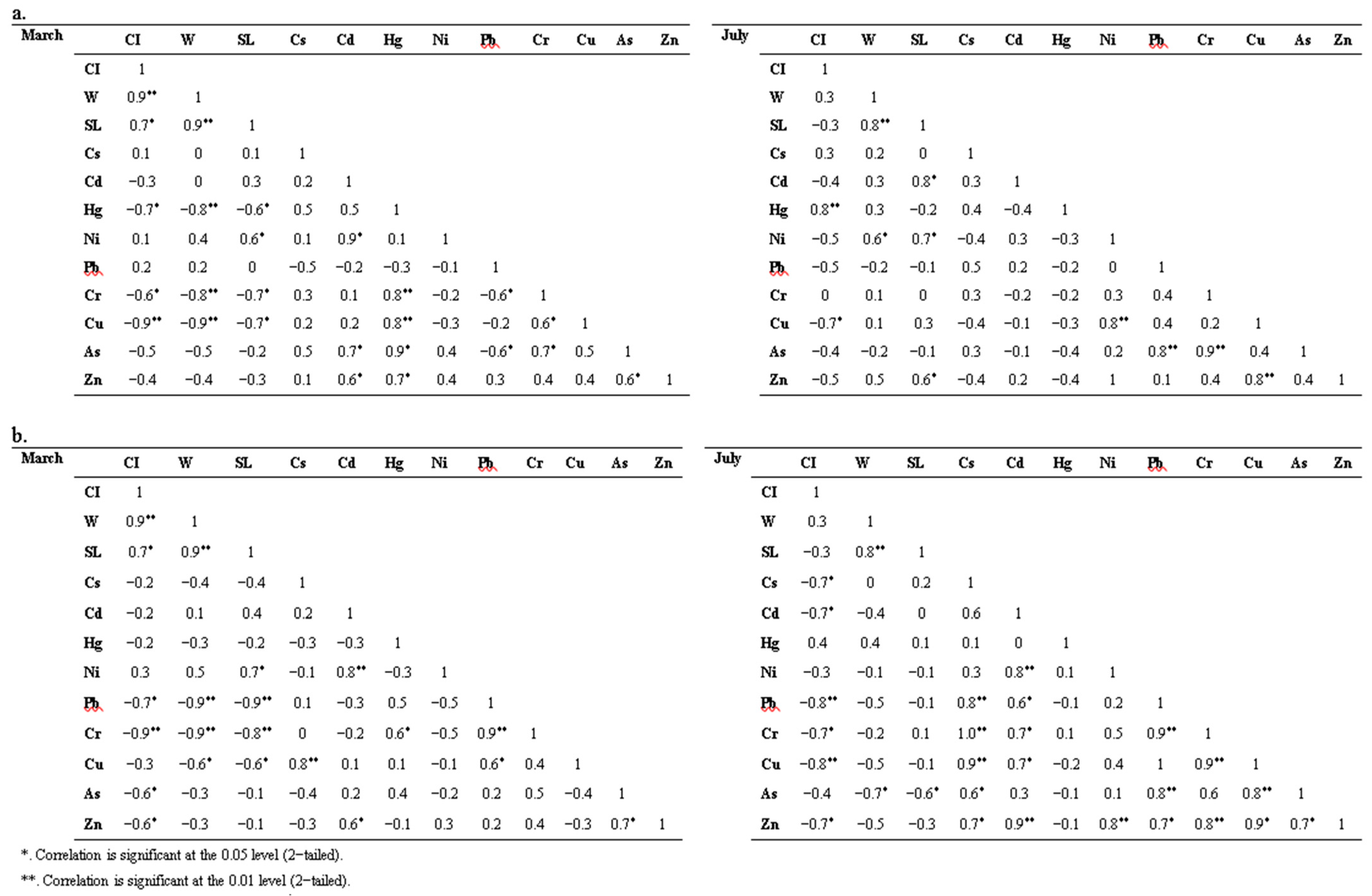
Biological factors such as the shell length, weight, and condition index (CI) are known to influence the metal accumulation capacity of mussels [39,79]. In this study, statistically significant relationships between heavy metal concentrations in the muscle tissue and hepatopancreas gland of mussels and the shell length, weight, and CI were analyzed in March (spring, dry season) and July (summer, rainy season) (Figure 3).
In March, the concentrations of Hg, Cr, and Cu in muscle tissue were negatively correlated with the shell length, weight, and CI, indicating that heavy metal concentrations decreased as the shell length, weight, and CI increased. Similar trends were also observed in the hepatopancreas gland, where the concentrations of Pb, Cr, Cu, As, and Zn showed negative correlations with the shell length, weight, and condition index (CI). These results imply that variations in steady-state kinetics as mussels mature may be connected to modifications in heavy metal accumulation in muscle tissue. Due to their increased sensitivity and quicker growth, younger mussels typically show higher rates of metal uptake [39,80]. Smaller mussels tend to accumulate more metals due to their higher surface area-to-volume ratio, which enhances metal adsorption. In contrast, larger and older individuals filter less water per unit body weight and have a lower surface area relative to volume, resulting in reduced metal uptake [39,81]. In addition, other metals showed no significant correlation. Notably, Ni exhibited a positive correlation with shell length and weight in both organs, indicating size-dependent accumulation.
In July, Cu concentrations in muscle were negatively correlated with the condition index (CI), whereas positive correlations were observed for Cd and Zn concentrations with shell length, Hg concentrations with the CI, and Ni concentrations with shell length and body weight. In the hepatopancreas gland, Cs, Cd, Pb, Cr, Cu, and Zn concentrations were negatively correlated with shell length, body weight, and CI. These seasonal differences in metal accumulation may be linked to variations in water metal concentrations and the physiological state of mussels over time. Additionally, factors such as sex and reproductive status may also influence metal accumulation in mussels [6,17,37,40]. The sex, sexual maturity, reproductive stages, and seasonal growth cycles might need to be considered when interpreting the results, and pollution itself might shift sex ratios, potentially influencing the biomonitoring response [82]. Mussel age is positively correlated with size, with environmental and genetic factors influencing this relationship [83], and selecting the sampling time and evaluating the sex of the sampled mussels might reduce the uncertainty of the method.
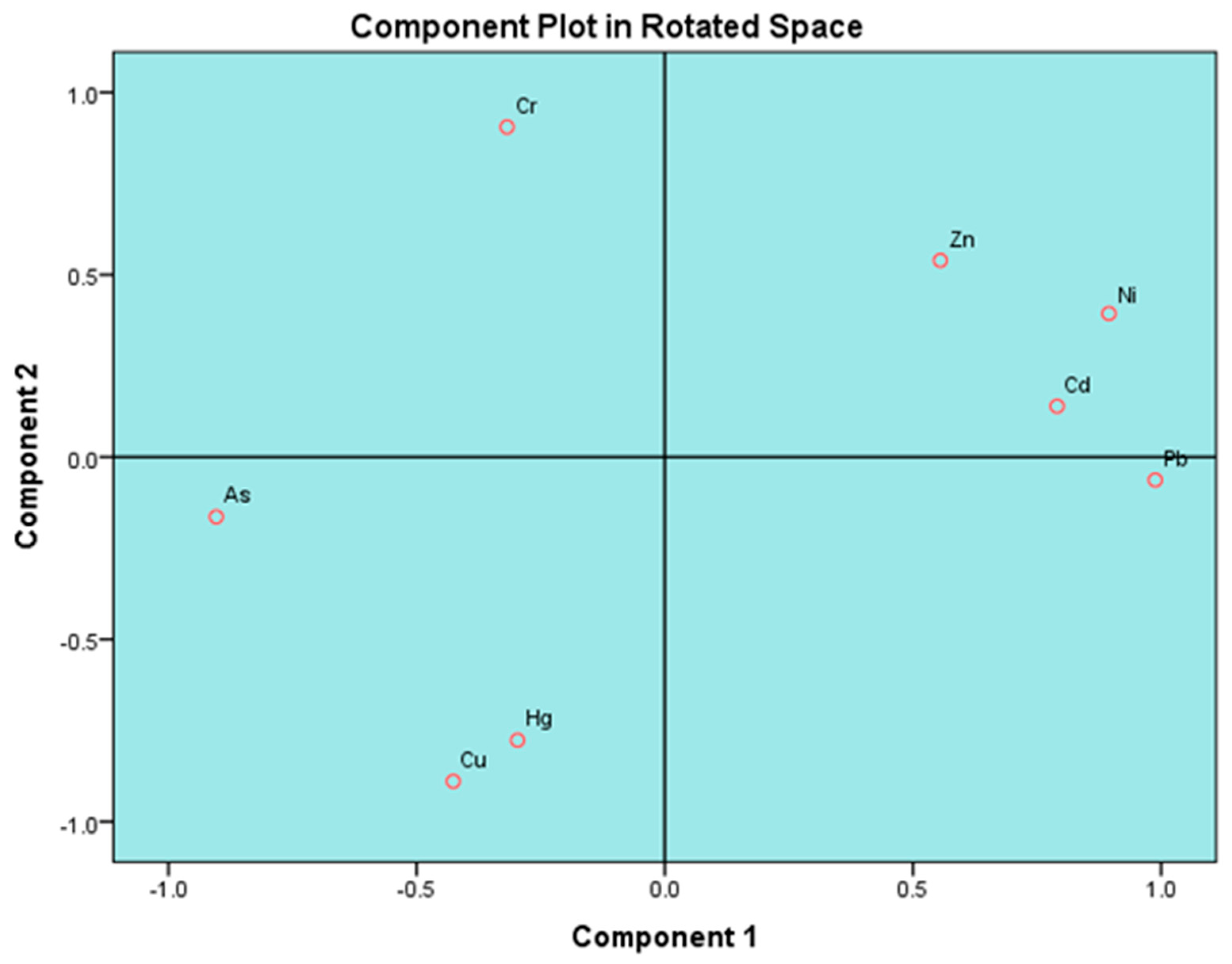
PCA reveals how seasonal variations influence heavy metal accumulation in Perna viridis, specifically in muscle and hepatopancreas. The PCA clusters include data from March, April, May, June, and July, representing seasonal variations. Group ellipses were used to visualize these clusters. In muscle tissue (Figure 4), PCA explained 82.59% of the total variance, with Component 1 (57.69%) grouping Cd, Pb, Ni, As, and Zn, likely originating from industrial and anthropogenic sources, and Component 2 (24.90%) grouping Hg, Cr, and Cu, possibly influenced by seasonal water chemistry changes. The corresponding component matrix is presented in supplementary Table S1. Metal accumulation trends are affected by monsoonal variations, salinity, and sediment resuspension, altering metal bioavailability. Feeding behavior and metabolic activity, which fluctuate with seasonal changes, also influence uptake rates, as some metals preferentially bind to muscle proteins.
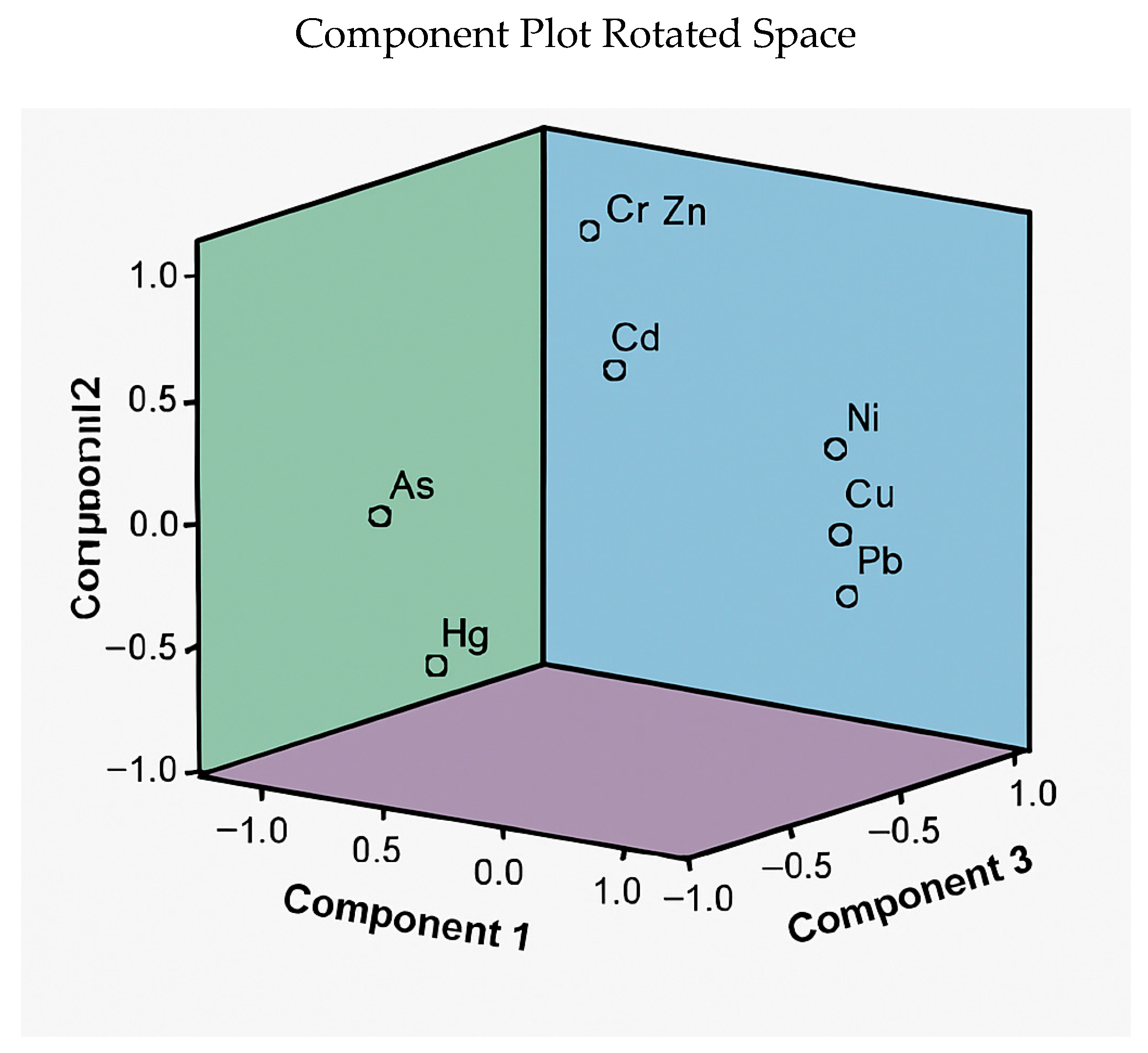
In the hepatopancreas (Figure 5), PCA explained 97.55% of the total variance, with Component 1 (42.78%) grouping Cu, Ni, and Pb, Component 2 (38.21%) grouping Cd, Hg, Cr, and Zn, and Component 3 (16.56%) grouping As. PC1 (Cu, Ni, and Pb) in the PCA results most likely represents man-made sources such as industrial discharge, urban runoff, and marine activities; these are frequently connected to metal plating, petroleum refining, and antifouling coatings, with Hai Phong having a river and sea port. The corresponding component matrix is presented in supplementary Table S2. Anthropogenic influences from agricultural runoff, electroplating, and mixed industrial inputs are also suggested by PC2 (Cd, Hg, Cr, and Zn), with a partial contribution from natural geochemical processes, especially for Zn and Cr. As predominates in PC3, which may have a geogenic or environmental origin, perhaps from mineral weathering or background levels, while aquaculture or legacy contamination contributions cannot be completely ruled out. Urban development, particularly coal mining activities, has been identified as a major source of arsenic contamination in the study area [31], while the Red River Delta is also known for its high natural arsenic mobilization in groundwater (up to 3050 µg/L) [52]. The hepatopancreas, being a major detoxification organ, shows seasonal fluctuations in the metal burden due to enzymatic detoxification, metallothionein binding, and lipid content variations. Increased metal accumulation during monsoon seasons may be linked to higher runoff and pollution influx, affecting metal bioavailability and uptake. The PCA findings confirm that the ways heavy metals are absorbed, retained, and detoxified are much influenced by seasonal changes in water quality and biological activities.

3.2. Seasonal and Monthly Variations in Heavy Metal Concentrations

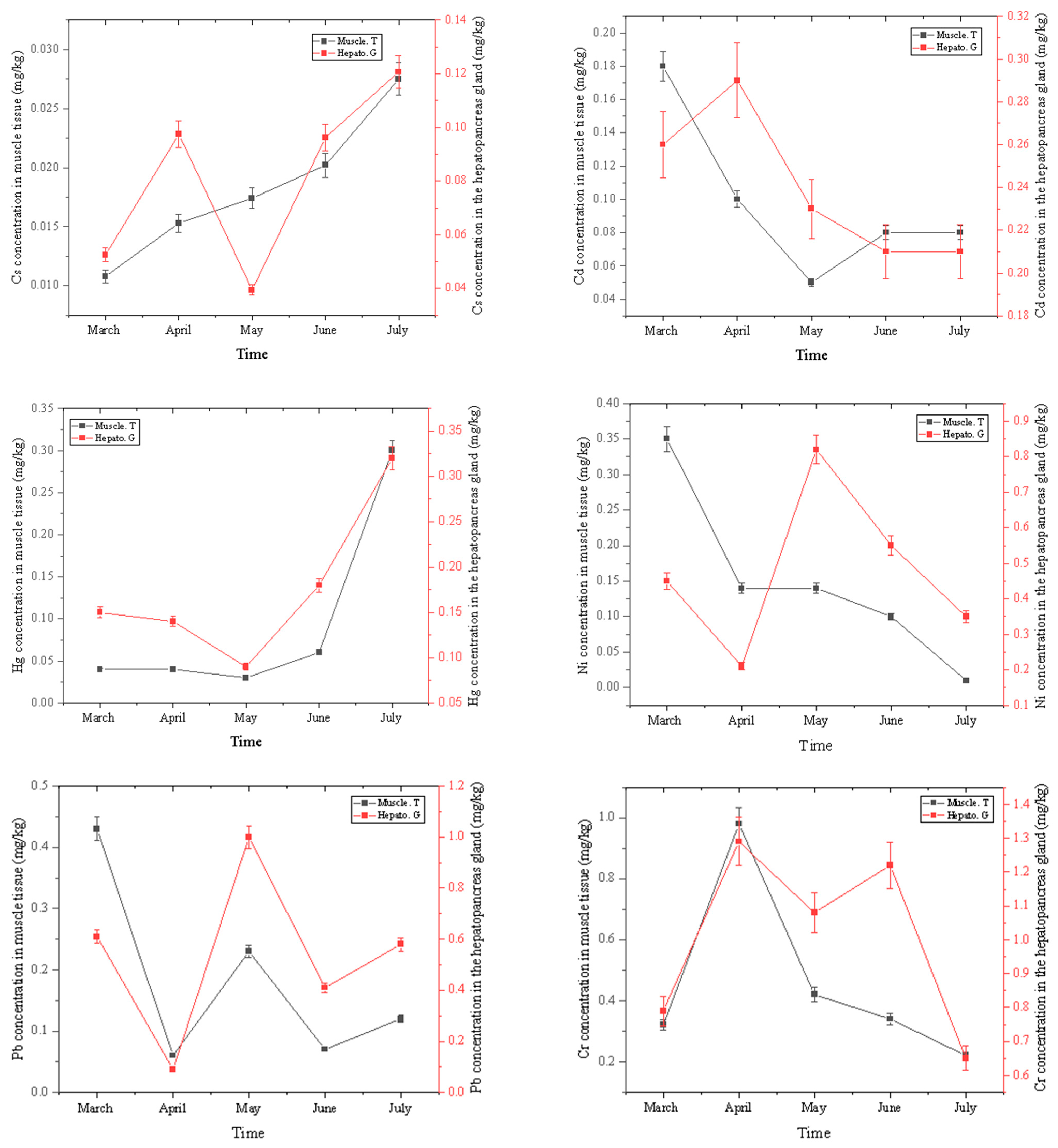
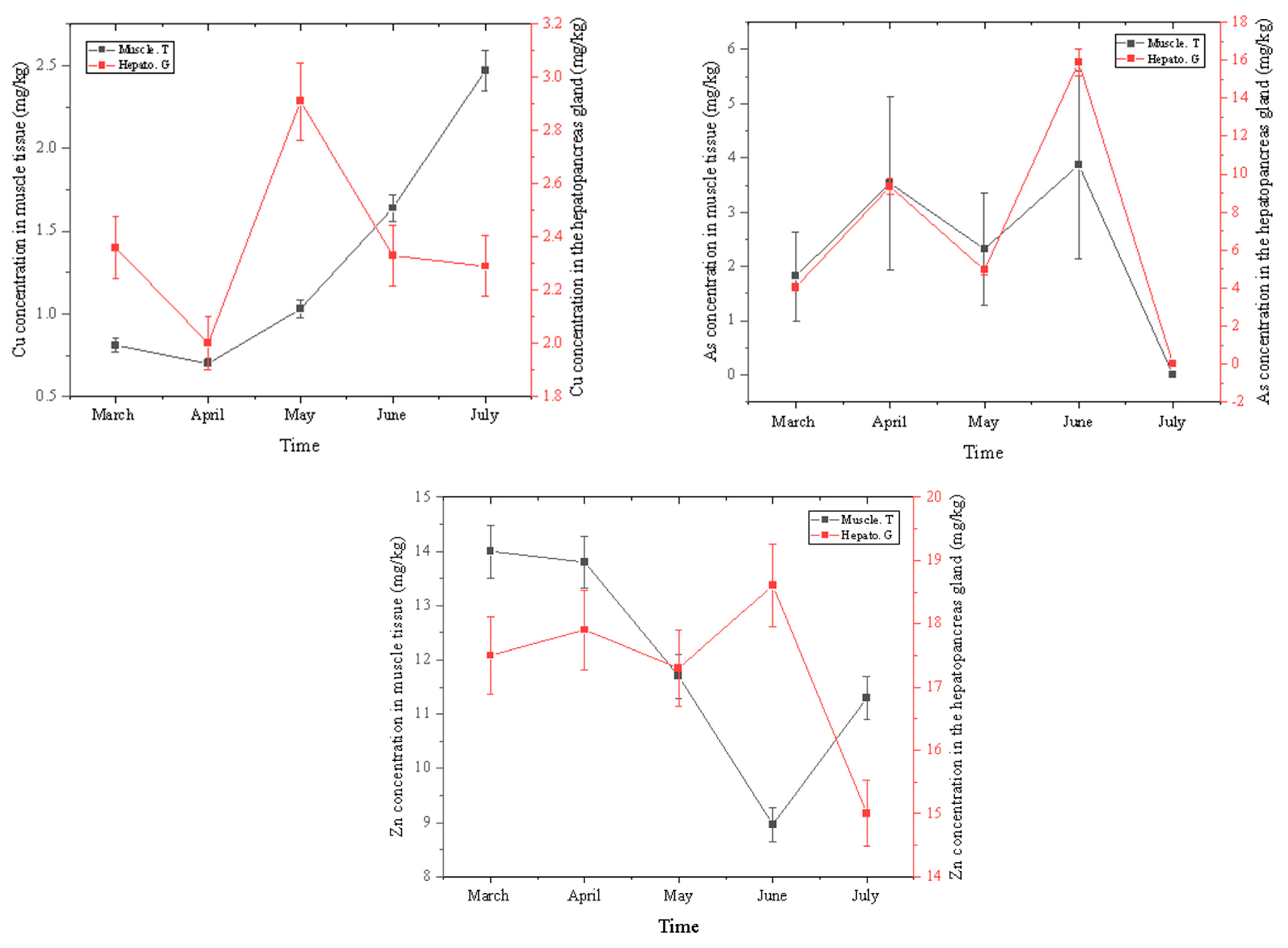
Figure 6 shows the temporal changes in heavy metal concentrations based on the monthly measurements of Cs, Cd, Hg, Ni, Pb, Cr, Cu, As, and Zn in the muscle tissue and hepatopancreas gland of mussels. In general, statistically significant changes (p < 0.05) in heavy metal concentrations in the two organs were observed across seasons and months. The Pb (muscle), Cr (muscle) and As (both organs) concentrations showed a decreasing trend from March (dry season) to July (rainy season), while Cs (both organs) and Cu (muscle) concentrations increased during this period. The dispersion of heavy metal concentrations is linked to significant rainfall and river flow. This may be the cause of the drop in heavy metal concentrations from the dry season to the wet season. It is impossible to rule out the possibility that river flow could also carry significant concentrations of heavy metals, such as Cu and Hg, into the marine environment. In addition, biological factors may also influence seasonal changes in heavy metal concentrations in mussels [37]. Typically, the metal burden of mussels is highest in winter and spring [37,40,84,85], as metal concentrations are closely tied to the mussels’ weight and nutritional status, which may be suboptimal during these times [37]. For example, the highest concentrations of Zn, Cu, and Cd in M. galloprovincialis on the west coast of Algeria were observed in winter, likely due to the spawning period [17]. Similar trends have been noted in other studies [6,40,41,86,87], although some differences exist. For instance, the highest concentrations of Pb were found in summer [17], while Rainbow et al. (2004) reported limited seasonal variation in Zn and Cu concentrations in Mytilus trossulus in Gdansk Bay (Baltic Sea) [88]. Additionally, Scudiero et al. (2014) found that Cd levels did not correlate closely with seasonal changes in M. galloprovincialis on the Campania coast (Italy) [8]. In this study, there was no clear uniformity in the seasonal trends of changes in the concentrations of the studied heavy metals. This may result from a combination of factors directly correlated with mussel weight, such as food availability, reproductive cycles, and metabolism. Furthermore, the bioavailability of metals is influenced by location and abiotic factors, such as temperature and salinity [17,89,90,91].
Monthly variations in metal concentrations revealed significant differences among the analyzed metals, with no consistent trends observed except for similar patterns in the hepatopancreas gland for Cr and As. Previous studies have shown that local industrial activities and urban wastewater contribute to heavy metal pollution in the area [29,30]. These variations may be linked to fluctuations in heavy metal concentrations in seawater and mussel food sources resulting from discharge activities. Interestingly, significant monthly variations in concentrations were also observed for Pb, Hg, Ni, Cr, and As in both organs, and for Cs and Cu in the muscle tissue (statistically significant at the 0.05 level). In contrast, no significant differences were detected for Cd and Zn concentrations in both organs, as well as for Cu and Cs concentrations in the hepatopancreas gland. These findings may reflect fluctuations in background metal levels and seasonal biological changes in mussels. Additionally, this could be a result of variations in the hepatopancreatic gland’s and muscle tissue’s capacities for metal accumulation. In contrast to muscle tissue, the hepatopancreas gland exhibited more consistent variations and higher metal concentrations. These results imply that the hepatopancreas is more susceptible to variations in local discharge activity and pollution levels. This investigation reveals significant evidence in support of using mussels (P. viridis) as biological indicators for heavy metal monitoring in the Hai Phong coastal area, even if more research is required for a more thorough understanding. We consider that assessing the baseline concentrations of heavy metals in seawater and marine sediments is essential in future studies to elucidate the relationship between bioaccumulation and environmental exposure. A more comprehensive study covering all months of the year would allow for a more robust generalization of monthly and seasonal trends. Further, more complex studies may also incorporate the sex, sexual maturity, reproductive stages, and seasonal growth cycles and multiple methods of age determination in addition to size and CI.

3.3. Health Risk Assessment Through Target Hazard Quotients and the Hazard Index

To assess potential health risks from consuming mussels from Hai Phong Province, the target hazard quotient (THQ) and total hazard index (HI) were calculated (Table 3). Data from two months, March and July, were used in the analysis to symbolize the dry and wet seasons, respectively. The THQs for the majority of studied heavy metals were less than one in both months, suggesting no expected health hazards. Nonetheless, in both months, the THQs for Pb in the hepatopancreas were greater than one, indicating possible health hazards for consumers who may be exposed to Pb.
The HI was recorded to range from 1.7 to 2.93 with a mean of 2.25 in March (dry season) and from 0.58 to 2.14 with a mean of 1.08 in July (rainy season). These findings indicate that HI values were higher during the dry season compared to the rainy season. Notably, the THQ for Pb contributed the most to the HI values. Pb, a non-essential element, is commonly used in industries such as pigment, alloy, battery, and gasoline production [13]. The major sources of lead (Pb) in the marine environment may be associated with runoff from inland areas, industrial wastewater discharge, and leakage from coal mining activities [31,92]. Hai Phong is a heavily industrialized city, with numerous factories and manufacturing facilities that contribute to the release of toxic heavy metals into the environment [27,29,93]. Notably, this area borders Quang Ninh Province, which possesses the largest coal reserves in the country and hosts extensive mining operations. These factors may significantly elevate Pb levels in the local marine environment. The results of this study highlight the potential health risks from Pb exposure associated with the consumption of Asian green mussels from the study area. Beyond the dangers to human health, the bioaccumulation of heavy metals or trace elements (TE) in the mussel hepatopancreas has important ecological ramifications. Fish, crustaceans, and seabirds may be impacted by sub-lethal toxicity or reproductive disruption from metals that are stored in this important detoxifying organ and can be passed to predators through trophic interactions [94,95]. Furthermore, as sentinel species, mussels’ higher TE levels suggest widespread pollution that could affect ecosystem health and food web dynamics.

4. Conclusions

Various concentrations of the studied heavy metals were observed in the two mussel organs, with Zn showing the highest concentration and Hg having the lowest concentration. Additionally, most of the studied heavy metals showed higher concentrations in the hepatopancreas compared to the muscle tissue, possibly due to a preferential accumulation in digestive organs. This suggests that food digestion plays a crucial role in the accumulation of heavy metals in mussels. The seasonal variation in these correlations may reflect changes in metal concentrations in the seawater and the physiological states of the mussels. The studied heavy metal concentrations varied both seasonally and monthly. The highest levels were recorded in spring, while the lowest levels were found in summer for Pb, Cr and As. Cs and Cu showed the opposite trend. This suggests a lack of uniformity in the seasonal concentration trends across different metals. The authors propose that the observed variations may be due to a combination of biotic factors, abiotic factors, fluctuating heavy metal concentrations in the seawater, and site-specific metal bioavailability. According to our observations, the hepatopancreas gland exhibited higher metal concentrations and stronger fluctuations compared to muscle tissue, making it more sensitive to changes in regional pollution levels and anthropogenic sources. The seasons/monthly fluctuations in heavy metal levels are valuable data for using mussels (Perna viridis) as bioindicators for heavy metal monitoring in the coastal areas of Hai Phong. The target hazard quotient (THQ) and total hazard index (HI) were calculated to assess potential health risks from consuming mussels from Hai Phong Province. Results showed that the THQ for Pb in the hepatopancreas exceeded one in both months, indicating potential health risks, while no significant risks were associated with other studied heavy metals. The HI in March (dry season) was recorded as higher than that in July (rainy season) with the major contribution coming from the THQ of Pb. These findings suggest that the hepatopancreas is more sensitive to changes in pollution levels and anthropogenic activities in the area.

Supplementary Materials

The following supporting information can be downloaded at https://www.mdpi.com/article/10.3390/w17172552/s1: Table S1: Component Matrixa for Figure 4; Table S2: Component Matrixa for Figure 5; Table S3: The results of the One-Way ANOVA analysis evaluated the variation in heavy metal concentrations in muscle tissue and hepatopancreas; Table S4: The results of the One-Way ANOVA analysis evaluated the variation in heavy metal concentrations by season; Table S5: The results of the One-Way ANOVA analysis evaluated the variation in heavy metal concentrations by months with post-hoc Tukey HSD test.

Author Contributions

Conceptualization, H.N.T.K., V.-H.D., T.-T.C., T.-X.P.-T., X.-Q.N., S.V.V., T.P.V., D.-T.T., D.-T.D., O.T., M.P., M.S.M., M.H., A.S. and T.K.; data curation, H.N.T.K., V.-H.D., T.-T.C. and T.-X.P.-T.; formal analysis, H.N.T.K., V.-H.D., T.-T.C., T.-X.P.-T., X.-Q.N., S.V.V., T.P.V., D.-T.T., D.-T.D., O.T., M.P., M.S.M., M.H., A.S. and T.K.; investigation, H.N.T.K., V.-H.D., T.-T.C. and T.-X.P.-T.; methodology, H.N.T.K., V.-H.D., T.-T.C. and T.-X.P.-T.; writing—original draft, H.N.T.K., V.-H.D., T.-T.C., T.-X.P.-T., X.-Q.N., S.V.V., T.P.V., D.-T.T., D.-T.D., O.T., M.P., M.S.M., M.H., A.S. and T.K.; writing—review and editing, H.N.T.K., V.-H.D., T.-T.C., T.-X.P.-T., X.-Q.N., S.V.V., T.P.V., D.-T.T., D.-T.D., O.T., M.P., M.S.M., M.H., A.S. and T.K. All authors have read and agreed to the published version of the manuscript.

Funding

This research was funded by research project no. QG.23.67 of Vietnam National University, Hanoi, and the Hungarian Scientific Research Fund (OTKA) No. K-146322.

Institutional Review Board Statement

The authors further confirm that any aspect of this study covered in this manuscript that has involved human patients or animals has been conducted with the ethical approval of all relevant bodies and that such approvals are acknowledged within the manuscript.

Data Availability Statement

The original contributions presented in this study are included in the article/supplementary material. Further inquiries can be directed to the corresponding author.

Acknowledgments

The authors acknowledge the fishermen at Cat Ba Island, Hai Phong for their support during sample collection. The authors would like to acknowledge the financial support to this project provided by Vietnam National University, Hanoi, with project no. QG.23.67.

Conflicts of Interest

The authors declare no conflicts of interest, and the funders had no role in the design of the study; in the collection, analyses, or interpretation of data; in the writing of the manuscript; or in the decision to publish the results.

References

  1. Nhu, T.N.; Van, N.B.; Le, D.-A.; Thi, T.H.T.; Nguyen, T.-D.; Xuan, T.D.; Tran, H.-N.; Sang, P.N.; Musthafa, M.S.; Duong, V.-H. Characteristics of heavy metals in surface sediments of the Van Don-Tra Co coast, northeast Vietnam. Reg. Stud. Mar. Sci. 2024, 73, 103459. [Google Scholar] [CrossRef]
  2. Santhanabharathi, B.; Suhail Ahmed, M.; Pradhoshini, K.P.; Priyadharshini, M.; Sangunathan, U.; Alappat, L.; Neetha, V.; George, A.; Kumar, S.; Amina, S. Ecological risk assessment due to heavy metals prevalence in the sediments of Kayamkulam estuary, Kerala, India. Int. J. Environ. Anal. Chem. 2024, 1–21. [Google Scholar] [CrossRef]
  3. Shafeeka Parveen, M.H.; Ud Din War, M.; Suhail Ahmed, M.; Santhanabharathi, B.; Mohammed Ibrahim, S.; Mohammed Ibrahim, N.; Ruban Hentry, A.; Pradhoshini, K.P.; Priyadharshini, M.; Saiyad Musthafa, M. Assessment of heavy metal concentration in pelagic fish species and associated health risks along the Kanyakumari coast, India—A baseline study. Int. J. Environ. Anal. Chem. 2024, 1–18. [Google Scholar] [CrossRef]
  4. Cardellicchio, N.; Buccolieri, A.; Di Leo, A.; Giandomenico, S.; Spada, L. Levels of metals in reared mussels from Taranto Gulf (Ionian Sea, southern Italy). Food Chem. 2008, 107, 890–896. [Google Scholar] [CrossRef]
  5. Mol, S.; Alakavuk, D.Ü. Heavy metals in mussels (Mytilus galloprovincialis) from Marmara Sea, Turkey. Biol. Trace Elem. Res. 2011, 141, 184–191. [Google Scholar] [CrossRef]
  6. Azizi, G.; Layachi, M.; Akodad, M.; Yáñez-Ruiz, D.R.; Martín-García, A.I.; Baghour, M.; Mesfioui, A.; Skalli, A.; Moumen, A. Seasonal variations of heavy metals content in mussels (Mytilus galloprovincialis) from Cala Iris offshore (Northern Morocco). Mar. Pollut. Bull. 2018, 137, 688–694. [Google Scholar] [CrossRef] [PubMed]
  7. Doney, S.C. The growing human footprint on coastal and open-ocean biogeochemistry. Science 2010, 328, 1512–1516. [Google Scholar] [CrossRef]
  8. Scudiero, R.; Cretì, P.; Trinchella, F.; Esposito, M.G. Evaluation of cadmium, lead and metallothionein contents in the tissues of mussels (Mytilus galloprovincialis) from the Campania coast (Italy): Levels and seasonal trends. Comptes Rendus Biol. 2014, 337, 451–458. [Google Scholar] [CrossRef]
  9. UN. First Global Integrated Marine Assessment; United Nations: New York, NY, USA, 2016. [Google Scholar]
  10. Valdés, J. Heavy metal distribution and enrichment in sediments of Mejillones Bay (23 S), Chile: A spatial and temporal approach. Environ. Monit. Assess. 2012, 184, 5283–5294. [Google Scholar] [CrossRef]
  11. Belivermiş, M.; Kılıç, Ö.; Çotuk, Y. Assessment of metal concentrations in indigenous and caged mussels (Mytilus galloprovincialis) on entire Turkish coastline. Chemosphere 2016, 144, 1980–1987. [Google Scholar] [CrossRef]
  12. Stankovic, S.; Jovic, M. Health risks of heavy metals in the mediterranean mussels as seafood. Environ. Chem. Lett. 2012, 10, 119–130. [Google Scholar] [CrossRef]
  13. Stankovic, S.; Jovic, M.; Stankovic, A.R.; Katsikas, L. Heavy metals in seafood mussels. Risks for human health. In Environmental Chemistry for a Sustainable World: Volume 1: Nanotechnology and Health Risk; Springer: Dordrecht, The Netherlands, 2012; pp. 311–373. [Google Scholar] [CrossRef]
  14. Zhou, Q.; Zhang, J.; Fu, J.; Shi, J.; Jiang, G. Biomonitoring: An appealing tool for assessment of metal pollution in the aquatic ecosystem. Anal. Chim. Acta 2008, 606, 135–150. [Google Scholar] [CrossRef]
  15. Baki, M.A.; Hossain, M.M.; Akter, J.; Quraishi, S.B.; Shojib, M.F.H.; Ullah, A.A.; Khan, M.F. Concentration of heavy metals in seafood (fishes, shrimp, lobster and crabs) and human health assessment in Saint Martin Island, Bangladesh. Ecotoxicol. Environ. Saf. 2018, 159, 153–163. [Google Scholar] [CrossRef]
  16. Lu, J.; Lin, Y.; Wu, J.; Zhang, C. Continental-scale spatial distribution, sources, and health risks of heavy metals in seafood: Challenge for the water-food-energy nexus sustainability in coastal regions? Environ. Sci. Pollut. Res. 2021, 28, 63815–63828. [Google Scholar] [CrossRef]
  17. Rouane-Hacene, O.; Boutiba, Z.; Belhaouari, B.; Guibbolini-Sabatier, M.E.; Francour, P.; Risso-de Faverney, C. Seasonal assessment of biological indices, bioaccumulation and bioavailability of heavy metals in mussels Mytilus galloprovincialis from Algerian west coast, applied to environmental monitoring. Oceanologia 2015, 57, 362–374. [Google Scholar] [CrossRef]
  18. Salam, M.; Paul, S.; Noor, S.; Siddiqua, S.; Aka, T.; Wahab, R.; Aweng, E. Contamination profile of heavy metals in marine fish and shellfish. Glob. J. Environ. Sci. Manag. 2019, 5, 225–236. [Google Scholar] [CrossRef]
  19. Bosch, A.C.; O’Neill, B.; Sigge, G.O.; Kerwath, S.E.; Hoffman, L.C. Heavy metals in marine fish meat and consumer health: A review. J. Sci. Food Agric. 2016, 96, 32–48. [Google Scholar] [CrossRef]
  20. Saha, N.; Zaman, M. Evaluation of possible health risks of heavy metals by consumption of foodstuffs available in the central market of Rajshahi City, Bangladesh. Environ. Monit. Assess. 2013, 185, 3867–3878. [Google Scholar] [CrossRef] [PubMed]
  21. Priyadharshini, M.; Ahmed, M.S.; Pradhoshini, K.P.; Santhanabharathi, B.; Ahmed, M.F.S.; Alam, L.; Rahman, I.M.; Duong, V.H.; Musthafa, M.S. Human health risk assessment due to consumption of dried fish in Chennai, Tamil Nadu, India: A baseline report. Environ. Sci. Pollut. Res. 2024, 31, 41388–41401. [Google Scholar] [CrossRef] [PubMed]
  22. Priyadharshini, M.; Pradhoshini, K.P.; Chandrasekaran, A.; Santhanabharathi, B.; Suhail Ahmed, M.; Saikumar, S.; Mani, R.; Duong, V.-H.; Rahman, I.M.; Saiyad Musthafa, M. Evaluation of 210Po, 210Pb, and potentially toxic element concentrations in aquatic environments and polychaetes along the southeast coast of Chennai, Tamil Nadu: A baseline report. Int. J. Environ. Anal. Chem. 2024, 1–24. [Google Scholar] [CrossRef]
  23. Han, J.-L.; Pan, X.-D.; Chen, Q.; Huang, B.-F. Health risk assessment of heavy metals in marine fish to the population in Zhejiang, China. Sci. Rep. 2021, 11, 11079. [Google Scholar] [CrossRef] [PubMed]
  24. Saha, N.; Mollah, M.; Alam, M.; Rahman, M.S. Seasonal investigation of heavy metals in marine fishes captured from the Bay of Bengal and the implications for human health risk assessment. Food Control 2016, 70, 110–118. [Google Scholar] [CrossRef]
  25. Wei, Y.; Zhang, J.; Zhang, D.; Tu, T.; Luo, L. Metal concentrations in various fish organs of different fish species from Poyang Lake, China. Ecotoxicol. Environ. Saf. 2014, 104, 182–188. [Google Scholar] [CrossRef] [PubMed]
  26. Thu, P.T.S.; Tri, D.Q. Assessing the Impact of Industrial Zones on the Environmental Pollution in Hai Phong’s Coastal Areas, Vietnam. J. Geosci. Environ. Prot. 2023, 11, 11–29. [Google Scholar] [CrossRef]
  27. Ho, H.H.; Swennen, R.; Cappuyns, V.; Vassilieva, E.; Neyens, G.; Rajabali, M.; Van Tran, T. Assessment on pollution by heavy metals and arsenic based on surficial and core sediments in the Cam River Mouth, Haiphong Province, Vietnam. Soil Sediment Contam. Int. J. 2013, 22, 415–432. [Google Scholar] [CrossRef]
  28. Hong, S.; Yim, U.; Shim, W.; Oh, J.; Viet, P.; Park, P. Persistent organochlorine residues in estuarine and marine sediments from Ha Long Bay, Hai Phong Bay, and Ba Lat estuary, Vietnam. Chemosphere 2008, 72, 1193–1202. [Google Scholar] [CrossRef]
  29. Le, Q.; Bach, L.; Arai, T. Monitoring heavy metal contamination using rocky oyster (Saccostrea glomerata) in Haiphong-Halong Coastal area, North Vietnam. Int. J. Environ. Res. 2015, 9, 1373–1378. [Google Scholar]
  30. Nguyen, T.; Luu, V. Assessment on anthropogenically-induced contaminant loads into the Nam Trieu Mouth. In Proceedings of the Anniversary of the 45th Establishment Day of Haiphong Institute of Oceanography, Haiphong, Vietnam, 17–18 August 2004; pp. 54–63. [Google Scholar]
  31. Dang, T.T.; Vo, T.A.; Duong, M.T.; Pham, T.M.; Van Nguyen, Q.; Nguyen, T.Q.; Bui, M.Q.; Syrbu, N.N.; Van Do, M. Heavy metals in cultured oysters (Saccostrea glomerata) and clams (Meretrix lyrata) from the northern coastal area of Vietnam. Mar. Pollut. Bull. 2022, 184, 114140. [Google Scholar] [CrossRef]
  32. Chandrasekaran, T.S.; Milton, J.; Santhanabharathi, B.; Pradhoshini, K.P.; Cojandaraj, L.; Priyadharshini, M.; Ahmed, M.S.; Musthafa, M.S.; Balaji, P.; Faggio, C. Heavy metals toxicity in edible bivalves and risk exposure to humans through its consumption from Adyar Estuary, Tamilnadu, India—A baseline study. Reg. Stud. Mar. Sci. 2024, 79, 103854. [Google Scholar] [CrossRef]
  33. Davies, I.M.; Vethaak, D. Integrated Marine Environmental Monitoring of Chemicals and Their Effects; ICES Cooperative Research Reports (CRR); International Council for the Exploration of the Sea: Copenhagen, Denmark, 2012. [Google Scholar] [CrossRef]
  34. Rodrigues, L.C.; Van den Bergh, J.C.; Massa, F.; Theodorou, J.A.; Ziveri, P.; Gazeau, F. Sensitivity of Mediterranean bivalve mollusc aquaculture to climate change, ocean acidification, and other environmental pressures: Findings from a producer survey. J. Shellfish Res. 2015, 34, 1161–1176. [Google Scholar] [CrossRef]
  35. Yap, C.K.; Cheng, W.H.; Karami, A.; Ismail, A. Health risk assessments of heavy metal exposure via consumption of marine mussels collected from anthropogenic sites. Sci. Total Environ. 2016, 553, 285–296. [Google Scholar] [CrossRef] [PubMed]
  36. Attig, H.; Kamel, N.; Sforzini, S.; Dagnino, A.; Jamel, J.; Boussetta, H.; Viarengo, A.; Banni, M. Effects of thermal stress and nickel exposure on biomarkers responses in Mytilus galloprovincialis (Lam). Mar. Environ. Res. 2014, 94, 65–71. [Google Scholar] [CrossRef] [PubMed]
  37. Knopf, B.; Fliedner, A.; Radermacher, G.; Rüdel, H.; Paulus, M.; Pirntke, U.; Koschorreck, J. Seasonal variability in metal and metalloid burdens of mussels: Using data from the German Environmental Specimen Bank to evaluate implications for long-term mussel monitoring programs. Environ. Sci. Eur. 2020, 32, 7. [Google Scholar] [CrossRef]
  38. Sericano, J.L.; Wade, T.L.; Sweet, S.T.; Ramirez, J.; Lauenstein, G.G. Temporal trends and spatial distribution of DDT in bivalves from the coastal marine environments of the continental United States, 1986–2009. Mar. Pollut. Bull. 2014, 81, 303–316. [Google Scholar] [CrossRef]
  39. Azizi, G.; Akodad, M.; Baghour, M.; Layachi, M.; Moumen, A. The use of Mytilus spp. mussels as bioindicators of heavy metal pollution in the coastal environment. A review. J. Mater. Env. Sci. 2018, 9, 1170–1181. [Google Scholar]
  40. Fattorini, D.; Notti, A.; Di Mento, R.; Cicero, A.M.; Gabellini, M.; Russo, A.; Regoli, F. Seasonal, spatial and inter-annual variations of trace metals in mussels from the Adriatic sea: A regional gradient for arsenic and implications for monitoring the impact of off-shore activities. Chemosphere 2008, 72, 1524–1533. [Google Scholar] [CrossRef]
  41. Devier, M.-H.; Augagneur, S.; Budzinski, H.; Le Menach, K.; Mora, P.; Narbonne, J.-F.; Garrigues, P. One-year monitoring survey of organic compounds (PAHs, PCBs, TBT), heavy metals and biomarkers in blue mussels from the Arcachon Bay, France. J. Environ. Monit. 2005, 7, 224–240. [Google Scholar] [CrossRef]
  42. Oaten, J.; Hudson, M.; Jensen, A.; Williams, I. Seasonal effects to metallothionein responses to metal exposure in a naturalised population of Ruditapes philippinarum in a semi-enclosed estuarine environment. Sci. Total Environ. 2017, 575, 1279–1290. [Google Scholar] [CrossRef]
  43. Pisanelli, B.; Benedetti, M.; Fattorini, D.; Regoli, F. Seasonal and inter-annual variability of DNA integrity in mussels Mytilus galloprovincialis: A possible role for natural fluctuations of trace metal concentrations and oxidative biomarkers. Chemosphere 2009, 77, 1551–1557. [Google Scholar] [CrossRef] [PubMed]
  44. Marigómez, I.; Soto, M.; Cajaraville, M.P.; Angulo, E.; Giamberini, L. Cellular and subcellular distribution of metals in molluscs. Microsc. Res. Tech. 2002, 56, 358–392. [Google Scholar] [CrossRef]
  45. Pradhoshini, K.P.; Santhanabharathi, B.; Suhail Ahmed, M.; Priyadharshini, M.; Palanivel, M.; Saranya, P.; Prakasheswar, P.; Duong, V.H.; Krishnakumar, S.; Saiyad Musthafa, M. Natural radioactivity estimation and heavy metals concentration in commercial tea brands—A baseline study on human health risk hazards due to tea consumption in Tamilnadu, India. Int. J. Environ. Anal. Chem. 2024, 105, 2174–2192. [Google Scholar] [CrossRef]
  46. USEPA. Guidance for Assessing Chemical Contaminant Data for Use in Fish Advisories. Vol. 1: Fish Sampling and Analys; EPA-823-B-00-007; Environmental Protection Agency: Washington, DC, USA, 2000. [Google Scholar]
  47. WHO. World Health Statistic; World Health Organization: Geneva, Switzerland, 2015. [Google Scholar]
  48. USEPA. Human Health Risk Assessment. Regional Screening Level (RSL)—Summary Table; Environmental Protection Agency: Washington, DC, USA, 2024. [Google Scholar]
  49. Wong, C.; Roberts, S.M.; Saab, I.N. Review of regulatory reference values and background levels for heavy metals in the human diet. Regul. Toxicol. Pharmacol. 2022, 130, 105122. [Google Scholar] [CrossRef]
  50. Jović, M.; Stanković, S. Human exposure to trace metals and possible public health risks via consumption of mussels Mytilus galloprovincialis from the Adriatic coastal area. Food Chem. Toxicol. 2014, 70, 241–251. [Google Scholar] [CrossRef]
  51. Yap, C.; Mohd Ruszaidi, S.; Cheng, W. Different tissues of rock oyster Saccostrea cucullata as biomonitors of trace metal bioavailabilities in the Penang coastal waters, Malaysia. Res. J. Chem. Environ. 2010, 14, 17–21. [Google Scholar]
  52. Nguyet, P.N.; Le Luu, T.; Le, N.A.; Ngan, N.T.K.; Trang, N.T.H. Groundwater arsenic pollution in Vietnam: Current opinion on the mobilization and remediation. Curr. Opin. Environ. Sci. Health 2025, 44, 100596. [Google Scholar] [CrossRef]
  53. AbuQamar, S.F.; El-Saadony, M.T.; Alkafaas, S.S.; Elsalahaty, M.I.; Elkafas, S.S.; Mathew, B.T.; Aljasmi, A.N.; Alhammadi, H.S.; Salem, H.M.; Abd El-Mageed, T.A. Ecological impacts and management strategies of pesticide pollution on aquatic life and human beings. Mar. Pollut. Bull. 2024, 206, 116613. [Google Scholar] [CrossRef] [PubMed]
  54. Cao, X.; Hao, C.; Wang, G.; Yang, H.; Chen, D.; Wang, X. Sequential extraction combined with HPLC–ICP-MS for As speciation in dry seafood products. Food Chem. 2009, 113, 720–726. [Google Scholar] [CrossRef]
  55. Peshut, P.J.; Morrison, R.J.; Brooks, B.A. Arsenic speciation in marine fish and shellfish from American Samoa. Chemosphere 2008, 71, 484–492. [Google Scholar] [CrossRef]
  56. Dung, L. Concentration of trace metals in rocky oyster (Saccostrea glomerata) and hard clam (Meretrix lyrata) in Haiphong coast. Vietnam J. Mar. Sci. Technol. 2013, 13, 268–275. [Google Scholar] [CrossRef][Green Version]
  57. Liu, C.-W.; Liang, C.-P.; Lin, K.-H.; Jang, C.-S.; Wang, S.-W.; Huang, Y.-K.; Hsueh, Y.-M. Bioaccumulation of arsenic compounds in aquacultural clams (Meretrix lusoria) and assessment of potential carcinogenic risks to human health by ingestion. Chemosphere 2007, 69, 128–134. [Google Scholar] [CrossRef]
  58. Valette-Silver, N.; Riedel, G.; Crecelius, E.A.; Windom, H.; Smith, R.; Dolvin, S. Elevated arsenic concentrations in bivalves from the southeast coasts of the USA. Mar. Environ. Res. 1999, 48, 311–333. [Google Scholar] [CrossRef]
  59. EC. Commission regulation (EC) No 188/2006. Off. J. Eur. Union 2006, 49, 10–11. [Google Scholar]
  60. FAO/WHO. Joint Expert Committee on Food Additives. Summary Evaluations Performed by the Joint FAO/WHO Expert Committee on Food Additives (JECFA1956–2003), (First Through Sixty-First Meetings); ILSI Press International Life Sciences Institute, Food and Agriculture Organization of the United Nations and the World Health Organization: Washington, DC, USA, 2004. [Google Scholar]
  61. USFDA/CFSAN. National Shellfish Sanitation Program. Guide for the Control of Molluscan Shellfish. Guidance Documents Chapter II. Growing Areas: 04. Action Levels, Tolerances and Guidance Levels for Poisonous or Deleterious Substances in Seafood; US Food and Drug Administration: Silver Spring, MD, USA, 2007. [Google Scholar]
  62. FDA. Recommendations of the United States Public Health Service Food and Drug Administration; Food and Drug Administration: Silver Spring, MD, USA, 2001. [Google Scholar]
  63. MFR. Malaysian Law on Food and Drugs; Malaysian Law; Malaysian Food Regulations: Kuala Lumpur, Malaysia, 1985. [Google Scholar]
  64. Nauen, C.E. Compilation of Legal Limits for Hazardous Substances in Fish and Fishery Products; FAO Fisheries Circular 764; FAO Fisheries Circular 764; FAO: Rome, Italy, 1983; 102p, Available online: https://www.fao.org/4/q5114e/q5114e.pdf (accessed on 18 August 2024).
  65. Tepe, Y.; Süer, N. The levels of heavy metals in the Mediterranean mussel (Mytilus galloprovincialis Lamarck, 1819); Example of Giresun coasts of the Black Sea, Turkey. Ind. J. Geo-Mar. Sci 2016, 45, 283–289. [Google Scholar]
  66. Maanan, M. Heavy metal concentrations in marine molluscs from the Moroccan coastal region. Environ. Pollut. 2008, 153, 176–183. [Google Scholar] [CrossRef]
  67. Besada, V.; Andrade, J.M.; Schultze, F.; Fumega, J.; Cambeiro, B.; González, J.J. Statistical comparison of trace metal concentrations in wild mussels (Mytilus galloprovincialis) in selected sites of Galicia and Gulf of Biscay (Spain). J. Mar. Syst. 2008, 72, 320–331. [Google Scholar] [CrossRef]
  68. Szefer, P.; Kim, B.-S.; Kim, C.-K.; Kim, E.-H.; Lee, C.-B. Distribution and coassociations of trace elements in soft tissue and byssus of Mytilus galloprovincialis relative to the surrounding seawater and suspended matter of the southern part of the Korean Peninsula. Environ. Pollut. 2004, 129, 209–228. [Google Scholar] [CrossRef]
  69. Yulianto, B.; Oetari, P.S.; Februhardi, S.; Putranto, T.W.; Soegianto, A. Heavy metals (Cd, Pb, Cu, Zn) concentrations in edible bivalves harvested from northern coast of Central Java, Indonesia. IOP Conf. Ser. Earth Environ. Sci. 2019, 259, 012005. [Google Scholar] [CrossRef]
  70. Bayen, S.; Thomas, G.O.; Lee, H.K.; Obbard, J.P. Organochlorine pesticides and heavy metals in green mussel, Perna viridis in Singapore. Water Air Soil Pollut. 2004, 155, 103–116. [Google Scholar] [CrossRef]
  71. Yap, C.; Ismail, A.; Tan, S.; Omar, H. Correlations between speciation of Cd, Cu, Pb and Zn in sediment and their concentrations in total soft tissue of green-lipped mussel Perna viridis from the west coast of Peninsular Malaysia. Environ. Int. 2002, 28, 117–126. [Google Scholar] [CrossRef] [PubMed]
  72. Chiu, S.; Lam, F.; Tze, W.; Chau, C.; Ye, D. Trace metals in mussels from mariculture zones, Hong Kong. Chemosphere 2000, 41, 101–108. [Google Scholar] [CrossRef]
  73. de Astudillo, L.R.; Yen, I.C.; Agard, J.; Bekele, I.; Hubbard, R. Heavy metals in green mussel (Perna viridis) and oysters (Crassostrea sp.) from Trinidad and Venezuela. Arch. Environ. Contam. Toxicol. 2002, 42, 410–415. [Google Scholar] [CrossRef]
  74. Widdows, J.; Donkin, P.; Staff, F.; Matthiessen, P.; Law, R.; Allen, Y.; Thain, J.; Allchin, C.; Jones, B. Measurement of stress effects (scope for growth) and contaminant levels in mussels (Mytilus edulis) collected from the Irish Sea. Mar. Environ. Res. 2002, 53, 327–356. [Google Scholar] [CrossRef]
  75. Prego, R.; Cobelo-Garcıa, A. Twentieth century overview of heavy metals in the Galician Rias (NW Iberian Peninsula). Environ. Pollut. 2003, 121, 425–452. [Google Scholar] [CrossRef]
  76. Khan, M.A.A.; Ullah, S.; Alpona, A.A. Potential Health Risks from Heavy Metal in Green Mussels (Perna viridis) from the Southeastern Part of the Bay of Bengal. Biol. Trace Elem. Res. 2025, 203, 4376–4396. [Google Scholar] [CrossRef]
  77. Fernández, B.; Campillo, J.; Martínez-Gómez, C.; Benedicto, J. Antioxidant responses in gills of mussel (Mytilus galloprovincialis) as biomarkers of environmental stress along the Spanish Mediterranean coast. Aquat. Toxicol. 2010, 99, 186–197. [Google Scholar] [CrossRef]
  78. Sloth, J.J.; Julshamn, K. Survey of total and inorganic arsenic content in blue mussels (Mytilus edulis L.) from Norwegian fiords: Revelation of unusual high levels of inorganic arsenic. J. Agric. Food Chem. 2008, 56, 1269–1273. [Google Scholar] [CrossRef] [PubMed]
  79. Riget, F.; Johansen, P.; Asmund, G. Influence of length on element concentrations in blue mussels (Mytilus edulis). Mar. Pollut. Bull. 1996, 32, 745–751. [Google Scholar] [CrossRef]
  80. Delorme, N.J.; King, N.; Cervantes-Loreto, A.; South, P.M.; Baettig, C.G.; Zamora, L.N.; Knight, B.R.; Ericson, J.A.; Smith, K.F.; Ragg, N.L. Genetics and ontogeny are key factors influencing thermal resilience in a culturally and economically important bivalve. Sci. Rep. 2024, 14, 19130. [Google Scholar] [CrossRef]
  81. Ansari, T.; Marr, I.; Tariq, N. Heavy metals in marine pollution perspective—A mini review. J. Appl. Sci. 2004, 4, 1–20. [Google Scholar] [CrossRef]
  82. Richir, J.; Gobert, S. The effect of size, weight, body compartment, sex and reproductive status on the bioaccumulation of 19 trace elements in rope-grown Mytilus galloprovincialis. Ecol. Indic. 2014, 36, 33–47. [Google Scholar] [CrossRef]
  83. Santos, H.S.D.; Bertollo, J.C.; Creed, J.C. Range extension of the Asian green mussel Perna viridis (Linnaeus, 1758) into a Marine Extractive Reserve in Brazil. BioInvasions Rec. 2023, 12, 208–222. [Google Scholar] [CrossRef]
  84. Abderrahmani, K. Assessment of Essential Trace Elements Cu, Zn, Mn, and Ni in Mediterranean Mussels (Mytilus galloprovincialis) from the Algerian Coast. Biol. Trace Elem. Res. 2024, 203, 3335–3350. [Google Scholar] [CrossRef]
  85. Cossa, D. A review of the use of Mytilus spp. as quantitative indicators of cadmium and mercury contamination in coastal waters. Oceanol. Acta 1989, 12, 417–432. [Google Scholar]
  86. Amiard, J.; Amiard-Triquet, C.; Berthet, B.; Metayer, C. Contribution to the ecotoxicological study of cadmium, lead, copper and zinc in the mussel Mytilus edulis: I. Field study. Mar. Biol. 1986, 90, 425–431. [Google Scholar] [CrossRef]
  87. Farrington, J.W.; Goldberg, E.D.; Risebrough, R.W.; Martin, J.H.; Bowen, V.T. US “Mussel Watch” 1976–1978: An overview of the trace-metal, DDE, PCB, hydrocarbon and artificial radionuclide data. Environ. Sci. Technol. 1983, 17, 490–496. [Google Scholar] [CrossRef]
  88. Rainbow, P.; Fialkowski, W.; Sokolowski, A.; Smith, B.; Wolowicz, M. Geographical and seasonal variation of trace metal bioavailabilities in the Gulf of Gdansk, Baltic Sea using mussels (Mytilus trossulus) and barnacles (Balanus improvisus) as biomonitors. Mar. Biol. 2004, 144, 271–286. [Google Scholar] [CrossRef]
  89. Al-Barwani, S.; Goddard, J. Bioaccumulation of some metals by Green mussel Perna viridis (Linnaeus 1758) from Pekan, Pahang, Malaysia. Int. J. Biol. Chem. 2011, 5, 54–60. [Google Scholar] [CrossRef]
  90. Sarà, G.; Pusceddu, A. Scope for growth of Mytilus galloprovincialis (Lmk., 1819) in oligotrophic coastal waters (Southern Tyrrhenian Sea, Italy). Mar. Biol. 2008, 156, 117–126. [Google Scholar] [CrossRef]
  91. Teiba, I.I.; El-Bilawy, E.H.; Abouelsaad, I.A.; Shehata, A.I.; Alhoshy, M.; Habib, Y.J.; Abu-Elala, N.M.; El-Khateeb, N.; Belal, E.B.; Hussain, W.A. The role of marine bacteria in modulating the environmental impact of heavy metals, microplastics, and pesticides: A comprehensive review. Environ. Sci. Pollut. Res. 2024, 31, 64419–64452. [Google Scholar] [CrossRef] [PubMed]
  92. Marquez, J.E.; Pourret, O.; Faucon, M.-P.; Weber, S.; Hoàng, T.B.H.; Martinez, R.E. Effect of cadmium, copper and lead on the growth of rice in the coal mining region of Quang Ninh, Cam-Pha (Vietnam). Sustainability 2018, 10, 1758. [Google Scholar] [CrossRef]
  93. Nguyen, T.T.T.; Hoang, A.Q.; Vuong, X.T.; Nguyen, V.D.; Pham, G.H.; Minh, T.B. Comprehensive insight into heavy metal (loid) s in road dust from industrial and urban areas in northern Vietnam: Concentrations, fractionation characteristics, and risk assessment. Int. J. Environ. Anal. Chem. 2024, 104, 4027–4046. [Google Scholar] [CrossRef]
  94. Pan, K.; Wang, W.-X. Trace metal contamination in estuarine and coastal environments in China. Sci. Total Environ. 2012, 421, 3–16. [Google Scholar] [CrossRef] [PubMed]
  95. Rainbow, P.S. Trace metal concentrations in aquatic invertebrates: Why and so what? Environ. Pollut. 2002, 120, 497–507. [Google Scholar] [CrossRef] [PubMed]
Figure 1. Study area and the collection locations of the mussel Perna viridis samples.
Water 17 02552 g001
Figure 2. Distributions of heavy metal concentrations in muscle samples in terms of the month (means ± SEMs). The bar chart shows the concentrations of heavy metals in mg/kg by color, including Cs, Cd, Hg, Ni, Pb, Cr, Cu, As, and Zn. (a) Heavy metal concentrations in muscle tissue; (b) heavy metal concentrations in the hepatopancreas gland of P. viridis.
Water 17 02552 g002aWater 17 02552 g002b
Figure 3. Relationships between the CI, weight, and shell size with heavy metal concentrations in the (a) muscle tissue and (b) hepatopancreas gland.
Water 17 02552 g003
Figure 4. Principal component analysis (PCA) of seasonal variations in heavy metal concentrations in the muscle of Perna viridis.
Water 17 02552 g004
Figure 5. Principal component analysis (PCA) of seasonal variations in heavy metal concentrations in the hepatopancreas gland of Perna viridis.
Water 17 02552 g005
Figure 6. Monthly heavy metal concentrations in two organs of mussels (means ± SEMs). The figure shows nine line graphs comparing heavy metal concentrations in the muscle tissue and hepatopancreas gland of mussels from March to July. Each graph represents a different metal (Cs, Cd, Hg, Ni, Pb, Cr, Cu, As, and Zn), with dashed lines for muscle tissue and solid lines for the hepatopancreas gland.
Water 17 02552 g006aWater 17 02552 g006b
Table 1. Heavy metal concentrations in the muscle tissue (Muscle. T.) and hepatopancreas gland (Hepato. G.) of Asian green mussel (Perna viridis).
Heavy Metals OrgansHeavy Metal Concentrations (mg/kg Wet Weight)Guidelines
(mg/kg)
Ref.
(mg/kg)March (n = 10)April (n = 10)May (n = 10)June (n = 10)July (n = 10)
CsMuscle. T.0.01080.01530.01740.02020.0275
Hepato. G.0.05250.09750.03940.09620.1207
Cd Muscle. T.0.180.10.050.080.081–2[59,60]
Hepato. G.0.260.290.230.210.21
Hg Muscle. T.0.040.040.030.060.300.05–1[60]
Hepato. G.0.150.140.090.180.32
NiMuscle. T.0.350.140.140.10.0180[61]
Hepato. G.0.450.210.820.550.35
PbMuscle. T.0.430.060.230.070.121–6[60]
Hepato. G.0.610.091.000.410.58
CrMuscle. T.0.320.980.420.340.2213[62]
Hepato. G.0.791.291.081.220.65
CuMuscle. T.0.810.71.031.642.4730[63,64]
Hepato. G.2.3622.912.332.29
AsMuscle. T.1.823.532.323.87LLD *1–3.5[60]
Hepato. G.4.079.354.9415.9LLD *
ZnMuscle. T.14.013.811.78.9611.3100[63,64]
Hepato. G.17.517.917.318.615.0
Note: * LLD, Lower Limit of Detection.
Table 2. Comparison of heavy metal concentrations in Perna viridis (P. viridis) and Mytilus galloprovincialis (M. galloprovincialis) reported from different countries, including the findings of the present study.
CountrySpeciesConcentrations (mg/kg Wet Weight)References
CsCdHgNiPbCrCuAsZn
TurkeyM. galloprovincialis---12.73.160.562.653.1669.06[65]
Morocco M. galloprovincialis-1.33–25.30.02–2.30-0.50–34.2-4.35–142.2-112.6–612.3[66]
Spain M. galloprovincialis-0.46–1.400.11–0.61-0.9–3.0-5.33–7.2-176–316[67]
Korea M. galloprovincialis-0.63–9.980.029–0.627-0.44–18.9-6.99–58.8-107–279[68]
Indonesia P. viridis-0.951.27-1.27----[69]
Singapore P. viridis-BLD-0.04-1.61.20.45.64.256[70]
MalaysiaP. viridis-1.1--38-34-46[71]
Hong Kong P. viridis-2.5-8.93.75.115.1--[72]
Venezuela P. viridis-0.16-0.65-0.121.7-25[73]
United Kingdom M. galloprovincialis-0.77-1.43.91.67.41488[74]
Spain Mussels-0.3–3.1-5.2–23.81.0–30.13.1–25.812–292-190–997[75]
IndianP. viridis-0.65–2.99--1.20–4.00-3.52–23.21-20.16–117.17[76]
VietnamP. viridis
(Muscle. T. 1)
0.0180.0980.0940.1480.1820.4561.332.3111.95This study
P. viridis
(Hepato. G. 2)
0.0810.2400.1760.4760.5381.012.386.8517.26
Notes: 1 Muscle tissue. 2 Hepatopancreas gland.
Table 3. Target hazard quotient (THQs) and hazard indices (HIs) of heavy metals for consumers based on the organs—muscle tissue (Muscle. T.) and hepatopancreas gland (Hepato. G.)—of the Asian green mussel.
MetalOrgansTHQ March (n = 10)THQ July (n = 10)
AverageMinMaxAverageMinMax
CdMuscle. T. 0.01<0.010.02<0.01<0.01<0.01
Hepato. G. 0.01<0.010.030.01<0.010.01
PbMuscle. T.0.650.500.800.190.110.25
Hepato. G. 0.910.651.290.860.451.84
HgMuscle. T.<0.01<0.01<0.01<0.01<0.010.01
Hepato. G. <0.01<0.01<0.01<0.01<0.010.01
NiMuscle. T.<0.01<0.01<0.01<0.01<0.01<0.01
Hepato. G.<0.01<0.01<0.01<0.01<0.01<0.01
CrMuscle. T.<0.01<0.01<0.01<0.01<0.01<0.01
Hepato. G.<0.01<0.01<0.01<0.01<0.01<0.01
CuMuscle. T.<0.01<0.01<0.01<0.01<0.01<0.01
Hepato. G.<0.01<0.01<0.01<0.01<0.01<0.01
AsMuscle. T.0.200.160.24<0.01<0.01<0.01
Hepato. G.0.450.380.55<0.01<0.01<0.01
Zn Muscle. T.<0.01<0.01<0.01<0.01<0.01<0.01
Hepato. G.<0.01<0.01<0.01<0.01<0.01<0.01
HI2.251.702.931.080.582.14
Disclaimer/Publisher’s Note: The statements, opinions and data contained in all publications are solely those of the individual author(s) and contributor(s) and not of MDPI and/or the editor(s). MDPI and/or the editor(s) disclaim responsibility for any injury to people or property resulting from any ideas, methods, instructions or products referred to in the content.