Article

Qualitative Assessment of Hazardous Gas Emissions from Sewage Sludge-Derived Biochar

by
Ewa Syguła
1,
Małgorzata Leśniak
1,
Łukasz Bobak
2,
Jacek A. Koziel
3 and
Andrzej Białowiec
1,*
1
Department of Applied Bioeconomy, University of Environmental and Life Sciences in Wroclaw, Chełmońskiego 37a/41, 51-630 Wroclaw, Poland
2
Department of Functional Food Products Development, The Faculty of Biotechnology and Food Science, University of Environmental and Life Sciences in Wroclaw, Chełmońskiego Str. 37/41, 51-630 Wroclaw, Poland
3
Livestock Nutrient Management Research Unit, Agricultural Research Service, The United States Department of Agriculture (USDA-ARS), Bushland, TX 79012, USA
*
Author to whom correspondence should be addressed.
Water 2025, 17(1), 58; https://doi.org/10.3390/w17010058
Submission received: 14 August 2024 / Revised: 24 December 2024 / Accepted: 27 December 2024 / Published: 29 December 2024

Abstract

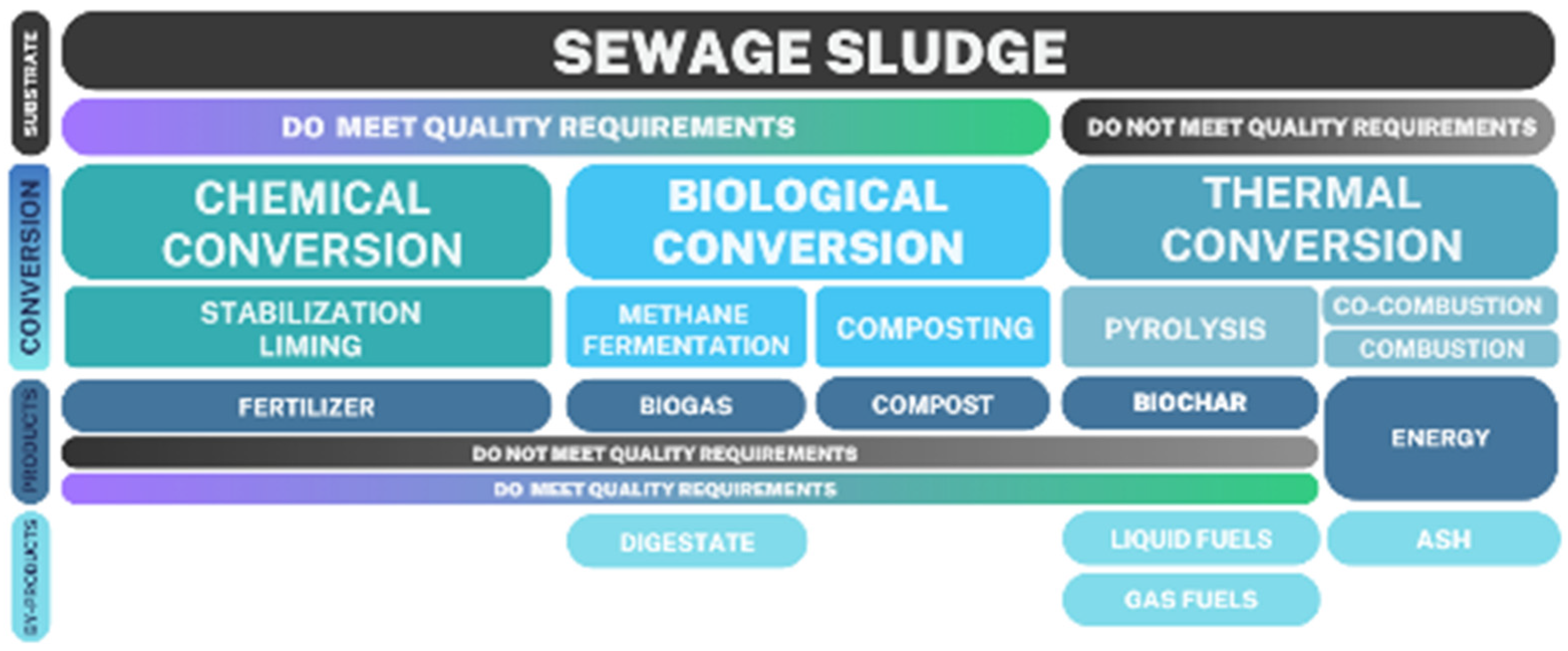
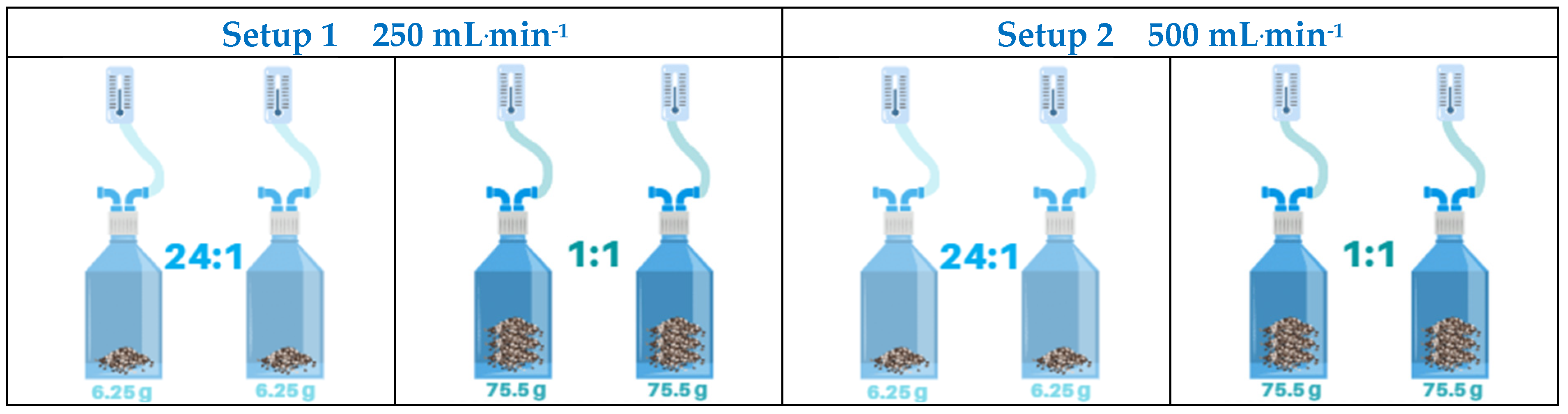
Approximately 10 million megagrams of sewage sludge is produced each year in the European Union alone. To date, options to utilize sewage sludge are limited. Local regulations and sludge characteristics strictly determine waste management options. Thermal disposal methods are recommended for highly contaminated sludge. Pyrolyzed sewage sludge generates biochar that can be used as a value-added agricultural product or as an alternative fuel. The biochar production itself carries the risk of emitting harmful compounds. Unfortunately, these important safety considerations are rarely addressed in the literature. This research investigates the mechanistic effects of the storage headspace-to-biochar volume ratio and stored biochar headspace ventilation on hazardous gas emissions. Five hazardous organic compounds were emitted by biochar. However, based on this initial proof-of-the-concept research, we could not derive conclusive trends for the effects of the headspace-to-biochar volume ratio or air exchanges in the biochar headspace. Further research, which is broader in scope (feedstock type, pyrolysis conditions), should be carried out. Nevertheless, caution should be exercised when designing biochar storage, aiming to lower the risk of occupational exposure to hazardous gas emissions. Monitoring air pollutants, tracking the highest permissible concentrations and workers’ exposure, and using personal protective equipment are recommended.
Keywords: waste management; wastewater treatment; thermal treatment; waste-to-carbon; biochar production; storage ventilation waste management; wastewater treatment; thermal treatment; waste-to-carbon; biochar production; storage ventilation