Article

Degradation of Ciprofloxacin in Water Using Escherichia coli and Enterococcus faecium

1
Sustainable Development Study Center, GC University Lahore, Lahore 54000, Pakistan
2
Department of Botany, Dr. Nazir Ahmad Institute of Biological Sciences, GC University Lahore, Lahore 54000, Pakistan
3
Centre for Urban Sustainability and Resilience, Department of Civil, Environmental and Geomatic Engineering, University College London, London WC1E 6BT, UK
4
Department of Zoology, Dr. Nazir Ahmad Institute of Biological Sciences, GC University Lahore, Lahore 54000, Pakistan
*
Authors to whom correspondence should be addressed.
Water 2024, 16(23), 3407; https://doi.org/10.3390/w16233407
Submission received: 12 October 2024 / Revised: 22 November 2024 / Accepted: 22 November 2024 / Published: 27 November 2024

Abstract

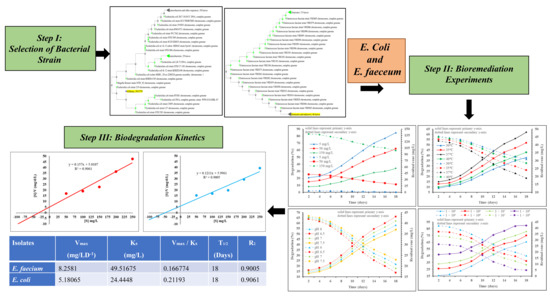
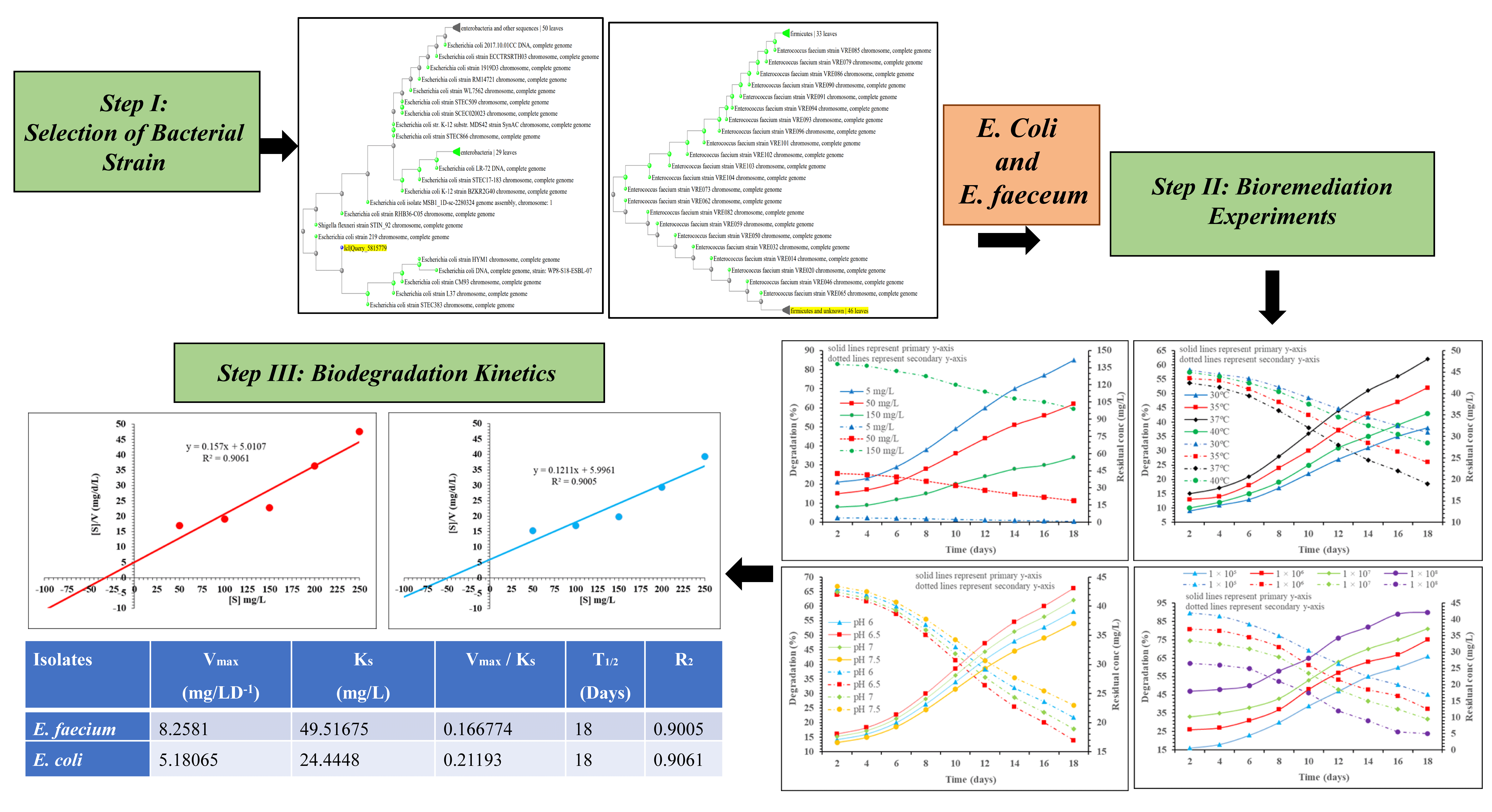
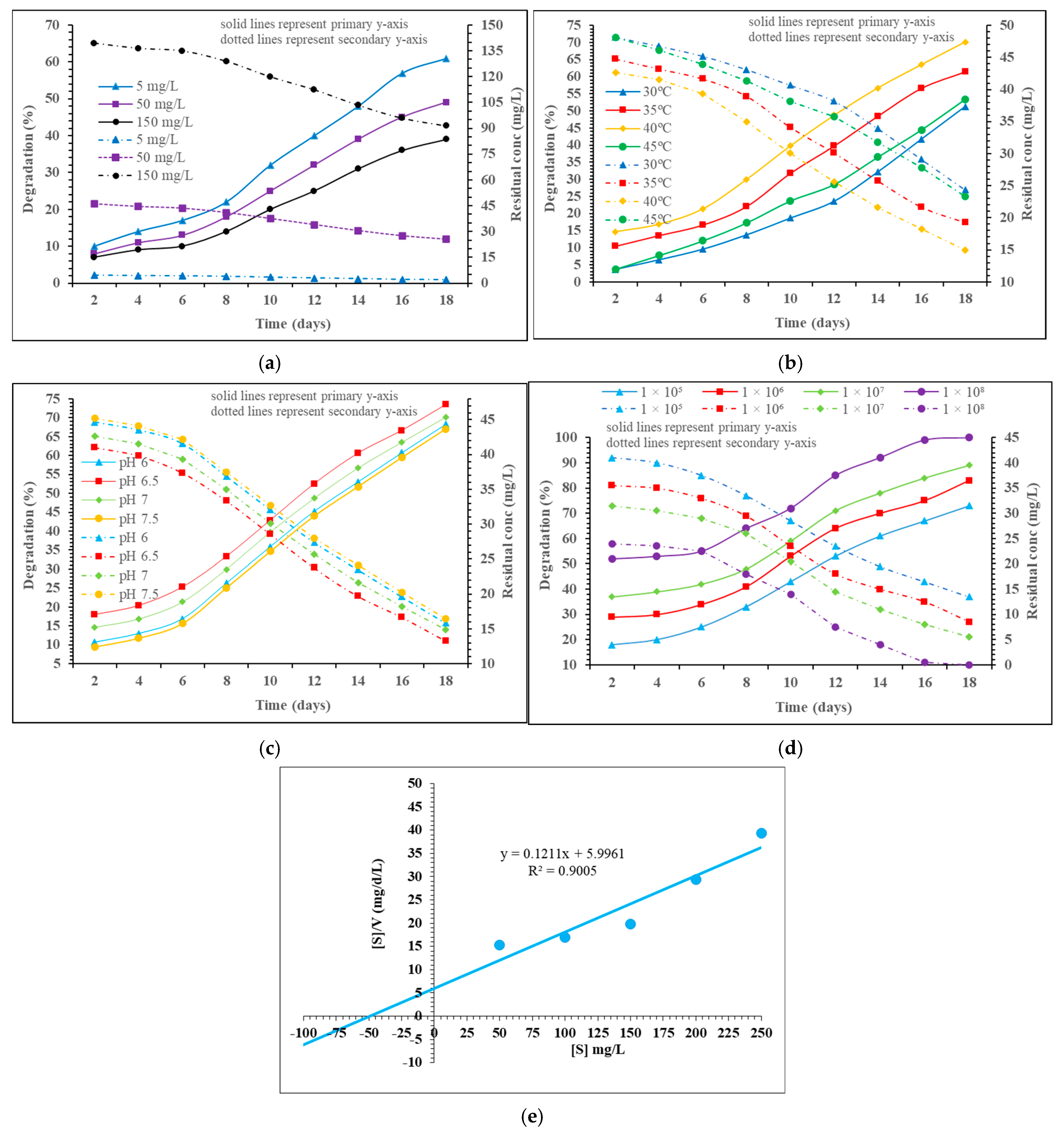
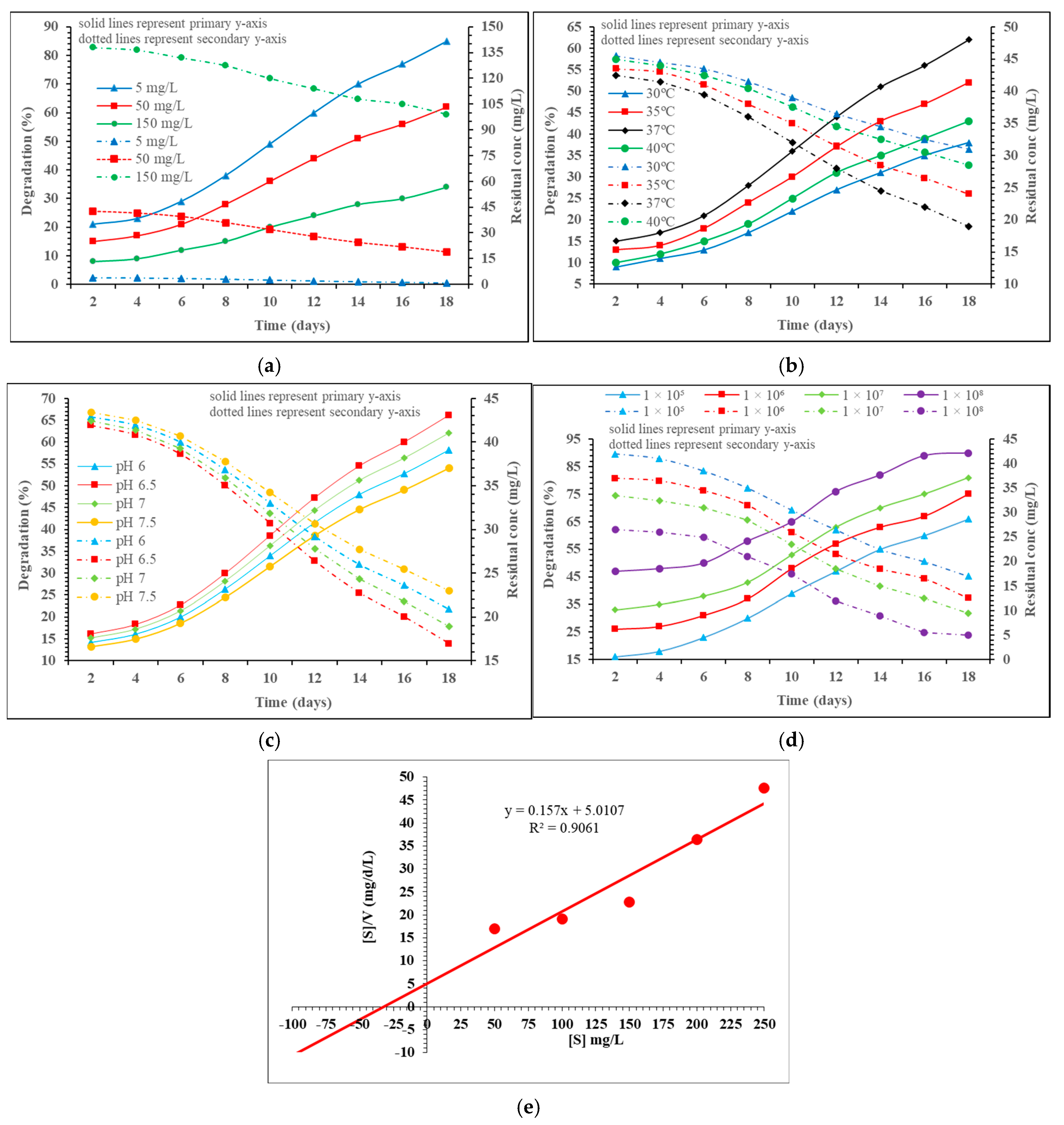
The presence of antibiotics in the wastewater is a growing concern, as they tend to bioaccumulate and are increasing the resistance of bacteria. This study investigates the microbial degradation of ciprofloxacin (CIP) in water using Escherichia coli (E. coli) and Enterococcus faecium (E. faecium). This research aims to degrade the ciprofloxacin antibiotic, which is creating multiple problems in the environment and wastewater. Bacterial strains were isolated from wastewater and sludge samples, and their identities were confirmed through 16S rRNA sequencing. The degradation potential was assessed using a shake flask method under varying conditions, including different antibiotic concentrations, temperatures, pH levels, and inoculum densities. E. coli effectively degraded CIP, achieving 90% degradation at 50 mg/L in 18 days, in optimal conditions like a temperature of 37 °C, a pH of 6.5, and an inoculum concentration of 10−8 CFU/mL. However, at higher concentrations (150 mg/L), degradation decreased. Similarly, E. faecium showed a maximum degradation rate of 100% at 50 mg/L of CIP in 18 days, with optimal degradation occurring at 40 °C, a pH of 6.5, and an inoculum density of 10−8 CFU/mL. This study underscores the effectiveness of selected microbial strains in bioremediation processes, highlighting their potential application in mitigating antibiotic pollution in aquatic environments. This is the preliminary study to explore the potential of isolated bacteria to degrade CIP, and their degradation ability can be utilized to develop a CIP-contaminated wastewater treatment plant.
Keywords: bacteria; antibiotic degradation; ciprofloxacin; water; E. coli; E. faecium bacteria; antibiotic degradation; ciprofloxacin; water; E. coli; E. faecium
Graphical Abstract