Article

Multi-Objective and Multi-Variable Optimization Models of Hybrid Renewable Energy Solutions for Water–Energy Nexus


by
João S. T. Coelho
1,
Maaike van de Loo
2,
Juan Antonio Rodríguez Díaz
2,
Oscar E. Coronado-Hernández
3,
Modesto Perez-Sanchez
4,* and
Helena M. Ramos
5,*
1
Instituto Superior Técnico, Universidade de Lisboa, Av. Rovisco Pais, 1049-001 Lisboa, Portugal
2
Department of Agronomy, University of Cordoba, Campus Rabanales, 14014 Cordoba, Spain
3
Instituto de Hidráulica y Saneamiento Ambiental, Universidad de Cartagena, Cartagena 130001, Colombia
4
Hydraulic Engineering and Environmental Department, Universitat Politècnica de València, 46022 Valencia, Spain
5
Civil Engineering, Architecture and Environment Department, CERIS, Instituto Superior Técnico, Universidade de Lisboa, Av. Rovisco Pais, 1049-001 Lisboa, Portugal
*
Authors to whom correspondence should be addressed.
Water 2024, 16(17), 2360; https://doi.org/10.3390/w16172360
Submission received: 16 July 2024 / Revised: 15 August 2024 / Accepted: 20 August 2024 / Published: 23 August 2024
(This article belongs to the Special Issue Water and Energy Synergies)

Abstract

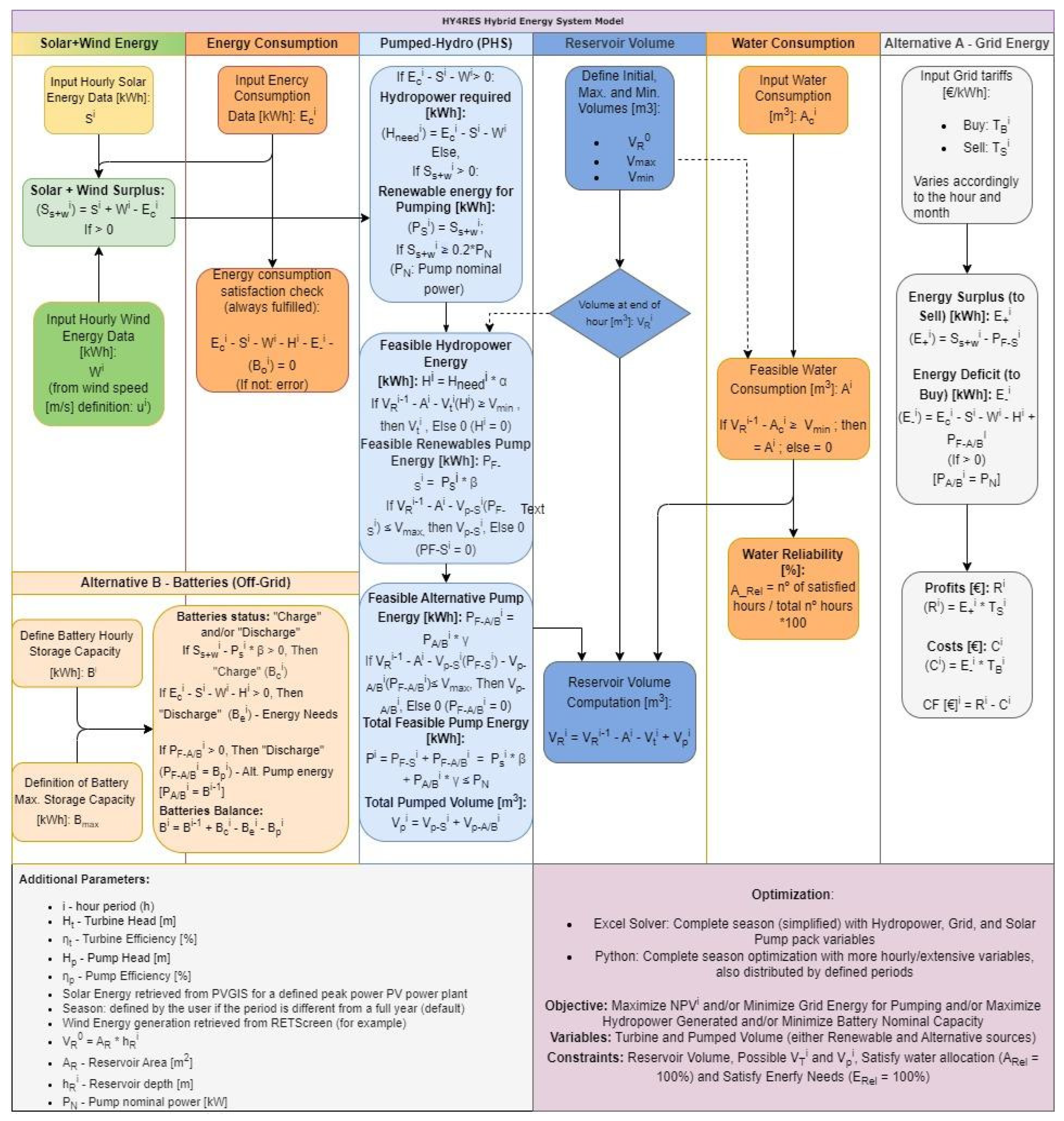
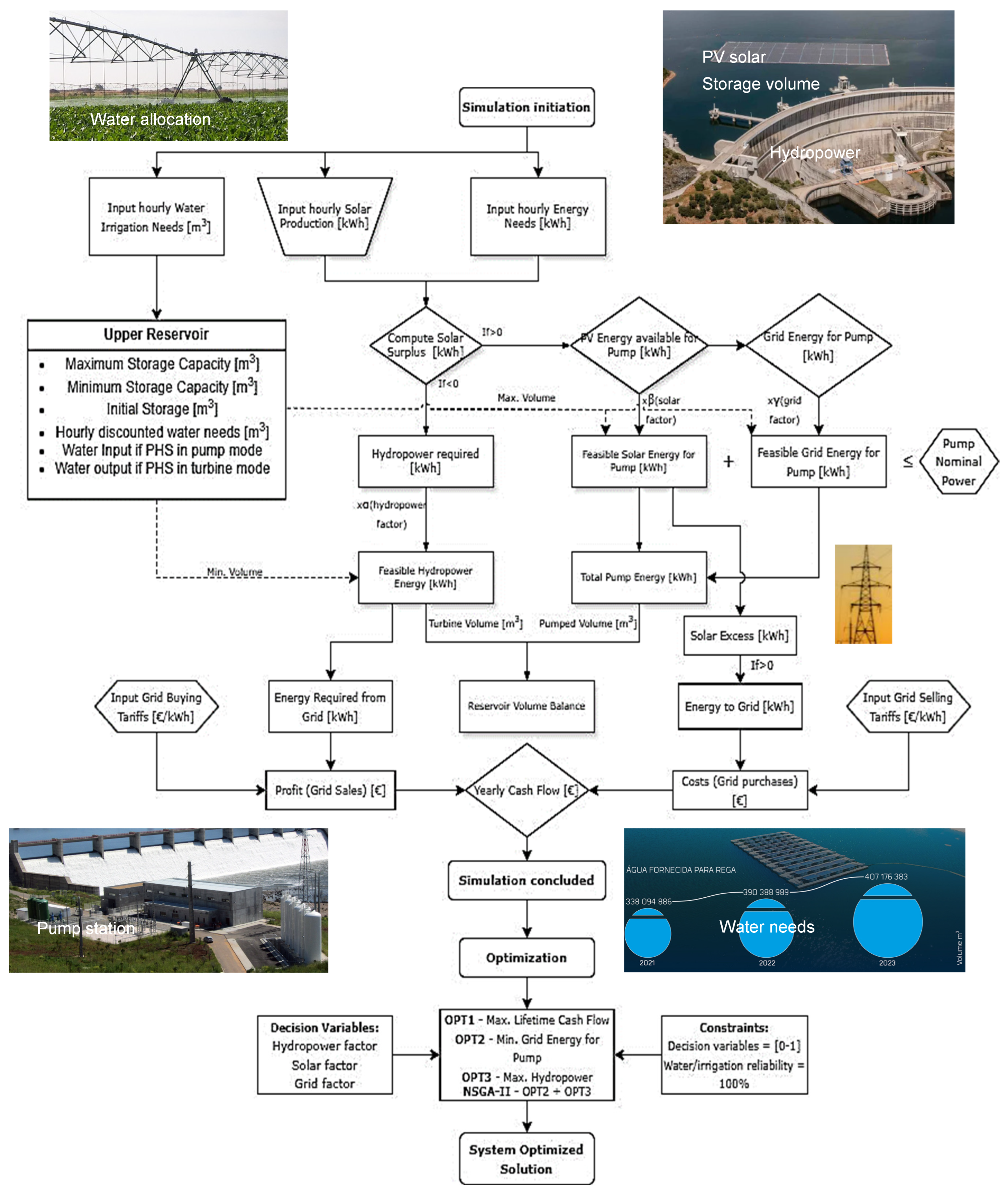
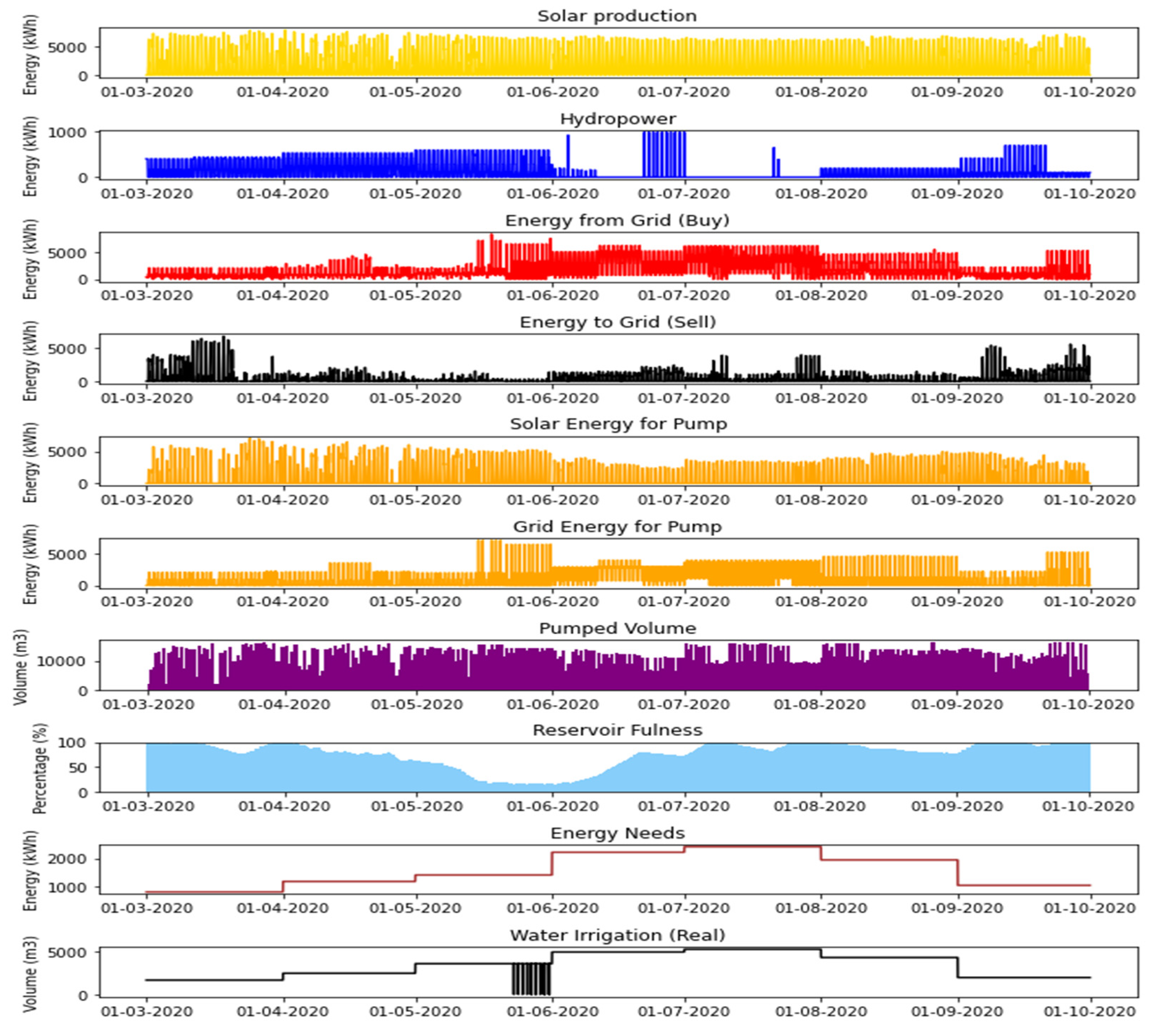
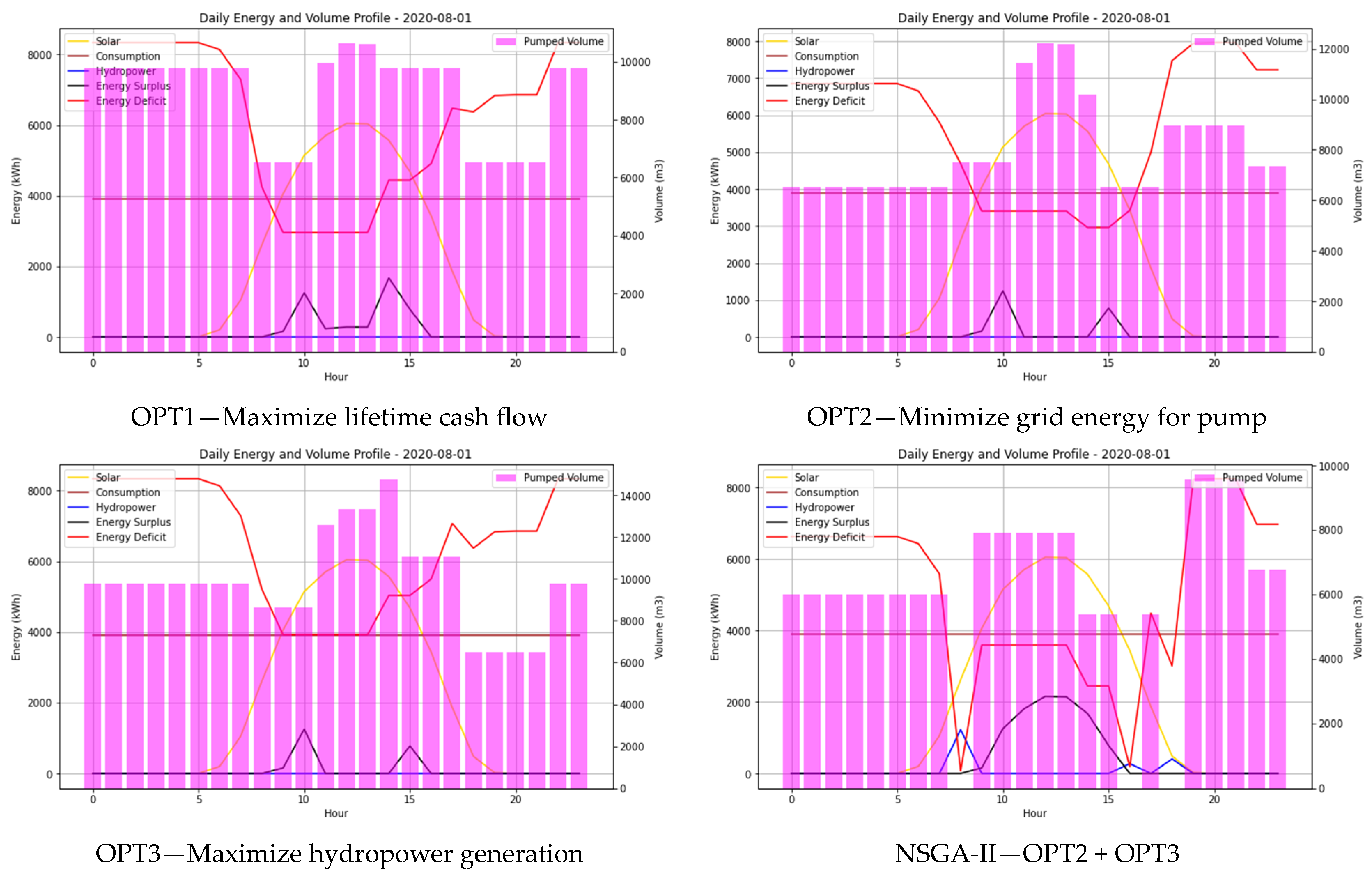
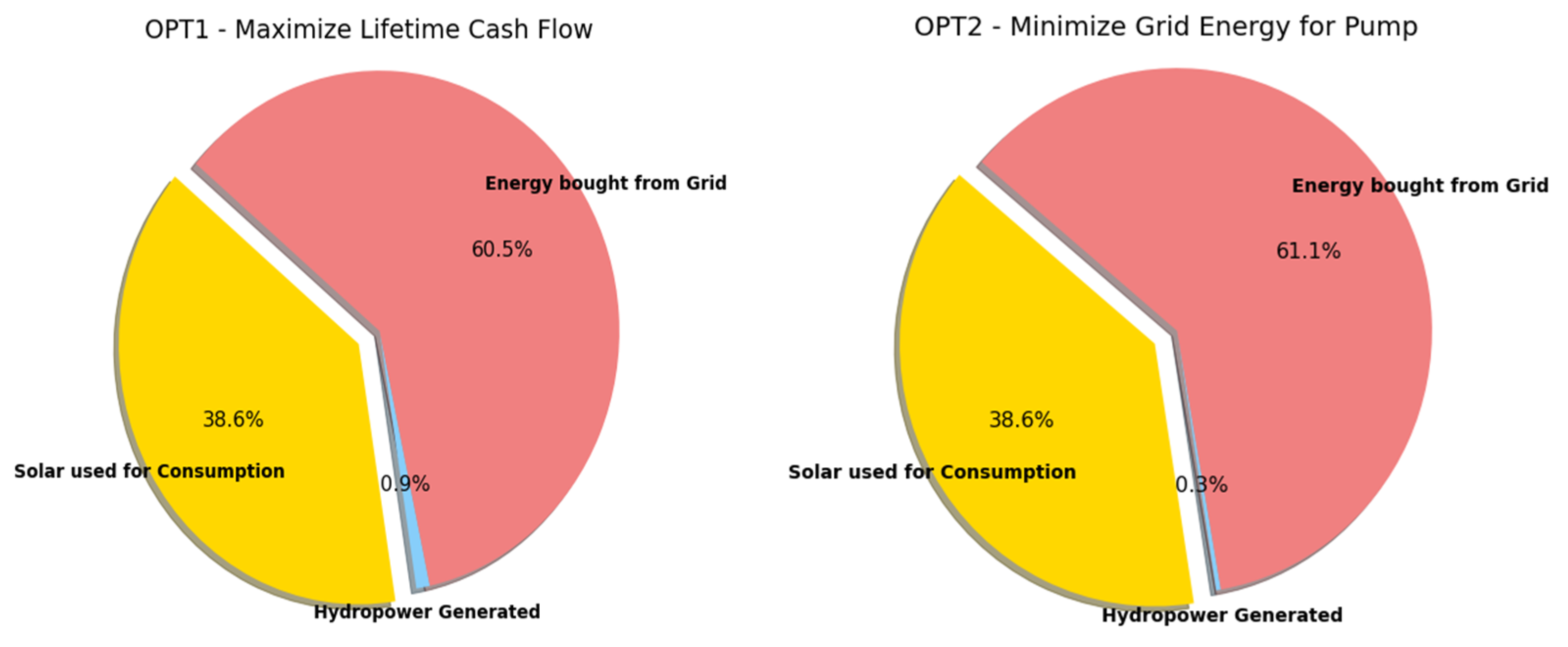
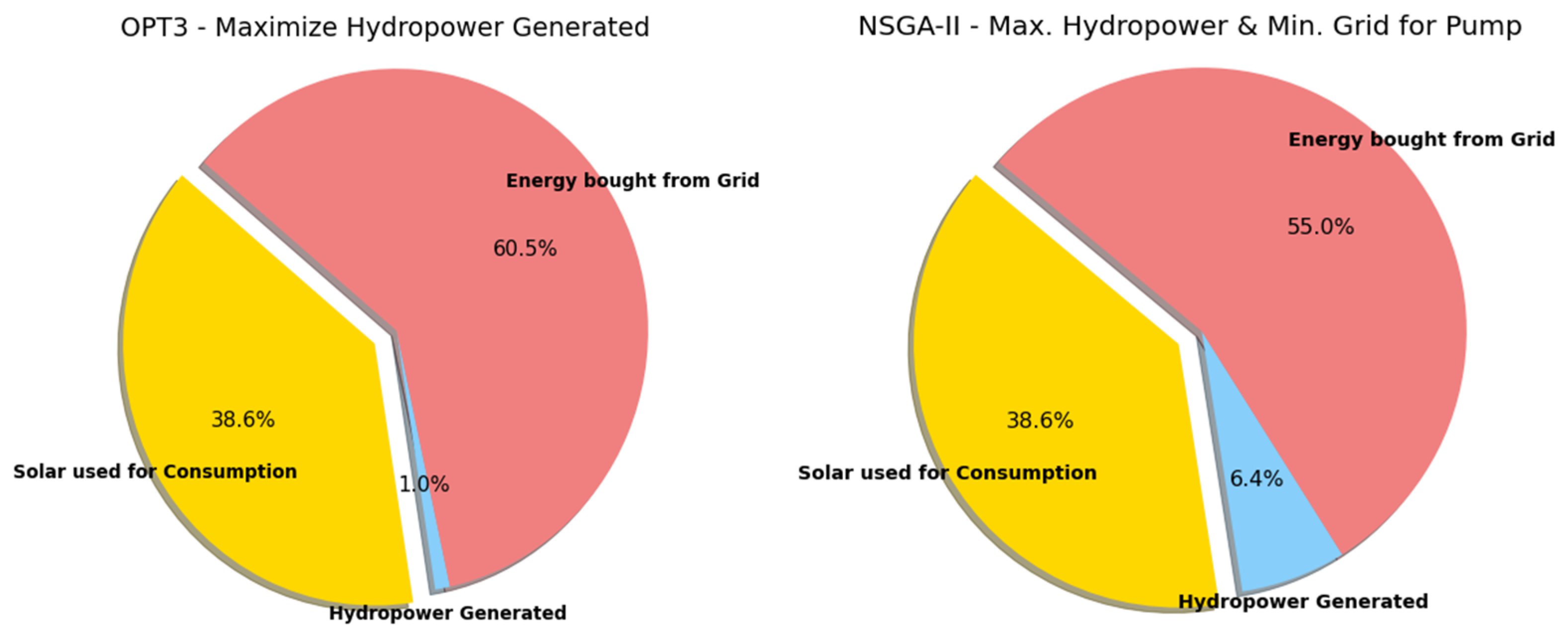
A new methodology, called HY4RES models, includes hybrid energy solutions (HESs) based on the availability of renewable sources, for 24 h of water allocation, using WaterGEMS 10.0 and PVGIS 5.2 as auxiliary calculations. The optimization design was achieved using Solver, with GRG nonlinear/evolutionary programming, and Python, with the non-dominated sorting genetic algorithm (NSGA-II). The study involves the implementation of complex multi-objective and multi-variable algorithms with different renewable sources, such as PV solar energy, pumped hydropower storage (PHS) energy, wind energy, grid connection energy, or battery energy, and also sensitivity analyses and comparisons of optimization models. Higher water allocations relied heavily on grid energy, especially at night when solar power was unavailable. For a case study of irrigation water needs of 800 and 1000 m3/ha, the grid is not needed, but for 3000 and 6000 m3/ha, grid energy rises significantly, reaching 5 and 14 GWh annually, respectively. When wind energy is also integrated, at night, it allows for reducing grid energy use by 60% for 3000 m3/ha of water allocation, yielding a positive lifetime cashflow (EUR 284,781). If the grid is replaced by batteries, it results in a lack of a robust backup and struggles to meet high water and energy needs. Economically, PV + wind + PHS + grid energy is the most attractive solution, reducing the dependence on auxiliary sources and benefiting from sales to the grid.
Keywords: multi-objective optimization; multi-variables; python model; hybrid renewable energy; HY4RES; PV solar energy; pumped hydropower storage (PHS); non-dominated sorting genetic algorithm (NSGA-II); GRG nonlinear/evolutionary optimization; water–energy nexus multi-objective optimization; multi-variables; python model; hybrid renewable energy; HY4RES; PV solar energy; pumped hydropower storage (PHS); non-dominated sorting genetic algorithm (NSGA-II); GRG nonlinear/evolutionary optimization; water–energy nexus