Subsurface Hydrodynamics of the Southeastern Taoudéni Basin (West Africa) through Hydrogeochemistry and Isotopy
 , ,
, ,  ,
, Highlights
- The Taoudéni Basin aquifers are crucial for Sahel's water security and sustainable development.
- Hydrogeochemical and isotopic analyses validate the groundwater flow and reveal multiple eventual aquifer systems.
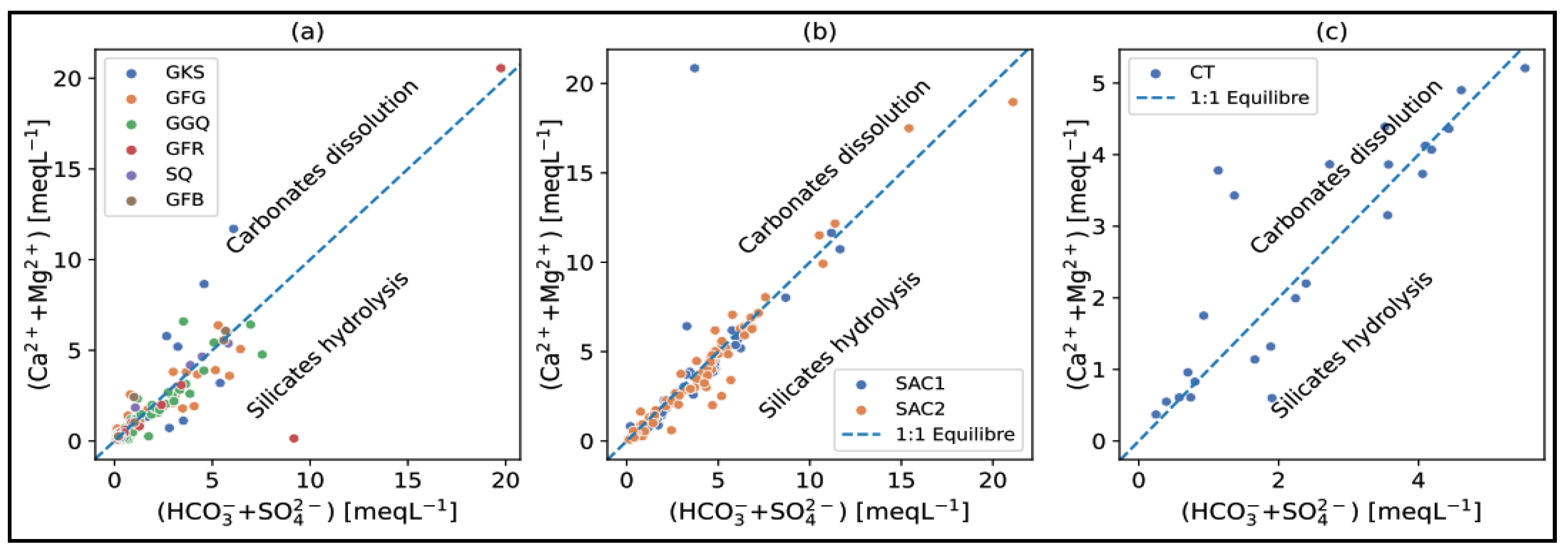
- Mineralization is primarily driven by silicate hydrolysis and carbonate dissolution.
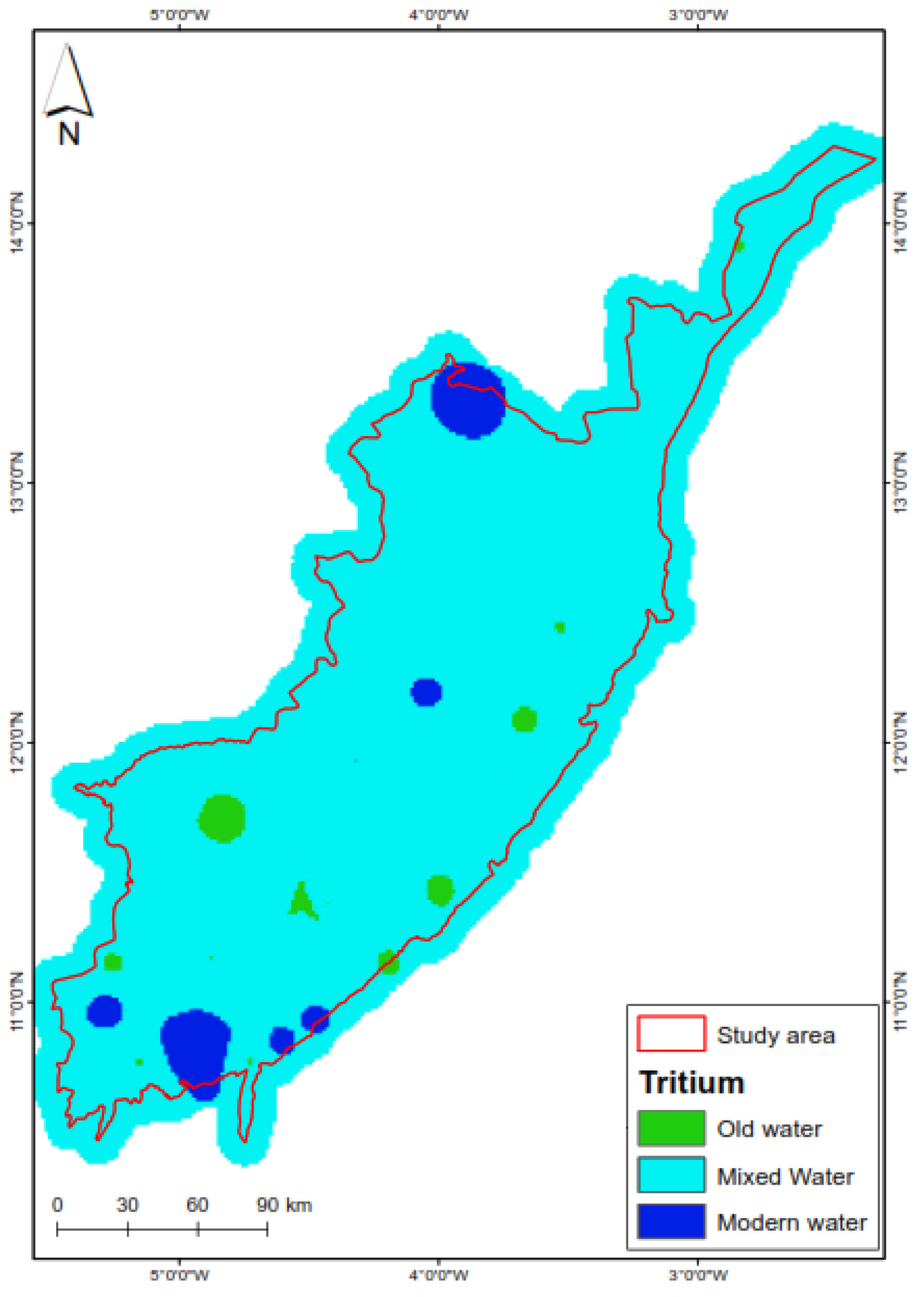
- Isotopes (δ¹⁸O, δ²H, and ³H) indicate a minimal recent recharge and the presence of ancient, mixed waters.
- The findings highlight the need for sustainable groundwater management due to slow renewal and anthropogenic impacts.
Abstract
Share and Cite
Kutangila, S.M.; Kafando, M.B.; Keita, A.; Mounirou, L.A.; Yonaba, R.; Ouedraogo, M.; Koita, M. Subsurface Hydrodynamics of the Southeastern Taoudéni Basin (West Africa) through Hydrogeochemistry and Isotopy. Water 2024, 16, 1922. https://doi.org/10.3390/w16131922
Kutangila SM, Kafando MB, Keita A, Mounirou LA, Yonaba R, Ouedraogo M, Koita M. Subsurface Hydrodynamics of the Southeastern Taoudéni Basin (West Africa) through Hydrogeochemistry and Isotopy. Water. 2024; 16(13):1922. https://doi.org/10.3390/w16131922
Chicago/Turabian StyleKutangila, Succès Malundama, Moussa Bruno Kafando, Amadou Keita, Lawani Adjadi Mounirou, Roland Yonaba, Mahamadi Ouedraogo, and Mahamadou Koita. 2024. "Subsurface Hydrodynamics of the Southeastern Taoudéni Basin (West Africa) through Hydrogeochemistry and Isotopy" Water 16, no. 13: 1922. https://doi.org/10.3390/w16131922
APA StyleKutangila, S. M., Kafando, M. B., Keita, A., Mounirou, L. A., Yonaba, R., Ouedraogo, M., & Koita, M. (2024). Subsurface Hydrodynamics of the Southeastern Taoudéni Basin (West Africa) through Hydrogeochemistry and Isotopy. Water, 16(13), 1922. https://doi.org/10.3390/w16131922