Article

A Data-Driven Framework for Spatiotemporal Analysis and Prediction of River Water Quality: A Case Study in Pearl River, China

1
School of Environment and Energy, South China University of Technology, Guangzhou 510006, China
2
School of Environmental Science and Engineering, Guangdong University of Petrochemical Technology, Maoming 525000, China
3
Guangdong Provincial Key Laboratory of Atmospheric Environment and Pollution Control, South China University of Technology, Guangzhou Higher Education Mega Centre, Guangzhou 510006, China
4
College of Resources and Environmental Engineering, Guizhou University, Guiyang 550025, China
*
Authors to whom correspondence should be addressed.
Water 2023, 15(2), 257; https://doi.org/10.3390/w15020257
Submission received: 17 December 2022 / Revised: 3 January 2023 / Accepted: 4 January 2023 / Published: 7 January 2023
(This article belongs to the Section Urban Water Management)

Abstract

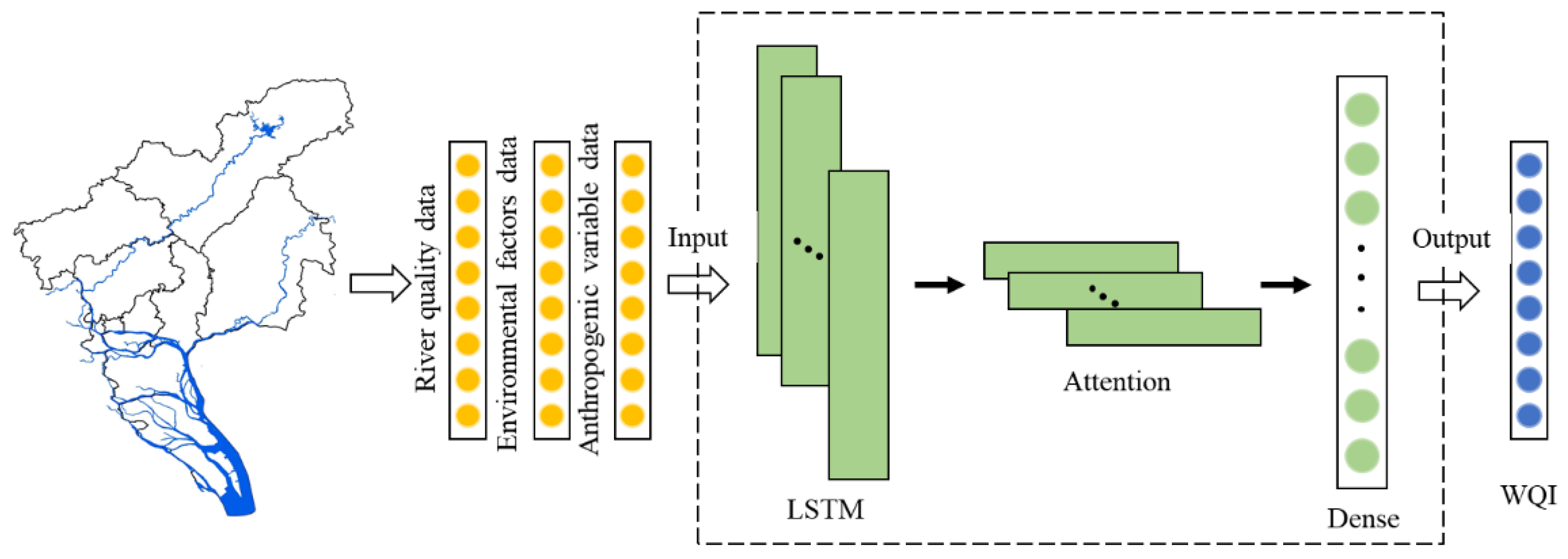
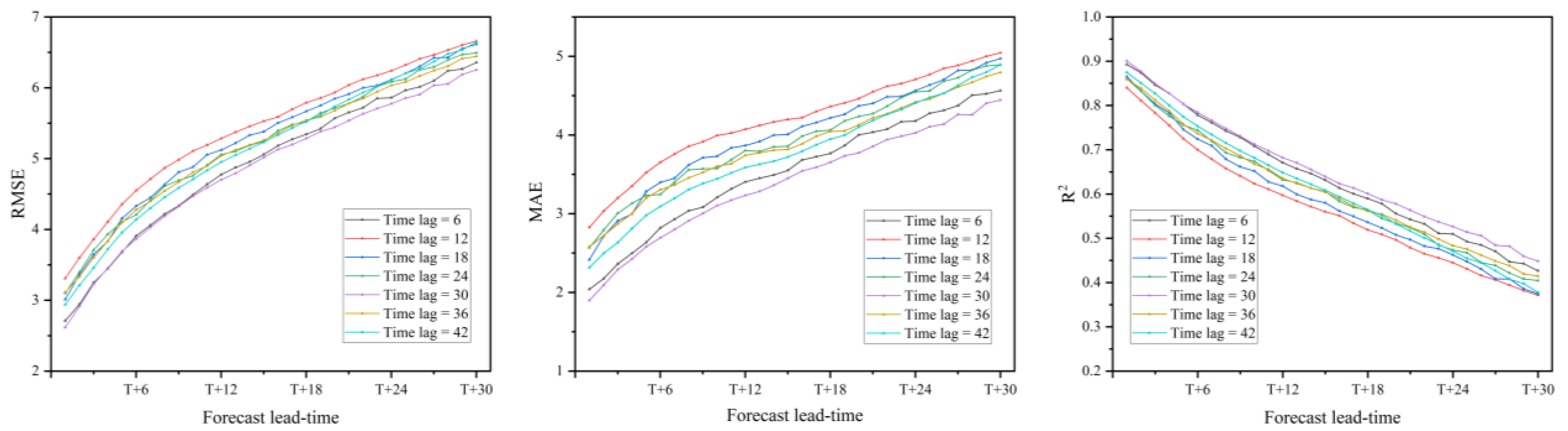
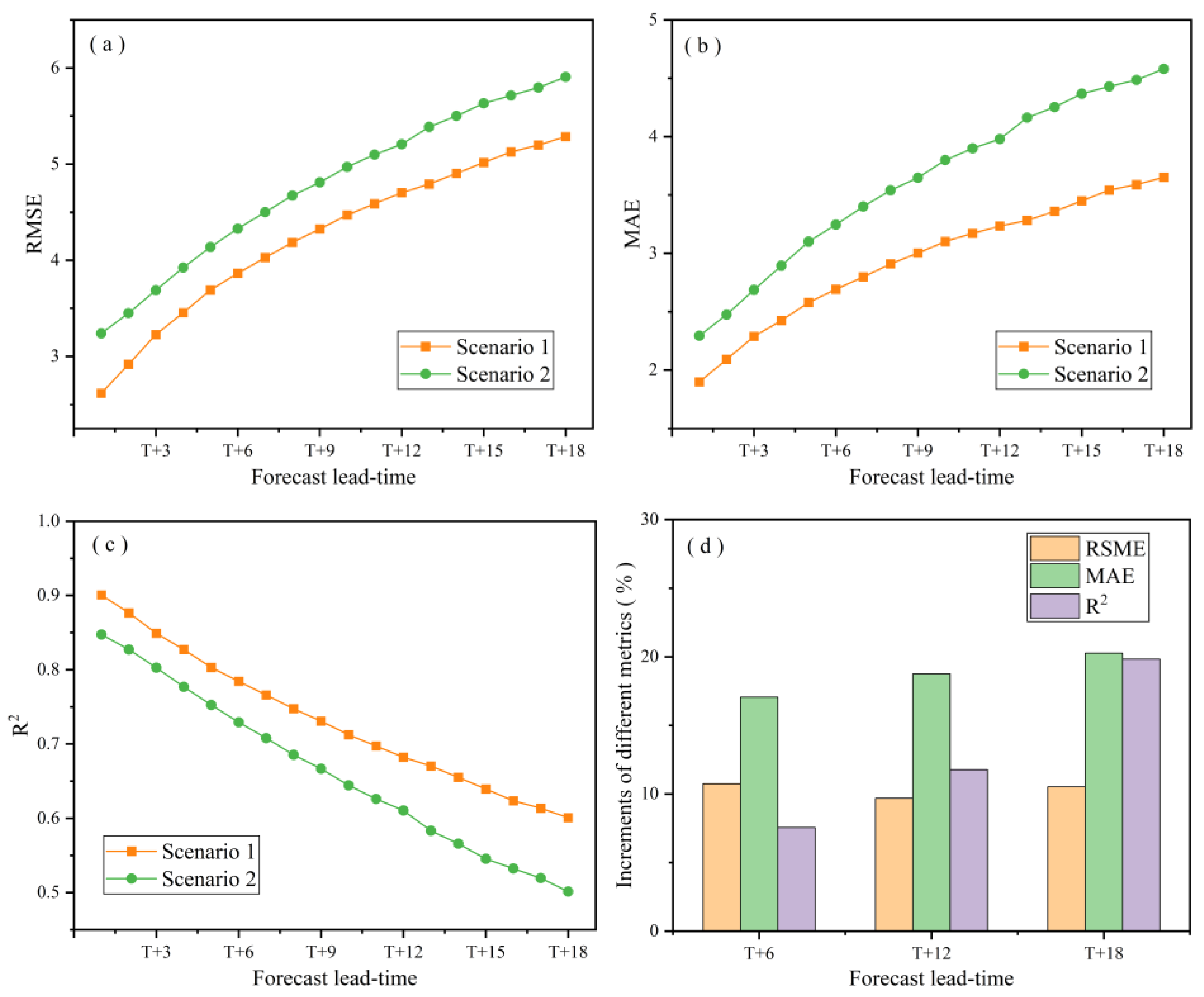
Characterization of the spatiotemporal water quality variation is of utmost importance for water resource management. Changes in water quality have been shown to be significantly affected by uncertain factors such as environmental conditions and anthropogenic activities. However, few studies consider the impact of these variables on water quality prediction while developing statistical methods or machine learning algorithms. To solve the problem, a data-driven framework for the analysis and prediction of water quality in the Guangzhou reach of the Pearl River, China, was constructed in this study. The results provided evidence of a discrepancy in the spatiotemporal dynamics of water quality, with the average water quality index (WQI) values ranging from 52.47 to 83.06, implying “moderate” to “excellent” water quality at different stations. Environmental conditions and anthropogenic activities exerted great influence on the alteration of water quality, with correlation coefficients of 0.6473–0.7903. The relevant environmental factors and anthropogenic drivers combined with water quality variables were taken into account to establish the attention-based long short-term memory (LSTM-attention) model. The proposed LSTM-attention model achieved reliable real-time water quality prediction with up to a 3-day lead-time and a determination coefficient (R2) of 0.6. The proposed hybrid framework sheds light on the development of a decision system for comprehensive water resource management and early control of water pollution.
Keywords: machine learning; nonparametric statistics; spatiotemporal variation; water quality index (WQI); water quality prediction machine learning; nonparametric statistics; spatiotemporal variation; water quality index (WQI); water quality prediction