Article

Channel Gradient as a Factor in the Distribution of Beaver Dams and Ponds on Small Rivers: A Case Study in the Northern Extremity of the Volga Upland, the East European Plain

by
Aidar G. Sharifullin
1,
Artyom V. Gusarov
2,*,
Olga A. Lavrova
1 and
Achim A. Beylich
3
1
Institute of Environmental Sciences, Kazan Federal University, 420008 Kazan, Russia
2
Institute of Geology and Petroleum Technologies, Kazan Federal University, 420008 Kazan, Russia
3
Geomorphological Field Laboratory (GFL), 7584 Selbustrand, Norway
*
Author to whom correspondence should be addressed.
Water 2023, 15(13), 2491; https://doi.org/10.3390/w15132491
Submission received: 15 June 2023 / Revised: 3 July 2023 / Accepted: 4 July 2023 / Published: 7 July 2023
(This article belongs to the Special Issue Fluvial Systems and River Geomorphology)

Abstract

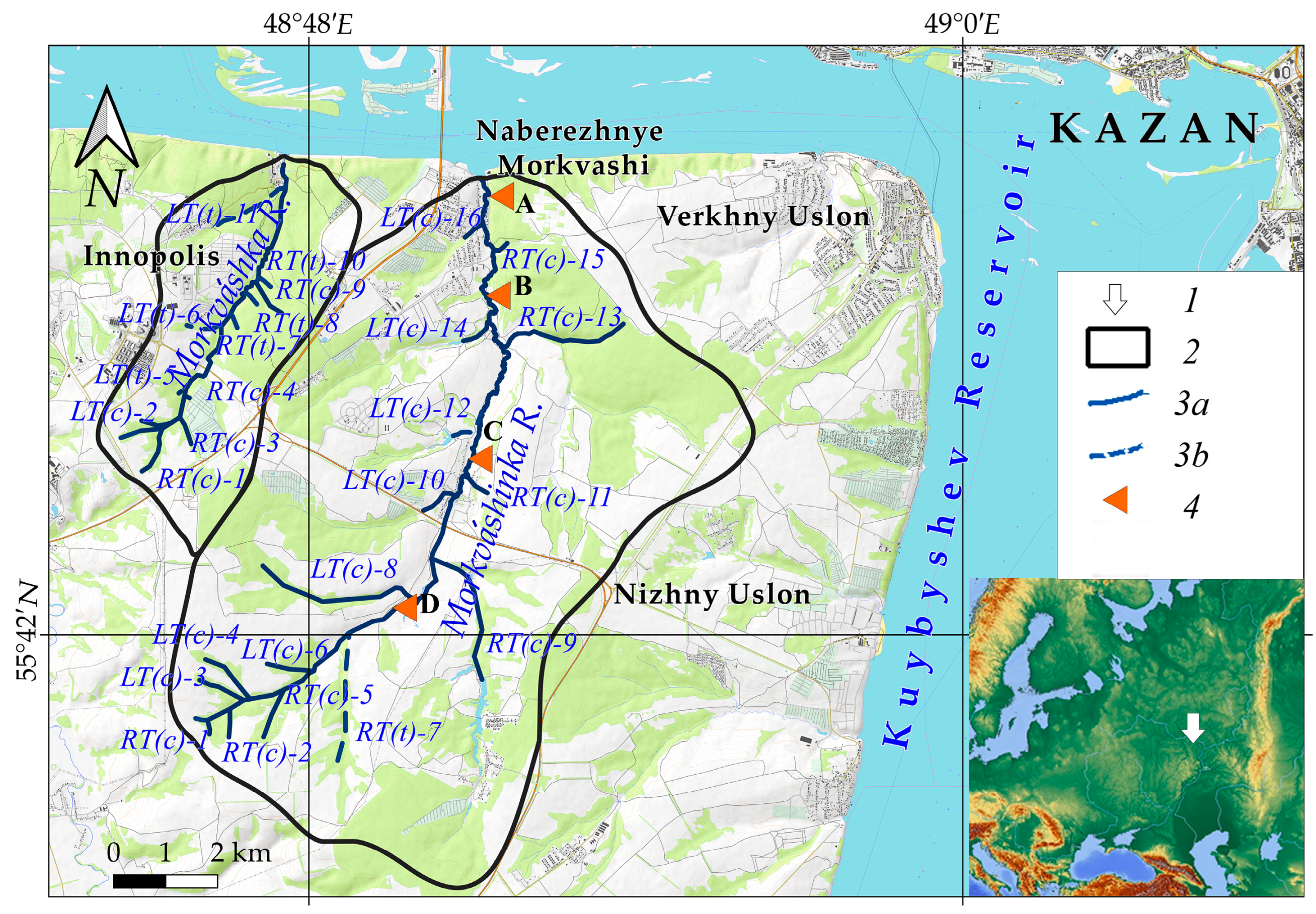
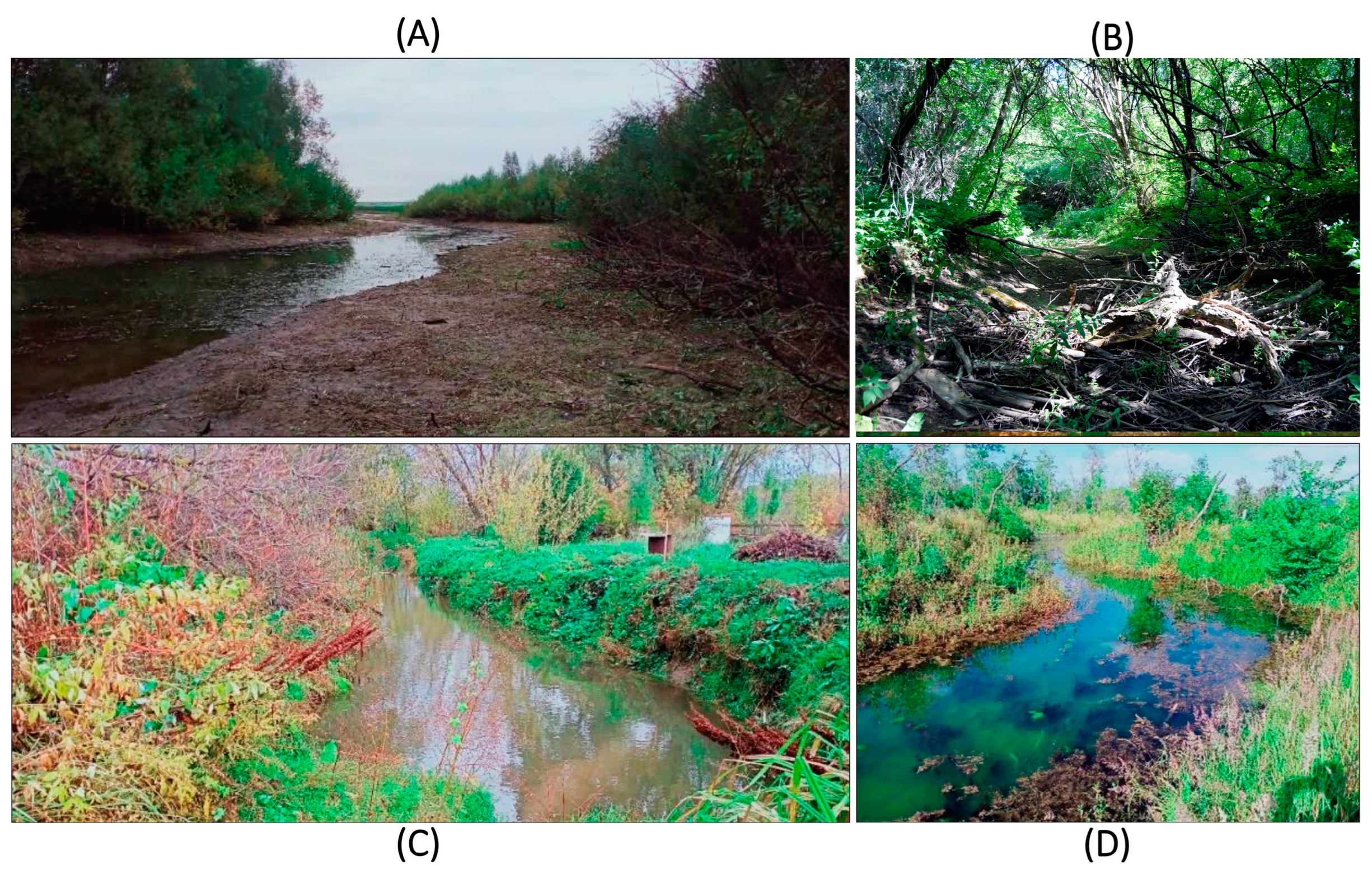
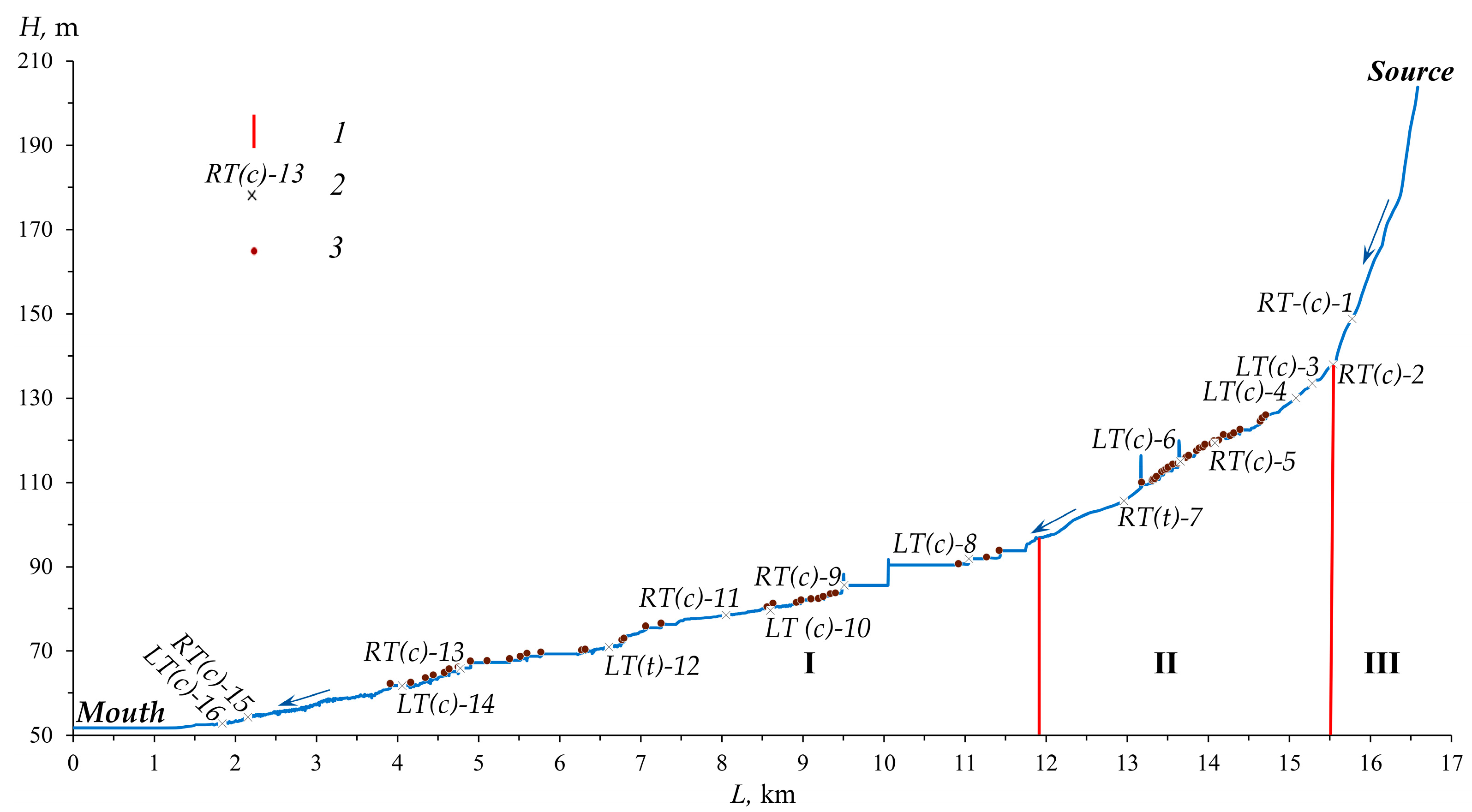
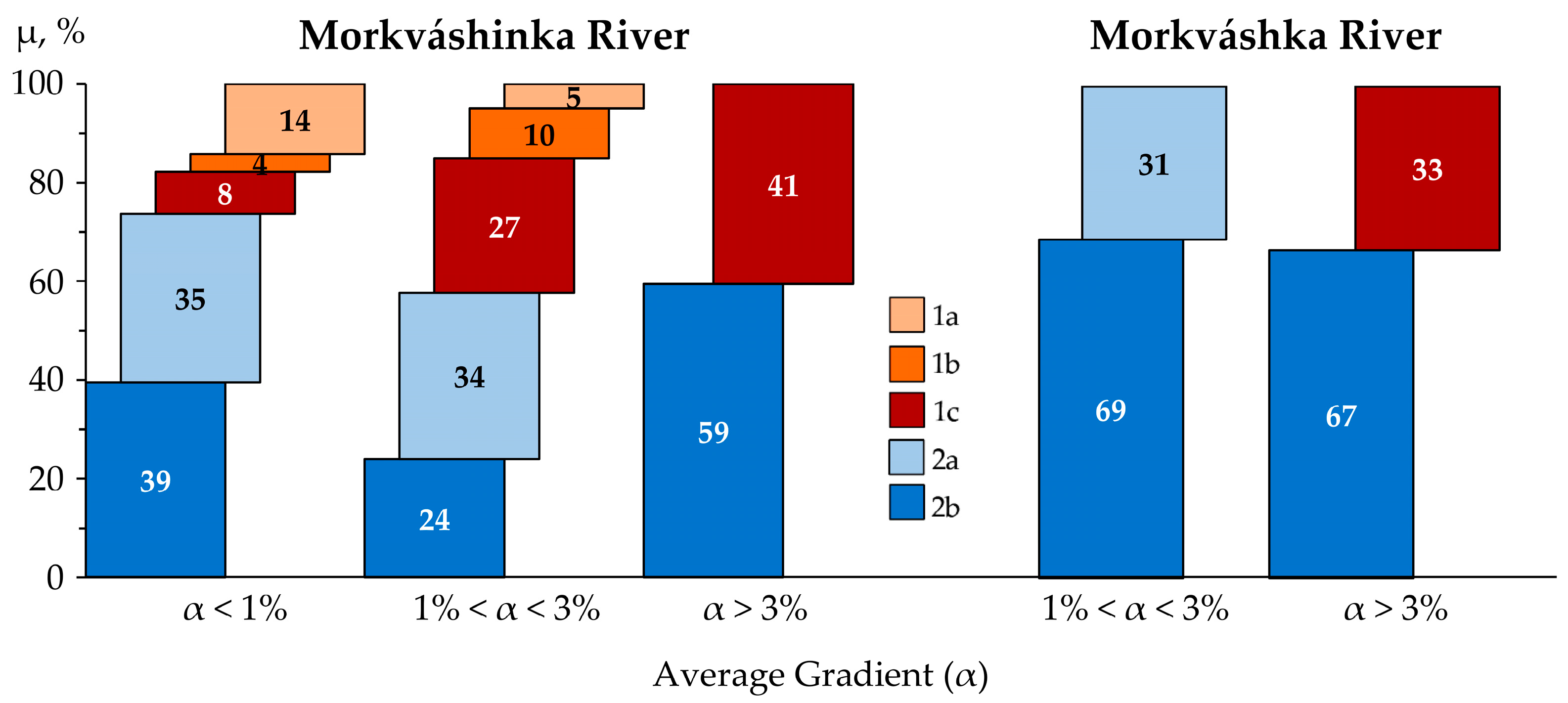
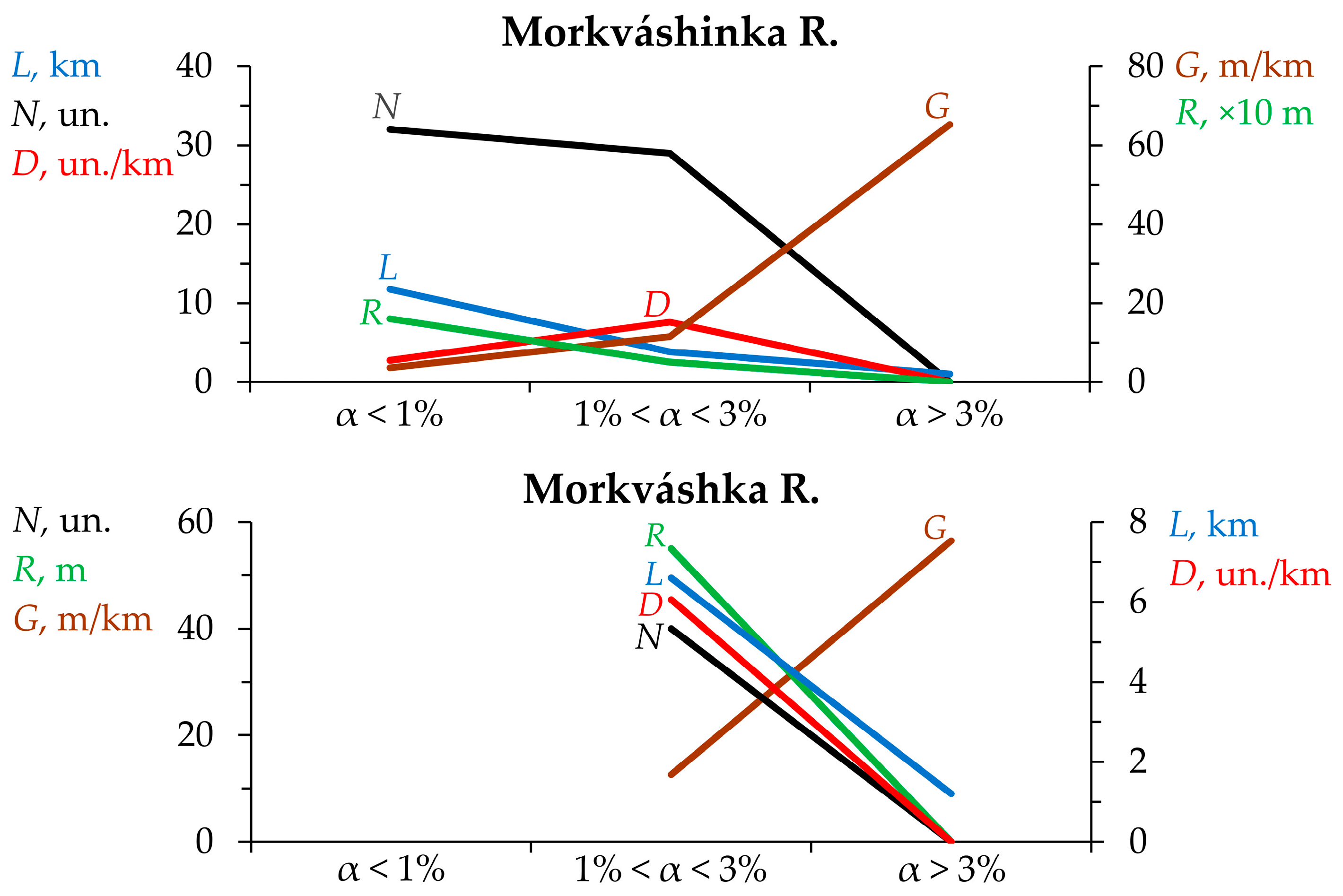
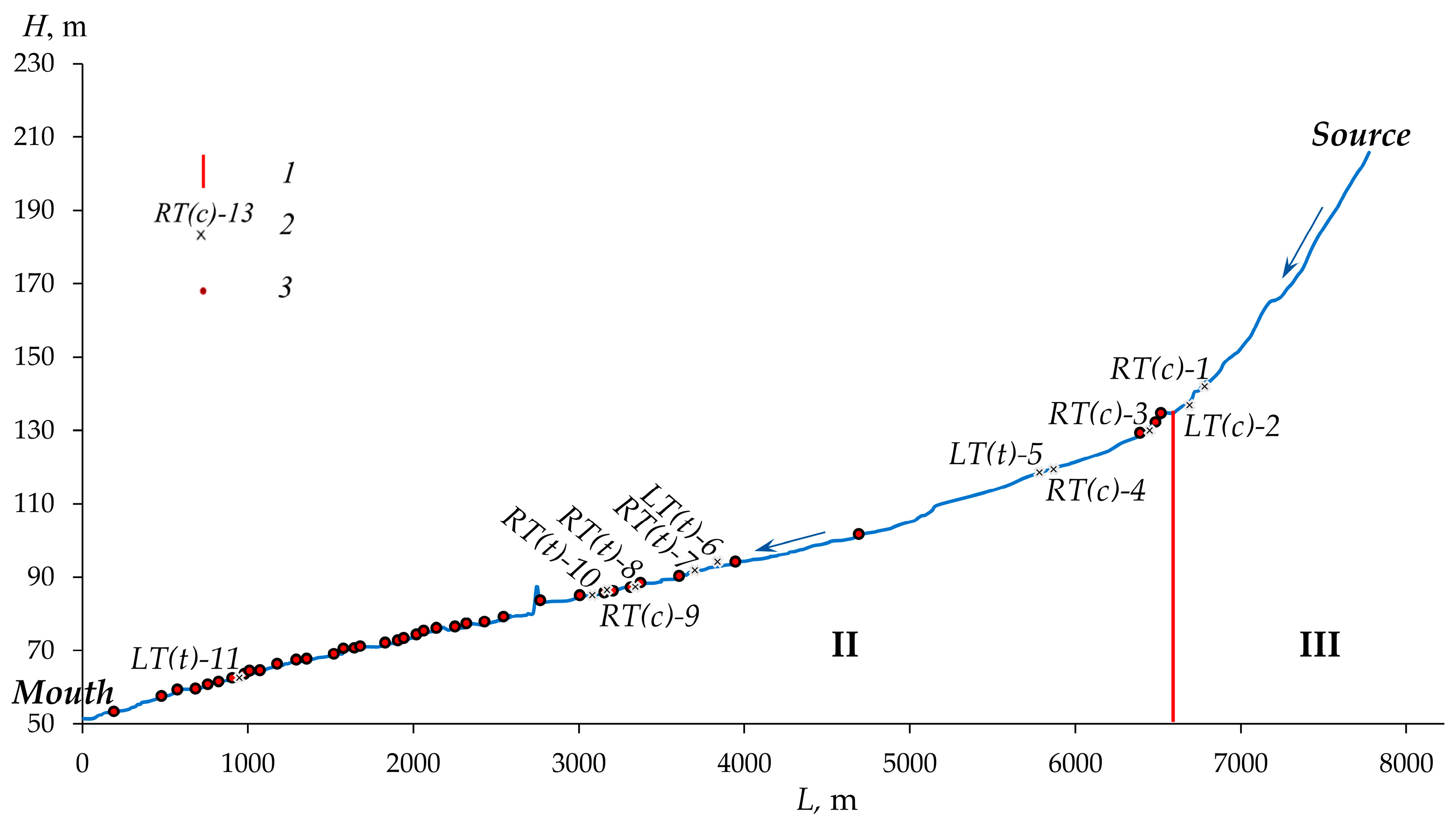
A very noticeable increase in the beaver population (mainly the Eurasian beaver (Castor fiber L.)) in the East European Plain since the end of the 20th century through reintroduction contributed to the emergence of a large number of beaver dams and ponds, which resulted in the transformation of the channels and the hydrological regime of small rivers. In this paper, for the first time in the Middle Volga region, regularities in the distribution of beaver dams and ponds on small rivers were revealed based on a topographic survey of the river channel, regulated by beaver activity in recent decades. The materials of the paper were obtained during field (geodetic) work in August and September of 2022 in the valleys of two small rivers typical for the north of the Volga Upland, Morkváshinka River (16.6 km) and Morkváshka River (7.8 km), with subsequent statistical processing. According to the results obtained, all the dams we encountered were located in the sections of their channels with relatively small (up to 1%) and medium (1–3%) average gradients. In the upper reaches of the rivers, the expansion of beaver activity is limited to the large gradients of their channels. Along the entire length, there is an alternation of sectors with a “natural” (not regulated by beavers) channel and a cascade of beaver ponds. Drained (at the time of the survey) sectors without dams, as well as those with preserved and destroyed dams, were also identified on the Morkváshinka River. On the whole, 26–48% of the length of the studied rivers has been transformed by beaver activity. The average number of dams per kilometer of the watercourse is 3.7–5.1. The most favorable channel gradients for beaver activity are 3.6–16.6 m/km, or 0.36–1.66%. The average gradient of the channel, above which no beaver dams and related ponds were found in these rivers, is 30 m/km, or 3%. An increase in the channel gradient upstream of the rivers is reflected in the size of beaver dams and ponds. The beaver dams and ponds are slightly larger in the sections of the rivers with a relatively small average gradient than in the sections with a medium average gradient of the channel.
Keywords: Castor fiber L.; river channel; longitudinal profile; GNSS; Morkváshinka River; Morkváshka River; Middle Volga region; Republic of Tatarstan Castor fiber L.; river channel; longitudinal profile; GNSS; Morkváshinka River; Morkváshka River; Middle Volga region; Republic of Tatarstan