Article

Multi-Objective-Based Tuning of Economic Model Predictive Control of Drinking Water Transport Networks


1
Automatic Control Department, Universitat Politècnica de Catalunya, 08028 Barcelona, Spain
2
Honeywell Chile S.A., Las Condes, Santiago 7570840, Chile
3
BioTeC+ & OPTEC, Department of Chemical Engineering, K.U. Leuven, 3001 Leuven-Heverlee, Belgium
*
Author to whom correspondence should be addressed.
Water 2022, 14(8), 1222; https://doi.org/10.3390/w14081222
Submission received: 28 February 2022 / Revised: 6 April 2022 / Accepted: 7 April 2022 / Published: 11 April 2022

Abstract

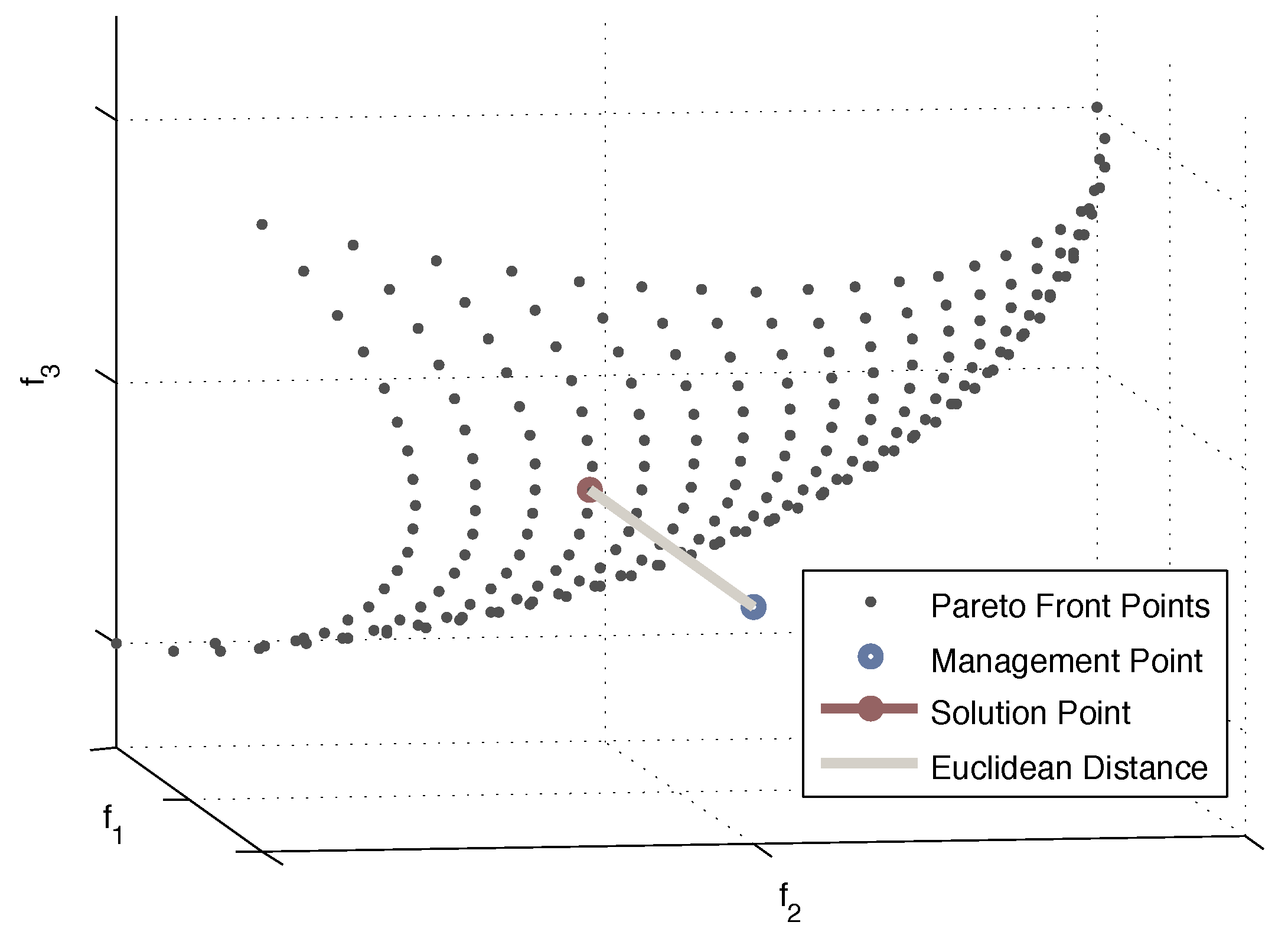
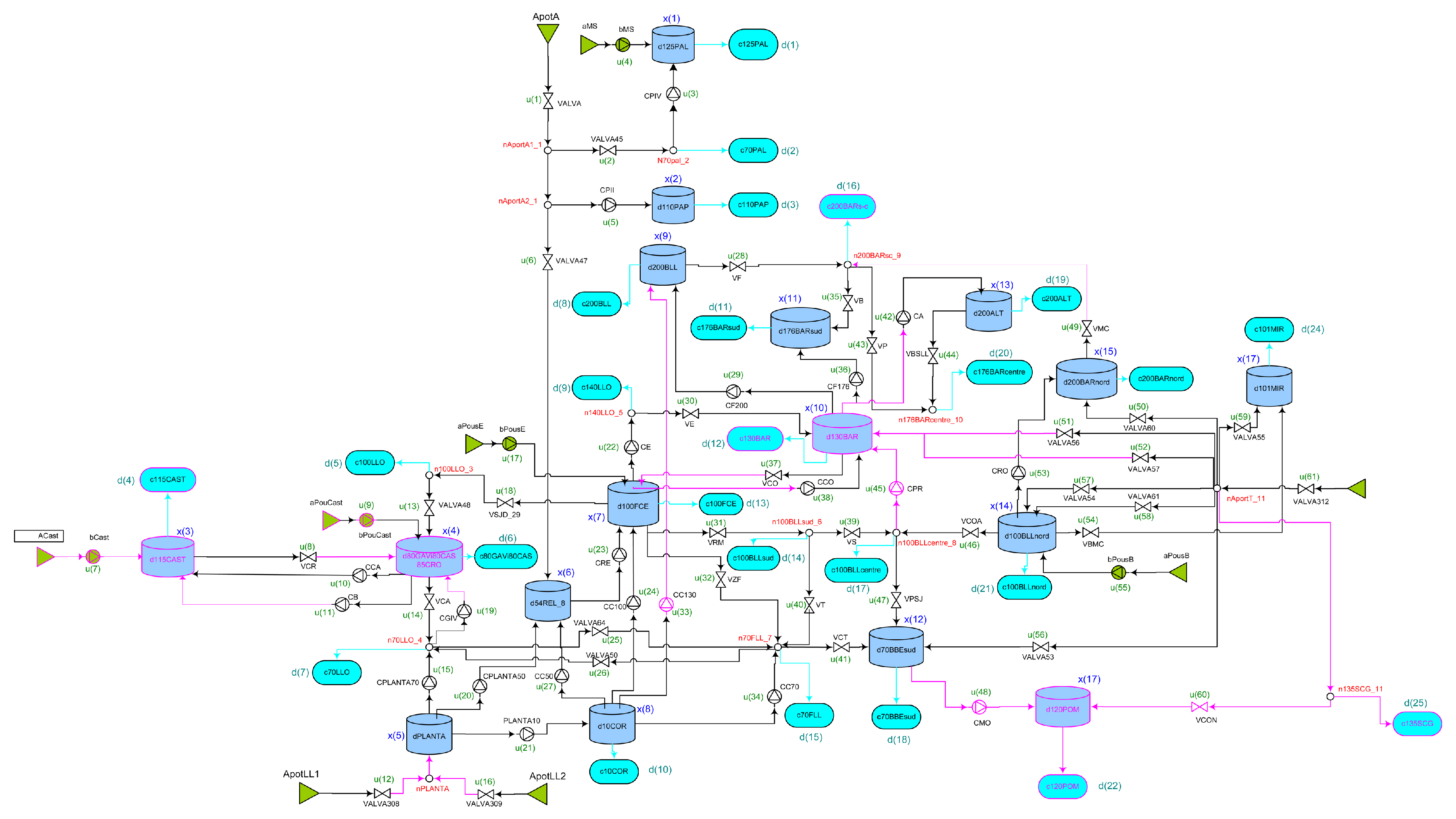
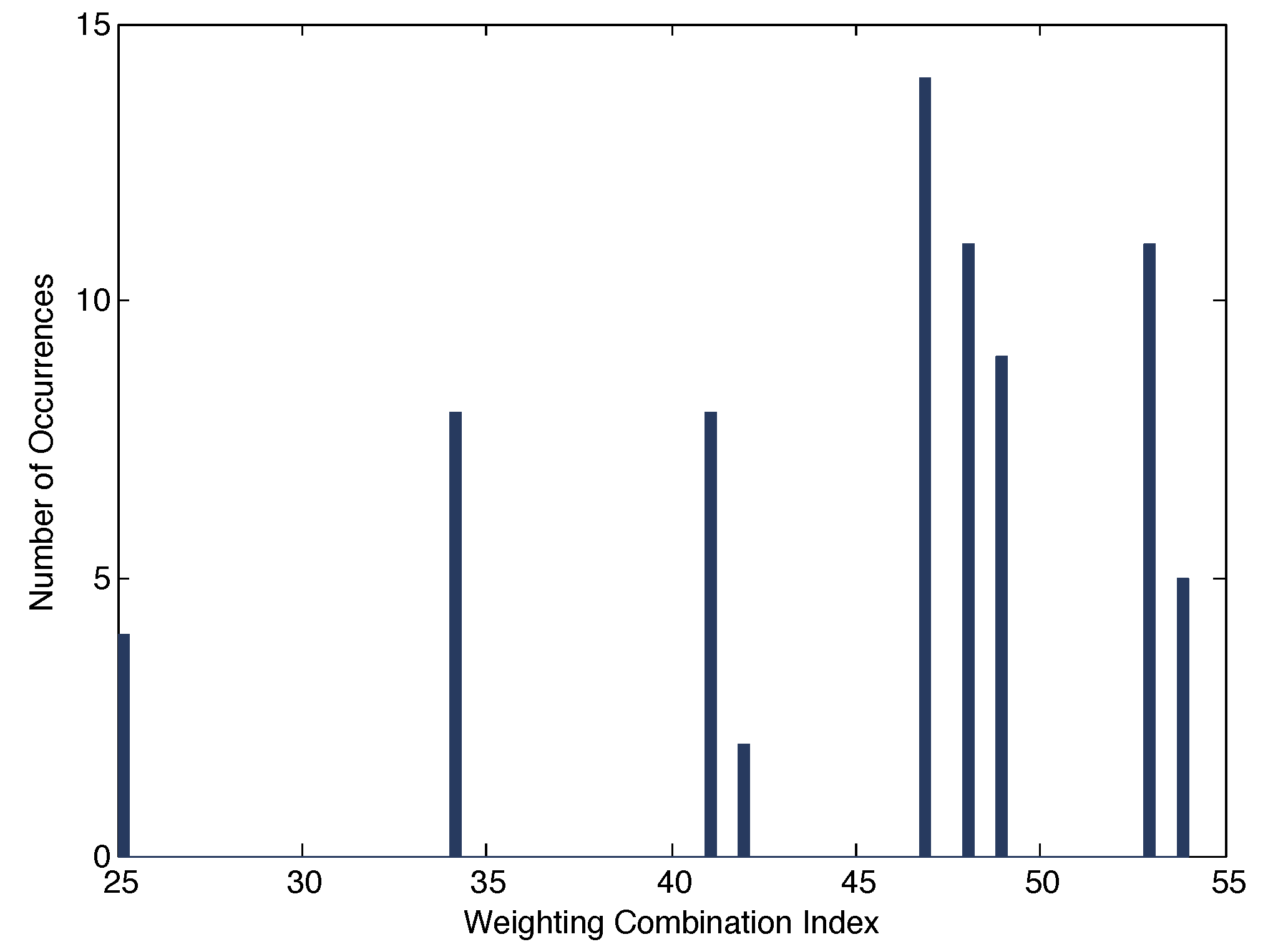
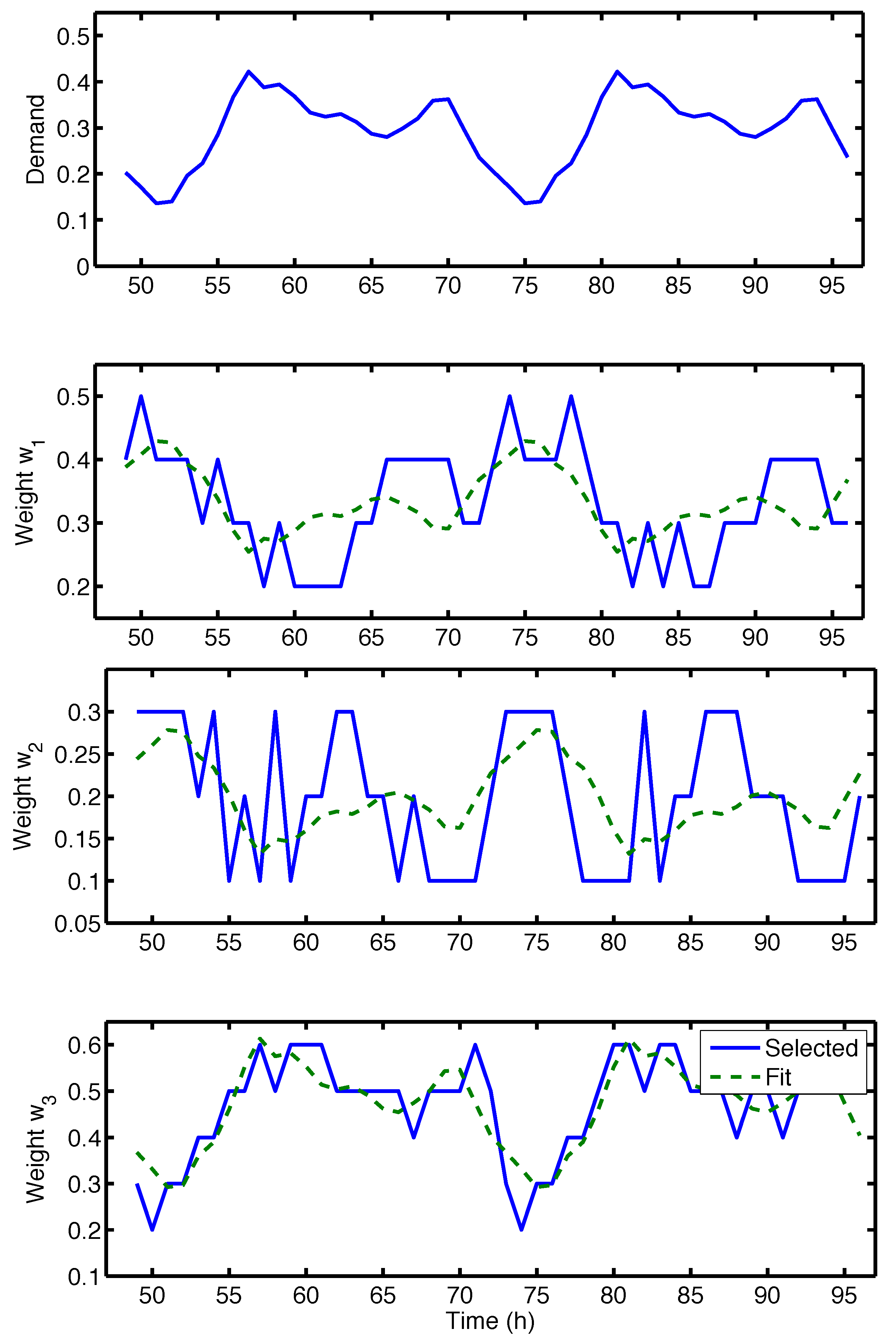
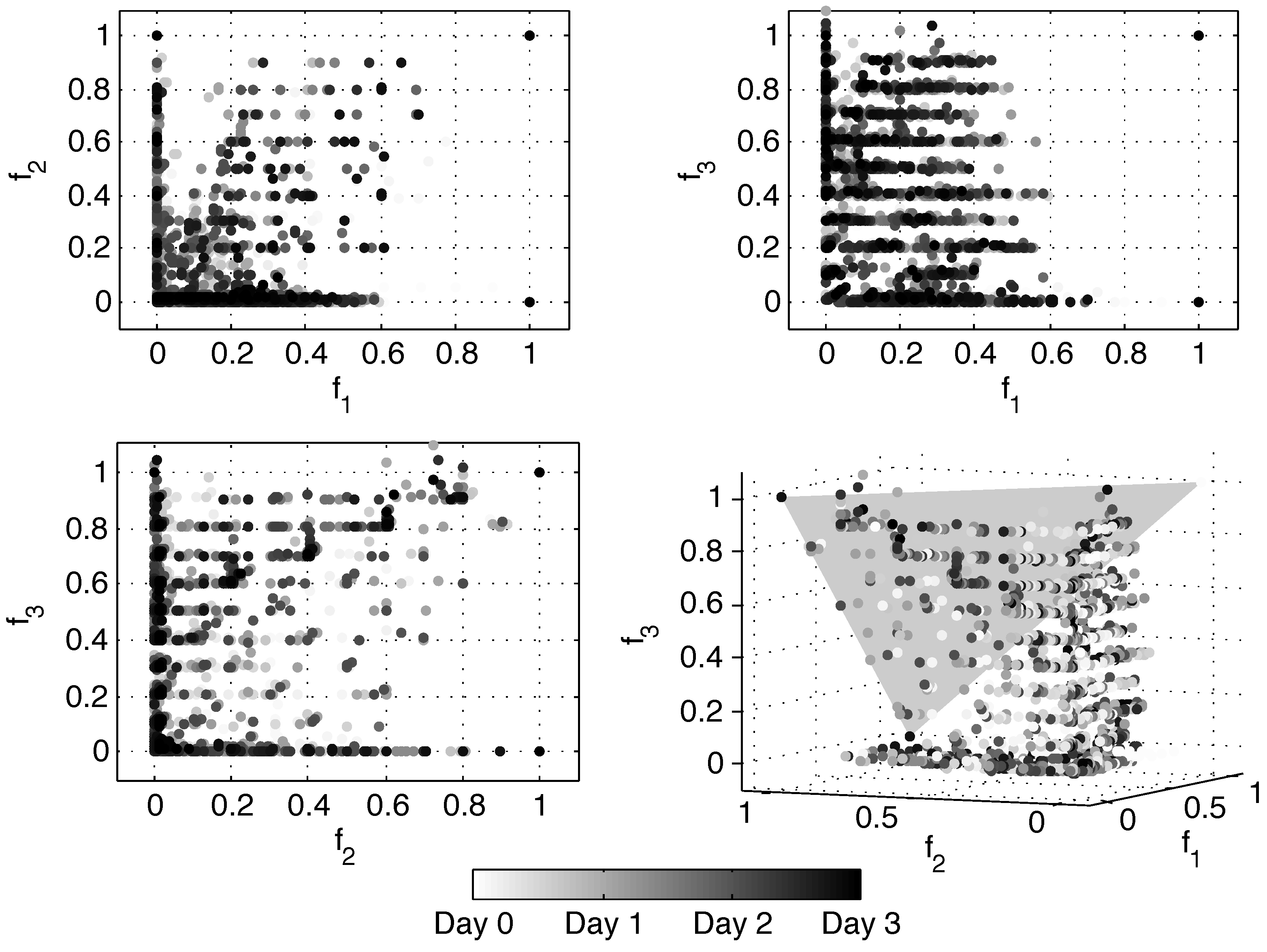
In this paper, the tuning of economic model predictive control (EMPC) applied to drinking water transport networks (DWTNs) is addressed using multi-objective optimization approaches. The tuning strategies are based on Pareto front calculations of the underlying multi-objective problem. This feature represents an improvement with respect to the standard EMPC approach for weight tuning based on trial and error. Different multi-objective optimization methods with corresponding normalization approaches of the controller objectives are first studied to explore the dynamic nature of the Pareto fronts. An automated decision-making strategy is proposed to select the preferred controller parameters as a function of different disturbance values. The tuning requires an offline training phase and an online application phase. During the offline phase, the controller parameters are selected for different disturbances using the decision-making strategy. During the online phase, two approaches are evaluated: (i) exploiting the controller parameters with the highest frequency in the resulting histogram or (ii) using a regression model between the controller parameters and the disturbances. The proposed tuning strategies are applied to a real-life simulation case study based on the Barcelona DWTN. The simulation results show that the proposed tuning strategies outperform the baseline results by exploiting the periodicity of the water demands profile.
Keywords: economic model predictive control; large-scale systems; drinking water network; multi-objective optimization economic model predictive control; large-scale systems; drinking water network; multi-objective optimization