Heterogeneous Photo-Fenton Removal of Methyl Orange Using the Sludge Generated in Dyeing Wastewater as Catalysts

Abstract
1. Introduction
2. Materials and Methods
2.1. Materials
2.2. Catalyst Preparation
2.3. Catalyst Characterization
2.4. Photo-Fenton Experiments
3. Results
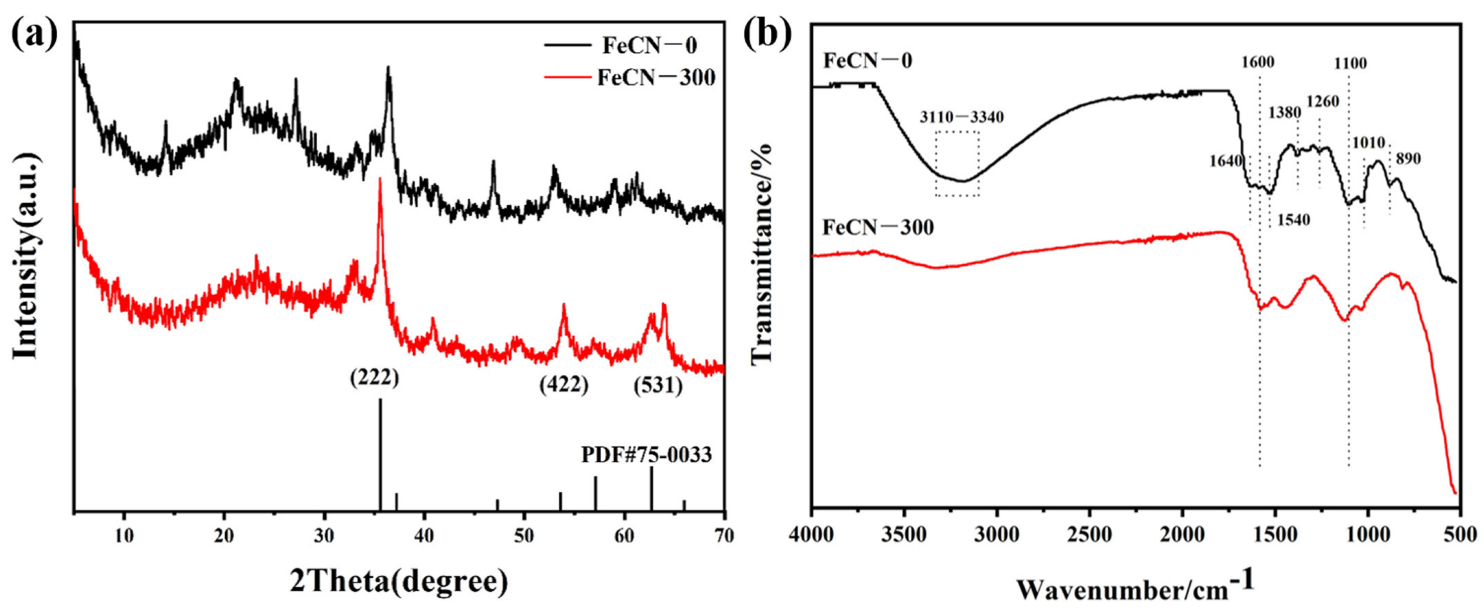
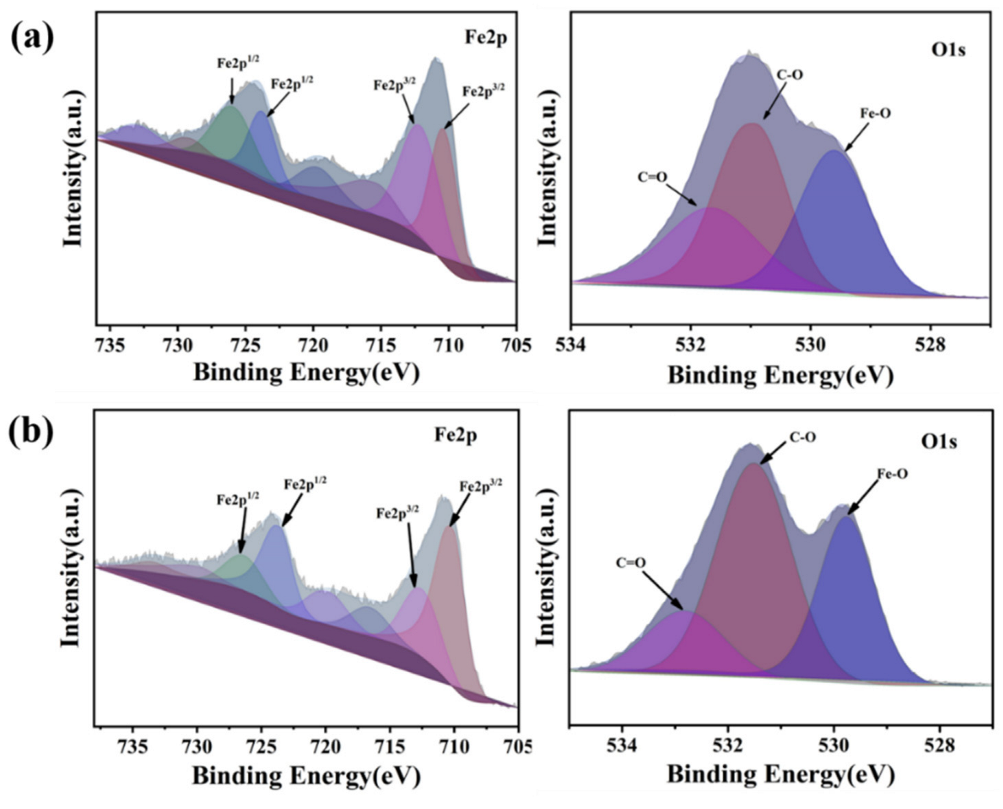
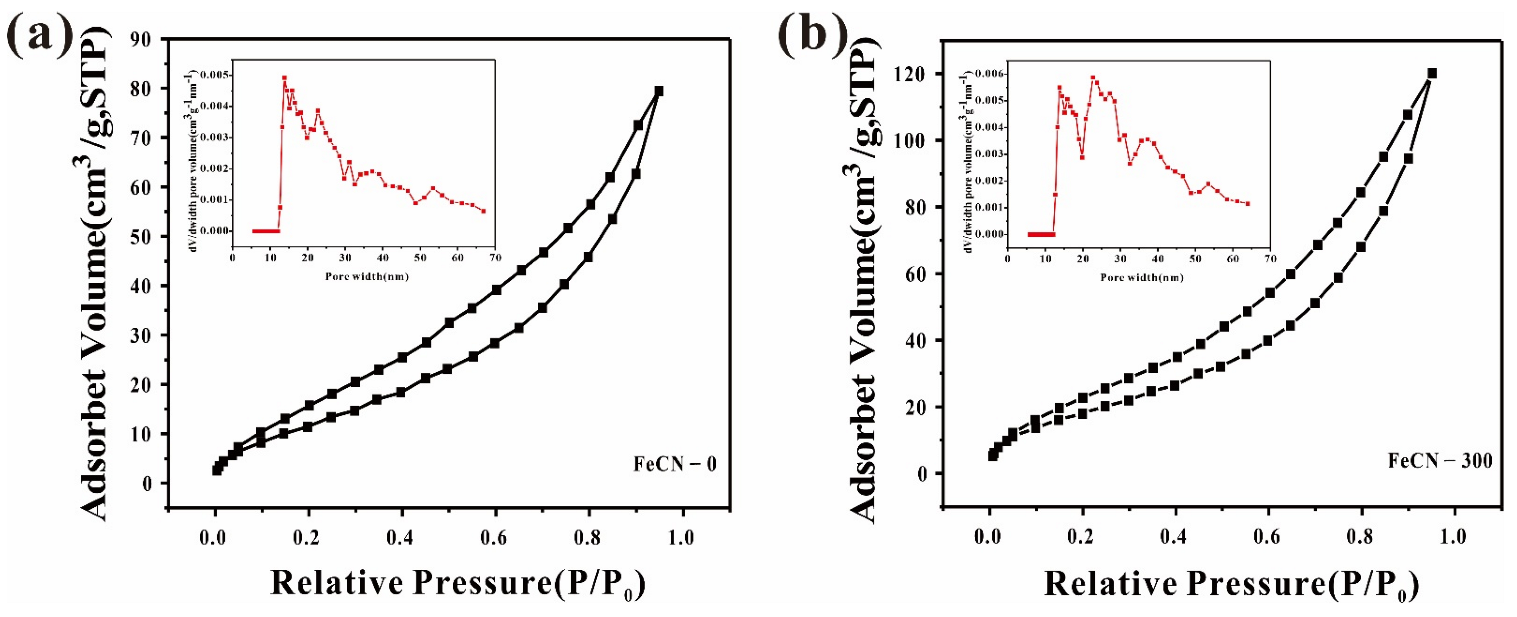
3.1. Characterization of the Prepared Catalyst
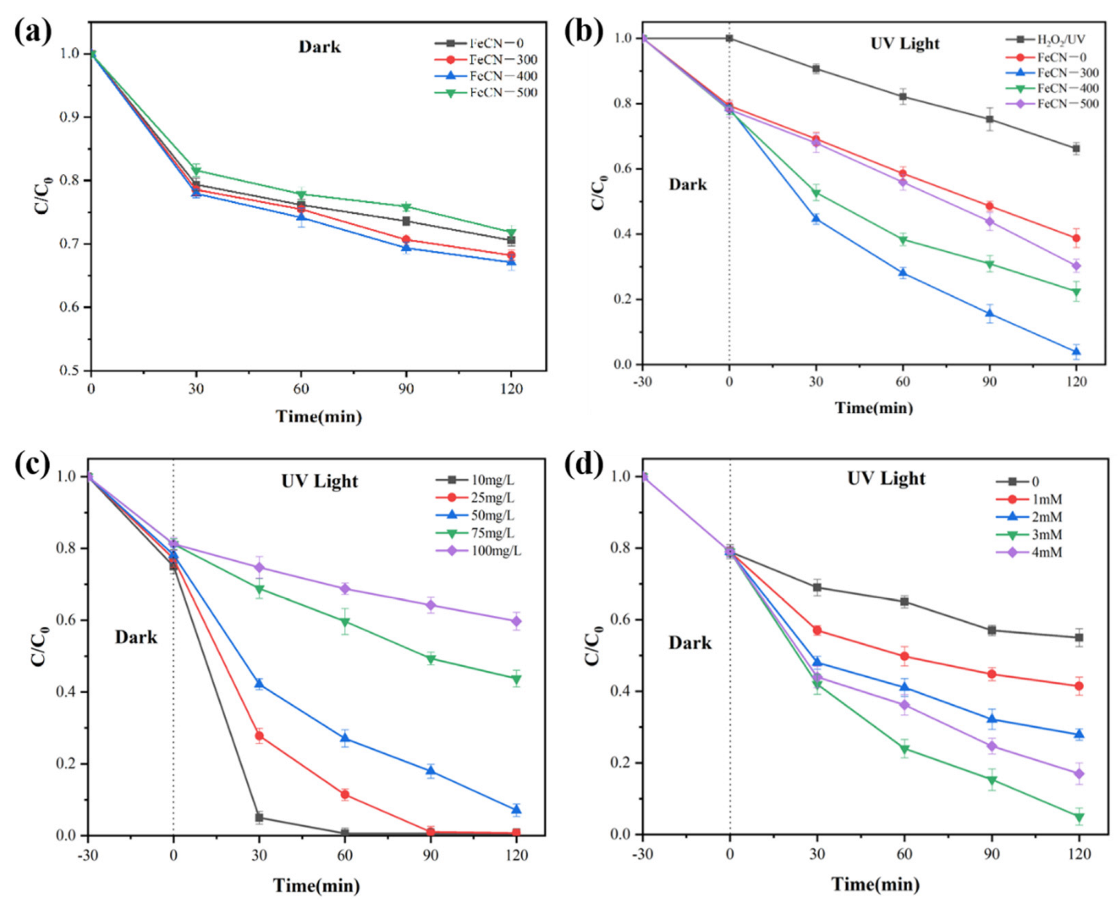
3.2. Photo-Fenton Degradation of MO
4. Conclusions
Supplementary Materials
Author Contributions
Funding
Institutional Review Board Statement
Informed Consent Statement
Data Availability Statement
Acknowledgments
Conflicts of Interest
References
- Mani, S.; Chowdhary, P.; Bharagava, R.N. Textile Wastewater Dyes: Toxicity Profile and Treatment Approaches. Emerging and Eco-friendly Approaches for Waste Management; Springer: Berlin/Heidelberg, Germany, 2019; pp. 219–244. [Google Scholar]
- Li, H.; Wang, Y.; Wang, Y.; Wang, H.; Sun, K.; Lu, Z. Bacterial degradation of anthraquinone dyes. J. Zhejiang Univ.-SCI. B 2019, 20, 528–540. [Google Scholar] [CrossRef] [PubMed]
- Zhang, X. Selective separation membranes for fractionating organics and salts for industrial wastewater treatment: Design strategies and process assessment. J. Membr. Sci. 2022, 643, 120052. [Google Scholar] [CrossRef]
- Torrades, F.; García-Montaño, J. Using central composite experimental design to optimize the degradation of real dye wastewater by Fenton and photo-Fenton reactions. Dyes Pigment. 2014, 100, 184–189. [Google Scholar] [CrossRef]
- Gu, L.; Nie, J.-Y.; Zhu, N.; Wang, L.; Yuan, H.-P.; Shou, Z. Enhanced Fenton’s degradation of real naphthalene dye intermediate wastewater containing 6-nitro-1-diazo-2-naphthol-4-sulfonic acid: A pilot scale study. Chem. Eng. J. 2012, 189, 108–116. [Google Scholar] [CrossRef]
- Chen, X.; Liu, X.; Wang, H.B.; Cui, K.P.; Weerasooriya, R.; He, S.L.; Li, G.H.; Pan, J.; Zhou, K. Ce3+ triggers Fenton-like processes in neutral solutions for effective catechol degradation. Environ. Eng. Res. 2022, 27, 200519. [Google Scholar] [CrossRef]
- Yang, G.; Zhang, G.; Wang, H. Current state of sludge production, management, treatment and disposal in China. Water Res. 2015, 78, 60–73. [Google Scholar] [CrossRef] [PubMed]
- Wang, J.L.; Tang, J.T. Fe-based Fenton-like catalysts for water treatment: Catalytic mechanisms and applications. J. Mol. Liq. 2021, 332, 115755. [Google Scholar] [CrossRef]
- He, L.; Li, M.X.; Chen, F.; Yang, S.S.; Ding, J.; Ding, L.; Ren, N.Q. Novel coagulation waste-based Fe-containing carbonaceous catalyst as peroxymonosulfate activator for pollutants degradation: Role of ROS and electron transfer pathway. J. Hazard. Mater. 2021, 417, 126113. [Google Scholar] [CrossRef]
- Zeng, H.P.; Zhai, L.X.; Qiao, T.D.; Zhang, J.; Li, D. Removal of As(V) by a core-shell magnetic nanoparticles synthesized with iron-containing water treatment residuals. Coll. Surf. A 2021, 627, 127074. [Google Scholar] [CrossRef]
- Xia, Y.; Tang, Y.; Shih, K.; Li, B. Enhanced phosphorus availability and heavy metal removal by chlorination during sewage sludge pyrolysis. J. Hazard. Mater. 2020, 382, 121110. [Google Scholar] [CrossRef]
- Zhu, R.; Xia, J.; Zhang, H.; Kong, F.; Hu, X.; Shen, Y.; Zhang, W.-H. Synthesis of magnetic activated carbons from black liquor lignin and Fenton sludge in a one-step pyrolysis for methylene blue adsorption. J. Environ. Chem. Eng. 2021, 9, 106538. [Google Scholar] [CrossRef]
- Yuan, S.-J.; Dai, X.-H. Sewage sludge-based functional nanomaterials: Development and applications. Environ. Sci. Nano 2017, 4, 17–26. [Google Scholar] [CrossRef]
- Yuan, S.-J.; Dai, X.-H. Facile synthesis of sewage sludge-derived mesoporous material as an efficient and stable heterogeneous catalyst for photo-Fenton reaction. Appl. Catal. B Environ. 2014, 154, 252–258. [Google Scholar] [CrossRef]
- Huang, Y.-F.; Huang, Y.-Y.; Chiueh, P.-T.; Lo, S.-L. Heterogeneous Fenton oxidation of trichloroethylene catalyzed by sewage sludge biochar: Experimental study and life cycle assessment. Chemosphere 2020, 249, 126139. [Google Scholar] [CrossRef] [PubMed]
- Gan, Q.; Hou, H.; Liang, S.; Qiu, J.; Tao, S.; Yang, L.; Yu, W.; Xiao, K.; Liu, B.; Hu, J.; et al. Sludge-derived biochar with multivalent iron as an efficient Fenton catalyst for degradation of 4-Chlorophenol. Sci. Total Environ. 2020, 725, 138299. [Google Scholar] [CrossRef]
- Khan, S.A.; Zahera, M.; Khan, I.A.; Khan, M.S.; Azam, A.; Arshad, M.; Syed, A.; Nasif, O.; Elgorban, A.M. Photocatalytic degradation of methyl orange by cadmium oxide nanoparticles synthesized by the sol-gel method. Optik 2021, 251, 168401. [Google Scholar] [CrossRef]
- Omri, A.; Hamza, W.; Benzina, M. Photo-Fenton oxidation and mineralization of methyl orange using Fe-sand as effective heterogeneous catalyst. J. Photochem. Photobiol. A Chem. 2020, 393, 112444. [Google Scholar] [CrossRef]
- Velusamy, K.; Periyasamy, S.; Kumar, P.S.; Jayaraj, T.; Gokulakrishnan, M.; Keerthana, P. Transformation of aqueous methyl orange to green metabolites using bacterial strains isolated from textile industry effluent. Environ. Technol. Innov. 2022, 25, 102126. [Google Scholar] [CrossRef]
- Wang, Y.; Gao, Y.; Chen, L.; Zhang, H. Goethite as an efficient heterogeneous Fenton catalyst for the degradation of methyl orange. Catal. Today 2015, 252, 107–112. [Google Scholar] [CrossRef]
- Urmi, S.A.; Kurny, A.; Gulshan, F. Decolorization of methyl orange using mill scale by photo-Fenton reaction. Procedia Eng. 2015, 105, 844–851. [Google Scholar] [CrossRef][Green Version]
- Izghri, Z.; Enaime, G.; Eouarrat, M.; Chahid, L.; el Gaini, L.; Baçaoui, A.; Yaacoubi, A. Hydroxide sludge/hydrochar-Fe composite catalysts for photo-fenton degradation of dyes. J. Chem. 2021, 2021, 5588176. [Google Scholar] [CrossRef]
- Zhang, H.-M.; Zhao, Y.; Zhang, Y.; Zhang, M.; Cheng, M.; Yu, J.; Liu, H.; Ji, M.; Zhu, C.; Xu, J. Fe3O4 encapsulated in porous carbon nanobowls as efficient oxygen reduction reaction catalyst for Zn-air batteries. Chem. Eng. J. 2019, 375, 122058. [Google Scholar] [CrossRef]
- Lee, J.-H.; Kwon, J.-S.; Om J-y Kim, Y.-H.; Choi, E.-H.; Kim, K.-M.; Kim, K.-N. Cell immobilization on polymer by air atmospheric pressure plasma jet treatment. JPN. J. Appl. Physics 2014, 53, 086202. [Google Scholar] [CrossRef]
- Daniells, S.; Overweg, A.; Makkee, M.; Moulijn, J. The mechanism of low-temperature CO oxidation with Au/Fe2O3 catalysts: A combined Mössbauer, FT-IR, and TAP reactor study. J. Catal. 2005, 230, 52–65. [Google Scholar] [CrossRef]
- Fekri, L.Z.; Nikpassand, M.; Goldoost, M. Synthesis, experimental and DFT studies on crystal structure, FT-IR, 1 H, and 13 C NMR spectra, and evaluation of aromaticity of three derivatives of xanthens. Rus. J. Gen. Chem. 2013, 83, 2352–2360. [Google Scholar] [CrossRef]
- Abdulkadir, I.; Uba, S.; Almustapha, M. A rapid method of crude oil analysis using FT-IR spectroscopy. Nig. J. Basic Appl. Sci. 2016, 24, 47–55. [Google Scholar] [CrossRef]
- Du, P.; Bao, Y.; Guo, C.; Wu, L.; Pan, J.; Zhao, C.; Ma, F.-X.; Lu, J.; Li, Y.Y. Design of Fe, N co-doped multi-walled carbon nanotubes for efficient oxygen reduction. Chem. Commun. 2020, 56, 14467–14470. [Google Scholar] [CrossRef]
- Wu, Q.; Chen, M.; Chen, K.; Wang, S.; Wang, C.; Diao, G. Fe3O4-based core/shell nanocomposites for high-performance electrochemical supercapacitors. J. Mater. Sci. 2016, 51, 1572–1580. [Google Scholar] [CrossRef]
- Wilson, D.; Langell, M.A. XPS analysis of oleylamine/oleic acid capped Fe3O4 nanoparticles as a function of temperature. Appl. Surf. Sci. 2014, 303, 6–13. [Google Scholar] [CrossRef]
- Thommes, M.; Kaneko, K.; Neimark, A.V.; Olivier, J.P.; Rodriguez-Reinoso, F.; Rouquerol, J.; Sing, K.S. Physisorption of gases, with special reference to the evaluation of surface area and pore size distribution (IUPAC Technical Report). Pure Appl. Chem. 2015, 87, 1051–1069. [Google Scholar] [CrossRef]
- Dong, C.; Ji, J.; Shen, B.; Xing, M.; Zhang, J. Enhancement of H2O2 Decomposition by the Co-catalytic Effect of WS2 on the Fenton Reaction for the Synchronous Reduction of Cr (VI) and Remediation of Phenol. Environ. Sci. Technol. 2018, 52, 11297–11308. [Google Scholar] [CrossRef] [PubMed]
- Hoffmann, M.R.; Martin, S.T.; Choi, W.; Bahnemann, D.W. Environmental applications of semiconductor photocatalysis. Chem. Rev. 1995, 95, 69–96. [Google Scholar] [CrossRef]
- Grassi, P.; Drumm, F.C.; Georgin, J.; Franco, D.S.P.; Foletto, E.L.; Dotto, G.L.; Jahn, S.L. Water treatment plant sludge as iron source to catalyze a heterogeneous photo-Fenton reaction. Environ. Technol. Innov. 2020, 17, 100544. [Google Scholar] [CrossRef]
- Wang, Q.; Tian, S.; Long, J.; Ning, P. Use of Fe(II)Fe(III)-LDHs prepared by co-precipitation method in a heterogeneous-Fenton process for degradation of Methylene Blue. Catal. Today 2014, 224, 41–48. [Google Scholar] [CrossRef]
- Zhou, G.; Fang, F.; Chen, Z.; He, Y.; Sun, H.; Shi, H. Facile synthesis of paper mill sludge-derived heterogeneous catalyst for the Fenton-like degradation of methylene blue. Catal. Commun. 2015, 62, 71–74. [Google Scholar] [CrossRef]
- Zhang, Q.; Jiang, L.; Wang, J.; Zhu, Y.; Pu, Y.; Dai, W. Photocatalytic degradation of tetracycline antibiotics using three-dimensional network structure perylene diimide supramolecular organic photocatalyst under visible-light irradiation. Appl. Catal. B Environ. 2020, 277, 119122. [Google Scholar] [CrossRef]
- Li, X.Y.; Cui, K.P.; Guo, Z.; Yang, T.T.; Cao, Y.; Xiang, Y.P.; Chen, H.H.; Xi, M.F. Heterogeneous Fenton-like degradation of tetracyclines using porous magnetic chitosan microspheres as an efficient catalyst compared with two preparation methods. Chem. Eng. J. 2020, 379, 122324. [Google Scholar] [CrossRef]
- Molnar, A. Efficient, selective, and recyclable palladium catalysts in carbon−carbon coupling reactions. Chem. Rev. 2011, 111, 2251–2320. [Google Scholar] [CrossRef]
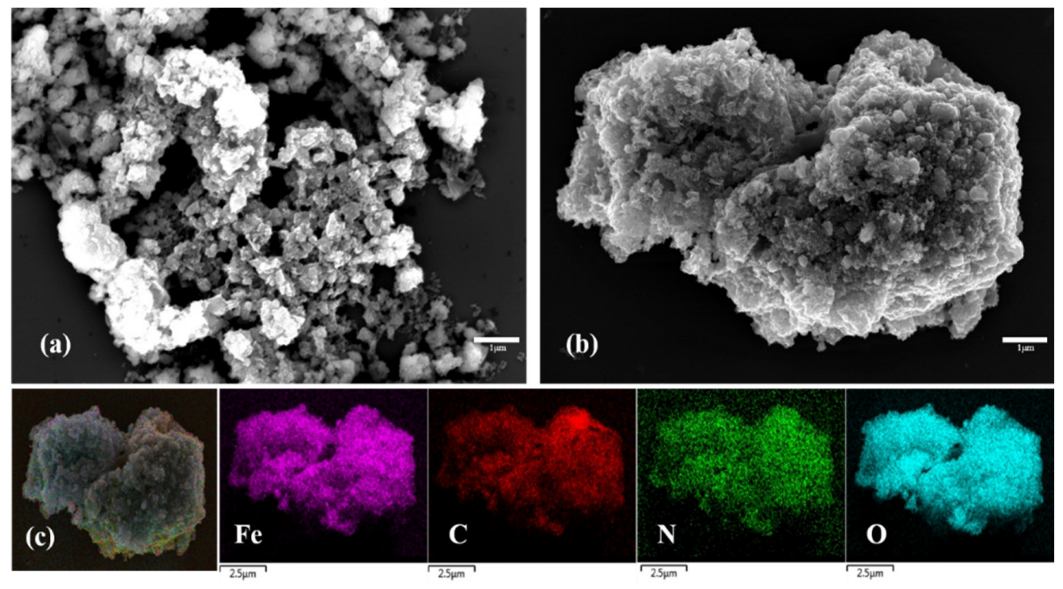


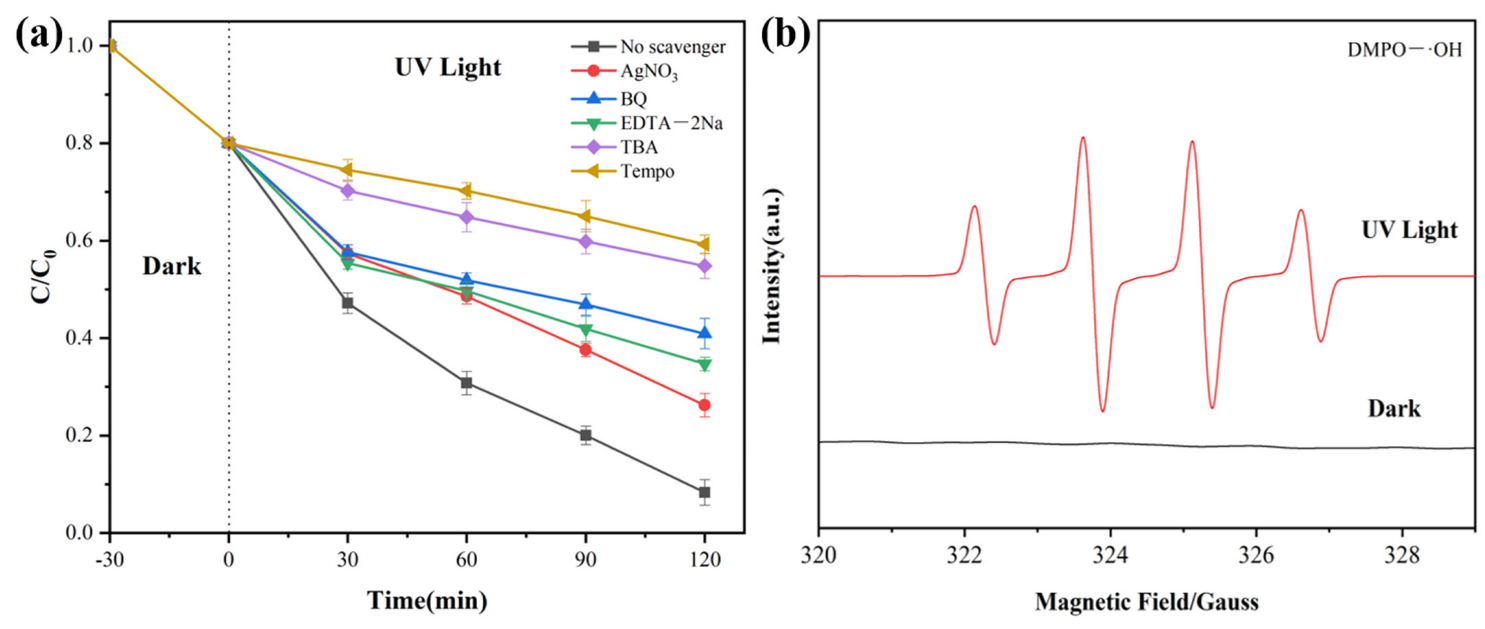
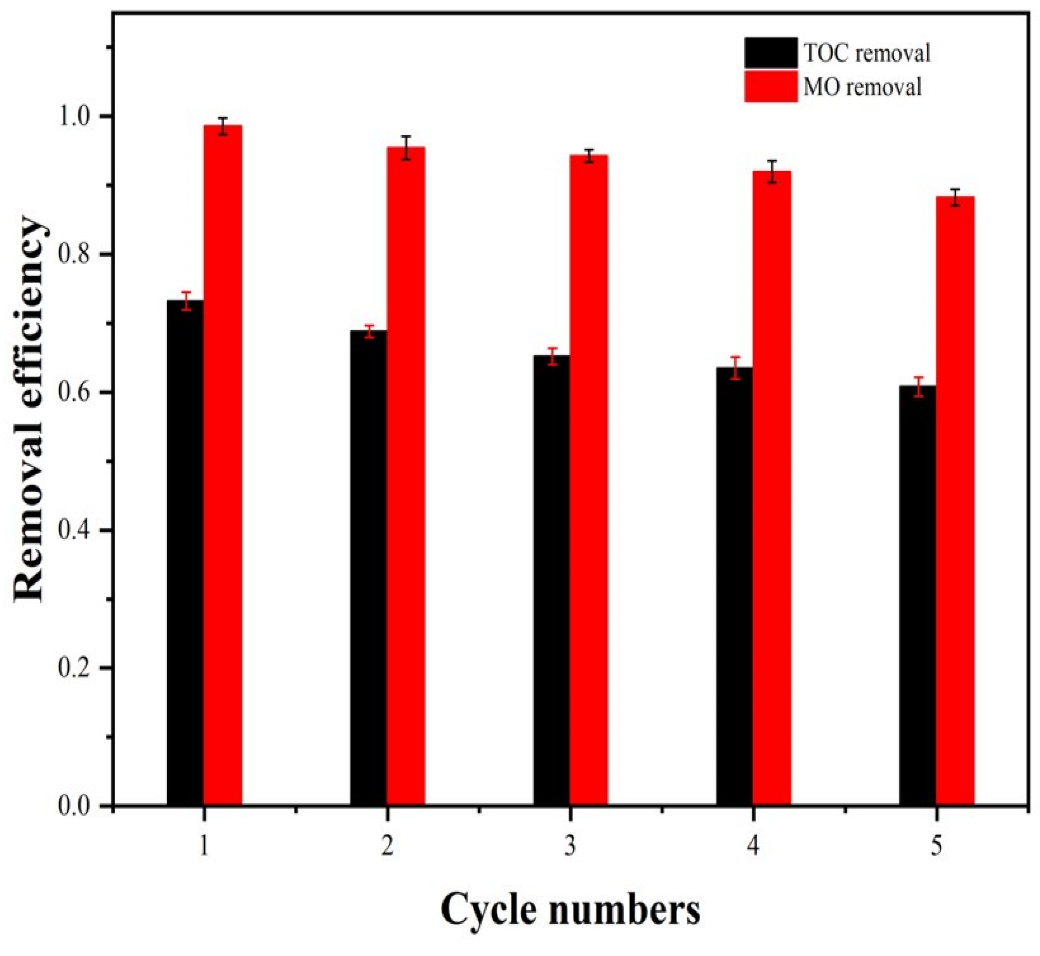

| Catalyst | S/(m2/g) | D/(nm) | V/(cc/g) |
|---|---|---|---|
| FeCN-0 | 50.425 | 48.782 | 0.105 |
| FeCN-300 | 72.331 | 51.391 | 0.156 |
| Catalyst Dosage | H2O2 Concentration | Contaminant/ Concentration | Time/ Degradation Rate (%) | References |
|---|---|---|---|---|
| 0.5 g/L | 195.88 mM | Methyl orange/ 32.7 mg/L | 90 min/> 90% | [21] |
| 2.5 g/L | 14.68 mM | Methylene blue/ 50 mg/L Methyl orange/ 50 mg/L | 150 min/95% 60 min/99% | [22] |
| 0.75 g/L | 5.5 mM | amaranth dye/ 50 mg/L | 420 min/98% | [34] |
| 1 g/L | 0.01 mM | Methylene blue/ 10 mg/L | 60 min/100% | [35] |
| 1 g/L | 1.96 mM | Methylene blue/ 50 mg/L | 80 min/78% | [36] |
| 0.2 g/L | 3 mM | Methyl orange/ 50 mg/L | 120 min/93% | This work |
Publisher’s Note: MDPI stays neutral with regard to jurisdictional claims in published maps and institutional affiliations. |
© 2022 by the authors. Licensee MDPI, Basel, Switzerland. This article is an open access article distributed under the terms and conditions of the Creative Commons Attribution (CC BY) license (https://creativecommons.org/licenses/by/4.0/).
Share and Cite
Liu, X.; Liu, H.-L.; Cui, K.-P.; Dai, Z.-L.; Wang, B.; Chen, X. Heterogeneous Photo-Fenton Removal of Methyl Orange Using the Sludge Generated in Dyeing Wastewater as Catalysts. Water 2022, 14, 629. https://doi.org/10.3390/w14040629
Liu X, Liu H-L, Cui K-P, Dai Z-L, Wang B, Chen X. Heterogeneous Photo-Fenton Removal of Methyl Orange Using the Sludge Generated in Dyeing Wastewater as Catalysts. Water. 2022; 14(4):629. https://doi.org/10.3390/w14040629
Chicago/Turabian StyleLiu, Xu, Hui-Lai Liu, Kang-Ping Cui, Zheng-Liang Dai, Bei Wang, and Xing Chen. 2022. "Heterogeneous Photo-Fenton Removal of Methyl Orange Using the Sludge Generated in Dyeing Wastewater as Catalysts" Water 14, no. 4: 629. https://doi.org/10.3390/w14040629
APA StyleLiu, X., Liu, H.-L., Cui, K.-P., Dai, Z.-L., Wang, B., & Chen, X. (2022). Heterogeneous Photo-Fenton Removal of Methyl Orange Using the Sludge Generated in Dyeing Wastewater as Catalysts. Water, 14(4), 629. https://doi.org/10.3390/w14040629