Article

Exploration and Optimisation of High-Salt Wastewater Defluorination Process

1
Ningxia Baichuan New Materials Co., Ltd., Yinchuan 750411, China
2
Nanjing Water Purification Environmental Research Institute Co., Ltd., Nanjing 211100, China
3
Nanjing Yuqing Environmental Technology Co., Ltd., Nanjing 211100, China
*
Author to whom correspondence should be addressed.
Water 2022, 14(23), 3974; https://doi.org/10.3390/w14233974
Submission received: 23 August 2022 / Revised: 24 October 2022 / Accepted: 16 November 2022 / Published: 6 December 2022
(This article belongs to the Special Issue Water-Sludge-Nexus)

Abstract

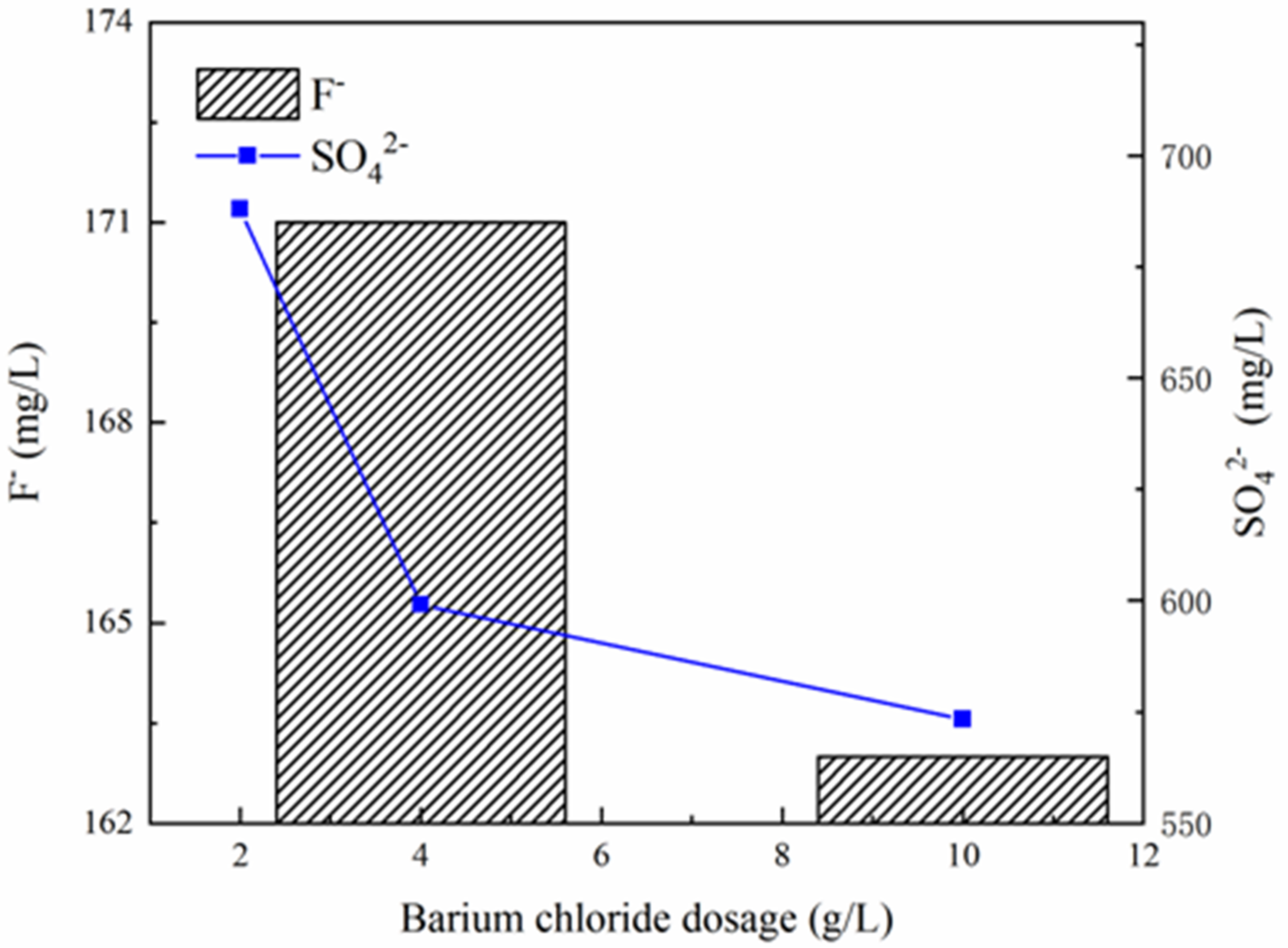
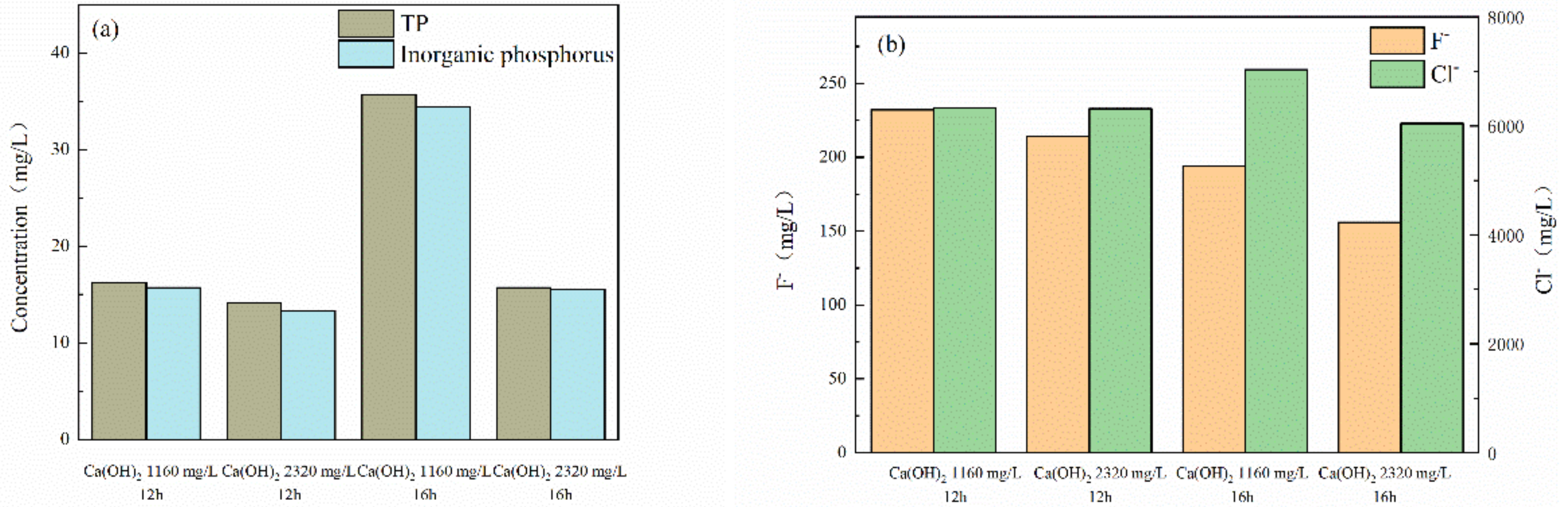
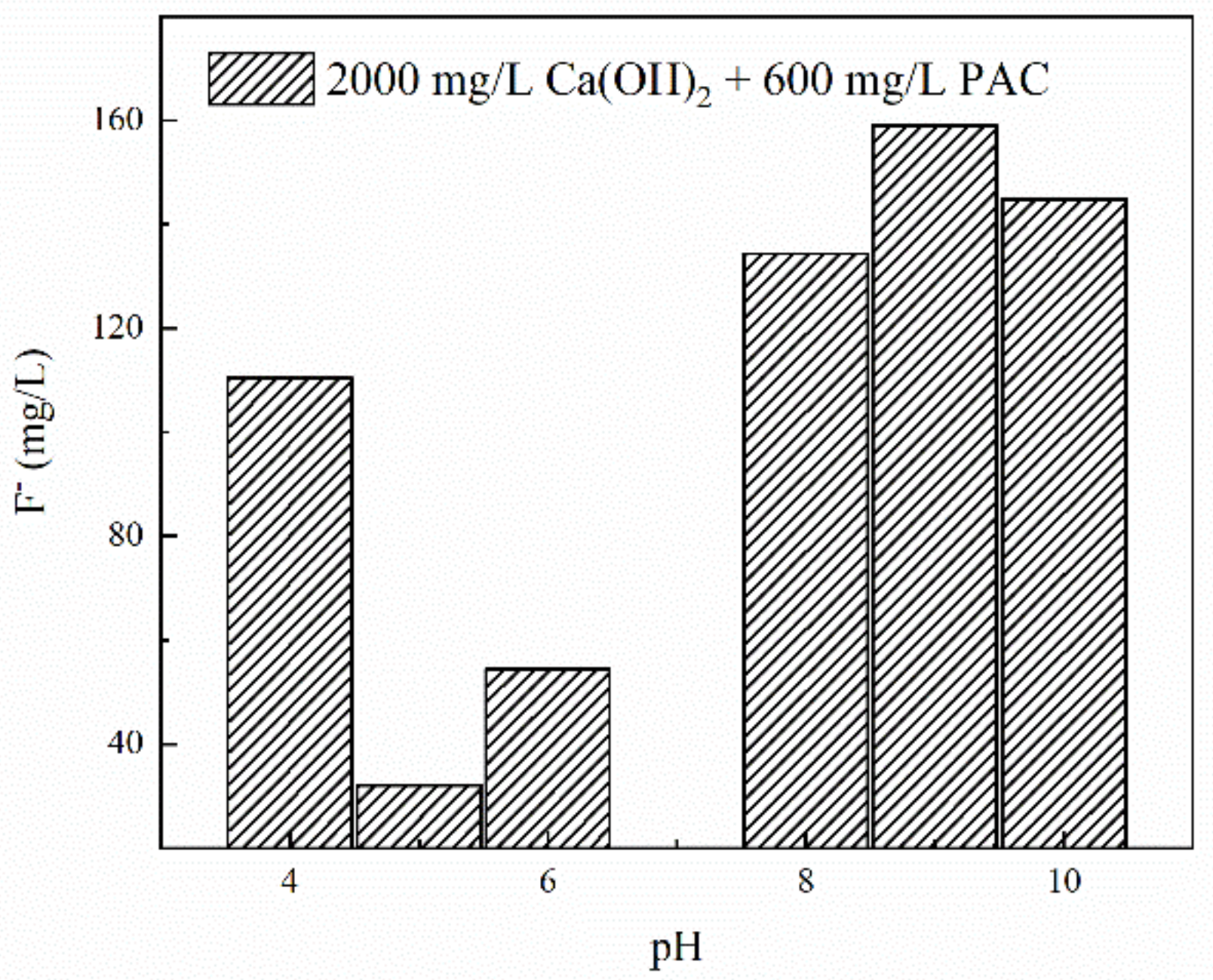
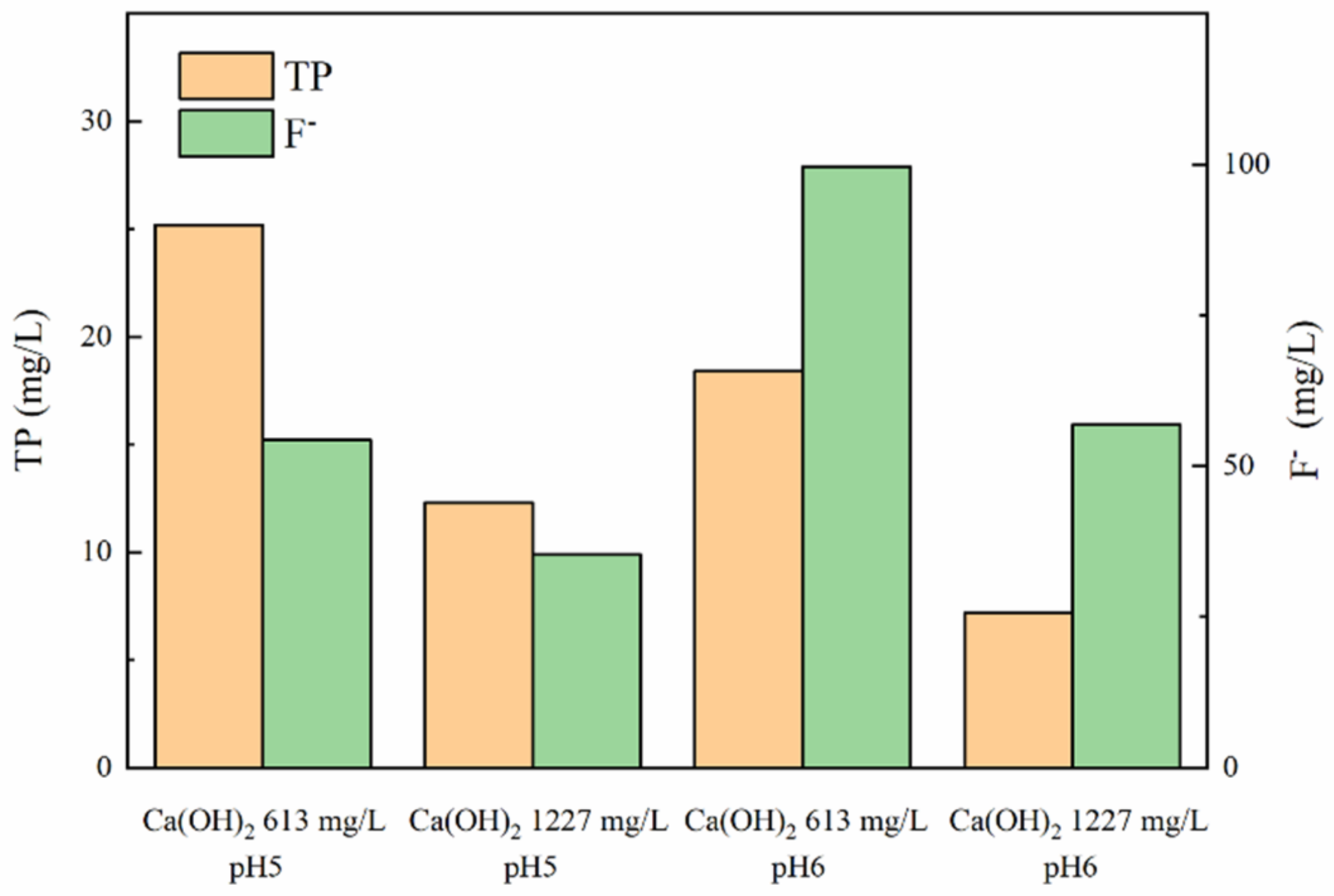
The typical lime precipitation method is used to treat high-concentration fluorine-containing wastewater. In this way, the fluorine in the wastewater can be removed in the form of CaF2. Thus, this method has a good fluoride removal effect. In this study, calcium hydroxide was used to adjust the pH and achieve a significant fluoride removal effect at the same time. The removal rate of fluoride ion decreases gradually with the increase in the concentration of sulphate in the raw water. When the synergistic defluorination cannot meet the requirements of water production, adding a step of aluminium salt flocculation and precipitation can further reduce the fluoride ion concentration. According to the feasibility of the actual project, this study improves the lime coagulation precipitation defluorination process on this basis, and the combined process is synchronised. In the process optimisation, barium chloride is added to remove the influence of sulphate radicals in the water, and then, the pH is adjusted to 5–6. The fluoride ion concentration in high-salt wastewater can be reduced from 446.6 mg/L to 35.4 mg/L by defluorination after pre-treatment whose removal rate was 92.1%. The combined process synchronously removes fluorine and purifies the water quality to a certain extent. Indicators such as COD, total phosphorus, ammonia nitrogen, and chloride ions in wastewater are reduced, and the removal rate is increased by 35.5% under the same conditions. This scheme improves the wastewater treatment effect without increasing the existing treatment equipment. Thus, it achieves a better defluorination effect and reduces the dosage of chemicals as much as possible, which is conducive to lowering the discharge of sludge after treatment.
Keywords: high-salt wastewater; fluorine removal; coagulation; precipitation; combined process high-salt wastewater; fluorine removal; coagulation; precipitation; combined process