Article

Impact of Data Temporal Resolution on Quantifying Residential End Uses of Water
by
Camilo J. Bastidas Pacheco
1,*,
Jeffery S. Horsburgh
1,2 and
Arle S. Beckwith, Jr.
1
1
Utah Water Research Laboratory, Utah State University, 8200 Old Main Hill, Logan, UT 84322-8200, USA
2
Department of Civil and Environmental Engineering, Utah State University, 8200 Old Main Hill, Logan, UT 84322-8200, USA
*
Author to whom correspondence should be addressed.
Water 2022, 14(16), 2457; https://doi.org/10.3390/w14162457
Submission received: 28 June 2022 / Revised: 26 July 2022 / Accepted: 5 August 2022 / Published: 9 August 2022
(This article belongs to the Special Issue Advances in Hydroinformatics for Water Data Management and Analysis)

Abstract

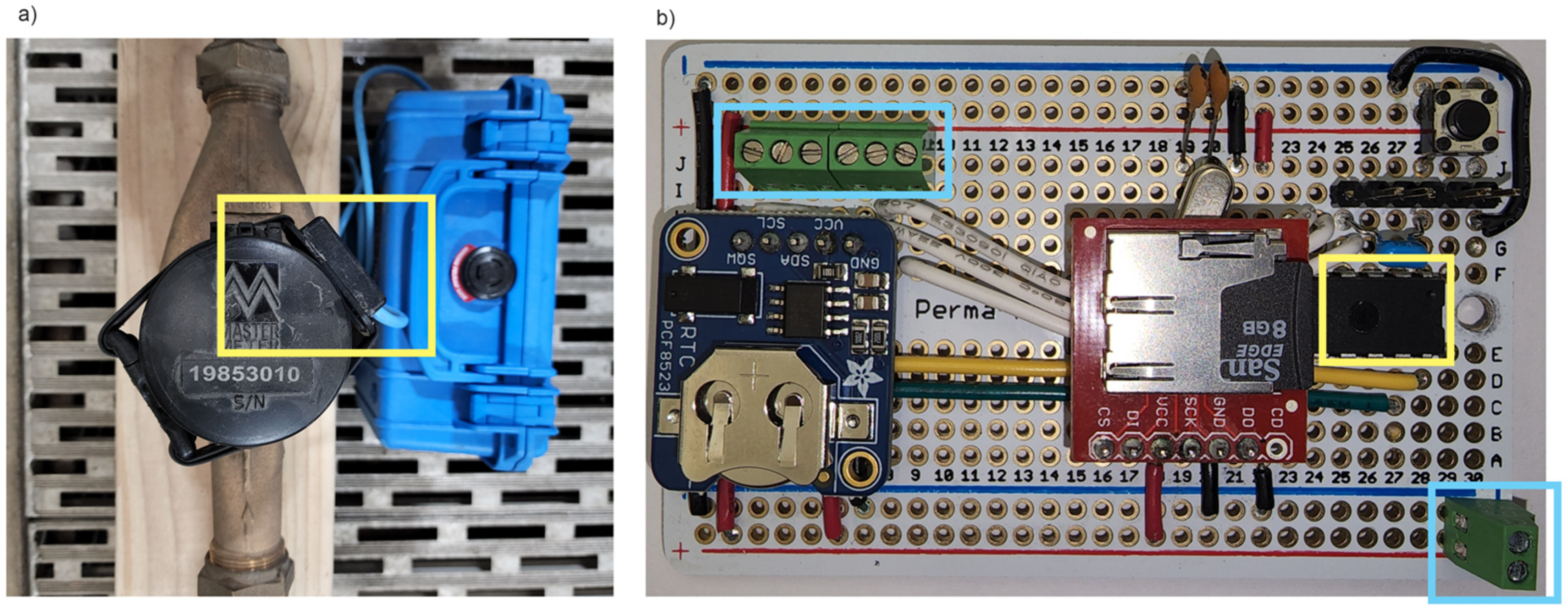
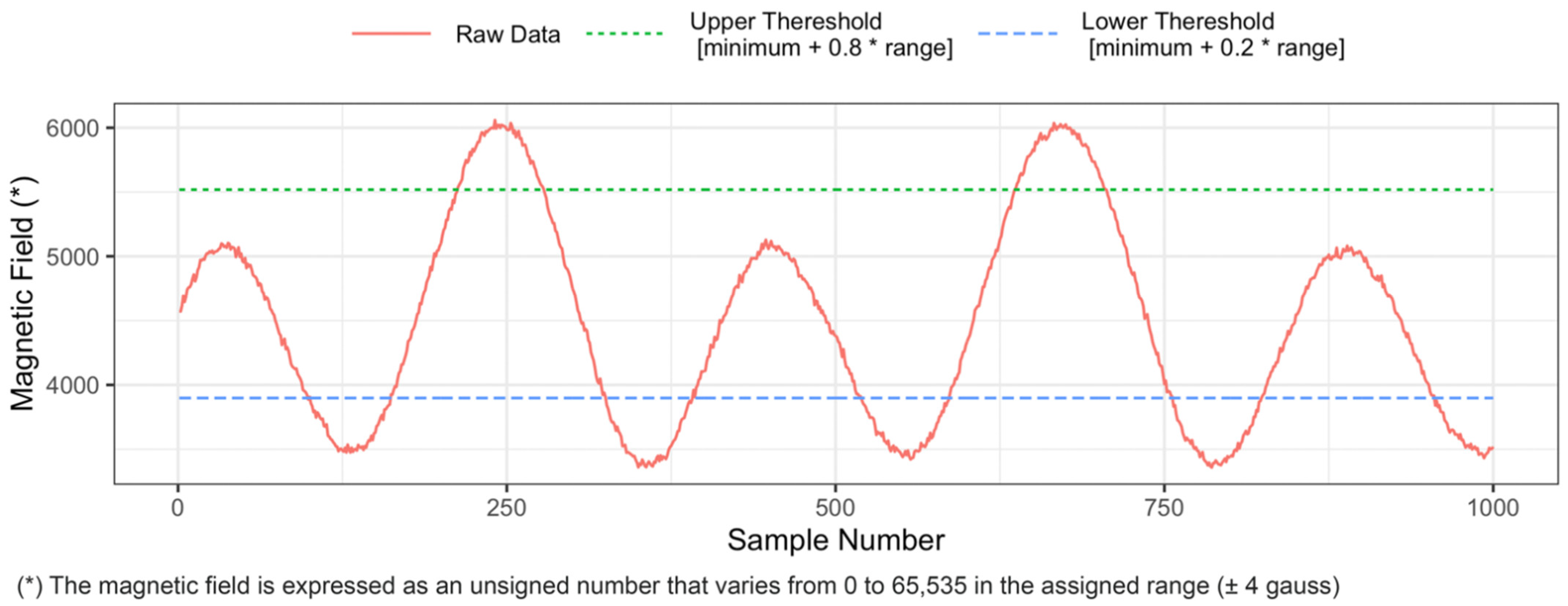
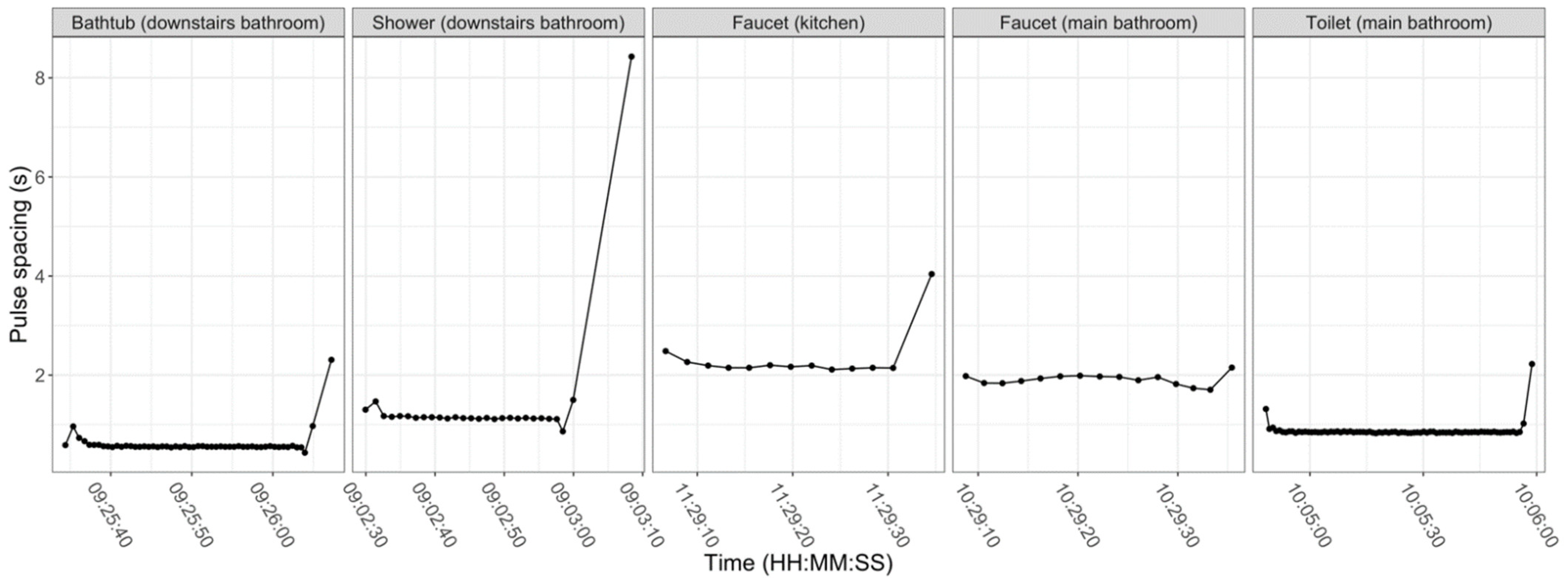
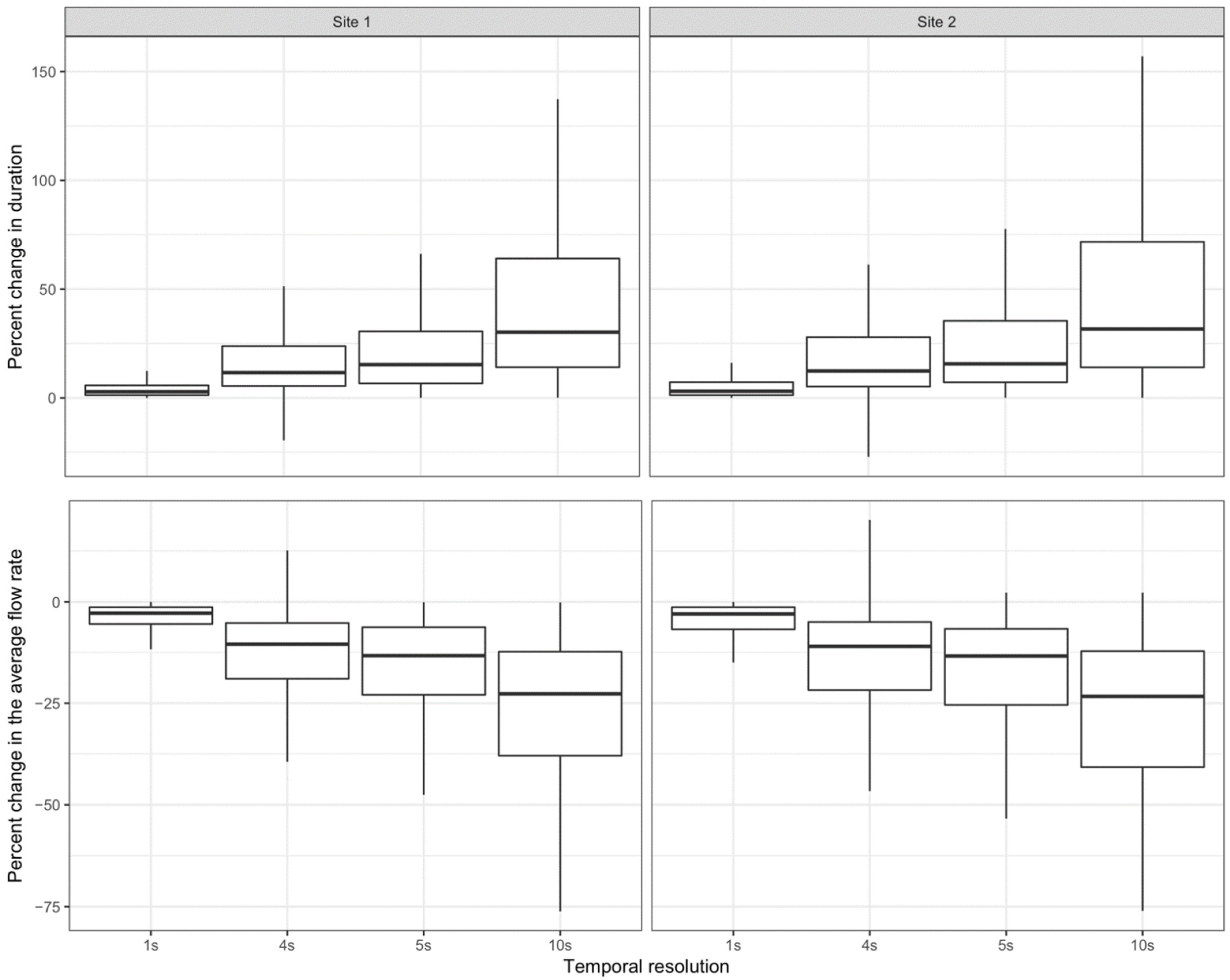
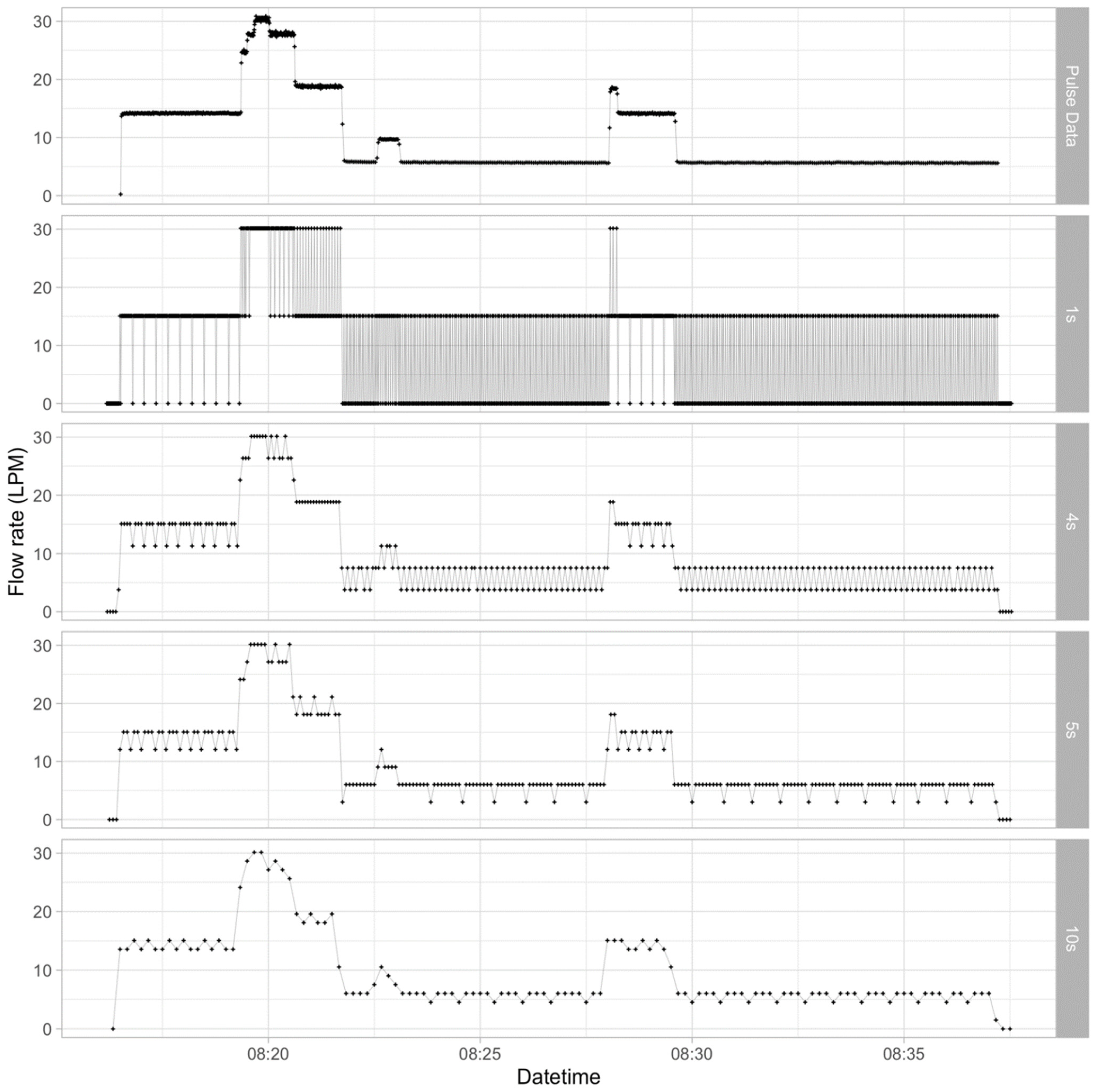
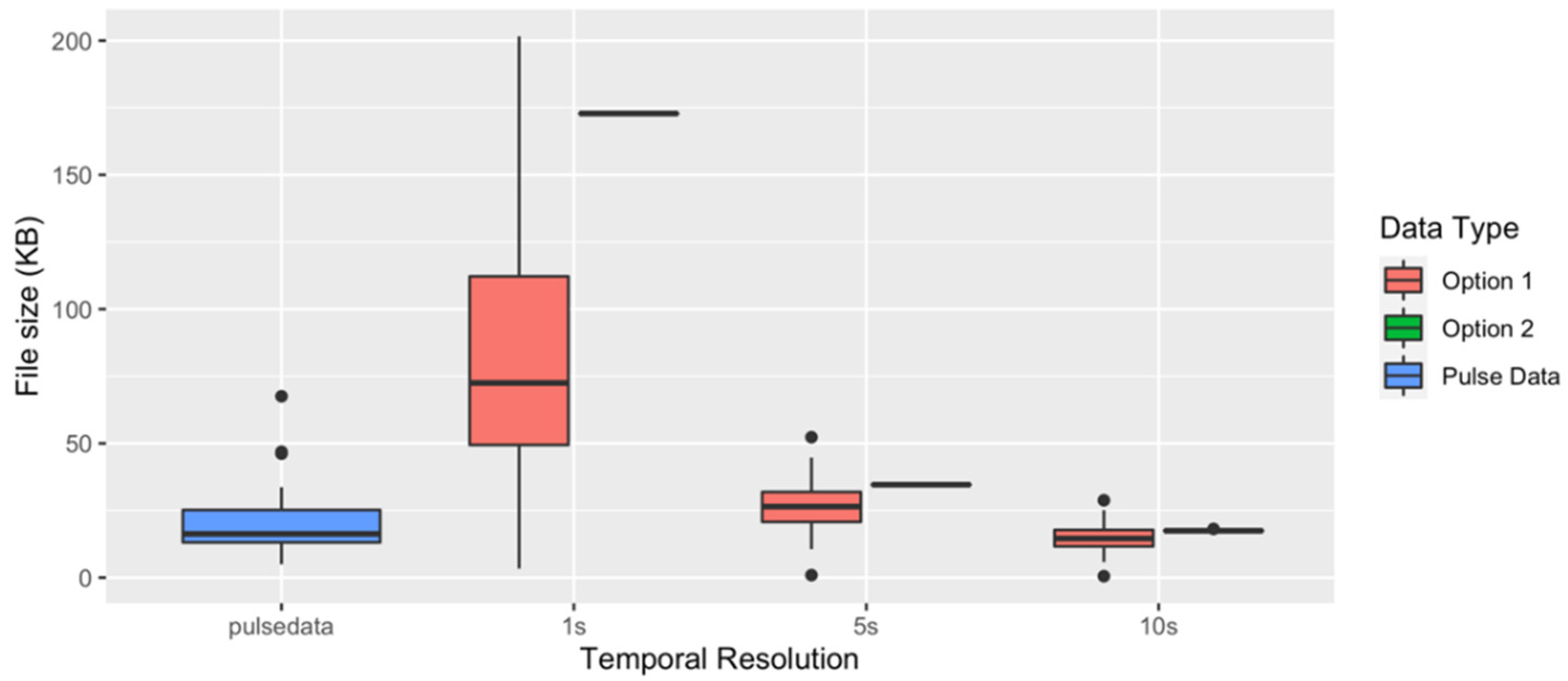
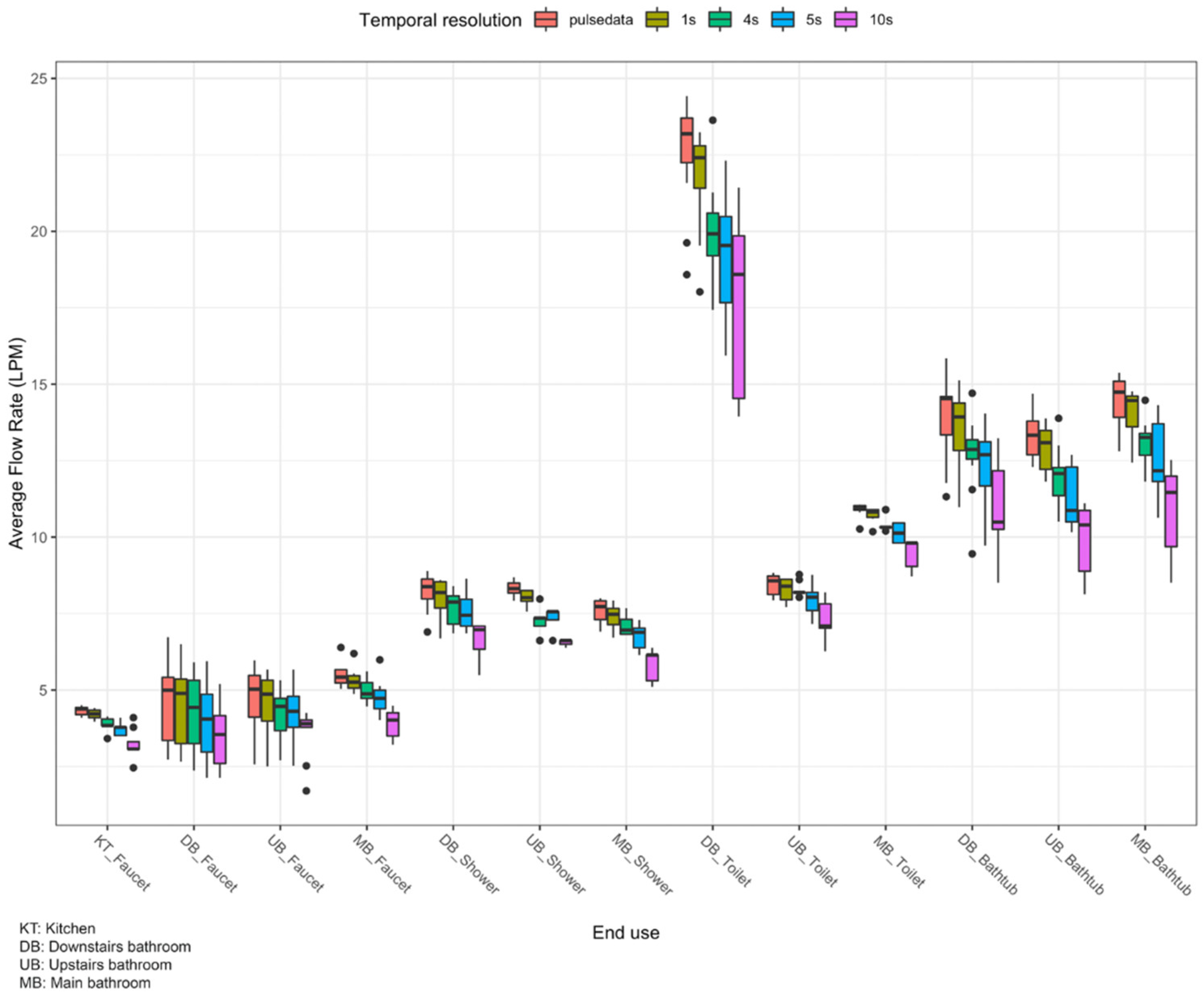
Residential water end-use events (e.g., showers, toilets, faucets, etc.) can be derived from high temporal resolution (<1 min) water metering data. Past studies have collected data at different temporal resolutions (e.g., 4 s, 5 s, or 10 s) without assessing the impact of the temporal aggregation interval on end-use event features (e.g., volume, flowrate, duration) due to the unavailability of data at a sufficient temporal resolution to enable such analyses. We recorded the time between every magnetic pulse generated by a magnetically driven residential water meter’s measurement element (full pulse resolution) using a new, open-source datalogging device and collected data for two residential homes in Utah, USA. We then examined water use events without temporally aggregating data and compared to the same data aggregated at different time intervals to evaluate how temporal resolution of the data affects our ability to identify end-use events, calculate features of individual events, and classify events by end use. Our results show how collecting full pulse resolution data can provide more accurate estimates of event occurrence, timing, and features along with producing more discriminative event features that can only be estimated from full pulse resolution data to make event classification easier and more accurate.
Keywords: residential water use; end uses of water; smart water metering; datalogging; water demand residential water use; end uses of water; smart water metering; datalogging; water demand