Article

Sheet-like Skeleton Carbon Derived from Shaddock Peels with Hierarchically Porous Structures for Ultra-Fast Removal of Methylene Blue
1
Key Laboratory of Green Chemical Media and Reactions, Ministry of Education, Collaborative Innovation Center of Henan Province for Green Manufacturing of Fine Chemicals, School of Chemistry and Chemical Engineering, Henan Normal University, Xinxiang 453007, China
2
113 Geological Brigade, Guizhou Bureau of Geology and Mineral Resources, Liupanshui 553000, China
*
Authors to whom correspondence should be addressed.
Water 2021, 13(18), 2554; https://doi.org/10.3390/w13182554
Submission received: 19 August 2021 / Revised: 13 September 2021 / Accepted: 14 September 2021 / Published: 17 September 2021
(This article belongs to the Topic Emerging Solutions for Water, Sanitation and Hygiene)

Abstract

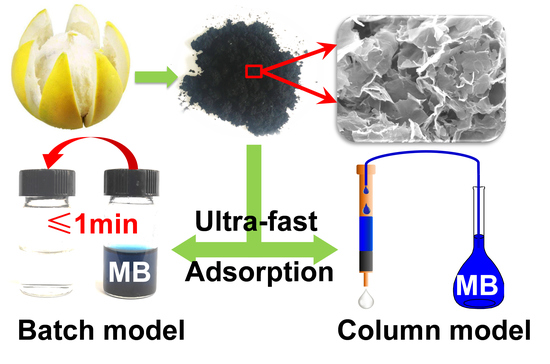
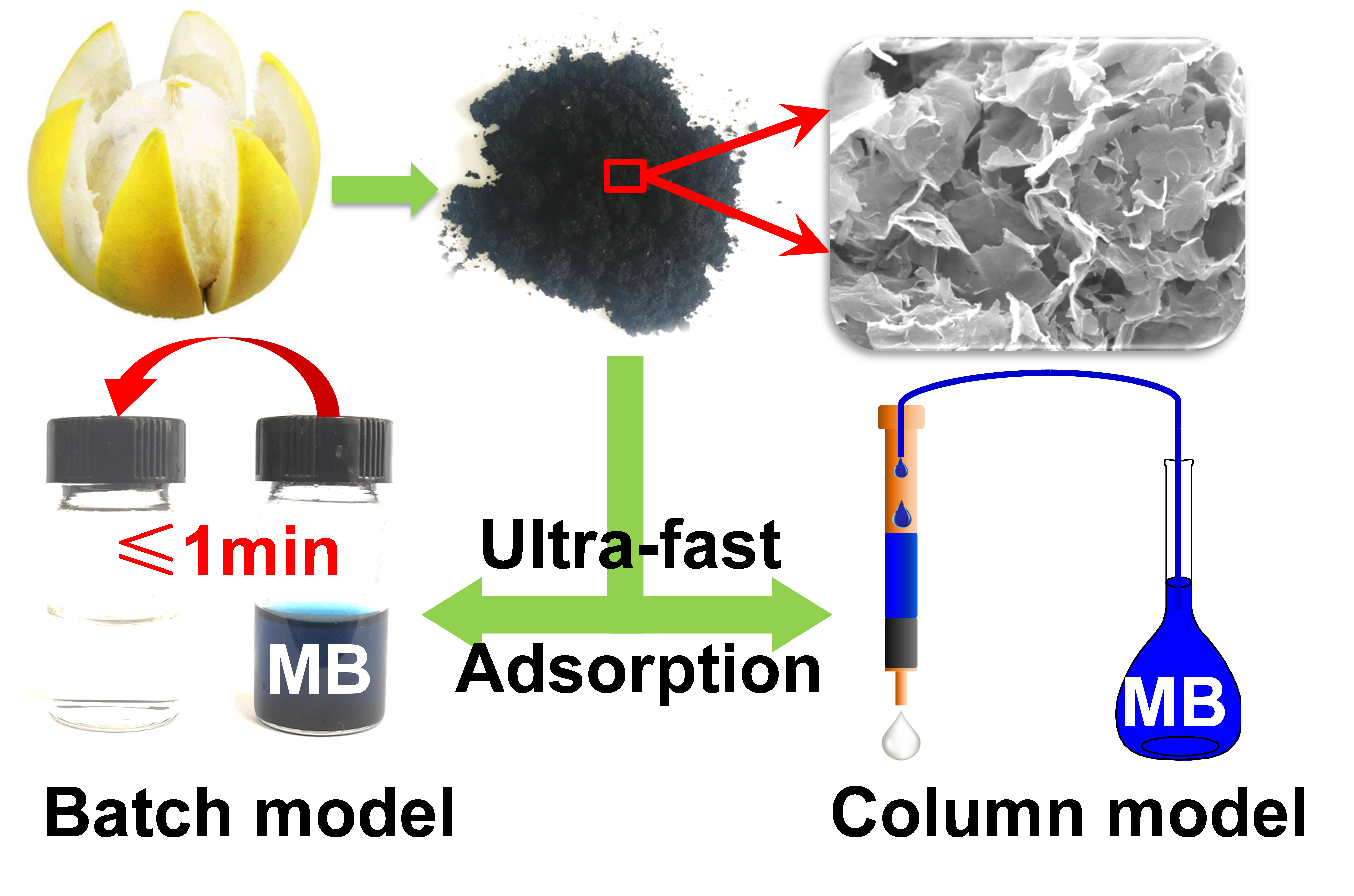
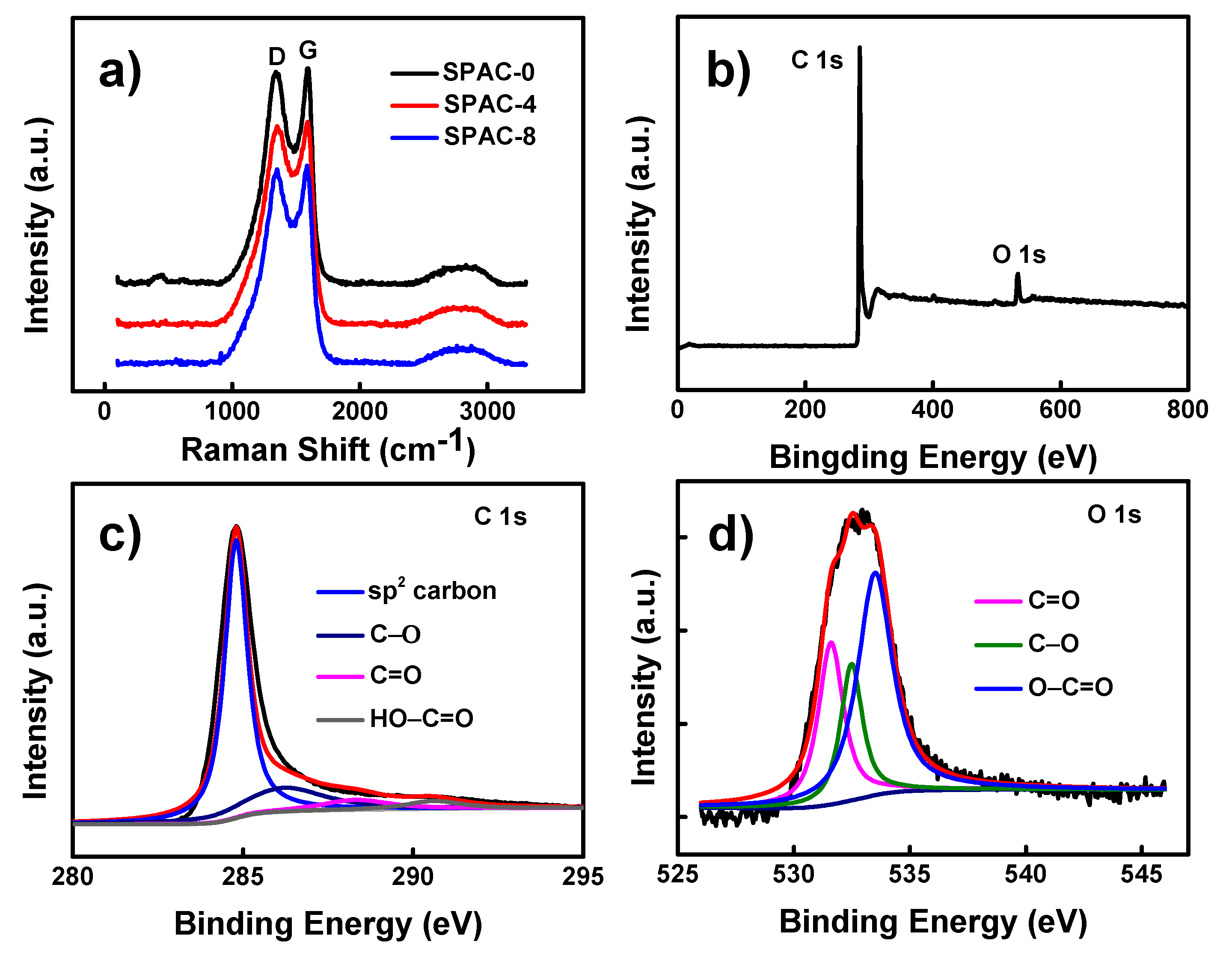
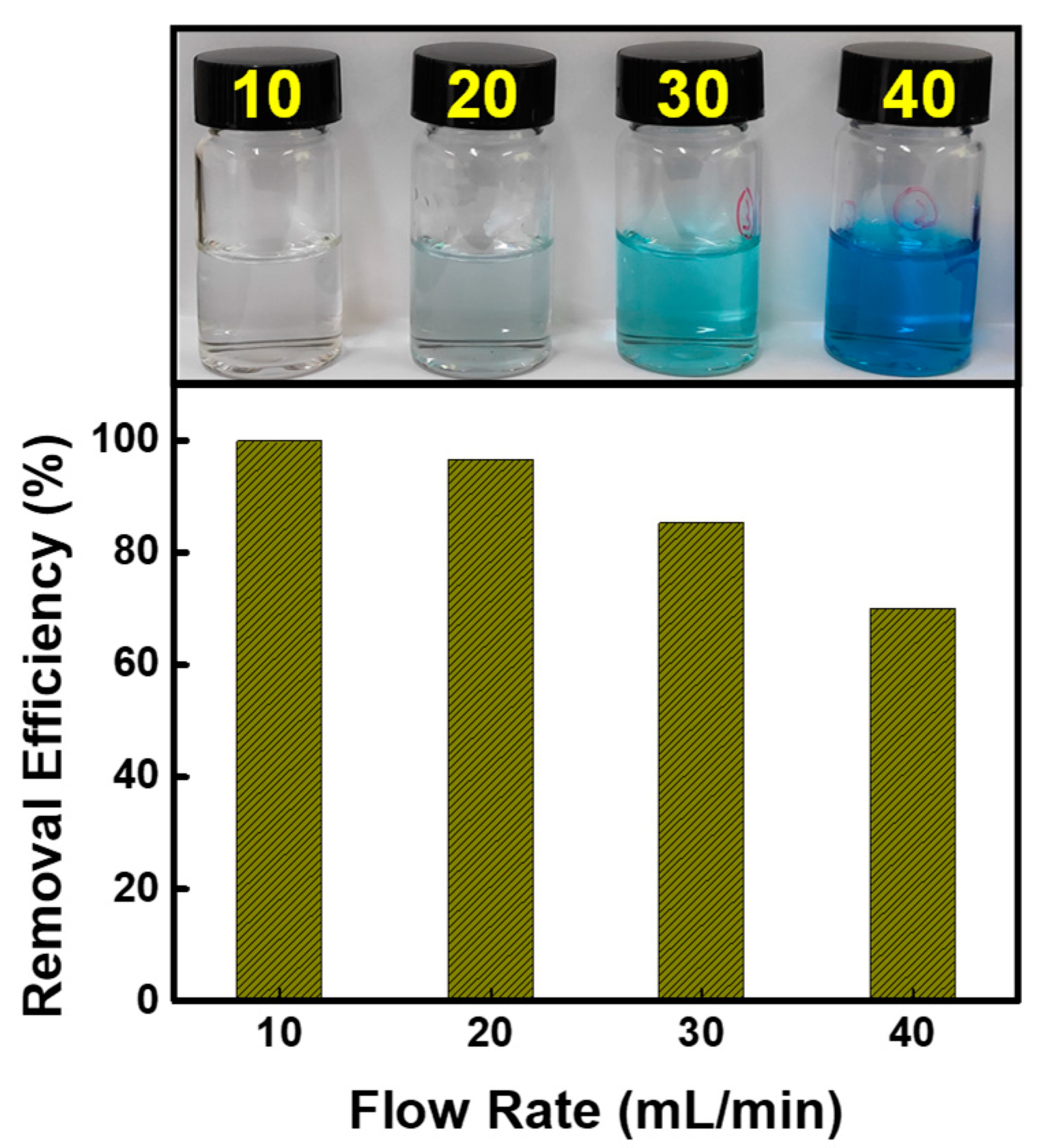
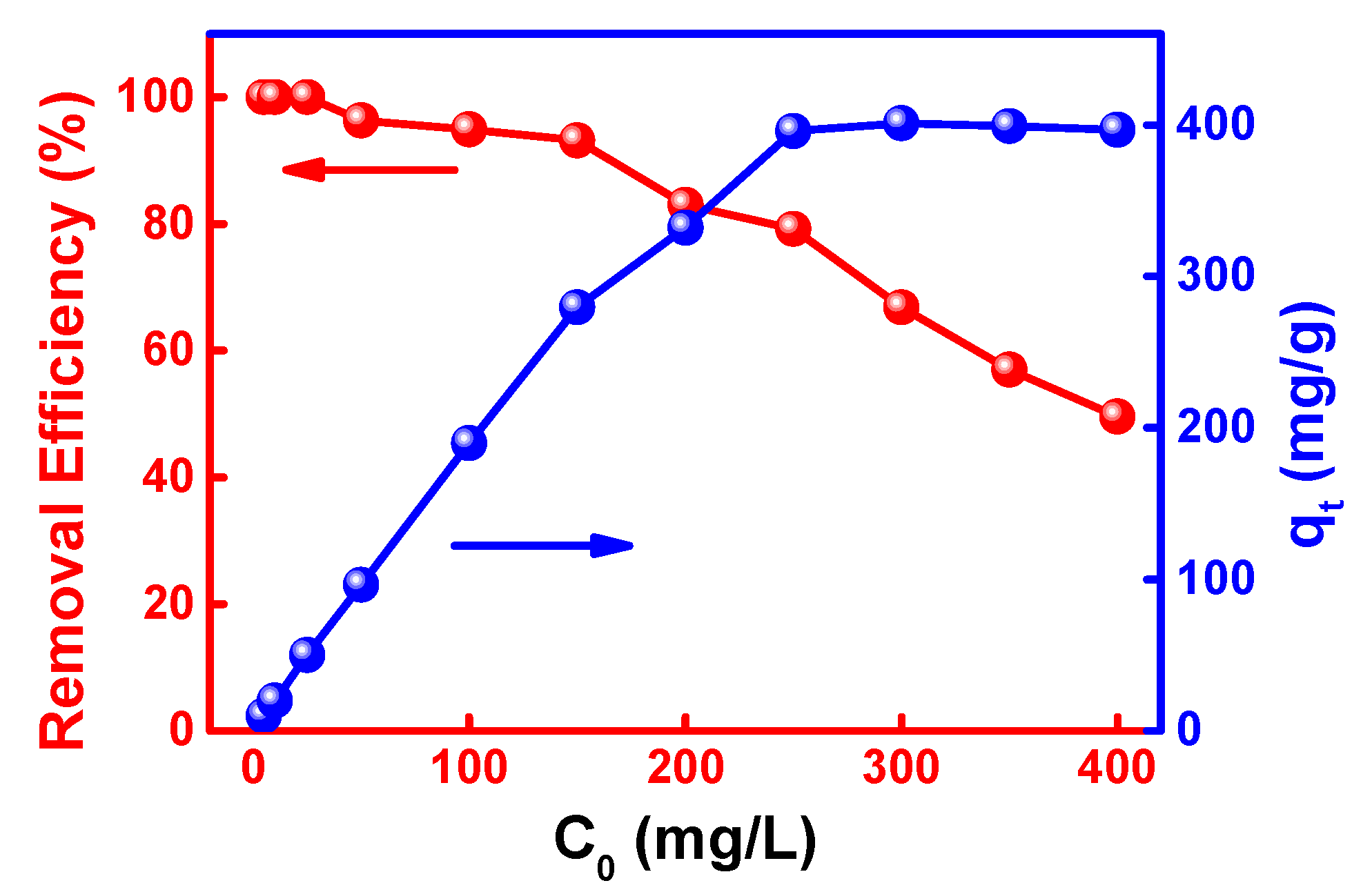
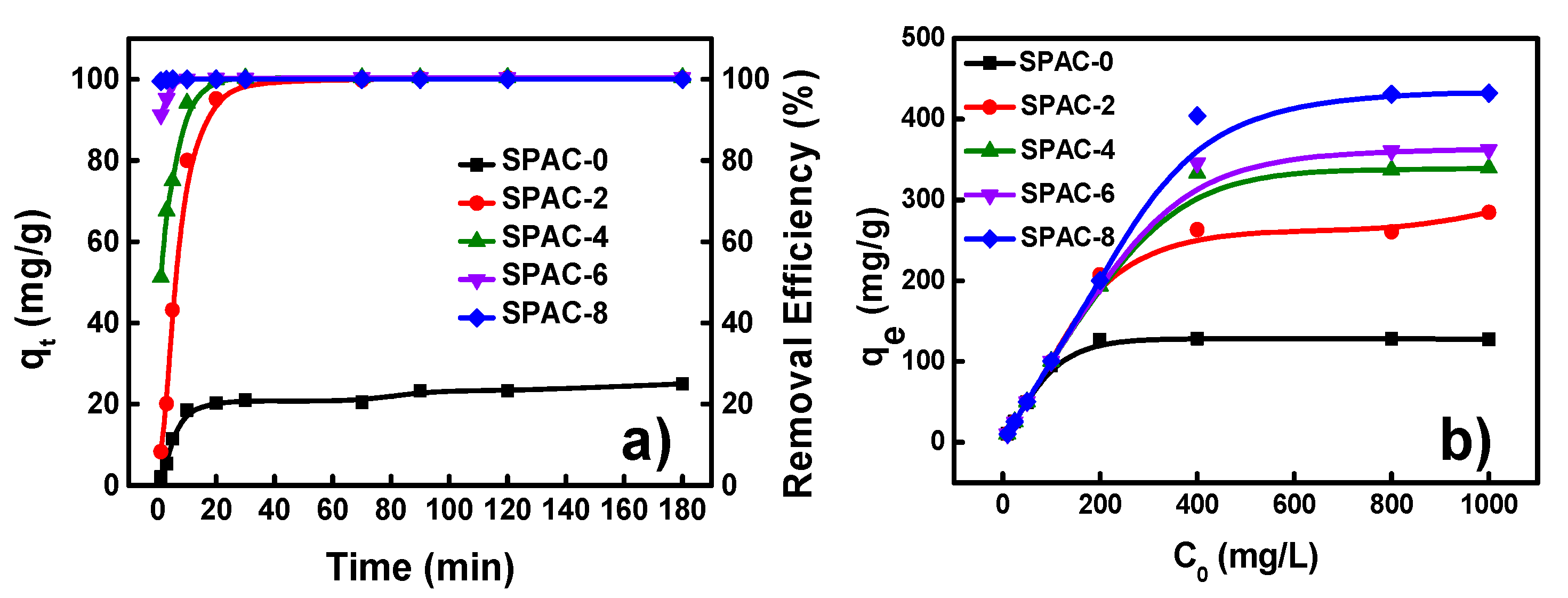
To remove the pollutant methylene blue (MB) from water, a sheet-like skeleton carbon derived from shaddock peels (SPACs) was prepared by NaOH activation followed by a calcination procedure under nitrogen protection in this study. Characterization results demonstrated that the as-prepared SPACs displayed a hierarchically porous structure assembled with a thin sheet-like carbon layer, and the surface area of SPAC-8 (activated by 8 g NaOH) was up to 782.2 m2/g. The as-prepared carbon material presented an ultra-fast and efficient adsorption capacity towards MB due to its macro-mesoporous structure, high surface area, and abundant functional groups. SPAC-8 showed ultrafast and efficient removal capacity for MB dye. Adsorption equilibrium was reached within 1 min with a removal efficiency of 99.6% at an initial concentration of 100 mg/g under batch adsorption model conditions. The maximum adsorption capacity for MB was up to 432.5 mg/g. A pseudo-second-order kinetic model and a Langmuir isotherm model described the adsorption process well, which suggested that adsorption rate depended on chemisorption and the adsorption process was controlled by a monolayer adsorption, respectively. Furthermore, column adsorption experiments showed that 96.58% of MB was removed after passing through a SPAC-8 packed column with a flow rate of 20 mL/min, initial concentration of 50 mg/L, and adsorbent dosage of 5 mg. The as-prepared adsorbent displays potential value in practical applications for dye removal due to its ultrafast and efficient adsorption capacity.
Keywords: shaddock peel-derived carbon; sheet-like skeleton; adsorbent; methylene blue; removal shaddock peel-derived carbon; sheet-like skeleton; adsorbent; methylene blue; removal
Graphical Abstract