Article

Can Managed Aquifer Recharge Overcome Multiple Droughts?
1
Department of Civil and Environmental Engineering, Washington State University, Pullman, WA 99164-2910, USA
2
Earth System Science Interdisciplinary Center, University of Maryland, College Park, MD 20740-3823, USA
3
School of the Environment, Washington State University, Pullman, WA 99164-2812, USA
*
Author to whom correspondence should be addressed.
Water 2021, 13(16), 2278; https://doi.org/10.3390/w13162278
Submission received: 22 July 2021 / Revised: 13 August 2021 / Accepted: 14 August 2021 / Published: 20 August 2021
(This article belongs to the Special Issue Water Resources Systems in a Changing World: Planning and Adaptation)

Abstract

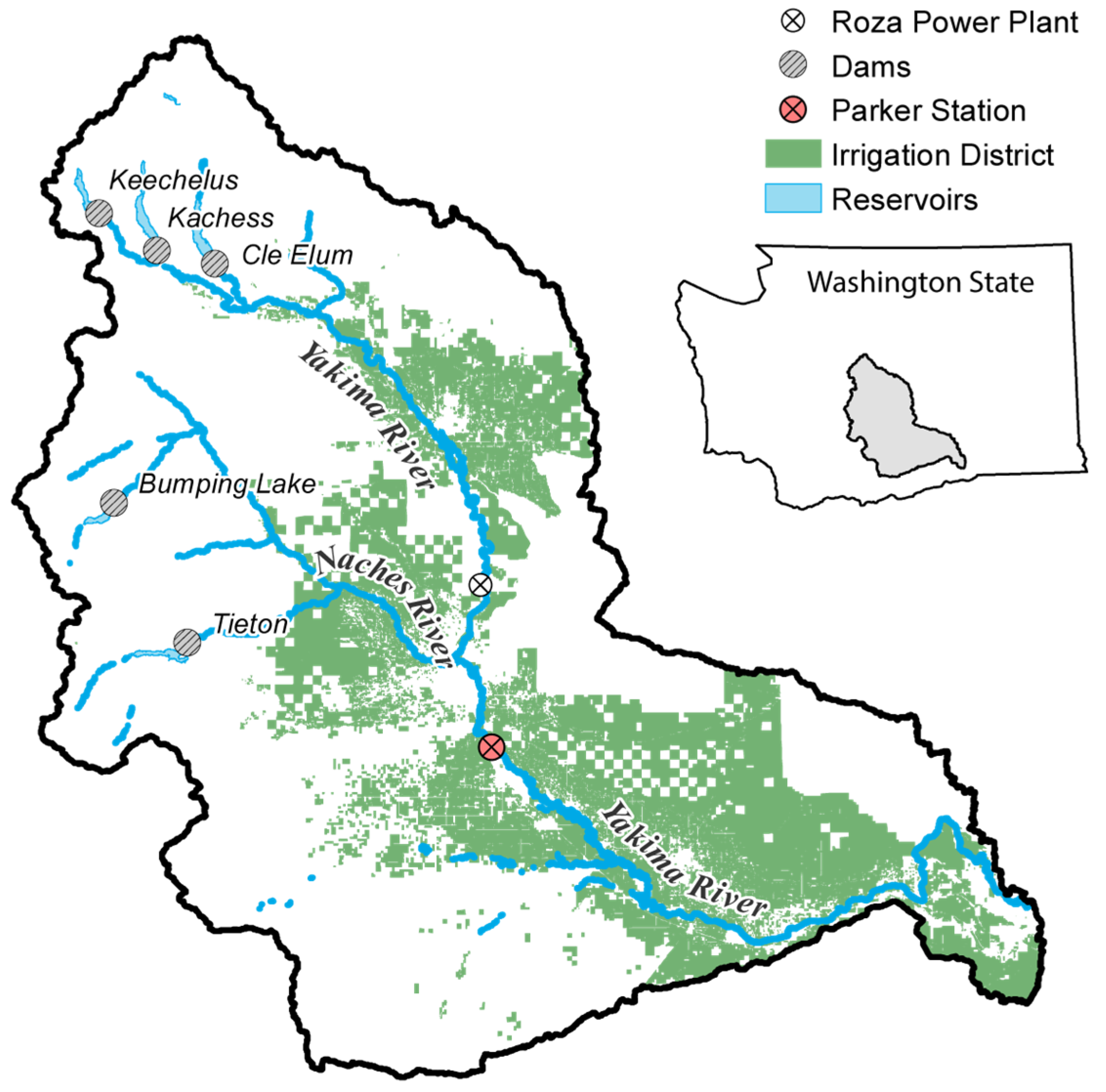
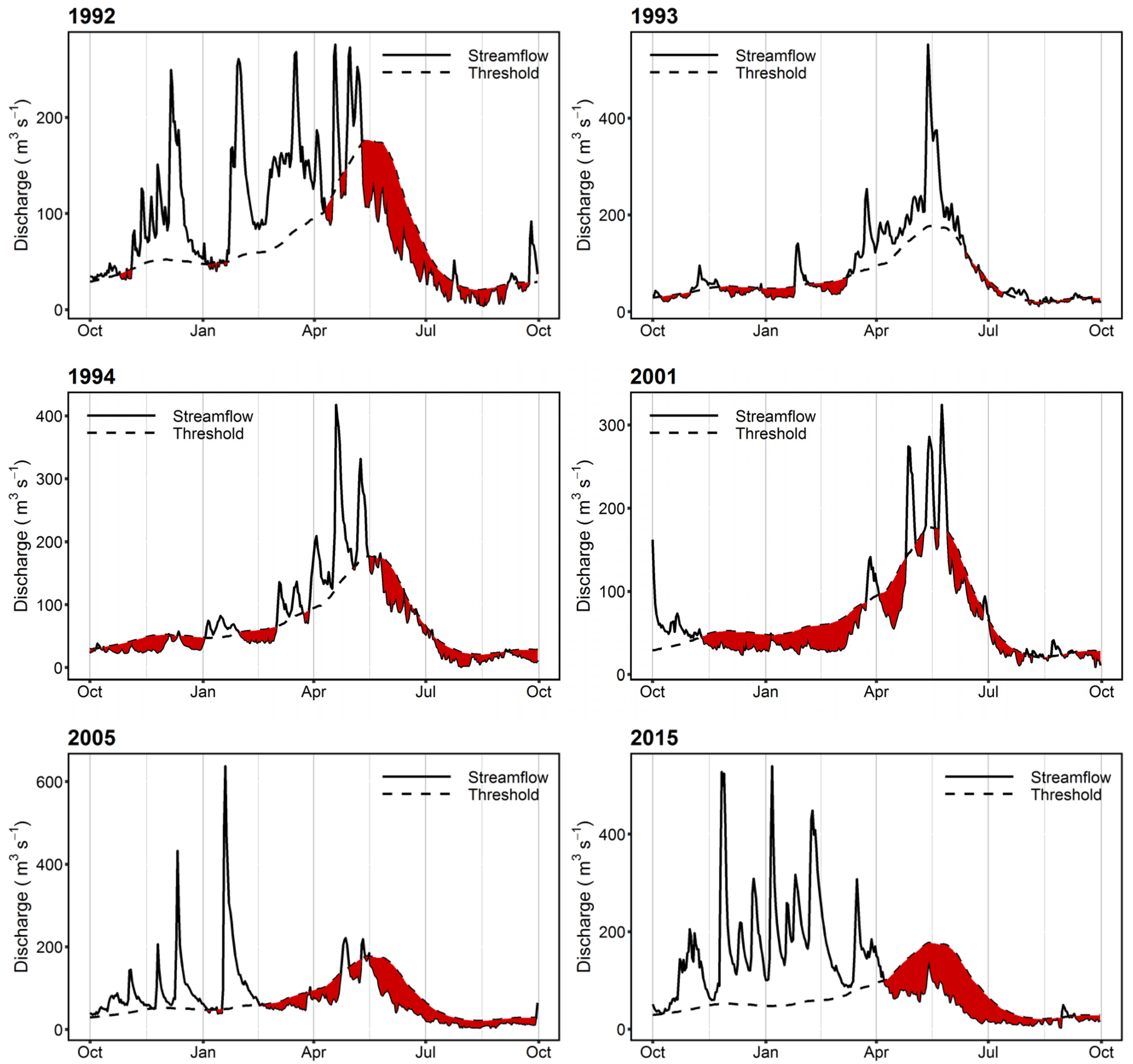
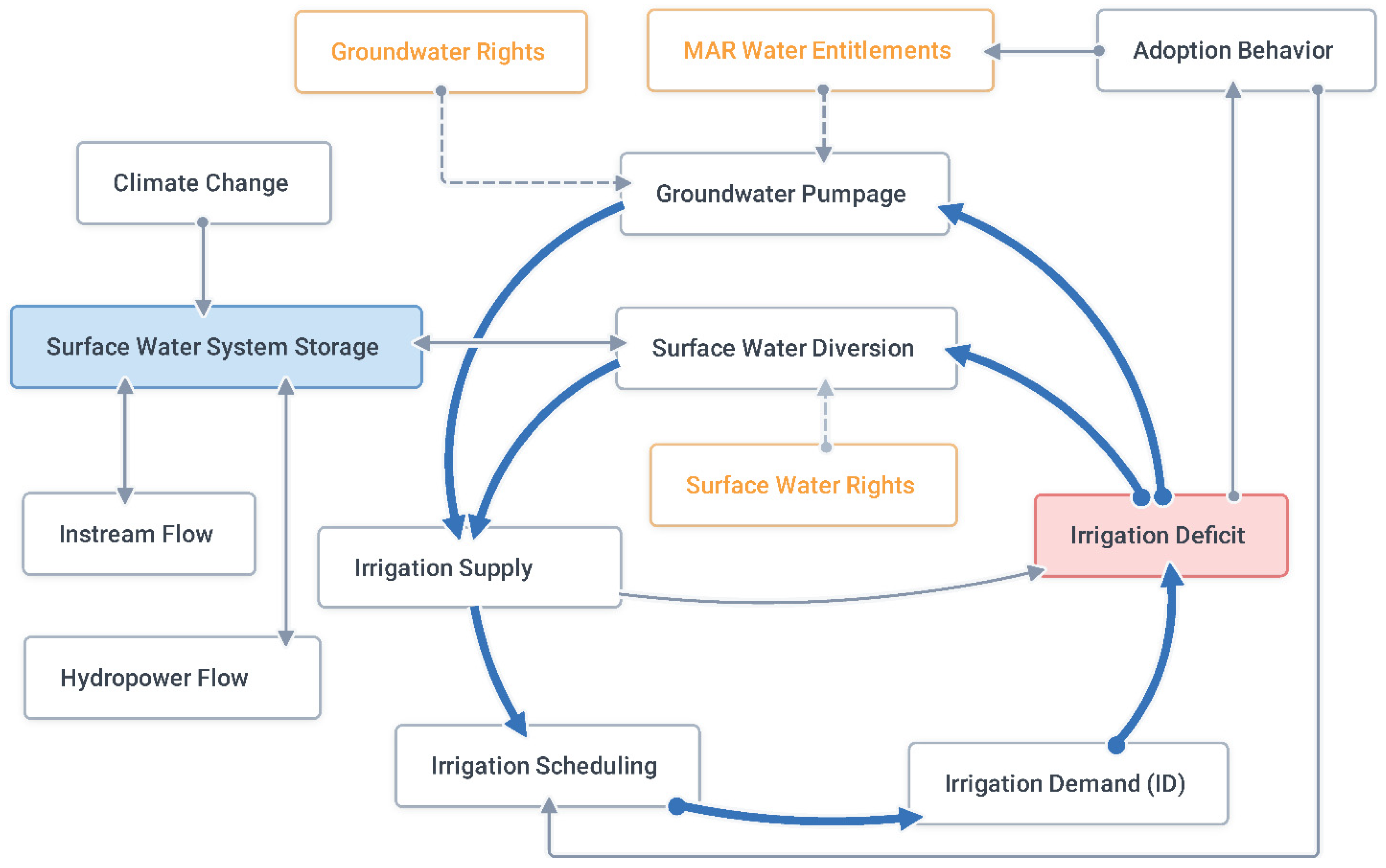
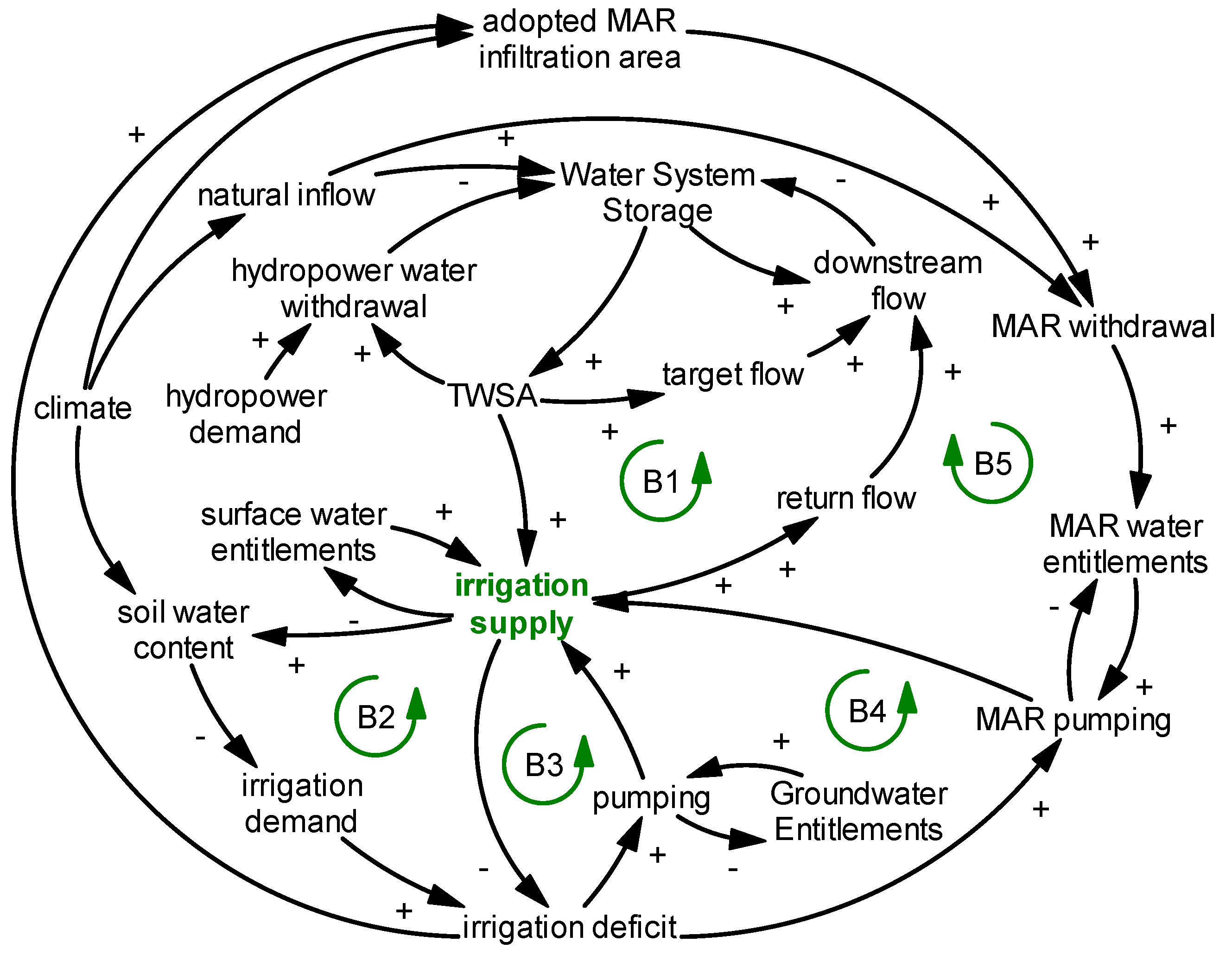
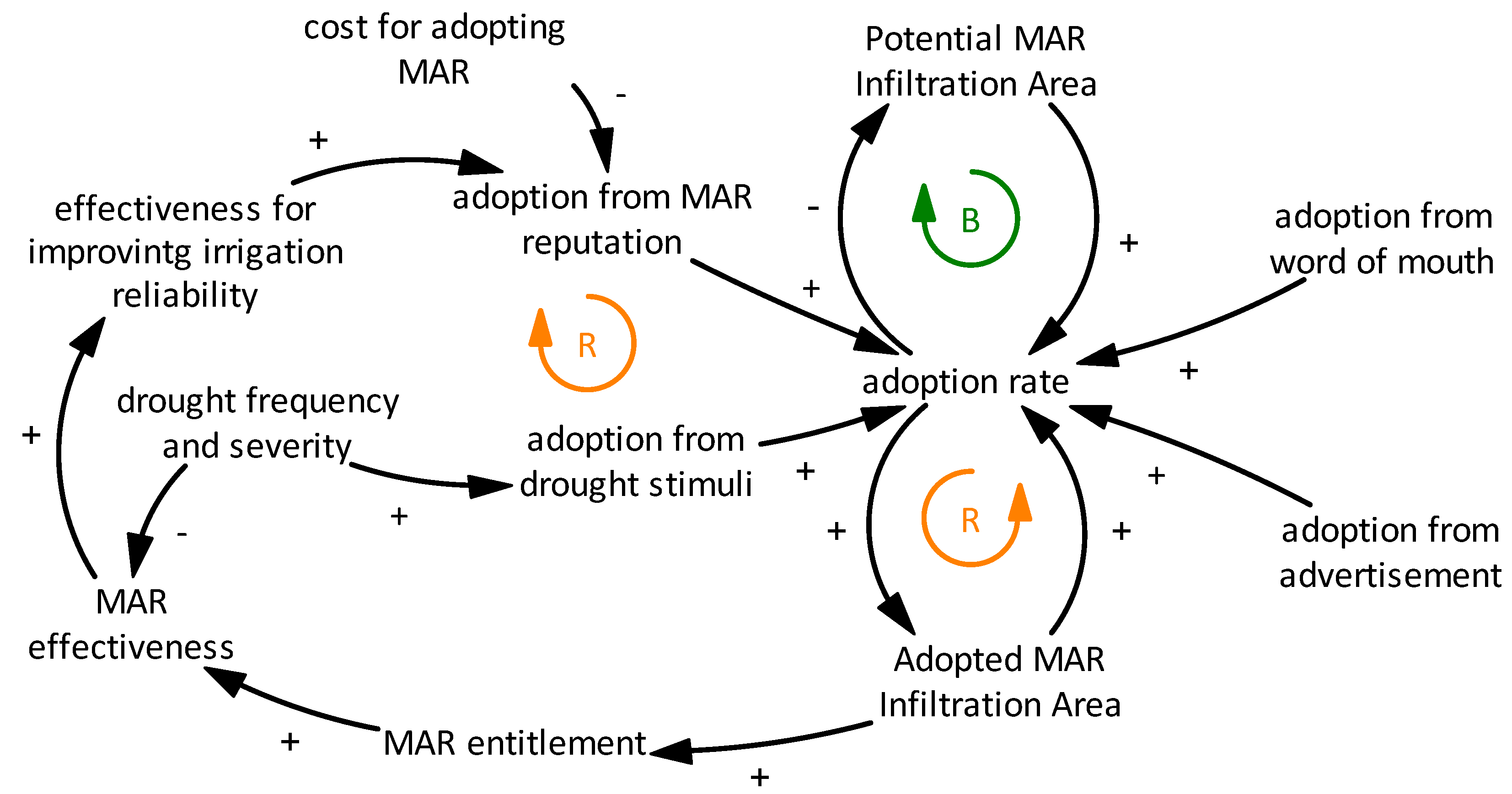
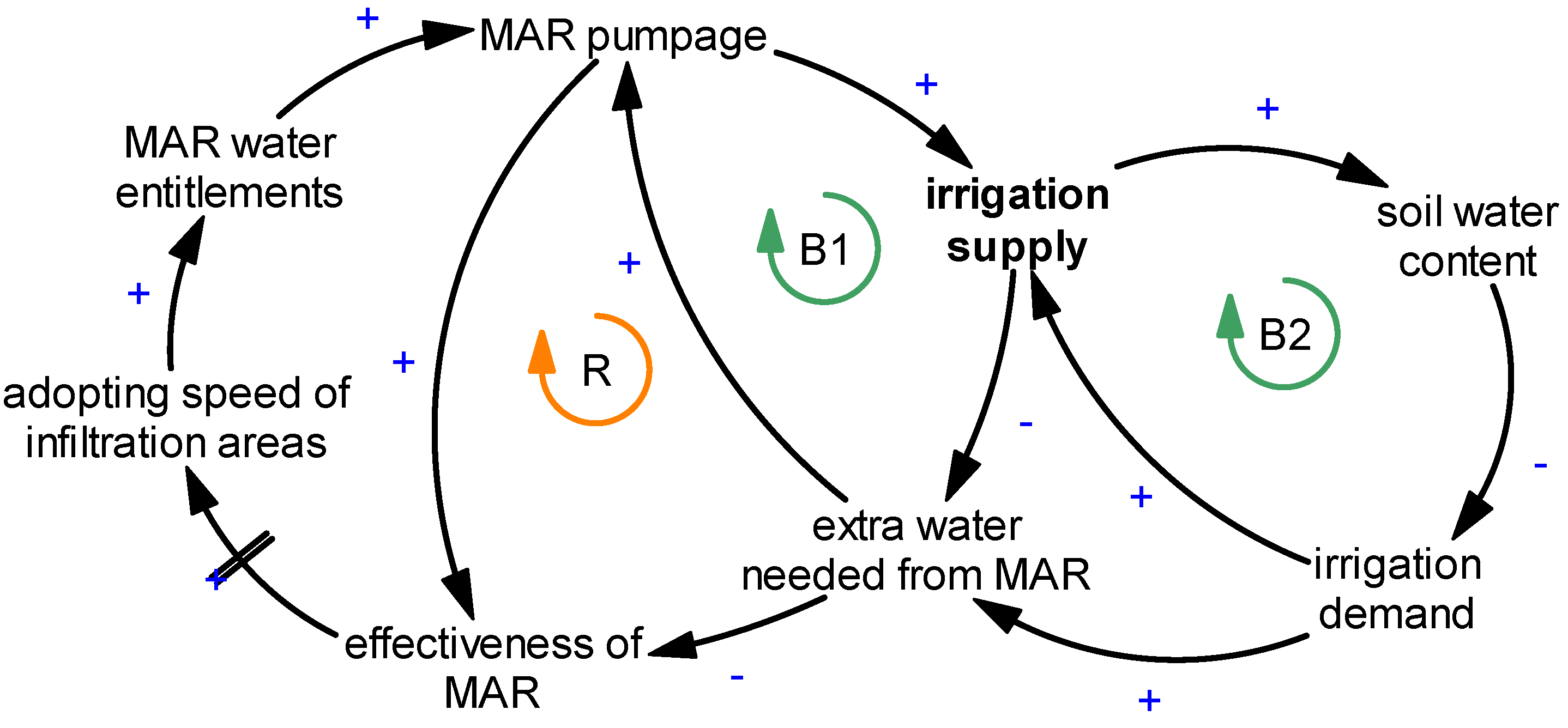
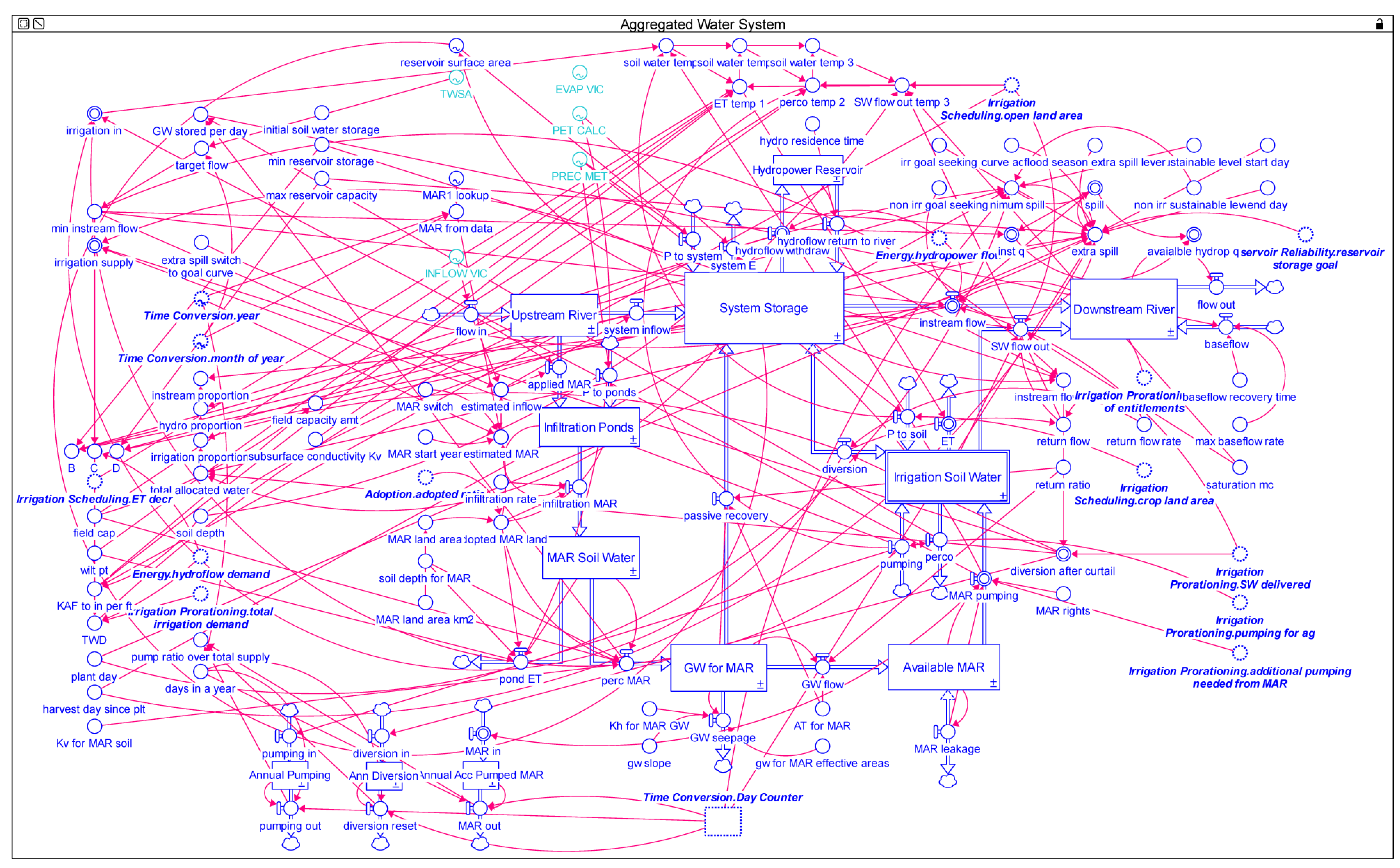
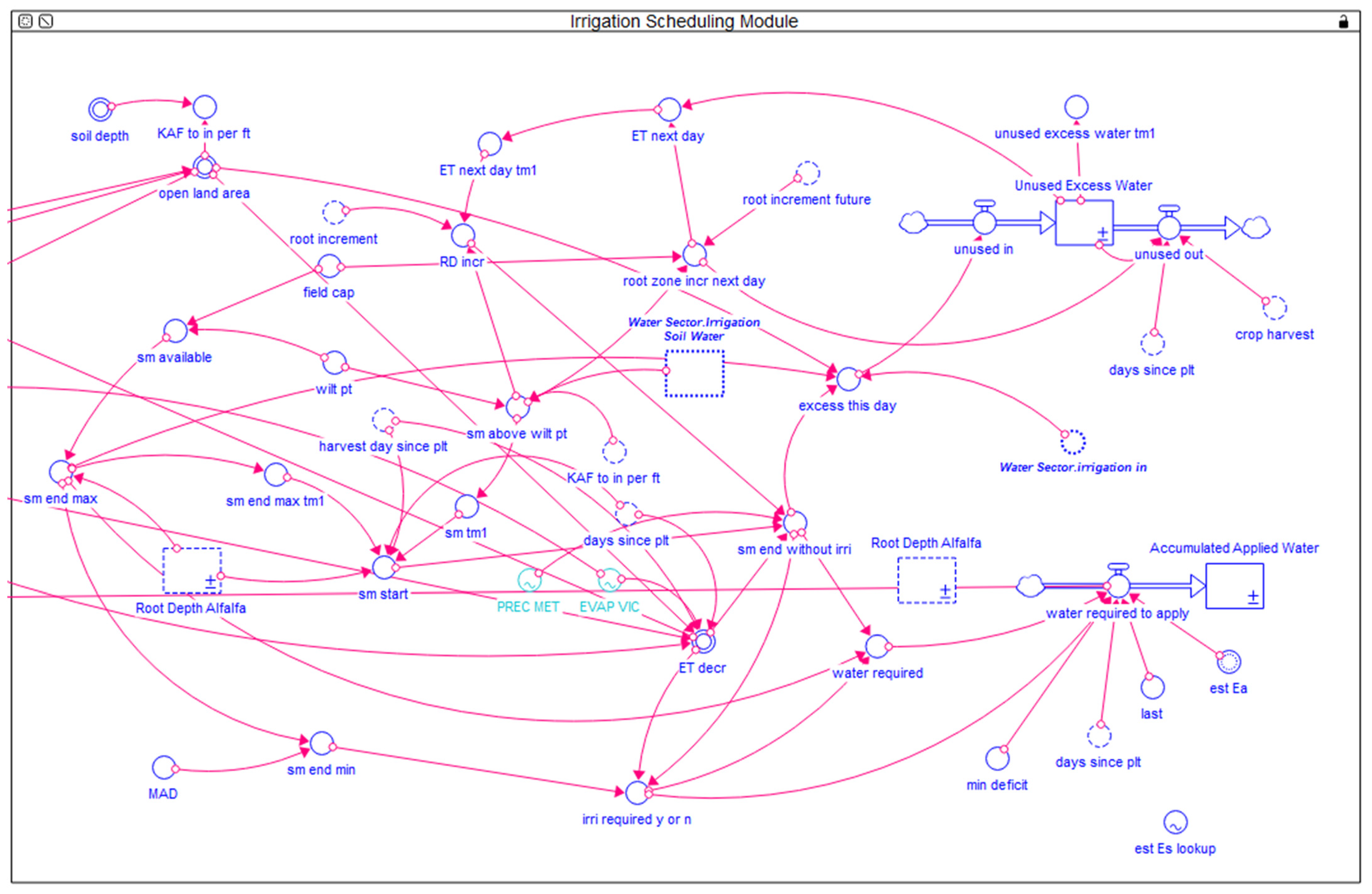
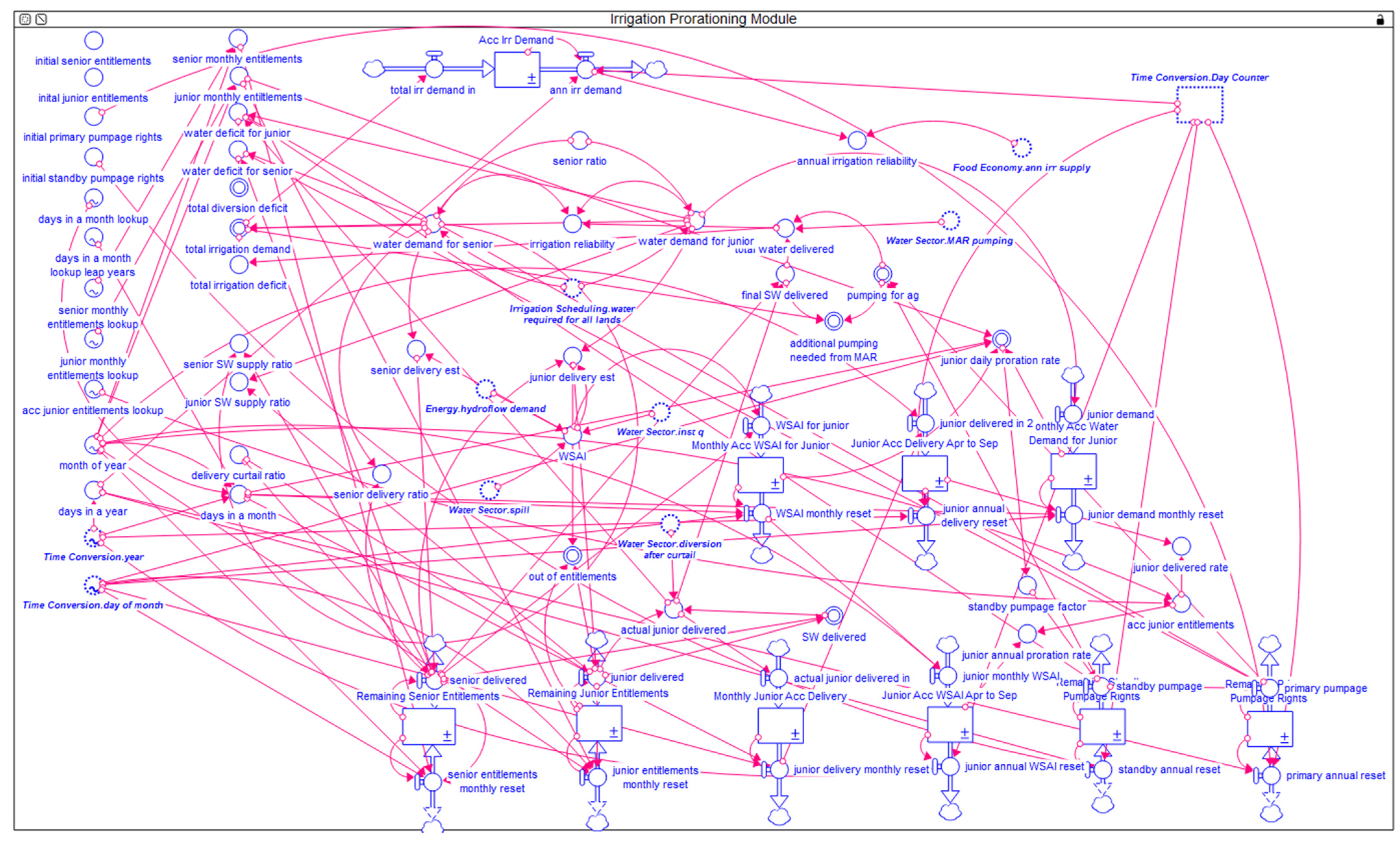
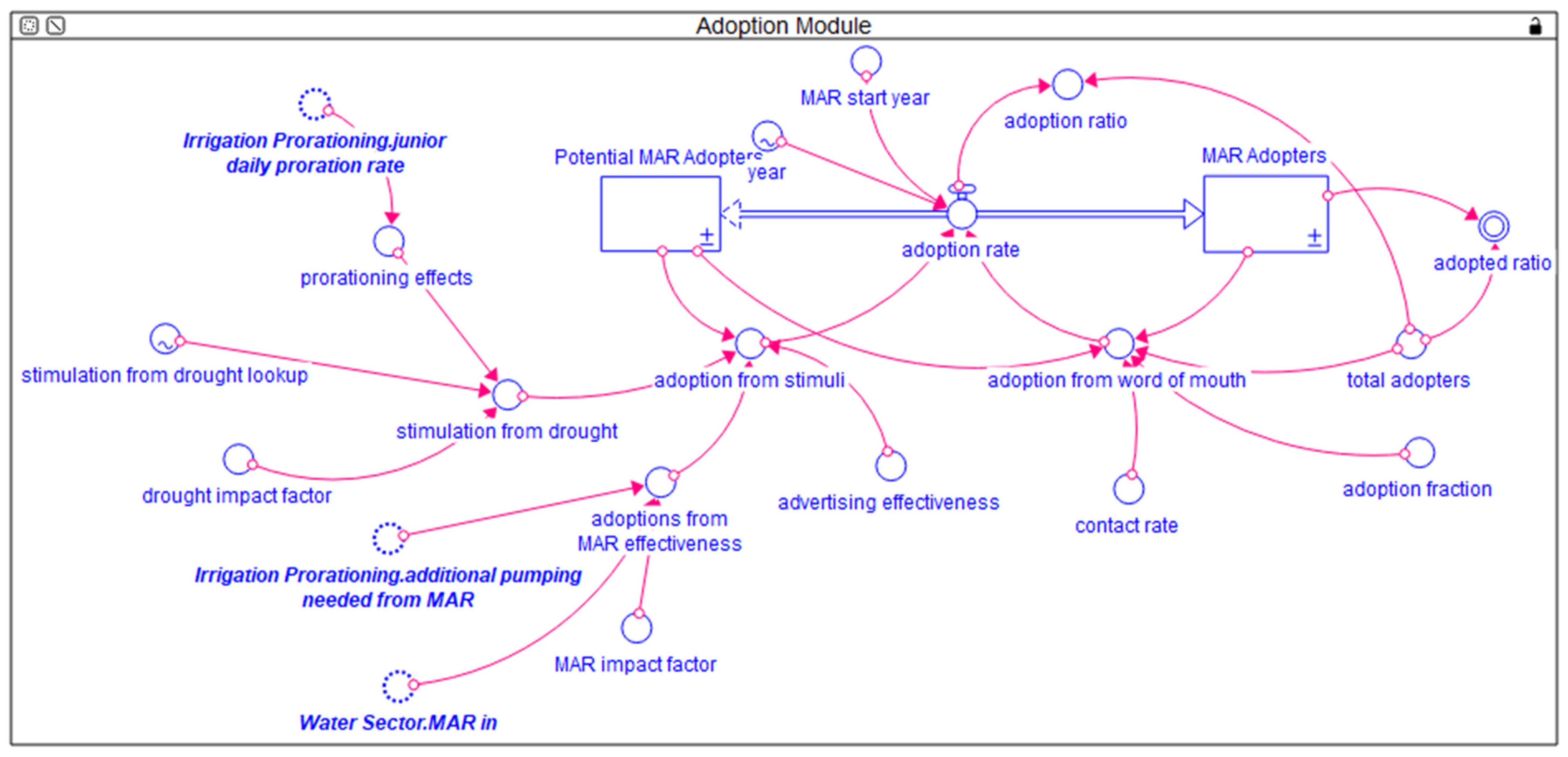
Frequent droughts, seasonal precipitation, and growing agricultural water demand in the Yakima River Basin (YRB), located in Washington State, increase the challenges of optimizing water provision for agricultural producers. Increasing water storage through managed aquifer recharge (MAR) can potentially relief water stress from single and multi-year droughts. In this study, we developed an aggregated water resources management tool using a System Dynamics (SD) framework for the YRB and evaluated the MAR implementation strategy and the effectiveness of MAR in alleviating drought impacts on irrigation reliability. The SD model allocates available water resources to meet instream target flows, hydropower demands, and irrigation demand, based on system operation rules, irrigation scheduling, water rights, and MAR adoption. Our findings suggest that the adopted infiltration area for MAR is one of the main factors that determines the amount of water withdrawn and infiltrated to the groundwater system. The implementation time frame is also critical in accumulating MAR entitlements for single-year and multi-year droughts mitigation. In addition, adoption behaviors drive a positive feedback that MAR effectiveness on drought mitigation will encourage more MAR adoptions in the long run. MAR serves as a promising option for water storage management and a long-term strategy for MAR implementation can improve system resilience to unexpected droughts.
Keywords: droughts; food-energy-water nexus; irrigation reliability; management aquifer recharge; system dynamics modeling; water resources management droughts; food-energy-water nexus; irrigation reliability; management aquifer recharge; system dynamics modeling; water resources management