Article

Assessing the Impact of DMAs and the Use of Boosters on Chlorination in a Water Distribution Network in Greece


by
Stavroula Tsitsifli
* and
Vasilis Kanakoudis
Civil Engineering Department, University of Thessaly, 38334 Volos, Greece
*
Author to whom correspondence should be addressed.
Water 2021, 13(16), 2141; https://doi.org/10.3390/w13162141
Submission received: 25 June 2021 / Revised: 28 July 2021 / Accepted: 30 July 2021 / Published: 4 August 2021

Abstract

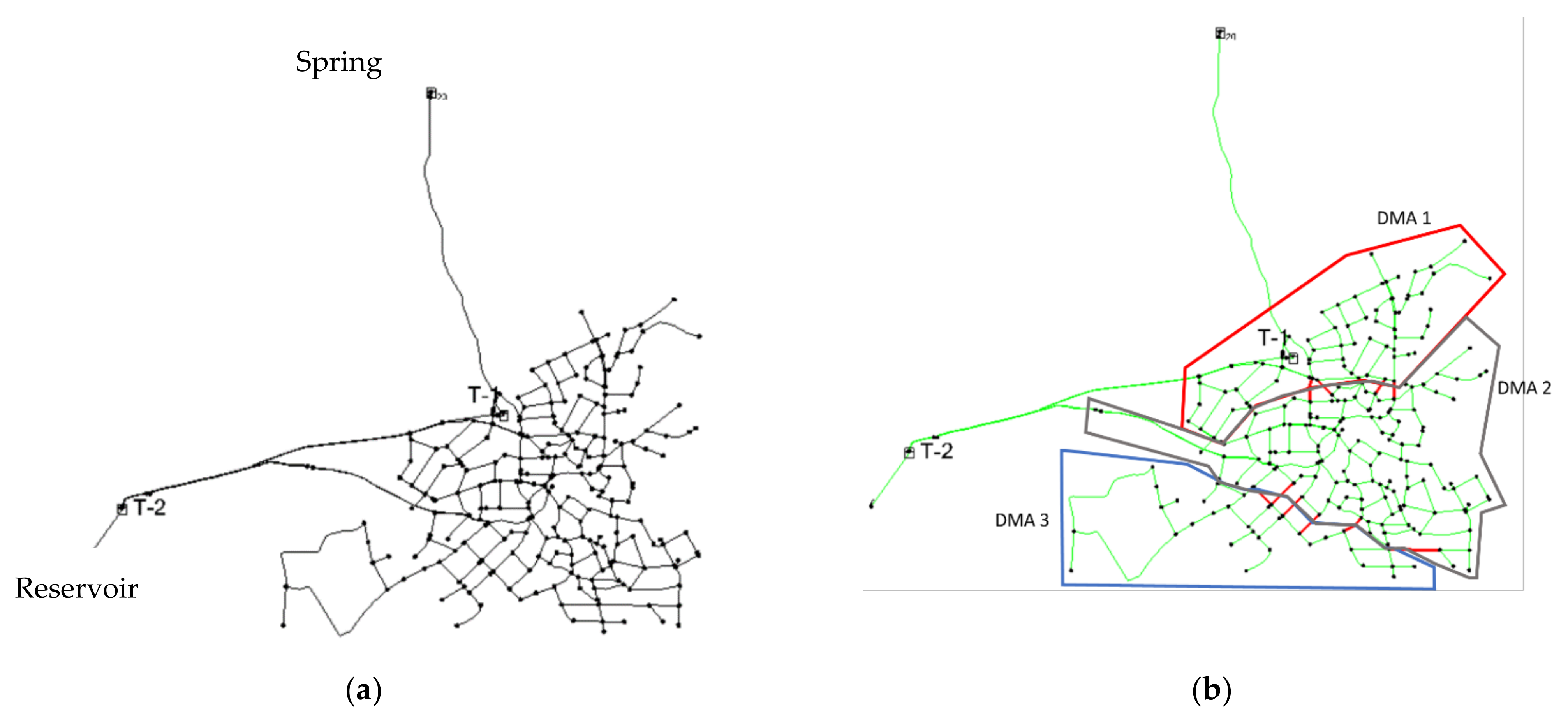
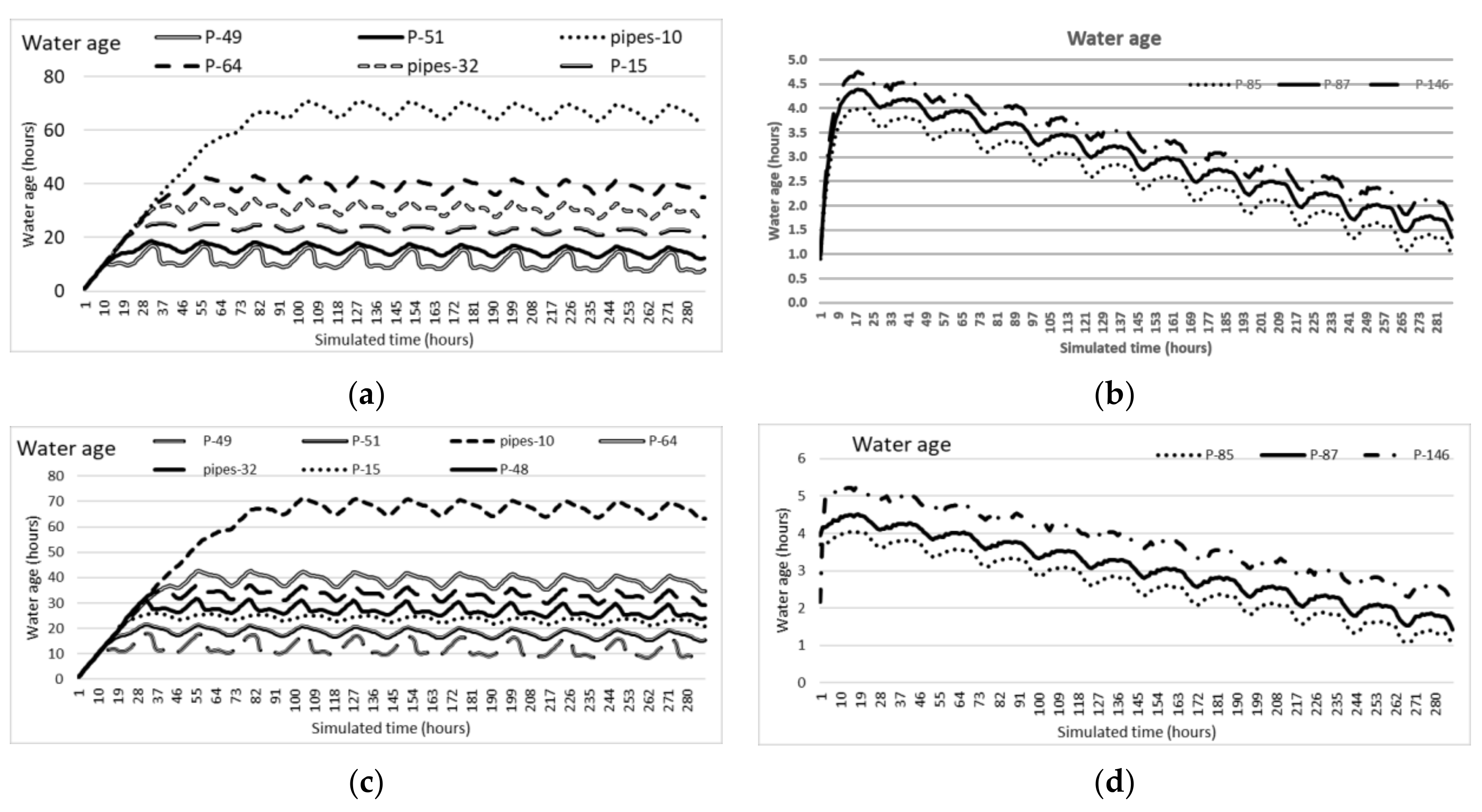
Disinfection is one of the most important water treatment processes as it inactivates pathogens providing safe drinking water to the consumers. A fresh-water distribution network is a complex system where constant monitoring of several parameters and related managerial decisions take place in order for the network to operate in the most efficient way. However, there are cases where some of the decisions made to improve the network’s performance level, such as reduction of water losses, may have negative impacts on other significant operational processes such as the disinfection. In particular, the division of a water distribution network into district metered areas (DMAs) and the application of various pressure management measures may impact the effectiveness of the water chlorination process. Two operational measures are assessed in this paper: (a) the use of inline chlorination boosters to achieve more efficient chlorination; and (b) how the DMAs formation impacts the chlorination process. To achieve this, the water distribution network of a Greek town is chosen as a case study where several scenarios are being thoroughly analyzed. The assessment process utilizes the network’s hydraulic simulation model, which is set up in Watergems V8i software, forming the baseline to develop the network’s water quality model. The results proved that inline chlorination boosters ensure a more efficient disinfection, especially at the most remote parts/nodes of the network, compared to conventional chlorination processes (e.g., at the water tanks), achieving 100% safe water volume and consuming almost 50% less chlorine mass. DMAs’ formation results in increased water age values up to 8.27%, especially at the remote parts/nodes of the network and require more time to achieve the necessary minimum effective chlorine concentration of 0.2 mg/L. However, DMAs formation and pressure management measures do not threaten the chlorination’s efficiency. It is important to include water age and residual chlorine as criteria when optimizing water pressure and the division of DMAs.
Keywords: water supply system; drinking water quality; disinfection; chlorination boosters; district metered areas water supply system; drinking water quality; disinfection; chlorination boosters; district metered areas