Article

An Integrated Assessment and Factor Analysis of Water Related Environmental Risk to Cities in the Yangtze River Economic Belt
1
College of Geomatics, Xi’an University of Science and Technology, Xi’an 710054, China
2
Key Laboratory of Land Surface Pattern and Simulation, Institute of Geographic Sciences and Natural Resources Research, Chinese Academy of Sciences, Beijing 100101, China
3
University of Chinese Academy of Sciences, Beijing 100049, China
4
School of Soil and Water Conservation, Beijing Forestry University, Beijing 100083, China
*
Author to whom correspondence should be addressed.
Water 2021, 13(16), 2140; https://doi.org/10.3390/w13162140
Submission received: 13 July 2021 / Revised: 30 July 2021 / Accepted: 31 July 2021 / Published: 4 August 2021
(This article belongs to the Special Issue Optimal Utilization and Management of Natural Resources)

Abstract

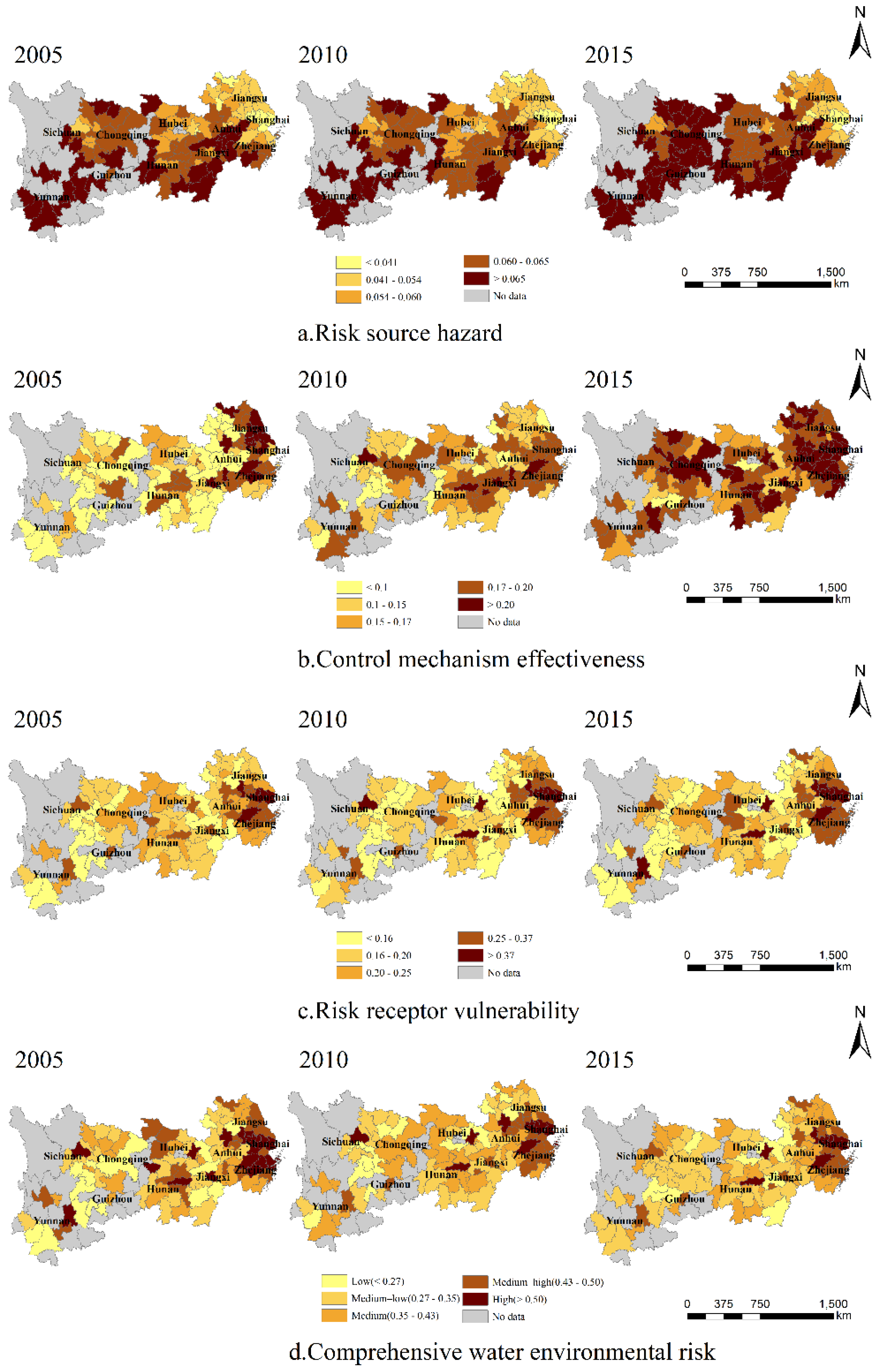
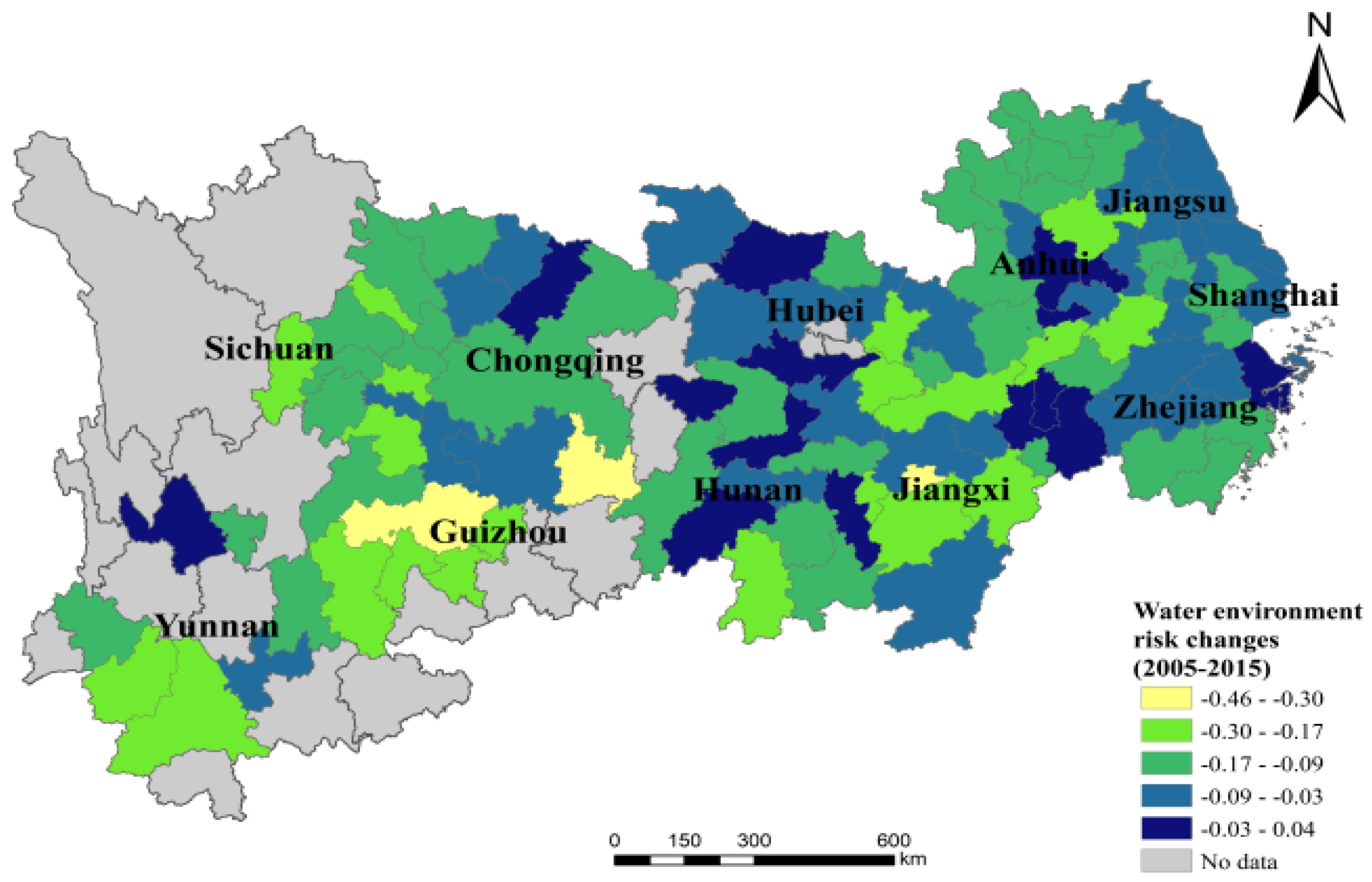
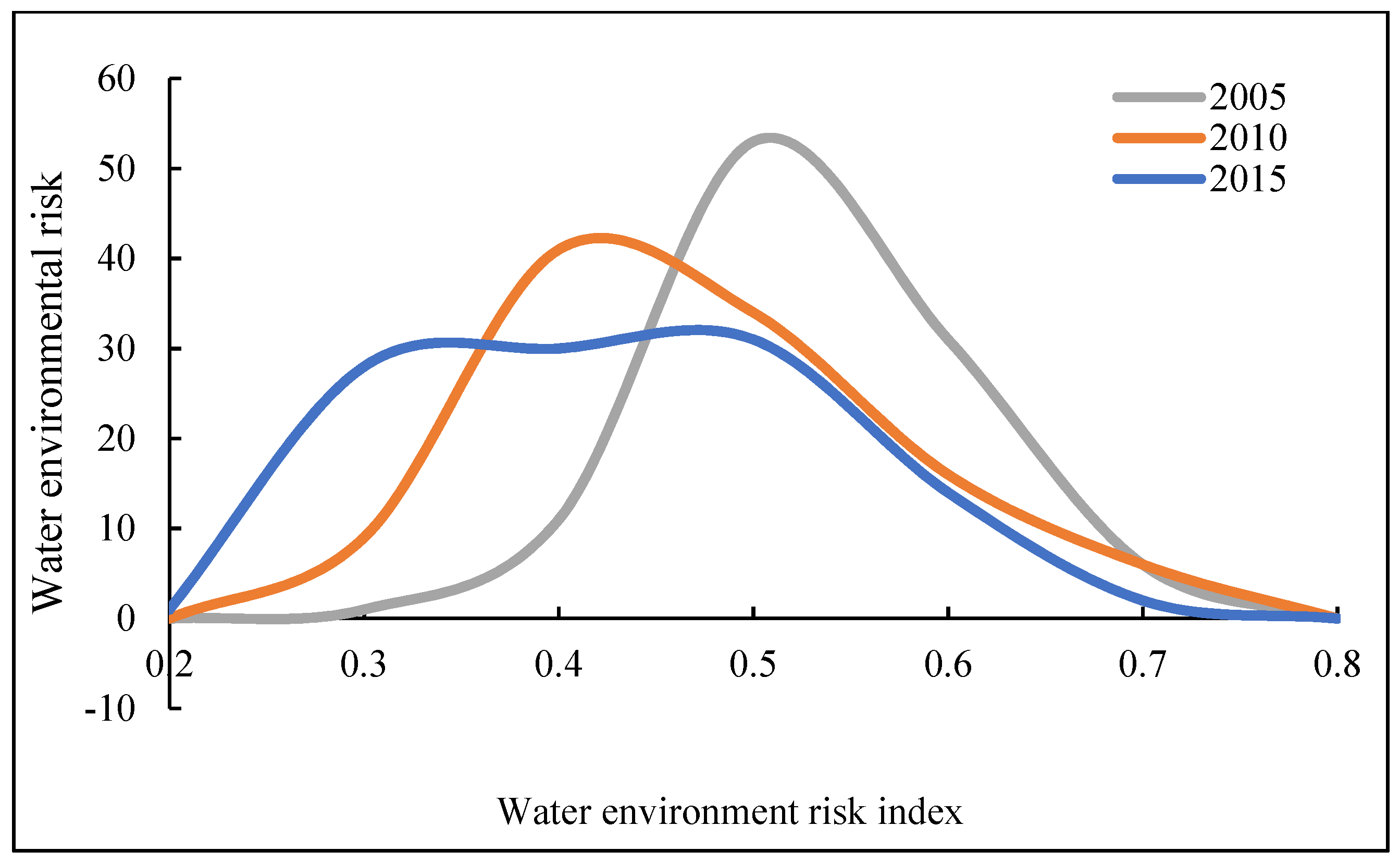
With rapid development of the economy and urbanization, water-related environmental risk in urban areas has increased and hindered social-economic development and ecological protection. The assessment of water-related environmental risk is of vital importance to the sustainable development of the Yangtze River Economic Belt (YREB). This study constructed a comprehensive assessment index system for water-related environmental risks from three perspectives: the hazards posed by risk sources, the effectiveness of the control mechanisms, and the vulnerability of the risk receptors. Employing the entropy method, the water-related environmental risks of cities in the YREB from 2000 to 2015 were comprehensively evaluated, and the obstacle degree model was used to analyze the associated influencing factors of the water-related environmental risk. The results showed that the overall level of water-related environmental risk of the YREB presented a significant spatial gradient characterized by “downstream risk > midstream risk > upstream risk”. The areas with higher risks were mainly distributed in the Yangtze River Delta in the downstream area, and Wuhan and Changsha in the midstream area, where their risk receptors were highly vulnerable, and efforts should be made to improve the resilience of these areas. In terms of temporal change, the average value of the comprehensive water-related environmental risk of the YREB dropped from 0.493 in 2005 to 0.392 in 2015, with a reduction rate ranging from about 16.55 to 25.76%. The number of cities with medium-high to high risk had gradually decreased, and the number of cities with medium, medium-low, and low risk continued to increase. The water-related environmental risk of the YREB as a whole is in the transition stage from high risk level to medium and low risk level. Specifically, the hazards posed by risk sources had increased continually, and especially increased significantly in the midstream of the YREB; the effectiveness of risk control mechanisms had increased throughout the region, with downstream cities mainly having a high level of effectiveness; the areas with high vulnerability of the risk receptors were mainly concentrated in the Yangtze River Delta and showed an upward trend. Overall, the main source of water-related environmental risks and differences among the upstream, midstream and downstream cities had shifted from the hazards posed by risk sources to the effectiveness of risk control mechanisms and the vulnerability of the risk receptor. The main factors affecting the water-related environmental risk in the order of average obstacle degree were per capita GDP (34.43%), the number of beds per thousand people (18.70%) and the industrial structure height (15.55%). Therefore, promoting the adjustment of industrial structure, improving economic efficiency, developing the regional social economy, and improving and perfecting the construction of environmental protection infrastructure are effective ways to realize the mitigation and resolution of water-related environmental risks.
Keywords: water-related environmental risk assessment; entropy weight method; obstacle degree model; risk management; Yangtze River Economic Belt water-related environmental risk assessment; entropy weight method; obstacle degree model; risk management; Yangtze River Economic Belt