Case Report

Use of Seasonal Streamflow Forecasts for Flood Mitigation with Adaptive Reservoir Operation: A Case Study of the Chao Phraya River Basin, Thailand, in 2011


1
Department of Civil and Environmental Engineering, School of Environment and Society, Tokyo Institute of Technology, 2-12-1-M1-6 Ookayama, Meguro-ku, Tokyo 152-8552, Japan
2
Global and Local Environment Co-creation Institute (GLEC), Ibaraki University, 2-2-35 Sakuragawa, Mito, Ibaraki 310-0801, Japan
*
Author to whom correspondence should be addressed.
Water 2020, 12(11), 3210; https://doi.org/10.3390/w12113210
Submission received: 2 October 2020 / Revised: 9 November 2020 / Accepted: 12 November 2020 / Published: 16 November 2020
(This article belongs to the Section Water Resources Management, Policy and Governance)

Abstract

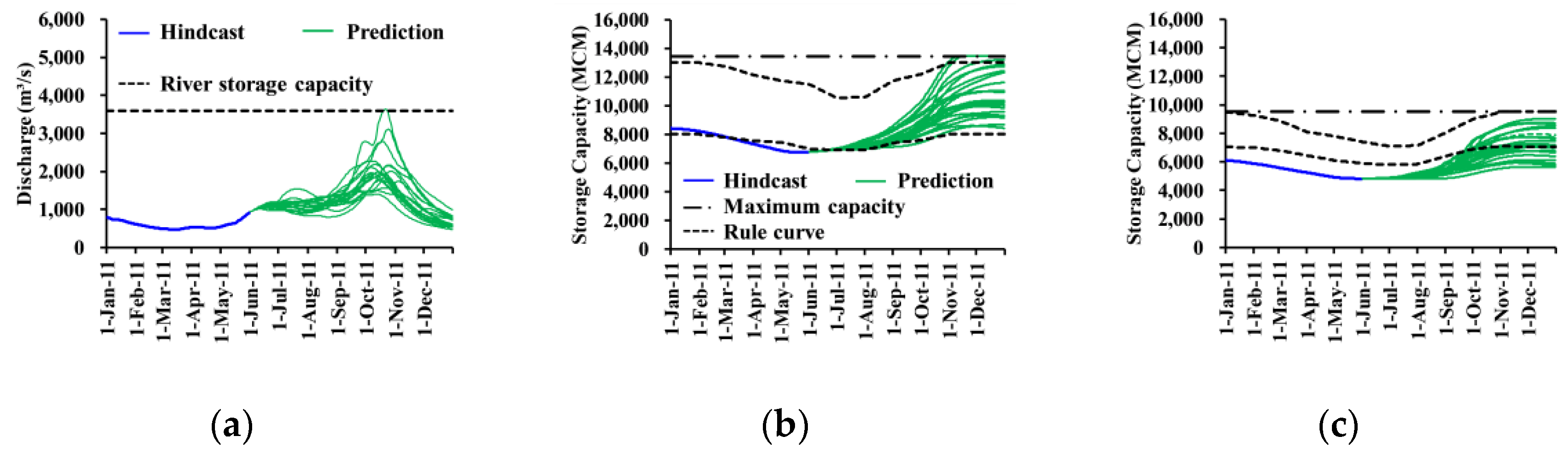
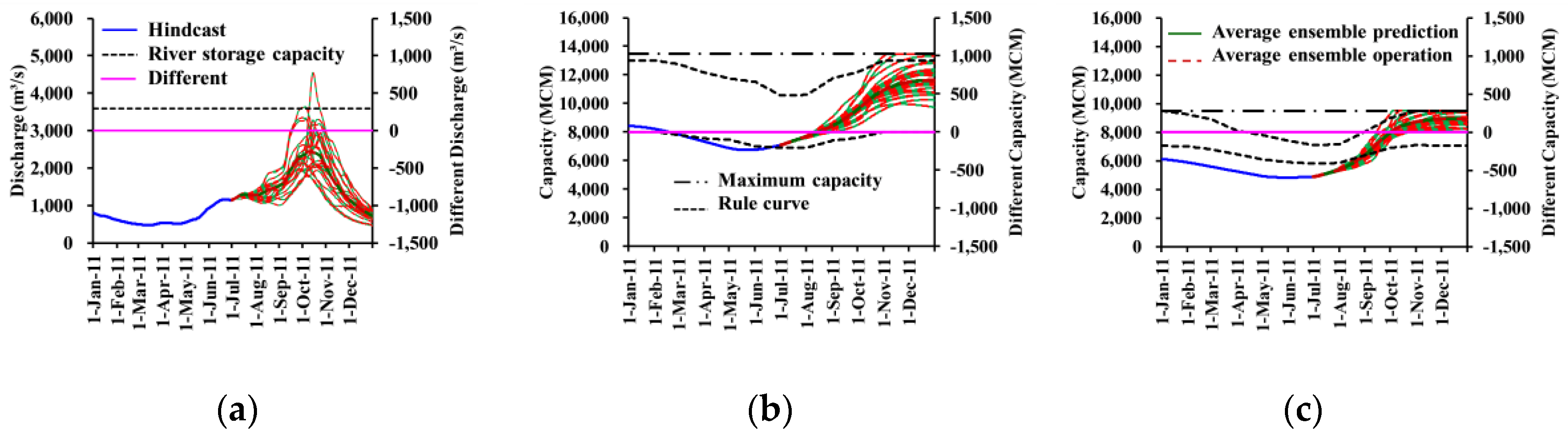
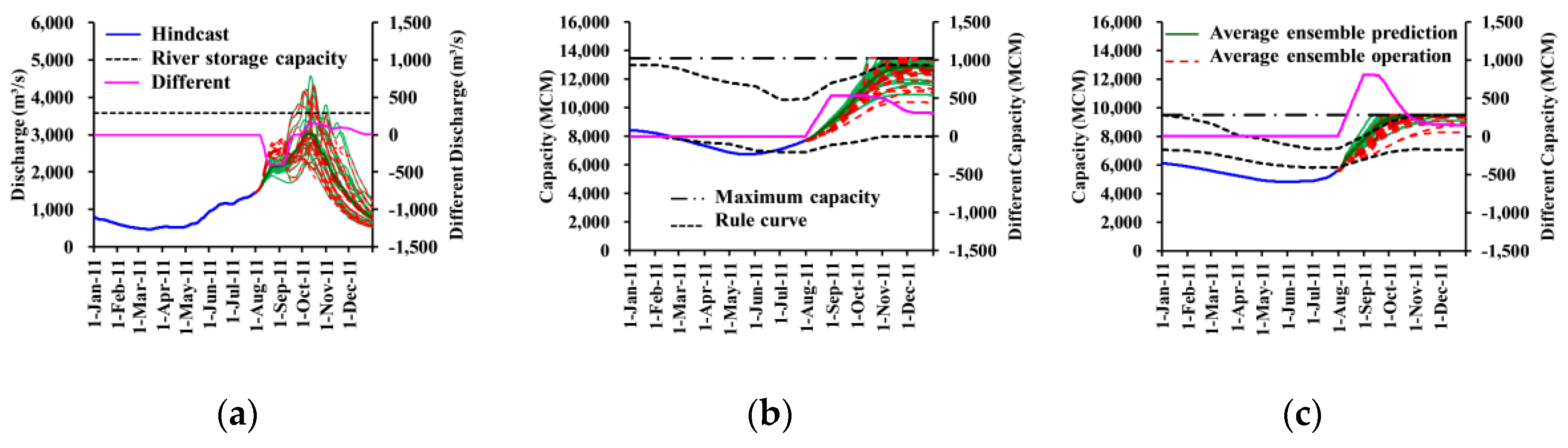
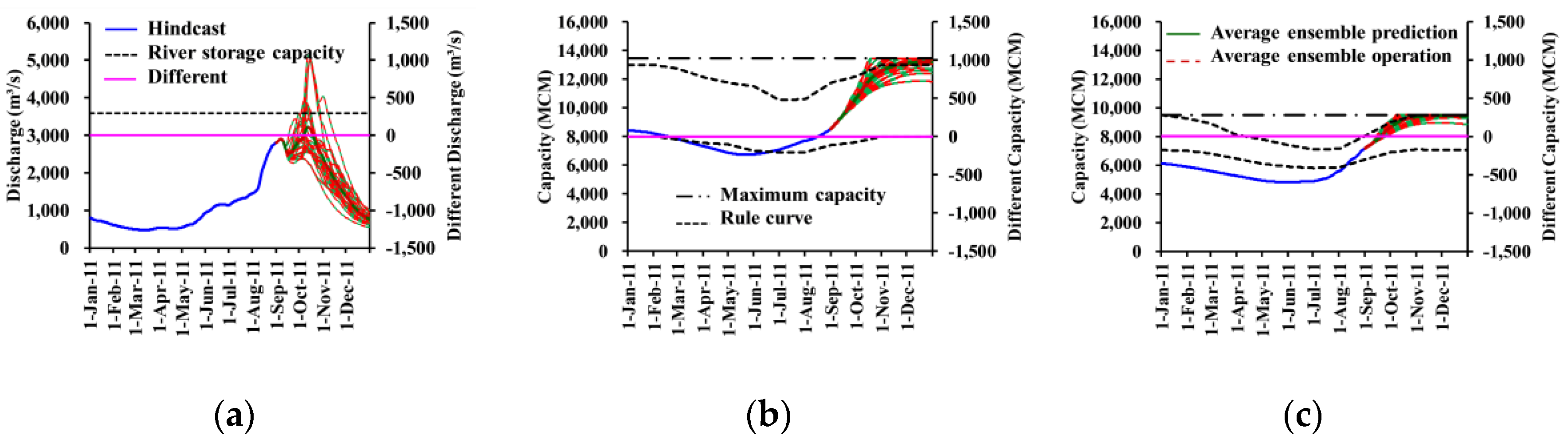
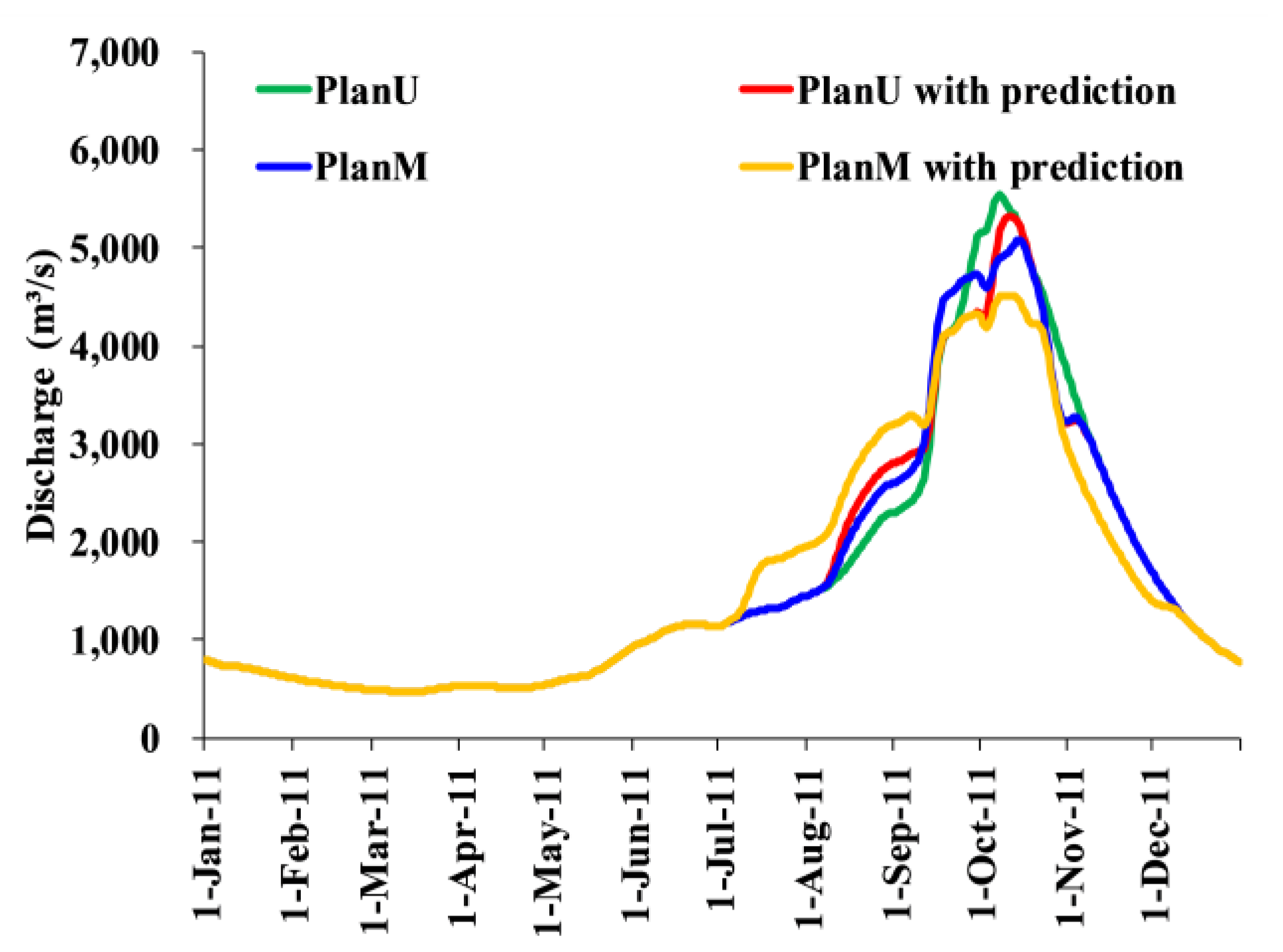
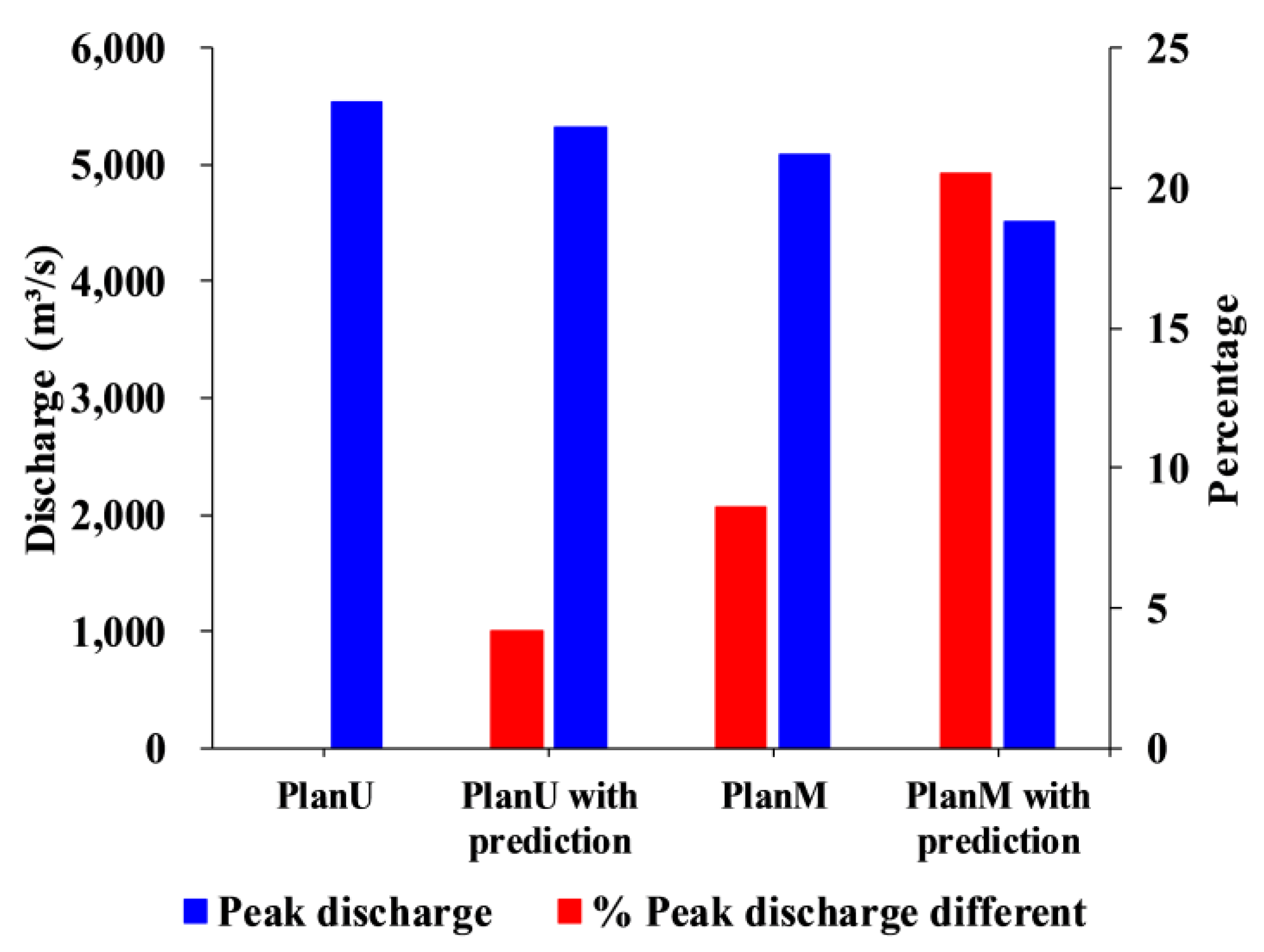
Predicting streamflow can help water managers make policy decisions for individual river basins. In 2011, heavy rainfall from May until October resulted in the largest flood event in the history of Thailand. This event created difficulty for water managers, who lacked information to make predictions. Studies on the 2011 Thai flood have proposed alternative reservoir operations for flood mitigation. However, no study to date has used predictive information to determine how to control reservoirs and mitigate such extreme floods. Thus, the objective of this study is to update and develop a method for using streamflow predictive data to support adaptive reservoir operation with the aim of mitigating the 2011 flood. The study area was the Chao Phraya River Basin, one of the most important basins in Thailand. We obtained predictive information from a hydrological model with a reservoir operation module using an ensemble of seasonal precipitation data from the European Centre for Medium–Range Weather Forecasts (ECMWF). The six-month ECMWF prediction period was used to support the operation plan for mitigating flooding in 2011 around each reservoir during the wet season. Decision-making for reservoir operation based on seasonal predictions was conducted on a monthly time scale. The results showed that peak river discharge decreased slightly, by around 4%, when seasonal predictive data were used. Moreover, changing the reservoir operation plan and using seasonal predictions decreased the peak river discharge by around 20%.
Keywords: adaptive reservoir operation; ECMWF predictive data; H08 model; reservoir operation; river management; streamflow prediction; Thailand adaptive reservoir operation; ECMWF predictive data; H08 model; reservoir operation; river management; streamflow prediction; Thailand