Article

Modeling the Ecological Response of a Temporarily Summer-Stratified Lake to Extreme Heatwaves


1
College of Water Conservancy and Hydropower Engineering, Hohai University, Nanjing 210098, China
2
Department of Bioscience, Aarhus University, Vejlsøvej 25, 8600 Silkeborg, Denmark
3
Sino-Danish Centre for Education and Research, University of Chinese Academy of Sciences, Beijing 100049, China
4
Institute of Hydrobiology, The Chinese Academy of Sciences, Wuhan 430072, China
5
College of Life Sciences, University of Chinese Academy of Sciences, Beijing 100049, China
*
Author to whom correspondence should be addressed.
Water 2020, 12(1), 94; https://doi.org/10.3390/w12010094
Submission received: 1 October 2019 / Revised: 21 December 2019 / Accepted: 23 December 2019 / Published: 26 December 2019
(This article belongs to the Special Issue Effect of Extreme Climate Events on Lake Ecosystems)

Abstract

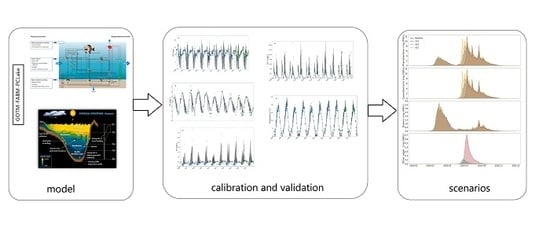
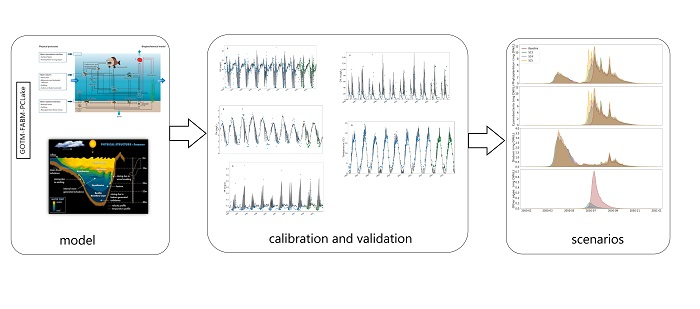
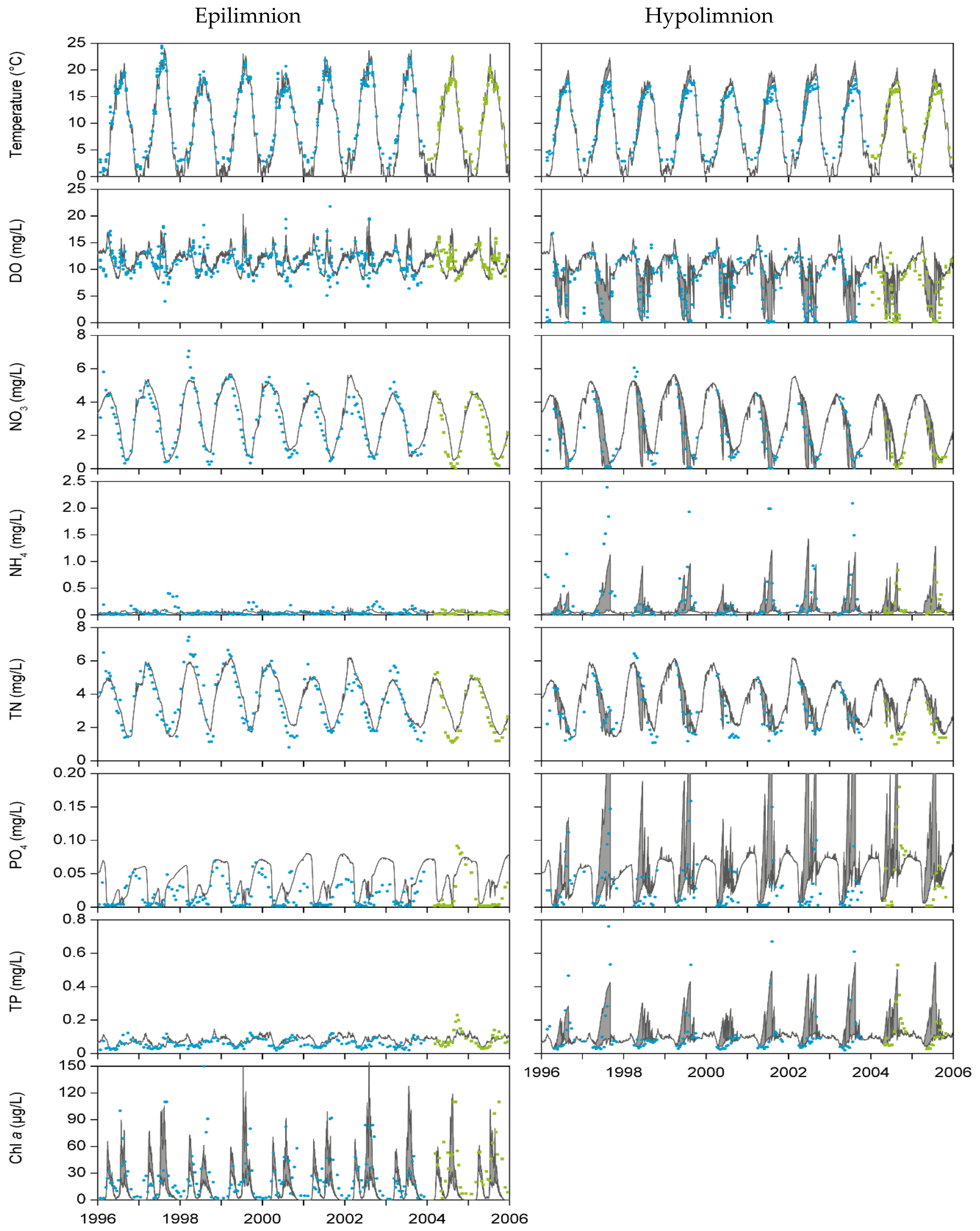
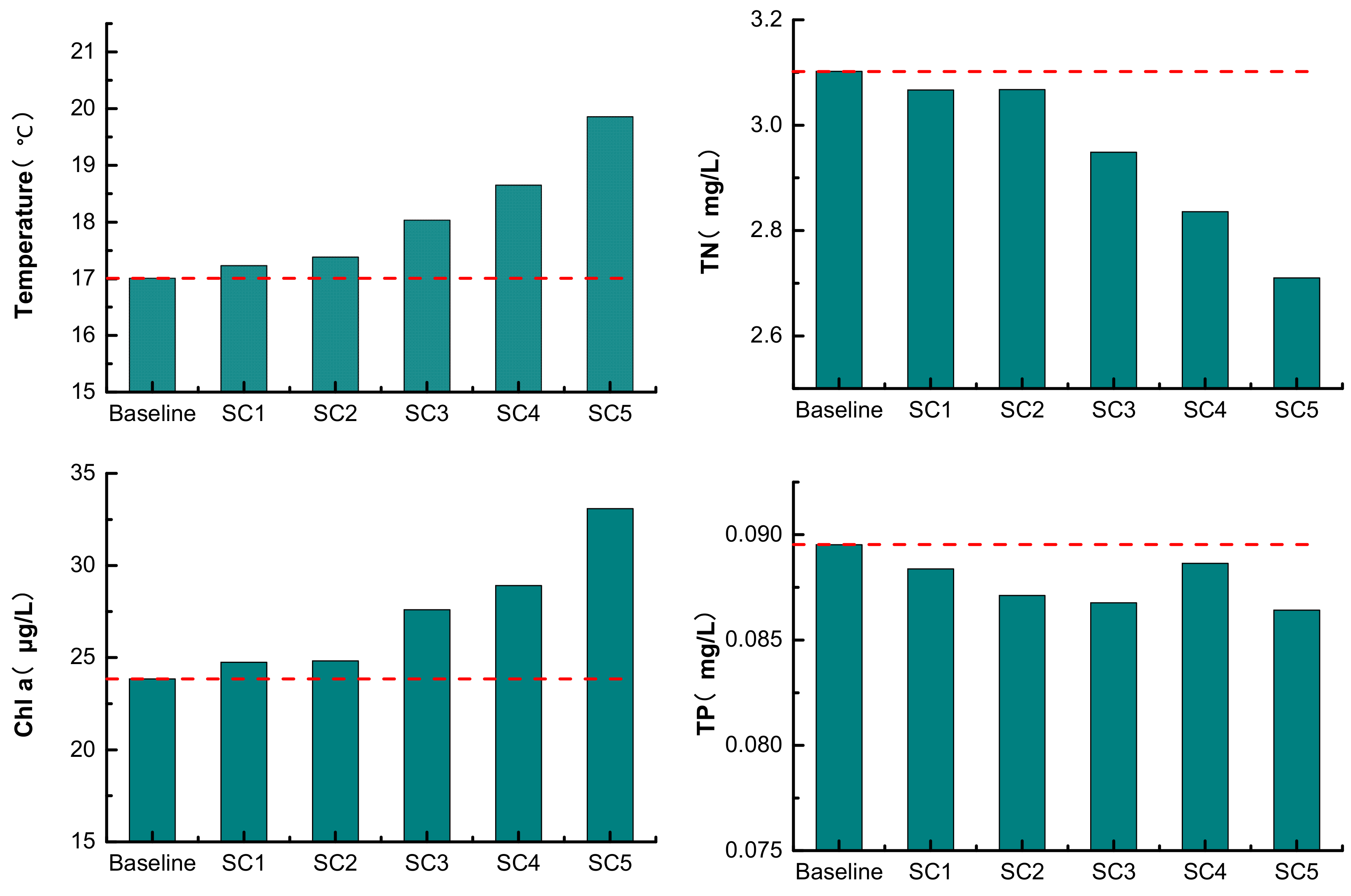
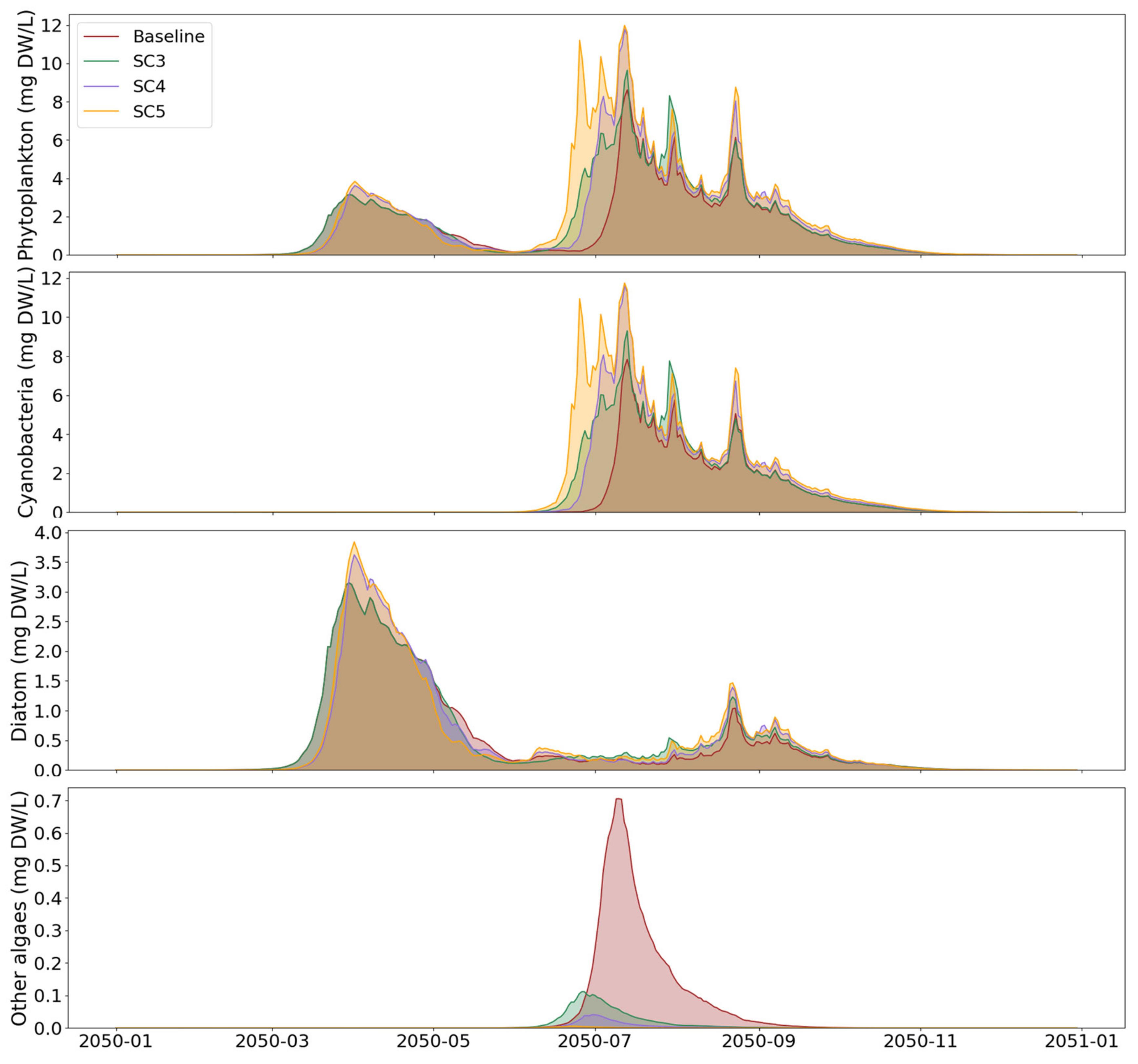
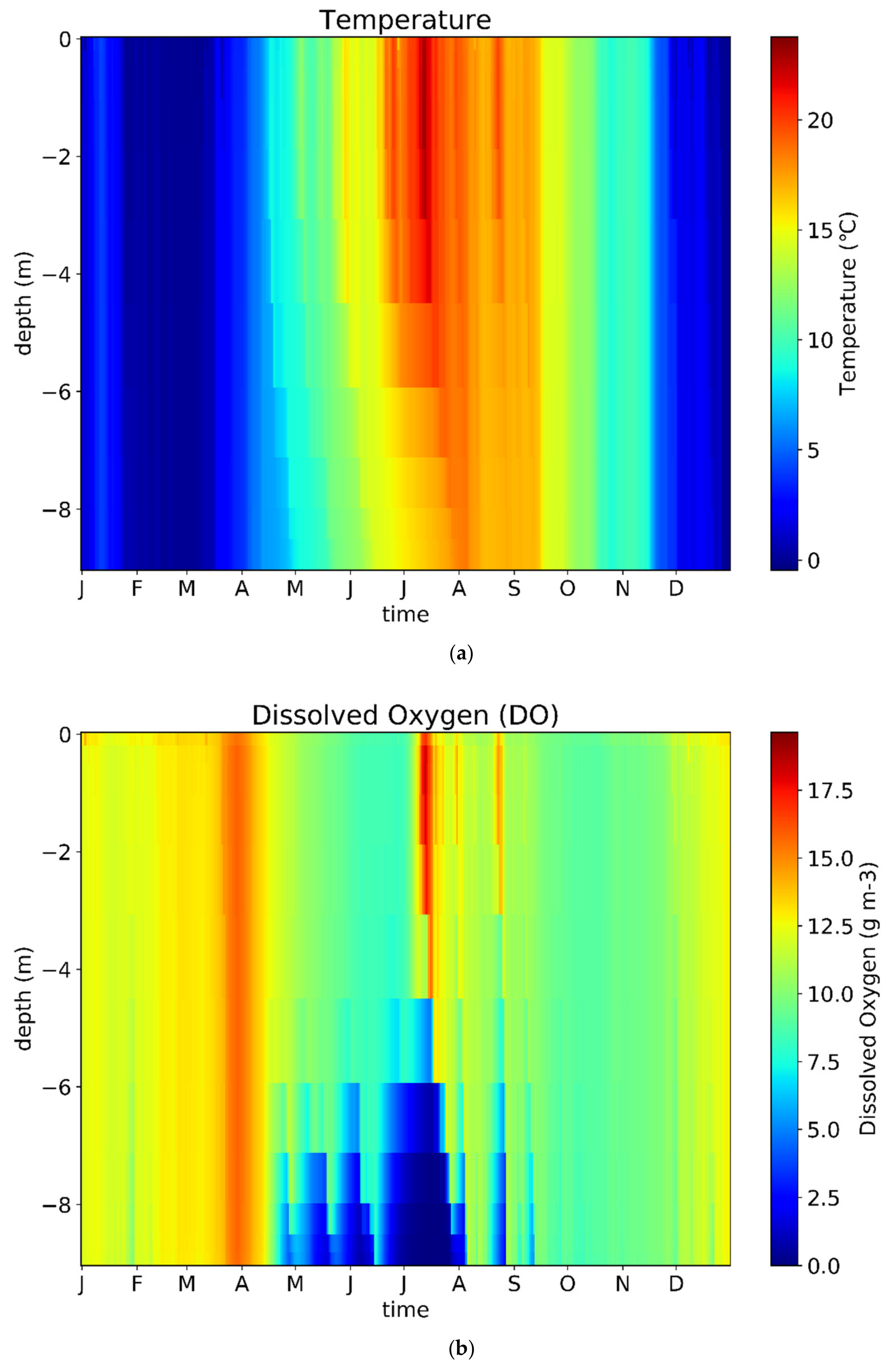
Climate extremes, which are steadily increasing in frequency, can have detrimental consequences for lake ecosystems. We used a state-of-the-art, one-dimensional, hydrodynamic-ecosystem model [General Ocean Turbulence Model (GOTM)-framework for aquatic biogeochemical models (FABM)-PCLake] to determine the influence of extreme climate events on a temperate and temporarily summer stratified lake (Lake Bryrup, Denmark). The model was calibrated (eight years data) and validated (two years data), and the modeled variables generally showed good agreement with observations. Then, a span of extreme warming scenarios was designed based on weather data from the heatwave seen over northern Europe in May–July 2018, mimicking situations of extreme warming returning every year, every three years, and every five years in summer and all year round, respectively. We found only modest impacts of the extreme climate events on nutrient levels, which in some scenarios decreased slightly when looking at the annual mean. The most significant impacts were found for phytoplankton, where summer average chlorophyll a concentrations and cyanobacteria biomass peaks were up to 39% and 58% higher than during baseline, respectively. As a result, the phytoplankton to nutrient ratios increased during the heat wave experiments, reflecting an increased productivity and an increased cycling of nutrients in the pelagic. The phytoplankton blooms occurred up to 15 days earlier and lasted for up to half a month longer during heat wave years relative to the baseline. Our extreme scenarios illustrated and quantified the large impacts of a past heat wave (observed 2018) and may be indicative of the future for many temperate lakes.
Keywords: extreme climate; GOTM-FABM-PCLake; temporary stratified lake; lake ecosystem; heatwave 2018 extreme climate; GOTM-FABM-PCLake; temporary stratified lake; lake ecosystem; heatwave 2018
Graphical Abstract