The Influence of Bottom Sediments and Inoculation with Rhizobacterial Inoculants on the Physiological State of Plants Used in Urban Plantings

 ,
, 


 ,
,
Abstract
1. Introduction
2. Materials and Methods
2.1. Substrate Preparation
2.2. Plant Material and Growth Conditions
2.3. Bacteria Strains and Soil Inoculation
2.4. Experimental Design
- (1)
- In the first group, sterile 10 mM MgSO4 was added in a volume of a 100 mL per pot (control, non-inoculated),
- (2)
- In the second group, 100 mL per pot of p87 bacterial suspension was added (p87 inoculated) and,
- (3)
- In the third group, 100 mL per pot of RP92 bacterial suspension was added (RP92 inoculated).
2.5. Preparation of Extracts from Leaf Tissues
2.5.1. Chlorophyll Content
2.5.2. α-Tocopherol Content
2.5.3. Protein Content
2.5.4. Degree of Lipid Peroxidation (TBARS)
2.6. Total Phenolic Compound (TPC) Content
2.7. Anthocyanins Content
2.8. Statistical Analysis
3. Results
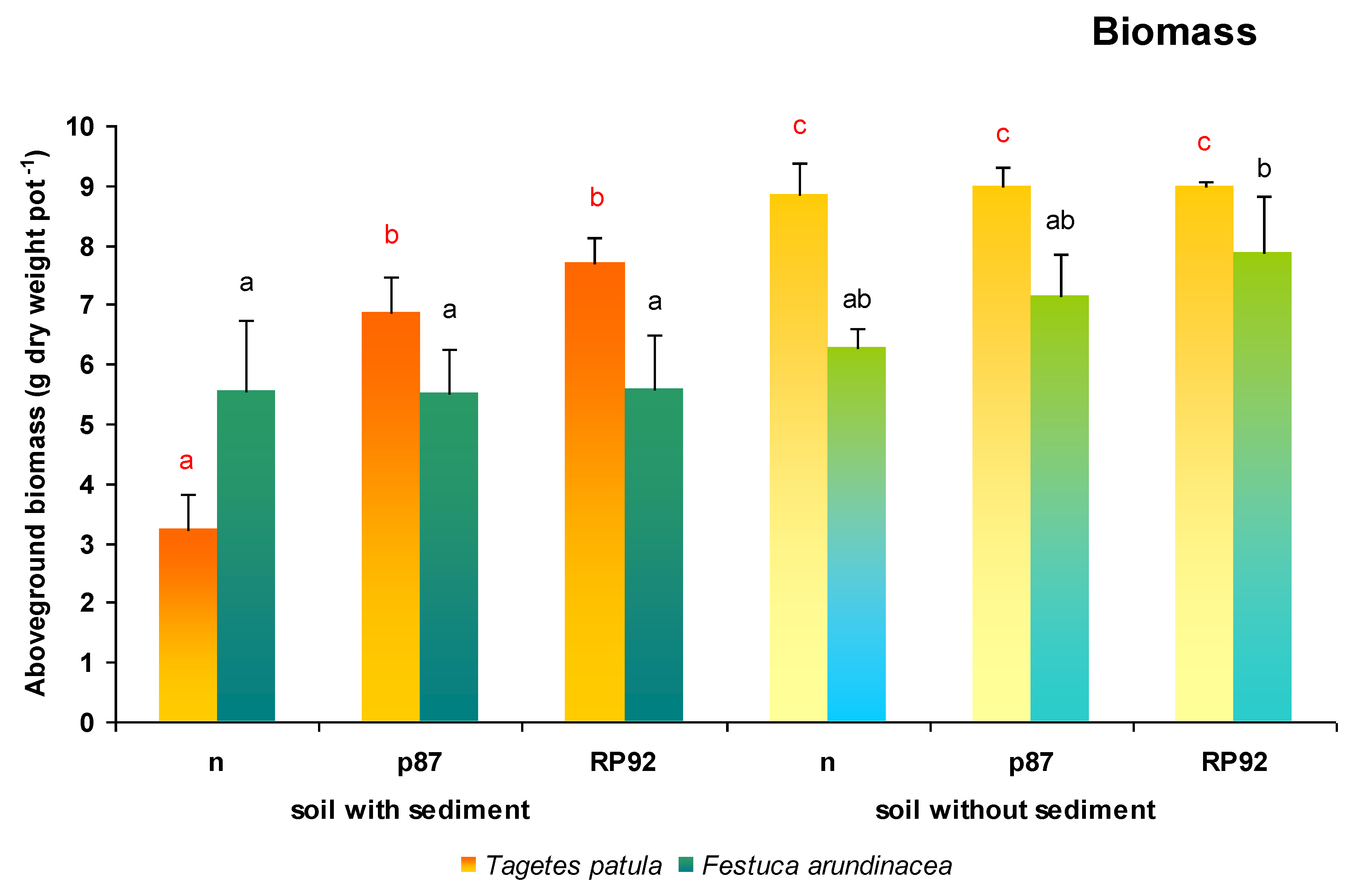
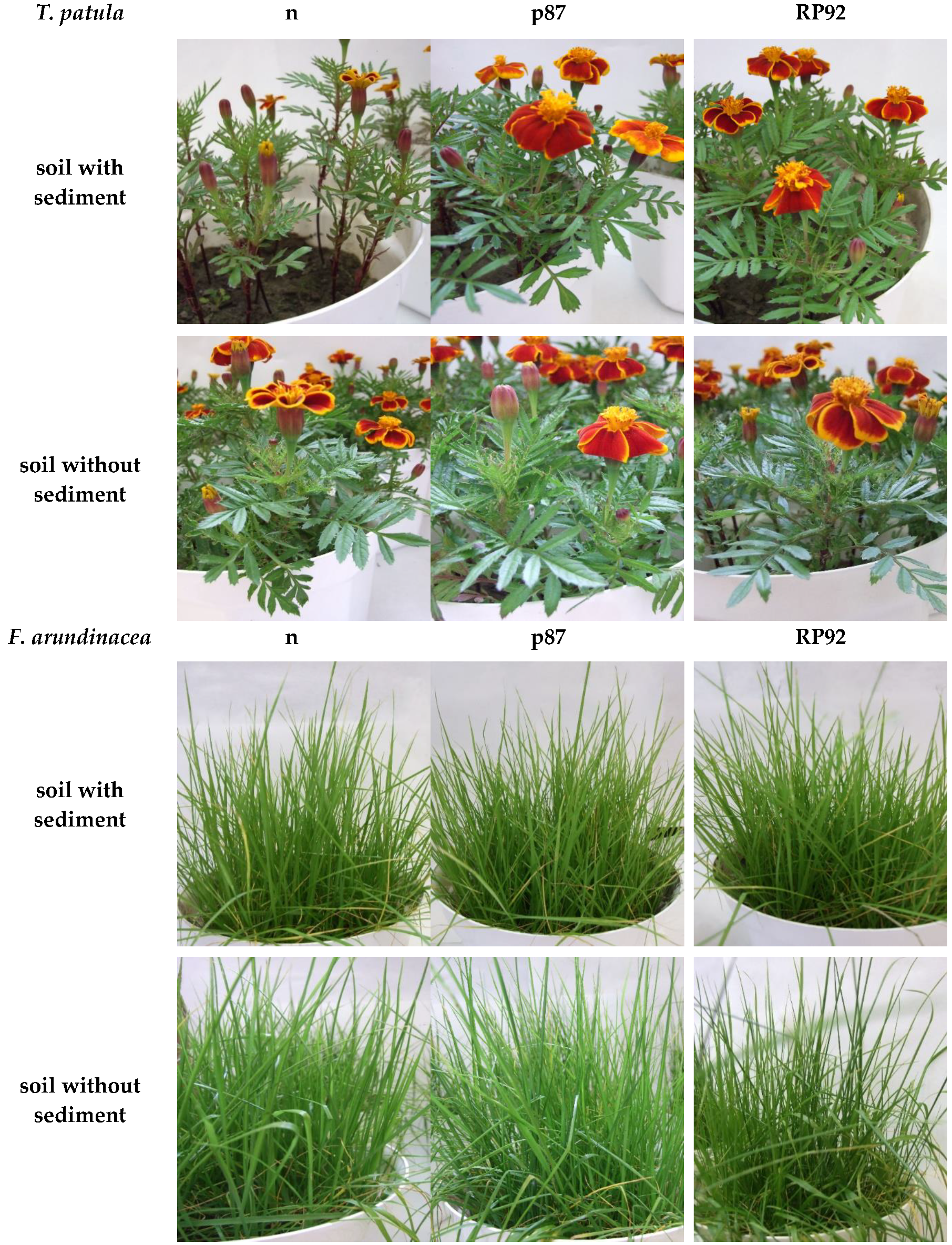
3.1. Plant Morphology and Dry Biomass
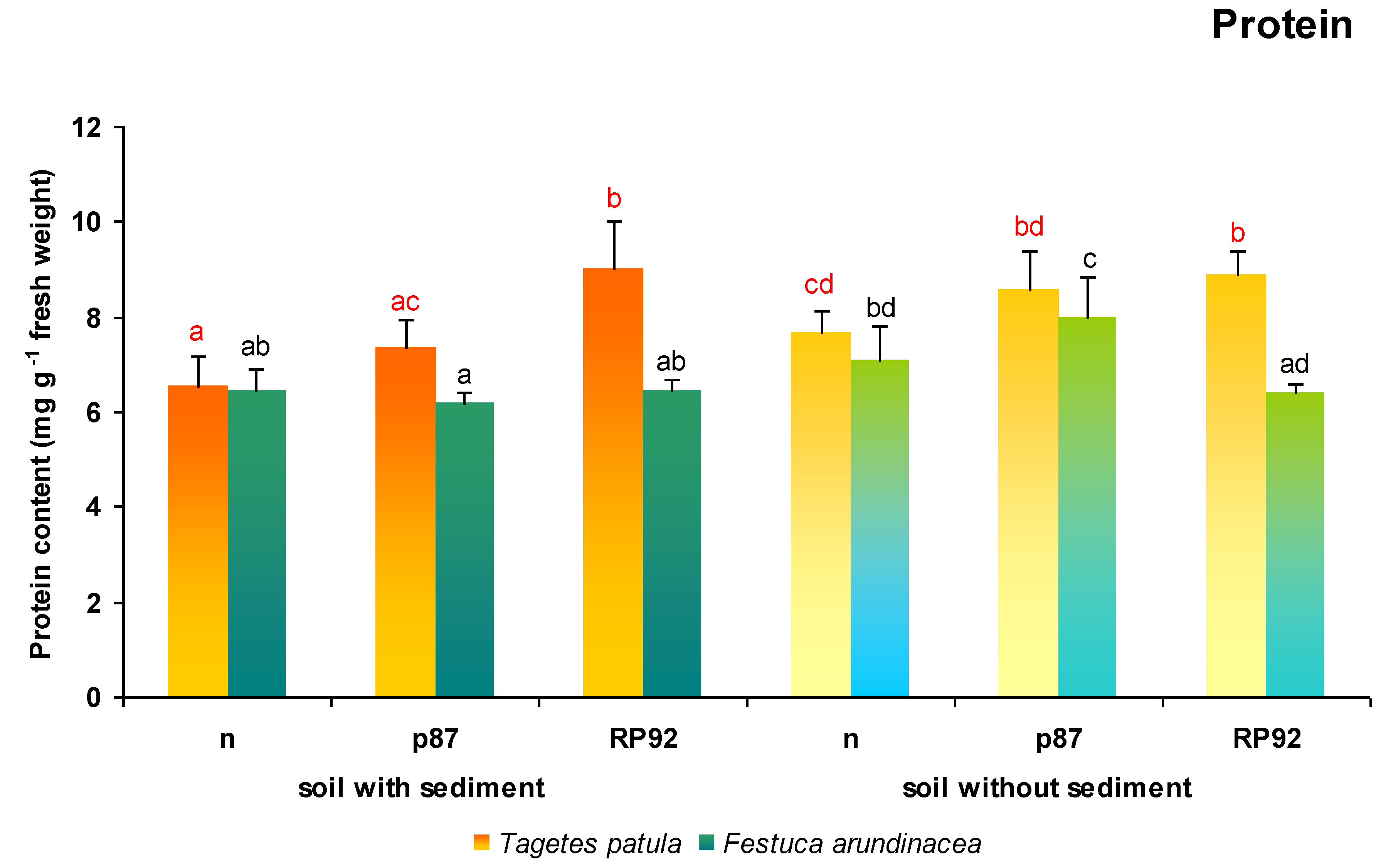
3.2. Total Soluble Protein Content
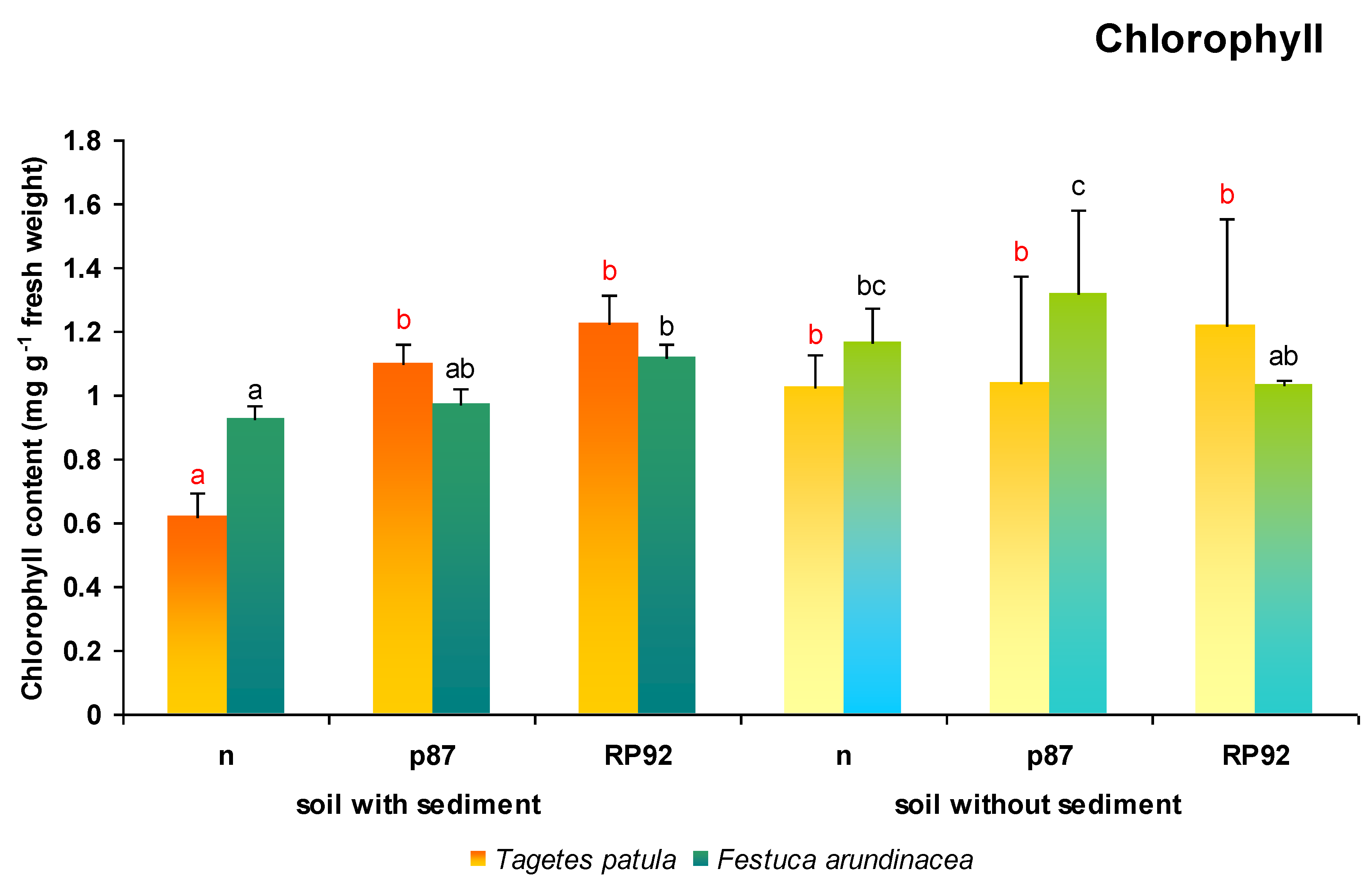
3.3. Total Chlorophyll Content
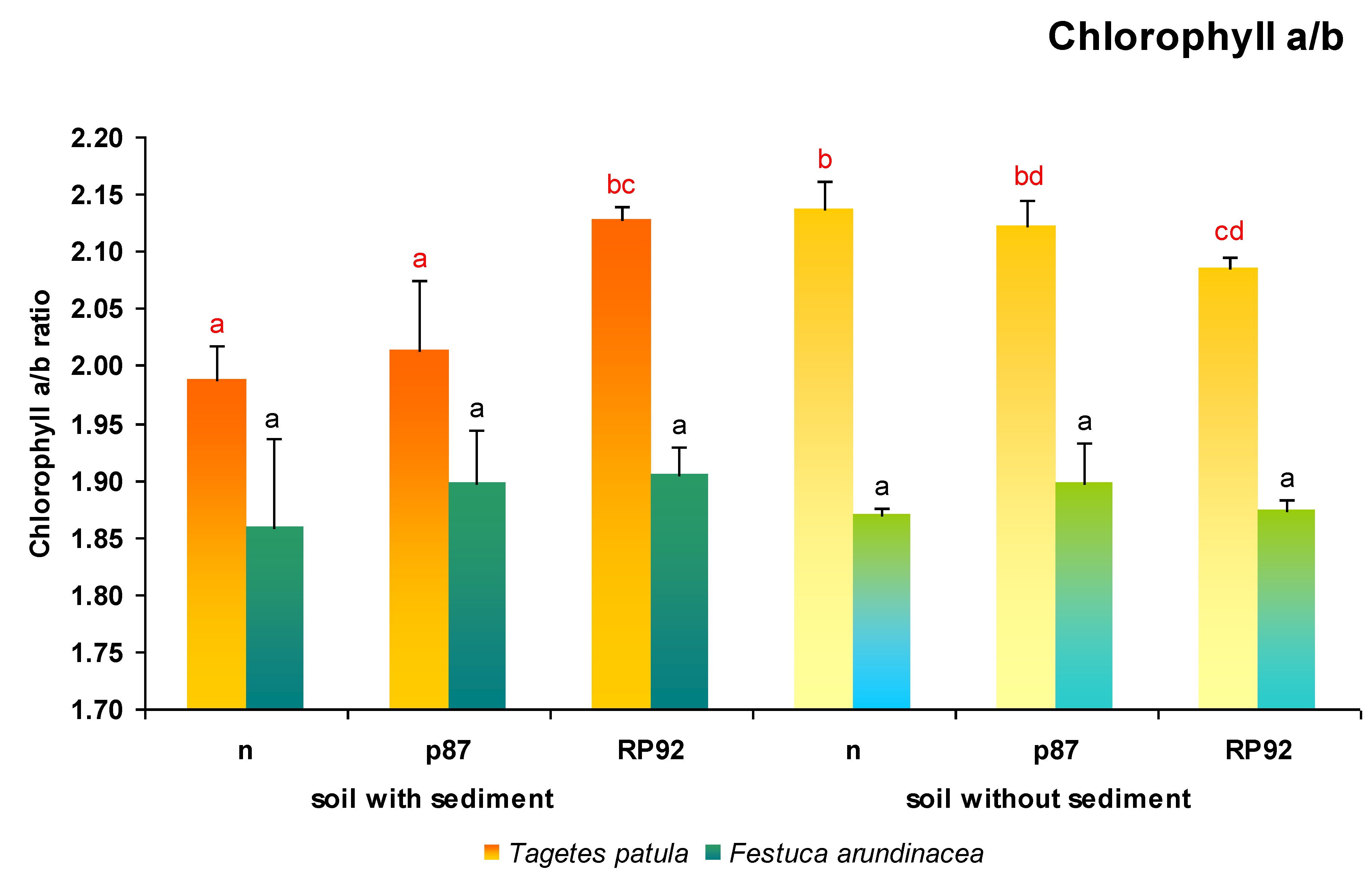
3.4. Chlorophyll a/b Ratio
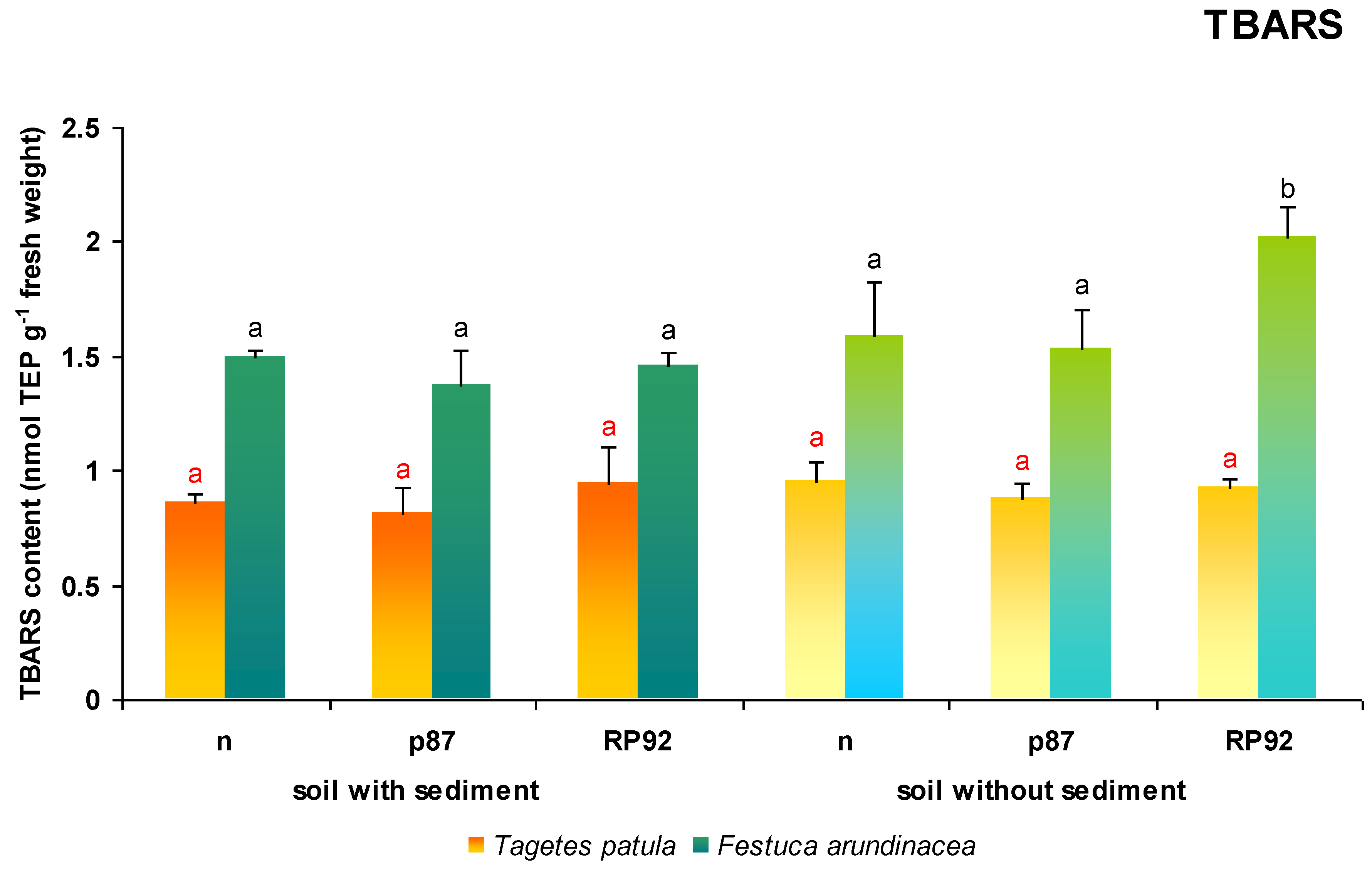
3.5. TBARS Content
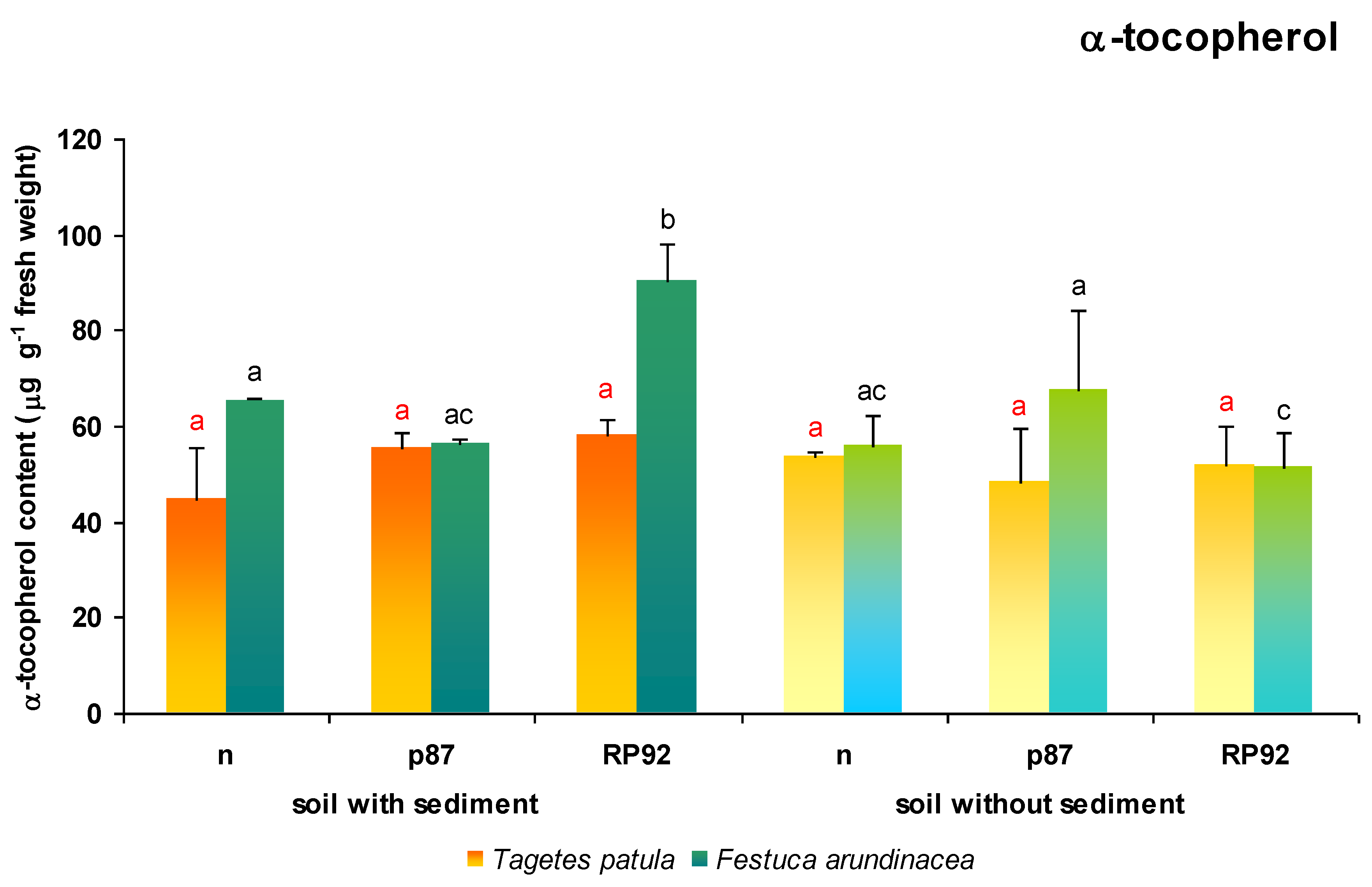
3.6. α-Tocopherol Content
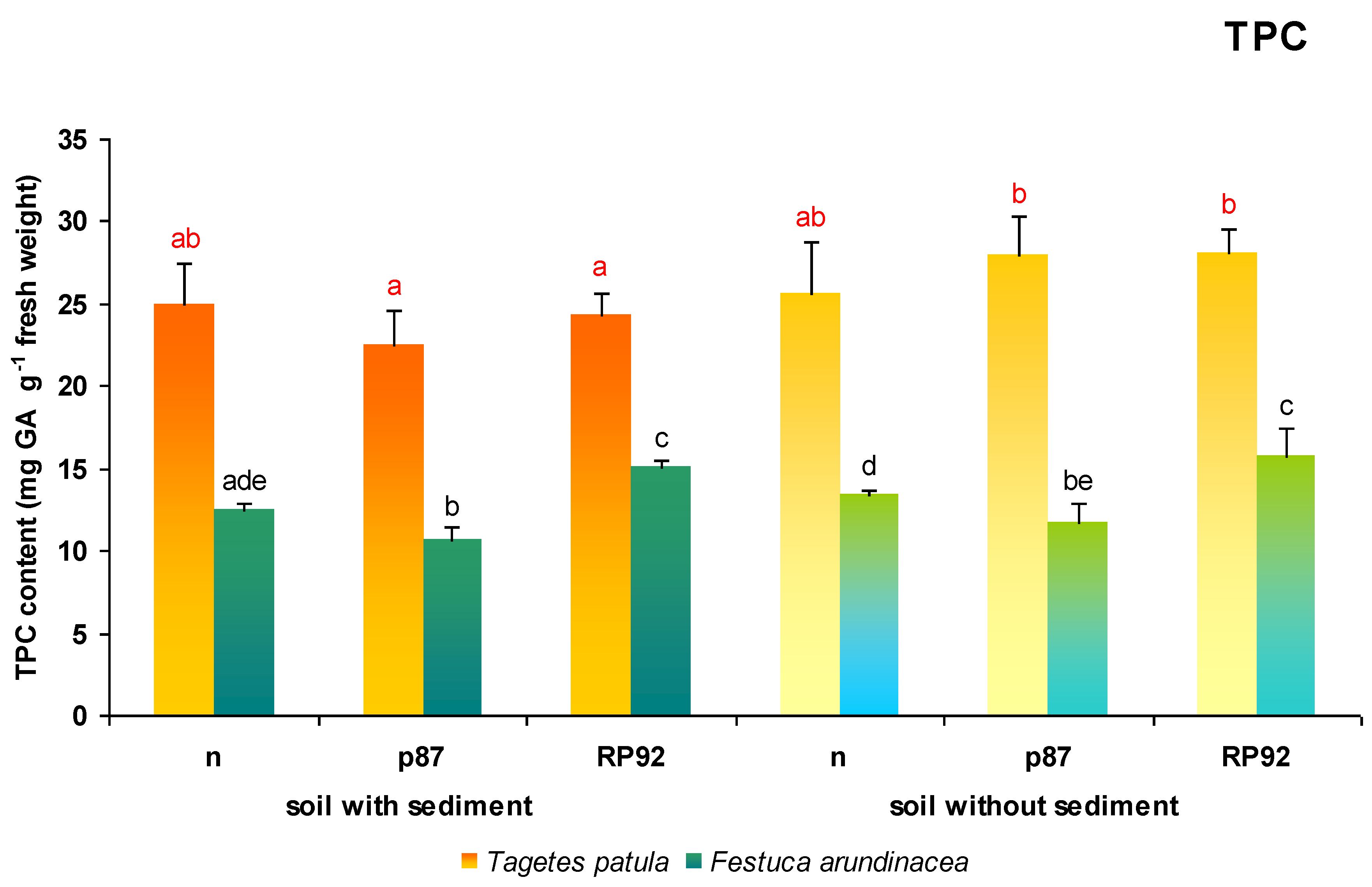
3.7. TPC Content
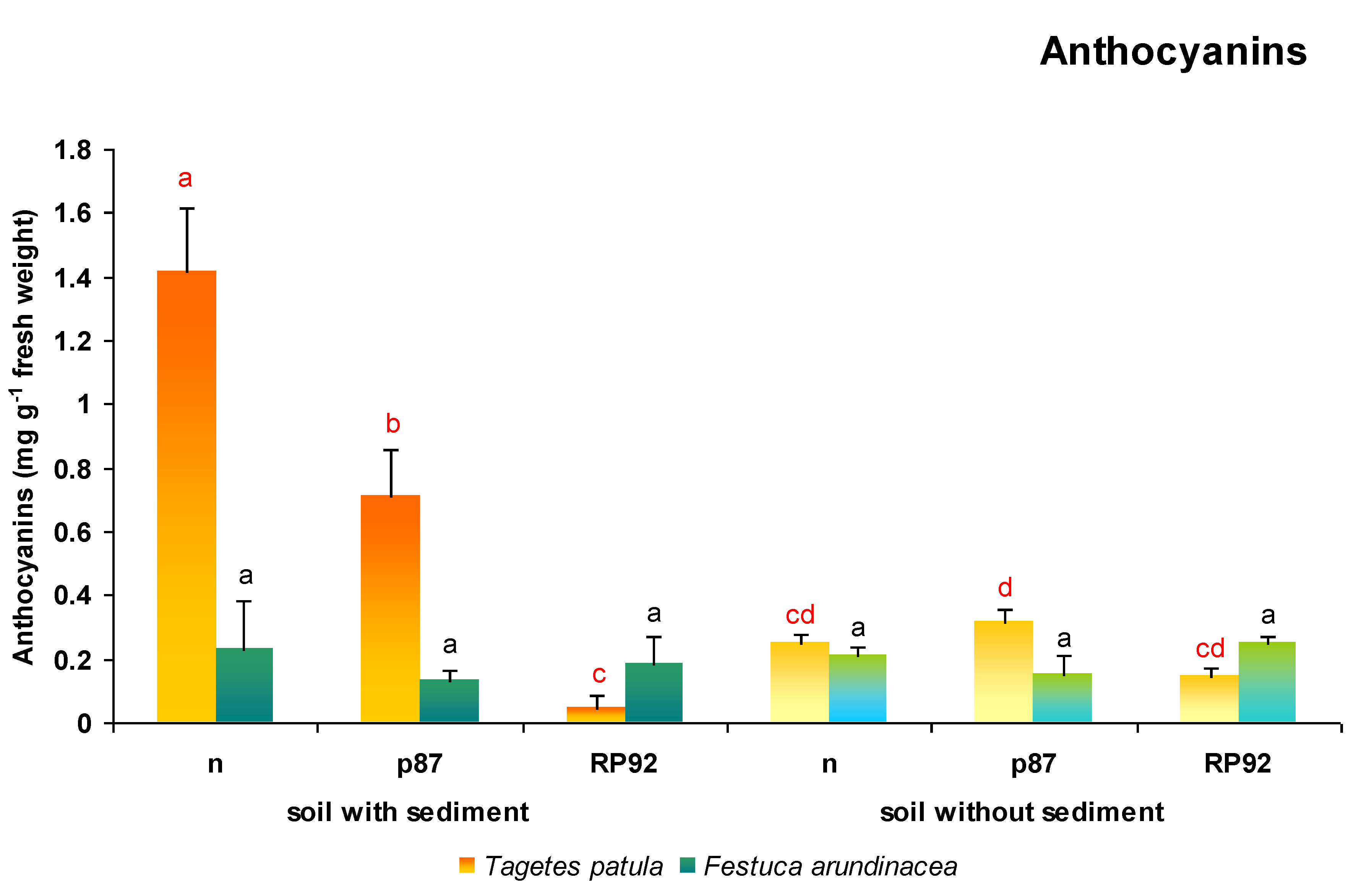
3.8. Anthocyanins Content
4. Discussion
5. Conclusions
Author Contributions
Funding
Conflicts of Interest
References
- Yazdani, M.; Monavari, S.M.; Omrani, G.A.; Shariat, M.; Hosseini, S.M. Landfill site suitability assessment by means of geographic information system analysis. Solid Earth 2015, 6, 945–956. [Google Scholar] [CrossRef] [Scilit]
- Förstner, U.; Salomons, W. Sediment research, management and policy. A decade of JSS. J. Soils Sed. 2010, 10, 1440–1452. [Google Scholar] [CrossRef] [Scilit]
- Maj, K.; Koszelnik, P. Possibility of use of bottom sediments derived from the San River. Ecol. Eng. 2016, 48, 147–152. [Google Scholar] [CrossRef] [Scilit]
- Zalewski, M.; Wagner, I.; Frątczak, W.; Mankiewicz-Boczek, J.; Paniewski, P. Blue-green city for compensating global climate change. Parliam. Mag. 2012, 350, 2–3. [Google Scholar]
- Apitz, S.E.; Power, E.A. From risk assessment to sediment management. An international perspective. J. Soils Sed. 2002, 2, 61–66. [Google Scholar] [CrossRef] [Scilit]
- McCauley, D.J.; DeGraeve, G.M.; Linton, T.K. Sediment quality guidelines and assessment: Overview and research needs. Environ. Sci. Policy 2000, 3, S133–S144. [Google Scholar] [CrossRef] [Scilit]
- Michalec, B. Qualitative and quantitative assessment of sediments pollution with heavy metals of small water reservoirs. In Soil Health and Land Use Management; Hernandez Soriano, M.C., Ed.; InTech: Rijeka, Croatia, 2012; pp. 255–278. [Google Scholar]
- Wyrwicka, A.; Steffani, S.; Urbaniak, M. The effect of PCB-contaminated sewage sludge and sediment on metabolism of cucumber plants (Cucumis sativus L.). Ecohydrol. Hydrobiol. 2014, 14, 75–82. [Google Scholar] [CrossRef] [Scilit]
- Mamedov, A.I.; Bar-Yosefl, B.; Levkovich, I.; Rosenberg, R.; Silber, A.; Fine, P.; Levy, G.J. Amending soil with sludge, manure, humic acid, orthophosphate and phytic acid: Effects on infiltration, runoff and sediment loss. Land Degrad. Dev. 2016, 27, 1629–1639. [Google Scholar] [CrossRef] [Scilit]
- Urbaniak, M.; Wyrwicka, A.; Zieliński, M.; Mankiewicz-Boczek, J. Potential for phytoremediation of PCDD/PCDF-contaminated sludge and sediments using Cucurbitaceae plants: A pilot study. Bull. Environ. Contam. Toxicol. 2016, 97, 401–406. [Google Scholar] [CrossRef] [Scilit] [PubMed]
- Herzel, H.; Krüger, O.; Hermann, L.; Adama, C. Sewage sludge ash—A promising secondary phosphorus source for fertilizer production. Sci. Total Environ. 2016, 542, 1136–1143. [Google Scholar] [CrossRef] [Scilit]
- Tontti, T.; Poutiainen, H.; Heinonen-Tanski, H. Efficiently treated sewage sludge supplemented with nitrogen and potassium in a good fertilizer for cereals. Land Degrad. Dev. 2017, 28, 742–751. [Google Scholar] [CrossRef] [Scilit]
- Yazdani, M.; Monavari, S.M.; Omrani, G.A.; Shariat, M.; Hosseini, S.M.; Garcia-Pausas, J.; Rabissi, A.; Rovira, P.; Romanyà, J. Organic fertilization increases C and N stocks and reduces soil organic matter stability in Mediterranean vegetable gardens. Land Degrad. Dev. 2017, 28, 691–698. [Google Scholar]
- Wyrwicka, A.; Urbaniak, M. The biochemical response of willow plants (Salix viminalis L.) to the use of sewage sludge from various sizes of wastewater treatment plant. Sci. Total Environ. 2018, 615, 882–894. [Google Scholar] [CrossRef] [Scilit] [PubMed]
- Tejada, M.; Gómez, I.; Fernández-Boy, E.; Díaz, M.-J. Effects of sewage sludge and Acacia dealbata composts on soil biochemical and chemical properties. Commun. Soil Sci. Plant Anal. 2014, 45, 570–580. [Google Scholar] [CrossRef] [Scilit]
- Lloreta, E.; Pascuala, J.A.; Brodieb, E.L.; Bouskillb, N.J.; Insamd, H.; Fernández-Delgado Juárezd, M.; Goberna, M. Sewage sludge addition modifies soil microbial communities and plant performance depending on the sludge stabilization process. Appl. Soil Ecol. 2016, 101, 37–46. [Google Scholar] [CrossRef] [Scilit]
- Cunningham, S.D.; Berti, W.R. Remediation of contaminated soils with green plants: An overview. In Vitro Cell. Dev. Biol. Plant 1993, 29P, 207–212. [Google Scholar] [CrossRef] [Scilit]
- Cunningham, S.D.; Berti, W.R.; Huang, J.W. Phytoremediation of contaminated soils. Trends Biotechnol. 1995, 13, 393–397. [Google Scholar] [CrossRef] [Scilit]
- Anderson, T.A.; Guthire, E.A.; Walton, B.T. Bioremediation in the rhizosphere: Plant roots and associated microbes clean contaminates soil. Environ. Sci. Technol. 1993, 27, 2630–2636. [Google Scholar] [CrossRef] [Scilit]
- Glenn, E.P.; Jordan, F.; Waugh, W.J. Phytoremediation of a nitrogen contaminated desert soil by native shrubs and microbial processes. Land Degrad. Dev. 2017, 28, 361–369. [Google Scholar] [CrossRef] [Scilit]
- Wiesmeier, M.; Lungu, M.; Hübner, R.; Cerbari, V. Remediation of degraded arable steppe soils in Moldova using vetch as green manure. Solid Earth 2015, 6, 609–620. [Google Scholar] [CrossRef] [Scilit]
- Chen, Y.-C.; Banks, M.K. Bacterial community evaluation during establishment of tall fescue (Festuca arundinacea) in soil contaminated with pyrene. Int. J. Phytoremediat. 2004, 6, 227–238. [Google Scholar] [CrossRef] [Scilit] [PubMed]
- Bisht, S.; Pandey, P.; Bhargava, B.; Sharma, S.; Kumar, V.; Sharma, K.D. Bioremediation of polyaromatic hydrocarbons (PAHs) using rhizosphere technology. Braz. J. Microbiol. 2015, 46, 7–21. [Google Scholar] [CrossRef] [Scilit] [PubMed]
- Gałązka, A.; Grządziel, J.; Gałązka, R.; Ukalska-Jaruga, A.; Strzelecka, J.; Smreczak, B. Genetic and functional diversity of bacterial microbiome in soils with long term impacts of petroleum hydrocarbons. Front. Microbiol. 2018, 9, 1923. [Google Scholar] [CrossRef] [Scilit] [PubMed]
- Babalola, O.O. Beneficial bacteria of agricultural importance. Biotechnol. Lett. 2010, 32, 1559–1570. [Google Scholar] [CrossRef] [Scilit] [PubMed]
- Becerra-Castro, C.; Monterroso, C.; Prieto-Fernández, Á.; Rodríguez-Lamas, L.; Loureiro-Viňas, M.; Acea, M.J.; Kidd, P.S. Pseudometallophytes colonising Pb/Zn mine tailings: A description of the plant-microorganism-rhizosphere soil system and isolation of metal-tolerant bacteria. J. Hazard. Mater. 2012, 217–218, 350–359. [Google Scholar] [CrossRef] [Scilit] [PubMed]
- Becerra-Castro, C.; Kidd, P.S.; Prieto-Fernández, Á.; Weyens, N.; Acea, M.; Vangronsveld, J. Endophytic and rhizoplane bacteria associated with Cytisus striatus growing on hexachlorocyclohexane-contaminated soil: Isolation and characterization. Plant Soil 2011, 340, 413–433. [Google Scholar] [CrossRef] [Scilit]
- Balseiro-Romero, M.; Gkorezis, P.; Kidd, P.S.; Vangronsveld, J.; Monterroso, C. Enhanced degradation of diesel in the rhizosphere of Lupinus luteus after inoculation with diesel-degrading and PGP bacterial strains. J. Environ. Qual. 2016, 45, 924–932. [Google Scholar] [CrossRef] [Scilit]
- Padden, A.N.; Rainey, F.A.; Kelly, D.P.; Wood, A.P. Xanthobacter tagetidis sp. nov., an organism associated with Tagetes species and able to grow on substituted. Int. J. Syst. Bacteriol. 1997, 47, 394–401. [Google Scholar] [CrossRef] [Scilit]
- Cicevan, R.; Al Hassan, M.; Sestras, A.F.; Prohens, J.; Vicente, O.; Sestras, R.E.; Boscaiu, M. Screening for drought tolerance in cultivars of the ornamental genus Tagetes (Asteraceae). PeerJ 2016, 4, e2133. [Google Scholar] [CrossRef] [Scilit]
- Sun, Y.; Xu, Y.; Zhou, Q.; Wang, L.; Lin, D.; Liang, X. The potential of gibberellic acid 3 (GA3) and Tween-80 induced phytoremediation of co-contamination of Cd and Benzo[a]pyrene (B[a]P) using Tagetes patula. J. Environ. Manag. 2013, 114, 202–208. [Google Scholar] [CrossRef] [Scilit]
- Bareen, F.; Nazir, A. Metal decontamination of tannery solid waste using Tagetes patula in association with saprobic and mycorrhizal fungi. Environmentalist 2010, 30, 45–53. [Google Scholar] [CrossRef] [Scilit]
- Khashij, S.; Karimi, B.; Makhdoumi, P. Phytoremediation with Festuca arundinacea: A Mini Review. Int. J. Health Life Sci. 2018, 4, e86625. [Google Scholar] [CrossRef] [Scilit]
- Sun, M.; Fu, D.; Teng, T.; Shen, Y.; Luo, Y.; Li, Z.; Christie, P. In situ phytoremediation of PAH-contaminated soil by intercropping alfalfa (Medicago sativa L.) with tall fescue (Festuca arundinacea Schreb.) and associated soil microbial activity. J. Soils Sediments 2011, 11, 980–989. [Google Scholar] [CrossRef] [Scilit]
- Siebielec, S.; Siebielec, G.; Urbaniak, M.; Smreczak, B.; Grzęda, E.; Wyrwicka, A.; Kidd, P.S. Impact of rhizobacterial inoculants on plant growth and enzyme activities in soil treated with contaminated bottom sediments. Int. J. Phytoremediat. 2019, 21, 325–333. [Google Scholar] [CrossRef] [Scilit] [PubMed]
- Mergeay, M.; Nies, D.; Schlegel, H.G.; Gerits, J.; Charles, P.; Van Gijsegem, F. Alcaligenes eutrophus CH34 is a facultative chemolithotroph with plasmid-bound resistance to heavy metals. J. Bacteriol. 1985, 162, 328–334. [Google Scholar] [PubMed]
- Porra, R.J.; Thompson, W.A.; Kriedmann, P.E. Determinate of accurate extinction coefficients and simultaneous equations for assaying chlorophylls a and b extracted with four different solvents: Verification of the concentration of chlorophyll standards by atomic absorption spectroscopy. Biochim. Biophys. Acta/Gen. Subj. 1989, 975, 384–390. [Google Scholar] [CrossRef] [Scilit]
- Taylor, S.L.; Tappel, A.L. Sensitive fluorometric methods for tissue tocopherol analysis. Lipids 1976, 11, 530–538. [Google Scholar] [CrossRef] [Scilit] [PubMed]
- Bradford, M.M. A rapid and sensitive method for the quantification of microgram quantities of protein utilizing the principle of protein-dye binding. Anal. Biochem. 1976, 72, 248–254. [Google Scholar] [CrossRef]
- Yagi, K. Assay for serum lipid peroxide level its clinical significance. In Lipid Peroxides in Biology and Medicine; Yagi, K., Ed.; Academic Press Inc.: London, UK; New York, NY, USA, 1982; pp. 223–241. [Google Scholar]
- Singleton, V.L.; Rossi, J.A. Colorimetry of total phenolics with phosphomolybdic-phosphotungstic acid reagents. Am. J. Enol. Vitic. 1965, 16, 144–158. [Google Scholar]
- Giusti, M.; Wrolstad, R.E. Characterization and measurement of anthocyanins by UV-visible spectroscopy. Curr. Protoc. Food Anal. Chem. 2001, F1.2.1–F1.2.13. [Google Scholar] [CrossRef] [Scilit]
- McClure, J.W. Photocontrol of Spirodela intermedia flavonoids. Plant Phys. 1967, 43, 193–200. [Google Scholar] [CrossRef] [Scilit] [PubMed]
- Dell Inc. Dell Statistica (Data Analysis Software System). version 13. 2016. Available online: http://software.dell.com (accessed on 18 May 2017).
- Wyrwicka, A.; Urbaniak, M. The different physiological and antioxidative responses of zucchini and cucumber to sewage sludge application. PLoS ONE 2016, 11, e0157782. [Google Scholar] [CrossRef] [Scilit] [PubMed]
- Urbaniak, M.; Zieliński, M.; Wyrwicka, A. The influence of the Cucurbitaceae on mitigating the phytotoxicity and PCDD/PCDF content of soil amended with sewage sludge. Int. J. Phytoremediat. 2017, 19, 207–213. [Google Scholar] [CrossRef] [Scilit] [PubMed]
- Shrivastava, P.; Kumar, R. Soil salinity: A serious environmental issue and plant growth promoting bacteria as one of the tools for its alleviation. Saudi J. Biol. Sci. 2015, 22, 123–131. [Google Scholar] [CrossRef] [Scilit] [PubMed]
- Kohler, J.; Hernandez, J.A.; Caravaca, F.; Roldan, A. Induction of antioxidant enzymes is involved in the greater effectiveness of a PGPR versus AM fungi with respect to increasing the tolerance of lettuce to severe salt stress. Environ. Exp. Bot. 2009, 65, 245–252. [Google Scholar] [CrossRef] [Scilit]
- Tiwari, S.; Singh, P.; Tiwari, R.; Meena, K.K.; Yandigeri, M.; Singh, D.P.; Arora, D.K. Salt-tolerant rhizobacteria-mediated induced tolerance in wheat (Triticum aestivum) and chemical diversity in rhizosphere enhance plant growth. Biol. Fertil. Soils 2011, 47, 907–916. [Google Scholar] [CrossRef] [Scilit]
- Camp, P.J.; Huber, S.C.; Burke, J.J.; Moreland, D.E. Biochemical changes that occur during senescence of wheat leaves. Plant Physiol. 1982, 70, 1641–1646. [Google Scholar] [CrossRef] [Scilit] [PubMed]
- Romanova, A.K.; Semenova, G.A.; Ignat’ev, A.R.; Novichkova, N.S.; Fomina, I.R. Biochemistry and cell ultrastructure changes during senescence of Beta vulgaris L. leaf. Protoplasma 2016, 253, 719–727. [Google Scholar] [CrossRef] [Scilit]
- Hőrtensteiner, S.; Feller, U. Nitrogen metabolism and remobilization during senescence. J. Exp. Bot. 2002, 53, 927–937. [Google Scholar] [CrossRef] [Scilit]
- Nath, K.; Phee, B.-K.; Jeong, S.; Lee, S.Y.; Tateno, Y.; Allakhverdiev, S.I.; Lee, C.-H.; Nam, H.G. Age-dependent changes in the functions and compositions of photosynthetic complexes in the thylakoid membranes of Arabidopsis thaliana. Photosynth. Res. 2013, 117, 547–556. [Google Scholar] [CrossRef] [Scilit]
- Dubinina, I.M.; Burakhanova, E.A.; Kudryavtseva, L.F. Vacuoles of mesophyll cells as a transient reservoir for assimilates. Russ. J. Plant Physiol. 2001, 48, 32–37. [Google Scholar] [CrossRef] [Scilit]
- Girondé, A.; Poret, M.; Etienne, P.; Trouverie, J.; Bouchereau, A.; Le Cahérec, F.; Leport, L.; Orsel, M.; Niogret, M.-F.; Deleu, C.; et al. A profiling approach of the natural variability of foliar N remobilization at the rosette stage gives clues to understand the limiting processes involved in the low N use efficiency of winter oilseed rape. J. Exp. Bot. 2015, 66, 2461–2473. [Google Scholar] [CrossRef] [Scilit] [PubMed]
- Diaz, C.; Lemaître, T.; Christ, A.; Azzopardi, M.; Kato, Y.; Sato, F.; Morot- Gaudry, J.F.; Le Dily, F.; Masclaux-Daubresse, C. Nitrogen recycling and remobilization are differentially controlled by leaf senescence and development stage in Arabidopsis under low nitrogen nutrition. Plant Physiol. 2008, 147, 1437–1449. [Google Scholar] [CrossRef] [Scilit] [PubMed]
- Halliwell, B.; Gutteridge, J.M.C. Free Radicals in Biology and Medicine, 5th ed.; Oxford University Press: Oxford, UK, 2015. [Google Scholar]
- Chalker-Scott, L.; Fuchigami, L.H. The role of phenolic compounds in plant stress responses. In Low Temperature Stress Physiology in Crops; Li, P.H., Ed.; CRC Press, Inc.: Boca Raton, FL, USA, 1989; pp. 67–79. [Google Scholar]
- Cavaiuolo, M.; Cocetta, G.; Ferrante, A. The antioxidants changes in ornamental flowers during development and senescence. Antioxidants 2013, 2, 132–155. [Google Scholar] [CrossRef] [Scilit] [PubMed]
- Wyrwicka, A.; Urbaniak, M.; Przybylski, M. The response of cucumber plants (Cucumis sativus L.) to the application of PCB-contaminated sewage sludge and urban sediment. PeerJ 2019, 7, e6743. [Google Scholar] [CrossRef] [Scilit] [PubMed]
- Espinoza, A.; San Martín, A.; López-Climent, M.; Ruiz-Lara, S.; Gómez-Cadenas, A.; Casaretto, J.A. Engineered drought-induced biosynthesis of α-tocopherol alleviates stress-induced leaf damage in tobacco. J. Plant Physiol. 2013, 170, 1285–1294. [Google Scholar] [CrossRef] [Scilit]
- Landi, M.; Tattini, M.; Gould, K.S. Multiple functional roles of anthocyanins in plant-environment interactions. Environ. Exp. Bot. 2015, 119, 4–17. [Google Scholar] [CrossRef] [Scilit]
- Khoo, H.E.; Azlan, A.; Tang, S.T.; Lim, S.M. Anthocyanidins and anthocyanins: Colored pigments as food, pharmaceutical ingredients, and the potential health benefits. Food Nutr. Res. 2017, 61, 1361779. [Google Scholar] [CrossRef] [Scilit]
- Manetas, Y.; Petropoulou, Y.; Psaras, G.K.; Drinia, A. Exposed red (anthocyanic) leaves of Quercus coccifera display shade characteristics. Funct. Plant Biol. 2003, 30, 265–270. [Google Scholar] [CrossRef] [Scilit]
- Pietrini, F.; Iannelli, M.A.; Massacci, A. Anthocyanin accumulation in the illuminated surface of maize leaves enhances protection from photo-inhibitory risks at low temperature, without further limitation to photosynthesis. Plant Cell Environ. 2002, 25, 1251–1259. [Google Scholar] [CrossRef] [Scilit]




| Soil without Inoculation | Soil with p87 Inoculation | Soil with RP92 Inoculation | |
|---|---|---|---|
| Soil with sediment | TP 10 plants per pot × 4 | TP 10 plants per pot × 4 | TP 10 plants per pot × 4 |
| FA 10 plants per pot × 4 | FA 10 plants per pot × 4 | FA 10 plants per pot × 4 | |
| Soil without sediment | TP 10 plants per pot × 4 | TP 10 plants per pot × 4 | TP 10 plants per pot × 4 |
| FA 10 plants per pot × 4 | FA 10 plants per pot × 4 | FA 10 plants per pot × 4 |
© 2019 by the authors. Licensee MDPI, Basel, Switzerland. This article is an open access article distributed under the terms and conditions of the Creative Commons Attribution (CC BY) license (http://creativecommons.org/licenses/by/4.0/).
Share and Cite
Wyrwicka, A.; Urbaniak, M.; Siebielec, G.; Siebielec, S.; Chojak-Koźniewska, J.; Przybylski, M.; Witusińska, A.; Kidd, P.S. The Influence of Bottom Sediments and Inoculation with Rhizobacterial Inoculants on the Physiological State of Plants Used in Urban Plantings. Water 2019, 11, 1792. https://doi.org/10.3390/w11091792
Wyrwicka A, Urbaniak M, Siebielec G, Siebielec S, Chojak-Koźniewska J, Przybylski M, Witusińska A, Kidd PS. The Influence of Bottom Sediments and Inoculation with Rhizobacterial Inoculants on the Physiological State of Plants Used in Urban Plantings. Water. 2019; 11(9):1792. https://doi.org/10.3390/w11091792
Chicago/Turabian StyleWyrwicka, Anna, Magdalena Urbaniak, Grzegorz Siebielec, Sylwia Siebielec, Joanna Chojak-Koźniewska, Mirosław Przybylski, Aleksandra Witusińska, and Petra Susan Kidd. 2019. "The Influence of Bottom Sediments and Inoculation with Rhizobacterial Inoculants on the Physiological State of Plants Used in Urban Plantings" Water 11, no. 9: 1792. https://doi.org/10.3390/w11091792
APA StyleWyrwicka, A., Urbaniak, M., Siebielec, G., Siebielec, S., Chojak-Koźniewska, J., Przybylski, M., Witusińska, A., & Kidd, P. S. (2019). The Influence of Bottom Sediments and Inoculation with Rhizobacterial Inoculants on the Physiological State of Plants Used in Urban Plantings. Water, 11(9), 1792. https://doi.org/10.3390/w11091792