Article

A New Conceptual Model for Slope-Infiltration


1
Department of Civil and Environmental Engineering, University of Perugia, via G. Duranti 93, 06125 Perugia, Italy
2
Lyles School of Civil Engineering, Purdue University, West Lafayette, IN 47907, USA
*
Author to whom correspondence should be addressed.
Water 2019, 11(4), 678; https://doi.org/10.3390/w11040678
Submission received: 21 February 2019 / Revised: 21 March 2019 / Accepted: 28 March 2019 / Published: 1 April 2019
(This article belongs to the Special Issue Rainfall Infiltration Modeling)

Abstract

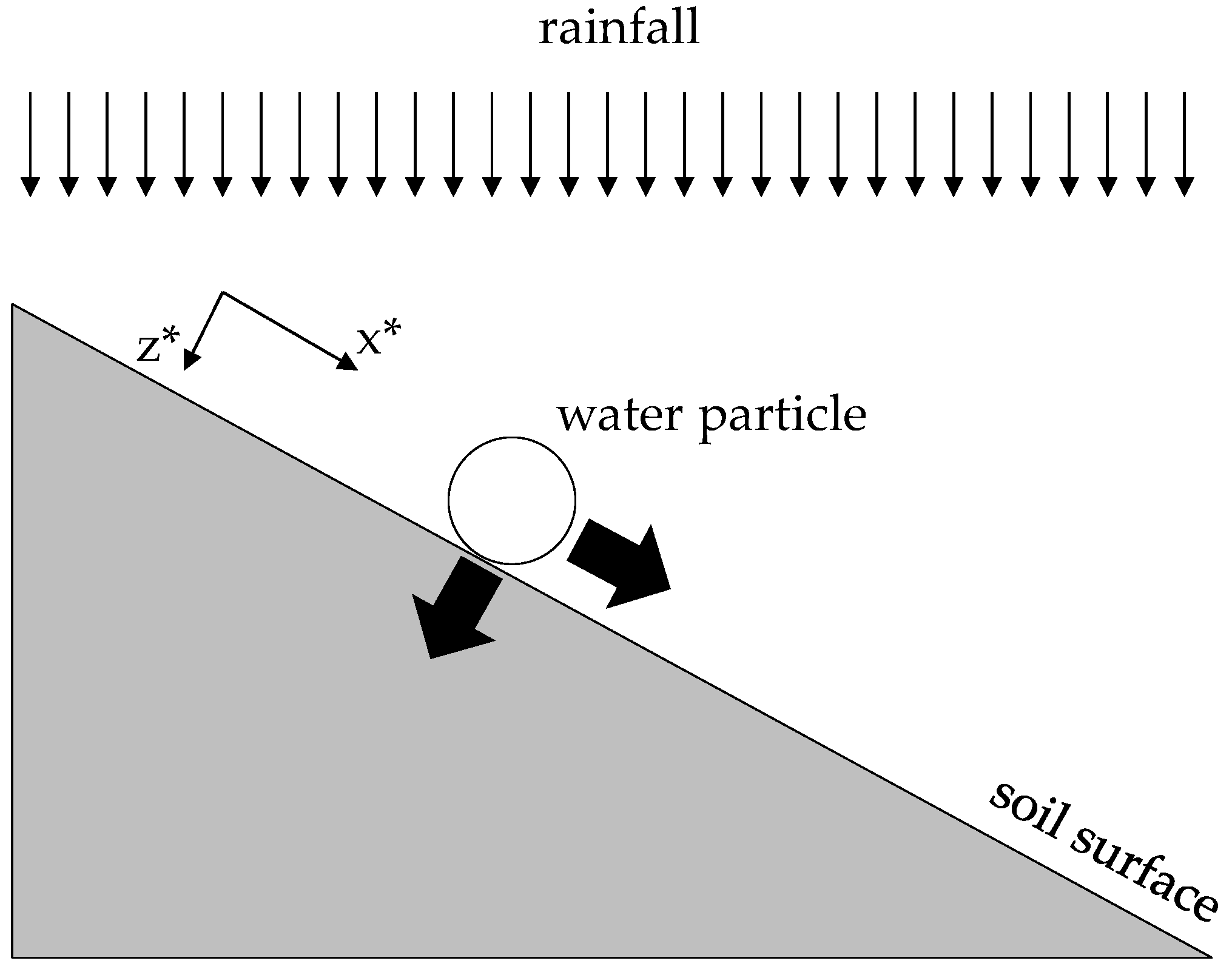
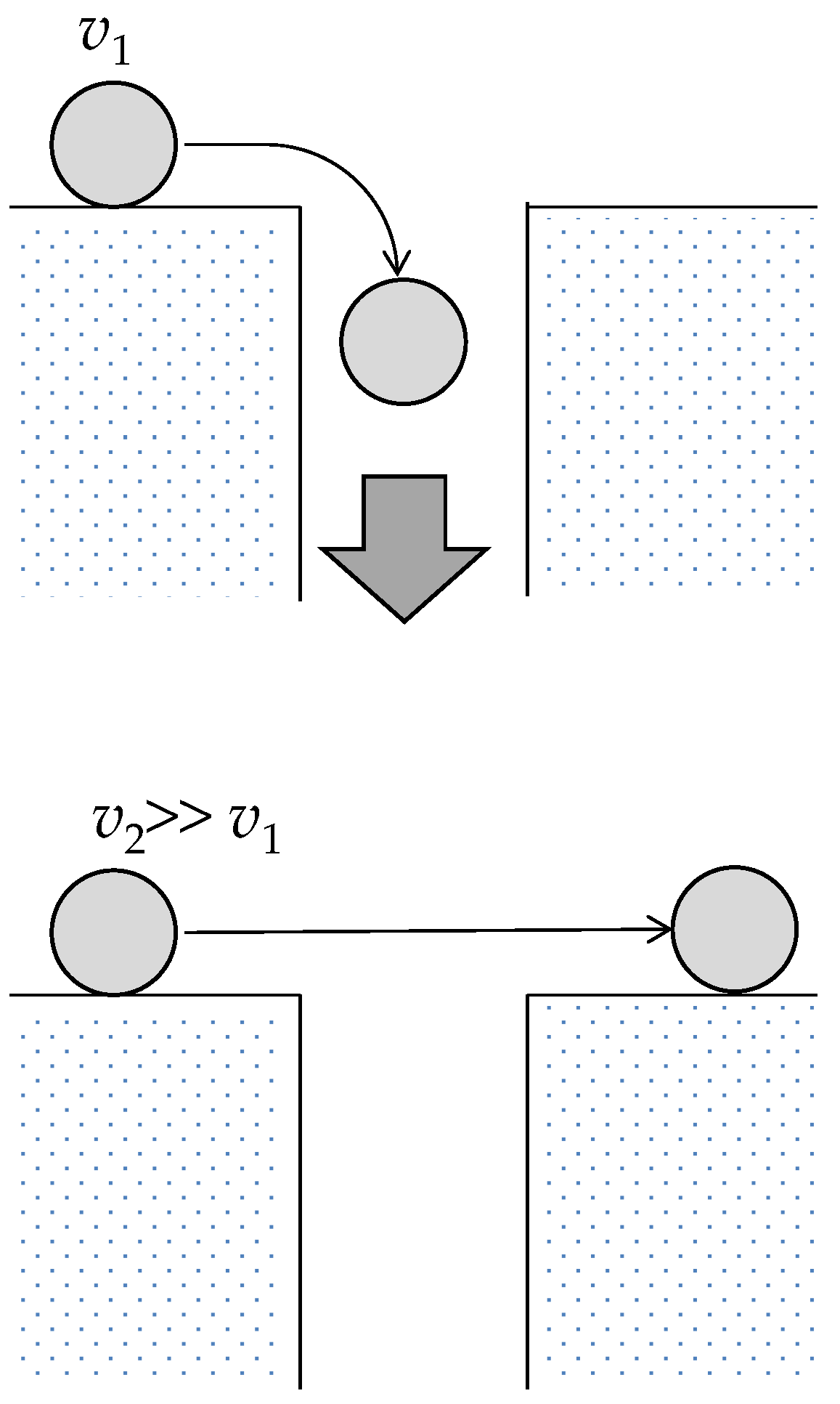
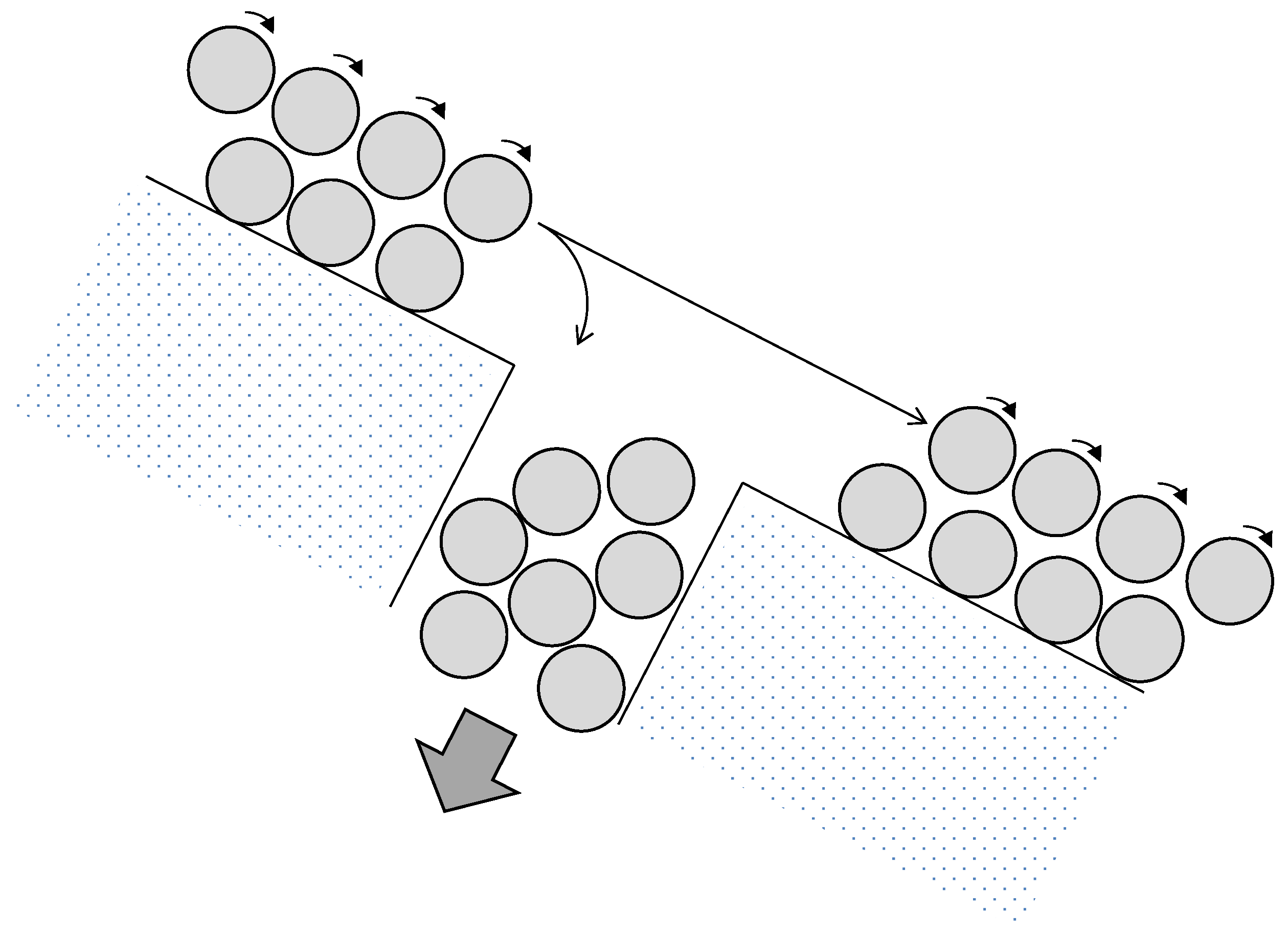
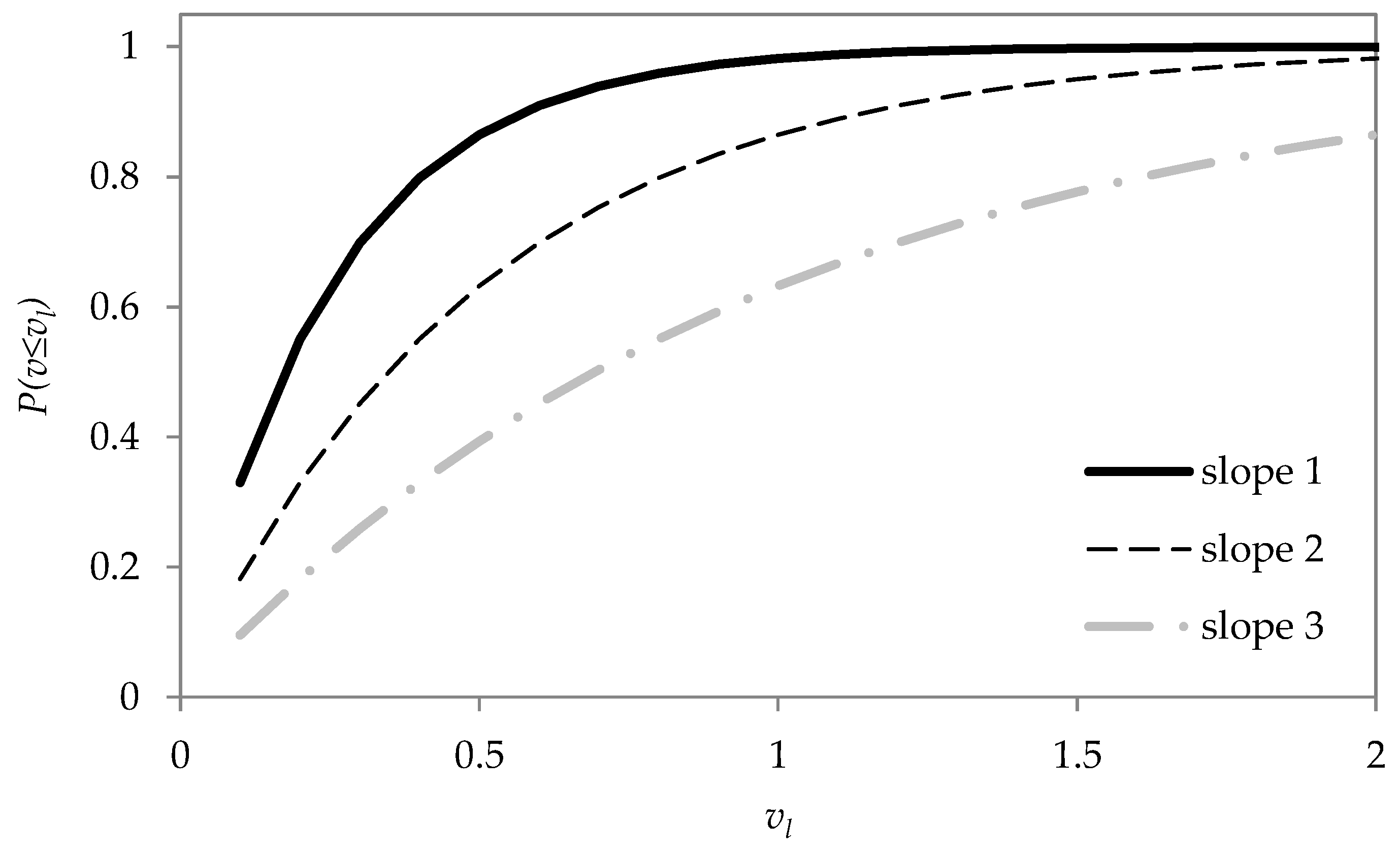
Rainfall infiltration modeling over surfaces with significant slopes is an unsolved problem. Even though water infiltration occurs over soil surfaces with noticeable gradients in most real situations, the typical mathematical models used were developed for infiltration over horizontal surfaces. In addition, recent investigations on infiltration over sloping surfaces have provided conflicting results, suggesting that our understanding of the process may still be lacking. In this study, our objective is to specifically examine if the surface water velocity that is negligible over near horizontal soil surfaces can affect the infiltration process over steep slopes. A new conceptual model representing a wide range of experimental results is proposed. The model represents water flow as an ensemble of infinitesimal “particles” characterized by specific velocities and assumes that only “particles” with velocity less than a threshold value can contribute to the infiltration process. The velocity distribution and the threshold value depend on slope and soil type, respectively. This conceptual model explains observed results and serves as a foundation for developing further experiments and refining models that offer more realistic representations of infiltration over sloping surfaces.
Keywords: hillslope hydrology; sloping surfaces; infiltration process; infiltration modeling; overland flow hillslope hydrology; sloping surfaces; infiltration process; infiltration modeling; overland flow