Article

Removal of Enteric Pathogens from Real Wastewater Using Single and Catalytic Ozonation


1
CIEPQPF—Chemical Engineering Processes and Forest Products Research Center, Department of Chemical Engineering, Faculty of Sciences and Technology, University of Coimbra, Rua Sílvio Lima, 3030-790 Coimbra, Portugal
2
CIEPQPF—Chemical Engineering Processes and Forest Products Research Center, Faculty of Farmacy, University of Coimbra, Polo das Ciências da Saúde, Azinhaga de Santa Comba, 3000-548 Coimbra, Portugal
*
Author to whom correspondence should be addressed.
Water 2019, 11(1), 127; https://doi.org/10.3390/w11010127
Submission received: 24 December 2018 / Revised: 4 January 2019 / Accepted: 8 January 2019 / Published: 12 January 2019
(This article belongs to the Special Issue Advanced Oxidation Technologies in Industrial Wastewater Treatment)

Abstract

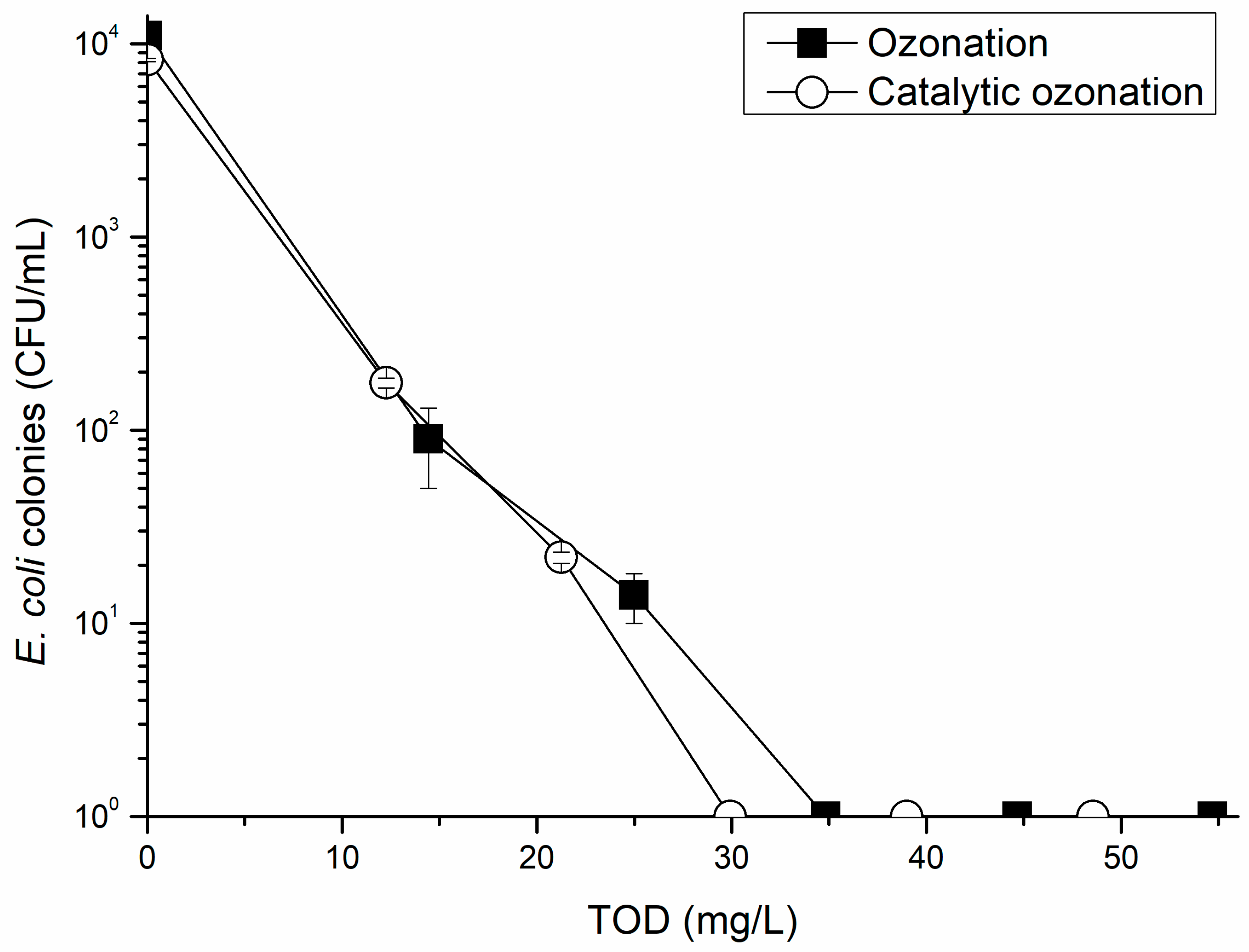
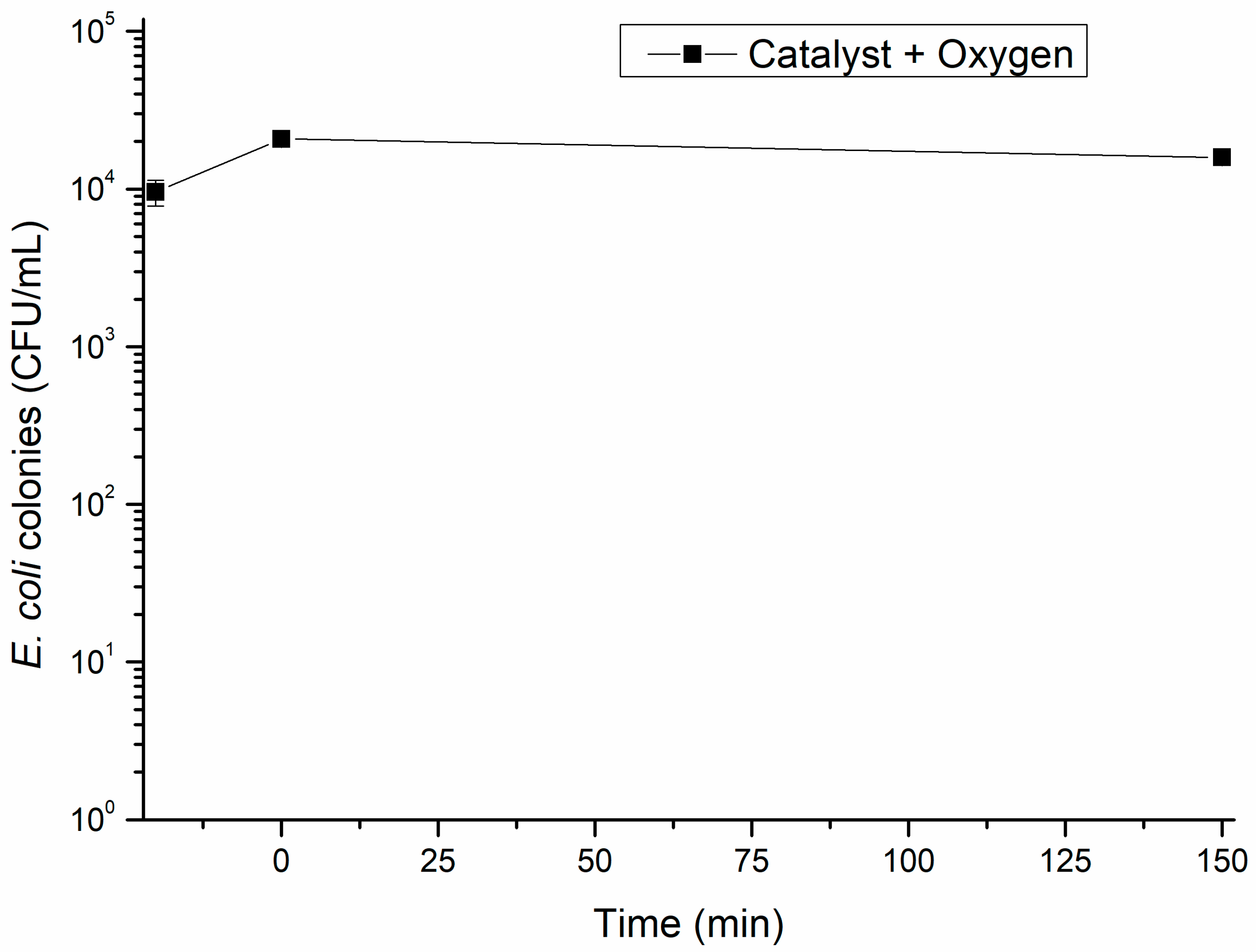
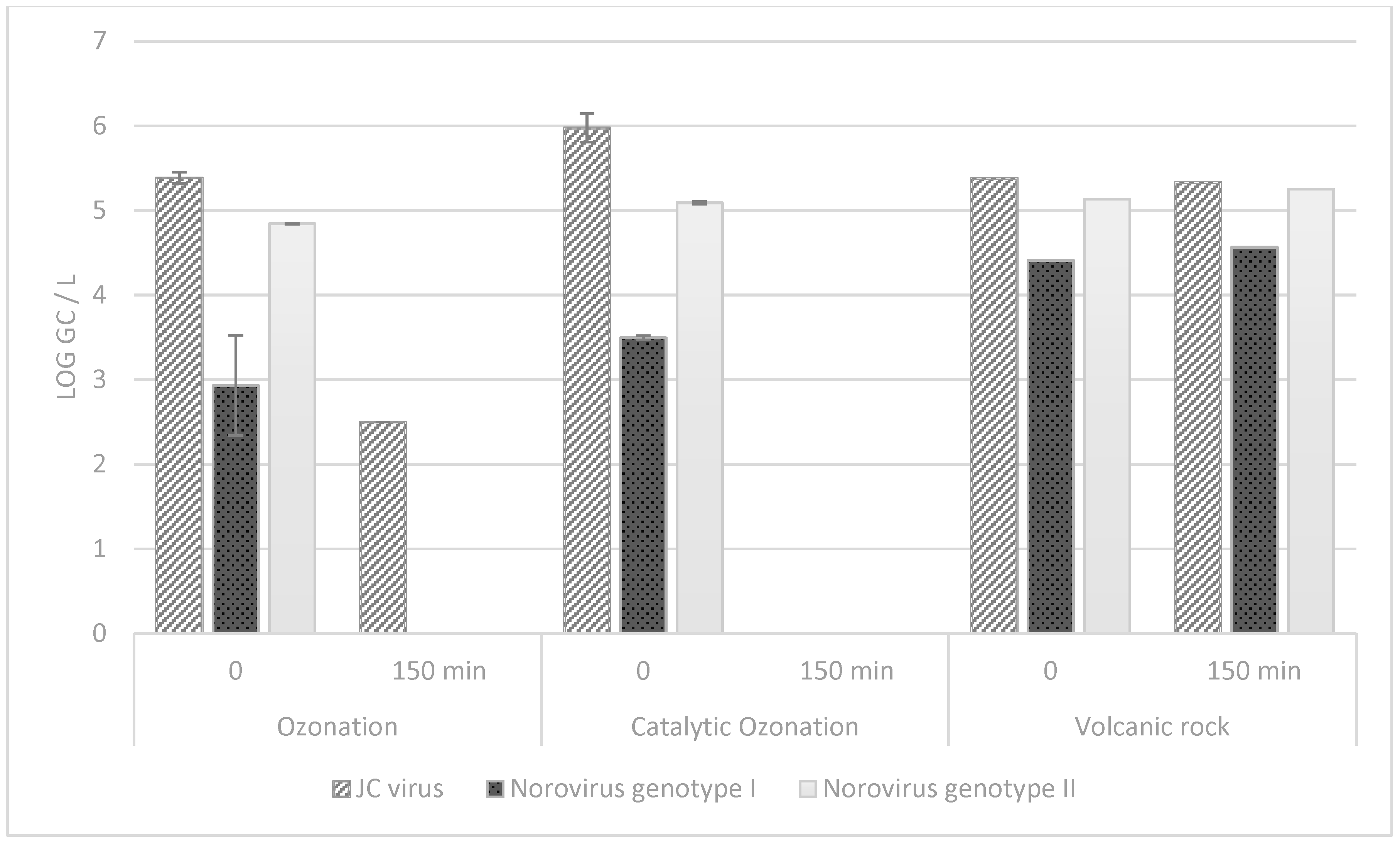
Water scarcity is one of the main problems of this century. Water reclamation appears as an alternative due to the reuse of treated wastewater. Therefore, effluents treatment technologies (activated sludge, rotary biological discs, percolating beds) must be improved since they are not able to remove emerging contaminants such as enteric pathogens (bacteria and virus). These pollutants are difficult to remove from the wastewater and lead to adverse consequences to human health. Advanced oxidation processes, such as single and catalytic ozonation, appear as suitable complements to conventional processes. Catalytic ozonation was carried out using a low-cost material, a volcanic rock. Single and catalytic ozonation were capable of promoting total Escherichia coli removal from municipal wastewater after 90 min of contact. The presence of volcanic rock increases disinfection efficiency since E. coli regrowth was not observed. The identified viruses (Norovirus genotype I and II and JC virus) were completely removed using catalytic ozonation, whereas single ozonation was not able to eliminate JC virus even after 150 min of treatment. The higher performance of the catalytic process can be explained by the formation of hydroxyl radicals, proving that disinfection occurs in the liquid bulk and not due to adsorption at the volcanic rock.
Keywords: JC virus; Norovirus; Catalytic ozonation; Volcanic rock; E. coli; Wastewater disinfection JC virus; Norovirus; Catalytic ozonation; Volcanic rock; E. coli; Wastewater disinfection