Article

Occurrence and Health-Risk Assessment of Trace Metals in Raw and Boiled Drinking Water from Rural Areas of China


1
Graduate School of Chinese Academy of Geological Sciences, Beijing 100037, China
2
Center of Exploration and Development of Geology and Mineral Resources of Jiangxi Province, Nanchang 330030, China
3
State Key Laboratory of Environmental Geochemistry, Institute of Geochemistry Chinese Academy of Sciences, Guiyang 550081, China
4
University of Chinese Academy of Sciences, Beijing 100049, China
*
Author to whom correspondence should be addressed.
These authors contributed equally to this work.
Water 2018, 10(5), 641; https://doi.org/10.3390/w10050641
Submission received: 4 April 2018 / Revised: 2 May 2018 / Accepted: 11 May 2018 / Published: 16 May 2018
(This article belongs to the Section Water Quality and Contamination)

Abstract

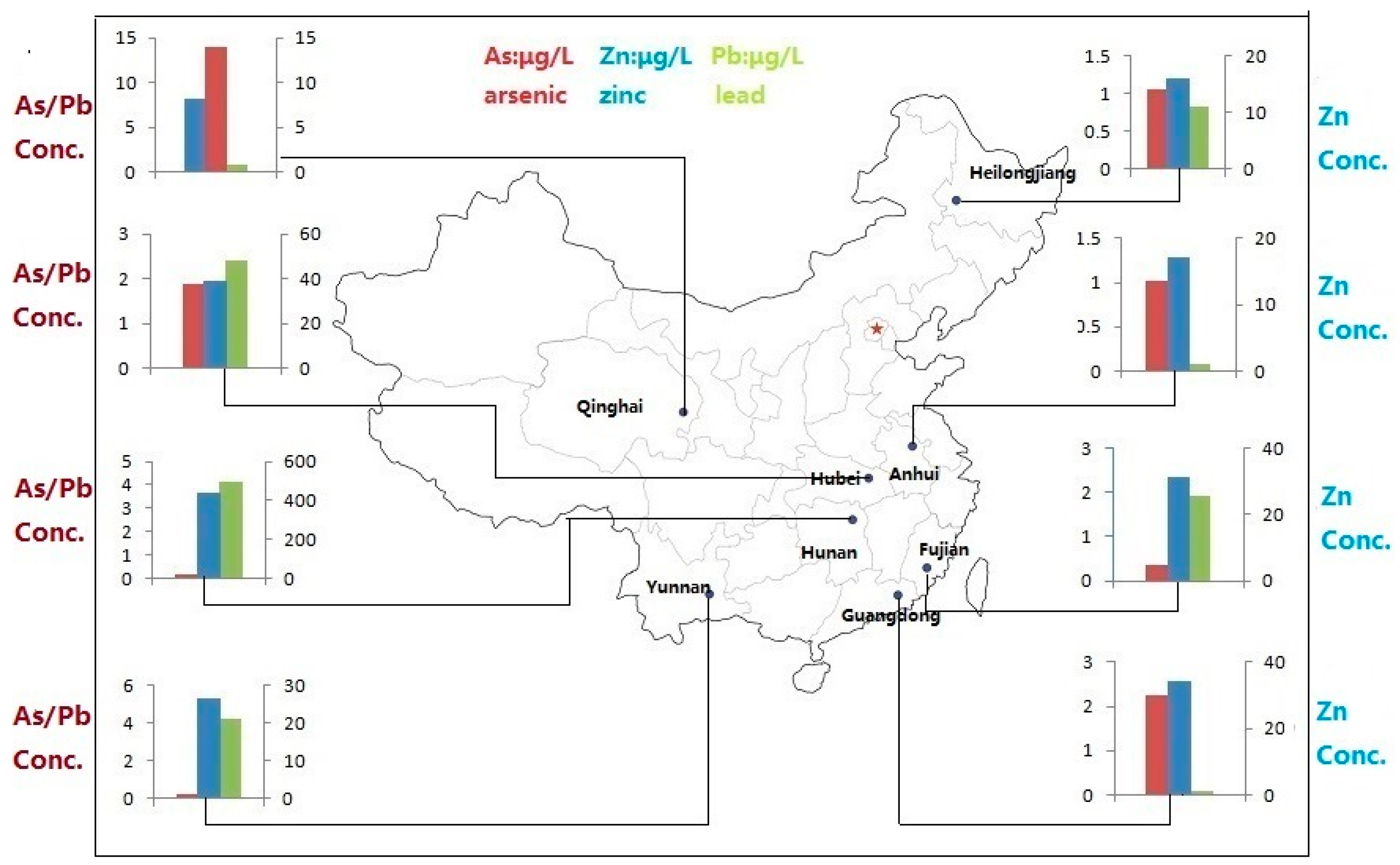
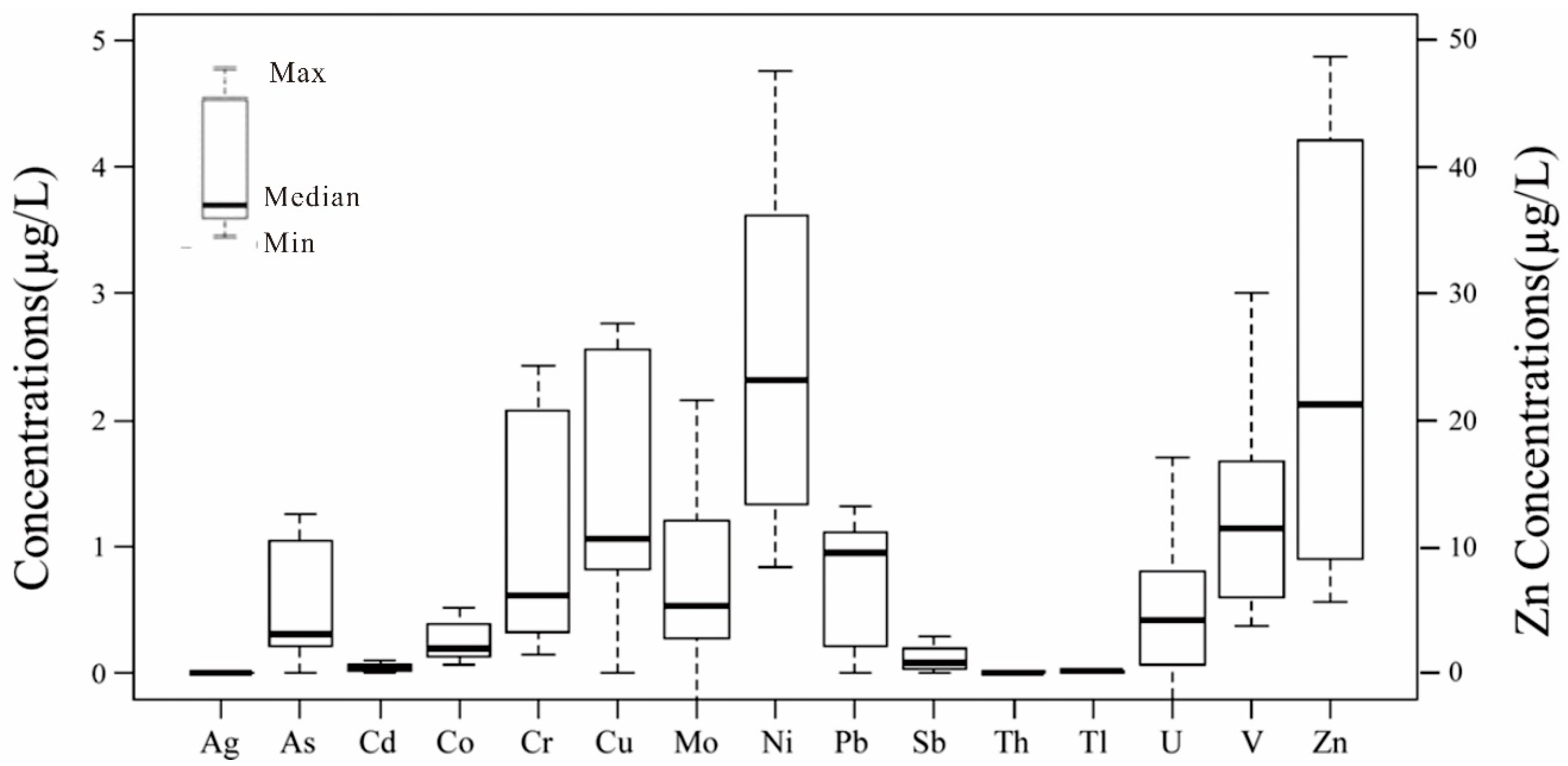
In order to assess the exposure of rural residents to trace metals via drinking water ingestion, 222 drinking water samples of rural areas from 8 provinces in China were collected and 18 trace metals analyzed by inductively coupled plasma mass spectrometer (ICP-QMS). Based on metal concentrations, the health-risk assessment such as chronic daily intakes (CDI) and hazard quotient (HQ) were calculated. Results showed that most metals occurred in the drinking water at very low concentrations, indicating a general good quality, while the concentrations of As, Pb and Zn in some samples from Qinghai, Yunnan and Hunan provinces were higher than World Health Organization (WHO) and Chinese guidelines for drinking water. The values of CDI and HQ indicated a negligible health risk for most Chinese rural residents via drinking water. However, high concentrations of As in drinking water from Qinghai province would pose a serious risk to the local inhabitants. More attention and intensive study should be paid to Zn, Pb and As contents.
Keywords: drinking water; trace metals; chronic daily intakes; Chinese rural areas drinking water; trace metals; chronic daily intakes; Chinese rural areas