Article

The Risk Assessment of River Water Pollution Based on a Modified Non-Linear Model

1
Key Laboratory of Disaster Monitoring and Mechanism Simulating in Shaanxi Province, College of Geography and Environment, Baoji University of Arts and Sciences, Baoji 721013, China
2
UCD Dooge Centre for Water Resources Research, School of Civil Engineering, University College Dublin, Belfield, Dublin 4, Ireland
3
Institute of Water Resources and Hydro-electric Engineering, Xi’an University of Technology, Xi’an 710048, China
*
Author to whom correspondence should be addressed.
Water 2018, 10(4), 362; https://doi.org/10.3390/w10040362
Submission received: 27 February 2018 / Revised: 17 March 2018 / Accepted: 17 March 2018 / Published: 23 March 2018
(This article belongs to the Section Hydrology)

Abstract

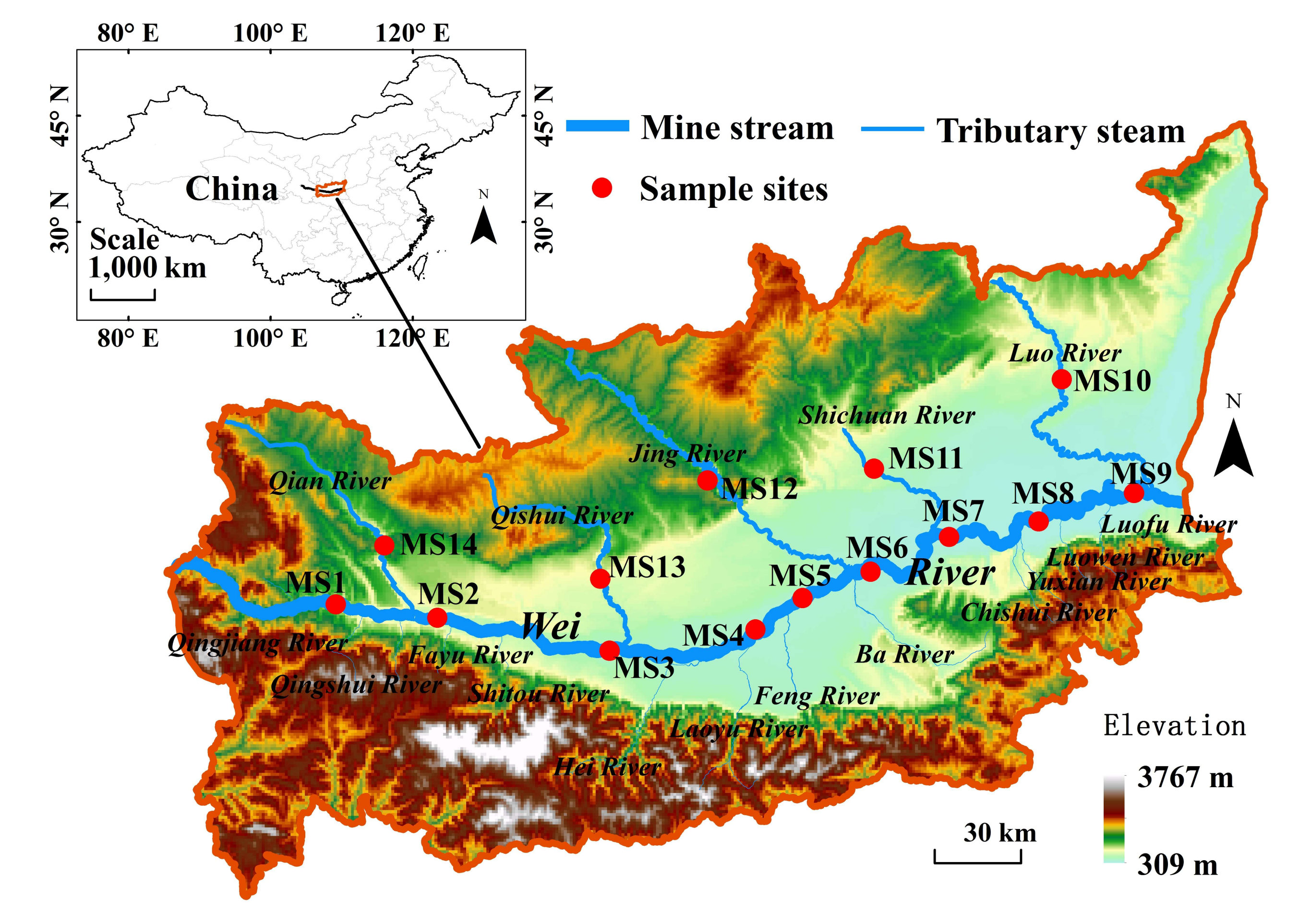
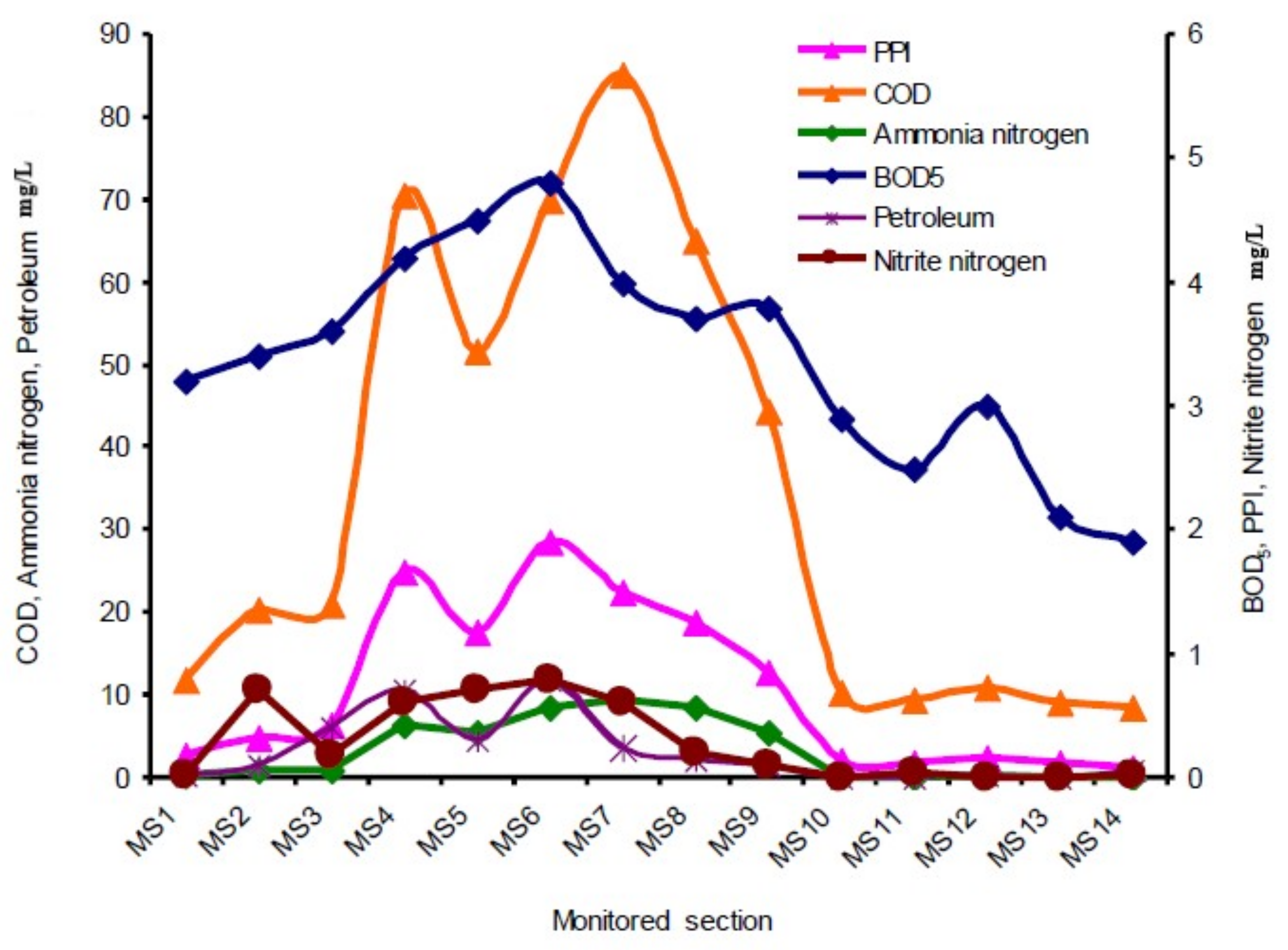
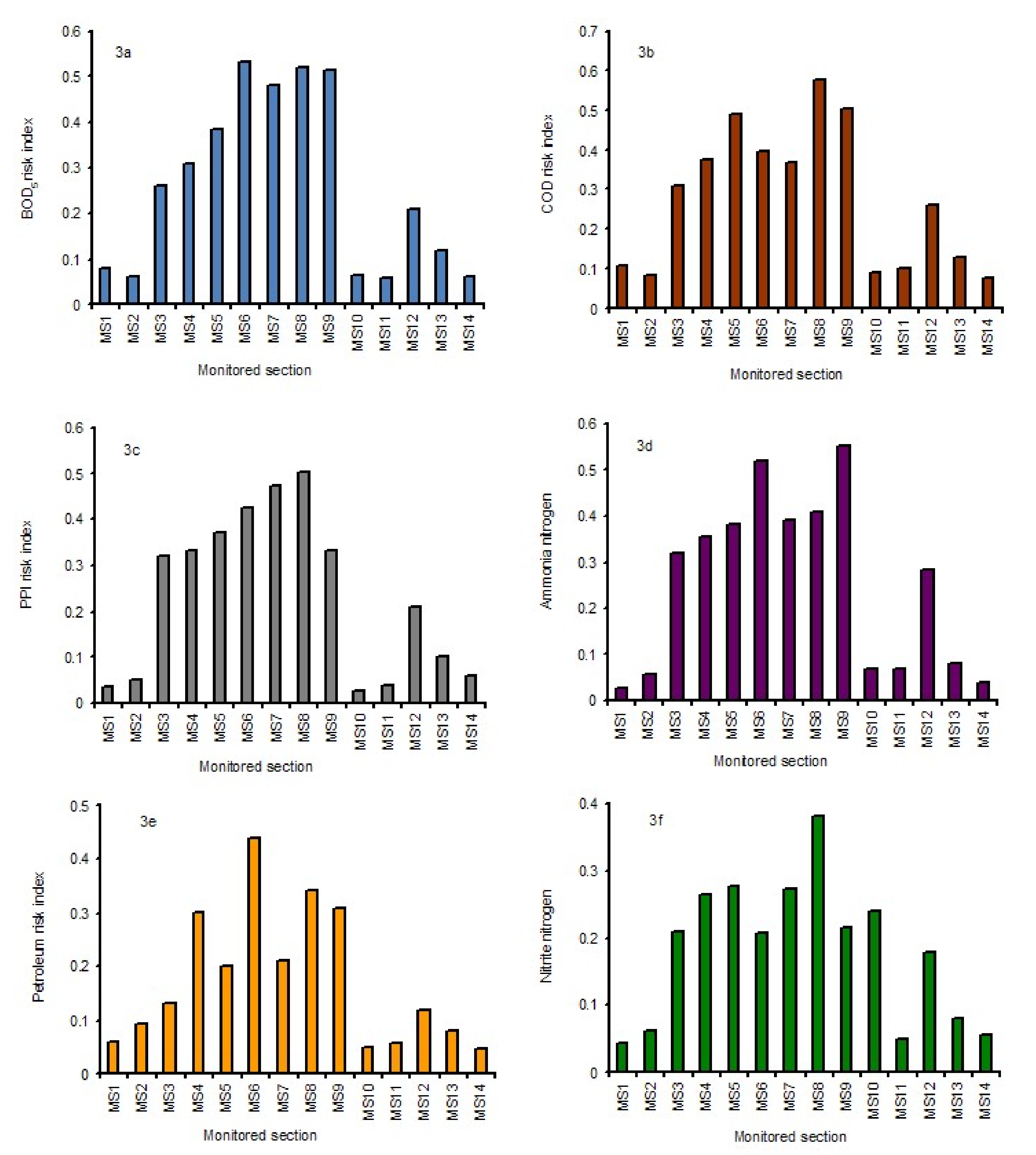
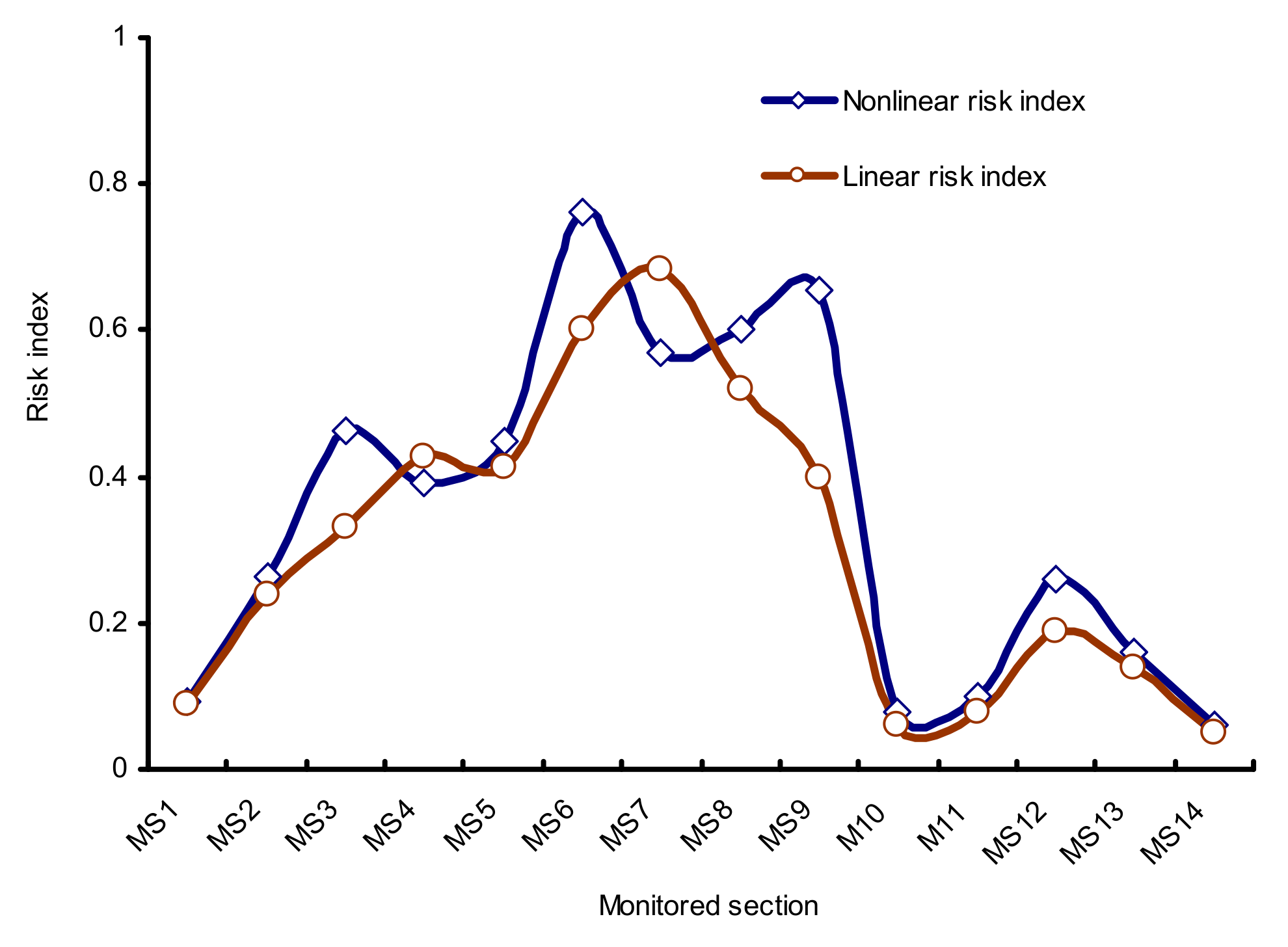
The water resource system is a non-linear system, featuring variability and randomness. Its risk assessment is very different from that of a linear system. Considering the effects of river flow on the pollutant diffusion, migration, and maximum tolerable concentration, a modified non-linear model (MNLM) was established, while the forcing terms were introduced to model functions for water pollution risk assessment. Taking the Weihe River Basin in China as an example, the risk assessment values were divided into five levels: negligible risk, acceptable risk, marginal risk, unacceptable risk, and catastrophic risk. As such, the risk variation of the river pollution interval was analyzed. The results showed that the BOD5, COD, and nitrite nitrogen are the main pollutants, leading to great risks of river water pollution. Moreover, it was found that the risk in the dry season is higher than that in the flood season, while the risk based on MNLM is 10.9% higher than that of linear methods. Verification indicates that MNLM is considered more suitable for risk assessment of complex river water pollution. However, the forcing term coefficient should be corrected for actual situations in different river water systems. The explored MNLM is expected to give insights into regional river water environment management.
Keywords: risk assessment; modified non-linear model; water pollution; river basin; Weihe River risk assessment; modified non-linear model; water pollution; river basin; Weihe River