Article

Pilot Performance of Chemical Demulsifier on the Demulsification of Produced Water from Polymer/Surfactant Flooding in the Xinjiang Oilfield

1
State Key Laboratory of Environmental Aquatic Chemistry, Research Center for Eco-Environmental Sciences, Chinese Academy of Sciences, Beijing 100085, China
2
University of the Chinese Academy of Sciences, Beijing 100019, China
3
Sino-Danish Center for Education and Research, Beijing 100190, China
*
Author to whom correspondence should be addressed.
Water 2018, 10(12), 1874; https://doi.org/10.3390/w10121874
Submission received: 30 November 2018 / Revised: 13 December 2018 / Accepted: 13 December 2018 / Published: 18 December 2018
(This article belongs to the Section Wastewater Treatment and Reuse)

Abstract

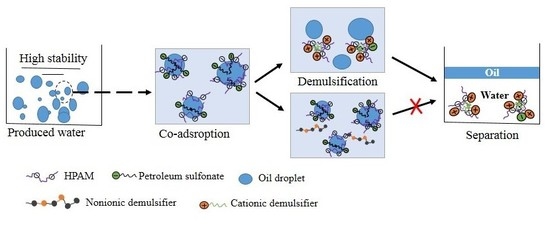
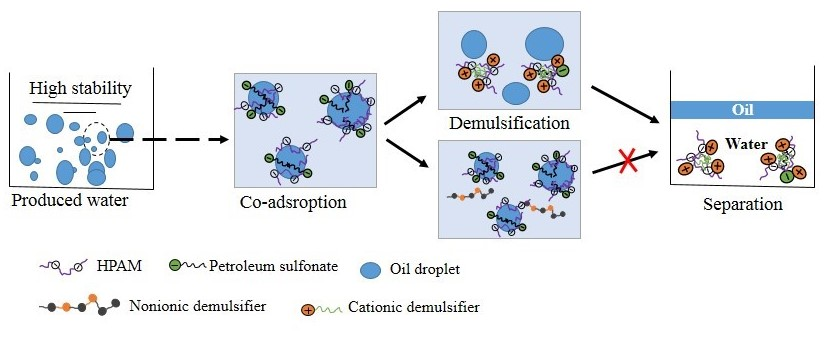
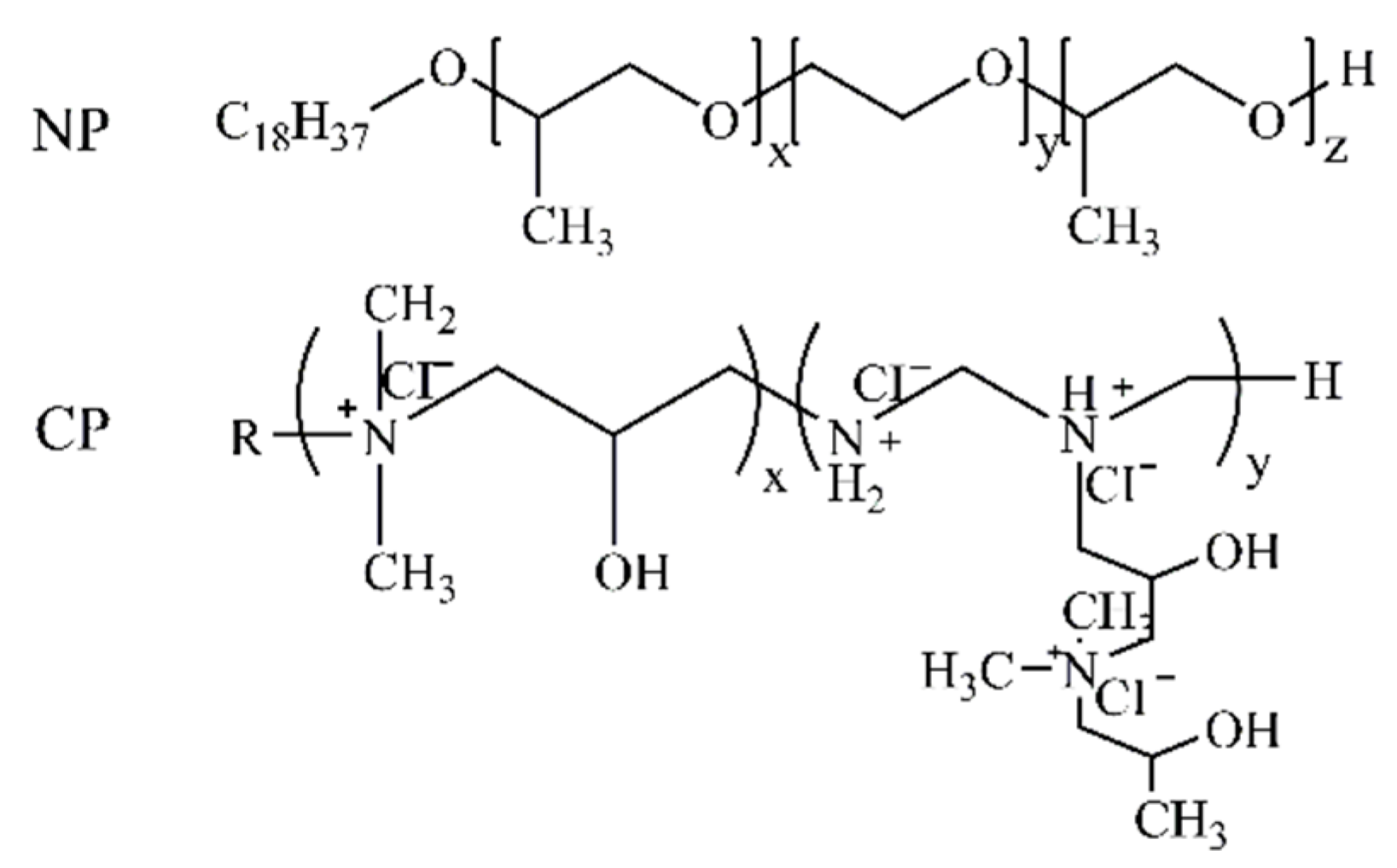
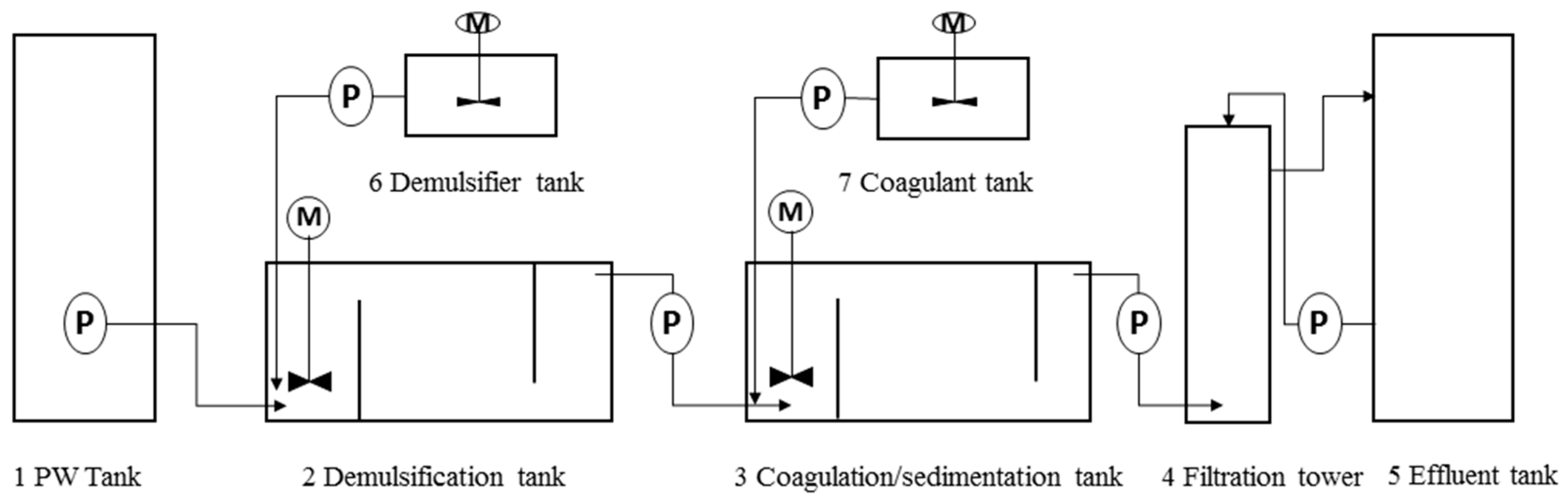
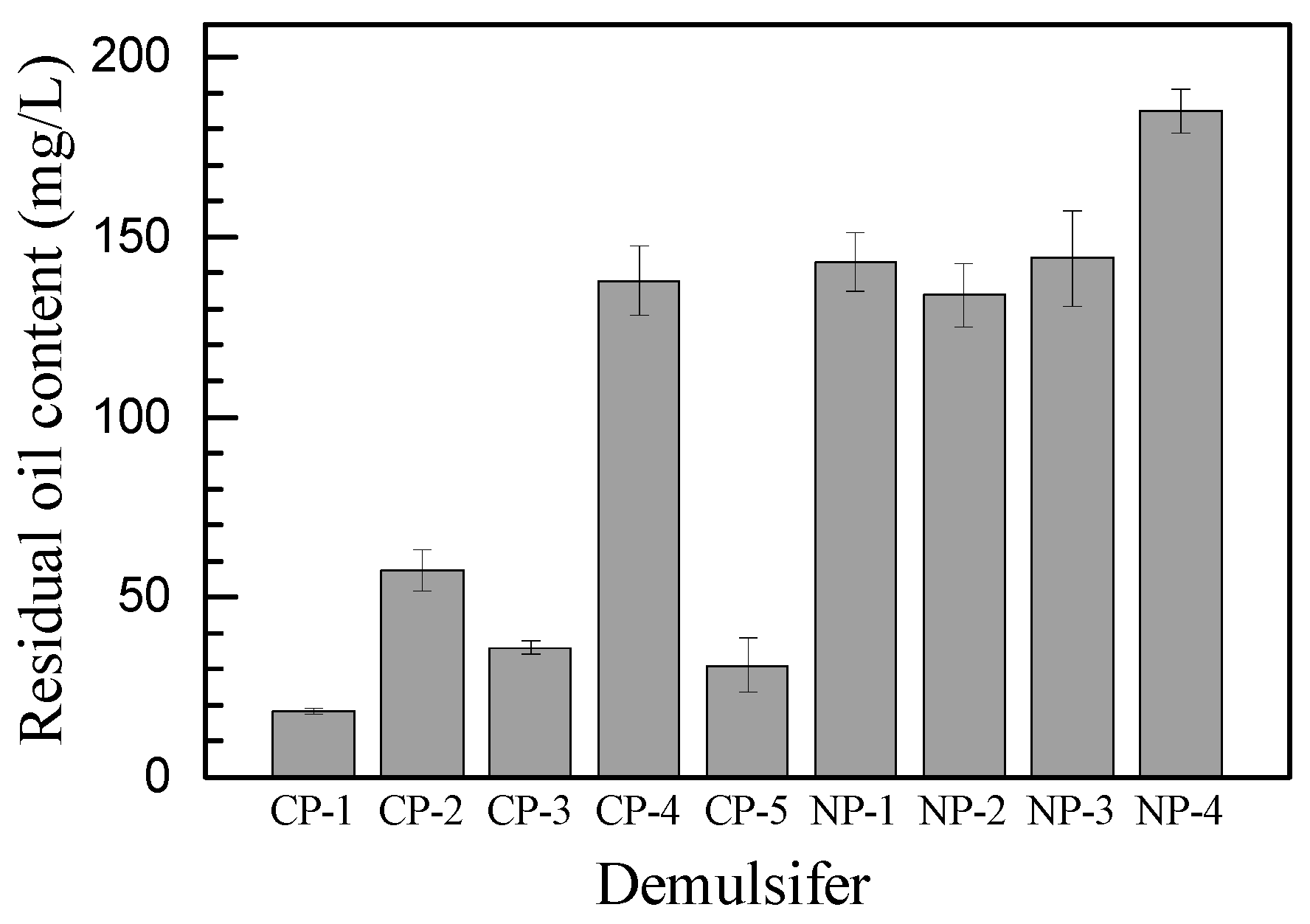
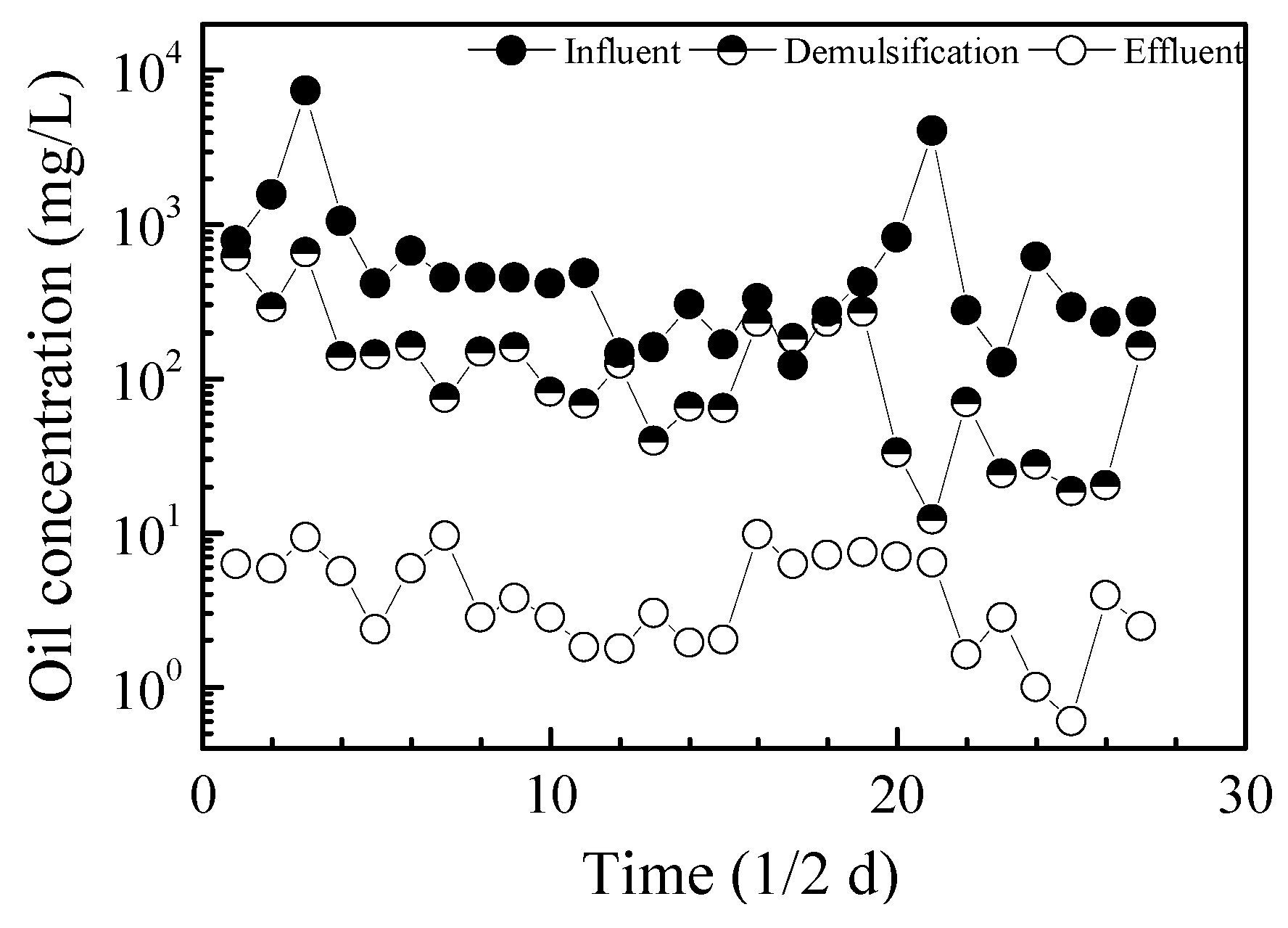
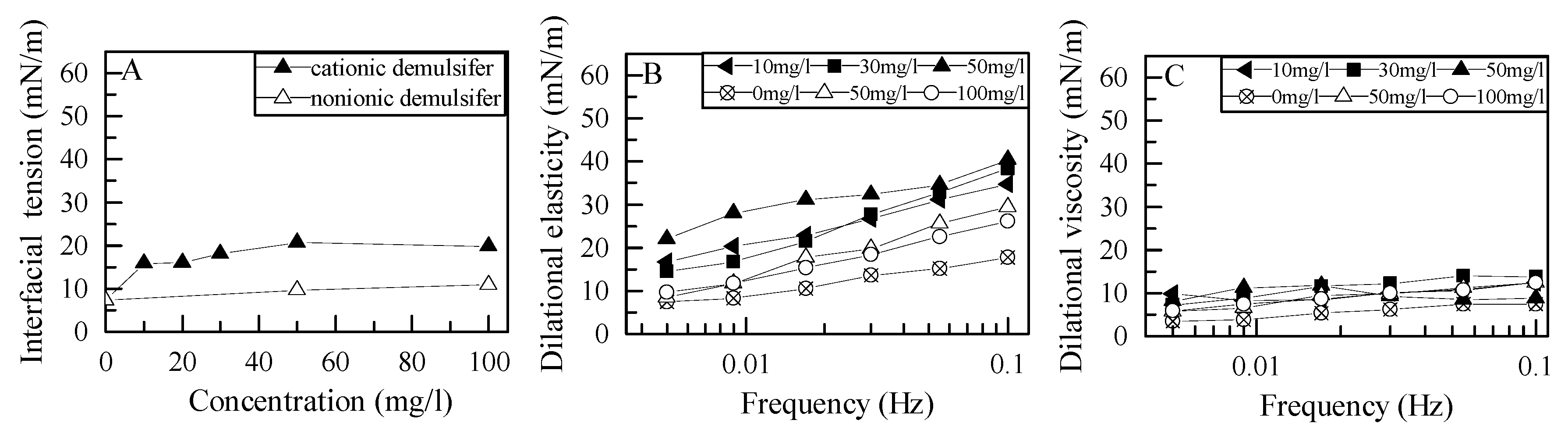
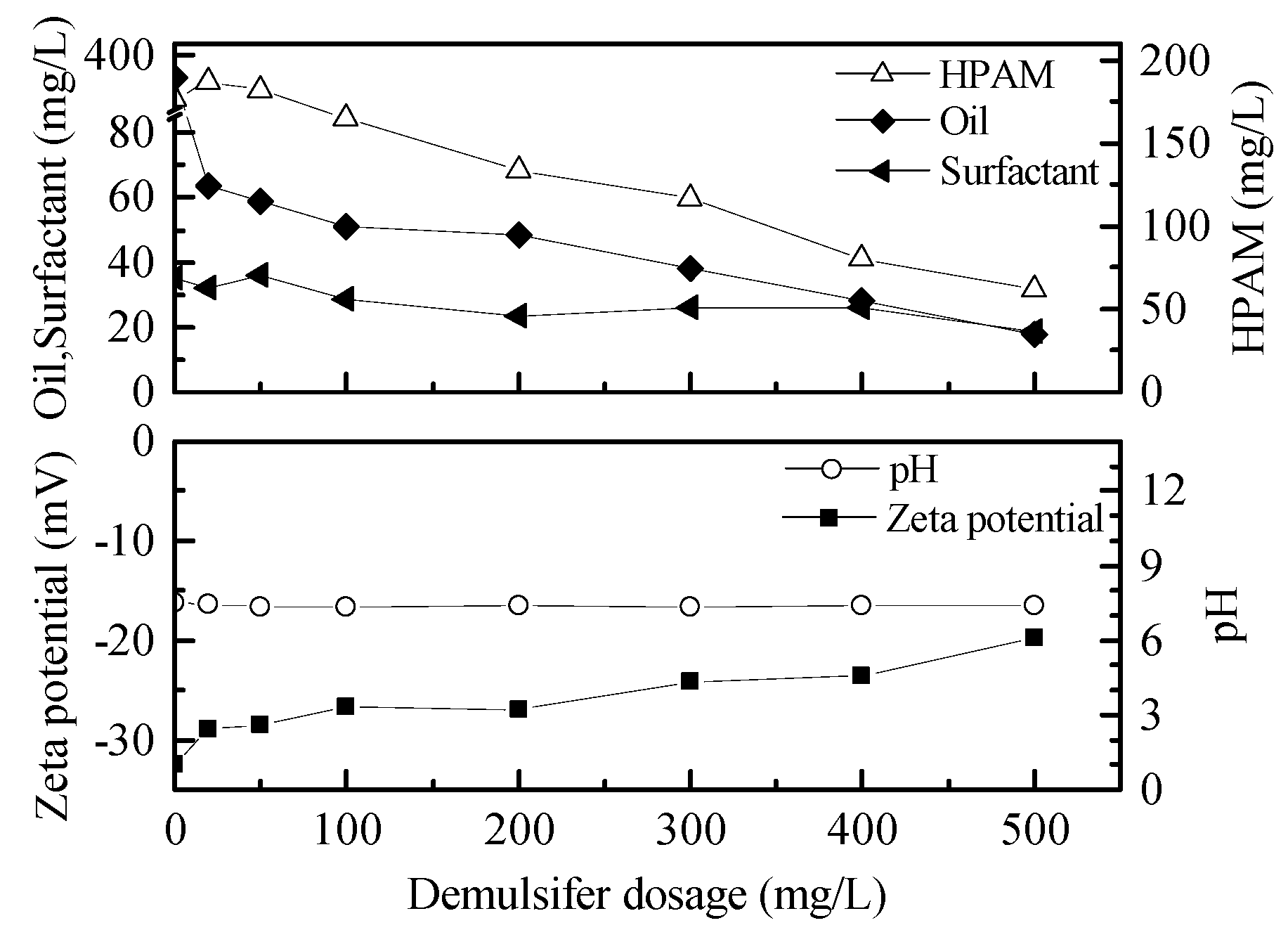
Purification of produced water (PW) from polymer/surfactant flooding is a challenge for the petroleum industry due to the high emulsion stability. Demulsification using chemical demulsifiers has been expected to be an effective way to treat PW. In this paper, five cationic (branched quaternary ammonium chloride) and four nonionic (copolymer of propylene oxide and ethylene oxide) demulsifiers with different molecular weights were employed to test their respective demulsification performance in the treatment of PW from polymer/surfactant flooding. The cationic demulsifiers, in general, exhibited better performance than the nonionic ones and one cationic demulsifier (CP-1) exhibiting the best demulsification efficiency was further employed for a pilot experiment in the Xinjiang Oilfield. The oil content of PW could be successfully reduced from 128~7364 to less than 10 mg/L with a dosage of CP-1 for 350 mg/L and polyaluminum chloride (PAC, 30% w/w Al2O3) for 500 mg/L under ambient temperature (14~22 °C). At the same time, partially hydrolyzed polyacrylamide (HPAM) was removed from 176.9~177.1 to 2.8~3.9 mg/L while petroleum sulfonate was not removed too much (from 35.5~43.8 to 25.5~26.5 mg/L). The interfacial rheology analysis on simulated PW from HPAM/petroleum sulfonate flooding revealed that the addition of CP-1 led to a significant increase of the oil-water interfacial tension (from 7 to 15~20 mN/m) and zeta potential (from −32.5 to −19.7 mV). It was, thus, assumed that the decreased net charge on the dispersed oil droplets surface and weakened oil/water film due to the formation of complex between the cationic demulsifier and HPAM may have facilitated the destabilization of the emulsion. The result of this study is useful in better understanding the demulsification processes as well as selecting suitable demulsifiers in the treatment of PW from polymer/surfactant flooding.
Keywords: produced water; polymer/surfactant flooding; demulsification; demulsifier; interfacial rheology produced water; polymer/surfactant flooding; demulsification; demulsifier; interfacial rheology
Graphical Abstract