Article

Improved Estimate of Solar Heat Input into the Arctic Ocean During 2007 Using High-Resolution MODIS Data


1
National Tibetan Plateau Data Center, State Key Laboratory of Tibetan Plateau Earth System Environment and Resources, Institute of Tibetan Plateau Research, Chinese Academy of Sciences, Beijing 100045, China
2
Department of Atmospheric and Oceanic Science, University of Maryland, College Park, MD 20742, USA
*
Author to whom correspondence should be addressed.
Atmosphere 2026, 17(7), 629; https://doi.org/10.3390/atmos17070629 (registering DOI)
Submission received: 27 April 2026 / Revised: 19 June 2026 / Accepted: 20 June 2026 / Published: 25 June 2026
(This article belongs to the Section Atmospheric Techniques, Instruments, and Modeling)

Abstract

A methodology for deriving high-resolution (5-km) surface shortwave radiative (SWR) fluxes over the Arctic was applied to observations acquired by the Moderate Resolution Imaging Spectroradiometer (MODIS) during the spring and summer melt season (March–September) of 2007, when the Arctic experienced a historically significant and well-documented decline in sea ice extent. The derived SWR fluxes were used to estimate solar heat input into the Arctic Ocean during the melt season, a task that had not previously been undertaken at such high spatial resolution. According to the National Snow and Ice Data Center (NSIDC), Arctic sea ice extent reached a record minimum of 4.13 million km2 on 16 September 2007, approximately 38% below the 1979–2000 climatological mean and 24% below the previous record minimum in 2005. This extreme reduction in sea ice resulted in several weeks of ice-free opening along portions of the ‘Northwest Passage’. Availability of high spatial resolution SWR fluxes in the Arctic is particularly important for improving estimates of solar heat input into the Arctic Ocean, especially within the highly heterogeneous marginal ice zone. To facilitate comparison with sea ice concentration products from NSIDC, the MODIS-derived 5-km SWR fluxes were aggregated to 0.25° equal-area grid cells (approximately 25 km resolution). Our results show that the abrupt increase in the open water fraction produced anomalies in solar heating to the upper ocean exceeding 300%, hereby enhancing the ice–albedo feedback mechanism and promoting further sea ice melt. The estimated monthly cumulative solar heat input to the ocean for a nominal 1° grid cell was 164.9 MJ m−2 in May. In contrast, the corresponding four 0.25° sub-grid cells, resolved using the high-resolution MODIS data, exhibited cumulative heat inputs of 58.0, 93.0, 189.3, and 296.4 MJ m−2, respectively. Although the average heat input for the 1° grid cell (165 MJ m−2 was similar to the average value obtained from the four 0.25° grid cells (159 MJ m−2 the substantial sub-grid variability is important because the oceanic and sea-ice responses to solar heating are highly nonlinear. Consequently, unresolved spatial variability can significantly affect the magnitude of derived quantities and associated feedback processes. These findings demonstrate the importance of high-spatial-resolution radiative flux information for accurately quantifying ocean heating and ice–ocean interactions in the Arctic.

1. Introduction

The impact of climate warming in the Arctic is of major concern and has led the scientific community to recognize the need for dedicated observations in this complex region (Bourassa et al. [1]). Numerous studies have documented the accelerated decline in the Arctic sea ice cover (Comiso et al. [2], Perovich et al. [3]). The ice albedo feedback has been recognized as a key mechanism contributing to polar amplification of warming (Hall et al. [4]; Serezze et al. [5,6]; Boe et al. [7]). Longwave cloud feedback and energy transport from lower latitudes are also considered as factors for enhanced Arctic warming and sea ice loss in model simulations (Mahlstein et al. [8]; Hwang et al. [9]).
The updated Community Climate System Model (CCSM), incorporating improved sea ice physics and a new shortwave radiative transfer scheme, has shown that aerosols and melt ponds influence surface albedo and that the associated feedback can contribute to the reduction of Arctic sea ice during the twentieth century (Bitz et al. [10]). In a study of synoptic conditions, clouds, and sea ice melt onset in the Beaufort and Chukchi seasonal ice zones, Liu [11] proposed that sea ice melt onset is closely related to synoptic-scale atmospheric conditions and occurs more frequently and earlier during periods of warm-air advection. Synoptic conditions characterized by the highest air temperatures and precipitable water content are most favorable for melt onset. Additional solar energy absorbed by the upper ocean during summer, resulting from increased open-water areas, can accelerate the melting of adjacent sea ice (Perovich et al. [12]; Perovich [13]). This excess heat has been shown to be sufficient to reduce subsequent winter ice growth by several centimeters and to delay autumn freeze-up by periods ranging from two weeks to two months. Ice-loss anomalies in 2007 were substantially greater than those observed in any preceding year (Perovich et al. [14]).
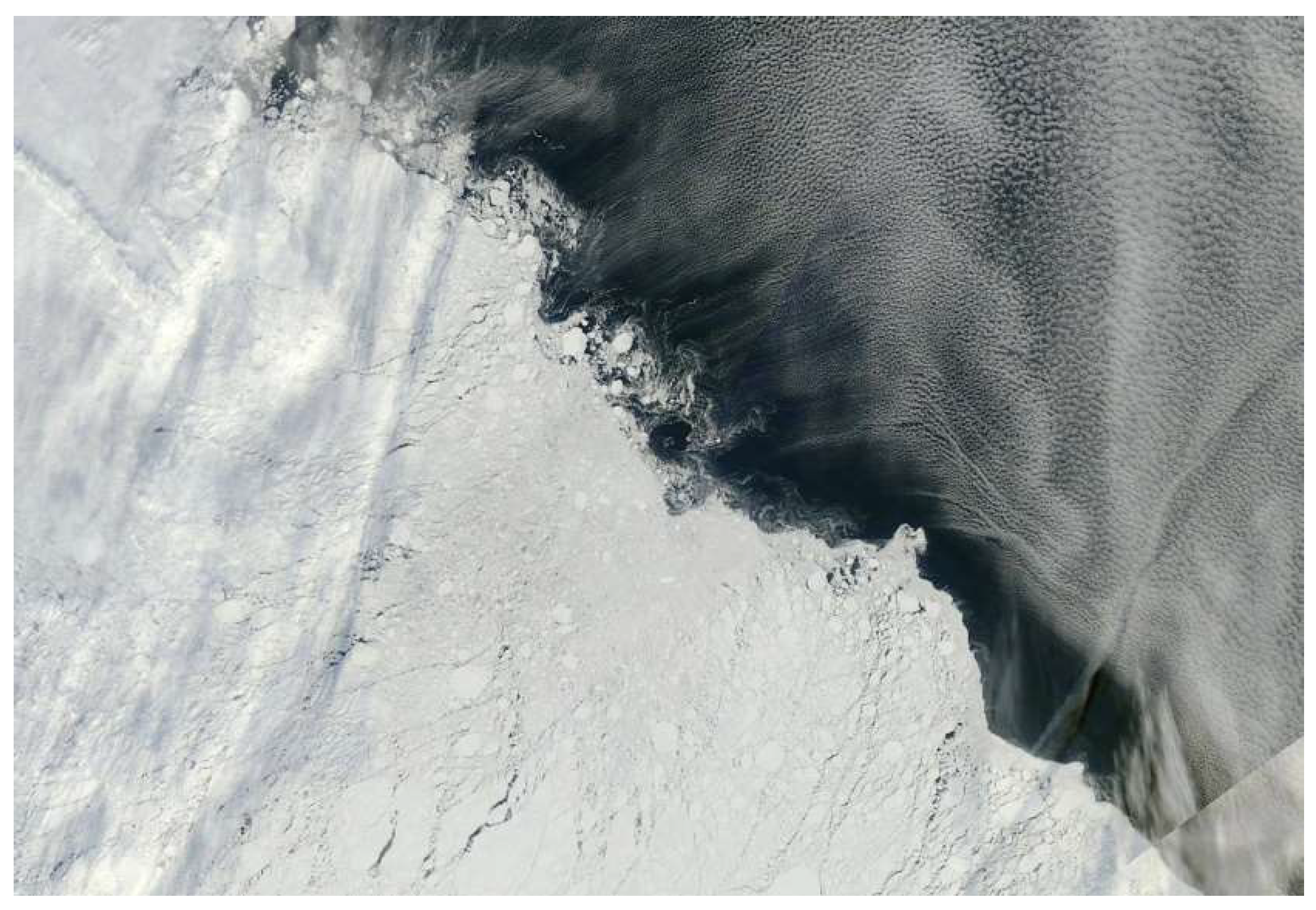
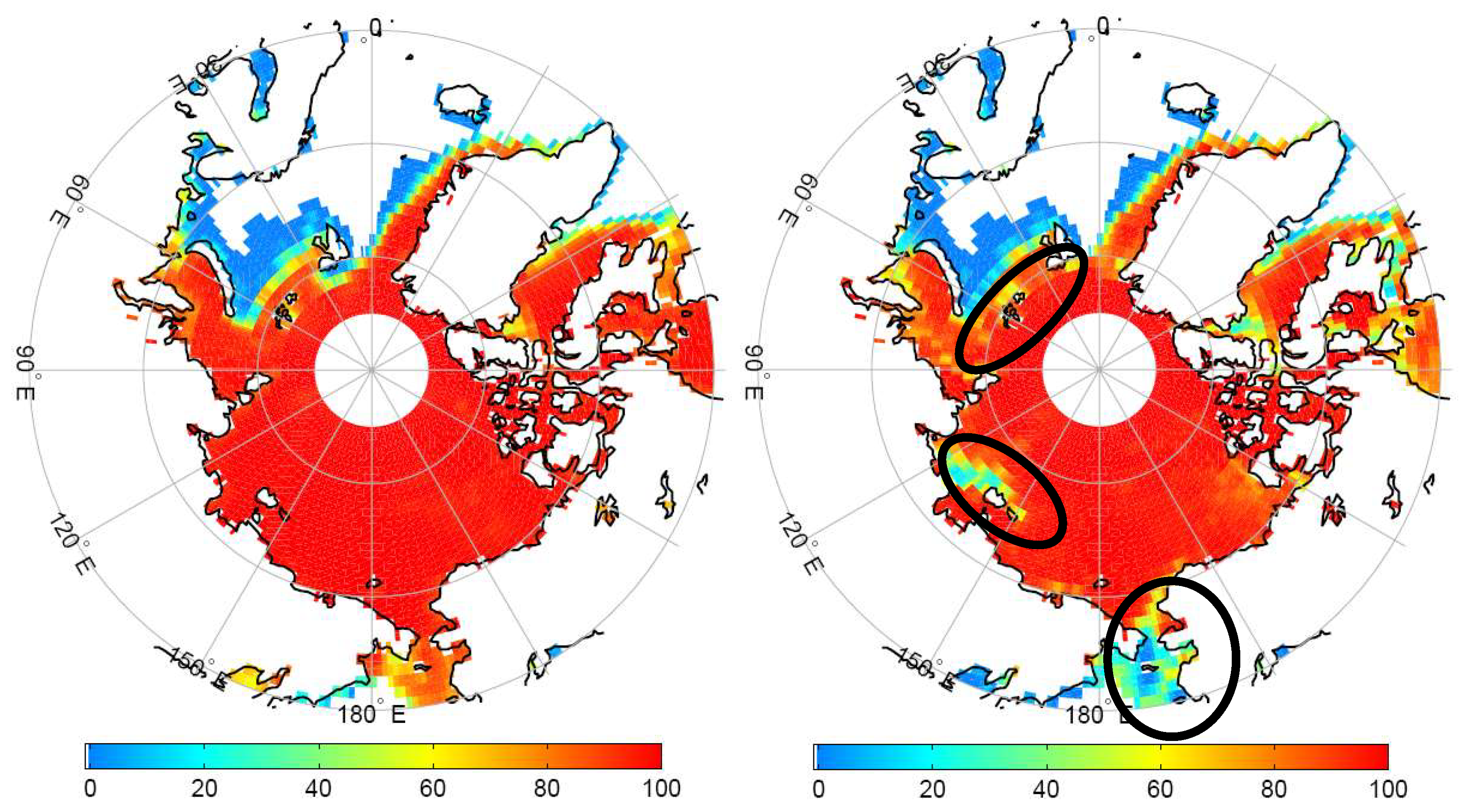
Estimates of longer-term (2003–2009) solar heat input into the Arctic Ocean and its correlation with open-water area have been derived from 1° resolution Moderate Resolution Imaging Spectroradiometer (MODIS) data, as well as observations from the Advanced Very High-Resolution Radiometer (AVHRR) (Pinker et al. [15]). However, complex conditions exist at the ice–water interface (Figure 1). These regions are primarily located within the seasonal sea ice zone, marked by black circles in Figure 2 which shows the monthly mean sea ice concentration (25-km resolution) for January and May 2007.
More accurate estimates of solar heat input into the ocean, particularly in regions experiencing extensive sea ice melt, require higher-resolution satellite observations. At present, satellite-derived SWR information does not fully meet the needs of Arctic studies. Limitations arise from the spatial and temporal resolution of the satellite data, as well as from uncertainties in the input variables used by retrieval algorithms to derive SWR fluxes. Of primary concern is cloud information, since clouds are particularly difficult to detect over highly reflective snow and ice-covered surfaces (Mahajan et al. [16]; Chan et al. [17]).
Well-known satellite products include CERES SYN1deg (hourly, ~1° spatial resolution, corresponding to approximately 100 km) from the Clouds and the Earth’s Radiant Energy System (CERES) project (Loeb et al. [18]; Doelling et al. [19]) and the CERES Energy Balanced and Filled (EBAF) data product (Kato et al. [20]). CERES SYN1deg was originally based on CERES broadband radiometers, MODIS cloud retrievals, and geostationary (GEO) satellite observations. Because GEO satellites do not provide coverage at high latitudes, Arctic SYN1deg processing cannot rely on GEO observations. Instead, it uses data from Terra, Aqua, Suomi-NPP, NOAA-20, and other polar-orbiting satellites. When temporal gaps remain between satellite overpasses, SYN1deg employs interpolation techniques that assume gradual cloud evolution and cloud-field persistence between observations.
EBAF is produced at 1° spatial resolution and monthly temporal resolution. To represent the diurnal cycle, EBAF applies empirical diurnal correction factors derived from SYN1deg to estimate radiative fluxes during periods between CERES observations. Huang et al. [21] reported on the performance of SYN1deg over Arctic sea ice during the Multidisciplinary Drifting Observatory for the Study of Arctic Climate (MOSAiC) expedition. MOSAiC was a year-round international Arctic research campaign (2019–2020) led by the Alfred Wegener Institute. Best estimates of CERES shortwave fluxes over Arctic sea ice during summer, averaged over the April–September 2020 campaign period, are presented in Table 1. Results from this experiment have also been discussed by Barrientos et al. [22].
Another relevant SWR product is the CLoud, Albedo and Radiation (CLARA)-A2, the second edition of the EUMETSAT Climate Monitoring Satellite Application Facility (CM SAF) Climate Data Record, based on observations from the Advanced Very High-Resolution Radiometer (AVHRR) at a native spatial resolution of approximately 25 km (Karlsson et al. [23]). They evaluated the product on a global scale for the period 1982–2015 using measurements from the Baseline Surface Radiation Network (BSRN) (Ohmura et al. [24]). In CLARA-A2, snow-covered surfaces are excluded from the SWR retrieval evaluation because of reduced retrieval accuracy under such conditions.
Unique observations were collected during the Tara Arctic sea-ice camp in the summer of 2007. The camp, organized by the French Tara Ocean Foundation, was established on drifting sea ice in the Arctic Ocean and centered on the research vessel Tara. The vessel was intentionally frozen into the sea ice and drifted across the Arctic Ocean for approximately 500 days (2006–2008). Using measurements of surface SWR collected during the expedition, Riihelä et al. [25] evaluated the CLARA-A2 product, with the results summarized in Table 1. Their analysis was able to separate performance statistics according to surface type and ice conditions. Validation was performed by matching each observation site to the nearest satellite grid cell.
Furthermore, Riihelä et al. [25] provided a comprehensive assessment of the performance of several independent Arctic radiation datasets at relatively coarse spatial resolutions, the highest of which was the 25-km CLARA-A2 product. In the present study, these assessments are augmented with MODIS-derived SWR estimates at both 1-km and 5-km spatial resolutions, as presented in Table 1. A newer Climate Data Record, CLARA-A3 CM SAF, is now available (Karlsson et al. [26]); however, its performance over the Arctic has not yet been extensively evaluated in the peer-reviewed literature.
Comparisons between CERES and ERA5 shortwave radiative fluxes have been reported by Seo et al. [27], while a recent evaluation of Arctic radiative fluxes from reanalysis products is provided by Yeo et al. [28].
The objective of this study is to assess the impact of improved satellite spatial resolution on estimates of shortwave radiative (SWR) energy input to the Arctic, a region that plays a critical role in the global climate system. It is hypothesized that due to the changing surface conditions during ice melt it is difficult to capture their impact on the SWR fluxes using low spatial resolution satellite observations. Moreover, the changing surface condition and the high reflectivity of the surface impact the accuracy of cloud amounts and their optical properties, the primary controllers of the surface SWR. This is a critical issue and was discussed in studies like Griesche et al. [29].
The ranking of the lowest September Arctic sea-ice extents in the satellite record (1979–present) shows that the minimum extent in 2012 was 3.39 million km2, while the extents in 2016 and 2007 were 4.14 million km2 and 4.15 million km2, respectively. According to the National Snow and Ice Data Center (NSIDC), the uncertainty of the sea-ice extent estimate is approximately ±25,000 km2 for a five-day trailing-average value.
The year 2007 was selected as a case study to illustrate the importance of high-resolution information for Arctic applications, since the input data required to perform a similar analysis for 2012 were not available at the inception of this study.
The methodology employed in this study is described in Section 2. The results are presented in Section 3 while their implications are discussed in Section 4. Conclusions are presented in Section 5.
Table 1. Evaluation of daily averaged surface downward SWR using satellite estimates from UMD MODIS, NASA/Langley Research Center (LaRC) CERES and CLARA-A2 against ground measurements at high latitudes (units of Std and Bias are W/m2). Note: 1° means one degree latxlong.
DataPeriod.Corr.Std.BiasSiteReference
MODIS 1°
UMD daily
July 2002–June 20100.9722.9−5.3ARM-NSA[30]
MODIS 1°
UMD daily
2003–20040.9722.6−3.6ARM-NSA4 [30]
MODIS 1°
UMD daily
March–Sept 20070.96−5.629.63 stations *[31]
MODIS 5 km
UMD daily
March–Sept 20070.961.931.53 stations *[31]
MODIS 1°
daily land
2003–2006 0.9728−6.96 stations **[32]
MODIS 1°
monthly land
2003–20060.9919−5.46 stations **[32]
MODIS 1°
daily buoy
2003–20060.9-0.9522.8–38.12.4–7.3KEO, JKEO, CLIMODE, PAPA[32]
MODIS 5 km
daily
March–Sept 20070.9629.73.8ARM-NAS[31]
MODIS 5 km
hourly
March–Sept 20070.9558.27.9ARM-NAS[31]
NASA/LaRC
daily
April–Sept 2020 30–6010–15MOSAiC[21]
CLARA-A2
daily
1982–20150.87~40–80±10–20BSRN[23]
CLARA-A2
daily
2006–2008 40–60±10–20TARA[25]
* Barrow, AK; NY-Alesund, Spitsbergen; Summit, Greenland. ** NY-Ålesund, Spitsbergen; Barrow, Alaska; Georg von Neumayer, Syowa, Cosmonaut Sea; Antarctica; Lerwick, United Kingdom.

2. Materials and Methods

The use of high-resolution UMD MODIS-derived shortwave radiative (SWR) fluxes at 5-km spatial resolution presents a challenge because the data are provided in swath format. At high latitudes, up to seven satellite overpasses per day may be available, improving the representation of daily mean conditions. Consequently, swaths acquired at different UTC times must be merged to derive daily average SWR fluxes. These multiple overpasses from the Terra and Aqua satellites also provide a unique opportunity to estimate near-hourly SWR fluxes north of 70° N where satellite coverage is relatively frequent.
The original version of the methodology used in this study was described by Wang and Pinker [33]. The approach was subsequently evaluated against ground-based observations at numerous locations, including high-latitude sites over both land and ocean, at a spatial resolution of 1° (Pinker et al. [34]). Niu et al. [32] evaluated the methodology using observations from six Arctic and high-latitude stations (Ny-Ålesund, Spitsbergen; Barrow, Alaska; Georg von Neumayer Station, Antarctica; Syowa Station, Antarctica; South Pole Station, Antarctica; and Lerwick, United Kingdom) as well as four high-latitude oceanic buoy sites (KEO, JKEO, CLIMODE, and PAPA), as summarized in Table 1. Additional validation results for 2003–2004 were reported by Niu and Pinker [30] and are also included in Table 1.
This methodology was subsequently modified to incorporate the unique conditions of the polar regions, as described by Niu and Pinker [31]. Specifically, the revised algorithm incorporates daily snow-cover information at 0.05° spatial resolution from the MOD10C1 (Terra) and MYD10C1 (Aqua) products, together with 25-km sea-ice concentration data available at both daily and monthly temporal scales. The sea-ice concentrations are derived using the NASA Team algorithm applied to observations from the Nimbus-7 Scanning Multichannel Microwave Radiometer (SMMR) and the Defense Meteorological Satellite Program (DMSP) Special Sensor Microwave/Imager (SSM/I) (Cavalieri et al. [35]) and are available from the National Snow and Ice Data Center (NSIDC) (https://nsidc.org/home).
In the updated version of the surface SWR inference scheme, surface spectral reflectance under snow-covered conditions is derived from a combination of fractional snow-cover information and MODIS surface reflectance products. These products provide a five-year climatology (2000–2004) of spectral reflectance, with the underlying surface types aggregated according to the International Geosphere–Biosphere Programme (IGBP) classification (Moody et al. [36]). The fixed spectral reflectance values for sea ice used in the original scheme (implemented with 1° resolution MODIS inputs) have been replaced with seasonally varying values representing four distinct phases of Arctic sea ice in marginal ice zones: winter stationary ice, spring melt season, summer stationary ice, and autumn freeze-up, based on the work of Belchansky et al. [37].
To compensate for missing observations, UMD MODIS-derived SWR values are interpolated to obtain hourly daytime estimates representative of each hour between sunrise and sunset. Hourly mean solar zenith angle (SZA) values are used both to fill data gaps and to calculate hourly means SWR fluxes. The instantaneous SWR estimates derived from each swath are first corrected to the nearest central time of a one-hour local-time interval between sunrise and sunset (hereafter referred to as an hourly bin) for each grid cell, according to Equation (1):
F ( t ) = F ( t o b s ) μ ( t ) / μ ( t o b s )
where: tobs is the time of observation, t is the nearest local central solar hour, μ(tobs) is the cosine of SZA at the observation time, μ(t) is the hourly mean cosine of SZA at time t, F(tobs) are the instantaneous SWR estimates from the UMD_MODIS model, and F(t) are the hourly averaged SWR estimates for t.
When data were missing, gap-filling of SWR values was performed by assuming constant cloud conditions between the missing hourly bin (tmissing) and the nearest available hourly bin (tnearest), using the values from tnearest. Details of the method used to represent the diurnal cycle can be found in Wang and Pinker [33]. To place the year 2007 in the context of long-term variability, we also used SWR data for the period 1984–2004 at 1° spatial resolution, as described in Pinker et al. [15]. Results of the evaluation for March–September 2007 at the daily timescale are presented in Table 3 of Niu and Pinker [31].

3. Results

3.1. The Anomaly in Solar Heat Input into the Arctic Ocean During 2007

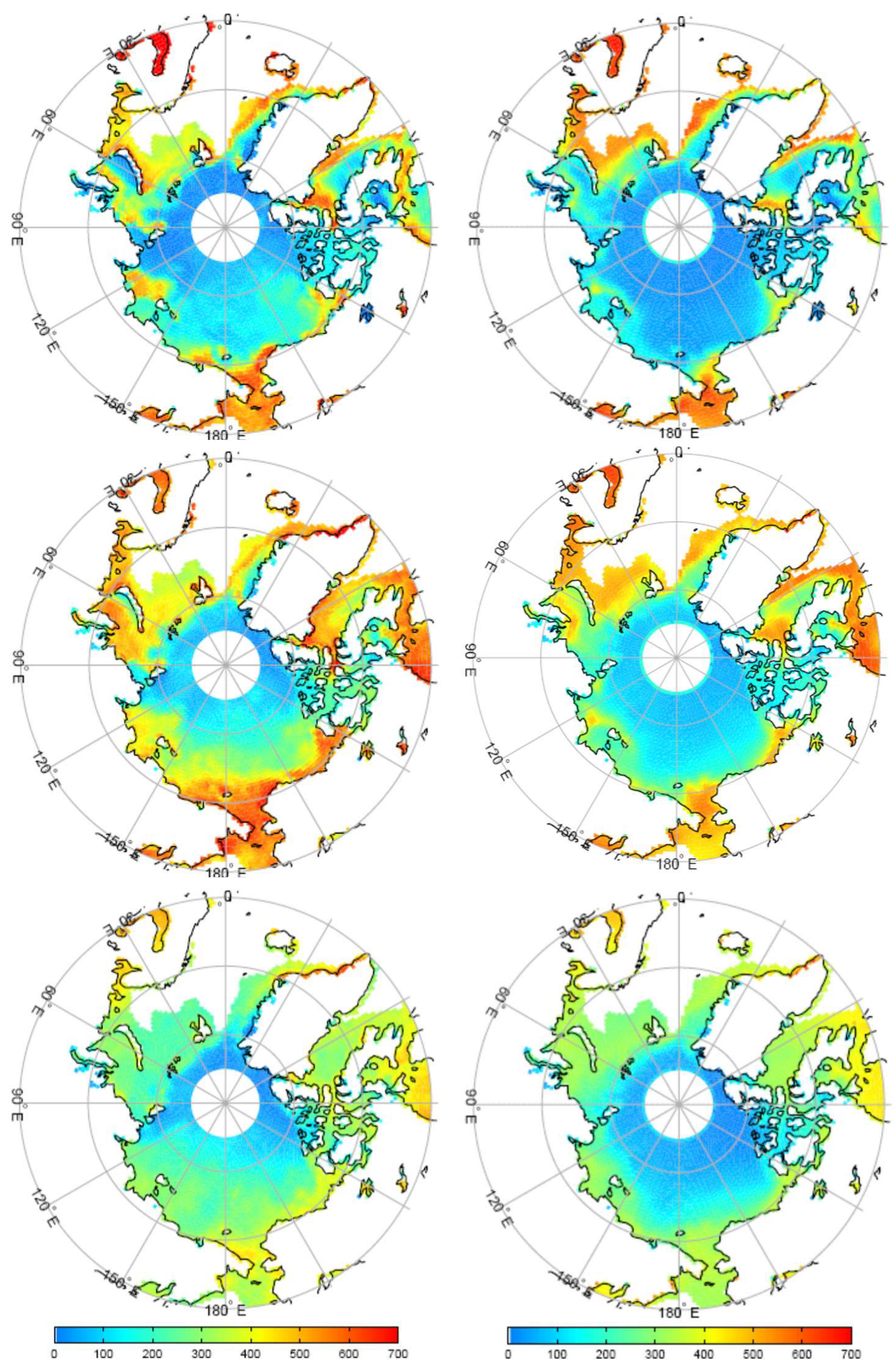
Monthly cumulative solar heating for the summer months of June, July, and August 2007, together with the corresponding 21-year mean values (1984–2004) derived from the 1–resolution dataset, are presented in Figure 3. The distribution for 2007 is shown in the left column of Figure 3, with June, July, and August displayed from top to bottom, while the right column shows the corresponding 21-year mean distributions.
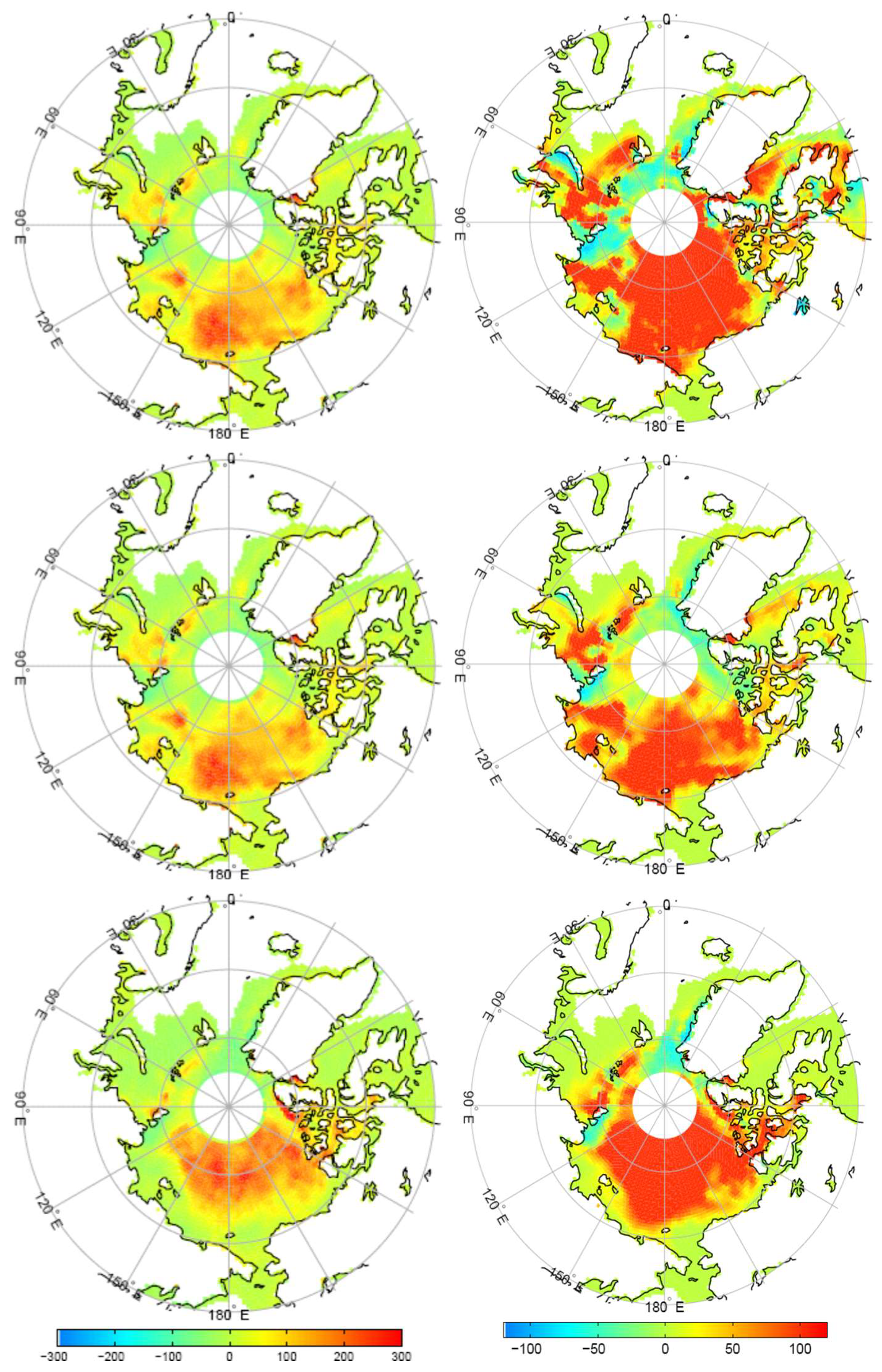
For each summer month, the magnitude of solar heat input into the Arctic Ocean in 2007 was substantially greater than the climatological means. These differences are illustrated in Figure 4 (left), which shows the percentage anomalies of solar heat input in 2007 relative to the 1984–2004 mean for each month. Positive anomalies exceed 300% in some regions. The largest anomalies are in the same areas where the open-water fraction anomalies exhibit their greatest increases (Figure 4, right).
The locations of the maximum solar-heating anomalies correspond to regions where surface temperature anomalies were also higher than the long-term mean (Steele et al. [38]). As previously noted, these positive anomalies increase in both magnitude and spatial extent throughout the melt season (May–August), particularly in the Beaufort, Chukchi, and East Siberian Seas.
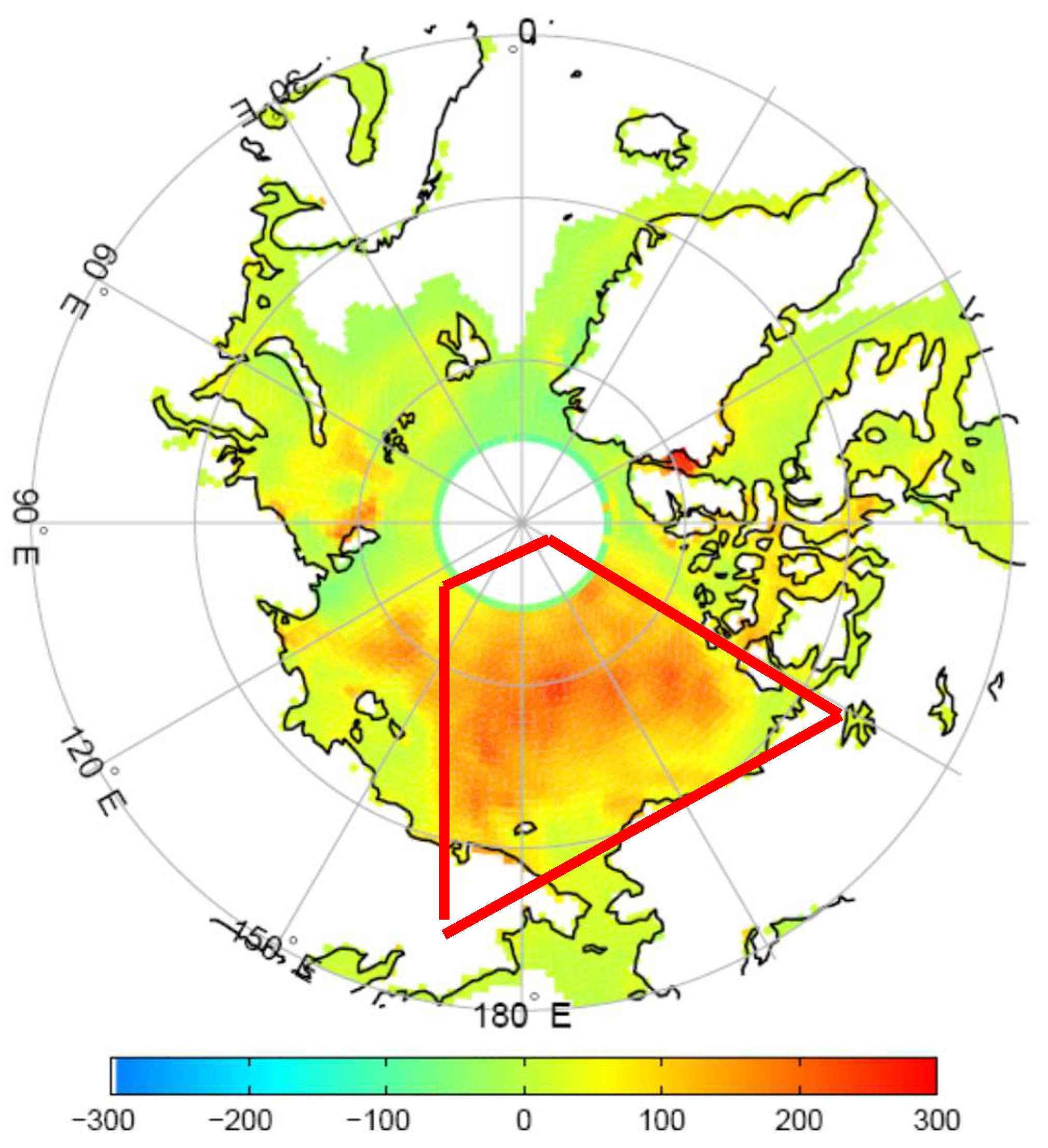
The anomalies in the annual cumulative solar heating of the Arctic Ocean during 2007, relative to the 1984–2004 mean, are presented in Figure 5. Similar patterns were reported for 2007 by Perovich et al. [14], using solar radiation estimates derived from the ERA-40 reanalysis and operational products from the European Centre for Medium-Range Weather Forecasts (ECMWF). The largest positive anomalies, relative to the 1979–2005 mean, were observed in the Beaufort Sea, corresponding to the region highlighted in red in Figure 5.

3.2. Differences in Solar Heat Input Due to Spatial Resolution of SWR Information

High-resolution data (5-km) generated with the UMD_MODIS model were evaluated at three Arctic surface observation sites during the spring and summer months (March–September 2007) Niu and Pinker [31]. The 5-km products exhibited a lower bias (−5.6 W m−2) and standard deviation (29.3 W m−2) than the corresponding 1° products (−9.3 W m−2 and 43.1 W m−2, respectively) at the daily timescale. Another advantage of the 5-km dataset is its availability at an hourly temporal resolution, which is not available for the 1° product.
The 5-km data can be used to improve estimates of solar heat input into marginal ice zones experiencing substantial sea-ice melt, where low-resolution data may mask important sub grid-scale variability in surface conditions. Such regions are located along the seasonal sea-ice zone, as marked by the black circles in Figure 2. Grid cells within one of these regions (75–76° N, 120–135° E) were selected to investigate the impact of spatial resolution on estimates of solar heat input.
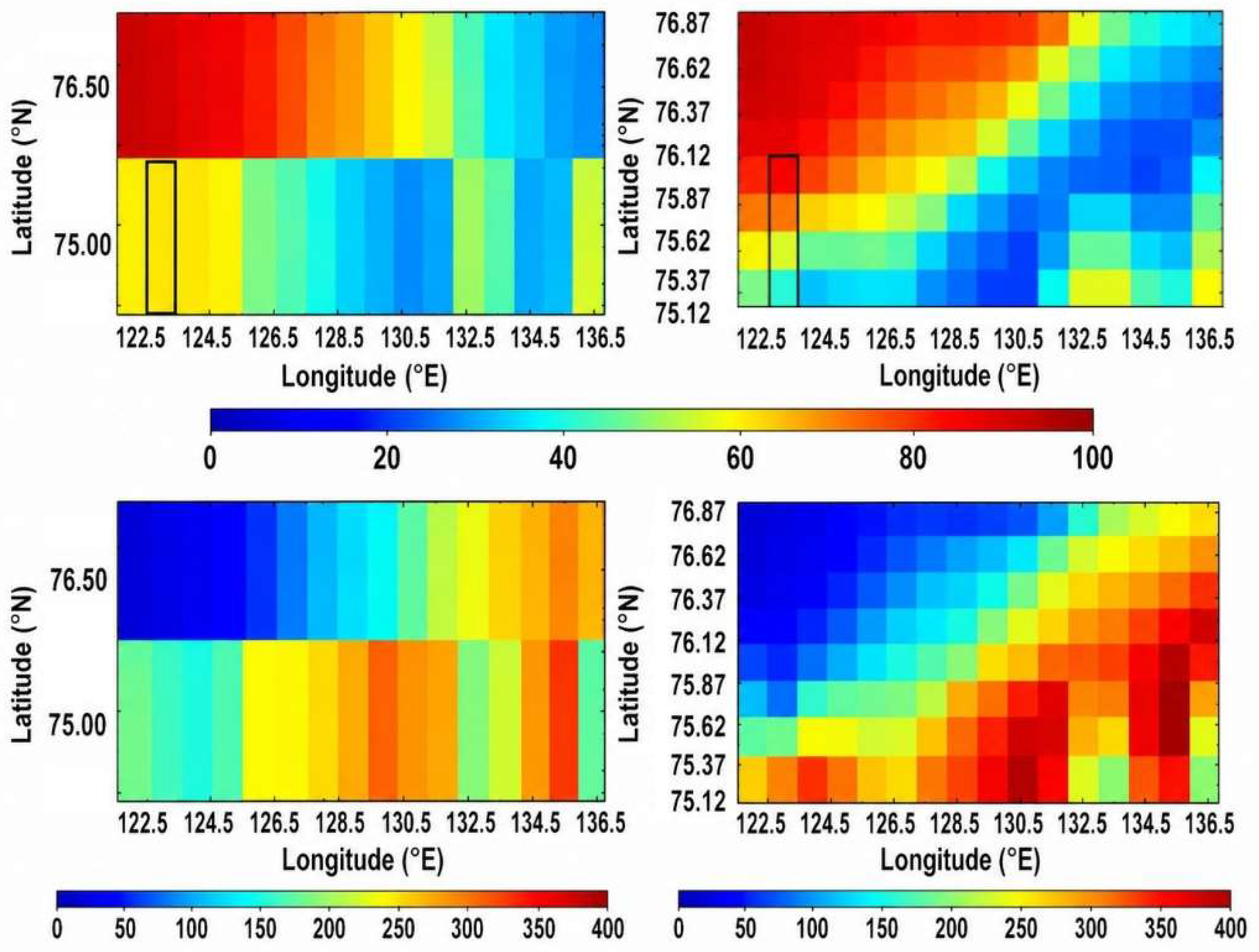
MODIS 5-km data were aggregated to 25-km equal-area grid cells to match the spatial resolution of the sea-ice concentration data. The distributions of monthly mean ice concentration and monthly cumulative solar heat input for May 2007 derived from the two spatial resolutions (1° and 25 km) are presented in Figure 6. One grid cell centered at 75.5° N, 122.5° E was selected for detailed analysis. This cell contains four 25-km grid cells centered at 75.875° N, 122.5° E; 75.625° N, 122.5° E; 75.375° N, 122.5° E; and 75.125° N, 122.5° E. At a latitude of 75.5° N, a 1° grid cell spans approximately 110 km in the meridional direction and 25 km in the zonal direction, whereas a 25-km grid cell measures 25 km × 25 km, as illustrated in Figure 6 (upper panel). Thus, the selected 1° grid cell contains four 25-km grid cells.
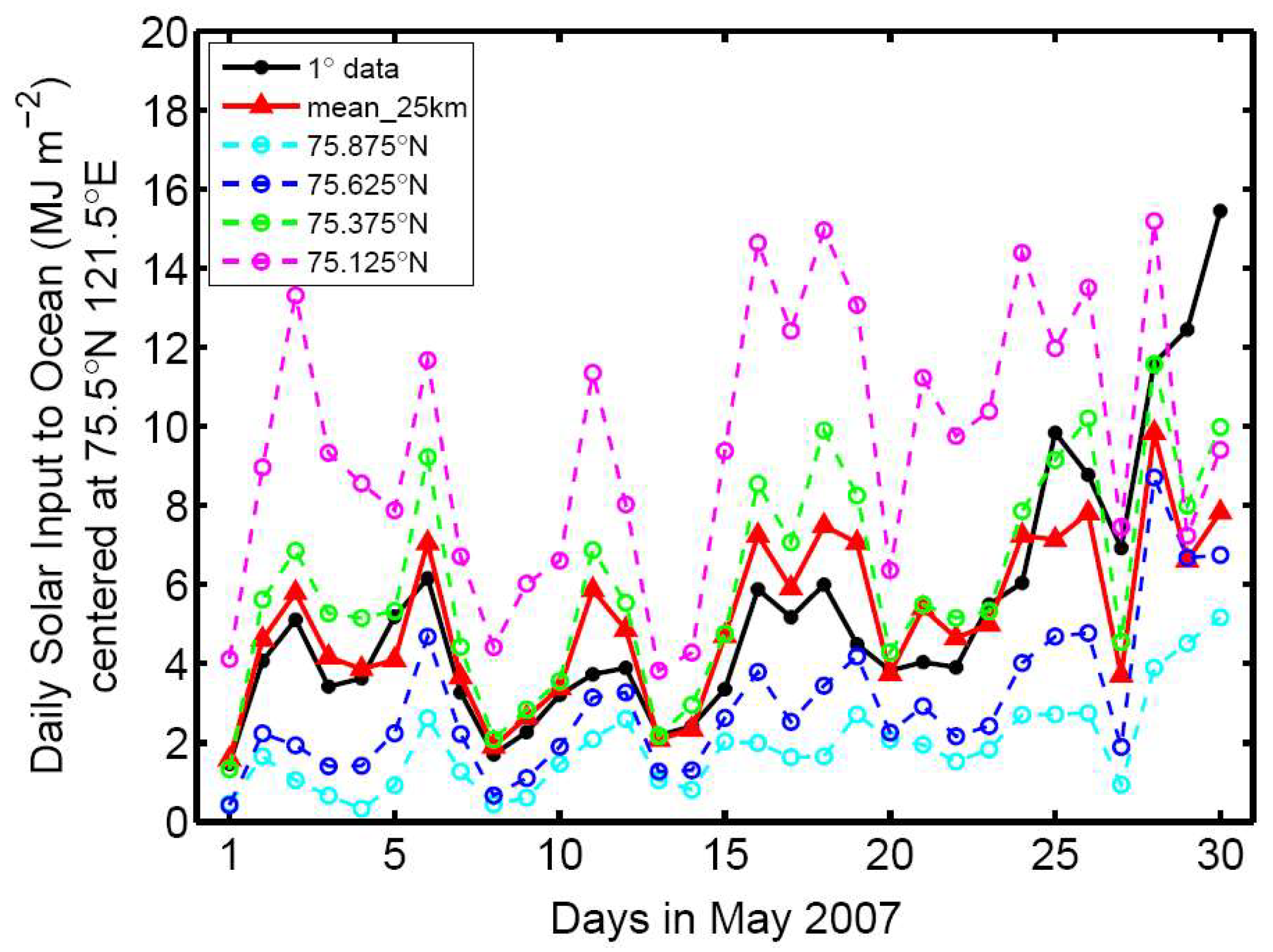
The daily solar heat input computed for the 1° grid cell and the corresponding four high-resolution grid cells during May 2007 is shown in Figure 7. The black line represents the time series of solar heat input derived from the 1° grid cell, while the colored lines (excluding the red line) represent the corresponding values for the four 25-km grid cells. The maximum difference among the estimates reaches approximately 10 MJ m−2 day−1. The average of the four high-resolution grid-cell values is shown by the red line.
The monthly mean ice concentrations and cumulative solar heat inputs for May 2007 derived from the two spatial resolutions are summarized in Table 2. For the 1° grid cell, the mean ice concentration is 64.4%. In contrast, the four 25-km grid cells exhibit ice concentrations of 86.6%, 78.1%, 58.1%, and 36.8%, respectively. Similarly, the cumulative monthly solar heat input for the 1° grid cell is 164.9 MJ m−2 month−1, whereas the corresponding values for the four 25-km grid cells are 58.0, 93.0, 189.3, and 296.4 MJ m−2 month−1, respectively.
As with the ice-concentration data, the lower-resolution product does not adequately represent the substantial spatial variability captured by the higher-resolution dataset. Consequently, solar heat input for May 2007 was computed using both SWR datasets. The results indicate values of 108.0 MJ m−2 month−1 using the 1° SWR product and 119.1 MJ m−2 month−1 using the 25-km SWR product. This difference corresponds to an uncertainty of 11.1 MJ m−2 month−1, or approximately 10% of the mean value. Because this discrepancy occurs during the early stages of the melt season, it may contribute to significant differences in estimates of solar energy available to accelerate Arctic sea-ice melt.

3.3. Solar Heating Contributing to the Bottom Melting at the Beaufort Sea in 2007

Previous studies have stressed the importance of solar heat input to the upper ocean in promoting sea-ice bottom melt Perovich [14]. Sea ice that has been thinned by excessive bottom melting can transmit more solar radiation to the ocean than thicker ice cover. This enhances the absorption of solar energy by the ocean and promotes additional ice melt, thereby strengthening the ice–albedo feedback mechanism.
Studies have shown that the 2.1 m of bottom melt observed in the Beaufort Sea during 2007 was more than six times the annual average value of 0.34 m recorded during the 1990s and approximately 2.5 times greater than the value observed in 2006, making it a major contributor to the extreme sea-ice loss in this region during 2007 (Perovich [14]). Rapid bottom melting began in early June, reached an average rate of 4 cm day−1 in August, and attained a maximum rate of 11 cm day−1 during the last week of August 2007.
For the Beaufort Sea, the increase in solar heat input to the Arctic Ocean during 2007, resulting from the reduction in sea-ice cover, was sufficient in both magnitude and timing to accelerate bottom melting of the sea ice, as shown in Figure 4 of [14], where the dashed line represents the heat required for bottom melting.
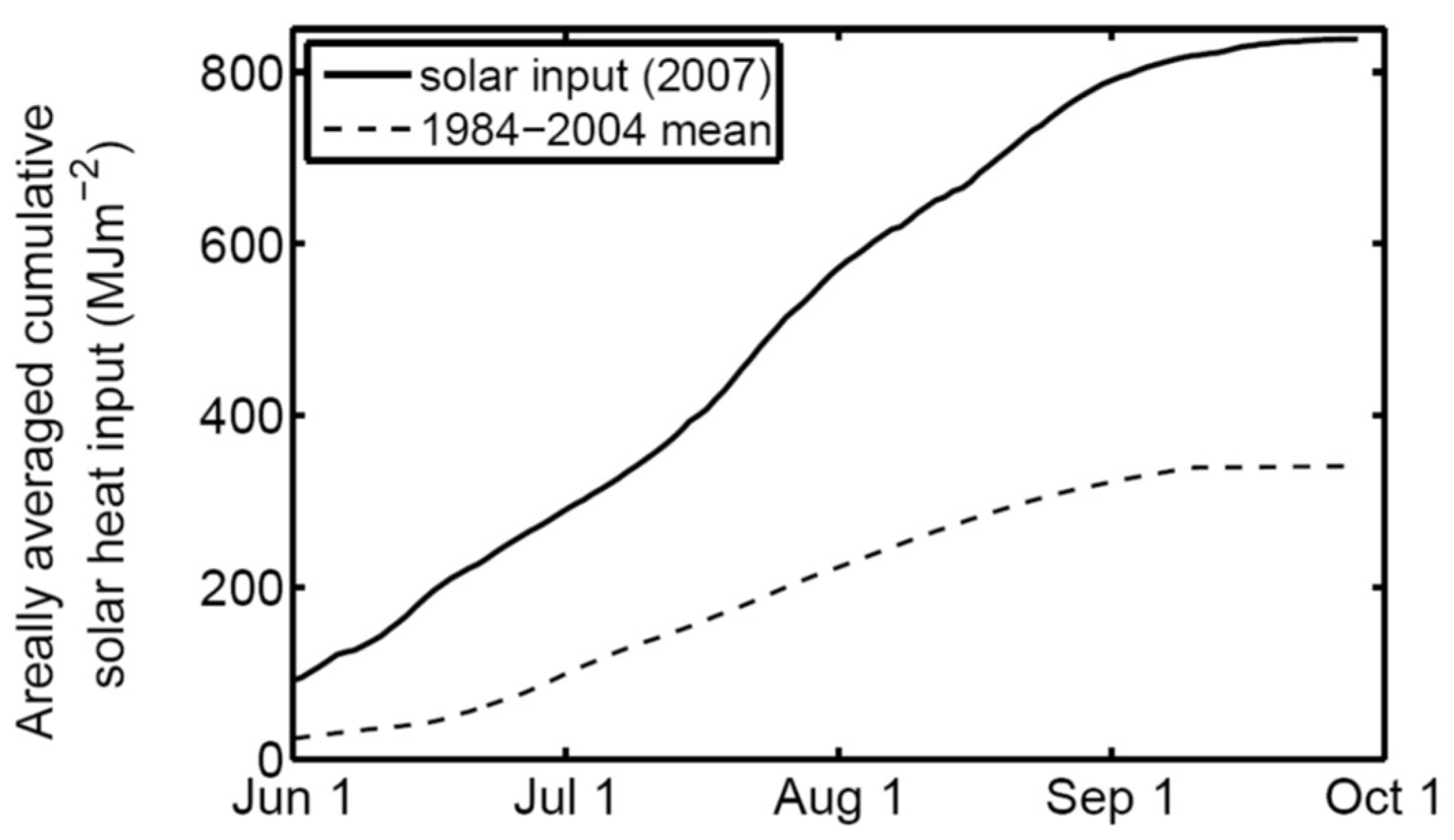
In the present study, a similar analysis was performed for the Beaufort Sea using high-resolution (5-km) UMD MODIS-derived SWR products. The solar heat input into the grid cell centered at 75° N, 140° W in the Beaufort Sea for 2007 and for the 1984–2004 climatological mean is presented in Figure 8. The results indicate that solar energy absorbed by the ocean in 2007 was approximately twice that of the 1984–2004 mean and approximately twice the amount of energy required to sustain the observed bottom melting.

3.4. Lead-Lag Correlation Between Open Water Fraction and Solar Heating in 2007

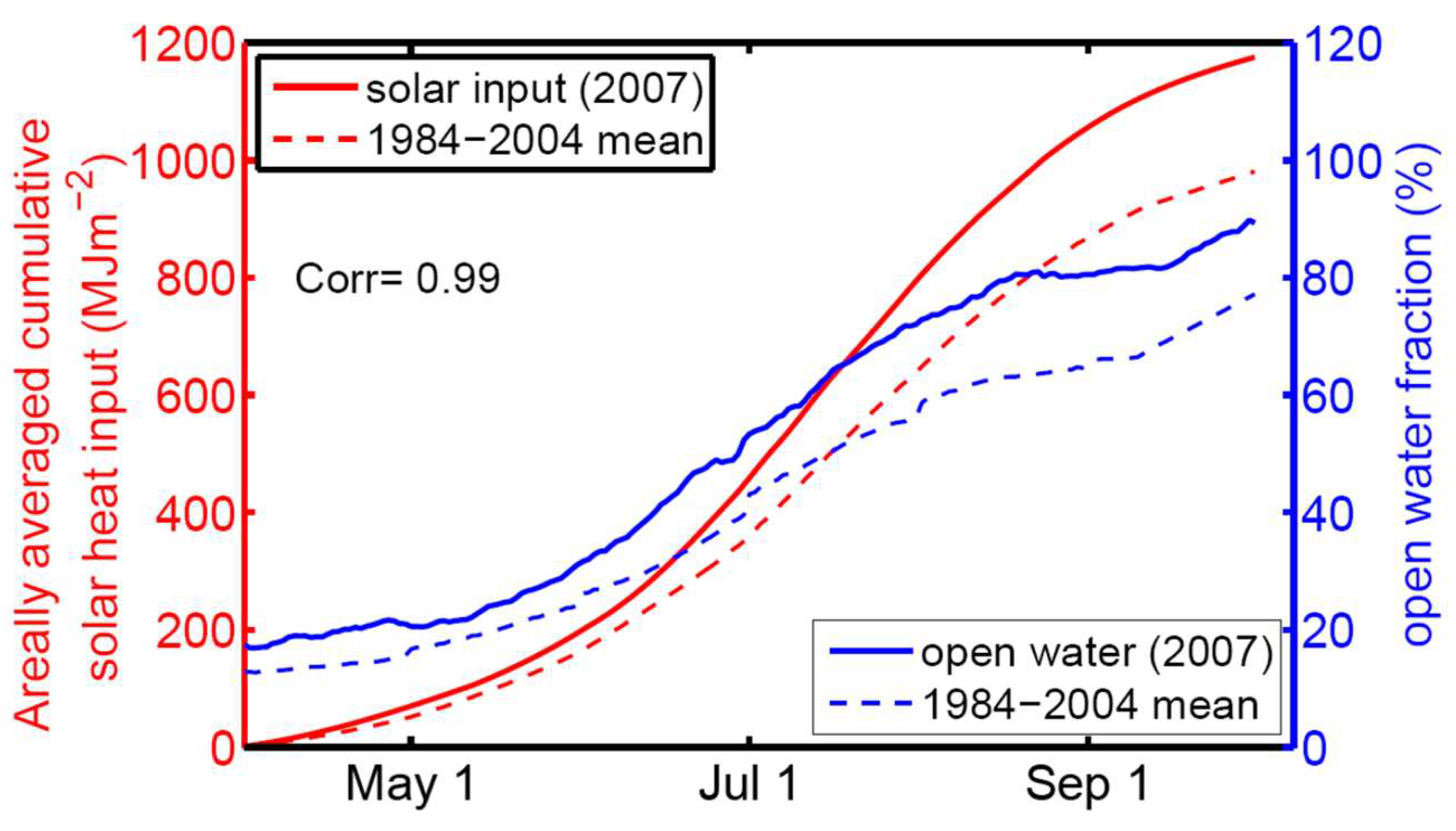
The area-averaged solar heat input to the Arctic Ocean associated with the open-water fraction for 2007 and the 1984–2004 climatological mean is shown in Figure 9. The open-water areas in 2007 absorb substantially more solar energy than the 21-year mean, contributing to further sea-ice loss. A very strong correlation (r = 0.99) is found between solar heating and open-water fraction.
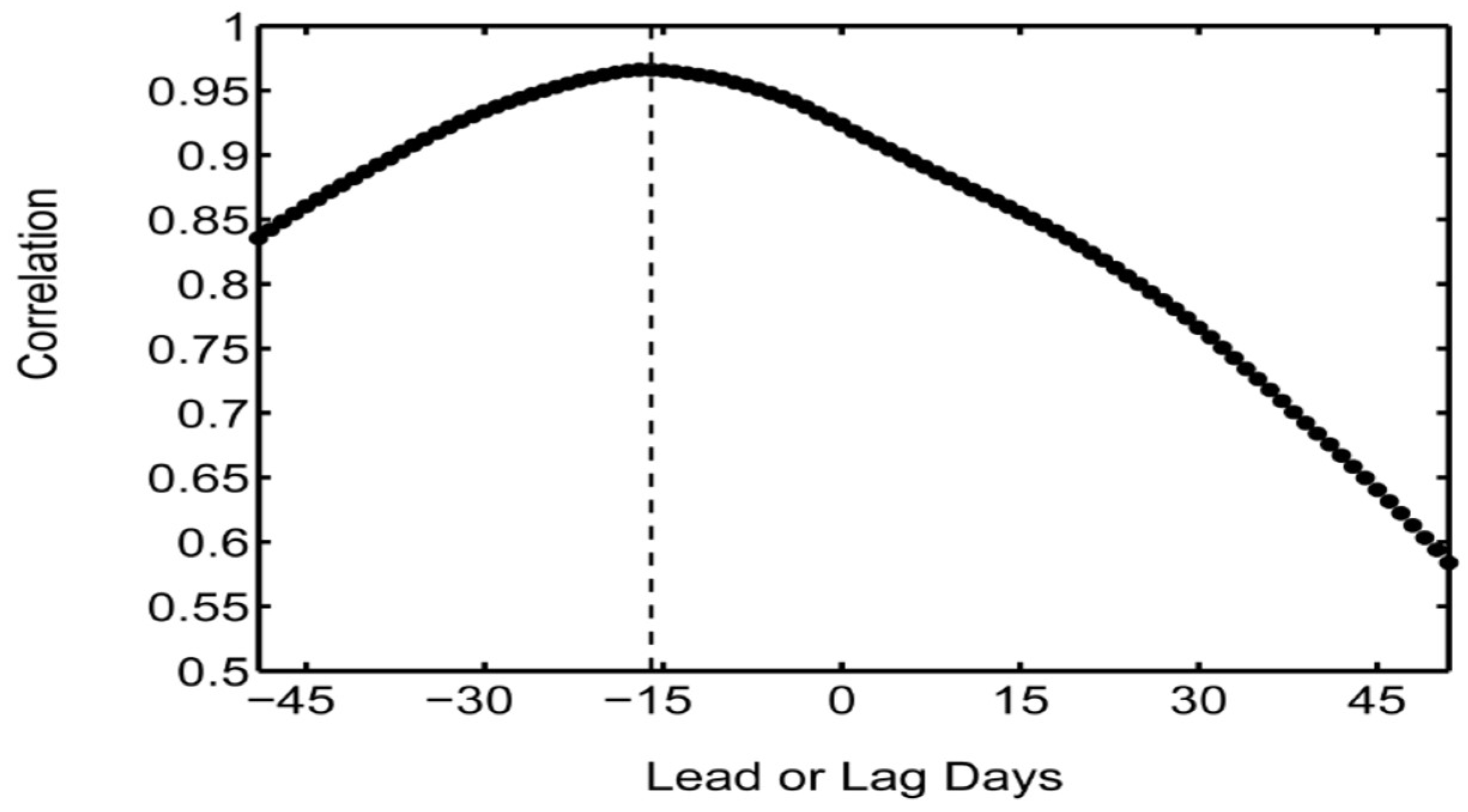
However, there may be a temporal lead–lag relationship between variations in open water and solar heat input to the ocean. The lead–lag correlation analysis (Wilks [39]) was computed here for anomalies in 2007 relative to the 1984–2004 climatological mean, as shown in Figure 10. The lead or lag days represent the temporal offset at which variations in open-water fraction precede or follow variations in solar heating. The correlation reaches a maximum at a lead time of 16 days, with values decreasing on both sides of this peak.
This result suggests that changes in open-water fraction tend to occur approximately half a month before the corresponding increase in absorbed solar radiation, which in turn contributes to enhanced solar energy uptake by the ocean and further sea-ice retreat in 2007.

4. Discussion

Accurate estimates of radiative fluxes absorbed in the Arctic ocean are needed for addressing various climate issues of the region. Such estimates depend both on the accuracy of radiative fluxes and ice coverage. Several recent studies address the importance of SWR fluxes for understanding such issues in the Arctic system. Due to their availability and consistency, climate models have been widely used as a source for information on radiative fluxes and attempts have been made to evaluate them. For instance, Arctic surface SWR biases in Coupled Model Intercomparison Project Phase 5 (CMIP5) have been evaluated against the Clouds and the Earth’s Radiant Energy System Surface Energy Balance (CERES SFC-EBAF v2.8) product in Boeke et al. [40]. Significant inter-model spread has been found in the simulated Arctic climate, largely associated with differences in the representation of the surface radiation budget. The largest disagreement among models is during the summer with a standard deviation of nearly 20 W m−2 in July. However, CERES SFC-EBAF v2.8 (Kato et al. [20]) provide only monthly mean surface radiative fluxes on a 1° equal-area grid. As also seen from Table 1, a meaningful comparison with our results from MODIS is not possible due to the mix of spatial and temporal scales used in the various studies. As an indicator of what is achievable at 5-km spatial resolution and at a daily time scale, the std for data used in our study is promising (1.9 W m−2).
In an independent study Holland and Landrum [41] use a large ensemble of simulations from the Community Earth System Model (they generally used the CESM Large Ensemble (CESM-LE) configuration based on CESM1(CAM5)) to quantify simulated changes in the twentieth and twenty-first century Arctic surface SWR heating associated with changing incoming solar radiation and changing ice conditions. The authors suggest that inter-model differences in simulated Arctic warming can be attributed to uncertainties in the representation of Arctic radiative fluxes within the models. The CESM Large Ensemble configuration employed by Holland and Landrum [41] used approximately 1° horizontal resolution (about 100 km in the atmosphere and nominally 1° in the ocean and sea ice), with monthly to seasonal analyses of Arctic surface SWR heating and albedo changes. This resolution is substantially coarser than the 5-km MODIS-based estimates used in the present study and unable to resolve many of the small-scale sea-ice and open-water features that contribute to Arctic radiative flux variability. An important conclusion from their study is that the large spread in projected twenty-first century change is in part related to different ice loss rates among the models and different representations of the late twentieth century ice albedo and associated sea ice surface state.
Another study that compares Arctic surface albedo and shortwave heating in CMIP5 models by Koenig [42] also indicates a large spread in projected twenty-first-century changes. This spread is partly related to differences in simulated ice-loss rates among models and to differences in the representation of late twentieth-century ice albedo and associated sea-ice surface states. The impact of melt ponds on the amount of radiation absorbed in the Arctic has been recognized, yet systematic parameterizations suitable for large-scale applications remain limited. In Popović et al. [43], a simple model for the evolution of melt pond coverage on permeable Arctic sea ice was proposed.
Based on a study of melt pond fraction estimation over high-concentration Arctic sea ice using AMSR-E passive microwave data, Tanaka et al. [44] reported that differences between AMSR-E-derived melt pond fraction (MPF) and MODIS-derived MPF were less than 5% over most regions and periods. An algorithm to retrieve melt pond fraction and spectral albedo of Arctic summer sea ice from satellite optical data is described in Zege et al. [45]. It is based on an analytical solution for radiative reflection from a sea-ice surface. The resulting product provides maps of melt pond area fraction and sea-ice spectral albedo.
An unconventional aspect of the partitioning and deposition of solar energy in the ocean is addressed in Taskjelle et al. [46]. The authors investigate changes in the depth-dependent absorption of solar radiation following the onset of an under-ice phytoplankton bloom. They found that the bloom induces significant changes in the inherent optical properties of the upper ocean, indicating that the vertical distribution of absorbed solar energy in the Arctic Ocean depends on the biogeochemical composition of the water column. Mean values of total absorption of solar radiation in the upper 20 m of the water column were up to four times higher during the bloom period than prior to its onset.
Based on the conclusions of all the above referenced studies, the use of the higher resolution SWR fluxes and sea ice extent used in our study is a step in the right direction.

5. Conclusions

The complexity of estimating surface shortwave radiative (SWR) fluxes in the polar regions should not be underestimated. Most studies identify several sources of uncertainty that are particularly important in these environments, including high surface albedo, which complicates cloud detection; low solar elevation angles, which increase uncertainties in radiative transfer calculations; sub grid scale surface heterogeneity that is difficult to resolve in satellite observations (e.g., melt ponds); and uncertainties associated with cloud phase (liquid water versus ice).
The ice–albedo feedback is driven by the large contrast between the surface albedo of sea ice (>0.6) and that of open water (~0.07). Previous studies have used SWR flux estimates derived from the ERA-40 reanalysis and the operational European Centre for Medium-Range Weather Forecasts (ECMWF) model to calculate solar heat input into Arctic open water and to investigate the role of variations in solar heating within the ice–albedo feedback mechanism [14]. Surface downward SWR fluxes derived from the UMD MODIS model using Terra and Aqua satellite observations have been extensively evaluated against ground-based measurements and offer the potential to improve estimates of solar heat input into the Arctic Ocean.
In this study, the extreme Arctic sea-ice loss of 2007 was selected as a case study to illustrate the impact of sub grid scale variability in SWR fluxes on estimates of heat input into the Arctic Ocean. Differences in solar heat input resulting from the spatial resolution of SWR flux information were quantified for the 2007 sea-ice anomaly. The results indicate that the additional solar energy absorbed by the Arctic Ocean in 2007 was approximately twice the amount required for bottom ice melt and substantially greater than the actual anomaly relative to the corresponding 21-year mean.
We have examined only a single anomalous year in this study; therefore, the results should not be generalized beyond the specific conditions of that year. Ideally, the analysis should be extended to a longer time-period to assess the robustness of the findings. We believe that this study could be repeated and further improved when higher-resolution sea ice extent data become available, enabling a more realistic representation of spatial and temporal changes in sea ice cover.

Author Contributions

Conceptualization, R.T.P.; Software, X.N.; Formal analysis, R.T.P.; Investigation, X.N.; Writing—original draft, R.T.P.; Writing—review & editing, R.T.P. and X.N. All authors have read and agreed to the published version of the manuscript.

Funding

This research was funded by NASA grants NNX13AC12G and NNX08AN40A.

Data Availability Statement

The original contributions presented in this study are included in the article. Further inquiries can be directed to the corresponding author.

Acknowledgments

This work benefited from NASA grant NNX13AC12G, the Energy and Water Cycle Study (NEWS) program and from support under NASA grant NNX08AN40A from the Science Mission Directorate- Division of Earth Science to the University of Maryland where this work was done and is part of a Ph.D. thesis authored by Xiaolei Niu (https://drum.lib.umd.edu/items/323aa71d-08f3-44ca-ba80-ffacebfdf531, accessed on 26 April 2026). Thanks are due to the granting agencied, to the NASA GES DISC Giovanni for the MODIS data, to the various MODIS teams that produced data used in this study, the National Snow and Ice Data Center (NSIDC) (https://nsidc.org/home) for the snow information; sea ice concentration information was obtained from https://nsidc.org/home. The insight gained from previous studies by many individuals cited in the references significantly impacted this study. We thank the three anonymous Reviewers for thoughtful comments that helped to improve the manuscript and to the Editors for overseeing the disposition of this manuscript.

Conflicts of Interest

The authors declare no conflict of interest.

References

  1. Bourassa, M.A.; Gille, S.T.; Bitz, C.; Carlson, D.; Cerovečki, I.; Cronin, M.F.; Drennan, W.M.; Fairall, C.W.; Hoffman, R.N.; Magnusdottir, G.; et al. High-Latitude Ocean and Sea Ice Surface Fluxes: Challenges for Climate Research. Bull. Am. Meteorol. Soc. 2013, 94, 403–423. [Google Scholar] [CrossRef]
  2. Comiso, J.C.; Parkinson, C.L.; Gersten, R.; Stock, L. Accelerated decline in the Arctic sea ice cover. Geophys. Res. Lett. 2008, 35, L01703. [Google Scholar] [CrossRef]
  3. Perovich, D.K. The changing Arctic sea ice cover. Oceanography 2011, 24, 162–173. [Google Scholar] [CrossRef]
  4. Hall, A. The Role of Surface Albedo Feedback in Climate. J. Clim. 2004, 17, 1550–1568. [Google Scholar] [CrossRef]
  5. Serreze, M.C.; Francis, J.A. The Arctic amplification debate. Clim. Change 2006, 76, 241–264. [Google Scholar] [CrossRef]
  6. Serreze, M.C.; Barrett, A.P.; Stroeve, J.C.; Kindig, D.N.; Holland, M.M. The emergence of surface-based Arctic amplification. Cryosphere 2009, 3, 11–19. [Google Scholar] [CrossRef]
  7. Boe, J.; Hall, A.; Qu, X. Current GCMs’ unrealistic negative feedback in the Arctic. J. Clim. 2009, 22, 4682–4695. [Google Scholar] [CrossRef]
  8. Mahlstein, I.; Knutti, R. Ocean heat transport as a cause for model uncertainty in projected Arctic warming. J. Clim. 2011, 24, 1451–1460. [Google Scholar] [CrossRef]
  9. Hwang, Y.; Frierson, D.M.W.; Kay, J.E. Coupling between Arctic feedbacks and changes in poleward energy transport. Geophys. Res. Lett. 2011, 38, L17704. [Google Scholar] [CrossRef]
  10. Bitz, C.M.; Shell, K.M.; Gent, P.R.; Bailey, D.A.; Danabasoglu, G.; Armour, K.C.; Holland, M.M.; Kiehl, J.T. Climate sensitivity of the Community Climate System Model, version 4. J. Clim. 2012, 25, 3053–3070. [Google Scholar] [CrossRef]
  11. Liu, Z.; Schweiger, A. Synoptic conditions, clouds, and sea ice melt onset in the Beaufort and Chukchi seasonal ice zone. J. Clim. 2017, 30, 6999–7016. [Google Scholar] [CrossRef]
  12. Perovich, D.K.; Nghiem, S.V.; Markus, T.; Schweiger, A. Seasonal evolution and interannual variability of the local solar energy absorbed by the Arctic sea ice–ocean system. J. Geophys. Res. 2007, 112, C03005. [Google Scholar] [CrossRef]
  13. Perovich, D.K.; Light, B.; Eicken, H.; Jones, K.F.; Runciman, K.; Nghiem, S.V. Increasing solar heating of the Arctic Ocean and adjacent seas, 1979–2005: Attributing the role in the ice–albedo feedback. Geophys. Res. Lett. 2007, 34, L19505. [Google Scholar] [CrossRef]
  14. Perovich, D.K.; Richter-Menge, J.A.; Jones, K.F.; Light, B. Sunlight, water, and ice: Extreme Arctic sea ice melt during the summer of 2007. Geophys. Res. Lett. 2008, 35, L11501. [Google Scholar] [CrossRef]
  15. Pinker, R.T.; Niu, X.; Ma, Y. Solar Heating of the Arctic Ocean in the context of Ice-Albedo Feedback. J. Geophys. Res. Ocean. 2014, 119, 8395–8409. [Google Scholar] [CrossRef]
  16. Mahajan, S.; Fataniya, B. Cloud detection methodologies: Variants and development—A review. Complex Intell. Syst. 2020, 6, 251–261. [Google Scholar] [CrossRef]
  17. Chan, M.A.; Comiso, J.C. Arctic cloud characteristics as derived from MODIS, CALIPSO, and CloudSat. J. Clim. 2013, 26, 3285–3306. [Google Scholar] [CrossRef]
  18. Loeb, N.G.; Wielicki, B.A.; Doelling, D.R.; Smith, G.L.; Keyes, D.F.; Kato, S.; Manalo-Smith, N.; Wong, T. Toward optimal closure of the Earth’s top-of-atmosphere radiation budget. J. Clim. 2009, 22, 748–766. [Google Scholar] [CrossRef]
  19. Doelling, D.R.; Loeb, N.G.; Keyes, D.F.; Nordeen, M.L.; Morstad, D.; Nguyen, C.; Wielicki, B.A.; Young, D.F.; Sun, M. Geostationary Enhanced Temporal Interpolation for CERES Flux Products. J. Atmos. Ocean. Technol. 2013, 30, 1072–1090. [Google Scholar] [CrossRef]
  20. Kato, S.; Rose, F.G.; Rutan, D.A.; Thorsen, T.J.; Loeb, N.G.; Doelling, D.R.; Huang, X.; Smith, W.L.; Su, W.; Ham, S.-H. Surface irradiances of Edition 4.0 Clouds and the Earth’s Radiant Energy System (CERES) Energy Balanced and Filled (EBAF) data product. J. Clim. 2018, 31, 4501–4527. [Google Scholar] [CrossRef]
  21. Huang, Y.; Taylor, P.C.; Rose, F.G.; Rutan, D.A.; Shupe, M.D.; Webster, M.A.; Smith, M.M. Toward a more realistic representation of surface albedo in NASA CERES-derived surface radiative fluxes: A comparison with the MOSAiC field campaign. Elem. Sci. Anthr. 2022, 10, 00013. [Google Scholar] [CrossRef]
  22. Barrientos-Velasco, C.; Cox, C.J.; Deneke, H.; Dodson, J.B.; Hünerbein, A.; Shupe, M.D.; Taylor, P.C.; Macke, A. Estimation of the radiation budget during MOSAiC based on ground-based and satellite remote sensing observations. Atmos. Chem. Phys. 2025, 25, 3929–3960. [Google Scholar] [CrossRef]
  23. Karlsson, K.-G.; Anttila, K.; Trentmann, J.; Stengel, M.; Meirink, J.F.; Devasthale, A.; Hanschmann, T.; Kothe, S.; Jääskeläinen, E.; Sedlar, J.; et al. CLARA-A2: The second edition of the CM SAF cloud and radiation data record from 34 years of global AVHRR data. Atmos. Chem. Phys. 2017, 17, 5809–5828. [Google Scholar] [CrossRef]
  24. Ohmura, A.; Dutton, E.G.; Forgan, B.; Fröhlich, C.; Gilgen, H.; Hegner, H.; Heimo, A.; König-Langlo, G.; McArthur, B.; Müller, G.; et al. Baseline Surface Radiation Network (BSRN/WCRP): New precision radiometry for climate research. Bull. Am. Meteorol. Soc. 1998, 79, 2115–2136. [Google Scholar] [CrossRef]
  25. Riihelä, A.; Key, J.R.; Meirink, J.F.; Kuipers Munneke, P.; Palo, T.; Karlsson, K.-G. An intercomparison and validation of satellite-based surface radiative energy flux estimates over the Arctic. J. Geophys. Res. Atmos. 2017, 122, 4829–4848. [Google Scholar] [CrossRef]
  26. Karlsson, K.-G.; Stengel, M.; Meirink, J.F.; Riihelä, A.; Trentmann, J.; Akkermans, T.; Stein, D.; Devasthale, A.; Eliasson, S.; Johansson, E.; et al. CLARA-A3: The third edition of the AVHRR-based CM SAF climate data record on clouds, radiation and surface albedo covering the period 1979 to 2023. Earth Syst. Sci. Data 2023, 15, 4901–4926. [Google Scholar] [CrossRef]
  27. Seo, M.; Kim, H.-C.; Seong, N.-H.; Sim, S.; Han, K.-S. Variability of surface radiation budget over the Arctic during two recent decades from the perspective of CERES and ERA5 data. Remote Sens. 2023, 15, 829. [Google Scholar] [CrossRef]
  28. Yeo, H.; Kim, M.-H.; Son, S.-W.; Jeong, J.-H.; Yoon, J.-H.; Kim, B.-M.; Kim, S.-W. Arctic cloud properties and associated radiative effects in the three newer reanalysis datasets (ERA5, MERRA-2, JRA-55): Discrepancies and possible causes. Atmos. Res. 2022, 270, 106080. [Google Scholar] [CrossRef]
  29. Griesche, H.J.; Barrientos-Velasco, C.; Deneke, H.; Hünerbein, A.; Seifert, P.; Macke, A. Low-level Arctic clouds: A blind zone in our knowledge of the radiation budget. Atmos. Chem. Phys. 2024, 24, 597–626. [Google Scholar] [CrossRef]
  30. Niu, X.; Pinker, R.T. Radiative fluxes at Barrow, Alaska: A satellite view. J. Clim. 2011, 24, 5494–5505. [Google Scholar] [CrossRef]
  31. Niu, X.; Pinker, R.T. An improved methodology for deriving high-resolution surface shortwave radiative fluxes from MODIS in the Arctic region. J. Geophys. Res. Atmos. 2015, 120, 2382–2393. [Google Scholar] [CrossRef]
  32. Niu, X.; Pinker, R.T.; Cronin, M.F. Radiative fluxes at high latitudes. Geophys. Res. Lett. 2010, 37, L20811. [Google Scholar] [CrossRef]
  33. Wang, H.; Pinker, R.T. Shortwave radiative fluxes from MODIS: Model development and implementation. J. Geophys. Res. 2009, 114, D20201. [Google Scholar] [CrossRef]
  34. Pinker, R.T.; Wang, H.; Grodsky, S.A. How good are ocean buoy observations of radiative fluxes? Geophys. Res. Lett. 2009, 36, L10811. [Google Scholar] [CrossRef]
  35. Cavalieri, D.J.; Parkinson, C.L.; Gloersen, P.; Zwally, H.J. Sea Ice Concentrations from Nimbus-7 SMMR and DMSP SSM/I-SSMIS Passive Microwave Data, Version 1 (NSIDC-0051); NASA National Snow and Ice Data Center Distributed Active Archive Center: Boulder, CO, USA, 1996. [Google Scholar] [CrossRef]
  36. Moody, E.G.; King, M.D.; Schaaf, C.B.; Hall, D.K.; Platnick, S. Northern Hemisphere five-year average (2000–2004) spectral albedos of surface in the presence of snow: Statistics computed from Terra MODIS land products. Remote Sens. Environ. 2007, 111, 337–345. [Google Scholar] [CrossRef]
  37. Belchansky, G.I.; Douglas, D.C.; Platonov, N.G. Duration of the Arctic sea ice melt season: Regional and interannual variability, 1979–2001. J. Clim. 2004, 17, 67–80. [Google Scholar] [CrossRef]
  38. Steele, M.; Ermold, W.; Zhang, J. Arctic Ocean surface warming trends over the past 100 years. Geophys. Res. Lett. 2008, 35, L02614. [Google Scholar] [CrossRef]
  39. Wilks, D.S. Statistical Methods in the Atmospheric Sciences, 2nd ed.; Academic Press: San Diego, CA, USA, 2006. [Google Scholar]
  40. Boeke, R.C.; Taylor, P.C. Evaluation of the Arctic surface radiation budget in CMIP5 models. J. Geophys. Res. Atmos. 2016, 121, 8525–8548. [Google Scholar] [CrossRef]
  41. Holland, M.M.; Landrum, L. Factors affecting projected Arctic surface shortwave heating and albedo change in coupled climate models. Philos. Trans. R. Soc. A 2015, 373, 20140162. [Google Scholar] [CrossRef] [PubMed]
  42. Koenig, T.; Devasthale, A.; Karlsson, K.-G. Summer Arctic sea ice albedo in CMIP5 models. Atmos. Chem. Phys. 2014, 14, 1987–1998. [Google Scholar] [CrossRef]
  43. Popović, P.; Abbot, D.S. A simple model for the evolution of melt pond coverage on permeable Arctic sea ice. Cryosphere 2017, 11, 1149–1172. [Google Scholar] [CrossRef]
  44. Tanaka, Y.; Tateyama, K.; Kameda, T.; Hutchings, J.K. Estimation of melt pond fraction over high-concentration Arctic sea ice using AMSR-E passive microwave data. J. Geophys. Res. Ocean. 2016, 121, 7056–7072. [Google Scholar] [CrossRef]
  45. Zege, E.; Malinka, A.; Katsev, I.; Prikhach, A.; Heygster, G.; Istomina, L.; Birnbaum, G.; Schwarz, P. Algorithm to retrieve the melt pond fraction and the spectral albedo of Arctic summer ice from satellite optical data. Remote Sens. Environ. 2015, 163, 153–164. [Google Scholar] [CrossRef]
  46. Taskjelle, T.; Granskog, M.A.; Pavlov, A.K.; Hudson, S.R.; Hamre, B. Effects of an Arctic under-ice bloom on solar radiant heating of the water column. J. Geophys. Res. Ocean. 2017, 122, 126–138. [Google Scholar] [CrossRef]
Figure 1. An area of the Arctic sea ice pack roughly northeast of the New Siberian Islands, captured by multiple orbits of the MODIS instrument on NASA’s Terra satellite on 13 September 2013. Sea ice dominates the lower left half of the image; open-ocean and cloud formations can be seen in the upper right. Image Credit: Image courtesy NASA Worldview.
Atmosphere 17 00629 g001
Figure 2. Monthly mean sea ice concentration fields were derived from the National Snow and Ice Data Center (NSIDC) passive microwave product at 25-km spatial resolution, reported as percent ice cover per grid cell for January 2007 (Left) and for May 2007 (Right). The black circles show the region with large melting based on data from the NSIDC.
Atmosphere 17 00629 g002
Figure 3. Monthly cumulative solar heat input (MJ m−2 month−1) for: (Left) 2007; (Right) 1984–2004 mean. (Top row (June); Middle row (July); Bottom row (August)).
Atmosphere 17 00629 g003
Figure 4. Percent anomaly (%) of year 2007 compared to 1984–2004 means in: (Left) monthly cumulative solar heat input; (Right) open water fraction. (Top row (June); Middle row (July); Bottom row (August)).
Atmosphere 17 00629 g004
Figure 5. Percent anomaly (%) in annual cumulative solar heat input into the Arctic Ocean for 2007 compared with the 21-year (1984–2004) mean values. The largest positive anomalies relative to the 1979–2005 mean, are observed in the Beaufort Sea as outlined in red.
Atmosphere 17 00629 g005
Figure 6. Upper part: (Left) Monthly mean sea ice concentration for May 2007 for the region (75–76° N; 120–135° E) from the NSIDC products gridded into one grid cell at 1° resolution represents ~110-km in latitude × ~25-km in longitude and (right) one grid cell represents ~25-km in latitude and longitude. Lower part: Monthly cumulative solar heat input into ocean calculated from two spatial resolutions; (Left) at 1°; (Right) at 25-km. Used are data for the region (75–76° N; 120–135° E) for May 2007, units are (MJ m−2 month−1).
Atmosphere 17 00629 g006
Figure 7. The black solid line is the daily solar heat input into a grid cell centered at (75.5° N, 122.5° E) for May 2007 (MJ m−2 day−1) calculated from 1° product; the colored (cyan, blue, green, and magenta) dashed lines are the inputs from each grid of 25-km and the red line is the solar input averaged from four grids from the 25-km product.
Atmosphere 17 00629 g007
Figure 8. The daily cumulative solar heat input directly to the ocean centered at (75° N, −140° W, located within the Beaufort Sea) in 2007 (solid line) and the mean values for period of 1984–2004 (dash line) (like Figure 4 of [14]).
Atmosphere 17 00629 g008
Figure 9. Time series of the area-averaged daily cumulative solar heating to the Arctic Ocean (red solid line) and open water fraction (blue solid line) in 2007 and the corresponding values for 1984–2004 (dash lines).
Atmosphere 17 00629 g009
Figure 10. Lead-lag-correlation of anomalies in open water and daily cumulative solar heating to the Arctic Ocean for 2007 compared with the 21-year (1984–2004) mean. The x-axis represents the days when open water fraction varies ahead of or behind the solar heating. The dash line is the location where the correlation has the maximum value (~0.97) at the 16th leading day.
Atmosphere 17 00629 g010
Table 2. Monthly mean ice concentration (%) and monthly cumulative solar heat input (MJ m−2 month−1) for the grid cells at 1° and 25-km for May 2007.
Grid
Resolution
Grid PositionMonthly Mean Ice
Concentration (%)
Solar Heating into Ocean
(MJ m−2 month−1)
centered at 75.500 N64.4164.9
25 kmcentered at 75.875 N86.658.0
centered at 75.625 N78.193.0
centered at 75.375 N58.1189.3
centered at 75.125 N36.8296.4
Disclaimer/Publisher’s Note: The statements, opinions and data contained in all publications are solely those of the individual author(s) and contributor(s) and not of MDPI and/or the editor(s). MDPI and/or the editor(s) disclaim responsibility for any injury to people or property resulting from any ideas, methods, instructions or products referred to in the content.