Airborne Antibiotic-Resistant Bacteria—Challenge for Healthcare Environments




Abstract
1. Introduction
1.1. Prevalence and Characteristics of Airborne Antibiotic-Resistant Bacteria in Healthcare Environments
1.2. Survival Mechanisms and Antibiotic Resistance Assessment
- Coccoid forms—metabolic slowdown associated with morphological changes, resulting in reduced susceptibility to antimicrobial agents and environmental stress [8].
1.3. Research Gap and Study Objectives
2. Materials and Methods
2.1. Literature Search Strategy
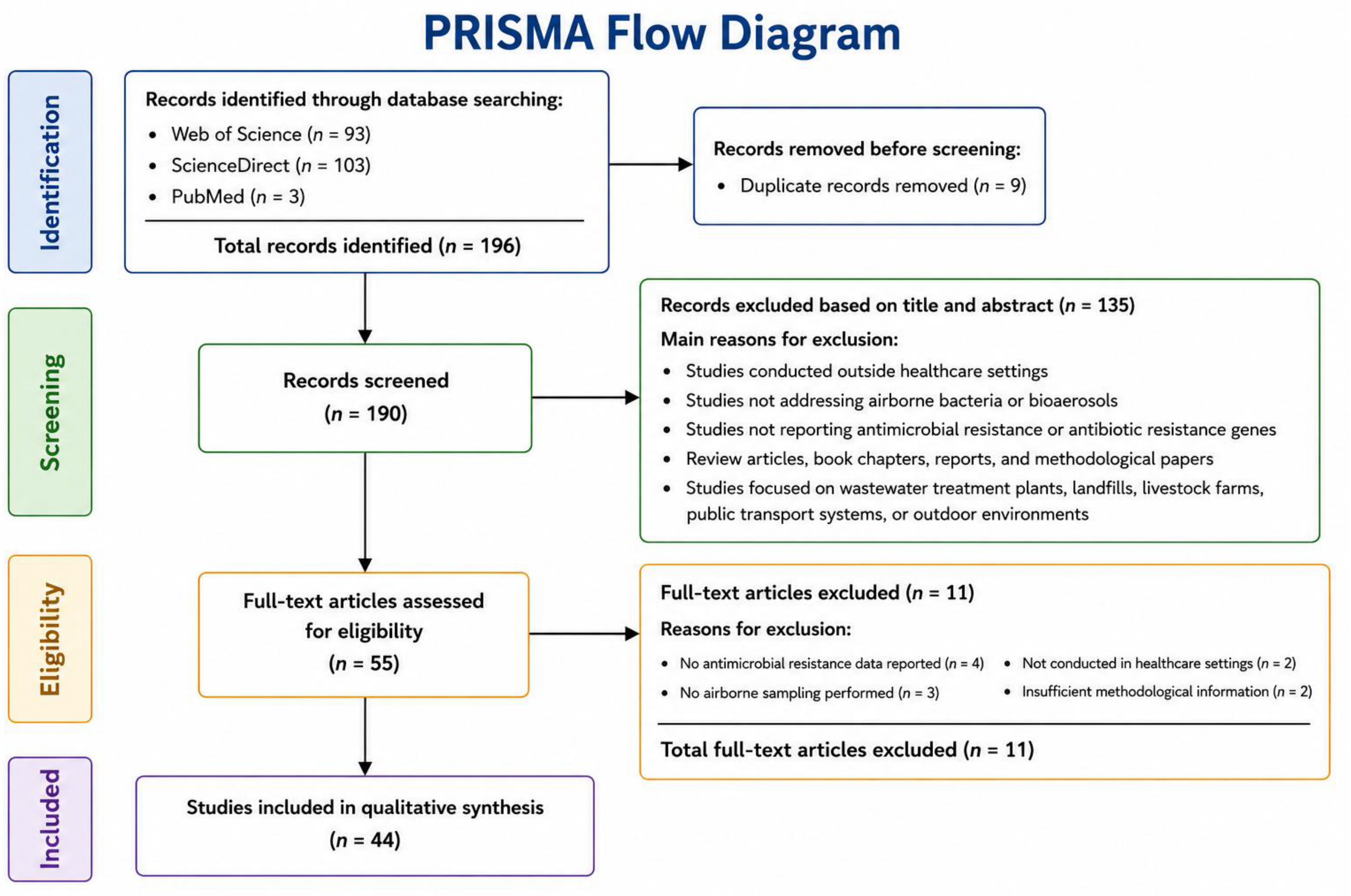
- Addressed antibiotic-resistant bacteria,
- Focused on the airborne environment,
- Provided empirical data,
- Were conducted in healthcare facility settings.
2.2. Analytical Framework for Addressing the Research Questions
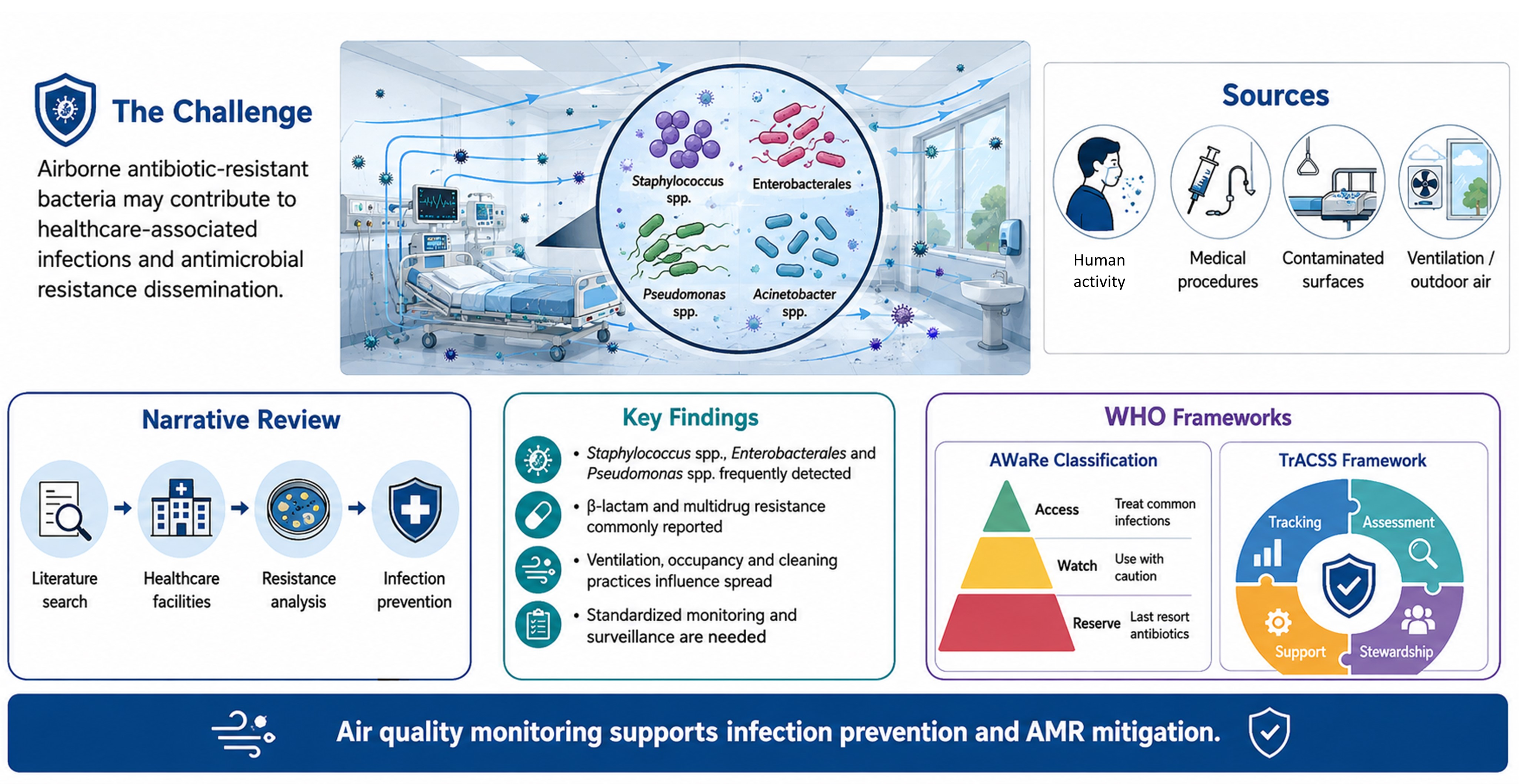
- How can the WHO AWaRe antibiotic classification and TrACSS framework be used to contextualize antimicrobial resistance patterns in healthcare settings?—The combined use of this framework enables the interpretation of resistance data within a broader clinical and policy context, supporting a more structured understanding of antimicrobial resistance in healthcare environments.
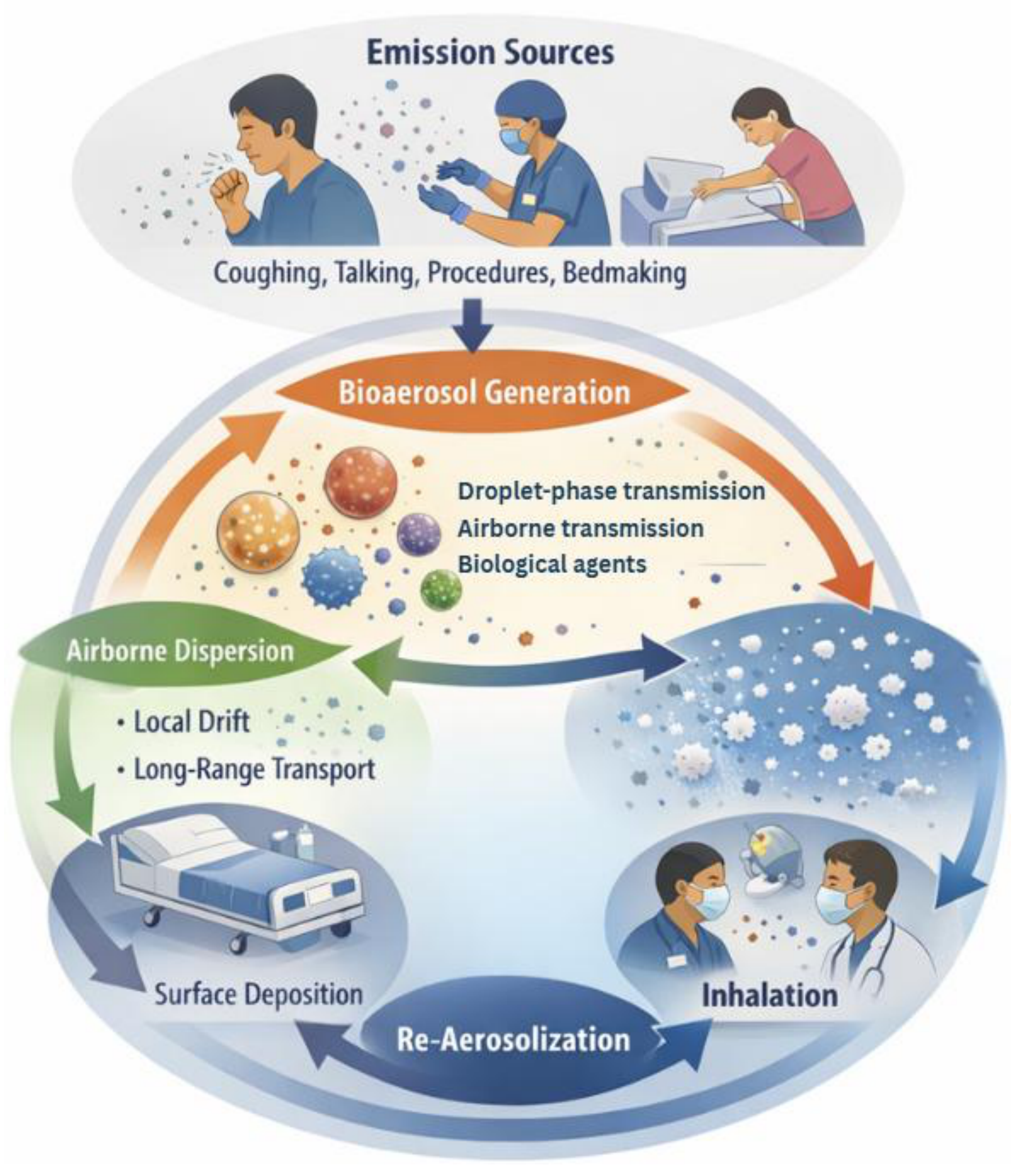
- Which sources of airborne antibiotic-resistant bacterial contamination have been identified in healthcare environments, and how do environmental and behavioral factors influence their occurrence and dissemination? This question was formulated to identify the main sources of airborne bacterial contamination in healthcare settings and to evaluate the extent to which environmental and behavioral determinants contribute to the spread of antibiotic-resistant bacteria.
- Which analytical methods are most commonly used to assess airborne antibiotic-resistant bacterial isolates in healthcare settings, and how comparable are the results obtained across different studies? This question was formulated to identify the analytical methods most commonly used to assess airborne antibiotic-resistant bacterial isolates in healthcare environments and to evaluate the comparability of results reported across studies. It also addresses the issue of heterogeneity in laboratory and analytical methods, which may affect the comparability and interpretability of results from different studies.
- Which antibiotic-resistant bacteria are most common in healthcare environments?—Identification of the most frequently detected pathogens provides a basis for understanding the microbiological composition of hospital bioaerosols and supports prioritization of clinically relevant resistant organisms in infection control and surveillance strategies.
3. Results and Discussion
3.1. Antimicrobial Resistance Mitigation in Healthcare Environments
- Indications for use and target population—new antibacterial agents should be intended for the treatment of severe infections, particularly in hospitalized patients, critically ill individuals, and immunocompromised populations.
- Effectiveness and spectrum of action—new antibiotics should be active against priority pathogens. While any mechanism of action may be acceptable, novel or differentiated mechanisms are preferred, as they are associated with a lower risk of resistance development.
- Safety and pharmacokinetics—new drugs should demonstrate predictable pharmacological profiles and enable effective, standardized dosing in most patients without the need for complex individualized regimens.
- Dosage and formulation—new antibiotics should offer flexible treatment options, including both intravenous (for hospital use) and oral forms, allowing for sequential therapy and continuation of treatment in outpatient settings.
- Stability and availability—new drugs should be globally accessible, including in both high- and low-income countries, and should remain stable under diverse environmental conditions, such as high temperature and humidity.
3.2. Antibiotic Consumption and Stewardship in Healthcare Settings
- Access—first- or second-line antibiotics with high effectiveness and lower resistance potential.
- Watch—antibiotics recommended for specific infections, with a higher risk of resistance development.
- Reserve—last-resort antibiotics, to be used only in severe or multidrug-resistant infections.
3.3. Clinically Relevant Airborne Antibiotic-Resistant Bacteria
3.4. Assessment of Airborne Antibiotic-Resistant Bacteria in Healthcare Facilities
3.5. Environmental and Behavioral Determinants
3.6. Methodological Limitations and Future Perspectives
4. Conclusions
Author Contributions
Funding
Institutional Review Board Statement
Informed Consent Statement
Data Availability Statement
Acknowledgments
Conflicts of Interest
Abbreviations
| AMR | Antimicrobial Resistance |
| AWaRe | Access–Watch–Reserve (AWaRe) classification framework |
| BPPL Status | Bacterial Priority Pathogens List status |
| CFU | Colony Forming Units |
| CLSI | Clinical and Laboratory Standards Institute |
| DDD | Defined Daily Dose |
| DNA | Deoxyribonucleic Acid |
| EU/EEA | European Union/European Economic Area |
| EUCAST | European Committee on Antimicrobial Susceptibility Testing |
| HVAC | Heating, Ventilation and Air Conditioning |
| KORLD | National Reference Centre for Susceptibility Testing (Poland) |
| MRSA | Methicillin-Resistant Staphylococcus aureus |
| PCR | Polymerase Chain Reaction |
| PCR-DGGE | Polymerase Chain Reaction—Denaturing Gradient Gel Electrophoresis |
| Reverse transcription RT-qPCR | Reverse Transcription Quantitative Polymerase Chain Reaction |
| TrACSS | Tracking Antimicrobial Resistance Country Self-Assessment Survey |
| UV radiation | Ultraviolet radiation |
| WHO | World Health Organization |
Appendix A
References
- Wu, D.; Jin, L.; Xie, J.; Liu, H.; Zhao, J.; Ye, D.; Li, X. Inhalable Antibiotic Resistomes Emitted from Hospitals: Metagenomic Insights into Bacterial Hosts, Clinical Relevance, and Environmental Risks. Microbiome 2022, 10, 19. [Google Scholar] [CrossRef] [PubMed]
- Zemouri, C.; De Soet, H.; Crielaard, W.; Laheij, A. A Scoping Review on Bio-Aerosols in Healthcare and the Dental Environment. PLoS ONE 2017, 12, e0178007. [Google Scholar] [CrossRef] [PubMed]
- Leung, M.H.Y.; Tong, X.; Lee, P.K.H. Indoor Microbiome and Airborne Pathogens. Compr. Biotechnol. 2019, 6, 96–106. [Google Scholar] [CrossRef]
- Beggs, C.; Knibbs, L.D.; Johnson, G.R.; Morawska, L. Environmental Contamination and Hospital-Acquired Infection: Factors That Are Easily Overlooked. Indoor Air 2015, 25, 462–474. [Google Scholar] [CrossRef] [PubMed]
- Murray, C.J.; Ikuta, K.S.; Sharara, F.; Swetschinski, L.; Robles Aguilar, G.; Gray, A.; Han, C.; Bisignano, C.; Rao, P.; Wool, E.; et al. Global Burden of Bacterial Antimicrobial Resistance in 2019: A Systematic Analysis. Lancet 2022, 399, 629–655. [Google Scholar] [CrossRef] [PubMed]
- World Health Organization. Antimicrobial Resistance. Available online: https://www.who.int/news-room/fact-sheets/detail/antimicrobial-resistance (accessed on 10 April 2026).
- Pertegal, V.; Lacasa, E.; Cañizares, P.; Rodrigo, M.A.; Sáez, C. Understanding the Influence of the Bioaerosol Source on the Distribution of Airborne Bacteria in Hospital Indoor Air. Environ. Res. 2023, 216, 114458. [Google Scholar] [CrossRef] [PubMed]
- Elbaiomy, R.G.; El-Sappah, A.H.; Guo, R.; Luo, X.; Deng, S.; Du, M.; Jian, X.; Bakeer, M.; Li, Z.; Zhang, Z. Antibiotic Resistance: A Genetic and Physiological Perspective. MedComm 2025, 6, e70447. [Google Scholar] [CrossRef] [PubMed]
- Personnic, N.; Doublet, P.; Jarraud, S. Intracellular Persister: A Stealth Agent Recalcitrant to Antibiotics. Front. Cell. Infect. Microbiol. 2023, 13, 1141868. [Google Scholar] [CrossRef] [PubMed]
- Tahmasebi, H.; Arjmand, N.; Monemi, M.; Babaeizad, A.; Alibabaei, F.; Alibabaei, N.; Bahar, A.; Oksenych, V.; Eslami, M. From Cure to Crisis: Understanding the Evolution of Antibiotic-Resistant Bacteria in Human Microbiota. Biomolecules 2025, 15, 93. [Google Scholar] [CrossRef] [PubMed]
- Rather, M.A.; Gupta, K.; Mandal, M. Microbial Biofilm: Formation, Architecture, Antibiotic Resistance, and Control Strategies. Braz. J. Microbiol. 2021, 52, 1701–1718. [Google Scholar] [CrossRef] [PubMed]
- Le Page, S.; Dubourg, G.; Rolain, J.M. Evaluation of the Scan® 1200 as a Rapid Tool for Reading Antibiotic Susceptibility Testing by the Disc Diffusion Technique. J. Antimicrob. Chemother. 2016, 71, 3424–3431. [Google Scholar] [CrossRef] [PubMed]
- Benkova, M.; Soukup, O.; Marek, J. Antimicrobial Susceptibility Testing: Currently Used Methods and Devices and the near Future in Clinical Practice. J. Appl. Microbiol. 2020, 129, 806–822. [Google Scholar] [CrossRef] [PubMed]
- Golus, J.; Sawicki, R.; Widelski, J.; Ginalska, G. The Agar Microdilution Method—A New Method for Antimicrobial Susceptibility Testing for Essential Oils and Plant Extracts. J. Appl. Microbiol. 2016, 121, 1291–1299. [Google Scholar] [CrossRef] [PubMed]
- Gwenzi, W.; Shamsizadeh, Z.; Gholipour, S.; Nikaeen, M. The Air-Borne Antibiotic Resistome: Occurrence, Health Risks, and Future Directions. Sci. Total Environ. 2022, 804, 150154. [Google Scholar] [CrossRef] [PubMed]
- Handa, V.L.; Patel, B.N.; Bhattacharya, D.A.; Kothari, R.K.; Kavathia, D.G.; Vyas, B.R.M. A Study of Antibiotic Resistance Pattern of Clinical Bacterial Pathogens Isolated from Patients in a Tertiary Care Hospital. Front. Microbiol. 2024, 15, 1383989. [Google Scholar] [CrossRef] [PubMed]
- Mackenzie, J.S.; Jeggo, M. The One Health Approach—Why Is It So Important? Trop. Med. Infect. Dis. 2019, 4, 88. [Google Scholar] [CrossRef] [PubMed]
- O’Neill, J. Tackling Drug-Resistant Infections Globally: Final Report and Recommendations; Review on Antimicrobial Resistance: London, UK, 2016; Available online: https://amr-review.org/sites/default/files/160518_Final%20paper_with%20cover.pdf (accessed on 16 June 2026).
- World Health Organization. Global Database for Tracking Antimicrobial Resistance (AMR) Country Self-Assessment Survey (TrACSS). Available online: https://amrcountryprogress.org/ (accessed on 30 March 2026).
- Poudel, A.N.; Zhu, S.; Cooper, N.; Little, P.; Tarrant, C.; Hickman, M.; Yao, G. The Economic Burden of Antibiotic Resistance: A Systematic Review and Meta-Analysis. PLoS ONE 2023, 18, e0285170. [Google Scholar] [CrossRef] [PubMed]
- Institut Pasteur. A Global Overview of Antibiotic Resistance Determinants. Available online: https://www.pasteur.fr/en/press-area/press-documents/global-overview-antibiotic-resistance-determinants (accessed on 8 April 2026).
- World Health Organization. Target Product profiles for new antibacterial agents: Severe Multidrug-Resistant Gram-Negative Infections, Antibiotic-Resistant Gram-Positive Infections in Immunosuppressed and Critically Ill Patients, and Community-Acquired and Health Care-Associated Bacterial Meningitis; World Health Organization: Geneva, Switzerland, 2026. [Google Scholar]
- European Centre for Disease Prevention and Control. Antimicrobial Resistance in the EU/EEA (EARS-Net)—Annual Epidemiological Report for 2024; European Centre for Disease Prevention and Control: Solna, Sweden, 2025. [Google Scholar]
- Gao, M.; Zhang, Q.; Lei, C.; Lu, T.; Qian, H. Atmospheric Antibiotic Resistome Driven by Air Pollutants. Sci. Total Environ. 2023, 902, 165942. [Google Scholar] [CrossRef] [PubMed]
- Zanichelli, V.; Sharland, M.; Cappello, B.; Moja, L.; Getahun, H.; Pessoa-Silva, C.; Sati, H.; van Weezenbeek, C.; Balkhy, H.; Simão, M.; et al. The WHO AWaRe (Access, Watch, Reserve) Antibiotic Book and Prevention of Antimicrobial Resistance. Bull. World Health Organ. 2023, 101, 290. [Google Scholar] [CrossRef]
- European Centre for Disease Prevention and Control. Surveillance of Antimicrobial Resistance in Europe, 2024 Data; European Centre for Disease Prevention and Control: Solna, Sweden, 2025. [Google Scholar]
- European Centre for Disease Prevention and Control. Antimicrobial Consumption in the EU/EEA (ESAC-Net)—Annual Epidemiological Report for 2022; European Centre for Disease Prevention and Control: Solna, Sweden, 2023. [Google Scholar]
- European Centre for Disease Prevention and Control. Antimicrobial Consumption in the EU/EEA (ESAC-Net)—Annual Epidemiological Report for 2023; European Centre for Disease Prevention and Control: Solna, Sweden, 2024. [Google Scholar]
- Kauch, K.; Brągoszewska, E.; Mainka, A. Microbiological Air Quality in Healthcare Environments: A Review of Selected Facilities. Appl. Sci. 2025, 15, 8976. [Google Scholar] [CrossRef]
- World Health Organization. Mainstreaming Antimicrobial Resistance into Primary Health Care International Workshop Report; World Health Organization: Geneva, Switzerland, 2025. [Google Scholar]
- Lenart-Boroń, A.; Wolny-Koładka, K.; Stec, J.; Kasprowic, A. Phenotypic and Molecular Antibiotic Resistance Determination of Airborne Coagulase Negative Staphylococcus Spp. Strains from Healthcare Facilities in Southern Poland. Microb. Drug Resist. 2016, 22, 515–522. [Google Scholar] [CrossRef] [PubMed]
- Rasmussen, P.U.; Uhrbrand, K.; Bartels, M.D.; Neustrup, H.; Karottki, D.G.; Bültmann, U.; Madsen, A.M. Occupational Risk of Exposure to Methicillin-Resistant Staphylococcus Aureus (MRSA) and the Quality of Infection Hygiene in Nursing Homes. Front. Environ. Sci. Eng. 2020, 15, 41. [Google Scholar] [CrossRef]
- Solomon, F.B.; Wadilo, F.; Tufa, E.G.; Mitiku, M. Extended Spectrum and Metalo Beta-Lactamase Producing Airborne Pseudomonas Aeruginosa and Acinetobacter Baumanii in Restricted Settings of a Referral Hospital: A Neglected Condition. Antimicrob. Resist. Infect. Control. 2017, 6, 106. [Google Scholar] [CrossRef] [PubMed]
- Saadoun, I.; Jaradat, Z.W.; Al Tayyar, I.A.; El Nasser, Z.; Ababneh, Q. Airborne Methicillin-Resistant Staphylococcus Aureus in the Indoor Environment of King Abdullah University Hospital, Jordan. Indoor Built Environ. 2015, 24, 315–323. [Google Scholar] [CrossRef]
- Fabiyi, O.C.; Ana, G.R. Indoor Air Quality, Hygiene Practices and the Antimicrobial Resistance Profiles of Airborne Bacteria in Selected Areas of a Tertiary Health Facility in Ibadan, Nigeria. Antimicrob. Resist. Infect. Control. 2026, 15, 66. [Google Scholar] [CrossRef] [PubMed]
- Tamsi, N.S.F.; Latif, M.T.; Othman, M.; Abu Bakar, F.D.; Yusof, H.M.; Noraini, N.M.R.; Zahaba, M.; Sahani, M. Antibiotic Resistance of Airborne Bacterial Populations in a Hospital Environment. Environ. Monit. Assess. 2022, 194, 629. [Google Scholar] [CrossRef] [PubMed]
- Akhtar, N.; Tahir, A.; Abbas, M.; Qadir, A. Monitoring of Indoor Microbial Air Quality of Dental Healthcare Units in Lahore. Air Qual. Atmos. Health 2025, 18, 1527–1543. [Google Scholar] [CrossRef]
- Jomha, M.Y.; Yusef, H.; Holail, H. Antimicrobial and Biocide Resistance of Bacteria in a Lebanese Tertiary Care Hospital. J. Glob. Antimicrob. Resist. 2014, 2, 299–305. [Google Scholar] [CrossRef] [PubMed]
- Yakupogullari, Y.; Otlu, B.; Ersoy, Y.; Kuzucu, C.; Bayindir, Y.; Kayabas, U.; Togal, T.; Kizilkaya, C. Is Airborne Transmission of Acinetobacter Baumannii Possible: A Prospective Molecular Epidemiologic Study in a Tertiary Care Hospital. Am. J. Infect. Control 2016, 44, 1595–1599. [Google Scholar] [CrossRef] [PubMed]
- Khan, B.A.; Roy, S.; Tahsin, N.; Baidya, K.; Das, K.C.; Islam, M.S.; Ahsan, N.; Salam, A. Antibiotic Resistance of Bioaerosols in Particulate Matter from Indoor Environments of the Hospitals in Dhaka Bangladesh. Sci. Rep. 2024, 14, 29884. [Google Scholar] [CrossRef] [PubMed]
- Warnke, P.; Pappisch, V.R.; Frickmann, H.; Podbielski, A. Influence of Bed Making on Loads of Airborne and Surface-Associated Drug-Resistant Bacteria in Patient Rooms. J. Hosp. Infect. 2023, 136, 45–54. [Google Scholar] [CrossRef] [PubMed]
- Chezganova, E.; Efimova, O.; Sakharova, V.; Efimova, A.; Sozinov, S.; Kutikhin, A.; Ismagilov, Z.; Brusina, E. Ventilation-Associated Particulate Matter Is a Potential Reservoir of Multidrug-Resistant Organisms in Health Facilities. Life 2021, 11, 639. [Google Scholar] [CrossRef] [PubMed]
- Tsay, M.D.; Tseng, C.C.; Wu, N.X.; Lai, C.Y. Size Distribution and Antibiotic-Resistant Characteristics of Bacterial Bioaerosol in Intensive Care Unit before and during Visits to Patients. Environ. Int. 2020, 144, 106024. [Google Scholar] [CrossRef] [PubMed]
- Morgado-Gamero, W.B.; Hernandez, M.M.; Ramirez, M.C.; Medina-Altahona, J.; De La Hoz, S.; Mendoza, H.P.; Parody, A.; Teixeira, E.C.; Agudelo-Castañeda, D.M. Antibiotic Resistance of Airborne Viable Bacteria and Size Distribution in Neonatal Intensive Care Units. Int. J. Environ. Res. Public Health 2019, 16, 3340. [Google Scholar] [CrossRef] [PubMed]
- Gao, X.L.; Shao, M.F.; Wang, Q.; Wang, L.T.; Fang, W.Y.; Ouyang, F.; Li, J. Airborne Microbial Communities in the Atmospheric Environment of Urban Hospitals in China. J. Hazard. Mater. 2018, 349, 10–17. [Google Scholar] [CrossRef] [PubMed]
- Gilbert, Y.; Veillette, M.; Duchaine, C. Airborne Bacteria and Antibiotic Resistance Genes in Hospital Rooms. Aerobiologia 2010, 26, 185–194. [Google Scholar] [CrossRef]
- Espiritu, A.J.C.; Villanueva, S.Y.A.M. Isolation and Identification of Biofilm-Producing, Drug-Resistant Coagulase Negative Staphylococci from a Hospital Environment in Northern Philippines. J. Pure Appl. Microbiol. 2022, 16, 620–629. [Google Scholar] [CrossRef]
- Abdelrahman, H.; Abu-Rub, L.; Al Mana, H.; Alhorr, Y.; Al Thani, A.; Qotba, H.; Yassine, H.M.; Eltai, N.O. Assessment of Indoor Air Quality of Four Primary Health Care Centers in Qatar. Microorganisms 2022, 10, 2055. [Google Scholar] [CrossRef] [PubMed]
- Fernandes, J.J.D.; Aguiar, P.A.D.F.; Mendes-Rodrigues, C.; Martins, C.H.G. Assessing Bacterial Bioaerosol and Environmental Variables of Critical Hospitalization Units of a Tertiary Hospital. Aerobiologia 2023, 39, 285–302. [Google Scholar] [CrossRef]
- Mirhoseini, S.H.; Nikaeen, M.; Shamsizadeh, Z.; Khanahmad, H. Hospital Air: A Potential Route for Transmission of Infections Caused by β-Lactam–Resistant Bacteria. Am. J. Infect. Control 2016, 44, 898–904. [Google Scholar] [CrossRef] [PubMed]
- Messi, P.; Sabia, C.; Anacarso, I.; Condò, C.; Iseppi, R.; Stefani, S.; de Niederhausern, S.; Bondi, M. Prevalence of Multi-Drug-Resistant (MDR) Bacteria in Air Samples from Indoor and Outdoor Environments. Aerobiologia 2015, 31, 381–387. [Google Scholar] [CrossRef]
- Zulkifle, N.T.; A Wahab, M.I.; Neoh, H.M.; Zulfakar, S.S. Environmental Factors Attributed on Dissemination of Antibiotic-Resistant Bacteria (ARB) and Antibiotic Resistance Genes (ARGs) through PM2.5 and PM10. Aerobiologia 2025, 41, 569–590. [Google Scholar] [CrossRef]
- Sizar, O.; Leslie, S.W.; Unakal, C.G. Gram-Positive Bacteria. Available online: https://www.ncbi.nlm.nih.gov/books/NBK470553/ (accessed on 10 April 2026).
- van der Zwet, W.C.; Nijsen, I.E.J.; Jamin, C.; van Alphen, L.B.; von Wintersdorff, C.J.H.; Demandt, A.M.P.; Savelkoul, P.H.M. Role of the Environment in Transmission of Gram-Negative Bacteria in Two Consecutive Outbreaks in a Haematology-Oncology Department. Infect. Prev. Pract. 2022, 4, 100209. [Google Scholar] [CrossRef] [PubMed]
- Liu, Z.; Wang, L.; Rong, R.; Fu, S.; Cao, G.; Hao, C. Full-Scale Experimental and Numerical Study of Bioaerosol Characteristics against Cross-Infection in a Two-Bed Hospital Ward. Build. Environ. 2020, 186, 107373. [Google Scholar] [CrossRef] [PubMed]



| Refers to | Result | Interpretation | Finding |
|---|---|---|---|
| Training and professional education on antimicrobial resistance in the human health sector | Formalized | Globally education exists but not fully developed/integrated | High likelihood of antibiotic overuse due to insufficient knowledge |
| National system for national antimicrobial use in humans | Globally—collaborative Regions—from integrated to none | Substantial differences between regions | Uneven levels of control over antibiotic use |
| Monitoring system for facility-level/hospital antimicrobial use in human health | Globally and regions—established or collaborative | Considerable global differences | Lack of a uniform level |
| National monitoring and reporting system for substandard and falsified antimicrobials in humans | Globally—from formalized to none Regions—from collaborative to none | Weak area between countries—no system or in initial phase | Selection of resistant strains |
| National surveillance system for AMR in humans | Collaborative | Well-developed resistance monitoring systems identify resistant bacteria and their locations | Probably the system includes only clinical samples, not environmental ones |
| Capacity to perform Antimicrobial Susceptibility Testing (AST) for critically important bacteria | Collaborative | Laboratory diagnostics functional | Countries can detect resistance |
| Continuity of services for clinical bacteriology laboratories | None Only western pacific region no implementation reported or collaborative | Laboratories exist, but their operation remains unstable | Serious issue—continuity of service not ensured |
| Infection Prevention and Control (IPC) in human health care | Globally—formalized Regions—from integrated to established | Systems exist but rather at intermediate level | Infection control partially effective = higher risk of infections |
| Optimizing antimicrobial use in hospitals | Globally—none Regions—from established to none | Almost no effective measures | Inappropriate use of antibiotics in hospitals |
| Optimizing antimicrobial use in primary care | Globally—collaborative Regions—from integrated to formalized | Better antibiotic control outside hospital | Probably fewer severe infections; treatment standards easier to implement |
| Adoption of “AWaRe” classification of antibiotics in the National Essential Medicines List | Globally—established Regions—from established to formalized | System partially implemented | Possible misuse of restricted or ‘last-resort’ antibiotics |
| Genus/Species | WHO BPPL Status | Resistance * | Medicine Used in Treatment/ AWaRe Group |
|---|---|---|---|
| Enterobacterales (Klebsiella spp., Escherichia coli, Enterobacter spp.) | Critical | Carbapenems, third-generation cephalosporins | Ceftazidime-avibactam, Meropenem-vaborbactam/ Reserve |
| Pseudomonas aeruginosa | High | Carbapenems | Ciprofloxacin; Ceftazidime-avibactam, Ceftolozane-tazobactam/Watch; Reserve |
| Enterococcus spp. (particularly E. faecium) | High | Vancomycin | Linezolid, Daptomycin, Tigecycline/ Reserve |
| Staphylococcus aureus | High | Methicillin | Vancomycin, Linezolid, Daptomycin/ Reserve |
| Facility | Interpretation | Predominant Bacterial Species | Main Resistance Profile | Ref. |
|---|---|---|---|---|
| Disk diffusion method | ||||
| Hospitals and health care clinics, Poland | EUCAST * and KORLD guidelines ** | Staphylococcus saprophyticus Staphylococcus warneri | Most common—tetracycline and erythromycin | [31] |
| Nursing home, Denmark | EUCAST guidelines | Staphylococcus aureus | Methicillin-Resistant, Methicillin-Susceptible | [32] |
| Hospital, Ethiopia | CLSI recommendations *** | Acinetobacter baumannii Pseudomonas aeruginosa | trimethoprim-sulfamethoxazole ciprofloxacin, cefepime, ceftriaxone trimethoprim-sulfamethoxazole, ciprofloxacin, gentamicin, ceftriaxone | [33] |
| Hospital, Jordan | CLSI recommendations | Methicillin-resistant Staphylococcus aureus | cefoxitin, oxacillin, azithromycin, cefotaxime, penicillin | [34] |
| Hospital, Nigeria | CLSI recommendations | Staphylococcus aureus Bacillus spp. Escherichia coli, Klebsiella pneumoniae | ampicillin, penicillin, cefoxitin cefoxitin, ampicillin clindamycin, azithromycin | [35] |
| Hospital, Malaysia | NA | Micrococcus spp. Staphylococcus aureus α- and β-Streptococcus spp. Bacillus spp. Clostridium spp. | The highest resistance was observed to ampicillin | [36] |
| Dental care unit, Pakistan | CLSI recommendations | Dominant Staphylococcus aureus | erythromycin, ceftazidime, cefotaxime | [37] |
| Hospital, Lebanon | CLSI recommendations | Gram-positive (mainly Staphylococcus) Gram-negative (Pseudomonas, Escherichia coli) | Penicillin, clindamycin, ceftazidime Penicillin, cephalothin | [38] |
| Vitek II system | ||||
| Hospital, Turkey | CLSI recommendations | Acinetobacter baumannii | Most airborne isolates are resistant to carbapenems | [39] |
| Hospitals, Bangladesh | CLSI recommendations | Staphylococcus aureus Escherichia coli, Pseudomonas aeruginosa, Bacillus cereus Acinetobacter schindleri | Ampicillin, azithromycin, erythromycin, cefixime | [40] |
| Clinic, Germany | references to internal procedures | Micrococcus luteus, Staphylococcus epidermidis | Methicillin | [41] |
| Hospital, Russia | NA | Enterococcus spp. Micrococcus spp. Sphingomonas spp. | Multidrug-resistant strains (MDRO) | [42] |
| BD Phoenix-100 system | ||||
| Hospitals, Taiwan | CLSI recommendations | Staphylococcus spp. Micrococcus spp. Bacillus cereus | β-lactams | [43] |
| Hospital, Columbia | CLSI recommendations | Staphylococcus epidermidis Staphylococcus saprophyticus Pseudomonas aeruginosa | penicillin G, ampicillin, clindamycin ampicillin, penicillin G, erythromycin carbapenem | [44] |
| Reverse transcription RT-qPCR (resistance genes analysis) | ||||
| Hospitals, China | NA | Staphylococcus saprophyticus, Corynebacterium minutissimum, Streptococcus pneumoniae, Escherichia coli, Arcobacter butzleri, Aeromonas veronii, Pseudomonas aeruginosa, Bacillus cereus. | [45] | |
| PCR-DGGE, PCR—resistance genes | ||||
| Hospital, Canada | reference to the literature | Staphylococcus epidermidis Staphylococcus hominis Bacillus spp. Micrococcus luteus | erythromycin, tetracycline | [46] |
| Thermo Fisher Scientific Sensititre Aris 2X AST system | ||||
| Hospital, Philippines | CLSI recommendations | Staphylococcus epidermidis, Staphylococcus warneri, Staphylococcus lugdunensis | Penicillin, oxacillin | [47] |
| MRSA chromogenic agar medium | ||||
| Primary health care centers, Qatar | Manufacturer’s instructions | Staphylococcus, Acinetobacter, Pseudomonas, Bacillus | Methicillin | [48] |
| chromID VRE selective agar | ||||
| Hospital, Brazil | NA | Most common Staphylococcus, Bacillus spp. | Vancomycin | [49] |
| Agar screening | ||||
| Hospitals, Iran | CLSI recommendations | Acinetobacter baumannii Staphylococcus epidermidis Staphylococcus saprophyticus Staphylococcus hominis Staphylococcus haemolyticus | oxacillin, ceftazidime and cefazolin | [50] |
| Agar dilution method | ||||
| Hospital | CLSI recommendations | Micrococcus spp., Staphylococcus spp. | Streptomycin | [51] |
| Public and private dental clinics, Italy | Cocci and saprophytic environmental bacteria dominated | Cefuroxime | ||
Disclaimer/Publisher’s Note: The statements, opinions and data contained in all publications are solely those of the individual author(s) and contributor(s) and not of MDPI and/or the editor(s). MDPI and/or the editor(s) disclaim responsibility for any injury to people or property resulting from any ideas, methods, instructions or products referred to in the content. |
© 2026 by the authors. Licensee MDPI, Basel, Switzerland. This article is an open access article distributed under the terms and conditions of the Creative Commons Attribution (CC BY) license.
Share and Cite
Kauch, K.; Mainka, A.; Brągoszewska, E. Airborne Antibiotic-Resistant Bacteria—Challenge for Healthcare Environments. Atmosphere 2026, 17, 617. https://doi.org/10.3390/atmos17060617
Kauch K, Mainka A, Brągoszewska E. Airborne Antibiotic-Resistant Bacteria—Challenge for Healthcare Environments. Atmosphere. 2026; 17(6):617. https://doi.org/10.3390/atmos17060617
Chicago/Turabian StyleKauch, Katarzyna, Anna Mainka, and Ewa Brągoszewska. 2026. "Airborne Antibiotic-Resistant Bacteria—Challenge for Healthcare Environments" Atmosphere 17, no. 6: 617. https://doi.org/10.3390/atmos17060617
APA StyleKauch, K., Mainka, A., & Brągoszewska, E. (2026). Airborne Antibiotic-Resistant Bacteria—Challenge for Healthcare Environments. Atmosphere, 17(6), 617. https://doi.org/10.3390/atmos17060617