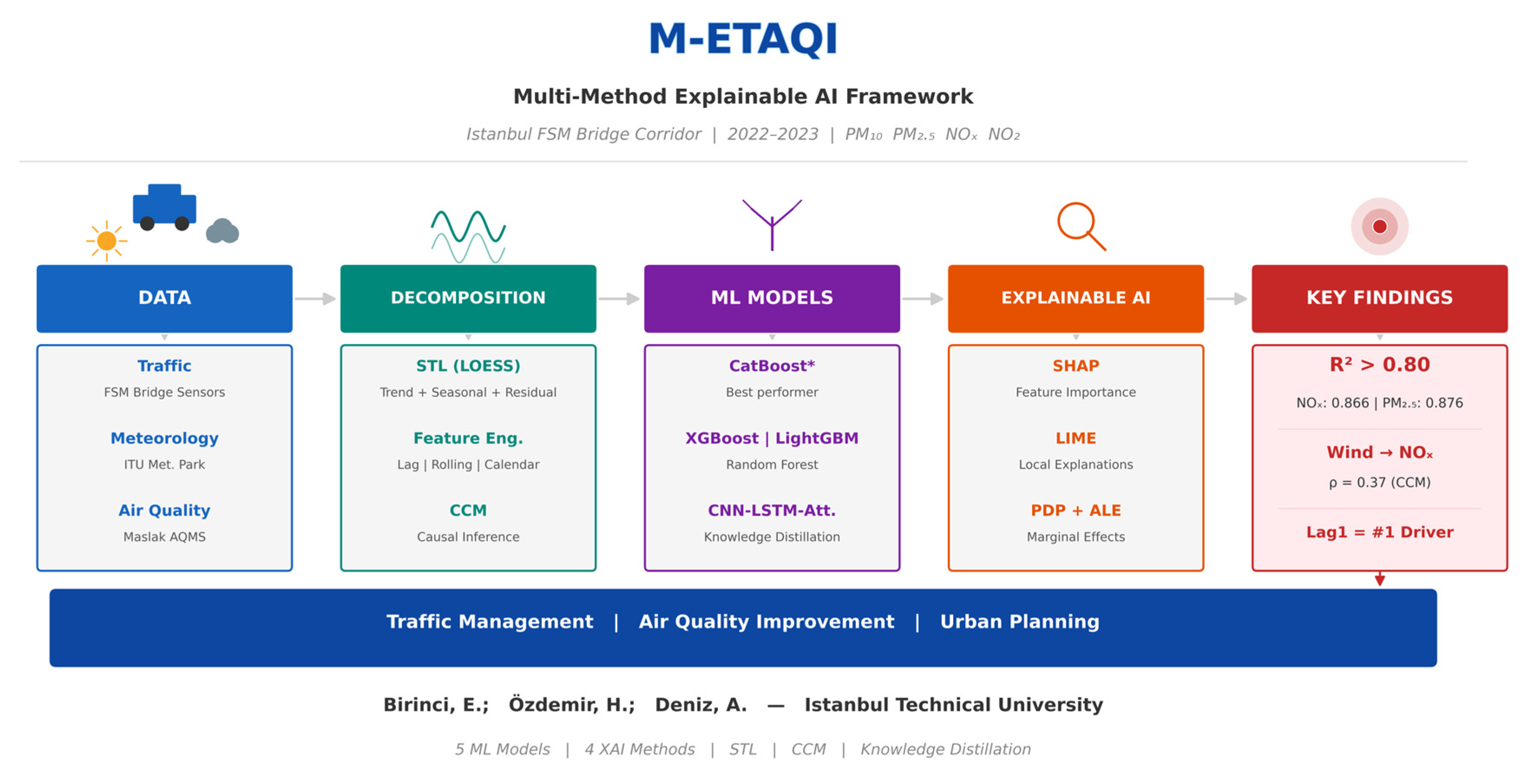

Multi-Method Explainable AI Framework for Quantifying Traffic and Meteorological Contributions to Urban Air Pollution: A Case Study of Istanbul’s Bosphorus Bridge Corridor


Abstract
1. Introduction
2. Study Area and Data
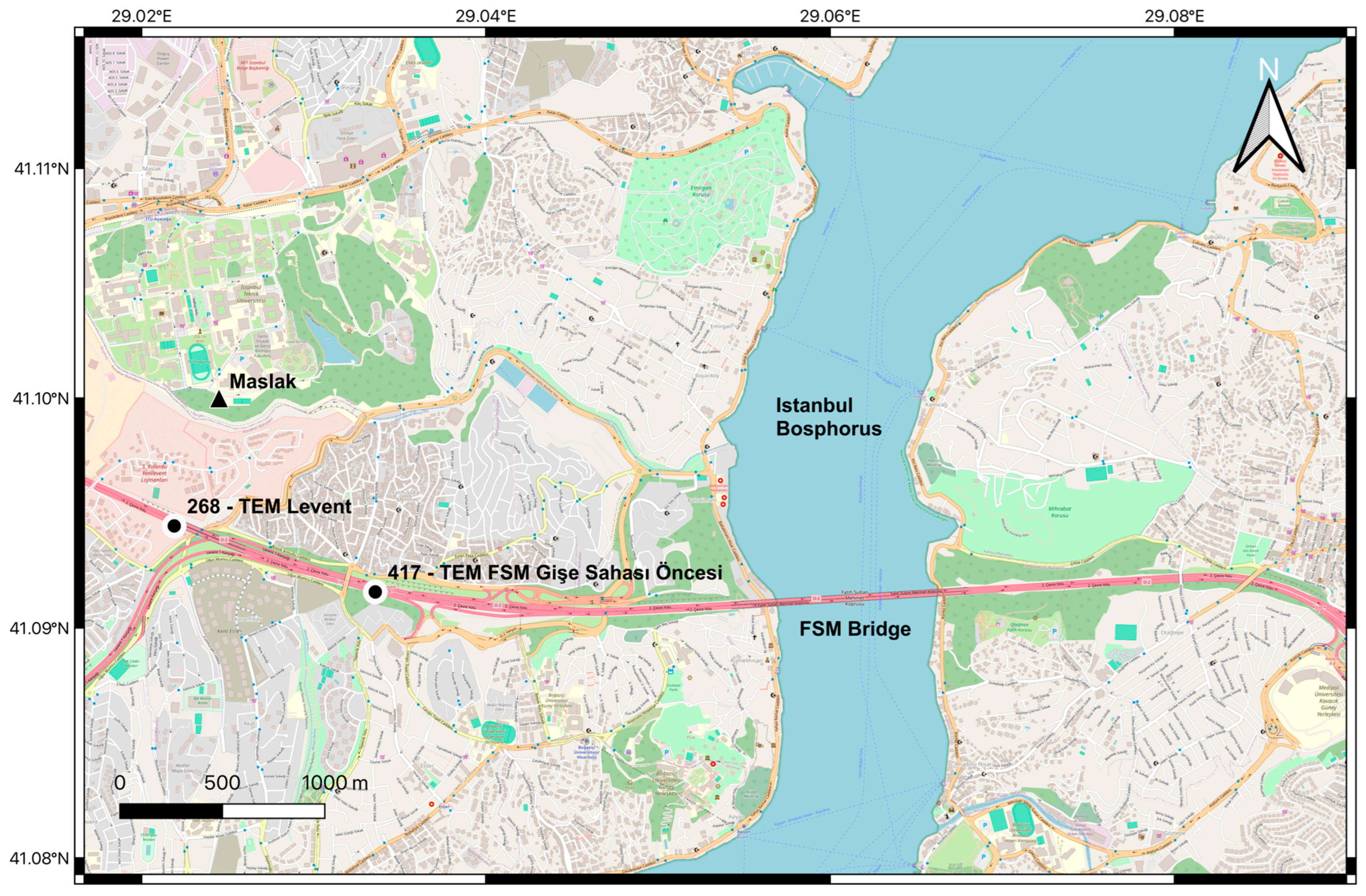
2.1. Study Area
2.2. Traffic Data
2.3. Air Quality and Meteorological Data
3. Methods
3.1. Data Preprocessing and Missing Data Imputation
3.2. Feature Engineering
3.3. Machine Learning Models
3.3.1. XGBoost
3.3.2. LightGBM
3.3.3. CatBoost
3.3.4. Random Forest
3.3.5. CNN–BiLSTM–Attention
3.4. Multi-Method Explainable AI Framework
3.4.1. SHAP Analysis
3.4.2. LIME Analysis
3.4.3. PDP and ALE Graphics
3.4.4. Multimethod Consensus Analysis
3.5. Temporal Decomposition with Component-Specific XAI
3.6. Causal Inference Through Convergent Cross-Mapping
3.7. Model Evaluation
4. Results
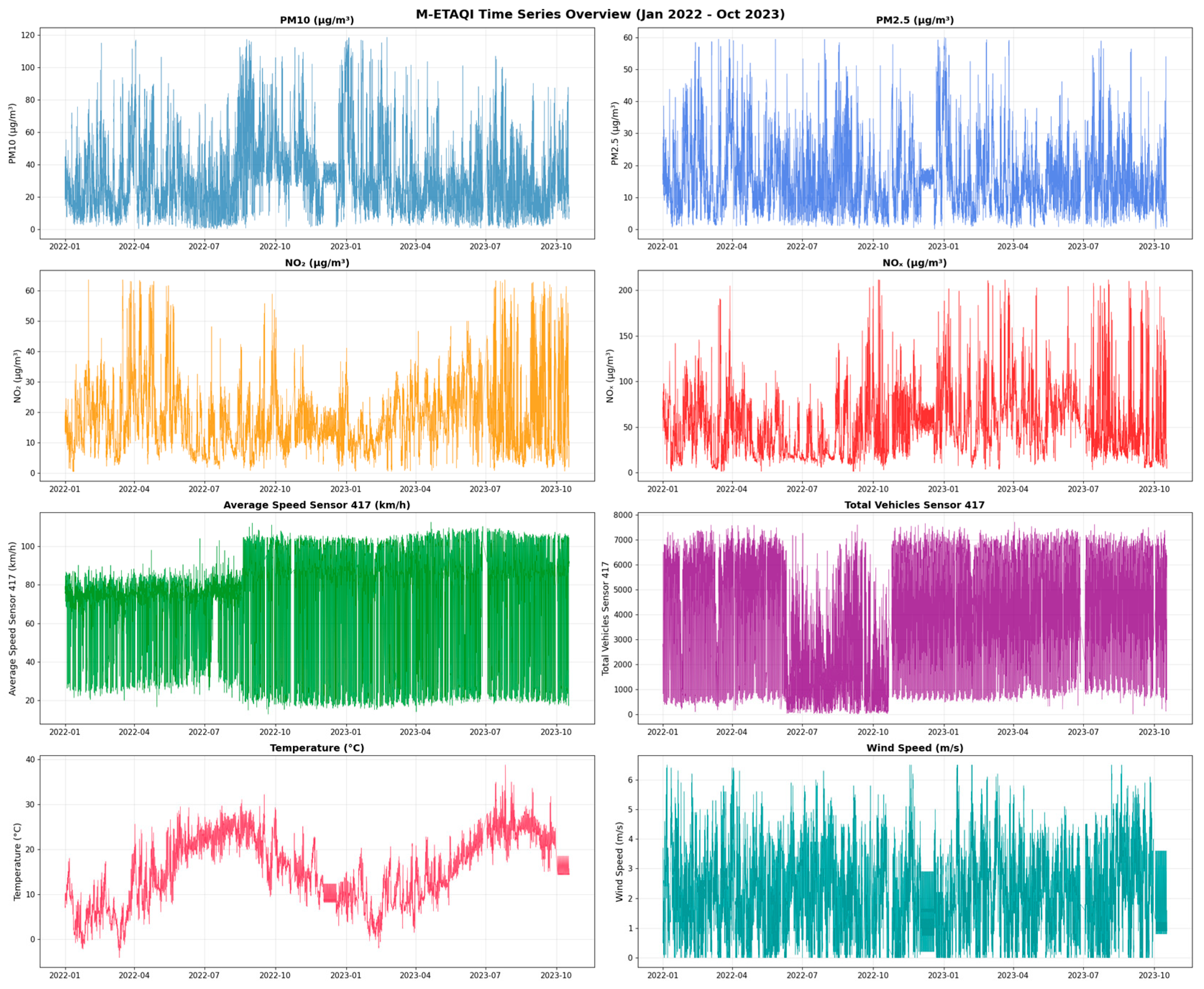
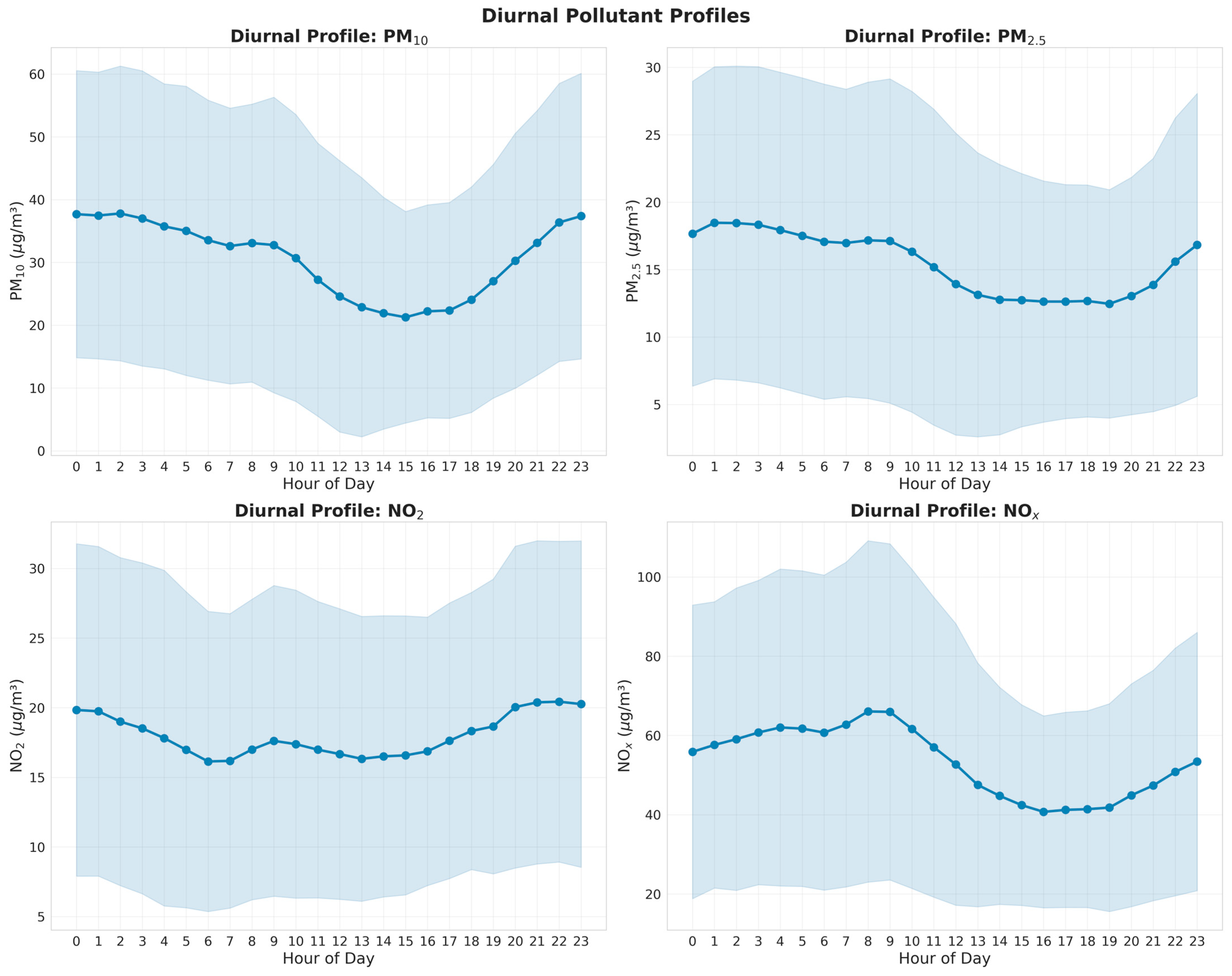
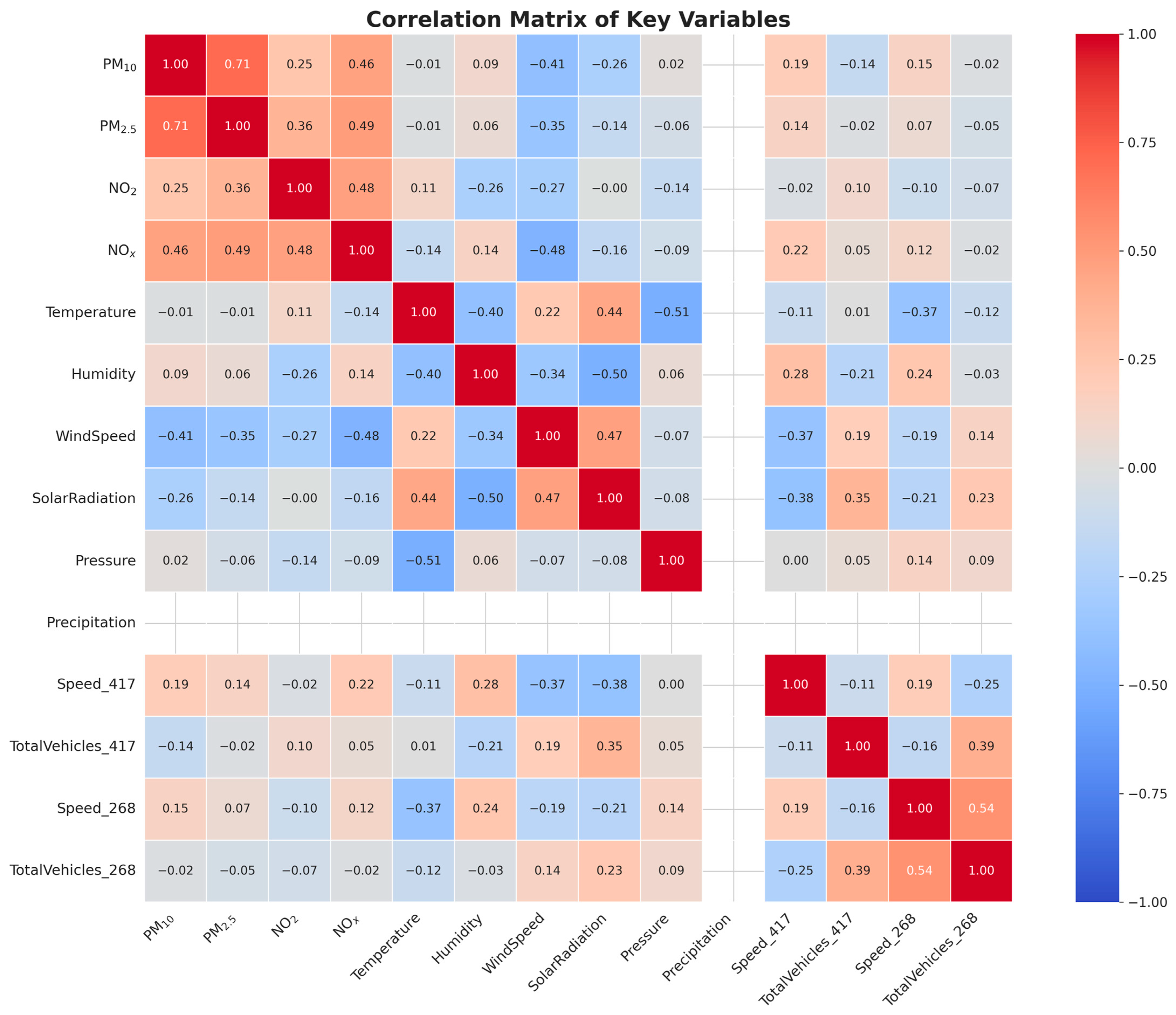
4.1. Descriptive Analysis and Temporal Patterns
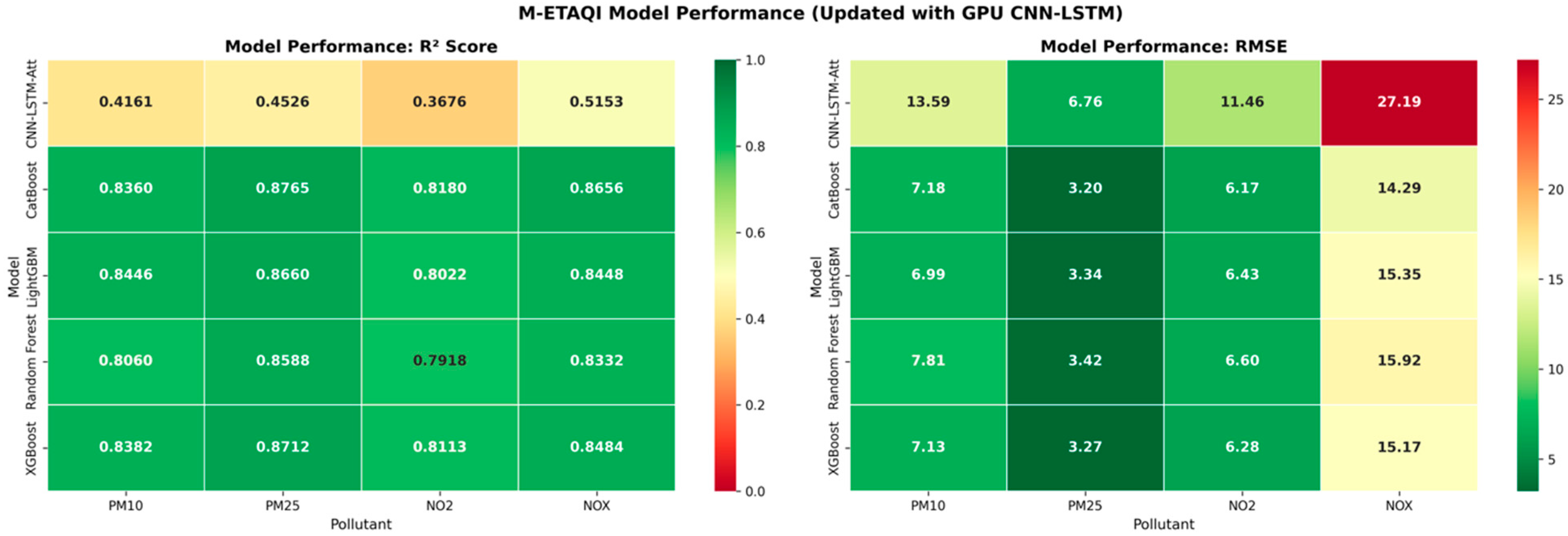
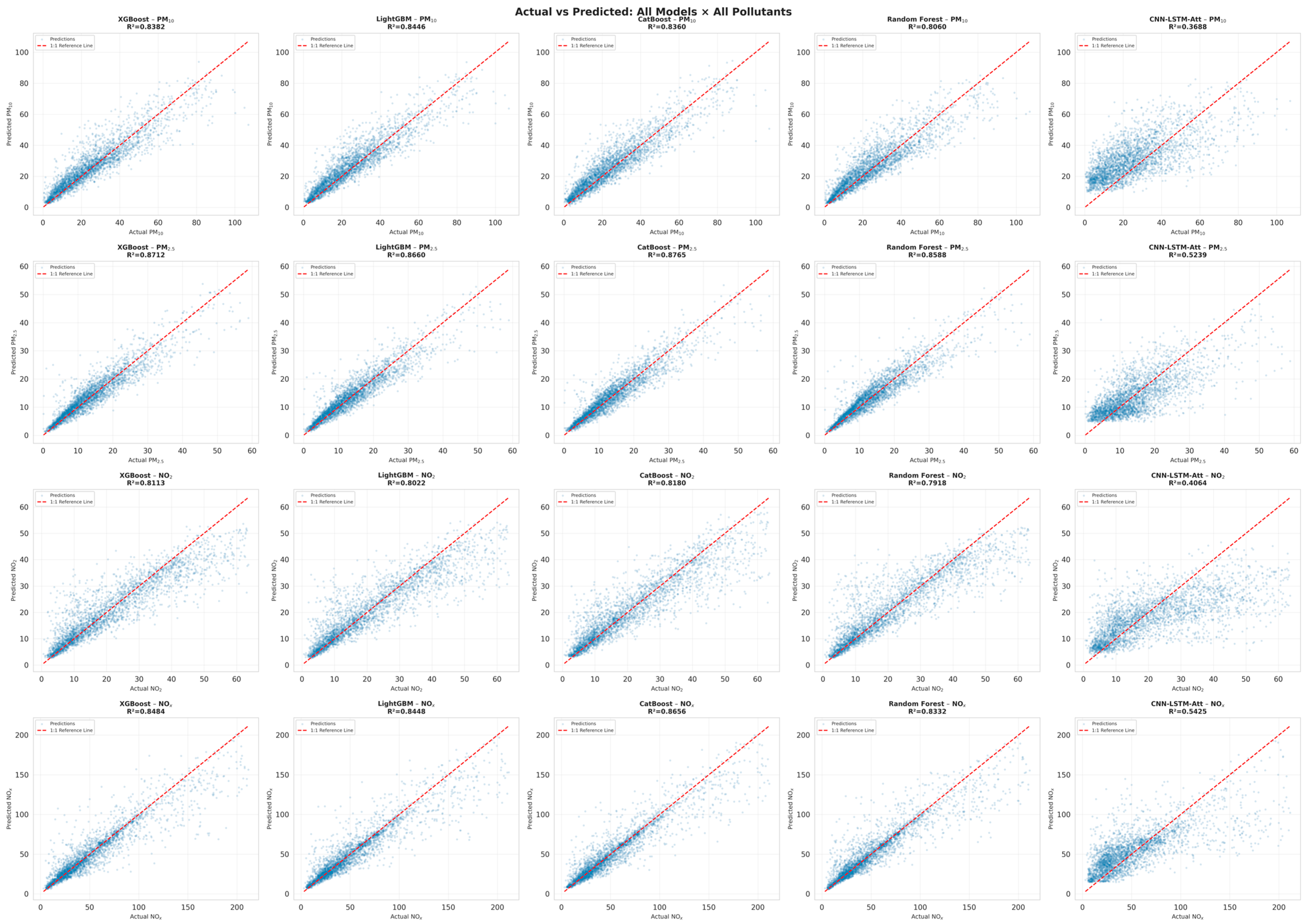
4.2. Model Performance Comparison
4.3. Explainable AI: SHAP Feature Importance
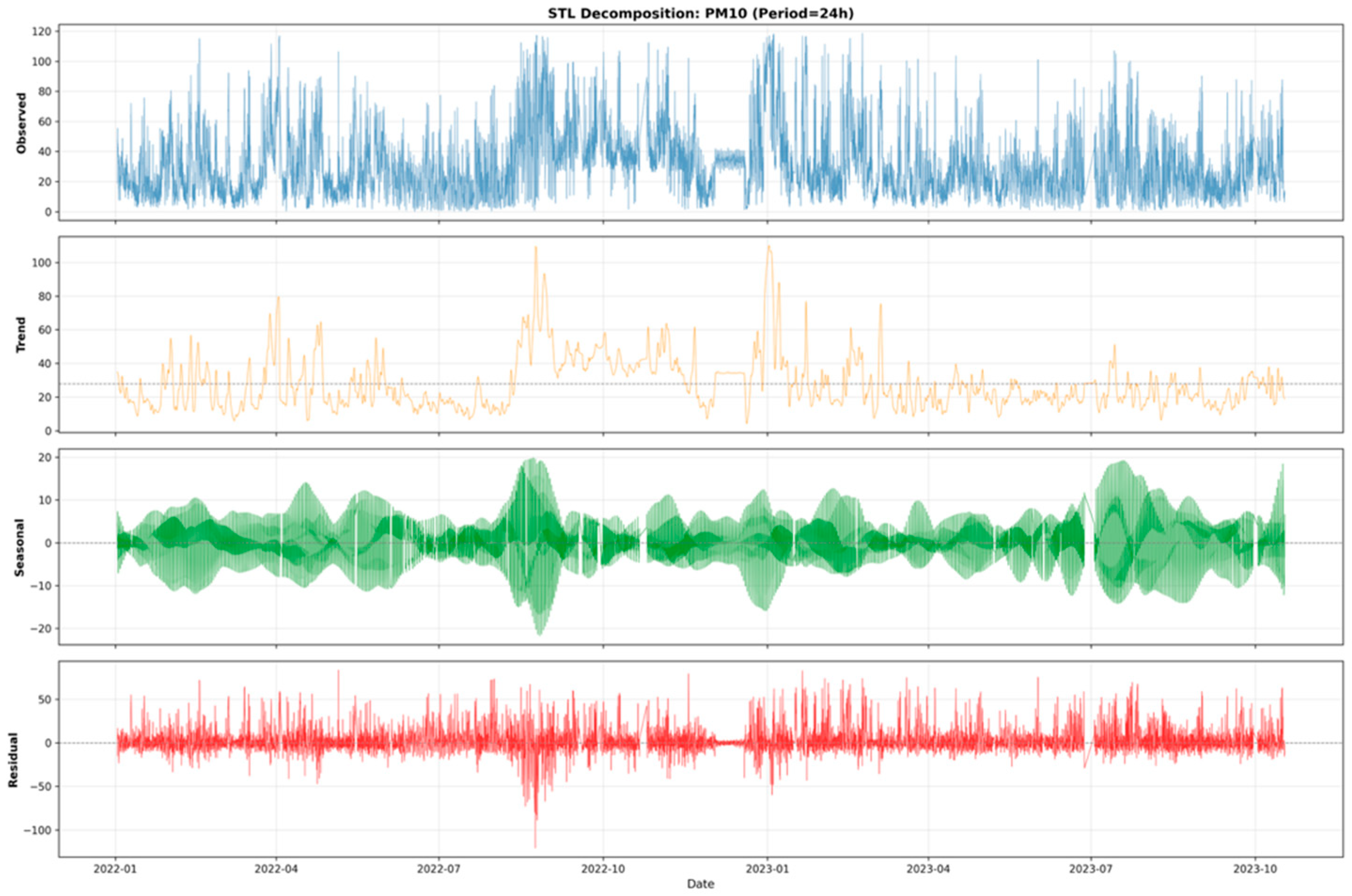
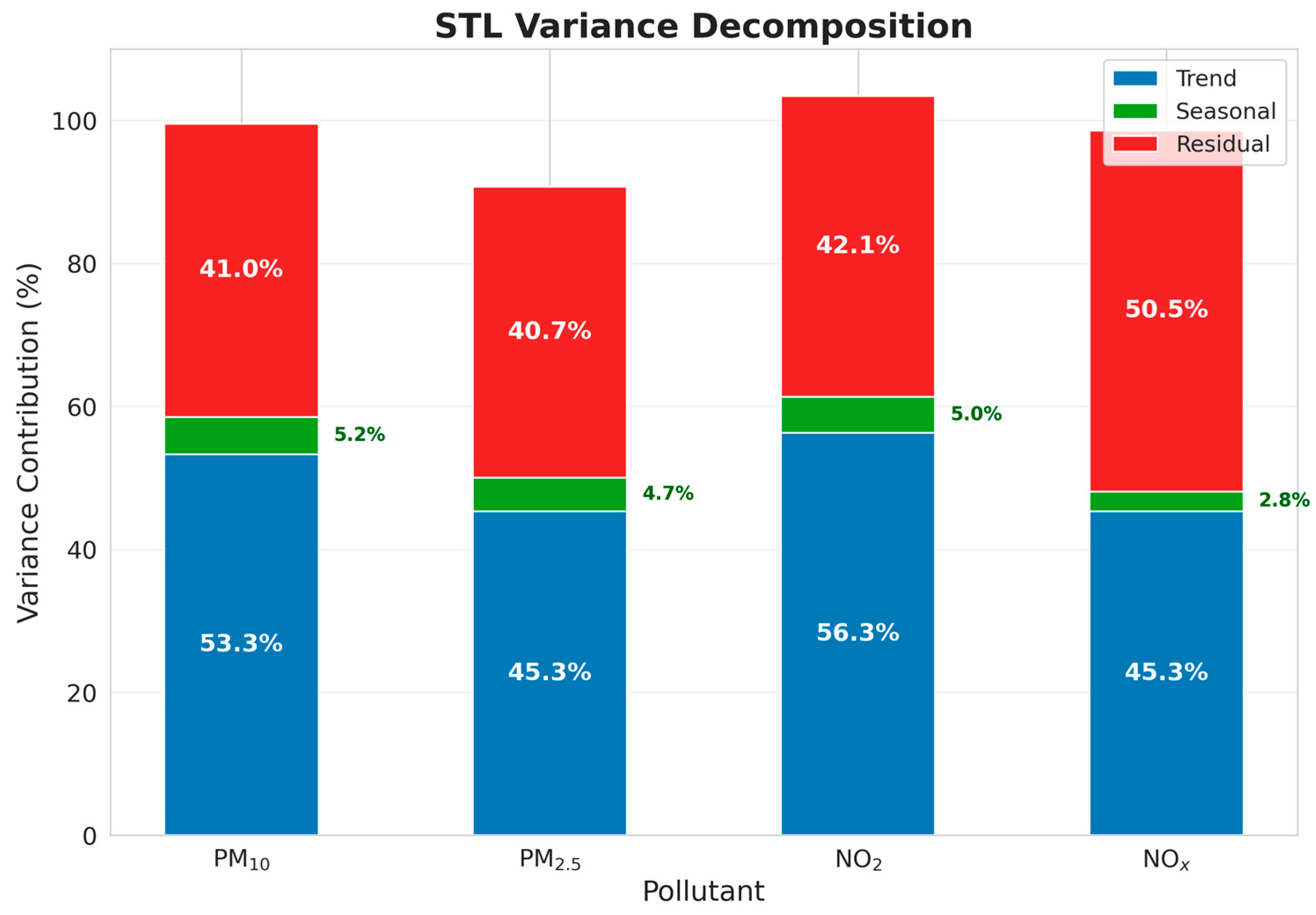
4.4. Temporal Decomposition (STL Analysis)
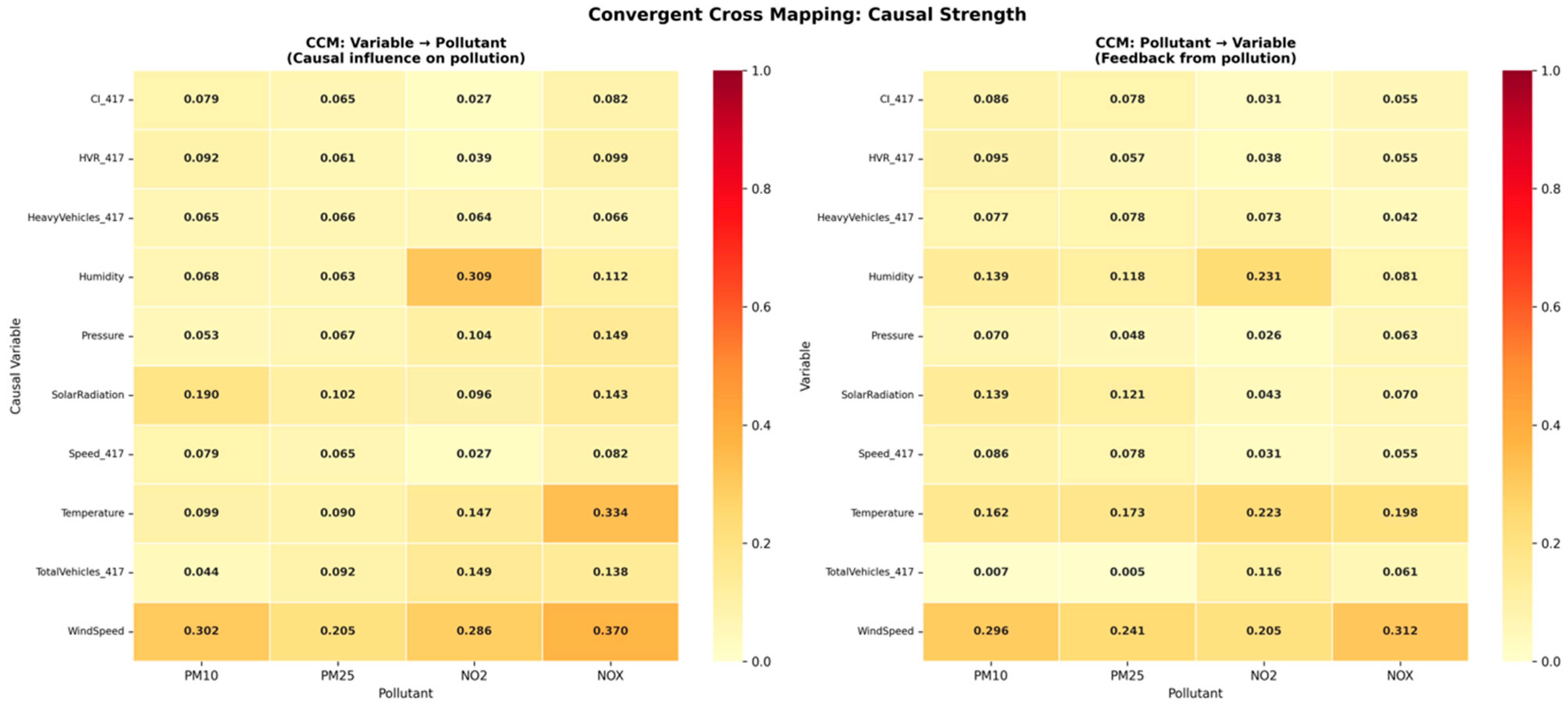
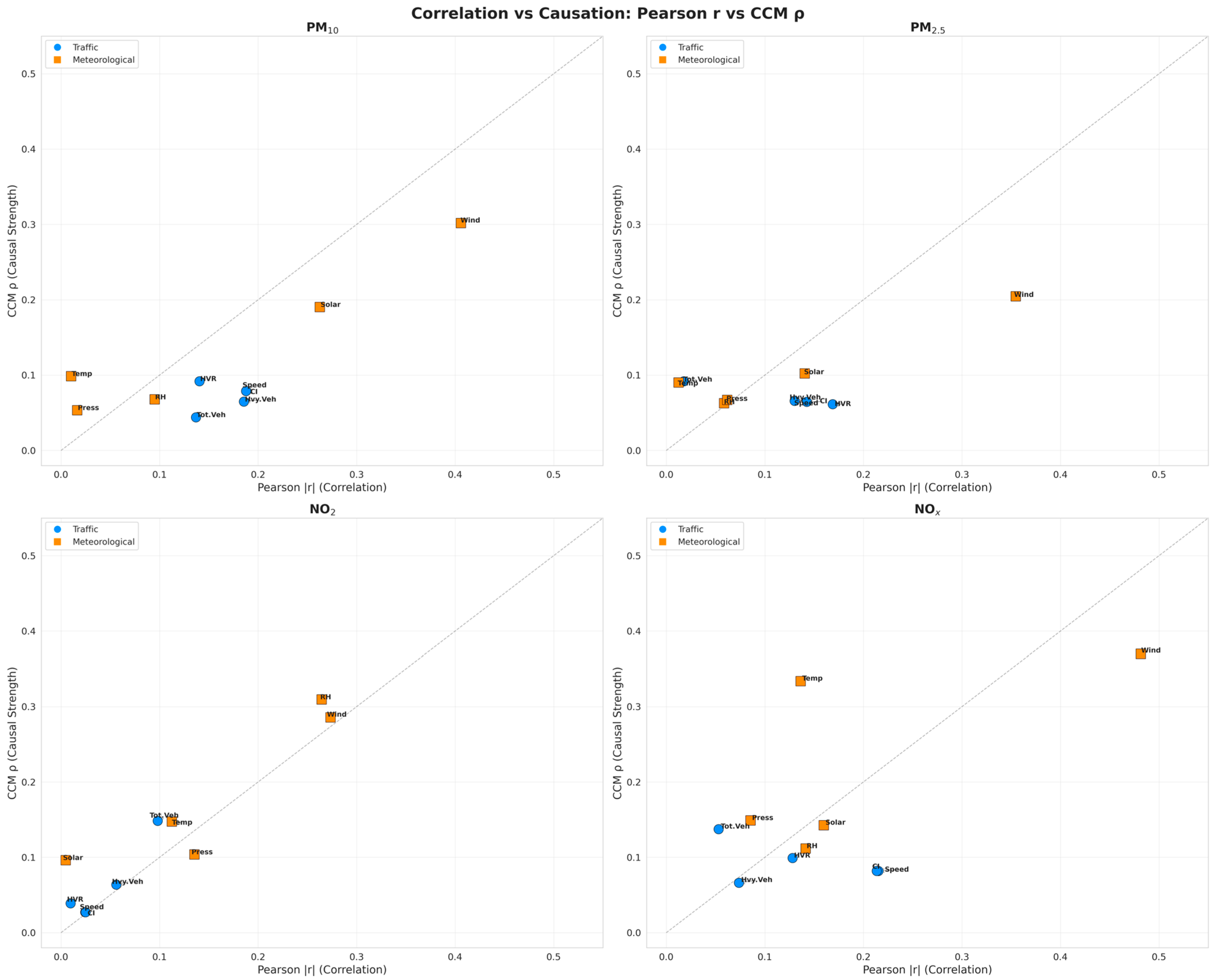
4.5. Causal Inference: Convergent Cross-Mapping (CCM)
5. Conclusions
Supplementary Materials
Author Contributions
Funding
Institutional Review Board Statement
Informed Consent Statement
Data Availability Statement
Acknowledgments
Conflicts of Interest
References
- WHO. WHO Global Air Quality Guidelines: Particulate Matter (PM2.5 and PM10), Ozone, Nitrogen Dioxide, Sulfur Dioxide and Carbon Monoxide; World Health Organization: Geneva, Switzerland, 2021. [Google Scholar]
- Braithwaite, I.; Zhang, S.; Kirkbride, J.B.; Osborn, D.P.; Hayes, J.F. Air Pollution (Particulate Matter) Exposure and Associations with Depression, Anxiety, Bipolar, Psychosis and Suicide Risk: A Systematic Review and Meta-Analysis. Environ. Health Perspect. 2019, 127, 126002. [Google Scholar] [CrossRef]
- Guerreiro, C.B.; Foltescu, V.; De Leeuw, F. Air Quality Status and Trends in Europe. Atmos. Environ. 2014, 98, 376–384. [Google Scholar] [CrossRef]
- Karagulian, F.; Belis, C.A.; Dora, C.F.C.; Prüss-Ustün, A.M.; Bonjour, S.; Adair-Rohani, H.; Amann, M. Contributions to Cities’ Ambient Particulate Matter (PM): A Systematic Review of Local Source Contributions at Global Level. Atmos. Environ. 2015, 120, 475–483. [Google Scholar] [CrossRef]
- Amato, F.; Cassee, F.R.; Van Der Gon, H.A.D.; Gehrig, R.; Gustafsson, M.; Hafner, W.; Harrison, R.M.; Jozwicka, M.; Kelly, F.J.; Moreno, T.; et al. Urban Air Quality: The Challenge of Traffic Non-Exhaust Emissions. J. Hazard. Mater. 2014, 275, 31–36. [Google Scholar] [CrossRef]
- Zhang, K.; Batterman, S. Air Pollution and Health Risks Due to Vehicle Traffic. Sci. Total Environ. 2013, 450, 307–316. [Google Scholar] [CrossRef] [PubMed]
- Lu, C.; Dong, S.; Huang, S.; Zheng, H.; Liu, J.; Li, J.; Yu, L. Real-Traffic Emissions of CO, NOX, CO2, and PM2.5 from Vehicles Using a Portable Emission Measurement System. Air Qual. Atmos. Health 2025, 18, 2265–2276. [Google Scholar] [CrossRef]
- Liang, M.; Chao, Y.; Tu, Y.; Xu, T. Vehicle Pollutant Dispersion in the Urban Atmospheric Environment: A Review of Mechanism, Modeling, and Application. Atmosphere 2023, 14, 279. [Google Scholar] [CrossRef]
- Qiu, M.; Zigler, C.; Selin, N.E. Statistical and Machine Learning Methods for Evaluating Trends in Air Quality under Changing Meteorological Conditions. Atmos. Chem. Phys. 2022, 22, 10551–10566. [Google Scholar] [CrossRef]
- Singh, S.; Kumar, M.; Sengar, V.; Nagar, H.; Kumar, A.; Mishra, J. Ensemble Learning for Air Quality Index Prediction: Integrating Gradient Boosting, XGBoost, and Stacking with SHAP-Based Interpretability. Sci. Rep. 2026, 16, 8544. [Google Scholar] [CrossRef]
- Molnar, C.; Casalicchio, G.; Bischl, B. Interpretable Machine Learning—A Brief History, State-of-the-Art and Challenges. In ECML PKDD 2020 Workshops; Koprinska, I., Kamp, M., Appice, A., Eds.; Springer International Publishing: Cham, Switzerland, 2020; pp. 417–431. [Google Scholar] [CrossRef]
- Rudin, C. Stop Explaining Black Box Machine Learning Models for High Stakes Decisions and Use Interpretable Models Instead. Nat. Mach. Intell. 2019, 1, 206–215. [Google Scholar] [CrossRef] [PubMed]
- Ribeiro, M.T.; Singh, S.; Guestrin, C. “Why Should I Trust You?”: Explaining the Predictions of Any Classifier. In Proceedings of the 22nd ACM SIGKDD International Conference on Knowledge Discovery and Data Mining, San Francisco, CA, USA, 13–17 August 2016; pp. 1135–1144. [Google Scholar] [CrossRef]
- Friedman, J.H. Greedy Function Approximation: A Gradient Boosting Machine. Ann. Stat. 2001, 29, 1189–1232. [Google Scholar] [CrossRef]
- Apley, D.W.; Zhu, J. Visualizing the Effects of Predictor Variables in Black Box Supervised Learning Models. J. R. Stat. Soc. Ser. B Stat. Methodol. 2020, 82, 1059–1086. [Google Scholar] [CrossRef]
- Lundberg, S.M.; Lee, S.I. A Unified Approach to Interpreting Model Predictions. In Advances in Neural Information Processing Systems; Curran Associates, Inc.: Red Hook, NY, USA, 2017; Volume 30. [Google Scholar]
- Birinci, E.; Ekmekcioğlu, Ö.; Ozdemir, H.; Deniz, A. Interpretable Machine Learning Framework for Air Quality Prediction in Istanbul Using Shapley Additive Explanations (SHAP). Stoch. Environ. Res. Risk Assess. 2026, 40, 37. [Google Scholar] [CrossRef]
- Aram, S.A.; Nketiah, E.A.; Saalidong, B.M.; Lartey, P.O.; Kansake, B.A.; Asamoah, G.A. Machine Learning-Based Prediction of Air Quality Index and Air Quality Grade: A Comparative Analysis. Int. J. Environ. Sci. Technol. 2024, 21, 1345–1360. [Google Scholar] [CrossRef]
- Natarajan, S.K.; Shanmurthy, P.; Arockiam, D.; Daniel, A.; Ganesan, R. Optimized Machine Learning Model for Air Quality Index Prediction in Major Cities in India. Sci. Rep. 2024, 14, 6795. [Google Scholar] [CrossRef]
- Alvarado-Molina, M.; Curto, A.; Wheeler, A.J.; Tham, R.; Cerin, E.; Nieuwenhuijsen, M.; Donaire-Gonzalez, D. Improving Traffic-Related Air Pollution Estimates by Modelling Minor Road Traffic Volumes. Environ. Pollut. 2023, 338, 122657. [Google Scholar] [CrossRef] [PubMed]
- Marino, C.; Nucara, A.; Panzera, M.F.; Pietrafesa, M. Assessment of the Road Traffic Air Pollution in Urban Contexts: A Statistical Approach. Sustainability 2022, 14, 4127. [Google Scholar] [CrossRef]
- Houdou, A.; El Badisy, I.; Khomsi, K.; Moussafir, M.; Ahmedou, S.O. Interpretable Machine Learning Approaches for Forecasting and Predicting Air Pollution: A Systematic Review. Aerosol Air Qual. Res. 2024, 24, 230151. [Google Scholar] [CrossRef]
- Gilik, A.; Ogrenci, A.S.; Ozmen, A. Air Quality Prediction Using CNN+LSTM-Based Hybrid Deep Learning Architecture. Environ. Sci. Pollut. Res. 2022, 29, 11920–11938. [Google Scholar] [CrossRef]
- Akiner, M.E.; Katipoğlu, O.M.; Çintaş, E. Predicting Air Quality Index in Başakşehir, Istanbul with Hybrid AI Models: Unveiling Key Drivers through CatBoost-Based SHAP and Feature Importance Analysis. Theor. Appl. Climatol. 2025, 156, 422. [Google Scholar] [CrossRef]
- Birinci, E.; Deniz, A.; Özdemir, E.T. The Relationship between PM10 and Meteorological Variables in the Mega City Istanbul. Environ. Monit. Assess. 2023, 195, 304. [Google Scholar] [CrossRef]
- Birinci, E.; Denizoğlu, M.; Özdemir, H.; Deniz, A. The Role of Meteorological Variables and Cloud Base Heights in Urban Air Quality. Air Qual. Atmos. Health 2025, 18, 3381–3396. [Google Scholar] [CrossRef]
- Yao, T.; Lu, S.; Wang, Y.; Li, X.; Ye, H.; Duan, Y.; Li, J. Revealing the Drivers of Surface Ozone Pollution by Explainable Machine Learning and Satellite Observations in Hangzhou Bay, China. J. Clean. Prod. 2024, 440, 140938. [Google Scholar] [CrossRef]
- Aman, N.; Panyametheekul, S.; Pawarmart, I.; Liu, Y.; Rattanapotanan, T.; Tia, W. Machine Learning-Based Quantification and Separation of Emissions and Meteorological Effects on PM2.5 in Greater Bangkok. Sci. Rep. 2025, 15, 14775. [Google Scholar] [CrossRef]
- Wong, P.Y.; Su, H.J.; Lung, S.C.C.; Liu, W.Y.; Tseng, H.T.; Adamkiewicz, G.; Wu, C.D. Explainable Geospatial-Artificial Intelligence Models for the Estimation of PM2.5 Concentration Variation during Commuting Rush Hours in Taiwan. Environ. Pollut. 2024, 349, 123974. [Google Scholar] [CrossRef]
- Mohapatra, E.; Das, M.; Rath, S. Deep Learning-Based AQI Forecasting: A CNN-LSTM Model with Visual Insights from SHAP-LIME and PDP. Discov. Appl. Sci. 2025, 7, 1326. [Google Scholar] [CrossRef]
- Stekhoven, D.J.; Bühlmann, P. MissForest—Non-Parametric Missing Value Imputation for Mixed-Type Data. Bioinformatics 2012, 28, 112–118. [Google Scholar] [CrossRef]
- Junger, W.L.; De Leon, A.P. Imputation of Missing Data in Time Series for Air Pollutants. Atmos. Environ. 2015, 102, 96–104. [Google Scholar] [CrossRef]
- Dongre, P.K.; Patel, V.; Bhoi, U.; Maltare, N.N. An Outlier Detection Framework for Air Quality Index Prediction Using Linear and Ensemble Models. Decis. Anal. J. 2025, 14, 100546. [Google Scholar] [CrossRef]
- Parra-Plazas, J.; Gaona-Garcia, P.; Plazas-Nossa, L. Time Series Outlier Removal and Imputing Methods Based on Colombian Weather Stations Data. Environ. Sci. Pollut. Res. 2023, 30, 72319–72335. [Google Scholar] [CrossRef]
- Kousoulidou, M.; Ntziachristos, L.; Mellios, G.; Samaras, Z. Road-Transport Emission Projections to 2020 in European Urban Environments. Atmos. Environ. 2008, 42, 7465–7475. [Google Scholar] [CrossRef]
- Seinfeld, J.H.; Pandis, S.N. Atmospheric Chemistry and Physics: From Air Pollution to Climate Change, 3rd ed.; John Wiley & Sons: Hoboken, NJ, USA, 2016. [Google Scholar]
- Kumar, V.; Agrawal, A.; Kedam, N.; Gupta, S.; Singh, P. Advancing Air Quality Prediction with Hyperparameter Optimization and Innovative Feature Analysis Using Deep Learning Models in Phoenix, Arizona, USA. Theor. Appl. Climatol. 2026, 157, 60. [Google Scholar] [CrossRef]
- Li, J.; An, X.; Li, Q.; Wang, C.; Yu, H.; Zhou, X.; Geng, Y.A. Application of XGBoost Algorithm in the Optimization of Pollutant Concentration. Atmos. Res. 2022, 276, 106238. [Google Scholar] [CrossRef]
- Chen, T.; Guestrin, C. XGBoost: A Scalable Tree Boosting System. In Proceedings of the 22nd ACM SIGKDD International Conference on Knowledge Discovery and Data Mining, San Francisco, CA, USA, 13–17 August 2016; pp. 785–794. [Google Scholar] [CrossRef]
- Bergstra, J.; Bardenet, R.; Bengio, Y.; Kégl, B. Algorithms for Hyper-Parameter Optimization. In Advances in Neural Information Processing Systems; Curran Associates, Inc.: Red Hook, NY, USA, 2011; Volume 24. [Google Scholar]
- Ayus, I.; Natarajan, N.; Gupta, D. Comparison of Machine Learning and Deep Learning Techniques for the Prediction of Air Pollution: A Case Study from China. Asian J. Atmos. Environ. 2023, 17, 4. [Google Scholar] [CrossRef]
- Ke, G.; Meng, Q.; Finley, T.; Wang, T.; Chen, W.; Ma, W.; Ye, Q.; Liu, T.Y. LightGBM: A Highly Efficient Gradient Boosting Decision Tree. In Advances in Neural Information Processing Systems; Curran Associates, Inc.: Red Hook, NY, USA, 2017; Volume 30. [Google Scholar]
- Zhong, J.; Zhang, X.; Gui, K.; Wang, Y.; Che, H.; Shen, X.; Zhang, L.; Zhang, Y.; Sun, J.; Zhang, W. Robust Prediction of Hourly PM2.5 from Meteorological Data Using LightGBM. Natl. Sci. Rev. 2021, 8, nwaa307. [Google Scholar] [CrossRef] [PubMed]
- Prokhorenkova, L.; Gusev, G.; Vorobev, A.; Dorogush, A.V.; Gulin, A. CatBoost: Unbiased Boosting with Categorical Features. In Advances in Neural Information Processing Systems; Curran Associates, Inc.: Red Hook, NY, USA, 2018; Volume 31. [Google Scholar]
- Breiman, L. Random Forests. Mach. Learn. 2001, 45, 5–32. [Google Scholar] [CrossRef]
- Vovk, T.; Kryza, M.; Werner, M. Using Random Forest to Improve EMEP4PL Model Estimates of Daily PM2.5 in Poland. Atmos. Environ. 2024, 332, 120615. [Google Scholar] [CrossRef]
- Hochreiter, S.; Schmidhuber, J. Long Short-Term Memory. Neural Comput. 1997, 9, 1735–1780. [Google Scholar] [CrossRef]
- Zhou, S.; Wang, W.; Zhu, L.; Qiao, Q.; Kang, Y. Deep-Learning Architecture for PM2.5 Concentration Prediction: A Review. Environ. Sci. Ecotechnol. 2024, 21, 100400. [Google Scholar] [CrossRef]
- Lundberg, S.M.; Erion, G.; Chen, H.; DeGrave, A.; Prutkin, J.M.; Nair, B.; Katz, R.; Himmelfarb, J.; Bansal, N.; Lee, S.I. From Local Explanations to Global Understanding with Explainable AI for Trees. Nat. Mach. Intell. 2020, 2, 56–67. [Google Scholar] [CrossRef]
- Salih, A.M.; Raisi-Estabragh, Z.; Galazzo, I.B.; Radeva, P.; Petersen, S.E.; Lekadir, K.; Menegaz, G. A Perspective on Explainable Artificial Intelligence Methods: SHAP and LIME. Adv. Intell. Syst. 2025, 7, 2400304. [Google Scholar] [CrossRef]
- Cleveland, R.B.; Cleveland, W.S.; McRae, J.E.; Terpenning, I.J. STL: A Seasonal-Trend Decomposition Procedure Based on Loess. J. Off. Stat. 1990, 6, 3–73. [Google Scholar]
- Yin, H.; Jin, D.; Hong, H.; Moon, J.; Gu, Y.H. IAQ-STL-ML: A Novel Indoor Air Quality Prediction Pipeline Using Meta-Learning Framework with STL Decomposition. Environ. Technol. Innov. 2025, 38, 104107. [Google Scholar] [CrossRef]
- Başakın, E.E.; Ekmekcioğlu, Ö.; Stoy, P.C.; Özger, M. Estimation of Daily Reference Evapotranspiration by Hybrid Singular Spectrum Analysis-Based Stochastic Gradient Boosting. MethodsX 2023, 10, 102163. [Google Scholar] [CrossRef]
- Sugihara, G.; May, R.; Ye, H.; Hsieh, C.H.; Deyle, E.; Fogarty, M.; Munch, S. Detecting Causality in Complex Ecosystems. Science 2012, 338, 496–500. [Google Scholar] [CrossRef]
- Chai, T.; Draxler, R.R. Root Mean Square Error (RMSE) or Mean Absolute Error (MAE)?–Arguments against Avoiding RMSE in the Literature. Geosci. Model Dev. 2014, 7, 1247–1250. [Google Scholar] [CrossRef]
- Kendrick, C.M.; Koonce, P.; George, L.A. Diurnal and Seasonal Variations of NO, NO2 and PM2.5 Mass as a Function of Traffic Volumes alongside an Urban Arterial. Atmos. Environ. 2015, 122, 133–141. [Google Scholar] [CrossRef]
- Rowland, O.E. Comparative Analysis of Meteorological Parameters and Their Relationship with NO2, PM10, PM2.5 and O3 Concentrations at Selected Urban Air Quality Monitoring Stations in Krakow, Paris, and Milan. Discov. Environ. 2024, 2, 75. [Google Scholar] [CrossRef]
- Wójcik-Gront, E.; Gozdowski, D. Air Pollution Monitoring and Modeling: A Comparative Study of PM, NO2, and SO2 with Meteorological Correlations. Atmosphere 2025, 16, 1199. [Google Scholar] [CrossRef]
- Hou, Y.; Wang, Q.; Tan, T. Evaluating Drivers of PM2.5 Air Pollution at Urban Scales Using Interpretable Machine Learning. Waste Manag. 2025, 192, 114–124. [Google Scholar] [CrossRef] [PubMed]
- Yin, C.; Li, W.; Li, T.; Zhang, S.; Zhu, Y.; Liu, J. Air Quality Prediction Model Based on Deep Learning Hybrid Framework. Sci. Rep. 2026, 16, 7084. [Google Scholar] [CrossRef]
- Martinović, M.; Dokic, K.; Pudić, D. Comparative Analysis of Machine Learning Models for Predicting Innovation Outcomes: An Applied AI Approach. Appl. Sci. 2025, 15, 3636. [Google Scholar] [CrossRef]
- Petrić, V.; Hussain, H.; Časni, K.; Vuckovic, M.; Schopper, A.; Andrijić, Ž.U.; Lovrić, M. Ensemble Machine Learning, Deep Learning, and Time Series Forecasting: Improving Prediction Accuracy for Hourly Concentrations of Ambient Air Pollutants. Aerosol Air Qual. Res. 2024, 24, 230317. [Google Scholar] [CrossRef]
- Zhalehdoost, A.; Taleai, M. Unravelling the Importance of Spatial and Temporal Resolutions in Modeling Urban Air Pollution Using a Machine Learning Approach. Sci. Rep. 2025, 15, 27708. [Google Scholar] [CrossRef] [PubMed]
- Yang, J.; Shi, L.; Lee, J.; Ryu, I. Spatiotemporal Prediction of Particulate Matter Concentration Based on Traffic and Meteorological Data. Transp. Res. Part D Transp. Environ. 2024, 127, 104070. [Google Scholar] [CrossRef]
- Ma, G.; Xu, K.; Zhang, Y.; Zhang, L.; Chen, Z. A Novel Deep Learning Model for Air Quality Index Prediction Integrating Time Series Decomposition and Intelligent Optimization. Results Eng. 2025, 27, 106078. [Google Scholar] [CrossRef]
- Li, W.; Jiang, X. Prediction of Air Pollutant Concentrations Based on TCN-BiLSTM-DMAttention with STL Decomposition. Sci. Rep. 2023, 13, 4665. [Google Scholar] [CrossRef]
- Zhang, Q.; Fang, T.; Yin, J.; Men, Z.; Peng, J.; Wu, L.; Mao, H. Vehicle Non-Exhaust Emissions Significantly Contribute to Urban PM Pollution in New Energy Vehicles Era. J. Geophys. Res. Atmos. 2025, 130, e2024JD042126. [Google Scholar] [CrossRef]
- Boddu, Y.; Manimaran, A.; Arunkumar, B.; Sucharitha, M.; Babu, J.S. Advanced Air Quality Forecasting Using an Enhanced Temporal Attention-Driven Graph Convolutional Long Short-Term Memory Model with Seasonal-Trend Decomposition. IEEE Access 2024, 12, 189233–189252. [Google Scholar] [CrossRef]
- Sun, M.; Rao, C.; Hu, Z. Air Quality Prediction Using a Novel Three-Stage Model Based on Time Series Decomposition. Environ. Dev. Sustain. 2026, 28, 307–332. [Google Scholar] [CrossRef]
- Levi, Y.; Broday, D.M. Revealing Causality in the Associations between Meteorological Variables and Air Pollutant Concentrations. Environ. Pollut. 2024, 345, 123526. [Google Scholar] [CrossRef] [PubMed]
- Ansari, A.; Quaff, A.R. Comparative benchmarking of eleven machine learning regressors for daily air quality index (AQI) forecasting: Sensitivity analysis and SHapley Additive exPlanations (SHAP)-Based interpretability framework. Theor. Appl. Climatol. 2025, 156, 620. [Google Scholar] [CrossRef]
- Aman, N.; Panyametheekul, S.; Pawarmart, I.; Sudhibrabha, S.; Manomaiphiboon, K. A Visibility-Based Historical PM2.5 Estimation for Four Decades (1981–2022) Using Machine Learning in Thailand: Trends, Meteorological Normalization, and Influencing Factors Using SHAP Analysis. Aerosol Air Qual. Res. 2025, 25, 4. [Google Scholar] [CrossRef]
- Zaib, S.; Shahid, M.Z.; Shahid, I. Decadal air quality dynamics in the Yangtze River Delta: Evidence from machine learning–driven analysis. Air Qual. Atmos. Health 2026, 19, 64. [Google Scholar] [CrossRef]


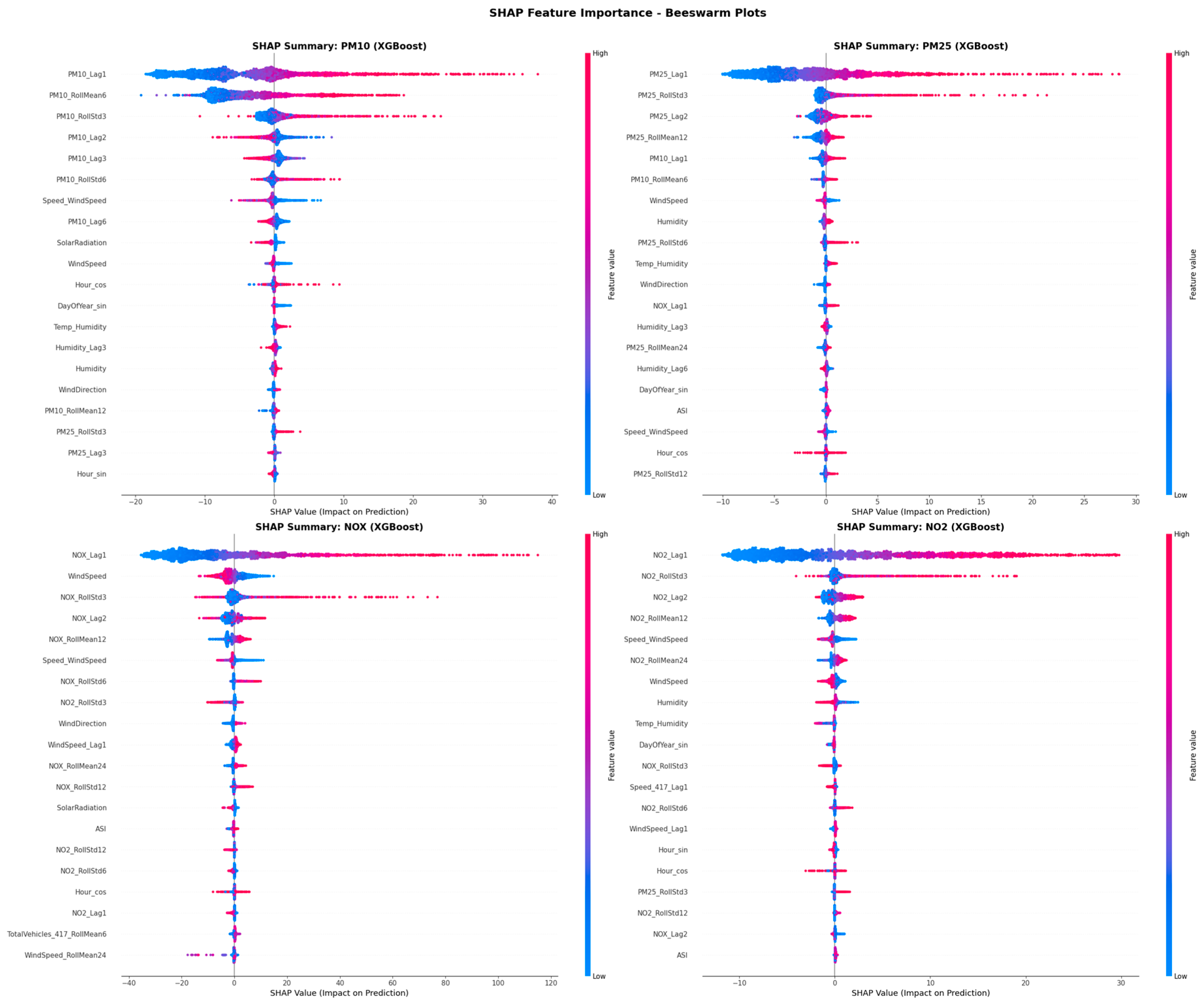
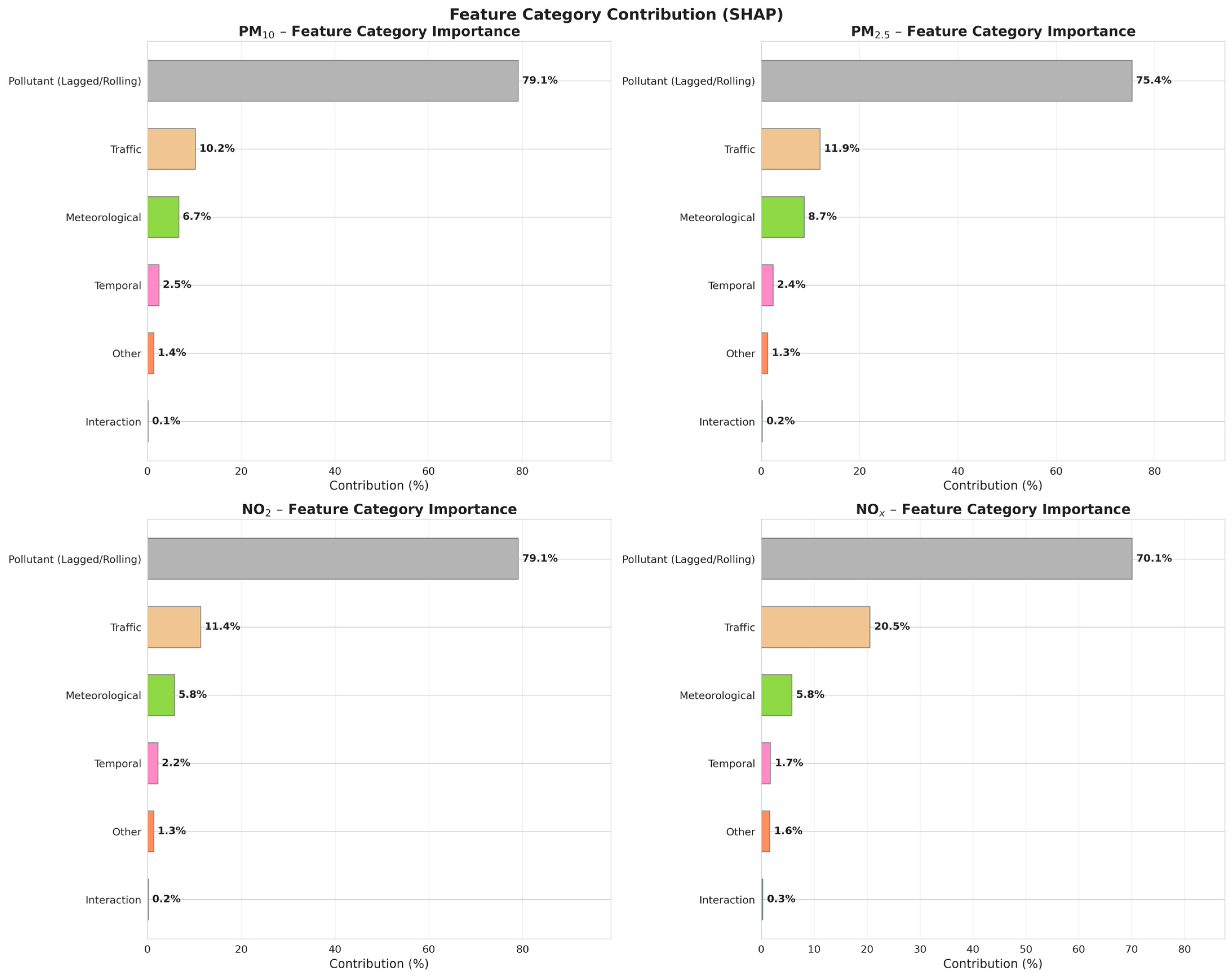



| Variable | Mean | Median | Std | Min | Max | Q1 | Q3 | Missing (%) | Skewness | Kurtosis |
|---|---|---|---|---|---|---|---|---|---|---|
| NO2 (µg/m3) | 18.13 | 14.90 | 12.85 | 0.50 | 116.60 | 9.10 | 23.80 | 22.11 | 1.68 | 4.14 |
| NOX (µg/m3) | 52.20 | 41.90 | 41.36 | 1.20 | 606.90 | 21.80 | 70.50 | 22.51 | 2.22 | 10.15 |
| PM10 (µg/m3) | 31.06 | 25.70 | 23.91 | 0.10 | 246.30 | 14.00 | 41.00 | 3.27 | 1.88 | 6.56 |
| PM2.5 (µg/m3) | 15.44 | 12.60 | 11.41 | 0.10 | 112.70 | 7.20 | 20.80 | 3.21 | 1.58 | 3.78 |
| Solar Radiation (W/m2) | 160.83 | 10.90 | 240.46 | 0.00 | 966.10 | 0.00 | 258.15 | 5.50 | 1.46 | 0.90 |
| Pressure (hPa) | 1015.92 | 1015.00 | 6.32 | 998.30 | 1037.00 | 1011.50 | 1019.20 | 5.50 | 0.59 | 0.41 |
| Temperature (C) | 15.75 | 16.00 | 7.68 | −4.10 | 38.80 | 9.50 | 22.40 | 5.68 | −0.14 | −0.92 |
| Relative Humidity (%) | 58.52 | 59.00 | 11.95 | 10.20 | 86.00 | 51.50 | 66.60 | 5.50 | −0.40 | 0.40 |
| Wind Speed (m/s) | 2.19 | 2.10 | 1.48 | 0.00 | 8.70 | 1.00 | 3.20 | 5.50 | 0.38 | −0.47 |
| Wind Direction (degree) | 129.07 | 67.50 | 104.08 | 0.00 | 337.50 | 45.00 | 225.00 | 11.39 | 0.66 | −1.10 |
| Precipitation (mm) | 0.92 | 0.00 | 8.11 | 0.00 | 496.40 | 0.00 | 0.00 | 5.50 | 31.72 | 1487.40 |
| Feature | Formula/Definition | Description |
|---|---|---|
| Congestion Index (CI) | CI = Vtotal/(Smean × C) | Traffic density relative to free-flow capacity; C = 1800 veh/h/lane × 6 lanes |
| Heavy Vehicle Ratio (HVR) | HVR = Vlong/Vtotal | Proportion of heavy-duty vehicles in total traffic volume |
| Atmospheric Stability Index (ASI) | Pasquill–Gifford classes (1–6) | Based on wind speed, solar radiation, and time of day (1 = very unstable, 6 = very stable) |
| Hour of day (cyclical) | sin(2πh/24), cos(2πh/24) | Sinusoidal transformation to preserve circular periodicity of hours |
| Day of year (cyclical) | sin(2πd/365), cos(2πd/365) | Sinusoidal transformation to capture seasonal patterns |
| Season | DJF/MAM/JJA/SON | Winter (Dec–Feb), Spring (Mar–May), Summer (Jun–Aug), Autumn (Sep–Nov) |
| Weekend indicator | 1 if Saturday/Sunday, 0 otherwise | Binary indicator for weekday/weekend traffic patterns |
| Public holiday indicator | 1 if Turkish public holiday, 0 otherwise | Binary indicator for national holidays |
| Speed × Wind Speed | Smean × WS | Interaction between traffic speed and wind speed |
| Volume × ASI | Vtotal × ASI | Interaction between traffic volume and atmospheric stability |
| Congestion × Humidity | CI × RH | Interaction between congestion index and relative humidity |
| Lag features (t − k) | x(t − k), k = 1,2,3,6,12,24 | Lagged values of pollutant and meteorological variables |
| Rolling mean | (1/w) Σ x(t − i), w = 3,6,12,24 h | Moving average over 3 h, 6 h, 12 h, and 24 h windows |
| Rolling std | σ(x(t − w + 1)… x(t)), w = 3,6,12,24 h | Moving standard deviation over corresponding windows |
| Model | Pollutant | R2 | RMSE | MAE | MAPE (%) |
|---|---|---|---|---|---|
| XGBoost | PM10 | 0.84 | 7.13 | 4.92 | 32.32 |
| PM2.5 | 0.87 | 3.27 | 2.25 | 26.1 | |
| NO2 | 0.81 | 6.28 | 4.17 | 29.06 | |
| NOX | 0.85 | 15.17 | 8.81 | 20.64 | |
| LightGBM | PM10 | 0.84 | 6.99 | 4.97 | 33.39 |
| PM2.5 | 0.87 | 3.34 | 2.28 | 27.12 | |
| NO2 | 0.8 | 6.43 | 4.18 | 29.22 | |
| NOX | 0.84 | 15.35 | 9.05 | 21.35 | |
| CatBoost | PM10 | 0.84 | 7.18 | 5.19 | 34.74 |
| PM2.5 | 0.88 | 3.2 | 2.22 | 27.8 | |
| NO2 | 0.82 | 6.17 | 4.03 | 28.26 | |
| NOX | 0.87 | 14.29 | 8.43 | 20.4 | |
| Random Forest | PM10 | 0.81 | 7.81 | 5.6 | 35.22 |
| PM2.5 | 0.86 | 3.42 | 2.37 | 27.69 | |
| NO2 | 0.79 | 6.6 | 4.26 | 31.13 | |
| NOX | 0.83 | 15.92 | 9.22 | 22.82 | |
| CNN-LSTM-Att | PM10 | 0.42 | 13.59 | 10.6 | 85.71 |
| PM2.5 | 0.45 | 6.76 | 5.09 | 63.99 | |
| NO2 | 0.37 | 11.46 | 8.41 | 65.75 | |
| NOX | 0.52 | 27.19 | 18.05 | 49.01 |
| Variable | PM10 | PM2.5 | NO2 | NOX |
|---|---|---|---|---|
| Traffic Variables | ||||
| Total Vehicles | 0.044 (→) | 0.092 (→) | 0.149 (→) | 0.138 (→) |
| Speed | 0.079 (←) | 0.065 (←) | 0.027 (←) | 0.082 (→) |
| Heavy Vehicles | 0.065 (←) | 0.066 (←) | 0.064 (←) | 0.066 (→) |
| Congestion Index | 0.079 (←) | 0.065 (←) | 0.027 (←) | 0.082 (→) |
| Heavy Vehicle Ratio | 0.092 (←) | 0.061 (→) | 0.039 (→) | 0.099 (→) |
| Meteorological Variables | ||||
| Temperature | 0.099 (←) | 0.090 (←) | 0.147 (←) | 0.334 (→) |
| Relative Humidity | 0.068 (←) | 0.063 (←) | 0.309 (→) | 0.112 (→) |
| Wind Speed | 0.302 (→) | 0.205 (←) | 0.286 (→) | 0.370 (→) |
| Solar Radiation | 0.190 (→) | 0.102 (←) | 0.096 (→) | 0.143 (→) |
| Pressure | 0.053 (←) | 0.067 (→) | 0.104 (→) | 0.149 (→) |
Disclaimer/Publisher’s Note: The statements, opinions and data contained in all publications are solely those of the individual author(s) and contributor(s) and not of MDPI and/or the editor(s). MDPI and/or the editor(s) disclaim responsibility for any injury to people or property resulting from any ideas, methods, instructions or products referred to in the content. |
© 2026 by the authors. Licensee MDPI, Basel, Switzerland. This article is an open access article distributed under the terms and conditions of the Creative Commons Attribution (CC BY) license.
Share and Cite
Birinci, E.; Özdemir, H.; Deniz, A. Multi-Method Explainable AI Framework for Quantifying Traffic and Meteorological Contributions to Urban Air Pollution: A Case Study of Istanbul’s Bosphorus Bridge Corridor. Atmosphere 2026, 17, 591. https://doi.org/10.3390/atmos17060591
Birinci E, Özdemir H, Deniz A. Multi-Method Explainable AI Framework for Quantifying Traffic and Meteorological Contributions to Urban Air Pollution: A Case Study of Istanbul’s Bosphorus Bridge Corridor. Atmosphere. 2026; 17(6):591. https://doi.org/10.3390/atmos17060591
Chicago/Turabian StyleBirinci, Enes, Hüseyin Özdemir, and Ali Deniz. 2026. "Multi-Method Explainable AI Framework for Quantifying Traffic and Meteorological Contributions to Urban Air Pollution: A Case Study of Istanbul’s Bosphorus Bridge Corridor" Atmosphere 17, no. 6: 591. https://doi.org/10.3390/atmos17060591
APA StyleBirinci, E., Özdemir, H., & Deniz, A. (2026). Multi-Method Explainable AI Framework for Quantifying Traffic and Meteorological Contributions to Urban Air Pollution: A Case Study of Istanbul’s Bosphorus Bridge Corridor. Atmosphere, 17(6), 591. https://doi.org/10.3390/atmos17060591