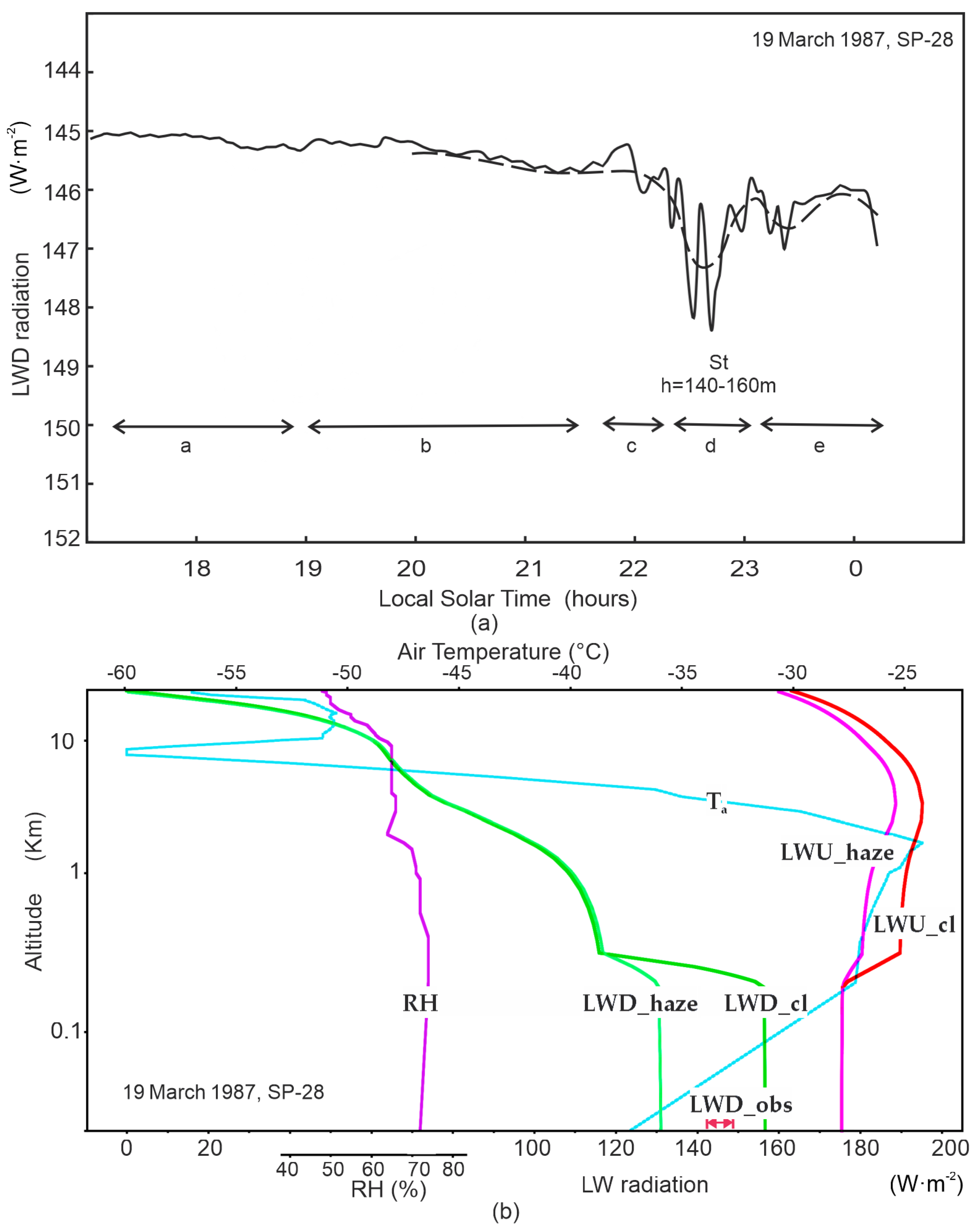
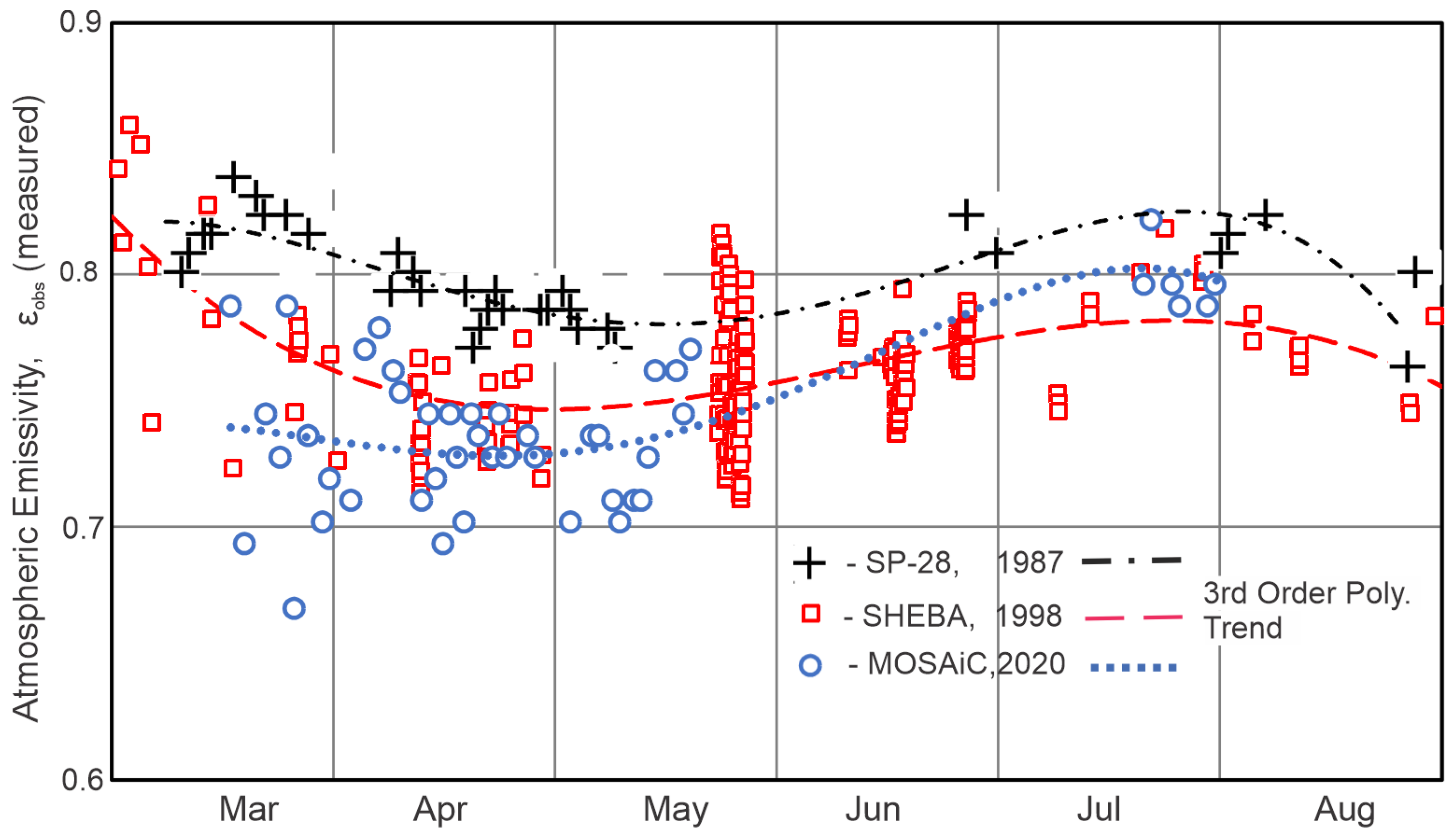
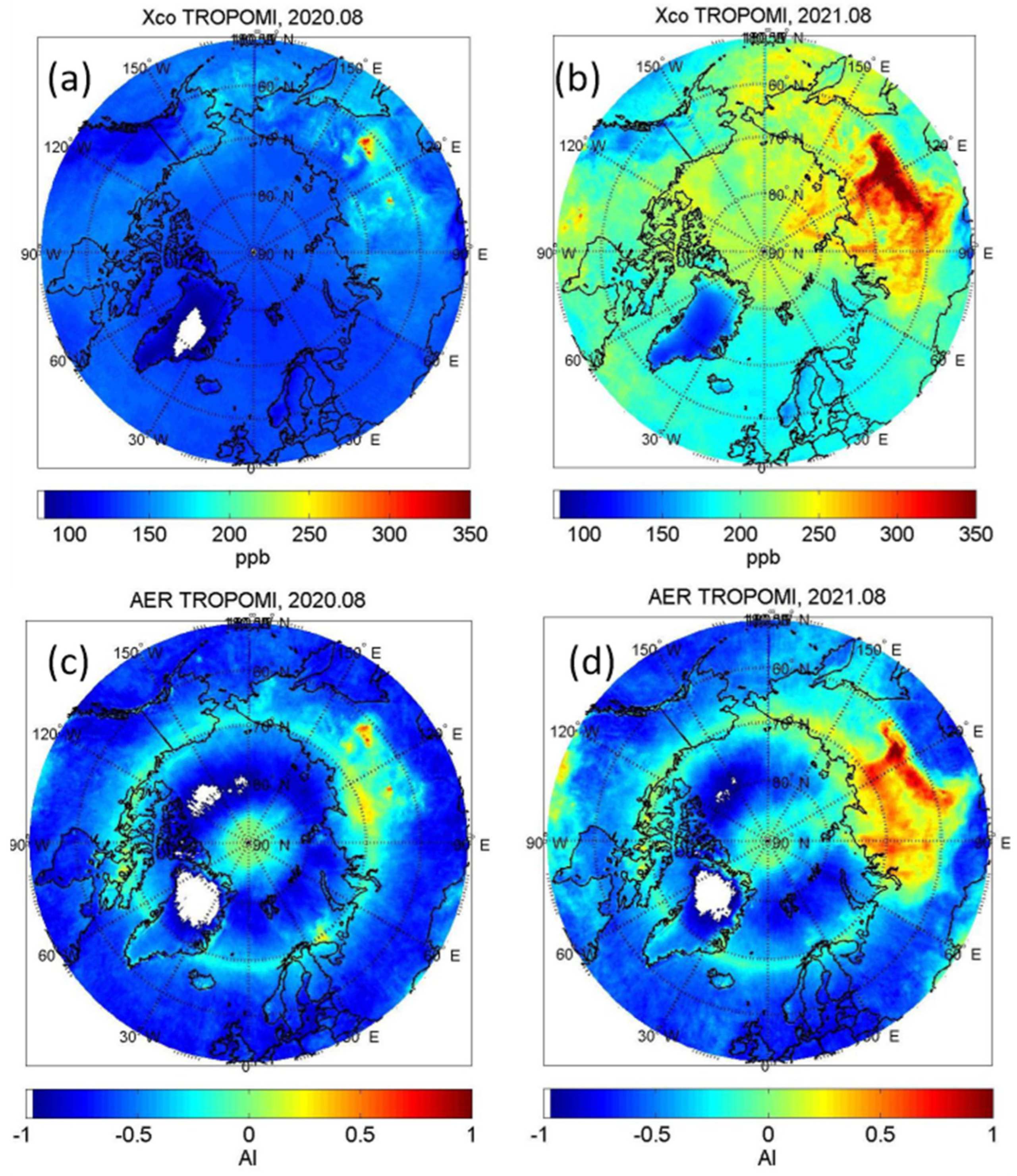
Longwave Radiation Variability in the Arctic: Forty Years of Change Under Reducing Global Anthropogenic SO2 Emissions



Abstract
1. Introduction
2. Materials and Methods
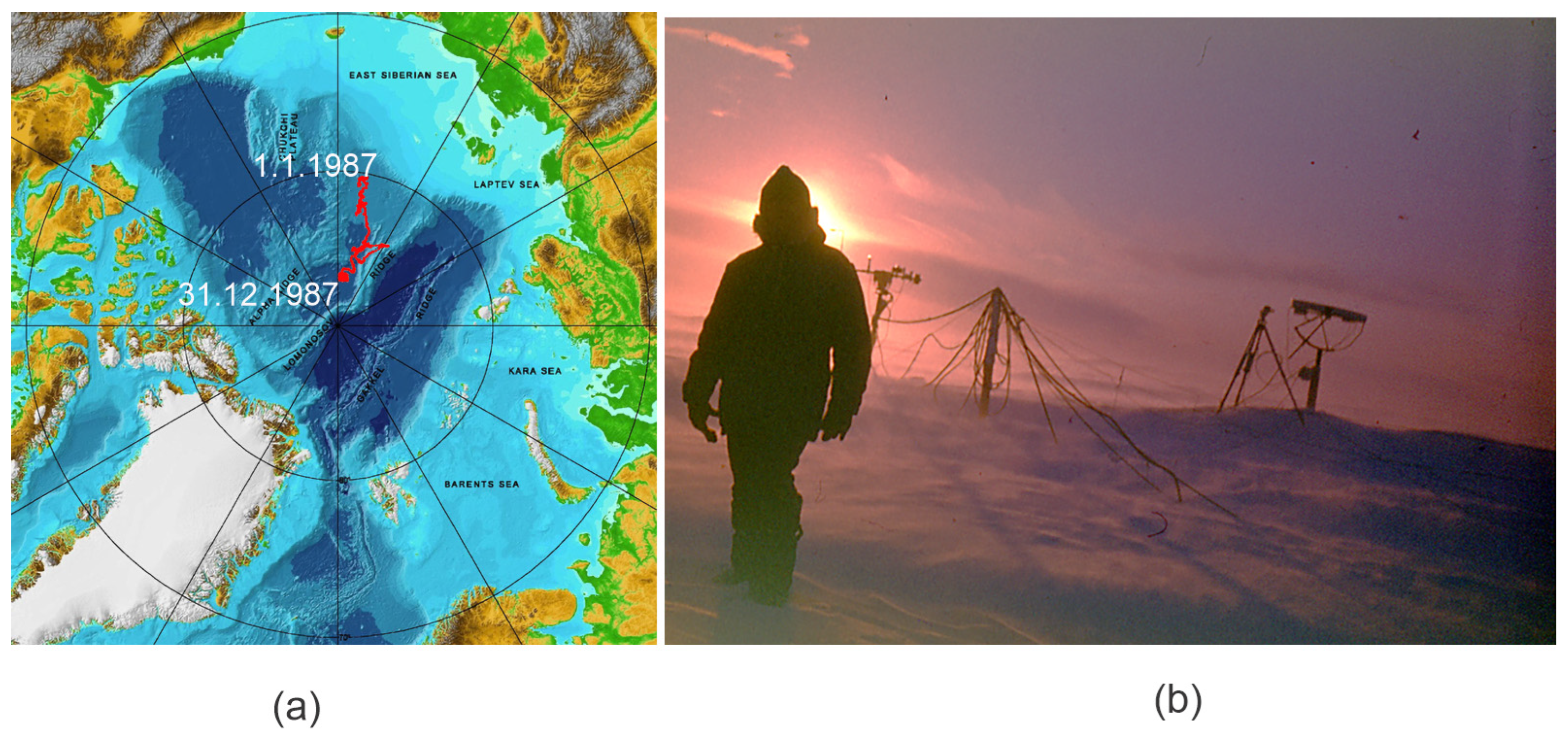
2.1. Mode and Experimental Setup
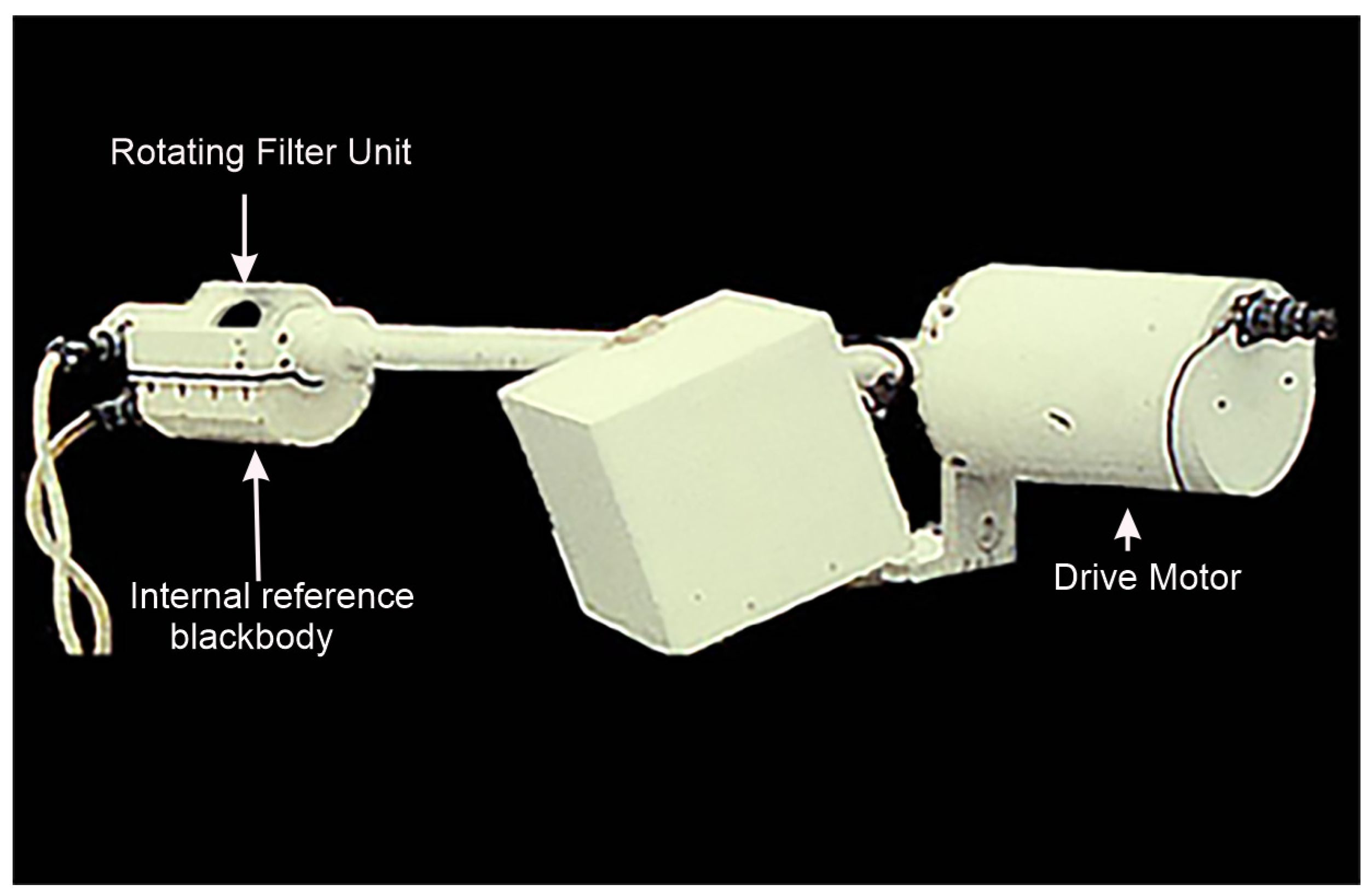
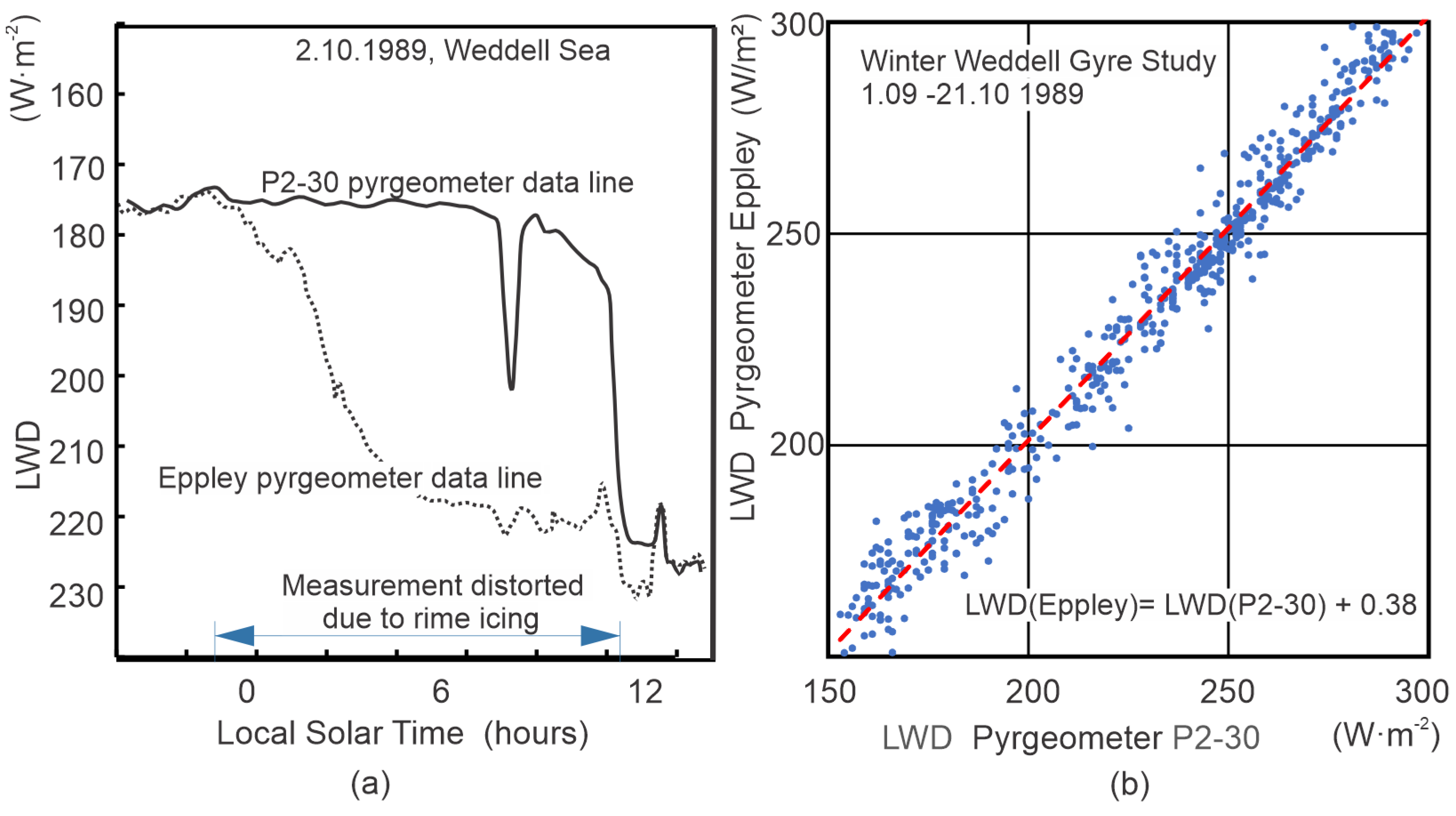
2.2. Radiometric Equipment
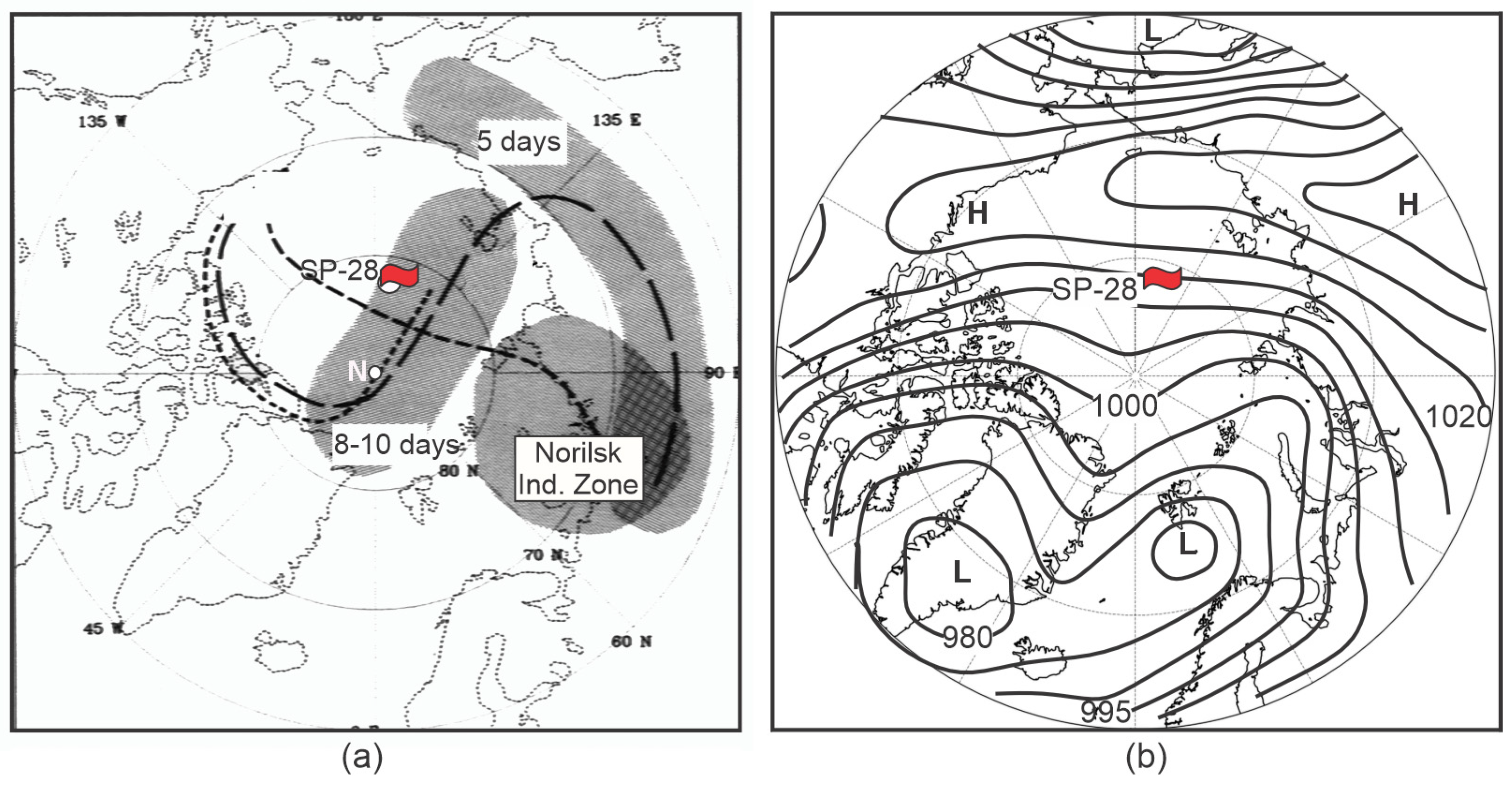
2.3. Method of Arctic Haze Detection
2.4. Approach to Determining the Aerosol Effect
- Eliminates temperature dependence;
- Isolates only the aerosol contribution;
- Has a strict zero limit in aerosol-free conditions;
- Remains dimensionless and universally applicable.
3. Results
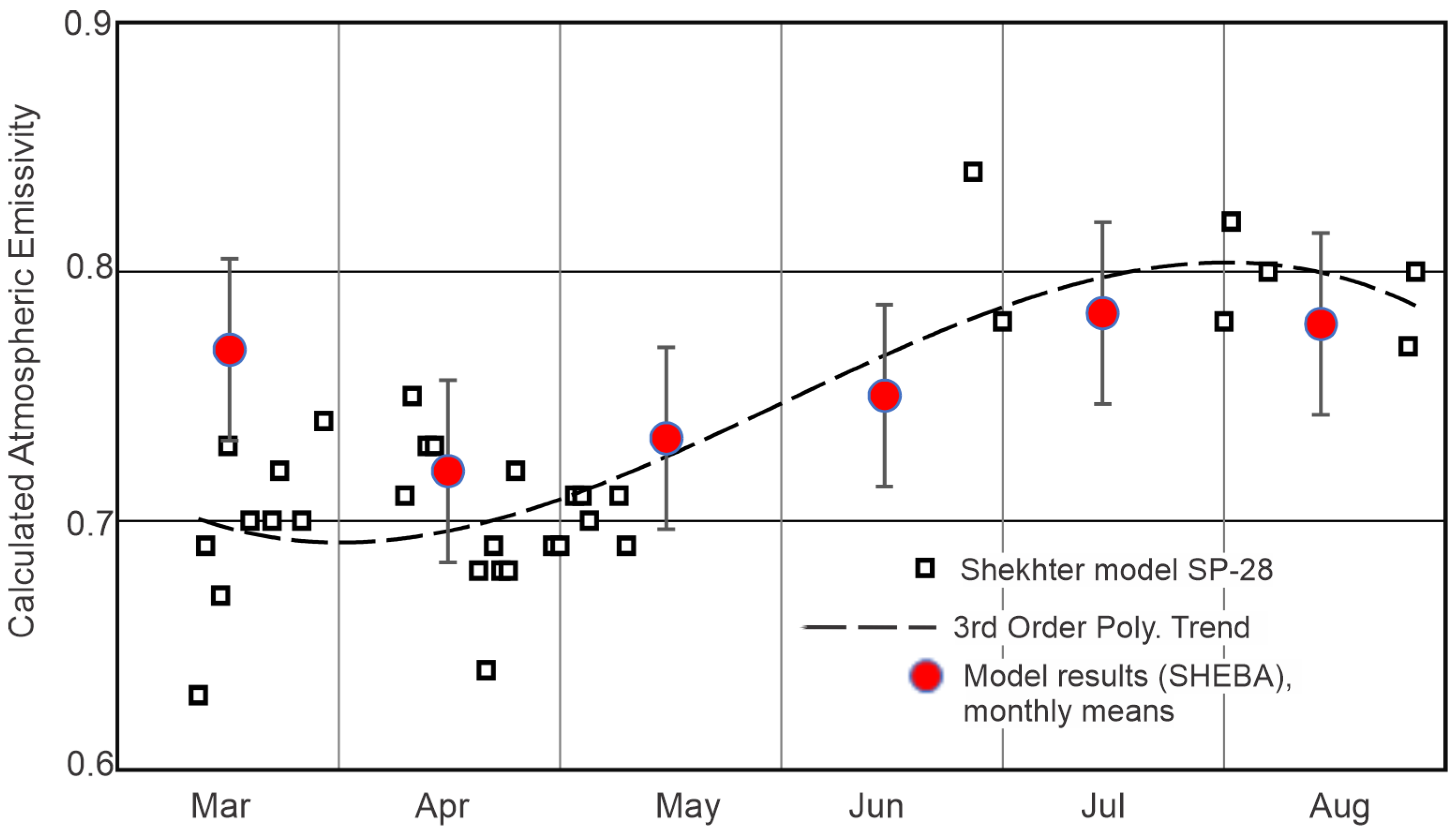
3.1. Seasonal Evolution of Atmospheric Emissivity
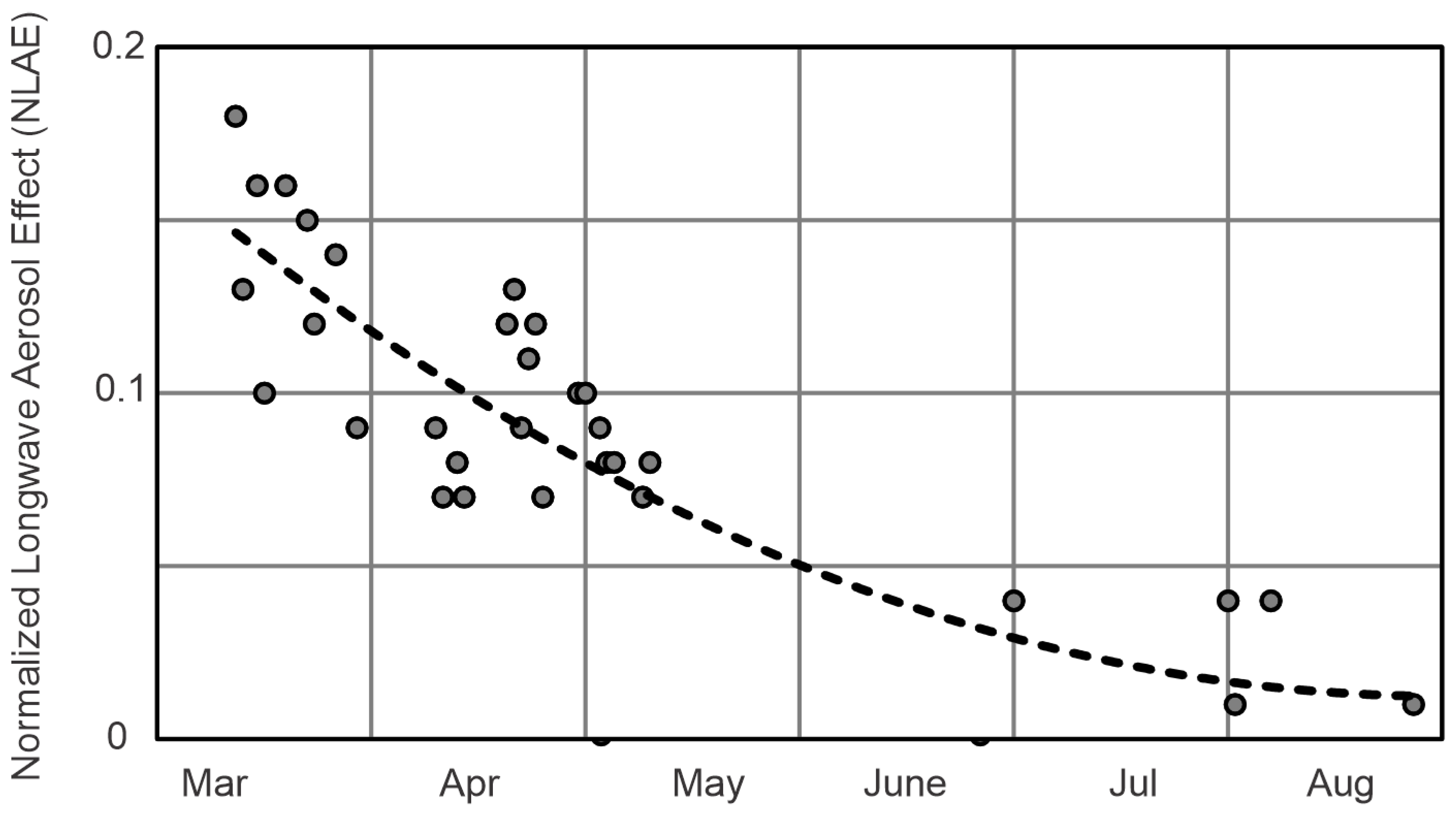
3.2. Normalized Longwave Aerosol Effect (NLAE)
4. Discussion
4.1. Evolution of the Arctic Aerosol Regime over Time
4.2. Changing the Role of Arctic Haze in Longwave Heat Transfer
4.3. Surface-Based Inversions Driving Longwave Atmospheric Energy Loss
4.4. Some Considerations Regarding the Influence of Greenhouse Gases and Aerosols on the Arctic Thermal Regime
5. Conclusions
Author Contributions
Funding
Data Availability Statement
Conflicts of Interest
References
- Shaw, G.E. The Arctic haze phenomenon. Bull. Am. Meteorol. Soc. 1995, 76, 2403–2414. [Google Scholar] [CrossRef]
- Yurganov, L.; Rakitin, V. Two decades of satellite observations of carbon monoxide confirm the increase in Northern Hemispheric wildfires. Atmosphere 2022, 13, 1479. [Google Scholar] [CrossRef]
- Makshtas, A.P.; Timachev, V.F.; Zachek, A.S. Processes of air–sea interaction in polar regions. In ACSYS Conference on the Dynamics of the Arctic Climate System; WMO/TD No. 760; WMO: Geneva, Switzerland, 1994; pp. 48–53. Available online: https://epic.awi.de/id/eprint/4644/ (accessed on 15 May 2025).
- Andreas, E.L.; Fairall, C.W.; Guest, P.S.; Persson, O. Ice Camp Surface Mesonet NCAR PAM III 5 Minute (FINAL), Version 1.0; Arctic Data Centre: Santa Barbara, CA, USA, 2012. [CrossRef]
- Pirazzini, R.; Hannula, H.-R.; Shupe, M.D.; Uttal, T.; Cox, C.J.; Costa, D.; Persson, P.O.G.; Brasseur, Z. Upward and Downward Broadband Irradiance During MOSAiC; PANGAEA Dataset; PANGAEA: Bremen, Germany, 2022. [Google Scholar] [CrossRef]
- Wexler, H. Cooling in the lower atmosphere and the formation of polar air. Mon. Weather Rev. 1936, 64, 122–136. [Google Scholar] [CrossRef]
- Curry, J.A. On the formation of continental polar air. J. Atmos. Sci. 1983, 40, 2278–2292. [Google Scholar] [CrossRef]
- Blanchet, J.-P.; List, R. On radiative effects of anthropogenic aerosol components in Arctic haze and snow. Tellus B Chem. Phys. Meteorol. 1987, 39, 293–317. [Google Scholar] [CrossRef]
- Overland, J.E.; Guest, P.S. The Arctic Snow and Air Temperature Budget over Sea Ice During Winter; NOAA PMEL & Naval Postgraduate School: Seattle, WA, USA, 1991. [Google Scholar] [CrossRef]
- Hinzpeter, H. Report on the comparisons of radiation balance meters carried out in the Meteorological Main Observatory Potsdam. Z. Meteorol. 1953, 7, 33–48. [Google Scholar]
- Paltridge, G.W. A net long-wave radiometer. Q. J. R. Meteorol. Soc. 1969, 95, 635–638. [Google Scholar] [CrossRef]
- Zachek, A.S. On the possibility of using a pyrgeometer with a new element base in the subsystem of ground-based actinometric observations in polar regions. In Meteorological Research in Antarctica, 3rd All-Union Symposium; Part II; Gidrometeoizdat: Leningrad, Russia, 1986. (In Russian) [Google Scholar]
- Kipp & Zonen. CGR4 and SGR4 Pyrgeometers Instruction Manual; OTT HydroMet: Delft, The Netherlands, 2021; 44p. [Google Scholar]
- Intrieri, J.M.; Fairall, C.W.; Shupe, M.D.; Persson, P.O.G.; Andreas, E.L.; Guest, P.S.; Moritz, R.E. An Annual Cycle of Arctic Surface Cloud Forcing at SHEBA. J. Geophys. Res. 2002, 107, 8039. [Google Scholar] [CrossRef]
- Gert, K.L.; Boris Viacheslavovic, L.; Andrey, Z. Radiation measurements during the Winter Weddell Gyre Study; PANGAEA Dataset; PANGAEA: Bremen, Germany, 2010. [Google Scholar] [CrossRef]
- Kahl, J.D. Daily Arctic Ocean Rawinsonde Data from Soviet Drifting Ice Stations, Version 1; NASA National Snow and Ice Data Center Distributed Active Archive Center: Boulder, CO, USA, 1997. [Google Scholar] [CrossRef]
- Moser, M.; Voigt, C.; Eppers, O.; Lucke, J.; De La Torre Castro, E.; Mayer, J.; Dupuy, R.; Mioche, G.; Jourdan, O.; Clemen, H.-C.; et al. The Arctic Low-Level Mixed-Phase Haze Regime and its Microphysical Differences to Mixed-Phase Clouds. Atmos. Chem. Phys. 2026, 26, 1867–1887. [Google Scholar] [CrossRef]
- Shekhter, F.N. On the calculation of radiant heat fluxes in the atmosphere. Tr. Gl. Geofiz. Obs. 1950, 22, 38–52. (In Russian). Available online: https://mgmtmo.ru/edumat/MGO/Works_MGO_22.pdf (accessed on 28 September 2025).
- Crippa, M.; Guizzardi, D.; Pagani, F.; Banja, M.; Muntean, M.; Schaaf, E.; Becker, W.E.; Monforti-Ferrario, F.; Quadrelli, R.; Risquez Martin, A.; et al. EDGAR v8.0 Global Air Pollutant Emissions; European Commission, JRC: Brussels, Belgium, 2023. [Google Scholar] [CrossRef]
- European Space Agency (ESA). Sentinel5P TROPOMI Level2 Products, 2020–2021. Available online: https://sentinels.copernicus.eu/ (accessed on 21 February 2026).
- Kondratyev, K.Y. Radiative Factors of Modern Global Climate Changes; Gidrometeoizdat: Leningrad, Russia, 1980. (In Russian) [Google Scholar]




| Year | SO2(Mt/yr) | Main Contributing Factors |
|---|---|---|
| 1980 | 3.15 | Peak of industrial activity; minimal emission controls. |
| 1985 | 2.90 | Initial implementation of regional air quality protocols. |
| 1990 | 2.55 | Industrial restructuring in the post-Soviet Arctic. |
| 1995 | 2.20 | Economic recession in major northern mining hubs. |
| 2000 | 2.12 | Stabilization of smelting operations in Norilsk. |
| 2005 | 2.05 | Start of local technological upgrades in metallurgy. |
| 2010 | 1.88 | Modernization of non-ferrous metal production. |
| 2015 | 1.75 | Phasing out of obsolete smelting capacities. |
| 2020 | 1.52 | Implementation of IMO 2020 (maritime fuel sulfur cap). |
Disclaimer/Publisher’s Note: The statements, opinions and data contained in all publications are solely those of the individual author(s) and contributor(s) and not of MDPI and/or the editor(s). MDPI and/or the editor(s) disclaim responsibility for any injury to people or property resulting from any ideas, methods, instructions or products referred to in the content. |
© 2026 by the authors. Licensee MDPI, Basel, Switzerland. This article is an open access article distributed under the terms and conditions of the Creative Commons Attribution (CC BY) license.
Share and Cite
Zachek, A.; Yurganov, L. Longwave Radiation Variability in the Arctic: Forty Years of Change Under Reducing Global Anthropogenic SO2 Emissions. Atmosphere 2026, 17, 513. https://doi.org/10.3390/atmos17050513
Zachek A, Yurganov L. Longwave Radiation Variability in the Arctic: Forty Years of Change Under Reducing Global Anthropogenic SO2 Emissions. Atmosphere. 2026; 17(5):513. https://doi.org/10.3390/atmos17050513
Chicago/Turabian StyleZachek, Andrey, and Leonid Yurganov. 2026. "Longwave Radiation Variability in the Arctic: Forty Years of Change Under Reducing Global Anthropogenic SO2 Emissions" Atmosphere 17, no. 5: 513. https://doi.org/10.3390/atmos17050513
APA StyleZachek, A., & Yurganov, L. (2026). Longwave Radiation Variability in the Arctic: Forty Years of Change Under Reducing Global Anthropogenic SO2 Emissions. Atmosphere, 17(5), 513. https://doi.org/10.3390/atmos17050513