Assessing Climate Efficiency with Random Forest, DEA, and SHAP in the Eastern Black Sea Region, Türkiye

 ,
,  , and
, and
Abstract
1. Introduction
2. Materials and Methods
2.1. Study Area
2.2. Data Sources and Preprocessing
2.3. DEA Analysis

| Specification | Component |
|---|---|
| CCR (Constant Returns to Scale) | DEA Model |
| Output-oriented | Orientation |
| Annual observations (2000–2024) | DMUs |
| Mean daytime air temperature, mean nighttime LST | Inputs |
| Climate efficiency score | Output |
| Best-performing years (DEA = 1.00) | Reference frontier |
| IPCC AR6 RCP-based temperature increments | Scenario basis |
| 10,000 | Monte Carlo iterations |
| Normal (Box–Muller) | Distribution |
| 95% confidence intervals | Uncertainty metric |
Climate Science Application and DEA Framework
2.4. Monte Carlo Simulation
2.5. Sensitivity Analysis
2.6. RF Model
2.6.1. Predictor Variables and Model Training
2.6.2. Hyperparameter Settings and Model Evaluation
2.6.3. Model Validation and Performance Metrics
3. Results
3.1. Integrated DEA-Based Assessment of Air and LST Dynamics (2000–2024)
Analysis of 2050 Projections Based on Historical Data (2000–2024)
3.2. Monte Carlo Analysis
3.3. RF Model to Estimate DEA Values
4. Discussion
Limitations and Future Research Recommendations
5. Conclusions
Author Contributions
Funding
Informed Consent Statement
Data Availability Statement
Acknowledgments
Conflicts of Interest
References
- Schmidt, L.; Stensland, S. Managing Climate Change in the Cradle of Skiing: Exploring Adaptation and Mitigation Strategies. Mitig. Adapt. Strateg. Glob. Change 2025, 30, 57. [Google Scholar] [CrossRef]
- Diffenbaugh, N.S.; Field, C.B. Changes in Ecologically Critical Terrestrial Climate Conditions. Science 2013, 341, 486–492. [Google Scholar] [CrossRef] [PubMed]
- Adger, W.N. Vulnerability. Glob. Environ. Change 2006, 16, 268–281. [Google Scholar] [CrossRef]
- Füssel, H.M.; Klein, R.J.T. Climate Change Vulnerability Assessments: An Evolution of Conceptual Thinking. Clim. Change 2006, 75, 301–329. [Google Scholar] [CrossRef]
- Tuihedur Rahman, H.M.; Hickey, G.M. An Analytical Framework for Assessing Context-Specific Rural Livelihood Vulnerability. Sustainability 2020, 12, 5654. [Google Scholar] [CrossRef]
- Intergovernmental Panel on Climate Change (IPCC). Climate Change 2022: Impacts, Adaptation and Vulnerability; Cambridge University Press: Cambridge, UK, 2023. [Google Scholar] [CrossRef]
- Schneider, S.H. The Changing Climate. Sci. Am. 1989, 261, 70–78. [Google Scholar] [CrossRef]
- Krusell, P.L.; Smith, A.A. Climate Change Around the World; NBER Working Paper No. 30338; National Bureau of Economic Research: Cambridge, MA, USA, 2022. [Google Scholar] [CrossRef]
- Pathak, T.B.; Maskey, M.L.; Dahlberg, J.A.; Kearns, F.; Bali, K.M.; Zaccaria, D. Climate Change Trends and Impacts on California Agriculture: A Detailed Review. Agronomy 2018, 8, 25. [Google Scholar] [CrossRef]
- Sokolow, A.D.; Kuminoff, N.V. Farmland, Urbanization, and Agriculture in the Sacramento Region. Prepared for Capital Region Institute, Regional Futures Compendium. 2000. Available online: https://cail.ucdavis.edu/research1/FUASR,color%20maps.pdf (accessed on 25 December 2025).
- Elasraag, Y.; Ahmed, Y. Data Envelopment Analysis for Chickpeas Production in Egypt. J. Agric. Econ. Soc. Sci. 2023, 14, 139–141. [Google Scholar] [CrossRef]
- Radovanov, B.; Marcikić-Horvat, A.; Stojić, D.; Sedlak, O.; Bobera, D. Assessing Circular Economy Performance of European Countries and Serbia Using Data Envelopment Analysis. Eur. J. Appl. Econ. 2023, 20, 1–11. [Google Scholar] [CrossRef]
- Charnes, A.; Cooper, W.W.; Rhodes, E. Measuring the Efficiency of Decision Making Units. Eur. J. Oper. Res. 1978, 2, 429–444. [Google Scholar] [CrossRef]
- Cooper, W.W.; Seiford, L.M.; Tone, K. Data Envelopment Analysis: A Comprehensive Text with Models, Applications, References and DEA-Solver Software, 2nd ed.; Springer: New York, NY, USA, 2007. [Google Scholar] [CrossRef]
- Sıcakyuz, C. Bibliometric Analysis of Data Envelopment Analysis in Supply Chain Management. J. Oper. Strateg. Anal. 2023, 1, 14–24. [Google Scholar] [CrossRef]
- Sexton, T.R.; Pitocco, C.; Lewis, H.F. Using Data Envelopment Analysis to Measure and Improve Organizational Performance. Public Adm. Rev. 2023, 83, 1150–1165. [Google Scholar] [CrossRef]
- Momand, A.; Momand, I.; Amiri, N.M.; Mujtaba, B.G. Exploring Climate Change Vulnerability and Adaptation among Smallholder Farmers in Nangarhar, Afghanistan: A Social-Ecological Systems Perspective. Adv. Mod. Agric. 2024, 5, 3021. [Google Scholar] [CrossRef]
- Ernawati, E.; Madi, R.A.; Asri, M. Correlation Macroeconomic, Government Efficiency, Infrastructure, and Climate Change Vulnerability: A Cross-Country Analysis. In IOP Conference Series: Earth and Environmental Science; IOP Publishing: Bristol, UK, 2024; Volume 1302. [Google Scholar]
- Mardian, J.; Champagne, C.; Bonsal, B.; Berg, A. A Machine Learning Framework for Predicting and Understanding the Canadian Drought Monitor. Water Resour. Res. 2023, 59, e2022WR033847. [Google Scholar] [CrossRef]
- Xie, J.; Yin, G.; Xie, Q.; Wu, C.; Yuan, W.; Zeng, Y.; Verger, A.; Descals, A.; Filella, I.; Peñuelas, J. Shifts in Climatic Limitations on Global Vegetation Productivity Unveiled by Shapley Additive Explanation: Reduced Temperature but Increased Water Limitations. J. Geophys. Res. Biogeosciences 2024, 129, e2024JG008354. [Google Scholar] [CrossRef]
- Salam, M.A.; Anik, A.R. Social Safety Nets and Productivity Outcomes: Evidence and Implications for Bangladeshi Rice Growers. Asian Econ. J. 2023, 37, 401–428. [Google Scholar] [CrossRef]
- Airiken, M.; Li, S. The Dynamic Monitoring and Driving Forces Analysis of Ecological Environment Quality in the Tibetan Plateau Based on the Google Earth Engine. Remote Sens. 2024, 16, 682. [Google Scholar] [CrossRef]
- Erinç, S. Jeomorfoloji I; İstanbul Üniversitesi Yayınları: İstanbul, Turkey, 1958. [Google Scholar]
- Duran, C. Türkiye’nin Bitki Çeşitliliğinde Dağlık Alanların Rolü. Biyol. Bilim. Araştırma Derg. 2013, 6, 72–77. [Google Scholar]
- Geiger, R.; Aron, R.H.; Todhunter, P. The Climate Near the Ground; Vieweg+Teubner Verlag: Wiesbaden, Germany, 1995. [Google Scholar] [CrossRef]
- Barry, R.; Chorley, R.; Barry, R.G.; Chorley, R. Atmosphere, Weather and Climate. In Atmosphere, Weather and Climate; Routledge: London, UK, 2002. [Google Scholar] [CrossRef]
- Atalay, İ. Türkiye Coğrafyası, 5th ed.; Ege Üniversitesi Basımevi: İzmir, Turkey, 1997. [Google Scholar]
- Öztürk, M.Z.; Çetinkaya, G.; Aydın, S. Köppen-Geiger İklim Sınıflandırmasına Göre Türkiye’nin İklim Tipleri. J. Geog. 2017, 35, 17–27. [Google Scholar] [CrossRef]
- Yılmaz, E.; Çiçek, İ. Detailed Köppen-Geiger Climate Regions of Turkey. J. Hum. Sci. 2018, 15, 225–242. [Google Scholar] [CrossRef]
- Harrison, R.L. Introduction to Monte Carlo Simulation. AIP Conf. Proc. 2010, 1204, 17–21. [Google Scholar] [CrossRef]
- Raychaudhuri, S. Introduction to Monte Carlo Simulation. In Winter Simulation Conference; IEEE: New York, NY, USA, 2008. [Google Scholar] [CrossRef]
- Aslam, M.; Lee, J.M.; Kim, H.S.; Lee, S.J.; Hong, S. Deep Learning Models for Long-Term Solar Radiation Forecasting Considering Microgrid Installation: A Comparative Study. Energies 2019, 13, 147. [Google Scholar] [CrossRef]
- Saltelli, A.; Ratto, M.; Andres, T.; Campolongo, F.; Cariboni, J.; Gatelli, D.; Saisana, M.; Tarantola, S. Global Sensitivity Analysis. The Primer; John Wiley & Sons: Hoboken, NJ, USA, 2008. [Google Scholar] [CrossRef]
- Aboua, A.C.D.K. Resource Efficiency and Economic Efficiency of Fish Farms in the Southeast of Côte d’Ivoire. Asian J. Fish. Aquat. Res. 2023, 22, 26–40. [Google Scholar] [CrossRef]
- Hamad, M.S.; Shabib, M.M. Estimating the Levels of Economic Efficiency of Yellow Corn Crop Farms in Kirkuk Governorate—Hawija District (a Model) For the Production Season 2022 AD. Tikrit J. Agric. Sci. 2024, 24, 263–275. [Google Scholar] [CrossRef]
- Zhang, M.; Ma, N.; Yang, Y. Carbon Footprint Assessment and Efficiency Measurement of Wood Processing Industry Based on Life Cycle Assessment. Sustainability 2023, 15, 6558. [Google Scholar] [CrossRef]
- Saraswati, R.; Kusumowidagdo, A.; Susilowati Sukirmiyadi Karaman, N.; Ali, M.; Zafriana, L.; Teowarang, J. Mapping the Efficiency of Surabaya’s Creative Industries with Data Envelopment Analysis—A Push towards a Circular Economy. In IOP Conference Series: Earth and Environmental Science; IOP Publishing: Bristol, UK, 2025; Volume 1454. [Google Scholar] [CrossRef]
- McNichol, B.H.; Wang, R.; Hefner, A.; Helzer, C.; McMahon, S.M.; Russo, S.E. Topographically Driven Microclimatic Gradients Shape Patterns of Forest Structure, Diversity, and Composition at a Forest-Grassland Transition Zone. bioRxiv 2022. [Google Scholar] [CrossRef]
- Wang, C.N.; Nguyen, T.T.T.; Dang, T.T.; Hsu, H.P. Exploring Economic and Environmental Efficiency in Renewable Energy Utilization: A Case Study in the Organization for Economic Cooperation and Development Countries. Environ. Sci. Pollut. Res. 2023, 30, 72949–72965. [Google Scholar] [CrossRef]
- Zhou, P.; Ang, B.W.; Wang, H. Energy and CO2 Emission Performance in Electricity Generation: A Non-Radial Directional Distance Function Approach. Eur. J. Oper. Res. 2012, 221, 625–635. [Google Scholar] [CrossRef]
- Mardani, A.; Zavadskas, E.K.; Streimikiene, D.; Jusoh, A.; Khoshnoudi, M. A Comprehensive Review of Data Envelopment Analysis (DEA) Approach in Energy Efficiency. Renew. Sustain. Energy Rev. 2017, 70, 1298–1322. [Google Scholar] [CrossRef]
- Box, G.E.P.; Muller, M.E. A Note on the Generation of Random Normal Deviates. Ann. Math. Stat. 1958, 29, 610–611. [Google Scholar] [CrossRef]
- Saltelli, A.; Annoni, P.; Azzini, I.; Campolongo, F.; Ratto, M.; Tarantola, S. Variance Based Sensitivity Analysis of Model Output. Design and Estimator for the Total Sensitivity Index. Comput. Phys. Commun. 2010, 181, 259–270. [Google Scholar] [CrossRef]
- Hutengs, C.; Vohland, M. Downscaling Land Surface Temperatures at Regional Scales with Random Forest Regression. Remote Sens. Environ. 2016, 178, 127–141. [Google Scholar] [CrossRef]
- Pang, B.; Yue, J.; Zhao, G.; Xu, Z. Statistical Downscaling of Temperature with the Random Forest Model. Adv. Meteorol. 2017, 2017, 1–11. [Google Scholar] [CrossRef]
- Alcântara, E.; Baião, C.; Guimarães, Y.; Mantovani, J. Machine Learning and Climate Scenario Integration Reveals Controls on Flood Susceptibility in the Taquari-Antas Basin, Brazil. Model. Earth Syst. Environ. 2025, 11, 410. [Google Scholar] [CrossRef]
- Breiman, L. Random Forests. Mach. Learn. 2001, 45, 5–32. [Google Scholar] [CrossRef]
- Lundberg, S.M.; Lee, S.I. A Unified Approach to Interpreting Model Predictions. In Advances in Neural Information Processing Systems; Curran Associates, Inc.: Red Hook, NY, USA, 2017; Volume 2017. [Google Scholar]
- Lessard, J.M.; Habert, G.; Tagnit-Hamou, A.; Amor, B. Assessing Robustness of Consequential LCA: Insights from a Multiregional Economic Model Tailored to the Cement Industrial Symbiosis. J. Ind. Ecol. 2024, 28, 1392–1408. [Google Scholar] [CrossRef]
- Stagnitti, M.; Lara, J.L.; Musumeci, R.E.; Foti, E. Assessment of the Failure Probability of Upgraded Rubble-Mound Breakwaters. Coast. Eng. Proc. 2023, 37, 46. [Google Scholar] [CrossRef]
- Hu, L.; Deng, S.; Ma, J.; Liang, K.; Shao, Y.; Liu, M.; Yang, J.; Fang, W.; Bi, J.; Ma, Z. Informing Risk Hotspots and Critical Mitigations for Rainstorms Using Machine Learning: Evidence from 268 Chinese Cities. Environ. Sci. Technol. 2025, 59, 1619–1630. [Google Scholar] [CrossRef]
- Tobisova, A.; Seňová, A.; Rozenberg, R. Risk Factors’ Prediction Model for the Investment Evaluation. Entrep. Sustain. Issues 2023, 11, 153–168. [Google Scholar] [CrossRef]
- Ding, D.; Xu, Y. Path to Net Zero: Understanding the Building Energy Efficiency in Different Climates across Various Building Types. Highlights Sustain. 2024, 3, 308–337. [Google Scholar] [CrossRef]
- Jahani Sayyad Noveiri, M.; Kordrostami, S.; Ghiyasi, M. Inverse Data Envelopment Analysis Optimization Approaches with Flexible Measures. J. Model. Manag. 2024, 19, 194–214. [Google Scholar] [CrossRef]
- Oldfather, M.F.; Ackerly, D.D. Microclimate and Demography Interact to Shape Stable Population Dynamics across the Range of an Alpine Plant. New Phytol. 2019, 222, 193–205. [Google Scholar] [CrossRef] [PubMed]
- Stark, J.R.; Fridley, J.D. Topographic Drivers of Soil Moisture Across a Large Sensor Network in the Southern Appalachian Mountains (USA). Water Resour. Res. 2023, 59, e2022WR034315. [Google Scholar] [CrossRef]
- Zhong, S.; Ying, J.; Collins, M. Sources of Uncertainty in the Time of Emergence of Tropical Pacific Climate Change Signal: Role of Internal Variability. J. Clim. 2023, 36, 2535–2549. [Google Scholar] [CrossRef]
- Smith, C.J.; Al Khourdajie, A.; Yang, P.; Folini, D. Climate Uncertainty Impacts on Optimal Mitigation Pathways and Social Cost of Carbon. Environ. Res. Lett. 2023, 18, 094024. [Google Scholar] [CrossRef]
- Wang, T.; Teng, F.; Deng, X.; Xie, J. Climate Module Disparities Explain Inconsistent Estimates of the Social Cost of Carbon in Integrated Assessment Models. One Earth 2022, 5, 767–778. [Google Scholar] [CrossRef]
- Wu, R.; Niu, X.; Jing, X.; Li, P.; Mao, Y.; Chen, X.; Wang, S. Future Projection and Uncertainty Analysis of Wind and Solar Energy in China Based on an Ensemble of CORDEX-EA-II Regional Climate Simulations. J. Geophys. Res. Atmos. 2024, 129, e2023JD040271. [Google Scholar] [CrossRef]
- Naik, A.; Jogi, M.; Shreenivas, B.V. Assessing the Impact of Climate Change on Global Crop Yields and Farming Practices. Arch. Curr. Res. Int. 2024, 24, 696–712. [Google Scholar] [CrossRef]
- Kudo, R.; Yoshida, T.; Masumoto, T. Nationwide Assessment of the Impact of Climate Change on Agricultural Water Resources in Japan Using Multiple Emission Scenarios in CMIP5. Hydrol. Res. Lett. 2017, 11, 31–36. [Google Scholar] [CrossRef]
- Lacko, R.; Hajduová, Z. Determinants of Environmental Efficiency of the EU Countries Using Two-Step DEA Approach. Sustainability 2018, 10, 3525. [Google Scholar] [CrossRef]
- Lawson, C.R.; Bennie, J.; Hodgson, J.A.; Thomas, C.D.; Wilson, R.J. Topographic Microclimates Drive Microhabitat Associations at the Range Margin of a Butterfly. Ecography 2014, 37, 732–740. [Google Scholar] [CrossRef]
- Lippok, D.; Beck, S.G.; Renison, D.; Hensen, I.; Apaza, A.E.; Schleuning, M. Topography and Edge Effects Are More Important than Elevation as Drivers of Vegetation Patterns in a Neotropical Montane Forest. J. Veg. Sci. 2014, 25, 724–733. [Google Scholar] [CrossRef]


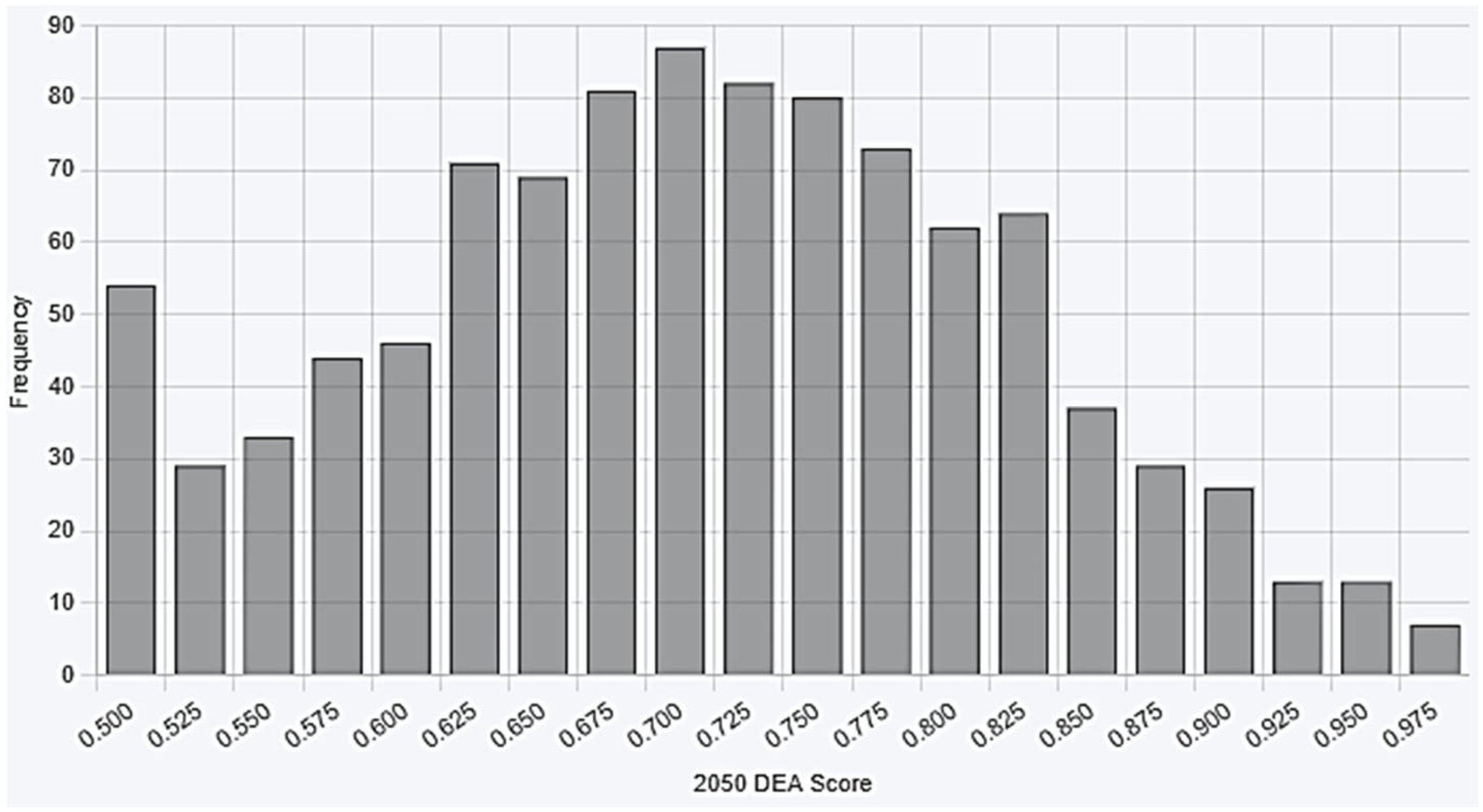


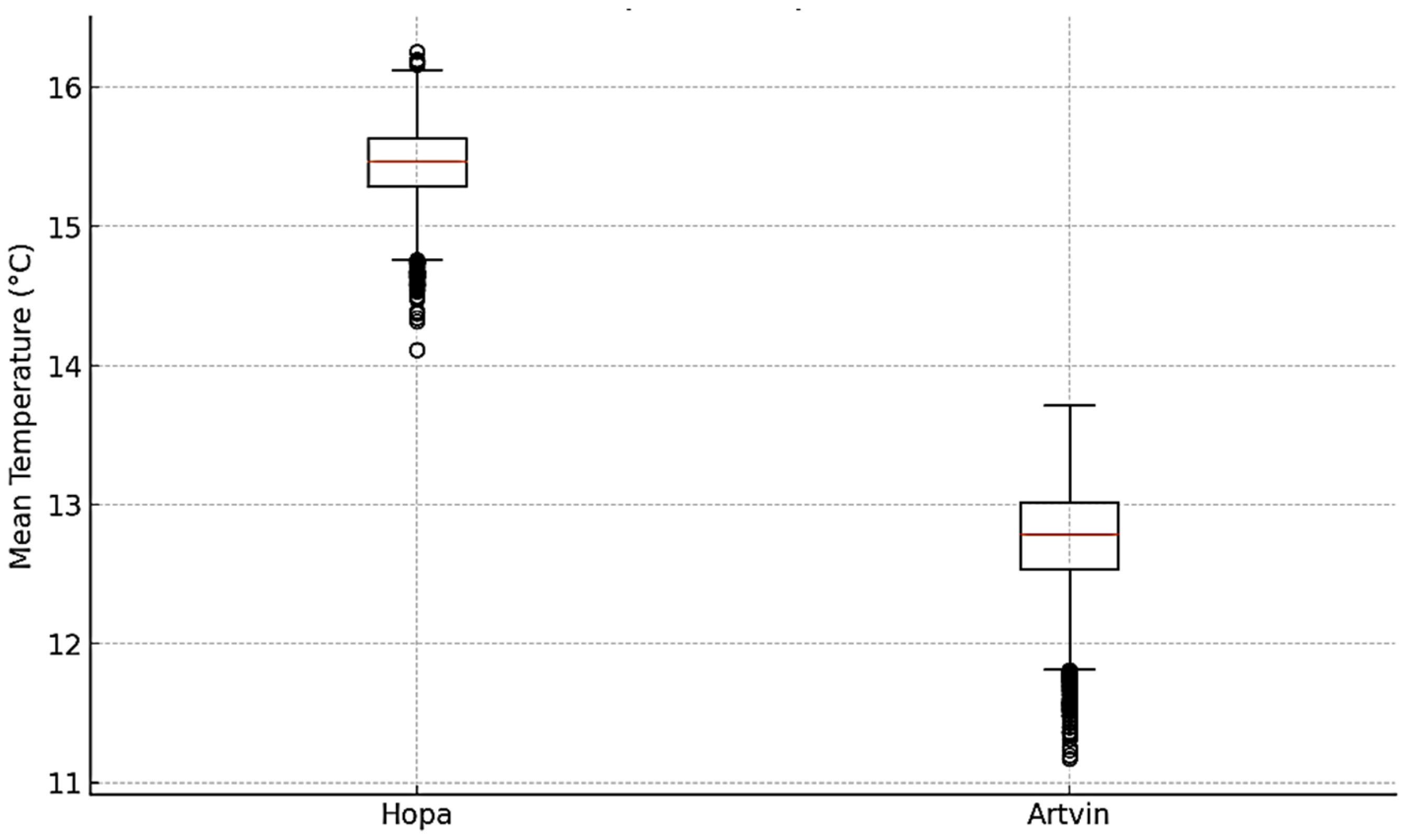

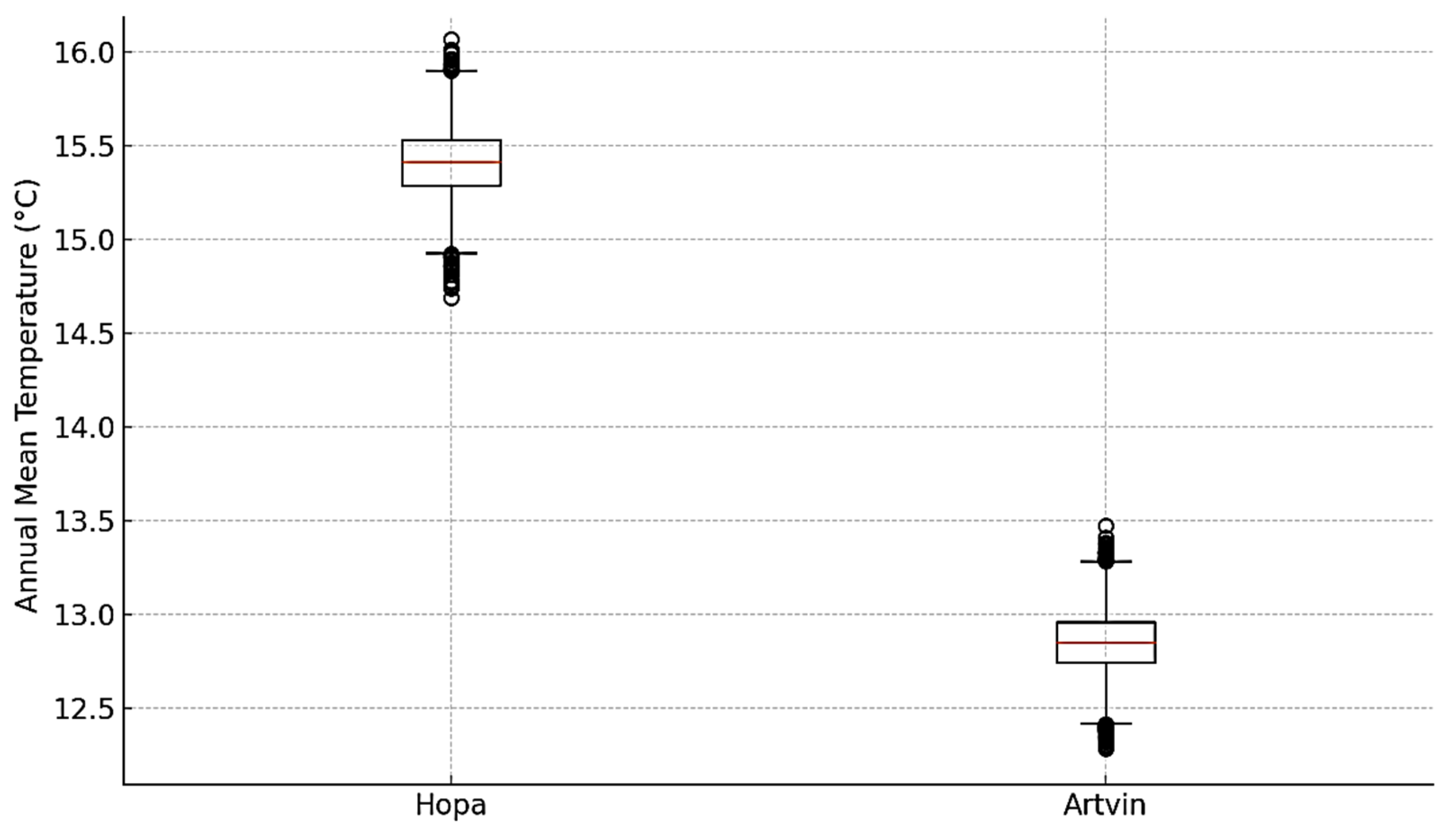
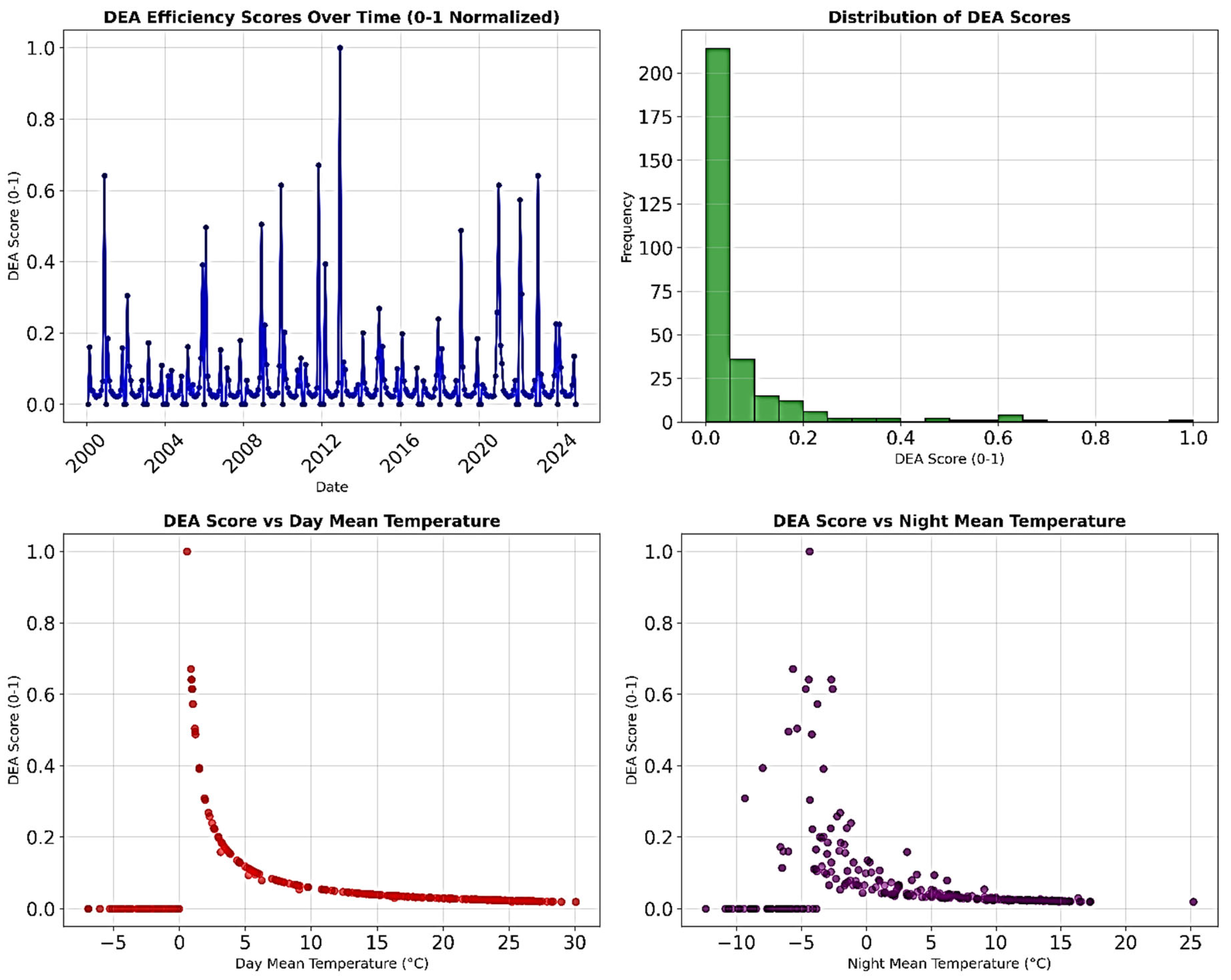


| Risk Implication | Efficiency Dynamics | Temperature Impact | DEA Score Trend | Scenario Range |
|---|---|---|---|---|
| Low risk, high resilience | +7% to +8% growth | +0.8 °C to +1.2 °C | Stable, near frontier (0.985–0.995) | RCP-1.9–2.6 |
| Moderate risk, transitional state | +4.9% growth | +2.1 °C | Moderate decline (0.965) | RCP-4.5 |
| High risk, near tipping point | Minimal growth (+0.5%) | +3.4 °C | Rapid decline (0.925) | RCP-6.0 |
| Extreme risk, system breakdown | −5% to −22% loss | +4.8 °C to +7.2 °C | Severe collapse (0.720–0.875) | RCP-8.5 |
Disclaimer/Publisher’s Note: The statements, opinions and data contained in all publications are solely those of the individual author(s) and contributor(s) and not of MDPI and/or the editor(s). MDPI and/or the editor(s) disclaim responsibility for any injury to people or property resulting from any ideas, methods, instructions or products referred to in the content. |
© 2026 by the authors. Licensee MDPI, Basel, Switzerland. This article is an open access article distributed under the terms and conditions of the Creative Commons Attribution (CC BY) license.
Share and Cite
Çelik, M.A.; Kızılelma, Y.; Batu Ağırkaya, M.; Güney, İ.; Dagli, D.; Duran, V. Assessing Climate Efficiency with Random Forest, DEA, and SHAP in the Eastern Black Sea Region, Türkiye. Atmosphere 2026, 17, 381. https://doi.org/10.3390/atmos17040381
Çelik MA, Kızılelma Y, Batu Ağırkaya M, Güney İ, Dagli D, Duran V. Assessing Climate Efficiency with Random Forest, DEA, and SHAP in the Eastern Black Sea Region, Türkiye. Atmosphere. 2026; 17(4):381. https://doi.org/10.3390/atmos17040381
Chicago/Turabian StyleÇelik, Mehmet Ali, Yakup Kızılelma, Melahat Batu Ağırkaya, İsmet Güney, Dündar Dagli, and Volkan Duran. 2026. "Assessing Climate Efficiency with Random Forest, DEA, and SHAP in the Eastern Black Sea Region, Türkiye" Atmosphere 17, no. 4: 381. https://doi.org/10.3390/atmos17040381
APA StyleÇelik, M. A., Kızılelma, Y., Batu Ağırkaya, M., Güney, İ., Dagli, D., & Duran, V. (2026). Assessing Climate Efficiency with Random Forest, DEA, and SHAP in the Eastern Black Sea Region, Türkiye. Atmosphere, 17(4), 381. https://doi.org/10.3390/atmos17040381