1. Introduction
Recent years have witnessed an intensifying global warming trend, with record-breaking warm years occurring frequently [
1,
2]. The increased incidence of extreme climate events has profoundly impacted human production and livelihoods [
3,
4], simultaneously heightening awareness of the imperative for ecological conservation. As a complex system characterized by interconnected processes, the sustained health of the ecological environment is paramount for regional socio-economic development [
5], particularly in agriculture-dominated regions. Zalait Banner, situated within an agriculture-pastoral ecotone, is a major grain-producing county. Its croplands, along with surrounding forest, wetland, and grassland ecosystems, provide critical regulatory and service functions. Evaluating its ecological environment quality (EEQ) offers essential insights into the status and dynamics of these vital services [
6,
7,
8]. Strategically located in the transitional zone between the Greater Khingan Mountains and the Songnen Plain, Zalait Banner serves as a significant ecological barrier for the Northeast China Plain. where EEQ is influenced by both climate change and forest regeneration. assessing its ecological quality directly pertains to regional ecological security, water conservation, soil preservation, and biodiversity protection across Northeast and even North China [
9,
10]. Notably, Zalait Banner exhibits pronounced warming and drying trends, rendering it highly vulnerable to climate change. Similarly, for example, the Qinghai region faces comparable challenges such as high-altitude fragility and moisture limitations [
11]. By utilizing long-term satellite data, we can obtain a broader perspective on the spatio-temporal patterns of EEQ. Leveraging Landsat facilitates the capture of dynamic recovery or degradation trends driven by global warming and national ecological projects. This cross-regional perspective helps identify universal ecological laws versus site-specific responses [
12].
However, the evaluation of EEQ across large-scale, topographically diverse regions remains methodologically challenging [
13,
14]. Traditional evaluation methods, such as the Ecological Index (EI), often rely on statistical data, which suffer from update lags, a lack of spatial detail, and subjective weighting [
15,
16]. When Xu [
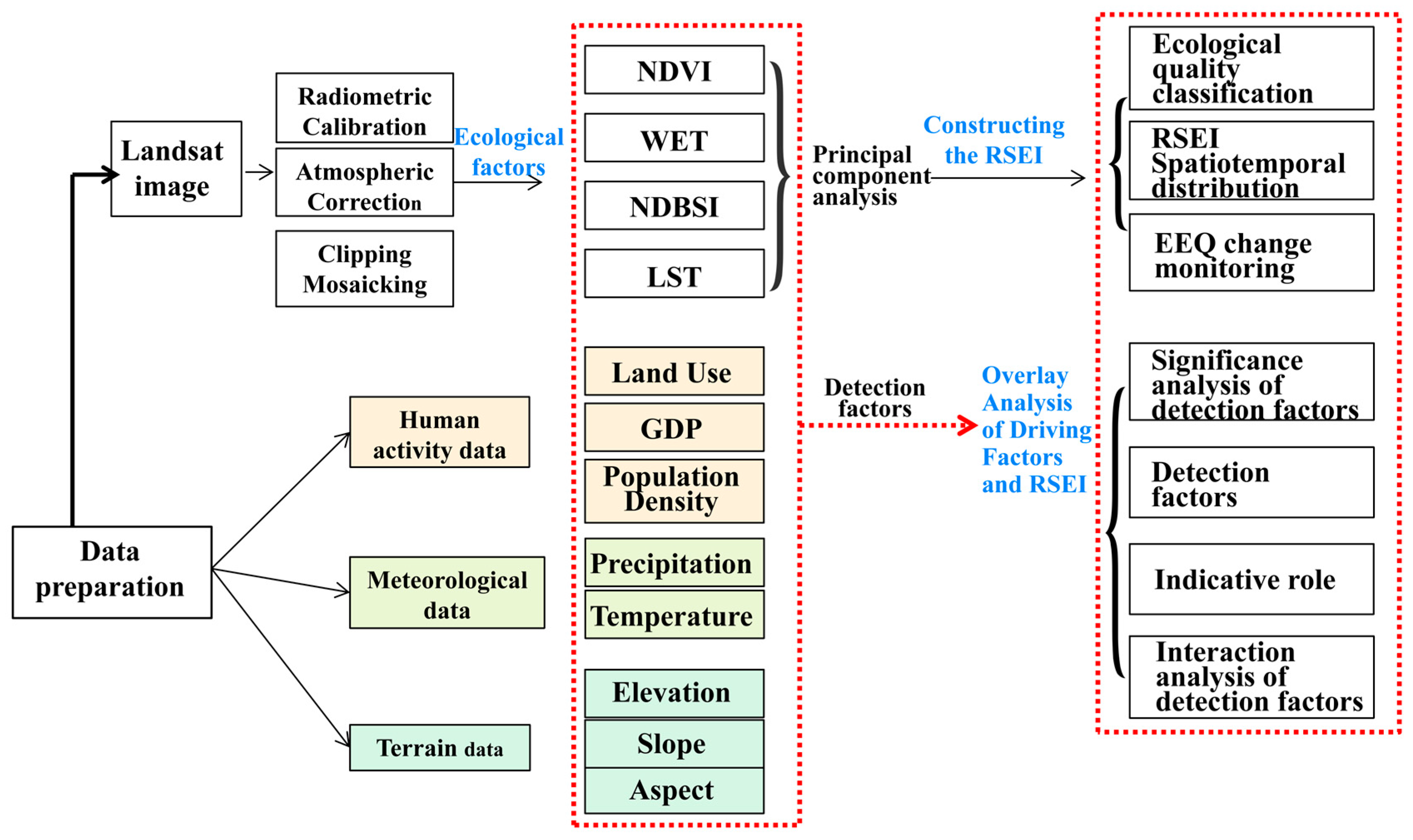
17] proposed the Remote Sensing Ecological Index (RSEI) in 2013, RSEI addresses these limitations by integrating four key ecological indicators: greenness (NDVI), wetness (WET), heat (LST), and dryness (NDBSI). These factors represent vegetation abundance, soil moisture, land surface temperature, and soil desiccation/impervious surfaces. The core rationality of RSEI lies in its use of Principal Component Analysis (PCA) to automatically determine weights based on the data’s inherent characteristics [
18,
19]. This objective coupling avoids human interference and enables the quantitative visualization of ecological quality at the pixel level. For agro-pastoral and semi-arid regions that are highly sensitive to climatic variability, temperature plays a critical role by regulating surface thermal stress, which directly affects vegetation health and soil moisture conditions. Elevated surface temperatures often intensify evapotranspiration, accelerating water loss and increasing ecological vulnerability. The interaction among temperature, surface thermal stress, and evapotranspiration therefore strongly influences ecosystem resilience [
20,
21], making their integrated assessment through RSEI essential for understanding ecological responses to climate change in fragile dryland systems. In actual application [
22], RSEI demonstrated significant correlation with industrial population density (IPD) in Xiongan New Zone, China. Crucially, RSEI relies exclusively on RS-derived parameters, offering enhanced data accessibility and superior ecological representation compared to conventional indices. Empirical studies validate RSEI’s efficacy.
Empirical studies across diverse geographical contexts have validated the robustness and versatility of the Remote Sensing Ecological Index (RSEI). For instance, Wei [
23] demonstrated a strong correlation between RSEI and the traditional Ecological Index (EI) across various Chinese land-planning zones. In coastal environments, such as Hangzhou Bay, RSEI successfully captured divergent ecological trends, identifying localized improvement in Yinzhou contrasted against degradation in Pinghu driven by rapid urban expansion. Furthermore, the index has proven effective in monitoring specialized landscapes, including the Kolkata Urban Agglomeration (KUA) [
24] and derelict mining sites. Specifically, Lian et al. [
25] utilized RSEI to evaluate ecological dynamics within the Tongluoshan Mining Park, providing critical insights into the restoration efficacy of differentially managed protection zones.
To overcome terrain-specific limitations and environmental complexities, recent scholarship has focused on refining the RSEI framework. Sun [
26] integrated the Continuous Change Detection and Classification (CCDC) algorithm to enhance temporal comparability across long-term datasets. Other researchers have expanded the index’s dimensionality; for example, Wang et al. [
27] developed the RSEIFE by incorporating water elements to improve computational stability in aquatic-influenced regions. In arid environments, Bai [
28] introduced the Desertification Monitoring Index (DMI) and Salinity Monitoring Index (SMI) to create an enhanced RSEI tailored for drylands.
Beyond structural adjustments, the specific indicators within the RSEI have also been optimized to reflect localized ecological stressors. Modifications include substituting the Normalized Difference Vegetation Index (NDVI) with Gross Primary Productivity (GPP) for more accurate biomass estimation [
29], or replacing land surface temperature (LST) with indices representing PM2.5 concentrations to account for air quality [
30,
31]. In high-impact industrial zones like iron mines, researchers have further augmented the model by incorporating black particulate matter, iron oxides, and landscape fragmentation indices [
32]. These multifaceted adaptations underscore the transition of RSEI from a static tool to a dynamic, multi-dimensional framework capable of addressing complex environmental footprints. With the rapid evolution of aerospace technology and algorithms, remote sensing has entered a new era of multi-source heterogeneous data fusion. Recent advances are characterized by the application of sub-meter high-spatial-resolution imagery, hyperspectral sensing for biodiversity monitoring, and LiDAR for the precise characterization of 3D forest structures. Furthermore, when computing the RSEI, cloud-based big data platforms like Google Earth Engine (GEE) have enabled near-real-time ecological monitoring at global [
33,
34]. Its advantage lies in the ability to mobilize large volumes and diverse types of remote sensing image data, enabling the construction of cloud-free imagery through minimum cloud cover composition, among other functions [
35,
36]. regional, and micro-urban scales. Current assessment frameworks are shifting from simple optical indices to multi-dimensional models encompassing air quality, carbon sequestration, and landscape patterns [
37]. These applications across multiple spatial scales and time horizons provide unprecedented technical support for assessing the footprint on the natural environment.
In contrast to the relatively standardized and ‘black-box’ processing workflows inherent in Google Earth Engine (GEE), this study maintains full procedural control over the entire data processing chain, including source selection, rigorous preprocessing, and parameter optimization. By ensuring precise spatial alignment and overlay between the resulting RSEI datasets and auxiliary vector data, this facilitates precise spatial analysis and enables a detailed interpretation of the influence of relevant factors. This approach provides a well-qualified evaluation of the ecological environment quality (EEQ) in Zalait Banner over 22 years, offering valuable, context-aware insights that support sustainable ecological governance while recognizing the methodological boundaries of cross-sensor time-series analysis.
3. Results
3.1. Analysis of Time Series Trends
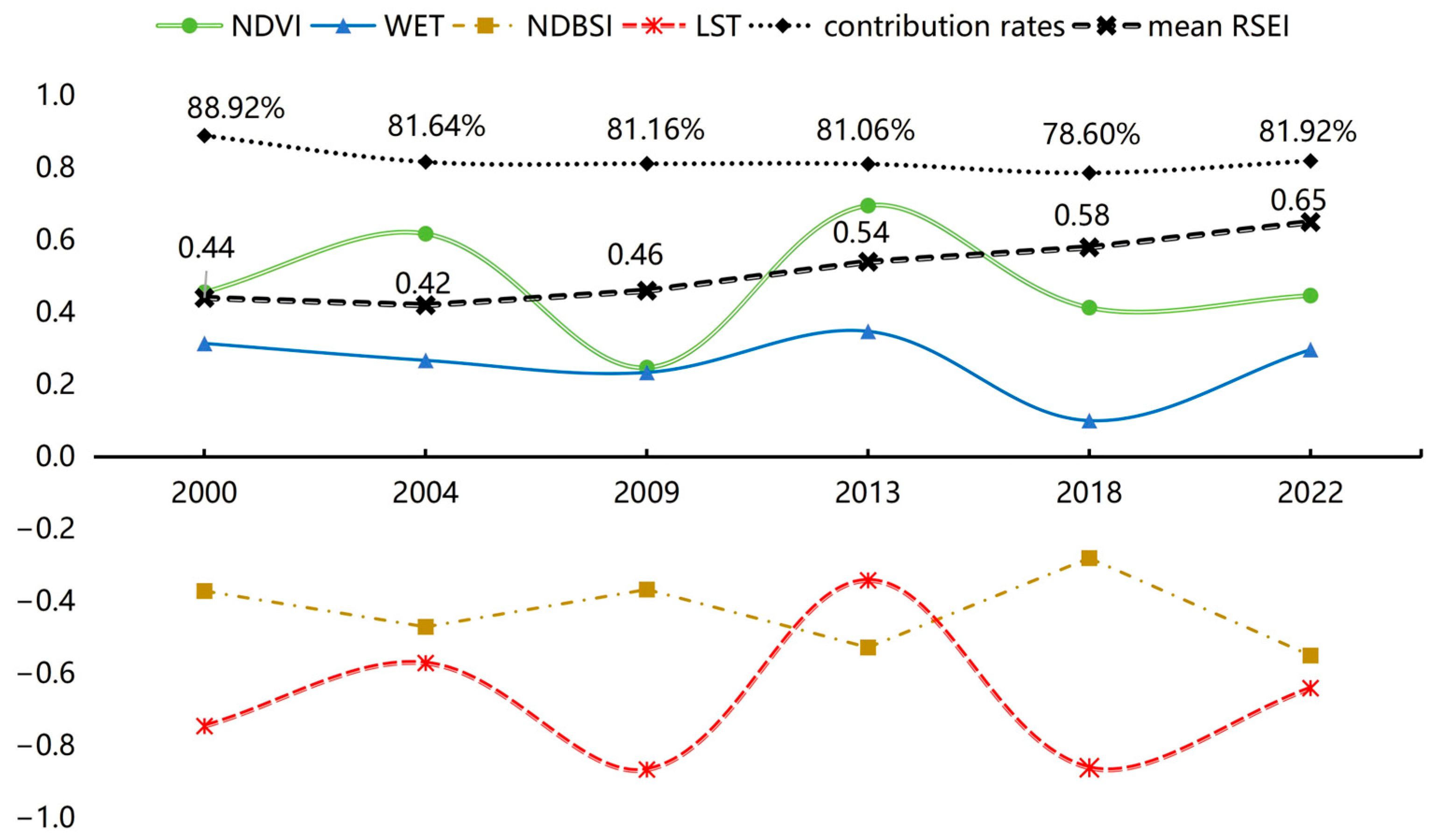
The RSEI model integrates four key indicators—NDVI, WET, NDBSI, and LST—derived from remote sensing imagery using Principal Component Analysis (PCA). As illustrated in
Figure 3, the results reveal the contribution rates and loadings of the first principal component (PC1). Significantly, the contribution rate of PC1 consistently exceeded 78% across all study periods (ranging from 78.60% to 88.92%), indicating that PC1 effectively aggregates the majority of the variance and representative information from the four constituent indicators. Consequently, PC1 was adopted to construct the RSEI model, replacing the individual NDVI, WET, NDBSI, and LST indicators.
In terms of component loadings, the coefficients for NDVI and WET remained positive, whereas those for NDBSI and LST were consistently negative. This statistical evidence confirms that vegetation cover and moisture exert a positive driving force on the ecological environment of Zalait Banner, while anthropogenic drying and thermal stress act as negative stressors. Notably, the LST index displayed the highest absolute loading values in several periods, suggesting that thermal conditions play a dominant role in regulating the regional ecological quality, whereas the influence of the moisture indicator appears relatively subordinate. The temporal evolution of the mean RSEI values from 2000 to 2022 is presented in
Figure 3, where the mean RSEI exhibits a robust fluctuating upward trend.
To further quantify these ecological changes, the standardized RSEI values were stratified into five quality levels following established classification standards [
37]: Poor (<0.2), Fairly Poor (0.2–0.4), Moderate (0.4–0.6), Good (0.6–0.8), and Excellent (≥0.8). While cross-sensor uncertainties inherent in multi-decadal data necessitate a cautious interpretation of absolute values, the consistent preprocessing workflow applied here reveals a distinct relative upward trajectory in ecological conditions. According to this classification framework, the ecological quality of Zalait Banner has generally transitioned from a status characteristic of the ‘Moderate’ range in the early 2000s toward the ‘Good’ range by 2022. This shift suggests a robust improvement in the region’s ecological health over the 22-year period, with the most pronounced gains observed after 2013.
3.2. Spatial Distribution of Eco-Environmental Quality
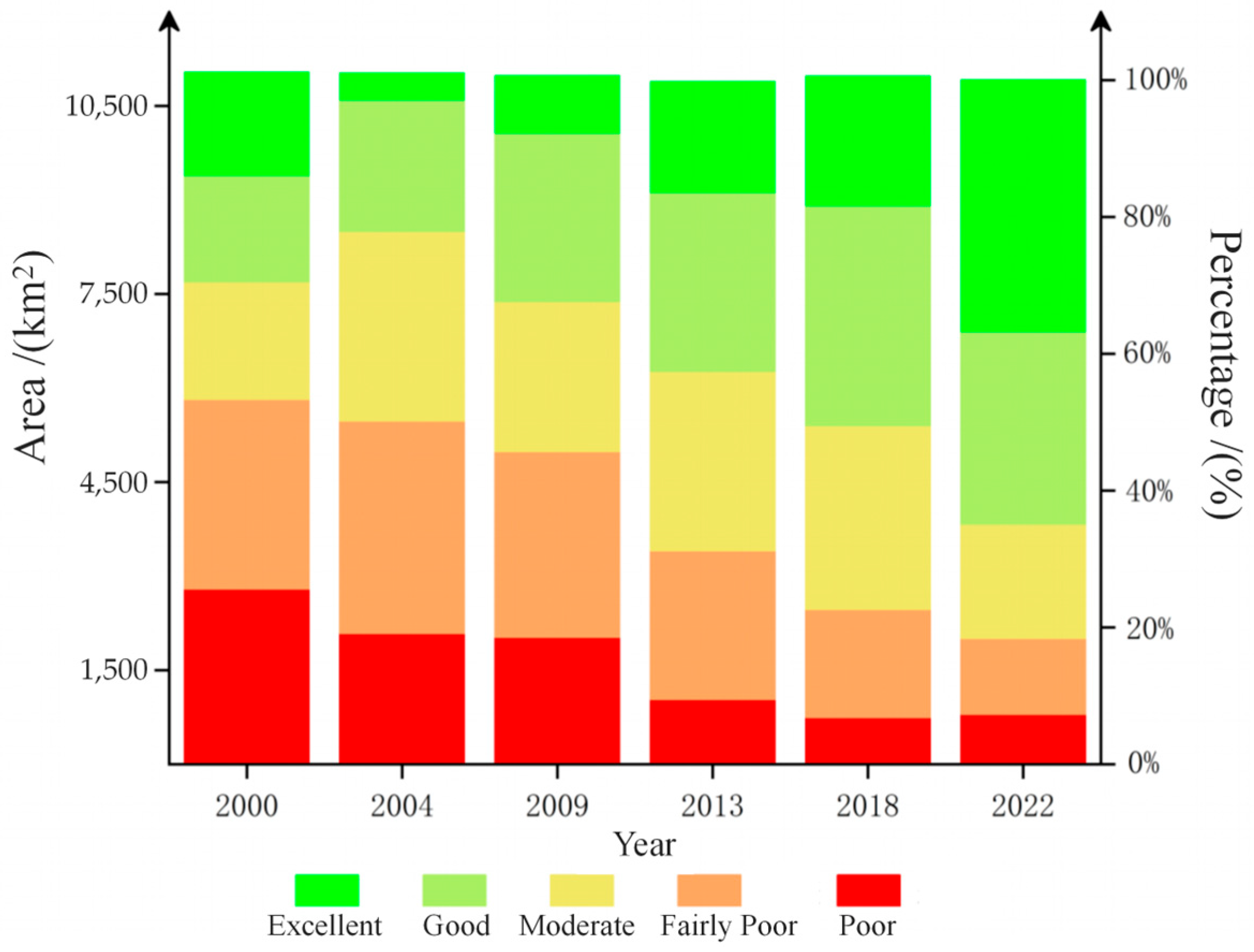
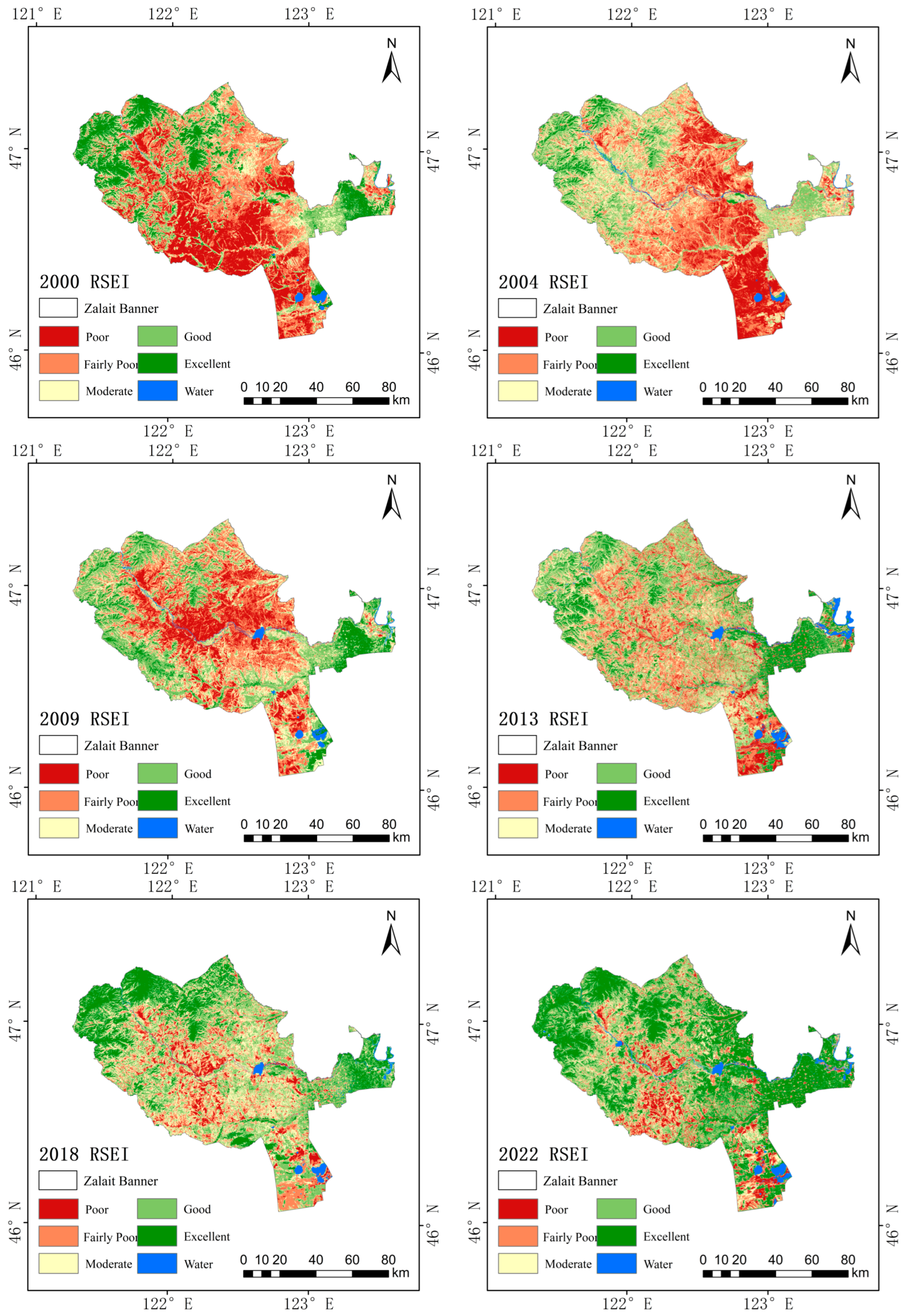
Figure 4 and
Figure 5 collectively illustrate the spatiotemporal evolution of ecological environmental quality in Zalait Banner, detailing the areal extent and proportional distribution of each quality grade.
In 2000, the region exhibited significant ecological deficits. As shown in the spatial distribution maps, extensive contiguous areas classified as “Poor” and “Fairly Poor” dominated the central and southeastern landscape. Statistically, these two categories covered 3022.64 km2 and 2797.31 km2, respectively, constituting a combined majority of 52.74%. Consequently, the spatial coverage of degraded areas markedly exceeded that of high-quality zones.
A distinct deterioration occurred in 2004, marking the nadir of ecological quality over the 22-year study period. While the western region retained moderate quality (depicted in yellow-green), the “Poor” grade expanded significantly in the southeast and central sectors, reaching 3391.47 km2 (30.77% of the total area). Concurrently, the “Excellent” grade contracted to its minimum extent, accounting for merely 3.87%.
From 2009 onwards, a restorative trend emerged. The “Excellent” area expanded by 486.89 km2 relative to 2004, initiating a decline in ecologically degraded zones. By 2013, a structural shift was evident: the previously large, contiguous patches of poor quality in the central and southern regions fragmented and transitioned towards “Moderate” and “Good” grades. The distribution of low-quality areas shifted from agglomerated clusters to a sporadic, scattered pattern. By 2018, the combined proportion of “Poor” and “Fairly Poor” grades had decreased substantially to 22.51%, with the “Poor” grade marginalized to only 6.8%, although localized aggregations persisted in the southeast.
In 2022, the region achieved its optimal ecological state. High-quality areas (depicted in deep green) became the dominant landscape feature. The “Excellent” grade peaked at 4014.14 km2, comprising 36.78% of the total area. When combined with the “Moderate” and “Good” grades, these categories covered 44.8% of the region. In sharp contrast, the “Fairly Poor” and “Poor” areas shrank to a combined total of 2010.73 km2 (18.42%), reflecting a significant ecological recovery.
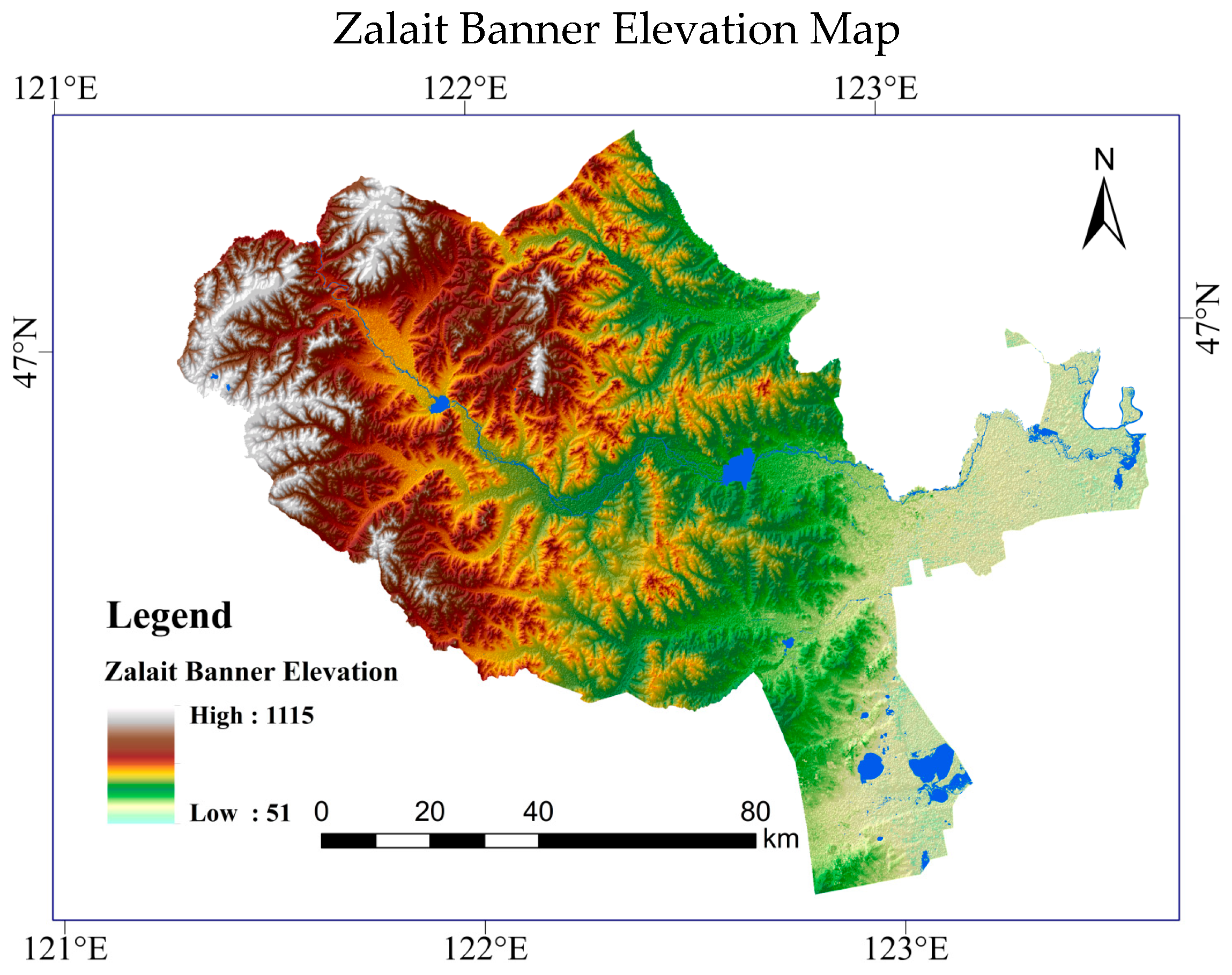
Spatially, the distribution of ecological quality exhibits clear heterogeneity. The western region, characterized by higher elevation and dense forest cover, consistently maintains the highest ecological integrity. The northeastern region also demonstrated marked improvement, particularly following the hydrological recovery of rivers after 2013. While the northern region maintains a stable “Good” status, the central-southern and southeastern regions remain areas of relative ecological vulnerability, warranting continued attention.
3.3. Spatiotemporal Changes in Eco-Environmental Quality
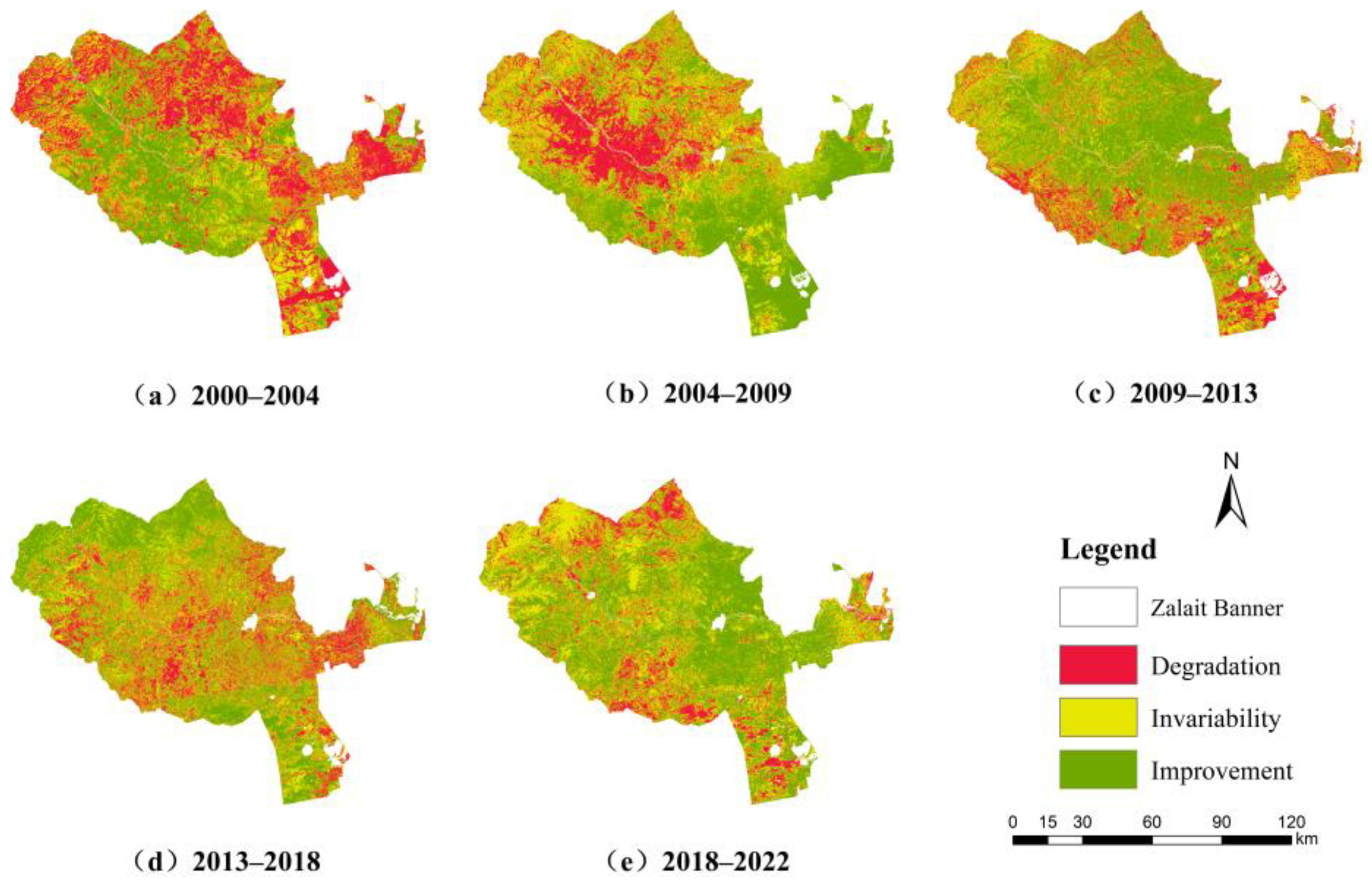
To gain a comprehensive understanding of the spatiotemporal trajectories of the ecological environment in Zalait Banner, an RSEI change detection analysis was performed by calculating the pixel-by-pixel difference between subsequent and preceding study periods. This difference-based approach categorized the landscape into three distinct dynamics: “Improvement” (positive values), “Invariability” (zero values), and “Degradation” (negative values). As illustrated in
Figure 6, these transitions reveal the complex evolutionary patterns from 2000 to 2022.
The analysis reveals that over the 22-year study period, Zalait Banner exhibited marked spatial heterogeneity in ecological stability. The Central Region: A Zone of Ecological Fragility. This area represents an unstable ecological ecotone, characterized by frequent fluctuations between improvement and degradation. This region is highly sensitive to climatic variability and anthropogenic disturbances, preventing the establishment of a robust ecological equilibrium. Western Mountainous Area: Dominant Ecological Barrier. Except for a transient phase of degradation in 2004, the western mountainous region consistently demonstrated ecological resilience, either through continuous improvement or by maintaining high-quality stability. Following a period of substantial restorative expansion between 2009 and 2018, this area solidified its role as a vital ecological shield for the Banner by 2022. Northern Region: Starting from 2004, the northern part of the region followed a stepwise improvement pattern. The most pronounced ecological gain occurred between 2004 and 2009. Despite a minor natural fluctuation (slight degradation) observed in the 2022 period, the region maintains an overall favorable ecological status. Central-Eastern Region: This region suffered severe ecological deterioration during the 2000–2004 interval. However, it subsequently entered a long-term successional recovery phase after 2004. Although localized degradation re-emerged sporadically between 2013 and 2018, the magnitude and spatial extent were constrained, and the region underwent a remarkable ecological rebound from 2018 to 2022. Southeastern Fringe: Following a notable ecological setback in 2004 and a temporary recovery in 2009, this area has exhibited a consistent, albeit decelerating, indicative trend of ecological decline. Although the spatial extent of degradation appears to be gradually contracting, the persistence of these negative remote-sensing signals suggests that the ecological baseline may remain under significant pressure. Central-Southern Region: The RSEI analysis identifies Baoligenhua Sumu and the southern portion of Bayan Gaole Town as potential hotspots of ecological stress within the Banner. Following a brief improvement in 2004, these regions have shown signs of systematic and progressive degradation over the subsequent 18-year period. The sustained proportion of degraded and low-quality pixels suggests a potential lack of natural recovery, pointing toward these areas as candidates for further investigation into desertification or intense land-use pressure. Given these indicative findings, the central-southern region represents a primary area where existing ecological remediation efforts and grazing prohibition policies could be further evaluated or prioritized. Rather than providing a definitive prescription, these results serve as supportive evidence for existing policy directions, suggesting that targeted interventions in these identified “stress zones” may warrant further empirical study to confirm their status and guide future conservation strategies.
3.4. Analysis of Driving Factors for Ecological Environment Quality Changes
3.4.1. Extraction and Classification of Factor Information Using the Geographical Detector
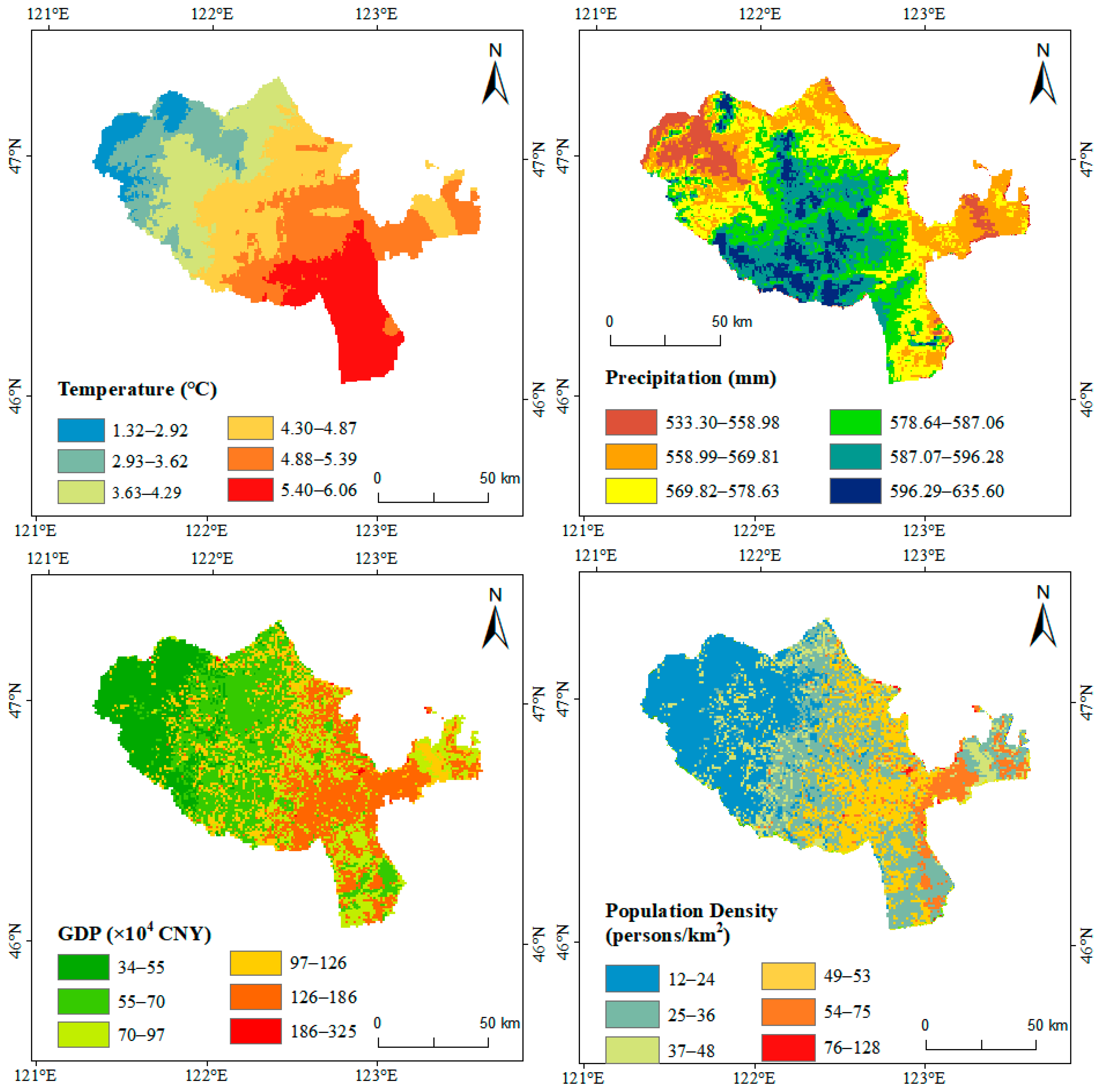
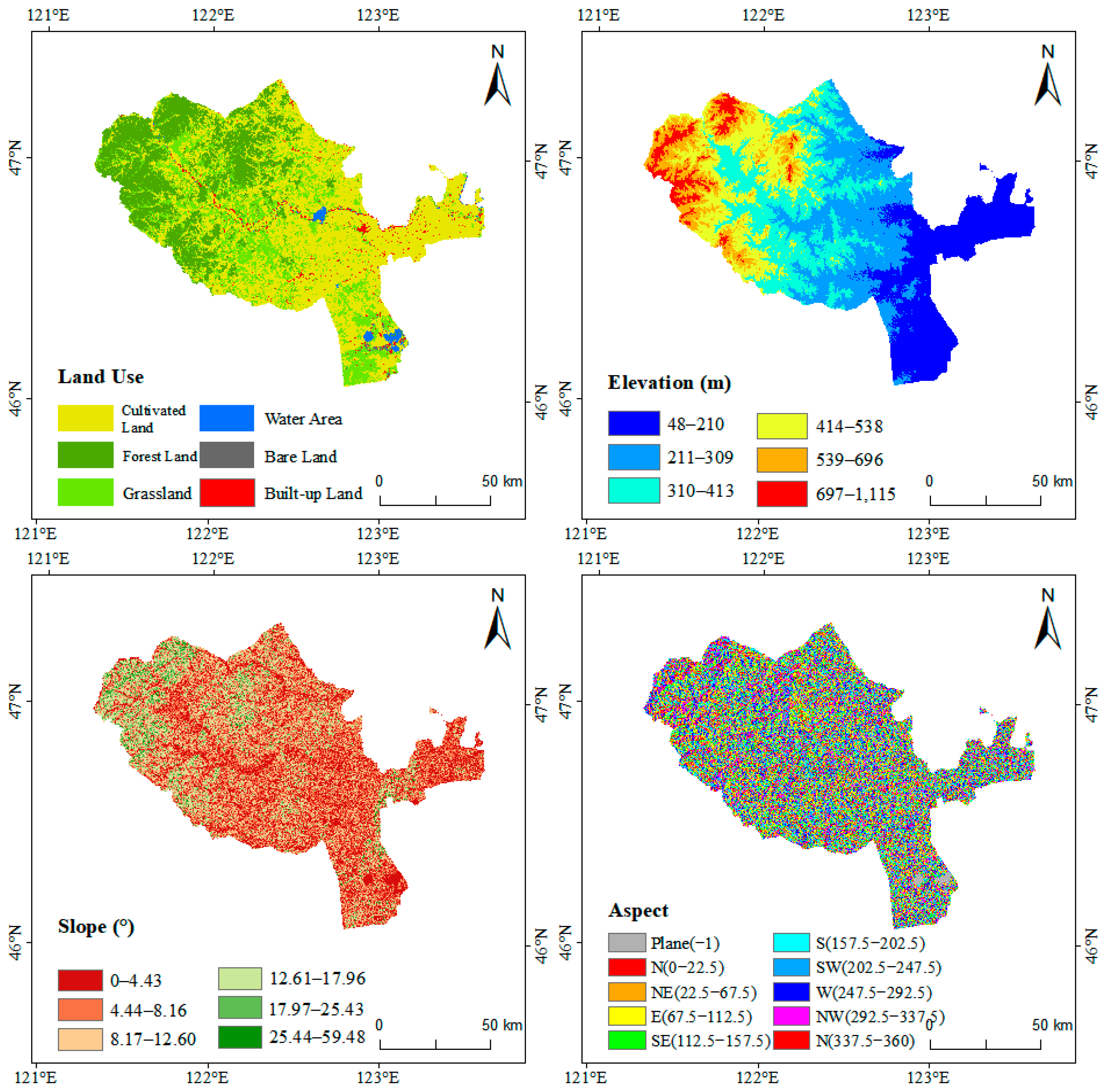
To quantify the drivers of ecological quality, eight explanatory factors were selected: precipitation, temperature, land use, elevation, slope, aspect, population density, and GDP. Among these, population density, GDP, and land use serve as proxy indicators of human-induced environmental pressure, reflecting the intensity of regional development. After removing outliers to ensure data integrity, all continuous variables were discretized using the Natural Breaks method, a requirement for the Geographical Detector’s requirement for categorical input. The spatial distribution of these factors (
Figure 7) reveals distinct regional characteristics.
In terms of climate characteristics, Precipitation follows a heterogeneous pattern with higher levels in the south-central region, while temperature exhibits a clear northwest-to-southeast thermal gradient (1.32 °C to 6.06 °C). In terms of Socio-economics characteristics that population density and GDP show high spatial synchronicity, with hotspots concentrated in urbanized zones. Regarding topography, the northwestern region is characterized by high-altitude, rugged terrain (steep slopes), transitioning into a “stepped” descent toward the gentler eastern plains. These classified layers were subsequently integrated into the Geodetector model to quantify their individual and interactive contributions to the spatial heterogeneity of the RSEI.
3.4.2. Single-Factor Detection Analysis
To quantify the driving mechanisms behind the spatial differentiation of the RSEI in Zalait Banner, the Geodetector model was employed to calculate the q-values for 12 potential driving factors. The q-values represent the explanatory power of each factor on the spatial distribution of ecological quality. As illustrated in
Table 2, the influence of these factors follows the descending order: LST > NDBSI > NDVI > Wet > Land Use > Temperature > Elevation > Population Density > GDP > Precipitation > Aspect > Slope.
The results indicate that LST and NDBSI possess the highest explanatory power, with q-values of 0.8672 and 0.5116, respectively. This demonstrates that “Heat” and “Dryness” are the primary determinants of the ecological environment in Zalait Banner. The overwhelming dominance of LST suggests that surface thermal properties and local climate dynamics are the fundamental drivers of ecological spatial heterogeneity. The high q-value of NDBSI reflects that the extent of impervious surfaces and soil exposure—often tied to urbanization and land degradation—significantly impacts regional ecological stability. After excluding the four internal indicators used to construct the RSEI (LST, NDBSI, NDVI, and Wet), Land Use (q = 0.3545) and Temperature (q = 0.1619) emerged as the most significant external drivers. With an explanatory power exceeding 35%, the spatial configuration of forests, grasslands, croplands, and built-up areas serves as the “backbone” of ecological quality. Variations in land cover directly dictate the regional capacity for carbon sequestration and water retention. In terms of Climate and Socio-economics characteristics, Temperature shows a stronger influence than Precipitation. In the semi-arid/semi-humid transition zone of Zalait Banner, ecosystem health is likely more sensitive to evapotranspiration rates driven by temperature than to marginal changes in rainfall. Conversely, Population Density and GDP exhibit relatively low q-values (<0.1), indicating that while human activity impacts the environment, the spatial variation in the RSEI is primarily governed by the interplay between surface cover attributes and hydrothermal conditions.
The q-values for Slope (0.0130) and Aspect (0.0144) are the lowest among all tested factors. This suggests that the macro-topographical relief in Zalait Banner does not impose significant vertical zonation or structural constraints on ecological quality.
3.4.3. Analysis of Significant Differences in Detecting Indicators and Risk Zones
The Risk Detector was employed to ascertain whether significant differences exist in the mean attribute values between two sub-regions. Statistical analysis of the spatial distribution revealed no significant divergence between the following factor pairs: elevation and temperature; GDP and population density; GDP and precipitation; slope and aspect; population density and precipitation/aspect; and WET and NDVI.
As illustrated in
Figure 5 and
Figure 7, the spatial distribution of ecological quality exhibits distinct heterogeneity. The western forest-covered zones and the northeastern rice cultivation areas of Zalait Banner displayed elevated RSEI values, indicative of a superior ecological environment. These high-quality ecological zones are characterized by specific meteorological and topographic conditions: precipitation ranges of 533.30–558.98 mm, temperatures between 1.31 and 2.92 °C, elevations of 696–1115 m, and steep slopes ranges of 25.43–59.48°. Crucially, these areas experience minimal anthropogenic disturbance, correlating with the lowest GDP (34–55) and population density (12–24) values. Conversely, regions recording the lowest RSEI values coincided with areas of intense human activity, characterized by peak population density, maximum GDP, and land-use types dominated by impervious surfaces (construction land) and bare land. This suggests a distinct negative correlation between the ecological integrity of Zalait Banner and anthropogenic intensity. Specifically, as land use shifts toward types associated with human development, the pressure on the ecological environment intensifies, leading to a degradation in RSEI values.
3.4.4. Analysis of Interaction Effects Among Detected Factors
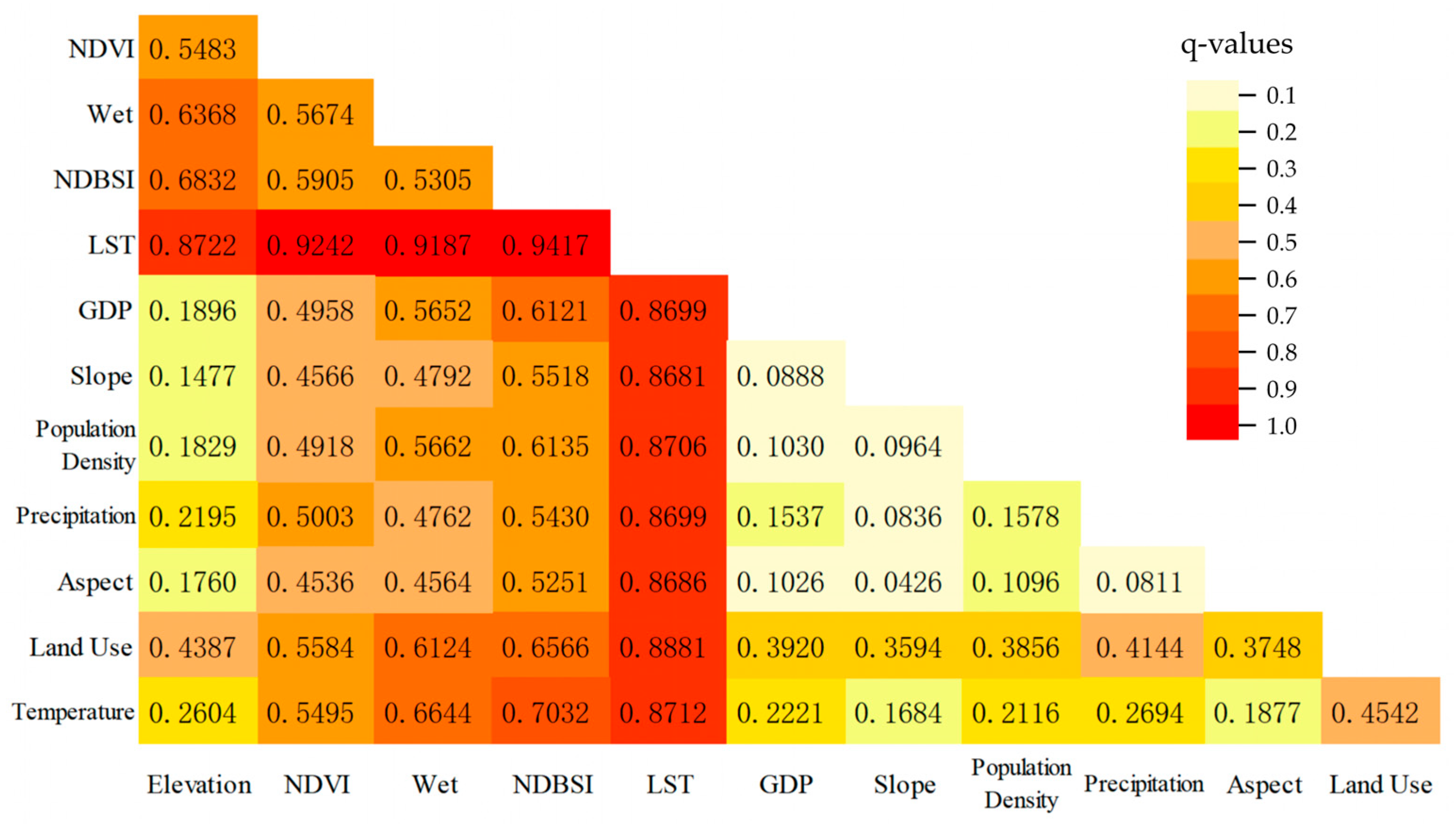
To elucidate the combined explanatory power of multiple drivers on ecological quality, the q-values for pairwise interactions among 12 factors were calculated (
Figure 8). The results demonstrate that the interaction between any two factors enhances the explanatory power regarding the spatial distribution of RSEI compared to single factors acting alone. These interactions manifested primarily as bivariate enhancement or nonlinear enhancement, with no independent or weakened relationships observed.
The most substantial explanatory power was generated by interactions involving the four core component indicators of the RSEI (NDVI, Wet, NDBSI, and LST). Notably, interactions with land surface temperature (LST) consistently yielded the highest enhancement effects, with q-values for NDBSI ∩ LST, NDVI ∩ LST, and Wet ∩ LST, all exceeding 0.9. Among the interactions involving external environmental drivers (excluding the four internal RSEI indicators), the interaction between Land Use and Temperature (q = 0.4542) exhibited the strongest explanatory power for ecological quality in the region. This was followed closely by Land Use ∩ Elevation (q = 0.4387) and Land Use ∩ Precipitation (q = 0.4144). Furthermore, interactions between Land Use and other socioeconomic factors (GDP, population density) produced q-values ranging between 0.3 and 0.4. This pattern indicates a synergistic effect: factors with relatively high individual predictive power (such as Land Use) produce significantly amplified effects when combined with meteorological or topographic variables. In contrast, the weakest interactions were observed among topographic variables, specifically Slope ∩ Aspect, as well as their interactions with precipitation and population density (all q < 0.1). This aligns with the single-factor analysis, where slope (q = 0.0130) and aspect (q = 0.0144) showed minimal individual influence. In summary, while the intrinsic RSEI components naturally dominate the statistical relationships, the analysis highlights that Land Use and Temperature are the primary external drivers of ecological quality in Zalait Banner. The results underscore that the regional ecological environment is not shaped by singular factors in isolation, but rather by the complex coupling of anthropogenic activities (land use) and natural background conditions (temperature, elevation).
4. Discussion
4.1. Comparison of Ecological Environment Quality Trends with Previous Studies
The RSEI indicative results for Zalait Banner indicate a fluctuating but overall improving trend in ecological environment quality (EEQ) from 2000 to 2022, which is consistent with findings from other agro-pastoral ecotones and ecologically fragile regions in northern China [
39,
40]. Ecosystem conditions initially deteriorated in Zalait Banner in the early 2000s and subsequently improved following the implementation of ecological restoration policies. The pronounced ecological decline observed in 2004 corresponds with a period of intensified grazing pressure, land expansion, and increasing climatic aridity [
41,
42]. In contrast, the substantial recovery after 2009, particularly after 2013 aligns with studies demonstrating the effectiveness of grazing prohibition, grassland restoration, and land-use regulation policies. Compared with similar regions, Zalait Banner shows a relatively strong recovery signal, especially in forested western areas, underscoring the stabilizing role of vegetation cover and favorable topographic conditions.
4.2. Comparison of Driving Factors Across Regions
The Geodetector results reveal that land surface temperature (LST) is the dominant factor influencing the spatial heterogeneity of EEQ in Zalait Banner, followed by dryness (NDBSI), vegetation greenness (NDVI), and wetness (WET). This pattern is consistent with studies in semi-arid and semi-humid transition zones [
43], where thermal stress and surface moisture constraints are primary ecological controls. In contrast, precipitation or socioeconomic factors often dominate in humid southern China or highly urbanized regions, highlighting strong regional differences in driving mechanisms [
29]. Land use exhibits a stronger explanatory power than GDP and population density, indicating that land-use structure exerts a more direct ecological influence than overall economic intensity in agro-pastoral areas. whereas studies in urban agglomerations frequently identify socioeconomic indicators as dominant drivers. The weak influence of slope and aspect in this study further reflects the relatively gentle terrain of Zalait Banner, distinguishing it from mountainous regions with stronger topographic controls.
4.3. Methodological Comparison with Similar Studies
Methodologically, this study applies the classical RSEI framework using long-term Landsat 5(TM), 8(OLI), and 9(OLI) imagery to ensure temporal consistency. Compared with studies relying solely on automated Google Earth Engine (GEE) compositing, the use of locally screened, cloud-free imagery facilitates stricter quality control, which is particularly important for long-term trend detection. The study retains the original four-component structure to enhance comparability with the existing literature. The integration of the Geodetector model strengthens the analytical framework by quantitatively identifying both individual and interactive effects of natural and anthropogenic drivers. Compared with urban or mining-focused RSEI studies, this research extends the application of RSEI to an agro-pastoral ecotone, where climatic sensitivity and land-use pressure jointly shape ecological patterns.
4.4. Implications for Ecological Management
The findings of this study offer preliminary insights that may inform regional ecological management. The persistent degradation observed in the central-southern region suggests that current restoration efforts could be further optimized; these results lend supportive evidence to the potential need for targeted interventions, such as the continuation or refinement of grazing prohibition policies and vegetation restoration.
Furthermore, given the influence of temperature and surface dryness identified in our analysis, future management strategies might consider climate-resilient approaches. This could include exploring methods to enhance vegetation cover, improve soil moisture retention, or protect existing wetlands as hypothetical buffers against climate warming.
Moreover, the observed interaction between land use and temperature highlights the potential value of integrating land-use planning with climate adaptation strategies. At a broader scale, the RSEI–Geodetector framework serves as a transferable methodological entry point for identifying potential ecological risk areas and evaluating the possible effects of policy in other agro-pastoral transition zones.
4.5. Limitations and Future Research
While this study provides a comprehensive long-term analysis, several limitations must be acknowledged. First, a primary constraint lies in the lack of direct validation against field-based observations. The RSEI primarily reflects surface conditions and does not explicitly incorporate indicators such as soil properties, biodiversity, or ecosystem services. Consequently, there is a lack of comparative analysis between the derived results and empirical field data. Furthermore, the ecological quality analysis based on RSEI values serves as a relative and indicative indicator of ecological status rather than a fully validated measure of absolute ecological conditions.
Future research should focus on collecting synchronized field observations and independent datasets to calibrate and validate remote sensing results against actual ecological states. It is essential to integrate diverse data sources, such as soil carbon content, extreme climate data, and high-resolution grazing intensity records. Additionally, extending comparative analyses to different ecoregions will be necessary to further test the universal applicability and reliability of the RSEI framework.
5. Conclusions
Based on multi-temporal Landsat imagery from 2000 to 2022, this study employed the Remote Sensing Ecological Index (RSEI) and the Geodetector model to evaluate the spatiotemporal evolution and driving mechanisms of ecological environment quality (EEQ) in Zalait Banner. The results indicate an overall “decline–recovery–rapid improvement” trajectory, with severe degradation occurring in 2004 followed by sustained ecological restoration after 2009. Spatially, EEQ exhibited pronounced heterogeneity, characterized by high-quality conditions in forested western areas and persistent ecological vulnerability in the central-southern region.
Driver analysis reveals that land surface temperature (LST) and surface dryness are the dominant determinants of EEQ, while land use and air temperature represent the most influential external drivers. The strong interaction effects between thermal conditions and land-use structure highlight the critical role of land–atmosphere interactions in regulating ecological quality in agro-pastoral transition zones.
Beyond site-specific findings, this study provides several insights to guide future research. First, the dominant influence of thermal factors suggests that future ecological assessments should explicitly integrate climate warming, evapotranspiration, and land–atmosphere energy exchange processes. Second, the persistent degradation hotspots identified through long-term RSEI monitoring offer priority targets for testing ecological restoration strategies and policy interventions. In addition, the combined RSEI–Geodetector framework demonstrated here can be extended to comparative, multi-region studies to explore the generality of ecological driving mechanisms under different climatic and land-use contexts. These insights contribute to advancing remote sensing-based ecological monitoring and support the development of climate-adaptive ecosystem management strategies.
Despite identifying key environmental drivers, this study has limitations in its direct analysis of complex climatic characteristics. Specifically, we did not explicitly account for large-scale atmospheric circulation patterns or the influence of climate extremes, which can significantly modulate regional eco-environmental quality. Future research should transcend static meteorological averages by integrating high-resolution climate reanalysis data and specific extreme event indices (e.g., heatwaves or prolonged droughts). Incorporating these dynamic atmospheric factors will provide a more nuanced understanding of how environmental stability responds to a changing climate, offering more robust support for regional ecological management.