Article

The Influence of Ambient Particulate Matter on the Human Respiratory Tract in Major Academic Centers


1
Department of Medical Physics and Biophysics, Faculty of Physics and Applied Computer Science, AGH University of Krakow, Al. Mickiewicza 30, 30-059 Krakow, Poland
2
Chief Inspectorate of Environmental Protection, Regional Department of Environmental Monitoring in Poznan ul. Czarna Rola 4, 61-625 Poznan, Poland
3
Galwanizer Ltd., 38 Swidnicka St., 58-200 Dzierzoniow, Poland
4
Centro de Ciências e Tecnologias Nucleares, Instituto Superior Técnico, Universidade de Lisboa, Estrada Nacional 10, Km 139.7, 2695-066 Bobadela, Portugal
5
School of Chemical and Environmental Engineering, Technical University of Crete, Polytechenioupolis, 73100 Chania, Greece
6
Faculty of Environmental Engineering, Wrocław University of Science and Technology, Wybrzeże Wyspiańskiego 27, 50-370 Wrocław, Poland
*
Author to whom correspondence should be addressed.
Atmosphere 2026, 17(3), 237; https://doi.org/10.3390/atmos17030237
Submission received: 21 January 2026 / Revised: 21 February 2026 / Accepted: 22 February 2026 / Published: 25 February 2026
(This article belongs to the Section Air Quality and Health)

Abstract

The impact of air pollution on human health remains a critical issue. This study investigates the concentrations of PM2.5 and PM2.5–10 and translates measured exposure concentrations to internal human dose using the Exposure Dose Model 2 (ExDoM2). The cities analyzed (Poznań, Wrocław) were selected based on their demographic and functional significance and the structure of dominant emission sources. These are large academic centers with a significant influx of residents, leading to the seasonal increase in the number of people exposed to air pollution. The total deposited doses of PM2.5 in the human respiratory tract (HRT) for adult males varied seasonally, with the highest dose recorded in winter and autumn equal to 180 µg in Wrocław and Poznań, and the lowest in spring and summer equal to 30 µg and 65 µg in Wrocław and Poznań, respectively. These findings highlight the significant impact of seasonal variability on exposure to particulate matter and its potential health implications. In particular, the deposited doses of particulate matter in Wrocław and Poznań were found to be within a similar range during certain seasons, indicating comparable urban exposure levels. During the heating season, municipal and residential emissions related to the combustion of solid fuels in individual heat sources play a key role, while during the non-heating season, traffic emissions and secondary particulate matter resuspension are more significant. Further research is required to determine the extent to which these similarities reflect shared emission sources or meteorological conditions.

1. Introduction

Particulate matter (PM) is one of the most hazardous air pollution components affecting human health. Numerous epidemiological studies have confirmed a strong association between PM exposure of different sizes and increased risks of respiratory and cardiovascular diseases, as well as premature mortality [1,2]. Long-term exposure to ambient PM has been linked to the development of asthma, chronic obstructive pulmonary disease (COPD), ischemic heart disease, stroke, and various neurological disorders [3,4]. Furthermore, PM pollutants can exert detrimental effects as early as the fetal stage, with prenatal and early-life exposure impairing lung and brain development, potentially leading to lasting health consequences [5]. The extent and nature of these health effects are closely linked to the size of particulate matter, which determines the depth of particle penetration into the respiratory tract and their systemic distribution. Chemical composition and physical properties also play key roles [3,4]. Different regions of the respiratory system possess distinct anatomical structures and defense mechanisms, which influence how PM interacts with biological tissues. PM10 includes particles with an aerodynamic diameter less than 10 µm and is primarily deposited in the upper airways. PM2.5 is the fine fraction and includes particles smaller than 2.5 µm that can reach the lower respiratory tract and cross into the bloodstream, potentially affecting multiple organ systems [4,6]. According to a report published by the World Health Organization (WHO) in 2024, an estimated 8.1 million premature deaths occur globally each year as a result of air pollution [7]. Similar estimates were provided by Lelieveld et al. (2023) [8], who attributed approximately 7.96 million annual deaths to PM2.5 exposure. On a national scale, the European Environmental Agency [9] reported that air pollution is responsible for approximately 43,200 premature deaths annually in Poland. In response to the significant public health burden posed by air pollution, regulatory bodies have prioritized improving air quality by tightening legal standards. Limit values were lowered from 20 to 10 μg/m3 for PM2.5 and from 40 to 20 μg/m3 for PM10. Additionally, a new daily limit value for PM2.5 has been established at 25 μg/m3 [10]. PM2.5 exposure is consistent with increased cardiovascular risks, including myocardial infarction and stroke. Certain PM components are classified as carcinogenic [6,11]. PM-induced health risks are exacerbated by its ability to promote oxidative stress, inflammation, and genetic mutations [12]. According to the EEA, exposure to PM2.5 was responsible for approximately 29,500 lung cancer-related deaths across 40 European countries in 2022 [9].
The dose of particles in the human respiratory tract is the amount of inhaled particles deposited in the respiratory system, both in the lower and/or upper respiratory systems [13,14]. It depends on several factors, including PM exposure concentrations, physicochemical characteristics of PM, exposure duration, and exposed subject characteristics, such as age, gender, state of health, lung morphology, and breathing parameters [13,15,16]. The particle size is one of the most important characteristics of the PM. Fine and ultrafine particles enter the alveoli in the lung region. Moreover, they have a larger surface area per mass in comparison to the coarse fraction. Therefore, finer particles may cause extensive cell damage and can be translocated by the blood circulation to extrapulmonary organs, including the liver, spleen, heart, and even brain [17,18]. The coarser fraction of PM deposits mainly in the extrathoracic region of the respiratory system. It is responsible for most of the inflammatory effects of PM exposure [19]. The dose of air particles can be expressed as number, surface area, and mass of deposited particles [16,20].
In Poland, research has primarily focused on ambient PM concentrations, while dose-based assessments of deposited particulate matter in the human respiratory tract remain limited. This study presents deposited doses in different parts of the respiratory tract during exposure to PM, measured in the two important academic cities of Wrocław and Poznań, Poland. These are large academic centers with a significant influx of residents, leading to a seasonal increase in the number of people exposed to air pollution. Samples of PM2.5 and PM10 were collected during different seasons of the year, and at various sites, prior to the implementation of anti-smog regulations. Mass concentrations were determined gravimetrically, and daily and hourly doses in the human respiratory tract were calculated. During the heating season, municipal and residential emissions related to the combustion of solid fuels in individual heat sources play a key role. In the non-heating season, traffic emissions and secondary PM resuspension are more significant. These cities also serve as important transportation hubs. These conditions justify the selection of these locations as representative examples of large Polish urban centers for the analysis of PM doses deposited in residents’ respiratory tracts. The calculation of deposited dose in the human respiratory tract is particularly important, especially considering the size of the population and anthropogenic sources. This study aims to assess the deposited dose of PM in the HRT in Wrocław and Poznań, Poland, which is the European country with the second-highest number of premature deaths related to PM exposure [21]. We hypothesize that seasonal and spatial variations in PM concentrations and particle sizes between two urban sites may result in observable differences in the deposited doses across various regions of the respiratory tract, regardless of the similarity in emission sources.

2. Methods

2.1. Sampling Sites

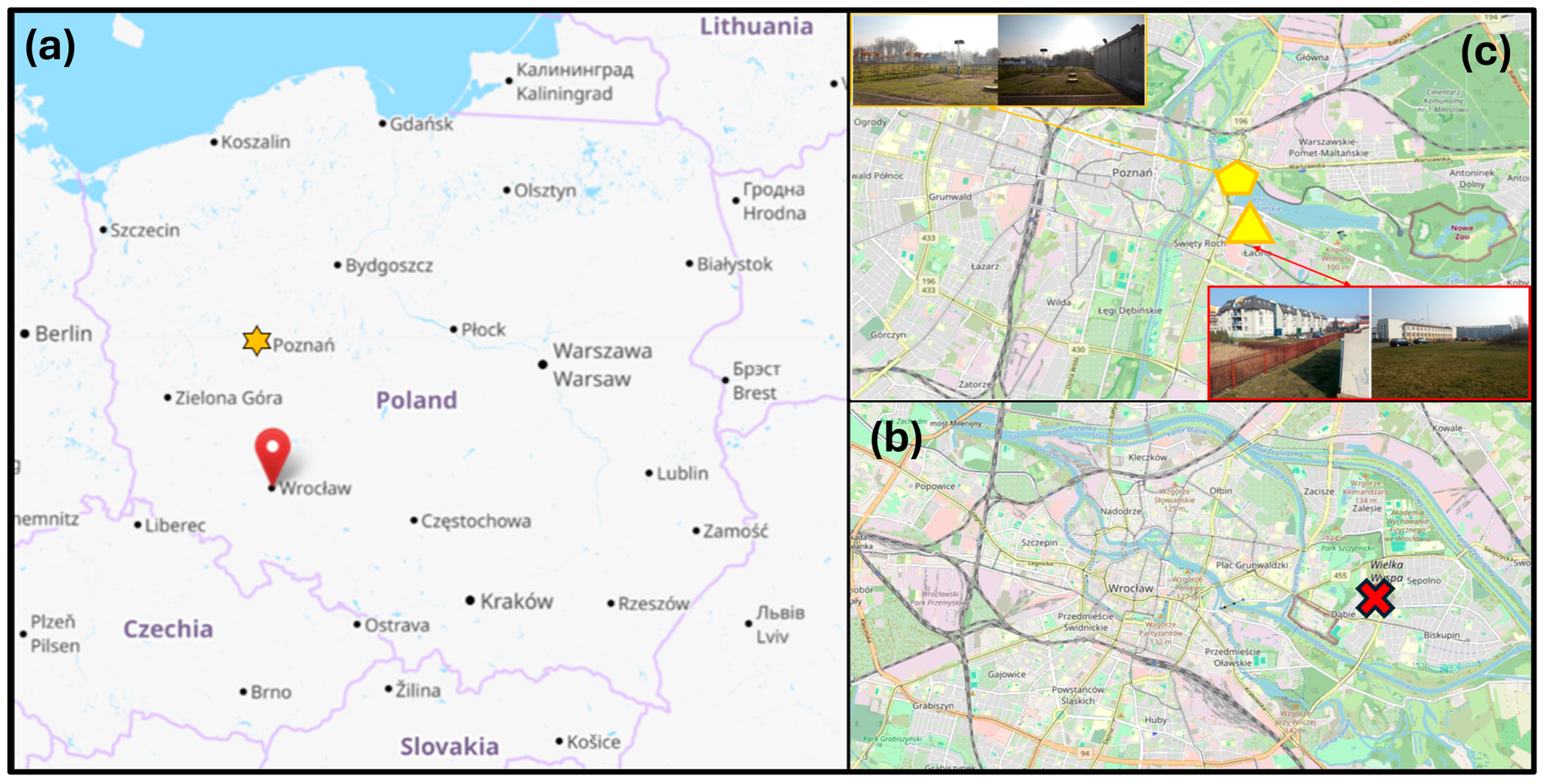
The PM2.5 and PM10 samples were collected in two large cities, Wrocław and Poznań, in Poland (Figure 1a). The measurement stations used for collecting samples were urban traffic and urban background stations. The term urban background station refers to a measurement site located away from direct emission sources such as major roads or industrial facilities, and typically surrounded by residential, green, or mixed-use areas. According to the European Environment Agency (EEA), a background station is a monitoring point where pollution levels are representative of the average exposure for the general population or vegetation [9]. These stations are designed to measure pollutant concentrations that reflect the general urban background across a wider area (typically several square kilometers), without being significantly influenced by any single emission source. Accordingly, the sampling points selected in this study to represent urban background conditions (Poznań Polanka, Wrocław Kosiby) were carefully chosen to avoid the influence of local point-source emissions. They were intended to reflect the integrated impact of multiple urban or regional sources located upwind. In contrast, the sampling point located at Jana Pawła II Street in Poznań represents a traffic station. According to the EEA, a traffic station is a site “situated such that its pollution level is determined predominantly by the emissions from nearby road traffic” [9]. Such stations are typically located within 10 m of the road edge and are used to assess the population’s exposure to traffic-related air pollution in urban environments. In Poznań, samples were collected from two stations (urban background and a traffic station), while in Wrocław, samples were collected at an urban background station.

2.2. Study Area 1—Wrocław, Poland

Wrocław (≈640,000 inhabitants) is located in the Oder valley of south-western Poland, ~80 km north-east of the Sudetes foothills. The location within the “Wrocław–Opole thermal area” is associated with frequent foehn-type downslope winds, while a pronounced nocturnal urban-heat-island (UHI) is intensified under calm, cloud-free anticyclonic conditions. Ventilation is inhibited by the valley topography; consequently, fog and high relative humidity are commonly observed. The temperate climate is mildly continental, with a mean annual temperature of 9 °C (−0.4 °C in January, 18.8 °C in July) and modest precipitation (~583 mm yr−1); south-westerly winds are predominant [23].
PM2.5 and PM10 were sampled at an urban-background sampling point established in the University of Wrocław’s meteorological garden (Figure 1b) during the heating period (9–26 January 2016) and late spring (9–23 May 2016). Regional monitoring data show that legal limits for SO2, NO2, CO and trace metals are rarely exceeded, whereas winter benzo(a)pyrene (B[a]P) from domestic coal combustion remains problematic [24]. Anti-smog legislation and the “Clean Air” program have led to a ~83% reduction in B[a]P since 2013, and the Wrocław agglomeration is currently classified as Class A [25]. The sampling point, therefore, provides a representative baseline for quantifying seasonal aerosol doses.

2.3. Study Area 2—Poznań, Poland

Poznań (≈540,000 inhabitants) is situated on the Warta River within the Wielkopolska Lakeland, encompassing three low-relief units—the Poznań Lakeland, Września Plain and the Warta Gorge at 80–120 m a.s.l. Polar-maritime air masses predominate, producing westerlies of 2–10 m s−1 and a mean annual rainfall of 634 mm; mean monthly temperatures range from −1 °C (January) to 18.2 °C (July). Winter inversions promote smog episodes, although a ring-and-wedge green infrastructure partly enhances urban ventilation [26,27].
Two functionally distinct sampling points (urban-background and traffic) were selected (Figure 1c):
  • Poznań–Polanka (urban background)—a 5 m-high platform in a mixed residential–recreation zone close to Lake Malta, free from direct traffic emissions,
  • Poznań–Jana Pawła II (traffic)—2 m above ground and <20 m from a six-lane arterial road carrying >40,000 vehicles day−1.
PM2.5 (both points) and PM10 (traffic point) were sampled in the heating season (25 October–22 November 2016) and summer (5 June–2 July 2017), corresponding to the Northern Hemisphere seasons. The Poznań–Polanka monitoring station is equipped solely with a PM2.5 sampler, precluding direct comparison with the PM10 data collected at the other two stations (Wrocław and Poznań Jana Pawła II). Stove-replacement incentives and anti-smog bylaws have resulted in an absence of PM10 and PM2.5 exceedances in 2023 and, for the first time, compliance with the B[a]P target in the Poznań agglomeration; nevertheless, winter B[a]P peaks persist in municipalities reliant on solid-fuel heating [27]. The paired background-traffic design enables vehicular contributions to be distinguished from broader heating-related emissions and complements the single-point study in Wrocław.

2.4. Air Sampling

Samples of PM2.5 and PM10 were collected using Harvard impactors (MS&T Area Samplers, Air Diagnostics and Engineering, Inc., Harrison, ME, USA) and low-volume samplers (MicroPNS LVS 16, Umwelttechnik MCZ GmbH, Bad Nauheim, Germany), depending on the location (Table 1 and Table 2) [28,29]. In all cases, quartz filters (PALLFLEX Tissuquartz or Whatman QM-A) were used as the substrate. The sampling time was 24 h.
In Wrocław, air was sampled at a flow rate of 10 dm3/min using Harvard impactors. In Poznań, at the Jana Pawła II traffic station, Harvard-type samplers were also used. At the Polanka station (urban background), a sequential low-volume sampler operated at 2.3 m3/h. All sampling volumes were monitored using calibrated flow meters (Actaris type), and filters were pre- and post-weighed in controlled laboratory conditions following gravimetric protocols. Sampling height ranged from 2 to 5 m above ground level, depending on the site.
The sampling methodology varied slightly across stations. In Wrocław (urban background), PM2.5 and PM10 were collected using a standard Harvard impactor with a 10 dm3/min flow rate. In contrast, the Poznań traffic station used the same sampler type, while the Polanka background station used a sequential LVS system with a higher flow rate.
Moreover, the selected monitoring locations meet the criteria specified in the Regulation of the Minister of the Environment of 13 September 2012 on the assessment of substances in ambient air [31]. Additionally, the sites were chosen due to the high population density in their vicinity. Air quality measurements in urban areas aim to assess the impact of air pollution on human health, and in the selected locations, pedestrians, cyclists, and resident traffic are considerable.
Analyses conducted by the Chief Inspectorate of Environmental Protection (GIOŚ) show that particulate concentrations do not differ significantly between October and November and January; they rather depend on prevailing meteorological conditions, which in turn were similar in the indicated periods and locations. Furthermore, long-term analyses by GIOŚ indicate that pollution concentrations at the same types of stations can be compared with each other due to the similar types of emission sources near the stations. The methodology for calculating PM concentrations was analogous in both cases and in accordance with the standard PN-EN 12341:2014-07 [32].

2.5. Exposure Dose Model 2 (ExDoM2)

The dose of PM deposited in the respiratory system was calculated using the ExDoM2 dosimetry model. This model allows the prediction of deposited dose in regional deposition per the ICRP (International Commission on Radiological Protection) compartments: the extrathoracic airways (ET1 for the anterior nose and ET2 for the posterior nasal passages), the thoracic airways (BB for bronchial and bb for bronchiolar), and the alveolar–interstitial (AI) region. The ExDoM 2 dosimetric model was developed to account for particle concentrations to determine the deposited dose of inhaled particles [33]. A full description of the model and its operation was provided by Aleksandropoulou and Lazaridis (2013) [34]. The model allows the selection of the human exposed subjects, such as age and gender, as well as the estimation of the time spent in specific environments. The exposure was adjusted by inhalability, which is the fraction of aerosol particles that enter the HRT during breathing. The PM deposition fractions for each region of the respiratory tract were calculated after accounting for the filtering effect of the preceding airways. The deposited dose depends on several determinants, including exposure concentration, physicochemical characteristics of the PM, exposure duration, activity pattern, and individual characteristics of the exposed subject, such as respiratory physiology, physical activity intensity, breathing mode, sex, and age, among others [34]. For the simulations with ExDoM2, the following information was provided as input: (1) PM concentration; (2) particle size distribution; (3) duration of exposure; (4) particle density and shape factor; (5) wind speed; (6) exposed-subject demographic profile; and (7) breathing mode and activity intensity. Importantly, ExDoM2 does not allow age to be entered as a continuous value, nor does it provide separate fields for sex and age. Instead, these characteristics are implemented as a single categorical input (demographic profile) selected from a predefined list of combined sex/age options: Male-Adult, Male–15 years old, Male–10 years old, Male–5 years old, Female–adult, Female–15 years old, Female–10 years old, Female–5 years old, and Baby–1 year old.
Dose calculations were performed for a healthy Caucasian subject represented by the ExDoM2 category Male–Adult, assuming nasal breathing and a typical sedentary time-activity pattern. Three activity levels were considered—sleeping, sitting/resting, and light activity—corresponding to breathing rates of 0.45, 0.54 and 1.5 m3/h (reference values for adult Caucasian males), respectively [13]. The exposure duration was set equal to the sampling period. In the absence of wind-speed measurements for the sampling period, wind speed was fixed at 0 m/s for all simulations to ensure consistent parameterization across scenarios. Particles were treated as spherical, so the shape factor was set to 1. Particle density can vary markedly due to diurnal and seasonal changes that affect the effective density of ambient aerosols [35]. Reported particle-density values commonly span approximately 1–3 g/cm3, with particle size, source, chemical composition, and ambient conditions playing a key role [36,37,38]. Herein, a particle density of 1.5 g/cm3 was adopted, consistent with reported values.

2.6. Statistical Analysis

The Wilcoxon rank-sum test (Mann–Whitney U test) was applied to assess whether there were statistically significant differences in daily PM2.5 and PM2.5–10 concentrations between the analyzed sampling periods (different years and stations) [39]. The Wilcoxon rank sum test is a non-parametric test that requires no specific distribution of the measurements. The test examines the null hypothesis that the two independent samples (x and y) originate from populations with the same median, against the alternative hypothesis that the medians are different. In this analysis, x and y represent daily concentration values measured during different time periods. The output of the test is given by the parameter h, where h = 1 indicates rejection of the null hypothesis (significant differences are observed), while h = 0 indicates that the null hypothesis cannot be rejected. The results were interpreted at the 5% significance level (α = 0.05).

3. Results and Discussion

3.1. Particulate Matter Mass Concentrations

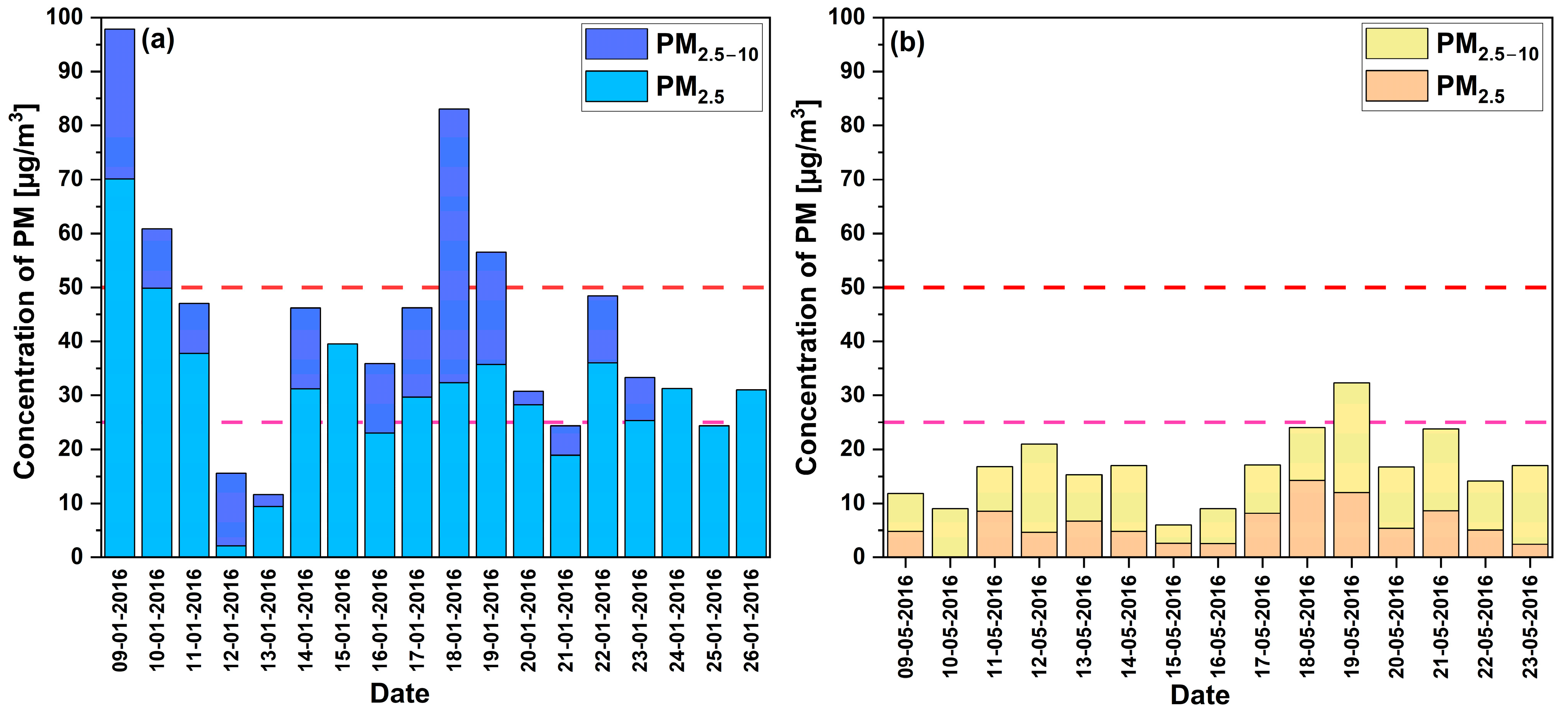
Daily PM concentrations for the three measuring stations are presented in Figure 2, Figure 3 and Figure 4. For Wrocław, during the winter season (Figure 2a), daily concentrations of PM2.5 and PM2.5–10 did not exceed 71 µg/m3 and 51 µg/m3, respectively. In contrast, during the spring season (Figure 2b), daily concentrations of PM2.5 and PM2.5–10 remained below 15 µg/m3 and 21 µg/m3, respectively. The highest concentration was recorded on 9 January 2016, with a combined PM2.5 and PM2.5–10 level of 98 µg/m3. A comparison between winter and spring seasons indicates higher concentrations during the winter due to the heating season [40]. The average fine and coarse fraction concentrations were 31 µg/m3 and 12 µg/m3 in winter, and 6 µg/m3 and 11 µg/m3 in spring, respectively. Additionally, the winter season was characterized by a dominance of the fine fraction, whereas the spring season showed a predominance of the coarse fraction.
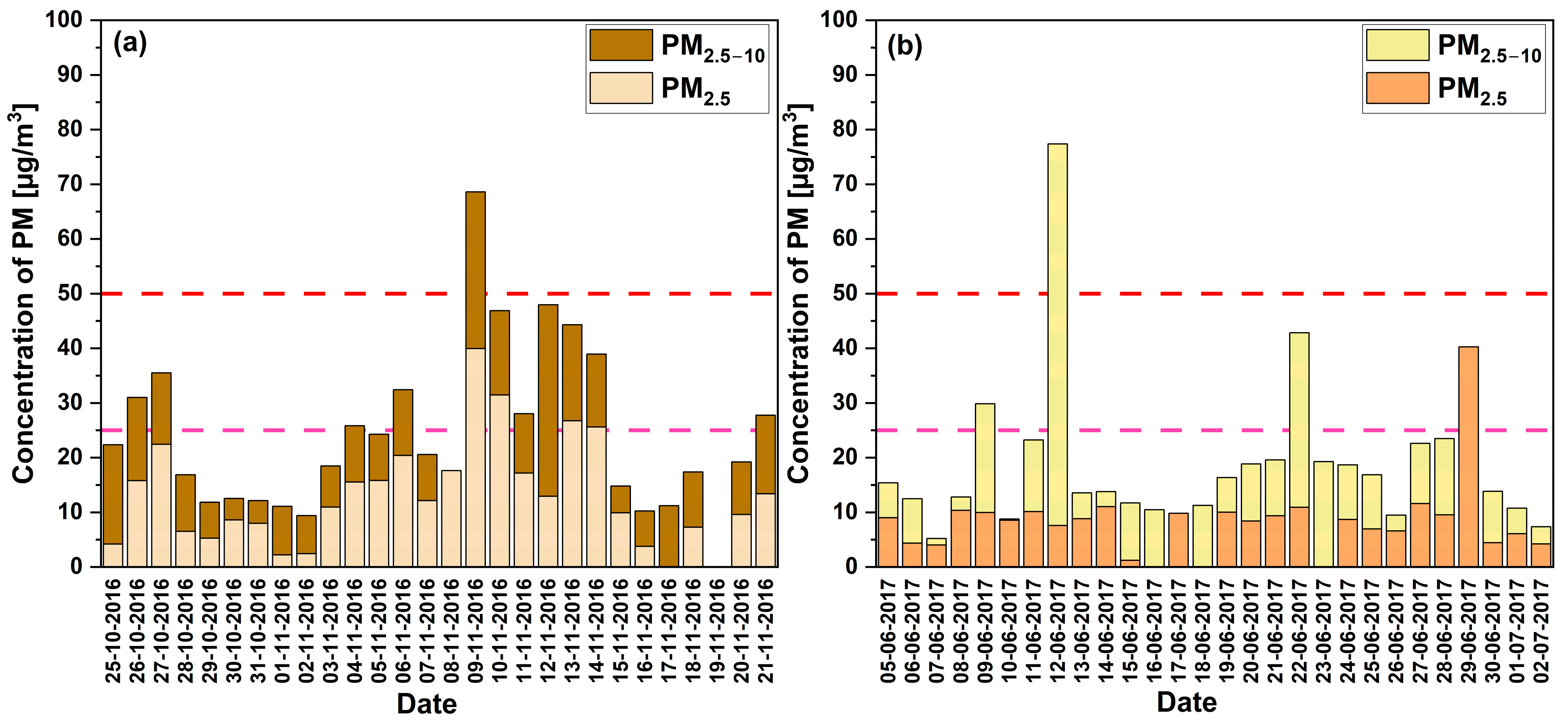
Mass concentrations obtained at the Jana Pawła II street station in Poznań are shown in Figure 3. During the autumn season (Figure 3a), the mean concentrations of PM2.5 and PM2.5–10 were 14 µg/m3 and 12 µg/m3, respectively. In the summer season (Figure 3b), the mean concentrations were 9 µg/m3 and 12 µg/m3, respectively, for both fractions. Average PM2.5 concentrations were higher in the autumn season at this location. Significant seasonal differences were observed in PM2.5 concentrations. However, no significant seasonal differences were found for the PM2.5–10 fraction, as presented in Table 3.
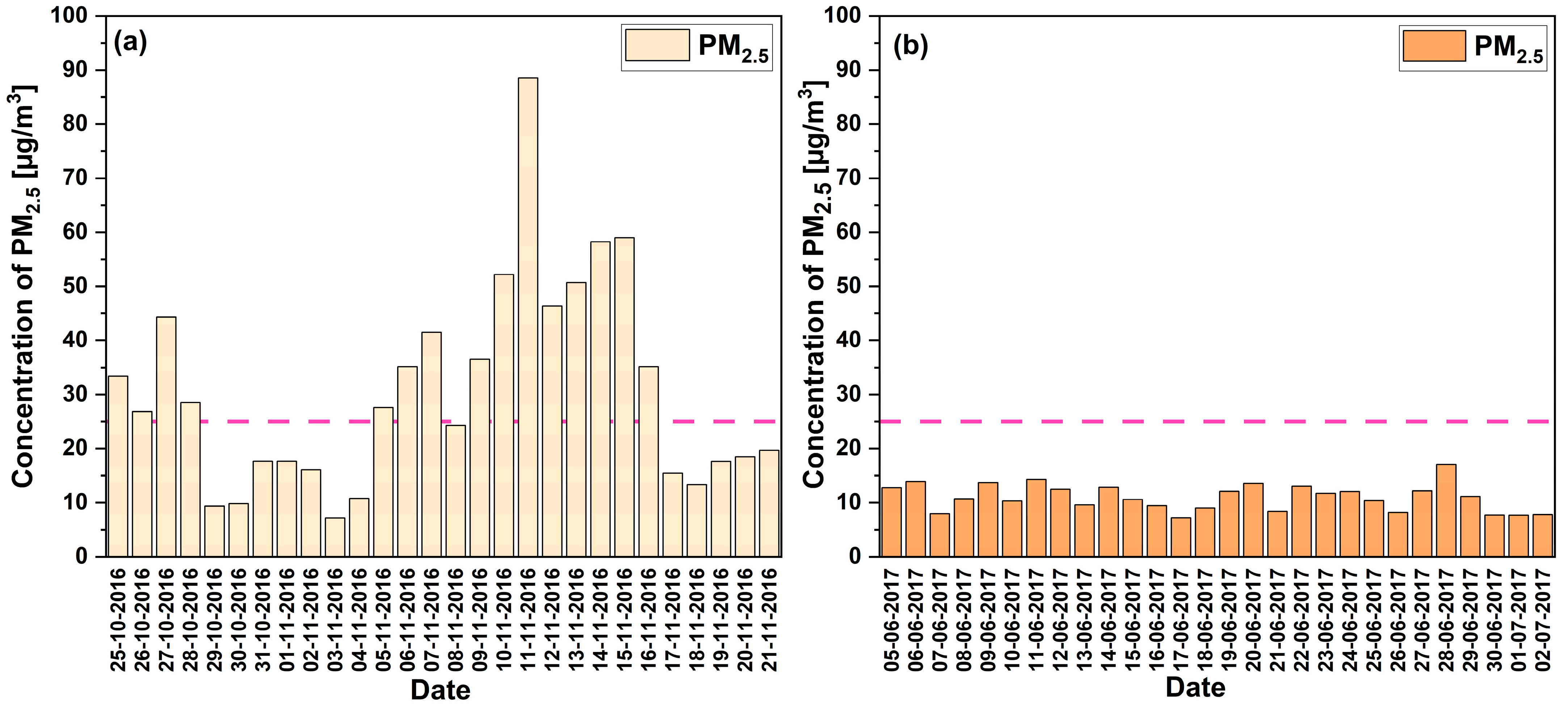
Data from the Poznań–Polanka urban background monitoring station in Poznań (Figure 4) indicate that PM2.5 concentrations were higher during the autumn season (Figure 4a) compared to the summer (Figure 4b). The highest recorded concentration was 89 µg/m3 on 11 November 2016, whereas the peak concentration during the summer season was 17 µg/m3. These findings highlight the notably elevated PM2.5 concentrations during the autumn season at Poznań–Polanka station.
The concentrations of PM2.5 during the autumn and winter seasons ranged from 2 to 40 μg/m3 at Jana Pawła II Street, and from 7 to 89 μg/m3 at Polanka Street. The average concentration was 15 μg/m3 at Jana Pawła II Street and 31 μg/m3 at Polanka Street, respectively. The higher concentrations of PM2.5 at the urban background site (Polanka Street) than at the traffic site (Jana Pawła II Street) are consistent with a significant contribution of emissions from the municipal and household sectors during the winter season. During the second measurement session (spring and summer season), PM2.5 concentrations were considerably lower, ranging from 1 to 11 μg/m3 at Jana Pawła II Street and from 7 to 17 μg/m3 at Polanka Street. The average PM2.5 concentrations during this period were 8 μg/m3 at Jana Pawła II Street and 11 μg/m3 at Polanka Street. Compared to the autumn and winter season, PM2.5 mean concentrations in the spring and summer were 50% lower at Jana Pawła II Street and 64% lower at Polanka Street. However, it is important to note that PM concentrations during the autumn and winter season at both sites exceeded the daily limit values, recommended by the WHO as safe for human health and life (PM10—50 μg/m3, PM2.5—25 μg/m3) during the sampling period (2016–2017) [41]. The differences in PM concentrations between the heating and non-heating seasons in Poland are influenced by many different factors. The energy production sector in Poland is based on the combustion of hard coal and lignite, due to the abundance of domestic deposits and widespread accessibility to these fuels. Flue gases released during combustion in power plants and combined heat and power plants contribute to particle formation (SOx, NOx, organic compounds), affecting PM concentration throughout the year, but especially during the heating season. The main factor affecting air quality in large urban agglomerations is the emissions from the municipal and household sectors, compounded by meteorological conditions that hinder the dispersion of pollutants [42,43,44]. Studies also indicate that PM concentrations at urban background stations are primarily influenced by the transport of pollutants from nearby towns and even long distances. Poland shares borders with countries that also experience high PM concentrations, resulting mainly from the combustion of fossil fuels. These pollutants can be transported by wind and contribute to elevated concentrations over Polish territory [44]. When considering the aerosanitary situation across Europe, cities in northern Europe (e.g., Helsinki, Copenhagen, Stockholm, London) exhibit no significant seasonal variation in particulate matter concentrations. In addition, concentrations in these cities are below European standards. This stability is mainly due to favorable climatic conditions and the widespread use of well-developed gas networks for heating.
The Wilcoxon test revealed statistically significant seasonal differences in PM2.5 concentrations at all analyzed stations. In Wrocław, differences were observed between winter 2016 and spring 2016. In Poznań, both monitoring sites (Polanka and Jana Pawła) showed significant contrasts between autumn 2016 and summer 2017. For the PM2.5–10 fraction, seasonal variability was detected only in Wrocław, whereas no statistically significant differences were found at the Poznań–Jana Pawła station. PM2.5 concentrations differed significantly between the two Poznań stations in both autumn 2016 and summer 2017.

3.2. Deposited Mass of PM in the Human Respiratory Tract

3.2.1. Wrocław

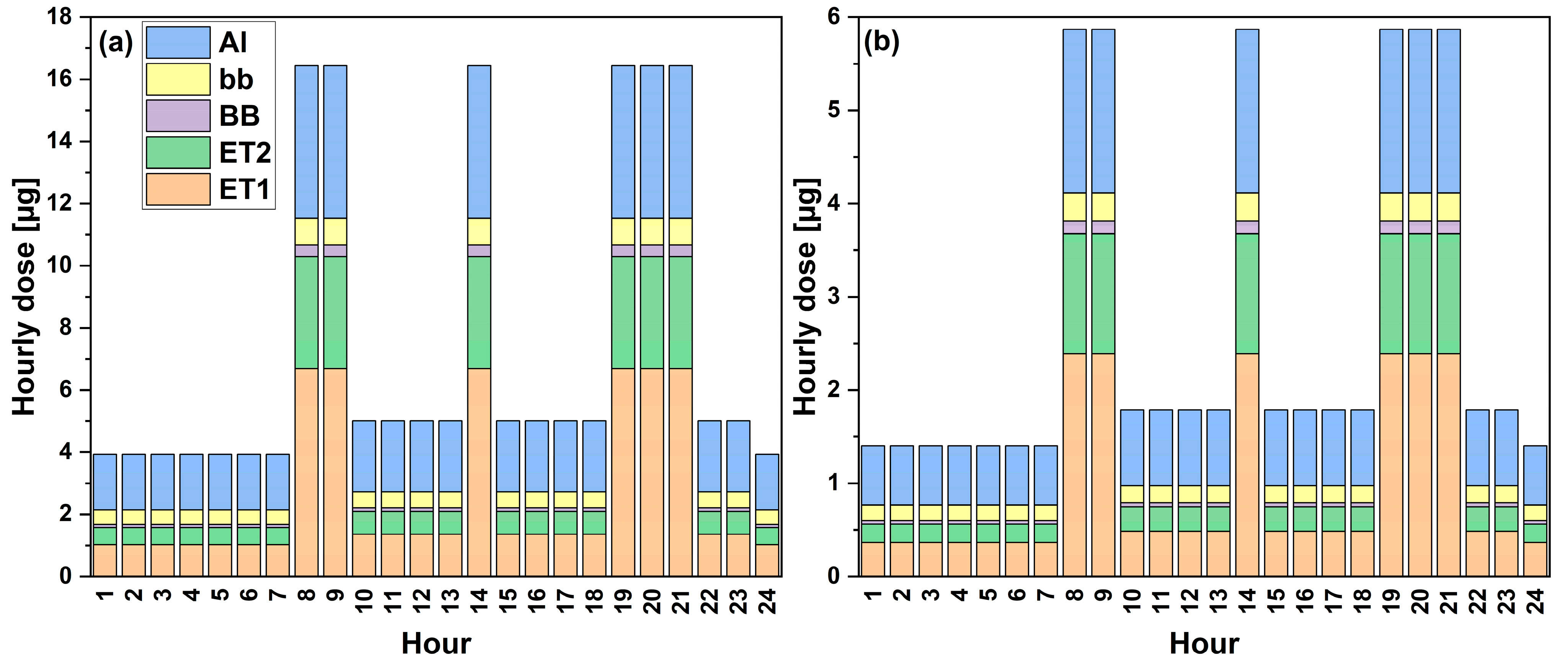
Figure 5 shows the hourly PM deposited dose in HRT for samples collected in Wrocław. Hourly predictions represent averages for the various hours represented by daily predictions. The highest hourly dose of PM2.5 recorded was 17 µg during winter and 4 µg during spring. In both periods, an increase in the dose was observed during peak traffic hours (hours: 8–9, 14, and 19–21). During these peak hours, the dose was 3–4 times higher than during non-peak hours. Moreover, during the remaining hours of the day and evening, the dose was approximately 20% higher than during the night and early morning (non-rush hours).
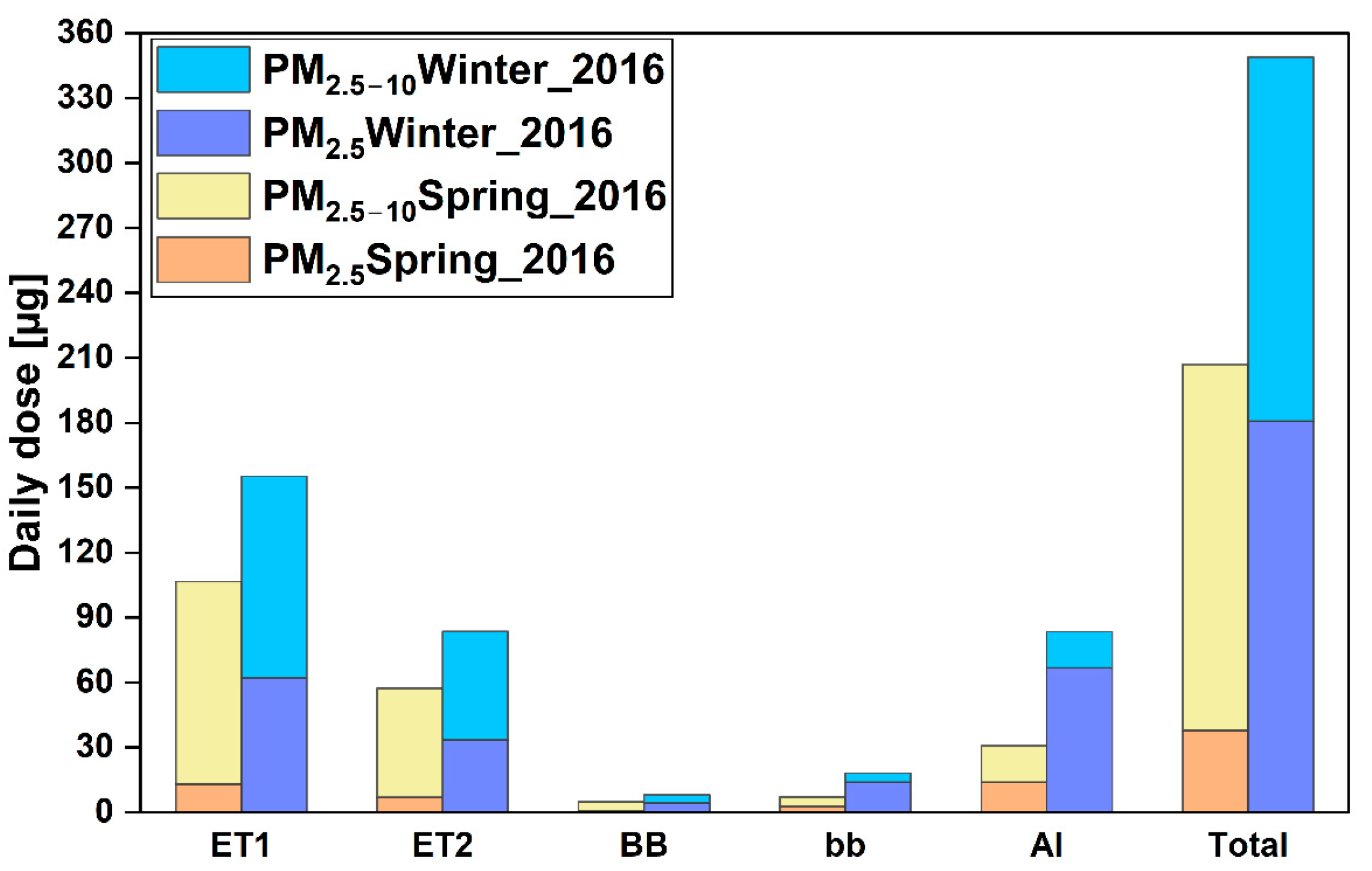
The mass fraction of PM deposited in the extrathoracic region was 40–63% for fine particles in both seasons, while for coarse particles it was 76–92%. These values indicate that most of the PM is deposited in the ET region, as particle size strongly influences deposition location. The lowest dose deposition occurred in the thoracic airways (8–15% for PM2.5 and 4–7% for PM2.5–10). Similar results were reported by Samek et al. (2024) in Krakow, Poland, where the dose deposited in the ET region ranged from 78 to 91% in 2019 and 73–89% in 2022 [45]. Mammi-Galani et al. (2016) reported a total deposited PM10 dose of 281 µg in the HRT at an urban background station in Rome (2.7 million residents) during the spring season 2006 [46]. They also reported the PM10 deposited dose of 274 µg in Zabrze (200,000 residents), Poland, in January–March 2008. Figure 6 shows that the daily total deposited PM10 dose was approximately 60% higher on winter days compared to spring days. They were equal to 350 µg and 207 µg in winter and spring, respectively. The highest daily deposited dose of coarse particles was observed in the ET region, both in the anterior and posterior nasal passages (ET1 and ET2). The daily dose deposited in ET1 and ET2 was 155 µg and 84 µg in winter, respectively, and 107 µg and 58 µg in spring, respectively. As expected, the daily deposited dose in the alveolar–interstitial (AI) region was higher for PM2.5 than for PM2.5–10, as smaller particles tend to be deposited in this region. They were equal to 67 µg and 17 µg in winter for the fine and coarse fractions, respectively, and 14 µg and 17 µg in spring for PM2.5 and PM2.5–10, respectively. Ultrafine particles are deposited mainly in the AI region due to the diffusion mechanism.
Particles from different sources differ in size as well as in the regional deposition and cause different effects on human health. Specifically, the exposure to fine particles primarily indicates sources such as heating and traffic emissions, which lead to an increased deposited dose in the AI region due to their small size. Conversely, coarse particles often originated from natural sources, such as resuspended dust, resulting in higher deposition in the ET region due to their larger size.

3.2.2. Poznań Jana Pawła II Street

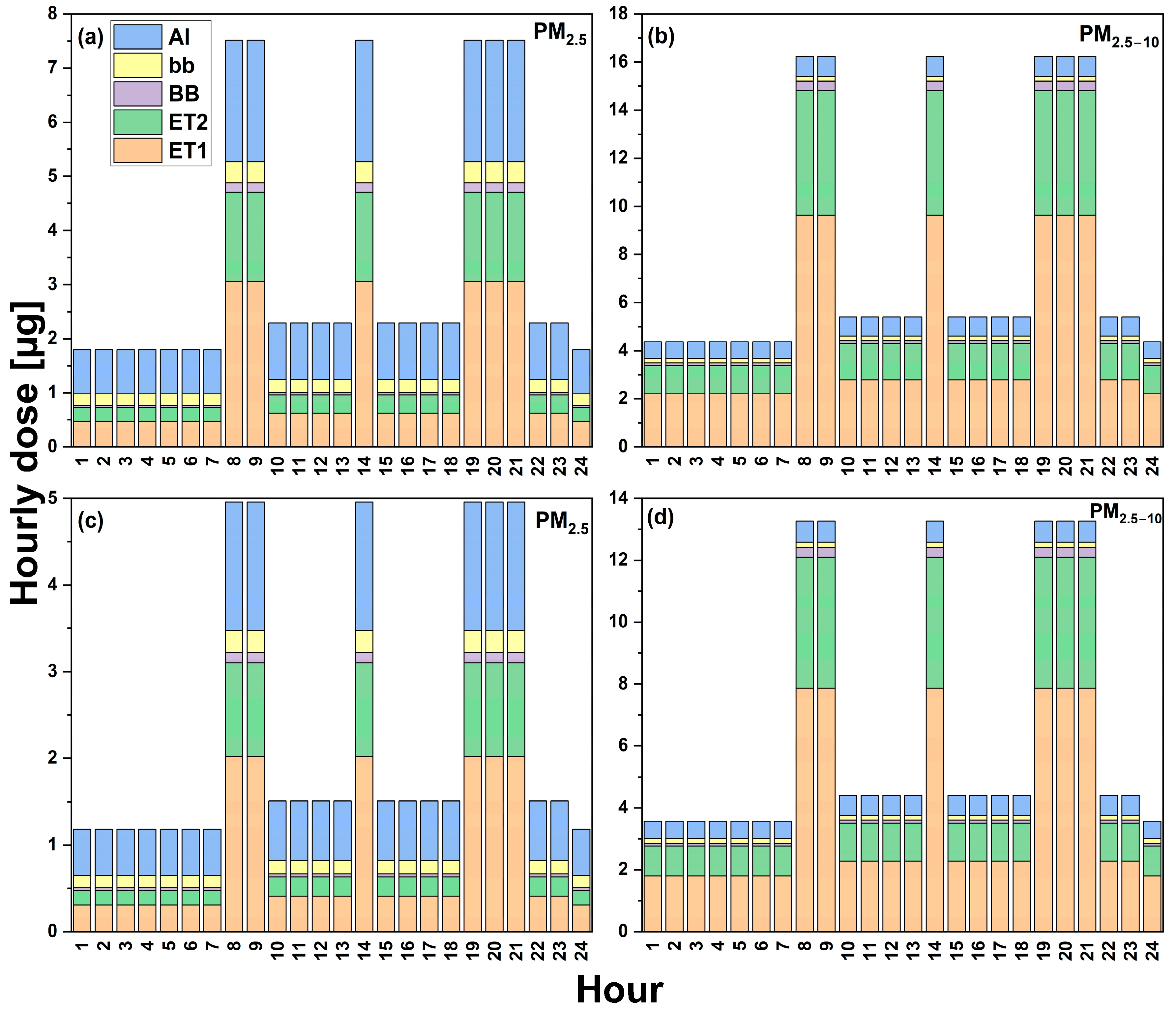
Results from Figure 7 show that the difference between autumn and summer seasons is not as pronounced as that observed for samples from Wrocław. In the autumn season, the highest hourly dose for the fine fraction was 8 µg, while for the coarse fraction it was 16 µg. On the other hand, during the summer season, the highest hourly dose for PM2.5 was 5 µg, and for PM2.5–10 was 13 µg. The relatively small differences between seasonal results can be attributed to the location of the monitoring station, situated near a busy road with consistently high traffic throughout the year.
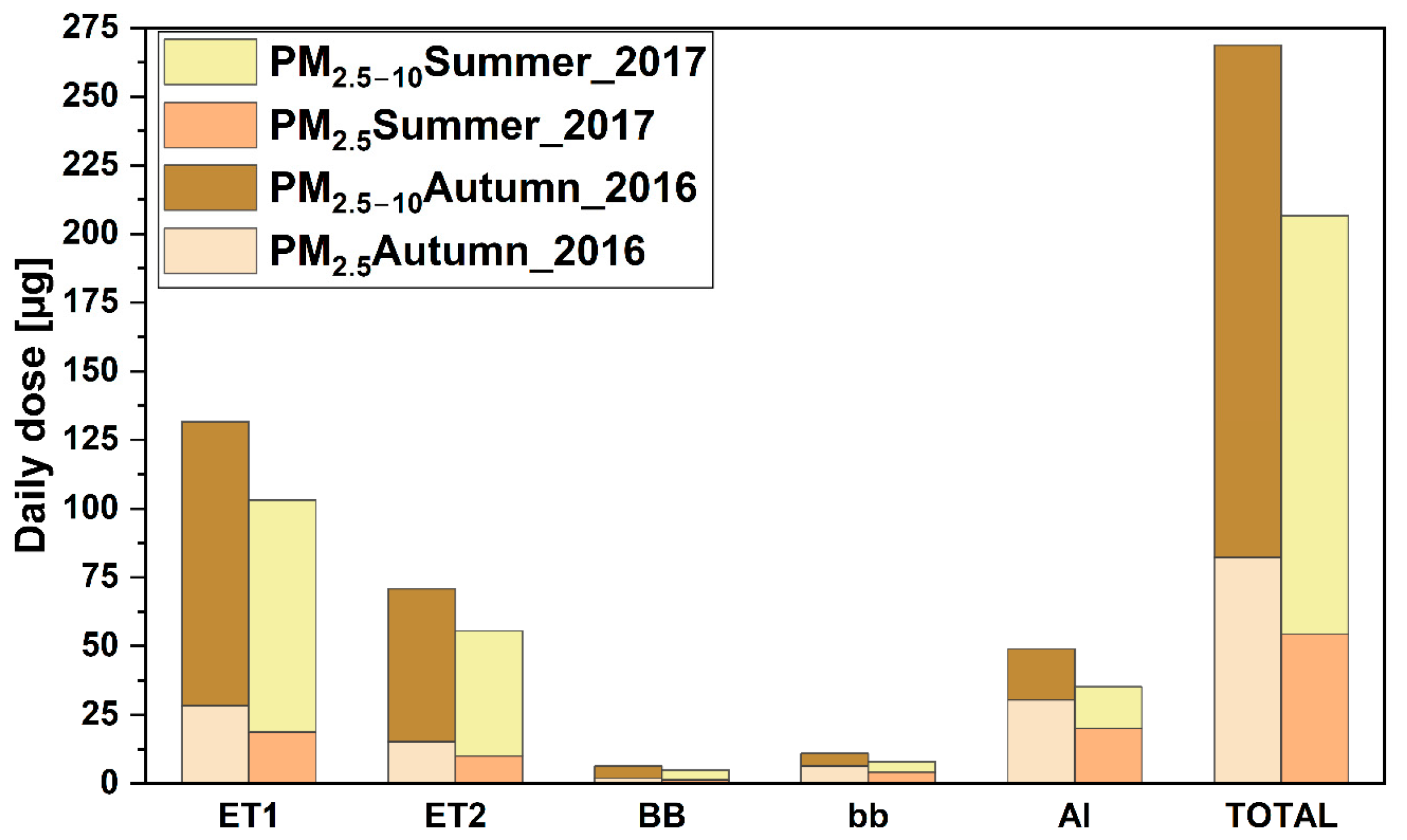
During rush hours, the hourly dose deposited in the extrathoracic airways was approximately 6.5 times higher than during nighttime hours (from midnight to 7 am). The total daily PM10 deposited dose in the HRT during the autumn and summer seasons was 269 µg and 207 µg, respectively. The distribution of deposited doses is shown in Figure 8. For comparison, Mammi-Galani et al. (2016) reported a daily deposited PM10 dose of 173 µg during the summer season of 2001 at a traffic station in Athens (4 million residents) [46]. Similarly, Chalvatzaki et al. (2018) recorded total daily deposited doses for adult males of 378 µg in Lisbon (550,000 residents) in 2001 and 191 µg in Athens during 2014/2015 [47].
The highest daily deposited dose of coarse particles was observed in the ET region, both in the anterior and posterior nasal passages (ET1 and ET2). The daily dose deposited in ET1 and ET2 was 132 and 71 µg in autumn, and 103 and 55 µg in summer. As expected, the daily deposited dose in the alveolar–interstitial (AI) region was higher for PM2.5 than for PM2.5–10, as smaller particles tend to be deposited in this region. They were equal to 30 and 18 µg in autumn, and 20 and 15 µg in summer for the fine and coarse fractions, respectively. Ultrafine particles are deposited mainly in the AI region due to the diffusion mechanism.

3.2.3. Poznań Polanka

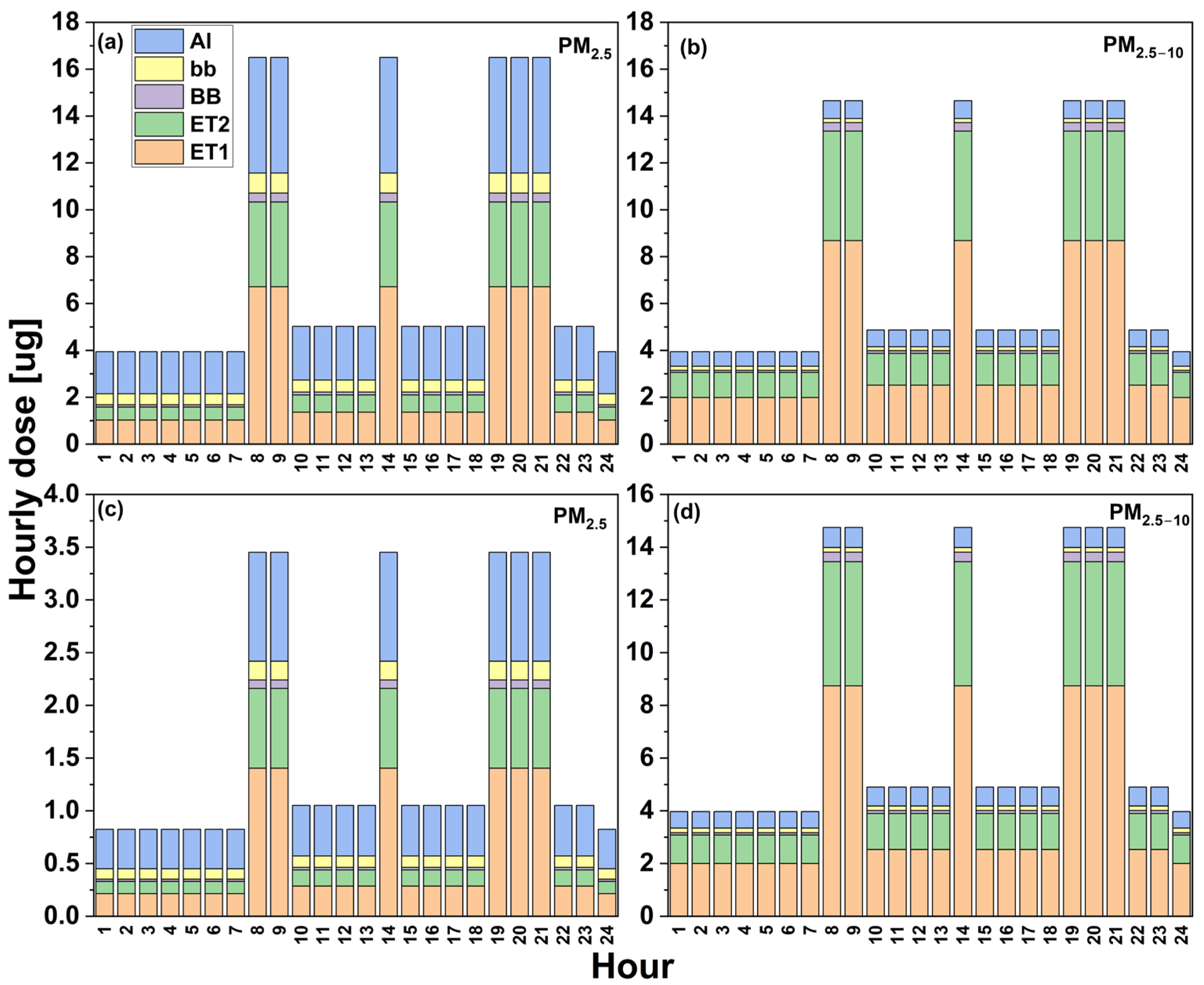
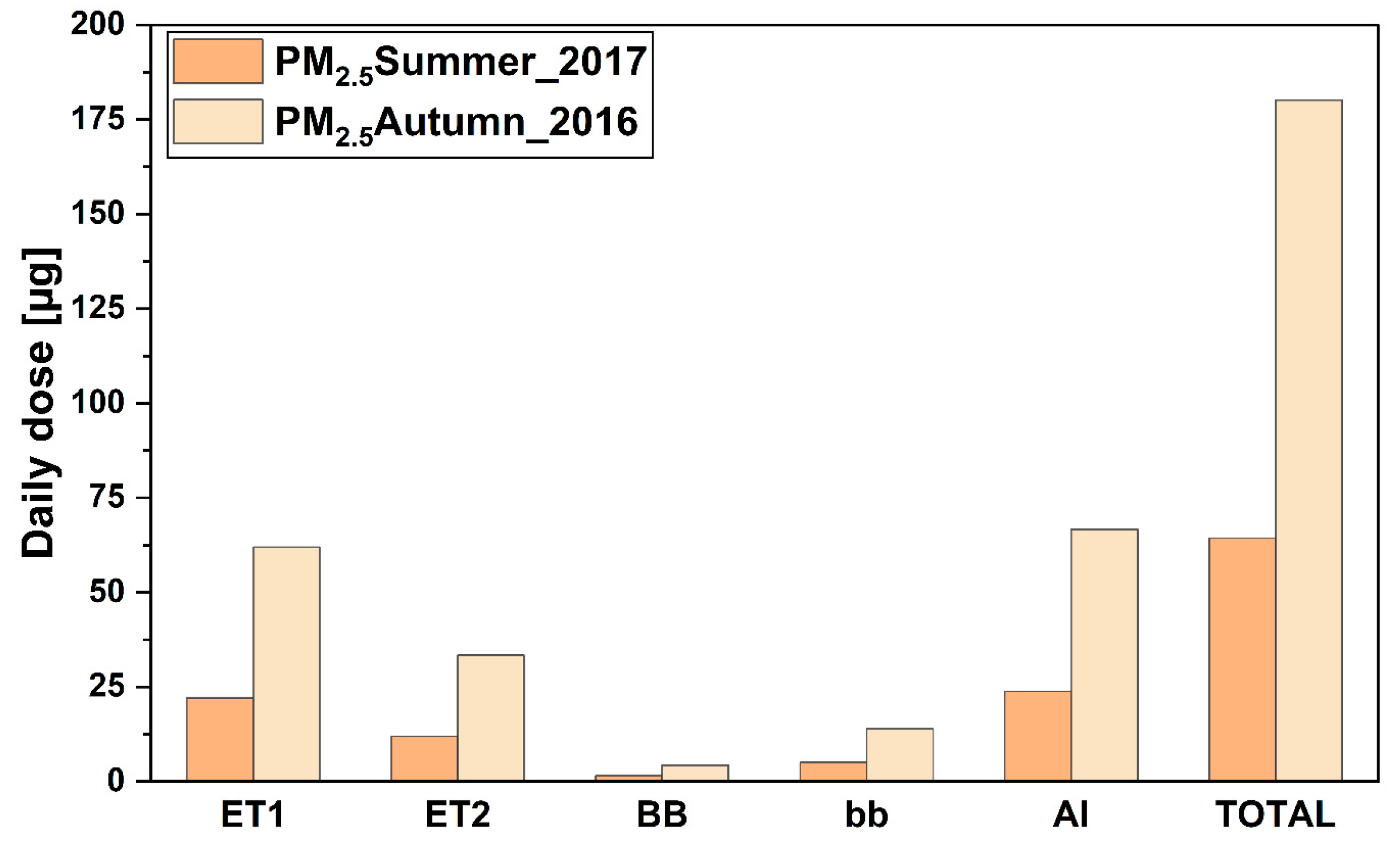
Deposited hourly dose data for PM2.5 at the Poznań Polanka station are shown in Figure 9. Similar to the Poznań Jana Pawła II station, a higher deposited dose was observed during the autumn period compared to the summer. The highest hourly dose recorded in autumn was 16 µg, while in summer it was 6 µg. Hourly doses ranged from 4 to 16 µg in autumn and from 1 to 6 µg in summer. The total deposited PM2.5 dose at the Poznań Polanka station during autumn 2016 was 2.8 times higher than during summer 2017, as shown in Figure 10. Figure 9 and Figure 10 present only PM2.5 data due to limitations in the sampling equipment at the Polanka urban background station.
A comparison of the deposited doses for the same seasons between the Poznań Jana Pawła II station and the Poznań–Polanka stations for fine fraction revealed higher doses at Poznań–Polanka during autumn, equal to 180 µg and 82 µg in Poznań–Polanka and Poznań Jana Pawła II station, respectively. The deposited dose at Polanka was more than twice as high as at Jana Pawła II during the autumn season. In contrast, the difference during the summer season was smaller, with the total daily dose at Poznań Polanka station being 18% higher than at Poznań Jana Pawła II and equal to 65 µg and 55 µg for Polanka and Jana Pawła II station, respectively.
The comparison of average PM2.5 doses in Wrocław and Poznań–Polanka as urban background stations is consistent with marked seasonal variations, reaching 180 µg in winter and autumn at both sites, but declining to 30 µg (Wrocław, spring) and 65 µg (Poznań-Polanka, summer).
Anti-smog resolutions were enacted in Wrocław and Poznań in 2017 (implemented in 2018). Samples were thus collected immediately prior to their enforcement. This study establishes baseline PM deposition doses in the HRT under pre-regulation conditions, against which future measurements can assess intervention efficacy.
Wrocław and Poznań represent major academic centers in Poland, characterized by substantial transient populations that amplify seasonal exposure to air pollution. Pronounced seasonal variations in PM concentrations and corresponding deposited doses were evident, with elevated levels during the heating season. For comparison, PM10 doses in Zabrze reached 274 µg [44], whereas this study documented 350 µg and 269 µg (PM10) during heating periods in Wrocław and Poznań, respectively.
Recent ‘Healthy Cities Index’ rankings identify Poznań, rather than Wrocław, as providing superior living conditions, attributable to enhanced infrastructure, environmental quality, and public health services. Both cities exhibit comparable lifestyle disease burdens (obesity, type 2 diabetes, cardiovascular disease, mental disorders). Inter-city disparities primarily stem from environmental factors, lifestyle differences, and air quality, with Wrocław experiencing more frequent exceedances, which may exacerbate cardiorespiratory morbidity.

4. Conclusions

Similar PM2.5 and PM2.5–10 concentrations were observed at the Wrocław urban background station during spring and the Poznań traffic station during summer (average 9 µg/m3). For PM2.5, the concentrations recorded at the Poznań–Polanka urban background monitoring station were within the same range as those observed at Poznań Jana Pawła II (summer) and Wrocław (spring). Autumn PM2.5 concentrations at the Poznań traffic station were equal to 14 µg/m3. Winter PM2.5 concentrations in Wrocław were similar to those recorded in Poznań–Polanka during autumn, equal to 31 µg/m3. Despite anti-smog resolutions and household heating subsidies, winter air quality deterioration persists in both cities. This may reflect ongoing solid fuel combustion emissions. Expanding routine monitoring under the State Environmental Monitoring Program could enable detailed source analysis and support EU-compliant air protection measures. Results indicated that coarse particles had a higher deposition rate in the extrathoracic airways, while fine particles were mainly deposited in the alveolar region. The daily total PM2.5 deposition doses were around 30 µg in Wrocław (spring) and 65 µg at the Poznań–Polanka station (summer), increasing to 180 µg in Wrocław (winter) and 180 µg at Poznań–Polanka (autumn). The daily total PM2.5–10 deposited doses were 180 µg in Wrocław (spring and winter) and 150 µg at the Poznań, Jana Pawła II station (summer). As well as 200 µg in Poznań, Jana Pawła II (Autumn). When comparing urban background stations (Wrocław–Kosiby and Poznań–Polanka), deposited doses of PM2.5 during non-heating seasons were found to be within a comparable range. This suggests that seasonal variability rather than intercity differences is the dominant factor shaping exposure levels. The obtained results align closely with findings from other European cities in comparable years, highlighting the significant exposure of residents to fine particulate matter. Therefore, activities aimed at reducing emissions from sources such as household heating systems (home boiler rooms) and vehicle traffic are critical for improving air quality in Polish cities. These efforts are essential to improve the air quality and, in the future, to meet the currently stricter air quality standards. After the implementation of stricter air quality standards, a similar study should be done for comparison.

Author Contributions

Conceptualization: V.M. and L.S.; Funding: L.S. and V.M.; Collection of samples, concentration of APM determination: A.C.-S., Ł.P. and I.S.; Methodology-doses: V.M., S.M.A. and M.L.; Interpretation of all data: P.G., F.M., L.S., I.S., V.M. and S.M.A.; writing—original draft preparation: P.G., L.S. and I.S. All authors have read and agreed to the published version of the manuscript.

Funding

The bilateral cooperation project (no. BPN/BPT/2021/1/00001 in Poland and no 2021.09406.CBM in Portugal) between Poland and Portugal partially financed this work.

Institutional Review Board Statement

Not applicable.

Informed Consent Statement

Not applicable.

Data Availability Statement

The datasets used and/or analyzed during the current study are available from the corresponding author on reasonable request.

Acknowledgments

This work was partially supported by the Ministry of Science and Higher Education, grant number 16.16.220.842.

Conflicts of Interest

Author Łukasz Pachurka is an employee of Galwanizer Ltd. The remaining authors declare that the research was conducted in the absence of any commercial or financial relationships that could be construed as a potential conflict of interest.

References

  1. Cohen, A.J.; Brauer, M.; Burnett, R.; Anderson, H.R.; Frostad, J.; Estep, K.; Balakrishnan, K.; Brunekreef, B.; Dandona, L.; Dandona, R.; et al. Estimates and 25-year trends of the global burden of disease attributable to ambient air pollution: An analysis of data from the Global Burden of Diseases Study 2015. Lancet 2017, 389, 1907–1918. [Google Scholar] [CrossRef]
  2. Burnett, R.; Chen, H.; Szyszkowicz, M.; Fann, N.; Hubbell, B.; Pope, C.A., III; Apte, J.S.; Brauer, M.; Cohen, A.; Weichenthal, S.; et al. Global estimates of mortality associated with long-term exposure to outdoor fine particulate matter. Proc. Natl. Acad. Sci. USA 2018, 115, 9592–9597. [Google Scholar] [CrossRef]
  3. Zhang, Y.; Ding, Z.; Xiang, Q.; Wang, W.; Huang, L.; Mao, F. Short-term effects of ambient PM1 and PM2.5 air pollution on hospital admission for respiratory diseases: Case-crossover evidence from Shenzhen, China. Int. J. Hyg. Environ. Health 2020, 224, 113418. [Google Scholar] [CrossRef] [PubMed]
  4. Henning, R.J. Particulate Matter Air Pollution is a Significant Risk Factor for Cardiovascular Disease. Curr. Probl. Cardiol. 2024, 49, 102094. [Google Scholar] [CrossRef]
  5. Jedrychowski, W.A.; Perera, F.P.; Camann, D.; Spengler, J.; Butscher, M.; Mroz, E.; Majewska, R.; Flak, E.; Jacek, R.; Sowa, A. Prenatal exposure to polycyclic aromatic hydrocarbons and cognitive dysfunction in children. Environ. Sci. Pollut. Res. 2015, 22, 3631–3639. [Google Scholar] [CrossRef]
  6. Environmental Protection Agency (EPA). Air Pollution and Cardiovascular Disease Basics (Last Updated on 24 October 2024). Available online: https://www.epa.gov/air-research/air-pollution-and-cardiovascular-disease-basics (accessed on 10 February 2026).
  7. Health Effects Institute. State of Global Air 2024; Special Report; Health Effects Institute: Boston, MA, USA, 2024; Available online: https://healtheffects.org/announcements/new-state-global-air-report-finds-air-pollution-second-leading-risk-factor-death (accessed on 10 February 2026).
  8. Lelieveld, J.; Haines, A.; Burnett, R.; Tonne, C.; Klingmüller, K.; Münzel, T.; Pozzer, A. Air pollution deaths attributable to fossil fuels: Observational and modelling study. BMJ 2023, 383, e077784. [Google Scholar] [CrossRef]
  9. European Environment Agency (EEA). Monitoring Station Classifications and Criteria for Including Them in the EEA’s Assessment Products. Available online: https://www.eea.europa.eu/en/topics/in-depth/air-pollution/monitoring-station-classifications-and-criteria (accessed on 10 February 2026).
  10. Directive (EU) 2024/2881 of the European Parliament and of the Council of 23 October 2024 on Ambient Air Quality and Cleaner Air for Europe. Available online: https://eur-lex.europa.eu/legal-content/pl/TXT/?uri=CELEX:32024L2881 (accessed on 7 December 2024).
  11. Shah, A.S.V.; Lee, K.K.; McAllister, D.A.; Hunter, A.; Nair, H.; Whiteley, W.; Langrish, J.P.; Newby, D.E.; Mills, N.L. Short term exposure to air pollution and stroke: Systematic review and meta-analysis. BMJ 2015, 350, h1295. [Google Scholar] [CrossRef] [PubMed]
  12. WHO. WHO Global Air Quality Guidelines; World Health Organization: Geneva, Switzerland, 2021; Available online: https://www.who.int/publications/i/item/9789240034228 (accessed on 10 February 2026).
  13. International Commission on Radiological Protection (ICRP). Human respiratory tract model for radiological protection. ICRP Publication 66. Ann. ICRP 1994, 24, 1–3. [Google Scholar]
  14. Chalvatzaki, E.; Chatoutsidou, S.E.; Lazaridis, M. Regional deposited dose in the human respiratory tract using different particulate metrics. J. Environ. Expo. Assess. 2022, 1, 18. [Google Scholar] [CrossRef]
  15. MPPD. Multiple-Path Particle Dosimetry Model. Available online: https://www.ara.com/mppd (accessed on 10 February 2026).
  16. Martins, V.; Cruz Minguillón, M.; Moreno, T.; Querol, X.; de Miguel, E.; Capdevila, M.; Lazaridis, M. Deposition of aerosol particles from a subway microenvironment in the human respiratory tract. J. Aerosol Sci. 2015, 90, 103–113. [Google Scholar] [CrossRef]
  17. Anjilvel, S.; Asgharian, B. A multiple-path model of particle deposition in the rat lung. Fundam. Appl. Toxicol. 1995, 28, 41–50. [Google Scholar] [CrossRef]
  18. Kuprat, A.P.; Jalali, M.; Jan, T.; Corley, R.A.; Asgharian, B.; Price, O.; Singh, K.; Colby, S.; Darquenne, C. Efficient bi-directional coupling of 3D computational fluid-particle dynamics and 1D multiple path particle dosimetry lung models for multiscale modeling of aerosol dosimetry. J. Aerosol Sci. 2021, 151, 105647. [Google Scholar] [CrossRef]
  19. Ferguson, M.D.; Migliaccio, C.; Ward, T. Comparison of how ambient PMc and PM2.5 influence the inflammatory potential. Inhal. Toxicol. 2013, 25, 766–773. [Google Scholar] [CrossRef]
  20. Löndahl, J.; Massling, A.; Swietlicki, E.; Bräuner, E.V.; Ketzel, M.; Pagels, J.; Loft, S. Experimentally determined human respiratory tract deposition of airborne particles at a busy street. Environ. Sci. Technol. 2009, 43, 4659–4664. [Google Scholar] [CrossRef] [PubMed]
  21. European Environment Agency (EEA). Air Quality in Europe 2022; EEA Report No. 05/2022; European Environment Agency: Copenhagen, Denmark, 2022. [Google Scholar] [CrossRef]
  22. Chlebowska-Styś, A. Identyfikacja Źródeł Emisji Pyłu Zawieszonego na Terenie Poznania. Ph.D. Thesis, Politechnika Wrocławska, Wrocław, Poland, 2020. [Google Scholar]
  23. Dubicki, A.; Dubicka, M.; Szymanowski, M. Klimat Wrocławia. Sr. Wrocławia-Inf. 2002, 9–20. Available online: http://eko.org.pl/wroclaw/pdf/raport2002.pdf (accessed on 10 January 2026).
  24. Pachurka, Ł.; Gruszecka-Kosowska, A.; Kobus, D.; Sówka, I. Assessment of inhalational exposure of residents of Wroclaw, Krakow and Warszawa to benzo[a]pyrene. Ecol. Chem. Eng. A 2018, 25, 39–49. [Google Scholar] [CrossRef]
  25. Chief Inspectorate of Environmental Protection (GIOŚ). Roczna Ocena Jakości Powietrza w Województwie Dolnośląskim. Raport Wojewódzki za Rok 2023. (In Polish). Available online: https://powietrze.gios.gov.pl/pjp/rwms/publications/card/2017 (accessed on 3 March 2025).
  26. Kondracki, J. Geografia Fizyczna Polski; PWN: Warszawa, Poland, 1967. [Google Scholar]
  27. Chief Inspectorate of Environmental Protection (GIOŚ). Roczna Ocena Jakości Powietrza w Województwie Wielkopolskim. Raport Wojewódzki za Rok 2023; GIOŚ: Warszawa, Poland, 2024; (In Polish). Available online: https://powietrze.gios.gov.pl/pjp/rwms/publications/card/2016 (accessed on 3 March 2025).
  28. MCZ Umwelttechnik. Low-Volume Sampler LVS16. Available online: https://www.mcz.de/umwelttechnik_23_Low-Volume-Sampler-LVS16_en.php (accessed on 11 February 2026).
  29. Air Diagnostics and Engineering, Inc. Indoor Sampling Equipment. Available online: https://airdiagnostics.com/indoor_samp_equip.php (accessed on 11 February 2026).
  30. EN 12341:2014; Ambient Air—Standard Gravimetric Measurement Method for the Determination of the PM10 or PM2.5 Mass Concentration of Suspended Particulate Matter. European Committee for Standardization: Brussels, Belgium, 2014.
  31. Minister of the Environment. Regulation of the Minister of the Environment of 13 September 2012 on assessing the contents of substances in the air. J. Laws 2012, 1032. [Google Scholar]
  32. PN-EN 12341:2014-07; Powietrze Atmosferyczne—Standardowa Metoda Grawimetryczna Oznaczania Stężenia Masowego pyłu Zawieszonego PM10 lub PM2.5. Polski Komitet Normalizacyjny: Warszawa, Poland, 2014. (In Polish)
  33. Chalvatzaki, E.; Lazaridis, M. Development and application of a dosimetry model (ExDoM2) for calculating internal dose of specific particle-bound metals in the human body. Inhal. Toxicol. 2015, 27, 308–320. [Google Scholar] [CrossRef]
  34. Aleksandropoulou, V.; Lazaridis, M. Development and application of a model (ExDoM) for calculating the respiratory tract dose and retention of particles under variable exposure conditions. Air Qual. Atmos. Health 2013, 6, 13–26. [Google Scholar] [CrossRef]
  35. Pitz, M.; Cyrys, J.; Karg, E.; Wiedensohler, A.; Wichmann, H.E.; Heinrich, J. Variability of apparent particle density of an urban aerosol. Environ. Sci. Technol. 2003, 37, 4336–4342. [Google Scholar] [CrossRef] [PubMed]
  36. DeCarlo, P.F.; Slowik, J.G.; Worsnop, D.R.; Davidovits, P.; Jimenez, J.L. Particle morphology and density characterization by combined mobility and aerodynamic diameter measurements. Part 1: Theory. Aerosol Sci. Technol. 2004, 38, 1185–1205. [Google Scholar] [CrossRef]
  37. Geller, M.; Biswas, S.; Sioutas, C. Determination of particle effective density in urban environments with a Differential Mobility Analyzer and Aerosol Particle Mass Analyzer. Aerosol Sci. Technol. 2006, 40, 709–723. [Google Scholar] [CrossRef]
  38. Malloy, Q.G.J.; Nakao, S.; Qi, L.; Austin, R.; Stothers, C.; Hagino, H.; Cocker, D.R., III. Real-time aerosol density determination utilizing a modified scanning mobility particle size aerosol particle mass analyzer system. Aerosol Sci. Technol. 2009, 43, 673–678. [Google Scholar] [CrossRef]
  39. Mann, H.B.; Whitney, D.R. On a test of whether one of two random variables is stochastically larger than the other. Ann. Math. Stat. 1947, 18, 50–60. [Google Scholar] [CrossRef]
  40. Junninen, H.; Mønster, J.; Rey, M.; Cancelinha, J.; Douglas, K.; Duane, M.; Forcina, V.; Müller, A.; Lagler, F.; Marelli, L.; et al. Quantifying the Impact of Residential Heating on the Urban Air Quality in a Typical European Coal Combustion Region. Environ. Sci. Technol. 2009, 43, 7964–7970. [Google Scholar] [CrossRef]
  41. World Health Organization (WHO). WHO’s Urban Ambient Air Pollution Database—Update 2016, Version 0.2; World Health Organization: Geneva, Switzerland, 2016. [Google Scholar]
  42. Pastuszka, J.S.; Rogula-Kozłowska, W.; Zajusz-Zubek, E. Characterization of PM10 and PM2.5 and associated heavy metals at the crossroads and urban background sites in Zabrze, Upper Silesia, Poland, during the smog episodes. Environ. Monit. Assess. 2010, 168, 613–627. [Google Scholar] [CrossRef]
  43. Juda-Rezler, K.; Reizer, M.; Oudinet, J.P. Determination and analysis of PM10 source apportionment during episodes of air pollution in Central Eastern European urban areas: The case of wintertime 2006. Atmos. Environ. 2011, 45, 6557–6566. [Google Scholar] [CrossRef]
  44. Rogula-Kozłowska, W.; Błaszczak, B.; Rogula-Kopiec, P.; Klejnowski, K.; Mathews, B.; Szopa, S. Physicochemical Characteristics of Fine Ambient Aerosol from Quasi-Rural Area in Southern Poland. Int. J. Environ. Res. 2014, 8, 751–764. [Google Scholar]
  45. Samek, L.; Bartyzel, J.; Martins, V.; Lazaridis, M.; Zimnoch, M.; Ryś, A.; Almeida, S.M. The influence of COVID-19 pandemic on deposited dose of outdoor particulate matter in human respiratory tract: A case study from Krakow, Southern Poland. Air Qual. Atmos. Health 2024, 17, 1841–1849. [Google Scholar] [CrossRef]
  46. Mammi-Galani, E.; Chalvatzaki, E.; Lazaridis, M. Personal Exposure and Dose of Inhaled Ambient Particulate Matter Bound Metals in Five European Cities. Aerosol Air Qual. Res. 2016, 16, 1452–1463. [Google Scholar] [CrossRef]
  47. Chalvatzaki, E.; Chatoutsidou, S.E.; Mammi-Galani, E.; Almeida, S.M.; Gini, M.I.; Eleftheriadis, K.; Diapouli, E.; Lazaridis, M. Estimation of the Personal Deposited Dose of Particulate Matter and Particle-Bound Metals Using Data from Selected European Cities. Atmosphere 2018, 9, 248. [Google Scholar] [CrossRef]
Figure 1. (a) Map of Poland showing the locations of Wrocław (red pin) and Poznań (yellow star), (b) The sampling site in Wrocław is indicated by red cross, (c) cross the sampling site in Poznań is indicated by yellow pentagon (Poznań Jana Pawła II) and yellow triangle (Poznań Polanka) (© OpenStreetMap contributors). Local (Polish) place names are used in the base map to reflect official geographic nomenclature. [Photos: Anna Chlebowska-Styś (2020) [22]].
Atmosphere 17 00237 g001
Figure 2. Daily concentrations of PM2.5 and PM2.5–10 in Wroclaw in winter season (a) and spring season (b). Red line—daily PM10 limit value, pink line—daily PM2.5 limit value.
Atmosphere 17 00237 g002
Figure 3. Daily concentrations of PM2.5 and PM2.5–10 in Poznań, Jana Pawła II street in autumn season (a) and summer season (b). Red line—daily PM10 limit value, pink line—daily PM2.5 limit value.
Atmosphere 17 00237 g003
Figure 4. Daily concentrations of PM2.5 in Poznań, Polanka in the autumn season (a) and summer season (b). Pink line—daily PM2.5 limit value.
Atmosphere 17 00237 g004
Figure 5. Hourly deposited dose of PM2.5 and PM2.5–10 in the different parts of HRT for Wrocław; ((a,b) winter 2016 season and (c,d) spring 2016 season). (ET) The extrathoracic region—(ET1) anterior nasal passages and (ET2) the posterior nasal passages, larynx, pharynx, and mouth; (BB) the bronchial region, including trachea and bronchi; (bb) the bronchiolar region, consisting of bronchioles and terminal bronchioles; (Al) the alveolar–interstitial region.
Atmosphere 17 00237 g005
Figure 6. Daily deposited dose of PM2.5 and PM2.5–10 in different parts of HRT for Wrocław. (ET) the extrathoracic region—(ET1) anterior nasal passages and (ET2) the posterior nasal passages, larynx, pharynx, and mouth; (BB) the bronchial region, including trachea and bronchi; (bb) the bronchiolar region consisting of bronchioles and terminal bronchioles; (Al) the alveolar–interstitial region.
Atmosphere 17 00237 g006
Figure 7. Hourly deposited dose of PM2.5 and PM2.5–10 in the different parts of HRT for Poznań, Jana Pawła II street; ((a,b) autumn 2016 season and (c,d) summer 2017 season). (ET) The extrathoracic region—(ET1) anterior nasal passages and (ET2) the posterior nasal passages, larynx, pharynx, and mouth; (BB) the bronchial region, including trachea and bronchi; (bb) the bronchiolar region consisting of bronchioles and terminal bronchioles; (Al) the alveolar–interstitial region.
Atmosphere 17 00237 g007
Figure 8. Daily deposited dose of PM2.5 and PM2.5–10 in different parts of HRT for Poznań, Jana Pawła II street. (ET) The extrathoracic region—(ET1) anterior nasal passages and (ET2) the posterior nasal passages, larynx, pharynx, and mouth; (BB) the bronchial region, including trachea and bronchi; (bb) the bronchiolar region consisting of bronchioles and terminal bronchioles; (Al) the alveolar–interstitial region.
Atmosphere 17 00237 g008
Figure 9. Hourly deposited dose of PM2.5 in the different parts of HRT for Poznań, Polanka; ((a) autumn 2016 season and (b) summer 2017 season). (ET) The extrathoracic region—(ET1) anterior nasal passages and (ET2) the posterior nasal passages, larynx, pharynx, and mouth; (BB) the bronchial region, including trachea and bronchi; (bb) the bronchiolar region consisting of bronchioles and terminal bronchioles; (Al) the alveolar–interstitial region.
Atmosphere 17 00237 g009
Figure 10. Daily deposited dose of PM2.5 in different parts of HRT for Poznań–Polanka. (ET) The extrathoracic region—(ET1) anterior nasal passages and (ET2) the posterior nasal passages, larynx, pharynx, and mouth; (BB) the bronchial region, including trachea and bronchi; (bb) the bronchiolar region consisting of bronchioles and terminal bronchioles; (Al) the alveolar–interstitial region.
Atmosphere 17 00237 g010
Table 1. Air Sampling Details.
LocationStation TypeSampler and FiltersFlow Rate Volume ControlNotes
Wrocław–KosibyUrban backgroundHarvard impactor, quartz filters (37 mm, PALLFLEX)10 dm3/minActaris flow meterHeight: approx. 2 m; surroundings: park, residential buildings, road 130 m away
Poznań–Jana Pawła IITraffic stationHarvard-type impactor, Whatman QM-A filters (37 mm)10 dm3/min Actaris flow meterHeight: approx. 2–3 m; surroundings: city center, busy street, 50 m from the road
Poznań–PolankaUrban backgroundMicroPNS LVS 16-Split, Whatman QM-A filters (47 mm)2.3 m3/h (according to [30])Built-in microprocessor with flow control and temperature/pressure compensationHeight: 5 m; surroundings: residential area, shopping center, close to Lake Malta
Table 2. Characteristics of PM Sampling Locations.
LocationStation TypeSampling PeriodSurroundingsMeteorological FeaturesMain Emission SourcesTerrain and Ventilation Remarks
Wrocław–KosibyUrban background stationWinter 2016, Spring 2016Parks, residential buildings, CHP plant (5 km), road (130 m)Urban heat island, fog, high humidity, low air circulationHeating, traffic, industryOder valley, limited ventilation
Poznań–Jana Pawła IITraffic stationAutumn 2016, Summer 2017Busy road, city centerWesterly winds, winter calms, inversionsRoad traffic, local heatingDense buildings, stagnant air
Poznań–PolankaUrban background stationAutumn 2016, Summer 2017Residential area, shopping center, lakeSimilar to Jana Pawła IIIndividual heating, local sourcesBetter airflow, but still winter exposure
Table 3. Wilcoxon rank sum test results for concentrations of PM2.5 and PM2.5–10.
FractionType of ComparisonStationSeasonh
PM2.5SeasonalWrocławWinter 2016 vs. Spring 20161
PM2.5–10SeasonalWrocławWinter 2016 vs. Spring 20161
PM2.5SeasonalPoznań–PolankaAutumn 2016 vs. Summer 20171
PM2.5SeasonalPoznań–Jana PawłaAutumn 2016 vs. Summer 20171
PM2.5–10SeasonalPoznań–Jana PawłaAutumn 2016 vs. Summer 20170
PM2.5StationPolanka vs. Jana PawłaAutumn 20161
PM2.5StationPolanka vs. Jana PawłaSummer 20171
Disclaimer/Publisher’s Note: The statements, opinions and data contained in all publications are solely those of the individual author(s) and contributor(s) and not of MDPI and/or the editor(s). MDPI and/or the editor(s) disclaim responsibility for any injury to people or property resulting from any ideas, methods, instructions or products referred to in the content.