



Ionospheric Response to the Geomagnetic Storm of 12–14 November 2025, Based on Multi-Parameter Analysis of Data from the LAERT Topside Sounder


Abstract
1. Introduction
2. Main Characteristics of Geomagnetic Storm 11–14 November 2025
3. Experimental Setup and Methods
4. Results
4.1. Ground-Based Measurements
4.2. Topside Sounding Results
4.3. Revealing the Longitudinal Differences in the Ionosphere Reaction on the Geomagnetic Storm
4.4. Small-Scale and Regional Storm-Induced Irregularities
5. Topside Sounder as an Astrophysical Device
6. Discussion
7. Conclusions
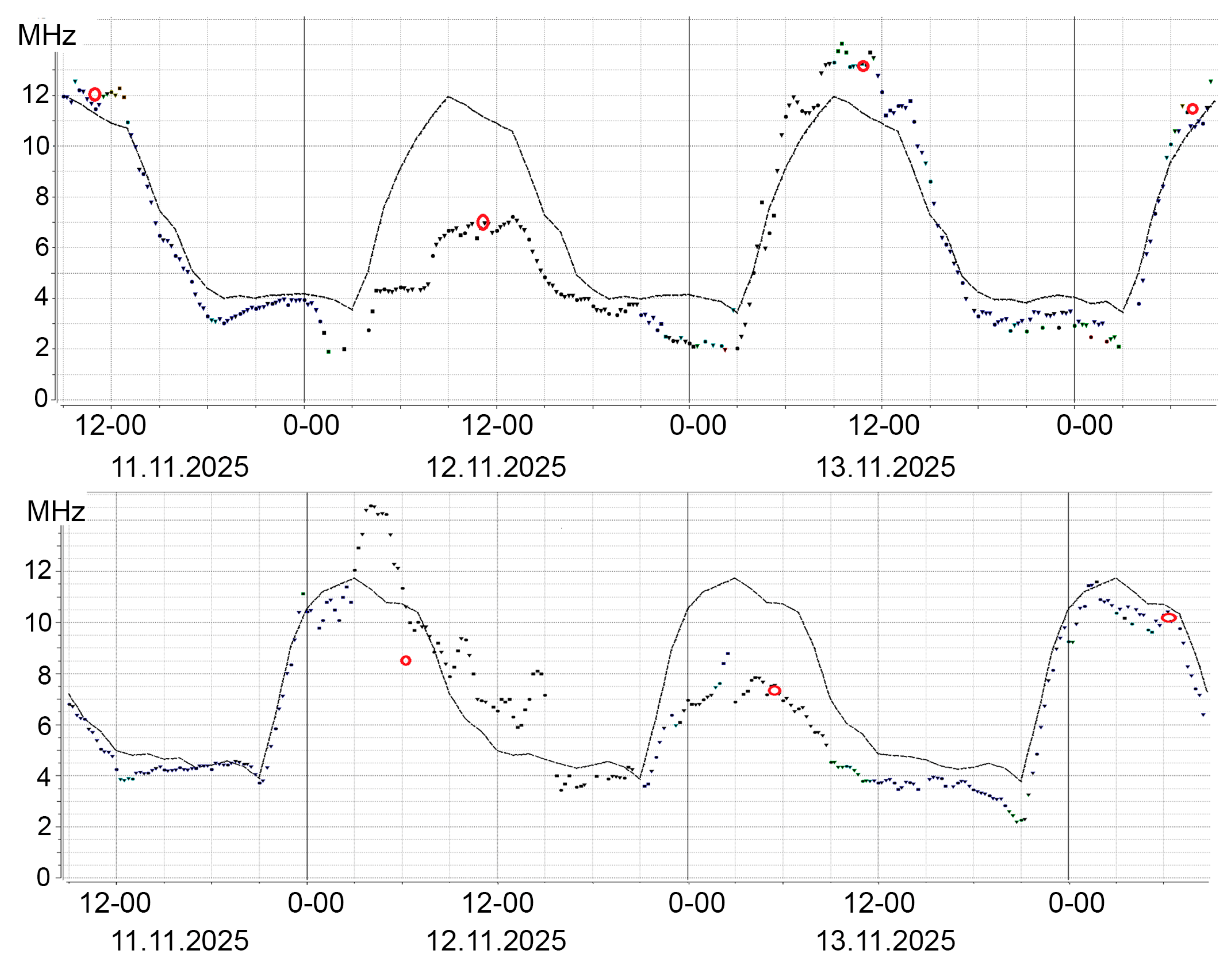
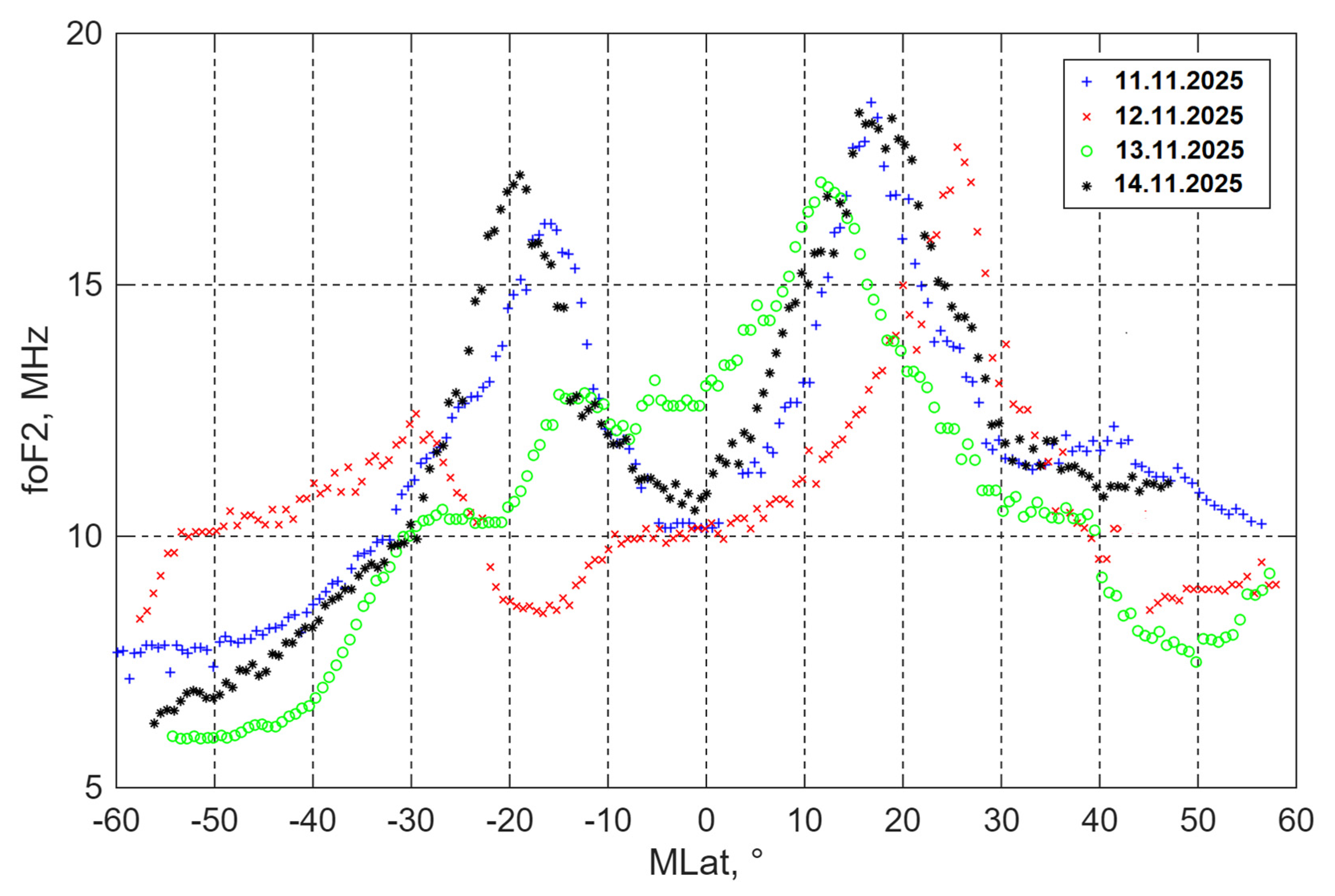
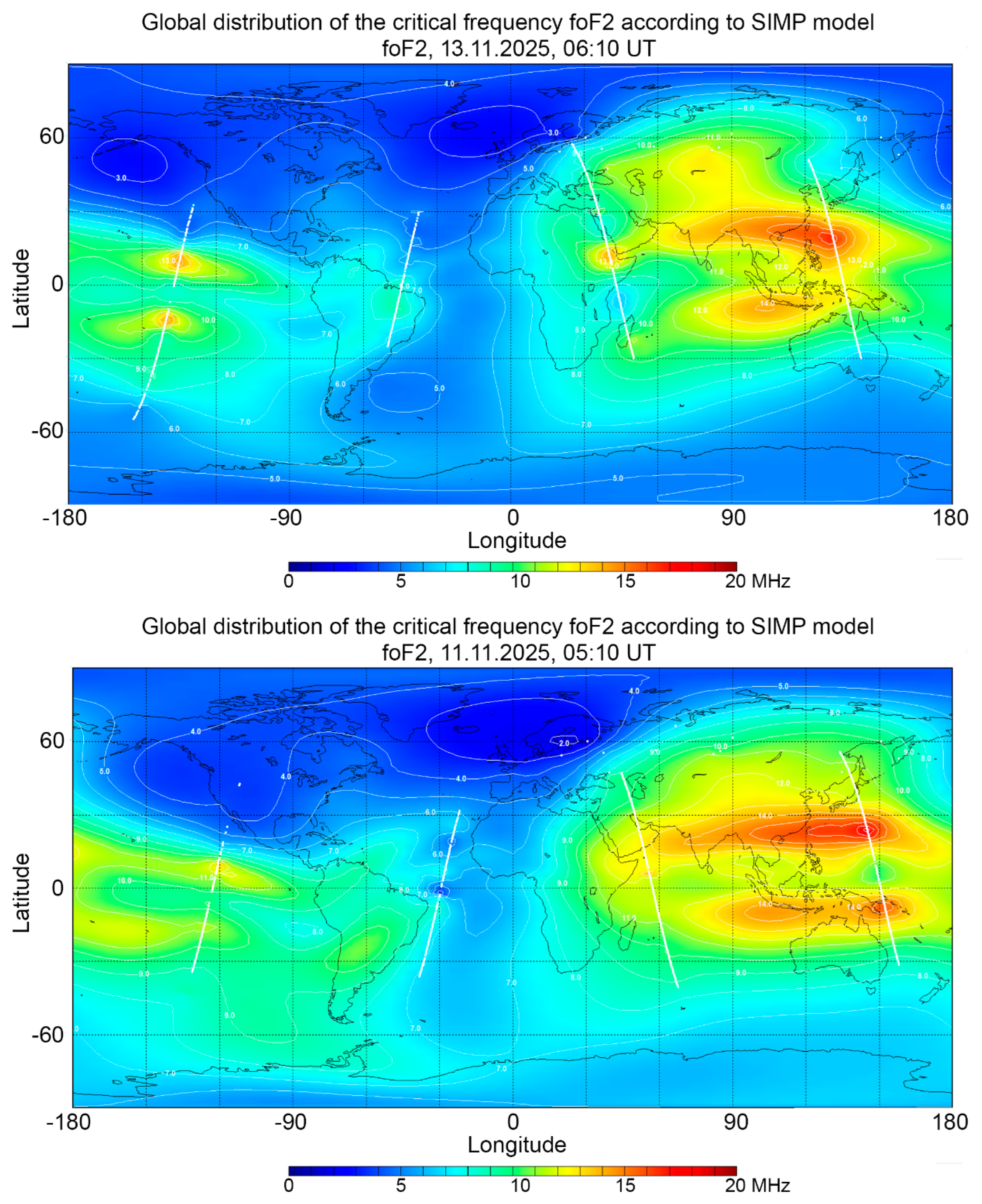
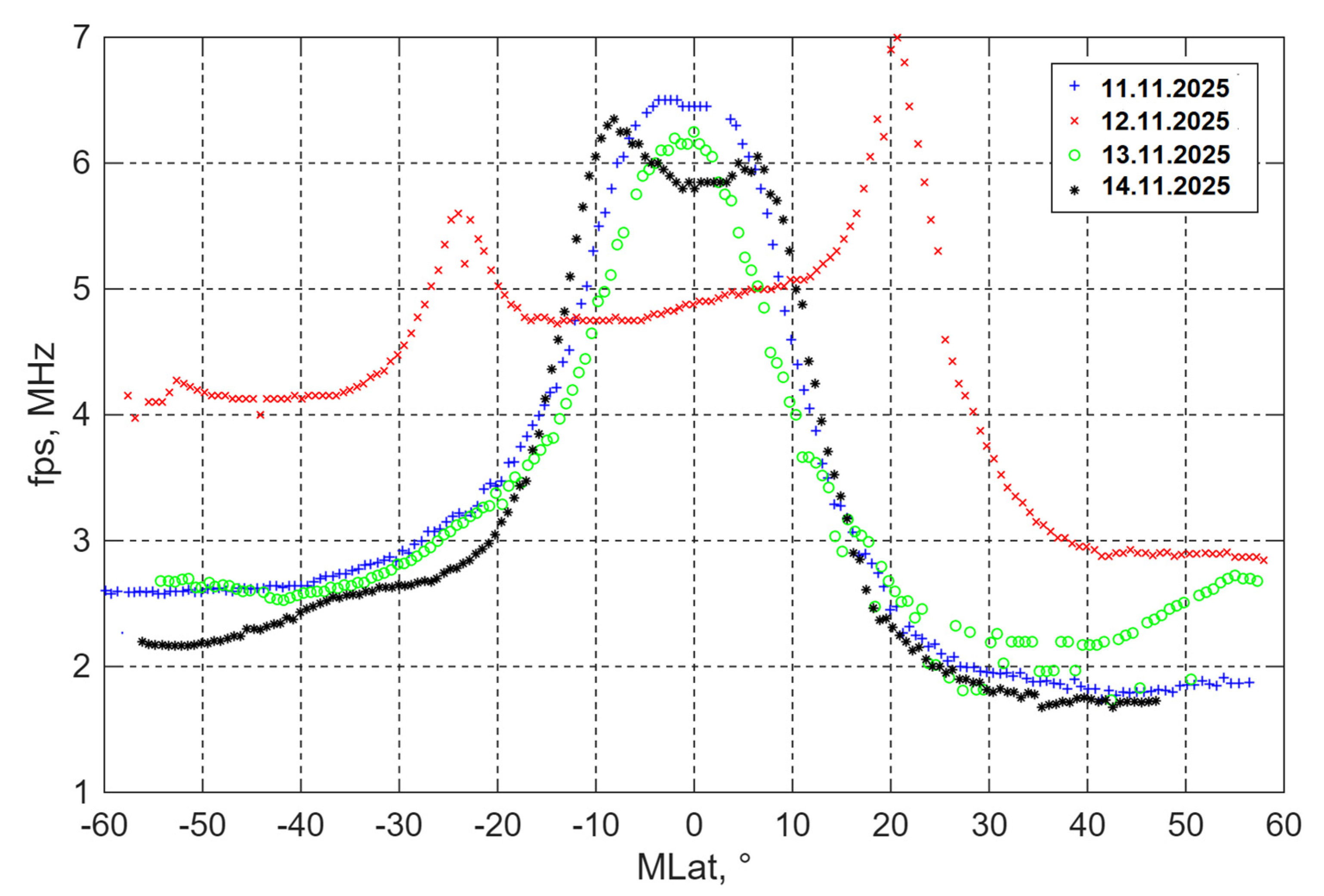
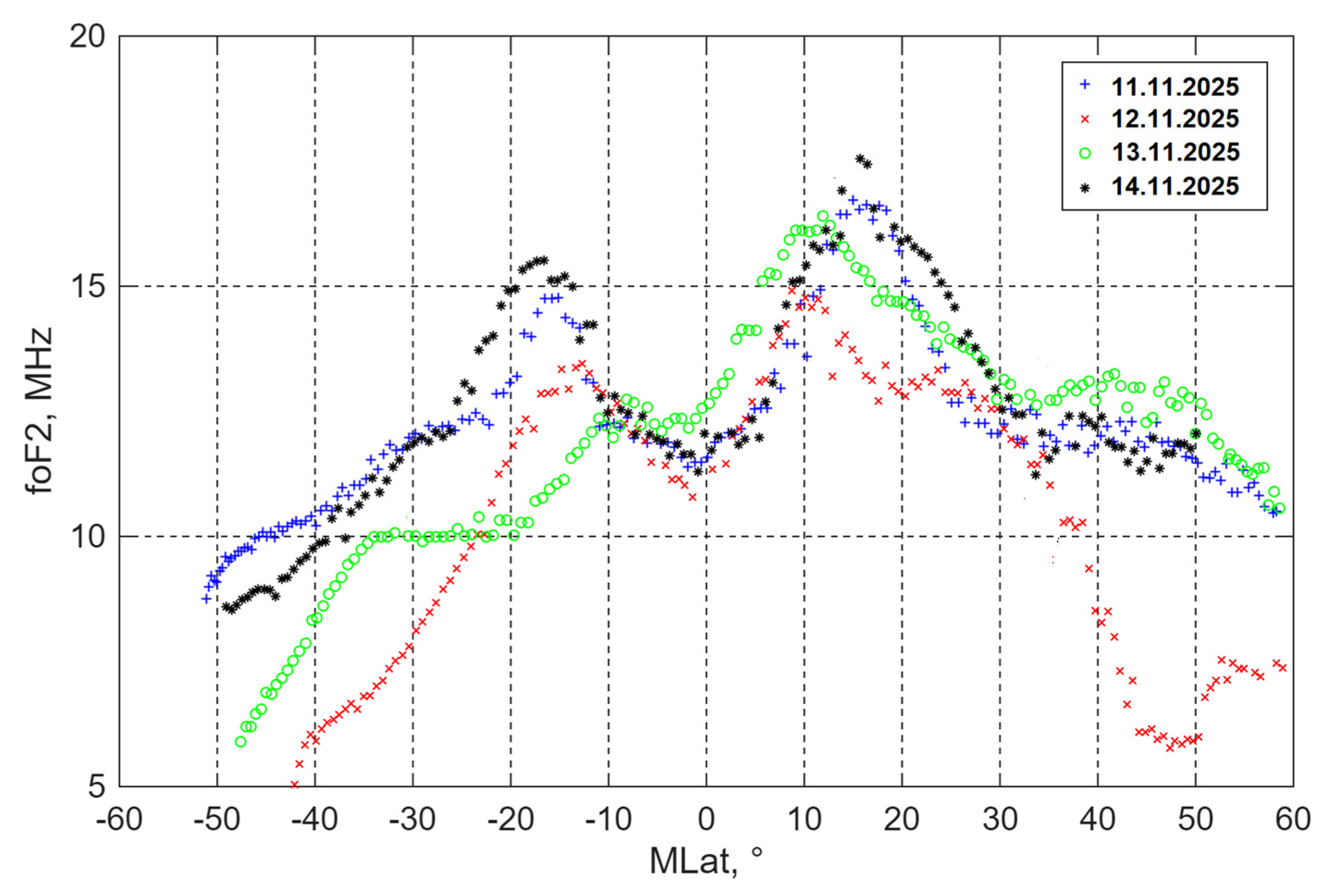
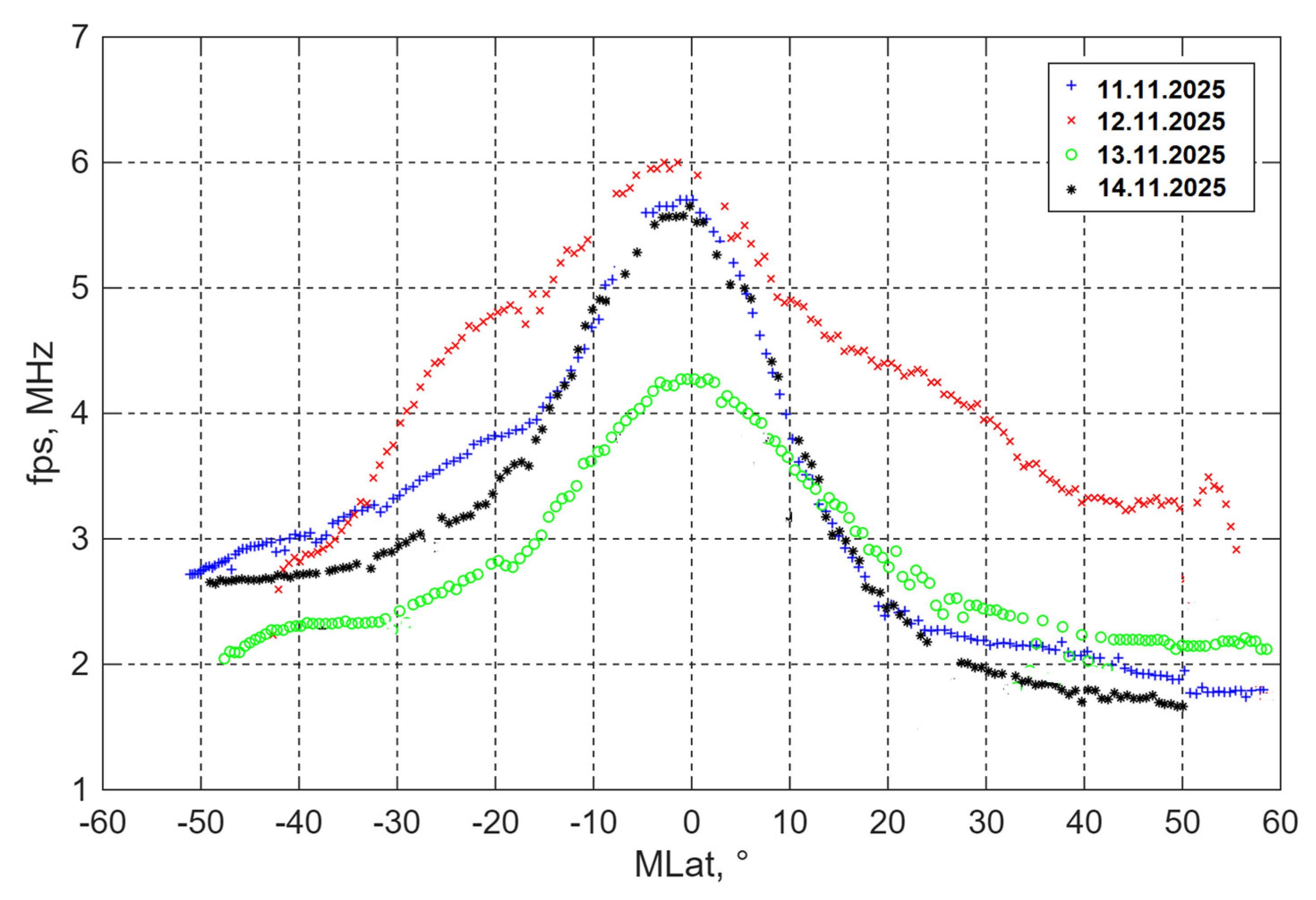
- For two longitudinal sectors in Western Pacific (135–160° E) and Europe (20–40° E) for different phases of strong geomagnetic storm 11–14 November 2025 the latitudinal profiles of the critical frequency foF2 and the local plasma frequency were obtained at the satellite orbit altitude 820 km fos for the local time ~15 LT in the maximum phase of the equatorial anomaly development. The satellite data were compared with the data of ground-based ionospheric vertical sounding.
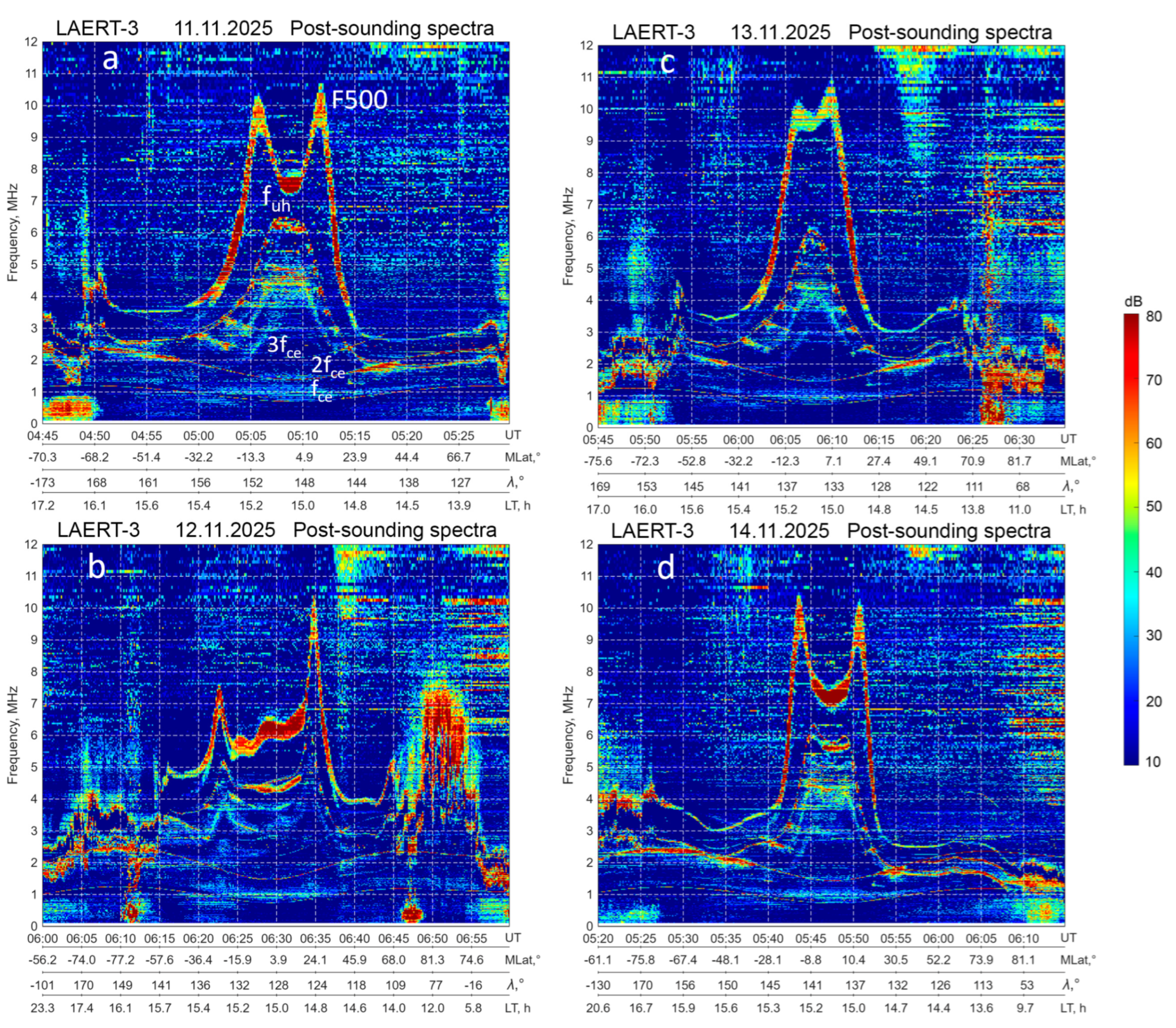
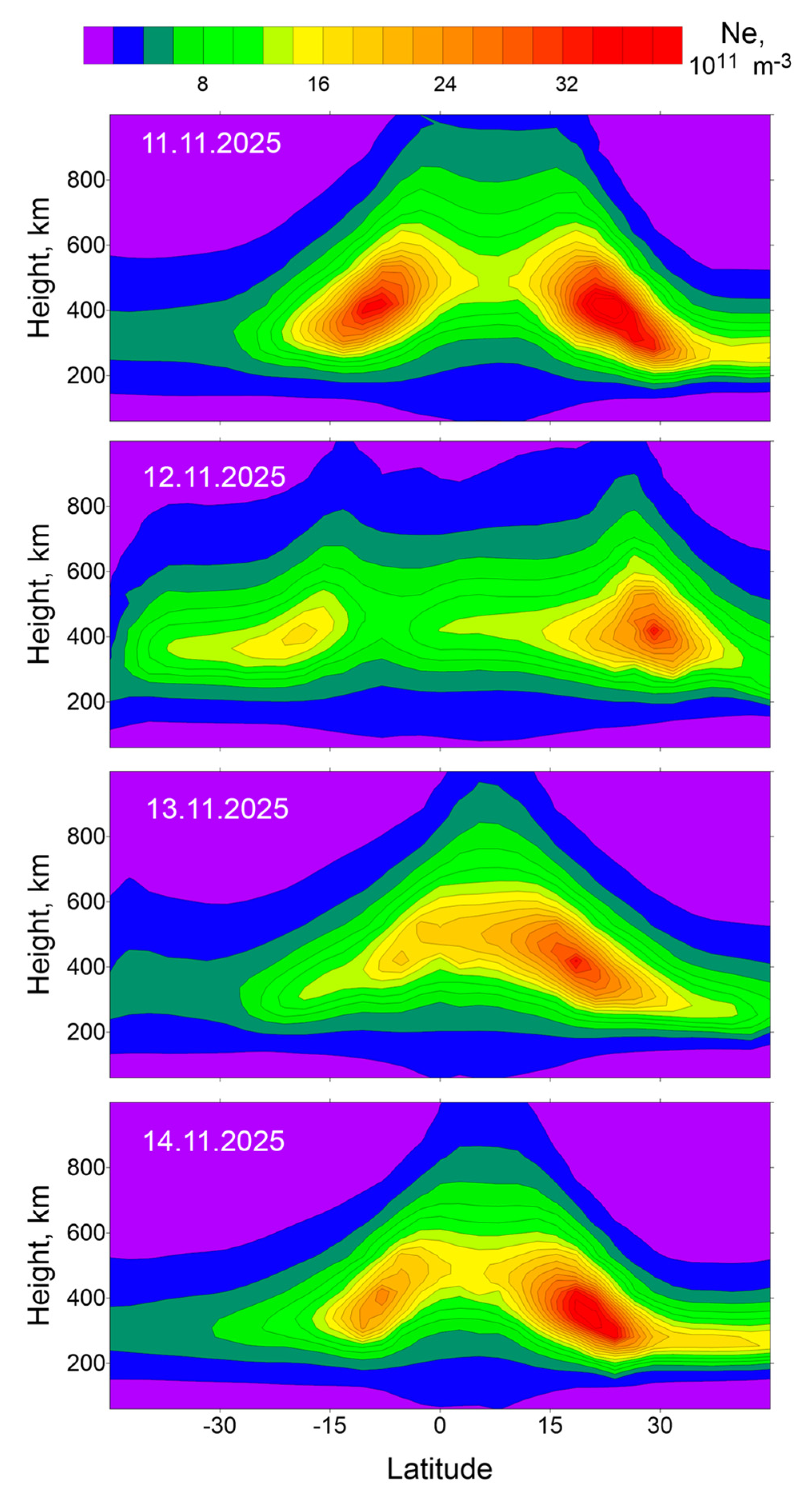
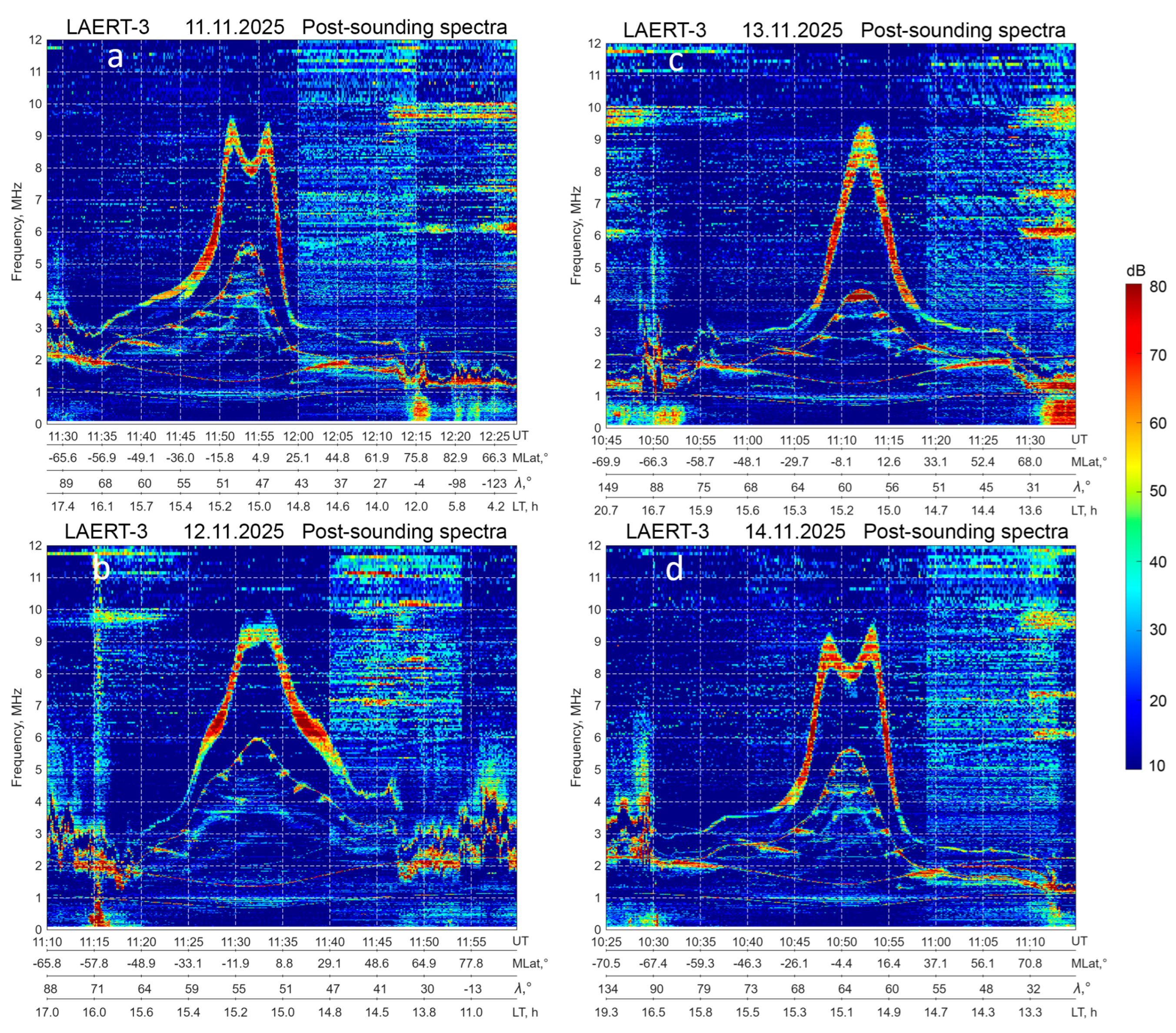
- The results obtained for these latitudinal profiles were supported by the dynamic relaxation spectra for the same orbits. It gives the perfect picture of difference in the equatorial anomaly development at the altitude 500 km and at the satellite orbit altitude, especially formation of two-crest anomaly on 12 November 2025 at the satellite altitude.
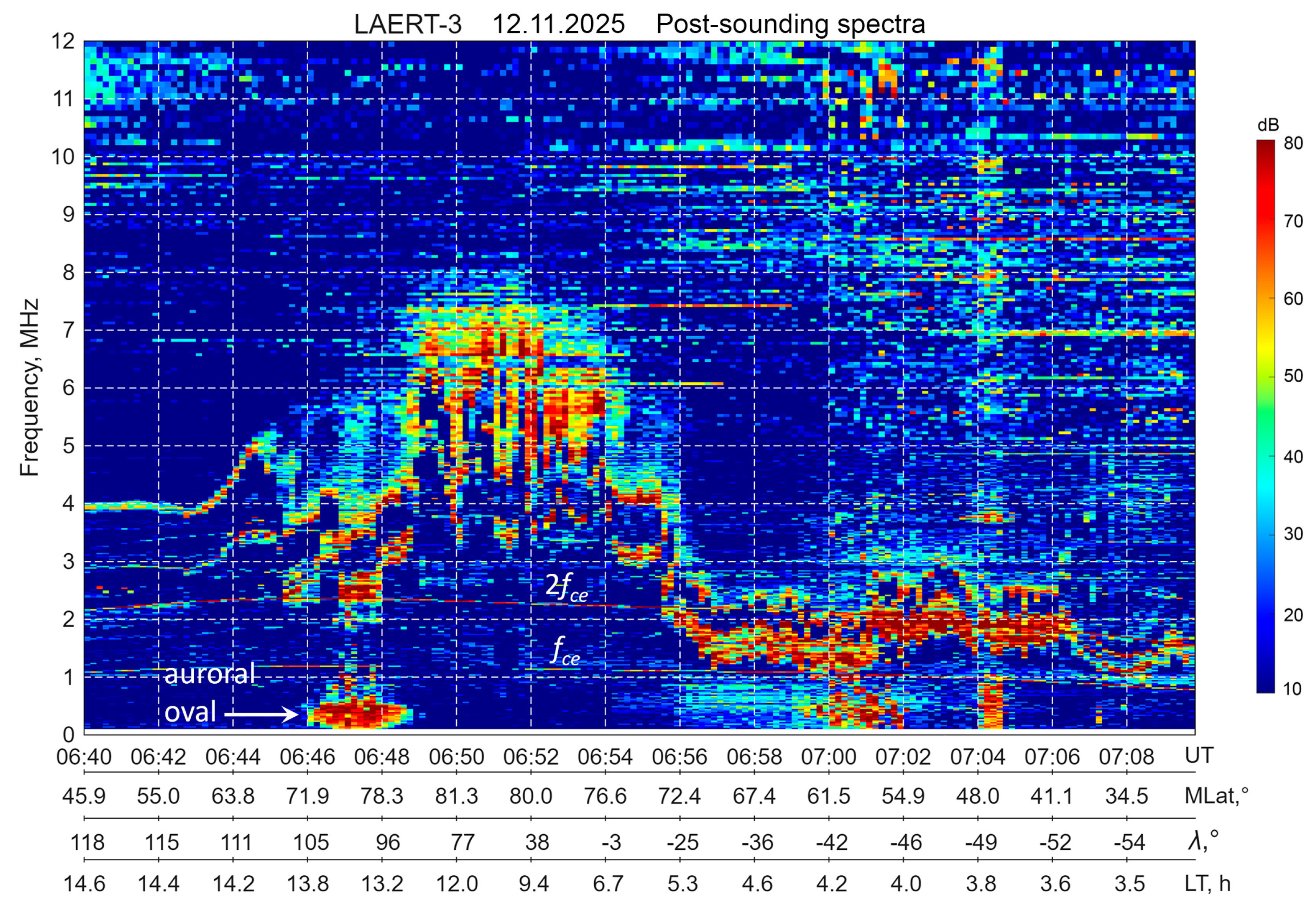
- The formation of the increased concentration anomaly by a series of plasma patches over the northern polar cap on 12 November 2025 was demonstrated.
- Reconstruction of the vertical structure of the equatorial anomaly with vertical profiles of electron concentration scaled from topside ionograms and its dynamics during the geomagnetic storm development.
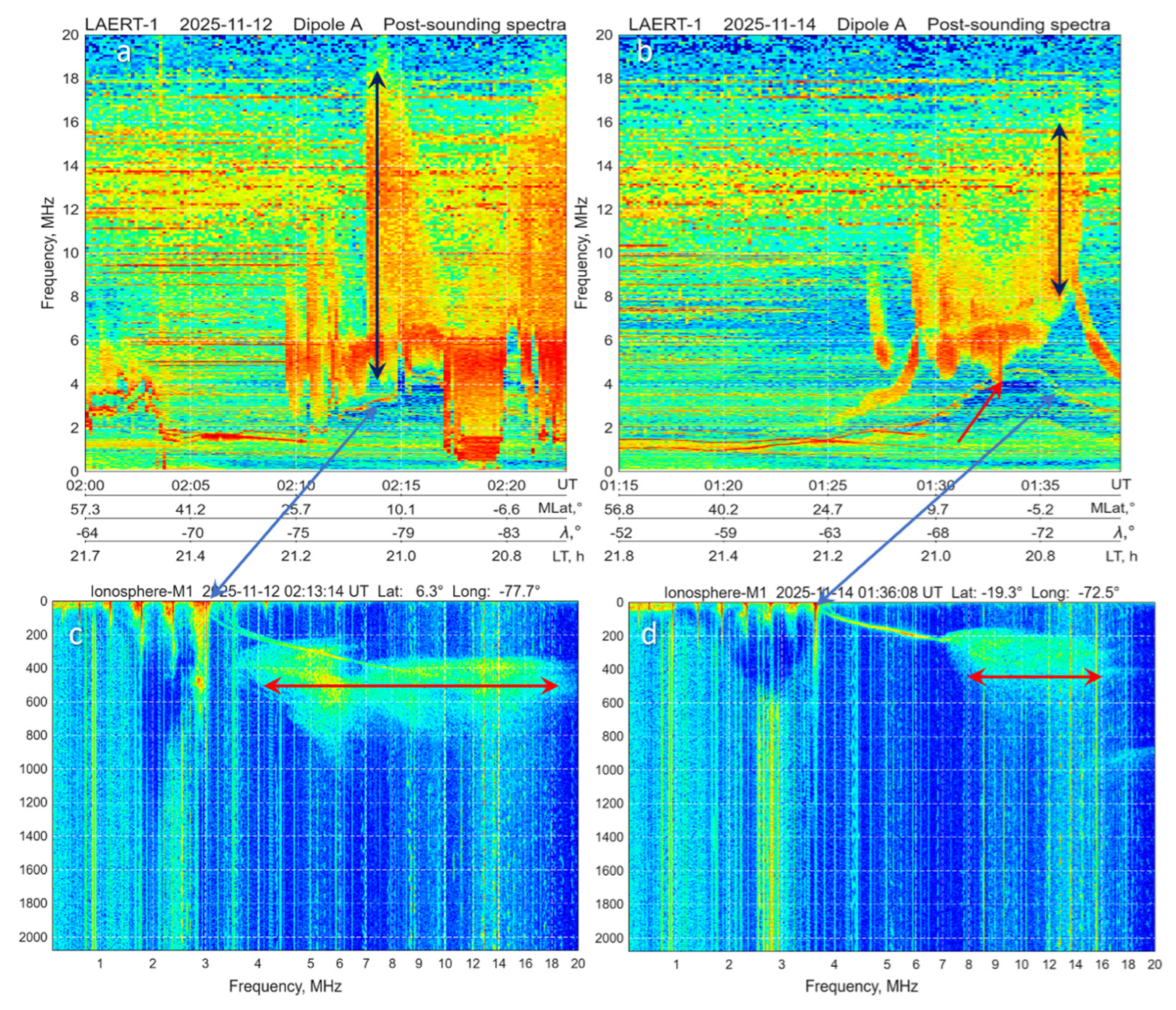
- Formation of giant plasma bubbles within the equatorial anomaly during the main phase of the geomagnetic storm.
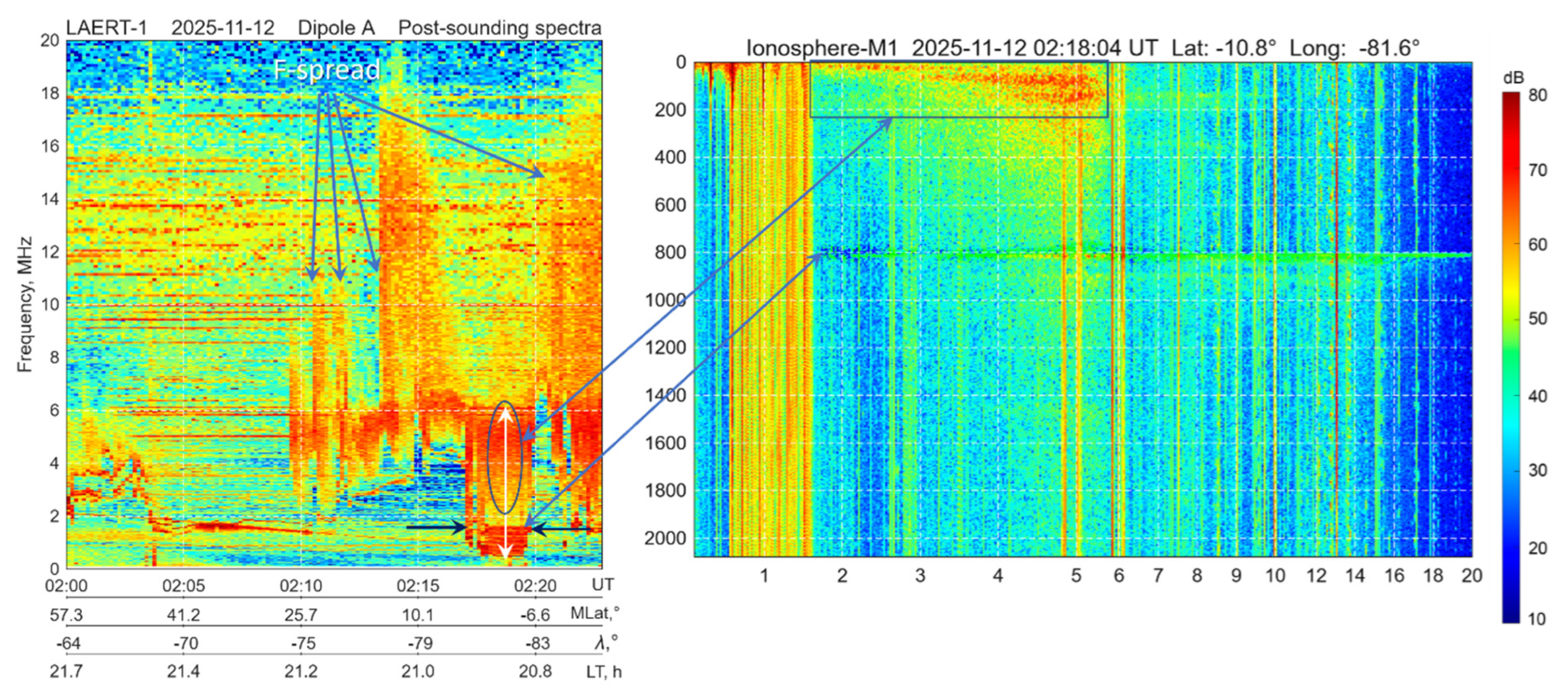
- F-spread dynamics in disturbed and quiet conditions.
- Registration of the series of intensive type III solar bursts by two satellites simultaneously coinciding in time with the X5.16 solar flare from active region XR 4274.
Author Contributions
Funding
Institutional Review Board Statement
Informed Consent Statement
Data Availability Statement
Acknowledgments
Conflicts of Interest
References
- Schuster, A. The origin of magnetic storms. Proc. A 1911, 85, 44–50. [Google Scholar] [CrossRef]
- Chapman, S.; Ferraro, V.C.A. A new theory of magnetic storms. Terr. Magn. Atmos. Electr. 1933, 38, 79–96. [Google Scholar] [CrossRef]
- Akasofu, S.-I.; Chapman, S. The development of the main phase of magnetic storms. J. Geophys. Res. 1963, 68, 125–129. [Google Scholar] [CrossRef]
- Fesen, C.G.; Crowley, G.; Roble, R.G. Ionospheric effects at low latitudes during the March 22, 1979, geomagnetic storm. J. Geophys. Res. Space Phys. 1989, 94, 5405–5417. [Google Scholar] [CrossRef]
- Danilov, A.D.; Laštovička, J. Effects of geomagnetic storms on the ionosphere and atmosphere. Int. J. Geomagn. Aeron. 2001, 2, 209–224. [Google Scholar]
- Blagoveshchenskii, D.V. Effect of geomagnetic storms (substorms) on the ionosphere: 1. A review. Geomagn. Aeron. 2013, 53, 275–290. [Google Scholar] [CrossRef]
- Danilov, A.D. Reaction of the F region to geomagnetic disturbances (review). Heliogeophysical Res. 2013, 5, 1–33. Available online: http://vestnik.geospace.ru/php/download.php?id=UPLF3c9aba28bb38a163c785a61c7198ae2c.pdf (accessed on 25 January 2026).
- Akasofu, S.-I. A review of studies of geomagnetic storms and auroral/magnetospheric substorms based on the electric current approach. Front. Astron. Space Sci. 2021, 7, 604750. [Google Scholar] [CrossRef]
- Berényi, K.A.; Heilig, B.; Urbář, J.; Kouba, D.; Kis, Á.; Barta, V. Comprehensive analysis of the ionospheric response to the largest geomagnetic storms from solar cycle 24 over Europe. Front. Astron. Space Sci. 2023, 10, 1092850. [Google Scholar] [CrossRef]
- Pulinets, M.S.; Budnikov, P.A.; Pulinets, S.A. Global ionospheric response to intense variations of solar and geomagnetic activity according to the data of the GNSS global networks of navigation receivers. Geomagn. Aeron. 2023, 63, 172–185. [Google Scholar] [CrossRef]
- Pulinets, S. Prospects of topside sounding. In WITS Handbook; Chapter 3; SCOSTEP Publishing: Urbana, IL, USA, 1989; Volume 2, pp. 99–127. Available online: https://izmiran.ru/projects/IK19/db/articles/wits.pdf (accessed on 27 December 2025).
- Benson, R. Four decades of space-borne radio sounding. URSI Radio Sci. Bull. 2010, 2010, 24–44. Available online: https://ieeexplore.ieee.org/abstract/document/7909284 (accessed on 25 January 2026).
- Karpachev, A. Sub-Auroral, Mid-Latitude, and Low-Latitude Troughs during Severe Geomagnetic Storms. Remote Sens. 2021, 13, 534. [Google Scholar] [CrossRef]
- Karpachev, A.T. Equatorial anomaly according to the Interkosmos-19 data and IRI model: A comparison. Adv. Space Res. 2021, 67, 3202–3212. [Google Scholar] [CrossRef]
- Kotonaeva, N.G. Registration of delayed lower traces on SS MIR ionograms during radio-sounding from heights below the F2 layer maximum. Heliogeophysical Res. 2013, 3, 25–39. Available online: http://vestnik.geospace.ru/php/download.php?id=UPLF9f5bafef173c499d03acfd8b45dfe5ba.pdf (accessed on 27 December 2025).
- Nayak, C.; Buchert, S.; Yiğit, E.; Ankita, M.; Singh, S.; Tulasi Ram, S.; Dimri, A.P. Topside low-latitude ionospheric response to the 10–11 May 2024 super geomagnetic storm as observed by Swarm: The strongest storm-time super-fountain during the Swarm era? J. Geophys. Res. Space Phys. 2025, 130, e2024JA033340. [Google Scholar] [CrossRef]
- Mogilevsky, M.; Chernyshov, A.; Pulinets, S.; Lukyanova, R.; Petrukovich, A. Secrets of the Earth’s ionosphere and the Ionosonde project for their disclosure. Zemlya Vselennaya 2025, 3, 5–23. [Google Scholar] [CrossRef]
- Pulinets, S.; Tsybulya, K.; Depuev, V.; Danilov, I.; Pulinets, M. Ionospheric topside sounding revival. Adv. Space Res. 2026, 77, 2574–2587. [Google Scholar] [CrossRef]
- Ouzounov, D.; Pulinets, S.; Davidenko, D.; Rozhnoi, A.; Solovieva, M.; Fedun, V.; Dwivedi, B.N.; Rybin, A.; Kafatos, M.; Taylor, P. Transient Effects in Atmosphere and Ionosphere Preceding the 2015 M7.8 and M7.3 Gorkha–Nepal Earthquakes. Front. Earth Sci. 2021, 9, 757358. [Google Scholar] [CrossRef]
- Aerospace & Defence. Available online: https://www.aerospace-and-defence.com/esa-analyses-impacts-november-2025-solar-storm-3-cmes-earth-a-2234835b9110a63fc0c49764ea83ecbd/ (accessed on 20 December 2025).
- European Space Agency. Available online: https://www.esa.int/Space_Safety/Space_weather/Lessons_from_the_November_2025_solar_storm (accessed on 20 December 2025).
- Chilingarian, A.; Sargsyan, B.; Kozliner, L.; Karapetyan, T. Solar neutron and muon detection on November 11, 2025: First simultaneous recovery of energy spectra. arXiv 2025, arXiv:2512.07859. [Google Scholar] [CrossRef]
- Data Service. Available online: https://wdc.kugi.kyoto-u.ac.jp/aeasy/index.html (accessed on 21 December 2025).
- Jackson, J.E. The reduction of topside ionograms to electron-density profiles. Proc. IEEE 1969, 57, 960–976. [Google Scholar] [CrossRef][Green Version]
- Depuev, V.H.; Pulinets, S.A. A global empirical model of the ionospheric topside electron density. Adv. Space Res. 2004, 34, 2016–2020. [Google Scholar] [CrossRef]
- Pulinets, S.A.; Depuev, V.H. Three-dimensional reconstruction of the global longitude irregularities in the ionosphere and their model representation. In IRI Task Force Activity 2003, Trieste, Italy, 16–20 June 2003; IC/IR/2004/1; ICTP Publishing: Trieste, Italy, 2004; pp. 97–105. [Google Scholar]
- Lapshin, V.B.; Danilov, A.D.; Mikhailov, V.V.; Tsybulia, K.G.; Denisova, V.N.; Mikhailov, A.V.; Deminov, M.G.; Karpachev, A.T.; Shubin, V.N. The SIMP model as a new state standard for the ionospheric electron density distribution (GOST 25645.146). In Proceedings of the 25th All-Russian Conference on Radio Wave Propagation, Tomsk, Russia, 3–9 July 2016. (In Russian) [Google Scholar]
- Tsurutani, B.; Mannucci, A.; Iijima, B.; Abdu, M.A.; Sobral, J.H.A.; Gonzalez, W.; Guarnieri, F.; Tsuda, T.; Saito, A.; Yumoto, K.; et al. Global dayside ionospheric uplift and enhancement associated with interplanetary electric fields. J. Geophys. Res. 2004, 109, A08302. [Google Scholar] [CrossRef]
- Astafyeva, E.I.; Afraimovich, E.L.; Kosogorov, E.A. Dynamics of total electron content distribution during strong geomagnetic storms. Adv. Space Res. 2007, 39, 1313–1317. [Google Scholar] [CrossRef]
- Mannucci, A.J.; Tsurutani, B.T.; Iijima, B.A.; Komjathy, A.; Saito, A.; Gonzalez, W.D.; Guarnieri, F.L.; Kozyra, J.U.; Skoug, R. Dayside global ionospheric response to the major interplanetary events of October 29–30, 2003 “Halloween Storms”. Geophys. Res. Lett. 2005, 32, L12S02. [Google Scholar] [CrossRef]
- Zhao, B.; Wan, W.; Liu, L. Responses of equatorial anomaly to the October-November 2003 superstorms. Ann. Geophys. 2005, 23, 693–706. [Google Scholar] [CrossRef]
- Aa, E.; Chen, Y.; Luo, B. Dynamic Expansion and Merging of the Equatorial Ionization Anomaly During the 10–11 May 2024 Super Geomagnetic Storm. Remote Sens. 2024, 16, 4290. [Google Scholar] [CrossRef]
- Nava, B.; Radicella, S.M.; Pulinets, S.; Depuev, V. Modelling bottom and topside electron density and TEC with profile data from topside ionograms. Adv. Space Res. 2001, 27, 31–34. [Google Scholar] [CrossRef]
- Leitinger, R.; Zhang, M.-L.; Radicella, S.M. An improved bottomside for the ionospheric electron density model NeQuick. Ann. Geophys. 2005, 48, 525–534. [Google Scholar] [CrossRef]
- Xiong, C.; Yin, F.; Luo, X.; Jin, Y.; Wan, X. Plasma patches inside the polar cap and auroral oval: The impact on the spaceborne GPS receiver. J. Space Weather Space Clim. 2019, 9, A25. [Google Scholar] [CrossRef]
- Li, J.; Chen, Y.; Liu, L.; Le, H.; Zhang, R.; Huang, H.; Li, W. Occurrence of ionospheric equatorial ionization anomaly at 840 km height observed by the DMSP satellites at solar maximum dusk. Space Weather 2021, 19, e2020SW002690. [Google Scholar] [CrossRef]
- Myint, L.M.M.; Tongkasem, N.; Supnithi, P.; Hozumi, K.; Nishioka, M. Equatorial Plasma Bubble (EPB) observations at low latitude regions of ASEAN. In Proceedings of the United Nations Workshop on the International Space Weather Initiative, Vienna, Austria, 26–30 June 2023; Available online: https://www.unoosa.org/documents/pdf/psa/activities/2023/ISWI2023/presentations/ISWI2023_11_05.pdf (accessed on 27 December 2025).
- Melnik, V.N.; Konovalenko, A.A.; Rucker, H.O.; Boiko, A.I.; Dorovsky, V.V.; Abranin, E.P.; Lecacheux, A. Properties of Powerful Solar Type III Bursts at Decameter Wavelengths. Radio Phys. Radio Astron. 2010, 1, 271–280. (In Russian) [Google Scholar] [CrossRef]
- Balan, N.; Rao, P.B. Dependence of ionospheric response on the local time of sudden commencement and the intensity of geomagnetic storms. J. Atmos. Terr. Phys. 1990, 52, 269–275. [Google Scholar] [CrossRef]
- Mendillo, M.; Narvaez, C. Ionospheric storms at geophysically-equivalent sites—Part 2: Local time storm patterns for sub-auroral ionospheres. Ann. Geophys. 2010, 28, 1449–1462. [Google Scholar] [CrossRef]
- Remya, S.N.; Unnikrishnan, K.; Thampi, S.V.; Sreekumar, H. Longitudinal variation in the ionospheric responses to two successive geomagnetic storms in early Solar Cycle 25. Adv. Space Res. 2026; in press. [Google Scholar] [CrossRef]
- Kunitsyn, V.E.; Tereshchenko, E.D. Ionospheric Tomography; Springer: Berlin/Heidelberg, Germany, 2003; 262p. [Google Scholar] [CrossRef]



Disclaimer/Publisher’s Note: The statements, opinions and data contained in all publications are solely those of the individual author(s) and contributor(s) and not of MDPI and/or the editor(s). MDPI and/or the editor(s) disclaim responsibility for any injury to people or property resulting from any ideas, methods, instructions or products referred to in the content. |
© 2026 by the authors. Licensee MDPI, Basel, Switzerland. This article is an open access article distributed under the terms and conditions of the Creative Commons Attribution (CC BY) license.
Share and Cite
Pulinets, S.; Kotonaeva, N.; Depuev, V.; Tsybulya, K. Ionospheric Response to the Geomagnetic Storm of 12–14 November 2025, Based on Multi-Parameter Analysis of Data from the LAERT Topside Sounder. Atmosphere 2026, 17, 150. https://doi.org/10.3390/atmos17020150
Pulinets S, Kotonaeva N, Depuev V, Tsybulya K. Ionospheric Response to the Geomagnetic Storm of 12–14 November 2025, Based on Multi-Parameter Analysis of Data from the LAERT Topside Sounder. Atmosphere. 2026; 17(2):150. https://doi.org/10.3390/atmos17020150
Chicago/Turabian StylePulinets, Sergey, Nadezhda Kotonaeva, Victor Depuev, and Konstantin Tsybulya. 2026. "Ionospheric Response to the Geomagnetic Storm of 12–14 November 2025, Based on Multi-Parameter Analysis of Data from the LAERT Topside Sounder" Atmosphere 17, no. 2: 150. https://doi.org/10.3390/atmos17020150
APA StylePulinets, S., Kotonaeva, N., Depuev, V., & Tsybulya, K. (2026). Ionospheric Response to the Geomagnetic Storm of 12–14 November 2025, Based on Multi-Parameter Analysis of Data from the LAERT Topside Sounder. Atmosphere, 17(2), 150. https://doi.org/10.3390/atmos17020150