Article

Source Apportionment of PM10 in Biga, Canakkale, Turkiye Using Positive Matrix Factorization

TUBITAK Marmara Research Center, 41470 Kocaeli, Turkey
*
Author to whom correspondence should be addressed.
Atmosphere 2026, 17(2), 141; https://doi.org/10.3390/atmos17020141
Submission received: 17 November 2025 / Revised: 25 December 2025 / Accepted: 15 January 2026 / Published: 28 January 2026
(This article belongs to the Section Air Quality)

Abstract

Particulate Matter (PM) is a type of air pollution that poses risks to human health, the environment, and property. Among the various PM types, PM10 is particularly significant, as it acts as a vector for numerous hazardous trace elements that can negatively impact human health and the ecosystem. Identifying potential sources of PM10 and quantifying their impact on ambient concentrations is crucial for developing efficient control strategies to meet threshold values. Receptor modeling, which identifies sources using chemical species information derived from PM samples, has been widely used for source apportionment. In this study, PM10 samples were collected over three periods (April, May, and June 2021), each lasting 16 days, using semi-automatic dust sampling systems at two sites in Biga, Canakkale, Turkiye. The relative contributions of different source types were quantified using EPA PMF (Positive Matrix Factorization) based on 35 elements comprising PM10. As a result of the analysis, five source types were identified: crustal elements/limestone/calcite quarry (64.9%), coal-fired power plants (11.2%), metal industry (9%), sea salt and ship emissions (8.5%), and road traffic emissions and road dust (6.3%). The distribution of source contributions aligned with the locations of identified sources in the region.

1. Introduction

High concentrations of pollutants, including particulate matter, carbon monoxide, nitrogen dioxide, sulfur dioxide, and ozone, are present in the urban areas of major cities. Assessing air quality in regions with numerous emission sources is essential for developing effective pollution management strategies. However, it has been shown that emission sources can also affect areas hundreds of kilometers away through long-distance atmospheric transport outside the region where they are located [1].
Just as important as identifying local pollution sources is understanding the effects of air pollutants, given their long-distance transport from both natural and anthropogenic sources. When conducting regional air quality studies, source analyses must be carried out with scientific rigour and within a sound methodology. These analyses must clearly and definitively determine not only the direct impact of local sources on pollution, but also the contribution of long-range transport via atmospheric conditions and wind systems [2]. In this context, air quality monitoring and management studies conducted in rural areas, where the industrial sector is not yet dense, urbanisation is irregular, and anthropogenic sources such as heavy motor vehicle traffic are limited, are scientifically extremely valuable and meaningful. Within the scope of this study, the atmospheric PM levels in the north-western part of the Biga Peninsula, which exhibits typical rural characteristics and is relatively remote from human activities, were determined through the integrated use of air quality measurements and modelling tools to examine in detail the temporal and spatial variations of these parameters, to comprehensively assess the effects of regional atmospheric and topographical conditions on air quality, and to quantitatively calculate the contributions of different emission sources to particulate matter concentrations. This study is the first scientific research conducted in this region with this scope and level of detail; it is also one of the rare and unique studies conducted in rural areas in Turkey. A review of the literature shows that air quality measurement and assessment studies are generally concentrated in regions with high industrial density and in urban areas with high population density [3,4].
Particulate matter (PM) is one of the criteria air pollutants that can negatively impact health, harm the environment, and cause property damage [5]. PM pollution directly impacts visibility, climate change, and, more importantly, human health [6,7,8]. The composition of atmospheric particulates depends on their source, their chemical reactions in the air, and weather conditions. Typically, they are a mixture of various substances, including carbon, ammonium, nitrates, sulfates, dust, and other materials [9]. Anthropogenic and natural sources, such as dust resuspension, sea salt, traffic, secondary aerosol formation (both organic and inorganic), industrial emissions, maritime traffic emissions, biomass burning, power plant emissions, etc., may contribute to PM concentration levels, depending on the location and characteristics of an area [10,11].
Particulate matter with an aerodynamic diameter equivalent to or less than 10 μm (PM10) is crucial due to its role as the transporter of various hazardous trace elements such as As, Cd, Cr, Cu, Mn, Pb, Se, and Zn, which can affect the human body and the environment [12,13,14]. Exposure to PM10 pollution has been associated with several diseases, including premature death in people with heart or lung disease, nonfatal heart attacks, palpitations, worsened asthma, decreased lung function, and increased respiratory symptoms such as irritation of the airways, coughing, or difficulty breathing [15].
It is necessary to identify PM sources and estimate their influence on ambient concentration to formulate effective control strategies that comply with national regulations. Identifying PM sources and quantifying their contributions to ambient concentrations has been a topic of growing interest over the past two decades [16,17,18,19]. Receptor modeling has been widely used to identify and quantify the primary sources of PM based on chemical species data collected at receptor sites [20,21,22]. These models are based on the mass conservation theory and can identify various sources of ambient PM in the atmosphere. However, the availability of information regarding sources plays a role in determining the selection of a particular receptor model [23].
The chemical mass balance equation can be solved using multiple models, including EPA Chemical Mass Balance (CMB), EPA Unmix, and EPA Positive Matrix Factorization (PMF). If chemical source profiles are available, the chemical mass balance (CMB) model can be used [24,25]. Otherwise, the positive matrix factorization (PMF) model is generally recommended [26]. The Positive Matrix Factorization (PMF) model is a powerful receptor modeling technique commonly used to identify and apportion pollutant sources [27,28]. A post-treatment source identification step is necessary to identify sources such as road traffic, industrial pollutants, sea salt, and crustal dust [29]. PMF is widely used in environmental and ecological studies [27,30], providing more robust and interpretable results by incorporating uncertainty estimates for input data, unlike traditional factor analysis [31].
Furthermore, PMF provides more interpretable and realistic source profiles by imposing non-negativity constraints, thereby preventing the occurrence of physically unrealistic negative source contributions [30]. With these aspects, PMF has gained widespread international popularity for source apportionment of pollutants such as particulate matter (PM) and volatile organic compounds (VOCs) [32]. The maturity and flexibility of PMF have also been demonstrated in air quality research in Turkey, as evidenced by its use in PM source apportionment studies in metropolitan areas such as Izmir [4]. Similarly, in heavily industrialized and urbanized areas like Gebze, the PMF 5.0 model has been successfully applied to identify potential sources of atmospheric pollutants such as Phthalate Esters (PAEs) and microplastics (MPs) [31]. PMF’s ability to account for data-specific uncertainty enhances the model’s capacity to perform accurate source attribution even in complex environmental matrices, making it a preferred and mature method in air quality research [27,33]. Supporting this approach, a PM2.5 source apportionment study in Eskisehir used both the Conventional (C-PMF) and Dispersion-Normalized Positive Matrix Factorization (DN-PMF) models—a first for an urban background site in Turkey—to account for organic and inorganic species, resulting in better source separation [3]. While advanced methods like PMF are used for such comprehensive analysis, regional studies sometimes employ complementary techniques, such as the evaluation of atmospheric Polycyclic Aromatic Hydrocarbon (PAH) pollution sources in Bursa using diagnostic ratios (DRs) and Principal Component Analysis (PCA) to determine the influence of both pyrolytic and petrogenic sources [34].
Ouyang, Guo [35] examined how fine and coarse particles behaved under various atmospheric conditions and found that 1.6 mm of rainfall dramatically reduced PM2.5 levels. McMullen, Annesi-Maesano [36] showed that precipitation levels and particle concentrations greater than 3 µm in the atmosphere were significantly negatively correlated. Additionally, concentrations of particles with diameters of 10 to 50 µm decreased after rainfall of 1 mm or more. In this study, 94 PM10 samples were collected in Biga, Canakkale, Turkey, during three low-precipitation periods in April, May, and June 2021, due to reduced rainfall, which lowered atmospheric PM concentrations. Another reason for selecting the late-spring/early-summer period is the increase in air pollutants during winter months due to the use of low-quality fuels for heating without combustion improvement measures and the application of incorrect combustion techniques [37]. Semi-automatic dust sampling systems (MicroPNS LVS 16, Umwelttechnik MCZ GmbH, Bad Nauheim, Germany) were used to collect the samples. Chemical analyses of 35 elements in the PM10 samples were performed using Inductively Coupled Plasma Mass Spectrometry (ICP-MS) (PerkinElmer Nexion 300X, Bridgeport Ave, Shelton, CT, USA). The EPA PMF model (Version 5.0, v2004) was used to estimate and quantify the source types and their relative contributions in the region.

2. Materials and Methods

2.1. Study Area

Biga is located in the Marmara Region of Turkey, west of the Aegean Sea and southwest of the Marmara Sea. The Biga Mountains are to the north, and the Mount Ida Mass is to the south. Urban settlement areas within the region, which contain fewer than approximately 100,000 inhabitants, occupy nearly 1% of the total study area, whereas forested and agricultural lands constitute approximately 80% of the region. The region is characterized by its vibrant biodiversity, featuring diverse flora and fauna species throughout the landscape. The predominant tree species in this area include olive trees, Calabrian pine (Pinus brutia), and Black pine (Pinus nigra), which form the region’s primary vegetation cover [38].
The climate in Biga is typical of the Mediterranean, characterized by hot and dry summers and chilly, rainy winters. The average temperature during the sampling period (27 April–23 June 2021) is around 18 °C, and the mean maximum temperature is almost 23 °C. The average relative humidity is around 47%. During the sampling period, Biga received a maximum rainfall of about 13 mm, and about 81% of the days were dry (0 mm). In the study area, the prevailing wind direction is from the northeast, with an average speed of roughly 3.2 m/s. Based on the rainfall statistics in Table 1, selecting April, May, and June for PM10 sampling is scientifically reasonable. The winter and late autumn months (e.g., January: 72.98 mm and 13.2 rainy days; February: 58.34 mm and 10.6 rainy days; December: 60.9 mm and 11.5 rainy days; October: 59.66 mm and 6.9 rainy days) have high precipitation and rainy-day totals. During these periods, heavy rainfall and wet deposition rapidly remove atmospheric particles, making it challenging to capture typical PM concentrations and transport processes.
In contrast, the mid-summer months (July: 7.72 mm and 1.9 rainy days; August: 12.56 mm and 1.4 rainy days) have very low precipitation and rainfall, allowing PM to accumulate in arid conditions for extended periods without being washed away—an extreme situation not representative of typical seasonal conditions. The April–June period offers moderate conditions, with rainfall amounts (26.58–44.96 mm) and rainy days (5.4–7.9 days) lower than winter but higher than mid-summer. This transitional period balances rainfall and wet deposition. Therefore, sampling PM in April, May, and June provides a better opportunity to examine the region’s late spring–early summer atmospheric conditions and typical emission–transport balance, avoiding extremes of excessive wetness or dryness. Additionally, industrial sources in the region operate year-round, and domestic heating remains a significant source in April and early May, given regional air temperatures. April, May, and June are thus the most suitable months to represent the region’s changing conditions throughout the year.
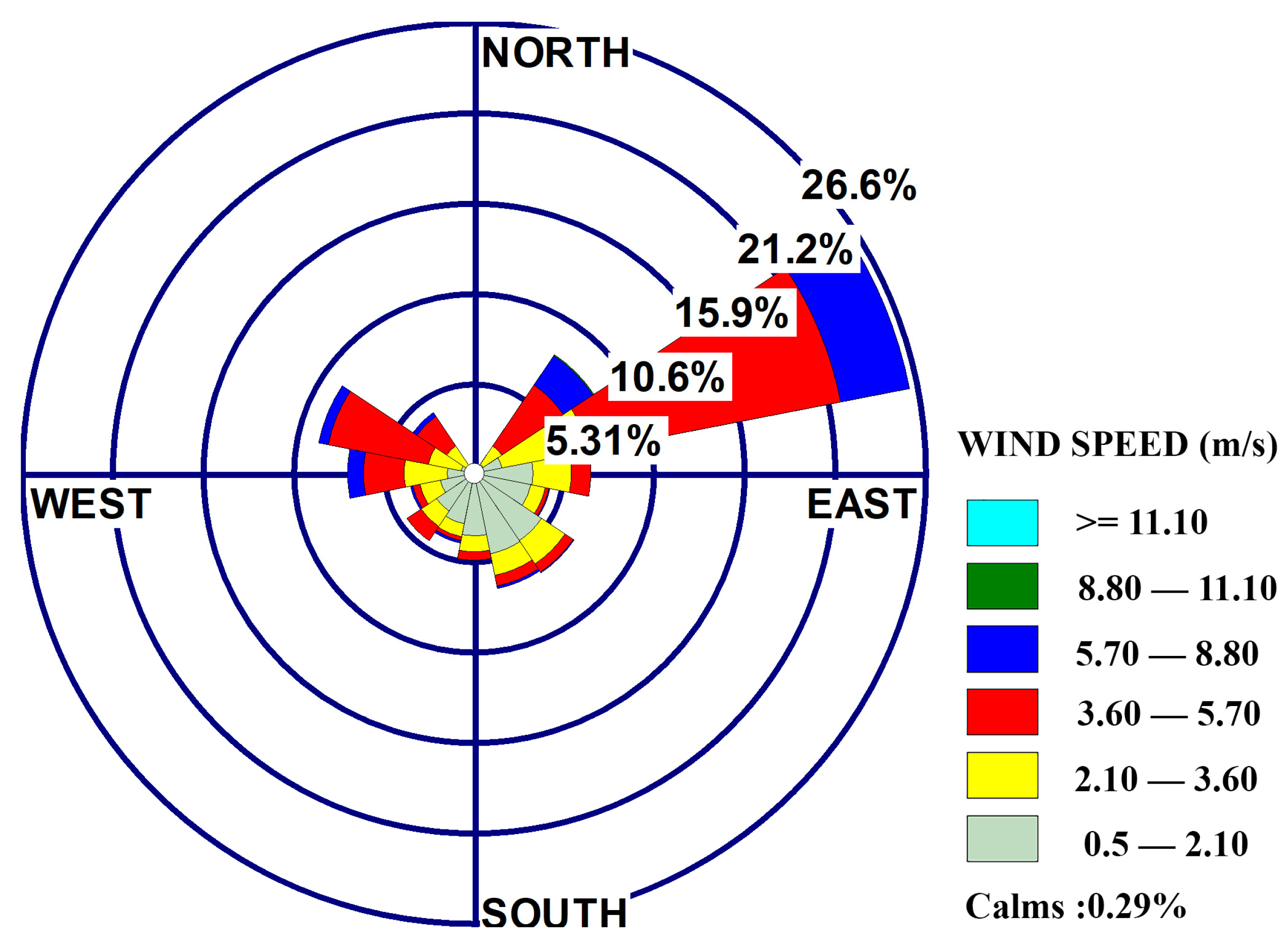
Weather conditions, such as wind speed and direction, temperature, and relative humidity, can significantly impact the dispersion of air pollution, particularly atmospheric PM10. Studies have been conducted in various regions of the world to investigate this relationship [39,40]. An increase in wind speed can reduce the dilution of air pollution. Therefore, a wind rose was created using hourly data from the Turkish State Meteorological Service’s Biga Station to assess the impact of meteorological conditions on PM distributions. The station’s location is shown in Figure 1. The daily prevailing wind direction was northeast (NE) during the sampling periods, as illustrated in Figure 2.
Several important factors were considered in determining the measurement points. These include meteorological conditions affecting regional air movements and pollutant distribution, the geographical distribution and density of various emission sources in the surrounding area, topographical conditions such as local terrain and elevation differences, accessibility to the power source required for the uninterrupted operation of sampling equipment, and the reliability of the measurement point in terms of protecting measurement equipment and ensuring data integrity. All of these factors have played a decisive role in selecting sampling sites. In particular, proximity to large-capacity coal-fired thermal power plants operating in the region was considered, as these facilities represent major contributors to local emission density. The selected locations were also evaluated for representativeness to enable joint PMF analysis and regional assessment of PM sources. Furthermore, protected and secure areas were preferred to ensure safe installation and operation of the instruments, and to guarantee access to the required power supply.
The region hosts several industrial facilities, for which information was obtained from the Integrated Environmental Permit System of the Ministry of Environment, Urbanization, and Climate Change [41]. This information was used to identify potential industrial air pollutants, and 42 facilities were found to be registered in the system. These facilities primarily operate in the mining, electricity generation, and chemical sectors, including those involved in leather, polymer, paint, and oil refining. Dust emissions around the measurement points are primarily caused by six limestone quarries, two calcite quarries, one clay quarry, three mining sites, three thermal power plants, one steelworks, and one shipyard. Figure 1, which displays the satellite image of the region, illustrates the primary emission sources and measurement points (Sampling Point 1 and Sampling Point 2). Table 2 presents possible pollutants and their sources expected to affect metal concentrations across the region.

2.2. Sampling and Analysis of Metals

PM10 samples were collected using semi-automatic dust sampling systems between 27 April–12 May 2021, 18 May–2 June 2021, and 8–23 June 2021 at two sampling points in the study area, known as Sampling Point 1 and Sampling Point 2. PMF analysis was performed on the elemental concentration dataset obtained from these monitoring campaigns, resulting in a total of 94 samples.
PM10 samples were collected using a low-volume sequential particulate sampler (MicroPNS LVS 16, Umwelttechnik MCZ GmbH, Heiligenroth, Germany) and analyzed gravimetrically in accordance with TS-EN-12341 [56]. A 47 mm diameter quartz filter (Cytiva Whatman QM-A, Marlborough, MA, USA) was used. Filters were conditioned and weighed in a room with a constant humidity of 50 ± 5% and an air temperature of 20 ± 2 °C before and after the measurements. The conditioned filters were weighed before and after sampling and placed on site. The gravimetric result was divided by the volume of inhaled air, and the result was expressed as µg/m3. Samples were collected for 24 h on quartz fiber filters, which were then digested in a microwave digestion system using nitric acid and hydrofluoric acid. Elemental analyses of the samples were performed using an ICP-MS (Perkin Elmer Nexion 300XX, Shelton, CT, USA) after solubilization.
Using quartz filter paper is an ideal option for analyzing trace and heavy metal elements. This type of filter paper offers several benefits, including its high purity, which helps minimize sample contamination; its resistance to acids and bases, making it ideal for use in harsh chemical environments; and its ability to withstand high temperatures. Additionally, quartz filter paper has low background levels of trace elements, reducing interference and improving the sensitivity and accuracy of analysis. Overall, using quartz filter paper is a wise choice for achieving more accurate and reliable results in the analysis of trace and heavy metal elements.

2.3. PMF Analysis

Positive matrix factorization (PMF) is a data analysis technique within the factor analysis family. The primary challenge is determining the identities and contributions of components in an unknown mixture. It estimates possible factor contributions and factor profiles for a data set. PMF is widely used, especially in studies involving environmental data, to determine the contribution rate of air pollutant sources to PM samples. The purpose of the receptor model is to resolve the chemical mass balance between the measured parameter concentrations and source profiles. The model minimizes the objective function Q, which is the sum of the squares of the error estimates of the data and the weighted residual ratio. The goodness-of-fit parameter, which accounts for every point, is Qtrue. The goodness-of-fit parameter, Qrobust, is determined by removing points that the model cannot fit, i.e., samples for which the uncertainty-scaled residual exceeds 4 [57,58,59].
The chemical mass balance equation can be solved using multiple models, including EPA Chemical Mass Balance (CMB), EPA Unmix, and EPA Positive Matrix Factorization (PMF). PMF uses both sample concentration and user-supplied uncertainty to weight measurement data. This feature enables the model user to consider their confidence in the measurement in the analysis. For example, by adjusting the relevant uncertainty for data below the Detection Limit (DL), it is possible to arrange these data points. Hence, they have less impact on the solution than measurements above the DL, while retaining them for use in the model [57].
The modeling procedure can be broadly divided into two steps:
  • Preparation of data to be modeled
    -
    Generation of uncertainty values for the data set
  • Processing data into PMF to develop a viable and stable solution
    -
    Interpretation of the solution and selection of the most appropriate number of factors
    -
    Subtraction of incompatible values [59]

2.3.1. Development of the Dataset

A matrix of uncertainties corresponding to each entry in the measurement matrix must be provided as input to the PMF so that the model considers it while minimizing the bias value. The simplest method to construct such a matrix is to use analytical or uncertainties of the method corresponding to each parameter concentration value. Equations that are functions of concentrations, analytical uncertainties and/or limits of detection have also been used to construct the uncertainty matrix in the literature. When preparing PM data for PMF analysis, the conformity of parameters, repeated measurements, missing data, data below the DL, poor or unknown data quality, and allocation of PM mass among sources must be considered [59,60]. Many papers discuss adjusting parameter measurements and uncertainties when the concentration is below the DL before performing PMF analysis. In this context, various approaches are listed below;
  • Data < DL; Concentration = DL/2 and Uncertainty = 5/6 × DL [61]
  • Data < DL; Uncertainty = 5/6 × DL
    -
    Data > DL; Uncertainty = 1/3 × limit of detection + sample-specific laboratory uncertainty
    -
    missing samples; Uncertainty = 4 × median concentration [57]
  • Data ≤ DL; Uncertainty = 5/6 × DL
    -
    Data > DL; Uncertainty = ( Error   fraction × conc ) 2 + ( 0.5 × method   DL ) 2 [57]
In this study, the third approach was used. Other factors besides missing values or measurements below DL may affect data quality. Such data can be processed during data preparation by reducing weights (increasing uncertainties) or by discarding the metrics in question [59].
There should be no missing data points in the PMF analysis data matrix. Therefore, missing measurements or data in samples must be handled appropriately. Three different approaches are used in studies for missing data;
  • Samples (rows of the data matrix) where any measurement is missing are eliminated.
  • Parameters are entirely removed from the PMF analysis, where a large percentage of measurement results for the relevant parameter are missing.
  • A value is assigned, and uncertainty is associated with that value so that the relevant data has less impact on PMF modeling. A standard procedure for this third approach is to assign the arithmetic or geometric mean as the parameter value for missing values and to use 3 or 4 times the mean concentration as the uncertainty value [59]. S. Huang et al. concluded that mean substitution yielded superior PMF results over deletion on a case-by-case basis [62].
In this study, the first approach was employed to handle missing data.

2.3.2. Model Input Data Selection

For statistical analysis, a larger sample size is ideal; however, an excessive number of samples can lead to significant errors and require substantial time and material resources [63]. The impact of sample-size fluctuations on the capture of statistical pollution characteristics in the study area has been investigated in several studies. In their attempt to compare PMF model results using 33–100% of a dataset (273 samples), Zhang, Sheesley [64] concluded that to obtain results comparable to those with complete data, a dataset of at least 50 samples should be used. Men, Liu [65] obtained similar results using kriging interpolation. Hopke [66] contended that there is no minimal order of magnitude and that this conclusion is not conclusive. Feng, Song [67] found that, as the sample size decreased, comparable source profiles consistent with the findings across all samples were extracted.
The primary objective of this study was to characterize and quantify the contributions of specific primary emission sources, such as industrial activities, vehicle traffic, and dust, by effectively tracking them through elemental traces. Therefore, the research was designed to prioritize high-resolution trace-metal analysis of 35 elements to obtain a detailed source profile. While major inorganic ions (nitrate, sulfate, and ammonium) are key indicators of secondary inorganic aerosols, they were not included in the modeling as the scope of this study focused on metallic tracers. By focusing on these elemental components, the study provides a more targeted assessment of local and regional primary sources contributing to the metal-related chemical load of particulate matter in the study area. Moreover, several studies used only metal analysis of PM10 samples to identify local sources [42,65,68,69]. For these reasons, PM10 mass and the mass of 35 different metals across 3 periods at 2 different points were analyzed, for a total of 94 samples: 46 at Sampling Point 1 and 48 at Sampling Point 2. The results of these analyses were examined for each parameter, and two main data input files were created: one for sample species concentrations and another for the uncertainties associated with each species.
The error ratio was assumed to be 10% for parameters whose uncertainty budgets were not determined, as recommended by the EPA PMF guideline. The results were evaluated based on the signal-to-noise ratio (S/N), which indicates whether the variability in the measurements is due to noise. According to the EPA PMF User’s Guide, for parameters with concentration values below their uncertainties, the S/N value is “<0”, while S/N values “>1” are called “good” signals [57]. In this study, the S/N values of all parameters are greater than 2.6 for Sampling Point 1 and greater than 1.3 for Sampling Point 2. These results demonstrate that the models employ strong parameters with good signal-to-noise ratios [43].
Each parameter was classified as “Strong”, “Weak,” or “Bad” based on the evaluation of several factors such as S/N values, the presence of sources that can contribute, the impact of trace elements on the relevant sampling point, the amount of data that is lost or below the DL, and possible problems in sampling/analysis. The “Bad” parameters were excluded from the model. The uncertainty values of the parameters marked as “Weak” were tripled, thereby reducing their effect on the model [57].

3. Results and Discussion

3.1. PM10 Levels in the Study Area

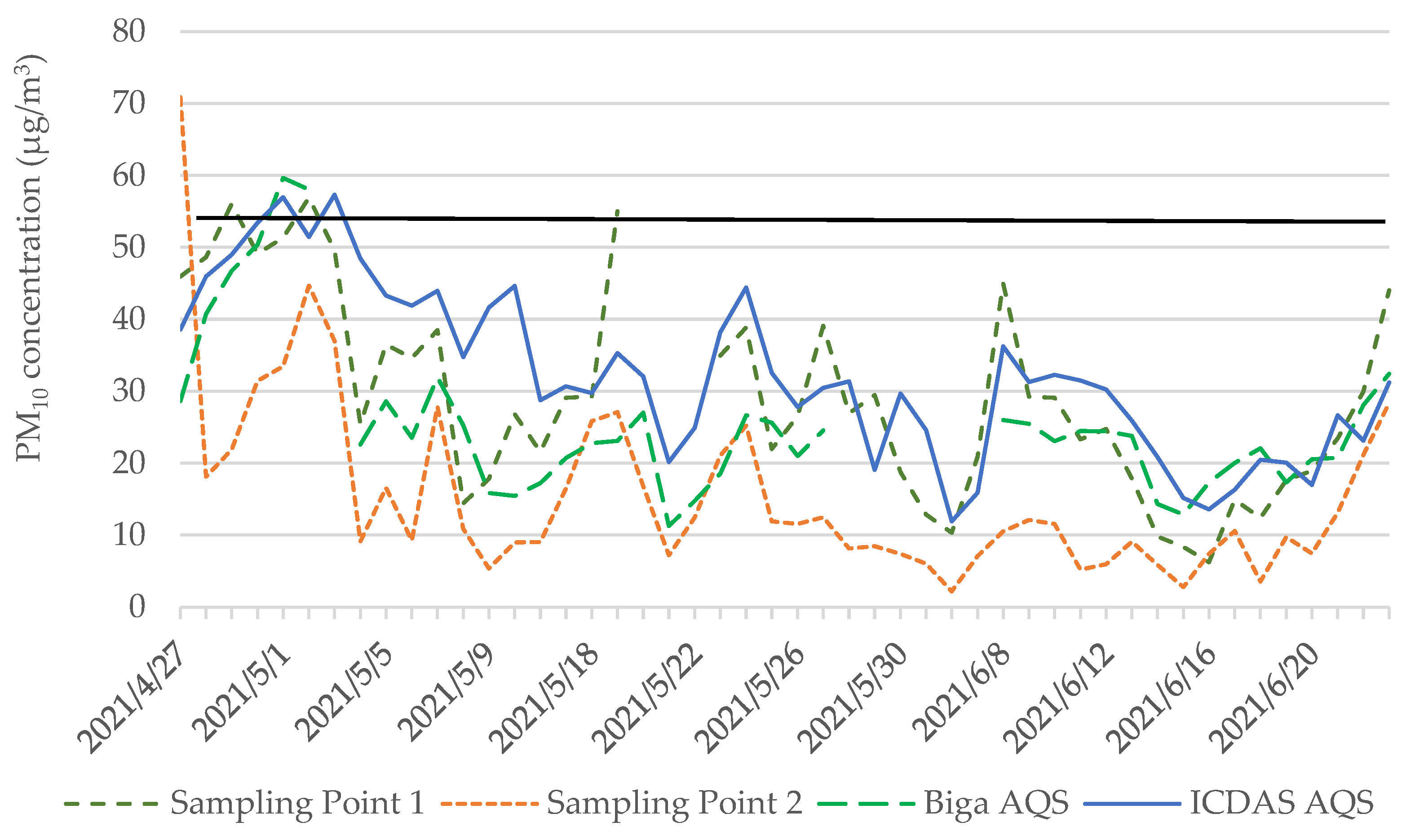
This study investigates the spatial and temporal variability of particulate matter in the study area using two semi-automatic dust sampling systems (Sampling Point 1 and Sampling Point 2) and two continuous analyzers in Biga and Icdas Air Quality Stations (AQS) of the Ministry of Environment, Urbanization, and Climate Change [70]. The Air Quality Assessment and Management Regulation of Turkey has set a daily limit value of 50 µg m−3 for 2021 [71]. Throughout the study period, there were instances where limit values were not provided. Despite this, the data collected during the study show that the dust levels in the region were generally below the limit values (Figure 3). Higher PM10 concentrations were observed at the end of April and early May due to the domestic heating at lower regional air temperatures. Higher PM10 concentrations were observed in the ICDAS AQS station than Biga AQS because of the power plant activity. Moreover, Sampling Point 1 is located near the urban area, and higher concentrations were observed at Sampling Point 1 compared to Sampling Point 2 during the sampling period.
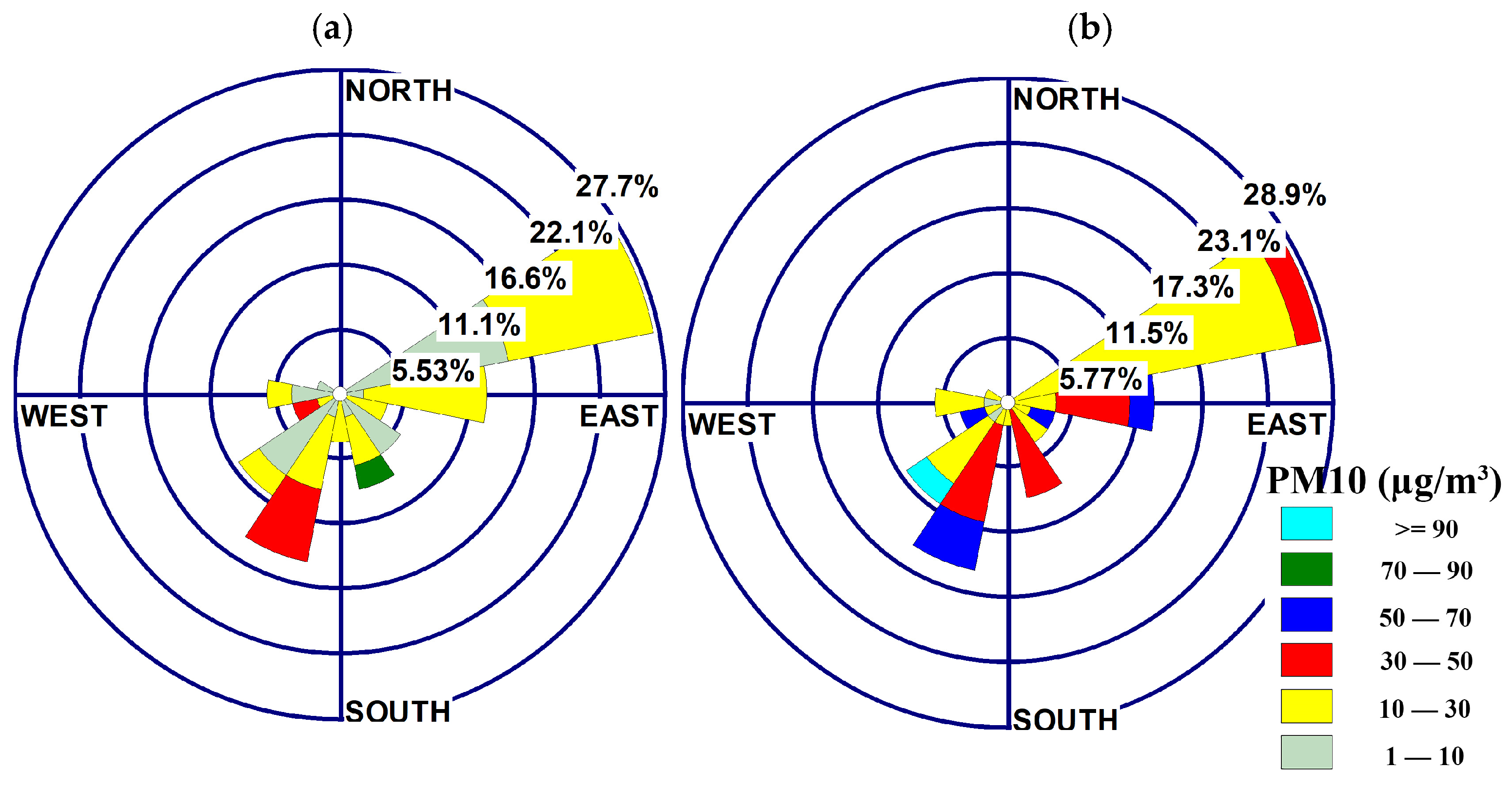
Meteorological conditions significantly influence the transportation and dispersion of air contaminants. The relationship between PM10 and wind speed was examined to comprehend the impact of weather conditions that cause high levels. Correlation coefficients between daily PM10 concentrations and wind speed at Sampling Point 1 and Sampling Point 2 were calculated. A negative correlation (Sampling Point 1: −0.3 and Sampling Point 2: −0.4) between PM10 and wind speed was determined. Previous studies by and Wang, Ma [72] reported a negative correlation between these parameters, which was explained by the diffusion of particulate matter due to higher wind speeds; conversely, slower winds were associated with higher PM concentrations. A lower wind speed may create a more conducive atmosphere for the accumulation [73]. Wind direction is also an important parameter for the dispersion of air pollutants in the atmosphere. Based on the daily wind data for the sampling periods, the impact of air transport was investigated using PM10 roses. Figure 4 shows PM10 concentrations by wind direction. PM10 concentrations are highest when the wind is blowing from the southwest.
Additionally, it was noted that PM10 concentrations are lower in the research area when the predominant (NE) wind directions are present. When examining PM10 roses, it was found that south-westerly winds at low speeds are associated with higher PM10 values in the region. Additionally, nearby area sources may contribute to these concentrations. Although PM10 measurements indicate it is not critical for the region, the chemical characterization should still be examined. For this reason, instrumental analyses of field-collected samples were conducted.

3.2. Data Analysis and Modeling

A base model (Qrobust) was run, excluding samples with high uncertainty to minimize the impact of values with large deviations on final solutions [43]. The PMF model was run 20 times with factor values ranging from 4 to 7, based on monitoring results at sampling points 1 and 2. The residual analysis of the base model results was conducted to reach the minimum Q values. Parameters with uncertainty-scaled residuals beyond ±3 were poorly fit by the model and needed to be evaluated based on their peak observations, scatter, or time series plots [57].
“Weak” or “Bad” reduces the effect of the relevant parameter on the model. A low correlation between observed and predicted values may be due to an incorrect determination of uncertainty, an inappropriate number of factors, an incorrect classification of the parameter, or a model that does not accurately reflect changes in the relevant parameter [57]. In this study, parameters with a high number of measurements below the DL (Table 3) (i.e., Co, La, Se, Sn, and Tl) were classified under the “Bad” category; thus, they were excluded from the PMF model. Au is in low concentration in the 2nd and 3rd periods. Acids used in Si sample preparation may interfere due to the destruction of the glass material and the glass components in the device. Removing Sb from the device is challenging, and it can remain in the calibration solution. Therefore, these parameters, categorized as “Bad” were excluded from the PMF analysis.
Receptor models such as PMF implicitly assume that measurements with similar temporal variations originate from the same source. Therefore, measurements that do not indicate any expected source contributing to the analyzed samples are excluded from PMF analyses. Huang, Rahn [62] calculated PMF solutions with and without “weak elements” (defined as parameters with “analytical difficulties or anomalous values”), found that the inclusion of these elements tended to yield physically meaningless PMF factors, and concluded that excluding weak elements improved PMF analyses [62].
If the purpose of the receptor modeling application is to apportion the PM mass, one of two general approaches is used. The first is to include PM as a parameter in the data matrix to be analyzed with PMF. If the PM mass is included in the data matrix used to train the PMF, the PMF allocates the PM to each factor, as with any other parameter. Recently, it has been suggested that uncertainties in PM mass concentrations should be significantly increased when used in PMF analyses to ensure they do not affect the resulting PMF solution. Including PM as a parameter may constitute double-counting, since all other particle components used in the PMF analysis are already included in the total PM mass. The second method of apportioning the total PM mass is to extract the total PM mass measurements from the data matrix and withdraw the factor contributions from the PMF to the PM mass measurements [59]. According to the EPA PMF User’s Guide, components that reflect the sum of the others should be assigned as the “Total Variable” to reduce their contribution to the PMF model. Therefore, PM mass data was chosen as the “Total Component (Weak)” in the model [57]. The coefficient of determination (R2) for the scatter plot, measured/calculated from the modeling results for the PM parameter, was 0.84. Given that the sampled dust was analyzed only for its metal content, excluding other potential components such as ion species and carbonaceous matter, achieving a correlation above 80% is a significant success [19].
Another consideration during parameter selection is whether to include chemically redundant parameters in the PMF data matrix. For example, pairs of elemental and ionic parameters such as sulfur and sulfate, Na and Na+, K and K+, Ca and Ca2+, Mg and Mg2+, or Cl and Cl. A common rationale for excluding one of these parameters is to avoid double-counting [59]. Comparing measured (input data) and calculated (modeled) values helps to determine whether the model fits well with individual parameters. The high correlation between the concentration and modeled values indicates that the model works well. By choosing “Weak” or “Bad” parameters with low correlation, the effect of the relevant parameter on the model should be reduced. This situation can be attributed to an incorrect determination of uncertainty, an inappropriate number of factors, an incorrect classification of the parameter, or the model failing to reflect changes in the relevant parameter accurately [56]. Accordingly, it was observed that the correlations were low (R2 < 0.7) for As, Ba, Be, Cd, Hg, K, Mg, Na, Ni, P, and Zn, which were classified as “Weak” parameters.
Samples on dates that caused deviations in extreme events were excluded from the PMF model. Assuming that the factor distribution between sampling points remains constant, a collective modeling study was conducted using 94 samples collected at both points. Information on assumptions and model input data is given in Table 4. The PMF model enables the analysis of combined data from multiple sampling points. This approach is widely applied in PMF studies, where closely spaced sampling sites are used to represent regional source characteristics, thereby improving factor stability. Previous multi-site PMF applications have demonstrated that combining datasets can improve statistical performance and reduce model uncertainty when source compositions across sites are comparable [21,72]. Several runs were conducted by varying the number of factors from 4 to 7 to test the stability of the base run. At the five-factor solution, Qtrue and Qrobust values were calculated as 1198.7 and 1200, respectively. The difference between Qtrue and Qrobust measures the impact of data points with high-scaled residuals. Peak impacts from sources that are not always present during the sample period could be linked to these data points. Furthermore, because uncertainty scales the residuals, excessively high uncertainties may yield comparable Qtrue and Qrobust values [57].
The Bootstrap (BS) method was used to assess whether a small set of observations could disproportionately affect the PMF resolution [57]. According to EPA [57] and Taghvaee, Sowlat [74], all PMF factors should be above 80% for the BS method. While the Qtrue and Qrobust values were 2446 and 2572.1, respectively, at the four-factor solution, the factor mapping rates were 71%, 98%, 99%, and 100% for factors 1, 2, 3, and 4, respectively. In similar, while both Qtrue and Qrobust values were calculated as 963.2, at the six-factor solution, the mapping rates for factors 1, 2, 3, 4, 5, and 6 were found to be 98%, 100%, 91%, 100%, 70%, and 100%, respectively. Since PM10 mass was used as the total variable in the PMF analysis, it would be expected that all factors contribute at least marginally to the reconstructed PM factor contributions. However, one of the six resolved factors did not show a quantifiable contribution to the PM and therefore appears absent as a subcomponent. On the other hand, the mapping rates for factors 1, 2, 3, 4, and 5 were 100%, 99%, 100%, 100%, and 99%, respectively. The BS method was run 100 times, and only the five-factor solution with a matching rate > 99% and that matched all PMF factors was used. The results indicated that the PMF solution was reliable.
The Basic Model Displacement (DISP) method explored the rotational ambiguity in the chosen PMF solution. According to Taghvaee, Sowlat [74], the most significant observed Q reduction for DISP should be less than 1%, and no trade-offs should be counted for all PMF factors at the lowest dQmax (dQmax = 4). The most significant Q decrease observed for the selected factor number was on the order of 0.015%. The absence of a trade-off for dQmax = 4 indicates that the solution has no rotational uncertainty.
A key receptor modelling assumption for the multi-site approach is that the chemical composition of the contributing sources remains consistent across sites, even if concentration levels differ. This assumption was evaluated through diagnostic tests: the observed vs. predicted scatter plots confirmed linear behavior with no significant outliers across sites (provided in the Supplementary Material), and the time series of factor contributions showed similar source patterns with varying magnitudes. No systematic residual patterns or site-specific anomalies were observed that would justify separating the dataset. Therefore, the combined multi-site approach was considered statistically robust and consistent with PMF assumptions.

3.3. Identification of Sources

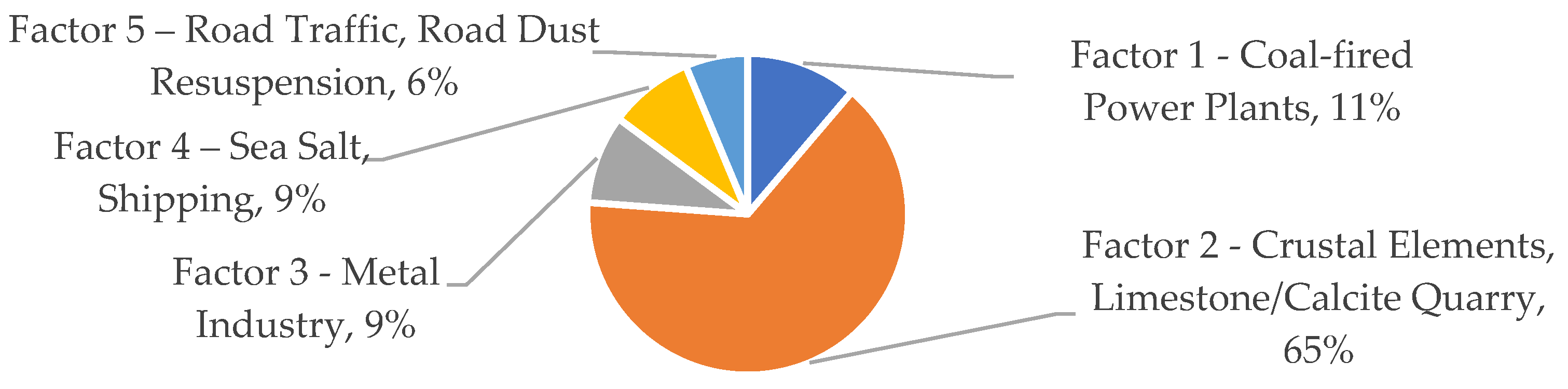
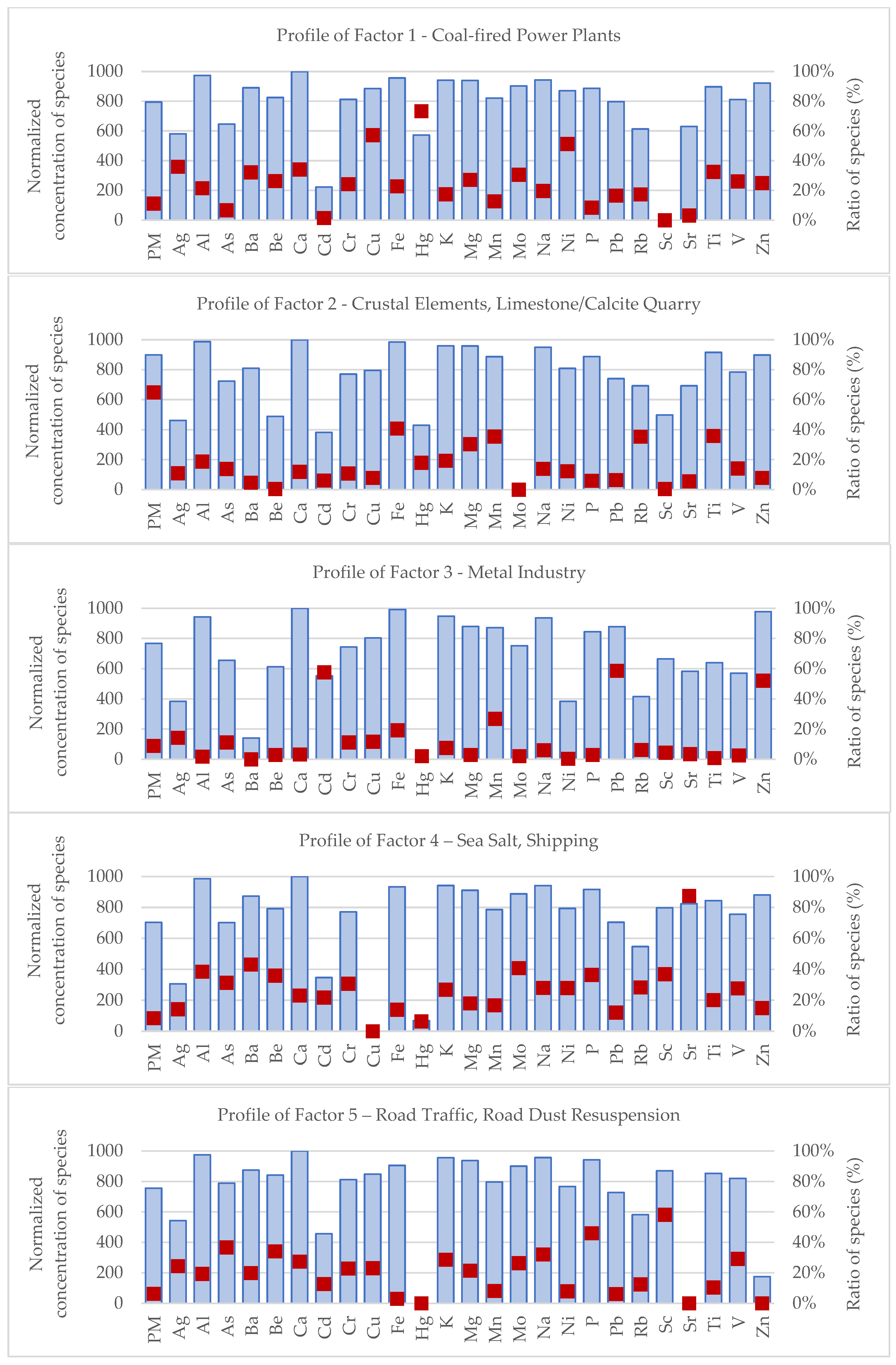
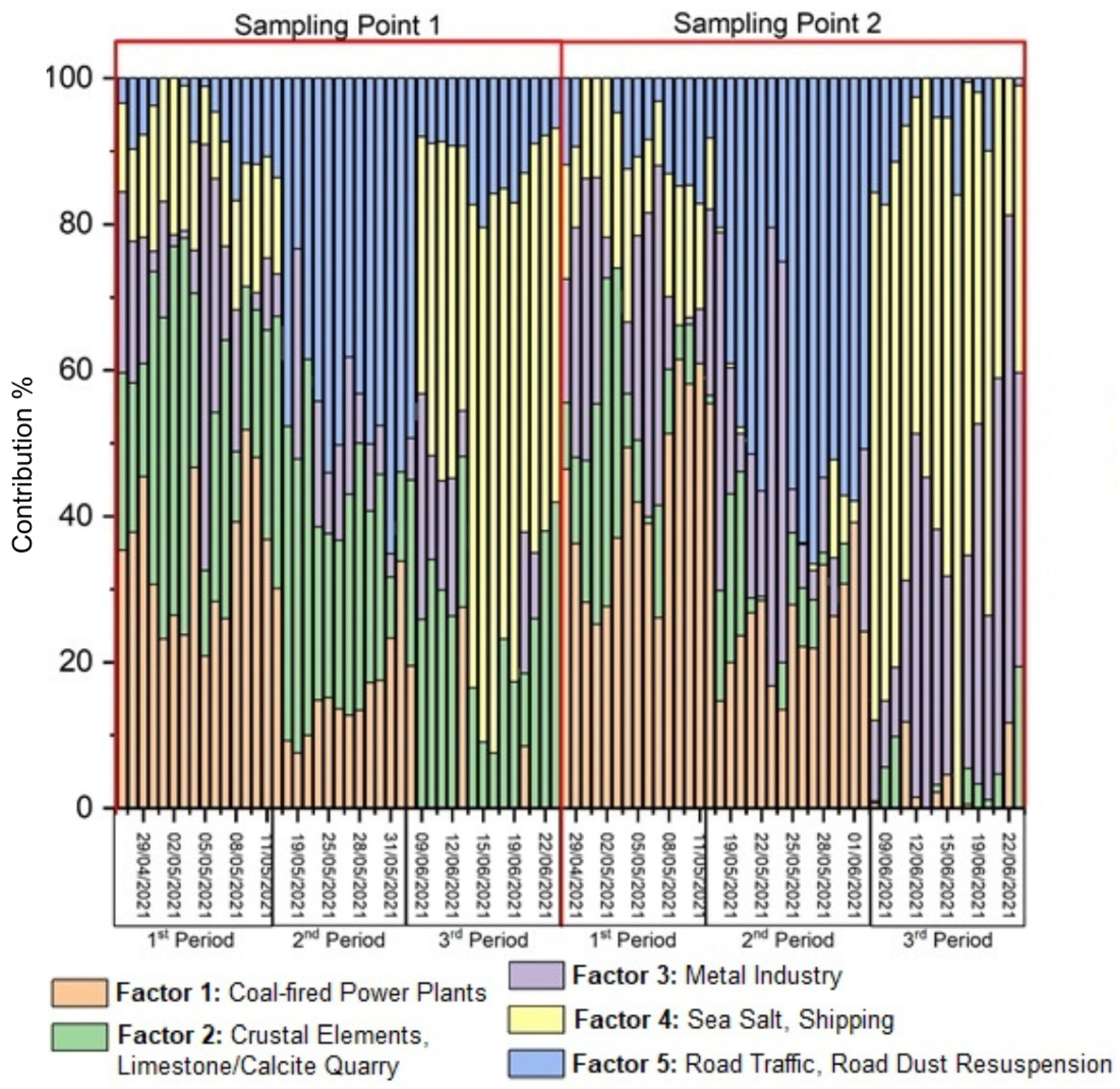
PMF calculated the PM concentration distribution for Sampling Point 1 and Sampling Point 2. Factor contributions that contribute to PM concentration are shown in Figure 5, while Figure 6 shows the profile distributions for each factor. Five factors defined within the model are analyzed below:

3.3.1. Factor 1—Coal-Fired Power Plants

Factor 1 is believed to be linked to power stations and coal combustion activities near the sampling points. Sampling Point 1 is located near the Bekirli Thermal Power Plant, while Sampling Point 2 is near the ICDAS Thermal Power Plant. Coal burning is one of the most significant anthropogenic sources of mercury, accounting for 40% of total anthropogenic Hg emissions [44]. Liu, Wang [75] estimated that mercury emissions from coal-fired power plants in 2015 amounted to 73 tons [75]. More than 99% of the Hg in coal is released through flue gas in the forms of gaseous Hg0, gaseous Hg2+, and particle-bound Hg [76]. Hg0 can remain in the atmosphere for several months to a year due to its high vapor pressure and low water solubility [77]. The parameters most frequently reported in “Factor 1: Power Plants/Coal Combustion” include Hg, Cu, Ni, Ag, Ca, Ba, Ti, and Zn. V, Cr, and Ni are frequently found in fly ash from coal-based power plants. The presence of Na in this factor can be attributed to the desulfurization process applied to power plants in the region [78]. The high levels of minerals such as Ca, Fe, and Ti also suggest that this factor may also represent mineral dust. Studies in the literature have shown that elements such as As, Ba, Bi, Cd, Cr, Pb, Mn, Mo, Ni, Se, V, and Zn may be linked to coal combustion. For Sampling Point 1 and Sampling Point 2, this factor was associated with coal-fired thermal power plant activities in the surrounding area, characterized by high levels of Hg, Ni, Zn, Mo, Mn, Ba, and Cr.

3.3.2. Factor 2—Crustal Elements, Limestone/Calcite Quarry

Factor 2 is heavily influenced by the following parameters: PM, Fe, Ti, Mn, Rb, Mg, K, Hg, and Al. This factor, which makes up 65% of the PM10 concentration, was named “Crustal/Soil Resuspension” due to the abundance of soil-derived elements such as Al, Ti, Fe, Mg, K, and Ca. Therefore, this factor is predicted to represent the region’s mine sites and rock layers. Sampling Point 1 is located near Calcite and Limestone Quarries, while Sampling Point 2 is close to a Limestone Quarry. High concentrations of Al, Co, Fe, Mn, Sr, and Ti have been associated with residual elements from mixed soil dust, anthropogenic construction dust, road dust, and mineral aerosols transported over long distances [43] and are also present in this factor. Moreover, high concentrations of Ca, Ce, K, Mg, Sc, and Si indicate the presence of residual elements. “Factor 2” is mainly characterized by the typical crustal elements Fe, Mn, Ti, Mg, K, and Ca, and it is associated with the surrounding limestone/calcite quarries. Factor 2 constitutes 58.5% and 65.1% of the total PM10 concentration in Sampling Point 1 and Sampling Point 2, respectively.
On the other hand, the presence of parameters associated with anthropogenic activities, such as Mn, Cu, V, and Cr, may indicate that this factor includes traces of industrial dust [78]. Furthermore, Ca is associated with the region’s ready-mixed concrete facilities [19]. The percentage distribution of the parameters representing the crustal elements/limestone/calcite quarry is given in Figure 6.

3.3.3. Factor 3—Metal Industry

The third factor was assumed to be associated with metal industries near the sampling points. There are gold, silver, lead, zinc, copper, and iron mines around sampling points, as well as an iron and steel plant near Sampling Point 2. Literature has identified Cr, Cd, Ni, Pb, and Zn as trace elements in steel metallurgy [46]. Boamponsem, de Freitas [51] found that the dominant species of Sb characterize gold mining activities, and that Th, As, Hg, Cd, and Co are the primary sources of heavy metals in the study area, with significant contributions from Cu, Al, Mn, and V. Cd, Zn, Pb, Mn, Fe, Cu, and Ag were linked to the surrounding iron and steel plant and mining activities for both sampling points. Pb, Zn, Cd, Mn, Fe, Ag, and As are dominant “Factor 3” parameters. Although this factor makes a low contribution to the total PM10 composition, high levels of Zn, Cd, and Pb suggest that it is associated with facilities in the metal industry in the region. The factor is directly related to anthropogenic activities in the region. It exhibits low levels of crustal elements, such as Al, Ca, Mg, and Ti, which are typically associated with natural dust sources. High Cd, Zn, and Pb concentrations at Sampling Point 2, which is very close to the iron and steel plant, support this analysis. Figure 6 visually shows the parameter distribution within “Factor 3: Metal Industry.”

3.3.4. Factor 4—Sea Salt, Shipping

Sampling points are located near the seaside. Analyses at these points are expected to reveal elements related to shipping emissions and sea salt. Pio, Cerqueira [49] observed that Na characterizes factors associated with sea spray, while Cl- and Mg are characterized by 47% and 84%, respectively. Minor contributions of Ca, Al, Ti, and K (less than 10% of their total mass) are also observed, along with 12% of the mass of Sr, Na, and Mg associated with sea salt, sea spray, and marine aerosol sources in the literature [49]. The literature also often pairs Na, Mg, Ca, and Sr with marine aerosol compositions [54]. The presence of Sr in the source profile of Factor 4 is not unusual because this compound is found together with Ca in the sea salt composition [23]. High levels of Ni and V may indicate that the factor is associated with fuel combustion, refinery operations, and exhaust emissions from port transport. V and Ni are known indicators of fuel combustion, and the V/Ni ratio in this source profile is 2.7, which falls within the typical range for ship emissions [47]. For both sampling points, this factor is characterized by high levels of Sr, V, Ni, and Ca, and is believed to represent sources of sea salt and ship emissions. The distribution of the parameters within “Factor 4” is shown in Figure 6.

3.3.5. Factor 5—Road Traffic, Road Dust Resuspension

As, Pb, and Ni are present in the exhaust of vehicles and are therefore related to traffic [52,53]. Cd is essential in lubricating oil and tires [42]. The factor contributing 6.3% of the total PM10 mass is predicted to be representative of traffic-related exhaust sources. Li, Dryfhout-Clark [43] associated a factor with fossil-fuel sources (coal combustion and vehicle emissions) or incinerator sources, which contributed to As, Ba, Bi, Cd, Cr, Mo, Pb, Sb, Se, V, and Zn concentrations of 41.0–77.4%. Combustion of leaded and low-lead gasoline can release Pb into the atmosphere [69]. Sc, P, As, Na, Be, V, and K are parameters found in “Factor 5”. The Ni/V ratio is approximately 1/3, indicating that this factor is representative of the liquid fuels used in motor vehicles [79]. Elements from natural sources, such as Na, P, and K, indicate that this factor may represent dust accumulation on the road surface. Cu and Pb, which are relatively lower in this factor than other parameters but are found in the fuel of motor vehicles, also contribute to the association of the factor with motor vehicles. Parameters such as Cu, Ba, and Fe are also related to vehicular brake abrasion [54]. Ba is accepted as a parameter for road dust in many studies [19]. Mo, which contributes 26.4% to this factor, is reported in the literature to be associated with MoS2 used in motor oils [68]. In the literature, the elements Ag, As, Ba, Br, Ca, Cd, Cu, Fe, Mg, Mn, Mo, Ni, Sb, Se, Pb, and Zn have been associated with road traffic emissions and road dust. While Ba and Mo contributions were 4.7% and 0%, respectively, in Factor 2—Crustal Elements, Limestone/Calcite Quarry, Ba and Mo contributions to Road Traffic, Road Dust Resuspension were found as 19.9% and 26.4%, respectively. This factor is assumed to represent traffic emissions and road dust resuspension for both sampling points. The following parameters characterize it: Sc, As, V, Cu, K, Ca, Mo, Cr, Ba, Ti, and Mn. The concentrations at Sampling Point 1, located closer to the D-200 highway, are higher than at Sampling Point 2, supporting the analysis. The distribution of the parameters of “Factor 5” is shown in Figure 6.
PMF also allows users to calculate how the parameters change on a factor-by-factor basis and how much each factor affects the total during the measurement period. When the time-dependent changes shown in Figure 7 were examined, it was seen that Factor 1 (coal-fired power plant) is concentrated at each sampling point, especially in the first and second sampling periods. Factor 2 (crustal elements, limestone/calcite quarry) is influential at both points in the first two measurement periods, especially in the second period of Sampling Point 1. While Factor 3 (metal industry) appeared to dominate at both points in the first two measurement periods, the highest effect was observed at the end of the last measurement period, especially at Sampling Point 2. The effect of Factor 4 (sea salt and ship emissions) intensifies at both sampling points, especially in June 2021. The effect of Factor 5 (road traffic emissions and road dust resuspension) intensifies at both sampling points in the second sampling period. During the national holiday period in May 2021, road traffic density increased, as did the model results. Time-dependent analysis can also be used to assess exceedances of legislated thresholds [79], which primarily occurred during the first sampling period, when the contribution of Factor 1 (coal-fired power plants) dominated the total PM10 mass.
During the late April–mid-May period, wind speeds generally ranged between 2–4 m/s, with Factor 1 (coal-fired power plant) and Factor 2 (crustal elements, limestone/calcite quarry) contributing relatively high and sustained values on many days, while Factor 3 (metal industry) and Factor 5 (road traffic emissions and road dust resuspension) exhibited sudden spikes (e.g., values of 5 or higher) on certain days; suggesting that short-lived but influential episodes occurred on certain days in the early period. Towards the end of May, the average contributions of Factor 1 and Factor 2 decrease, with values clustering at more stable and low-to-medium levels, while the more limited but continuous contributions of Factor 3 and Factor 4 come to the fore. In June, Factor 2, Factor 3, and Factor 4 (sea salt and ship emissions) in particular show a more balanced change with fewer sudden jumps. This temporal pattern indicates that pronounced, episodic source effects (e.g., short-term regional emission increases or meteorological instabilities) were dominant during the early period. In contrast, more stable meteorological conditions and a more homogeneous distribution of pollutants emerged towards the beginning of summer, leading to a more regular pattern of factor contributions in line with the seasonal transition.
Furthermore, the strengthening of certain factors at different times (e.g., Factor 2 in mid-May, Factor 3 or 4 on some days in June) reflects temporally varying source composition and possible seasonal changes in factor contributions (e.g., heating, traffic patterns, etc.). Overall, under low to moderate wind speeds (approximately 2–4 m/s), all factors contribute to the measurement station to some extent; however, certain factors are more prominent in specific wind direction bands. In particular, on days when winds blow from the south–southwest sector (approximately 180–260°) and wind speeds are around 2–3.5 m/s, it is thought that the pollutant sources associated with these factors are located to the south and southwest of the measurement station. In contrast, meteorological conditions characterised by wind speeds coming from the east–northeast (approximately 50–100° angle range) and occasionally increasing significantly (3–6 m/s speed range) show an increase in the intensity of Factor 3 and, on some days, Factor 5 also becomes significant, which suggests that these factors may be related to eastern and north-eastern sources located at greater distances or spread over a wider geographical area. Factor 4, on the other hand, contributes moderately in both the south-westerly sector (angle range 200–250°) and the east and north-east directions, mostly at wind speeds above 2 m/s, suggesting that it may represent a source effective on a more regional scale or with background characteristics.

4. Conclusions

This study aimed to quantify the relative contributions of different source types to PM10 measured at two locations in Turkey using the EPA PMF. PM10, or particulate matter with a diameter of 10 μm or less, is a significant air pollutant that poses health risks to humans and the environment. Inhaling PM10 particles can cause respiratory and cardiovascular problems, and long-term exposure can lead to chronic diseases such as lung cancer and heart disease. The study used EPA PMF (V5.0), a receptor model that can identify and quantify the contributions of different sources to PM10 pollution. The PMF model was fed with the results of a monitoring campaign conducted at two sampling points over 16 days across three consecutive periods. Samples were analyzed to determine the concentration of total PM10 mass and the mass of 35 different metals.
The study identified five factors contributing to PM10 pollution in the study area: crustal elements/limestone/calcite quarry (64.9%), coal-fired power plant (11.2%), metal industry (9%), sea salt and shipping (8.5%), and road traffic emissions and road dust resuspension (6.3%). Sari, İncecik [38] analysed pollutant transport characteristics using the WRF-HYSPLIT model. This analysis showed that air pollutants accumulated from highly polluted areas, particularly in the north–northeast, including industrial, domestic, and traffic sources in Istanbul and Tekirdag. However, the source apportionment study revealed that local pollution sources contributed significantly more to particulate matter concentrations in the region than transport sources. In particular, the metal industry, energy plants, and sea salt in the study area were identified as the leading local contributors. Supported by quantitative source apportionment results, this finding indicates that, even when transport from external sources occurs, local emissions also significantly influence overall air quality in the region.
The study found that many crustal elements/limestone/calcite quarries are located south and west of the sampling points, and the high PM concentrations observed on days with wind flow from this direction match the results obtained from the receptor model. Wind speed and direction were also found to affect atmospheric levels of air pollution, particularly PM10. Low wind speeds prevent the dispersion of particulate matter, while excessive wind speeds may cause PM transport from locations outside the city. This study found a negative correlation between wind speed and PM concentration, indicating that lower wind speeds are associated with higher PM concentrations.
The measurement strategy was designed to compare against PM10 limit values, in accordance with national and regional air quality regulations in the study area. We focused on PM10 to evaluate coarse-mode contributions, including shell dust, road dust resuspension, sea salt, and mechanically generated particles from industrial activities, which are particularly significant in our coastal/industrial environment. Since Turkish national legislation does not establish a limit value for PM2.5, we did not measure PM2.5. By characterizing the spatial and temporal patterns of PM10, this study provides a foundation for future research, including simultaneous PM2.5 measurements and detailed source apportionment. The study also acknowledges the need for continued monitoring of fine particulate matter (PM2.5), which is mainly influenced by anthropogenic sources. However, the model has shown good correlation with data on coarse particulates and a relatively short monitoring period. PM2.5 particles are smaller than PM10 particles and can penetrate deeper into the lungs, causing more severe health effects. Future studies should continue to monitor PM2.5 levels and identify their sources to develop more effective abatement strategies.
The study suggests that abatement strategies should focus on reducing emissions from industrial activities and road traffic to improve regional air quality. Industrial activities such as metal production and coal-fired power plants were identified as significant contributors to PM10 pollution, highlighting the need for stricter regulations and emission controls. Road traffic, including emissions and dust resuspension, was also identified as a significant contributor to PM10 pollution, indicating the need for measures such as reducing traffic congestion, promoting public transportation, and encouraging the use of electric vehicles.
In conclusion, this study provides valuable insights into the sources of PM10 pollution in a rural area (Biga, Canakkale). It highlights the importance of addressing local sources to improve regional air quality. The findings of this study can inform policymakers and stakeholders on effective strategies to reduce particulate matter pollution and protect public health. The study also emphasizes the need for continuous monitoring and research to develop more effective strategies to combat air pollution.

Supplementary Materials

The following supporting information can be downloaded at: https://www.mdpi.com/article/10.3390/atmos17020141/s1, Figure S1: Annex: Observed/Predicted Scatter Plots for 25 elements analyzed.

Author Contributions

All authors contributed to the conception and design of the study. E.G.C., M.N.T.-O. and D.S. performed data collection and analysis. N.O. provided consultancy throughout the entire study. M.N.T.-O. wrote the first draft of the manuscript, and all authors commented on previous versions. All authors have read and agreed to the published version of the manuscript.

Funding

This study was funded by İçdaş Steel, Energy, Shipbuilding, and Transportation Industry Inc. within the scope of the project no 5168903 “Investigation of Air Pollutant Environmental Effects of İçdaş Facilities in Biga Peninsula”. The authors gratefully acknowledge financial support through the SMART4ENV project. This project has received funding from the European Union’s Horizon Europe Widening Participation and Spreading Excellence Programme under Grant Agreement No 101079251 (SMART4ENV-Enhancing the Scientific Capacity of TUBITAK MAM in the Field of Smart Environmental Technologies for Climate Change Challenges).

Institutional Review Board Statement

Not applicable.

Informed Consent Statement

Not applicable.

Data Availability Statement

The datasets used and/or analyzed during the current study are available from the corresponding author upon reasonable request.

Acknowledgments

This study was prepared within the scope of the project “Investigation of Air Pollutant Environmental Effects of İçdaş Facilities in Biga Peninsula” conducted by İçdaş Steel, Energy, Shipbuilding, and Transportation Industry Inc. in collaboration with TUBİTAK Marmara Research Center (MAM). The training received as part of the “(SMART4ENV-Enhancing the Scientific Capacity of TUBITAK MAM in the Field of Smart Environmental Technologies for Climate Change Challeng” project has contributed to the data analysis and modeling studies conducted. The authors also thank Barış Bora for his considerable assistance during the monitoring period and for providing information on source profiles and the TUBITAK MAM Air Pollution Measurement and Analysis Laboratory staff for their support.

Conflicts of Interest

The authors declare no conflicts of interest.

References

  1. Sari, D.; Incecik, S.; Ozkurt, N. Analysis of surface ozone episodes using WRF-HYSPLIT model at Biga Peninsula in the Marmara region of Turkey. Atmos. Pollut. Res. 2020, 11, 2361–2378. [Google Scholar] [CrossRef]
  2. Bodor, Z.; Bodor, K.; Keresztesi, Á.; Szép, R. Major air pollutants seasonal variation analysis and long-range transport of PM 10 in an urban environment with specific climate condition in Transylvania (Romania). Environ. Sci. Pollut. Res. 2020, 27, 38181–38199. [Google Scholar] [CrossRef] [PubMed]
  3. Ari, A.; Ertürk Ari, P.; Gaga, E.O. Source apportionment of primary and secondary fine particulate matter in Eskisehir/Türkiye using conventional and dispersion-normalized positive matrix factorization. Atmos. Pollut. Res. 2025, 16, 102653. [Google Scholar] [CrossRef]
  4. Yatkin, S.; Bayram, A. Source apportionment of PM10 and PM2.5 using positive matrix factorization and chemical mass balance in Izmir, Turkey. Sci. Total Environ. 2008, 390, 109–123. [Google Scholar] [CrossRef]
  5. EPA. Criteria Air Pollutants. Available online: https://www.epa.gov/criteria-air-pollutants#:~:text=The%20Clean%20Air%20Act%20requires,known%20as%20%22%20criteria%20air%20pollutants (accessed on 8 July 2022).
  6. Samoli, E.; Stafoggia, M.; Rodopoulou, S.; Ostro, B.; Alessandrini, E.; Basagaña, X.; Díaz, J.; Faustini, A.; Gandini, M.; Karanasiou, A.; et al. Which specific causes of death are associated with short term exposure to fine and coarse particles in Southern Europe? Results from the MED-PARTICLES project. Environ. Int. 2014, 67, 54–61. [Google Scholar] [CrossRef]
  7. Manisalidis, I.; Stavropoulou, E.; Stavropoulos, A.; Bezirtzoglou, E. Environmental and health impacts of air pollution: A review. Front. Public Health 2020, 8, 14. [Google Scholar] [CrossRef] [PubMed] [PubMed Central]
  8. Samoli, E.; Stafoggia, M.; Rodopoulou, S.; Ostro, B.; Declercq, C.; Alessandrini, E.; Díaz, J.; Karanasiou, A.; Kelessis, A.G.; Le Tertre, A.; et al. Associations between fine and coarse particles and mortality in Mediterranean cities: Results from the MED-PARTICLES project. Environ. Health Perspect. 2013, 121, 932–938. [Google Scholar] [CrossRef]
  9. Jain, S.; Sharma, S.; Mandal, T.; Saxena, M. Source apportionment of PM10 in Delhi, India using PCA/APCS, UNMIX and PMF. Particuology 2018, 37, 107–118. [Google Scholar] [CrossRef]
  10. Eleftheriadis, K.; Ochsenkuhn, K.M.; Lymperopoulou, T.; Karanasiou, A.; Razos, P.; Ochsenkuhn-Petropoulou, M. Influence of local and regional sources on the observed spatial and temporal variability of size resolved atmospheric aerosol mass concentrations and water-soluble species in the Athens metropolitan area. Atmos. Environ. 2014, 97, 252–261. [Google Scholar] [CrossRef]
  11. Naidja, L.; Ali-Khodja, H.; Khardi, S. Sources and levels of particulate matter in North African and Sub-Saharan cities: A literature review. Environ. Sci. Pollut. Res. 2018, 25, 12303–12328. [Google Scholar] [CrossRef]
  12. Dockery, D.W.; Pope, C.A., 3rd. Acute respiratory effects of particulate air pollution. Annu. Rev. Public Health 1994, 15, 107–132. [Google Scholar] [CrossRef] [PubMed]
  13. Tang, H.; Cheng, Z.; Li, N.; Mao, S.; Ma, R.; He, H.; Niu, Z.; Chen, X.; Xiang, H. The short-and long-term associations of particulate matter with inflammation and blood coagulation markers: A meta-analysis. Environ. Pollut. 2020, 267, 115630. [Google Scholar] [CrossRef] [PubMed]
  14. Natusch, D.F.S.; Wallace, J.R.; Evans, C.A. Toxic Trace Elements: Preferential Concentration in Respirable Particles. Science 1974, 183, 202–204. [Google Scholar] [CrossRef] [PubMed]
  15. EPA. Health and Environmental Effects of Particulate Matter (PM). Available online: https://www.epa.gov/pm-pollution/health-and-environmental-effects-particulate-matter-pm (accessed on 8 July 2022).
  16. Almeida, S.; Manousakas, M.; Diapouli, E.; Kertesz, Z.; Samek, L.; Hristova, E.; Šega, K.; Alvarez, R.P.; Belis, C.; Eleftheriadis, K. Ambient particulate matter source apportionment using receptor modelling in European and Central Asia urban areas. Environ. Pollut. 2020, 266, 115199. [Google Scholar] [CrossRef]
  17. Dai, T.; Dai, Q.; Yin, J.; Chen, J.; Liu, B.; Bi, X.; Wu, J.; Zhang, Y.; Feng, Y. Spatial source apportionment of airborne coarse particulate matter using PMF-Bayesian receptor model. Sci. Total Environ. 2024, 917, 170235. [Google Scholar] [CrossRef]
  18. Hsu, C.-Y.; Chiang, H.-C.; Lin, S.-L.; Chen, M.-J.; Lin, T.-Y.; Chen, Y.-C. Elemental characterization and source apportionment of PM10 and PM2.5 in the western coastal area of central Taiwan. Sci. Total Environ. 2016, 541, 1139–1150. [Google Scholar] [CrossRef]
  19. Lim, J.-M.; Lee, J.-H.; Moon, J.-H.; Chung, Y.-S.; Kim, K.-H. Source apportionment of PM10 at a small industrial area using Positive Matrix Factorization. Atmos. Res. 2010, 95, 88–100. [Google Scholar] [CrossRef]
  20. Galvão, E.S.; de Cassia Feroni, R.; Orlando, M.T.D.A. A review of the main strategies used in the interpretation of similar chemical profiles yielded by receptor models in the source apportionment of particulate matter. Chemosphere 2021, 269, 128746. [Google Scholar] [CrossRef]
  21. Kara, M.; Hopke, P.K.; Dumanoglu, Y.; Altiok, H.; Elbir, T.; Odabasi, M.; Bayram, A. Characterization of PM Using Multiple Site Data in a Heavily Industrialized Region of Turkey. Aerosol Air Qual. Res. 2015, 15, 11–27. [Google Scholar] [CrossRef]
  22. Kumar, S.; Raman, R.S. Source apportionment of fine particulate matter over a National Park in Central India. Sci. Total Environ. 2020, 720, 137511. [Google Scholar] [CrossRef]
  23. Viana, M.; Amato, F.; Alastuey, A.; Querol, X.; Moreno, T.; García Dos Santos, S.; Herce, M.D.; Fernández-Patier, R. Chemical Tracers of Particulate Emissions from Commercial Shipping. Environ. Sci. Technol. 2009, 43, 7472–7477. [Google Scholar] [CrossRef]
  24. Schauer, J.J.; Rogge, W.F.; Hildemann, L.M.; Mazurek, M.A.; Cass, G.R.; Simoneit, B.R.T. Source apportionment of airborne particulate matter using organic compounds as tracers. Atmos. Environ. 1996, 30, 3837–3855. [Google Scholar] [CrossRef]
  25. Villalobos, A.M.; Barraza, F.; Jorquera, H.; Schauer, J.J. Wood burning pollution in southern Chile: PM2.5 source apportionment using CMB and molecular markers. Environ. Pollut. 2017, 225, 514–523. [Google Scholar] [CrossRef] [PubMed]
  26. Paatero, P.; Tapper, U. Positive matrix factorization: A non-negative factor model with optimal utilization of error estimates of data values. Environmetrics 1994, 5, 111–126. [Google Scholar] [CrossRef]
  27. Yazman, M.M.; Ustaoğlu, F.; Yüksel, B. Nutritional profiling of Oncorhynchus mykiss from Çamlıgöze Dam, Türkiye: Health risk assessment through Monte Carlo simulation and elemental source attribution using positive matrix factorization. Process Saf. Environ. Prot. 2025, 198, 107172. [Google Scholar] [CrossRef]
  28. Demir, T.; Karakaş, D.; Yenisoy-Karakaş, S. Source identification of exhaust and non-exhaust traffic emissions through the elemental carbon fractions and Positive Matrix Factorization method. Environ. Res. 2022, 204, 112399. [Google Scholar] [CrossRef]
  29. Javed, W.; Guo, B. Chemical characterization and source apportionment of fine and coarse atmospheric particulate matter in Doha, Qatar. Atmos. Pollut. Res. 2021, 12, 122–136. [Google Scholar] [CrossRef]
  30. Dörter, M.; Karadeniz, H.; Saklangıç, U.; Yenisoy-Karakaş, S. The use of passive lichen biomonitoring in combination with positive matrix factor analysis and stable isotopic ratios to assess the metal pollution sources in throughfall deposition of Bolu plain, Turkey. Ecol. Indic. 2020, 113, 106212. [Google Scholar] [CrossRef]
  31. Celik-Saglam, I.; Yurtsever, M.; Civan, M.; Yurdakul, S.; Cetin, B. Evaluation of levels and sources of microplastics and phthalic acid esters and their relationships in the atmosphere of highly industrialized and urbanized Gebze, Türkiye. Sci. Total Environ. 2023, 881, 163508. [Google Scholar] [CrossRef]
  32. Lage, J.; Wolterbeek, H.T.; Reis, M.A.; Chaves, P.C.; Garcia, S.; Almeida, S.M. Source apportionment by positive matrix factorization on elemental concentration obtained in PM10 and biomonitors collected in the vicinities of a steelworks. J. Radioanal. Nucl. Chem. 2016, 309, 397–404. [Google Scholar] [CrossRef]
  33. Çulha, S.T.; Yabanlı, M.; Baki, B.; Yozukmaz, A. Heavy metals in tissues of scorpionfish (Scorpaena porcus) caught from Black Sea (Turkey) and potential risks to human health. Environ. Sci. Pollut. Res. Int. 2016, 23, 20882–20892. [Google Scholar] [CrossRef] [PubMed]
  34. Sanli, G.; Celik, S.; Joubi, V.; Tasdemir, Y. Concentrations, phase exchanges and source apportionment of polycyclic aromatic hydrocarbons (PAHs) In Bursa-Turkey. Environ. Res. 2023, 232, 116344. [Google Scholar] [CrossRef] [PubMed]
  35. Ouyang, W.; Guo, B.; Cai, G.; Li, Q.; Han, S.; Liu, B.; Liu, X. The washing effect of precipitation on particulate matter and the pollution dynamics of rainwater in downtown Beijing. Sci. Total Environ. 2015, 505, 306–314. [Google Scholar] [CrossRef] [PubMed]
  36. McMullen, N.; Annesi-Maesano, I.; Renard, J.-B. Impact of Rain Precipitation on Urban Atmospheric Particle Matter Measured at Three Locations in France between 2013 and 2019. Atmosphere 2021, 12, 769. [Google Scholar] [CrossRef]
  37. MoEUCC. Canakkale City Environmental Status Report—2021 (Canakkale İli 2021 Yılı Çevre Durum Raporu). Available online: https://webdosya.csb.gov.tr/db/ced/icerikler/canakkale_-cdr2021-20221216112021.pdf (accessed on 18 December 2025).
  38. Sari, D.; İncecik, S.; Ozkurt, N. Surface ozone levels in the forest and vegetation areas of the Biga Peninsula, Turkey. Sci. Total Environ. 2016, 571, 1284–1297. [Google Scholar] [CrossRef]
  39. Hassan, H.; Latif, M.T.; Juneng, L.; Amil, N.; Khan, M.F.; Yik, D.J.; Abdullah, N.A. Interaction of PM10 concentrations with local and synoptic meteorological conditions at different temporal scales. Atmos. Res. 2020, 241, 104975. [Google Scholar] [CrossRef]
  40. Kim, Y.M.; Kim, J.; Han, Y.; Jeon, B.H.; Cheong, H.K.; Ahn, K. Short-term effects of weather and air pollution on atopic dermatitis symptoms in children: A panel study in Korea. PLoS ONE 2017, 12, e0175229. [Google Scholar] [CrossRef]
  41. MoEUCC. Integrated Environmental Information System. Available online: https://eizin.cevre.gov.tr/ (accessed on 1 January 2021).
  42. Duan, J.; Tan, J. Atmospheric heavy metals and Arsenic in China: Situation, sources and control policies. Atmos. Environ. 2013, 74, 93–101. [Google Scholar] [CrossRef]
  43. Li, W.; Dryfhout-Clark, H.; Hung, H. PM10-bound trace elements in the Great Lakes Basin (1988–2017) indicates effectiveness of regulatory actions, variations in sources and reduction in human health risks. Environ. Int. 2020, 143, 106008. [Google Scholar] [CrossRef]
  44. Huang, Y.; Deng, M.; Li, T.; Japenga, J.; Chen, Q.; Yang, X.; He, Z. Anthropogenic mercury emissions from 1980 to 2012 in China. Environ. Pollut. 2017, 226, 230–239. [Google Scholar] [CrossRef]
  45. Agyeman, P.C.; Ahado, S.K.; John, K.; Kebonye, N.M.; Vašát, R.; Borůvka, L.; Kočárek, M.; Němeček, K. Health risk assessment and the application of CF-PMF: A pollution assessment–based receptor model in an urban soil. J. Soils Sediments 2021, 21, 3117–3136. [Google Scholar] [CrossRef]
  46. Ogundele, L.T.; Owoade, O.K.; Olise, F.S.; Hopke, P.K. Source identification and apportionment of PM2.5 and PM2.5−10 in iron and steel scrap smelting factory environment using PMF, PCFA and UNMIX receptor models. Environ. Monit. Assess. 2016, 188, 574. [Google Scholar] [CrossRef]
  47. Saraga, D.E.; Tolis, E.I.; Maggos, T.; Vasilakos, C.; Bartzis, J.G. PM2.5 source apportionment for the port city of Thessaloniki, Greece. Sci. Total Environ. 2019, 650, 2337–2354. [Google Scholar] [CrossRef] [PubMed]
  48. Biegalski, S.R.; Hopke, P.K. Total potential source contribution function analysis of trace elements determined in aerosol samples collected near Lake Huron. Environ. Sci. Technol. 2004, 38, 4276–4284. [Google Scholar] [CrossRef] [PubMed]
  49. Pio, C.A.; Cerqueira, M.A.; Castro, L.M.; Salgueiro, M.L. Sulphur and nitrogen compounds in variable marine/continental air masses at the southwest European coast. Atmos. Environ. 1996, 30, 3115–3127. [Google Scholar] [CrossRef]
  50. Pey, J.; Pérez, N.; Cortés, J.; Alastuey, A.; Querol, X. Chemical fingerprint and impact of shipping emissions over a western Mediterranean metropolis: Primary and aged contributions. Sci. Total Environ. 2013, 463–464, 497–507. [Google Scholar] [CrossRef]
  51. Boamponsem, L.K.; de Freitas, C.R.; Williams, D. Source apportionment of air pollutants in the Greater Auckland Region of New Zealand using receptor models and elemental levels in the lichen, Parmotrema reticulatum. Atmos. Pollut. Res. 2017, 8, 101–113. [Google Scholar] [CrossRef]
  52. Morawska, L.; Zhang, J.J. Combustion sources of particles. 1. Health relevance and source signatures. Chemosphere 2002, 49, 1045–1058. [Google Scholar] [CrossRef]
  53. Zhang, Y.; Cao, S.; Xu, X.; Qiu, J.; Chen, M.; Wang, D.; Guan, D.; Wang, C.; Wang, X.; Dong, B.; et al. Metals compositions of indoor PM2.5, health risk assessment, and birth outcomes in Lanzhou, China. Environ. Monit. Assess. 2016, 188, 325. [Google Scholar] [CrossRef]
  54. Waked, A.; Favez, O.; Alleman, L.Y.; Piot, C.; Petit, J.E.; Delaunay, T.; Verlinden, E.; Golly, B.; Besombes, J.L.; Jaffrezo, J.L.; et al. Source apportionment of PM10 in a north-western Europe regional urban background site (Lens, France) using positive matrix factorization and including primary biogenic emissions. Atmos. Chem. Phys. 2014, 14, 3325–3346. [Google Scholar] [CrossRef]
  55. Lucarelli, F.; Mandò, P.A.; Nava, S.; Prati, P.; Zucchiatti, A. One-year study of the elemental composition and source apportionment of PM10 aerosols in Florence, Italy. J. Air Waste Manag. Assoc. 2004, 54, 1372–1382. [Google Scholar] [CrossRef]
  56. TS-EN-12341; Ambient Air—Standard Gravimetric Measurement Method for the Determination of the PM10 or PM2,5 Mass Concentration of Suspended Particulate Matter. Turkish Standards Institute: Ankara, Turkey, 2023.
  57. EPA. EPA Positive Matrix Factorization (PMF) 5.0 Fundamentals and User Guide. Available online: https://www.epa.gov/scram/air-quality-dispersion-modeling-preferred-and-recommended-models#aermod (accessed on 1 January 2021).
  58. Işıkdemir, Ö.; Pekey, H.; Doğan, G.; Tuncel, G. Doğu Akdeniz Bölgesi Yağmur Suyu Kompozisyonunu Etkileyen Kaynaklarin Pozitif Matris Faktörizasyonu Ile Belirlenmesi. In Proceedings of the 3rd National Air Pollution and Control Symposium, Hatay, Turkey, 22–25 October 2008; pp. 355–363. [Google Scholar]
  59. Reff, A.; Eberly, S.I.; Bhave, P.V. Receptor Modeling of Ambient Particulate Matter Data Using Positive Matrix Factorization: Review of Existing Methods. J. Air Waste Manag. Assoc. 2007, 57, 146–154. [Google Scholar] [CrossRef]
  60. Hopke, P.K.; Cohen, D.D. Application of receptor modeling methods. Atmos. Pollut. Res. 2011, 2, 122–125. [Google Scholar] [CrossRef]
  61. Polissar, A.V.; Hopke, P.K.; Paatero, P.; Malm, W.C.; Sisler, J.F. Atmospheric aerosol over Alaska: 2. Elemental composition and sources. J. Geophys. Res. Atmos. 1998, 103, 19045–19057. [Google Scholar] [CrossRef]
  62. Huang, S.; Rahn, K.A.; Arimoto, R. Testing and optimizing two factor-analysis techniques on aerosol at Narragansett, Rhode Island. Atmos. Environ. 1999, 33, 2169–2185. [Google Scholar] [CrossRef]
  63. Abdullahi, K.; Delgado-Saborit, J.; Harrison, R.M. Sensitivity of a Chemical Mass Balance model for PM2.5 to source profiles for differing styles of cooking. Atmos. Environ. 2018, 178, 282–285. [Google Scholar] [CrossRef]
  64. Zhang, Y.; Sheesley, R.J.; Bae, M.-S.; Schauer, J.J. Sensitivity of a molecular marker based positive matrix factorization model to the number of receptor observations. Atmos. Environ. 2009, 43, 4951–4958. [Google Scholar] [CrossRef]
  65. Men, C.; Liu, R.; Wang, Q.; Guo, L.; Miao, Y.; Shen, Z. Uncertainty analysis in source apportionment of heavy metals in road dust based on positive matrix factorization model and geographic information system. Sci. Total Environ. 2019, 652, 27–39. [Google Scholar] [CrossRef]
  66. Hopke, P.K. Discussion of “Sensitivity of a molecular marker based positive matrix factorization model to the number of receptor observations” by YuanXun Zhang, Rebecca J. Sheesley, Min-Suk Bae and James J. Schauer. Atmos. Environ. 2010, 44, 1138. [Google Scholar] [CrossRef]
  67. Feng, J.; Song, N.; Li, Y. An in-depth investigation of the influence of sample size on PCA-MLR, PMF, and FA-NNC source apportionment results. Environ. Geochem. Health 2023, 45, 5841–5855. [Google Scholar] [CrossRef]
  68. Fernández-Olmo, I.; Andecochea, C.; Ruiz, S.; Fernández-Ferreras, J.A.; Irabien, A. Local source identification of trace metals in urban/industrial mixed land-use areas with daily PM10 limit value exceedances. Atmos. Res. 2016, 171, 92–106. [Google Scholar] [CrossRef]
  69. Pacyna, J.M.; Pacyna, E.G. An assessment of global and regional emissions of trace metals to the atmosphere from anthropogenic sources worldwide. Environ. Rev. 2001, 9, 269–298. [Google Scholar] [CrossRef]
  70. MoEUCC. National Air Quality Monitoring Network (Ulusal Hava Kalitesi İzleme Ağı). Available online: https://sim.csb.gov.tr/Services/AirQuality (accessed on 18 May 2022).
  71. MoEU. Air Quality Assessment and Management Regulation (Hava Kalitesi Değerlendirme ve Yönetimi Yönetmeliği). Available online: https://www.mevzuat.gov.tr/Metin.Aspx?MevzuatKod=7.5.12188&MevzuatIliski=0&sourceXmlSearch=hava%20kalitesi (accessed on 1 December 2017).
  72. Sofowote, U.M.; Su, Y.; Dabek-Zlotorzynska, E.; Rastogi, A.K.; Brook, J.; Hopke, P.K. Sources and temporal variations of constrained PMF factors obtained from multiple-year receptor modeling of ambient PM2.5 data from five speciation sites in Ontario, Canada. Atmos. Environ. 2015, 108, 140–150. [Google Scholar] [CrossRef]
  73. Shu, Q.; Pei, C.; Lin, X.; Hong, D.; Lai, S.; Zhang, Y. Variations of aminiums in fine particles at a suburban site in Guangzhou, China: Importance of anthropogenic and natural emissions. Particuology 2023, 80, 140–147. [Google Scholar] [CrossRef]
  74. Taghvaee, S.; Sowlat, M.H.; Hassanvand, M.S.; Yunesian, M.; Naddafi, K.; Sioutas, C. Source-specific lung cancer risk assessment of ambient PM2.5-bound polycyclic aromatic hydrocarbons (PAHs) in central Tehran. Environ. Int. 2018, 120, 321–332. [Google Scholar] [CrossRef] [PubMed]
  75. Liu, K.; Wang, S.; Wu, Q.; Wang, L.; Ma, Q.; Zhang, L.; Li, G.; Tian, H.; Duan, L.; Hao, J. A Highly Resolved Mercury Emission Inventory of Chinese Coal-Fired Power Plants. Environ. Sci. Technol. 2018, 52, 2400–2408. [Google Scholar] [CrossRef]
  76. Lv, J.; Wang, Y. PMF receptor models and sequential Gaussian simulation to determine the quantitative sources and hazardous areas of potentially toxic elements in soils. Geoderma 2019, 353, 347–358. [Google Scholar] [CrossRef]
  77. Alloway, B.J. Heavy Metals in Soils: Trace Metals and Metalloids in Soils and Their Bioavailability; Springer Science & Business Media: Berlin, Germany, 2012; Volume 22. [Google Scholar]
  78. Manousakas, M.; Diapouli, E.; Papaefthymiou, H.; Migliori, A.; Karydas, A.G.; Padilla-Alvarez, R.; Bogovac, M.; Kaiser, R.B.; Jaksic, M.; Bogdanovic-Radovic, I.; et al. Source apportionment by PMF on elemental concentrations obtained by PIXE analysis of PM10 samples collected at the vicinity of lignite power plants and mines in Megalopolis, Greece. Nucl. Instrum. Methods Phys. Res. Sect. B Beam Interact. Mater. At. 2015, 349, 114–124. [Google Scholar] [CrossRef]
  79. Clemente, Á.; Yubero, E.; Galindo, N.; Crespo, J.; Nicolás, J.F.; Santacatalina, M.; Carratala, A. Quantification of the impact of port activities on PM10 levels at the port-city boundary of a mediterranean city. J. Environ. Manag. 2021, 281, 111842. [Google Scholar] [CrossRef]
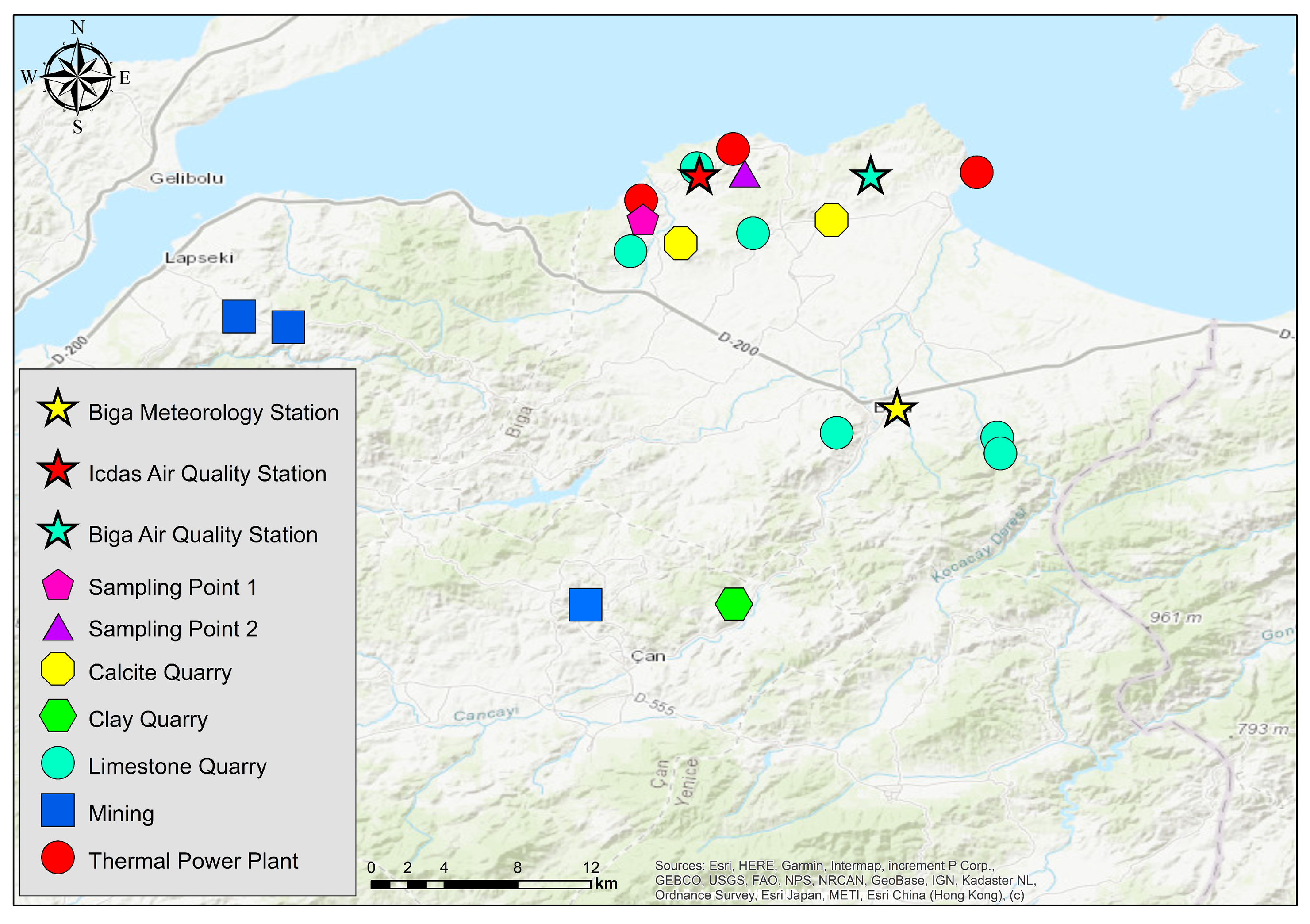
Figure 1. Biga satellite image displaying main emission sources and measurement points.
Atmosphere 17 00141 g001
Figure 2. The wind rose during the sampling period (27 April–23 June 2021).
Atmosphere 17 00141 g002
Figure 3. PM10 concentrations in the region during the sampling periods [(AQS): Air Quality Stations].
Atmosphere 17 00141 g003
Figure 4. PM10 roses of Sampling Point 1 (a) and Sampling Point 2 (b).
Atmosphere 17 00141 g004
Figure 5. Factor contributions.
Atmosphere 17 00141 g005
Figure 6. Profile distribution for factors.
Atmosphere 17 00141 g006
Figure 7. Time-dependent contributions of factors.
Atmosphere 17 00141 g007
Table 1. Monthly average total precipitation amount between 2011 and 2020.
MonthAverage Total PrecipitationNumber of Rainy Days
January72.9813.2
February58.3410.6
March53.0212
April44.967.9
May25.725.4
June26.585.5
July7.721.9
August12.561.4
September38.823.9
October59.666.9
November38.066.7
December60.911.5
Table 2. Types of sources in the region and characteristic pollutants expected to be emitted.
Source TypeEmitted Characteristic Pollutants
Thermal power plantAs, Cr, Pb, Mn, Ni, V, Zn (Coal Combustion) [42]
As, Ba, Bi, Cd, Cr, Mo, Pb, Sb, Se, V, Zn (Coal Combustion) [43]
Hg [44]
SteelworksCd, Mn, Pb, Zn [42]
Cr, Ni [45]
Cr, Cd, Mn, Ni, Pb, Zn [46]
Maritime traffic emissionsNi, V [47]
Sea saltBr, I, Na [48]
Sr, Ca [23]
Al, Ti, K, Mg [49]
Na, Mg [50]
MiningAu, Ag, Cu, Fe, Pb, Zn, Sb, Th, As, Hg, Cd, Co, Cu, Al, Mn, V [51]
Road (D200) traffic emissions/Road dustAg, As, Se (Fossil fuel combustion) [48]
As, Pb, Ni (Exhaust emissions) [52,53]
Ba (an element added to lubricating oil to prevent smoke and engine wear of diesel vehicles, can be used as an indicator species) [19]
Cd (Lubricating oil and rubber) [42]
Cu (Vehicle emissions), Pb (leaded gasoline) [42]
Sb, Br (Br is used to prevent wear in lubricating oil) [19]
Zn (Road dust, rubber coating) [19,42,45]
Mn (Gasoline additive) [42]
Fe, Mo [54]
Cu, Ni, Pb (Road surface wear) [54]
Ca, Fe, Mg (Basic materials emitted from brake pads, tires, and mechanical parts) [55]
Crustal elements
Clay/Limestone/Calcite Quarry
Ca, Ce, K, Mn, Sc, Si, Zn [48], V (Natural rock weathering) [42,48]
Al, Fe, Mg, Ti [19,48]
Al, Co, Fe, Mn, Sr, Ti [43]
Table 3. Average concentrations and the ratio of values below the detection limit.
ParameterAverage Concentration (ng/m3)<DL (%)ParameterAverage Concentration (ng/m3)<DL (%)
Ag0.61Mn29.80
Al1806.30Mo73.91
As6.01Na597.70
Au15.91Ni22.40
Ba53.31P191.70
Be17.20Pb15.70
Ca6286.40Rb1.617
Cd0.76Sb3.020
Ce2.02Sc15.60
Co0.594Se5.370
Cr13.00Si1.1 × 1060
Cu27.71Sn8.396
Fe733.60Sr11.722
Ga5.40Ti61.00
Hg0.311Tl0.297
K612.00V11.80
La1.048Zn194.91
Mg322.20
Table 4. Model input data and assumptions.
Model Input DataAssumptions
Parameters labeled weakPM, As, Ba, Be, Cd, Hg, K, Mg, Na, Ni, P, Zn
Parameters labeled badAu, Ce, Co, Ga, La, Sb, Se, Si, Sn, Tl
Excluded samplesSampling Point 1—05/23/21, 06/08/21, 06/18/21
Sampling Point 2—04/27/21, 05/31/21, 06/18/21
Base model runs17
Number of Bootstraps100
Seed number29
Minimum correlation R2 value 0.6
Number of factors5
Disclaimer/Publisher’s Note: The statements, opinions and data contained in all publications are solely those of the individual author(s) and contributor(s) and not of MDPI and/or the editor(s). MDPI and/or the editor(s) disclaim responsibility for any injury to people or property resulting from any ideas, methods, instructions or products referred to in the content.