Article

Wide-Spectral-Range, Multi-Directional Particle Detection by the High-Energy Particle Detector on the FY-4B Satellite


1
National Space Science Center, Chinese Academy of Sciences, Beijing 100190, China
2
Beijing Key Laboratory of Space Environment Exploration, Beijing 100190, China
3
University of Chinese Academy of Sciences, Beijing 100049, China
4
Beijing Institute of Tracking and Telecommunications Technology, Beijing 100094, China
*
Author to whom correspondence should be addressed.
Atmosphere 2026, 17(1), 48; https://doi.org/10.3390/atmos17010048 (registering DOI)
Submission received: 17 November 2025 / Revised: 22 December 2025 / Accepted: 25 December 2025 / Published: 30 December 2025
(This article belongs to the Section Upper Atmosphere)

Abstract

The FY-4B satellite, launched in June 2021 as China’s new-generation geostationary meteorological satellite, carries three identical High-Energy Particle Detectors (HEPDs) that enable multi-directional, wide-spectral measurements of energetic electrons. The three units are mounted in the zenith (−Z), flight (+X with a +Y offset of 30°), and anti-flight (−X with a −Y offset of 30°) directions, allowing simultaneous observations from nine look directions over a field of view close to 180° in the 0.4–4 MeV energy range (eight energy channels). This paper systematically presents the design principles of the HEPD electron detector, the ground calibration scheme, and preliminary in-orbit validation results. The probe employs a multi-layer silicon semiconductor telescope technique to achieve high-precision measurements of electron energy spectra, fluxes, and directional anisotropy in the 0.4–4 MeV range. Ground synchrotron calibration shows that the energy resolution is better than 16% for energies above 1 MeV, and the angular resolution is about 20°, providing a solid basis for subsequent quantitative inversion. During in-orbit operation, HEPD remains stable under both quiet conditions and strong geomagnetic storms: the measured electron fluxes, differential energy spectra, and directional distributions show good agreement with GOES-16 observations in the same energy bands during quiet periods and for the first time provide from geostationary orbit pitch-angle-resolved images of the minute-scale evolution of electron enhancement events. These results demonstrate that HEPD is capable of long-term monitoring of the geostationary radiation environment and can supply high-quality, continuous, and reliable data to support studies of radiation-belt particle dynamics, data assimilation in space weather models, and radiation warnings for satellites in orbit.

1. Introduction

Geosynchronous orbit (GEO), located approximately 35,786 km above the equator, matches Earth’s rotational period, enabling continuous observation and communication for fixed regions. Since the launch of the first geosynchronous satellite by the United States in 1964, GEO has become a key platform for communication, meteorological, navigation, and military missions. By 2024, more than 500 GEO satellites were active; 30% served civil communications; 20% were dedicated to meteorology and Earth observation; and the remainder supported navigation, military, and scientific purposes. Owing to its stability and broad coverage compared with low Earth orbit (LEO) and medium Earth orbit (MEO), GEO plays a critical role in information transmission and meteorological disaster warning.
GEO satellites operate within the Van Allen radiation belts and are subject to intense space weather, particularly high-energy electron hazards. More than half of GEO satellite anomalies are linked to high-energy electrons [1,2]. During geomagnetic storms, relativistic electrons with energies above 1 MeV can increase by several orders of magnitude in a short time, with fluxes often exceeding 103 (cm2·sr·s)−1. These particles cause deep charging in electronic components, leading to electrostatic discharge, damage, or even functional failure [3]. For example, the Anik E1/E2 satellite failed in 1989 because of enhanced GEO electrons, resulting in economic losses exceeding USD 50 million [4]. The geomagnetic storm incident in October 2003 led to control anomalies in multiple GEO satellites, with some experiencing a temporary loss of attitude [5]. During the substorm event on April 5, 2010, the solar wind speed reached 700 km/s, and the >0.8 MeV electron flux peaked at a five-year maximum. As a result, high-energy particles penetrated the Galaxy-15 satellite, causing surface and deep charging, FPGA latch-up, and eventual loss of control [6]. Service interruptions in GEO communication and meteorological satellites can result in substantial economic losses. The European Space Agency estimated that a severe space weather event causing large-scale GEO satellite failures could result in direct losses of several hundred million US dollars. Accurate monitoring and forecasting of the GEO radiation environment are therefore essential for satellite design and operational safety.
The high-energy electrons in GEO exhibit two key characteristics: pronounced spatiotemporal variability and anisotropic distribution. Long-term observations show that electron flux varies with local time and longitude. For example, during the recovery phase of a geomagnetic storm, the strongest enhancement of relativistic electrons typically occurs from dusk to midnight, while flux decreases near noon [7]. Furthermore, electron flux enhancement does not always scale with storm intensity. Moderate or even weak storms may trigger substantial increases in electron flux, whereas some intense storms may produce little change [3]. Superposition analysis of geomagnetic storm events from 1990 to 1999 showed that high-energy electron enhancement at GEO during storm recovery occurred only when the solar wind speed ( V s w ) exceeded 450 km/s and Pc5 ultra-low frequency waves (150–600 s band) remained elevated for an extended period. Fewer than one-third of geomagnetic storms met both conditions [8]. This asymmetry highlights the complexity and unpredictability of radiation belt electron acceleration mechanisms. Theoretical and numerical studies indicate that high-energy electron enhancement in GEO is primarily driven by two processes: the radial diffusion process, resulting from the modulation of electron drift orbits by ULF waves, and local acceleration, in which interactions between VLF waves and electrons accelerate particles from hundreds of keV to MeV energies [9,10]. The combined effect of these mechanisms means that high-energy electron variations in GEO depend on solar wind input, wave–particle interactions, and spatial plasma conditions.
Continuous GEO particle monitoring has been conducted by European and American missions, most notably the GOES series operated by the National Oceanic and Atmospheric Administration (NOAA). Since 1975, GOES satellites have carried high-energy proton–electron detectors (EPS/HEPAD), providing long-term datasets of particle flux in GEO [11,12]. GOES-16, launched in 2016, is equipped with the SEISS particle detection system, which measures electrons in the 30 eV–4 MeV range, protons in the 30 eV–500 MeV range, and heavy ions in the 10–200 MeV range. SEISS includes MPS-LO, MPS-HI, SGPS, and EHIS sensors, enabling multi-angle, multi-energy particle detection [13]. These data serve as benchmarks for space weather research and engineering and are widely used for empirical model development and validation (AE-8/AP-8 and AE-9/AP-9 models) [14].
The FY-4B satellite, launched by China in June 2021, represents the second generation of geostationary meteorological satellites. It inherits high-energy particle detection technology from the FY-2 satellites and provides wide-spectral-range and multi-directional particle detection capabilities [15]. Observations from FY-4B offer valuable data on the spatial distribution, energy spectra, and dynamic evolution of high-energy electrons in the radiation belt. This study investigates the design and performance of the High-Energy Particle Detector (HEPD) electron probe aboard FY-4B. Typical in-orbit observations are analyzed to verify HEPD detection capabilities and provide operational feedback. Section 2 and Section 3 of this paper describe the structural layout, detection principles, and ground calibration of HEPD. Section 4 presents selected in-orbit data, and Section 5 compares these results with those from GOES-16 to assess HEPD performance in monitoring electron dynamics. Section 6 presents the conclusions of the study.

2. Instrument

The High-Energy Particle Detector (HEPD) onboard FY-4B is designed for continuous monitoring of energetic charged particles in geostationary orbit. In this work we focus on the electron detector. Three identical HEPD units (denoted A, B, and C) are installed on the satellite with different mounting orientations to provide multi-directional measurements. Each unit is a compact payload with an overall size of 230 × 230 × 157 mm, a mass of ~5.0 kg, an average power consumption of <5.2 W, and an operating temperature range of −15 to +35 °C. Science and housekeeping data are transmitted through the satellite payload interface (SpaceWire) with a typical data rate of ~73 kbps.

2.1. Load Layout and Field-of-View Coverage

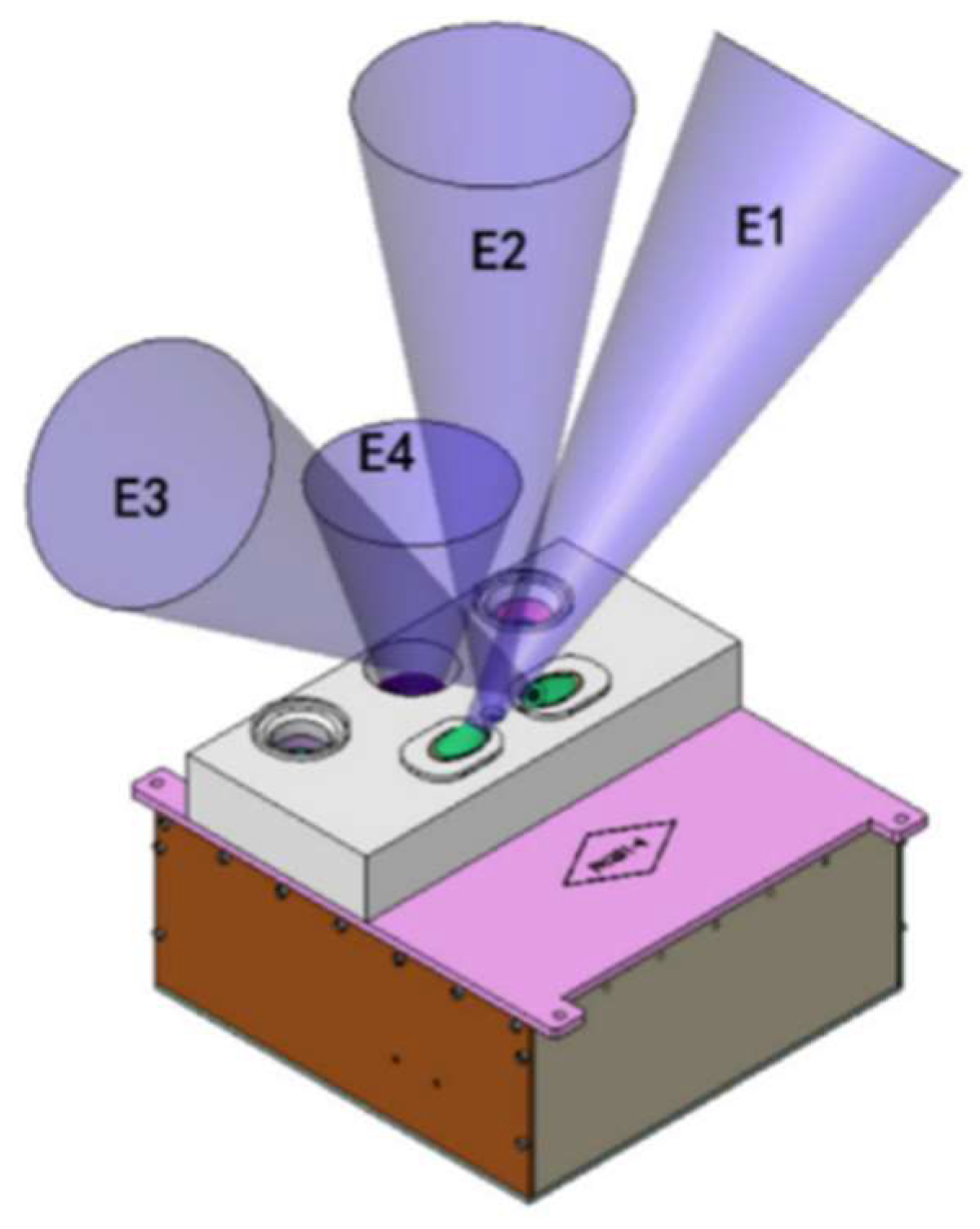
The HEPD consists of electron and proton probes. This section describes the spatial layout and field of view of the electron probes. The FY-4B satellite is equipped with three identical units (A, B, and C) mounted in different orientations. As shown in Figure 1, Unit A is mounted in the zenith direction (−Z) of the satellite, Unit B is mounted in the flight direction (+X/+Y 30°); and Unit C is mounted in the anti-flight direction (−X/−Y 30°). FY-4B is a three-axis stabilized spacecraft; the spacecraft body-frame X-, Y-, and Z-axis directions are maintained constant in attitude control. Together, the three units provide measurements from nine directions. Each detector contains three directional probes, giving the system an overall field of view close to 180°. This configuration enables continuous 24 h monitoring of the space charged particle environment. Figure 2 shows the field of view and detection directions of the electron probe, which can simultaneously detect in three directions (E4 is an integral channel used to measure electrons with energies > 2 MeV). Table 1 summarizes its key performance parameters.

2.2. Detection Principles of the HEPD

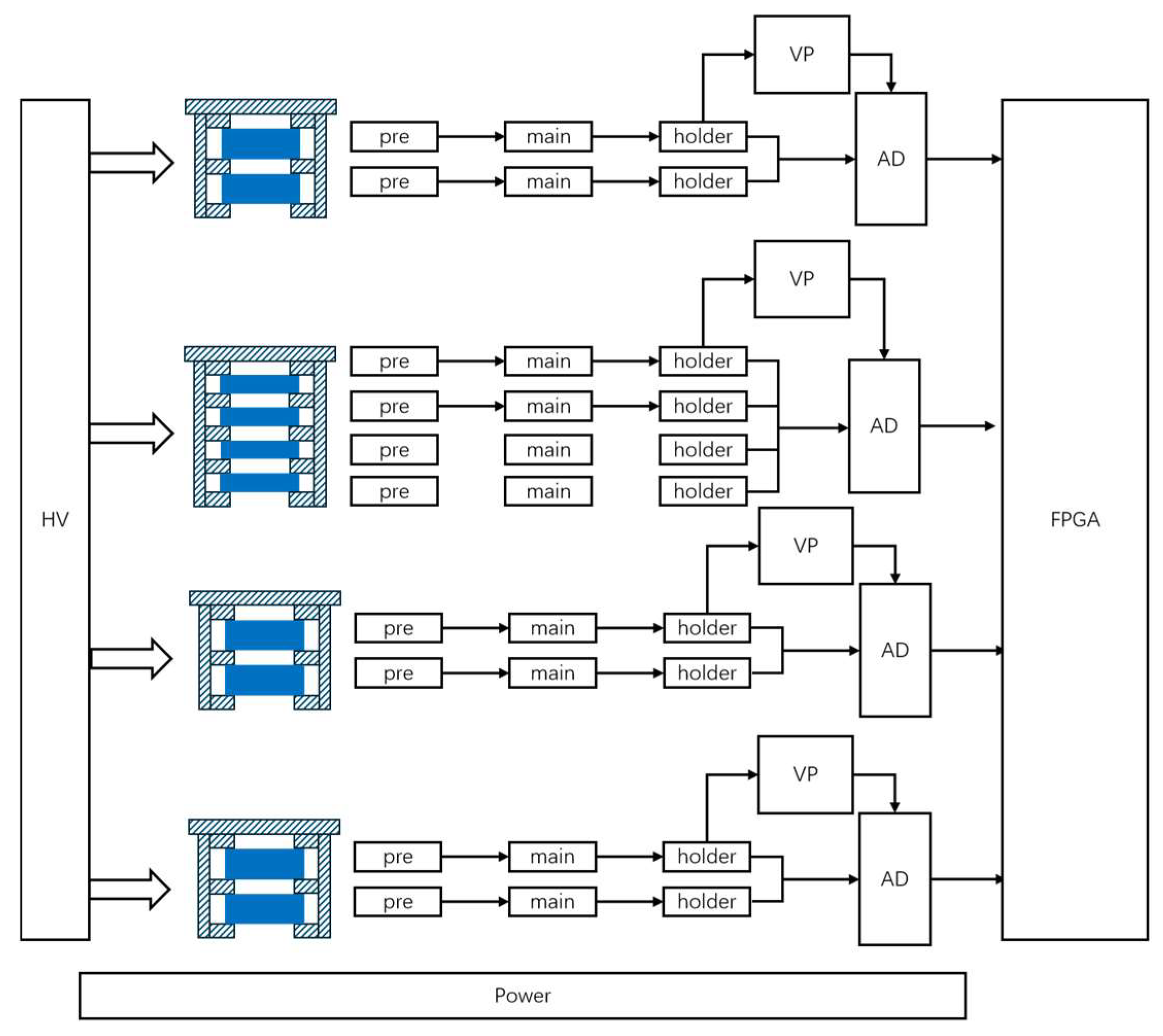
The HEPD contains four telescope probes, each consisting of stacked Si semiconductors, as shown in Figure 3, in which the blue rectangles represent the silicon semiconductors (the four silicon wafers form electron probe 4). Energy deposited by charged particles is measured digitally. When a charged particle enters the sensor through the collimator, it deposits energy in the semiconductor layers, generating electron–hole pairs by ionization. Under a high-voltage electric field, these pairs are collected at the output, producing a charge pulse. The pulse amplitude is proportional to the deposited energy. By combining the energy deposition characteristics of the detectors, the particle energy spectrum can be reconstructed. Direction and flux intensity are determined using data from probes oriented along different directions.

2.3. Electronic System

Each telescope in the HEPD has an independent analog circuit, enabling separate processing of pulse signals from each sensor (Figure 3). The silicon detectors have a sensitive diameter of φ12 mm, and the mechanical collimator defines an effective aperture of φ5 mm. An entrance foil (light-tight layer) with a thickness of 15 μm is mounted at the front to block sunlight while minimally affecting MeV electrons. The electronic system comprises front-end and back-end circuits. The front-end electronic circuit preprocesses charge signals from the sensors. Signals are converted to voltage, amplified by preamplifier and main amplifier circuits, and passed through a peak-hold circuit and an analog-to-digital (AD) converter. The pulse peak voltage is recorded to determine particle type and energy. The back-end electronic circuit uses an FPGA to acquire and store the processed signals, package the data, and transmit it to the environmental remote unit for downlink. Additionally, the electronic system includes discrimination and power supply circuits.

3. Ground Calibration

3.1. Energy Resolution and Energy Linearity

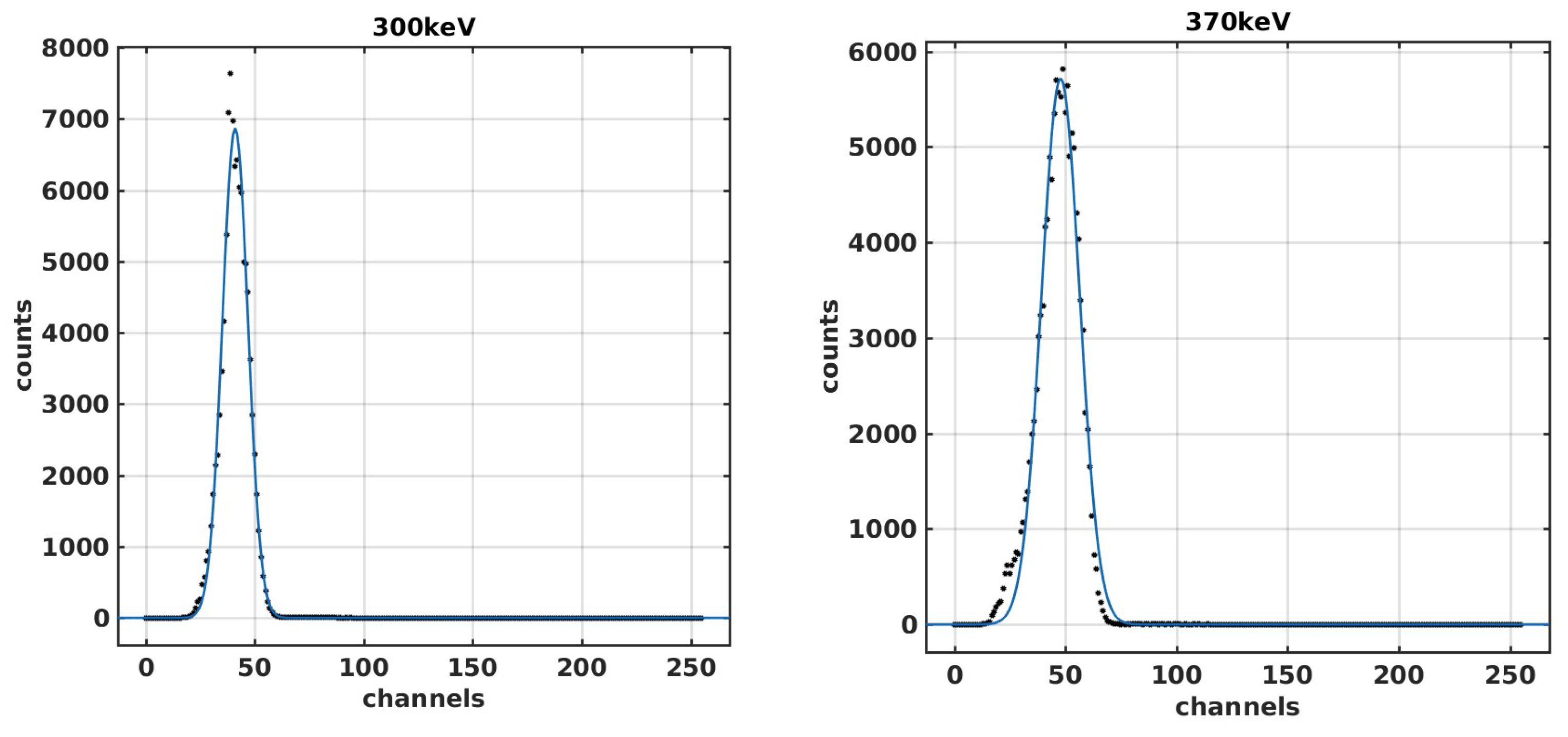
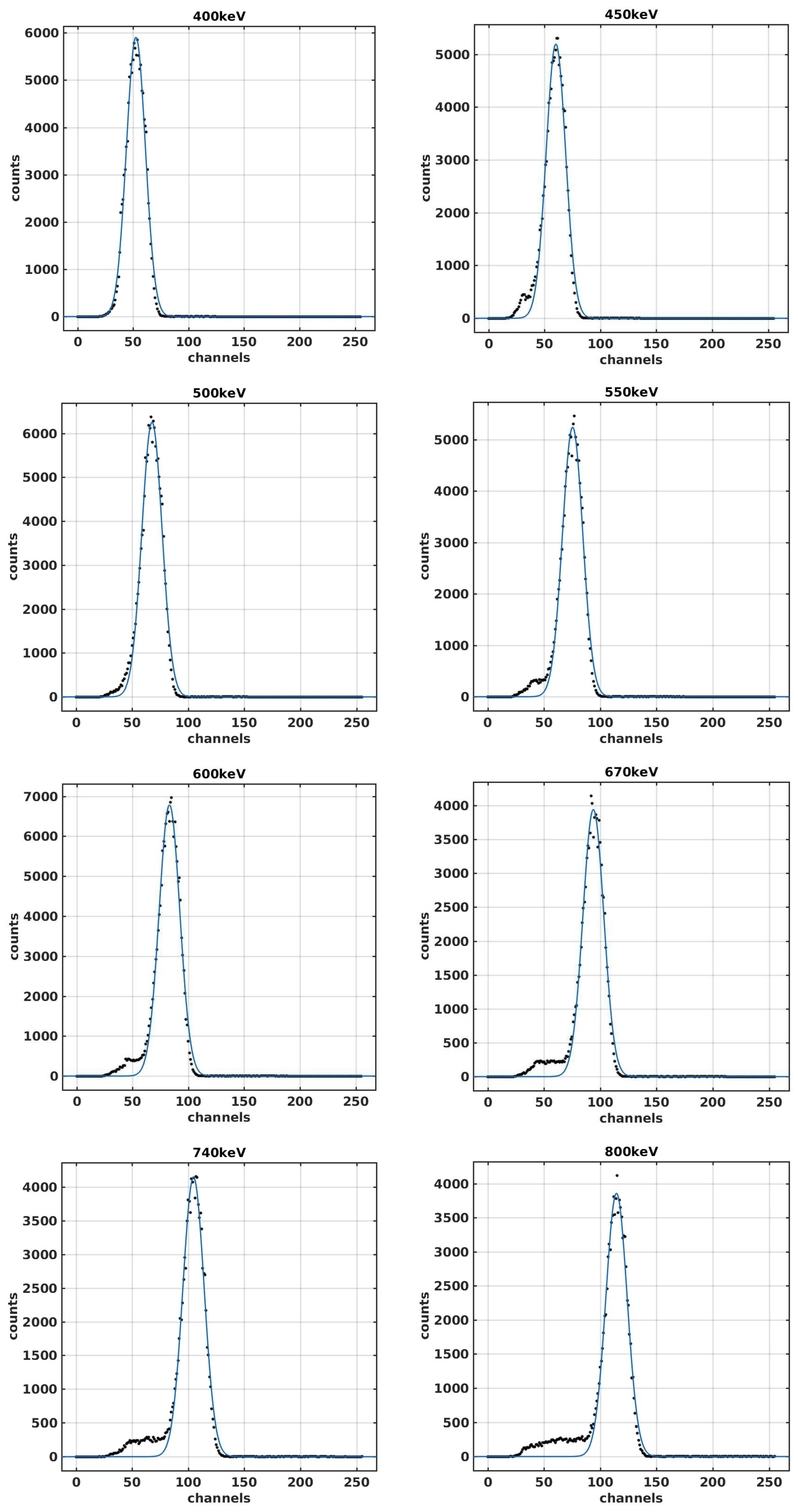
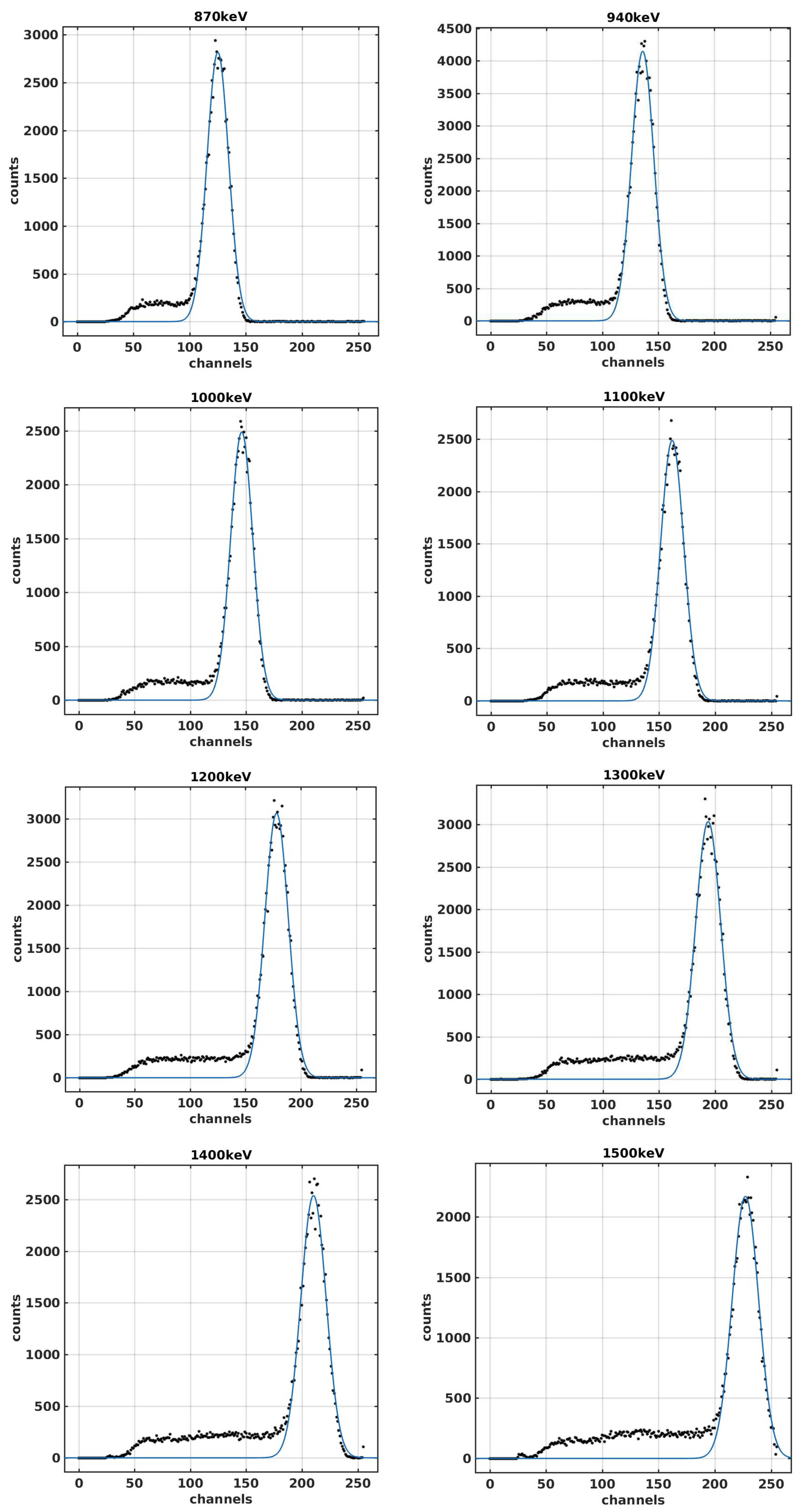
Energy calibration was performed using an electron accelerator that generated monoenergetic electron beams with energies between 300 and 1500 keV. As shown in Figure 4, the energy response curves of a single-direction telescope of HEPD-A to monoenergetic electron beams of different energies exhibit approximately Gaussian distributions, with the ADC channel value on the horizontal axis. At the same time, a low-channel shoulder (or low-energy tail) can be observed for some higher-energy beam cases in Figure 4. This feature is mainly attributed to partial-energy-deposition events caused by electron scattering and straggling in the entrance materials and detector stack. In particular, electrons may undergo large-angle multiple scattering in the entrance foil and collimator and/or between silicon layers, leading to a shortened path length inside the active volume and consequently a smaller recorded pulse height. For the energy calibration, we determine the peak position using a Gaussian fit to the main peak, while the shoulder/tail population is treated as non-fully contained (or non-ideal) events and is not used to define the calibration peak. The full width at half maximum (FWHM) of the ADC channels was obtained by Gaussian fitting, and the energy resolution at each energy point was calculated using Equation (1), where λ is the mean of the Gaussian fit, and FWHM is the full width at half maximum. Table 2 lists the energy loss, channel number, and energy resolution of the single-direction telescope of HEPD-A in response to 18 monoenergetic electron beams. The results indicate that the HEPD achieves higher resolution at higher electron energies, with a resolution of 12.19% at 1500 keV. After the telescopes in each direction of HEPD-B/C are calibrated using the same method, their linearity and energy resolution agree with those of HEPD-A within the experimental uncertainty; therefore, the single-direction result of HEPD-A is taken as a representative example in this paper.
η = λ F W H M × 100 %
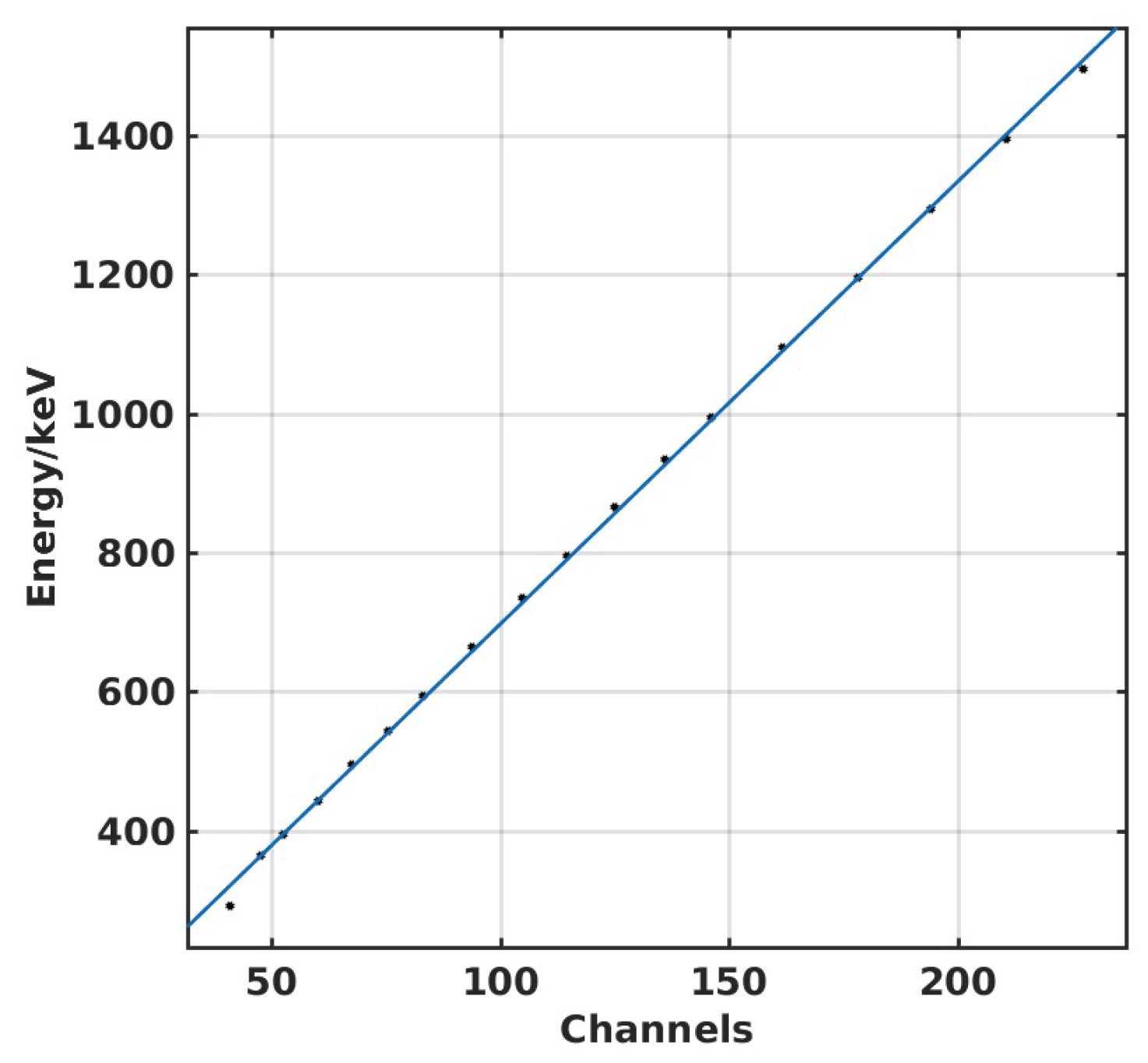
The linearity of the energy response for each directional channel was verified using the relationship between the Gaussian peak and deposited energy (Table 2). As shown in Figure 5, the 18 Gaussian peaks obtained for monoenergetic electron beams incident on the single-direction telescope of HEPD-A exhibit good linearity. Comparison of the fitted results with the energy losses measured in the monoenergetic electron-beam tests yielded a linearity of 1.04%. The energy calibration equation is as follows:
E = 6.38 × C h a n n e l s + 59.08 ,

3.2. Angle Calibration

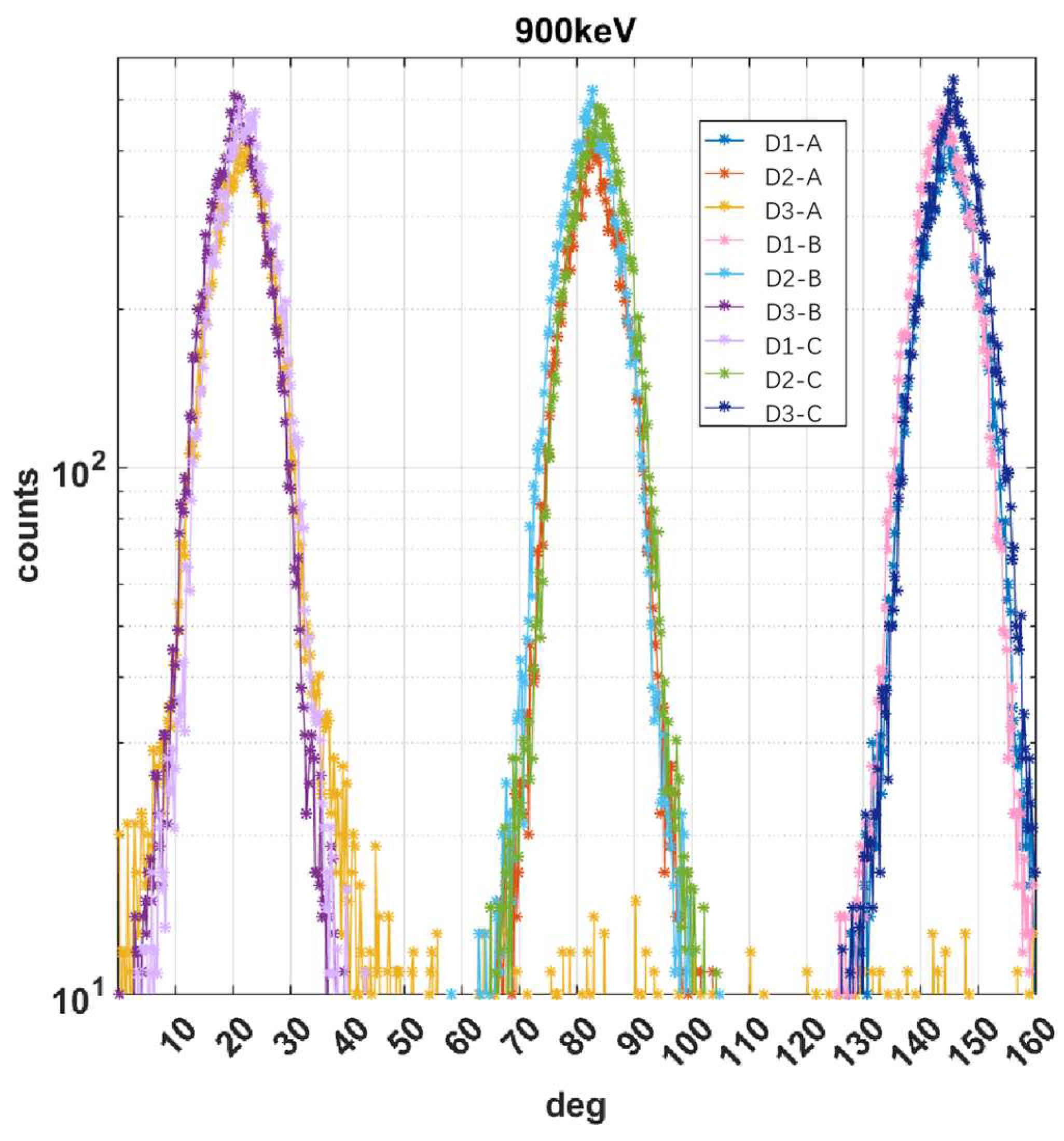
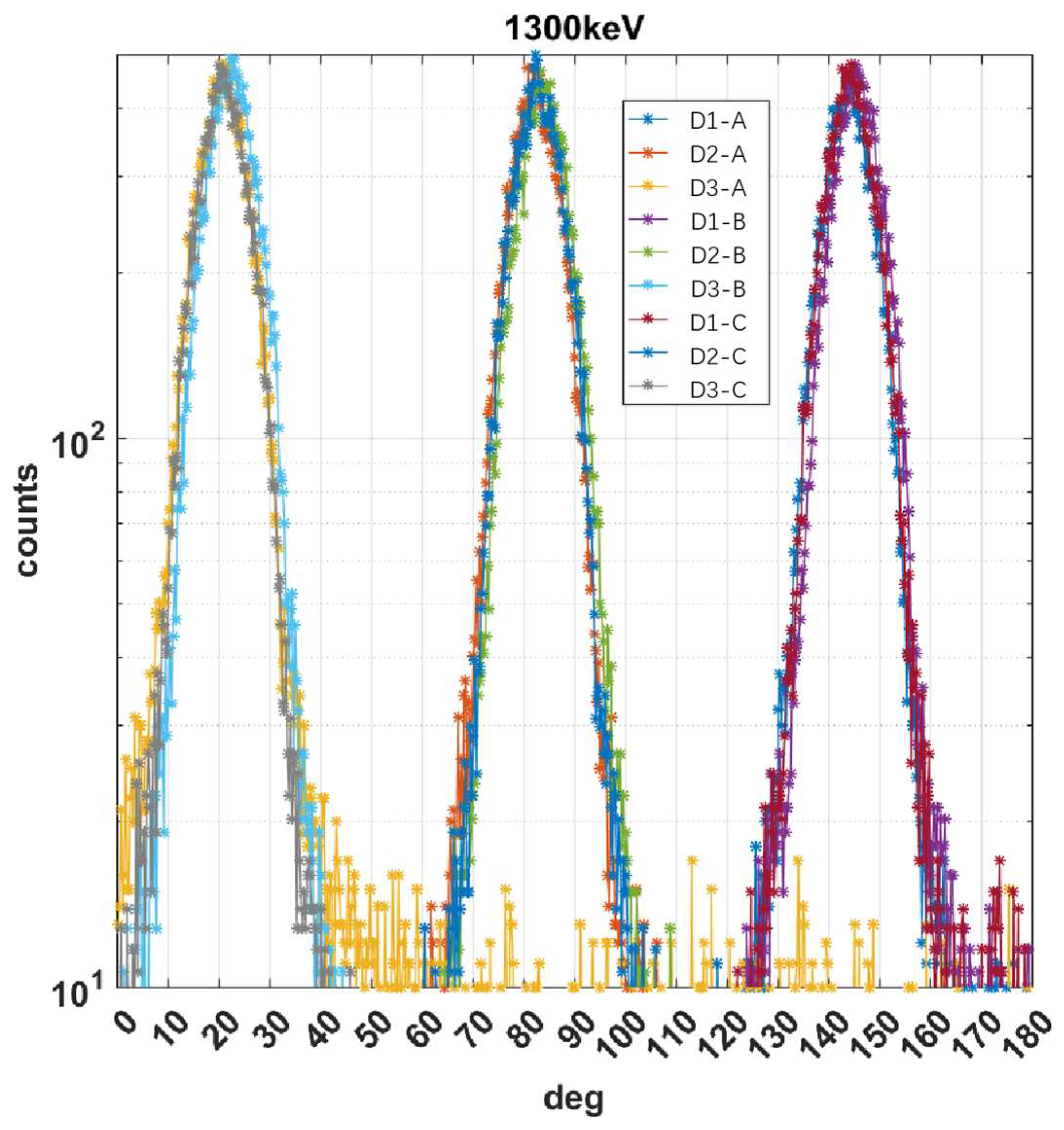
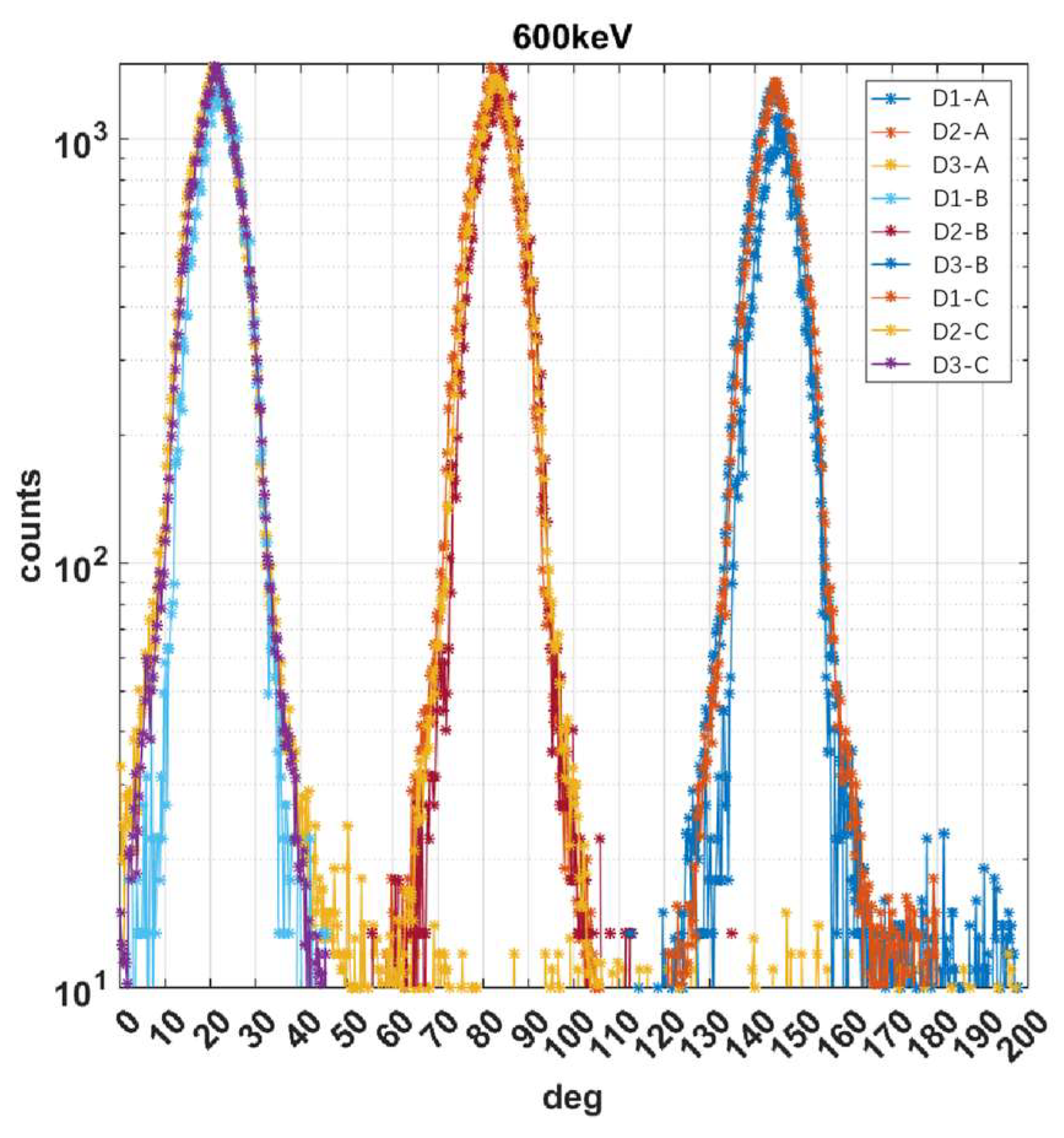
Directional response calibration was performed using a monoenergetic electron beam generated by an electron accelerator. Figure 6, Figure 7 and Figure 8 show the response of the HEPD to different beam energies. The horizontal axis represents the rotation angle of the platform, as the beam slowly traverses the detector from left to right. The vertical axis represents the count rate triggered by the probe. As the platform rotates, the directional response curves exhibit nine peaks over a rotation range of 0–180°, corresponding to the full field of view. Each directional channel response approximates a Gaussian distribution, allowing determination of the central angle and FWHM by Gaussian fitting. The results indicate that the response decreases as the incident angle deviates from the probe axis and reaches a maximum when the beam is perpendicular to the probe. Electrons of the same energy exhibit consistent response efficiency across probes.

3.3. Results of Ground Calibration

Table 3 summarizes the primary calibration methods and results for the HEPD-A instrument, including energy resolution, linearity, and angular calibration.

4. Preliminary Observational Data and Results

4.1. High-Energy Electrons and Geomagnetic Storm

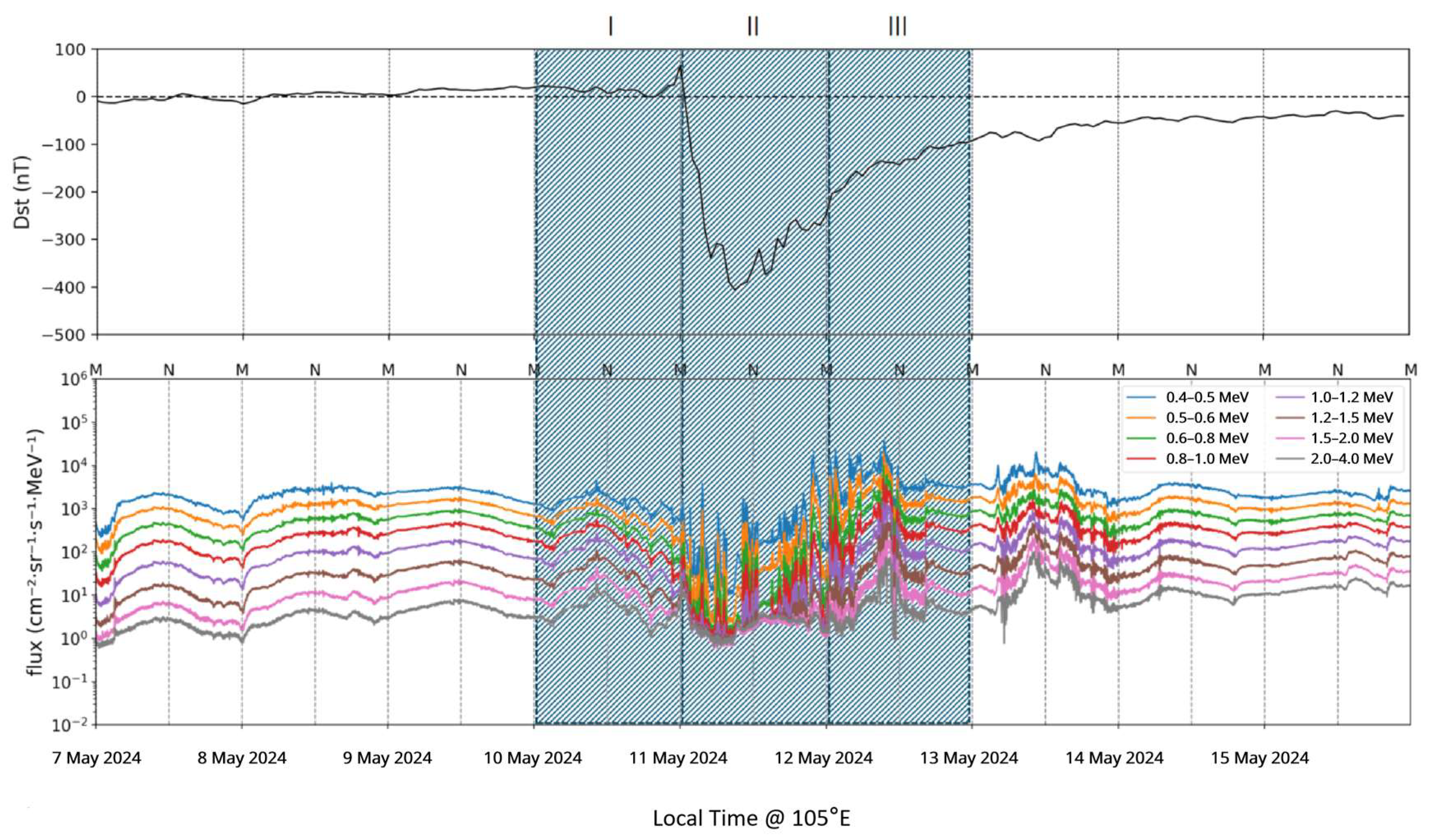
Figure 9 shows the 1 min averaged electron flux from Unit A of the HEPD for eight energy channels (0.4–4.0 MeV) between 7 May and 15 May 2024, alongside the Dst index. A major geomagnetic storm occurred on 11 May 2024, with the Dst index reaching a minimum of –406 nT at 02:00 (UT). The storm caused a sudden drop in high-energy electron flux, followed by a marked enhancement. For electrons with energies below 1 MeV, the flux decreased by one to two orders of magnitude due to outward radial diffusion or adiabatic transport driven by magnetopause shadowing. The flux then increased across all channels, with peaks consistently exceeding 102 (cm2·sr·s)−1, indicating a relativistic electron enhancement event.
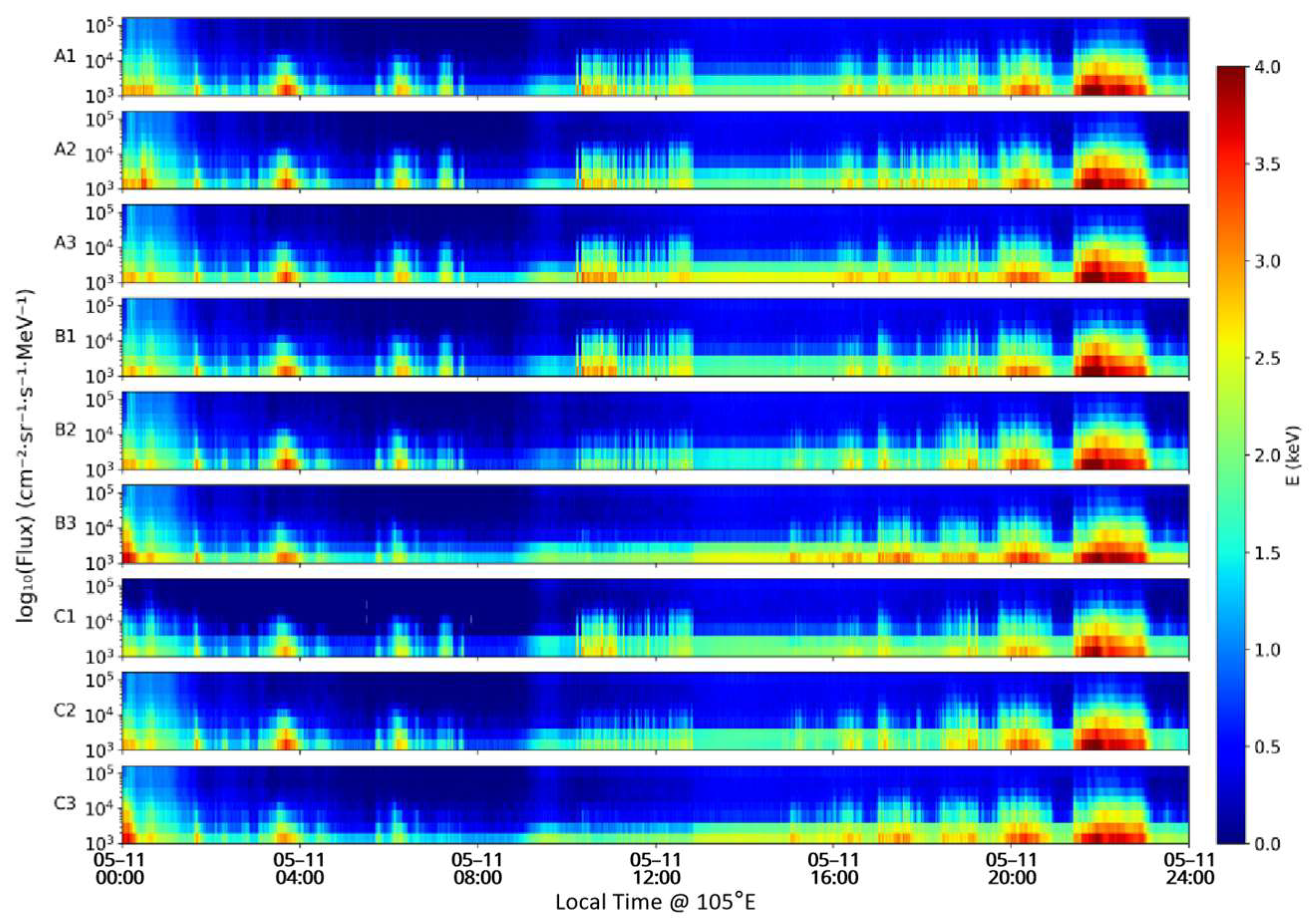
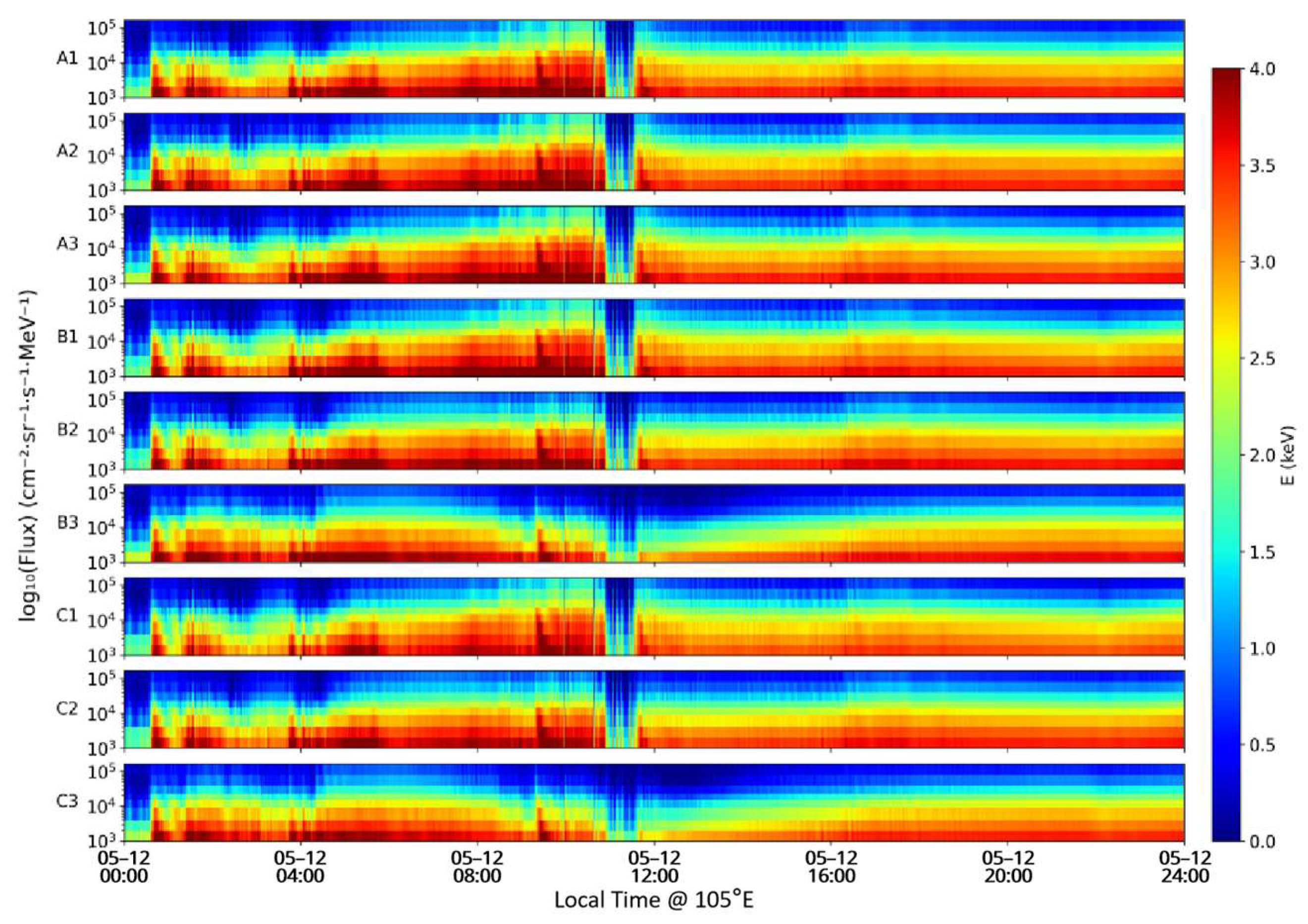
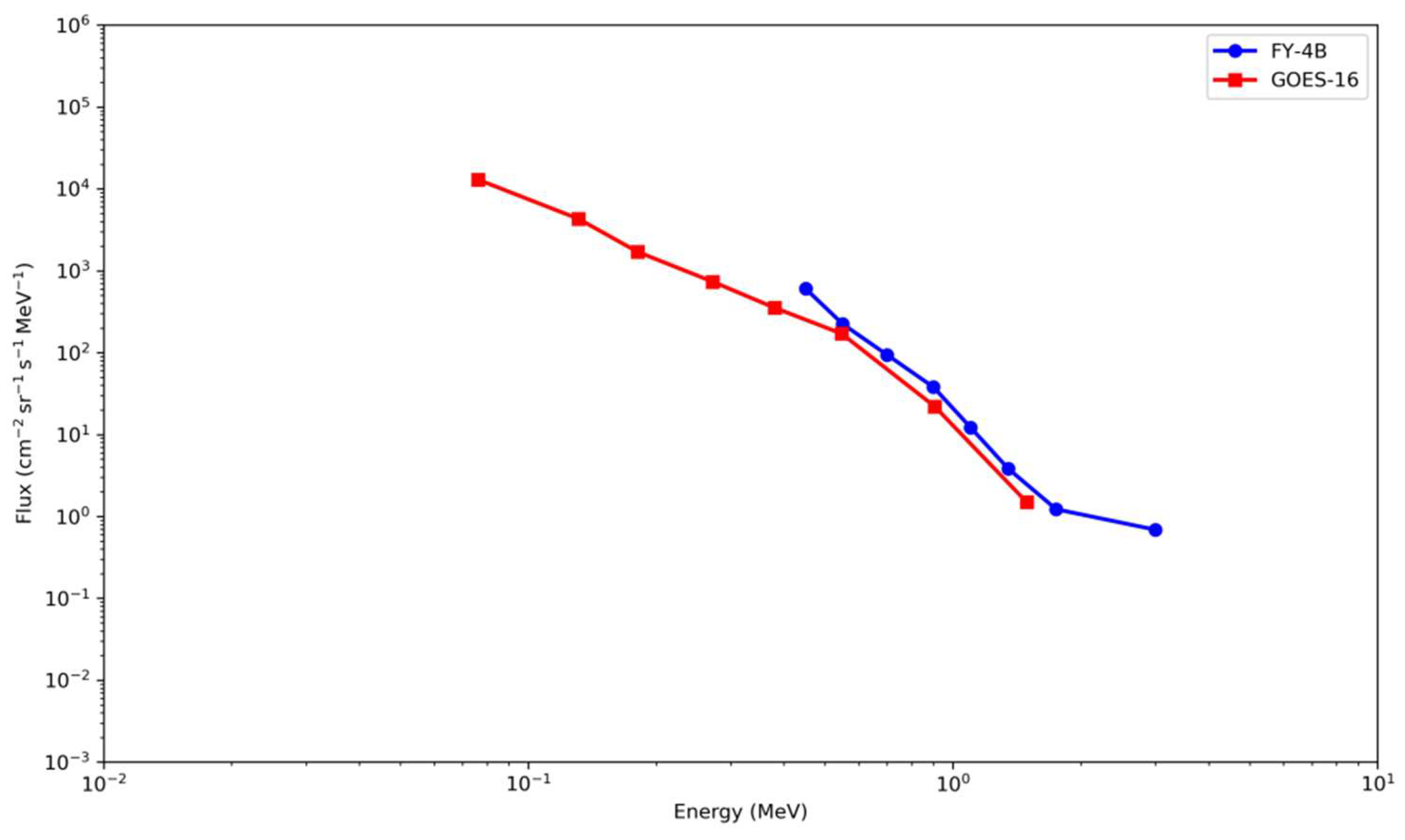
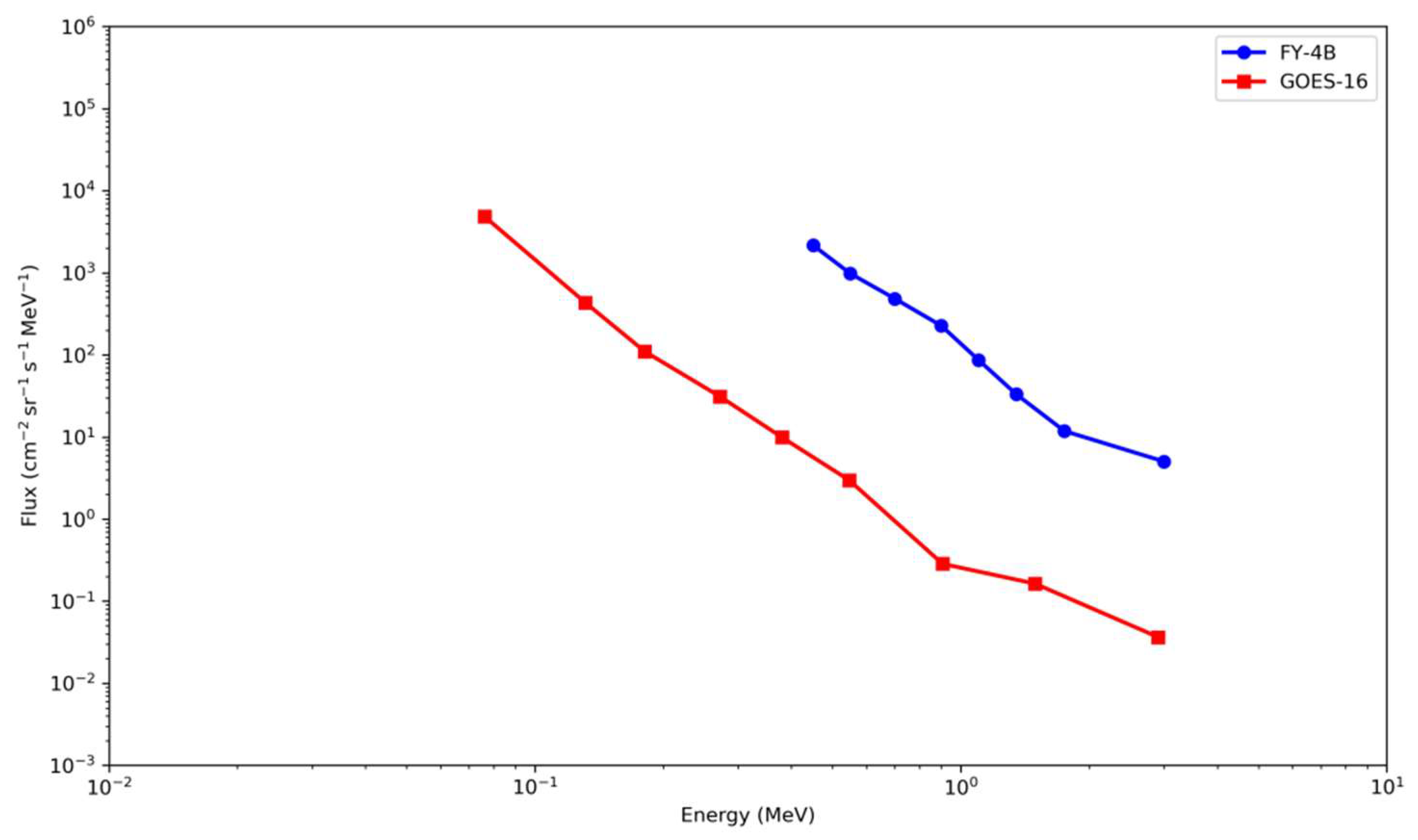
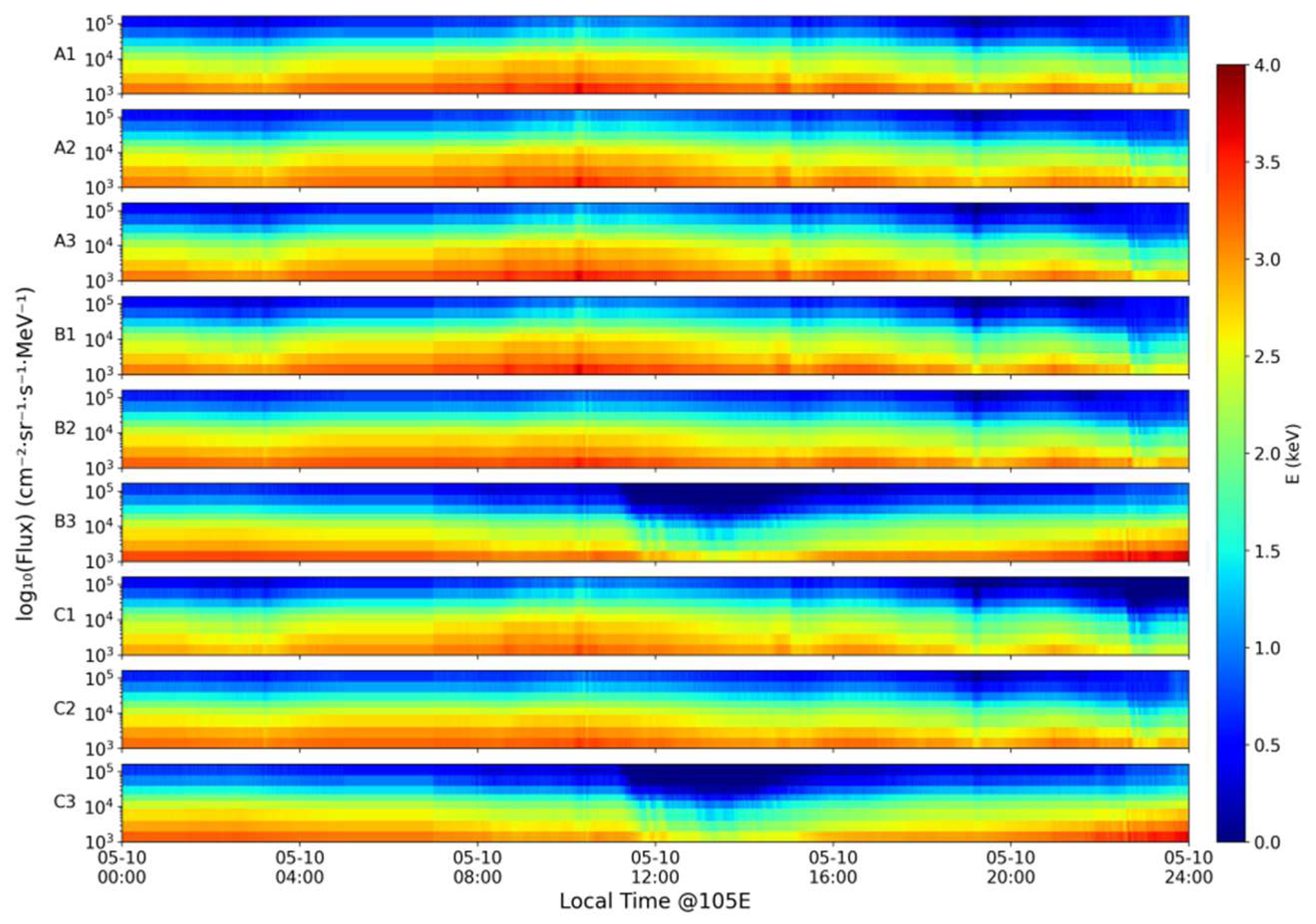
Figure 10, Figure 11 and Figure 12 present the electron flux variations recorded by FY-4B during the geomagnetic storm. Before the disturbance on 10 May (Region I in Figure 9), the fluxes in all energy bands showed no significant variations other than the regular day–night changes. During the main phase of the geomagnetic storm on 11 May (Region II in Figure 9), the high-energy electron flux decreased sharply, attributed to outward radial diffusion or adiabatic transport from magnetopause shadowing [17]. During the recovery phase that began on 12 May (Region III in Figure 9), the energy spectrum developed a periodic pulse structure. Fluxes in all channels began to recover and increased markedly, declined around local noon, and then stabilized to an average distribution. Flux began rising on 11 May and peaked on 12 May. Significant anisotropy was observed across the nine directional channels, with differences reaching one to two orders of magnitude.
Under quiet conditions, the high-energy electron flux showed clear diurnal variation, with maxima near local noon and minima near local midnight (N: noon; M: midnight). This pattern results from the geomagnetic field asymmetry in geosynchronous orbit. Near midnight, the magnetic field is stretched into a tail-like configuration, while near noon it is compressed into a dipole-like form. Consequently, equatorially trapped particles tend to drift outward at noon and inward at midnight. Because charged particle flux typically exhibits a strong inward radial gradient, flux is higher at noon and lower at midnight [3].

4.2. Pitch Angle Distribution of High-Energy Electrons

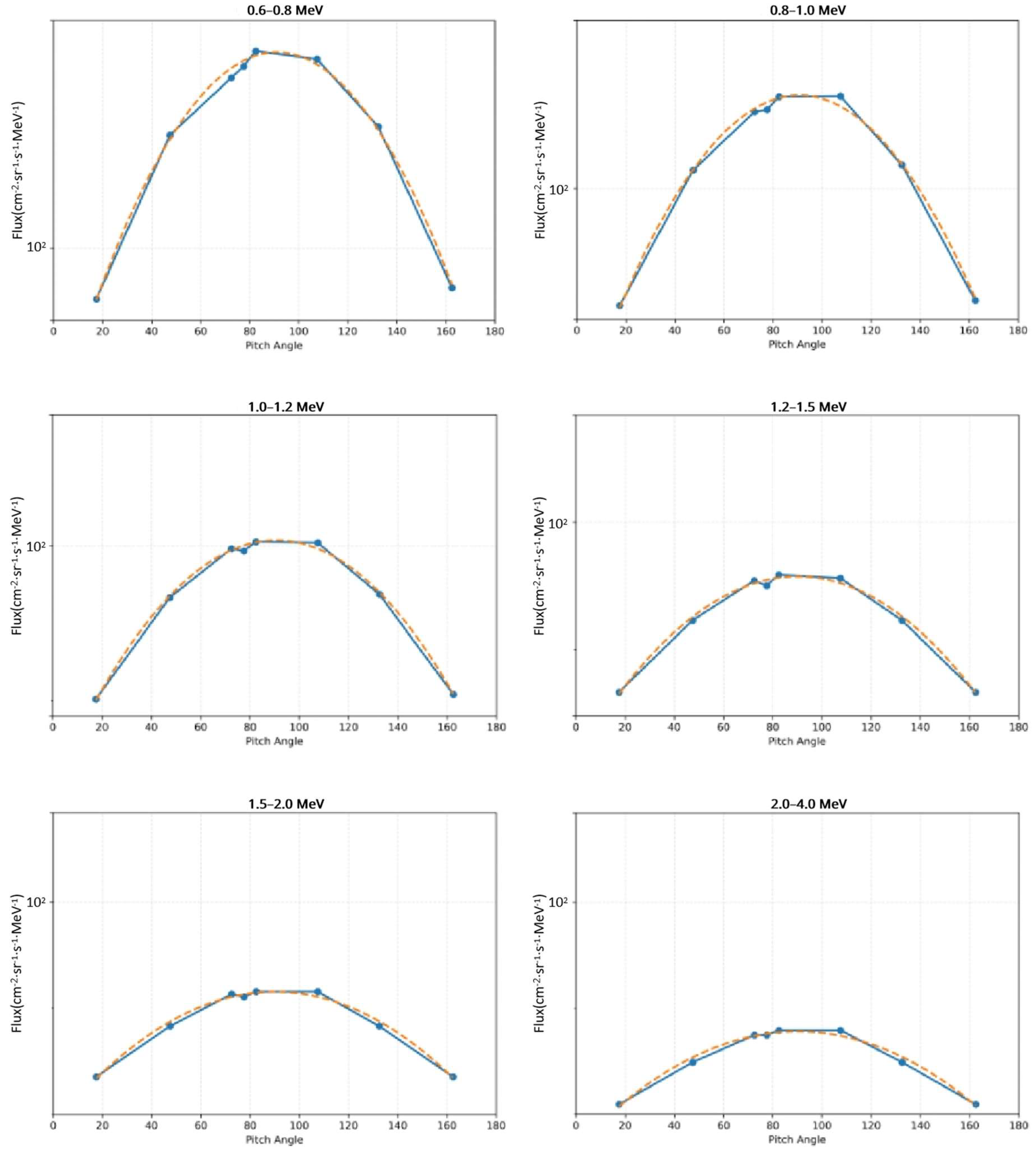
Based on the single-direction observations of the HEPD-A onboard FY-4B and a geomagnetic field model, pitch angle distributions of electrons with energies in the range 0.5–2.0 MeV were calculated. Figure 13 shows the dayside pitch angle distribution under quiet geomagnetic conditions in May 2024. It can be seen that the difference in electron flux between pitch angles near 90° and those at 0° and 180° is the largest, and this difference is more pronounced in the lower-energy channels.

5. Comparison with GOES-16

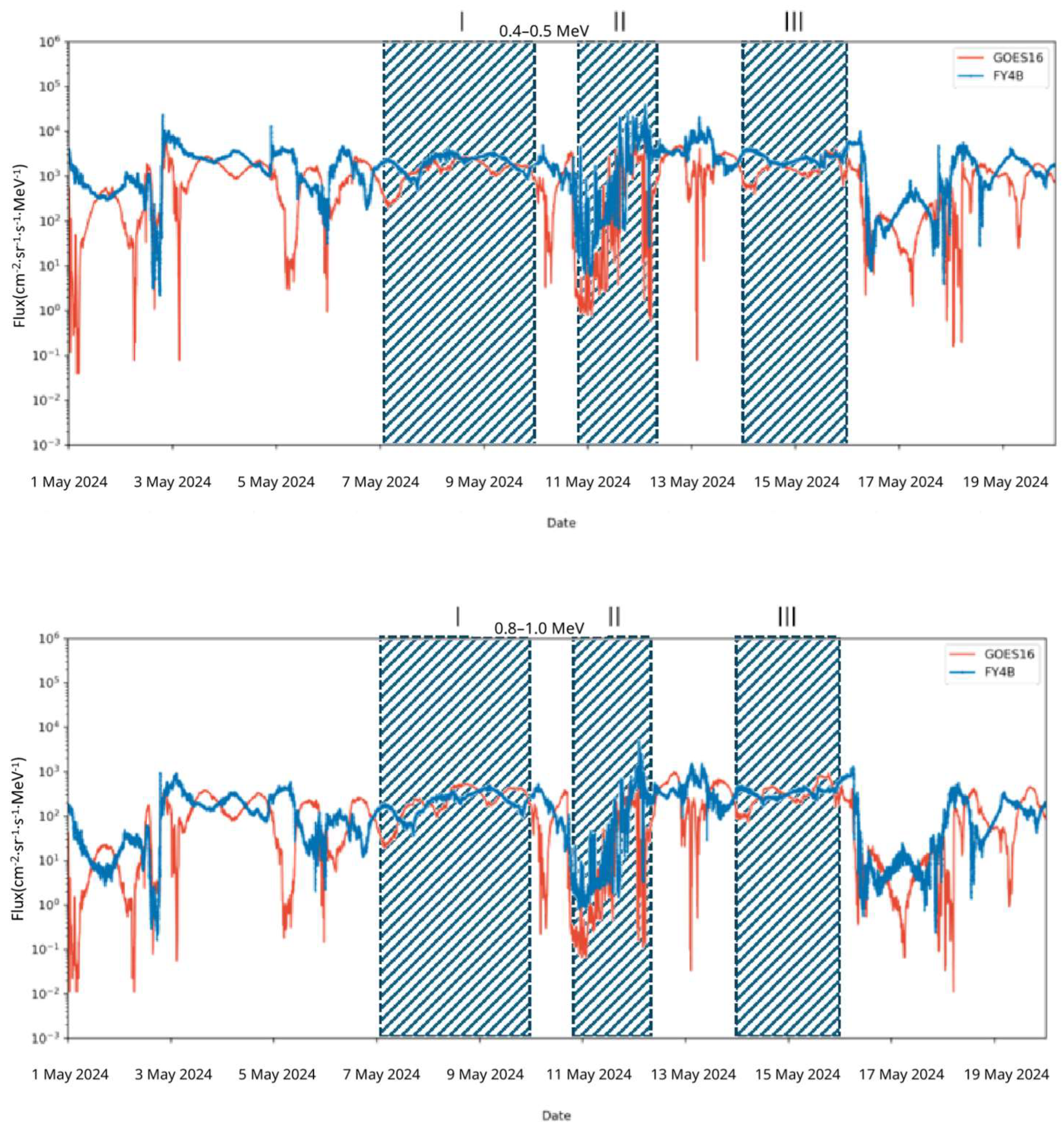
High-energy electrons in geosynchronous orbit are strongly modulated by the geomagnetic field, resulting in notable differences in flux distribution at different local times. FY-4B and GOES-16 are located at different longitudes; when FY-4B is near local noon, GOES- 16 is positioned near local midnight. Figure 14 shows a comparison of the electron flux distributions observed by the two satellites in May for the same energy channels (0.4–0.5 MeV and 0.9–1.0 MeV). Figure 15 and Figure 16 show the electron energy spectra from GOES-16 and FY-4B on 5 May 2024. As shown in Figure 14, FY-4B detected the geomagnetic storm on 11 May, characterized by a sharp decrease followed by recovery and enhancement of high-energy electron flux. GOES-16 recorded a similar response. Flux differences between the two satellites primarily reflect their longitudinal separation and local time positions. When FY-4B was located on the dayside, it measured higher electron fluxes, whereas GOES-16, sampling the nightside sector at a different magnetic local time, recorded lower fluxes. During calm conditions (shaded Regions I and III in Figure 15 and Figure 16), the magnitudes of high-energy electron fluxes measured by both satellites at similar local times were generally consistent. In contrast, the nightside spectra showed much larger variability. This behavior is expected because nightside GEO electrons are strongly influenced by substorm injections and rapid transport, so the flux and spectral shape can change substantially over tens of minutes to hours. Since FY-4B and GOES-16 encounter the same MLT sector at different UTs (offset by their longitudinal separation), part of the observed nightside spectral differences reflect temporal evolution of the storm-time environment in addition to spatial (MLT) effects. Overall, local-time variations are modest on the dayside but more pronounced on the nightside, where frequent disturbances drive substantial flux variability and lead to noticeable spectral differences when the satellites pass through the same MLT sector at different times.

6. Conclusions

This paper reports on the design concept, ground calibration, and first in-orbit performance of the FY-4B High-Energy Particle Detector (HEPD) for energetic electron measurements at geostationary orbit. The main conclusions are as follows:
(1)
Wide-spectral-range and multi-directional capability: The FY-4B HEPD electron detector employs a stacked silicon telescope with a full-digital readout to measure energetic electrons over 0.4–4 MeV. Three identical units installed with different orientations provide nine look directions and an overall angular coverage close to 180°, enabling continuous monitoring of electron spectra, fluxes, and directional anisotropy at GEO.
(2)
Ground calibration demonstrates quantitative measurement capability: Accelerator calibrations show (i) good energy linearity suitable for quantitative spectral inversion and (ii) an energy resolution better than ~16% above 1 MeV. The directional response of each look direction is well characterized, with an angular-response FWHM of ~20° (full cone ~40°).
(3)
Stable in-orbit operation under both quiet and storm conditions: The HEPD provides continuous GEO monitoring with stable performance and uninterrupted data coverage. The in-orbit example in May 2024 clearly resolves flux variations, differential spectral evolution, and directional anisotropy, including the storm-time dropout and subsequent enhancement of energetic electrons.
(4)
Directional observations enable pitch angle diagnostics (local pitch angle): Using single-direction measurements and a geomagnetic field model, we derived local pitch angle distributions for 0.5–2.0 MeV electrons. Under quiet dayside conditions, the anisotropy is strongest between pitch angles near 90° and those near 0°/180°, and the contrast is more pronounced at lower energies.
(5)
Cross-validation against GOES-16 supports measurement reliability: Comparisons with GOES-16/SEISS in overlapping energy bands show generally consistent flux levels and spectral behavior during quiet periods. During geomagnetic storms, both missions capture the characteristic dropout–recovery–enhancement pattern, supporting the reliability and cross-mission comparability of FY-4B HEPD electron measurements.

Author Contributions

Conceptualization, G.S. and L.Q.; methodology, C.W. and H.Z.; software, Q.M.; validation, Q.M.; investigation, Q.M.; resources, G.S.; data curation, Q.M.; writing—original draft preparation, Q.M.; writing—review and editing, C.W.; visualization, Q.M.; supervision, Q.Y.; project administration, Y.S. All authors have read and agreed to the published version of the manuscript.

Funding

This research received no external funding.

Institutional Review Board Statement

Not applicable.

Informed Consent Statement

Not applicable.

Data Availability Statement

The FY-4B/HEPD high-energy electron flux and spectral data generated for the figures in this study (0.4–4 MeV, 1 min averages; nine look directions across detector units A–C), together with the data used to reproduce the results, are available at https://www.scidb.cn/s/7FZnYj, (accessed on 17 November 2025). The GOES-16/SEISS electron flux data used for comparison are available at https://cdaweb.gsfc.nasa.gov, (accessed on 17 November 2025). The Dst geomagnetic index used to provide geospace activity context is available from https://wdc.kugi.kyoto-u.ac.jp/dst_realtime/index.html, (accessed on 17 November 2025).

Conflicts of Interest

The authors declare no conflicts of interest.

References

  1. Lanzerotti, L.J.; Breglia, C.; Maurer, D.W.; Johnson, G.K., III; Maclennan, C.G. Studies of spacecraft charging on a geosynchronous telecommunications satellite. Adv. Space Res. 1998, 22, 79–82. [Google Scholar] [CrossRef]
  2. Baker, D.N. The occurrence of operational anomalies in spacecraft and their relationship to space weather. IEEE Trans. Plasma Sci. 2002, 28, 2007–2016. [Google Scholar] [CrossRef]
  3. Reeves, G.D. Relativistic electrons and magnetic storms: 1992–1995. Geophys. Res. Lett. 1998, 25, 1817–1820. [Google Scholar] [CrossRef]
  4. Lam, H.L.; Boteler, D.H.; Burlton, B.; Evans, J. Anik-E1 and E2 satellite failures of January 1994 revisited. Space Weather 2012, 10, S10003. [Google Scholar] [CrossRef]
  5. Webb, D.F.; Allen, J.H. Spacecraft and ground anomalies related to the October–November 2003 solar activity. Space Weather 2004, 2, S03008. [Google Scholar] [CrossRef]
  6. Loto’aniu, T.M.; Singer, H.J.; Rodriguez, J.V.; Green, J.; Denig, W.; Biesecker, D.; Angelopoulos, V. Space weather conditions during the Galaxy 15 spacecraft anomaly. Space Weather 2015, 13, 484–502. [Google Scholar] [CrossRef]
  7. Reeves, G.D.; McAdams, K.L.; Friedel, R.H.W.; O’brien, T.P. Acceleration and loss of relativistic electrons during geomagnetic storms. Geophys. Res. Lett. 2003, 30, 10. [Google Scholar] [CrossRef]
  8. O’brien, T.P.; McPherron, R.L.; Sornette, D.; Reeves, G.D.; Friedel, R.; Singer, H.J. Which magnetic storms produce relativistic electrons at geosynchronous orbit? J. Geophys. Res. Space Phys. 2001, 106, 15533–15544. [Google Scholar] [CrossRef]
  9. Shprits, Y.Y.; Subbotin, D.; Ni, B. Evolution of electron fluxes in the outer radiation belt computed with the VERB code. J. Geophys. Res. Space Phys. 2009, 114, A11209. [Google Scholar] [CrossRef]
  10. Miyoshi, Y.; Shinohara, I.; Takashima, T.; Asamura, K.; Higashio, N.; Mitani, T.; Kasahara, S.; Yokota, S.; Kazama, Y.; Wang, S.Y.; et al. Geospace exploration project ERG. Earth Planets Space 2018, 70, 101. [Google Scholar] [CrossRef]
  11. Rodriguez, J.V.; Denton, M.H.; Henderson, M.G. On-orbit calibration of geostationary electron and proton flux observations for augmentation of an existing empirical radiation model. J. Space Weather Space Clim. 2020, 10, 28. [Google Scholar] [CrossRef]
  12. Rodriguez, J. GOES EPEAD Science-Quality Electron Fluxes Algorithm Theoretical Basis Document; NOAA National Geophysical Data Center: Asheville, NC, USA, 2014. [Google Scholar]
  13. Kress, B.T.; Rodriguez, J.V.; Onsager, T.G. The GOES-R Space Environment In Situ Suite (SEISS): Measurement of Energetic Particles in Geospace; The Goes-R Series; Elsevier: Amsterdam, The Netherlands, 2020; pp. 243–250. [Google Scholar]
  14. Ginet, G.P.; O’Brien, T.P.; Huston, S.L.; Johnston, W.R.; Guild, T.B.; Friedel, R.; Lindstrom, C.D.; Roth, C.J.; Whelan, P.; Quinn, R.A.; et al. AE9, AP9 and SPM: New models for specifying the trapped energetic particle and space plasma environment. Space Sci. Rev. 2013, 179, 579–615. [Google Scholar] [CrossRef]
  15. Wang, C.; Sun, Y.; Zhang, S.; Jing, T.; Zhang, H.; Li, J.; Zhang, X.; Wei, F.; Shen, G.; Huang, C.; et al. Analysis of observation data from the new generation high-energy charged particle detector on the FY2G satellite. Chin. J. Geophys. 2016, 59, 3148–3158. [Google Scholar]
  16. Zhang, X.; Wang, J.; Dong, Y.; Zhang, X.; Sun, Y.; Zong, W.; Chen, A.; Zhang, L.; Zhang, X. Design and performance of the space environment in-situ suite on the FY-4B satellite. Adv. Space Res. 2025, 75, 8270–8279. [Google Scholar] [CrossRef]
  17. Kim, H.J.; Chan, A.A. Fully adiabatic changes in storm time relativistic electron fluxes. J. Geophys. Res. Space Phys. 1997, 102, 22107–22116. [Google Scholar] [CrossRef]
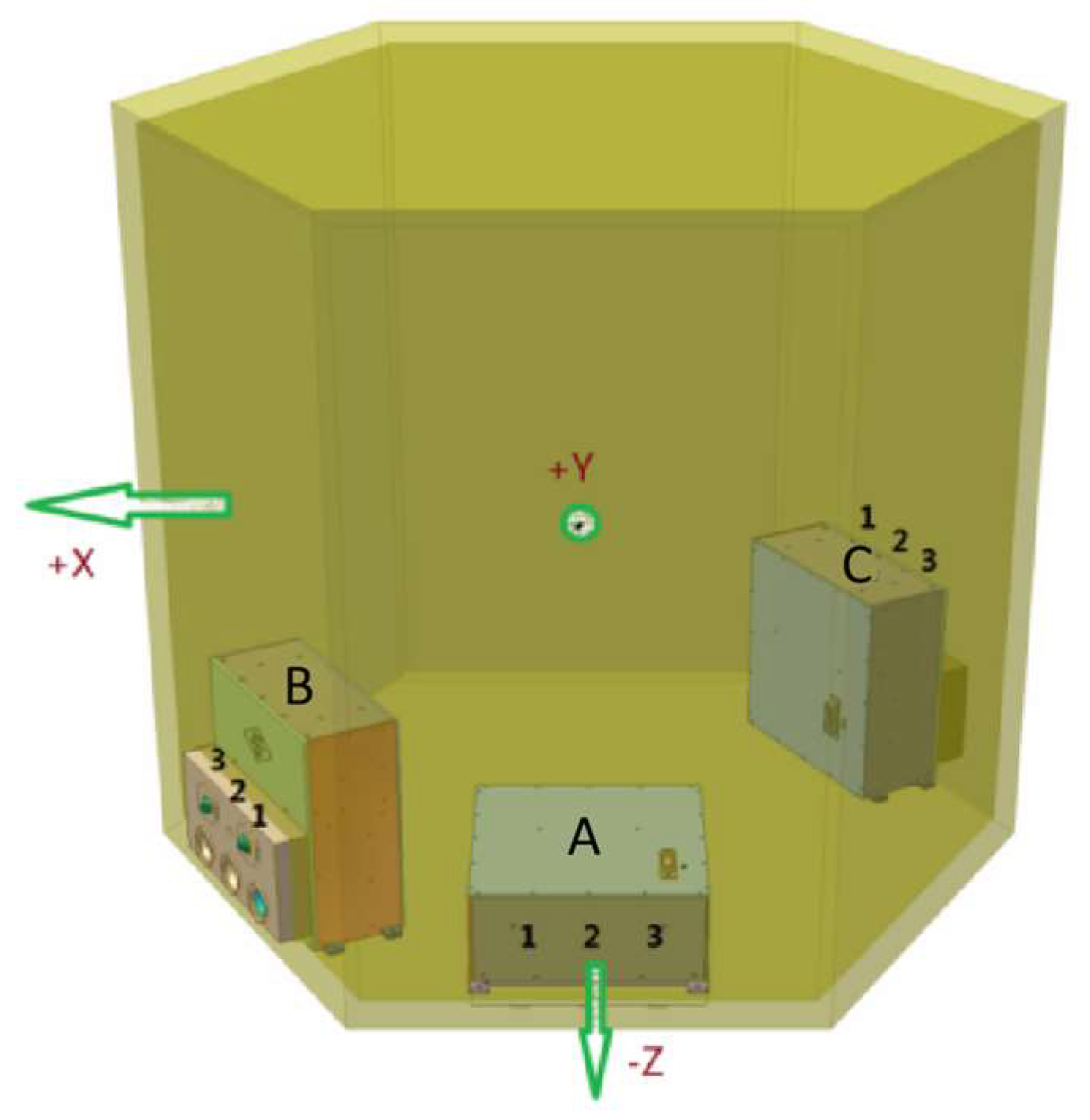
Figure 1. Installation positions of the three identical HEPD units (A, B, and C) on FY-4B and their viewing directions: Unit A is mounted in the zenith direction (−Z), Unit B is mounted in the flight direction (+X/+Y 30°), and Unit C is mounted in the anti-flight direction (−X/−Y 30°). The numbers 1, 2, and 3 indicate the three directional probes (three look directions) within each unit (three directions per unit, nine directions in total for A–C).
Atmosphere 17 00048 g001
Figure 2. Field of view and detection direction of electron detector [16].
Atmosphere 17 00048 g002
Figure 3. Scheme of electronic system. HV: high-voltage power supply; pre: preamplifier; main: main amplifier; holder: peak-hold circuit; VP: voltage protection; power: power supply system; AD: analog-to-digital converter.
Atmosphere 17 00048 g003
Figure 4. Gaussian fitting results for a single direction of Unit A of the HEPD.
Atmosphere 17 00048 g004aAtmosphere 17 00048 g004bAtmosphere 17 00048 g004c
Figure 5. Fitting of energy loss and channel response for Unit A.
Atmosphere 17 00048 g005
Figure 6. Response of three probes at 600 keV with identical flux (D1-A is direction 1 of HEPD-A).
Atmosphere 17 00048 g006
Figure 7. Response of three probes at 900 keV with identical flux (D1-A is direction 1 of HEPD-A).
Atmosphere 17 00048 g007
Figure 8. Response of three probes at 1300 keV with identical flux (D1-A is direction 1 of HEPD-A).
Atmosphere 17 00048 g008
Figure 9. Evolution of 1 min average electron flux across energy channels in Unit A of FY-4B HEPD and corresponding Dst index (N: local noon; M: local midnight). Shaded Regions I, II, and III correspond to different storm phases.
Atmosphere 17 00048 g009
Figure 10. Energy spectrum during calm period on 10 May 2024 (Region I).
Atmosphere 17 00048 g010
Figure 11. Energy spectrum during main phase of geomagnetic storm on 11 May 2024 (Region II).
Atmosphere 17 00048 g011
Figure 12. Energy spectrum during recovery phase on 12 May 2024 (Region III).
Atmosphere 17 00048 g012
Figure 13. Dayside local pitch angle distribution observed by FY-4B HEPD in May 2024.
Atmosphere 17 00048 g013
Figure 14. FY-4B HEPD and GOES-16 SEISS electron flux in May 2024 (Regions I and III: calm periods; Region II: geomagnetic storm).
Atmosphere 17 00048 g014
Figure 15. EDS spectra on the dayside at matching local times observed by FY-4B and GOES-16 in May 2024.
Atmosphere 17 00048 g015
Figure 16. EDS spectra on the nightside at matching local times observed by FY-4B and GOES-16 in May 2024.
Atmosphere 17 00048 g016
Table 1. Performance parameters of the HEPD.
ParameterValue
Charged particlesElectron
Energy range (MeV)0.4–4 MeV
Channel (MeV)E1: 0.4–0.5
E2: 0.5–0.6
E3: 0.6–0.8
E4: 0.8–1.0
E5: 1.0–1.2
E6: 1.2–1.5
E7: 1.5–2.0
E8: 2.0–4.0
Working temperature (°C)−15~+35
Energy consumption (W)<5.2
Unit size (mm)230 × 230 × 157
Mass (kg)5.0
Data interface73 kbps
Table 2. ADC channel values corresponding to monoenergetic electrons in Unit A.
Incident Energy/keVEnergy LossChannel ADC ValuesEnergy Resolution
300292.641.0833.67%
370363.547.8842.11%
400393.552.5838.25%
450443.760.2334.06%
500494.267.7731.28%
550543.375.4828.08%
600594.483.1526.29%
670664.593.8923.16%
740734.6104.821.24%
800794.7114.519.37%
870864.7125.118.07%
940934.7136.117.25%
1000994.714615.98%
11001094.8161.714.96%
12001194.9178.113.98%
13001295193.813.53%
14001395210.312.70%
15001495227.212.19%
Table 3. Summary of calibration methods and key results for the FY-4B HEPD.
Calibration MethodCalibration ItemCalibration Results
Electron accelerator in CAS
Radioactive source: 207Bi
Energy resolutionDirectionEnergy linearityEnergy resolution
Direction 11.04%15.98% (@1000 keV)
Direction 20.57%14.43% (@1000 keV)
Direction 30.64%15.82% (@1000 keV)
Linearity1.04%
Angle calibration40° field angle at each direction, with an FWHM of ≈20°
Disclaimer/Publisher’s Note: The statements, opinions and data contained in all publications are solely those of the individual author(s) and contributor(s) and not of MDPI and/or the editor(s). MDPI and/or the editor(s) disclaim responsibility for any injury to people or property resulting from any ideas, methods, instructions or products referred to in the content.