


Abstract
Based on four datasets (ERA5, JRA-55, MERRA-2, and OAFlux) and the evaporation decomposition method, this study examines the principal spatiotemporal characteristics of North Atlantic evaporation during the cold season (December–May) and warm season (June–November) from 1980 to 2015. The results indicate that during the cold season, all four datasets consistently exhibit a meridional triple pattern, driven primarily by the wind speed term (U*) and the stability term (S*). All datasets reveal a synchronous interdecadal shift around the late 1990s, underscoring the high reliability of cold season evaporation features. In contrast, the dominant evaporation modes during the warm season diverge significantly across datasets. ERA5 and JRA-55 display a dominant zonal triple pattern, whereas this pattern emerges only as a secondary mode in MERRA-2 and OAFlux, with notable discrepancies in both spatial structure and temporal evolution. Warm season patterns are mainly controlled by the relative humidity term (RH*), and the associated uncertainties can be attributed to differences in how the various datasets characterize RH* under global warming. This study demonstrates that the cold season evaporation characteristics over the North Atlantic are highly credible, offering a robust foundation for mechanistic studies. Conversely, warm season results exhibit sensitivity to dataset selection, necessitating rigorous uncertainty assessment in future studies. Our findings provide a scientific basis for data selection and seasonal differential analysis in related research.
1. Introduction
The Atlantic Meridional Overturning Circulation plays a critical role in global climate by regulating heat and salinity transport in the North Atlantic [1,2]. As a key indicator of energy and moisture exchange between the ocean and atmosphere, oceanic evaporation directly influences sea surface temperature (SST) and salinity [3,4], and serves as the primary moisture source for atmospheric water vapor and terrestrial precipitation [5]. Notably, North Atlantic evaporation provides essential moisture for the Eurasian continent, exerting a profound influence on its climate variability [6,7].
Under global warming, the enhanced water-holding capacity of the atmosphere has accelerated the hydrological cycle, intensifying evaporation [8]. Research indicates that since the mid-1990s, rapid warming in the North Atlantic has further amplified evaporation [9]. Concurrently, oceanic evaporation exhibits distinct interdecadal variability [10]. The Atlantic Multidecadal Variability, the dominant SST mode in the Atlantic, is associated with basin-wide warming in the North Atlantic, favoring a spatially coherent enhancement of evaporation [11]. The North Atlantic Oscillation (NAO), the most prominent atmospheric mode in the region, modulates evaporation by altering wind speed or relative humidity through its dipolar circulation anomaly [12,13,14]. Generally, oceanic evaporation is governed by multiple factors, including SST, near-surface air temperature, relative humidity, and wind speed [15,16]. Recent research demonstrates that the evaporation decomposition method effectively distinguishes the contributions of various factors, with the wind–evaporation–SST (WES) feedback mechanism being a primary application [17,18]. Therefore, further analysis of North Atlantic evaporation characteristics is essential to identify the dominant influencing factors.
However, substantial discrepancies persist in evaporation estimates across datasets due to variations in data sources, assimilation schemes, and parameterization methods [19,20]. For instance, HOAPS2 data indicate an increasing trend in the North Atlantic evaporation, while ERA-40 data show a decreasing trend [21]. Such uncertainties constrain our understanding of the mechanisms behind evaporation changes and undermine the reliability of climate predictions based on evaporation data [22]. Consequently, many studies employ multiple evaporation datasets for comparative analysis. Su and Feng [23], comparing eight datasets, found that ERA-Interim and OAFlux are more suitable for oceanic evaporation studies. They noted an increasing trend in global mean evaporation after the late 1970s, particularly pronounced in the central North Atlantic. Yu et al. [19], comparing ten datasets, observed that the global mean oceanic evaporation in MERRA-2 is close to the multi-dataset average, likely due to its use of an incremental analysis update to constrain the global water balance. It is noteworthy that existing research often relies on single-dataset analyses or simple multi-dataset averages, lacking a systematic assessment of the reliability of evaporation characteristics across seasons. Especially in the North Atlantic, where air–sea interactions exhibit strong seasonal dependence, clarifying which season evaporation features are highly credible and which seasons harbor greater uncertainty is urgently needed to guide data selection and methodological optimization in subsequent research.
This study utilizes four datasets with high spatiotemporal resolution that provide a wide range of meteorological variables: ERA5 from the European Centre for Medium-Range Weather Forecasts, JRA-55 from the Japan Meteorological Agency, MERRA-2 from the National Aeronautics and Space Administration, and OAFlux, a synthesis product combining multiple reanalysis datasets and satellite observations using the COARE 3.0 bulk flux algorithm. These datasets are widely used in various studies [24,25,26]. Therefore, based on these four mainstream datasets, this study focuses on analyzing the consistency of the dominant spatial modes of evaporation and their key influencing factors during the cold and warm seasons in the North Atlantic. By systematically assessing the reliability of evaporation characteristics across seasons, this research aims to provide a scientific guideline for data usage in studies of North Atlantic evaporation.
2. Data and Methods
2.1. Data
This study employs four widely used datasets (Table 1): (1) ERA5: The fifth-generation global monthly reanalysis data produced by the European Centre for Medium-Range Weather Forecasts (ECMWFs) [27]. Variables used include oceanic evaporation (EVP), sea surface air temperature (SAT), sea surface relative humidity (RH), and sea surface wind speed (U), with a horizontal resolution is 0.25° × 0.25°; (2) JRA-55: The Japanese 55-year reanalysis monthly data provided by the Japan Meteorological Agency (JMA) [28]. The used variables include EVP, SAT, sea surface specific humidity (Q), and U, with a horizontal resolution of 1.25° × 1.25°; (3) MERRA-2: The Modern-Era Retrospective Analysis for Research and Applications, Version 2, monthly data developed by the Global Modeling and Assimilation Office (GMAO) at the National Aeronautics and Space Administration (NASA) [29]. Variables include EVP, SAT, RH, and U, with a horizontal resolution of 0.625° × 0.5°; (4) OAFlux: The monthly Objectively Analyzed Air–Sea Fluxes data product from the Woods Hole Oceanographic Institution (WHOI) [10]. Variables used include EVP, SAT, Q, and U, with a horizontal resolution of 1° × 1°. Additionally, the monthly Extended Reconstructed Sea Surface Temperature version 5 (ERSSTv5) data from the National Oceanic and Atmospheric Administration (NOAA) [30], with a horizontal resolution of 2° × 2° are used. As SST variations among datasets have a minor impact on the evaporation decomposition terms in the North Atlantic, ERSSTv5 is uniformly applied to compute the SST-related component across all four primary datasets.
Table 1.
Overview of the data used.
To ensure consistent comparison of evaporation characteristics over the North Atlantic, all variables from the five datasets are bilinearly interpolated to a common 2.5° × 2.5° grid. The study region encompasses the North Atlantic (90–0° W, 20–60° N). The analysis period spans from 1980 to 2015, with seasons defined as the warm season (June–November) and the cold season (December–May). A supplementary sensitivity analysis using the latest ERA5 data (1979–2021) indicates that extending the study period does not alter our primary conclusions (Figures S1 and S2 in Supplementary Material). Empirical Orthogonal Function (EOF) analysis is employed to identify dominant spatial modes of evaporation. Statistical significance is evaluated using a two-tailed Student’s t-test.
2.2. Evaporation Decomposition Method
Following Richter and Xie [31], evaporation is decomposed using the bulk aerodynamic formulation:
where Ce is the transfer coefficient (dimensionless), which is calculated by dividing the evaporation by and is not assumed constant [16], and , U, and RH denote surface air density (unit: kg m−3), wind speed (unit: m s−1), and relative humidity (dimensionless), respectively. represents the near-surface air temperature (unit: K), S denotes surface stability (unit: K), and is the saturated specific humidity (unit: kg−1). To estimate the contributions of each factor to evaporation, the evaporation anomalies (, unit: mm d−1) are decomposed into contributions from key factors [17,18]:
Here, the partial derivatives are derived from monthly climatology based on the period 1980–2015, and primes denote a departure from the monthly climatology. The right side of the equation represents the Newtonian cooling term (NC), surface stability term (S*), relative humidity term (RH*), wind speed term (U*), transfer coefficient term (Ce*), and residual term (RES), respectively.
3. Results
3.1. Warm Season Patterns
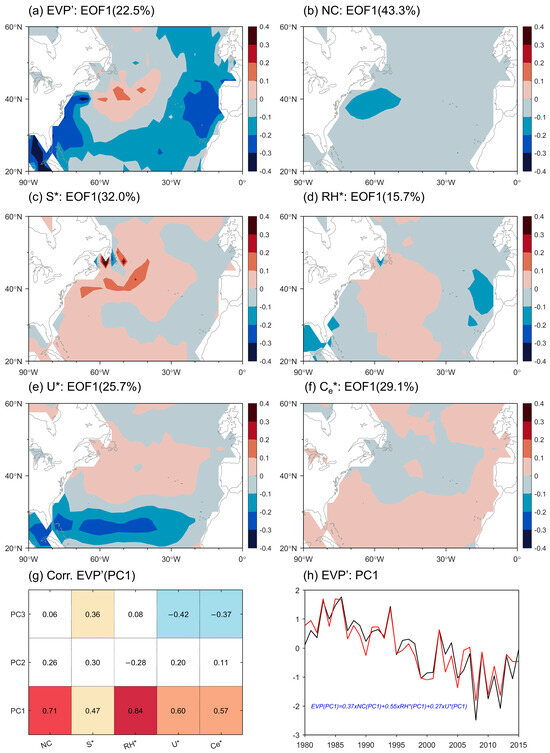
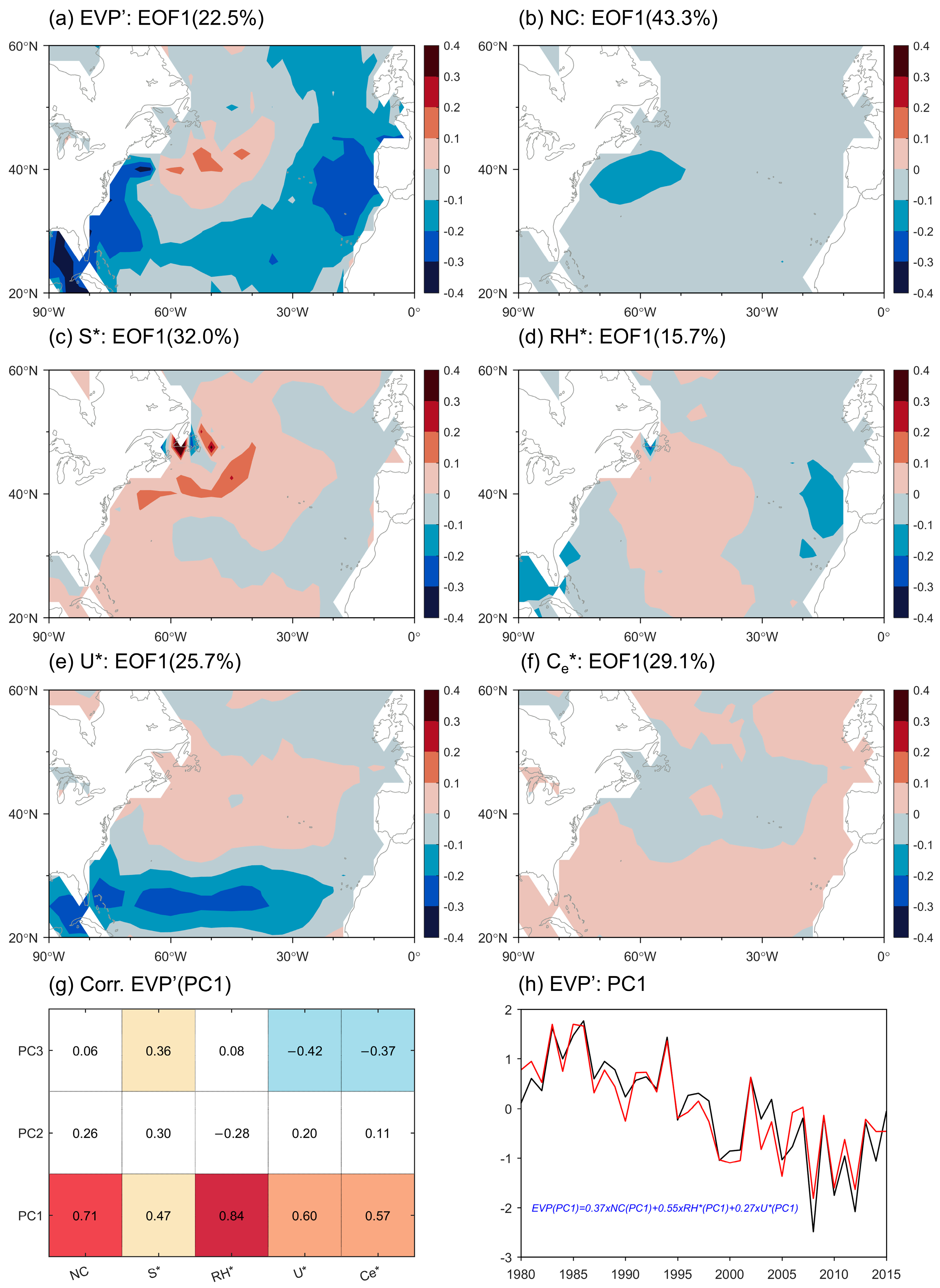
Figure 1a presents the first EOF (EOF1) mode of the North Atlantic evaporation anomaly during the warm season in the ERA5 dataset. The EOF1 of evaporation exhibits a zonal tripole pattern. Positive evaporation anomalies (up to 0.2 mm d−1) prevail between 33 and 49° N and between 30 and 60° W, while negative anomalies (around −0.3 mm d−1) dominate the eastern coasts of North America and Europe. Analysis of the EOF1 for each evaporation decomposition term reveals that EOF1 of RH* exhibits a pattern highly similar to the evaporation anomaly (Figure 1d). The EOF1 of NC shows a spatially consistent negative anomaly, with its center located east of New York (Figure 1b). The EOF1 of S* features a zonal dipole pattern (Figure 1c). The EOF1 of U* demonstrates a meridional dipole pattern (Figure 1e). The EOF1 of Ce* displays a pattern opposite to that of U* but with weaker intensity (Figure 1f).
Figure 1.
The main features of the North Atlantic warm season evaporation and its decomposition terms in the ERA5 dataset: (a) the EOF1 of evaporation anomaly (the upper-right corner of the figure is the variance explained by this mode); (b) the EOF1 of the Newtonian cooling term (NC); (c) the EOF1 of the stability item (S*); (d) the EOF1 of the relative humidity term (RH*); (e) the EOF1 of the wind speed term (U*); (f) the EOF1 of the transfer coefficient term (Ce*). Unit: mm d−1; (g) correlation coefficients of the time coefficients of the first three EOF modes (PC1, PC2, and PC3) of each evaporation decomposition term and the time coefficient of the EOF1 of the evaporation anomaly; red (blue) represents positive (negative) correlation coefficient passing the 95% confidence level; (h) multiple linear regression fitting (red line) to the time coefficient (black line) of the EOF1 of the evaporation anomaly using terms with correlation coefficient exceeding 0.6 in (g). The blue equation in the lower-left corner represents the fitting equation.
Furthermore, the correlation coefficients between the first three principal component (PC) time series (PC1, PC2, and PC3) of each decomposition term and the PC1 of the evaporation anomaly are compared (Figure 1g). The PC1 of NC, RH*, and U* show significant correlations with the evaporation PC1, with coefficients of 0.71, 0.84, and 0.60, respectively, all exceeding the 95% confidence level. A multiple linear regression was performed using these three key factors to reconstruct the PC1 of the evaporation anomaly (Figure 1f). The reconstructed series closely follows the PC1 of the evaporation anomaly. From a temporal perspective, the zonal tripole pattern of North Atlantic evaporation during the warm season underwent a notable interdecadal shift around the end of the 1990s, transitioning from a “negative–positive–negative” phase to a “positive–negative–positive” phase.
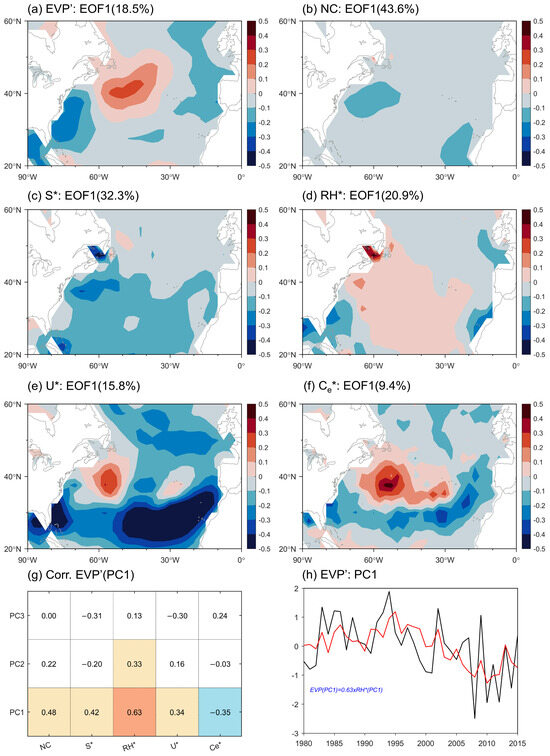
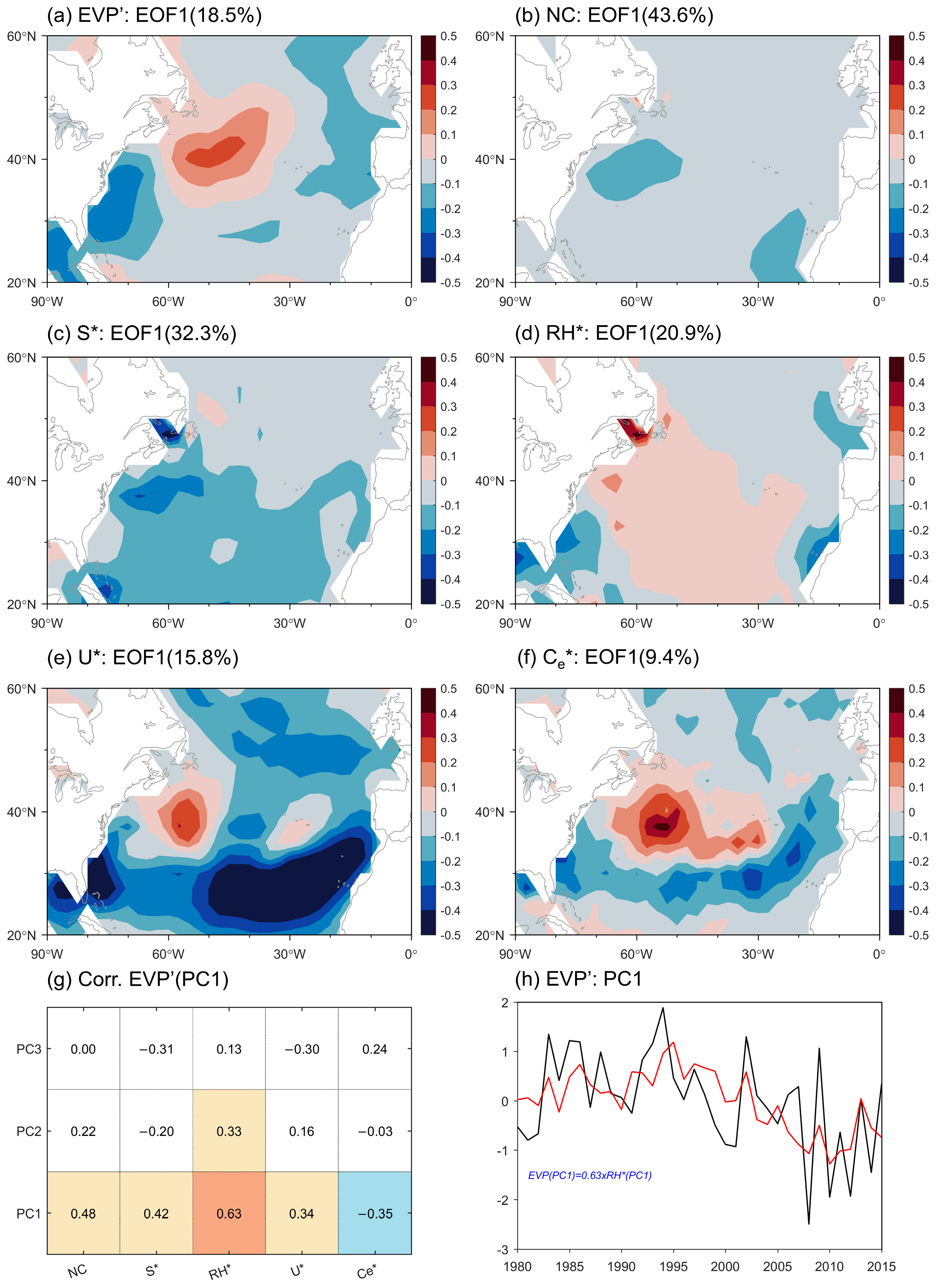
JRA-55 similarly identifies a zonal tripole as its primary mode (Figure 2a). The RH* term emerges as the dominant driver (Figure 2d), with their principal components (PC1s) significantly correlated (R = 0.63, Figure 2g). Multiple linear regression using these key terms successfully reconstructs the temporal evolution of the evaporation pattern (Figure 2h), capturing a distinct interdecadal shift around the late 1990s.
Figure 2.
Same as Figure 1, but for JRA55 dataset.
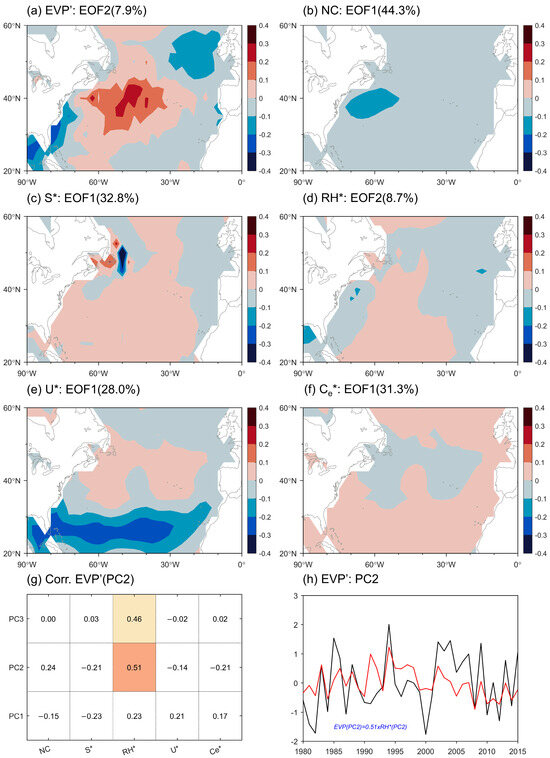
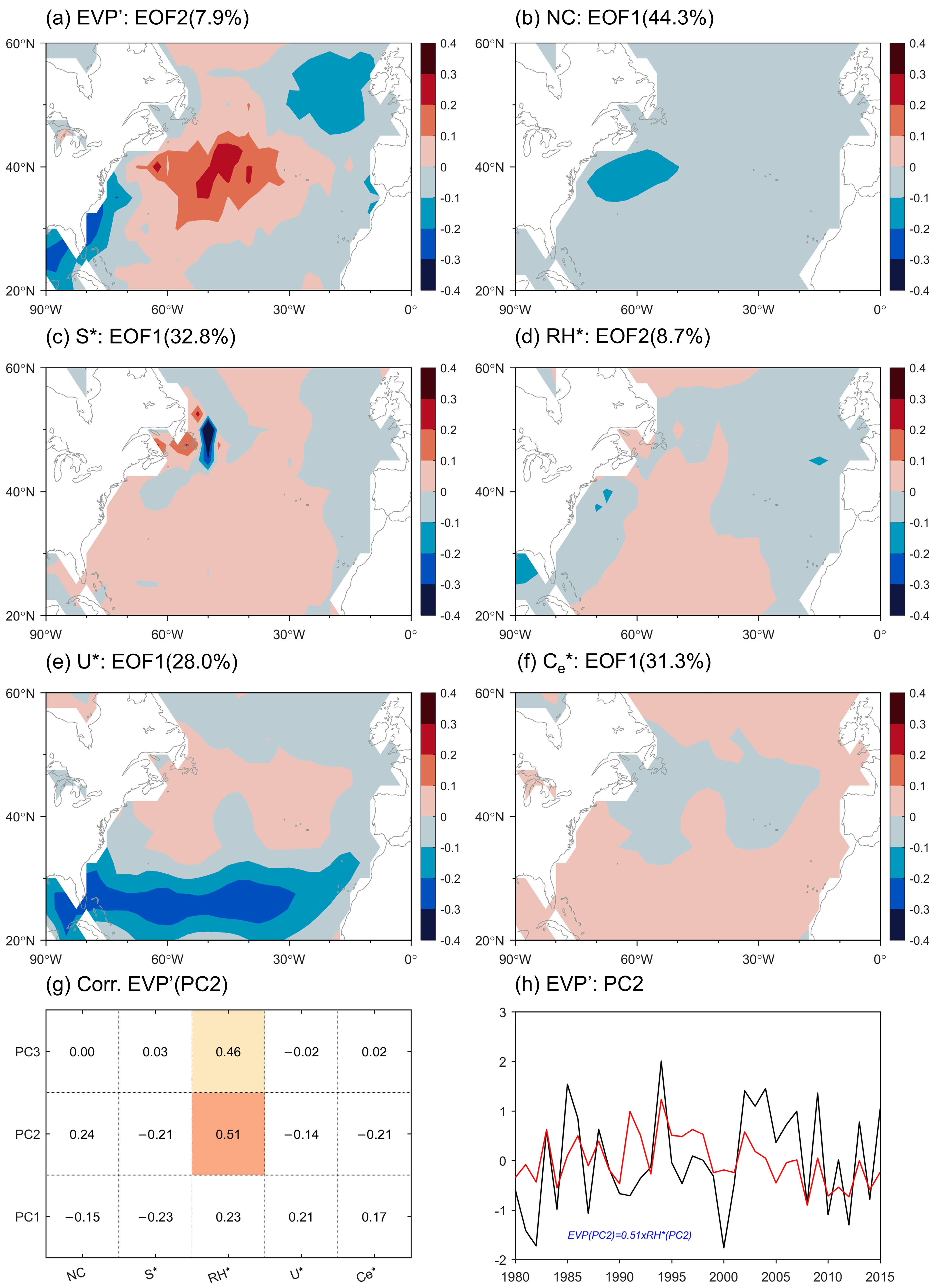
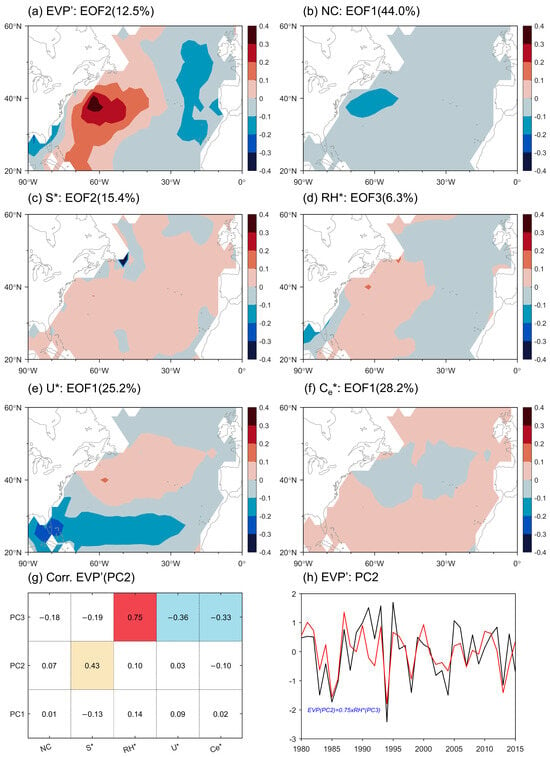
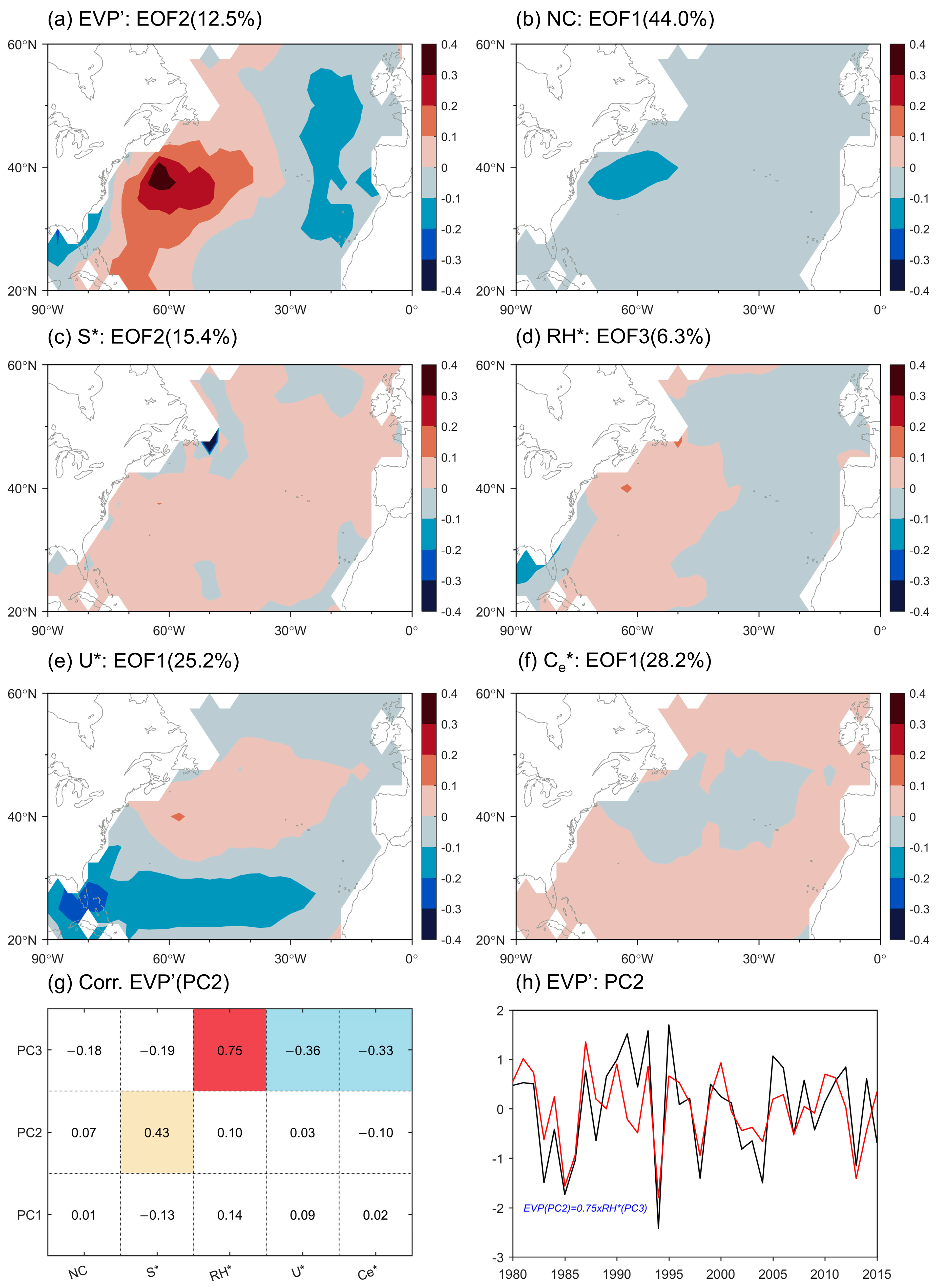
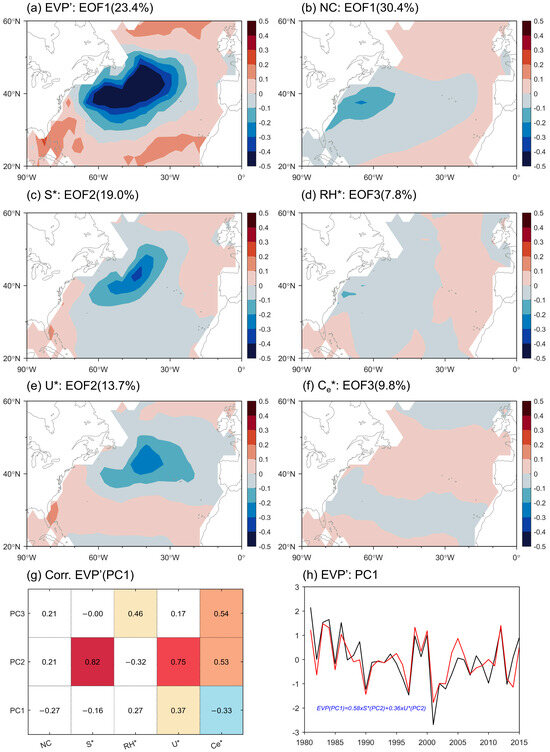
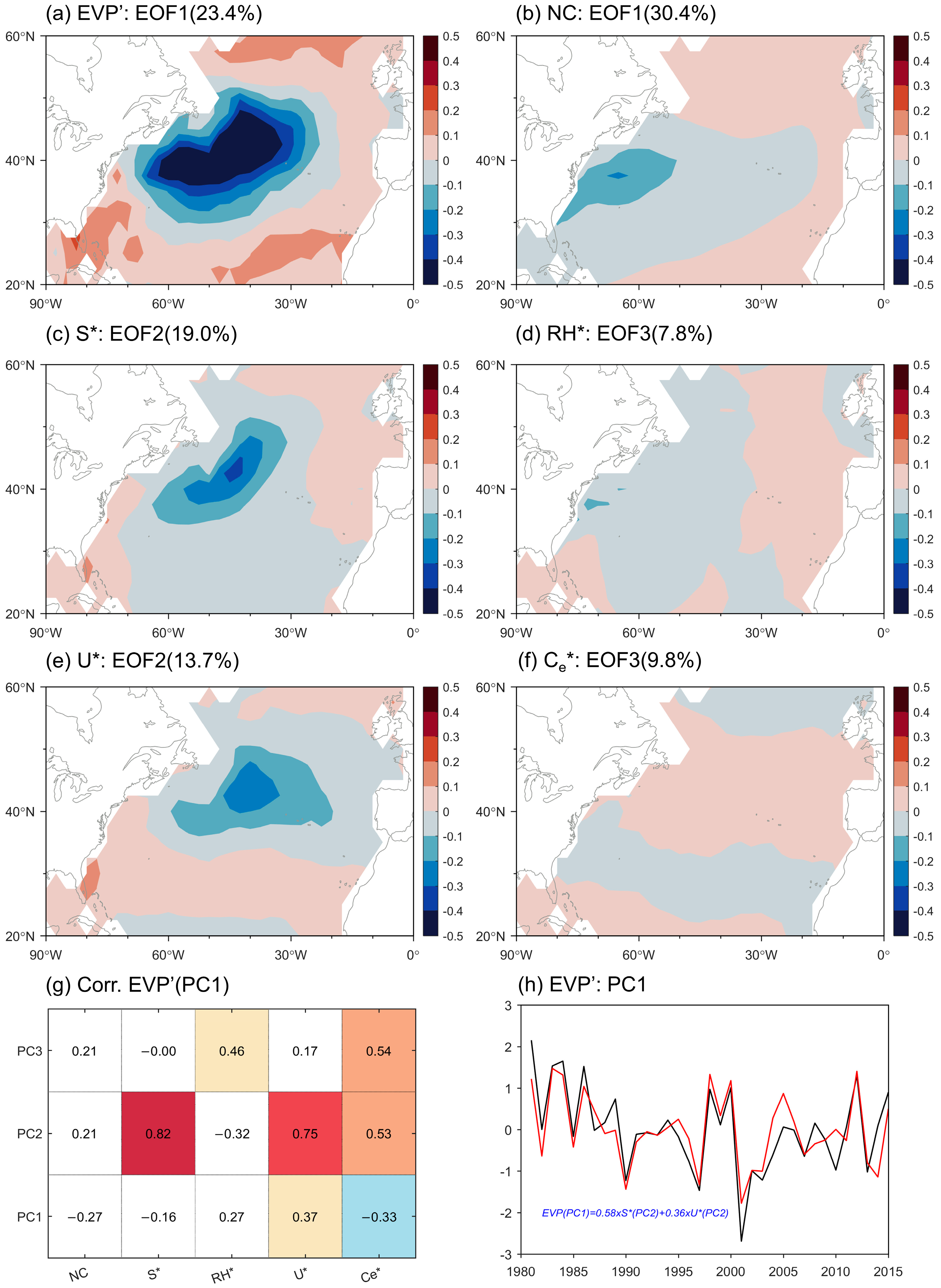
In contrast, MERRA-2 and OAFlux present divergent characterizations. In MERRA-2, the zonal tripole appears as EOF2 rather than the leading mode (Figure 3a). Only the PC2 of RH* shows significant correlation (R = 0.51) with the PC2 of evaporation (Figure 3g). Notably, the temporal evolution lacks the clear interdecadal transition observed in ERA5 and JRA-55, instead displaying predominantly interannual variability (Figure 3h). OAFlux similarly relegates the zonal tripole to EOF2 (Figure 4a). The pattern is primarily influenced by the third EOF mode of RH* (R = 0.75) and similarly shows no pronounced interdecadal shift (Figure 4h).
Figure 3.
Same as Figure 1, but for the EOF2 of MERRA2.
Figure 4.
Same as Figure 1, but for the EOF2 of the OAFlux dataset.
Overall, the dominant evaporation modes during the warm season (June–November) exhibit substantial dataset dependency.
3.2. Cold Season Patterns
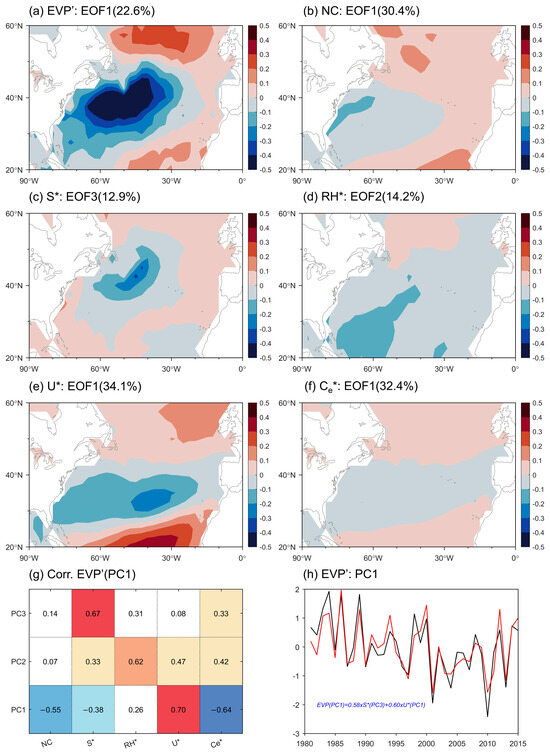
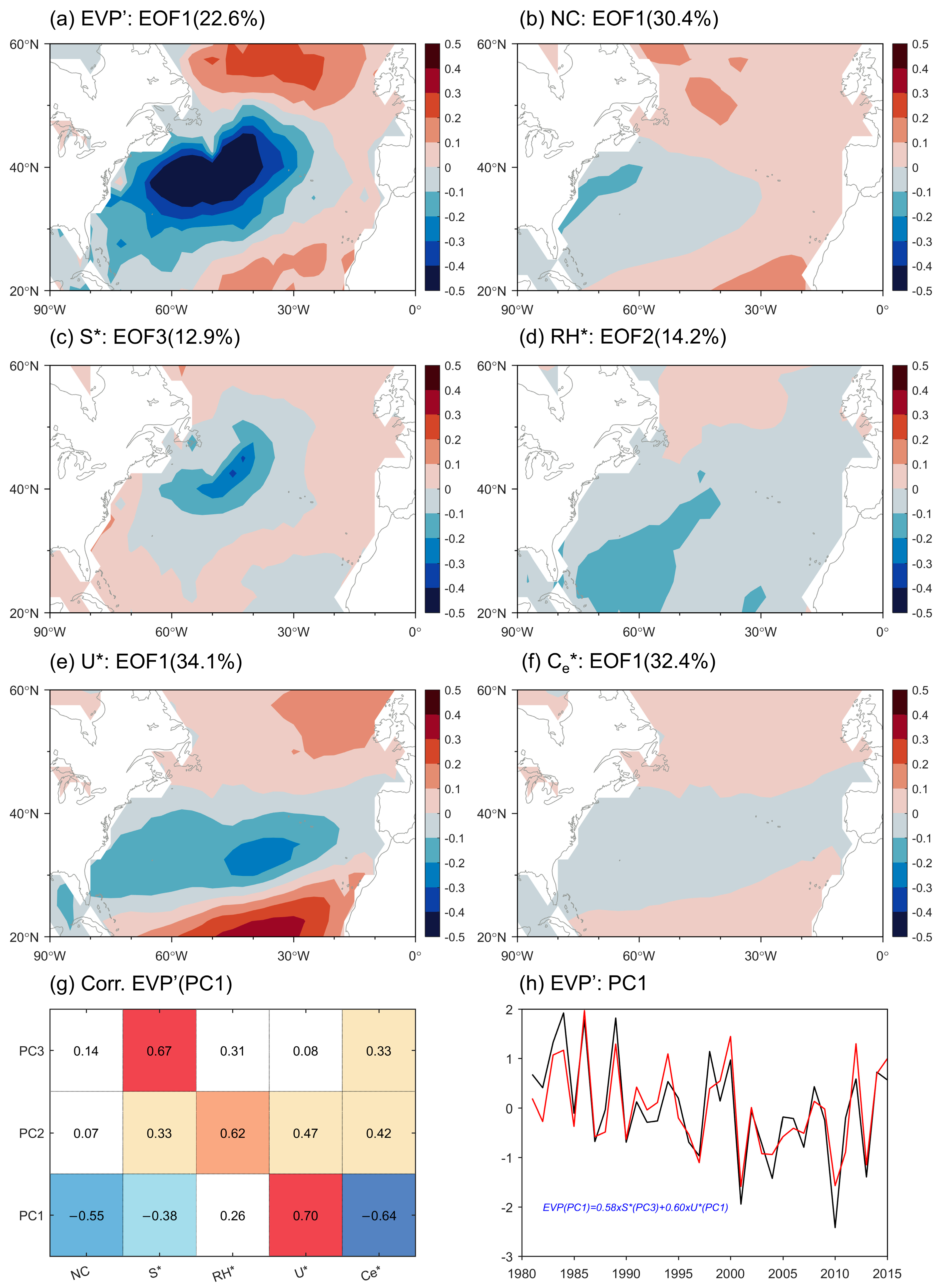
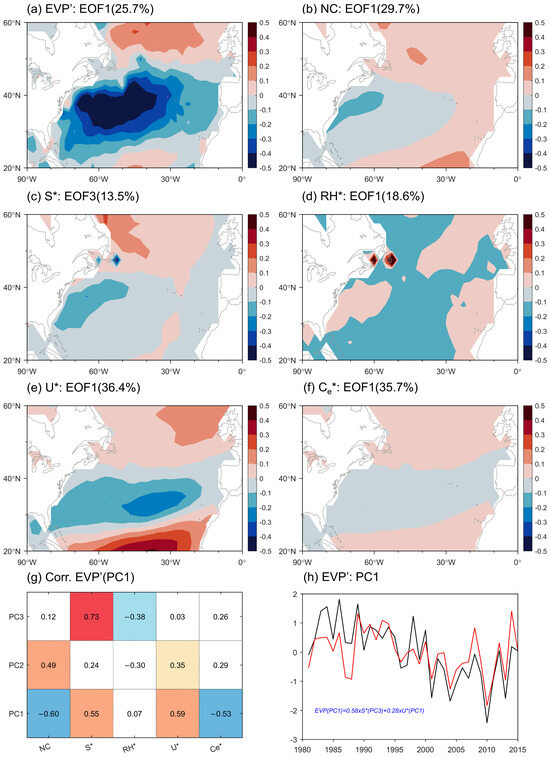
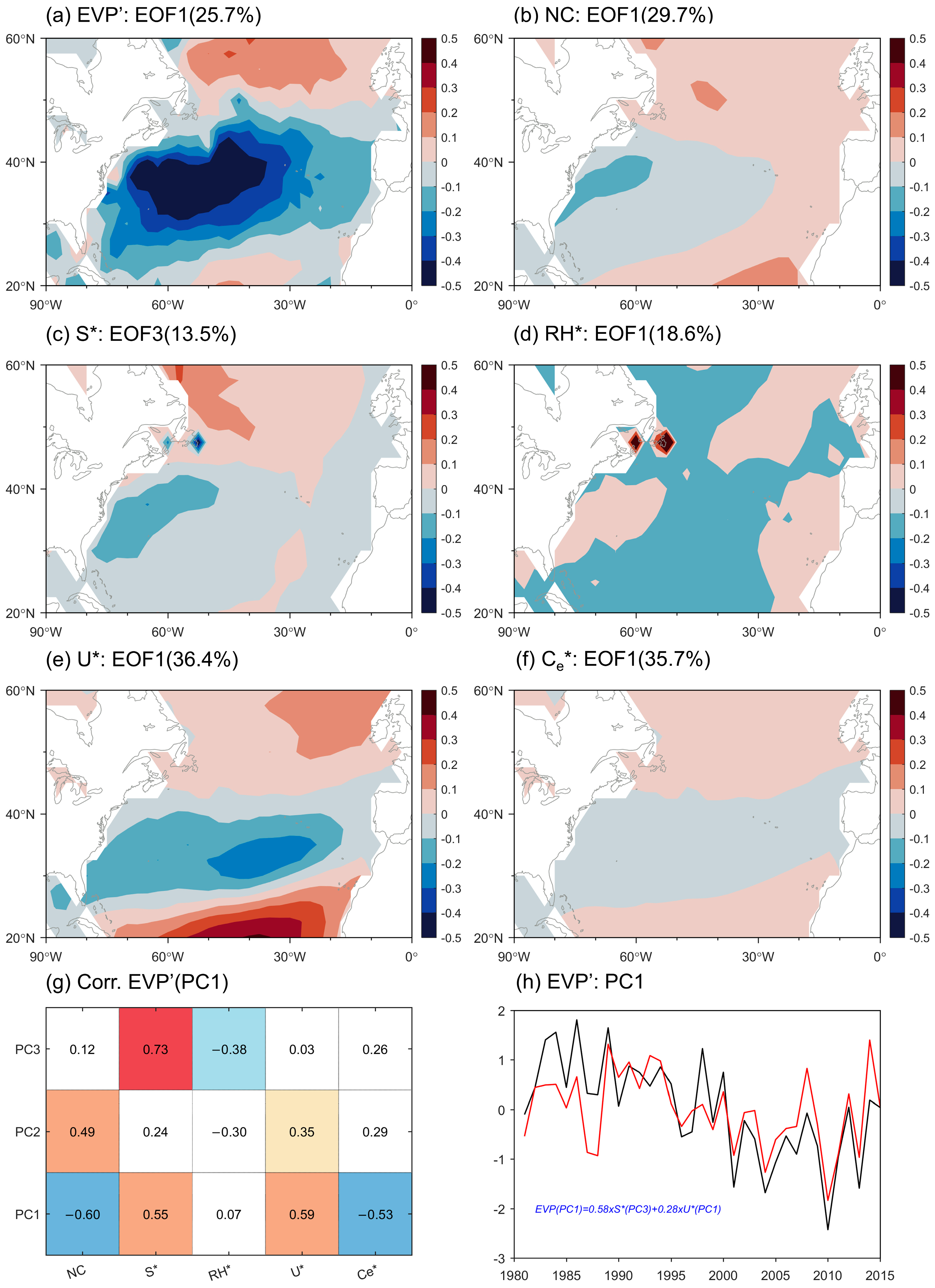
All four datasets demonstrate remarkable consistency in characterizing cold season evaporation. The dominant mode across all datasets is a meridional tripole pattern, characterized by a prominent negative anomaly core (−0.5 mm d−1) centered at 36–45° N and 30–80° W, flanked by positive anomalies to the north and south. In ERA5, this meridional tripole is primarily driven by U*, whose spatial pattern closely resembles the evaporation anomaly (Figure 5e) with strong correlation (R = 0.70). The S* also contributes significantly, with its EOF3 showing a meridional tripole structure correlated (R = 0.67) with the evaporation PC1 (Figure 5g).
Figure 5.
The main features of North Atlantic cold season evaporation and its decomposition terms in the ERA5 dataset: (a) the EOF1 of the evaporation anomaly (the upper-right corner of the figure is the variance explained by this mode); (b) the EOF1 of the Newtonian cooling term (NC); (c) the EOF1 of the stability item (S*); (d) the EOF1 of the relative humidity term (RH*); (e) the EOF1 of the wind speed term (U*); (f) the EOF1 of the transfer coefficient term (Ce*). Unit: mm d−1; (g) correlation coefficients of the time coefficients of the first three EOF modes (PC1, PC2, and PC3) of each evaporation decomposition term and the time coefficient of the EOF1 of the evaporation anomaly; red (blue) represents positive (negative) correlation coefficient passing the 95% confidence level; (h) multiple linear regression fitting (red line) to the time coefficient (black line) of EOF1 of the evaporation anomaly using terms with correlation coefficient exceeding 0.6 in (g). The blue equation in the lower-left corner represents the fitting equation.
JRA-55 reproduces this meridional tripole as EOF1 (Figure 6a), with U* identified as the primary driver (Figure 6e). NC exhibits a spatial pattern similar to that of the evaporation anomaly but acts to weaken the pattern due to its negative correlation (R = −0.65) with the evaporation PC1. MERRA-2 and OAFlux maintain this consistency, with both datasets exhibiting the meridional tripole as their leading mode (Figure 7a and Figure 8a). In MERRA-2, both U* (R = 0.59) and S* (R = 0.73) are identified as key contributors (Figure 7g). Most notably, all datasets capture a synchronous interdecadal shift around the late 1990s, transitioning from “positive–negative–positive” to “negative–positive–negative” phases, underscoring the robustness of cold season evaporation features.
Figure 6.
Same as Figure 5, but for the JRA55 dataset.
Figure 7.
Same as Figure 5, but for the MERRA2 dataset.
Figure 8.
Same as Figure 5, but for the OAFlux dataset.
This identified meridional tripole pattern in evaporation bears a notable resemblance to the North Atlantic tripole mode of sea surface temperature anomalies, suggesting a potential connection with atmospheric circulation patterns such as the NAO [32].
3.3. Reliability and Uncertainties of Evaporation Patterns
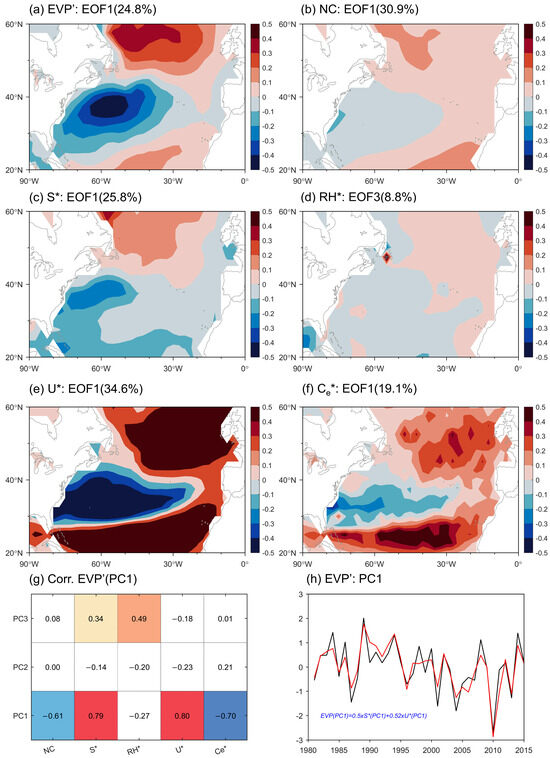
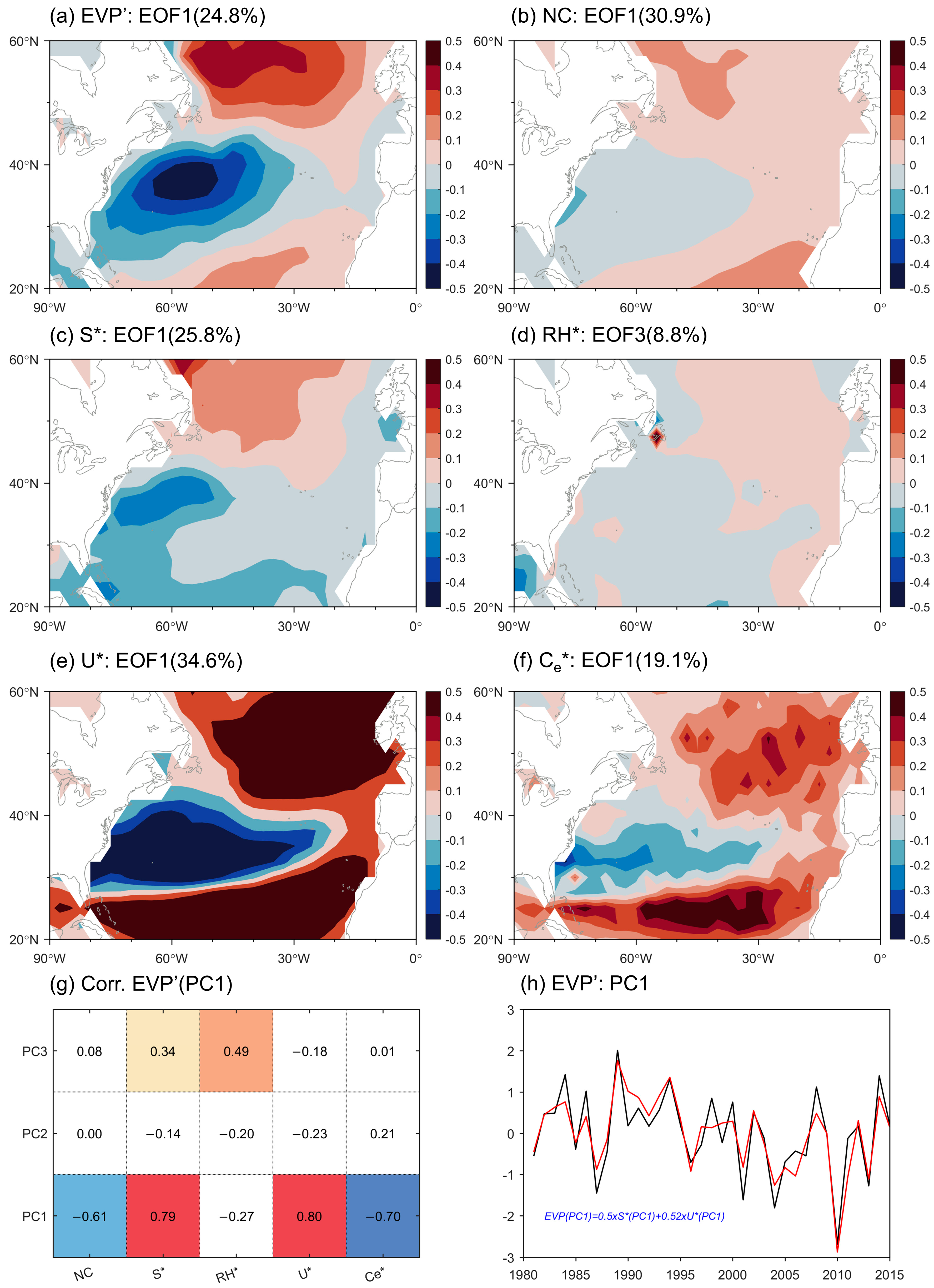
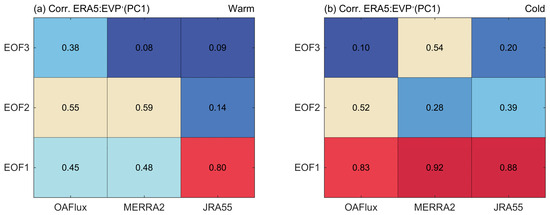
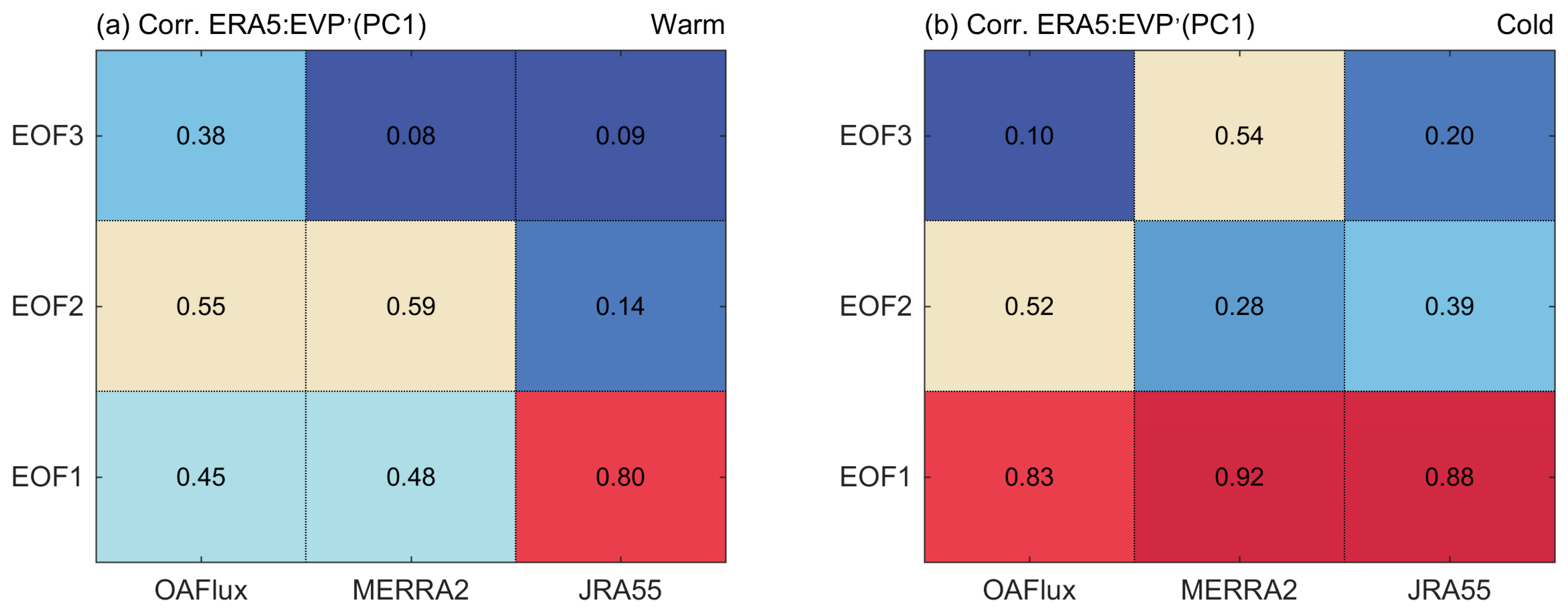
Spatial correlation analysis quantitatively confirms the contrasting reliability between seasons (Figure 9). During the cold season, the meridional tripole patterns from JRA-55, MERRA-2, and OAFlux exhibit high consistency with ERA5, with correlation coefficients of 0.88, 0.92, and 0.83, respectively. This robust agreement, combined with synchronous interdecadal transitions, establishes the cold season evaporation characteristics as highly credible across reanalysis products. In contrast, warm season patterns display markedly lower correlations. The respective modes in JRA-55 (EOF1), MERRA-2 (EOF2), and OAFlux (EOF2) show progressively weaker relationships with ERA5 (R = 0.80, 0.59, and 0.55, respectively), indicating substantial dataset sensitivity.
Figure 9.
The first three EOF modes of JRA55, MERRA2, and OAFlux data are related to the spatial distribution of the first EOF mode of the ERA5 dataset: (a) warm season, (b) cold season.
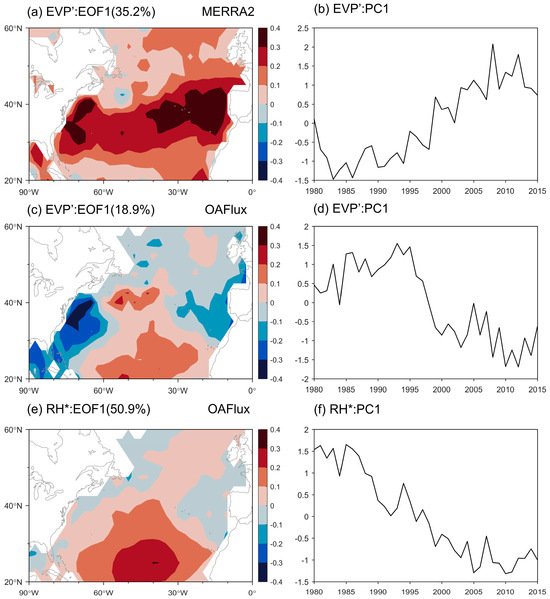
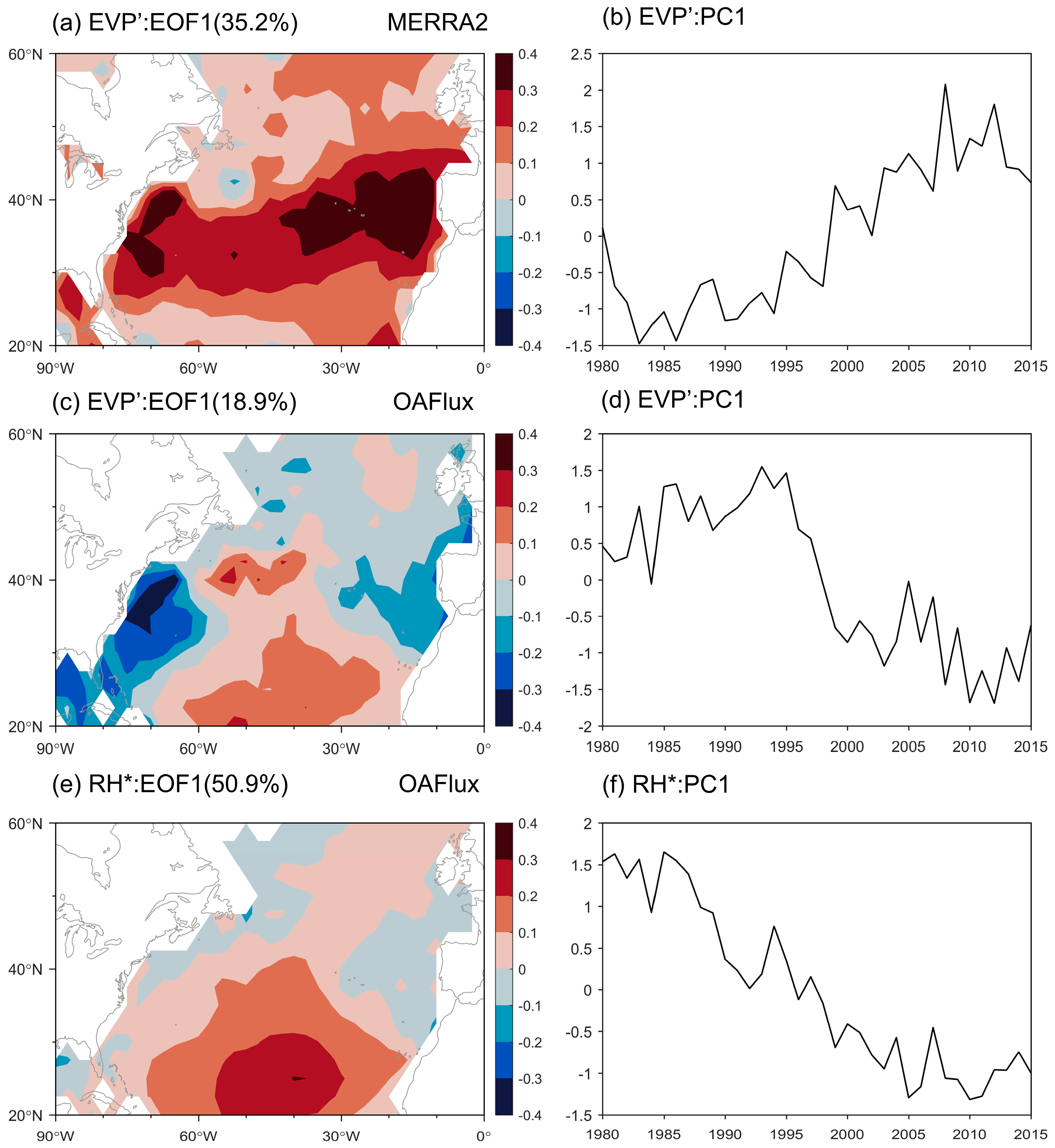
The divergence in warm season patterns stems primarily from dataset-specific representations of relative humidity under global warming. In MERRA-2, the leading evaporation mode (EOF1) exhibits a basin-wide uniform pattern dominated by a significant upward trend (Figure 10b). This suggests that MERRA-2 may more prominently capture the direct thermodynamic response to global warming, whereby increased SST enhances evaporation. OAFlux presents a distinct warm season characterization, with its EOF1 concentrated in tropical regions (Figure 10c). This distribution aligns with the spatial pattern of its RH* (Figure 10e), reinforcing RH* as the critical factor underlying warm season evaporation uncertainties.
Figure 10.
(a) The EOF1 of warm season North Atlantic evaporation in the MERRA2 dataset and (b) its corresponding normalized time coefficients. (c) The EOF1 of warm season North Atlantic evaporation in the OAFlux dataset and (d) its corresponding normalized time coefficients. (e) The EOF1 of warm season RH* in the OAFlux dataset and (f) its corresponding normalized time coefficients.
The seasonal contrast in reliability arises from fundamental differences in governing mechanisms. The cold season meridional tripole is primarily driven by the wind speed (U*) and stability (S*) terms—variables that are relatively well-observed and consistently assimilated across reanalysis systems. Conversely, the warm season zonal tripole is predominantly controlled by RH*, a parameter subject to considerable inter-dataset variation in both representation and assimilation. These findings highlight that while cold season evaporation features provide a reliable foundation for mechanistic studies, warm season analyses require careful consideration of dataset-specific uncertainties, particularly in RH* characterization.
4. Conclusions
This study reveals a fundamental seasonal dichotomy in the reliability of North Atlantic evaporation patterns across datasets. Cold season evaporation patterns show high consistency and reliability across datasets. All four reanalyses consistently identify a meridional tripole pattern as the dominant spatial mode during the cold season, with their corresponding principal components exhibiting a synchronous interdecadal shift around the end of the 1990s. This strong agreement indicates that the primary characteristics of cold season evaporation in the North Atlantic are robust to the choice of reanalysis product. Thus, conclusions drawn from any of the major reanalysis datasets can be considered highly reliable and serve as a solid foundation for future research. Warm season evaporation patterns exhibit significant dataset dependency and higher uncertainty. Considerable discrepancies exist among the datasets in characterizing the dominant mode during the warm season: while ERA5 and JRA55 present a zonal tripole pattern as the leading mode, it appears only as a secondary mode in MERRA2 and OAFlux. Furthermore, notable differences exist in the temporal evolution of these patterns, particularly in terms of interdecadal signals and long-term trends. These inconsistencies suggest that warm season evaporation analysis is highly sensitive to the choice of dataset, and conclusions based on a single reanalysis should be treated with caution.
Differences in the dominant physical mechanisms across seasons explain the varying levels of reliability. The meridional tripole pattern in the cold season is primarily driven by sea surface wind speed (U*) and sea–air humidity difference (S*), both of which are relatively well-observed and assimilated, contributing to the stability of cold season features. In contrast, the zonal tripole pattern in the warm season is mainly influenced by relative humidity (RH*), a variable that is represented differently across reanalysis systems, leading to greater uncertainty in warm season results.
5. Discussion
The evaporation decomposition method involves approximations such as linearization and the separation of covariance terms, which can introduce errors. Assumptions about the independence of variables or the neglect of higher-order interactions may further contribute to uncertainty. Furthermore, evaporation is likely influenced by sea state conditions such as storm activity and wave height, which can enhance turbulence and air–sea exchange and represent an important aspect for future refinement of evaporation estimates. It should be noted that this study primarily compares the four datasets from the perspective of key influencing factors on evaporation. The sources and assimilation methods for variables such as RH* differ substantially among reanalyzes and may even contain systematic biases, which are directly reflected in the spatiotemporal distribution of RH*. Additionally, the distinct influencing factors for the meridional and zonal tripole patterns may be modulated by large-scale circulation patterns such as the NAO. Investigating the specific pathways and physical mechanisms through which the NAO influences these evaporation patterns will be a key focus of future research. While this study focused on four widely used reanalysis datasets, future work will extend this comparison to other major reanalysis products—such as the NCEP-DOE Reanalysis 2 and the NCEP Climate Forecast System version 2 (CFSv2)—to further assess the generalizability of the observed seasonal differences and explore whether newer data assimilation systems reduce warm season uncertainties.
Supplementary Materials
The following supporting information can be downloaded at: https://www.mdpi.com/article/10.3390/atmos17010026/s1, Figure S1: The main features of North Atlantic warm season evaporation and its de-composition terms in ERA5 dataset from 1979 to 2021: (a) the EOF1 of Evaporation anomaly (the upper right corner of the figure is the variance explained by this mode); (b) the EOF1 of Newtonian cooling term (NC); (c) the EOF1 of stability item (S*); (d) the EOF1 of relative humidity term (RH*), (e) the EOF1 of wind speed term (U*); (f) the EOF1 of transfer coefficient term (Ce*). Unit: mm d-1; (g) Correlation coefficients of the time coefficients of first three EOF modes (PC1, PC2, and PC3) of each evapo-ration decomposition term and the time coefficient of the EOF1 of evaporation anomaly, red (blue) represents positive (negative) correlation coefficient passes the 95% confidence level; (h) Multiple linear regression fitting (red line) to the time coefficient (black line) of EOF1 of evaporation anomaly using terms with correlation coefficient exceeding 0.6 in (g), blue equation in the lower left corner represents the fitting equation., Figure S2: The main features of North Atlantic cold season evaporation and its de-composition terms in ERA5 dataset from 1979 to 2021: (a) the EOF1 of Evaporation anomaly (the upper right corner of the figure is the variance explained by this mode); (b) the EOF1 of Newtonian cooling term (NC); (c) the EOF1 of stability item (S*); (d) the EOF1 of relative humidity term (RH*), (e) the EOF1 of wind speed term (U*); (f) the EOF1 of transfer coefficient term (Ce*). Unit: mm d-1; (g) Correlation co-efficients of the time coefficients of first three EOF modes (PC1, PC2, and PC3) of each evapora-tion decomposition term and the time coefficient of the EOF1 of evaporation anomaly, red (blue) represents positive (negative) correlation coefficient passes the 95% confidence level; (h) Multiple linear regression fitting (red line) to the time coefficient (black line) of EOF1 of evaporation anomaly using terms with correlation coefficient exceeding 0.6 in (g), blue equation in the lower left corner represents the fitting equation.
Author Contributions
Conceptualization, B.H.; Methodology, L.Z. and B.H.; Data Curation, Z.Z.; Writing—Original Draft Preparation, Z.Z. and S.L.; Writing—Review and Editing, B.H.; Visualization, L.Z.; Supervision, B.H. All authors have read and agreed to the published version of the manuscript.
Funding
This research was funded by the National Natural Science Foundation of China (No. 42405058).
Institutional Review Board Statement
Not applicable.
Informed Consent Statement
Not applicable.
Data Availability Statement
The ERA5 dataset is available from https://cds.climate.copernicus.eu/datasets/reanalysis-era5-single-levels-monthly-means?tab=overview (accessed on 1 November 2025). The JRA55 dataset is available from https://gdex.ucar.edu/datasets/d628001/dataaccess/# (accessed on 1 November 2025). The MERRA2 dataset is available from https://gmao.gsfc.nasa.gov/gmao-products/merra-2/ (accessed on 1 November 2025). The OAFlux dataset is available from https://gdex.ucar.edu/datasets/d260001/ (accessed on 1 November 2025). The ERSSTv5 dataset is available from https://psl.noaa.gov/data/gridded/data.noaa.ersst.v5.html (accessed on 1 November 2025).
Conflicts of Interest
The authors declare no conflicts of interest.
References
- Buckley, M.W.; Marshall, J. Observations, Inferences, and Mechanisms of the Atlantic Meridional Overturning Circulation: A Review. Rev. Geophys. 2016, 54, 5–63. [Google Scholar] [CrossRef] [Scilit]
- Srokosz, M.; Baringer, M.; Bryden, H.; Cunningham, S.; Delworth, T.; Lozier, S.; Marotzke, J.; Sutton, R. Past, Present, and Future Changes in the Atlantic Meridional Overturning Circulation. Bull. Am. Meteorol. Soc. 2012, 93, 1663–1676. [Google Scholar] [CrossRef] [Scilit]
- Cayan, D.R. Latent and Sensible Heat Flux Anomalies over the Northern Oceans: Driving the Sea Surface Temperature. J. Phys. Oceanogr. 1992, 22, 859–881. [Google Scholar] [CrossRef] [Scilit]
- Wang, B.; Wu, R.; Li, T. Atmosphere—Warm Ocean Interaction and Its Impacts on Asian—Australian Monsoon Variation*. J. Clim. 2003, 16, 1195–1211. [Google Scholar] [CrossRef] [Scilit]
- Trenberth, K.E.; Fasullo, J.T.; Mackaro, J. Atmospheric Moisture Transports from Ocean to Land and Global Energy Flows in Reanalyses. J. Clim. 2011, 24, 4907–4924. [Google Scholar] [CrossRef] [Scilit]
- Sousa, P.M.; Ramos, A.M.; Raible, C.C.; Messmer, M.; Tomé, R.; Pinto, J.G.; Trigo, R.M. North Atlantic Integrated Water Vapor Transport—From 850 to 2100 CE: Impacts on Western European Rainfall. J. Clim. 2020, 33, 263–279. [Google Scholar] [CrossRef] [Scilit]
- Reagan, J.; Seidov, D.; Boyer, T. Water Vapor Transfer and Near-Surface Salinity Contrasts in the North Atlantic Ocean. Sci. Rep. 2018, 8, 8830. [Google Scholar] [CrossRef] [Scilit]
- Gao, S.; Chiu, L.S.; Shie, C.-L. Trends and variations of ocean surface latent heat flux: Results from GSSTF2c data set. Geophys. Res. Lett. 2013, 40, 380–385. [Google Scholar] [CrossRef] [Scilit]
- Robson, J.; Sutton, R.; Lohmann, K.; Smith, D.; Palmer, M.D. Causes of the Rapid Warming of the North Atlantic Ocean in the Mid-1990s. J. Clim. 2012, 25, 4116–4134. [Google Scholar] [CrossRef] [Scilit]
- Yu, L. Global Variations in Oceanic Evaporation (1958–2005): The Role of the Changing Wind Speed. J. Clim. 2007, 20, 5376–5390. [Google Scholar] [CrossRef] [Scilit]
- Polyakov, I.V.; Alexeev, V.A.; Bhatt, U.S.; Polyakova, E.I.; Zhang, X. North Atlantic Warming: Patterns of Long-Term Trend and Multidecadal Variability. Clim. Dyn. 2010, 34, 439–457. [Google Scholar] [CrossRef] [Scilit]
- Rodwell, M.J.; Rowell, D.P.; Folland, C.K. Oceanic Forcing of the Wintertime North Atlantic Oscillation and European Climate. Nature 1999, 398, 320–323. [Google Scholar] [CrossRef] [Scilit]
- Mahajan, S.; Saravanan, R.; Chang, P. Free and Forced Variability of the Tropical Atlantic Ocean: Role of the Wind–Evaporation–Sea Surface Temperature Feedback. J. Clim. 2010, 23, 5958–5977. [Google Scholar] [CrossRef] [Scilit]
- Walsh, J.E.; Portis, D.H. Variations of Precipitation and Evaporation over the North Atlantic Ocean, 1958–1997. J. Geophys. Res. Atmos. 1999, 104, 16613–16631. [Google Scholar] [CrossRef] [Scilit]
- Wu, R.; Kirtman, B.P.; Pegion, K. Local Air–Sea Relationship in Observations and Model Simulations. J. Clim. 2006, 19, 4914–4932. [Google Scholar] [CrossRef] [Scilit]
- Morioka, Y.; Tozuka, T.; Masson, S.; Terray, P.; Luo, J.-J.; Yamagata, T. Subtropical Dipole Modes Simulated in a Coupled General Circulation Model. J. Clim. 2012, 25, 4029–4047. [Google Scholar] [CrossRef] [Scilit]
- Robertson, F.R.; Bosilovich, M.G.; Roberts, J.B.; Reichle, R.H.; Adler, R.; Ricciardulli, L.; Berg, W.; Huffman, G.J. Consistency of Estimated Global Water Cycle Variations over the Satellite Era. J. Clim. 2014, 27, 6135–6154. [Google Scholar] [CrossRef] [Scilit]
- Bosilovich, M.G.; Robertson, F.R.; Takacs, L.; Molod, A.; Mocko, D. Atmospheric Water Balance and Variability in the MERRA-2 Reanalysis. J. Clim. 2017, 30, 1177–1196. [Google Scholar] [CrossRef] [Scilit]
- Yu, L.; Jin, X.; Josey, S.A.; Lee, T.; Kumar, A.; Wen, C.; Xue, Y. The Global Ocean Water Cycle in Atmospheric Reanalysis, Satellite, and Ocean Salinity. J. Clim. 2017, 30, 3829–3852. [Google Scholar] [CrossRef] [Scilit]
- Bentamy, A.; Piollé, J.F.; Grouazel, A.; Danielson, R.; Gulev, S.; Paul, F.; Azelmat, H.; Mathieu, P.P.; von Schuckmann, K.; Sathyendranath, S.; et al. Review and Assessment of Latent and Sensible Heat Flux Accuracy over the Global Oceans. Remote Sens. Environ. 2017, 201, 196–218. [Google Scholar] [CrossRef] [Scilit]
- Liu, J.; Curry, J.A. Variability of the tropical and subtropical ocean surface latent heat flux during 1989–2000. Geophys. Res. Lett. 2006, 33, L05706. [Google Scholar] [CrossRef] [Scilit]
- Dolman, A.J.; de Jeu, R.A.M. Evaporation in Focus. Nat. Geosci. 2010, 3, 296. [Google Scholar] [CrossRef] [Scilit]
- Su, T.; Feng, G. Spatial-Temporal Variation Characteristics of Global Evaporation Revealed by Eight Reanalyses. Sci. China Earth Sci. 2015, 58, 255–269. [Google Scholar] [CrossRef] [Scilit]
- Yu, L. Global Air–Sea Fluxes of Heat, Fresh Water, and Momentum: Energy Budget Closure and Unanswered Questions. Ann. Rev. Mar. Sci. 2019, 11, 227–248. [Google Scholar] [CrossRef] [Scilit]
- Pokhrel, S.; Dutta, U.; Rahaman, H.; Chaudhari, H.; Hazra, A.; Saha, S.K.; Veeranjaneyulu, C. Evaluation of Different Heat Flux Products Over the Tropical Indian Ocean. Earth Sp. Sci. 2020, 7, e2019EA000988. [Google Scholar] [CrossRef] [Scilit]
- Huang, B.; Su, T.; Zhang, Z.; Wu, Y.; Feng, G. Decomposition of Trend and Interdecadal Variation of Evaporation over the Tropical Indian Ocean in ERA5. Atmosphere 2022, 13, 496. [Google Scholar] [CrossRef] [Scilit]
- Hersbach, H.; Bell, B.; Berrisford, P.; Hirahara, S.; Horányi, A.; Muñoz-Sabater, J.; Nicolas, J.; Peubey, C.; Radu, R.; Schepers, D.; et al. The ERA5 global reanalysis. Q. J. R. Meteorol. Soc. 2020, 146, 1999–2049. [Google Scholar] [CrossRef] [Scilit]
- Kobayashi, S.; Ota, Y.; Harada, Y.; Ebita, A.; Moriya, M.; Onoda, H.; Onogi, K.; Kamahori, H.; Kobayashi, C.; Endo, H.; et al. The JRA-55 Reanalysis: General Specifications and Basic Characteristics. J. Meteorol. Soc. Jpn. Ser. II 2015, 93, 5–48. [Google Scholar] [CrossRef] [Scilit]
- Gelaro, R.; McCarty, W.; Suárez, M.J.; Todling, R.; Molod, A.; Takacs, L.; Randles, C.A.; Darmenov, A.; Bosilovich, M.G.; Reichle, R.; et al. The Modern-Era Retrospective Analysis for Research and Applications, Version 2 (MERRA-2). J. Clim. 2017, 30, 5419–5454. [Google Scholar] [CrossRef] [Scilit] [PubMed]
- Huang, B.; Thorne, P.W.; Banzon, V.F.; Boyer, T.; Chepurin, G.; Lawrimore, J.H.; Menne, M.J.; Smith, T.M.; Vose, R.S.; Zhang, H.-M. Extended Reconstructed Sea Surface Temperature, Version 5 (ERSSTv5): Upgrades, Validations, and Intercomparisons. J. Clim. 2017, 30, 8179–8205. [Google Scholar] [CrossRef] [Scilit]
- Richter, I.; Xie, S.-P. Muted precipitation increase in global warming simulations: A surface evaporation perspective. J. Geophys. Res. 2008, 113, D24118. [Google Scholar] [CrossRef] [Scilit]
- Pan, L. Observed Positive Feedback between the NAO and the North Atlantic SSTA Tripole. Geophys. Res. Lett. 2005, 32, L06707. [Google Scholar] [CrossRef] [Scilit]

Disclaimer/Publisher’s Note: The statements, opinions and data contained in all publications are solely those of the individual author(s) and contributor(s) and not of MDPI and/or the editor(s). MDPI and/or the editor(s) disclaim responsibility for any injury to people or property resulting from any ideas, methods, instructions or products referred to in the content. |
© 2025 by the authors. Licensee MDPI, Basel, Switzerland. This article is an open access article distributed under the terms and conditions of the Creative Commons Attribution (CC BY) license.