Article

Land Cover Changes and Land Surface Temperature Dynamics in the Rohingya Refugee Area, Cox Bazar, Bangladesh: An Analysis from 2013 to 2024


1
Department of Geography, University of Tartu, Ülikooli tn 18, 50090 Tartu, Estonia
2
School of Environment, Geography, and Sustainability, Western Michigan University, Kalamazoo, MI 49008, USA
3
Little Rock Water Reclamation Authority, 11 Clearwater Dr, Little Rock, AR 72204, USA
*
Author to whom correspondence should be addressed.
Atmosphere 2025, 16(3), 250; https://doi.org/10.3390/atmos16030250
Submission received: 16 January 2025 / Revised: 18 February 2025 / Accepted: 21 February 2025 / Published: 23 February 2025
(This article belongs to the Section Biosphere/Hydrosphere/Land–Atmosphere Interactions)

Abstract

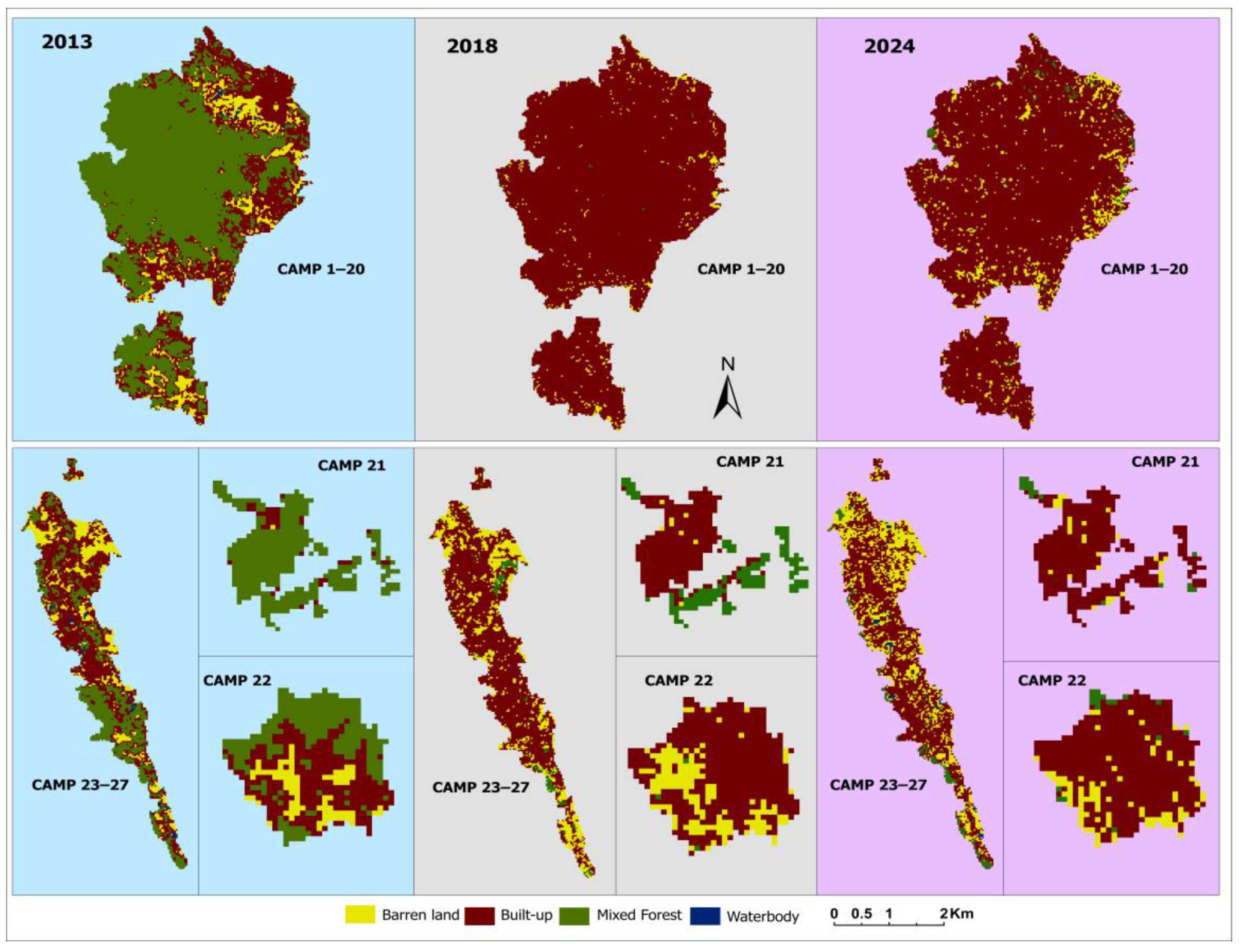
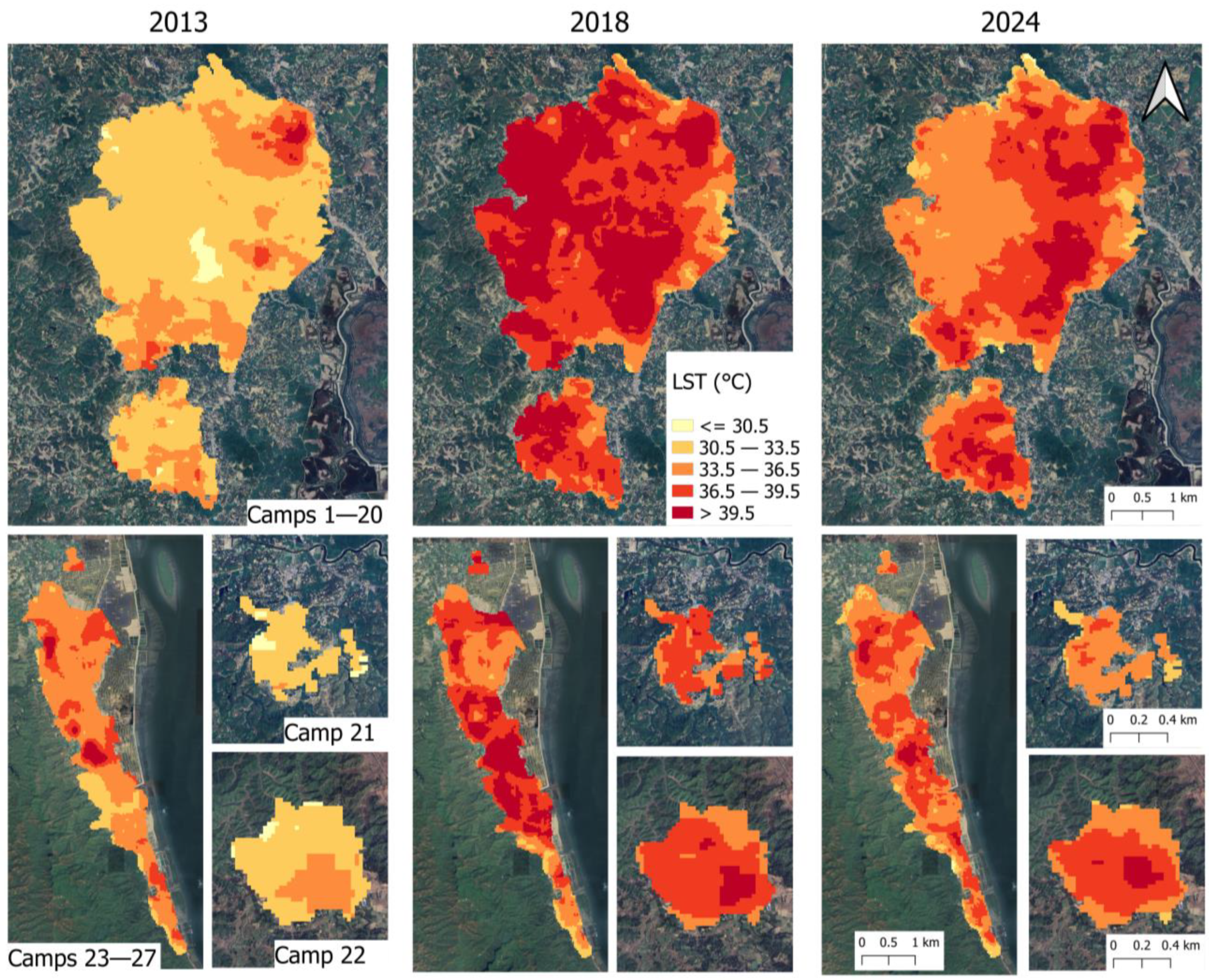
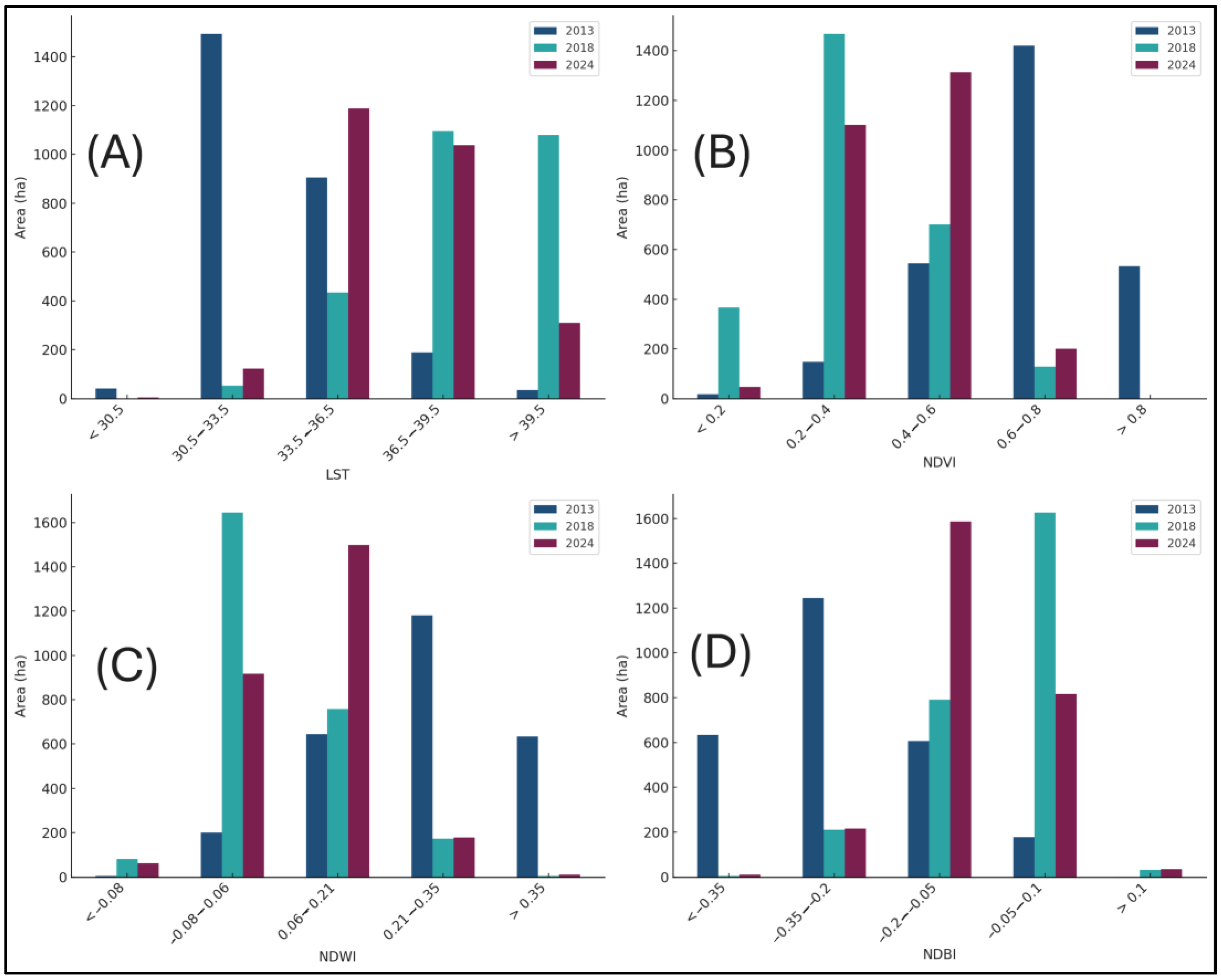
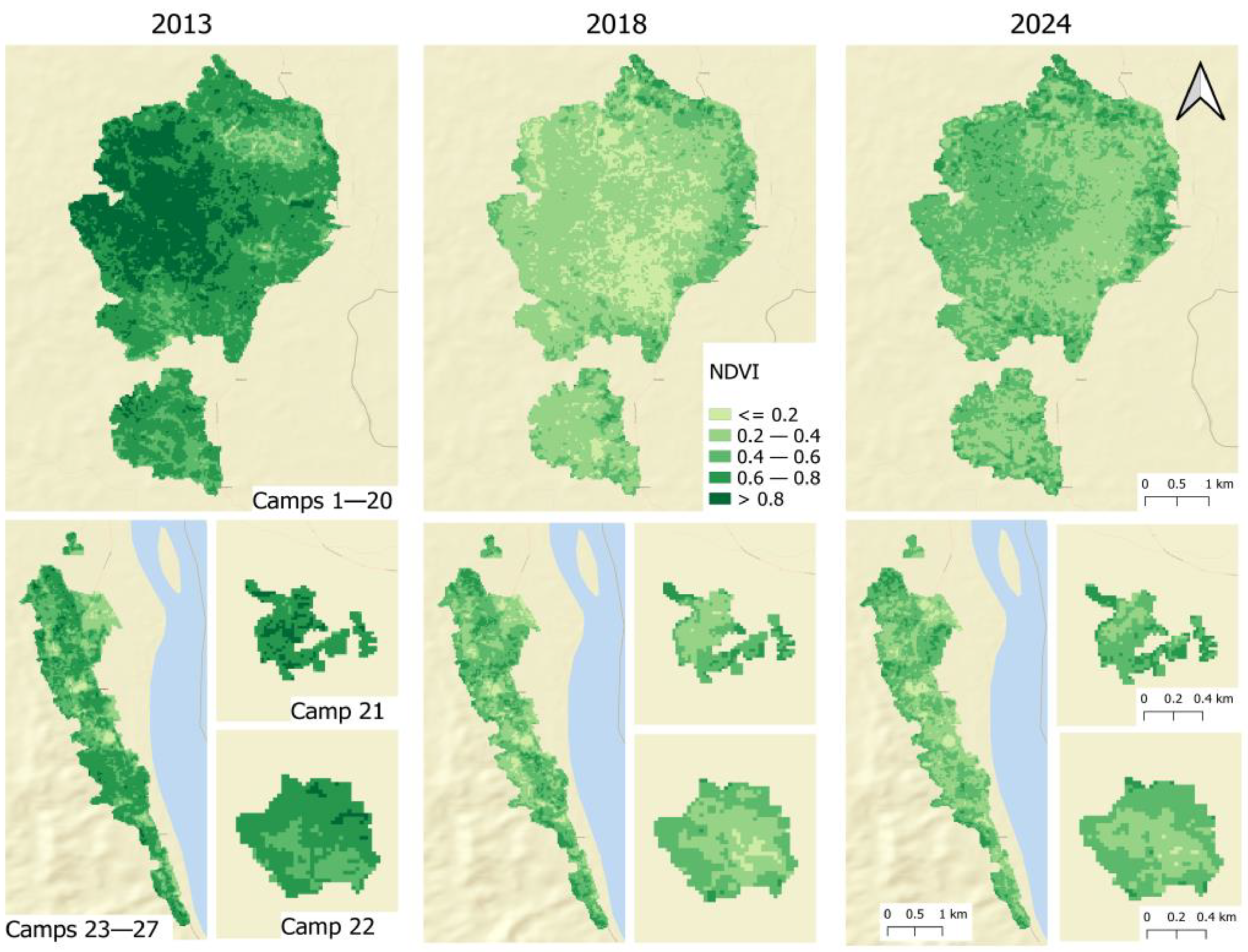
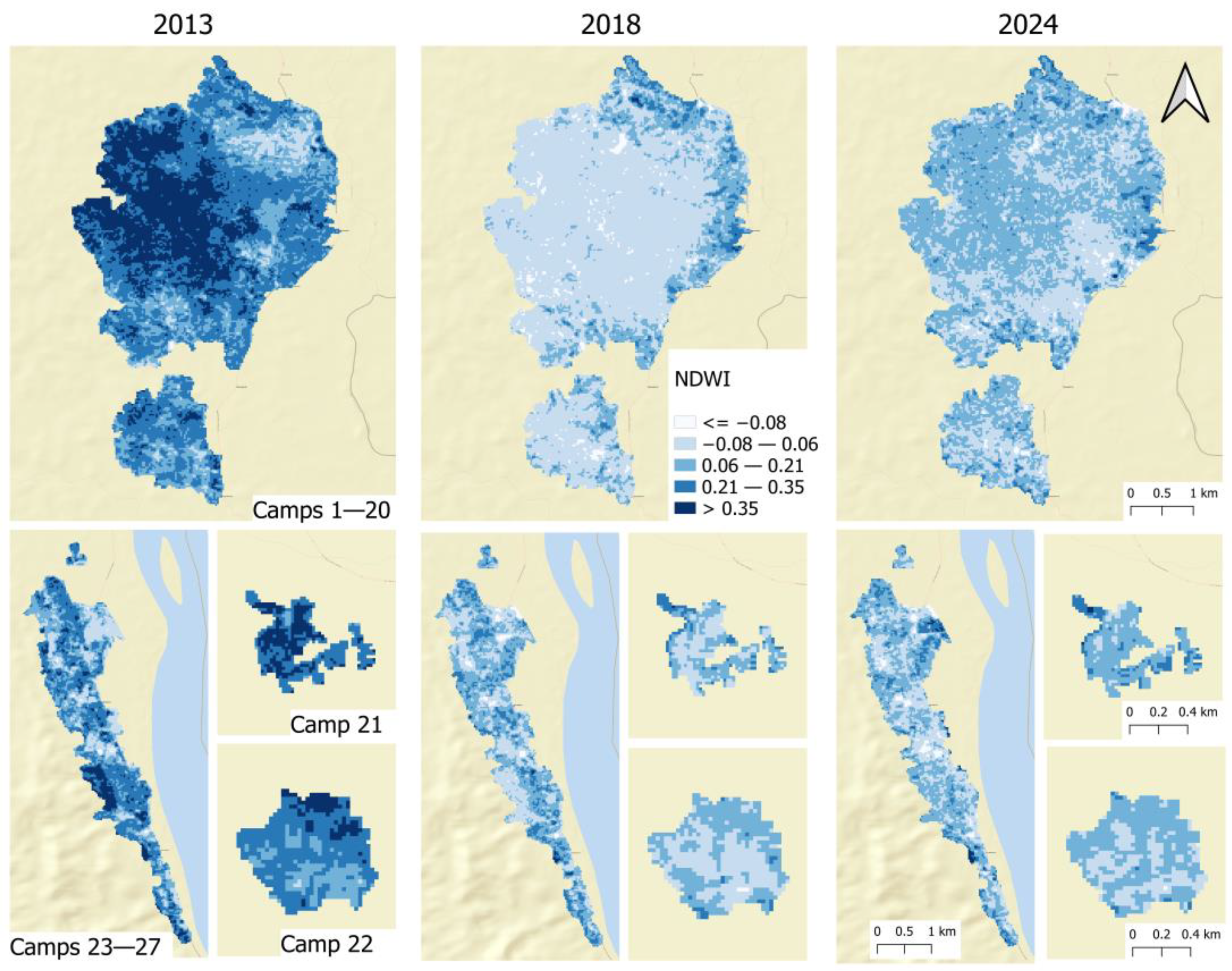
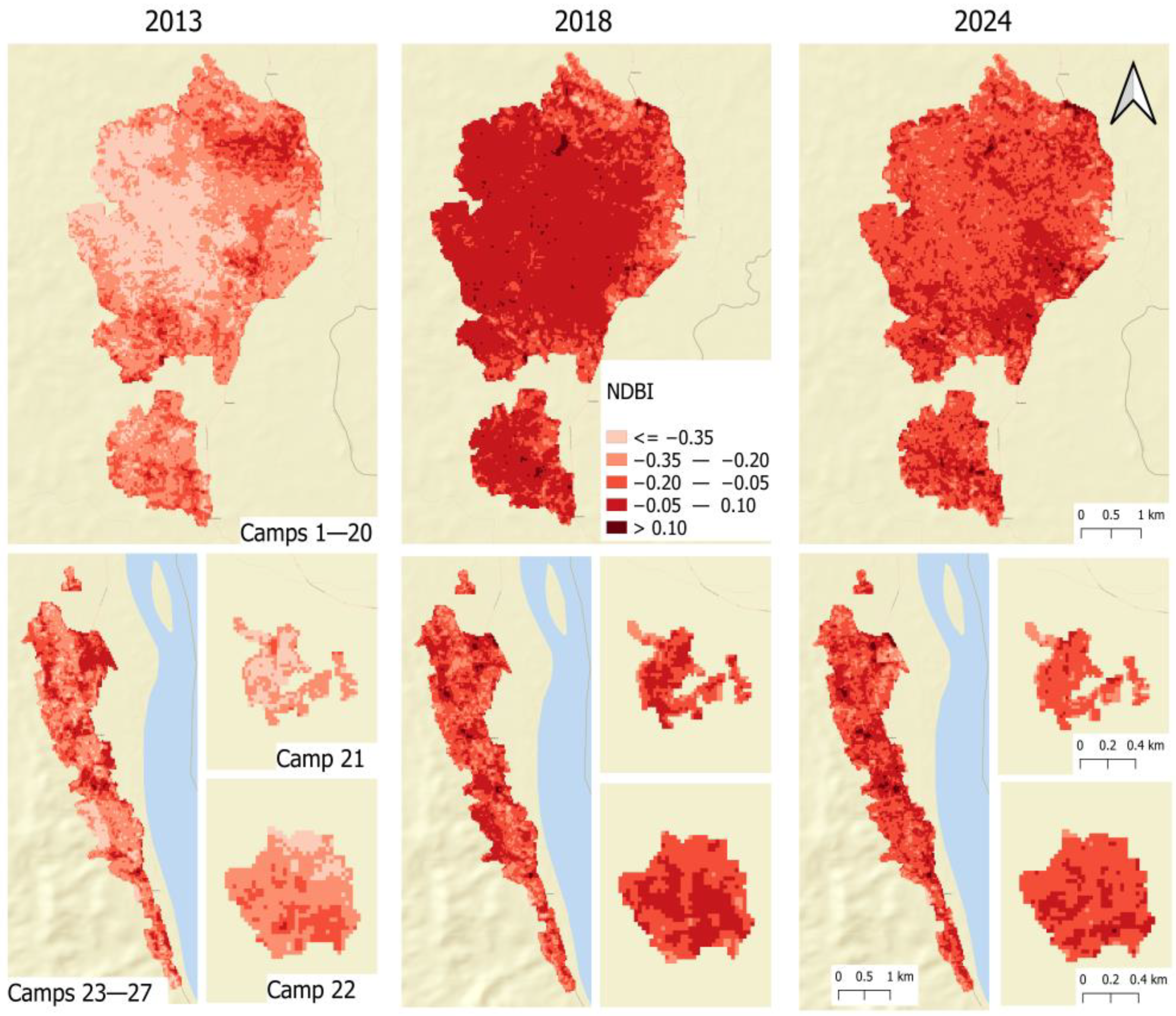
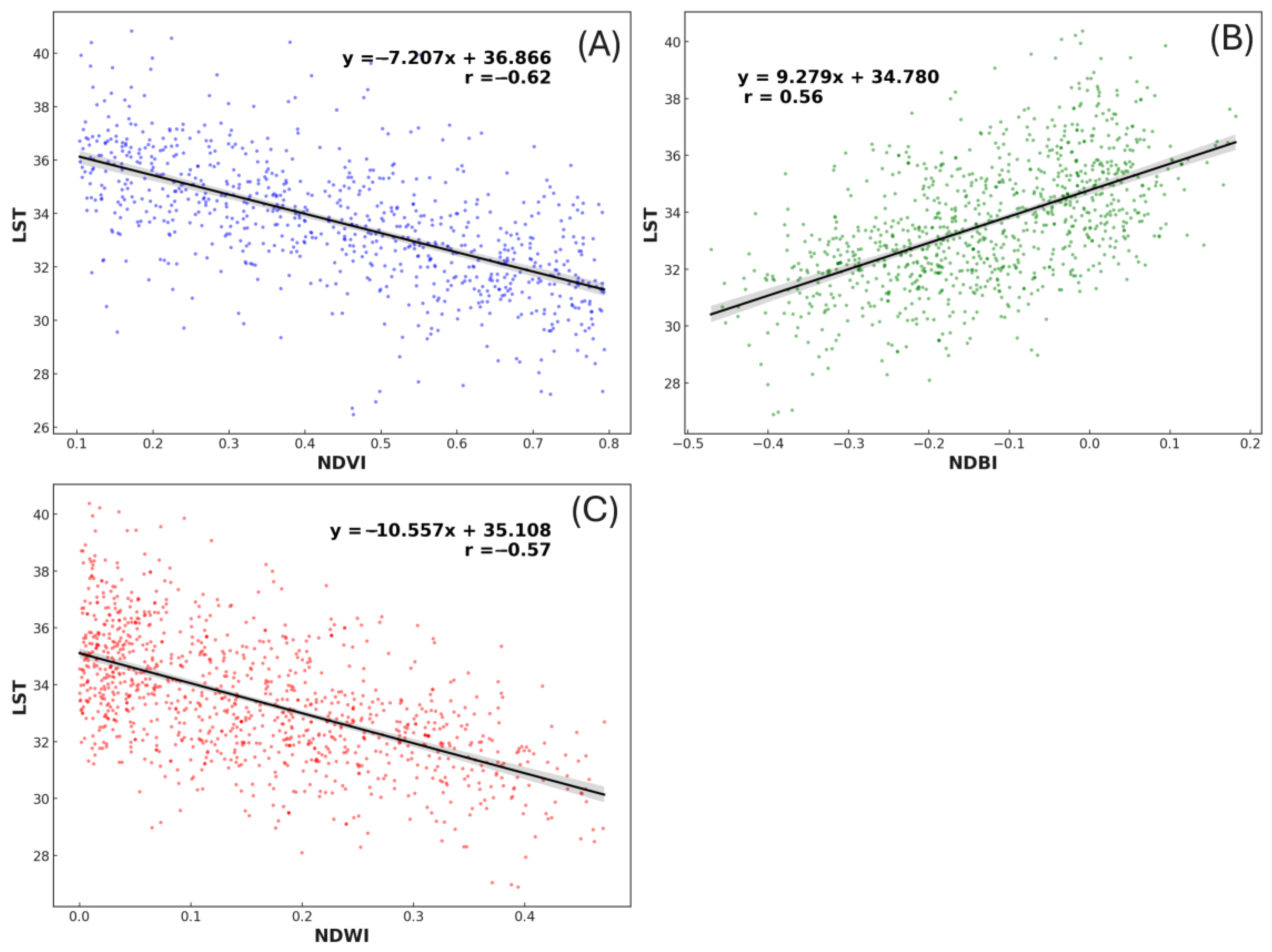
The rapid expansion of refugee settlements has caused significant environmental changes, particularly in regions experiencing forced displacement. The Rohingya refugee crisis in Cox’s Bazar, Bangladesh, has led to extensive deforestation and land transformation, affecting local climate conditions. While urbanization’s impact on land surface temperature (LST) is well-documented, the environmental consequences of unplanned refugee settlements remain understudied. This study investigates land cover changes and LST dynamics from 2013 to 2024, offering a novel perspective on refugee-induced environmental changes. Using Landsat 8 imagery, four key land cover categories (built-up, mixed forest, water bodies, and barren land) were classified through a Support Vector Machine (SVM) approach. The temporal change in these key land cover categories was examined. The surface temperature product (Band 10) from Landsat 8 Collection 2 Level 2 (C2 L2) was applied to derive LST, while Normalized Difference Vegetation Index (NDVI), Normalized Difference Water Index (NDWI), and Normalized Difference Built-up Index (NDBI) were used to assess vegetation and urbanization trends. Findings reveal a 97% decline in forest cover and a 161.78% increase in built-up areas between 2013 and 2018, leading to substantial LST increases. Statistical analyses confirm strong correlations between LST and multispectral indices, with vegetation and water bodies acting as cooling agents, while urban areas amplify heat stress. This study underscores the urgent need for sustainable land management and reforestation efforts to mitigate environmental degradation. It also highlights the importance of global cooperation in balancing humanitarian needs with environmental sustainability, providing insights for policymakers and urban planners to enhance climate resilience in vulnerable regions.
Keywords: land use; land surface temperature; refugee crisis; Cox’s Bazar; environmental impact; NDVI; NDWI; NDBI; urban heat island land use; land surface temperature; refugee crisis; Cox’s Bazar; environmental impact; NDVI; NDWI; NDBI; urban heat island