GAN Predictability for Urban Environmental Performance: Learnability Mechanisms, Structural Consistency, and Efficiency Bounds


Abstract
1. Introduction
2. Literature Review
2.1. GAN-Based Prediction of Urban Environmental Performance
2.2. Accuracy and Interpretability Evaluation of Deep Learning in AEC/Urban Applications
2.3. Research Gap
2.4. Contributions
- (1)
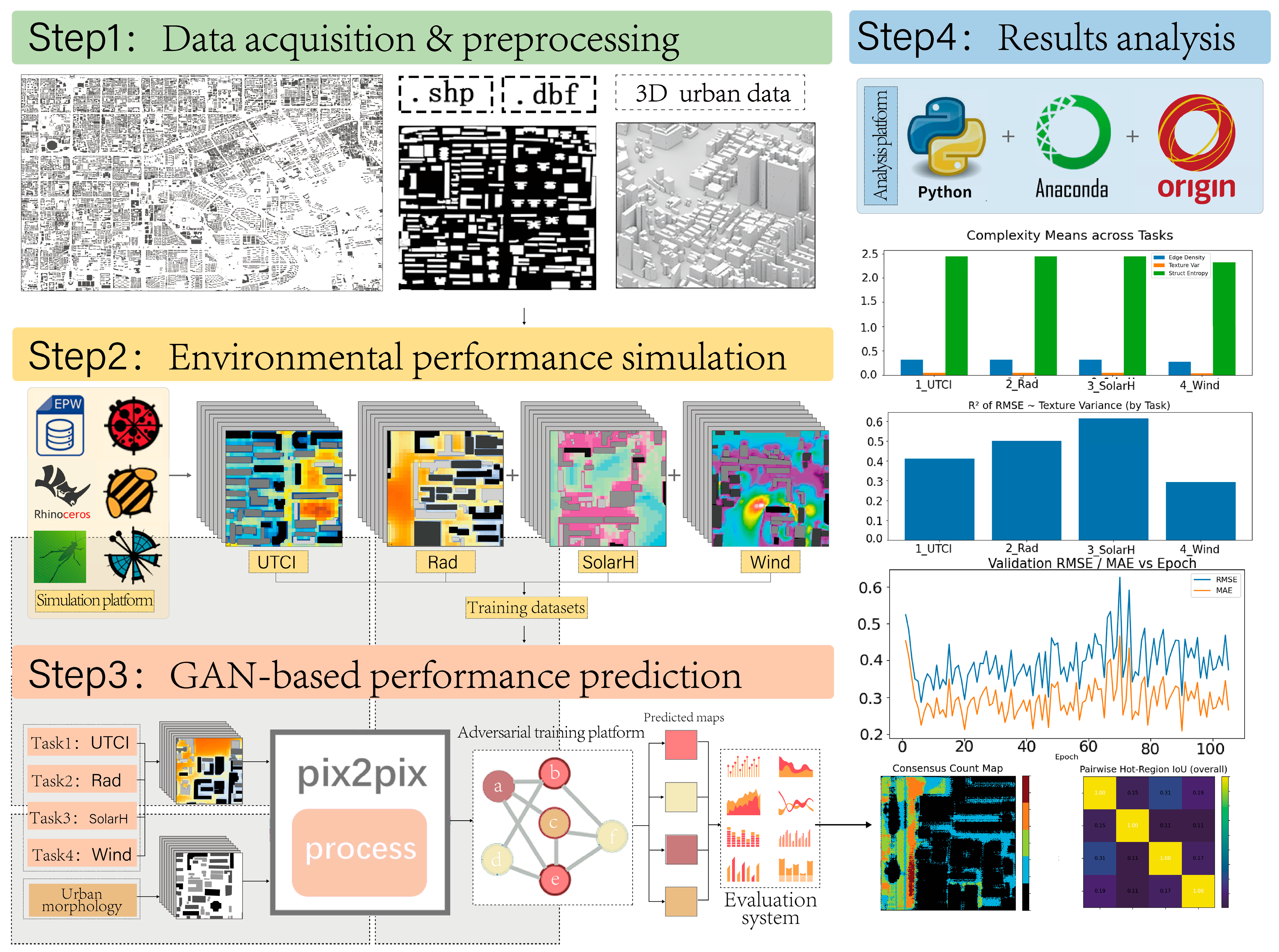
- A unified comparison framework that, for the first time, evaluates the four targets (UTCI, Rad, SolarH, and Wind) under a strictly combined-input and combined-protocol setting. A single shared urban-form raster, a common EPW-driven simulation pipeline, and a unified evaluation suite are used so that non-comparability caused by heterogeneous inputs, simulation tools, or evaluation metrics is eliminated.
- (2)
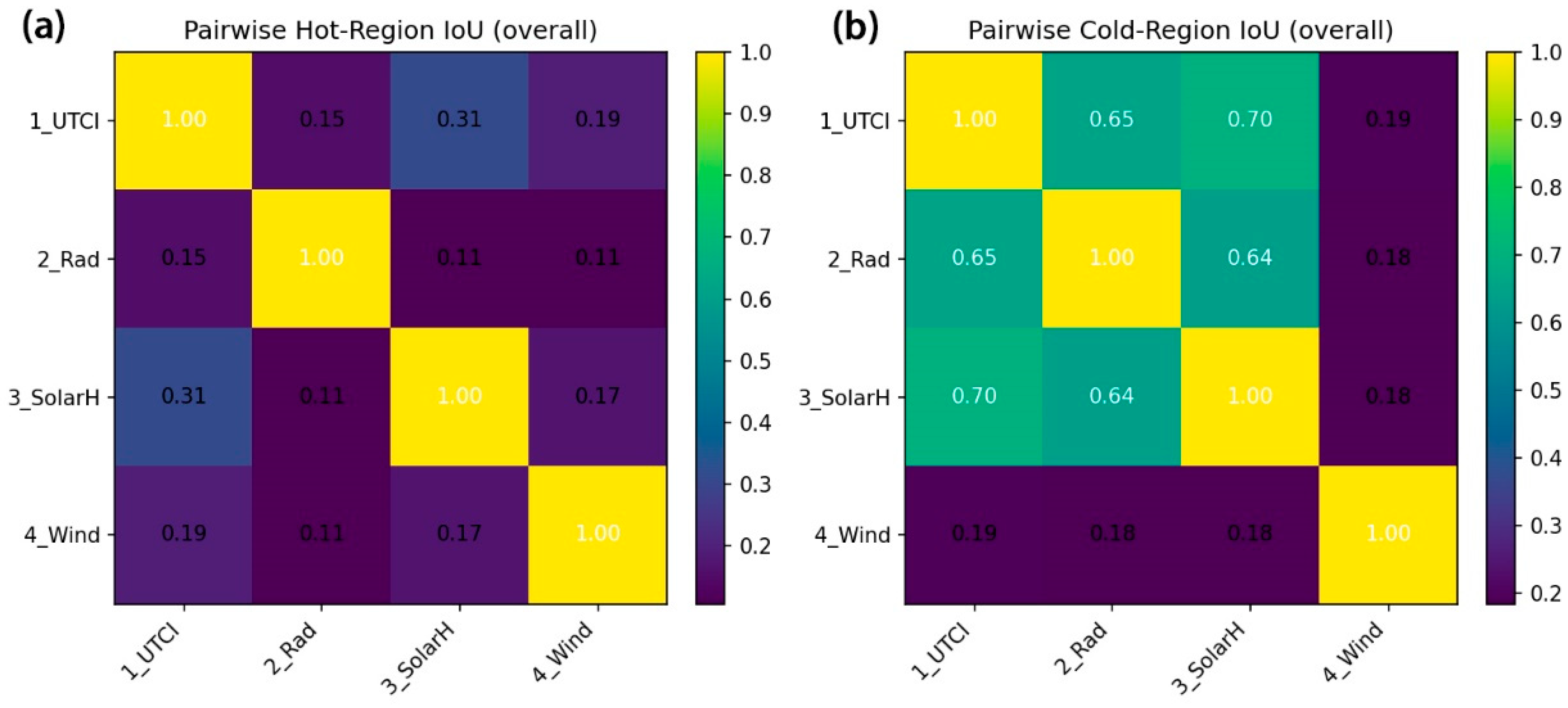
- A closed-loop evaluation suite that spans pixel, structural/regional, and cross-task synergy levels (RMSE/MAE/PSNR/SSIM; EOR and HIR/IoU_hot/IoU_cold; pairwise IoU, synergy/conflict and consensus count) to jointly verify numerical correctness and spatial semantic fidelity.
- (3)
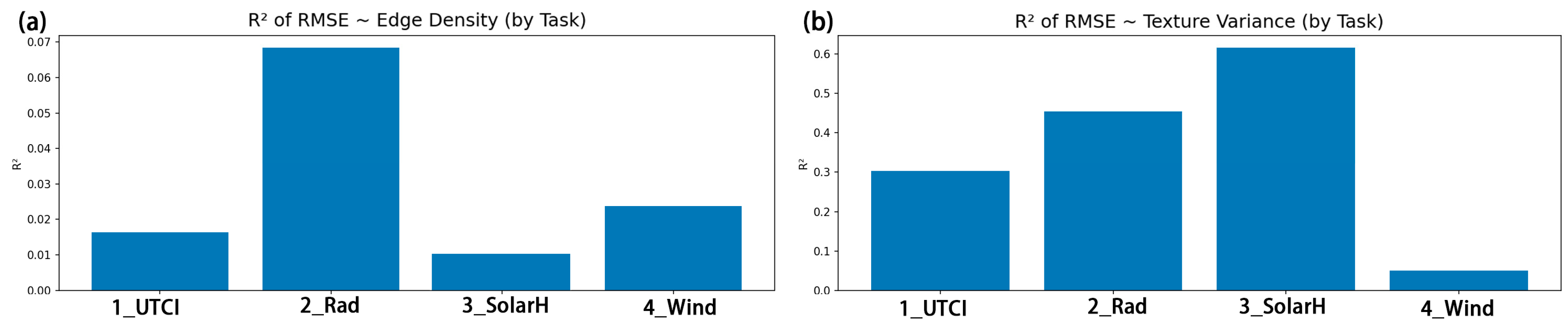
- A mechanistic interpretation of learnability, whereby statistical links from texture variance, edge density, and structural entropy to error reveal the sources of learning difficulty across targets.
- (4)
- Efficiency and reproducibility through the standardised reporting of total runtime, average per-epoch time, best/plateau epochs, and convergence trajectories, providing verifiable evidence on both accuracy and computational cost for engineering deployment.
3. Methodology
3.1. Research Framework and Overall Workflow
3.2. Study Area and Data Preparation
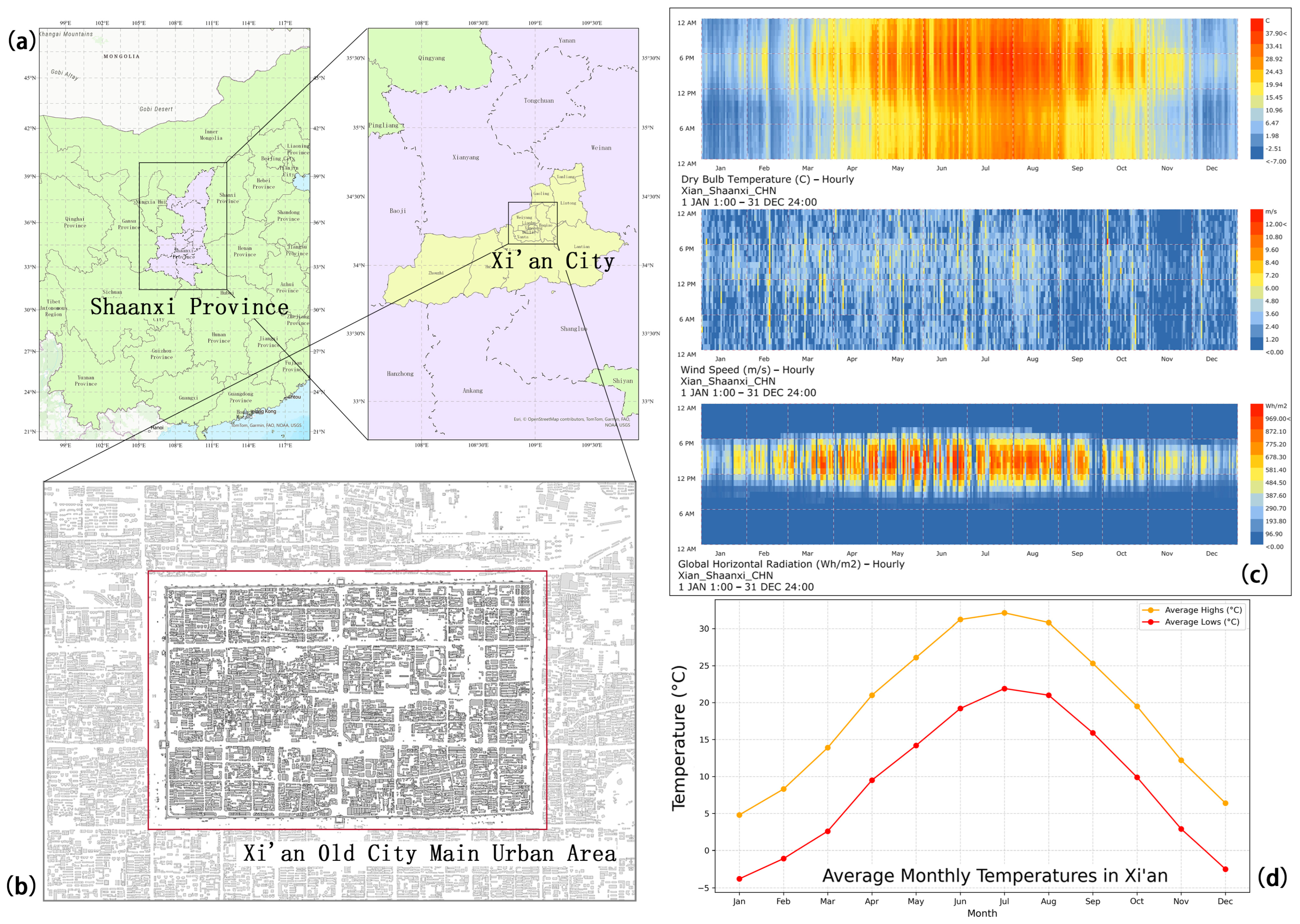
3.2.1. Study Area
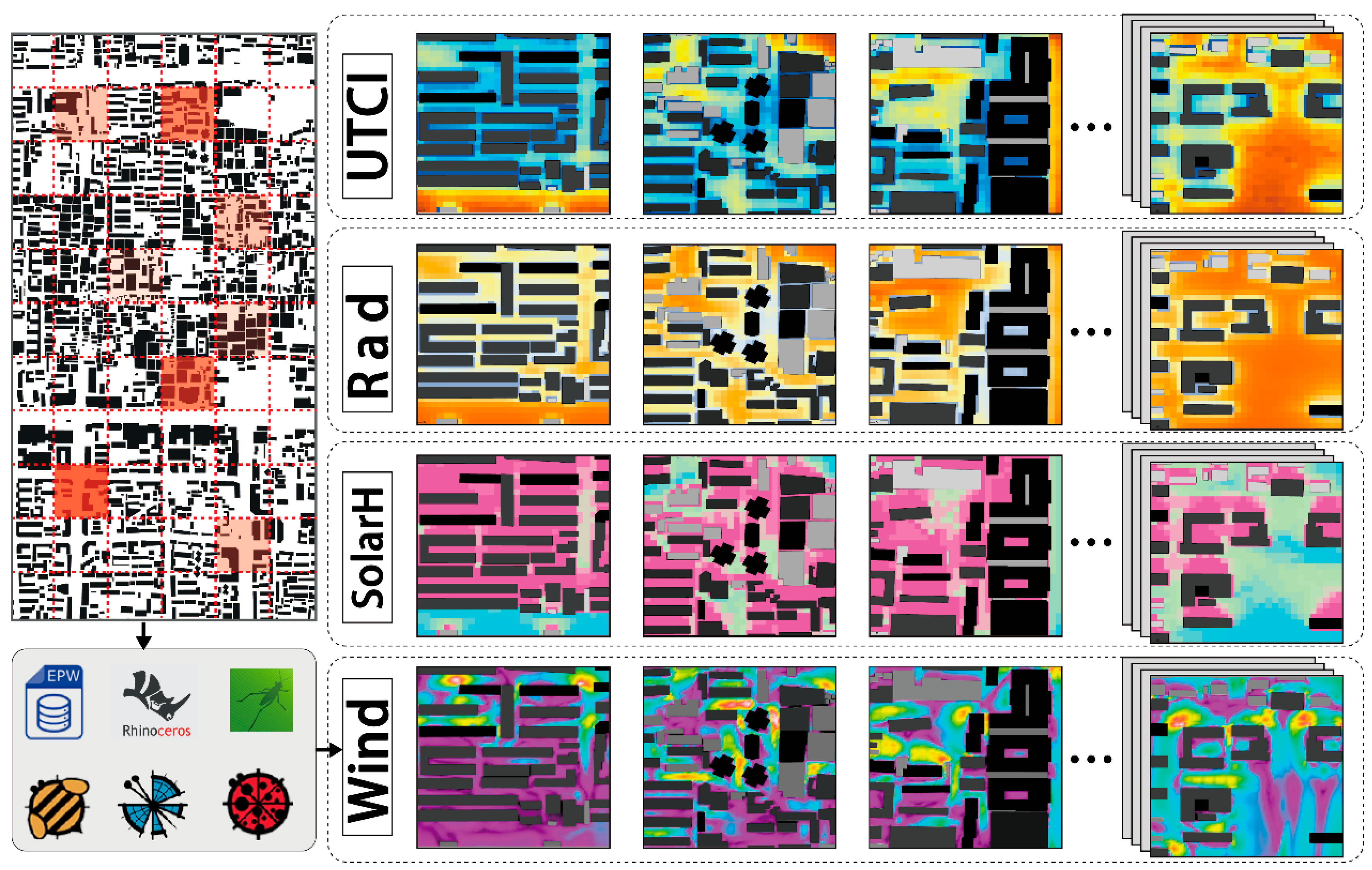
3.2.2. Physical Simulation of the Four Environmental Performance Targets
3.3. Model Architecture and Training Pipeline
3.3.1. Model Architecture and Modelling Strategy (pix2pix)
3.3.2. Data Preprocessing and Sample Construction
3.3.3. Training Parameters and Hyperparameter Settings
3.3.4. Hyperparameter Standardisation Across Targets
3.4. Comparison and Evaluation of Predictive Performance
- (1)
- Pixel-level metrics
- (2)
- Structural consistency metrics
- (3)
- Training efficiency and stability
- (4)
- Cross-task synergy and semantic learnability
- (5)
- Visualisation and reproducibility
4. Results and Analysis
4.1. Training Process and Efficiency Analysis
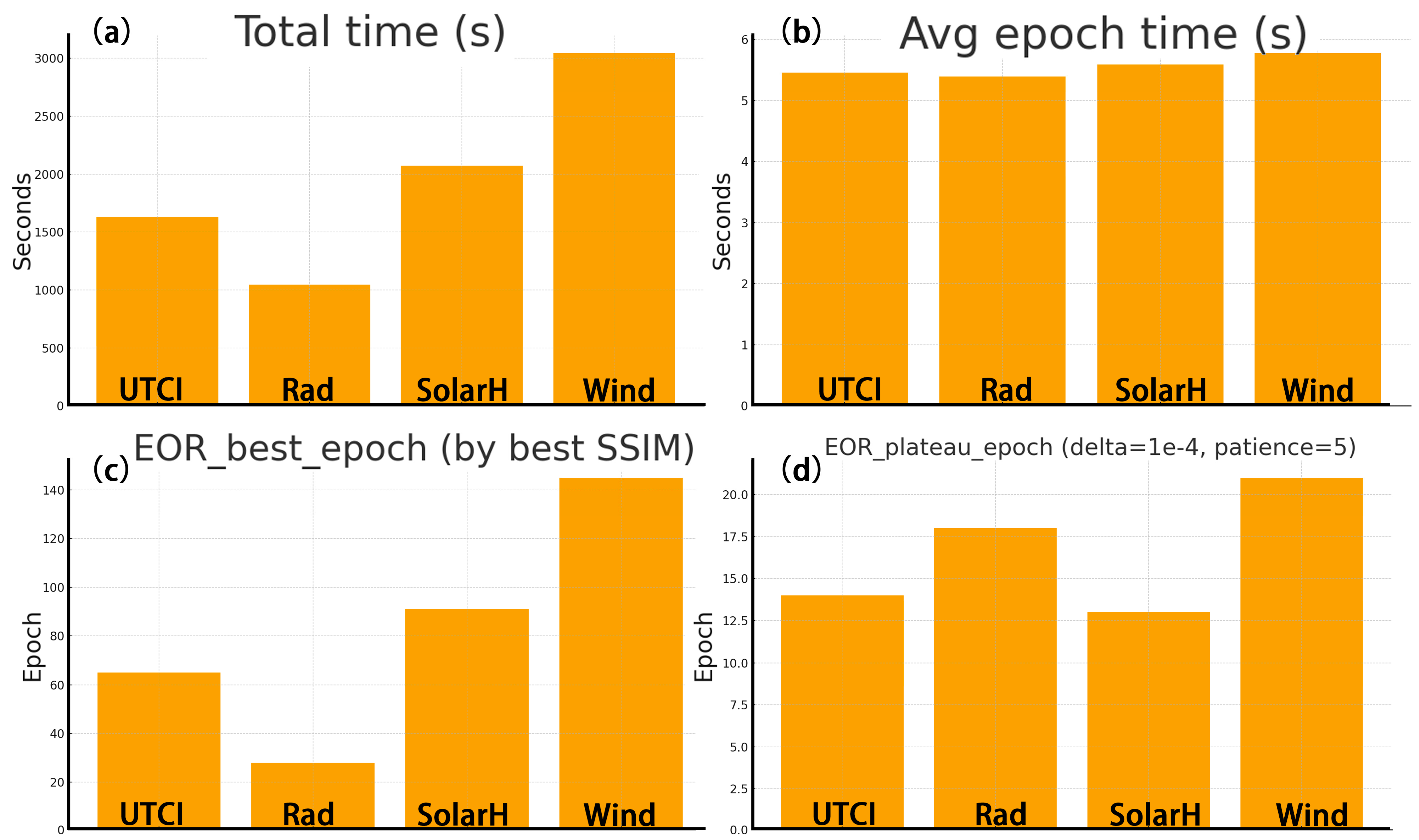
4.1.1. Training Time and Resource Consumption
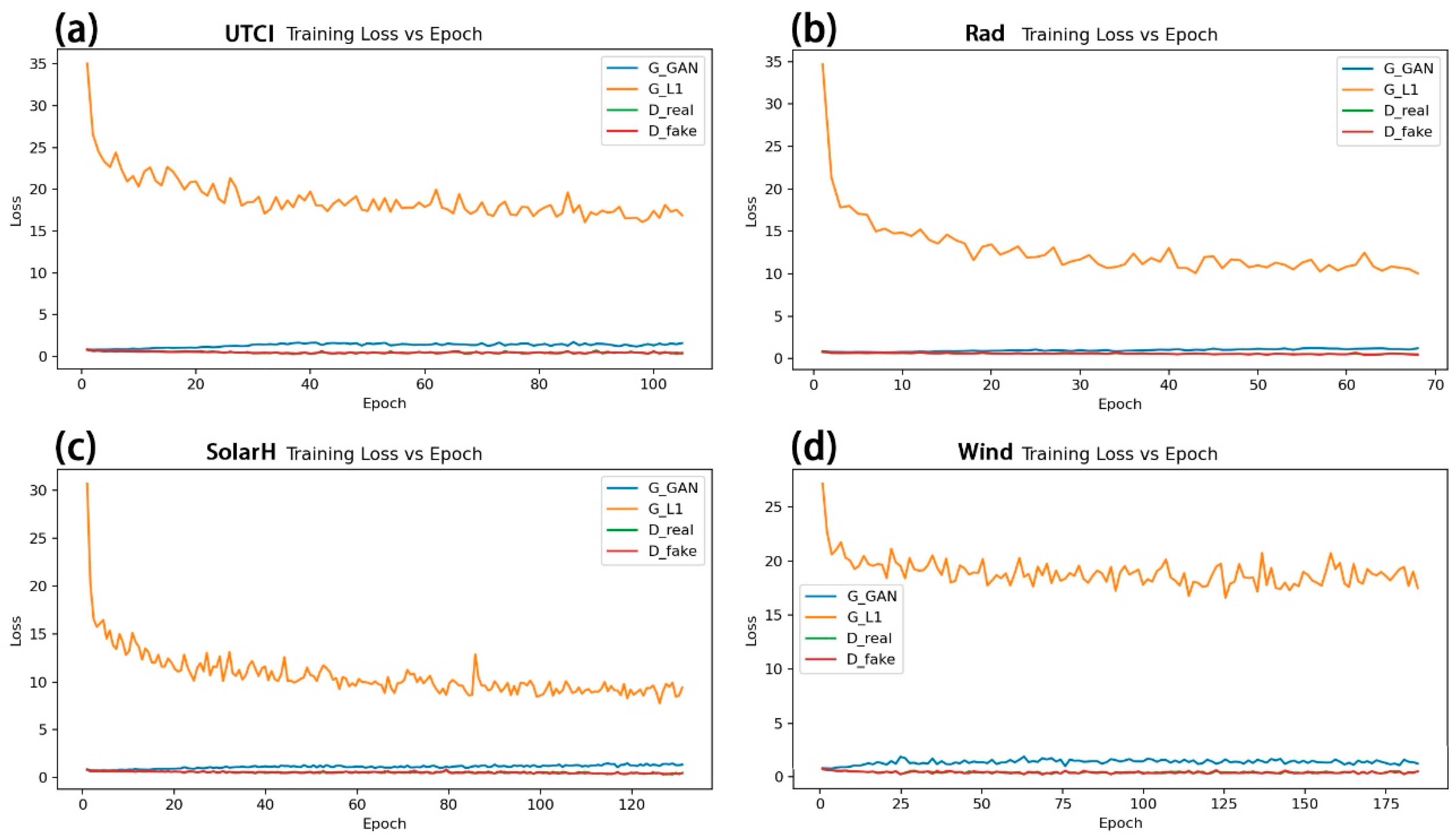
4.1.2. Convergence Speed and Training Stability
4.2. Multi-Target Prediction Results and Overall Performance
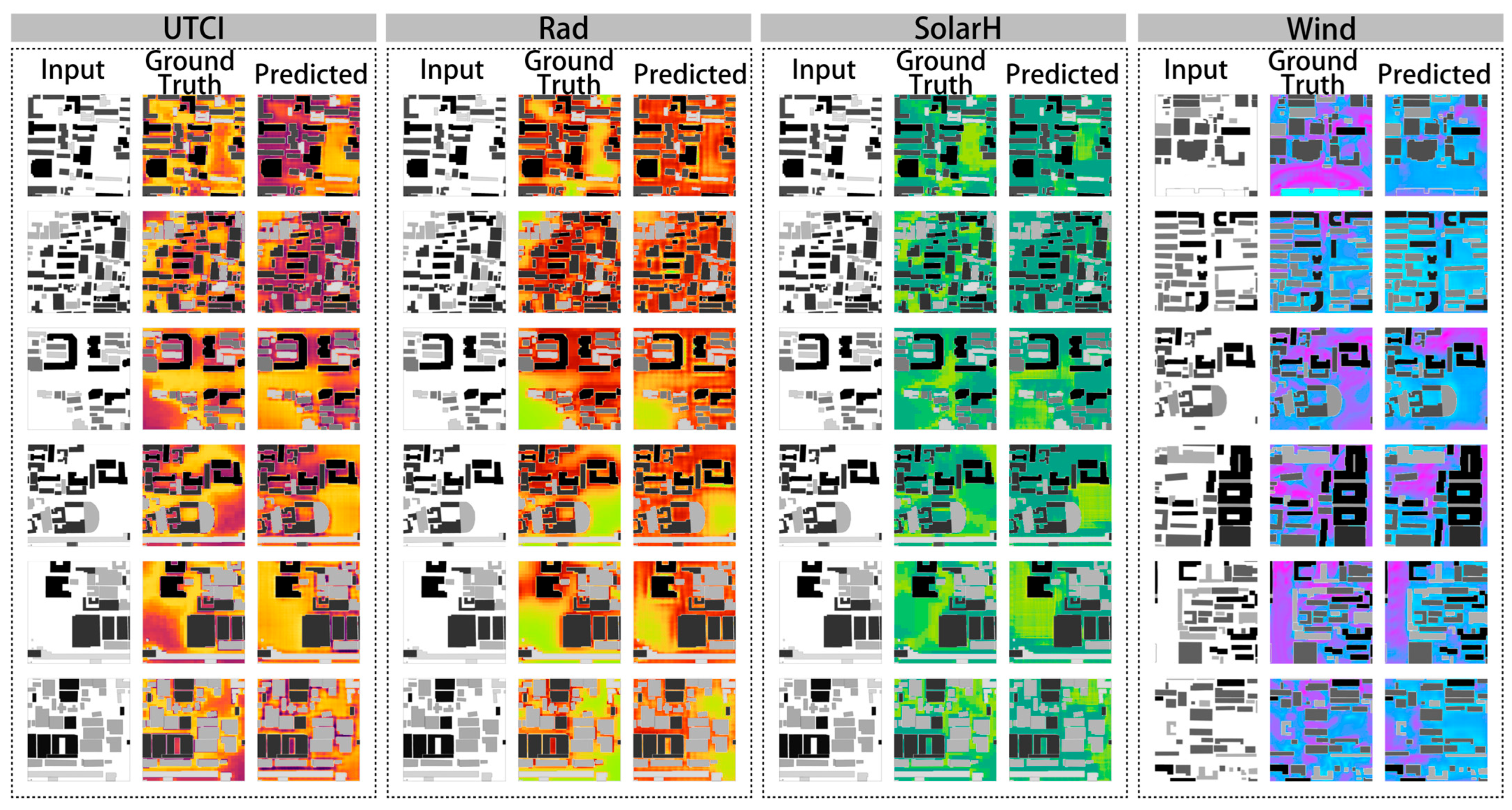
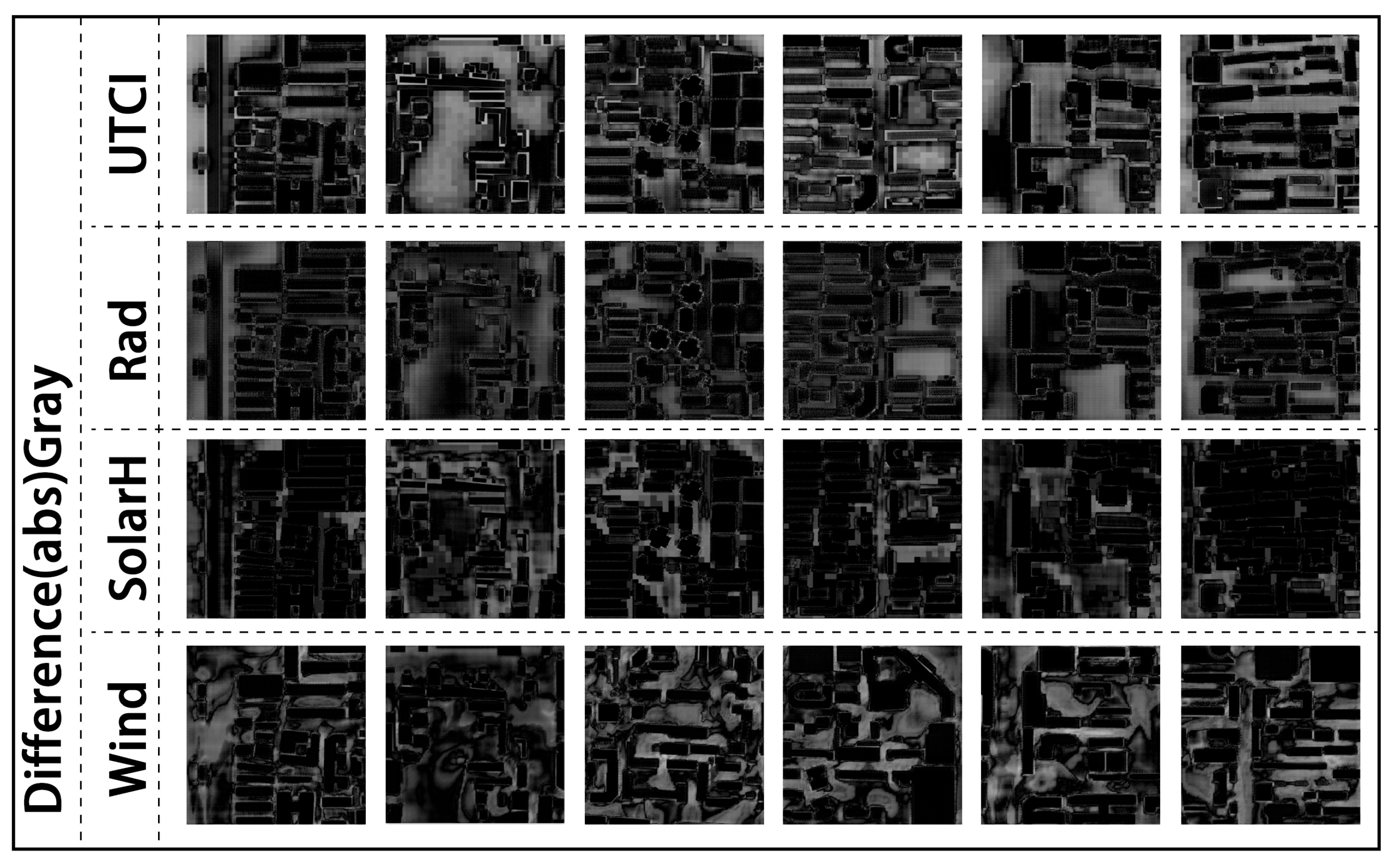
4.2.1. Prediction–Ground Truth Comparison and Structural Reconstruction
4.2.2. Visual Perceptual Quality Assessment
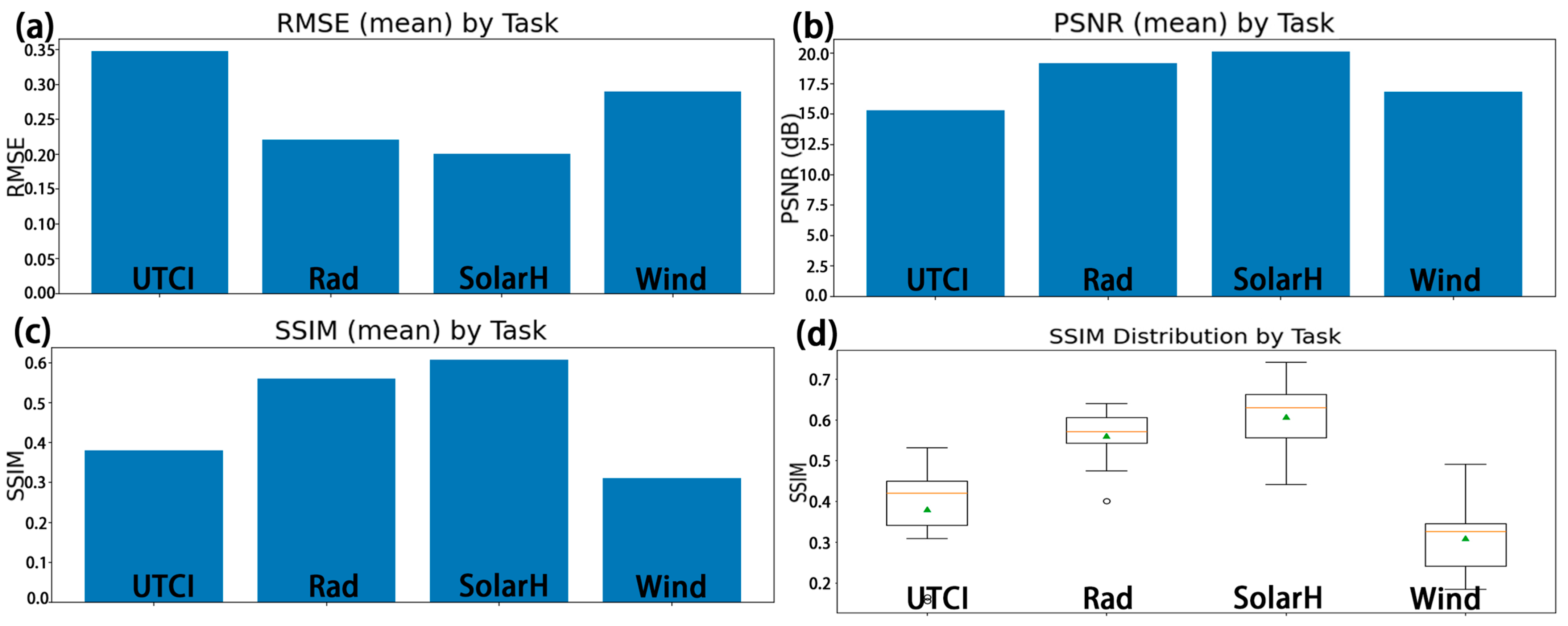
4.2.3. Quantitative Comparison of Accuracy Metrics
4.3. Mechanistic Explanation of Learnability Differences
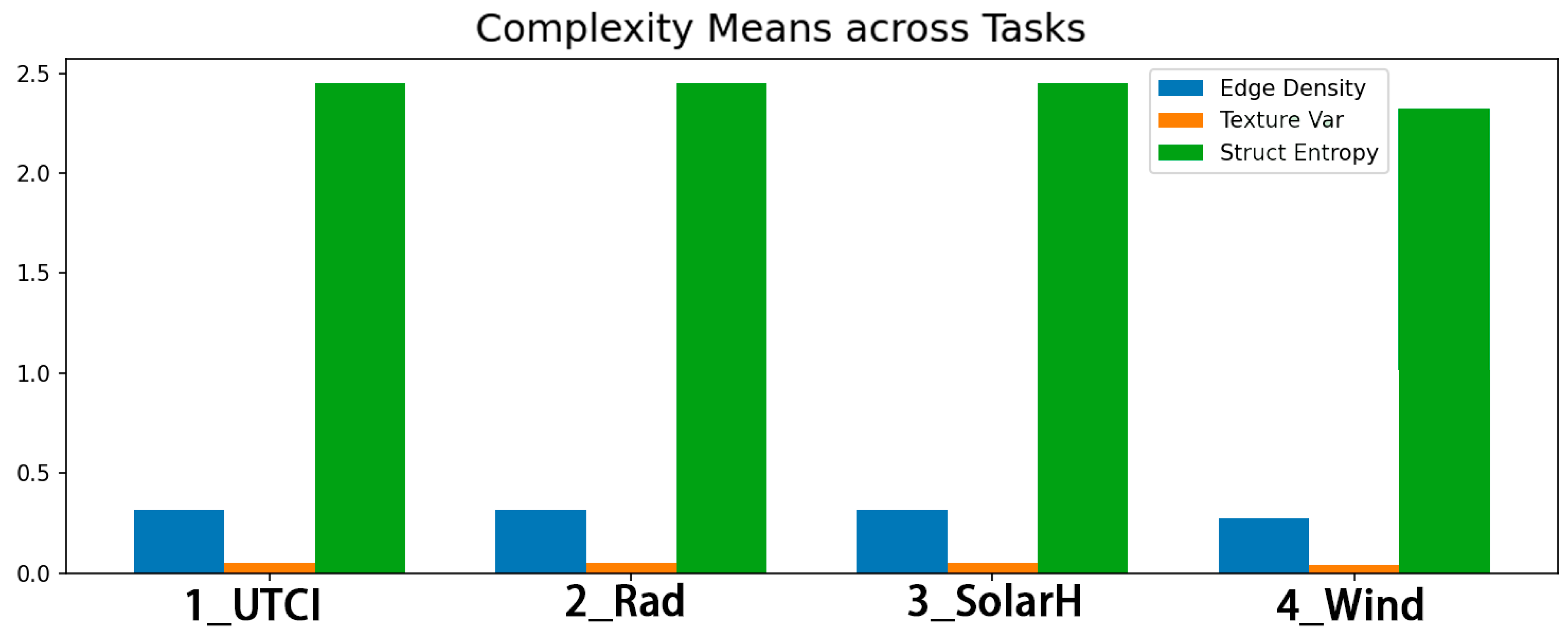
4.3.1. Definition of Semantic Complexity Metrics
4.3.2. Analysis of the Complexity–Error Relationship
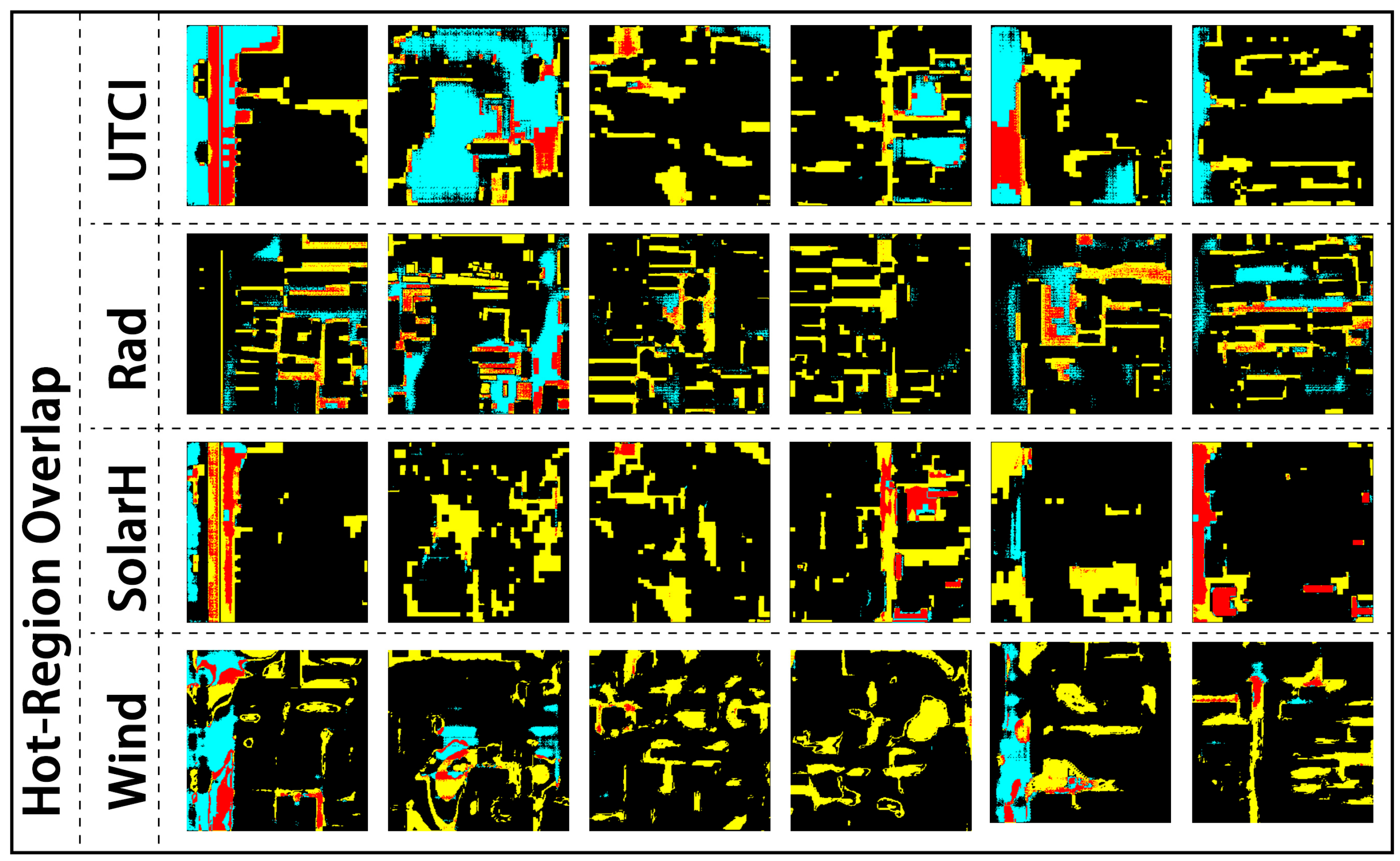
4.4. Spatial Structural Consistency and Semantic Recognition
4.5. Cross-Target Synergy and Semantic Conflict Identification
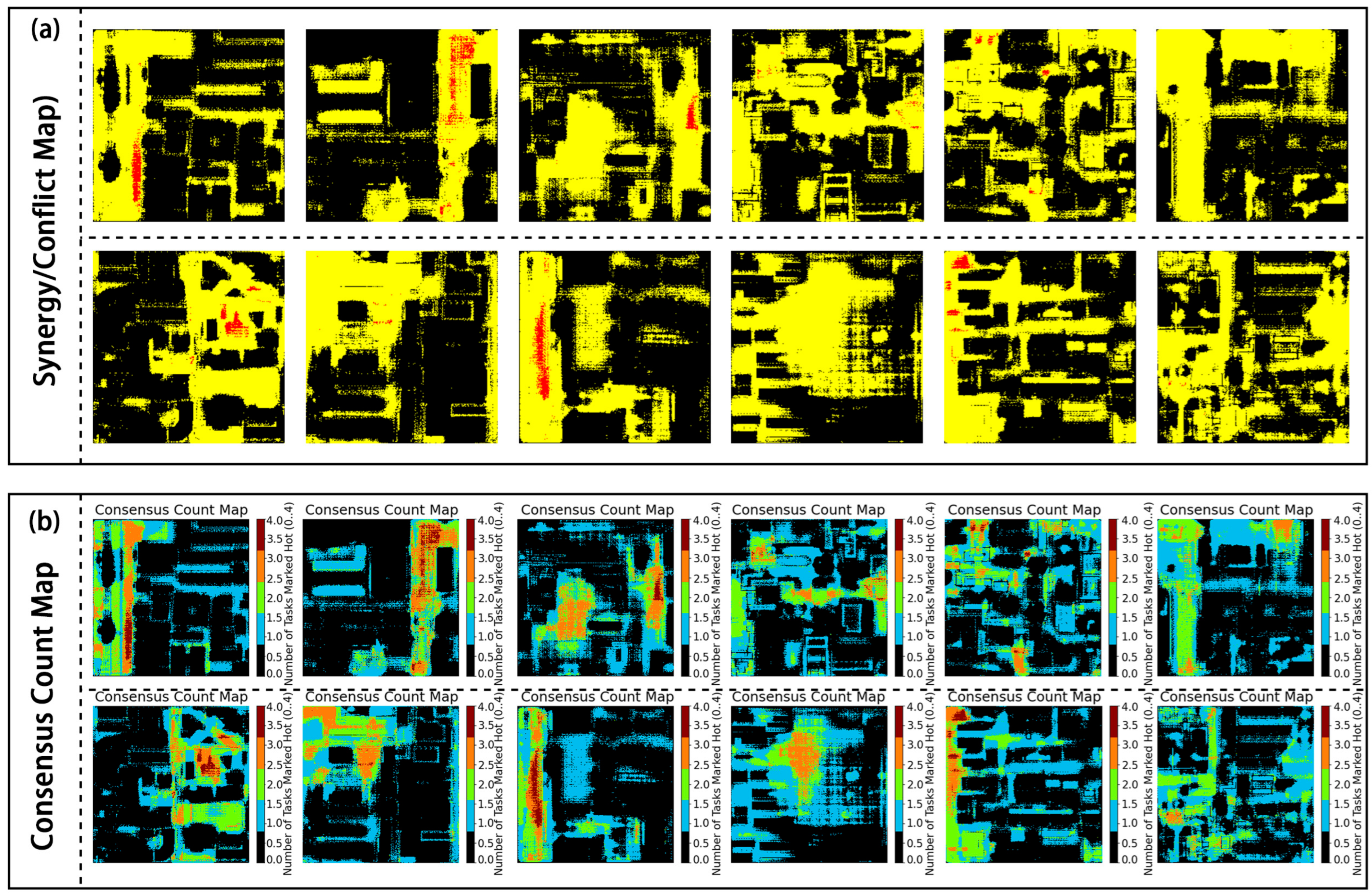
4.5.1. Synergistic Structure Identification: Analysis of Spatial Overlap Maps
4.5.2. Construction of Synergy Metrics and Quantitative Evaluation
5. Discussion
5.1. Comparison with Alternative Predictive Models
5.2. Predictability Hierarchy and Practical Implications
5.3. Limitations and Future Work
5.4. Technical Roadmap for Improving Wind Target Surrogates
6. Conclusions
Author Contributions
Funding
Institutional Review Board Statement
Informed Consent Statement
Data Availability Statement
Conflicts of Interest
Abbreviations
| CFD | Computational Fluid Dynamics |
| EOR | Edge Overlap Ratio |
| EPW | EnergyPlus Weather File |
| GAN | Generative Adversarial Networks |
| GHI | Global Horizontal Irradiance |
| IoU | Intersection Over Union |
| LIME | Local Interpretable Model-Agnostic Explanations |
| LPIPS | Learned Perceptual Image Patch Similarity |
| MAE | Mean Absolute Error |
| PDP | Partial Dependence Plot |
| PINN | Physics-Informed Neural Networks |
| PSNR | Peak Signal-to-Noise Ratio |
| Rad | Annual Global Solar Radiation |
| RMSE | Root Mean Square Error |
| SHAP | Shapley Additive Explanations |
| SolarH | Sunshine Duration |
| SSIM | Structural Similarity Index |
| UTCI | Universal Thermal Climate Index |
References
- Chen, L.; Huang, H.; Yao, D.; Yang, H.; Xu, S.; Liu, S. Construction of Urban Environmental Performance Evaluation System Based on Multivariate System Theory and Comparative Analysis: A Case Study of Chengdu-Chongqing Twin Cities, China. Int. J. Environ. Res. Public Health 2023, 20, 4515. [Google Scholar] [CrossRef] [PubMed]
- Peng, Y.; Peng, Z.; Feng, T.; Zhong, C.; Wang, W. Assessing comfort in urban public spaces: A structural equation model involving environmental attitude and perception. Int. J. Environ. Res. Public Health 2021, 18, 1287. [Google Scholar] [CrossRef]
- Huo, H.; Chen, F.; Geng, X.; Tao, J.; Liu, Z.; Zhang, W.; Leng, P. Simulation of the urban space thermal environment based on computational fluid dynamics: A comprehensive review. Sensors 2021, 21, 6898. [Google Scholar] [CrossRef]
- Li, W.; Xu, X.; Yao, J.; Chen, Q.; Sun, Z.; Makvandi, M.; Yuan, P.F. Natural ventilation cooling effectiveness classification for building design addressing climate characteristics. Sci. Rep. 2024, 14, 16168. [Google Scholar] [CrossRef] [PubMed]
- Calzolari, G.; Liu, W. Accelerating Large Eddy Simulations of urban airflow with Generative Adversarial Networks. Build. Environ. 2025, 286, 113622. [Google Scholar] [CrossRef]
- Zheng, L.; Lu, W. Urban micro-scale street thermal comfort prediction using a ‘graph attention network’model. Build. Environ. 2024, 262, 111780. [Google Scholar] [CrossRef]
- Luo, Z.; Huang, W. FloorplanGAN: Vector residential floorplan adversarial generation. Autom. Constr. 2022, 142, 104470. [Google Scholar] [CrossRef]
- Wang, L.; Liu, J.; Zeng, Y.; Cheng, G.; Hu, H.; Hu, J.; Huang, X. Automated building layout generation using deep learning and graph algorithms. Autom. Constr. 2023, 154, 105036. [Google Scholar] [CrossRef]
- Tan, C.; Zhong, X. A rapid wind velocity prediction method in built environment based on CycleGAN model. In Proceedings of the International Conference on Computational Design and Robotic Fabrication, Shanghai, China, 25–26 June 2022; Springer Nature: Singapore, 2022; pp. 253–262. [Google Scholar]
- Li, J.; Guo, F.; Chen, H. A study on urban block design strategies for improving pedestrian-level wind conditions: CFD-based optimization and generative adversarial networks. Energy Build. 2024, 304, 113863. [Google Scholar] [CrossRef]
- Quan, S.J. Urban-GAN: An artificial intelligence-aided computation system for plural urban design. Environ. Plan. B Urban Anal. City Sci. 2022, 49, 2500–2515. [Google Scholar] [CrossRef]
- Sun, C.; Zhou, Y.; Han, Y. Automatic generation of architecture facade for historical urban renovation using generative adversarial network. Build. Environ. 2022, 212, 108781. [Google Scholar] [CrossRef]
- Mokhtar, S.; Sojka, A.; Davila, C.C. Conditional generative adversarial networks for pedestrian wind flow approximation. In Proceedings of the 11th Annual Symposium on Simulation for Architecture and Urban Design, Virtual, 25–27 May 2020; pp. 1–8. [Google Scholar]
- Milla-Val, J.; Montañés, C.; Fueyo, N. Adversarial image-to-image model to obtain highly detailed wind fields from mesoscale simulations in urban environments. Build. Environ. 2024, 266, 112123. [Google Scholar] [CrossRef]
- Lu, Y.; Li, X.; Wu, S.; Wang, Y.; Qiu, W.; Chen, D.; Li, Y. SolarGAN for Meso-Level Solar Radiation Prediction at the Urban Scale: A Case Study in Boston. Remote Sens. 2024, 16, 4524. [Google Scholar] [CrossRef]
- Zhang, Y.; Schlueter, A.; Waibel, C. SolarGAN: Synthetic annual solar irradiance time series on urban building facades via Deep Generative Networks. Energy AI 2023, 12, 100223. [Google Scholar] [CrossRef]
- Huang, C.; Zhang, G.; Yao, J.; Wang, X.; Calautit, J.K.; Zhao, C.; An, N.; Peng, X. Accelerated environmental performance-driven urban design with generative adversarial network. Build. Environ. 2022, 224, 109575. [Google Scholar] [CrossRef]
- Zhu, Y.; Wang, Y.; Li, J.; Song, Q.; Chen, D.; Qiu, W. BikeshareGAN: Predicting dockless bike-sharing demand based on satellite image. J. Transp. Geogr. 2025, 126, 104245. [Google Scholar] [CrossRef]
- Wu, A.N.; Biljecki, F. InstantCITY: Synthesising morphologically accurate geospatial data for urban form analysis, transfer, and quality control. ISPRS J. Photogramm. Remote Sens. 2023, 195, 90–104. [Google Scholar] [CrossRef]
- He, Q.; Li, Z.; Gao, W.; Chen, H.; Wu, X.; Cheng, X.; Lin, B. Predictive models for daylight performance of general floorplans based on CNN and GAN: A proof-of-concept study. Build. Environ. 2021, 206, 108346. [Google Scholar] [CrossRef]
- Cheng, B.; Girshick, R.; Dollár, P.; Berg, A.C.; Kirillov, A. Boundary IoU: Improving object-centric image segmentation evaluation. In Proceedings of the IEEE/CVF Conference on Computer Vision and Pattern Recognition, Virtual, 19–25 June 2021; pp. 15334–15342. [Google Scholar]
- Zhang, R.; Isola, P.; Efros, A.A.; Shechtman, E.; Wang, O. The unreasonable effectiveness of deep features as a perceptual metric. In Proceedings of the IEEE Conference on Computer Vision and Pattern Recognition, Salt Lake City, UT, USA, 18–23 June 2018; pp. 586–595. [Google Scholar]
- Ostmeier, S.; Axelrod, B.; Isensee, F.; Bertels, J.; Mlynash, M.; Christensen, S.; Lansberg, M.G.; Albers, G.W.; Sheth, R.; Verhaaren, B.F.; et al. USE-Evaluator: Performance metrics for medical image segmentation models supervised by uncertain, small or empty reference annotations in neuroimaging. Med. Image Anal. 2023, 90, 102927. [Google Scholar] [CrossRef]
- Darvishvand, L.; Kamkari, B.; Huang, M.J.; Hewitt, N.J. A systematic review of explainable artificial intelligence in urban building energy modeling: Methods, applications, and future directions. Sustain. Cities Soc. 2025, 128, 106492. [Google Scholar] [CrossRef]
- Córdoba Hernández, R.; Camerin, F. Assessment of ecological capacity for urban planning and improving resilience in the European framework: An approach based on the Spanish case. Cuad. Investig. Geográfica 2023, 49, 119–142. [Google Scholar] [CrossRef]
- Ren, W.; Zhao, J.; Ma, X.; Wang, X. Analysis of the spatial differentiation and scale effects of the three-dimensional architectural landscape in Xi’an, China. PLoS ONE 2021, 16, e0261846. [Google Scholar] [CrossRef]
- Liu, J.; Li, J.; Gao, Z.; Yang, M.; Qin, K.; Yang, X. Ecosystem services insights into water resources management in China: A case of Xi’an city. Int. J. Environ. Res. Public Health 2016, 13, 1169. [Google Scholar] [CrossRef]
- Salamone, F.; Belussi, L.; Currò, C.; Danza, L.; Ghellere, M.; Guazzi, G.; Lenzi, B.; Megale, V.; Meroni, I. Integrated method for personal thermal comfort assessment and optimization through users’ feedback, IoT and machine learning: A case study. Sensors 2018, 18, 1602. [Google Scholar] [CrossRef]
- Chen, T.; Tan, L. Multiobjective optimization of external shading for west facing university dormitories in Kunming considering solar radiation and daylighting. Sci. Rep. 2025, 15, 21876. [Google Scholar] [CrossRef]
- Wu, Z.; Xu, Y.; Wang, Z. Multi-objective optimization of energy, view, daylight and thermal comfort for building’s fenestration and shading system in hot-humid climates. PLoS ONE 2025, 20, e0325290. [Google Scholar] [CrossRef] [PubMed]
- Burgstall, A.; Casanueva, A.; Kotlarski, S.; Schwierz, C. Heat warnings in Switzerland: Reassessing the choice of the current heat stress index. Int. J. Environ. Res. Public Health 2019, 16, 2684. [Google Scholar] [CrossRef] [PubMed]
- Alkhatib, H.; Norton, B.; O’Sullivan, D.T.J.; Lemarchand, P. Calibration of solar pyranometers for accurate solar irradiance measurements: A data set from the pre-and post-calibration process. Data Brief 2025, 59, 111402. [Google Scholar] [CrossRef]
- Hidalgo-García, D.; Rezapouraghdam, H. Variability of heat stress using the UrbClim climate model in the city of Seville (Spain): Mitigation proposal. Environ. Monit. Assess. 2023, 195, 1164. [Google Scholar] [CrossRef]
- Guo, M.; Cao, Y.; Wang, P.; Zhao, L.; Li, Y. A generation and recommendation algorithm for high-rise building layout. South Archit. 2022, 9, 96–106. (In Chinese) [Google Scholar] [CrossRef]
- Yang, H.; Zhao, N.; Yang, Q.; Xu, H. Preliminary study on generative design of green high-rise office buildings based on multi-objective optimization. In Proceedings of the National Symposium on Digital Technology Teaching and Research in Architecture (China), Wuhan, China, 18–19 September 2021. (In Chinese). [Google Scholar]
- Chen, G.; Rong, L.; Zhang, G. Unsteady-state CFD simulations on the impacts of urban geometry on outdoor thermal comfort within idealized building arrays. Sustain. Cities Soc. 2021, 74, 103187. [Google Scholar] [CrossRef]
- Kastner, P.; Dogan, T. Eddy3D: A toolkit for decoupled outdoor thermal comfort simulations in urban areas. Build. Environ. 2022, 212, 108639. [Google Scholar] [CrossRef]
- Ding, X.; Zhao, Y.; Strebel, D.; Fan, Y.; Ge, J.; Carmeliet, J. A WRF-UCM-SOLWEIG framework for mapping thermal comfort and quantifying urban climate drivers: Advancing spatial and temporal resolutions at city scale. Sustain. Cities Soc. 2024, 112, 105628. [Google Scholar] [CrossRef]






| Aspect | Setting (Common to UTCI, Rad, SolarH, Wind) |
|---|---|
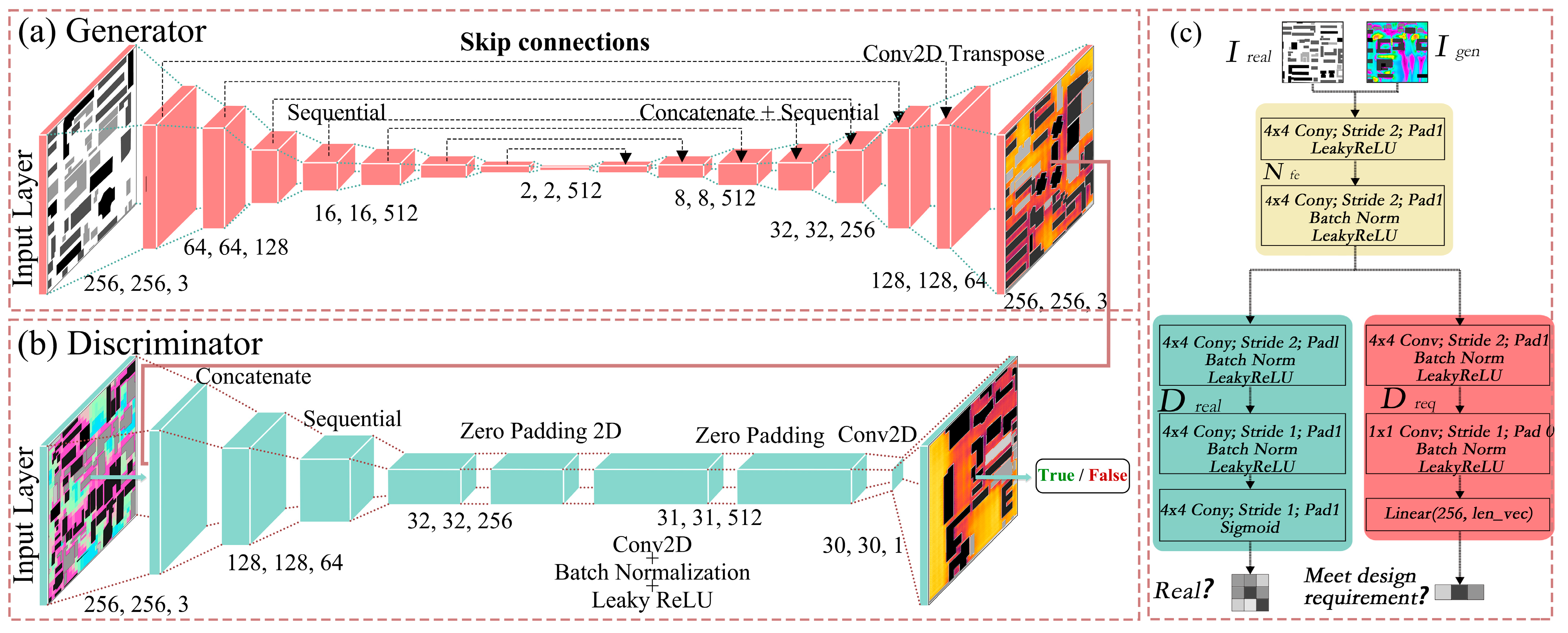
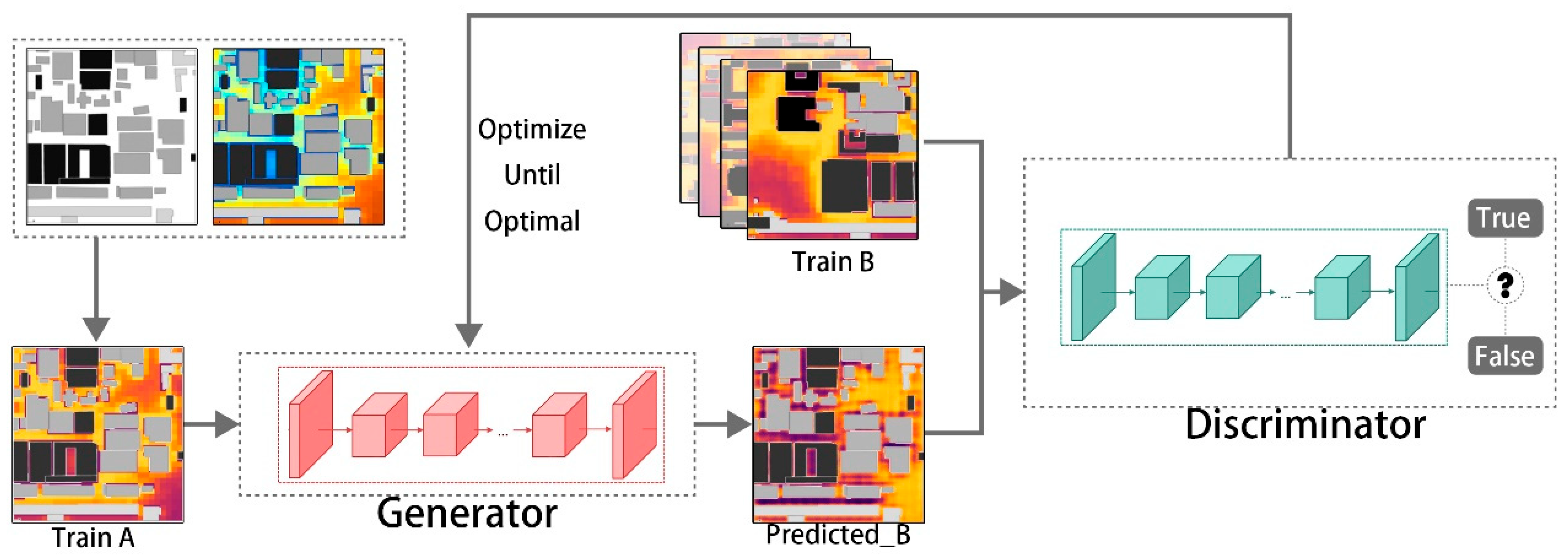
| Generator architecture | U-Net encoder–decoder with eight levels and skip connections |
| Discriminator architecture | 70 × 70 PatchGAN |
| Input size | 256 × 256 single-channel morphology raster |
| Output size | 256 × 256 single-channel environmental field |
| Optimiser | Adam (β1 = 0.5, β2 = 0.999) |
| Initial learning rate | 2 × 10⁻⁴, linearly decayed in later epochs |
| Batch size | 1 |
| L1 loss weight λ | High value, identical for all targets (emphasising numerical accuracy) |
| Loss function | Adversarial loss + λ·L1 |
| Data split | 70%/15%/15% (train/validation/test) |
| Normalisation scheme | Per-target min–max scaling to [0, 1] |
| Data augmentation | Translation and random cropping |
| Early stopping/model selection | Best validation SSIM/lowest RMSE checkpoint retained |
Disclaimer/Publisher’s Note: The statements, opinions and data contained in all publications are solely those of the individual author(s) and contributor(s) and not of MDPI and/or the editor(s). MDPI and/or the editor(s) disclaim responsibility for any injury to people or property resulting from any ideas, methods, instructions or products referred to in the content. |
© 2025 by the authors. Licensee MDPI, Basel, Switzerland. This article is an open access article distributed under the terms and conditions of the Creative Commons Attribution (CC BY) license (https://creativecommons.org/licenses/by/4.0/).
Share and Cite
Wang, C.; Wang, S.; Ren, S.; Luo, W.; Yi, W.; Qing, M. GAN Predictability for Urban Environmental Performance: Learnability Mechanisms, Structural Consistency, and Efficiency Bounds. Atmosphere 2025, 16, 1403. https://doi.org/10.3390/atmos16121403
Wang C, Wang S, Ren S, Luo W, Yi W, Qing M. GAN Predictability for Urban Environmental Performance: Learnability Mechanisms, Structural Consistency, and Efficiency Bounds. Atmosphere. 2025; 16(12):1403. https://doi.org/10.3390/atmos16121403
Chicago/Turabian StyleWang, Chenglin, Shiliang Wang, Sixuan Ren, Wenjing Luo, Wenxin Yi, and Mei Qing. 2025. "GAN Predictability for Urban Environmental Performance: Learnability Mechanisms, Structural Consistency, and Efficiency Bounds" Atmosphere 16, no. 12: 1403. https://doi.org/10.3390/atmos16121403
APA StyleWang, C., Wang, S., Ren, S., Luo, W., Yi, W., & Qing, M. (2025). GAN Predictability for Urban Environmental Performance: Learnability Mechanisms, Structural Consistency, and Efficiency Bounds. Atmosphere, 16(12), 1403. https://doi.org/10.3390/atmos16121403