Abstract
Amid accelerating global warming, surface albedo is a key indicator and regulator of how Earth’s surface reflects solar radiation, directly affecting the planetary radiation balance and climate. In this paper, we combined MODIS shortwave albedo (MCD43A3, 500 m), MODIS NDVI (MOD13A3, 1 km; NDVI = normalized difference vegetation index) and 1-km gridded meteorological data to analyze the spatiotemporal variations of surface albedo across China during 2001–2020 at a gridded scale. Temporal trends were quantified with the Theil–Sen slope and the Mann–Kendall test, and the seasonal contributions of NDVI, air temperature, and precipitation were assessed with a geographically and temporally weighted regression (GTWR) model. China’s mean annual shortwave albedo was 0.186 and showed a significant decline. Attribution indicates NDVI is the dominant driver (~48% of total change), followed by temperature (~27%) and precipitation (~25%). Seasonally, NDVI explains ~43.94–52.02% of the variation, ~26.81–28.07% of the temperature, and ~21.17–28.57% of the precipitation. Clear spatial patterns emerge. In high-latitude and high-elevation snow-dominated regions, albedo tends to decrease with warmer conditions and increase with greater precipitation. In much of eastern China, albedo is generally positively associated with temperature and negatively with precipitation. NDVI—reflecting vegetation greenness and canopy structure—captures the effects of vegetation greening, canopy densification, and land-cover change that reduce surface reflectivity by enhancing shortwave absorption. Temperature and precipitation affect albedo primarily by regulating vegetation growth. This study goes beyond correlation mapping by combining robust trend detection (Theil–Sen + MK) with GTWR to resolve seasonally varying, non-stationary controls on albedo at 1-km over 20 years. By explicitly separating snow-covered and snow-free conditions, we quantify how NDVI, temperature, and precipitation contributions shift across climate zones and seasons, providing a reproducible, national-scale attribution that can inform ecosystem restoration and land-surface radiative management.
1. Introduction
Surface albedo, defined as the ratio of reflected to incoming solar radiation at the Earth’s surface, is a key indicator of the surface’s capacity to reflect solar energy [1]. It plays a vital role in global energy balance, weather forecasting, and climate change research [2]. Recognized as one of the essential climate variables (ECVs) by the global climate observing system (GCOS) [3], albedo quantifies the radiative interactions between the land surface and the atmosphere [4], serving as an important radiative forcing factor within the climate system [5]. Its applications extend across diverse domains, including sea-ice dynamics monitoring, heatwave analysis, urban heat island assessment, and studies of climate aridification [6]. Some studies suggest that, under certain scenarios and spatiotemporal scales, changes in surface albedo can exert temperature effects comparable to—or even exceeding—those attributed to greenhouse gases; however, the magnitude is highly context-dependent [7], with increases in albedo partially offsetting the warming effects induced by rising CO2 [8] concentrations since the Industrial Revolution [9]. This parameter is jointly influenced by natural processes—such as vegetation phenology, snow cover, and variations in solar zenith angle—as well as human activities, including deforestation, urbanization, desertification control, and land degradation [10]. Consequently, surface albedo is often employed as a key input variable in biogeophysical feedback studies and regional climate simulations, providing critical insights into how changes in albedo affect the climate system [11].
In recent years, with the growing emphasis on understanding the mechanisms underlying changes in environmental parameters such as land surface temperature and soil moisture [12], increasing attention has been directed toward the spatiotemporal dynamics of surface albedo and its climatic effects [13]. Across different climatic zones and land-use types, surface albedo exhibits pronounced spatiotemporal heterogeneity and distinct seasonal fluctuations [14]. For example, Xu et al. found that the annual mean surface albedo across China exhibited a gradual decline during 2003–2017, while increasing with both elevation and latitude [15]. Zhao et al. reported a spatial pattern of higher albedo in the west and lower values in the east within the Sanjiangyuan region, and further explored its preliminary associations with climatic factors [16]. Multiple studies have emphasized that changes in surface albedo are driven by a combination of factors and display significant regional heterogeneity: Liu et al. suggested that albedo during the growing season in semi-arid regions is strongly influenced by vegetation indices [17]; Chen et al. observed that the decline in albedo on the Tibetan Plateau is closely related to glacier retreat, snow cover reduction, and vegetation improvement [18]; and Yao et al., comparing permafrost and seasonally frozen soil regions, indicated that albedo decreases with increasing solar zenith angle, while precipitation also acts as an important influencing factor [19]. Overall, variations in surface albedo result from the combined effects of solar zenith angle, underlying surface characteristics, and meteorological conditions.
Although previous studies have revealed the multifactorial mechanisms and spatial differentiation patterns of surface albedo, several limitations remain [20]. Most analyses have been confined to statistical correlations, lacking a systematic characterization of the spatiotemporal non-stationarity of driving factors [21]. The response mechanisms of albedo under different surface conditions (e.g., snow-covered versus snow-free) have not been sufficiently quantified [22]. Moreover, the relative contributions of driving factors such as Normalized Difference Vegetation Index (NDVI), temperature, and precipitation across seasons, as well as their regional specificity, remain unclear. In addition, many prior investigations have been restricted to local areas or relatively short time series, with a scarcity of nationwide, long-term, and high-consistency attribution analyses [23]. These limitations constrain a deeper understanding of the feedback mechanisms between surface albedo and climate.
In examining the spatiotemporal patterns and driving mechanisms of surface albedo across China, the integrated application of the Theil–Sen slope estimator, MK significance test, and GTWR model demonstrates considerable theoretical value and methodological innovation. The Theil–Sen estimator provides a robust quantification of long-term albedo change rates, effectively minimizing the influence of outliers and offering reliable evidence for identifying regions with increasing or decreasing albedo trends nationwide. As a non-parametric statistical approach, the MK test further evaluates the monotonicity and significance of these trends, thereby ensuring that the temporal variations of surface albedo are both directionally and statistically meaningful. Building upon these results, the integration of spatial autocorrelation analysis, hotspot detection, and centroid migration techniques allows for the identification of spatial clustering features and evolutionary trajectories of albedo change, achieving a coherent understanding of temporal trends and spatial structures. More innovatively, the incorporation of the GTWR model overcomes the spatial stationarity assumption inherent in traditional global regression approaches by simultaneously considering both spatial and temporal non-stationarity. This enables a dynamic characterization of how various driving factors—such as vegetation greenness (NDVI), air temperature, precipitation, and land use types—affect surface albedo variations across different climatic zones, geomorphic units, and regions with varying human activity intensities. Compared with traditional multiple linear regression or geographically weighted regression (GWR), the GTWR model not only reveals spatial heterogeneity but also captures the temporal evolution of factor effects, thereby deepening the understanding of the coupled spatiotemporal mechanisms underlying albedo variability. Internationally, greater emphasis has been placed on methodological innovation and model comparison, leading to the development of advanced variants such as multi-scale geographically weighted regression (MGWR), generalized GTWR (GGTWR), and geographically and temporally weighted quantile regression (GTQR), which enhance the capacity to capture nonlinearity and multi-scale effects. Overall, the application of these methods in this study enables the high-precision identification of long-term trends and significance patterns of surface albedo while constructing a comprehensive, multi-factor, multi-scale, and temporally dynamic framework for interpreting its driving mechanisms at the national scale. This methodological framework provides a novel quantitative pathway for assessing the effectiveness of ecological restoration projects, understanding land–atmosphere radiative feedbacks, and optimizing regional surface energy management under changing climatic conditions.
This study utilizes MCD43A3 surface albedo data, MOD13A3 vegetation index data, and 1 km resolution meteorological datasets for the period 2001–2020. Following consistent quality assessment (QA) and monthly data alignment, long-term pixel-level trends were identified using Theil–Sen trend analysis combined with the Mann–Kendall significance test. Geographically and temporally weighted regression (GTWR) was then applied to quantify the spatiotemporal heterogeneous effects of NDVI, temperature, and precipitation. Notably, by distinguishing between snow-covered and snow-free conditions, the relative contributions of each factor across different seasons were evaluated. The results indicate an overall gradual decline in national shortwave surface albedo, with NDVI serving as the primary driver (seasonal contribution ranging from approximately 44% to 52%), while the impacts of temperature and precipitation exhibit significant regional variability. Compared with prior studies that focused on local areas or single seasons, our contribution is threefold: (i) a national, 1-km, 2001–2020 albedo trend baseline with robust non-parametric estimators; (ii) a seasonally resolved GTWR attribution that captures spatiotemporal non-stationarity of NDVI/temperature/precipitation effects under snow-covered vs. snow-free regimes; and (iii) a set of region–season action implications (e.g., cryosphere monitoring in alpine zones; cropping/urban surface management in monsoon regions). These advances strengthen causal interpretation beyond simple correlations and provide a transferable template for other large, heterogeneous territories.
2. Materials and Methods
2.1. Study Area
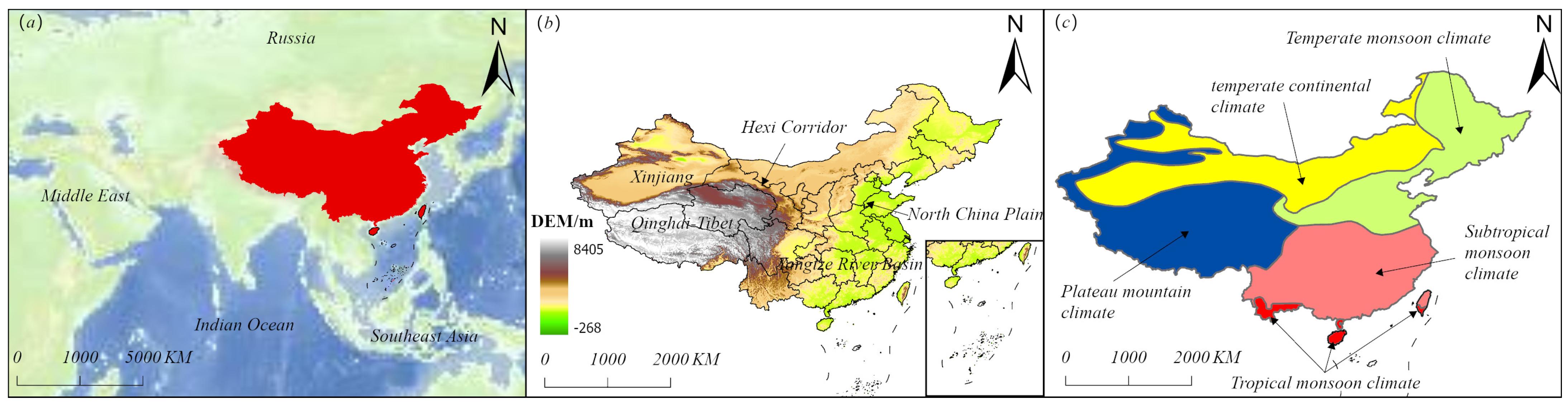
The study area encompasses the entirety of China (73°40′–135°05′ E, 3°51′–53°33′ N), with a terrestrial area of approximately 9.6 million km2 and a territorial sea area of about 4.73 million km2 (Figure 1), making it the third-largest country in the world by area. The region spans approximately 5200 km from east to west and 5500 km from north to south, covering five time zones (UTC + 5 to UTC + 9). China’s topography exhibits a distinct three-step staircase pattern: the first step is the Qinghai–Tibet Plateau (average elevation above 4000 m), including the Himalayas and the Kunlun Mountains; the second step consists of the Inner Mongolia Plateau, Loess Plateau, Yunnan–Guizhou Plateau, and others (elevation 1000–2000 m); the third step comprises eastern plains and hilly areas (elevation below 500 m). China’s climate is highly diverse. The eastern monsoon region features temperate, subtropical, and tropical monsoon climates; the northwestern arid and semi-arid region exhibits a temperate continental climate; and the Qinghai–Tibet Plateau and other high-altitude areas experience plateau mountain climates. Annual precipitation decreases from 1500–2000 mm in the southeastern coastal regions to less than 200 mm in the inland northwest. Temperature zones range from cold-temperate to tropical, with mean annual temperatures varying from −5 °C in Mohe to 25 °C in the Nansha Islands.
Figure 1.
(a) The geographical location of the research area in the world, (b) the DEM distribution of the land portion of the research area, and (c) the climate distribution of the research area.
Selecting China as a case study is of particular significance. The country’s complex topography, encompassing plateaus, mountains, plains, deserts, and coastal urban areas, together with its broad climatic range from tropical to cold-temperate zones, creates a highly heterogeneous natural and human-modified landscape. This diversity provides a unique setting to explore the relationships between NDVI and surface albedo, enabling the investigation of spatiotemporal variations and driving mechanisms of albedo across different landforms, land-use types, and climatic conditions, thereby offering representative scientific insights into ecological processes and land–climate interactions.
2.2. Data Sources
2.2.1. Albedo Data
The Moderate Resolution Imaging Spectroradiometer (MODIS) is a large-scale remote sensing instrument mounted on NASA’s Earth Observing System (EOS) series satellites. Its global surface albedo product is released under the dataset series MCD43, which is generated using data from both the Terra and Aqua satellites, and provided in both sinusoidal and geographic projections. In this study, we employed the shortwave band of the MCD43A3 (V061) product for the period 2001–2020. This dataset has a spatial resolution of 500 m, is retrieved based on a 16-day observation window, and provides daily scenes in sinusoidal projection. The data are distributed by NASA’s Land Processes Distributed Active Archive Center (LP DAAC). Using mean compositing, the original product was aggregated into annual and seasonal datasets, and resampling was applied to adjust the spatial resolution to 1 km (https://ladsweb.modaps.eosdis.nasa.gov, accessed on 1 June 2024).
2.2.2. Vegetation Data
The NDVI data were obtained from the MOD13A3 vegetation index dataset provided by NASA’s LAADS DAAC. This dataset has a spatial resolution of 1 km and a temporal resolution of one month. Using mean compositing, the data were aggregated into annual and seasonal datasets.
2.2.3. Climate Data
The meteorological data used in this study were obtained from the National Earth System Science Data Center, National Science and Technology Infrastructure of China, including monthly precipitation and monthly mean temperature datasets for the period 2001–2020, with a spatial resolution of 1 km. These datasets were validated against observations from 496 independent meteorological stations, ensuring their reliability. Using mean compositing, the data were aggregated into annual and seasonal datasets (http://www.geodata.cn, accessed on 1 June 2024).
2.3. Data Uncertainty and Consistency Assessment
2.3.1. Dataset Composition and Preprocessing
The MCD43A3 data used in this study were sourced from the NASA LAADS DAAC platform, covering the time period from 2001 to 2020 and covering the entire space of China. This dataset combines observations from Terra and Aqua satellites, aiming to provide high-quality black and white sky albedo products. We used the shortwave band in the dataset for our research.
In the preprocessing, we strictly relied on and analyzed the quality assessment bands that come with MCD43A3. Specifically, a pixel is only retained for subsequent analysis when its BRDF-Albedo-Sand-Sandatory-Quality flag is set to “0” (representing the best quality). Pixels with a quality flag of “1” (representing medium quality) are excluded in the default analysis, but sensitivity analysis will be conducted later to test their impact. All pixels with quality indicators other than “0” (or “0” and “1” for the sensitivity test) were considered invalid and were masked. In order to maintain consistency in spatial resolution between albedo data and other data, we undergo preprocessing steps of reprojection and resampling.
2.3.2. Uncertainty Analysis and Robustness Testing
The uncertainty of MCD43A3 data mainly comes from the following aspects: (1) The uncertainty of BRDF model fitting: In scenarios with sparse vegetation or uneven snow cover, the fitting accuracy of the kernel-driven BRDF model will decrease, leading to errors in albedo estimation. (2) The quality of input observation data: BRDF inversion relies on sufficient and high-quality multi-angle observations. During periods of continuous rainy weather or high aerosol concentration, a decrease in available observations will increase the uncertainty of albedo products. (3) The impact of version iteration: Compared to V5/V4, the MCD43A3 V6 version has significant improvements in ice and snow BRDF modeling, atmospheric correction, and other aspects. This study uniformly used V6.1 data to ensure the consistency of the algorithm throughout the entire research period. To evaluate the impact of the aforementioned uncertainties on the core conclusions of this article, we conducted a sensitivity analysis: Option A: Use only the best quality pixels (QA = 0), Option B: Combine the best and medium quality pixels (QA = 0 or 1). We obtained results by comparing two schemes: the spatial patterns and trend directions obtained by different schemes are highly consistent, with a numerical difference of less than 5%. This indicates that the main conclusion of this study is robust in selecting data quality.
2.3.3. Discussion on Time Consistency
The MCD43A3 product maintains a consistent algorithm throughout the entire time series. However, sensor attenuation (especially Terra MODIS) and temporal variations in input observations may still introduce weak non-climatic trends. To examine this impact, we selected a stable area within the study area (the Yangtze River Basin, with stable climate and distinct seasons) and plotted the interannual albedo time series curve for the entire study period. The results showed that there were no significant “step like” changes in albedo in the region that could not be explained by seasonal or interannual climate fluctuations, indicating good internal consistency of the data throughout the entire study period.
2.4. Methodology
2.4.1. Albedo Calculation
The albedo product provides black-sky albedo (BSA) and white-sky albedo (WSA), representing surface albedo under purely direct and purely diffuse solar radiation conditions, corresponding to clear-sky and overcast scenarios, respectively. The actual surface albedo is calculated as a linear combination of BSA and WSA, weighted by the sky diffuse fraction. For this study, BSA and WSA were linearly combined to derive the shortwave surface albedo over the study area [24], according to the following formula:
In the equation, r denotes the atmospheric diffuse scattering factor, and μ0 represents the cosine of the solar zenith angle at local noon.
Based on these parameters, this study applies a linear weighting approach to the shortwave bands in order to derive the actual surface albedo [25].
In the equation, denotes the actual surface albedo, represents the white-sky albedo, and refers to the black-sky albedo.
2.4.2. Trend Analysis
The Theil–Sen Median (TS) slope estimator is a non-parametric method used to robustly estimate the trend of time-series data [26,27]. This approach is less sensitive to outliers, exhibits strong resistance to data noise, and is particularly suitable for long-term trend analysis.
In the equation, k and j denote the year indices (k, j = 1, 2, 3, …, 20); albedoⱼ and albedoₖ represent the mean surface albedo in year j and year k, respectively. A positive TS value (TS > 0) indicates an increasing trend in surface albedo, whereas a negative TS value (TS < 0) suggests a decreasing trend.
The Mann-Kendall (M-K) non-parametric statistical test is employed to detect the presence of monotonic trends (either upward or downward) in time-series data [28]. This method is insensitive to outliers and can be applied without the assumption of data independence or normality in long-term time series. It is characterized by a wide applicability and high effectiveness in trend detection.
In the equation, and represent the mean values of the factors in year a and year b, respectively; n denotes the length of the time series; refers to the sign function; S is the total sum of the sign values between data pairs; represents the variance of S; p is the number of tied groups; and denotes the number of data points in the j-th group. The significance level is determined using a two-tailed Z-test. When |Z| ≥ 1.65 and 2.58, the null hypothesis is rejected at the 90% and 95% confidence levels, respectively, corresponding to marginally significant and highly significant trends.
2.4.3. Geographically and Temporally Weighted Regression
The GTWR model is an extension of the traditional GWR model, in which a temporal dimension is incorporated [29]. This approach not only characterizes the relationships between dependent and independent variables but also captures spatial heterogeneity and temporal stationarity simultaneously. It is particularly suitable for analyzing datasets with pronounced spatiotemporal variations and has been widely applied in studies aiming to explain driving factors.
where denotes the dependent variable at the i-th observation point; represents the k-th explanatory variable at the i-th observation point; are the geographic coordinates of the i-th observation point; and is the corresponding time of the i-th observation. denotes the local regression coefficient at location and time while is the error term.
The GTWR modeling in this study was implemented using Python (3.11), and the MGWR library was used for model calibration. This library is designed specifically for processing geographically weighted regression models, providing efficient parameter optimization and statistical testing capabilities. The optimal spatial and temporal bandwidth of the model is determined by combining the “golden ratio search” method with the corrected Akaike information criterion. The AICc criterion has advantages in balancing model complexity and goodness of fit, and can effectively avoid overfitting. The final optimal bandwidths were a spatial bandwidth of 600 km and a temporal bandwidth of 3 years. Using the Gaussian kernel function as the weight function for space and time, its weight smoothly decays with the increase of space/time distance. Based on the calibrated GTWR model, the spatiotemporal variability of the impact of each driving factor is quantified by calculating the standard deviation and full range of its regression coefficients. The larger the value, the more unstable the influence of the factor in time and space.
3. Results
3.1. Interannual Variation of Surface Albedo
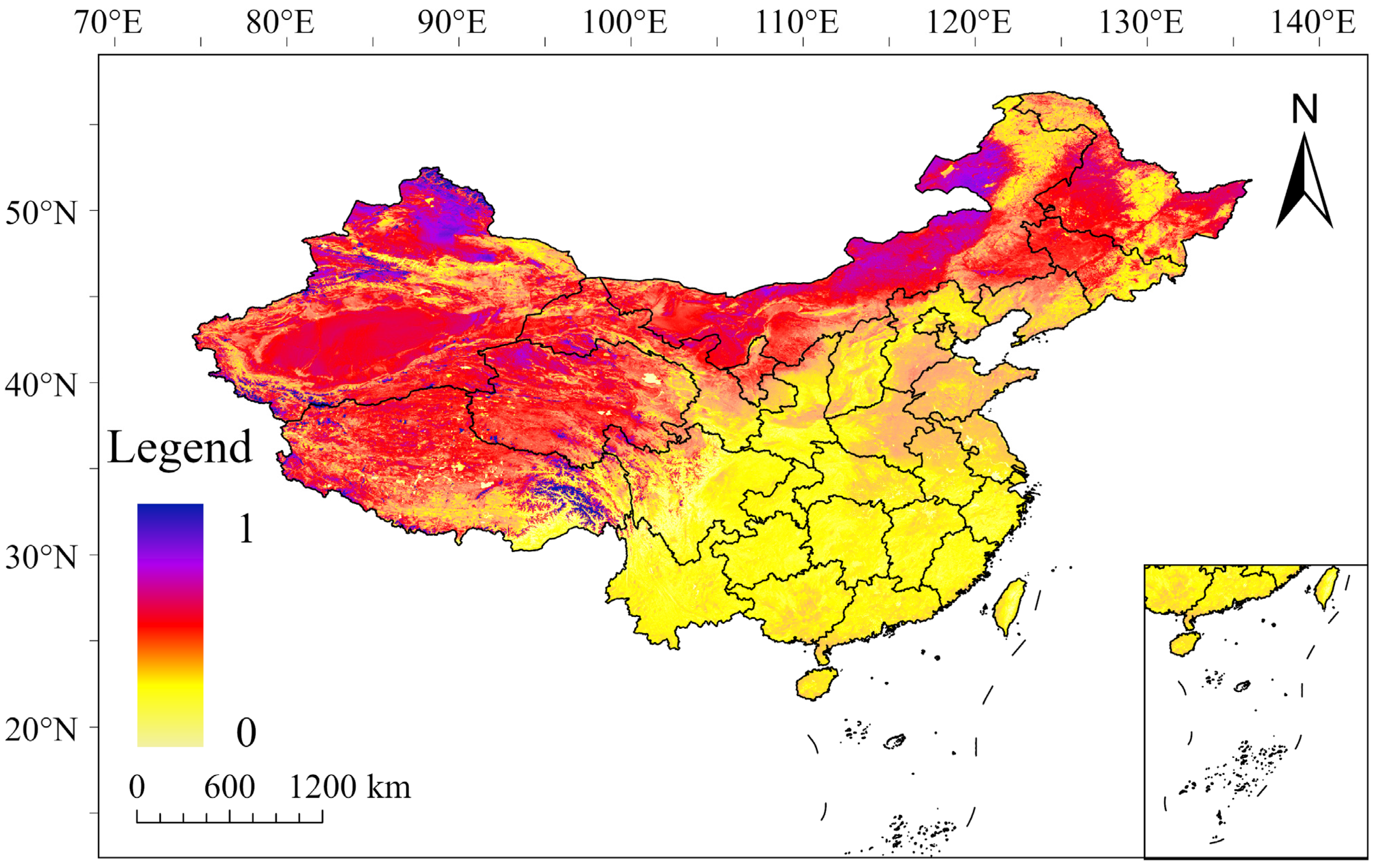
The spatial distribution of the annual mean surface albedo across China for 2001–2020 (Figure 2) exhibits clear regional variability. High albedo values are primarily observed over the Qinghai–Tibet Plateau, Inner Mongolia Plateau, northern regions of the Tianshan Mountains, and the Greater Khingan Range. For example, the long-term mean surface albedo in the Altai Mountains reaches 0.674, while the Qaidam and Tacheng basins exhibit values of 0.436. In southern regions, surface albedo is generally lower, such as across the Guizhou Plateau, Yunnan Plateau, and Sichuan Basin. Mountain ranges, including the Kunlun, Nyainqentanglha, Altun, Qilian, Hengduan, and Himalaya, feature extensive snow and glaciers, which are among the main reasons for the prominent high albedo values in the mountainous areas of the Qinghai–Tibet Plateau. Field measurements of the directional and spectral reflectance of snow surfaces indicate that snow anisotropy is strongly influenced by the geometry of the sun or viewing angles, wavelength, and snow moisture content. The magnitude of snow and ice albedo primarily depends on the reflective properties of the snow or ice surface as well as atmospheric or sky conditions. Factors such as atmospheric water vapor, atmospheric transparency, and cloud cover can alter both the amount and spectral characteristics of incoming solar radiation. On the Inner Mongolia Plateau, particularly high albedo values are concentrated in the Gobi Desert regions, including the Hailar Desert, Amugulang sandy areas, and Hunshandake sandy areas, all of which belong to the bare sand zones. In the northern regions of the Tianshan Mountains, high albedo zones are mainly distributed across the Junggar Basin and the Altai Mountains.
Figure 2.
Mean annual shortwave albedo (2001–2020).
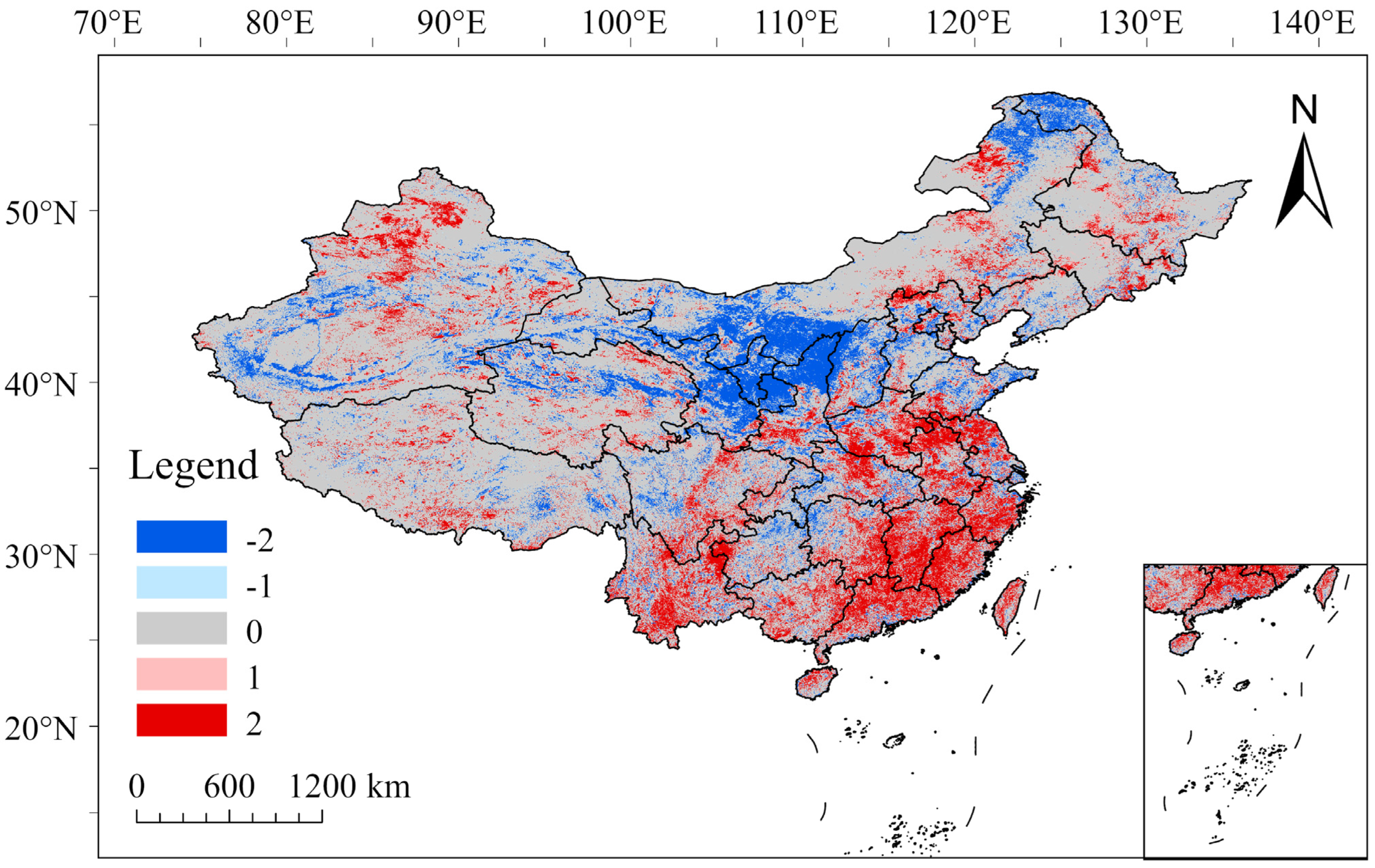
Between 2001 and 2020, surface albedo in China exhibited pronounced regional differentiation, displaying an overall pattern of “decreasing in the north and increasing in the south” (Figure 3). In the northeastern, northern, and northwestern regions, albedo generally showed a significant decreasing trend, with the most pronounced declines observed in the North China Plain and northeastern China. These decreases likely reflect the combined effects of urban expansion, intensified land use, and reductions in snow and ice cover on the surface energy balance. In contrast, the middle and lower reaches of the Yangtze River, southern China, and the southeastern coastal regions exhibited significant increases in albedo, indicating notable changes in surface properties driven by rapid urbanization and ecological restoration projects. The Qinghai–Tibet Plateau and northwestern arid regions displayed more complex spatial patterns, with both decreases (due to glacier and snow melt) and increases (associated with bare land and desert expansion) in albedo. This spatial heterogeneity underscores the integrated influence of climate change and human activities on surface albedo across China.
Figure 3.
Trend and significance of shortwave albedo (2001–2020).
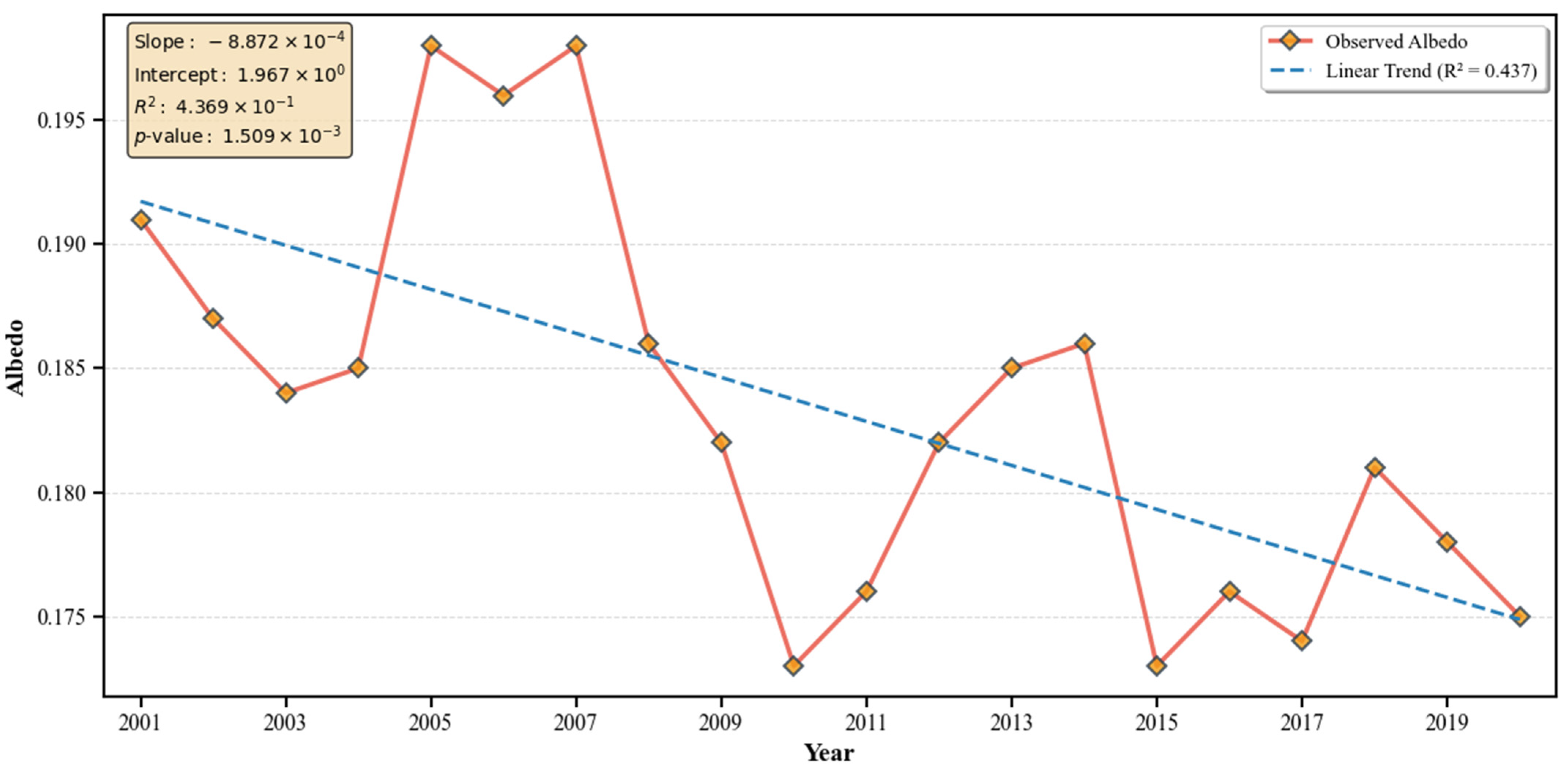
As shown in the annual mean time series (Figure 4), the national average surface albedo in China exhibited a significant declining trend from 2001 to 2020 (R2 = 0.437), with a cumulative decrease of approximately 0.018, corresponding to a relative reduction of around 9–10%. The time series displays phased fluctuations: a gradual decline from 2001 to 2004, a short-term rebound peaking during 2005–2008, a rapid decrease between 2009 and 2011, a limited recovery during 2012–2014, and low-level oscillations from 2015 to 2020. Integrating spatial and seasonal results, the overall national decline is primarily driven by sustained decreases in northern regions such as northeastern China, the North China Plain, and the Loess Plateau, whereas increases in southern areas (middle and lower Yangtze River, southern China, and coastal regions) are insufficient to offset the nationwide downward trend. The multi-year cycles align with variability in (i) snow cover/cryospheric conditions, (ii) vegetation productivity (NDVI), and (iii) large-scale circulation (monsoon strength and ENSO phases); for instance, the 2005–2008 rebound coincides with higher snow extent and NDVI, whereas the 2009–2011 downturn matches reduced snow/ice and weaker monsoon years.
Figure 4.
Annual average variation of surface albedo in China (2001–2020).
3.2. Seasonal Dynamics of Surface Albedo
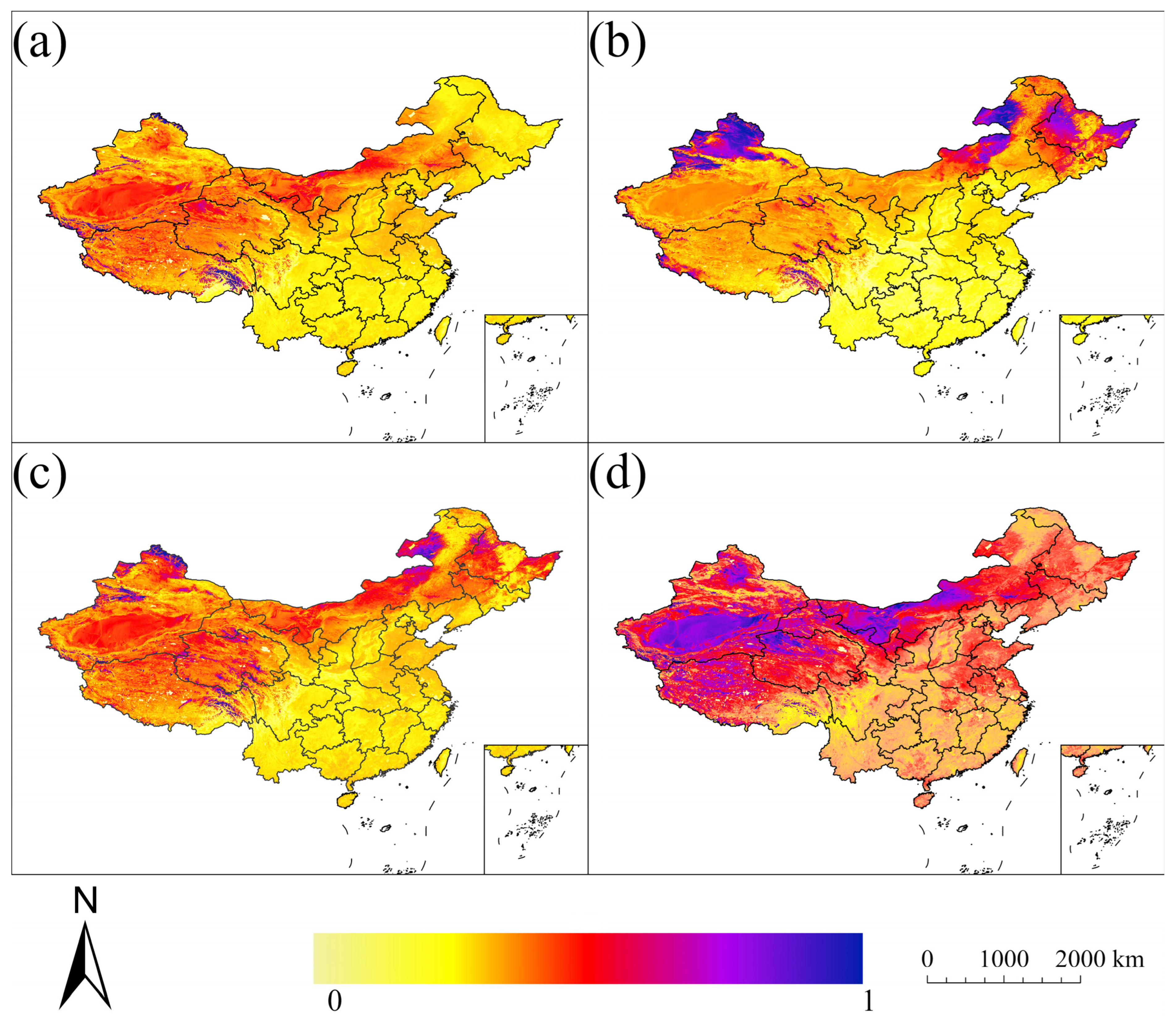
Figure 5 displays the spatial distribution of the annual mean surface albedo across China for different seasons during 2001–2020. In snow-dominated areas, winter albedo primarily reflects the areal extent and persistence of snowpack. Overall, eastern and southern regions consistently exhibit low albedo values, with a slight increase observed in these areas during winter. Other regions display distinct seasonal patterns: in spring, high albedo values are observed over the Tarim Basin, Junggar Basin, Inner Mongolia Plateau, and the Qinghai–Tibet Plateau; in summer, large areas of China exhibit generally high albedo, with relatively lower values east of the Hengduan Mountains and south of the Qinling–Huaihe line; in autumn, albedo increases are apparent not only in the Tarim and Junggar basins, Inner Mongolia Plateau, and Qinghai–Tibet Plateau, but also in northeastern China; in winter, surface albedo decreases over the Qinghai–Tibet Plateau, while increases are observed in the Junggar Basin and regions flanking the Greater Khingan Range.
Figure 5.
Spatial distribution of seasonal mean albedo (2001–2020): (a) spring, (b) summer, (c) autumn, (d) winter. Winter patterns are strongly affected by seasonal snow cover, and albedo here refers to the optical shortwave reflectance of the surface (MCD43 BRDF-corrected shortwave albedo).
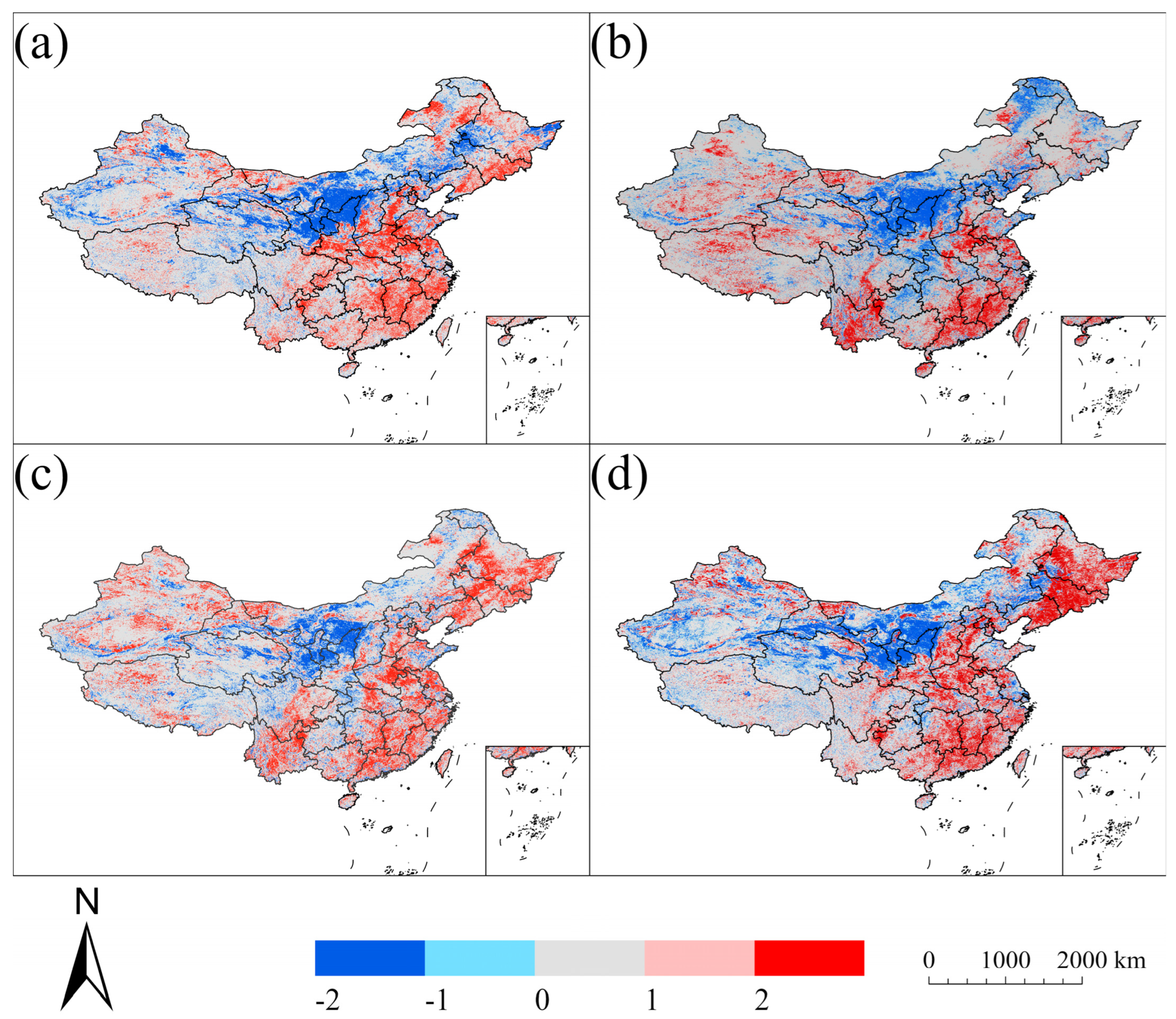
As shown in Figure 6, distinct seasonal patterns characterize the long-term trends of surface albedo across China. In spring, significant decreases (blue areas) are observed over the North China Plain, the Huang–Huai–Hai region, and parts of northwestern China (northern Shaanxi, Shanxi, and northern Henan), while marked increases (red areas) occur across the middle and lower reaches of the Yangtze River, South China, the southeastern coastal areas, and southwestern provinces such as Sichuan, Guizhou, and Yunnan. This clear north–south contrast is likely related to the delayed onset of vegetation greening in northern regions. In summer, extensive decreases dominate northeastern China, North China, the Loess Plateau, and northern Xinjiang, whereas large-scale increases are concentrated in the Yangtze River basin, South China, and East China. The spatial extent of albedo decline is the broadest in this season, probably because croplands in Northeast and North China are in peak growing stages, with increased leaf area index enhancing absorption and thus lowering albedo, while irrigated paddy fields in the south may lead to increased albedo. In autumn, surface albedo generally increases across the south, including the Yangtze River basin, South China, and the southwest, but decreases persist in the North China Plain and the Loess Plateau. In winter, widespread decreases occur in the North China Plain, the Loess Plateau, and Northeast China, making this season the most prominent period of albedo reduction nationwide. Conversely, significant increases are observed in southern regions such as South China, the lower Yangtze, and the southeastern coast. These wintertime contrasts are closely associated with snow cover dynamics and vegetation conditions.
Figure 6.
The amplitude of seasonal albedo changes (2001–2020): (a) spring, (b) summer, (c) autumn, (d) winter.
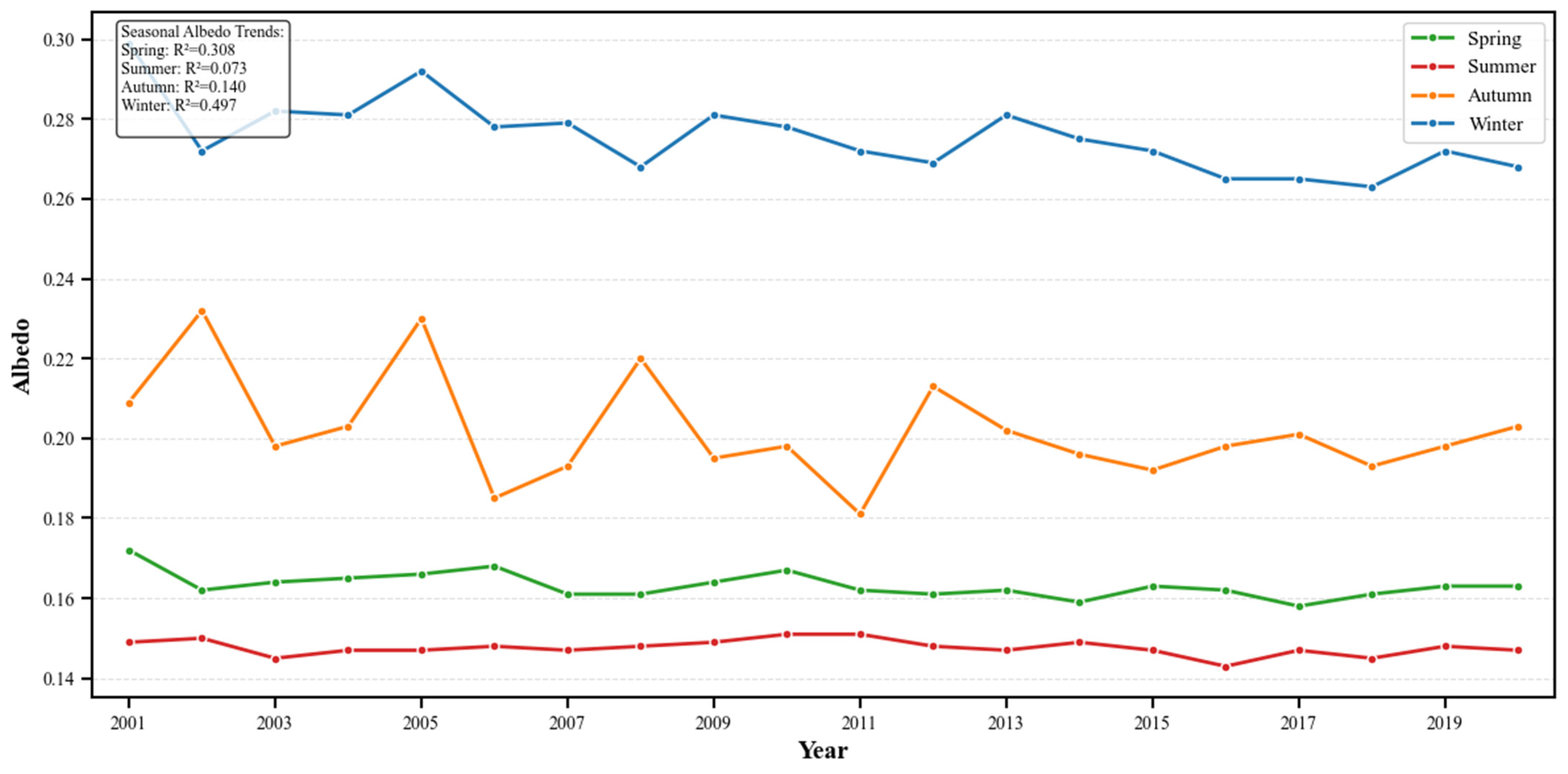
From 2001 to 2020, surface albedo in China exhibited pronounced seasonal differences (Figure 7). In spring, albedo remained relatively stable, fluctuating slightly between 0.16 and 0.17, with a temporary decline around 2017 followed by a recovery. In summer, values were nearly constant, oscillating between 0.14 and 0.15, with a slight decrease around 2016 and a modest rebound during 2018–2019. In autumn, albedo showed the most pronounced decline, dropping from 0.22–0.23 in the early years to around 0.18 by the end of the period. Despite brief rebounds, the overall trend was persistently downward. In winter, albedo exhibited a gradual decrease from about 0.30 to 0.27, corresponding to a total decline of approximately 0.03 over two decades, accompanied by noticeable interannual fluctuations. The multi-year mean values ranked as follows: winter (0.283) > autumn (0.214) > spring (0.161) > summer (0.143). In terms of long-term trends, winter and autumn displayed overall decreasing trajectories, with the most significant decline observed in winter (R2 = 0.497), whereas the changes in spring and summer were not statistically significant.
Figure 7.
Annual average variation of seasonal albedo (2001–2020).
3.3. Relationships Between Albedo and NDVI/Temperature/Precipitation
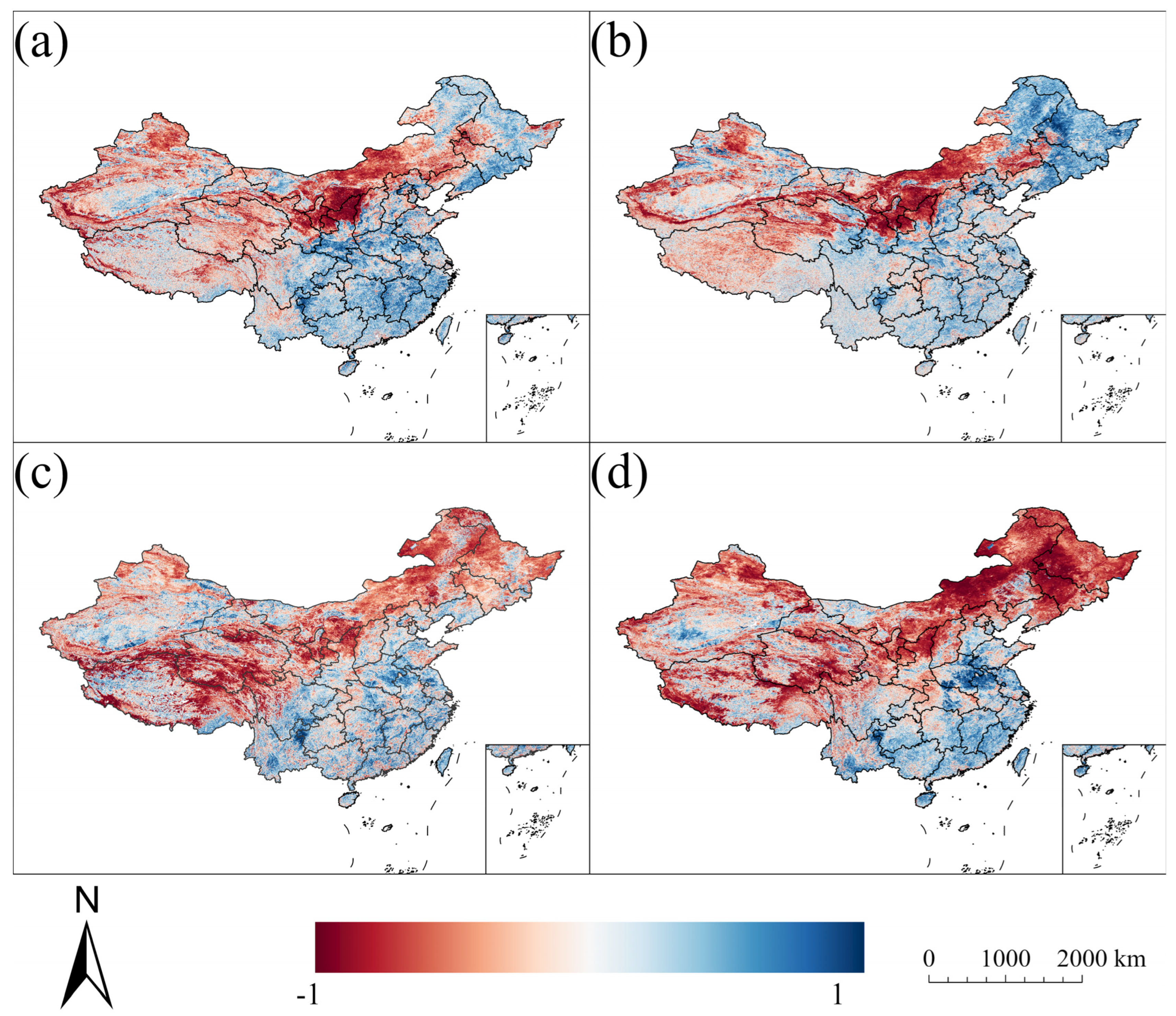
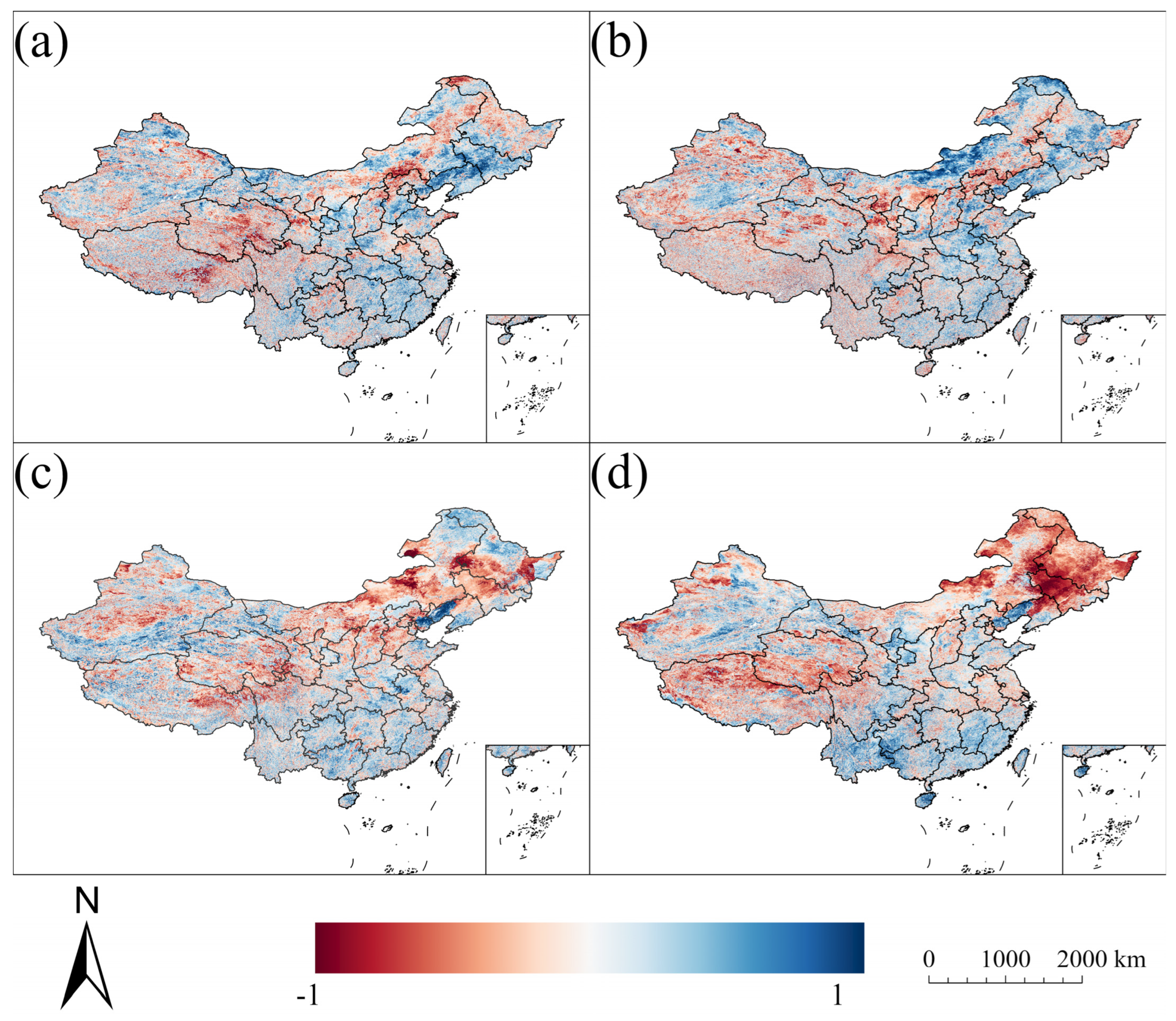
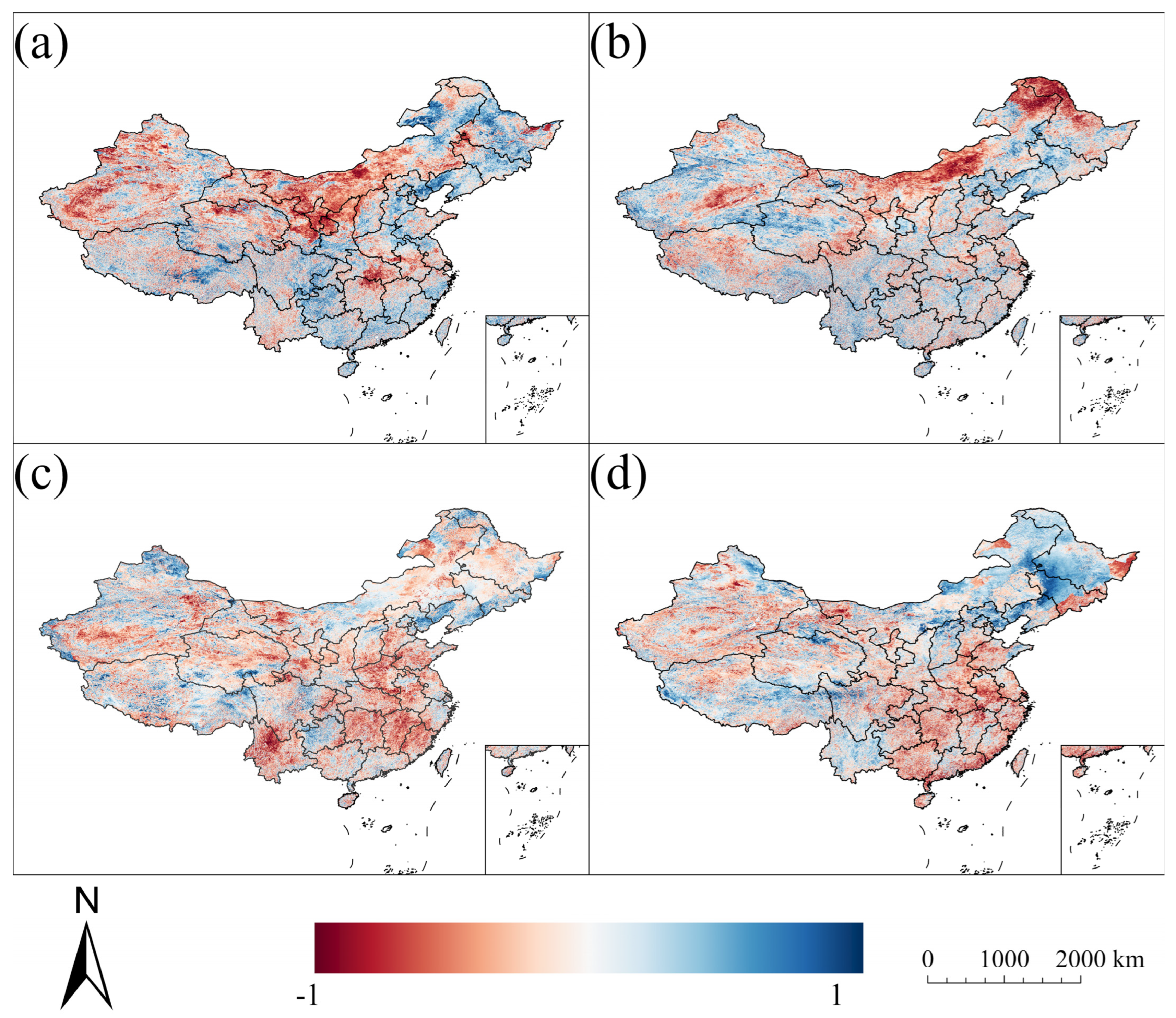
The relationship between surface albedo and key environmental factors—namely NDVI, land surface temperature, and precipitation—exhibits pronounced spatiotemporal heterogeneity across China (Figure 8, Figure 9 and Figure 10). These variations reflect the differentiated influences of snow cover, bare soil, vegetation growth, and surface water on the surface energy balance. To elucidate these interactions, the following analysis explores their seasonal characteristics and regional distinctions throughout the year, offering insights into the underlying physical mechanisms and ecological controls.
Figure 8.
Seasonal correlation between albedo and NDVI (2001–2020): (a) spring, (b) summer, (c) autumn, (d) winter.
Figure 9.
Seasonal correlation between albedo and air temperature (2001–2020): (a) spring, (b) summer, (c) autumn, (d) winter.
Figure 10.
Seasonal correlation between albedo and precipitation (2001–2020): (a) spring, (b) summer, (c) autumn, (d) winter.
In spring, in high-altitude areas such as the Qinghai Tibet Plateau and Qilian Western Sichuan, as well as arid and semi-arid regions such as Xinjiang, Hexi Corridor, and western Inner Mongolia, residual snow and bare soil lead to high albedo. As vegetation turns green (NDVI increases) and snowmelt (temperature rises), albedo significantly decreases, showing a strong negative correlation. In the middle and lower reaches of the Yangtze River and early-season rice fields in southern China, waterlogging and seedling growth can cause the albedo to increase in the same direction as NDVI, showing a local positive or weak correlation. Precipitation in these areas can either reduce albedo by replenishing soil and promoting vegetation or increase albedo in the form of snowfall on plateaus.
In summer, with increased precipitation, farmland and grasslands (Northeast Plain, North China, Hetao, eastern Qinghai Tibet Plateau) are nourished by rainwater, leading to vigorous vegetation. However, there is a significant negative correlation between albedo and NDVI, which generally decreases with increasing NDVI and temperature. In monsoon humid areas with dense rice paddies or forests, NDVI tends to saturate, and NIR reflection from the water surface/wet soil and canopy increases. The reflectance is affected by soil moisture and near-infrared response, and the correlation weakens or even turns positive. Precipitation can further reduce albedo in humid areas by promoting vegetation, while in arid areas, it can increase albedo in the short term due to temporary waterlogging or bare soil cover.
In autumn, the northern and northwestern regions (northeast, north China, arid northwest) are affected by grain harvest and vegetation decline, and bare soil exposure increases albedo, which is negatively correlated with NDVI and temperature; however, there is a positive or weak correlation in the southwestern mountainous areas and the Jiangnan South China late rice region due to late rice management, re waterlogging, and the maintenance of relatively bright evergreen forests. Precipitation in the south often promotes crops and forests to maintain low albedo, while in the northwest and plateau, it may increase soil moisture or early snow to improve albedo.
In winter, high altitude and northern regions (Qinghai Tibet Plateau, Northeast China, and North China) show the strongest negative correlation due to extensive snow cover and vegetation dormancy-snow cover increases albedo and is accompanied by low NDVI/low temperature; In the snow free areas of Jiangnan and South China, there is often a positive or near zero correlation, as clear winter temperatures increase or crops turn green early, resulting in synchronous changes in albedo, temperature, and NDVI. Precipitation increases or decreases albedo in the form of snowfall or rainfall, with significant regional differences.
Overall, high-altitude and high-latitude regions, as well as arid and semi-arid regions, exhibit a negative correlation between albedo and NDVI/temperature throughout the four seasons. In contrast, monsoon humid regions are often affected by the rice growing cycle, vegetation, and water bodies, resulting in seasonal positive or weak correlations. The impact of precipitation is highly dependent on its manifestation as rainfall, replenishment, or snowfall in various regions. To gain a deeper understanding of causal mechanisms, layered analysis should be conducted at the ecological zone and crop type levels, combined with information on snow cover, soil moisture, and irrigation.
3.4. Contribution of Each Factor
Overall, surface albedo exhibits pronounced spatiotemporal variations across both seasonal and regional scales, and its relationships with NDVI, temperature, and precipitation are characterized by considerable complexity. In general, albedo is predominantly negatively correlated with NDVI, particularly in regions and seasons with vigorous vegetation growth, reflecting the enhanced absorption of radiation induced by increased vegetation cover. The relationship with temperature displays seasonal reversals: during warm periods, albedo decreases due to snowmelt and lush vegetation, whereas in cold seasons, rising temperatures may reduce snow cover, thereby lowering albedo. The association with precipitation demonstrates marked climatic differentiation, with negative correlations prevailing in humid eastern regions, while positive correlations are more likely to occur in cold or arid zones, governed respectively by vegetation dynamics and snow processes. These findings indicate that variations in surface albedo are not merely outcomes of surface energy balance but also integrative responses to vegetation dynamics, hydrothermal conditions, and climatic zonal differentiation.
Based on the quantitative contribution analysis of the three factors (calculated through the normalization of absolute correlation coefficients), the results indicate (Table 1) that NDVI plays a dominant role in regulating surface albedo across all seasons, with contribution rates of 43.94%, 45.33%, 50.54%, and 52.02% in spring, summer, autumn, and winter, respectively. The contribution rates of temperature were 27.48%, 28.07%, 27.54%, and 26.81% across the four seasons, while those of precipitation were 28.57%, 26.61%, 21.91%, and 21.17%, respectively. Overall, NDVI exerts a stable and significant influence on surface albedo, whereas the impacts of temperature and precipitation are relatively comparable in magnitude. This suggests that the spatiotemporal variations of surface albedo in the study area are primarily controlled by land cover types and their seasonal dynamics, while climatic factors (temperature and precipitation) influence albedo changes mainly through indirect pathways.
Table 1.
Seasonal contribution rates of different factors to albedo. Notes: Seasonal contributions are computed by normalizing the absolute GTWR coefficients for NDVI, temperature, and precipitation at each grid and averaging over the study area.
4. Discussion
4.1. Temporal Dynamics of Albedo and Key Influences
From 2001 to 2020, surface albedo in China exhibited a significant long-term decline (slope ≈ −0.0009, R2 ≈ 0.44) [30], characterized by a phase of relatively high values during 2005–2008, a sharp downturn around 2009–2011, and stabilization at a lower level after 2015. This trajectory suggests that both long-term trends and interannual to decadal climate variability jointly shape the temporal dynamics of albedo [31].
Seasonal differences were also evident, with mean values ranked as winter > autumn > spring > summer [32]. Declines were most pronounced in autumn and winter, whereas spring remained nearly stable and summer showed only slight fluctuations [33]. This indicates that non-growing or snow-covered seasons play a dominant role in annual albedo decline [34].
The three environmental drivers exhibited heterogeneous influences. NDVI showed a generally negative correlation with albedo, particularly strong in summer and autumn, highlighting the widespread “darkening effect” of vegetation greening [35]. Temperature displayed region- and season-dependent relationships: in high-latitude and snow-dominated areas, warming was linked to albedo reduction via snow/ice retreat [36], while in arid and semi-arid zones, warming occasionally corresponded to albedo increases due to soil desiccation and surface brightening [37]. Precipitation effects were more spatially and seasonally complex: in drylands, higher rainfall promoted vegetation growth and thus albedo decline [38], whereas in humid southern regions, hydrological conditions, cropland cycles, and atmospheric effects (e.g., aerosols, cloud cover) modulated the relationship in more variable ways [39]. Overall, NDVI emerged as the most consistent explanatory factor at the national scale, while temperature dominated in cold and snow-covered regions and precipitation exhibited the greatest spatial–seasonal heterogeneity. These results demonstrate how a GTWR framework reveals time-varying signs and magnitudes of drivers that global regressions would mask.
4.2. Spatial Heterogeneity Across Regions
Clear spatial heterogeneity was observed across China’s major eco-climatic zones. In high-altitude and cold regions (e.g., the Tibetan Plateau and other alpine areas), albedo exhibited strong seasonal and elevational dependence, with pronounced wintertime decreases linked to snow and glacier retreat, though barren land occasionally showed local increases [40]. In northwestern arid and semi-arid regions, the signal was more complex: snow- and ice-dominated mountains generally experienced albedo reduction, while deserts and sparsely vegetated lands locally displayed increases, reflecting the contrasting influences of cryospheric processes and land degradation. By contrast, in the eastern monsoon-dominated regions, albedo trends were relatively stable or slightly increasing, especially in autumn and winter, largely due to intensive land-use change, ecological restoration, and urban expansion, which together reshaped surface optical properties [41]. By mapping coefficients and their seasonal shifts, we generalize region-specific mechanisms (cryosphere, drylands, monsoon croplands) into a national typology.
4.3. Suggestions and Prospects
Policy implications should also be differentiated by region and season. In high-altitude and cold regions (e.g., the Tibetan Plateau and other alpine areas), priority should be placed on snow and ice monitoring, pollution reduction, and adaptive vegetation restoration that balances carbon sequestration with radiative forcing [42]. Winter and spring are particularly critical periods, as snow darkening and cryospheric retreat strongly affect surface albedo. In the northwestern arid and semi-arid drylands, management should emphasize sand stabilization, desertification control, and snow–ice monitoring, while also integrating dust mitigation to reduce albedo variability [43]. Seasonal cropland and grassland cover management can help buffer extreme fluctuations and maintain regional stability throughout the year [44]. In the eastern monsoon-dominated regions, including the Yangtze basin and coastal zones, policies should combine ecological restoration with urban planning and agricultural optimization. In urban areas, integrated strategies such as reflective roofing, permeable pavements, and vegetation shading can simultaneously mitigate heat island effects and hydrological risks, particularly during summer and autumn [45]. In agricultural landscapes, harvest–tillage–cover sequencing should be optimized to smooth seasonal albedo transitions and reduce abrupt changes.
Several gaps remain. First, causal attribution requires more advanced methods such as segmented regressions, difference-in-differences, geographically weighted regressions, and causal machine learning approaches to disentangle policy interventions (e.g., ecological restoration, urbanization) from climate variability [46]. Second, improved process coupling is needed to evaluate trade-offs among albedo, evapotranspiration, and heat storage. Third, uncertainty reduction should be pursued through BRDF corrections, multi-sensor validation, and expanded ground radiation networks, particularly in high-reflectance, high-cloud, and heterogeneous areas. Finally, attention should be given to extreme events and threshold responses, as droughts, floods, and heatwaves may induce structural breaks in seasonal albedo dynamics. Scenario-based assessments could further quantify the net climatic outcomes of region–season-specific management strategies [47].
The MCD43A3 surface albedo and MOD13A3 vegetation datasets used in this study are derived from remote sensing image retrievals and, therefore, inherently contain some uncertainties, which may lead to discrepancies in the spatiotemporal trends or driving factor analyses of surface albedo in certain regions. Additionally, previous studies on albedo drivers often relied on point-based analyses, whereas this study employs a spatially continuous approach. Differences in spatial and temporal resolution between these approaches may introduce minor deviations in the results. This analysis provides a policy-relevant framework that links seasonal radiative outcomes to manageable interventions, such as snow/ice monitoring, cropland scheduling, and the use of urban reflective surfaces.
5. Conclusions
This study systematically analyzed the spatiotemporal variations of surface albedo across China during 2001–2020 and explored the dominant driving factors. The main conclusions are as follows:
(1) The spatial distribution of mean surface albedo across China reveals substantial regional differences. High-value areas are primarily concentrated in the arid and semi-arid regions of Northwest China as well as in high-altitude, cold regions, with an average albedo of 0.483. In contrast, low-value areas are mainly located in the humid monsoon regions of eastern China, including North China, South China, and the Yunnan–Guizhou Plateau, where the mean albedo reaches 0.126. Pronounced seasonal variations are also evident, with the mean surface albedo following the order: winter (0.283) > autumn (0.214) > spring (0.161) > summer (0.143).
(2) From the variation trends and statistical tests of albedo, it can be concluded that the surface albedo across China has undergone an overall gradual decline. At the national scale, this pattern is characterized by a “decreasing trend in the north and an increasing trend in the south.”
(3) From the correlation analysis between albedo and different factors, it can be concluded that NDVI is the primary driving factor of surface albedo, with a contribution rate of 47.94%. The impacts of temperature and precipitation on albedo are generally comparable, and both mainly influence albedo variations through indirect pathways.
Author Contributions
Conceptualization, J.N. and H.L. (Hao Lin); methodology, Z.W.; software, Z.W.; validation, H.L. (Hongrui Li), Z.L., X.D., B.W., T.W., J.Z. and M.L.; formal analysis, H.L. (Hao Lin); investigation, H.L. (Hao Lin); resources, Z.W.; data curation, H.L. (Hongrui Li); writing—original draft preparation, Z.W.; writing—review and editing, H.L. (Hongrui Li); visualization, Z.W.; supervision, J.N.; project administration, J.N.; funding acquisition, J.N. All authors have read and agreed to the published version of the manuscript.
Funding
This research was funded by the Natural Science Foundation of Henan Province (Key Project), grant number 252300421290, and the National Natural Science Foundation of China (NSFC), grant number 41771438.
Institutional Review Board Statement
Waived (no human/animal subjects; public/anonymous data):“Ethical review and approval were waived for this study due to the exclusive use of publicly available and de-identified environmental/remote-sensing datasets; no human participants or animals were involved, and no personally identifiable information was processed.”
Informed Consent Statement
Not applicable.
Data Availability Statement
All datasets used are cited in the main text. MODIS MCD43A3 and MOD13A3 are available from NASA LP-DAAC/LAADS DAAC; gridded meteorology is from the National Earth System Science Data Center (China).
Conflicts of Interest
The authors declare no conflicts of interest.
References
- Xu, Z.; Li, Y.; Qin, Y.; Bach, E. A Global Assessment of the Effects of Solar Farms on Albedo, Vegetation, and Land Surface Temperature Using Remote Sensing. Sol. Energy 2024, 268, 112198. [Google Scholar] [CrossRef]
- Hasler, N.; Williams, C.A.; Denney, V.C.; Ellis, P.W.; Shrestha, S.; Terasaki Hart, D.E.; Wolff, N.H.; Yeo, S.; Crowther, T.W.; Werden, L.K.; et al. Accounting for Albedo Change to Identify Climate-Positive Tree Cover Restoration. Nat. Commun. 2024, 15, 2275. [Google Scholar] [CrossRef]
- Ouyang, Z.; Sciusco, P.; Jiao, T.; Feron, S.; Lei, C.; Li, F.; John, R.; Fan, P.; Li, X.; Williams, C.A.; et al. Albedo Changes Caused by Future Urbanization Contribute to Global Warming. Nat. Commun. 2022, 13, 3800. [Google Scholar] [CrossRef]
- Lopez-Cabeza, V.P.; Alzate-Gaviria, S.; Diz-Mellado, E.; Rivera-Gomez, C.; Galan-Marin, C. Albedo Influence on the Microclimate and Thermal Comfort of Courtyards under Mediterranean Hot Summer Climate Conditions. Sustain. Cities Soc. 2022, 81, 103872. [Google Scholar] [CrossRef]
- Lei, C.; Chen, J.; Ibáñez, I.; Sciusco, P.; Shirkey, G.; Lei, M.; Reich, P.; Robertson, G.P. Albedo of Crops as a Nature-Based Climate Solution to Global Warming. Environ. Res. Lett. 2024, 19, 084032. [Google Scholar] [CrossRef]
- Zhang, Y.; Gao, T.; Kang, S.; Shangguan, D.; Luo, X. Albedo Reduction as an Important Driver for Glacier Melting in Tibetan Plateau and Its Surrounding Areas. Earth Sci. Rev. 2021, 220, 103735. [Google Scholar] [CrossRef]
- Wang, Z.; Schaaf, C.B.; Sun, Q.; Shuai, Y.; Román, M.O. Capturing Rapid Land Surface Dynamics with Collection V006 MODIS BRDF/NBAR/Albedo (MCD43) Products. Remote Sens. Environ. 2018, 207, 50–64. [Google Scholar] [CrossRef]
- Muscas, D.; Bonciarelli, L.; Filipponi, M.; Orlandi, F.; Fornaciari, M. Urban Tree CO2 Compensation by Albedo. Land 2025, 14, 1633. [Google Scholar] [CrossRef]
- Qin, W.; Wang, L.; Gueymard, C.A.; Bilal, M.; Lin, A.; Wei, J.; Zhang, M.; Yang, X. Constructing a Gridded Direct Normal Irradiance Dataset in China during 1981–2014. Renew. Sustain. Energy Rev. 2020, 131, 110004. [Google Scholar] [CrossRef]
- Zhang, Y.; Zhao, X.; Gong, J.; Luo, F.; Pan, Y. Effectiveness and Driving Mechanism of Ecological Restoration Efforts in China from 2009 to 2019. Sci. Total Environ. 2024, 910, 168676. [Google Scholar] [CrossRef]
- Qu, Y.; Liang, S.; Liu, Q.; Li, X.; Feng, Y.; Liu, S. Estimating Arctic Sea-Ice Shortwave Albedo from MODIS Data. Remote Sens. Environ. 2016, 186, 32–46. [Google Scholar] [CrossRef]
- Pang, G.; Meng, L.; Wang, X.; Liu, F.; Shu, M.; Ma, C.; Che, T. Evaluation of Surface Albedo Products from ERA5, JRA-55, MERRA-2, and CERES-EBAF on the Tibetan Plateau: Insights from in-Situ Observations and MODIS Data. Int. J. Digit. Earth 2025, 18, 2547288. [Google Scholar] [CrossRef]
- He, T.; Liang, S.; Yu, Y.; Wang, D.; Gao, F.; Liu, Q. Greenland Surface Albedo Changes in July 1981–2012 from Satellite Observations. Environ. Res. Lett. 2013, 8, 044043. [Google Scholar] [CrossRef]
- Li, Z.; Yan, Z.; Zhu, Y.; Freychet, N.; Tett, S. Homogenized Daily Relative Humidity Series in China during 1960–2017. Adv. Atmos. Sci. 2020, 37, 318–327. [Google Scholar] [CrossRef]
- Xu, Z.; Qiu, X.; Li, S.; Shi, G.; He, Y. Analysis of Surface Albedo over China Based on MODIS. J. Arid Land Resour. Environ. 2020, 34, 99–105. [Google Scholar] [CrossRef]
- Zhao, Z.; Zhao, K.; Xu, J.; Xiao, Z.; Cui, J.; Hong, Z. Spatial–Temporal Changes of Surface Albedo and Its Relationship with Climate Factors in the Source of Three Rivers Region. Arid Zone Res. 2014, 31, 1031–1038. [Google Scholar] [CrossRef]
- Liu, H.; Tu, G.; Dong, W. The Variation Characteristics of Surface Albedo of Different Underlying Surface in Semi-Arid Region. Chin. Sci. Bull. 2008, 53, 1220–1227. [Google Scholar] [CrossRef]
- Chen, A.; Cao, X.; Han, C.; Zheng, Z.; Liu, Y.; Bian, L. Spatial–Temporal Distribution and Variation of Land Surface Albedo over the Tibetan Plateau during 2000–2016. Clim. Environ. Res. 2018, 23, 355–365. [Google Scholar] [CrossRef]
- Yao, J.; Gu, L.; Zhao, L.; Hu, Z. Comparative Observational Study of the Surface Albedo between the Permafrost Region and the Seasonally Frozen Soil Region. Acta Meteorol. Sin. 2013, 71, 176–184. [Google Scholar] [CrossRef]
- Guo, T.; He, T.; Liang, S.; Roujean, J.-L.; Zhou, Y.; Huang, X. Multi-Decadal Analysis of High-Resolution Albedo Changes Induced by Urbanization over Contrasted Chinese Cities Based on Landsat Data. Remote Sens. Environ. 2022, 269, 112832. [Google Scholar] [CrossRef]
- Chen, J.; Lei, C.; Chu, H.; Li, X.; Torn, M.; Wang, Y.-P.; Sciusco, P.; Robertson, G.P. Overlooked Cooling Effects of Albedo in Terrestrial Ecosystems. Environ. Res. Lett. 2024, 19, 093001. [Google Scholar] [CrossRef]
- Liu, Q.; Wang, L.; Qu, Y.; Liu, N.; Liu, S.; Tang, H.; Liang, S. Preliminary Evaluation of the Long-Term GLASS Albedo Product. Int. J. Digit. Earth 2013, 6, 69–95. [Google Scholar] [CrossRef]
- Zhang, X.; Jiao, Z.; Zhao, C.; Qu, Y.; Liu, Q.; Zhang, H.; Tong, Y.; Wang, C.; Li, S.; Guo, J.; et al. Review of Land Surface Albedo: Variance Characteristics, Climate Effect and Management Strategy. Remote Sens. 2022, 14, 1382. [Google Scholar] [CrossRef]
- Stokes, G.M.; Schwartz, S.E. The Atmospheric Radiation Measurement (ARM) Program: Programmatic Background and Design of the Cloud and Radiation Test Bed. Bull. Amer. Meteor. Soc. 1994, 75, 1201–1221. [Google Scholar] [CrossRef]
- Pinty, B.; Lattanzio, A.; Martonchik, J.V.; Verstraete, M.M.; Gobron, N.; Taberner, M.; Widlowski, J.-L.; Dickinson, R.E.; Govaerts, Y. Coupling Diffuse Sky Radiation and Surface Albedo. J. Atmos. Sci. 2005, 62, 2580–2591. [Google Scholar] [CrossRef]
- Theil, H. A Rank-Invariant Method of Linear and Polynomial Regression Analysis. In Henri Theil’s Contributions to Economics and Econometrics; Raj, B., Koerts, J., Eds.; Advanced Studies in Theoretical and Applied Econometrics; Springer: Dordrecht, The Netherlands, 1992; Volume 23, pp. 345–381. ISBN 978-94-010-5124-8. [Google Scholar]
- Sen, P.K. Estimates of the Regression Coefficient Based on Kendall’s Tau. J. Am. Stat. Assoc. 1968, 63, 1379–1389. [Google Scholar] [CrossRef]
- Mann, H.B. Nonparametric Tests Against Trend. Econometrica 1945, 13, 245. [Google Scholar] [CrossRef]
- Jiang, F.; Chen, B.; Li, P.; Jiang, J.; Zhang, Q.; Wang, J.; Deng, J. Spatio-Temporal Evolution and Influencing Factors of Synergizing the Reduction of Pollution and Carbon Emissions—Utilizing Multi-Source Remote Sensing Data and GTWR Model. Environ. Res. 2023, 229, 115775. [Google Scholar] [CrossRef]
- Zheng, J.; Ke, C.; Shao, Z. Winter Sea Ice Albedo Variations in the Bohai Sea of China. Acta Oceanol. Sin. 2017, 36, 56–63. [Google Scholar] [CrossRef]
- Wang, S.; Zhang, S.; Zhou, Y.; Zhao, X.; Li, R.; Lin, X.; Luo, M.; Yang, L.; Zhang, Q.; Lv, S.; et al. Vegetation Disturbance and Recovery Assessment through the Synergistic Effects of Albedo and Vegetation Index: Evidence from China’s Arid Regions. Ecol. Indic. 2025, 178, 113856. [Google Scholar] [CrossRef]
- Smith, I.A.; Fabian, M.P.; Hutyra, L.R. Urban Green Space and Albedo Impacts on Surface Temperature across Seven United States Cities. Sci. Total Environ. 2023, 857, 159663. [Google Scholar] [CrossRef]
- Wang, X.; Barnes, M.; Yoder, L.; Williams, C.; Tank, J.; Royer, T.; Suttles, S.; Novick, K. The Potential for Albedo-Induced Climate Mitigation Using No-till Management in Midwestern U.S. Croplands. Commun. Earth Env. 2025, 6, 580. [Google Scholar] [CrossRef]
- Elgendy, D.; Tolba, O.; Kamel, T. The Impact of Increasing Urban Surface Albedo on Outdoor Air and Surface Temperatures during Summer in Newly Developed Areas. Sci. Rep. 2025, 15, 25165. [Google Scholar] [CrossRef] [PubMed]
- Williamson, S.N.; Marshall, S.J.; Menounos, B. Temperature Mediated Albedo Decline Portends Acceleration of North American Glacier Mass Loss. Commun. Earth Env. 2025, 6, 555. [Google Scholar] [CrossRef]
- Pang, G.; Chen, D.; Wang, X.; Lai, H.-W. Spatiotemporal Variations of Land Surface Albedo and Associated Influencing Factors on the Tibetan Plateau. Sci. Total Environ. 2022, 804, 150100. [Google Scholar] [CrossRef]
- Wu, S.; Lin, X.; Bian, Z.; Lipson, M.; Lafortezza, R.; Liu, Q.; Grimmond, S.; Velasco, E.; Christen, A.; Masson, V.; et al. Satellite Observations Reveal a Decreasing Albedo Trend of Global Cities over the Past 35 Years. Remote Sens. Environ. 2024, 303, 114003. [Google Scholar] [CrossRef]
- Johnson, L.K.; Yang, Z.; Erb, A.; Bright, R.M.; Domke, G.M.; Frescino, T.S.; Schaaf, C.B.; Healey, S.P. Integrating Albedo Offsets in Reforestation Decisions for Climate Change Mitigation Outcomes in 2050: A Case Study in the USA. For. Ecol. Manag. 2025, 587, 122699. [Google Scholar] [CrossRef]
- Jiang, X. Research on Land Desertification in Ejin Banner from 1991 to 2021 Based on Albedo-MSAVI Feature Space Model. Ecol. Inform. 2025, 90, 103327. [Google Scholar] [CrossRef]
- Xie, F.; Liu, S.; Bolch, T.; Zhu, Y.; Gao, Y.; Tan, S.; Afzal, M.M.; Tahir, A.A.; Shen, Y.; Wei, J.; et al. Seasonal and Interannual Variability of Karakoram Glacier Surface Albedo from AVHRR-MODIS Data, 1982–2020. Glob. Planet. Change 2025, 253, 104914. [Google Scholar] [CrossRef]
- Ma, A.; Zhang, M.; Zhou, F.; Zhou, Z.; Feng, W.; Wang, Z. Effect of Temperature and Water Content on Surface Albedo of Loess in Cold Regions and the Associated Mechanisms. J. Mt. Sci. 2025, 22, 1306–1325. [Google Scholar] [CrossRef]
- Zhang, B. Albedo-Driven Hydroclimatic Impacts of Large-Scale Vegetation Restoration Should Not Be Overlooked. Nat. Water 2025, 3, 358–359. [Google Scholar] [CrossRef]
- Wang, F.-T.; Wang, L.; Li, Z.-Q.; Du, Z.-C.; Ming, J. Global Glacier Albedo Trends over 2000–2022: Drivers and Implications. Adv. Clim. Change Res. 2025, 16, 324–336. [Google Scholar] [CrossRef]
- Cao, X.; Yu, M.; Huo, P.; Lu, P.; Cheng, B.; Gao, W.; Shi, X.; Wang, L. Optimization of a Snow and Ice Surface Albedo Scheme for Lake Ulansu in the Central Asian Arid Climate Zone. Water 2025, 17, 523. [Google Scholar] [CrossRef]
- Yu, L.; Leng, G.; Yao, L.; Lu, C.; Han, S.; Fan, S. Disentangling the Contributions of Water Vapor, Albedo and Evapotranspiration Variations to the Temperature Effect of Vegetation Greening over the Arctic. J. Hydrol. 2025, 646, 132331. [Google Scholar] [CrossRef]
- Xie, F.; Liu, S.; Zhu, Y.; Qing, X.; Tan, S.; Gao, Y.; Qi, M.; Yi, Y.; Ye, H.; Afzal, M.M.; et al. Corrigendum to “Retrieval of High-Resolution Melting-Season Albedo and Its Implications for the Karakoram Anomaly” [Remote Sensing of Environment Volume 315 (2024) 114438]. Remote Sens. Environ. 2024, 315, 114474. [Google Scholar] [CrossRef]
- Chen, F.; Liu, Y.; Zhang, Q.; Yan, B.; Feng, Y.; Niu, J. Study on the Spatio-Temporal Change of Ecosystem Service Value in Henan Province. J. Xinyang Norm. Univ. Nat. Sci. Ed. 2023, 36, 173–179. [Google Scholar] [CrossRef]
Disclaimer/Publisher’s Note: The statements, opinions and data contained in all publications are solely those of the individual author(s) and contributor(s) and not of MDPI and/or the editor(s). MDPI and/or the editor(s) disclaim responsibility for any injury to people or property resulting from any ideas, methods, instructions or products referred to in the content. |
© 2025 by the authors. Licensee MDPI, Basel, Switzerland. This article is an open access article distributed under the terms and conditions of the Creative Commons Attribution (CC BY) license (https://creativecommons.org/licenses/by/4.0/).