Article

Associations Between Air Pollution and Hospital Admissions for Cardiovascular and Respiratory Diseases in Makkah, Saudi Arabia, During the Hajj Cultural Events and the COVID-19 Outbreak


1
School of Population Health, Curtin University, Bentley, WA 6102, Australia
2
Environmental and Occupational Health Department, College of Public Health and Health Informatics, Umm Al-Qura University, Makkah 24243, Saudi Arabia
*
Author to whom correspondence should be addressed.
Atmosphere 2025, 16(10), 1220; https://doi.org/10.3390/atmos16101220
Submission received: 5 September 2025 / Revised: 16 October 2025 / Accepted: 20 October 2025 / Published: 21 October 2025
(This article belongs to the Section Air Quality and Health)

Abstract

Air pollution is a global issue affecting health and the environment. This study investigated associations between PM10, NO2, and admissions from cardiovascular and respiratory diseases in Makkah (2019–2022), comparing Hajj cultural events and the COVID-19 lockdown with non-event periods, using time-series Poisson regression models adjusted for time and seasonality. Event interactions, particularly the impact of the Hajj and COVID-19 periods, were examined to assess potential effects on morbidity. The study findings showed that PM10 was significantly associated with increased respiratory admissions during the Hajj period (lag 0: RR = 1.066; 95% CI: 1.030–1.104), and with decreased risk during the non-Hajj period (lag 0: RR = 0.966; 95% CI: 0.942–0.991) and non-COVID periods (lag 0: RR = 0.946; 95% CI: 0.920–0.973). NO2 demonstrated a strong positive association with respiratory admissions during the Hajj period across all lags, peaking at lag 0 with a 16.2% increased risk (RR = 1.162; 95% CI: 1.118–1.207). Exposure to PM10 during Hajj was associated with a 3.1% increased risk of cardiovascular admissions (lag 0: RR = 1.031; 95% CI: 1.012–1.050) and decreased risk during non-Hajj (lag 0: RR = 0.981; 95% CI: 0.963–0.999) and non-COVID periods (lag 0: RR = 0.962; 95% CI: 0.942–0.983). NO2 exposure was positively associated with cardiovascular admissions during Hajj (lag 0: RR = 1.039; 95% CI: 1.019–1.056) and non-COVID periods (lag 0: RR = 1.037; 95% CI: 1.007–1.068). These findings provide event-specific evidence to guide targeted air quality management during mass gatherings, helping policymakers protect the health of Makkah’s residents and visitors.

1. Introduction

Air pollution is a significant global public health concern, responsible for many health issues, particularly in urban and industrialised areas [1,2]. Previous studies have shown that long-term exposure to pollutants such as particulate matter (PM), nitrogen dioxide (NO2), sulphur dioxide (SO2), and ozone (O3) is linked to increased mortality and morbidity, particularly among vulnerable populations [3,4,5,6]. In addition to chronic exposure to air pollution, specific events, such as mass gatherings or pandemics, can exacerbate the impacts of air pollution on human health [7,8,9]. A study by Mahdi et al. [10] revealed the risk of respiratory tract infections (RTIs) during mass gatherings, noting that 4.7% of pilgrims exhibited respiratory symptoms during the 2021 Hajj event. Dastoorpoor et al. [11] found that high levels of air pollution were associated with a rise in hospital admissions for cardiovascular diseases in Ahvaz, Iran.
Makkah, Saudi Arabia, has unique seasonal dynamics due to the annual influx of Hajj pilgrims. This religious pilgrimage attracts millions of people worldwide [12]. Hajj is conducted during the last month of the Islamic lunar calendar (Zul-Hijjah), and pilgrims must perform specific religious rituals during this event [13]. The General Authority for Statistics in Saudi Arabia (GASTAT) reported that in the 2024 Hajj event, 1,833,164 pilgrims participated, including 1,611,310 from abroad and 221,854 local pilgrims. Of those arriving from outside the Kingdom, 22.3% were from Arab countries, 63.3% came from Asian countries, 11.3% were from African countries, and 3.2% were from Europe, America, Australia, and other countries [14].
During the Hajj events, the population of Makkah rises significantly, leading to intensified traffic, construction activities, and increased levels of air pollution [15]. Poor air quality can place a significant burden on the healthcare system, especially by increasing the prevalence and incidence of respiratory and cardiovascular diseases [16,17].
The COVID-19 pandemic has also affected air pollution levels and associated health outcomes. A recent study revealed that exposure to PM2.5 and PM10 substantially increases the likelihood of experiencing long-term symptoms following COVID-19 infection [18]. The pandemic led to lockdowns and changes in traffic patterns, affecting air pollution levels and health outcomes.
Studies have demonstrated that air pollution levels, particularly (PM) concentrations, are often elevated during large cultural events and festivals due to increased human activity and other sources of pollution. For instance, during the Chinese New Year cultural festival, Lai & Brimblecombe [19] observed a significant increase in PM2.5 and PM10 levels. Similarly, the Diwali festival in India has been correlated with sharp spikes in PM10 and SO2 levels, with concentrations on Diwali night found to be approximately five times higher than normal, primarily due to the widespread use of firecrackers and other festive activities, severely impacting air quality [8]. A study by Oroji et al. [20] reported that the Chahar-Shanbe Suri cultural event significantly exacerbates Tehran’s air quality due to fireworks emissions, highlighting the importance of public awareness and regulation.
As observed in previous studies, the substantial influx of visitors to Makkah during Hajj events significantly increases air pollution levels, with (PM) concentrations rising markedly [7,21]. Additionally, a study indicated that PM10 levels during the Hajj season were highest in the Haram district, with elevated concentrations due to traffic and construction [22]. A study by Habeebullah in Makkah revealed that the concentrations of all monitored pollutants were positively correlated with traffic density [23]. These findings illustrate the strong association between large public gatherings and elevated air pollution levels, highlighting the potential for public health risk at such events.
This study evaluated the effect of air pollution on cardiovascular and respiratory morbidity in Makkah during the Hajj events and the COVID-19 pandemic. To the best of our knowledge, no previous studies have evaluated the effect of air pollution on cardiovascular and respiratory morbidity in Makkah during the Hajj events and the COVID-19 pandemic. The outcomes of this study will contribute to the growing body of evidence on the public health implications of air pollution in Makkah, particularly during high-risk events.

2. Methods

2.1. Study Area and Population

Makkah is located in the western part of Saudi Arabia at a latitude of 21.4° north and a longitude of 39.85° east with an area of 153,128 km2 [24]. According to the General Authority for Statistics in Saudi Arabia (GASTAT), the total population in Makkah was 8,021,463 people in 2022 [25]. The study population comprises residents and visitors of Makkah, Saudi Arabia, between January 2019 and December 2022. This period includes several significant events, including the annual Hajj cultural events and the global COVID-19 pandemic, which likely influenced hospital admissions and air pollution levels in the city.

2.2. Air Pollution and Meteorological Data

Air pollution and meteorological data were obtained from the National Centre for Environmental Compliance (NCEC) in Saudi Arabia, specifically from the Alharam monitoring station located near the Holy Mosques in Makkah. The selected air pollutants include (PM10) and (NO2). Daily mean concentrations of these pollutants and meteorological parameters such as temperature, humidity, and wind speed were collected from January 2019 to December 2022. This data provides a comprehensive view of the environmental conditions in Makkah over the study period.

2.3. Morbidity Data

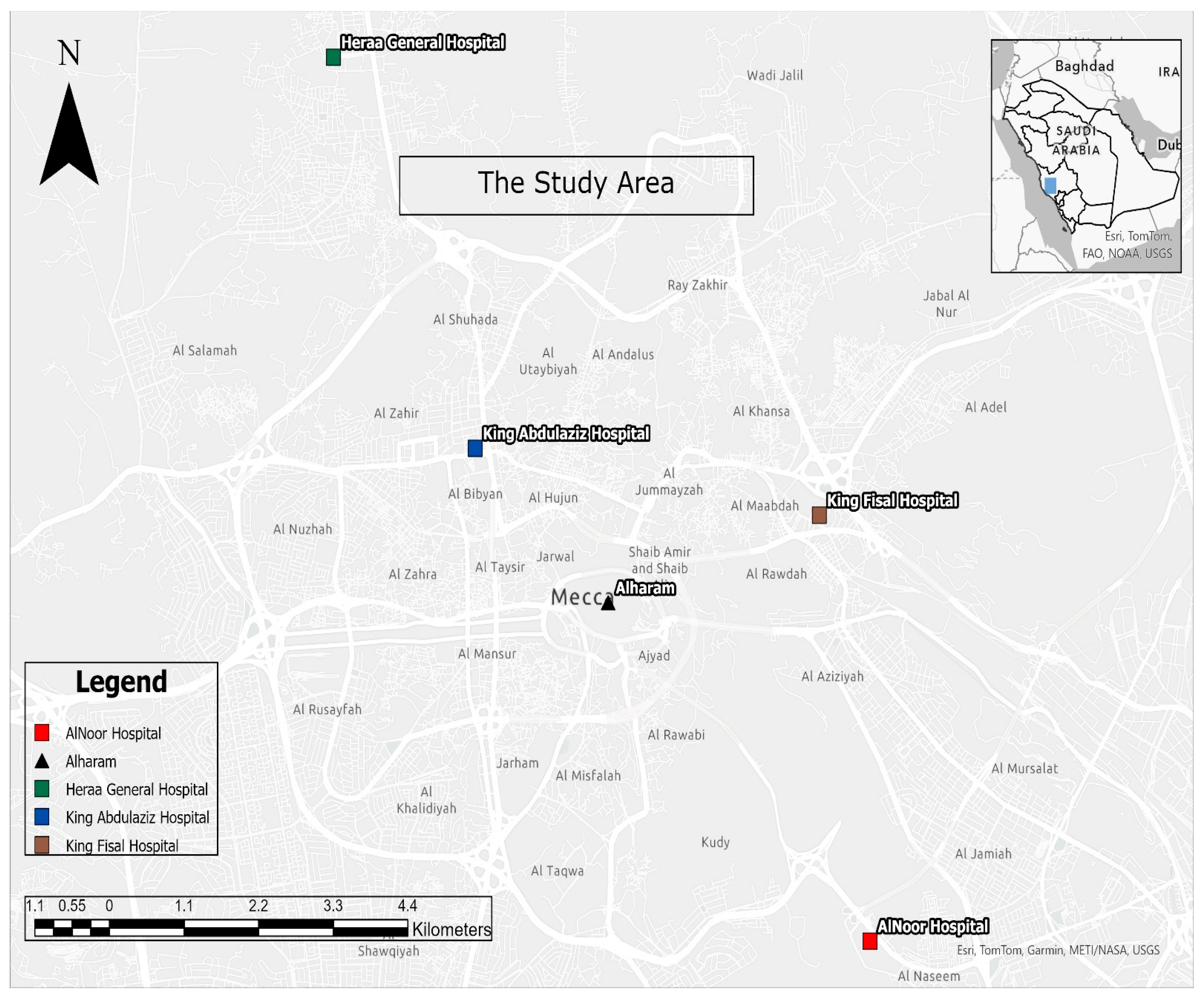
Daily hospital admission data for cardiovascular and respiratory diseases were obtained from the Ministry of Health in Saudi Arabia. The data includes demographic information, including age, gender, nationality, and hospital, along with clinical details such as diagnosis and admission date for each patient admitted during the study period. The hospitalisation data were classified according to the International Statistical Classification of Diseases and Related Health Problems (ICD-10) coding system [26]. These admissions serve as the primary outcome variables for the study. The data were collected from four major general hospitals in Makkah (Al-Noor, Heraa, King Abdulaziz, and King Faisal), which provide emergency and inpatient services for the general population (Figure 1). Paediatric admissions (<14 years) were not included in this study. The study was approved by the Curtin University Human Research Ethics Committee (Approval No: HRE2023-0396).

2.4. Study Design and Statistical Analysis

We analysed the association between daily concentrations of PM10 and NO2 and hospital admissions for cardiovascular and respiratory diseases using a time-series Poisson regression model with a log link, appropriate for modelling daily count data. To control for long-term trends and seasonality, we included a natural cubic spline function of time with 28 degrees of freedom, providing flexibility in capturing non-linear temporal patterns. The models were further adjusted for age, gender, nationality, temperature, humidity, and wind speed. Categorical covariates (age group, gender, and nationality) were specified as factors in R, with indicator variables generated automatically by the software. The general form of the model is:
log(E(Yt)) = α + β · Ztl + ns (t, df = 28) + ∑i=16 γi Xit
where E(Yt) is the expected number of hospital admissions on day t, Zt−l is the pollutant concentration at lag l, and Xit represents the covariates. This modelling approach follows standard practice in environmental time-series analysis [27].
Four Poisson regression models were employed to assess the association between air pollution and hospital admissions. Lagged effects were incorporated to account for the delayed influence of pollutant exposure on hospital admissions. Specifically, Lag 0 represented the same-day exposure, Lag 1 corresponded to the previous day’s exposure, and Lag 2 reflected exposure from two days prior. Model 1 was adjusted for temporal trends, including seasonality and long-term patterns. Model 2 incorporated sociodemographic factors, including age, gender, and nationality, as well as weather variables, such as temperature, humidity, and wind speed, in addition to temporal trends. Model 3 evaluated effect modification by Hajj events, accounting for the impacts of COVID-19. Model 4 assessed effect modification by the COVID-19 period, accounting for the Hajj events. Residual plots and overdispersion checks were applied to evaluate model adequacy and validate assumptions. Model parameters, including lag days and spline flexibility, were selected based on the Akaike Information Criterion (AIC) to improve model fit, with results of alternative spline configurations (6–8 df/year) provided in Supplementary Table S7.
Key predictors in these models included the COVID-19 period, Hajj cultural events, and daily concentrations of air pollutants (PM10, NO2). To explore the potential effect modification, pollutant exposures were stratified by event periods (e.g., Hajj periods vs. non-Hajj periods, COVID-19 period vs. non-COVID period), and interaction models were applied where necessary. Relative risks (RRs) and 95% confidence intervals (CIs) were calculated per interquartile range (IQR) increase in pollutant levels. These RRs represent adjusted estimates that account for long-term and seasonal trends, demographic characteristics, weather variables and concurrent event periods such as Hajj and COVID-19. Statistical analyses were performed using R statistical software (Version 4.1.1) [28].

3. Results

A total of 30,781 patients were admitted to hospitals between 2019 and 2022, including 20,028 with cardiovascular diseases (CVD) and 10,753 with respiratory diseases. Among all admissions, 18,154 were Saudi, while 12,627 were non-Saudi. The average age of CVD patients was 59.4 (SD = 15.1) years. Among CVD patients, 43.4% were female, and 56.6% were male. The age distribution for CVD admissions showed that 6.8% were aged 14–35 years, followed by those aged 36–60 years, 44.8% and those over 60 years, 48.4%.
The average hospital admissions age for respiratory diseases was 52.4 (SD = 19.7) years. Of those, 44.9% were female and 55.1% were male. The age distribution for respiratory admissions showed that 23.8% were aged 14–35 years, 38.9% were aged 36–60 years, and those aged over 60 years were 37.3%. (Table 1).
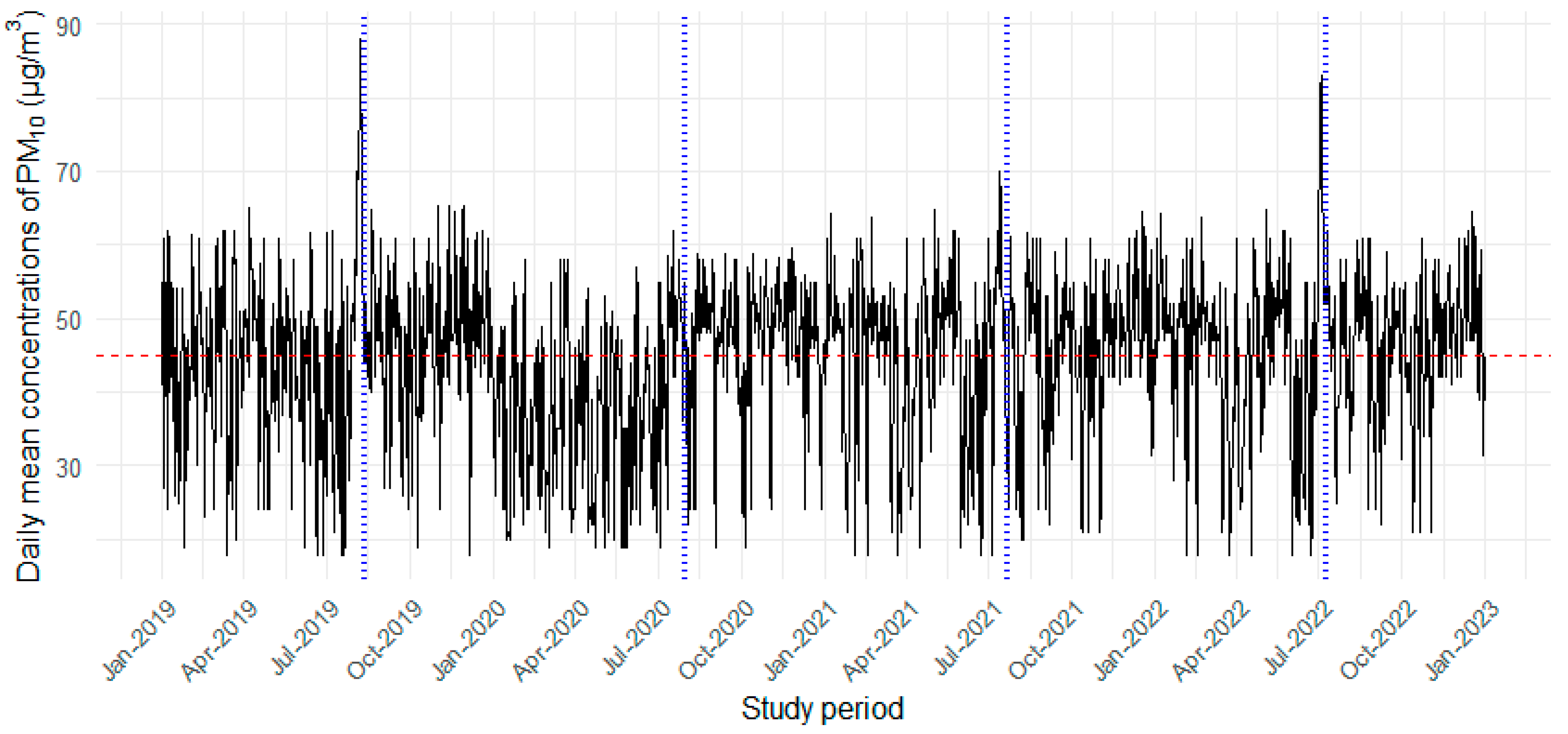
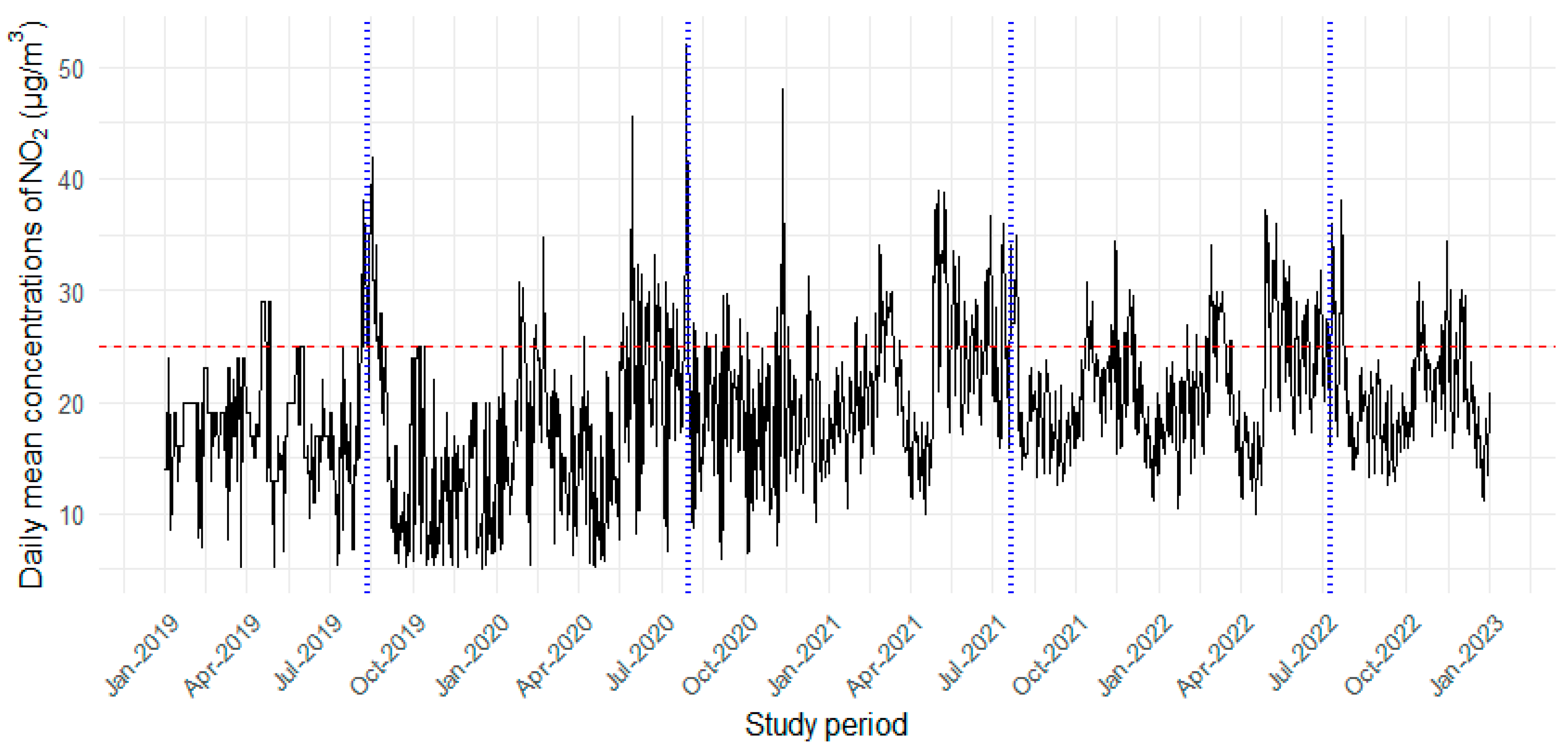
Table 2 summarises the air pollutant concentrations and meteorological factors in Makkah during the study period from 2019 to 2022. The mean PM10 concentration for the period was 43.91 μg/m3, ranging from 18.00 μg/m3 to 88.00 μg/m3. The mean NO2 concentration was 19.20 μg/m3, with a minimum value of 5.16 μg/m3 and a maximum of 52.06 μg/m3.
For meteorological factors, the average temperature was 29.80 °C, with a range from 19.30 °C to 46.0 °C, and the mean level of humidity was 52.68%, with values ranging from 18.80% to 76.40%. The average wind speed was 13.37 km/h, with values ranging from 4.90 km/h to 32.30 km/h (Table 2). Annual breakdowns of air pollutants and meteorological factors for 2019–2022 are provided in Supplementary Table S1.
Figure 2 and Figure 3 display the daily mean concentrations of PM10 and NO2 in Makkah from 2019 to 2022, with vertical blue dotted lines indicating the start and end dates of the Hajj periods each year. Each plot includes a red dashed line indicating the WHO 24 h guideline upper limit for each pollutant: 45 µg/m3 for PM10, and 25 µg/m3 for NO2 [29]. Both plots illustrate notable spikes in pollutant levels during the Hajj period, with PM10 and NO2 concentrations exceeding the WHO guideline values.
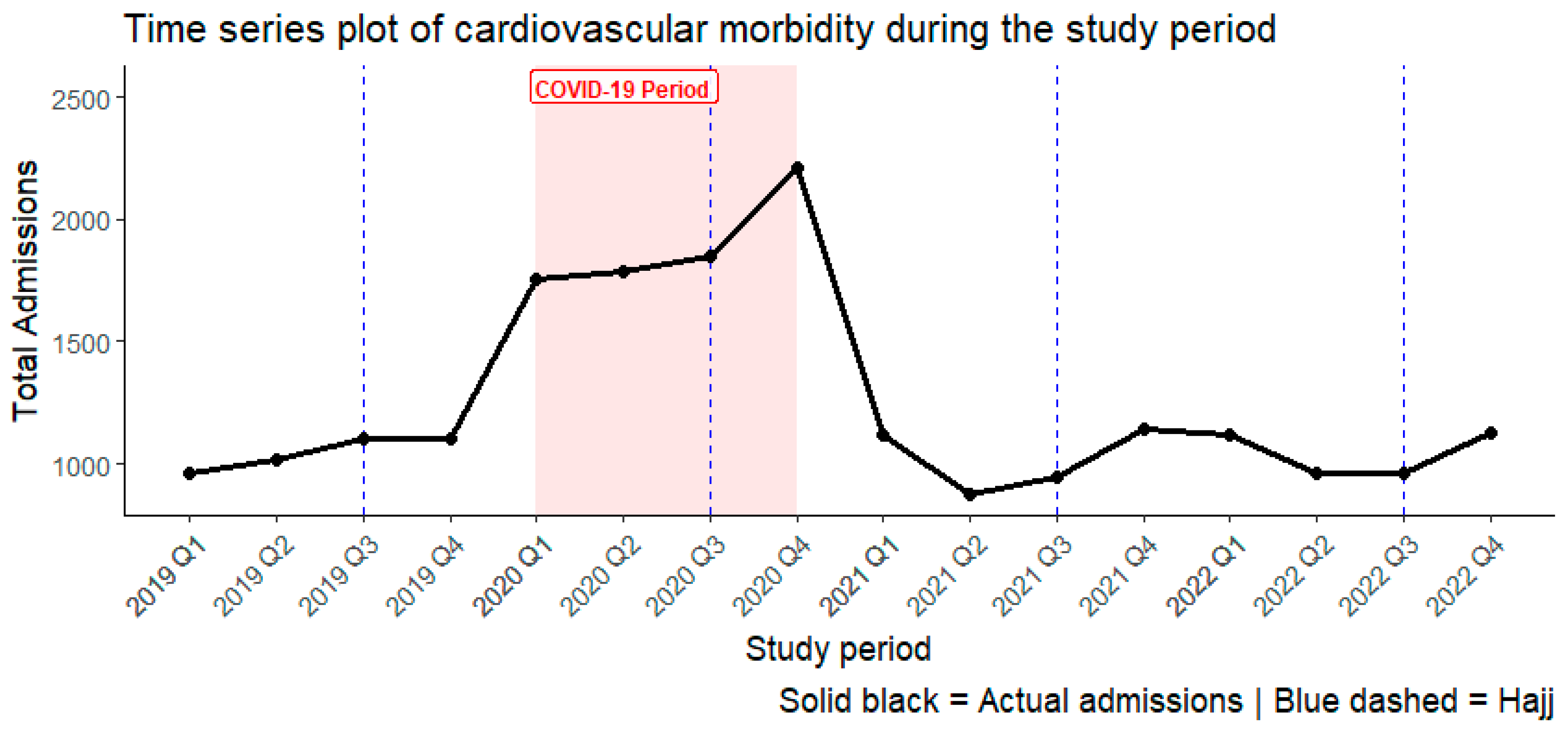
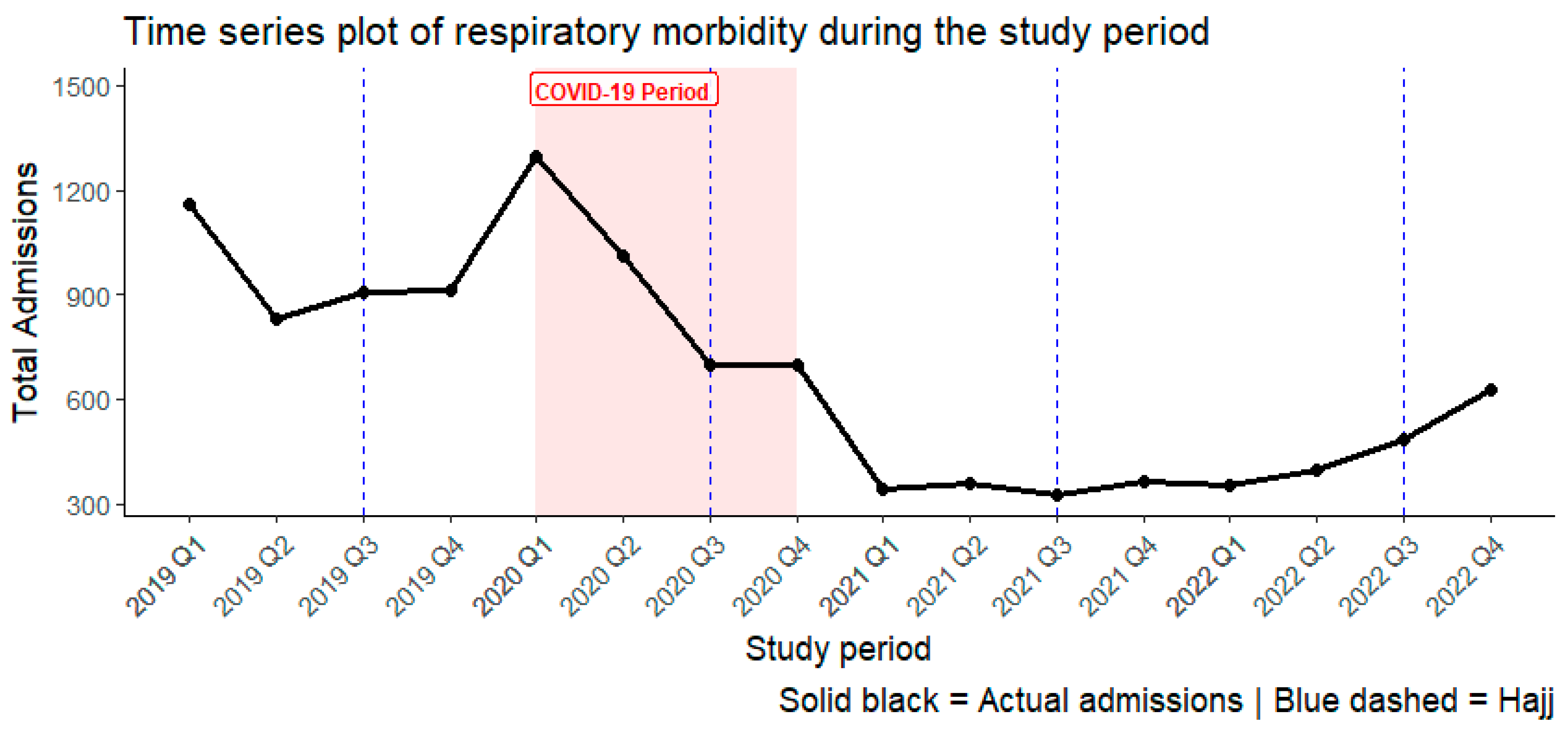
Figure 4 and Figure 5 present the time series plots of cardiovascular and respiratory morbidity from 2019 to 2022. Both plots show total admissions, with blue dashed lines marking Hajj events and the shaded area indicating the COVID-19 period. Summary statistics for admissions and pollutants during Hajj are shown in Supplementary Tables S2–S4. A clear increase in cardiovascular admissions and a notable change in respiratory admissions were observed during COVID-19, with corresponding summary statistics shown in Supplementary Tables S5 and S6.
Table 3 and Table 4 present the results of four Poisson regression models examining the association between air pollutants (PM10 and NO2) and hospital admissions from cardiovascular and respiratory diseases, focusing on different time lags. Lag 0 represents the exposure on the same day as the hospital admission, Lag 1 refers to the one-day prior exposure, and Lag 2 corresponds to the exposure from two days prior to the admission. Model 1 adjusted for temporal trends, Model 2 included sociodemographic and weather factors, Model 3 tested the effect modification by Hajj, accounting for the effects of COVID-19 and Model 4 tested the effect modification by COVID, accounting for Hajj.
The adjusted relative risks for hospital admissions from cardiovascular and respiratory diseases associated with overall exposure to PM10 and NO2 at lag days 0, 1, and 2 are presented in Table 3. All lagged associations between NO2 exposure and respiratory admissions were statistically significant in both Model 1 and Model 2. For PM10, respiratory admissions showed a statistically significant inverse association at lag 0 in both Model 1 (RR = 0.973; 95% CI: 0.949–0.997) and Model 2 (RR = 0.970; 95% CI: 0.946–0.994) (Table 3).
Regarding cardiovascular admissions, a statistically significant inverse association was observed for PM10 exposure at lag 0 in Model 1 (RR = 0.981, 95% CI: 0.963–0.999). In contrast, no statistically significant associations were observed for NO2 exposure at any lag in either model (Table 3).
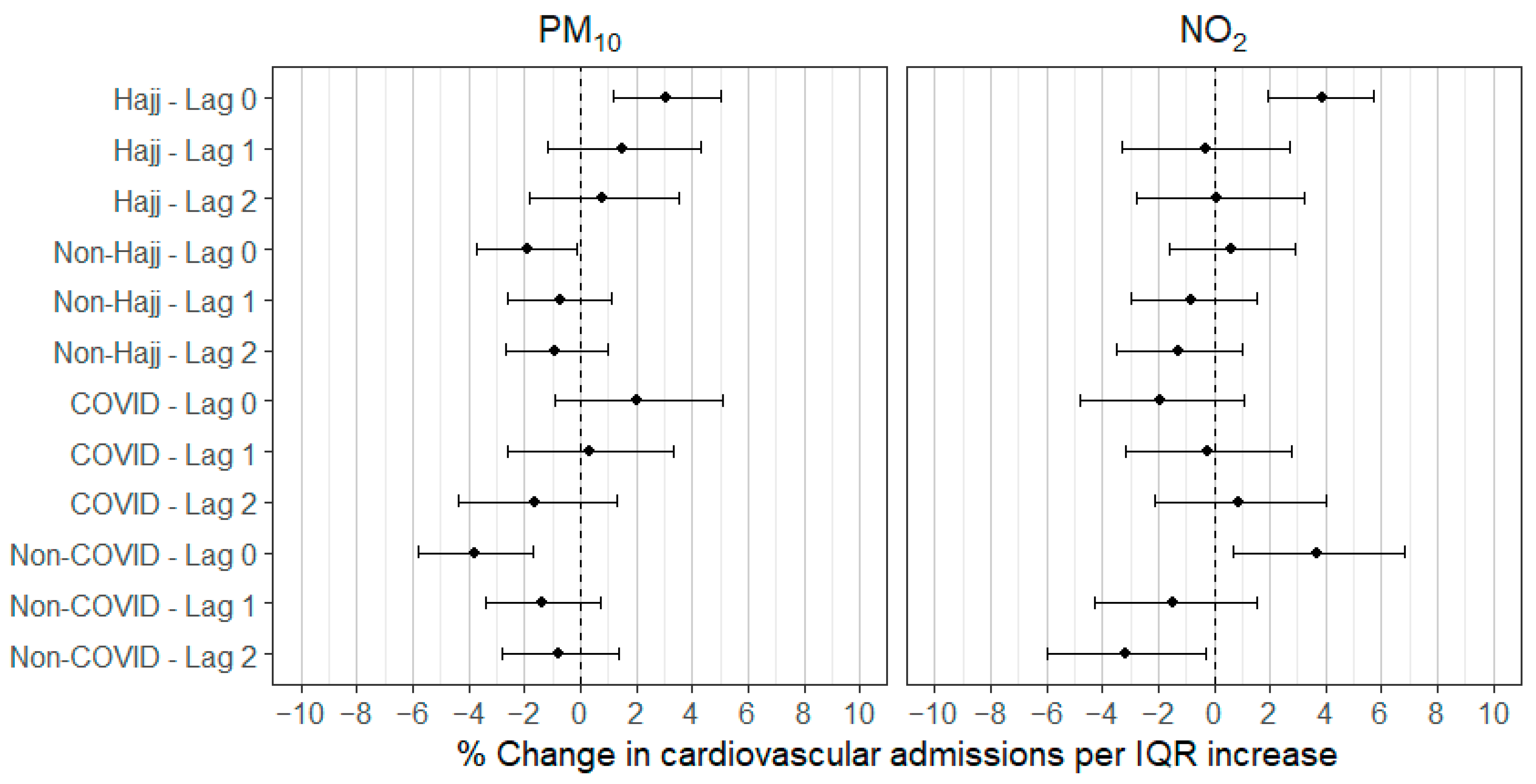
The adjusted relative risks of hospital admissions from cardiovascular and respiratory diseases associated with PM10 and NO2 exposure during and outside the Hajj and COVID-19 periods are presented in Table 4. For PM10 exposure, an IQR increase was associated with the highest effect on cardiovascular admissions during the Hajj period, showing a 3.1% increase at Lag 0 (RR: 1.031, 95% CI: 1.012–1.050). In contrast, a 1.9% decrease was found during the non-Hajj period at Lag 0 (RR: 0.981, 95% CI: 0.963–0.999). No significant associations were detected during the COVID-19 period. However, in the non-COVID period, an IQR increase in PM10 was associated with a 3.8% decrease in cardiovascular admissions at Lag 0 (RR: 0.962, 95% CI: 0.942–0.983) (Table 4).
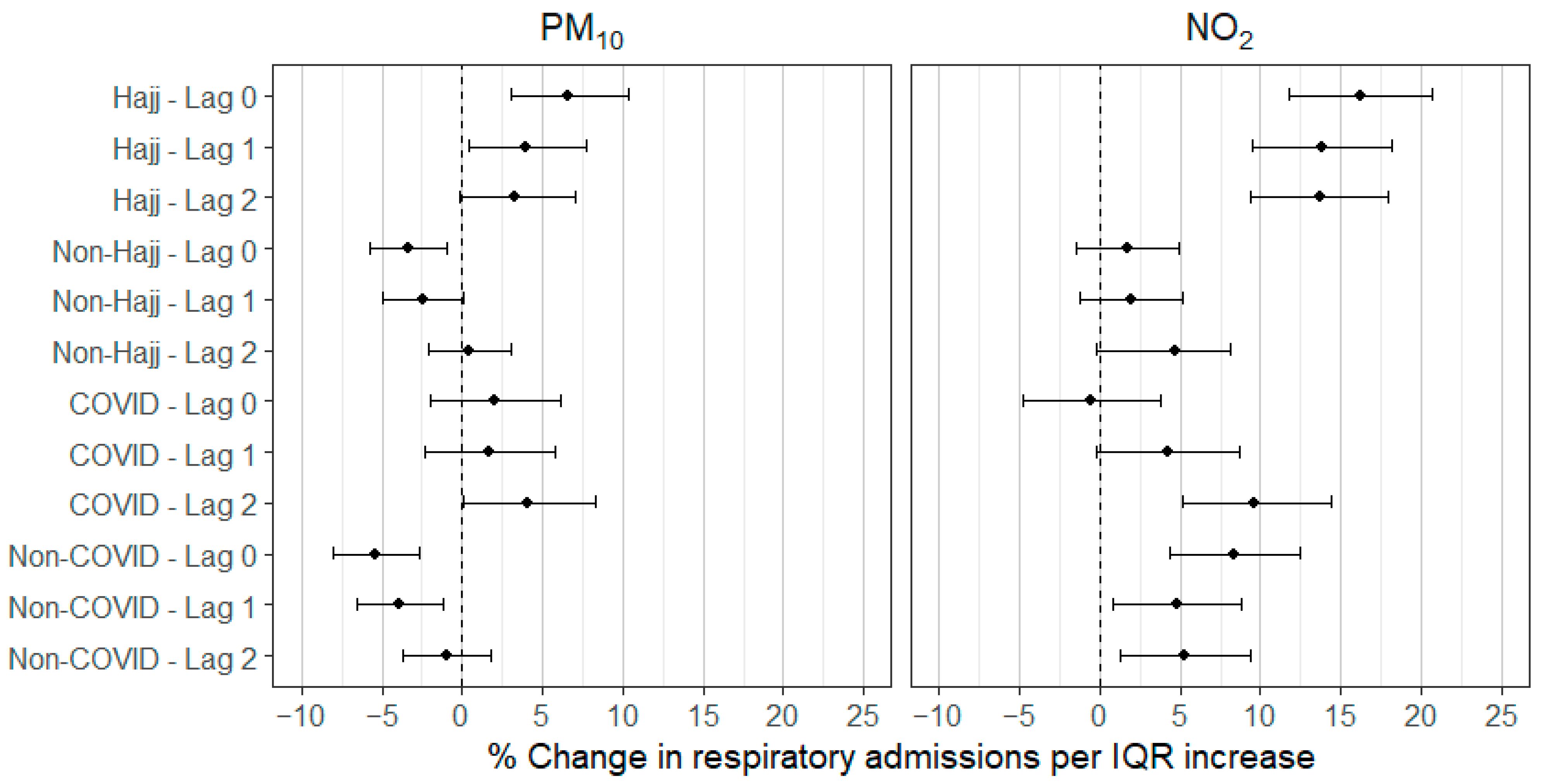
For respiratory admissions, an IQR increase in PM10 during the Hajj period was associated with a 6.6% increase in risk at Lag 0 (RR: 1.066, 95% CI: 1.030, 1.104) and a 4.0% increase at Lag 1 (RR: 1.040, 95% CI: 1.004, 1.077). In contrast, during the non-Hajj period, the same exposure was associated with a 3.4% decrease in risk at Lag 0 (RR: 0.966, 95% CI: 0.942, 0.991). During the COVID-19 period, a 4.1% increase in respiratory admissions was observed at Lag 2 (RR: 1.041, 95% CI: 1.001, 1.083). Meanwhile, in the non-COVID period, PM10 exposure was associated with a 5.4% decrease in risk at Lag 0 (RR: 0.946, 95% CI: 0.920, 0.973) and a 3.9% decrease at Lag 1 (RR: 0.961, 95% CI: 0.934, 0.988) (Table 4).
For NO2 exposure, significant increases were observed during the Hajj period, including a 3.9% rise in cardiovascular admissions at Lag 0 (RR: 1.039, 95% CI: 1.019–1.056), and respiratory admissions rose by 16.2% at Lag 0 (RR: 1.162, 95% CI: 1.118–1.207), 13.8% at Lag 1 (RR: 1.138, 95% CI: 1.095–1.182), and 13.7% at Lag 2 (RR: 1.137, 95% CI: 1.094–1.180). No significant effects were found during the non-Hajj period. Respiratory hospital admissions increased by 9.6% at Lag 2 (RR: 1.096, 95% CI: 1.051–1.144) during COVID-19, with no effect on cardiovascular outcomes (Table 4).
Figure 6 and Figure 7 illustrate the associations between air pollutants and respiratory and cardiovascular admissions. Point estimates and 95% confidence intervals for the percent change in hospital admissions per IQR increase in PM10 and NO2 concentrations across lags 0 to 2. Results are stratified by event period: Hajj, non-Hajj, COVID, and non-COVID.

4. Discussion

This study explored the associations between exposure to PM10 and NO2 and cardiovascular and respiratory hospital admissions during Hajj cultural events and the COVID-19 outbreak in Makkah. The results demonstrated that NO2 exposure was consistently associated with increased risks of respiratory admissions across several models and lags. In contrast, PM10 demonstrated weaker or inverse associations during non-event periods. The effects of both pollutants were notably greater during the Hajj period compared to non-Hajj periods, while associations diminished during the COVID-19 lockdown.
During non-event periods, PM10 exposure exhibited largely null or inverse associations with hospital admissions from cardiovascular and respiratory diseases. This may be due to the effects of persistent local sources in Makkah, including wind-blown dust, soil, and traffic-related resuspension, which dominate (PM) composition throughout much of the year [21,23]. Other studies have also reported the health effects of dust exposure, particularly among vulnerable populations [30,31], though such naturally derived PM10 may have a different toxicity profile compared to anthropogenic sources. Natural dust is mostly made of coarse mineral particles that are less reactive, so it usually has lower toxicity than fine particles from combustion sources [32].
The observed amplification of air pollution impacts during the Hajj events may be due to the synergistic action of other stressors, such as overpopulation, heat, and physical exertion, which are well documented as significant problems during mass gatherings [33]. These are further exacerbated by vehicular emissions and continuous construction activities in Makkah during the Hajj period. Consistent with this, Farahat et al. [34] noted substantially elevated NO2 concentrations during Hajj, primarily driven by vehicular emissions associated with pilgrim transportation. During the Hajj period, our study observed statistically significant positive associations between PM10 exposure and both cardiovascular and respiratory hospital admissions. Relative risks (RRs) per interquartile range (IQR) increase in PM10 were 1.031 (95% CI: 1.012–1.050) for cardiovascular admissions and 1.066 (95% CI: 1.030–1.104) for respiratory admissions at lag 0.
These results are also consistent with regional and international studies. In Iran, Vahedian et al. [35] observed a positive association between PM10 exposure and cardiovascular hospital admissions in Arak, with each 10 μg/m3 increase in PM10 associated with a 0.7% increase in admissions (RR = 1.007, 95% CI: 1.002–1.012). Khalilzadeh et al. [36] also found that high levels of PM10 were positively associated with an increase in both respiratory and cardiovascular hospital admissions in Tehran. Similarly, Pak and Pak [37] highlighted that elevated levels of PM10 were associated with increased respiratory hospital admissions in Seoul, particularly among patients aged 75 and older. In Ulaanbaatar, Bayart et al. [6] found stronger and more consistent effects of PM10 on cardiovascular diseases compared to PM2.5, with PM10 showing higher relative risks for CVD and stroke admissions. This may be attributed to the differences in local pollutant sources and seasonal patterns of combustion.
In the context of mass gatherings, our results align with other cultural festival studies that have reported a significant increase in air pollution. For instance, during the Chahar-Shanbe Suri festival in Tehran, Oroji et al. [38] reported an acute increase in the Air Quality Index (AQI) from 49 to over 200 within a few hours due to widespread use of fireworks and bonfires. Similarly, Ghosh et al. [39] recorded an increase in PM2.5 and PM10 concentrations in various Indian cities during the Diwali cultural event, which increased up to 52.6% and 23.4%, respectively. While those studies focused mainly on pollutant levels, our findings demonstrate direct evidence linking short-term PM10 exposure during a cultural mass gathering and increased hospital admissions.
Several Saudi studies have characterised air pollution in Makkah, revealing its unique environmental and demographic conditions. For instance, Habeebullah [23] found that the main sources of air pollution in Makkah were wind-blown dust and vehicle emissions. Nayebare et al. [21] performed a source apportionment analysis showing vehicular emissions and re-suspended dust as the main sources of PM2.5, while Chowdhury et al. [40] emphasised the seasonal pollution episodes linked to Hajj and Ramadan. Although these studies focused on pollutant concentrations rather than health outcomes, our findings build on this body of work by linking pollution exposure directly to hospital admissions during specific events.
In addition to PM10, we have found significant positive associations between NO2 exposure and hospital admissions during the Hajj period, particularly for respiratory conditions (RR = 1.162; 95% CI: 1.118–1.207), and to a lesser extent for cardiovascular conditions (RR = 1.039; 95% CI: 1.019–1.056) per IQR increase at lag 0. These results are in line with the biological plausibility of NO2 as a respiratory irritant that can cause airway inflammation, which in turn can exacerbate asthma and COPD [29]. Fusco et al. [41] confirmed that daily NO2 concentrations were positively associated with hospital admissions for total respiratory conditions and acute infections in Rome. Significant long-term associations between elevated respiratory and cardiovascular mortality and NO2 exposure were found in a meta-analysis conducted by Faustini et al. [42]. While our analysis focuses on short-term outcomes, the alignment with both acute and chronic exposure studies reinforces the biological plausibility of NO2-related health risks. Additional support comes from Xiangyang, China, where Liu et al. [43] found a significant correlation between short-term NO2 exposure and increased cardiovascular hospital admissions.
Cardiovascular admissions during the Hajj 2020 window were approximately 1.7 times higher than in other years (Supplementary Table S2). This anomaly aligns with Saudi Arabia’s first COVID-19 wave, which peaked in June and July 2020 and remained elevated into late July. For example, there were 1993 new cases on 28 July, the lowest since June [44]. Because COVID-19 is associated with acute cardiovascular complications (myocardial injury, arrhythmias, thromboembolism), the overlap between the Hajj 2020 window and high community transmission was associated with increased resident cardiovascular hospitalisations captured by our four hospitals, independent of pilgrim volume [45,46].
The elevated risks of cardiovascular and respiratory hospital admissions during the Hajj period, associated with exposure to PM10 and NO2, may be influenced by multiple risk factors such as increased emissions from transportation and crowding, as well as the vulnerability of pilgrims, many of whom are elderly or have pre-existing health conditions. These results emphasise the need for urgent air quality interventions and proactive public health planning during Hajj, such as real-time air quality monitoring and public advisories, and the provision of protective measures (e.g., masks for vulnerable pilgrims). Additional measures include crowd and traffic management, as well as strengthening the preparedness of healthcare facilities to manage respiratory and cardiovascular exacerbations.
The relationships between air pollutants and hospital admissions weakened or became statistically nonsignificant during the COVID-19 lockdown (Model 4). This is consistent with widespread reductions in pollution concentrations recorded during pandemic-related mobility restrictions across the world [47,48]. The attenuation of associations between air pollution and hospital admissions during COVID-19 is likely explained by a combination of true reductions in pollutant concentrations and changes in healthcare-seeking behaviour. Many individuals avoided or delayed hospital visits due to infection concerns or restricted access [49], leading to under-ascertainment of respiratory and cardiovascular cases. For instance, in Barcelona, Spain, substantial decreases in NO2 and PM10 concentrations were recorded during the lockdown period, with NO2 levels dropping by 47–51% and PM10 levels decreasing by 28–31% at urban background and traffic stations, respectively [50]. Similar trends, particularly notable reductions in NO2 concentrations, have also been reported in the Eastern Province of Saudi Arabia [51], providing strong support to our results. Similar findings have been reported in European Balkan countries. A study from Serbia showed that COVID-19 cases and deaths were positively correlated with air pollution, especially PM2.5. The authors also noted that PM2.5 levels decreased in the later stages of the pandemic, alongside changes in case and death trends [52]. In Dublin, transport restrictions during COVID-19 led to sharp reductions in traffic-related pollutants, particularly NO2. This was accompanied by a significant drop in asthma-related hospital admissions [53]. These studies support our interpretation that the weaker associations in Makkah during the COVID-19 period were driven by both lower pollution levels and changes in healthcare behaviour.
We observed a marked decline in respiratory admissions after the onset of COVID-19, coinciding with a gradual decrease in NO2 concentrations. These parallel trends make it difficult to separate pollutant effects from broader societal changes. Infection prevention measures (e.g., mask use, social distancing, travel restrictions) likely reduced respiratory infections independently of air pollution. Thus, part of the observed association between NO2 and respiratory admissions may reflect overlapping effects of reduced emissions and reduced transmission of infections, underscoring the complexity of interpretation during disruptive events such as the COVID-19 pandemic.
Different confounders may have affected the associations between air pollution and hospital admissions, which is acknowledged as a limitation. Since our models were adjusted for seasonality and event periods, some factors such as pre-existing conditions, socioeconomic background, and access to healthcare may have affected both exposure and outcomes. In addition, indoor air pollution, mask use, and physical exertion during Hajj likely varied by period and population, contributing to residual confounding. Changes in healthcare-seeking behaviour during the pandemic period might have biased admission rates independently of pollution exposure, which is also considered a study limitation.
As in most observational time series studies, we used ambient pollutant concentrations measured at a single fixed site monitoring station, which may not fully capture spatial variability in exposures across Makkah and could lead to exposure misclassification. A further limitation of this study is the absence of PM2.5 data, which restricted our analyses to PM10 and NO2 and may not fully capture the health burden of fine particulate pollution in Makkah. We were unable to adjust for temporary population increases during Hajj, as detailed denominator data on residents and pilgrims were not available. Using the hospital admission dates rather than the actual start of symptoms may lead to inaccuracies in matching exposure timing. Our study did not consider factors like pre-existing health conditions, socioeconomic status, and indoor air pollution, all of which may influence susceptibility and healthcare utilisation. These unmeasured variables may therefore have contributed to residual confounding.
Our results justify the need for the inclusion of air quality management during the Hajj cultural event planning. Reducing the negative effects of air pollution on human health may be addressed by decreasing traffic emissions, limiting construction activities, promoting electric or eco-friendly vehicles, and issuing timely health advisories may help mitigate pollution-related health risks. Emphasis should be placed on vulnerable populations, including the elderly, those with chronic diseases, and outdoor workers, during periods of high crowd density and poor air quality.
This study has several strengths. To our knowledge, this is the first study to assess the associations between PM10 and NO2 and hospital admissions for cardiovascular and respiratory diseases in Makkah, during the Hajj and COVID-19 periods. By utilising time series regression models with lag structures and stratified analyses, we were able to assess temporal variations and potential effect modification. The models were adjusted for long-term trends and seasonality using spline functions, enhancing control over confounding factors. Our event-specific analysis highlights how cultural events and COVID lockdowns affect the air quality and health situation in Makkah. Future studies should incorporate data on primary pollution sources and individual-level exposure to pollutants to better assess vulnerability and inform targeted interventions.

5. Conclusions

Our study found positive associations with PM10 and NO2 exposures detected during the Hajj period, where both pollutants revealed significantly elevated risks for cardiovascular and respiratory outcomes. Despite reduced urban activity during the COVID-19 period, PM10 and NO2 exposures remained associated with increased respiratory admissions in Makkah, particularly at longer lags. These results emphasise the increased vulnerability of populations during Hajj cultural events and underscore the combined effects of environmental and anthropogenic factors. To reduce future health risks, we recommend that policymakers implement efficient strategies to manage air pollution and associated health impacts, especially during peak pilgrimage seasons in Makkah.

Supplementary Materials

The following supporting information can be downloaded at: https://www.mdpi.com/article/10.3390/atmos16101220/s1, Table S1: Annual summary statistics of air pollutant concentrations and meteorological parameters in Makkah, Saudi Arabia (2019–2022); Table S2: Total hospital admissions during Hajj periods (2019–2022); Table S3: Daily hospital admissions during Hajj periods (2019–2022); Table S4: Air pollutants and meteorological conditions during Hajj periods (2019–2022); Table S5: Hospital admissions during the COVID-19 lockdown; Table S6: Air pollutants and meteorological conditions during the COVID-19 lockdown; Table S7: Akaike Information Criterion (AIC) values for different spline degrees of freedom (df) per year in time-series models of daily cardiovascular and respiratory admissions (2019–2022).

Author Contributions

A.A.M.: Conceptualization, Methodology, Data curation, Formal analysis, Investigation, Writing—original draft. I.C.H.: Conceptualization, Methodology, Writing—review and editing, Formal analysis, Supervision. H.M.B.: Writing—review and editing. W.A.K.: Data curation. K.R.: Conceptualization, Methodology, Writing—review and editing, Supervision. All authors have read and agreed to the published version of the manuscript.

Funding

No funding was received for conducting this study.

Institutional Review Board Statement

Ethical approval was obtained from the Human Research Ethics Committee at Curtin University (Approval No: HRE2023-0396).

Informed Consent Statement

Not applicable.

Data Availability Statement

The datasets are not publicly available due to the Ethics Committee policy.

Acknowledgments

The authors would like to thank the Ministry of Health and the National Centre for Environmental Compliance in Saudi Arabia for providing data for this research.

Conflicts of Interest

The authors have no relevant financial or non-financial interests to disclose.

References

  1. Javanmardi, P.; Morovati, P.; Farhadi, M.; Geravandi, S.; Khaniabadi, Y.O.; Angali, K.A.; Taiwo, A.M.; Sicard, P.G.; Gholamreza, V.A.; Mohammadi, M.J.; et al. Monitoring the impact of ambient ozone on human health using time series analysis and air quality model approaches. Fresenius Environ. Bull. 2018, 27, 533–544. [Google Scholar]
  2. Khaefi, M.; Goudarzi, G.; Yari, A.R.; Geravandi, S.; Dobaradaran, S.; Idani, E.; Javanmardi, P.; Youesfi, F.; Hashemzedeh, B.; Mohammadi, M.J.; et al. An association between ambient pollutants and hospital admitted respiratory cases in Ahvaz, Iran. Fresenius Environ. Bull. 2016, 25, 3955–3961. [Google Scholar]
  3. Romieu, I.; Gouveia, N.; Cifuentes, L.A.; de Leon, A.P.; Junger, W.; Vera, J.; Strappa, V.; Hurtado-Díaz, M.; Miranda-Soberanis, V.; HEI Health Review Committee. Multicity study of air pollution and mortality in Latin America (the ESCALA study). Res. Rep. Health Eff. Inst. 2012, 171, 5–86. [Google Scholar]
  4. Chen, R.; Kan, H.; Chen, B.; Huang, W.; Bai, Z.; Song, G.; Pan, G. Association of particulate air pollution with daily mortality: The China Air Pollution and Health Effects Study. Am. J. Epidemiol. 2012, 175, 1173–1181. [Google Scholar] [CrossRef]
  5. Turner, M.C.; Jerrett, M.; Pope III, C.A.; Krewski, D.; Gapstur, S.M.; Diver, W.R.; Burnett, R.T. Long-term ozone exposure and mortality in a large prospective study. Am. J. Respir. Crit. Care Med. 2016, 193, 1134–1142. [Google Scholar] [CrossRef] [PubMed]
  6. Bayart, N.E.; Pereira, G.; Reid, C.M.; Nyadanu, S.D.; Badamdorj, O.; Lkhagvasuren, B.; Rumchev, K. Effects of outdoor air pollution on hospital admissions from cardiovascular diseases in the capital city of Mongolia. Atmos. Pollut. Res. 2025, 16, 102338. [Google Scholar] [CrossRef]
  7. Khwaja, H.A.; Aburizaiza, O.S.; Siddique, A.; Hussain, M.M.; Khatib, F.; Zeb, J.; Blake, D.R. An Assessment of Air Quality in the Surrounding Holy Places of Mecca, Saudi Arabia during Hajj. In AGU Fall Meeting Abstracts; the American Geophysical Union (AGU): Washington, DC, USA, 2014; Volume 2014, p. A13C-3189. [Google Scholar]
  8. Chatterjee, A.; Sarkar, C.; Adak, A.; Mukherjee, U.; Ghosh, S.K.; Raha, S. Ambient air quality during Diwali festival over Kolkata—A mega-city in India. Aerosol Air Qual. Res. 2013, 13, 1133–1144. [Google Scholar] [CrossRef]
  9. Maheswari, S.; Pethannan, R.; Sabarimurugan, S. Air pollution enhances susceptibility to novel coronavirus (COVID–19) infection—An impact study. Environ. Anal. Health Toxicol. 2020, 35, e2020020. [Google Scholar] [CrossRef]
  10. Mahdi, H.A.; Rashid, H.; Qashqari, F.S.; Hariri, S.H.; Marglani, O.A.; Barasheed, O.; Albutti, A.; Alwashmi, A.S.; Shaban, R.Z.; Booy, R.; et al. Syndromic surveillance of respiratory-tract infections and hand hygiene practice among pilgrims attended Hajj in 2021: A cohort study. BMC Infect. Dis. 2022, 22, 578. [Google Scholar] [CrossRef]
  11. Dastoorpoor, M.; Sekhavatpour, Z.; Masoumi, K.; Mohammadi, M.J.; Aghababaeian, H.; Khanjani, N.; Hashemzadeh, B.; Vahedian, M. Air pollution and hospital admissions for cardiovascular diseases in Ahvaz, Iran. Sci. Total Environ. 2019, 652, 1318–1330. [Google Scholar] [CrossRef]
  12. Seroji, A.R. Particulates in the atmosphere of Makkah and Mina Valley during the Ramadan and Hajj seasons of 2004 and 2005. In Air Pollution XIX; Brebbia, C.A., Longhurst, J.W.S., Popov, V., Eds.; Wessex Institute of Technology: London, UK, 2011; pp. 319–327. [Google Scholar] [CrossRef]
  13. Gatrad, A.R.; Sheikh, A. Hajj: Journey of a lifetime. BMJ 2005, 330, 133–137. [Google Scholar] [CrossRef] [PubMed]
  14. GASTAT. Total Number of Pilgrims in the 2024 Hajj Season is 1,833,164. General Authority for Statistics. 2024. Available online: https://www.stats.gov.sa/en/w/gastat-total-number-of-pilgrims-in-1445-h-hajj-season-is-1-833-164 (accessed on 24 March 2025).
  15. Munir, S.; Habeebullah, T.M.; Seroji, A.R.; Gabr, S.S.; Mohammed, A.M.; Morsy, E.A. Quantifying temporal trends of atmospheric pollutants in Makkah (1997–2012). Atmos. Environ. 2013, 77, 647–655. [Google Scholar] [CrossRef]
  16. Ghorani-Azam, A.; Riahi-Zanjani, B.; Balali-Mood, M. Effects of air pollution on human health and practical measures for prevention in Iran. J. Res. Med. Sci. 2016, 21, 189646. [Google Scholar] [CrossRef] [PubMed]
  17. Gu, H.; Cao, Y.; Elahi, E.; Jha, S.K. Human health damages related to air pollution in China. Environ. Sci. Pollut. Res. 2019, 26, 13115–13125. [Google Scholar] [CrossRef]
  18. Saleh, S.A.K.; Adly, H.M. Impact of ambient air pollution exposure on long COVID-19 symptoms: A cohort study within the Saudi Arabian population. Infect. Dis. Rep. 2023, 15, 5. [Google Scholar] [CrossRef]
  19. Lai, Y.; Brimblecombe, P. Regulatory effects on particulate pollution in the early hours of Chinese New Year, 2015. Environ. Monit. Assess. 2017, 189, 467. [Google Scholar] [CrossRef]
  20. Oroji, B.; Sadighzadeh, A.; Solgi, E. Effects of fireworks ancient celebrations on atmospheric concentration of particulate matter in Iran. Geol. Ecol. Landsc. 2020, 4, 104–110. [Google Scholar] [CrossRef]
  21. Nayebare, S.R.; Aburizaiza, O.S.; Siddique, A.; Carpenter, D.O.; Hussain, M.M.; Zeb, J.; Aburiziza, A.J.; Khwaja, H.A. Ambient air quality in the holy city of Makkah: A source apportionment with elemental enrichment factors (EFs) and factor analysis (PMF). Environ. Pollut. 2018, 243, 1791–1801. [Google Scholar] [CrossRef]
  22. Mohammed, A.M.; Habeebullah, T.M.; Morsy, E.A. Air pollution in Saudi Arabia—Spatial variations of PM10 in Makkah (KSA). Int. J. Agric. Env. Res. 2016, 2, 116–128. [Google Scholar]
  23. Habeebullah, T.M. An analysis of air pollution in Makkah—A viewpoint of source identification. Environ. Asia 2013, 2, 11–17. [Google Scholar]
  24. Abdou, A.E.A. Temperature trend in Makkah, Saudi Arabia. Atmos. Clim. Sci. 2014, 4, 457–481. [Google Scholar] [CrossRef]
  25. GASTAT. Population Statistics: Size of the Population Statistics. General Authority for Statistics. 2022. Available online: https://www.stats.gov.sa/en/statistics-tabs?tab=436327&category=417653 (accessed on 18 April 2025).
  26. World Health Organization. International Statistical Classification of Diseases and Related Health Problems (10th rev.). 2016. Available online: https://icd.who.int/browse10/2016/en#/IX (accessed on 16 February 2025).
  27. Bhaskaran, K.; Gasparrini, A.; Hajat, S.; Smeeth, L.; Armstrong, B. Time series regression studies in environmental epidemiology. Int. J. Epidemiol. 2013, 42, 1187–1195. [Google Scholar] [CrossRef]
  28. R Core Team. R: A Language and Environment for Statistical Computing. R Foundation for Statistical Computing. 2023. Available online: https://www.R-project.org/ (accessed on 20 March 2025).
  29. World Health Organization. WHO Global Air Quality Guidelines: Particulate Matter (PM2.5 and PM10), Ozone, Nitrogen Dioxide, Sulfur Dioxide and Carbon Monoxide. 2021. Available online: https://www.who.int/publications/i/item/9789240034228 (accessed on 20 February 2025).
  30. Vodonos, A.; Friger, M.; Katra, I.; Krasnov, H.; Zahger, D.; Schwartz, J.; Novack, V. Individual effect modifiers of dust exposure effect on cardiovascular morbidity. PLoS ONE 2015, 10, e0137714. [Google Scholar] [CrossRef] [PubMed]
  31. Al-Hemoud, A. Exposure of Dust Storms and Air Pollution (PM10, PM2.5) and Associated Health Risk in the Arid Region. In Dust and Health; Emerging Contaminants and Associated Treatment Technologies series; Al-Dousari, A., Hashmi, M.Z., Eds.; Springer: Cham, Switzerland, 2023; pp. 51–78. [Google Scholar] [CrossRef]
  32. Kelly, F.J.; Fussell, J.C. Size, source and chemical composition as determinants of toxicity attributable to ambient particulate matter. Atmos. Environ. 2012, 60, 504–526. [Google Scholar] [CrossRef]
  33. Memish, Z.A.; Steffen, R.; White, P.; Dar, O.; I Azhar, E.; Sharma, A.; Zumla, A. Mass gatherings medicine: Public health issues arising from mass gathering religious and sporting events. Lancet Infect. Dis. 2019, 14, 58–65. [Google Scholar] [CrossRef] [PubMed]
  34. Farahat, A.; Chauhan, A.; Al Otaibi, M.; Singh, R.P. Air quality over major cities of Saudi Arabia during Hajj periods of 2019 and 2020. Earth Syst. Environ. 2021, 5, 101–114. [Google Scholar] [CrossRef]
  35. Vahedian, M.; Salahodjaev, R. Ambient air pollution and daily hospital admissions for cardiovascular diseases in Arak, Iran. Environ. Res. 2017, 158, 381–391. [Google Scholar] [CrossRef]
  36. Khalilzadeh, S.; Khalilzadeh, Z.; Emami, H.; Masjedi, M.R. The relation between air pollution and cardiorespiratory admissions in Tehran. Tanaffos 2009, 8, 35–40. Available online: https://www.tanaffosjournal.ir/article_241231.html (accessed on 16 October 2025).
  37. Pak, H.Y.; Pak, Y.S. The effects of PM10 on the hospital admission of patients with respiratory disease in Seoul, Korea. J. Converg. Inf. Technol. 2019, 9, 194–201. [Google Scholar]
  38. Oroji, B.; Solgi, E.; Sadighzadeh, A. Effect of Chahar-Shanbe Suri celebration on air quality in Iran: A case study of Tehran (megacity). Int. J. Chem. Sci. 2018, 16, 257–264. [Google Scholar] [CrossRef]
  39. Ghosh, B.; Barman, H.C.; Padhy, P.K. Trends of air pollution variations during pre-Diwali, Diwali and post-Diwali periods and health risk assessment using HAQI in India. Environ. Syst. Res. 2024, 13, 17. [Google Scholar] [CrossRef]
  40. Chowdhury, S.R.; Alkhammmas, F.; Almshar, Z.; Almadi, H. Air pollution from vehicles in Makkah, Saudi Arabia: Challenges and sustainable solutions. In Materials Research Proceedings; Materials Research Forum LLC: Millersville, PA, USA, 2025; Volume 48, pp. 634–642. [Google Scholar] [CrossRef]
  41. Fusco, D.; Forastiere, F.; Michelozzi, P.; Spadea, T.; Ostro, B.; Arca, M.; Perucci, C.A. Air pollution and hospital admissions for respiratory conditions in Rome, Italy. Eur. Respir. J. 2001, 17, 1143–1150. [Google Scholar] [CrossRef] [PubMed]
  42. Faustini, A.; Rapp, R.; Forastiere, F. Nitrogen dioxide and mortality: Review and meta-analysis of long-term studies. Eur. Respir. J. 2014, 44, 744–753. [Google Scholar] [CrossRef] [PubMed]
  43. Liu, Y.; Guo, M.; Wang, J.; Gong, Y.; Huang, C.; Wang, W.; Liu, X.; Liu, J.; Ju, C.; Wu, X.; et al. Effect of short-term exposure to air pollution on hospital admission for cardiovascular disease: A time-series study in Xiangyang, China. Sci. Total Environ. 2024, 918, 170735. [Google Scholar] [CrossRef]
  44. World Health Organization, Regional Office for the Eastern Mediterranean. Coronavirus Disease 2019 (COVID-19) Situation Report No. 105–Kingdom of Saudi Arabia. Available online: https://joomla.emro.who.int/images/stories/saudi_arabia/saudi-arabia-covid-sit-rep-105-2020-07-28.pdf (accessed on 28 July 2020).
  45. Madjid, M.; Safavi-Naeini, P.; Solomon, S.D.; Vardeny, O. Potential effects of coronaviruses on the cardiovascular system: A review. JAMA Cardiol. 2020, 5, 831–840. [Google Scholar] [CrossRef]
  46. Nishiga, M.; Wang, D.W.; Han, Y.; Lewis, D.B.; Wu, J.C. COVID-19 and cardiovascular disease: From basic mechanisms to clinical perspectives. Nat. Rev. Cardiol. 2020, 17, 543–558. [Google Scholar] [CrossRef]
  47. Chen, K.; Wang, M.; Huang, C.; Kinney, P.L.; Anastas, P.T. Air pollution reduction and mortality benefit during the COVID-19 outbreak in China. Lancet Planet. Health 2020, 4, e210–e212. [Google Scholar]
  48. Venter, Z.S.; Aunan, K.; Chowdhury, S.; Lelieveld, J. COVID-19 lockdowns cause global air pollution declines. Proc. Natl. Acad. Sci. USA 2020, 117, 18984–18990. [Google Scholar]
  49. Mehrotra, A.; Chernew, M.E.; Linetsky, D.; Hatch, H.; Cutler, D.M. The Impact of the COVID-19 Pandemic on Outpatient Visits: A Rebound Emerges; Commonwealth Fund: London, UK, 2020. [Google Scholar] [CrossRef]
  50. Tobías, A.; Carnerero, C.; Reche, C.; Massagué, J.; Via, M.; Minguillón, M.C.; Alastuey, A.; Querol, X. Changes in air quality during the lockdown in Barcelona (Spain) one month into the SARS-CoV-2 pandemic. Environ. Res. 2020, 188, 109806. [Google Scholar] [CrossRef]
  51. Anil, I.; Alagha, O. The impact of COVID-19 lockdown on the air quality of Eastern Province, Saudi Arabia. Air Qual. Atmos. Health 2021, 14, 117–128. [Google Scholar] [CrossRef]
  52. Gostimirovic, M.; Gojkovic Bukarica, L.; Rajkovic, J.; Zivkovic, I.; Bukarica, A.; Terzic, D. Did environmental and climatic factors influence the outcome of the COVID-19 pandemic in the Republic of Serbia? Healthcare 2025, 13, 1589. [Google Scholar] [CrossRef]
  53. Kelly, C.; Kenny, P.; O’Dwyer, M.; Quintyne, K.I. Ambient air pollutant concentrations and asthma-related hospital admissions during COVID-19 transport restrictions. Public Health 2022, 211, 66–71. [Google Scholar] [CrossRef]
Figure 1. Map of the study area showing the locations of four hospitals (AlNoor, Heraa, King Abdulaziz, and King Faisal) in Makkah, Saudi Arabia, where cardiovascular and respiratory hospital admissions data were collected.
Atmosphere 16 01220 g001
Figure 2. Daily mean concentrations of PM10 (µg/m3) in Makkah from January 2019 to December 2022. The horizontal dashed red line represents the WHO 24 h air quality guideline upper limit for PM10. The vertical dotted blue lines denote the Hajj periods during each year.
Atmosphere 16 01220 g002
Figure 3. Daily mean concentrations of NO2 (µg/m3) in Makkah from January 2019 to December 2022. The horizontal dashed red line represents the WHO 24 h air quality guideline upper limit for NO2. The vertical dotted blue lines denote the Hajj periods during each year.
Atmosphere 16 01220 g003
Figure 4. Time series plot of cardiovascular morbidity during the study period (2019–2022).
Atmosphere 16 01220 g004
Figure 5. Time series plot of respiratory morbidity during the study period (2019–2022).
Atmosphere 16 01220 g005
Figure 6. Associations between ambient air pollutants and respiratory hospital admissions in Makkah (2019–2022). Points show estimated percent changes; horizontal lines indicate 95% confidence intervals.
Atmosphere 16 01220 g006
Figure 7. Associations between ambient air pollutants and cardiovascular hospital admissions in Makkah (2019–2022). Points show estimated percent changes; horizontal lines indicate 95% confidence intervals.
Atmosphere 16 01220 g007
Table 1. Demographic characteristics of cause-specific hospitalisations in Makkah, Saudi Arabia (2019–2022).
CharacteristicsCardiovascular DiseasesRespiratory Diseases
Total Cases20,02810,753
Age Mean (SD)59.4 (15.1)52.4 (19.7)
Age Subgroups
Age 14–35 years N, (%)1363 (6.8%)2563 (23.8%)
Age 36–60 years N, (%)8970 (44.8%)4179 (38.9%)
Age > 60 years N, (%)9695 (48.4%)4011 (37.3%)
Nationality
Saudi N, (%)11,835 (59.09%)6319 (58.76%)
Non-Saudi N, (%)8193 (40.91%)4434 (41.24%)
Gender
Female N, (%)8697 (43.4%)4829 (44.9%)
Male N, (%)11,331 (56.6%)5924 (55.1%)
Table 2. Summary statistics a of air pollutant concentrations and meteorological factors in Makkah, Saudi Arabia (2019–2022).
VariablesMean (SD)(Min–Max)Median (IQR)
PM10 (μg/m3) b43.91 (11.62)18.0–88.047.0 (14.36)
NO2 (μg/m3) b19.20 (6.73)5.16–52.0619.0 (8.40)
Temperature (°C)29.80 (4.50)19.30–46.0030.0 (7.0)
Humidity (%)52.68 (9.46)18.80–76.4053.30 (13.0)
Wind Speed (km/h)13.37 (4.51)4.90–32.3012.90 (6.40)
a Statistics were generated from daily (24 h) mean levels of air pollutants. b PM10 and NO2 concentrations are given as 24 h average concentrations.
Table 3. Adjusted relative risks of hospital admissions from cardiovascular and respiratory diseases associated with overall PM10 and NO2 exposure at Lags 0–2 (Models 1 and 2).
ModelLagRR (95% CI) for PM10 on CVDRR (95% CI) for PM10 on RespiratoryRR (95% CI) for NO2 on CVDRR (95% CI) for NO2 on Respiratory
Model 1Lag 00.981 (0.963–0.999)0.973 (0.949–0.997)1.014 (0.993–1.036)1.059 (1.028–1.088)
Lag 10.993 (0.975–1.012)0.984 (0.960–1.008)0.996 (0.975–1.018)1.060 (1.030–1.091)
Lag 20.992 (0.974–1.010)1.013 (0.988–1.038)0.991 (0.970–1.013)1.084 (1.053–1.116)
Model 2Lag 00.990 (0.982–1.018)0.970 (0.946–0.994)1.011 (0.990–1.033)1.057 (1.028–1.089)
Lag 10.992 (0.973–1.010)0.980 (0.956–1.005)0.994 (0.973–1.015)1.059 (1.029–1.090)
Lag 20.990 (0.972–1.009)1.009 (0.985–1.035)0.991 (0.970–1.012)1.086 (1.055–1.118)
Table 4. Adjusted relative risks of hospital admissions from cardiovascular and respiratory diseases associated with PM10 and NO2 exposure during and outside Hajj and COVID-19 periods at Lags 0–2 (Models 3 and 4).
ModelLagRR (95% CI) for PM10 on CVD RR (95% CI) for PM10 on RespiratoryRR (95% CI) for NO2 on CVDRR (95% CI) for NO2 on Respiratory
Model 3. During the Hajj periodLag 01.031
(1.012–1.050)
1.066
(1.030–1.104)
1.039
(1.019–1.056)
1.162
(1.118–1.207)
Lag 11.015
(0.988–1.043)
1.040
(1.004–1.077)
0.997
(0.967–1.027)
1.138
(1.095–1.182)
Lag 21.008
(0.982–1.035)
1.033
(0.998–1.071)
1.001
(0.972–1.032)
1.137
(1.094–1.180)
During the non-Hajj periodLag 00.981
(0.963–0.999)
0.966
(0.942–0.991)
1.006
(0.984–1.029)
1.017
(0.985–1.049)
Lag 10.993
(0.974–1.011)
0.976
(0.951–1.001)
0.992
(0.970–1.015)
1.020
(0.988–1.052)
Lag 20.991
(0.973–1.010)
1.004
(0.979–1.030)
0.987
(0.965–1.010)
1.047
(0.998–1.081)
Model 4. During the COVID periodLag 01.020
(0.991–1.051)
1.020
(0.980–1.061)
0.981
(0.952–1.011)
0.994
(0.952–1.038)
Lag 11.003
(0.974–1.033)
1.017
(0.977–1.058)
0.998
(0.968–1.028)
1.042
(0.998–1.087)
Lag 20.984
(0.956–1.013)
1.041
(1.001–1.083)
1.009
(0.979–1.040)
1.096
(1.051–1.144)
During non-COVID period Lag 00.962
(0.942–0.983)
0.946
(0.920–0.973)
1.037
(1.007–1.068)
1.083
(1.043–1.125)
Lag 10.986
(0.966–1.007)
0.961
(0.934–0.988)
0.985
(0.957–1.015)
1.048
(1.008–1.088)
Lag 20.992
(0.972–1.014)
0.990
(0.963–1.018)
0.968
(0.940–0.997)
1.053
(1.013–1.094)
Disclaimer/Publisher’s Note: The statements, opinions and data contained in all publications are solely those of the individual author(s) and contributor(s) and not of MDPI and/or the editor(s). MDPI and/or the editor(s) disclaim responsibility for any injury to people or property resulting from any ideas, methods, instructions or products referred to in the content.