Article

Impact of Urban Forest and Park on Air Quality and the Microclimate in Jinan, Northern China
1
School of Environmental Science and Engineering, Qilu University of Technology (Shandong Academy of Sciences), Jinan 250353, China
2
Development Service Center of Qingdao Science and Technology Innovation Park, Qingdao 266200, China
3
Shandong Huankeyuan Environmental Testing Co., Ltd., Jinan 250013, China
4
Ecology Institute of Shandong Academy of Sciences, Qilu University of Technology (Shandong Academy of Sciences), Jinan 250303, China
*
Author to whom correspondence should be addressed.
Atmosphere 2024, 15(4), 426; https://doi.org/10.3390/atmos15040426
Submission received: 5 February 2024 / Revised: 21 March 2024 / Accepted: 27 March 2024 / Published: 29 March 2024
(This article belongs to the Special Issue The Role of Vegetation in Urban Air Quality)

Abstract

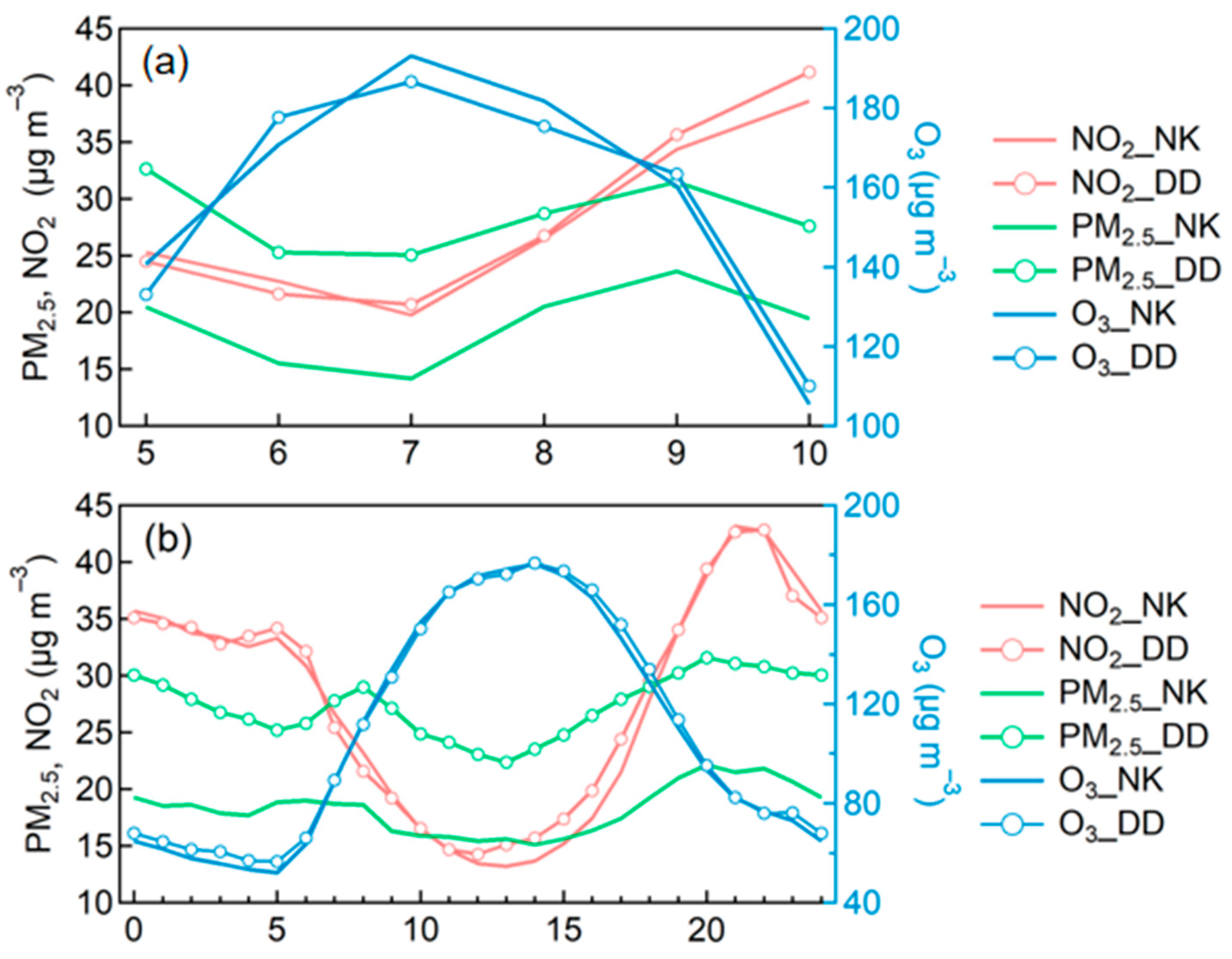
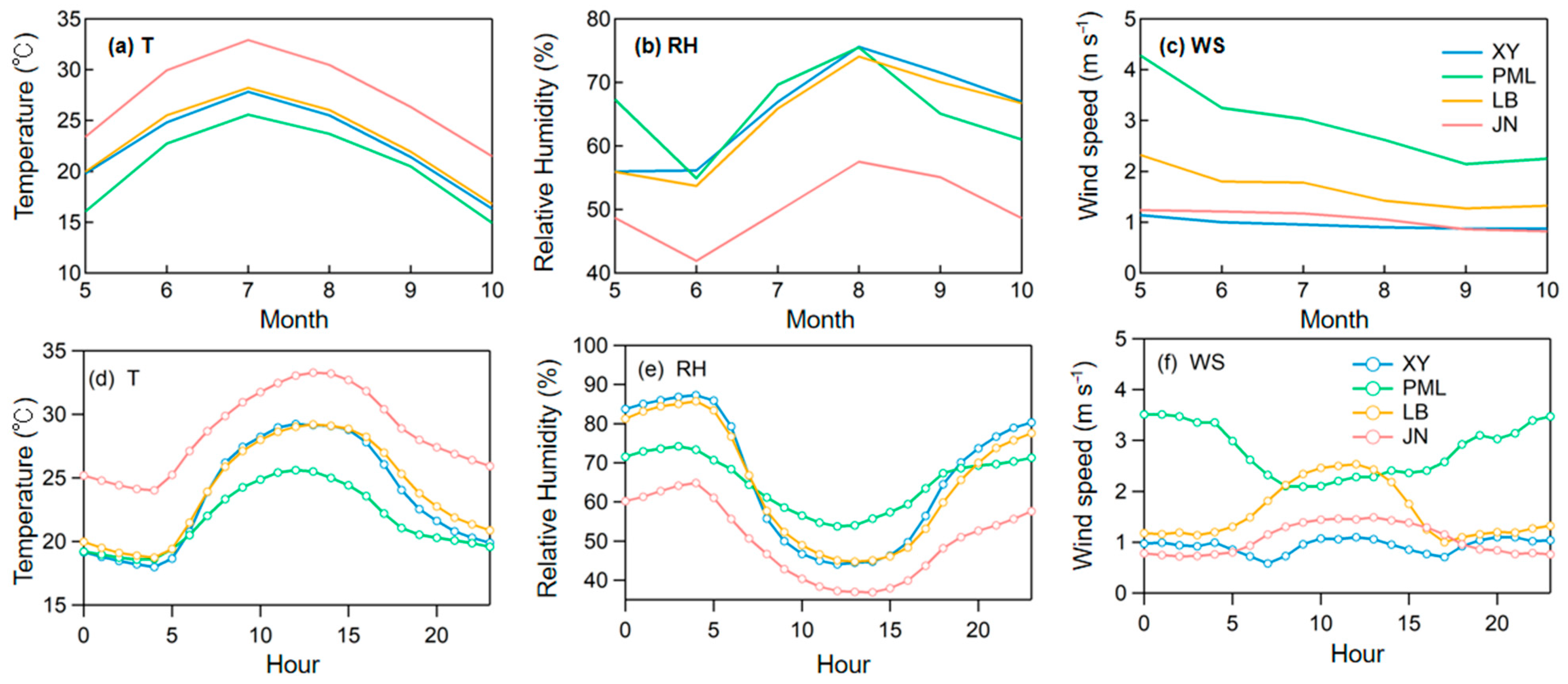
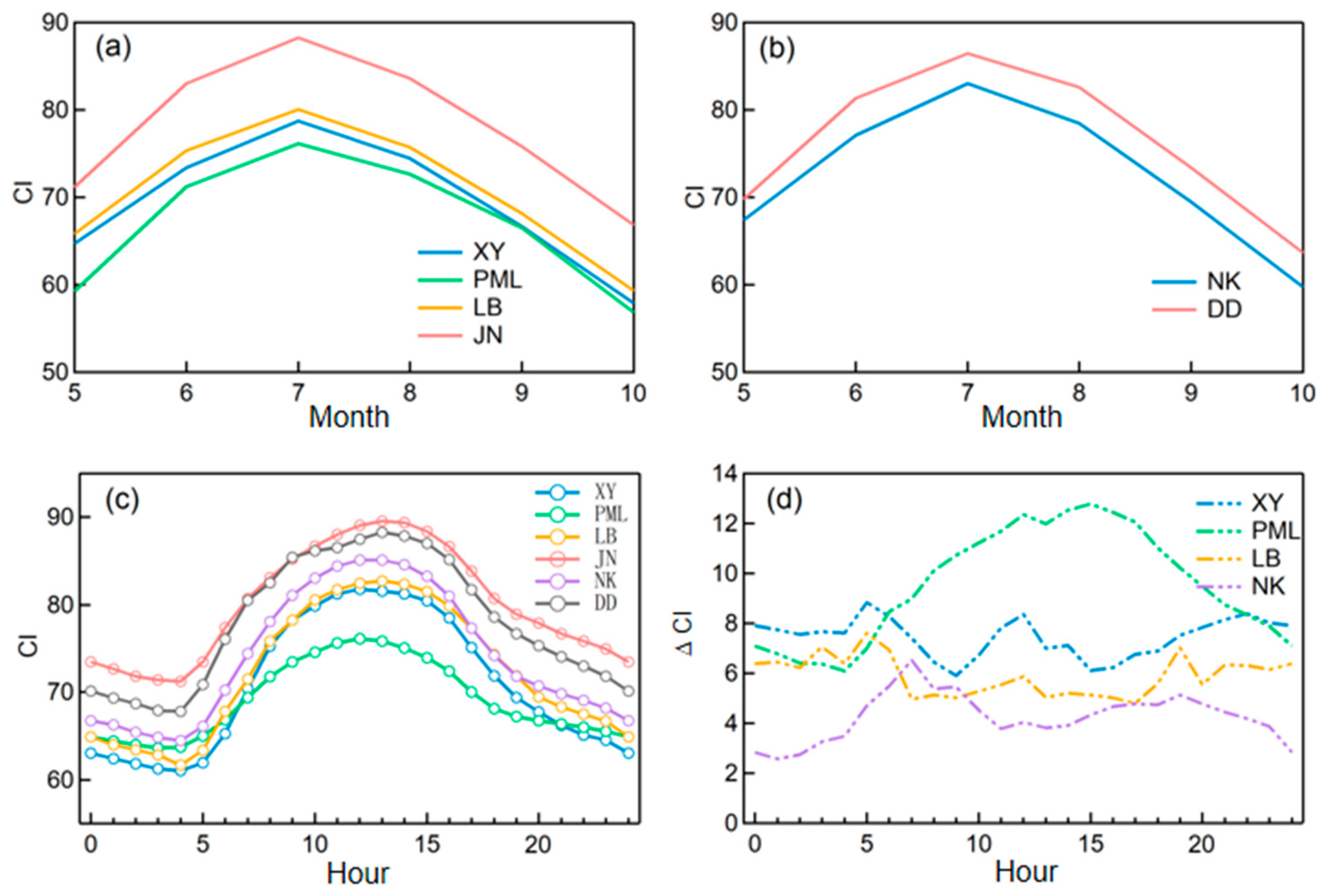
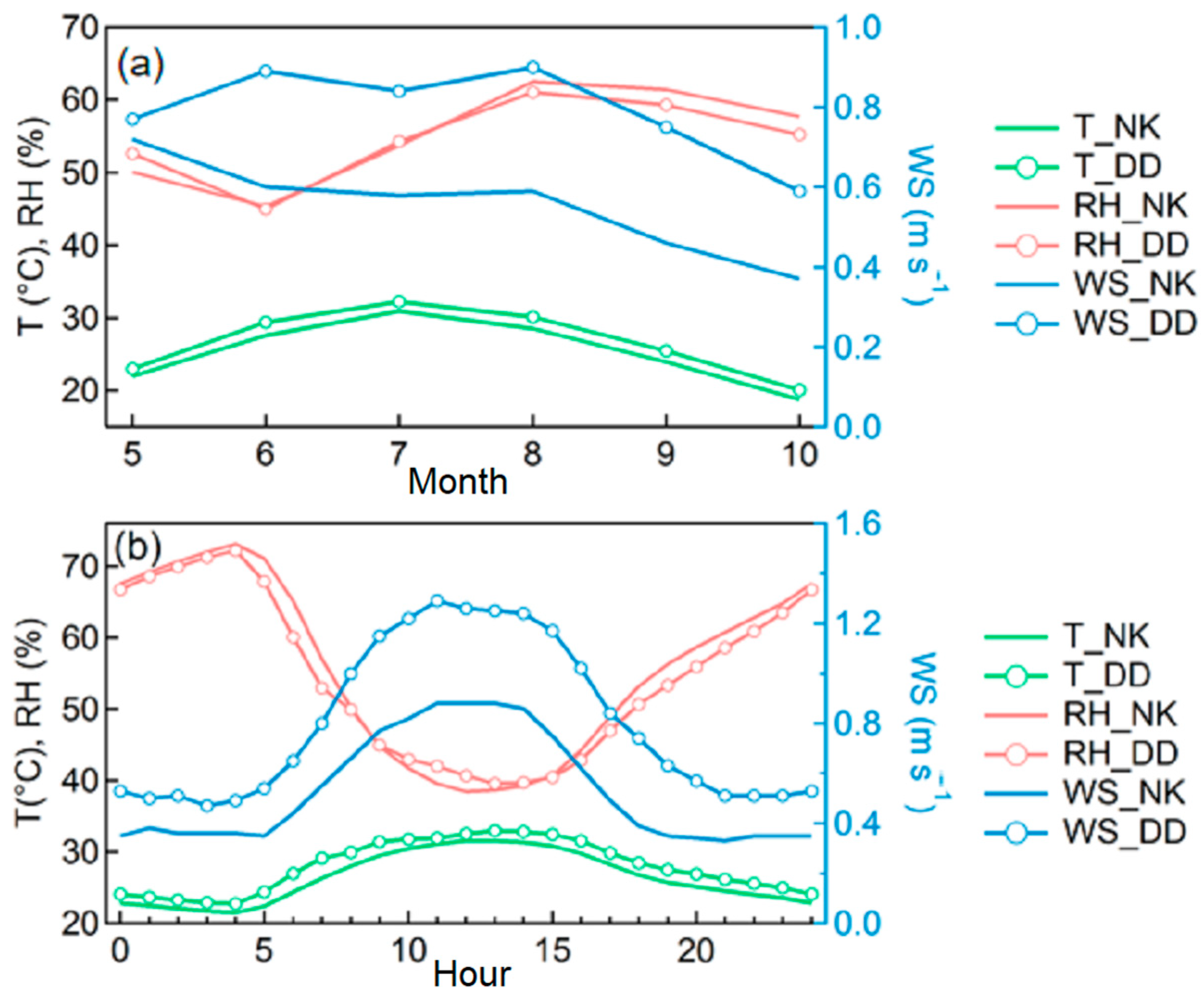
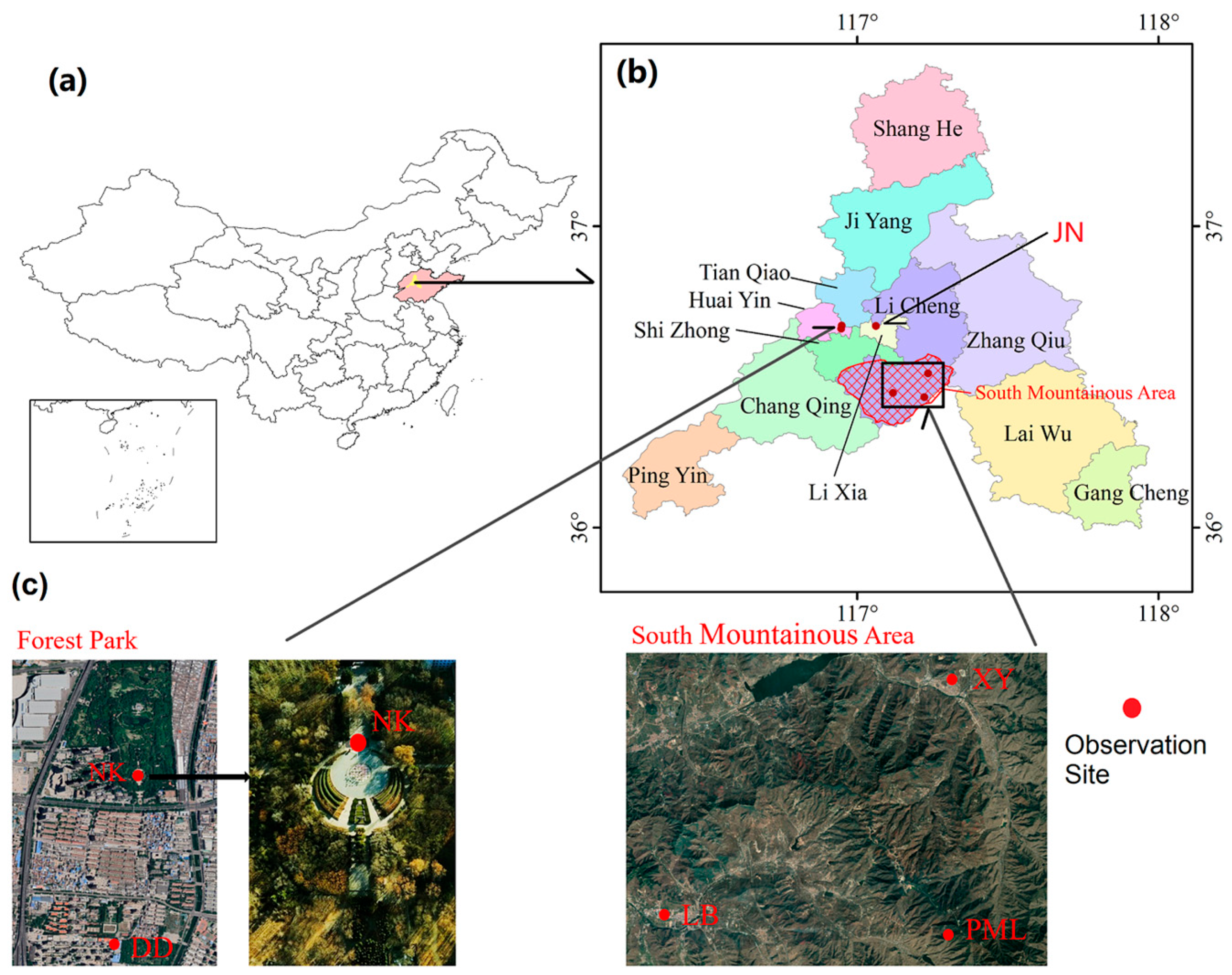
Though the impact of urban vegetation on air quality and the microclimate has attracted increasing attention, there have been few studies quantitatively assessing this impact in North China, where air pollution is severe. In this study, we investigated the impact of urban forests and urban parks on air quality and the microclimate in Jinan, northern China. Six sites were chosen to represent urban forest, urban park, and downtown areas, respectively. The results indicate that urban forest can effectively reduce PM2.5 and ozone (O3) concentrations in the warm season, when temperatures are higher and plants are lush. The PM2.5 and O3 concentrations in the urban forest areas were 6.3–6.5 μg m−3 and 21–23 μg m−3 lower than those in downtown areas during the period of 10:00–15:00. In contrast, urban park areas can reduce PM2.5 concentrations but have little impact on gaseous pollutants such as nitrogen dioxide and O3. Furthermore, both urban forest and urban park areas reduced temperatures, by approximately 4.1–6.8 °C and 1.36 °C, respectively, and increased relative humidity, by about 13.4–12.9% and 0.9%, promoting a more comfortable thermal environment for residents. Therefore, this study highlights the crucial role of urban vegetation in improving air quality and creating a comfortable environment for residents.
Keywords: urban forest; urban park; air quality; microclimate; human comfort index urban forest; urban park; air quality; microclimate; human comfort index