
Article

Climate Change Flood Risk Analysis: Application of Dynamical Downscaling and Hydrological Modeling


by
Fernando Neves Lima
1,*,
Ana Carolina Vasques Freitas
2 and
Josiano Silva
2
1
Institute of Integrated Engineering, Federal University of Itajubá, Itabira 35903087, Brazil
2
Institute of Pure and Applied Sciences, Federal University of Itajubá, Itabira 35903087, Brazil
*
Author to whom correspondence should be addressed.
Atmosphere 2023, 14(7), 1069; https://doi.org/10.3390/atmos14071069
Submission received: 17 May 2023 / Revised: 14 June 2023 / Accepted: 19 June 2023 / Published: 25 June 2023
(This article belongs to the Special Issue Climate Extremes and Their Impacts)

Abstract

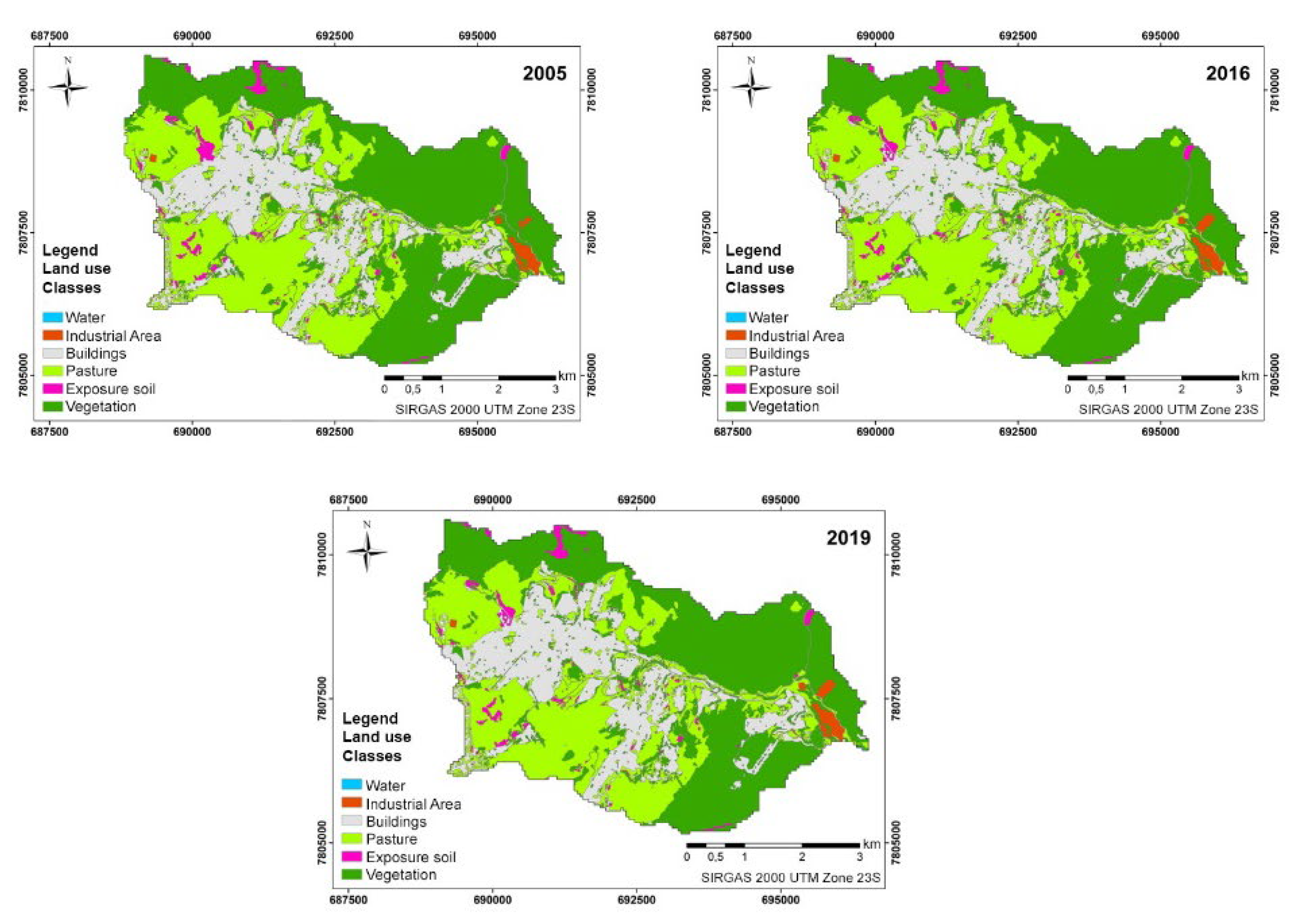
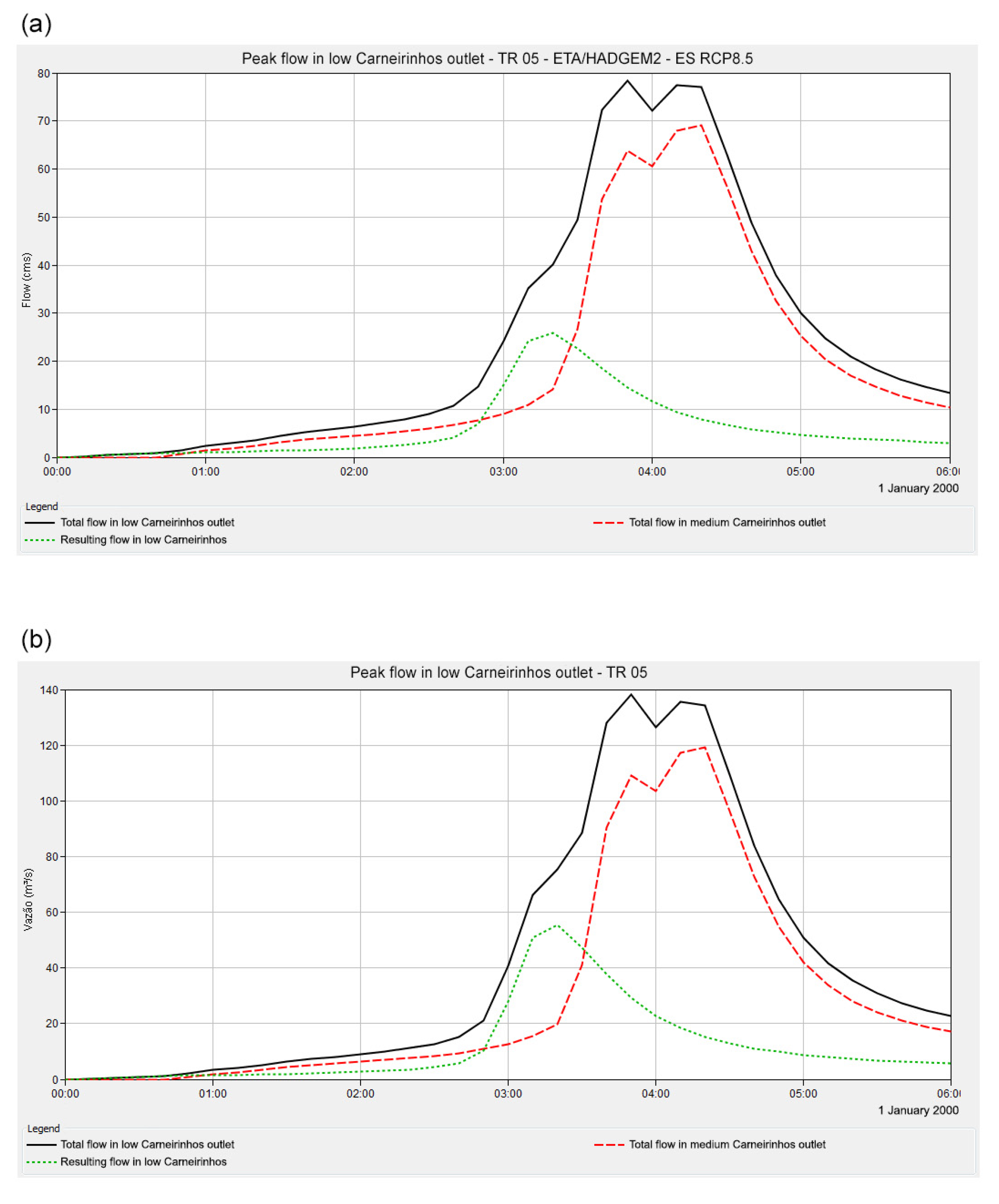
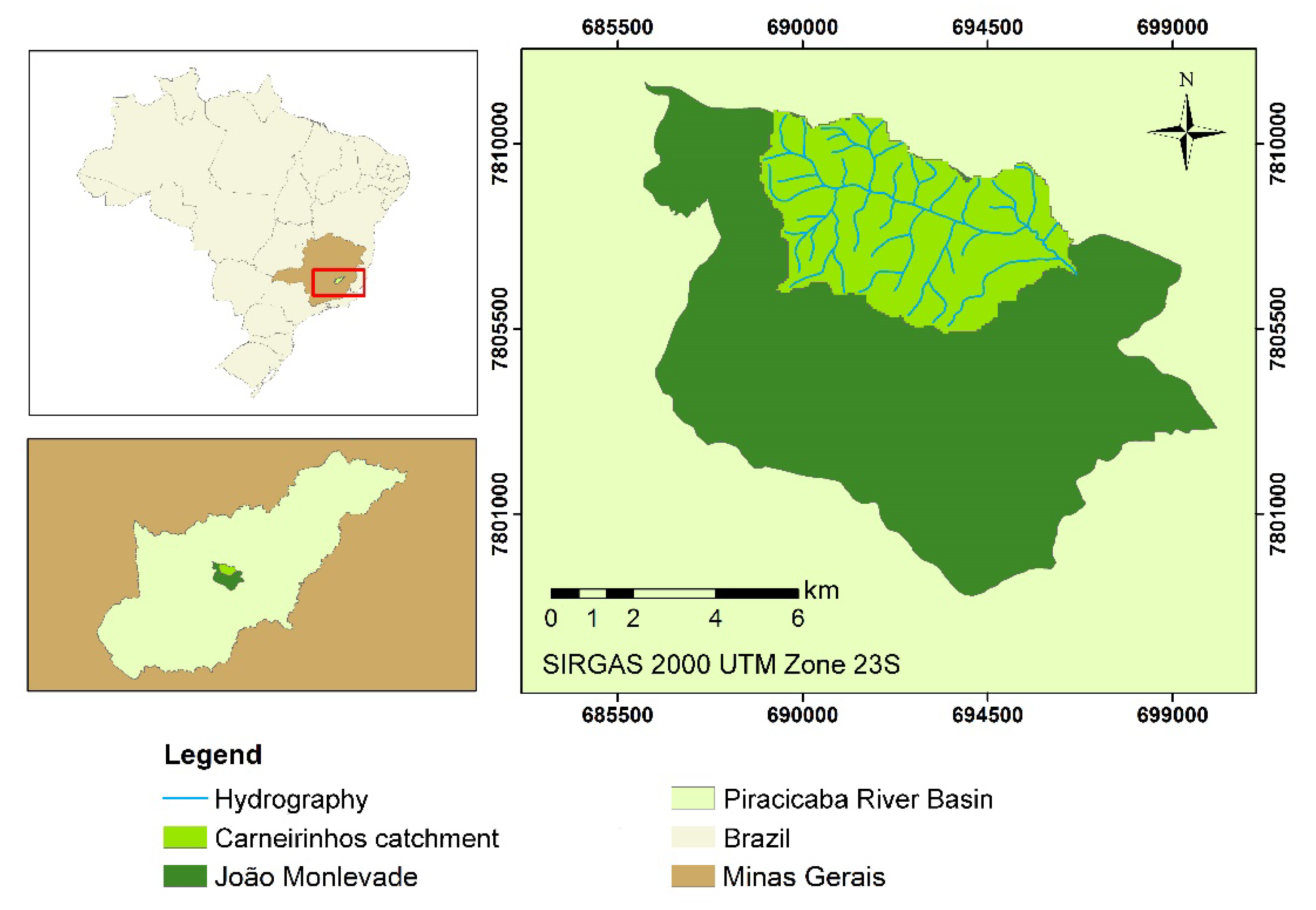
Floods are a recurring natural phenomenon during the rainy season in many Brazilian municipalities. Nevertheless, shifts in weather patterns have contributed to an increased incidence of these events in urban areas, where their impact can be amplified by the way the surrounding catchment is occupied. Hence, the present study sought to evaluate the susceptibility of the urban drainage infrastructure in João Monlevade, Brazil, to the effects of climate change by undertaking a comprehensive assessment of the Carneirinhos catchment, including its morphometric characteristics. For this purpose, we employed a hydrological model driven by regional rainfall projections from a high-resolution climate model (HadGEM2-ES downscaled to 5 km resolution) under the Representative Concentration Pathways (RCP8.5) scenario. Several combinations of rainfall occurrence were simulated, incorporating temporal aspects (different durations and return times), as well as spatial aspects (concentrated and distributed rainfall within the catchment). The results showed that the area of exposed soil in the Carneirinhos catchment experienced an increase of more than 140% from 2016 to 2019, favoring runoff surface and evaporation, which contributed to the increase in the number of flood events in the region. In addition, only 1 of the 56 heavy rainfall event simulations performed did not exceed the capacity of the macro drainage gallery.
Keywords: Eta/HadGEM2-ES; climate scenario; rainfall simulation; urban drainage Eta/HadGEM2-ES; climate scenario; rainfall simulation; urban drainage