
Article

Grid-to-Point Deep-Learning Error Correction for the Surface Weather Forecasts of a Fine-Scale Numerical Weather Prediction System
1
Precision Regional Earth Modeling and Information Center, Nanjing University of Information Science and Technology, Nanjing 210044, China
2
Nanjing Xinda Institute of Meteorological Science and Technology, Nanjing 210044, China
3
Jibei Electric Power Corporation of the State Grid Corporation of China, Beijing 100031, China
4
Key Laboratory for Cloud Physics of China Meteorological Administration, Beijing 100081, China
*
Authors to whom correspondence should be addressed.
Atmosphere 2023, 14(1), 145; https://doi.org/10.3390/atmos14010145
Submission received: 8 December 2022 / Revised: 28 December 2022 / Accepted: 30 December 2022 / Published: 9 January 2023

Abstract

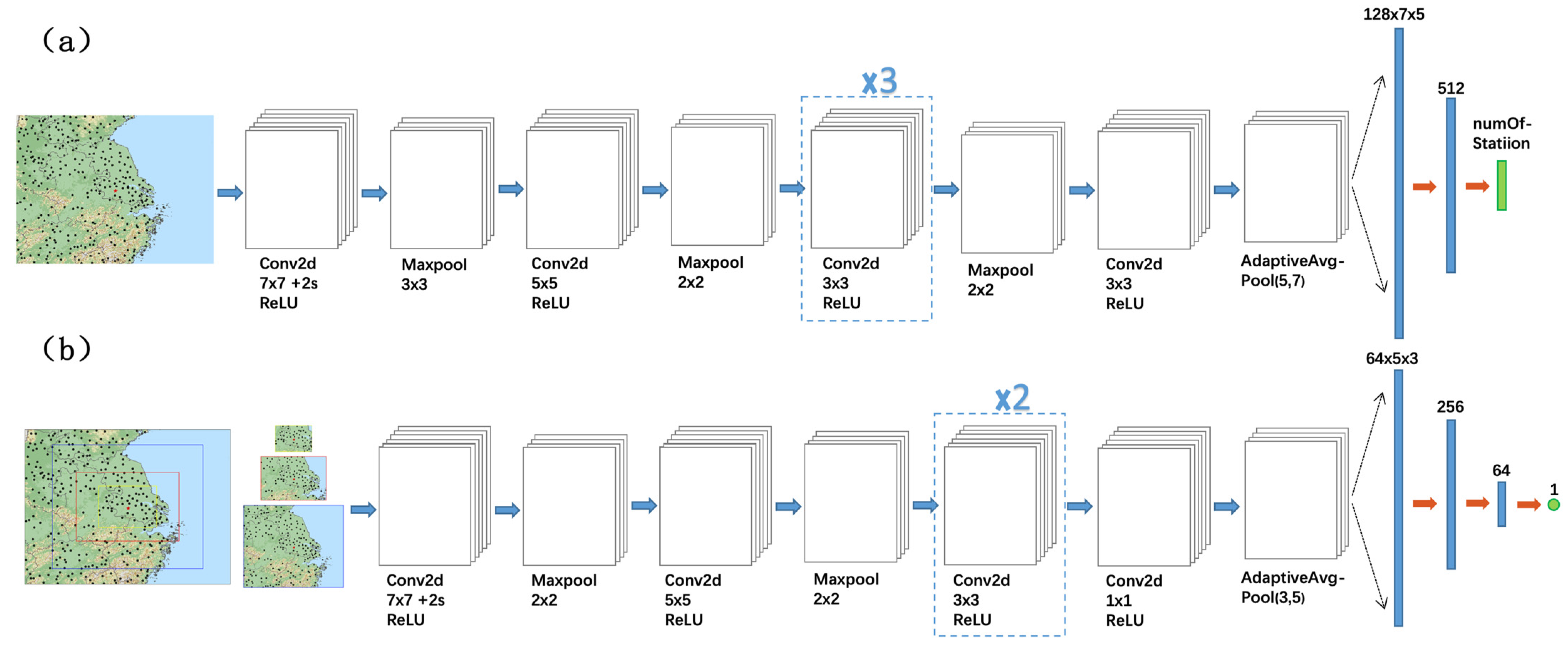
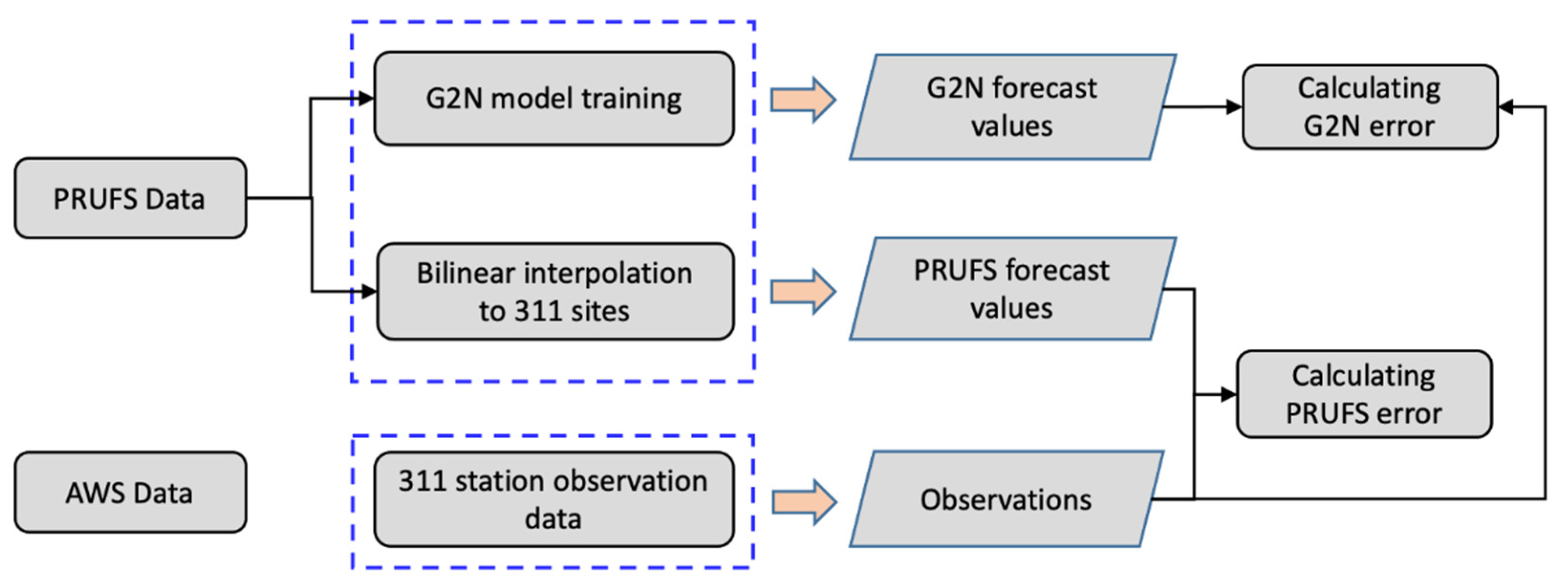
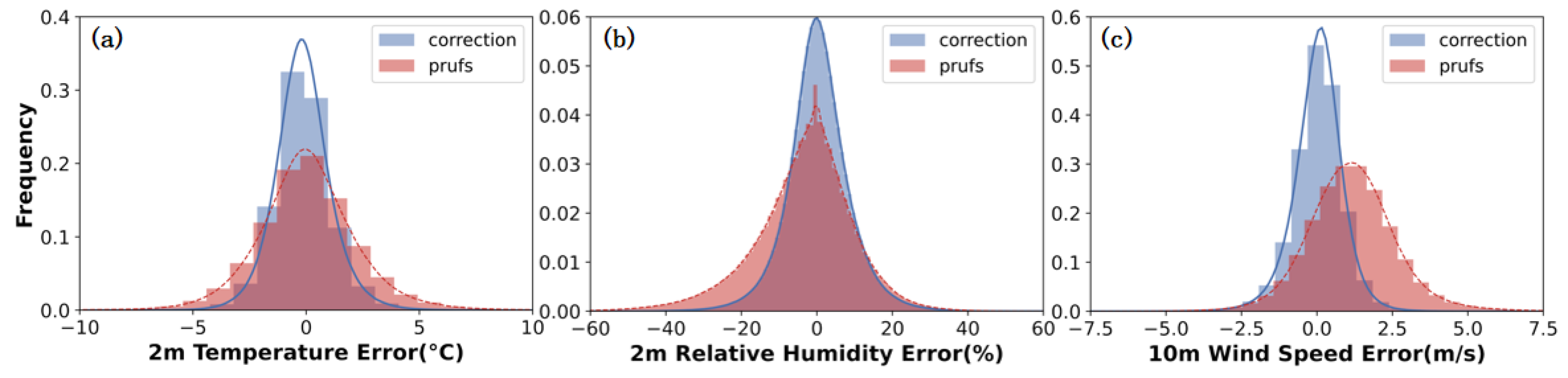
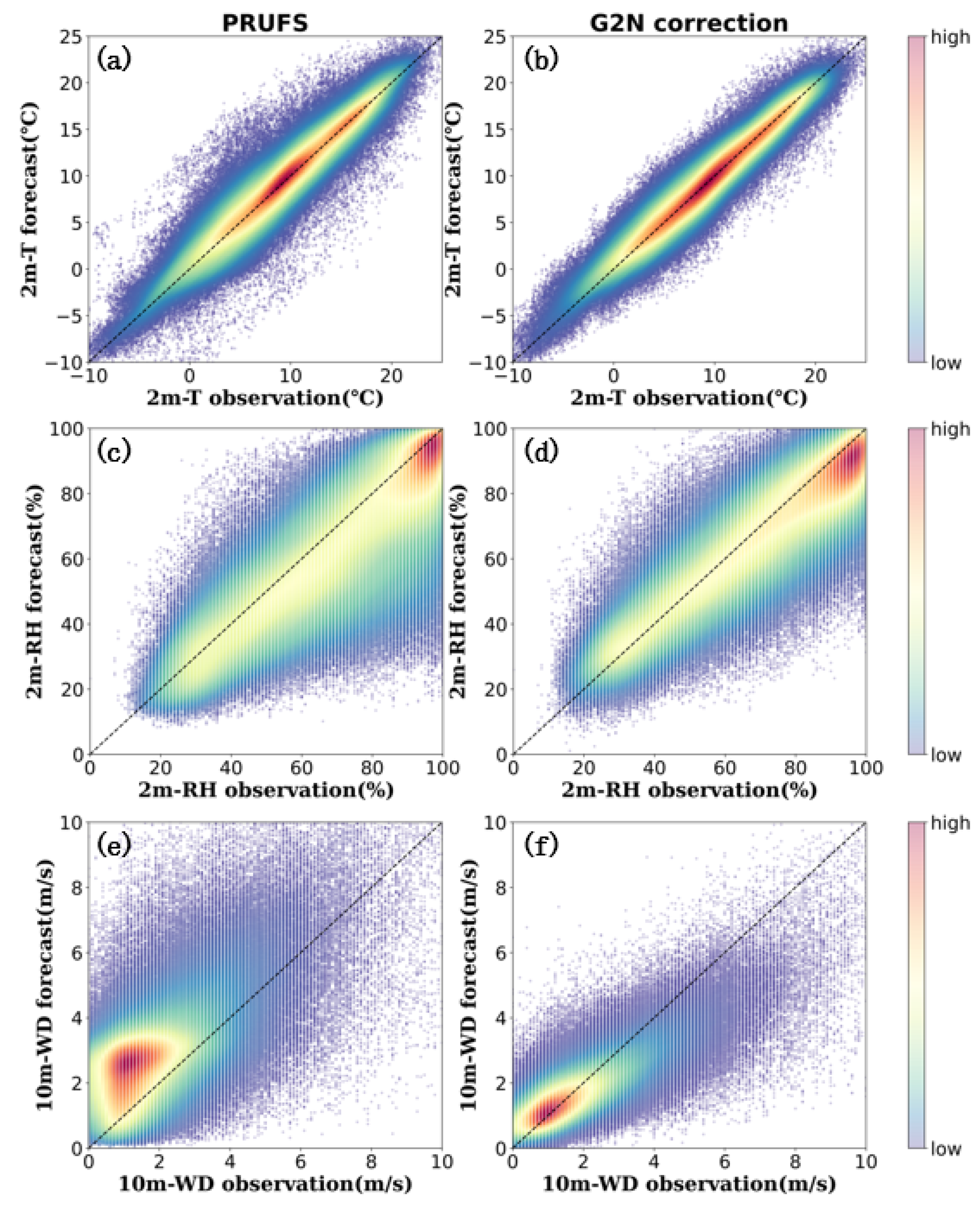
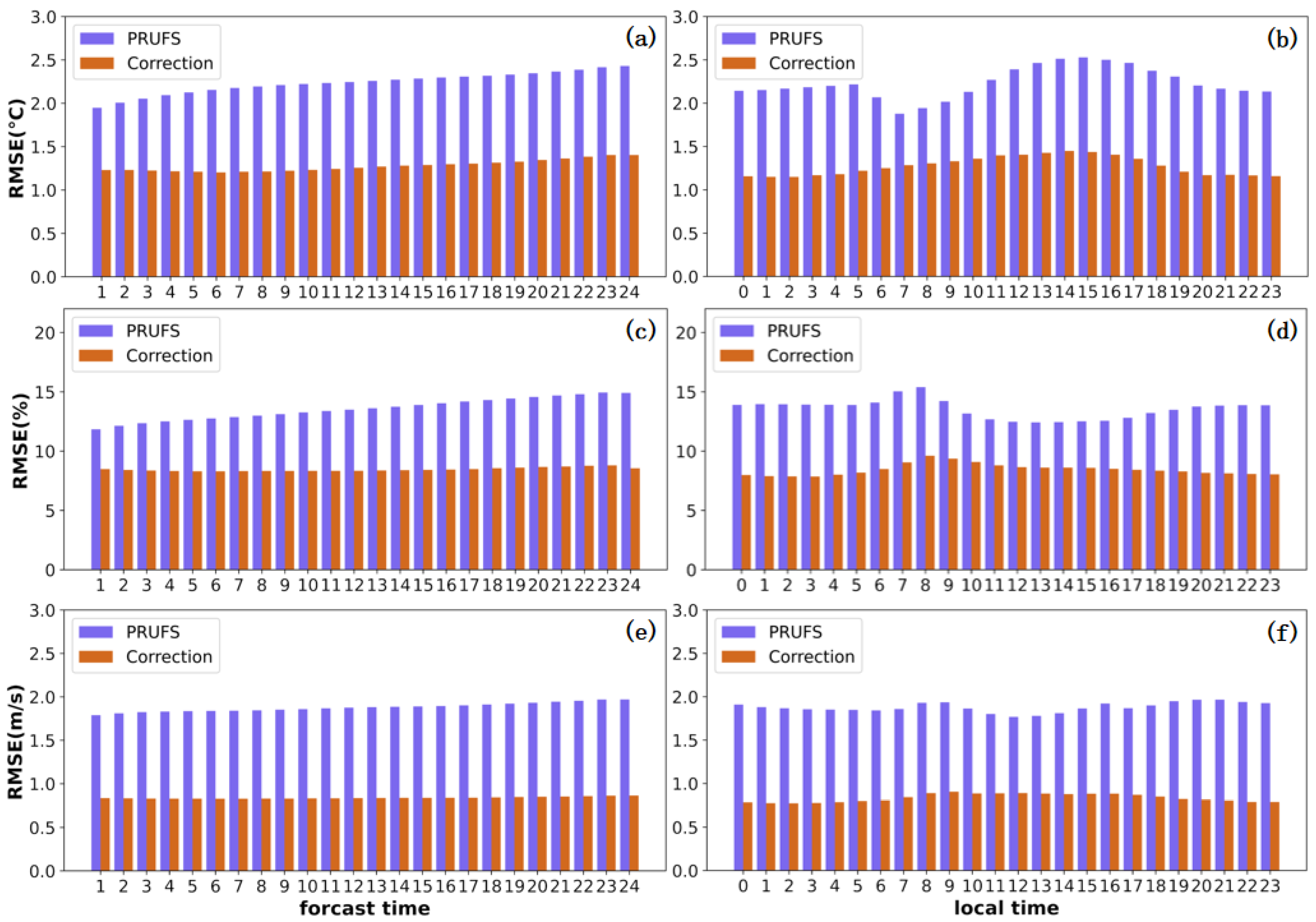
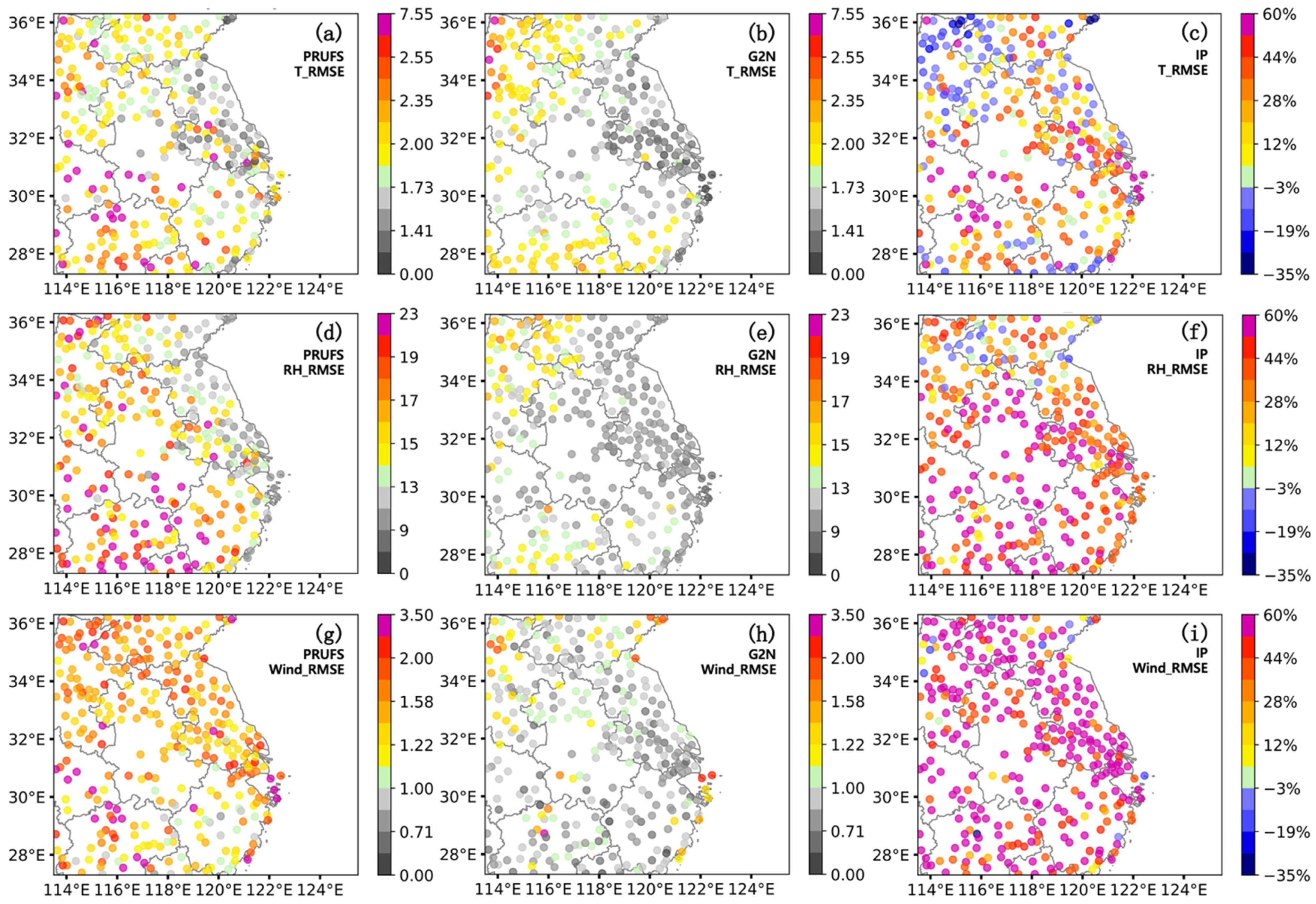
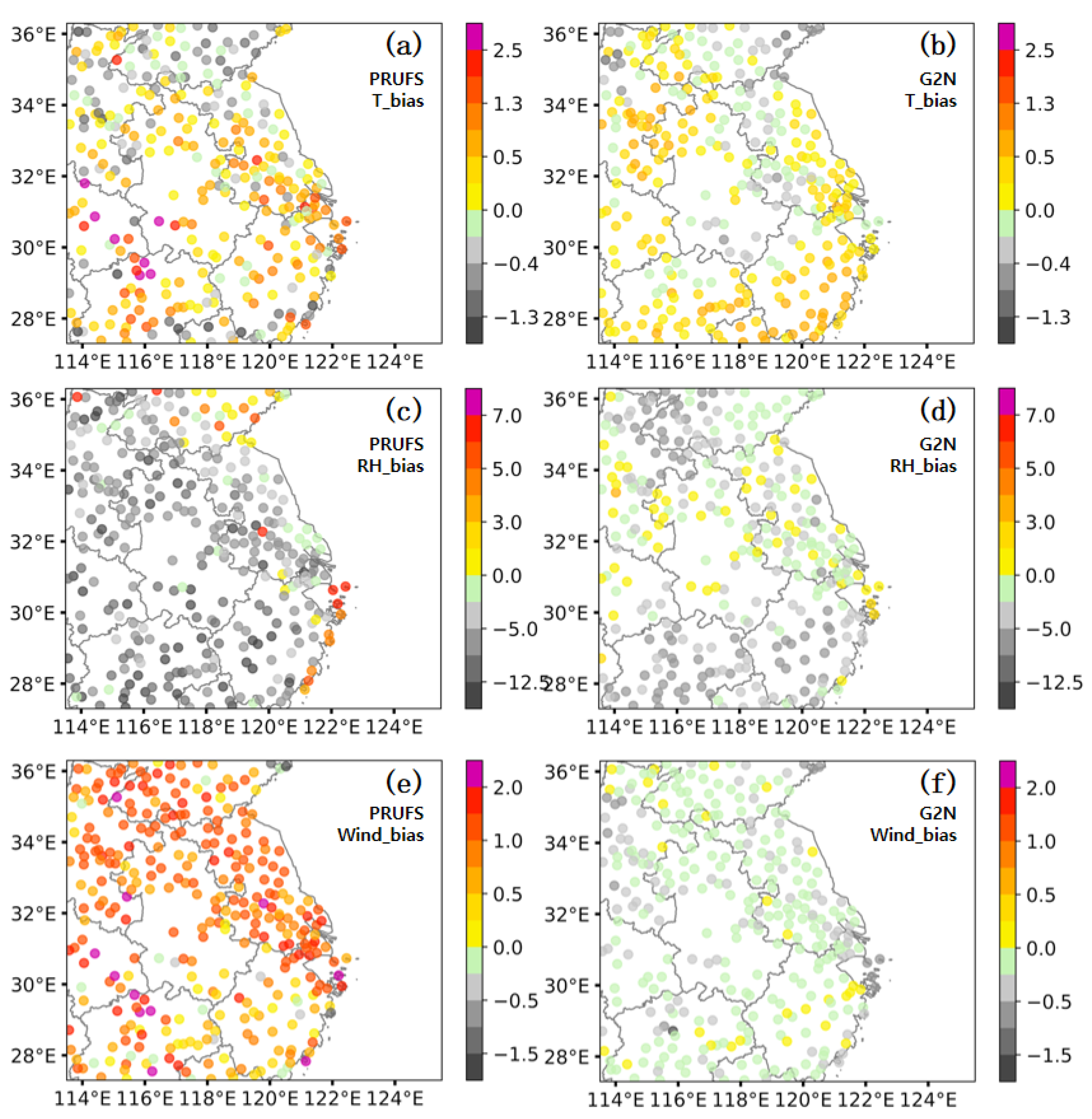
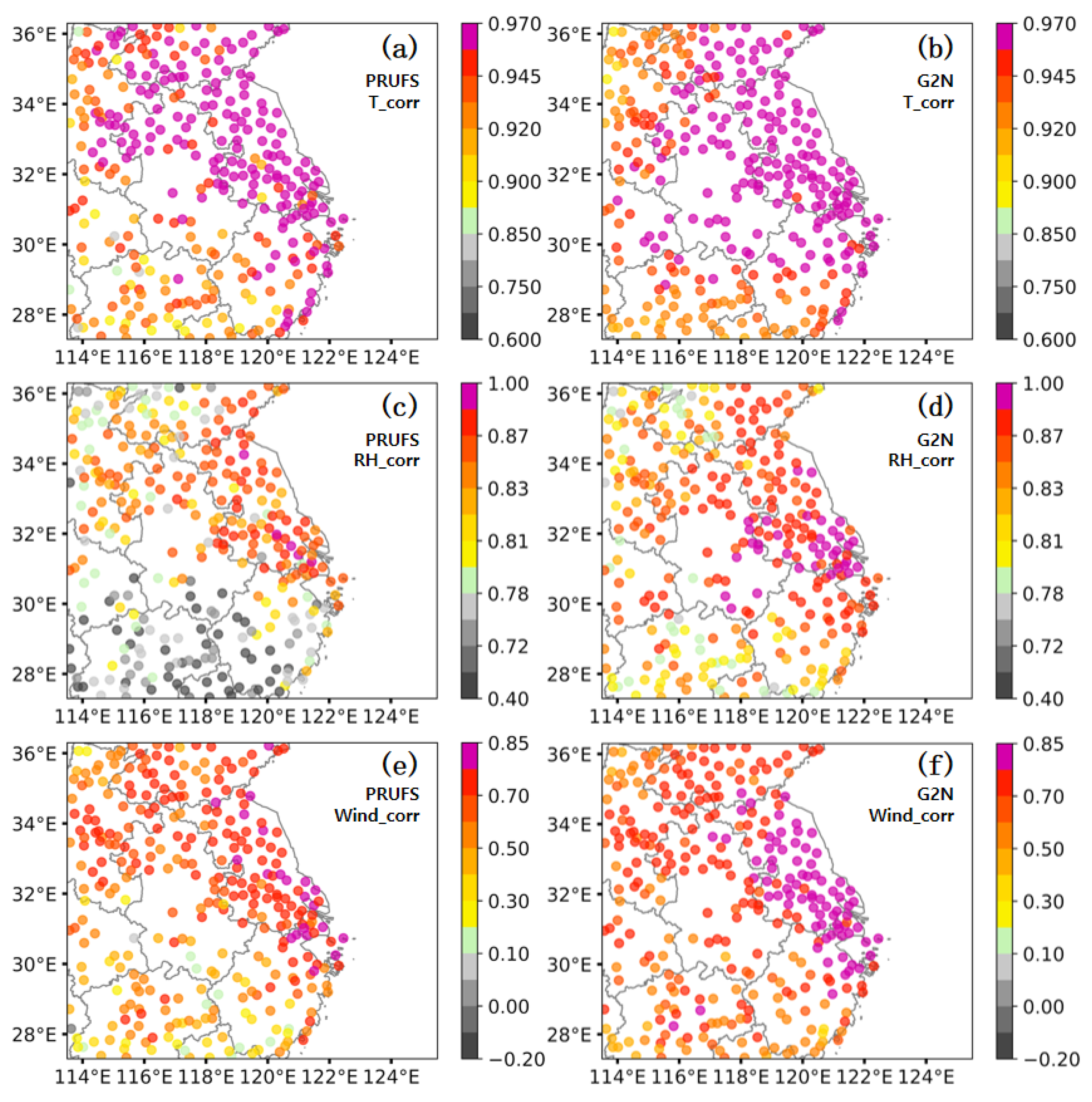
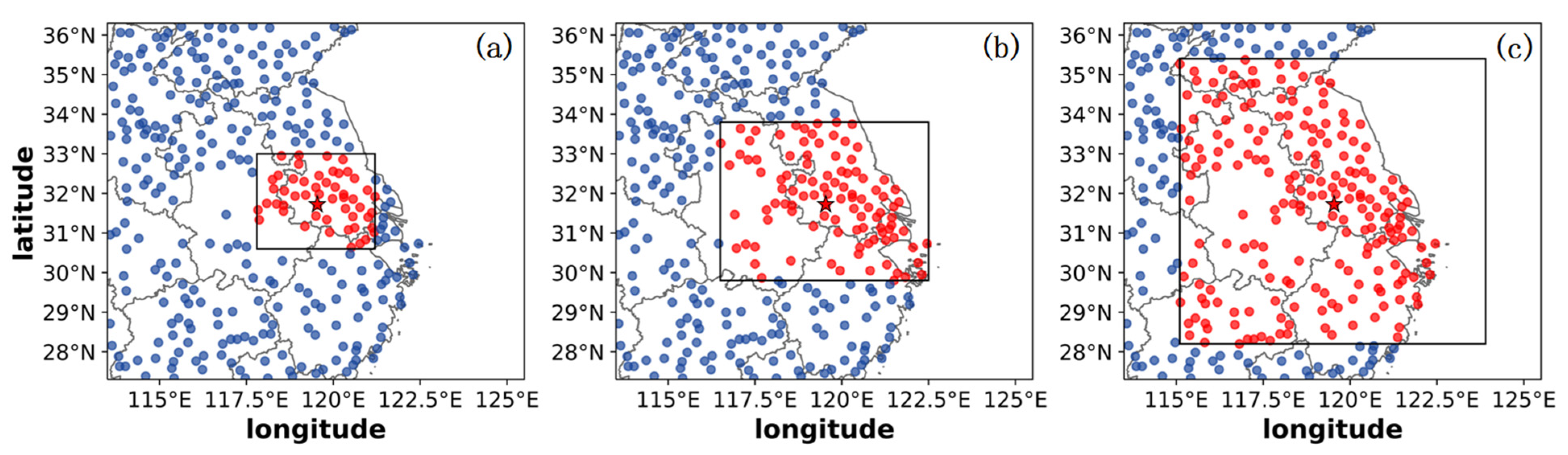
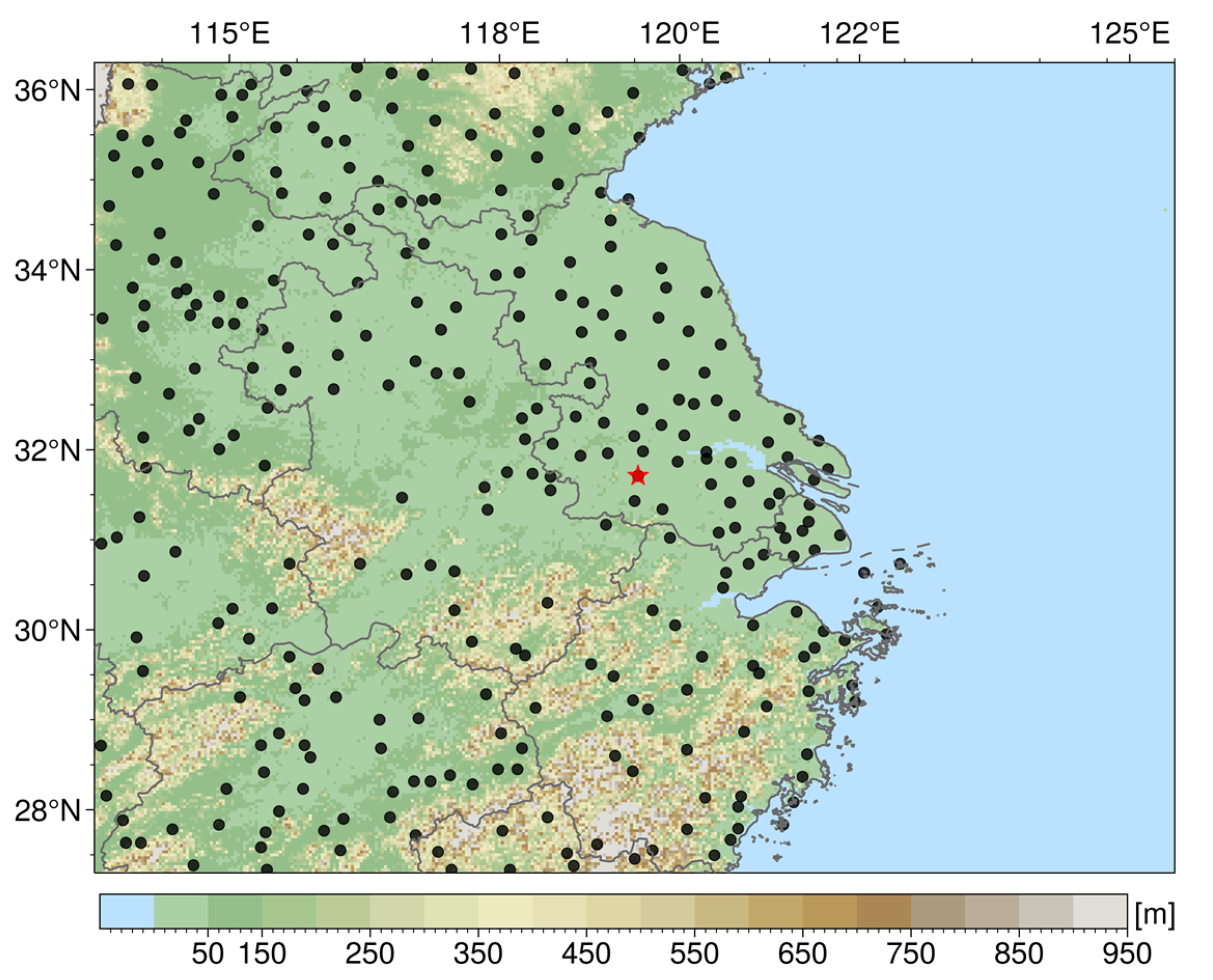
Forecasts of numerical weather prediction models unavoidably contain errors, and it is a common practice to post-process the model output and correct the error for the proper use of the forecasts. This study develops a grid-to-multipoint (G2N) model output error correction scheme which extracts model spatial features and corrects multistation forecasts simultaneously. The model was tested for an operational high-resolution model system, the precision rapid update forecasting system (PRUFS) model, running for East China at 3 km grid intervals. The variables studied include 2 m temperature, 2 m relative humidity, and 10 m wind speed at 311 standard ground-based weather stations. The dataset for training G2N is a year of historical PRUFS model outputs and the surface observations of the same period and the assessment of the G2N performance are based on the output of two months of real-time G2N. The verification of the real-time results shows that G2N reduced RMSEs of the 2 m temperature, 2 m relative humidity, and 10 m wind speed forecast errors of the PRUFS model by 19%, 24%, and 42%, respectively. Sensitivity analysis reveals that increasing the number of the target stations for simultaneous correction helps to improve the model performance and reduces the computational cost as well indicating that enhancing the loss function with spatial regional meteorological structure is helpful. On the other hand, adequately selecting the size of influencing grid areas of the model input is also important for G2N to incorporate enough spatial features of model forecasts but not to include the information from the grids far from the correcting areas. G2N is a highly efficient and effective tool that can be readily implemented for real-time regional NWP models.
Keywords: deep learning; NWP; post-processing; grid to stations; forecast error correction deep learning; NWP; post-processing; grid to stations; forecast error correction