Article

Heterogenous Canopy in a Lagrangian-Stochastic Dispersion Model for Particulate Matter from Multiple Sources over the Haifa Bay Area


1
Department of Applied Mathematics, Israel Institute for Biological Research, P.O. Box 19, Ness-Ziona 7410001, Israel
2
Department of Soil and Water Sciences, The Robert H. Smith Faculty of Agriculture, Food and Environment, The Hebrew University of Jerusalem, P.O. Box 12, Rehovot 7610001, Israel
*
Authors to whom correspondence should be addressed.
Atmosphere 2023, 14(1), 144; https://doi.org/10.3390/atmos14010144
Submission received: 16 November 2022 / Revised: 3 January 2023 / Accepted: 5 January 2023 / Published: 9 January 2023
(This article belongs to the Special Issue Computational Fluid Dynamics Simulations of Urban Airflow)

Abstract

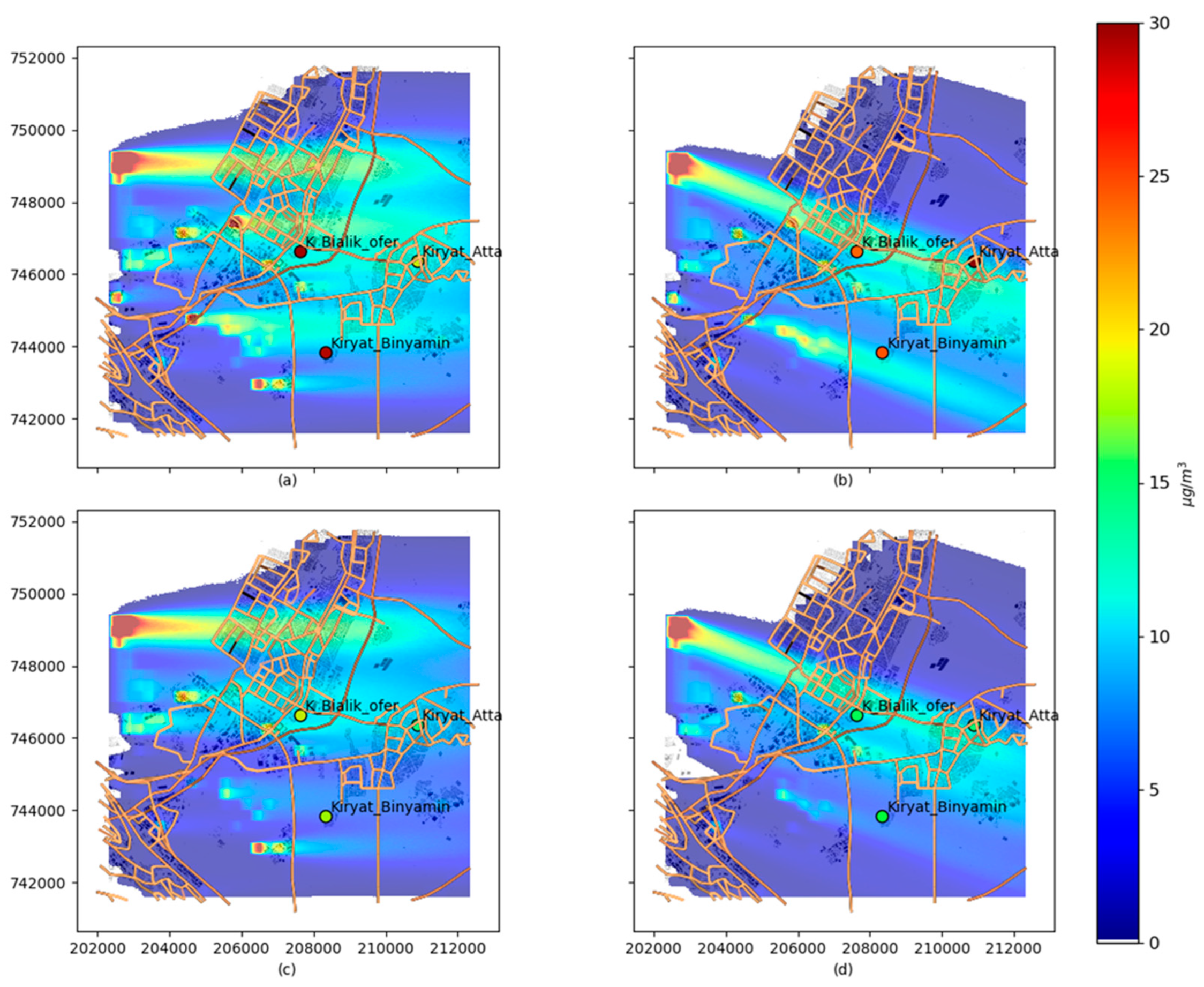
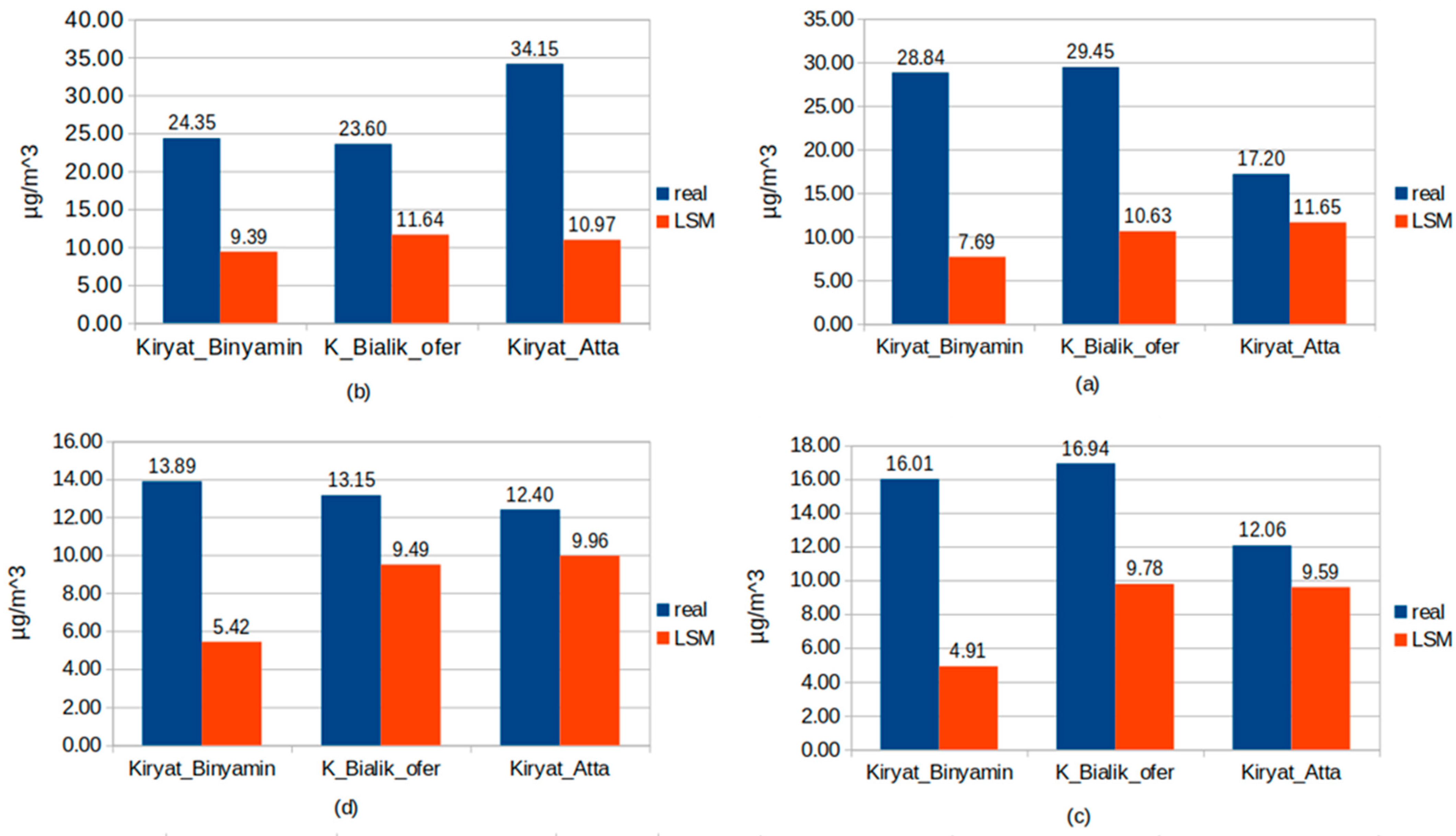
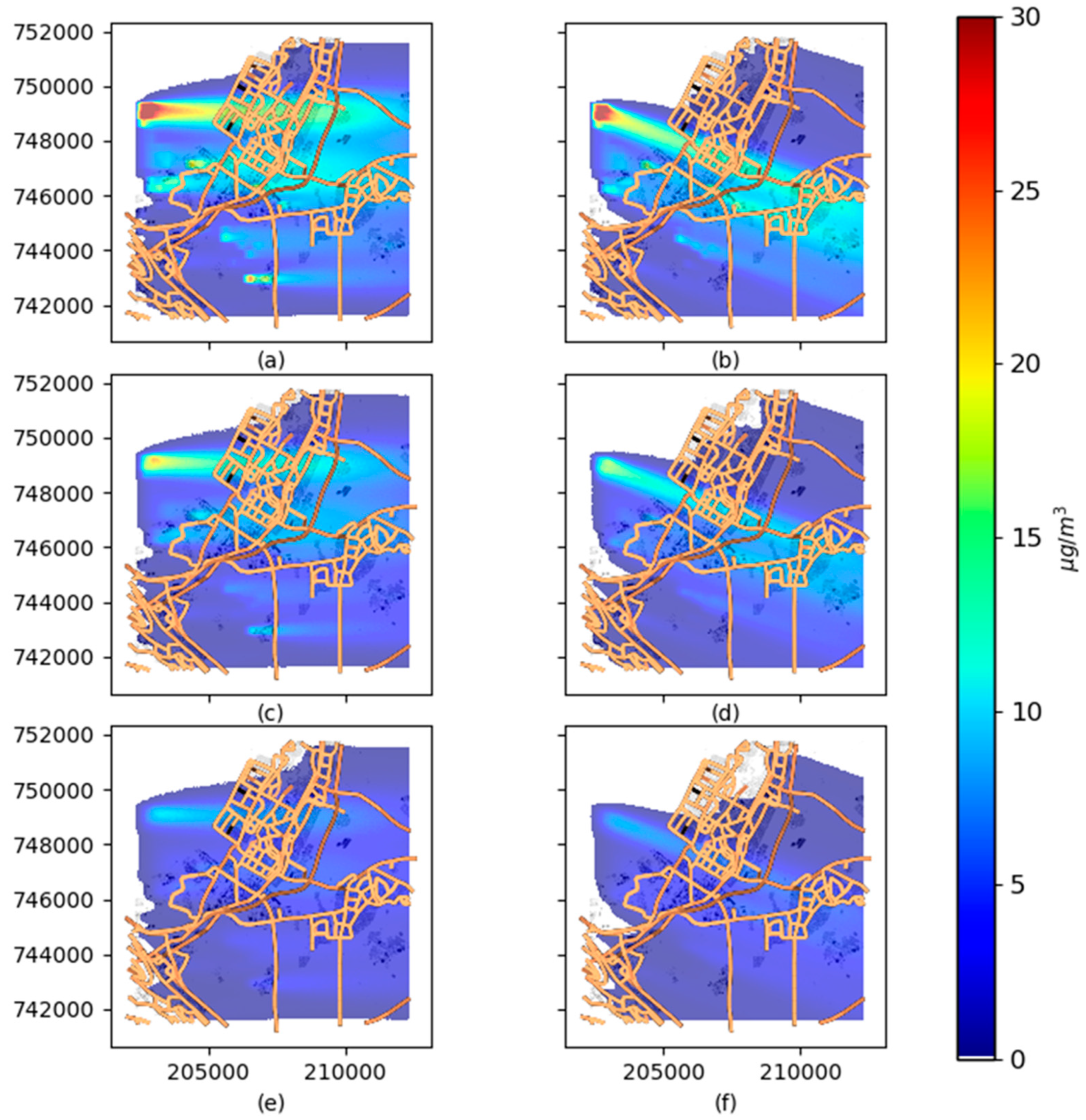
The Haifa Bay area (HBA) is a major metropolitan area in Israel, which consists of high volume transportation routes, major industrial complexes, and the largest international seaport in Israel. These, which lie relatively near densely populated residential areas, result in a multitude of air pollution sources, many of whose emissions are in the form of particulate matter (PM). Previous studies have associated exposure to such PM with adverse health effects. This potential consequence serves as the motivation for this study whose aim is to provide a realistic and detailed three-dimensional concentration field of PM, originating simultaneously from multiple sources. The IIBR in-house Lagrangian stochastic pollutant dispersion model (LSM) is suitable for this endeavor, as it describes the dispersion of a scalar by solving the velocity fluctuations in high Reynolds number flows. Moreover, the LSM was validated in urban field experiments, including in the HBA. However, due to the fact that the multiple urban sources reside within the canopy layer, it was necessary to integrate into the LSM a realistic canopy layer model that depicts the actual effect of the roughness elements’ drag on the flow and turbulent exchange of the urban morphology. This was achieved by an approach which treats the canopy as patches of porous media. The LSM was used to calculate the three-dimensional fields of PM10 and PM2.5 concentrations during the typical conditions of the two workday rush-hour periods. These were compared to three air quality monitoring stations located downstream of the PM sources in the HBA. The LSM predictions for PM2.5 satisfy all acceptance criteria. Regarding the PM10 predictions, the LSM results comply with three out of four acceptance criteria. The analysis of the calculated concentration fields has shown that the PM concentrations up to 105 m AGL exhibit a spatial pattern similar to the ground level. However, it decreases by a factor of two at 45 m AGL, while, at 105 m, the concentration values are close to the background concentrations.
Keywords: Lagrangian stochastic model; canopy layer model; heterogenous canopy; atmospheric boundary layer; pollutant dispersion modeling; turbulence statistics Lagrangian stochastic model; canopy layer model; heterogenous canopy; atmospheric boundary layer; pollutant dispersion modeling; turbulence statistics