
Article

Mortality Associated with Extreme Heat in Washington State: The Historical and Projected Public Health Burden

by
Logan Arnold
1,*,
Mark D. Scheuerell 
2 and
Tania Busch Isaksen 
1,3
1
Quantitative Ecology and Resource Management, University of Washington, Seattle, WA 98195, USA
2
U.S. Geological Survey Washington Cooperative Fish and Wildlife Research Unit, School of Aquatic and Fishery Sciences, University of Washington, Seattle, WA 98195, USA
3
Department of Environmental and Occupational Health Sciences, University of Washington, Seattle, WA 98195, USA
*
Author to whom correspondence should be addressed.
Atmosphere 2022, 13(9), 1392; https://doi.org/10.3390/atmos13091392
Submission received: 12 June 2022 / Revised: 29 July 2022 / Accepted: 2 August 2022 / Published: 30 August 2022

Abstract

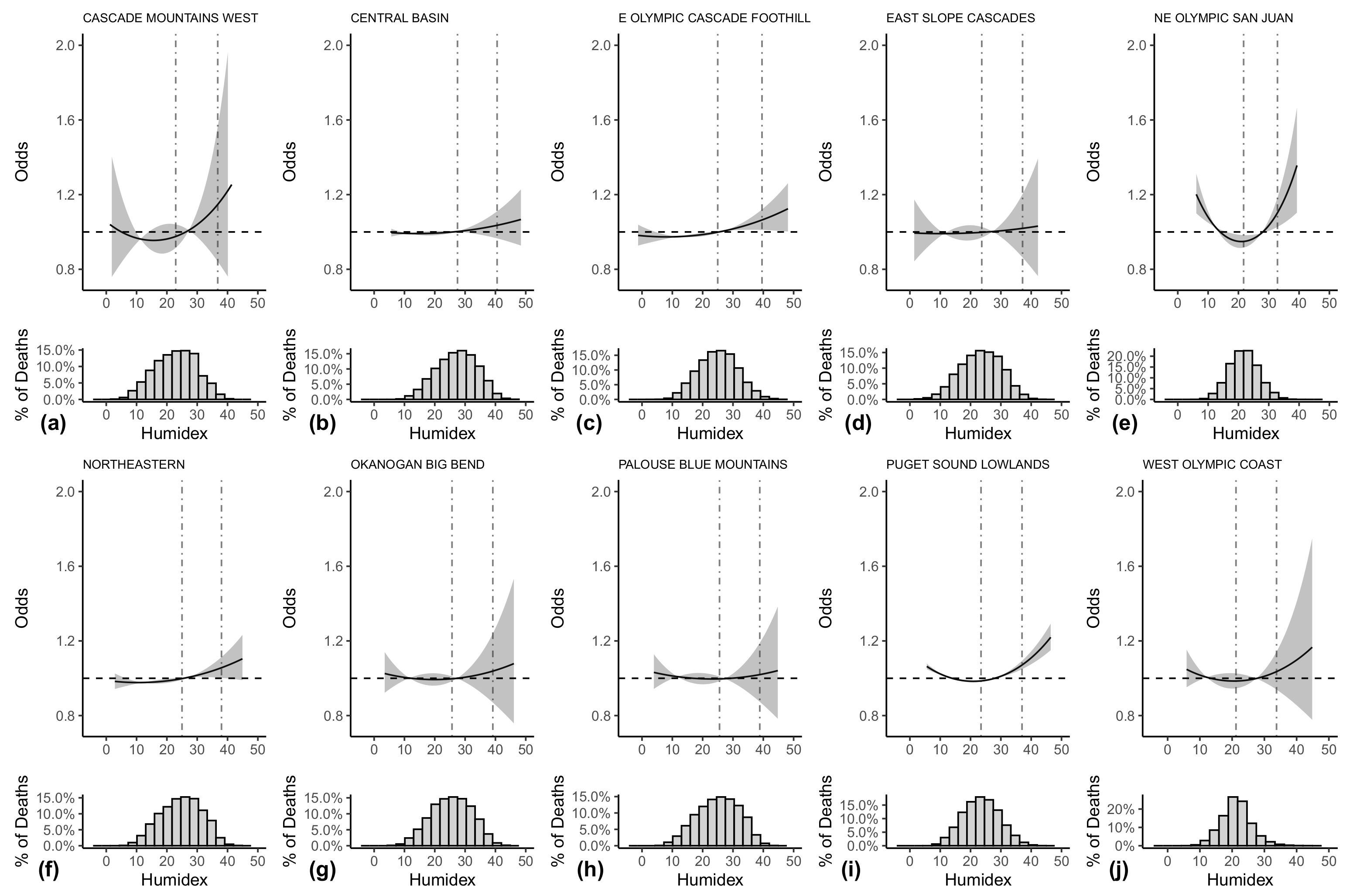
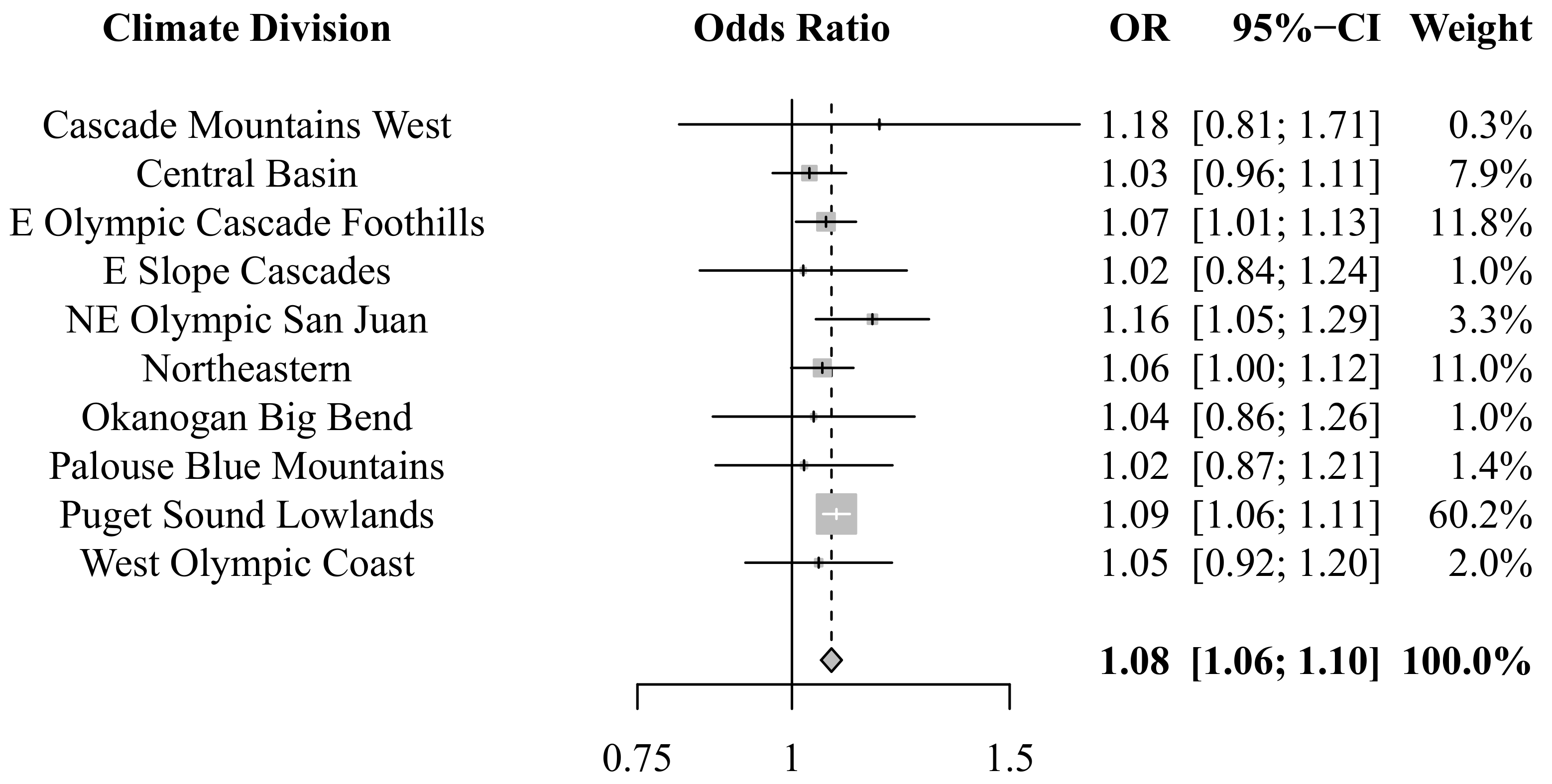
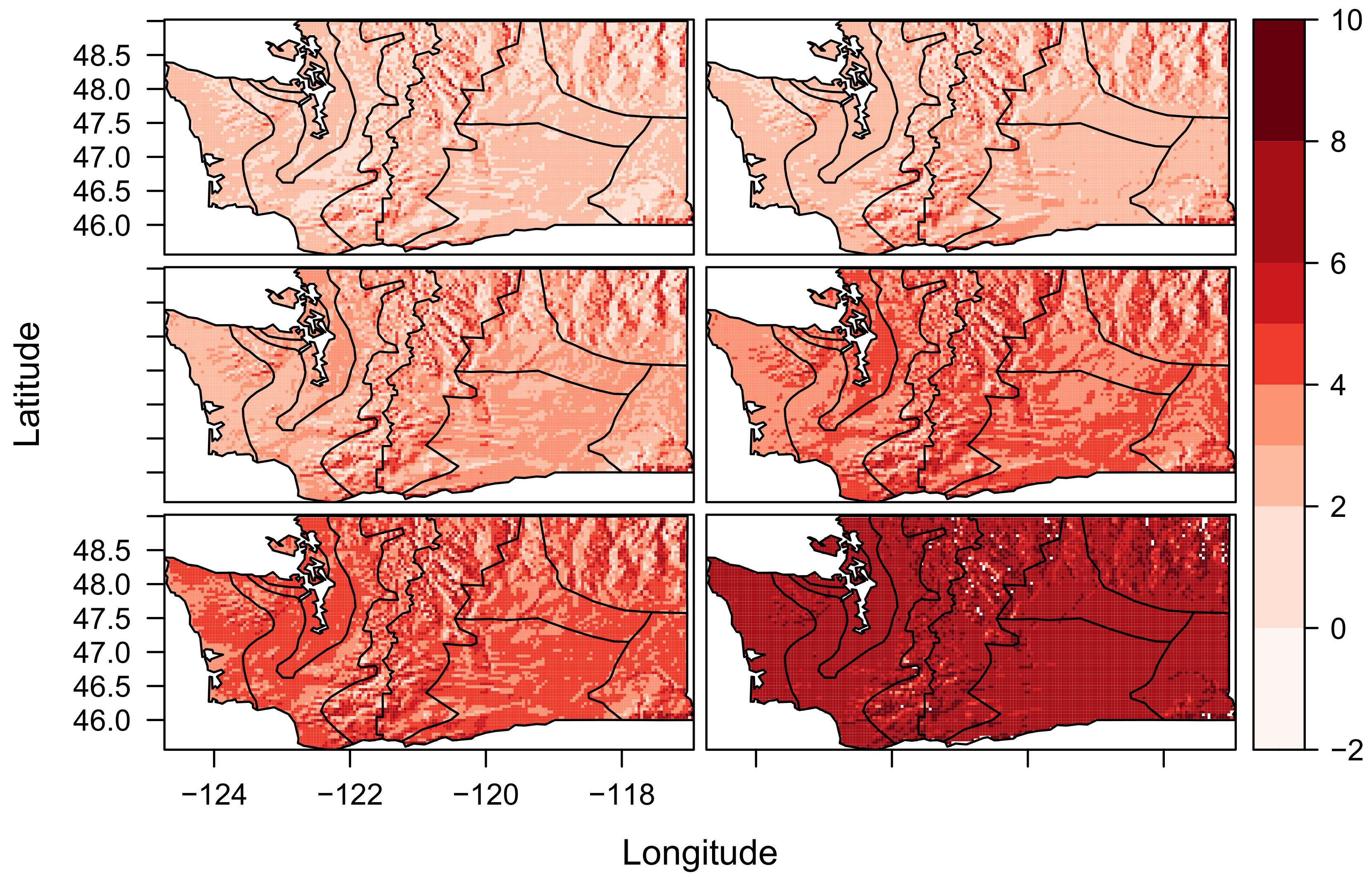
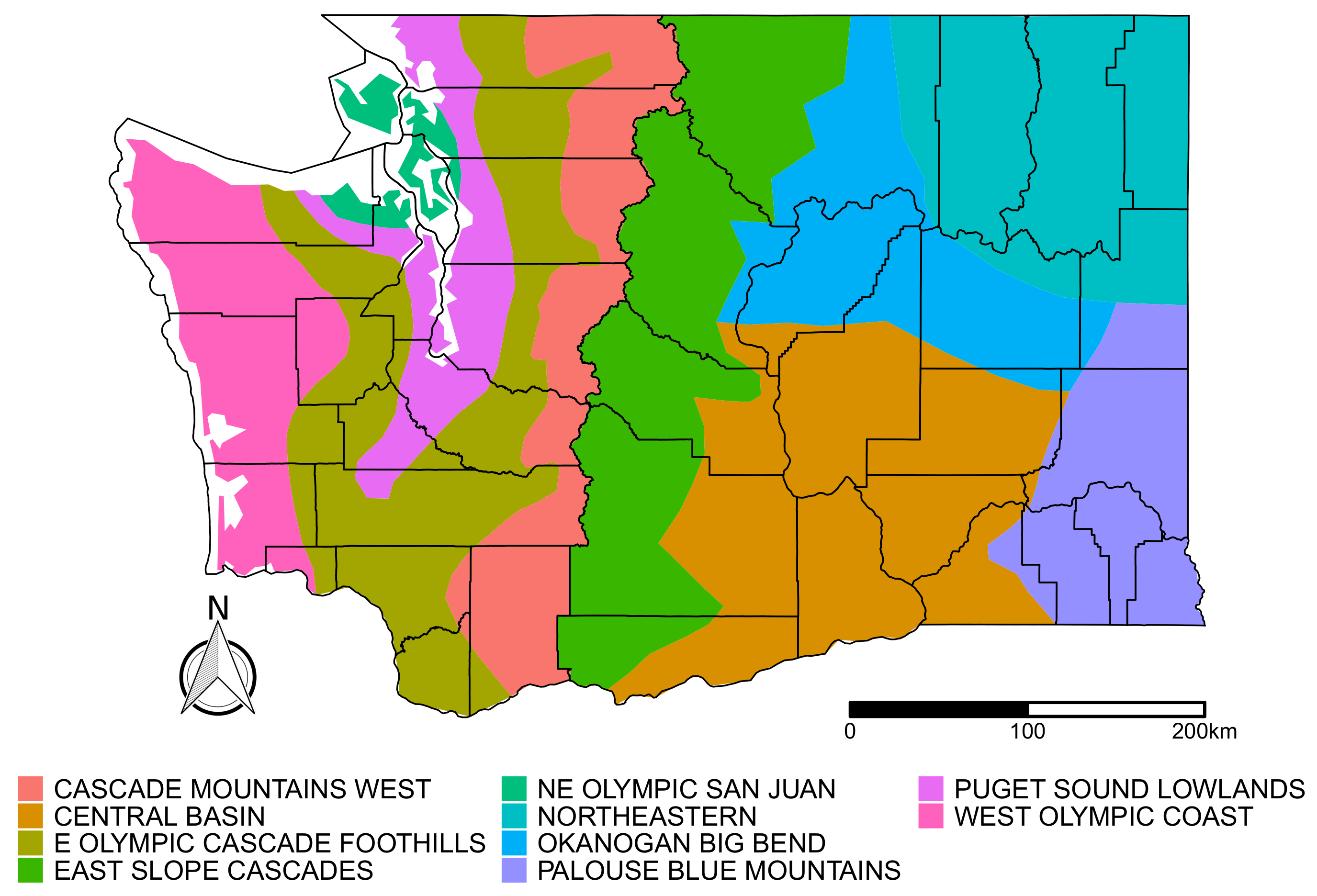
Extreme heat is one of the most important pathways illustrating the connection between climate and human health, and climate change is expected to exacerbate this public health issue. This study first used a case-crossover analysis to characterize the historical (1980–2018) association between summertime heat and non-traumatic mortality in Washington State. A separate analysis was conducted for each of the state’s ten climate divisions to produce distinct exposure–response curves expressing odds of mortality as a function of humidex. Stratified analyses were used to assess the impact of age, sex, race/ethnicity, and select causes of death, and the reported results are pooled across all divisions using meta-analysis. The historical heat–mortality relationship was combined with climate projections to estimate the impact of climate change on heat-related deaths in 2030, 2050, and 2080 under two warming scenarios. The odds ratio (OR) and 95% confidence intervals of mortality at the 99th percentile of humidex compared to the 50th percentile did not include the null value in four climate divisions (E Olympic Cascade Foothills, NE Olympic San Juan, Northeastern, and Puget Sound Lowlands). The statewide odds of mortality are 8% higher (6%, 10%) on 99th percentile days compared to 50th percentile days, driven primarily by an OR of 1.09 (1.06, 1.11) in the Puget Sound Lowlands. Risk is higher for women than men and for Blacks than Whites. Risk increases with age and for diabetic, circulatory, cardiovascular, ischemic, cerebrovascular, and respiratory deaths. The 95% confidence intervals of projected heat-attributable mortality did not overlap with zero in three climate divisions (E Olympic Cascade Foothills, NE Olympic San Juan, and Puget Sound Lowlands). In these three divisions, the average percent increase in heat-attributable mortality across both warming scenarios is 35%, 35%, and 603% in 2030, 2050, and 2080, respectively. This research is the most extensive study of heat-related mortality in Washington to date and can help inform public health initiatives aiming to improve present and future health outcomes in the state.
Keywords: heat-related mortality; case-crossover analysis; climate change; extreme heat; public health; climate divisions heat-related mortality; case-crossover analysis; climate change; extreme heat; public health; climate divisions