
Article

Impact of the Novaya Zemlya Bora on the Ocean-Atmosphere Heat Exchange and Ocean Circulation: A Case-Study with the Coupled Model

by
Anna A. Shestakova
1,* and
Andrey V. Debolskiy
1,2,3
1
A.M. Obukhov Institute of Atmospheric Physics of the Russian Academy of Science, 119017 Moscow, Russia
2
Research Computing Center, Lomonosov Moscow State University, 119991 Moscow, Russia
3
Moscow Center for Fundamental and Applied Mathematics, 119992 Moscow, Russia
*
Author to whom correspondence should be addressed.
Atmosphere 2022, 13(7), 1108; https://doi.org/10.3390/atmos13071108
Submission received: 20 June 2022 / Revised: 6 July 2022 / Accepted: 11 July 2022 / Published: 14 July 2022
(This article belongs to the Special Issue Remote Sensing and Modelling of Wind Fields)

Abstract

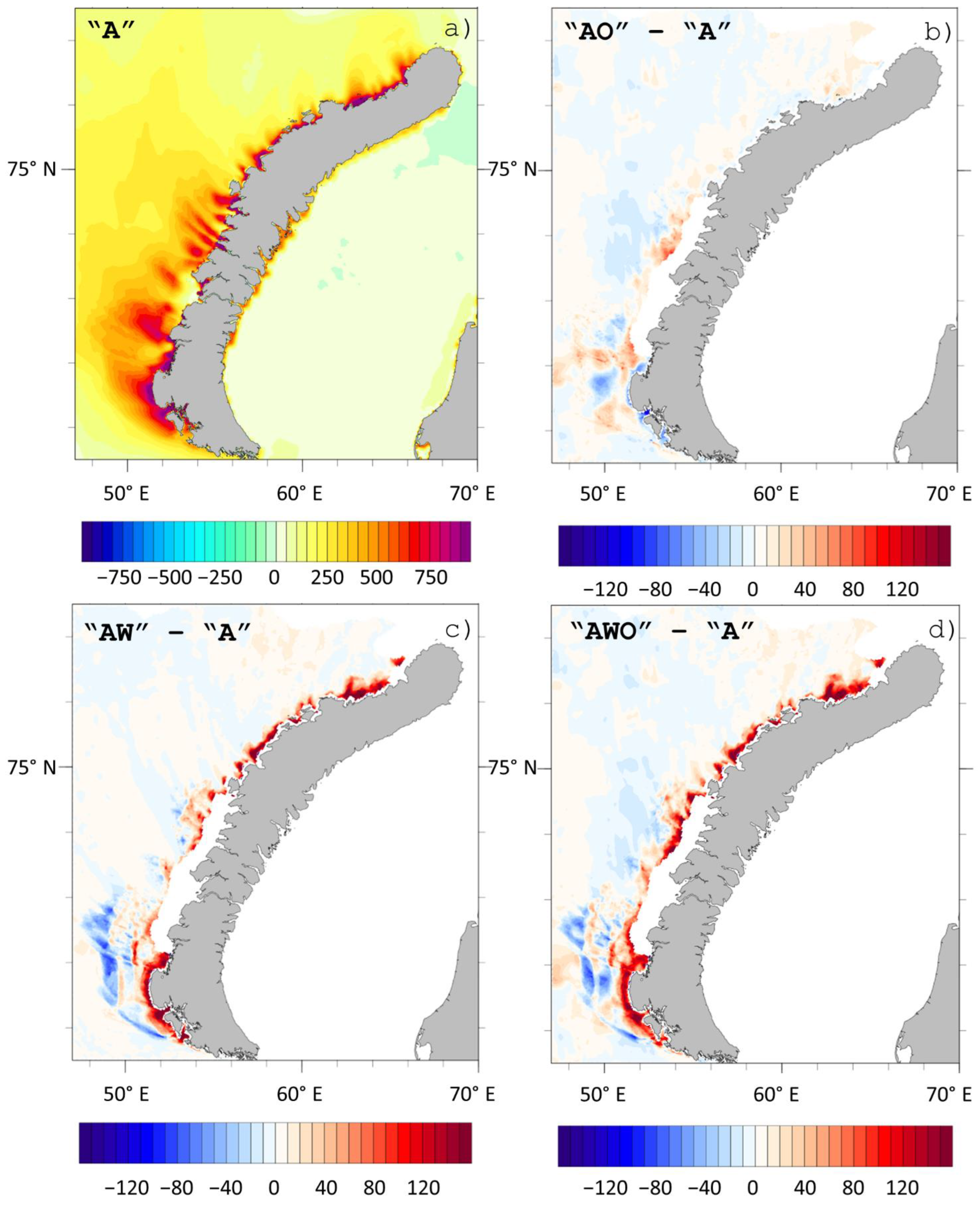
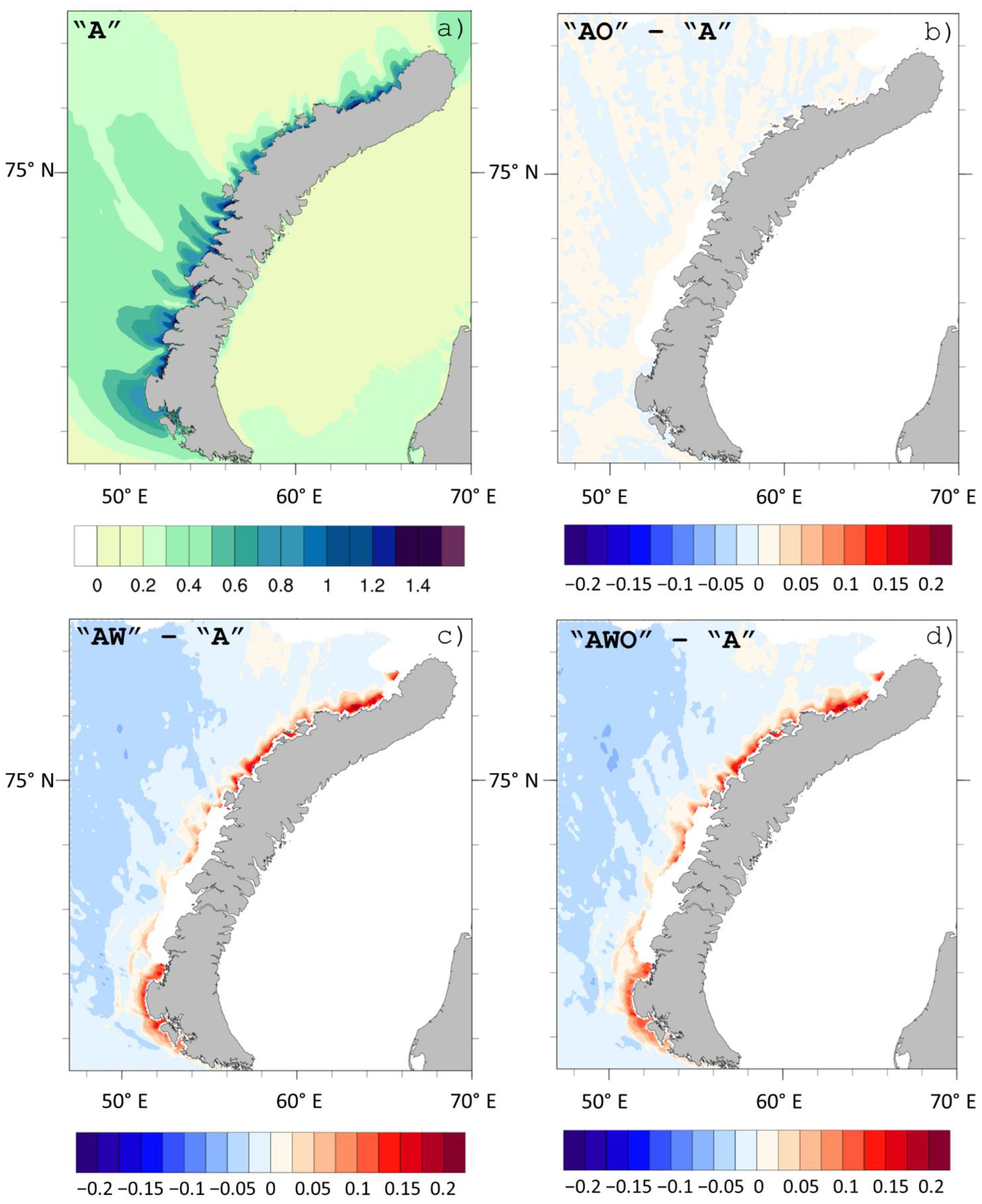
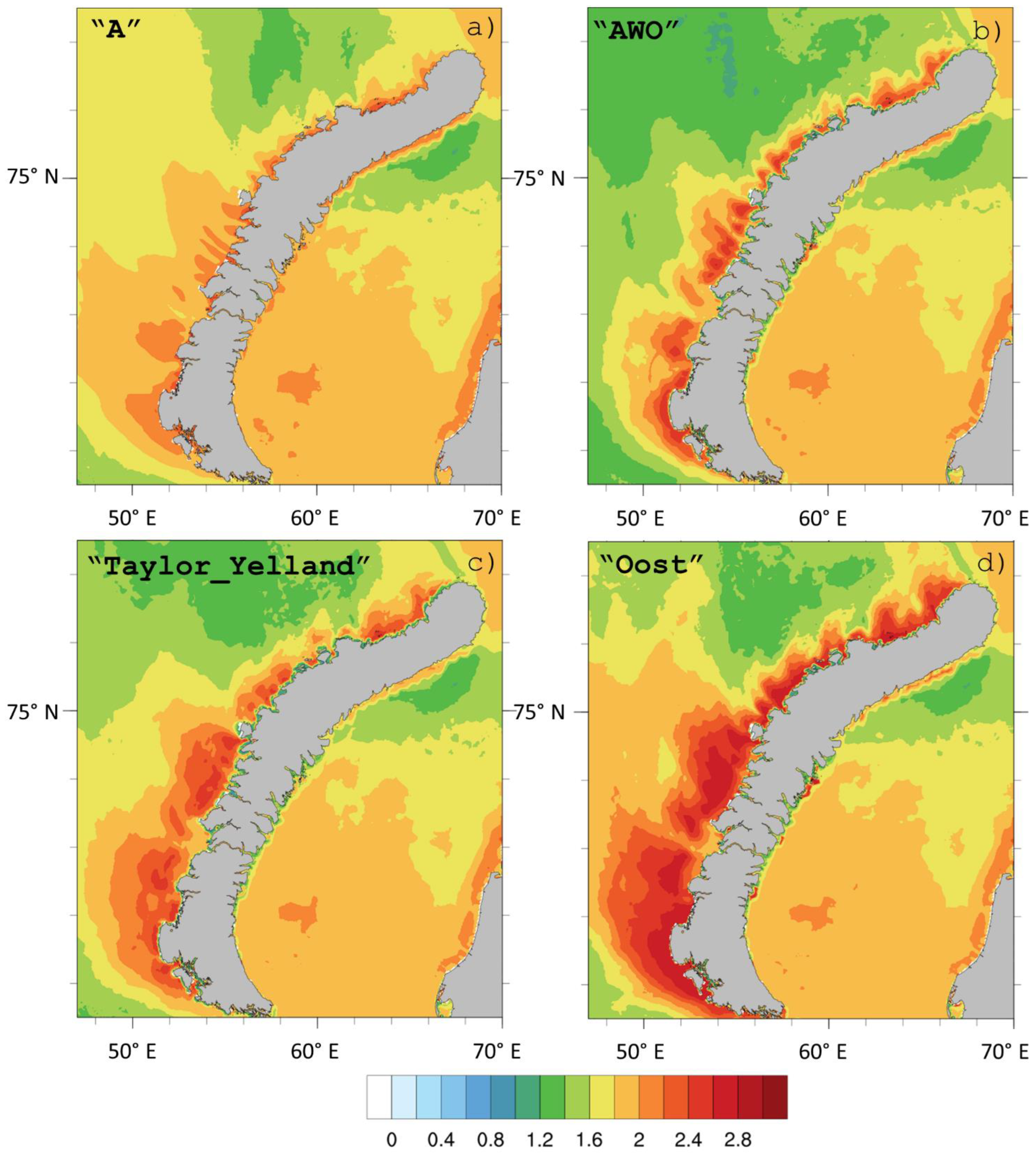
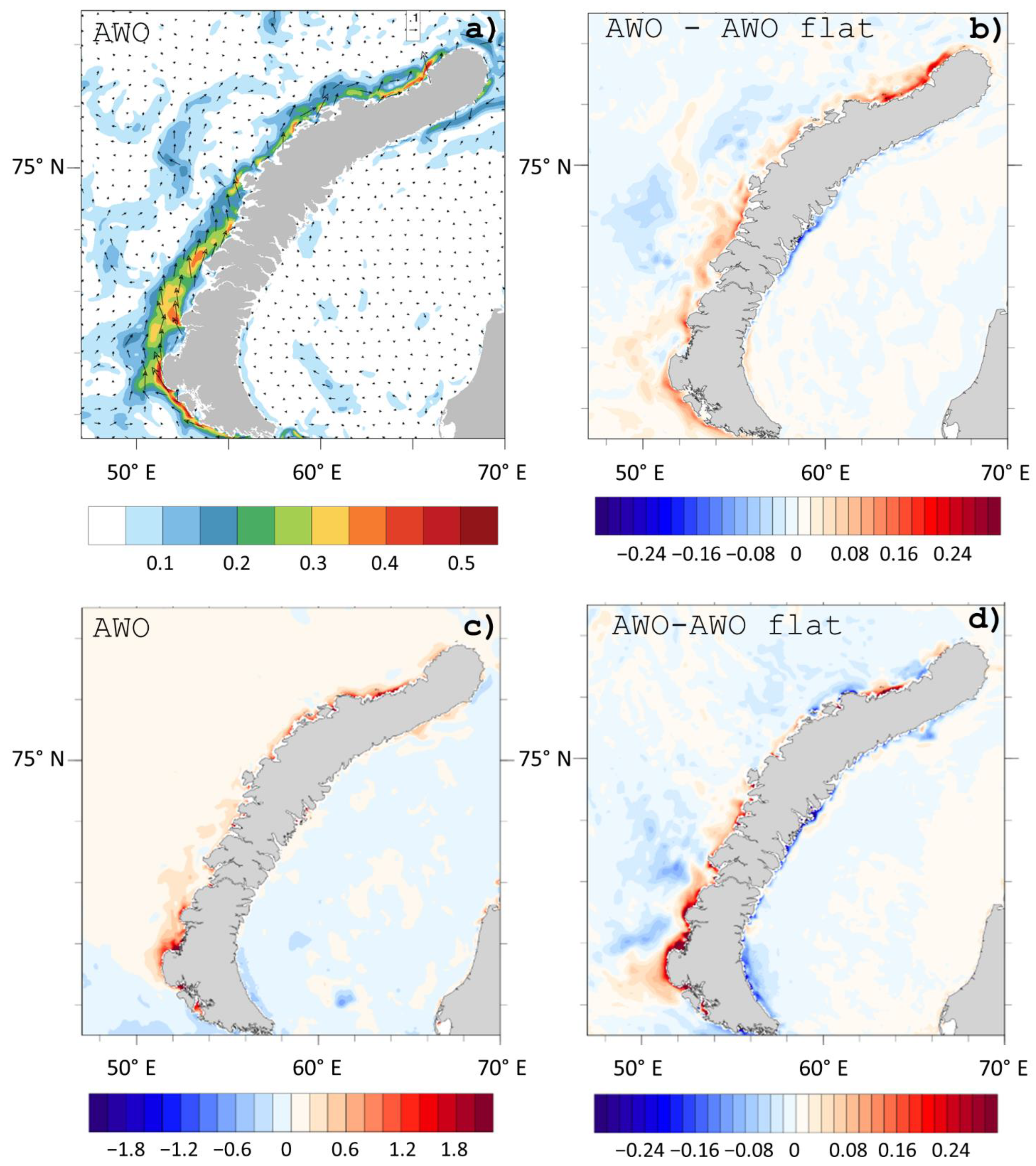
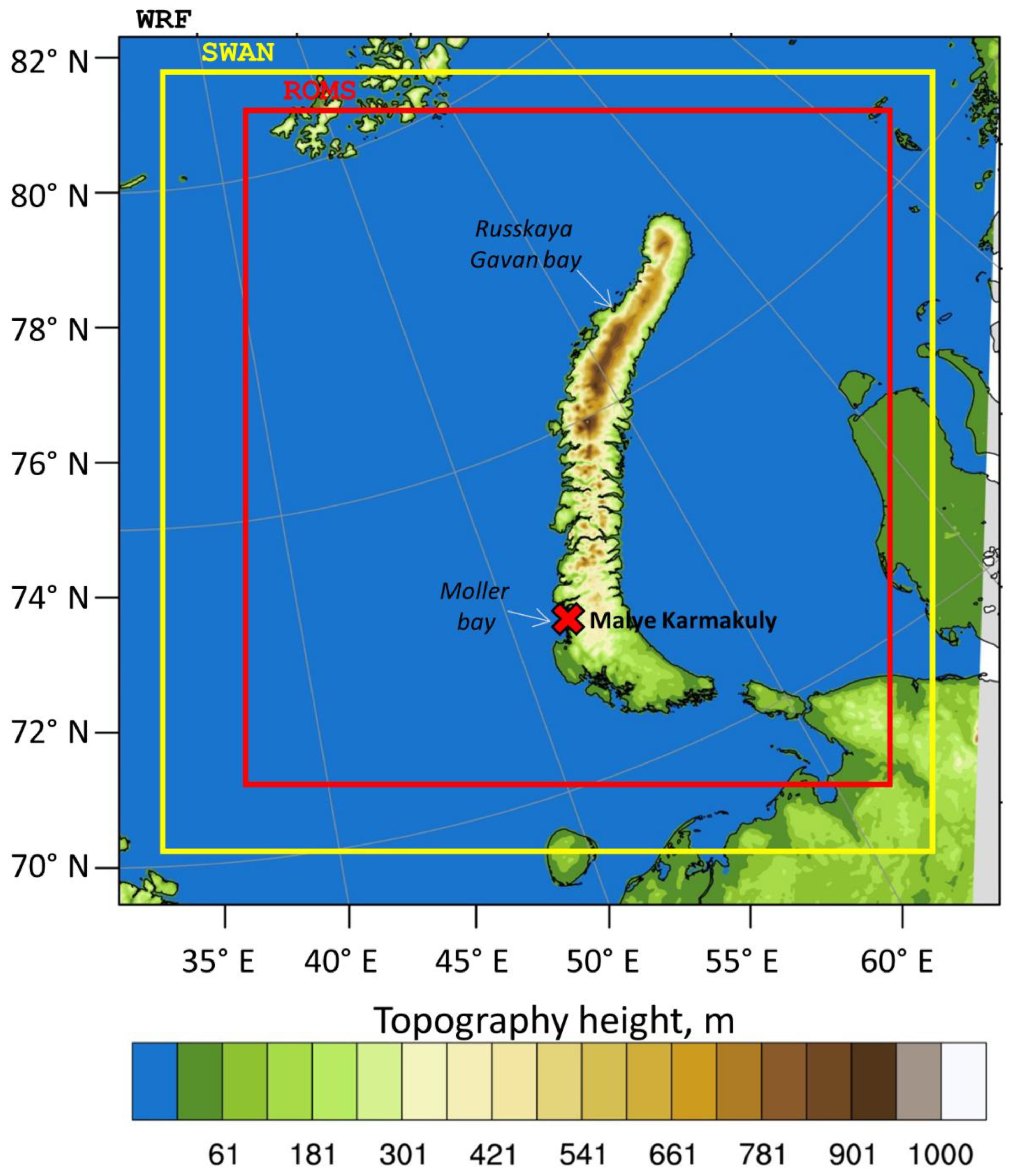
Novaya Zemlya bora is a strong downslope windstorm in the east of the Barents Sea. This paper considers the influence of the Novaya Zemlya bora on the turbulent heat exchange between the atmosphere and the ocean and on processes in the ocean. Another goal of this study is to demonstrate the sensitivity of simulated turbulent fluxes during bora to model coupling between atmosphere, ocean and sea waves. In this regard, a high-resolution numerical simulation of one winter bora episode was carried out using the COAWST (Coupled-Ocean-Atmosphere-Wave-Sediment Transport) modeling system, which includes the atmospheric (WRF-ARW model), oceanic (ROMS model), and sea waves (SWAN model) components. As shown by the simulation results, in the fully coupled experiment, turbulent heat exchange is enhanced in comparison with the uncoupled experiment (by 3% on average over the region). This is due to the atmosphere-sea-waves interaction, and the results are highly sensitive to the choice of roughness parameterization. The influence of the interaction of the atmospheric and oceanic components on turbulent fluxes in this episode is small on average. Bora has a significant impact on the processes in the ocean directly near the coast, forming a strong coastal current and making a decisive contribution to the formation of dense waters. In the open sea, the bora, or rather, the redistribution of the wind and temperature fields caused by the orography of Novaya Zemlya, leads to a decrease in ocean heat content losses due to a decrease in turbulent heat exchange in comparison with the experiment with flat topography.
Keywords: downslope windstorm; coupled modelling; turbulent heat fluxes; Barents Sea downslope windstorm; coupled modelling; turbulent heat fluxes; Barents Sea